About
Thailand: The Complete Travel Guide
Why Visit Thailand
Thailand has earned its reputation as Southeast Asia's most popular destination for good reason. It offers an almost impossible combination: ancient temples gilded in gold standing next to gleaming skyscrapers, street food that rivals Michelin-starred restaurants at a fraction of the price, pristine beaches just hours from jungle-clad mountains, and a culture so warm it earned the country its 'Land of Smiles' nickname.
For travelers from the US, UK, Australia, and other ESTA-eligible countries, Thailand couldn't be easier. No visa required for stays up to 60 days (increased from 30 in 2024), extensive English signage in tourist areas, world-class medical facilities, and infrastructure that ranges from backpacker-budget to ultra-luxury. Whether you're on a gap year or a two-week vacation, Thailand adapts to your style.
But Thailand is more than beaches and temples. It's a country with a unique cultural DNA that blends Buddhist philosophy with modern pragmatism. The concept of 'sabai-sabai' (take it easy, relax) permeates everything - after a week here, you'll find yourself letting go of small frustrations. The famous Thai smile isn't a tourist marketing gimmick; it's a genuine cultural value that makes daily interactions unexpectedly pleasant.
Then there's the food. Thai cuisine consistently ranks among the world's best, and for good reason. The interplay of sweet, sour, salty, and spicy is calibrated to perfection in every dish. The best part? Street food often beats restaurants. A 50-baht pad thai from a grandmother's cart will frequently outshine the 300-baht version in an air-conditioned establishment.
Regions: What to Choose
Central Thailand: Bangkok and Beyond
Bangkok is organized chaos that somehow works. A megalopolis of over 10 million where ancient temples squeeze between shopping malls, orange-robed monks ride the Skytrain alongside office workers, and the line between tradition and modernity blurs into something uniquely Thai.
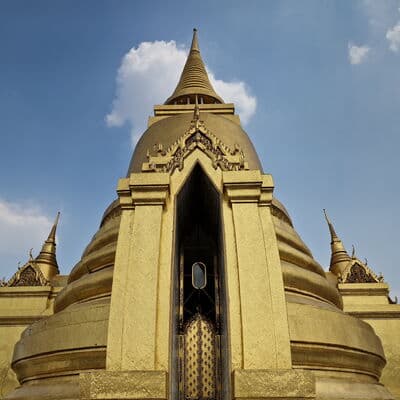
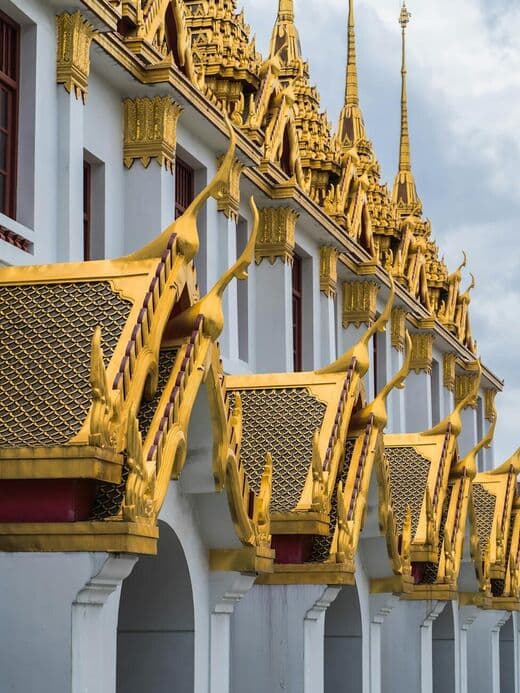
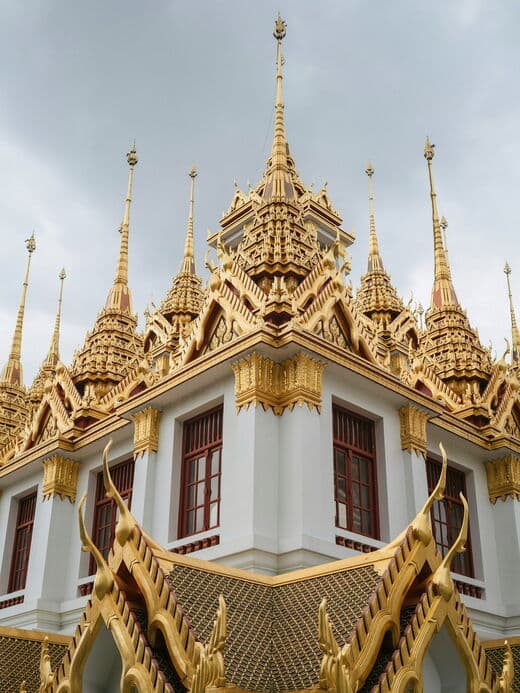
The historic heart centers on the Grand Palace and Wat Pho, home to the famous Reclining Buddha. Across the river, Wat Arun, the Temple of Dawn, glitters most spectacularly at sunset. Yaowarat (Chinatown) offers the city's best street food scene after dark. Khao San Road remains the legendary backpacker strip where the night never ends.
Modern Bangkok means the skyscrapers of Silom and Sukhumvit, observation decks like Mahanakhon SkyWalk with its glass-floor platform 314 meters up, and shopping temples like Siam Paragon, ICONSIAM, and Terminal 21. The markets are legendary - Chatuchak Weekend Market hosts 15,000 stalls making it the world's largest, while Jodd Fairs offers trendy night market vibes.
Need an escape without leaving the city? Bang Krachao, called Bangkok's 'green lung,' is a jungle-covered island in the Chao Phraya River just 20 minutes from downtown. Rent a bike and explore shaded paths, floating markets, and surprising tranquility.
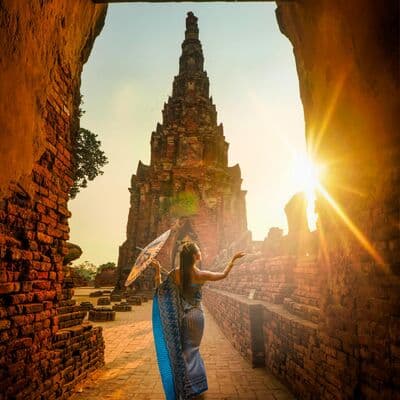
An hour from the capital lies Ayutthaya, Thailand's former capital. The Ayutthaya Historical Park contains the haunting ruins of temples, palaces, and Buddha statues spread across an island between rivers. Wat Mahathat is famous for its Buddha head entwined in tree roots - one of Thailand's most photographed images. Wat Chaiwatthanaram is especially photogenic at sunset. Take an boat tour around the island or cycle between temples.
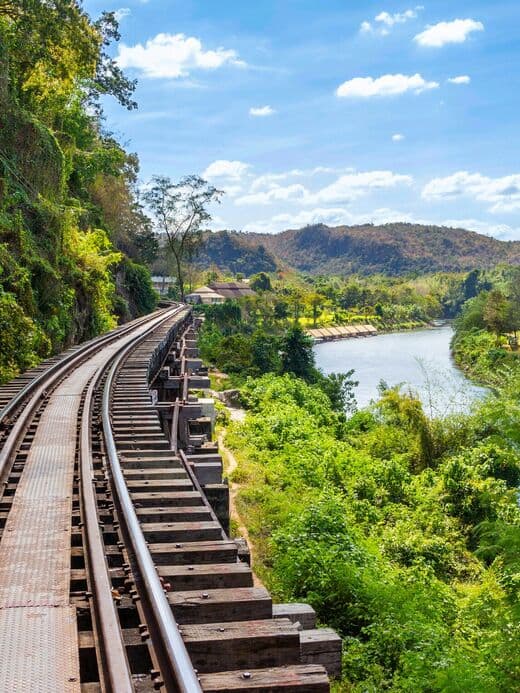
West of Bangkok, Kanchanaburi is known for the Bridge on the River Kwai and its WWII history. But the region's crown jewel is Erawan National Park with its seven-tiered emerald waterfall, each level forming a natural swimming pool.
Northern Thailand: Mountains and Temples
Chiang Mai is the cultural capital of the north and Thailand's second most important city. Everything feels different here: cooler temperatures, slower pace, lower prices. The Old City, enclosed by moat and remnant walls, contains hundreds of temples, cafes, and galleries. Wat Phra Singh and Wat Chedi Luang are the main attractions, but hidden gems like Wat Umong - a forest temple with underground tunnels - deserve exploration.
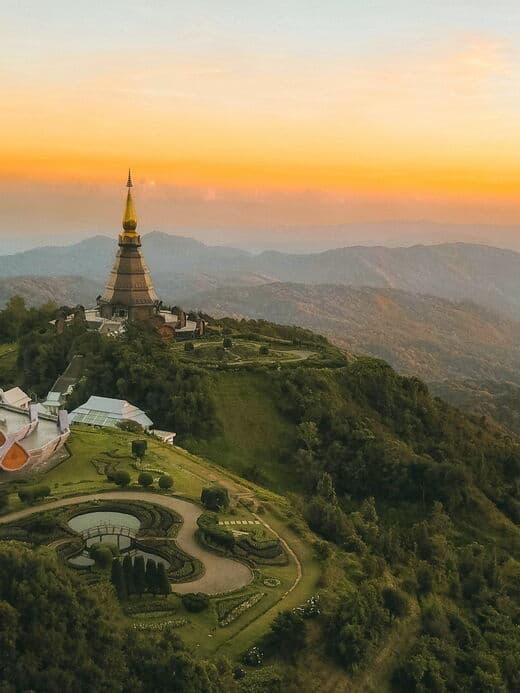
On the mountain above the city sits Wat Phra That Doi Suthep, the north's most sacred temple. Climb 309 steps (or take the funicular) for sweeping views of Chiang Mai below. Doi Inthanon National Park contains Thailand's highest peak (2,565m), where temperatures can drop to 50F (10C) even in summer.
Chiang Mai has become the digital nomad capital of Southeast Asia. Coworking spaces, fast internet, coffee shops everywhere, and a cost of living that lets you live well on a modest remote salary. Many come for a month and stay for years. The Sunday Walking Street on Ratchadamnoen stretches for a kilometer with crafts, street food, and live music. The Night Bazaar operates daily.
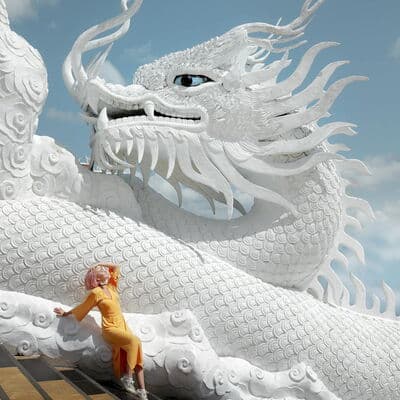
Chiang Rai sees fewer tourists but offers unique attractions. The White Temple (Wat Rong Khun) is a contemporary masterpiece by artist Chalermchai Kositpipat - surrealist sculptures, mirror mosaics, philosophical messages. Nothing else in Thailand compares. Nearby, the Blue Temple and Baan Dam (Black House) museum by artist Thawan Duchanee provide stark contrast.
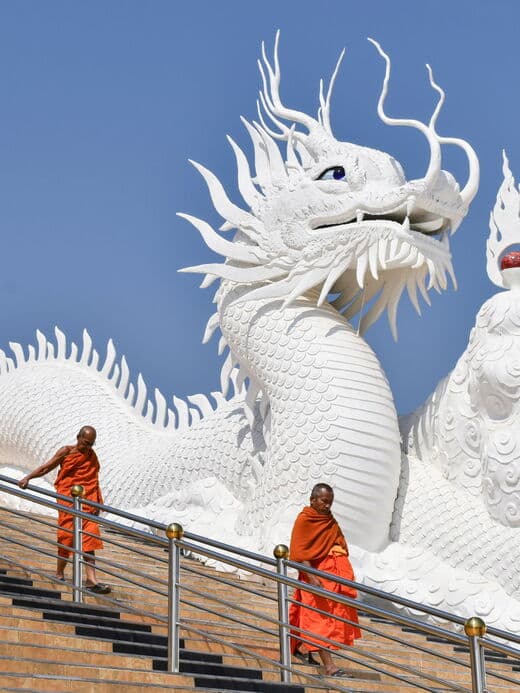
The Golden Triangle marks where Thailand, Laos, and Myanmar meet - once the heart of opium production, now a tourist landmark with museums and viewpoints. Wat Huay Pla Kang features a 69-meter white Guanyin statue visible for miles.
Isan: Undiscovered Thailand
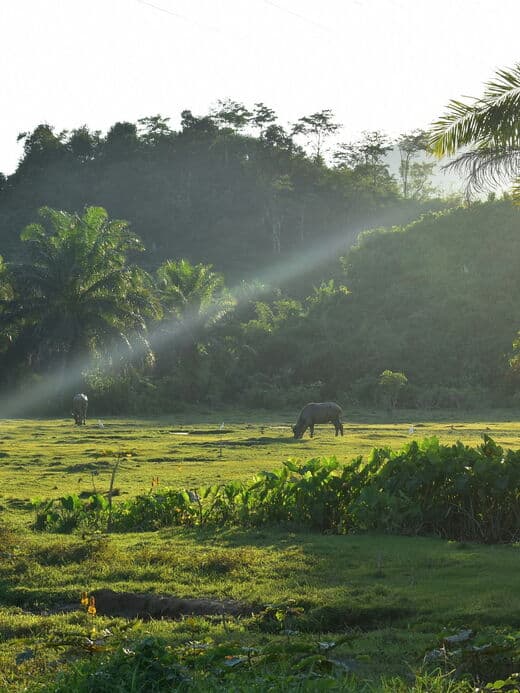
Northeastern Thailand, called Isan, is the country's largest and least touristic region. A third of Thailand's population lives here, but foreign visitors are rare. This is authentic Thailand: rice paddies to the horizon, water buffalo on rural roads, temples without crowds, and food so spicy even Thais wince.
Nakhon Ratchasima (Korat) serves as the gateway to Isan. From here, it's a short trip to Khao Yai National Park - Thailand's first and most visited national park, now a UNESCO World Heritage Site. Dense jungle, waterfalls (Haew Narok, Haew Suwat - featured in 'The Beach'), wild elephants, gibbons, and hornbills. The night safari offers chances to spot deer, wild boar, even leopards. Nearby, PB Valley Winery offers tastings of Thai wine, while Primo Piazza recreates an Italian village.
Eastern Seaboard: Pattaya and Koh Chang
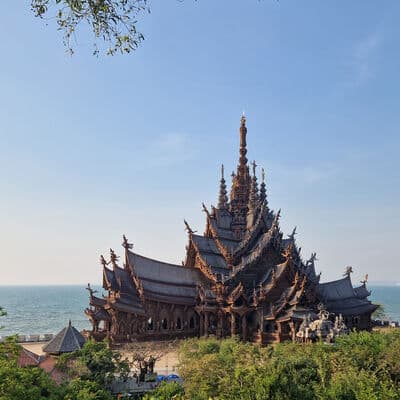
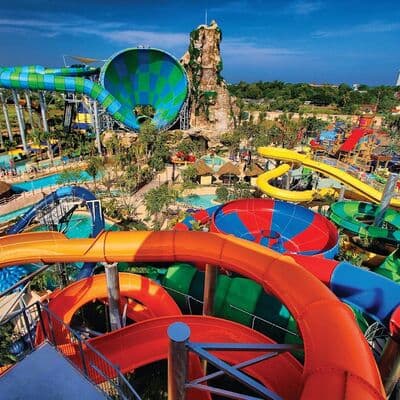
Pattaya has a reputation for certain types of tourism, but that's an oversimplification. Yes, Walking Street is exactly what you think. But Pattaya also offers family-friendly attractions: waterparks, zoos, islands. The Sanctuary of Truth - a massive wooden temple built without nails, still under construction after 40 years - is an architectural marvel. Nong Nooch Tropical Garden ranks among the world's best botanical gardens. Koh Larn is just 40 minutes by ferry with clean beaches and clear water.
Jomtien offers a calmer alternative: long beach, family hotels, less chaos. Big Buddha on Pratumnak Hill, Buddha Mountain (Khao Chi Chan) - a 130-meter laser-carved image - and the viewpoint are all within easy reach.
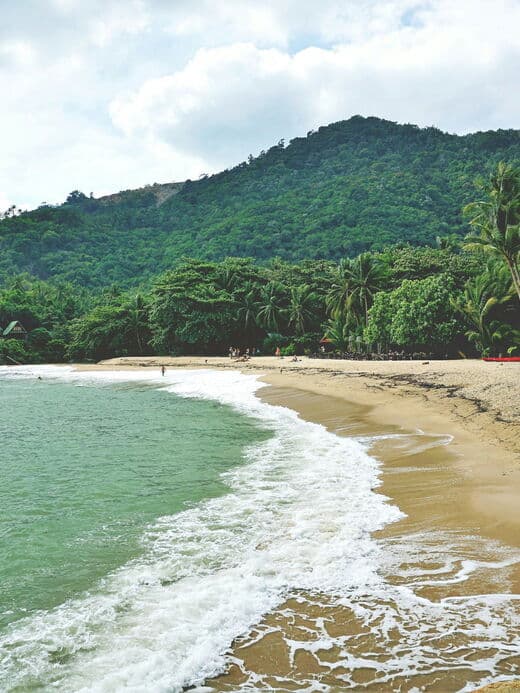
Trat Province borders Cambodia and provides access to Koh Chang, Thailand's third-largest island. 'Elephant Island' (the name's meaning) offers jungle-covered mountains, waterfalls (Khlong Phlu being the most famous), and beaches ranging from busy White Sand Beach to hippie-friendly Lonely Beach. Mu Ko Chang National Park encompasses dozens of islands; the best snorkeling is at Koh Rang. Bang Bao is a fishing village on stilts transformed into a tourist strip with restaurants and dive shops.
Andaman Coast: Phuket and Krabi
Phuket is Thailand's largest island and premier resort destination. For many, it's synonymous with Thai beach holidays, and with good reason: dozens of beaches for every preference, developed infrastructure, and direct international flights.
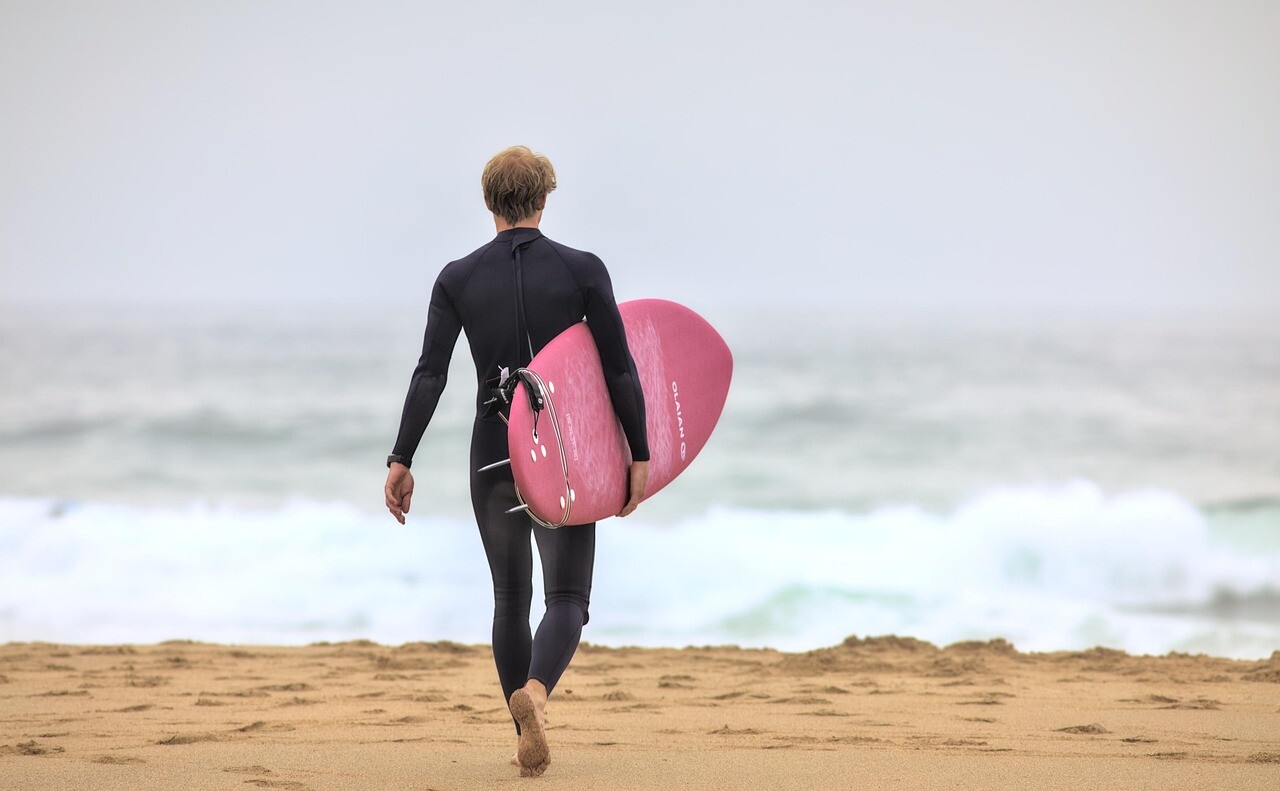
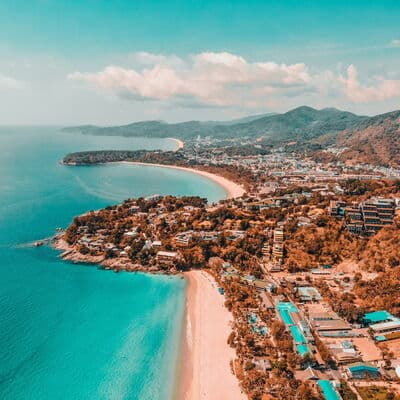
Patong is the epicenter - hotels, restaurants, nightclubs, and Bangla Road, Phuket's walking street. It's loud, crowded, not for everyone. Kata and Karon are calmer, with decent surf during monsoon season. Nai Harn on the south is among the island's most beautiful beaches, popular with expats. Freedom Beach requires a boat or jungle trek to reach - worth the effort.
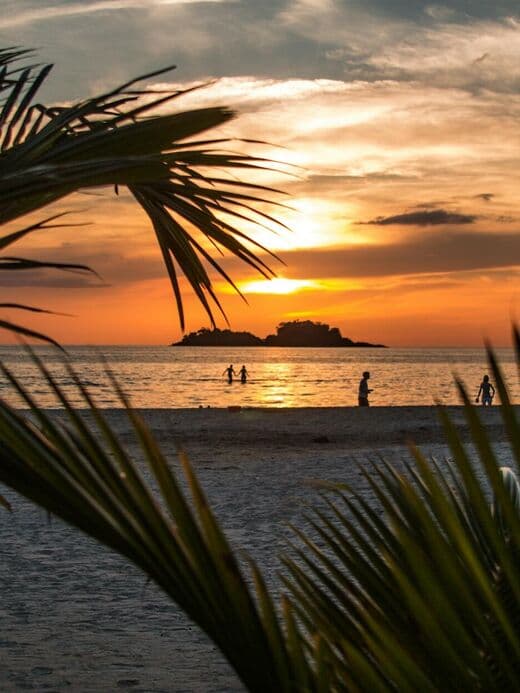
Old Phuket Town showcases Sino-Portuguese architecture, street art, cafes, and galleries. Many visitors stay beachside and miss this entirely - their loss. Big Buddha sits atop a hill with panoramic island views. Wat Chalong is the island's most important temple. Promthep Cape offers the best sunsets. Karon Viewpoint provides the classic postcard shot of three bays.
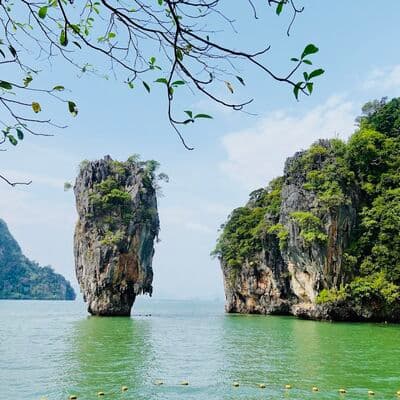
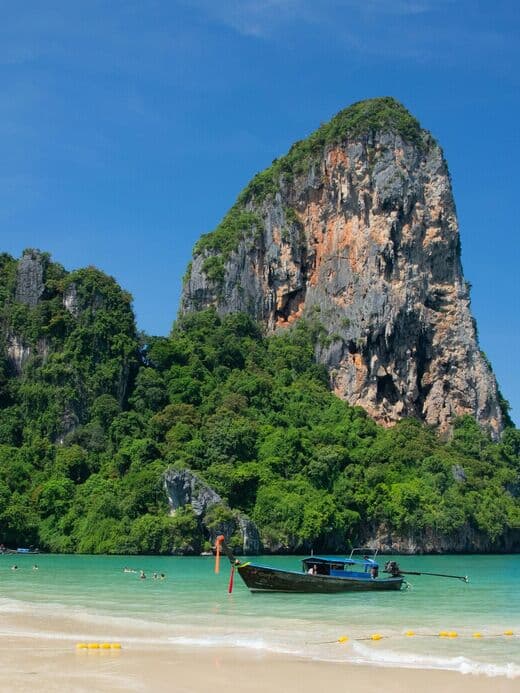
Krabi Province sits across the Andaman Sea from Phuket. The vibe differs completely: karst limestone cliffs, mangrove forests, laid-back atmosphere. Ao Nang serves as the tourist hub, but true Krabi lies at Railay - a peninsula cut off from the mainland by cliffs, accessible only by boat. Beaches, world-class rock climbing, caves - all in one place. Phra Nang Cave Beach ranks among Thailand's most stunning.
Tiger Cave Temple demands climbing 1,260 steps to the summit, but the views reward the effort. Emerald Pool and Klong Thom Hot Springs offer alternatives to salt water. Kayaking through Ao Thalane takes you through mangrove tunnels and hidden lagoons.
Gulf Islands: The Samui Archipelago
Koh Samui is Thailand's second most popular island after Phuket, but with a different character. Less mass tourism, more boutique resorts and spa retreats. Chaweng is the main beach with nightlife and night market. Lamai is quieter, near the famous phallic-shaped Hin Ta and Hin Yai (Grandfather and Grandmother Rocks). Choeng Mon suits families. Silver Beach offers a secluded cove with crystal water.
Big Buddha is the island's landmark - a golden statue on a tiny island connected by causeway. Wat Plai Laem features an 18-armed Guanyin rising from a lake. The Red Temple dazzles with color. Secret Buddha Garden hides high in the jungle - mystical statues among trees.
Viewpoints abound: Lad Koh, Overlap Stone, Khao Hua Jook. Waterfalls: Na Muang 1 and Na Muang 2. Day trips include Ang Thong National Marine Park - 42 islands with lagoons and beaches - and Koh Madsum (Pig Island) where pigs roam the beach. Fisherman's Village in Bophut offers atmospheric old buildings, restaurants, and a Friday night market.
Koh Phangan is the neighboring island, famous for Full Moon Parties on Haad Rin Beach. But that's only one side. The other features yoga retreats, detox centers, vegan cafes, and quiet beaches. Bottle Beach requires a boat to reach. Thong Nai Pan Noi is a beautiful bay on the northeast. Koh Ma is a small island connected by sandbar with excellent snorkeling. Phaeng Waterfall is the island's highest.
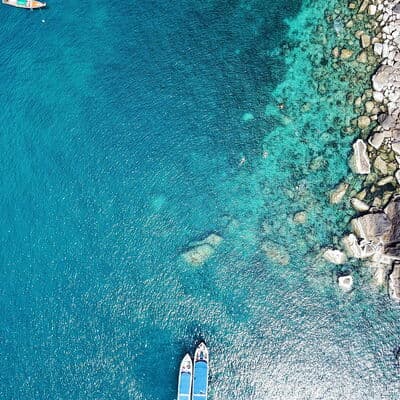
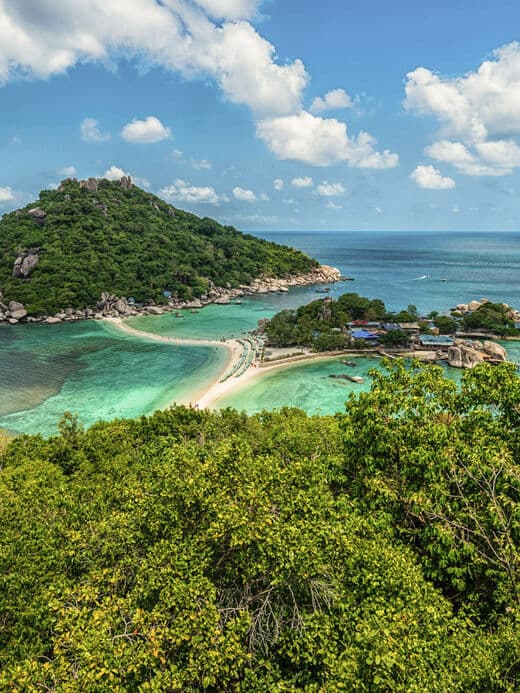
Koh Tao (Turtle Island) is the diving mecca. The cheapest dive certification in the world draws many visitors here specifically for PADI courses. Even without diving, the island charms: Koh Nang Yuan - three islands connected by sandbars, the postcard view. Shark Bay lets you swim with reef sharks. Tanote Bay, Ao Leuk, Mango Bay - excellent snorkeling from shore. John-Suwan Viewpoint offers the best sunset views. Chumphon Pinnacle is the legendary dive site for whale shark encounters.
Southern Thailand: Khao Sok and Wilderness
Surat Thani Province is a transit point for most tourists rushing to the Samui islands. But it contains one of Thailand's greatest treasures - Khao Sok National Park. This is the world's oldest evergreen rainforest, predating even the Amazon. Limestone cliffs, caves, waterfalls, unique flora - including the Rafflesia, the world's largest flower.
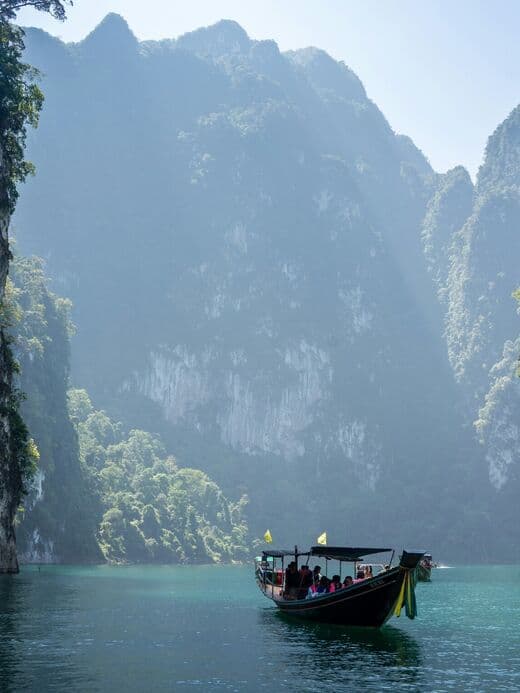
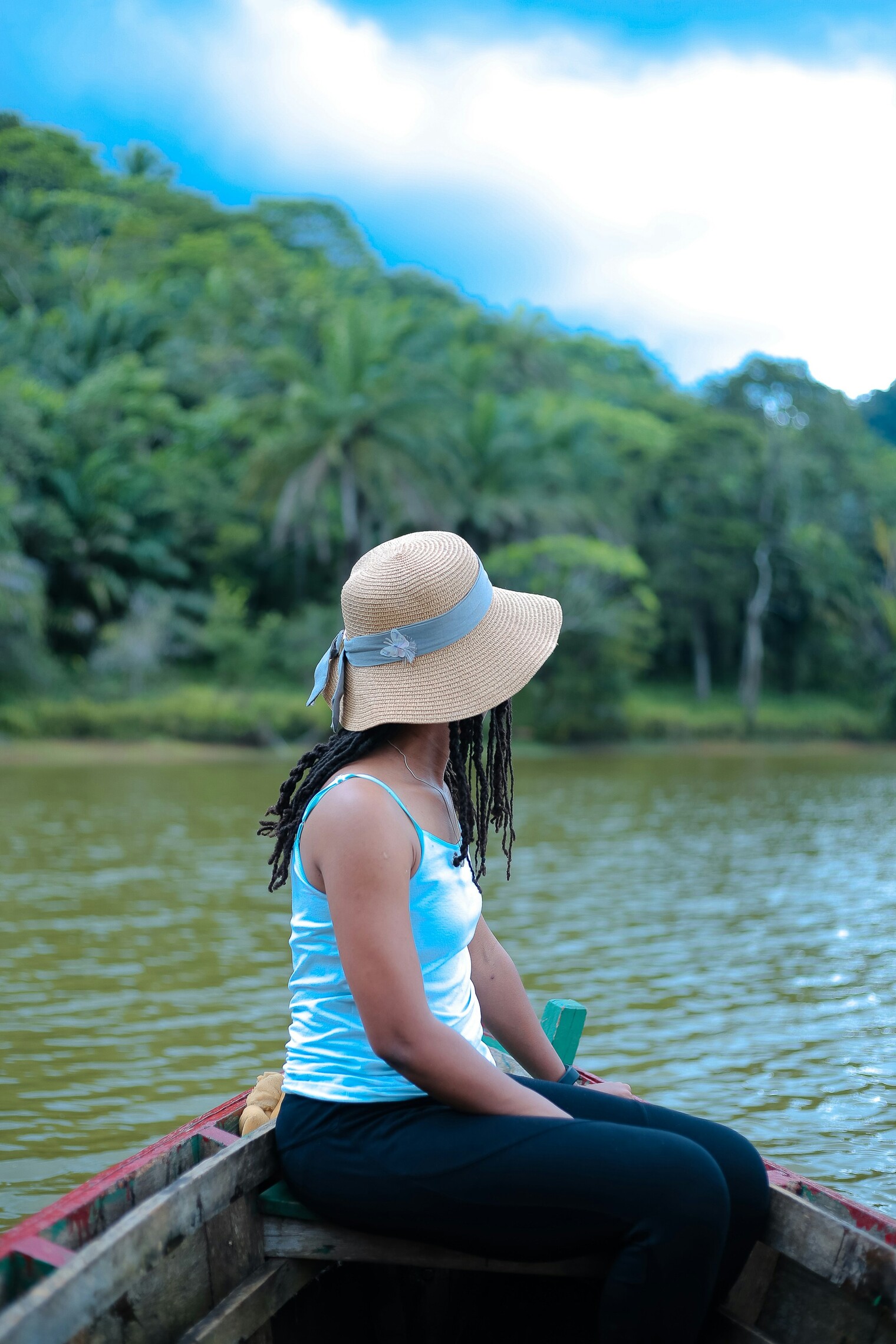
Cheow Lan Lake is the park's jewel. Emerald water, cliffs rising from the surface, floating bungalows where you can sleep surrounded by jungle. Nam Talu Cave involves hiking through an underground river. Night safaris offer chances to spot tapirs, deer, even tigers (though extremely rare). Canoeing the Sok River provides a gentle float through the jungle.
Thai Islands: Complete Overview
Phi Phi Islands
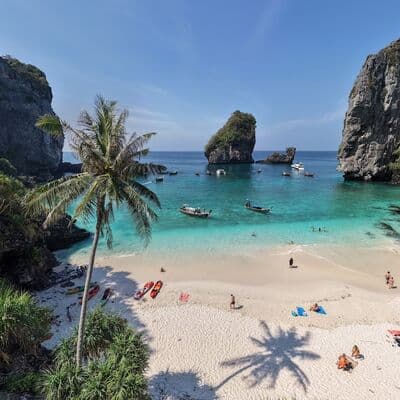
The Phi Phi Islands shot to fame after 'The Beach' with Leonardo DiCaprio, which proved both blessing and curse. Maya Bay - the movie's setting - was closed for several years to allow ecosystem recovery and now operates with restrictions: only 375 visitors at once, no swimming in the bay.
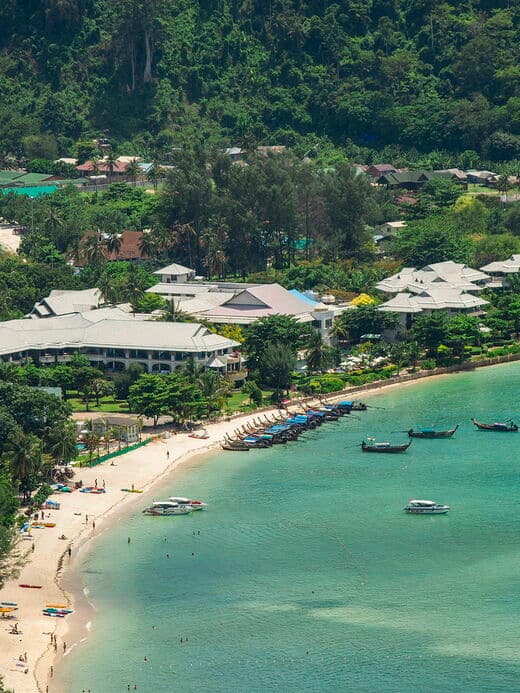
Phi Phi Don is the archipelago's only inhabited island. Tonsai Village is the main settlement - no cars or motorbikes, walking only. Nightlife runs wild: beach bars, fire shows, clubs. Loh Dalum Bay is the main swimming beach, though water clarity varies. Long Beach offers the island's best sand, cleaner and calmer. The Viewpoint requires 500 steps but delivers the iconic two-bay panorama.
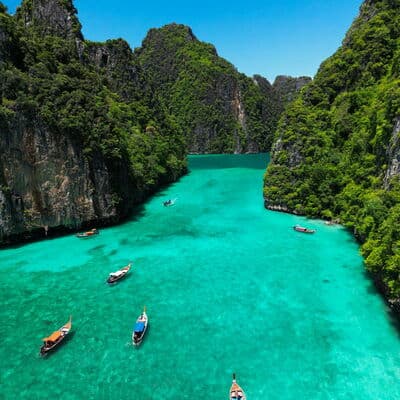
Monkey Beach hosts wild macaques that can be aggressive - keep belongings secure. Pileh Lagoon features emerald water surrounded by cliffs, the best snorkeling spot. Viking Cave, where swiftlet nests are harvested, is visible only from outside. Bamboo Island offers white sand, clear water, minimal infrastructure.
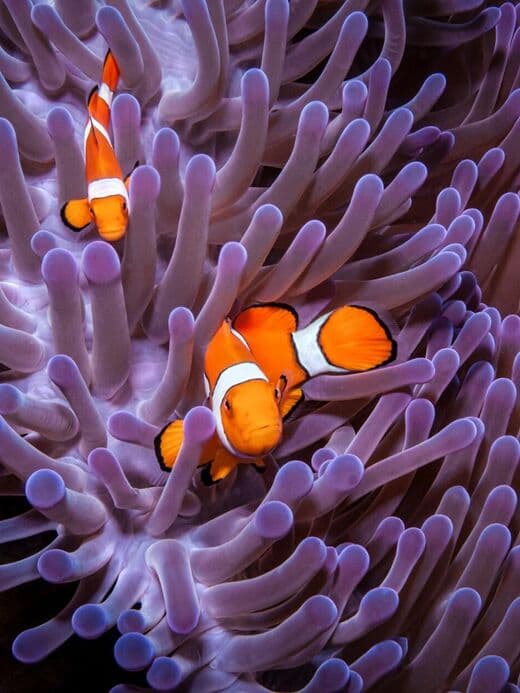
Diving and snorkeling excel: Hin Bida (Shark Point), Bida Nok, Bida Nai - reef sharks, turtles, barracuda. Wang Long Bay is a hidden lagoon on Phi Phi Don. Nui Beach is secluded, reachable only by boat or kayak.
Similan Islands
The Similan Islands - nine islands in the Andaman Sea - offer Thailand's best diving. Open only November through May (monsoon season closes them), they have no hotels, just camping on two islands. Most visitors come on day trips or liveaboard tours.
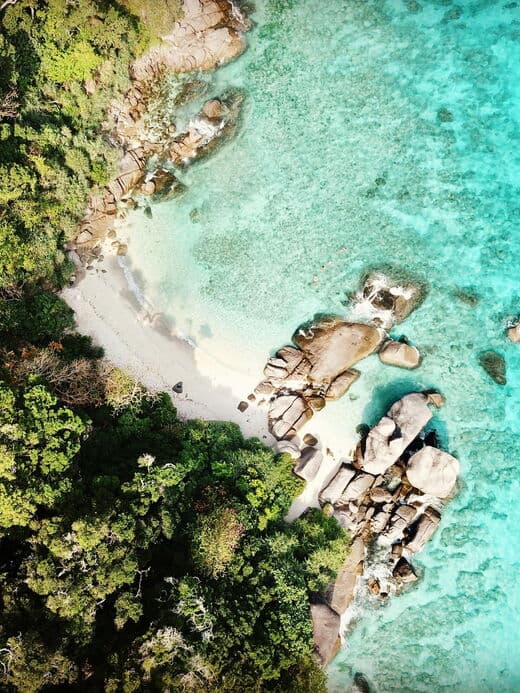
Sail Rock is the archipelago's icon - a massive boulder of improbable shape on Island 8. Donald Duck Bay is named for a rock resembling the Disney character's head. Koh Miang is the main island with ranger station and bungalows. Beaches have flour-like sand, water the color of sapphires - photos don't do justice.
Dive sites rank among the world's best: Christmas Point - boulders, canyons, mantas. East of Eden - coral gardens with incredible diversity. Whale sharks and mantas are common sightings.
When to Visit Thailand
Thailand is a year-round destination, but climate varies significantly by region. There's no universal 'best time' - it depends on where you're going.
High Season (November-February) - Best weather everywhere: dry, not too hot (77-90F / 25-32C), minimal rain. The flip side: maximum tourists and prices. Christmas and New Year are peak - book accommodation 2-3 months ahead.
Hot Season (March-May) - Temperatures reach 95-104F (35-40C) with high humidity. Cities become sweltering; beaches remain bearable thanks to sea breezes. April brings Songkran, Thai New Year with its water fights nationwide. An unforgettable experience, but expect to get soaked.
Rainy Season (June-October) - Doesn't mean constant rain. Typically an hour-long afternoon downpour, then sunshine returns. However, the Andaman coast (Phuket, Krabi, Phi Phi) can see rough seas, and some islands (Similans) close entirely. Benefits: fewer tourists, lower prices, greener landscapes.
Important: The Gulf islands (Samui, Phangan, Tao) have reverse seasons - wettest in November-December, best weather January-September. When Phuket has monsoon, Samui is sunny.
Northern Thailand (Chiang Mai, Chiang Rai) runs cooler: winter nights can drop to 50-59F (10-15C), bring layers. The burning season (February-April) sees farmers clearing fields, creating air quality worse than Beijing. Best time: November-January.
Holidays to note:
- Songkran (April 13-15) - Water fights, transport chaos, many businesses closed
- Loy Krathong (November full moon) - Festival of lights, especially beautiful in Chiang Mai and Sukhothai
- Chinese New Year (January-February) - Bangkok and Phuket celebrate heavily
- Full Moon Party (monthly) - Koh Phangan, whether you want it or want to avoid it
Getting to Thailand
The main international hub is Suvarnabhumi Airport (BKK) in Bangkok, one of Asia's largest. Bangkok's second airport, Don Mueang (DMK), handles mostly budget carriers and domestic flights. The airports are 30km apart; a free shuttle bus connects them, taking 60-90 minutes.
From the US: Direct flights from Los Angeles, San Francisco, and New York (seasonal) on Thai Airways and United, approximately 17-20 hours. More options with one connection through Tokyo (ANA, JAL), Hong Kong (Cathay Pacific), Seoul (Korean Air, Asiana), or Middle Eastern hubs (Emirates, Qatar). West Coast departures are significantly shorter than East Coast.
From the UK: Thai Airways and British Airways offer direct London-Bangkok (11.5 hours). Budget-friendly options include connecting through Middle Eastern hubs or European carriers like Finnair (via Helsinki, shorter flight path).
From Australia: Direct flights from Sydney, Melbourne, Brisbane, and Perth on Thai Airways, Qantas, and Jetstar (7-9 hours depending on origin). Bangkok is often a gateway for continuing travel through Southeast Asia.
Alternative entry points:
- Phuket (HKT) - International airport with direct flights from Europe, Asia, and Middle East
- Chiang Mai (CNX) - Flights from Singapore, Kuala Lumpur, Hong Kong
- Koh Samui (USM) - Private Bangkok Airways airport, expensive but convenient
- Krabi (KBV) - For Ao Nang, Railay, Phi Phi access
Land borders: Thailand shares borders with Malaysia, Cambodia, Laos, and Myanmar. Popular crossings:
- From Cambodia: Poipet - Aranyaprathet (to Bangkok), bus from Siem Reap available
- From Laos: Vientiane - Nong Khai (Friendship Bridge), Luang Prabang - Chiang Khong via Huay Xai
- From Malaysia: Padang Besar - train from Kuala Lumpur, Bukit Kayu Hitam - to Hat Yai
Visa situation: Citizens of the US, UK, Australia, Canada, and most EU countries enjoy visa-free entry for up to 60 days (increased from 30 in 2024). Stamp issued free at the border. Officials may ask for proof of onward travel and accommodation - have at least a first-night booking ready. Extensions of 30 days are available at immigration offices for 1,900 baht. For longer stays, consider a tourist visa from a Thai embassy (60+30 days) or visa runs to neighboring countries.
Getting Around Thailand
Flights
Domestic flights offer the fastest way to cover distance. Budget carriers AirAsia, Nok Air, and Thai Lion Air fly everywhere for surprisingly little: Bangkok to Chiang Mai from 500 baht ($15), Bangkok to Phuket from 700 baht if booked early. Thai Smile and Bangkok Airways cost more but include baggage and meals.
Book directly on airline websites rather than aggregators - easier to change or cancel. Budget carriers charge for checked bags (from 200 baht for 15kg); carry-on (7kg) is typically free.
Trains
Thai railways are slow but atmospheric. Three main lines from Bangkok:
- Northern: Bangkok - Chiang Mai (12-15 hours, the overnight sleeper is a classic experience)
- Northeastern: Bangkok - Nong Khai (to the Laos border)
- Southern: Bangkok - Surat Thani - Hat Yai (to the Malaysian border)
Classes: 3rd (seats, fans, cheap), 2nd (sleeper berths with A/C, best overnight choice), 1st (private cabins, expensive). Book tickets at railway.co.th or Hua Lamphong station. In high season, reserve a week ahead - popular routes sell out.
Buses
The bus network covers every corner. VIP buses (999, Nakhonchai Air) feature comfortable seats, toilets, snacks, and blankets. Bangkok to Chiang Mai VIP runs 600-900 baht. Departures from bus terminals: Mo Chit (north, northeast), Sai Tai Mai (south), Ekkamai (east).
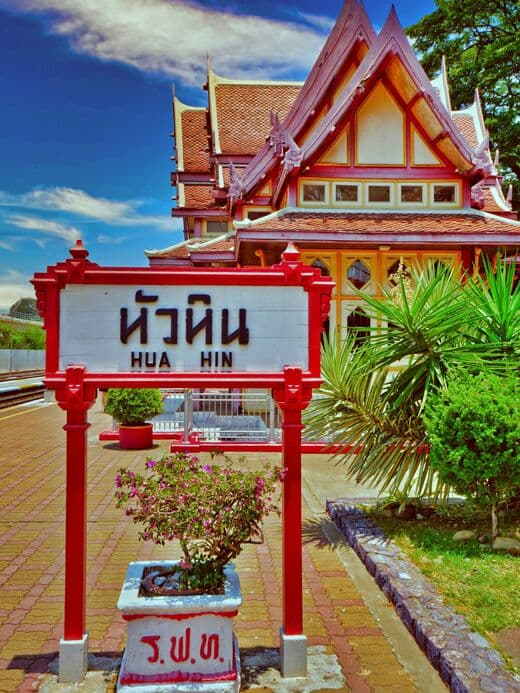
Minivans are faster than buses but more cramped and less safe. Popular for medium distances: Bangkok - Hua Hin, Bangkok - Pattaya, Krabi - Phuket.
Ferries and Boats
Getting to islands means water transport. Main hubs:
- Surat Thani: ferries to Samui, Phangan, Tao (overnight ferries have cabins)
- Chumphon: speedboats to Tao (faster than from Surat Thani)
- Krabi, Phuket: boats to Phi Phi, Lanta
- Trat: ferries to Koh Chang
Lomprayah and Seatran are the main operators in the Gulf. Websites allow booking combination bus+ferry tickets. During monsoon season (June-October on the Andaman coast), some routes are canceled.
Vehicle Rental
Motorbikes are the primary transport on islands and in small towns. Rental runs 150-300 baht/day; bargain. International driving permit with motorcycle endorsement is technically required, but rarely checked - the fine is 500 baht. Helmets are mandatory (400 baht fine), but more importantly, they save lives. Motorbike accidents are the number one cause of tourist injuries. If you're not confident, don't risk it.
Cars make sense on the mainland for independent exploration. Rentals start at 800 baht/day for economy; insurance matters. Traffic drives on the left. Roads are good, but Thai driving style is... distinctive. Bangkok traffic is legendary - a car in the city only creates headaches.
Tuk-tuks and taxis: Bangkok taxis use meters (flag 35 baht), but drivers often refuse to turn them on for tourists - insist or use Grab. Tuk-tuks are an attraction; negotiate prices, usually more expensive than taxis. In provinces, songthaews (pickup trucks with benches) run fixed routes for 20-40 baht.
Grab and Apps
Grab is Thailand's Uber - works everywhere. Taxi, motorbike taxi, food delivery. Fixed pricing, pay by card or cash. GrabBike (motorbike taxi) is faster and cheaper than cars but scarier. Bolt operates in major cities, sometimes cheaper than Grab.
Thai Cultural Code
Thailand is the only Southeast Asian country never colonized. This shaped a unique national pride and identity. 'Thailand' means 'Land of the Free,' and Thais remember this.
The King and Monarchy
Attitudes toward the royal family are serious. The lese-majeste law is among the world's strictest: up to 15 years in prison for insulting the monarchy. This is not a joke - foreigners have been arrested. Don't step on banknotes (the King's portrait appears on them), don't criticize the monarchy even in jest, stand for the royal anthem in cinemas.
Buddhism in Daily Life
95% of Thais practice Theravada Buddhism. Monks are respected community members; almost every family has had a male member temporarily ordained (usually for a few weeks). Rules for interacting with monks: women must not touch them or hand items directly. In temples, remove shoes, dress modestly (covered shoulders and knees), don't point feet at Buddha images.
The Concept of Face
'Losing face' (sia na) is among the worst social outcomes. Thais avoid conflict, public criticism, and displays of anger. Raising your voice means losing your own face. If you're overcharged or receive poor service, address it calmly, with a smile. Aggression backfires and can cause problems. The smile is a universal tool: apology, greeting, embarrassment, request - all conveyed through smiles.
Head and Feet
The head is the sacred part of the body - don't touch people's heads, even children. Feet are the lowest - don't point them at people, Buddha images, or temples. When sitting, tuck your feet so soles aren't directed at others.
Tipping
Not obligatory but appreciated:
- Restaurants: 20-50 baht or round up the bill (service charge often included)
- Taxis: round up to the nearest convenient amount
- Hotels: 20-50 baht for housekeeping, 20-50 baht for porters
- Massage: 50-100 baht
- Guides/drivers: 100-300 baht per day
Communication
Thais address each other by first name with 'Khun' (respectful prefix). The 'wai' - the traditional greeting with palms pressed together - should be returned, but don't initiate it with service staff. 'Sanuk' (fun) is an important concept: Thais try to find enjoyment in everything, even work. If something is 'mai sanuk' (not fun), it's bad.
Dress
Thailand is conservative outside beach areas. In cities and temples - covered shoulders and knees. Topless sunbathing is prohibited (fines apply). Upscale restaurants and clubs enforce dress codes - shorts and flip-flops won't get you in.
Safety in Thailand
Thailand is relatively safe for tourists. Violent crime against foreigners is rare. But nuances exist.
Scams
The main problem isn't theft but fraud:
- Taxi meter refusal: In Bangkok, insist on the meter or use Grab
- Tuk-tuk 'tour' scam: They offer to drive you around for 20 baht but take you to gem shops where you face high-pressure sales
- Jewelry scam: 'Today is the last day of the sale' - there's no sale, the gems are worthless
- Jet ski scam (Pattaya, Phuket): After rental, they discover 'damage' and demand hundreds of dollars. Photograph everything before and after
- 'Closed today': The palace/temple is closed, but I'll show you a secret place - leads to the tuk-tuk scam
Road Safety
Thailand ranks second worldwide for traffic deaths. Riding a motorbike without experience is risky. Even experienced riders face unpredictable Thai drivers. Always wear a helmet, preferably your own (rentals are often in poor condition). Insurance covering motorbike accidents is essential.
Sea and Nature
Drowning is a common cause of tourist deaths. Beach flags:
- Red - swimming prohibited
- Yellow - caution, strong waves
- Green - safe
During monsoon season (May-October on the Andaman coast), waves are dangerous even at popular beaches. Jellyfish are problematic in certain seasons, especially box jellyfish (potentially fatal). Ask locals about current jellyfish conditions.
Drugs
Despite the relaxed atmosphere, laws are harsh. Possession of marijuana in large quantities carries up to 5 years; 'hard' drugs can mean life imprisonment or death penalty. 'Weed is legal' - not exactly, only for medical purposes with restrictions. Full Moon Party - police actively search there.
Police
Tourist Police: 1155 (English-speaking). Regular police: 191. For scam problems, go to Tourist Police - they actually help. For accidents, don't move vehicles, call police, photograph everything.
Areas and Situations
The Deep South (Pattani, Yala, Narathiwat provinces) is a conflict zone with separatists - tourists have no reason to go there. The Myanmar border is unstable in places. Everything else is calm. Standard precautions: don't leave valuables on beaches, don't drink to oblivion, don't get into fights.
LGBTQ+
Thailand is among Asia's most tolerant countries. Open gay bars in Bangkok (Silom Soi 4), Pattaya, Phuket. Transgender people (kathoey) are a visible part of society. Same-sex marriage isn't recognized, but discrimination is virtually nonexistent.
For Women
Thailand is safer than many European countries for solo female travelers. Thai culture respects women. Standard measures: don't get in cars with strangers, don't accept drinks from people you don't know, tell someone your plans.
Health and Medicine
Healthcare in Thailand ranks among Southeast Asia's best. Private hospitals (Bumrungrad, Bangkok Hospital, Samitivej) exceed many European standards, with international accreditations. Medical tourism is a major industry - people fly in specifically for surgeries, dental work, and cosmetic procedures.
Insurance is essential. Without it, one day in a decent hospital can cost more than your monthly salary. Verify coverage for: motorbikes (many policies exclude them), water sports, and COVID. Recommended minimum coverage: $50,000.
Pharmacies operate everywhere, with many medications (antibiotics, painkillers) available without prescription. Pharmacists often speak English and can recommend appropriate treatments. Boots and Watsons are chain pharmacies in shopping centers.
Vaccinations: None required; recommended ones include Hepatitis A, typhoid, and tetanus. For jungle and rural areas - Japanese encephalitis, rabies. Malaria exists in remote border regions; resort areas carry virtually no risk.
Common tourist health issues:
- Food poisoning or diarrhea - 'Bangkok belly' happens to almost everyone in the first days. Keep Imodium and activated charcoal handy, stay hydrated, eat bland food
- Sunburn - tropical sun is merciless, use SPF 50+ even on cloudy days
- Insect bites - use DEET repellent, especially at dusk. Dengue is transmitted by mosquitoes that bite during daytime
- Heat stroke - drink water constantly, avoid alcohol in the heat
- Motorbike injuries - the leading cause of tourist hospitalization
Emergency numbers:
- Ambulance: 1669
- Tourist Police: 1155
- Police: 191
Money and Budget
Currency is the Thai baht (THB). Exchange rate approximately 35-38 baht per US dollar. Dollars and euros exchange everywhere; best rates at SuperRich exchange booths (green and orange - different companies), not banks or airports.
Payment Methods
Cards: Visa and Mastercard accepted at most hotels, restaurants, and shops in tourist areas. American Express less commonly. Small vendors, street food, and local shops are cash-only. Contactless payment works widely.
ATMs charge 220 baht per withdrawal for foreign cards. Pro tip: withdraw the maximum allowed (usually 20,000-30,000 baht) to minimize fees. Charles Schwab and some other US banks reimburse ATM fees.
Budget Breakdown
Accommodation (per night):
- Hostel dorm: 200-400 baht ($6-12)
- Guesthouse with A/C: 400-800 baht ($12-24)
- Mid-range hotel 3*: 800-1500 baht ($24-45)
- Good hotel 4*: 1500-3000 baht ($45-90)
- Luxury and villas: from 5000 baht ($150+)
Food:
- Street food: 40-80 baht ($1-2.50) per dish
- Cafe: 100-200 baht ($3-6)
- Mid-range restaurant: 200-500 baht ($6-15)
- Nice restaurant: 500-1500 baht ($15-45)
- Beer in store: 35-60 baht, in bar: 80-150 baht
- Coffee: 40-120 baht ($1-3.50)
Transport:
- Bangkok BTS/MRT: 16-59 baht ($0.50-1.75)
- Taxi in city: 50-150 baht ($1.50-4.50)
- Grab from airport to center: 300-500 baht ($9-15)
- Motorbike rental: 150-300 baht ($4.50-9) per day
- Ferry to islands: 400-800 baht ($12-24)
- Domestic flight: 500-2000 baht ($15-60)
Activities:
- Temple entrance: 0-200 baht (Grand Palace: 500 baht/$15)
- Diving (2 dives): 2500-4000 baht ($75-120)
- Thai massage: 200-400 baht ($6-12) per hour
- Island tour: 1000-2500 baht ($30-75)
- Thai cooking class: 1000-1500 baht ($30-45)
Budget Types
Backpacker: 800-1200 baht/day ($24-36) - hostels, street food, public transport
Mid-range: 2000-3500 baht/day ($60-105) - decent hotel, restaurants, tours
Comfortable: 5000-10000 baht/day ($150-300) - nice hotel, taxis, upscale dining
Islands cost 20-50% more than the mainland. Samui is pricier than Phuket. Northern Thailand is cheaper than the south. Bangkok spans from 200-baht hostels to 50,000-baht suites.
Top Thailand Itineraries
7 Days: Bangkok and Beaches (Classic)
Days 1-2: Bangkok
Arrival, acclimatization. Day 1 - Grand Palace and Wat Pho morning (opens 8:30, arrive early to beat crowds). Afternoon - ferry across river to Wat Arun, climb the tower at sunset. Evening - Chinatown: street food, chaos, neon.
Day 2 - Modern Bangkok. Chatuchak (weekends) or Jim Thompson House. Shopping at Siam Paragon, Terminal 21. Evening - Mahanakhon SkyWalk or a rooftop bar with views.
Days 3-6: Phuket
Morning flight to Phuket (1.5 hours). Day 3 - Patong or Kata beach, Bangla Road evening (optional).
Day 4 - Day trip to Phi Phi Islands: Maya Bay, Pileh Lagoon, snorkeling.
Day 5 - Old Phuket Town, Big Buddha, Wat Chalong, sunset at Promthep Cape.
Day 6 - Beach day: Freedom Beach or Nai Harn. Or day trip to Krabi - Railay, Tiger Cave Temple.
Day 7: Departure
Fly out from Phuket or connect through Bangkok.
10 Days: North + South
Days 1-2: Bangkok
As in 7-day itinerary.
Days 3-5: Chiang Mai
Flight to Chiang Mai (1 hour). Day 3 - Old City: Wat Phra Singh, Wat Chedi Luang, cafes and galleries. Evening - Sunday Walking Street (if Sunday) or Night Bazaar.
Day 4 - Wat Doi Suthep morning (early start, fewer crowds), followed by Wat Umong, evening free.
Day 5 - Day trip to Chiang Rai: White Temple, Blue Temple, Black House. Or Doi Inthanon.
Days 6-9: Islands (Samui or Krabi)
Fly to Koh Samui (Bangkok Airways, some direct from Chiang Mai in season) or Krabi.
Day 6 - Arrival, beach at Chaweng or Lamai, night market.
Day 7 - Tour to Ang Thong National Marine Park: kayaking, snorkeling, beaches.
Day 8 - Island highlights: Big Buddha, Wat Plai Laem, Hin Ta Hin Yai Rocks, Na Muang Waterfall, sunset from Lad Koh Viewpoint.
Day 9 - Silver Beach or day trip to Koh Phangan/Koh Tao.
Day 10: Departure
Fly Samui to Bangkok and home.
14 Days: Deep Dive
Days 1-3: Bangkok and Surroundings
Days 1-2 as above. Day 3 - Day trip to Ayutthaya: historical park, Wat Mahathat (Buddha head in tree roots), Wat Chaiwatthanaram, boat tour. Return to Bangkok or overnight in Ayutthaya.
Days 4-7: The North
Day 4 - Fly to Chiang Mai, explore Old City.
Day 5 - Doi Suthep, Wat Umong.
Day 6 - Full-day or overnight trip to Chiang Rai: White Temple, Blue Temple, Black House, Golden Triangle.
Day 7 - Doi Inthanon National Park: Thailand's highest point, waterfalls, hill tribe villages.
Days 8-9: Khao Sok
Fly to Surat Thani, transfer to Khao Sok (2 hours). Day 8 - Trekking, Ton Kloi Waterfall, night safari.
Day 9 - Cheow Lan Lake excursion: floating bungalows, Nam Talu Cave, canoeing. Consider an overnight stay on the lake (highly recommended).
Days 10-13: Islands
Transfer to Koh Samui (bus+ferry) or Phuket (bus).
Days 10-13 - Beaches, excursions to Phi Phi or Ang Thong, diving at Koh Tao.
Day 14: Departure
21 Days: The Complete Experience
Days 1-4: Bangkok and Classics
Days 1-2 - Bangkok: temples, markets, skyscrapers.
Day 3 - Ayutthaya overnight: sunset at Wat Chaiwatthanaram, morning bike tour through temples.
Day 4 - Bang Pa-In Summer Palace, return to Bangkok.
Days 5-9: The North
Day 5 - Fly to Chiang Mai, Old City, night market.
Day 6 - Doi Suthep, Mae Sa Waterfall.
Day 7 - Thai cooking class morning, free afternoon.
Days 8-9 - Chiang Rai (2 days): all temples, Golden Triangle, Wat Huay Pla Kang.
Days 10-11: Sukhothai
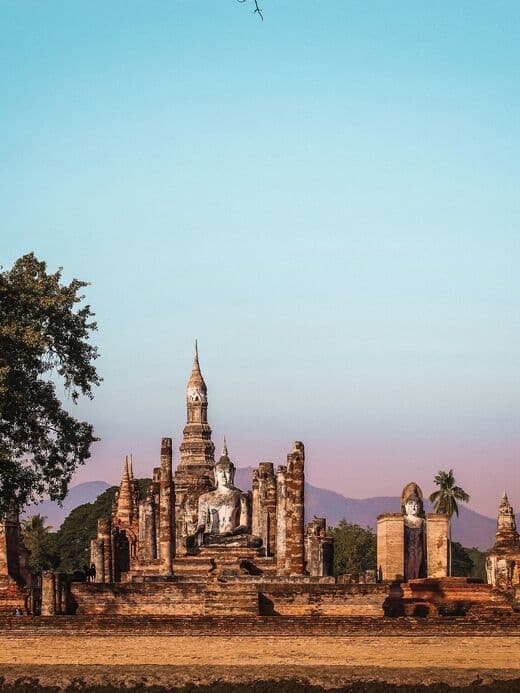
Bus Chiang Mai to Sukhothai (5-6 hours). Sukhothai Historical Park - Thailand's ancient capital, older than Ayutthaya. Wat Mahathat, Wat Si Chum with its giant seated Buddha. Explore by bicycle: the park is vast but flat.
Days 12-13: Khao Yai
Travel to Nakhon Ratchasima, Khao Yai. Full park day: trekking, Haew Narok and Haew Suwat waterfalls, night safari. Evening - PB Valley Winery.
Days 14-15: Khao Sok
Fly Korat to Surat Thani (via Bangkok). Khao Sok: jungle, Cheow Lan Lake, overnight in floating bungalow.
Days 16-18: Krabi and Phi Phi
Transfer to Krabi. Day 16 - Railay, Phra Nang Cave, rock climbing.
Day 17 - Four Islands tour or Hong Islands.
Day 18 - Tiger Cave Temple (1,260 steps!), Emerald Pool, hot springs.
Days 19-20: Samui Islands
Ferry to Samui. Full island day plus day trip to Koh Tao for snorkeling or diving.
Day 21: Departure
Fly Samui to Bangkok to home.
Connectivity and Internet
Internet in Thailand is excellent. 4G covers nearly the entire country; 5G operates in major cities. Mobile internet speeds often exceed home broadband in many Western countries.
SIM cards: Three main carriers - AIS (best coverage), DTAC, True Move. Tourist SIMs sell at airport kiosks (right after arrivals), 7-Eleven stores, and carrier shops. Prices: 299-599 baht for 8-15 days unlimited data.
Passport required for activation - registration became mandatory in 2022. Airport kiosks activate on the spot. Top up at any 7-Eleven (give them your number and amount).
eSIM: If your phone supports it, more convenient. Airalo, Holafly, Nomad - buy before departure and activate on arrival.
Wi-Fi: Free in most cafes, restaurants, and hotels. Bangkok has it on the BTS and MRT. Speeds are typically reliable.
VPN: Some websites are blocked (gambling, adult content). VPN works without issues, no penalties for use.
What to Eat: Thai Cuisine
Thai cuisine is the art of balancing five flavors: sweet, salty, sour, spicy, and umami. Every dish is a symphony where no single taste dominates. And yes, the heat is serious - 'a little spicy' to a Thai means 'burning inferno' to most Westerners. Say 'mai phet' (not spicy) or 'phet nit noy' (just a little spicy) when ordering.
Essential Dishes
Pad Thai - Stir-fried rice noodles with egg, tofu, shrimp or chicken, bean sprouts, and peanuts. Thailand's most famous export. The best pad thai comes from street carts for 40-60 baht. Restaurant versions at 300 baht are rarely better.
Tom Yum - Spicy, sour soup with shrimp, mushrooms, lemongrass, galangal, and kaffir lime leaves. The version with coconut milk is called tom yum nam khon. This isn't just soup - it's a flavor explosion. Order 'with rice' - it comes separately.
Tom Kha Gai - Chicken soup with coconut milk, gentler than tom yum but equally aromatic.
Green Curry (Gaeng Keow Wan) - Hot curry with coconut milk, basil, and eggplant. Green is the spiciest Thai curry. Red (gaeng phet) is medium, yellow (gaeng karee) is mild.
Massaman Curry - Persian traders' legacy: mild, with peanuts, potatoes, and cinnamon. Almost no heat, a foreigner favorite.
Som Tam - Green papaya salad: spicy, sour, sweet, salty. Isan classic loved nationwide. Warning: the original has raw crab and fermented fish sauce - can be intense for unaccustomed stomachs. Ask for 'som tam thai' - the milder version without raw seafood.
Khao Pad - Fried rice with egg and vegetables. Basic dish available everywhere, hard to mess up. Khao pad gai - chicken, khao pad kung - shrimp, khao pad poo - crab.
Pad Kra Pao - Stir-fried minced meat (pork, chicken) with holy basil and chilies. Served over rice with a fried egg on top. Thai working-class lunch, simple and delicious.
Khao Man Gai - Poached chicken with rice cooked in chicken fat. Thailand's answer to Hainanese chicken rice. Simple dish, but when done right - perfection.
Street Food
Satay - Skewered meat on bamboo sticks with peanut sauce. Chicken, pork, or beef.
Gai Yang - Grilled marinated chicken. Especially good in the northeast.
Moo Ping - Sweet pork skewers, sold on every corner in the mornings.
Roti - Thai pancakes, originally from India. With banana, egg, Nutella, condensed milk for dessert. Roti with curry for savory.
Mango Sticky Rice (Khao Niao Mamuang) - The national dessert. Mango season runs April-June, but available year-round.
Coconut Ice Cream - Sold from carts, served in coconut shells with nuts, corn, and sweet beans (yes, sweet).
Drinks
Thai Iced Tea (Cha Yen) - Orange, sweet, with condensed milk. Refreshing in the heat.
Coconut Water - From young coconuts, with flesh. Perfect natural isotonic.
Beer: Singha (premium), Chang (budget), Leo (middle ground). All light lagers, nothing special, but cold beer in heat satisfies.
Whiskey: SangSom is actually rum, despite the name. Mekhong is also 'whiskey' but more like sweet rum. Drink with soda and ice.
Regional Specialties
North (Chiang Mai): Khao soi - curry noodle soup with chicken and crispy noodles on top. Sai ua - northern sausage with herbs. Kaeng hang le - Burmese-style pork curry.
Isan (Northeast): Larb - spicy minced meat salad with herbs. Nam tok - similar but with toasted rice powder. Sticky rice (khao niao) instead of regular - eaten with hands.
South: Even spicier. Gaeng tai pla - fiery curry with fish innards (acquired taste). More seafood, more turmeric.
Practical Tips
- Best food is where Thais eat. Lines are good signs
- Plastic tables on the street don't indicate quality. Often better than air-conditioned restaurants
- 'Phet' (spicy) for a Thai and for you are different things. Warn them in advance
- Utensils: spoon and fork (push food onto spoon with fork, eat with spoon). Chopsticks only for noodles
- 7-Eleven serves decent food: onigiri, sandwiches, dim sum - they'll heat it for you
- Markets: morning for fresh produce, evening for prepared food
Shopping in Thailand
Thailand is a shopping paradise with prices that make Westerners weep (with joy). Main rule: bargain at markets, not at malls.
What to Buy
Clothing and shoes: Thai brands are quality and cheap. Jaspal, Greyhound, Soda - local fashion. Counterfeits fill markets, but quality varies wildly - might fall apart in a week. At outlets (Central Village near Bangkok), international brands run 30-70% off.
Silk: Thai silk is handmade with beautiful colors. Jim Thompson is the premium brand, expensive. Markets offer cheaper options, but check quality (real silk squeaks when compressed).
Cosmetics: Thai beauty products (Srichand, Mistine, Beauty Buffet) deliver quality at laughable prices. Coconut oil, soap, balms - buy in bulk. Boots and Watsons have pharmacy cosmetics cheaper than in the West.
Spices and sauces: Curry pastes, fish sauce, tamarind paste, dried chilies. Big C and Makro supermarkets have wholesale prices.
Snacks: Dried mango, coconut chips, durian candies, spicy nuts. Tao Kae Noi - famous seaweed snacks.
Woodwork and crafts: Wood carvings from Chiang Mai, hill tribe silver, lacquerware. Chatuchak has everything.
Massage supplies: Thai balm (yellow, green, white - different purposes), massage oils, herbal compress balls.
Electronics: Not cheaper than the US, sometimes more expensive. iPhones have regional restrictions, avoid. Cameras, laptops - check Pantip Plaza but compare prices first.
Where to Shop
Bangkok:
- Chatuchak - 15,000 stalls, everything imaginable. Weekends only
- Siam Paragon, Central Embassy - luxury
- MBK - electronics, clothing, bargaining possible
- Terminal 21 - mid-range, amazing food court
- ICONSIAM - new, beautiful, Thai brands
- Asiatique - evening riverside market, souvenirs
Phuket:
- Central Festival - main mall
- Jungceylon (Patong) - near the beach
- Old Town - boutiques, galleries
Chiang Mai:
- Sunday Walking Street - crafts, food, music
- Night Bazaar - daily
- Warorot Market - local market, spices, fabrics
VAT Refund
The 7% VAT is refundable on purchases over 2,000 baht at a single store. Look for 'VAT Refund for Tourists' signs. Fill out forms at the store, then claim at the airport VAT Refund counter (before passport control). Items over 10,000 baht require physical inspection.
Bargaining
At markets, opening prices run 2-3x actual value. Negotiate with a smile, start at 40-50% of the asking price. If the seller won't budge, walk away - they often follow. Shopping malls, stores with price tags, and 7-Eleven - no bargaining.
Useful Apps
Transport:
- Grab - taxi, motorbike taxi, food delivery. The essential app
- Bolt - Grab alternative, sometimes cheaper
- Google Maps - navigation, public transit
- BKK Metro - Bangkok subway, offline maps
Translation:
- Google Translate - camera translates signs, menus
- Papago - better for Asian languages
Food:
- GrabFood, Foodpanda - food delivery
- Wongnai - Thai TripAdvisor for restaurants
Accommodation:
- Agoda - best prices in Asia
- Booking.com - familiar interface
- Airbnb - for longer stays
Money:
- XE Currency - exchange rates
- Splitwise - splitting expenses with friends
Other:
- Klook, GetYourGuide - tours, tickets
- iTranslate, SayHi - voice translation
- Maps.me - offline maps
Final Thoughts
Thailand is a country that gives every visitor what they seek. Want beach-side relaxation? The islands await. Cultural immersion? Temples, palaces, and historical parks abound. Adventure? Jungles, diving, and rock climbing beckon. Simply want to eat well? Thai cuisine won't let go.
For travelers from the US, UK, Australia, and similar countries, Thailand offers remarkable ease. Visa-free entry for 60 days, widespread English signage, world-class medical facilities, and infrastructure spanning budget hostels to luxury resorts. The time zone may be challenging (12-17 hours from US, 7 hours from UK), but jet lag fades quickly when you're on a tropical beach.
Best advice: don't try to see everything in one trip. Thailand is a country people return to. First visit - Bangkok and beaches. Second - the north. Third - Isan and wild national parks. And so on. Each trip reveals something new.
Most importantly, embrace 'sabai-sabai.' Don't stress over small things. Smile, try new foods, respect local culture. Thailand will smile back.
Information accurate as of 2026. Verify visa requirements, prices, and transport schedules before your trip - conditions change.