Ayutthaya
Ayutthaya 2026: What to Know Before You Go
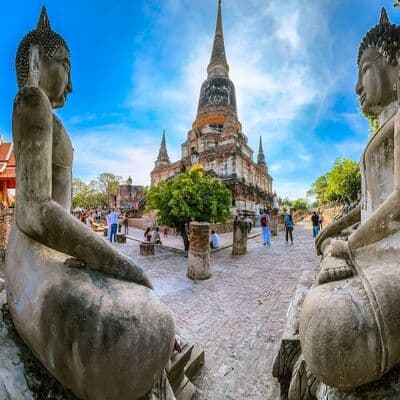
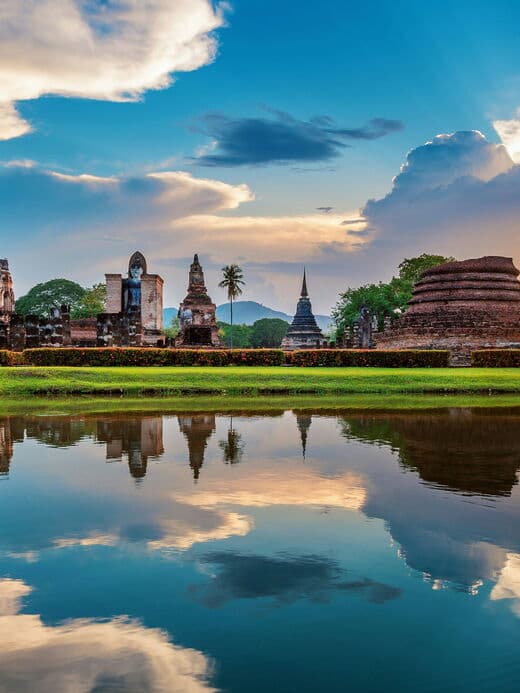
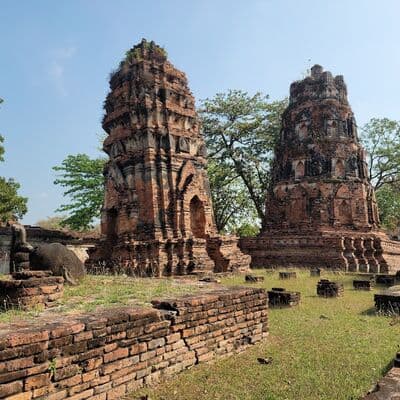
For over four centuries, Ayutthaya was the beating heart of the Siamese kingdom - a city of 1,500 temples, a million residents, and trade connections stretching from China to Portugal. Then, in 1767, the Burmese army burned it to the ground. What remains today is one of Southeast Asia's most haunting archaeological landscapes: headless Buddhas wrapped in tree roots, crumbling prangs silhouetted against tropical sunsets, and a quiet dignity that no amount of tourist buses can erase.
The city sits about 80 kilometers north of Bangkok - roughly 90 minutes by train or just over an hour by minivan. Most visitors treat it as a day trip, which is a mistake. One day gives you the highlights, but two or three days let you actually feel the place: cycling through ruins at dawn with no one around, eating boat noodles at a canal-side shack, watching monks in saffron robes file past 600-year-old stupas.
The old city occupies an island formed by the confluence of three rivers - the Chao Phraya, Pa Sak, and Lopburi. You can cover the main island by bicycle in a single morning. The UNESCO World Heritage designation (1991) means the ruins are well-maintained, and a combined ticket covering six major temples costs just 220 THB (about $6 USD). Ayutthaya is not a beach destination, and the nightlife is nonexistent. What it offers is a rare chance to walk through centuries of history at your own pace and eat extraordinary food for almost nothing.
Neighborhoods: Where to Stay in Ayutthaya
Ayutthaya is compact enough that your neighborhood choice matters less than in Bangkok. That said, each area has a distinct personality, and picking the right base makes your visit smoother.
East Side of the Island (Near the Train Station)
The practical choice where most first-timers end up. The train station sits just east of the island, connected by a short ferry (5 THB) across the Pa Sak River. Naresuan Road and U Thong Road have the highest concentration of guesthouses, 7-Elevens, ATMs, and bicycle rental shops. Not glamorous - concrete shophouses and bustling morning markets - but everything you need is within walking distance. Hotels run 400-1,200 THB ($11-34 USD) per night for rooms with air conditioning.
Soi Farang (Backpacker Quarter)
A small lane off Naresuan Soi 2 nicknamed Foreigner Alley. Budget guesthouses, laundry services, and Western-menu cafes cluster here. The vibe is relaxed and sociable - you meet fellow travelers over cheap beer and end up sharing a tuk-tuk next morning. Rooms start around 300 THB ($8 USD) for fan-cooled doubles. The drawback: it can feel like a bubble. But the location is central and prices hard to argue with.
South Side of the Island (River Views)
The southern edge facing the Chao Phraya offers river views and space. Boutique hotels and converted teak houses have appeared here, with rooms in the 1,500-4,000 THB ($42-113 USD) range. Sunsets from a riverside terrace are exceptional. The trade-off: you are further from the main restaurant cluster and will need a bicycle to reach eastern temples. Ideal for couples or repeat visitors wanting something atmospheric.
West Bank (Near Wat Chaiwatthanaram)
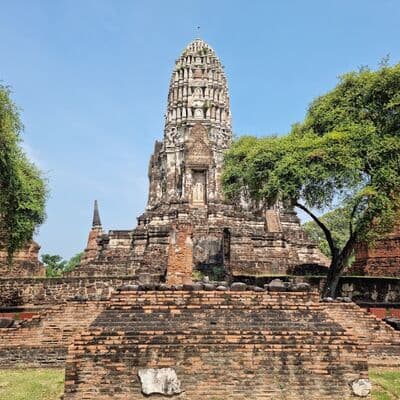
Cross the river west and you enter a quieter residential area. The draw is proximity to Wat Chaiwatthanaram, arguably the most photogenic temple in the complex. A few homestays and small resorts along the riverbank offer genuine peace and direct sunset access. Prices are moderate - 600-2,000 THB ($17-57 USD). The downside: reaching the island requires crossing the river each time. Manageable with a bicycle or motorcycle; inconvenient without.
East Bank of the Pa Sak River (Rural Side)
Beyond the train station, Ayutthaya transitions into rice paddies and rural villages. Very little tourist infrastructure, but a few riverside resorts cater to Thai weekend visitors. The appeal is total quiet - egrets in fields, long-tail boats puttering past, zero temple crowds. Works best with your own transport and if you want to explore the broader region, including Bang Pa-In Royal Palace to the south.
Best Time to Visit Ayutthaya
November to February: The Sweet Spot
Thailand's cool season brings daytime temperatures around 28-32 degrees Celsius (82-90 Fahrenheit) with low humidity and almost no rain. December and January are particularly pleasant - you can cycle all day without melting. The flip side: peak tourist season means the popular temples get crowded between 10am and 2pm. The solution is simple: start at 7am and you will have the ruins to yourself.
March to May: Hot Season
Temperatures regularly hit 38-40 degrees Celsius (100-104 Fahrenheit). Temple-hopping in this heat is exhausting. But crowds thin dramatically and hotel prices drop. Adopt the local rhythm: explore 6-10am, retreat to air conditioning during midday, venture out after 4pm for golden-hour light. April brings Songkran (Thai New Year, April 13-15), celebrated with particular enthusiasm here - water fights around ancient ruins are surreal and unforgettable.
June to October: Rainy Season
Daily afternoon downpours lasting one to three hours, but mornings are often sunny. The real risk is flooding - Ayutthaya sits at the confluence of three rivers, and in bad years the lower-lying temples can be partially submerged. Check conditions before booking. On the positive side, the landscape turns lush green and you will have ruins almost entirely to yourself. Room rates drop 30-50 percent from peak season.
Itinerary: 1 to 3 Days in Ayutthaya
Day 1: The Essential Circuit
Catch the 6:40am train from Bangkok's Bang Sue Grand Station (45-65 THB/$1.30-1.80 USD). Arrive around 8:15am, take the 5 THB ferry across the river, and rent a bicycle immediately - shops along Naresuan Road charge 50-80 THB ($1.40-2.25 USD) for the day. Start with Wat Mahathat, home to the famous Buddha head entwined in banyan tree roots. Arrive before 9am to photograph it without selfie sticks in your frame. Most visitors rush through in 15 minutes; give it at least 45.
Walk next door to Wat Ratchaburana - climb the steep stairs inside the main prang for views, then descend into the crypt for faded 15th-century murals. By 10:30am, cycle north to Wat Phra Si Sanphet, the grandest island temple with three enormous bell-shaped chedis that once held royal ashes. The adjacent Wihan Phra Mongkhon Bophit houses a massive bronze Buddha that survived the Burmese destruction.
Around noon, escape the heat at Rak Na Ayutthaya, a cafe in a restored wooden house near the ruins. Rest until 2pm - non-negotiable in the hot months - then visit the Ayutthaya Historical Park visitor center for maps and context.
Late afternoon: cross the river to Wat Chaiwatthanaram. Arrive by 4:30pm. This Khmer-style temple becomes transcendent in pre-sunset light. Stay until closing (around 6pm). Then cycle back for dinner at the Ayutthaya Night Market - grilled seafood, pad thai, mango sticky rice with illuminated temples across the water.
Day 2: Deep Cuts and the Outer Ring
Start at Wat Yai Chai Mongkhon, southeast of the island. Fewer crowds, an enormous reclining Buddha draped in saffron, and panoramic views from the main chedi. Budget 90 minutes. Return to explore what you missed: Wat Thammikarat with its guardian lions and chickens, Wat Na Phra Men (one temple the Burmese did not destroy), and ruins along Khlong Tho canal.
For lunch, find Pa Lek Boat Noodles near Pridi Banomyong Bridge - tiny bowls of intensely flavored broth for 15-20 THB ($0.40-0.55 USD) each. Order five to ten and stack the empties. Point at what others are eating if the menu intimidates you.
Afternoon: hire a long-tail boat from the island's southeast piers. A 90-minute river circuit costs 800-1,200 THB ($23-34 USD) per boat (up to 6-8 people). You will see temples from the water - the same perspective diplomats had centuries ago - plus riverside communities and the occasional monitor lizard. The Ayutthaya Boat Tour offers a more structured version with English-speaking guides.
Day 3: Bang Pa-In, Local Life, and Farewell
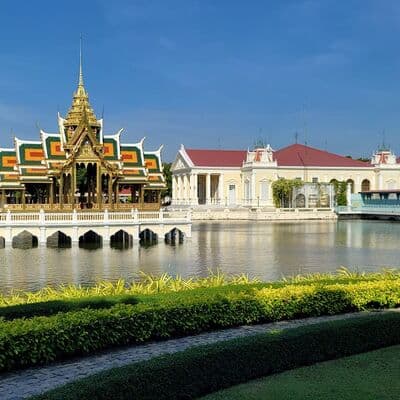
Rent a motorcycle (200-300 THB/$5.70-8.50 USD per day) and ride 20 kilometers south to Bang Pa-In Royal Palace - a fascinating mashup of Thai, Chinese, Gothic, and Victorian architecture in manicured riverside gardens. Budget two hours; bring modest clothing.
Return by late morning for the things guidebooks skip: the U Thong Road morning market (open until 11am) where vendors sell roti sai mai candy-floss crepes; Chao Sam Phraya National Museum (150 THB) with gold artifacts from temple crypts; and a final slow cycle along the river path. Take the 4:20pm or 5:30pm train back to Bangkok.
Where to Eat: Restaurants and Cafes
Night Market
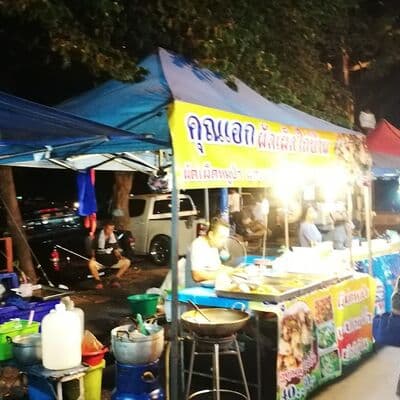
The Ayutthaya Night Market along the riverfront near Hua Ro is where the city comes alive after dark. Unlike Bangkok's tourist markets, this one serves locals, and the quality shows. Grilled river prawns (200-350 THB/$5.70-10 USD), pad thai to order, curries over rice (40-60 THB/$1.10-1.70 USD), seasonal fruits. Open nightly 5pm-10pm, biggest selection on weekends. Grab a riverside mat if available - eating with illuminated temples across the water is peak Ayutthaya.
Boat Noodle Alley
Ayutthaya claims to be the birthplace of boat noodles (kuay tiew ruea). Pa Lek and Pa Porn near the old boat landing are the most recommended - tiny bowls of deeply savory broth with pork or beef, rice noodles, and herbs, 15-20 THB ($0.40-0.55 USD) each. The tradition is to eat many; locals routinely down eight to twelve bowls. The broth is darker and richer than Bangkok versions, simmering since early morning. Most shops open lunch only, roughly 10am to 3pm.
Rak Na Ayutthaya
A restored wooden house near the central ruins, now a cafe-restaurant that has become the default traveler pit stop. Thai-fusion menu - basil pork rice bowls, green curry with roti, good cakes. Mains 80-180 THB ($2.25-5 USD). Air-conditioned interior with exposed brick and vintage decor. The food is genuinely good and staff welcoming.
River Prawn Restaurants
Giant freshwater prawns (kung mae nam) from the local rivers are legendary. Riverside restaurants along the road to Wat Chaiwatthanaram specialize in grilled prawns the size of your forearm with spicy dipping sauce, 400-800 THB ($11-23 USD) per plate. Ask for kung pao (grilled) or kung ob wun sen (baked with glass noodles) - both regional specialties. Best with cold beer and sticky rice.
Cafes for Surviving the Heat
Knowing where to find air conditioning becomes a survival skill. Besides Rak Na: Busaba Cafe (Thai iced tea, quiet garden), Coffee Old City (espresso, Wi-Fi, central), and Baan Kao Nhom (traditional Thai sweets). They keep you sane between 11am and 3pm when temples are most punishing.
Must-Try Food in Ayutthaya
Boat Noodles (Kuay Tiew Ruea): Rich, almost black broth in tiny bowls barely bigger than a teacup. Slow-simmered pork bones, cinnamon, star anise, dark soy, and often pig's blood for body. Stack empties to keep count. Ten bowls equals one normal portion - about 150-200 THB ($4.25-5.70 USD).
Roti Sai Mai: Ayutthaya's signature sweet - impossibly thin cotton-candy threads in pastel colors wrapped in paper-thin roti crepe. Buy from U Thong Road morning market stalls; best vendors sell out by afternoon. A bag of 10-15 pieces costs 40-60 THB ($1.10-1.70 USD). Green pandan flavor is the local favorite.
Giant River Prawns (Kung Mae Nam): Grilled over charcoal until shells turn bright orange, flesh sweet and firm. The head contains rich creamy fat locals consider the best part - squeeze it onto your rice. Available year-round, fattest during cooler months.
Tom Yum Kung: The local version uses freshwater prawns and tends to be clearer and more intensely sour than Bangkok's creamy style. Galangal, lemongrass, kaffir lime leaves, and serious chili. Order at riverside restaurants for 120-200 THB ($3.40-5.70 USD).
Pad Thai Ayutthaya Style: Wider noodles, slightly sweeter sauce, more generous dried shrimp than the Bangkok version. Street vendors at the night market make it fresh for 40-60 THB ($1.10-1.70 USD). Look for vendors using a proper wok over high flame - the smoky wok hei makes the difference.
Som Tam (Green Papaya Salad): Pounded to order with dried shrimp, peanuts, fish sauce, lime, and as many chilies as you dare. Order som tam Thai for the mild version or som tam pla ra with fermented fish sauce for the authentic northeastern kick.
Duck Noodle Soup: Slow-braised duck legs in five-spice broth over wide rice noodles. Meat falls off the bone, broth rewards slow sipping. Look for whole ducks hanging in the window. A generous bowl costs 50-70 THB ($1.40-2 USD).
Coconut Ice Cream: Real coconut milk frozen into slightly grainy, intensely flavored ice cream, topped with sweet corn, peanuts, and sticky rice. It sounds odd but works beautifully at 2pm when you need cold sugar to function. A cup runs 20-30 THB ($0.55-0.85 USD).
Local Secrets and Insider Tips
- Buy the 220 THB six-temple pass at your first temple rather than paying individually (50-100 THB each). Covers Wat Mahathat, Wat Ratchaburana, Wat Phra Si Sanphet, Wat Chaiwatthanaram, Wat Maheyong, and Wat Phra Ram. Even visiting four of six saves money.
- Start at 7am, not 9am. The first hour is magical - cool air, empty grounds, soft photography light. By 9:30am tour buses from Bangkok change the atmosphere completely.
- Hide from 11am to 3pm. Not laziness - survival strategy. Use this time for lunch, a nap, a cafe, or the air-conditioned Chao Sam Phraya National Museum.
- Rent a mountain bike, not a city bike. Paths between temples are sometimes unpaved or flooded. The extra 20-30 THB for gears and decent tires pays for itself. Check brakes and tire pressure before riding off.
- Buddha head photo etiquette at Wat Mahathat: crouch or kneel so your head is not higher than the Buddha's. Guards will remind you, but knowing beforehand saves awkwardness.
- Wear slip-on shoes. You remove shoes at every temple entrance, sometimes ten-plus times per day. Lace-up boots become misery by temple three.
- Sunset at Wat Chaiwatthanaram: the single best viewpoint. Northwest side facing the main prang, 5:00-5:40pm for the best light. Do not cut it close to 6pm closing.
- Skip tuk-tuk drivers at the train station. They charge 200-300 THB for rides that should cost 60-80 THB. Walk 100 meters away or just take the 5 THB ferry and rent a bicycle.
- Buy roti sai mai in the morning. Best stalls on U Thong Road sell out by afternoon. Between 7am and 10am is your window.
- Use the unmarked river ferries - 5 THB crossings at several points. Look for motorbikes clustered near concrete piers.
- Temple dress code is enforced. Shoulders and knees covered. Bring a light scarf; temple-rental wraps have seen better decades. Lightweight long pants and a t-shirt are simplest.
- Bring a flashlight. Temple crypts are pitch dark. The Wat Ratchaburana crypt with 15th-century murals is invisible without your own light.
Getting Around and Staying Connected
Getting to Ayutthaya from Bangkok
The train is the classic and best approach. Third-class trains depart Bangkok's Hua Lamphong or Bang Sue Grand Station roughly hourly for 15-45 THB ($0.40-1.30 USD), taking 1.5-2 hours through suburbs that open into rice paddies - a scenic transition no bus matches. Second-class with air conditioning runs 65-245 THB ($1.85-7 USD). Advance booking unnecessary except during Songkran and New Year.
Minivans from Victory Monument or Mo Chit cost 60-80 THB ($1.70-2.25 USD), taking 60-90 minutes depending on traffic. Private taxis via Grab run 800-1,200 THB ($23-34 USD) - worth it for groups of three or four splitting the fare.
Getting Around Ayutthaya
Bicycle: The undisputed best option. Flat island, short distances (1-3 km between temples), dedicated cycling paths. Rental 50-100 THB ($1.40-2.85 USD) per day; electric bikes 200-300 THB ($5.70-8.50 USD). Most shops provide a lock and map.
Tuk-tuk: Larger than Bangkok's, seating four comfortably. A temple circuit runs 200-400 THB ($5.70-11 USD) per hour; half-day tours 800-1,200 THB ($23-34 USD). Good when it is too hot to cycle, but they remove the freedom to linger.
Motorcycle: 200-300 THB ($5.70-8.50 USD) per day. International license technically required. Ideal for reaching Bang Pa-In or outlying sites. Wear a helmet - the fine without one is 500 THB ($14 USD).
Boats: Long-tail tours circle the island (60-90 minutes, 800-1,500 THB per boat) or head to Bang Pa-In (2-3 hours, 2,000-3,000 THB). The Ayutthaya Boat Tour has English-speaking guides. Cross-river ferries (5 THB) operate at multiple points.
Connectivity
Thai SIM cards available at the 7-Eleven near the train station - AIS, DTAC, and TrueMove offer tourist packages with 15-30 days of data for 299-599 THB ($8.50-17 USD). eSIM services like Airalo or Holafly work well and can be activated before arrival. 4G coverage is excellent everywhere including temple grounds. Google Maps is accurate for navigation. Grab works for cars and motorcycle taxis, though availability is spottier than Bangkok - expect 10-15 minute waits off-peak.
Who Ayutthaya Is For: Final Thoughts
Ayutthaya is perfect for history enthusiasts, photographers, cyclists, and budget travelers. World-class ruins, exceptional food, easy Bangkok access, and rock-bottom prices make it one of Thailand's best-value destinations. Two days is the sweet spot - enough to see major temples at a relaxed pace, eat through the boat noodle shops and night market, and take a sunset boat ride along ancient waterways.
It is not the destination for beaches, nightlife, or luxury resorts. The town is functional rather than charming, and the heat from March through October is genuinely oppressive. But if you have even a passing interest in Southeast Asian history, or simply want to escape Bangkok's chaos for a day or three, Ayutthaya delivers. Few places let you cycle through the ruins of a once-great civilization, eat extraordinary food for a few dollars, and catch a train back to a world capital in time for dinner.