Koh Samui
Koh Samui 2026: What to Know Before You Go
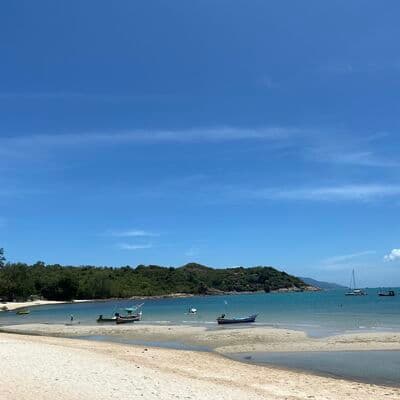
Koh Samui is Thailand's second-largest island, and it hits a sweet spot that most Southeast Asian destinations miss: developed enough that you won't struggle with basics, wild enough that you can still find a beach to yourself at 7 AM. It's not Phuket (too big, too busy) and it's not Koh Lipe (too remote, too basic). Samui sits right in the middle - and that's exactly why it works for such a wide range of travelers.
Here's the honest version. Samui has world-class beaches, a legitimate food scene, temples worth visiting, and enough nightlife to keep you entertained without feeling like you're trapped in a theme park. The infrastructure is solid: a private airport with direct flights from Bangkok, Grab works island-wide, hospitals that medical tourists fly in for, and 7-Elevens roughly every 800 meters.
The downsides? The airport is privately owned by Bangkok Airways, so flights cost 30-50% more than comparable routes. High season (December-February) brings genuine crowds to Chaweng. Scooter accidents are the number one reason tourists end up in hospital. And the rainy season (October-December) can genuinely ruin a trip - we're talking days of continuous downpour, not a quick afternoon shower.
Who should come? Couples looking for a mix of beach and culture. Families with kids who need safe swimming beaches. Digital nomads who want reliable wifi without Bangkok's chaos. First-time Thailand visitors who want an island without the backpacker-party reputation of Koh Phangan. Who should skip it? Budget backpackers on under 800 THB/day ($23 USD) - head to Koh Phangan instead. Party-first travelers - Phuket's Bangla Road will serve you better. Anyone expecting an 'untouched paradise' - Samui has been on the tourist map since the 1970s.
Koh Samui Neighborhoods: Where to Stay
Samui's ring road circles the entire island in about 50 kilometers. Every neighborhood has a distinct personality, and picking the wrong one is the most common mistake first-timers make.
Chaweng: The Main Event
Chaweng Beach is the longest and most developed beach - roughly 7 km of sand with the densest concentration of hotels, restaurants, and bars. The northern end (Chaweng Noi) is quieter. The central stretch is where the action is: Ark Bar, Green Mango, the clubs along Soi Green Mango. The Chaweng Night Market runs nightly. Expect 1,500-4,000 THB ($43-$115) for a decent mid-range hotel. Best for: first-timers, nightlife seekers, people who want everything walkable.
Lamai: The Balance
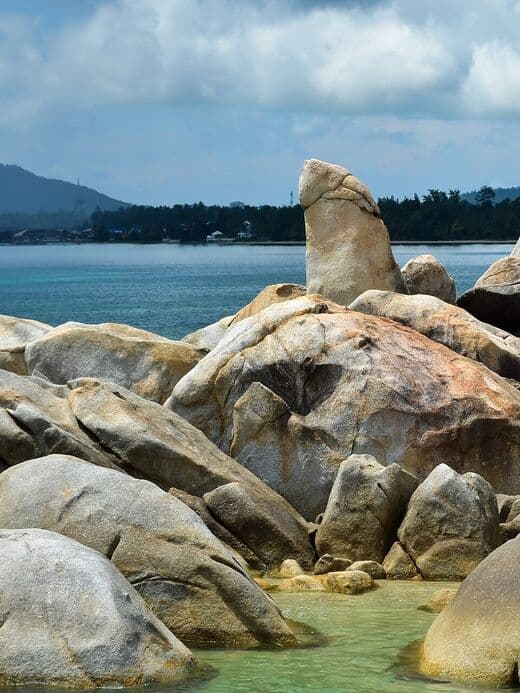
Lamai Beach is honestly where I'd tell most people to stay. The beach is gorgeous, the vibe is more relaxed than Chaweng but still has plenty going on. The southern end near Grandfather and Grandmother Rocks is particularly scenic. Hotels run 1,000-3,000 THB ($29-$86). Best for: couples, repeat visitors, people who want beach quality without Chaweng's intensity.
Bophut and Fisherman's Village: The Charm
Bophut Beach is on the north coast, and Fisherman's Village is the real draw - a pedestrian street of converted wooden shophouses with boutiques, restaurants, and bars. Friday night walking market is the best market experience on the island. Hotels range from 800 THB ($23) guesthouses to 8,000+ THB ($230+) luxury resorts. Best for: couples wanting atmosphere, foodies.
Maenam: Budget-Friendly North
Maenam Beach is where budget travelers and long-stayers gravitate. Accommodation is genuinely affordable - 500-1,200 THB ($14-$35) gets you a clean bungalow. The beach is long, calm, and great for swimming. Best for: budget travelers, long-stayers, families wanting calm water.
Choeng Mon: Quiet Luxury
Choeng Mon Beach is tucked into the northeast corner and feels almost like a different island. The beach is sheltered and calm. This is where you'll find Samui's best luxury resorts (Sala Samui, Tongsai Bay). Hotels start at 2,000 THB ($57) and go up to 15,000+ THB ($430+). Best for: honeymooners, families with young children.
Lipa Noi and the Southwest: The Wild Side
Lipa Noi Beach and the Taling Ngam coast represent Samui's least-developed stretch. Sunsets here are the best on the island. This is also the departure point for Ang Thong National Marine Park boat trips. Expect 800-3,500 THB ($23-$100). Best for: sunset chasers, nature lovers, repeat visitors.
Bang Po: The Expat Corner
Bang Po on the northwest coast has quietly become the expat neighborhood. The beach faces Koh Phangan and gets spectacular sunsets. Several excellent restaurants have opened here recently. Accommodation is limited - mostly villas and long-term rentals, a few guesthouses at 700-2,000 THB ($20-$57). Best for: digital nomads, long-stayers.
Best Time to Visit Koh Samui
Samui's weather doesn't follow the same pattern as Phuket or Bangkok. The island is on the Gulf of Thailand, so its monsoon hits later. Don't assume 'Thailand dry season' applies here.
January to April: Peak Season
The sweet spot. Low humidity, minimal rain, calm seas, best water visibility. January and February are the driest months. March-April get warmer (34-36C) but remain dry. Songkran (Thai New Year, April 13-15) brings chaotic fun - water fights everywhere, especially on Chaweng's main road. Downside: highest prices and most crowds. Book 4-6 weeks ahead.
May to September: The Smart Season
The insider move. Occasional rain (usually 30-60 minute afternoon bursts), but weather is largely fine. Hotel prices drop 30-50%. Beaches are emptier. June and July are particularly good - warm, mostly sunny, genuinely affordable. You might get 2-3 rainy days per week, but they rarely wipe out a full day.
October to December: Monsoon Risk
October and November are risky. The Gulf monsoon can bring 3-5 days of constant downpour. Boat trips to Ang Thong get cancelled frequently. December improves in the second half. If you must visit, have backup plans and book refundable accommodation.
Festivals Worth Timing
Songkran (April 13-15): Thai New Year water festival. Three days of organized chaos. Bring a waterproof phone case. Loy Krathong (November, full moon): Floating lantern festival on the beaches - genuinely magical if the weather cooperates. Full Moon Party (monthly): Technically on Koh Phangan, but accessible by speedboat (30 min, 400-600 THB / $12-$17). Runs from 9 PM to sunrise.
Itineraries: 3, 5, and 7 Days on Koh Samui
3 Days: The Highlights Sprint
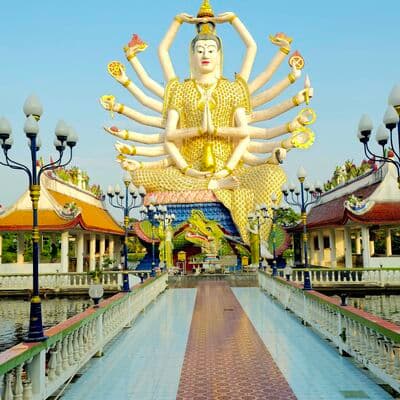
Day 1: Temples and Culture. Start at Big Buddha Temple early (8:00-9:00 AM) before the tour buses. The 12-meter golden Buddha is impressive, and hilltop views across to Koh Phangan are worth the climb. Dress code enforced: cover shoulders and knees. Drive 10 minutes to Wat Plai Laem - this lakeside temple with its 18-armed Guanyin statue is more photogenic and usually less crowded. Head to Fisherman's Village for lunch (Pad Thai 80-120 THB / $2.30-$3.50). Afternoon: swim at Chaweng Beach. Sunset drinks at a beach bar (cocktails 200-350 THB / $6-$10). Evening: Chaweng Night Market for dinner - grilled seafood, mango sticky rice, coconut ice cream (50-200 THB / $1.50-$6 per dish).
Day 2: South Coast Exploration. Rent a scooter (250-350 THB / $7-$10/day) or hire a driver (1,500-2,500 THB / $43-$72 full day). Head to Na Muang Waterfall 1 - easy 5-minute walk, swimmable pool at the base. The adventurous can hike 30 minutes to Na Muang Waterfall 2 (bring proper shoes). Drive to Laem Sor Pagoda on the southern tip - rarely crowded, stunning against the blue water. Continue to Grandfather and Grandmother Rocks for the obligatory photo. Afternoon: relax at Lamai Beach or Silver Beach (smaller, excellent snorkeling). Evening: Thai massage (300-500 THB / $9-$14 for one hour).
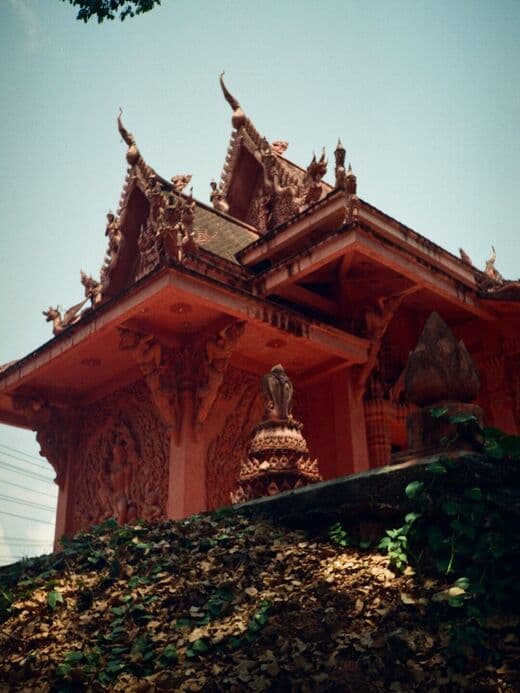
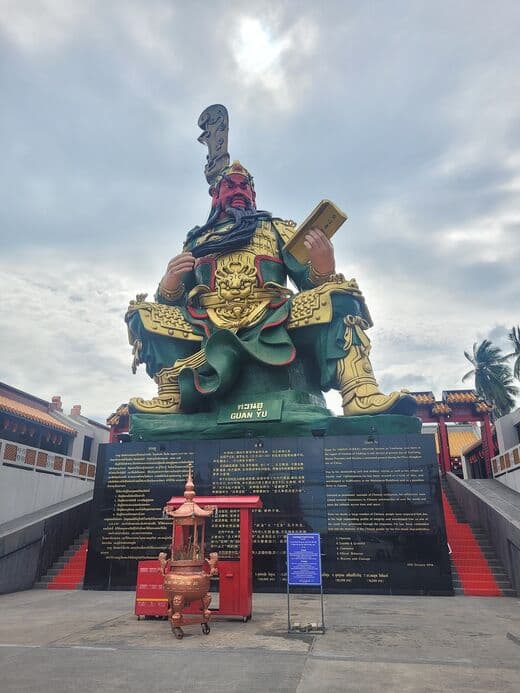
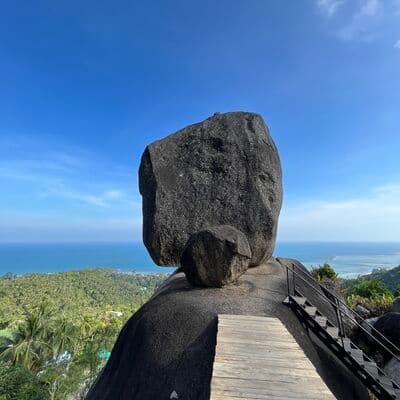
Day 3: Viewpoints and Hidden Spots. Drive to Lad Koh Viewpoint for panoramic views. Continue to Overlap Stone Viewpoint - stacked granite boulders with ocean views. Visit Red Temple (Wat Ratchathammaram) for its striking crimson architecture. Lunch near Nathon town (authentic, cheap Thai food). Afternoon: Guan Yu Shrine, then Lipa Noi Beach for the best sunset on the island.
5 Days: Adding Depth
Days 1-3: Follow the 3-day itinerary above.
Day 4: Ang Thong National Marine Park. Book in advance. A full-day trip to Ang Thong National Marine Park is the single best day trip from Samui - 42 islands with emerald lagoons, hidden beaches, limestone karsts. Tours depart 7:30-8:00 AM from Nathon, return around 5:00 PM. Group tours: 1,800-2,500 THB ($52-$72) including lunch, kayaking, snorkeling. Speedboat tours: 3,500-5,000 THB ($100-$143). Bring reef-safe sunscreen and motion sickness pills. The viewpoint hike on Koh Wua Ta Lap (500 steps) rewards you with the iconic emerald lake view.
Day 5: Secret Garden and Pig Island. Morning trip to Secret Buddha Garden - you'll need a 4x4 or confident scooter driver (steep, unpaved road). Surreal stone statues in dense jungle, built by a local farmer in 1976. Entry 80 THB ($2.30). Continue to Khao Hua Jook Chedi for 360-degree panorama. Afternoon: Koh Madsum (Pig Island) - 15-minute longtail boat from the south coast (500-800 THB / $14-$23 return). Beautiful island with crystal water and yes, actual pigs on the beach.
7 Days: The Full Experience
Days 1-5: Follow the 5-day itinerary above.
Day 6: Koh Phangan Day Trip. Morning ferry (30-45 min, 250-400 THB / $7-$12 from Nathon or Big Buddha pier). Visit Thong Sala walking street, swim at Haad Rin or Bottle Beach. Lomprayah catamaran is most comfortable. Return on evening ferry (last boats 5:00-6:30 PM). Pre-book return tickets in high season.
Day 7: Slow Day. Thai cooking class (1,200-2,000 THB / $34-$57 half-day, including market visit). Hit Silver Beach Thongtakian - a small cove with some of the clearest water on the island. Two-hour Thai massage (500-800 THB / $14-$23). Final sunset at Lipa Noi. Last dinner: revisit whatever restaurant blew your mind earlier.
Where to Eat on Koh Samui
Samui's food scene has matured significantly. You can eat extraordinarily well here at every price point. The best food is rarely at the places with the biggest signs.
Street Food and Markets
Chaweng Night Market is the most accessible - grilled meats, Pad Thai, fruit shakes, seafood at 60-150 THB ($1.70-$4.30) per dish. Fisherman's Village Friday night market is more curated and atmospheric. For the most authentic experience, head to Nathon town's morning market (6:00-11:00 AM) where locals actually eat - 40-80 THB ($1.15-$2.30) per dish. Try the Khao Man Gai (chicken rice) and Moo Ping (grilled pork skewers).
Local Restaurants
Look for places where Thai families are eating and plastic chairs outnumber cushioned ones. Along the ring road near Maenam and Lamai, family-run spots serve curries and stir-fries for 80-150 THB ($2.30-$4.30). Seafood restaurants near Bophut specialize in fresh catch - point at what you want, choose your cooking style, pay by weight. A grilled fish for two: 300-500 THB ($9-$14).
Mid-Range and Fine Dining
In the 200-600 THB ($6-$17) per person range, Bophut and central Lamai have the best concentration of quality restaurants. Italian food is surprisingly good - Samui's Italian community has been here for decades. For special occasions: Dining on the Rocks at Six Senses (tasting menu from 4,500 THB / $129), The Page at The Library (1,500-3,000 THB / $43-$86 per person). Wine markup is steep - 2,500-5,000 THB ($72-$143) for a bottle worth 800 THB in Bangkok.
Cafes and Breakfast
Third-wave coffee shops with single-origin Thai beans are everywhere, especially around Bophut and Chaweng - 80-150 THB ($2.30-$4.30) for quality coffee. For a Thai breakfast, try Jok (rice porridge) at any street vendor: 50 THB ($1.40) and genuinely delicious.
Must-Try Food on Koh Samui
Don't leave without trying these, listed in order of how badly you'll regret missing them.
Pad Thai (phad thai): You haven't had it properly until you've had it from a street wok. Night market versions with fresh shrimp, crushed peanuts, and lime bear no resemblance to overseas versions. 60-120 THB ($1.70-$3.50).
Tom Yum Goong (tom yam kung): Hot and sour shrimp soup. Ask for 'nam sai' (clear broth) or 'nam khon' (creamy). If you can handle spice, ask for 'phet mak' (very spicy). 120-200 THB ($3.50-$6).
Som Tam (som tam): Green papaya salad, pounded fresh in front of you. Start with 'phet nit noi' (a little spicy) unless you know your tolerance. Stick with 'som tam thai' for the standard version. 60-100 THB ($1.70-$2.90).
Massaman Curry (kaeng matsaman): The richest Thai curry - slow-cooked with potatoes, peanuts, and warm spices. Southern Thai in origin, and Samui restaurants do it exceptionally well. 120-200 THB ($3.50-$6).
Grilled Seafood (ahaan talay yang): Samui is an island - act accordingly. Giant river prawns grilled with sea salt are extraordinary. Expect 300-800 THB ($9-$23) for a seafood platter for two.
Mango Sticky Rice (khao niao mamuang): Sweet glutinous rice with ripe mango and coconut cream. Only truly exceptional during mango season (April-June), but decent year-round. 80-150 THB ($2.30-$4.30).
Roti: Thai-Muslim flatbread served with condensed milk, banana, Nutella, or egg. Watching it stretched paper-thin is half the experience. 40-80 THB ($1.15-$2.30) at night market carts.
Coconut Ice Cream (ai-tim kathi): Served in a coconut shell with peanuts, sweet corn, sticky rice. Samui's coconuts are famous across Thailand - the ice cream is richer than anywhere else. 50-100 THB ($1.40-$2.90).
Pomelo Salad (yam som-o): Fresh pomelo with dried shrimp, shallots, chili, coconut flakes, lime. Light, refreshing, perfect counterpoint to richer dishes. 100-180 THB ($2.90-$5.20).
What NOT to order: Skip Western food at Thai restaurants. Avoid Pad Thai at resort restaurants - invariably worse and 3x the price. Be cautious with ice at the cheapest stalls: tube ice (hollow cylinders) is factory-made and safe; crushed ice from unknown sources is riskier.
Allergies: Peanuts are in everything. Fish sauce and shrimp paste are in virtually all Thai dishes - true veganism is challenging but possible at dedicated vegetarian restaurants (look for 'jay' signs). Say 'mai sai phong chu rot' to skip MSG. Gluten-free travelers will find Thai cuisine naturally accommodating since rice is the base starch.
Local Secrets: 12 Things Nobody Tells You
1. Scooter safety is no joke. Roughly 70% of tourist hospital visits are scooter-related. Wear the helmet, don't drink and drive (police checkpoints after 10 PM), avoid driving in rain. Check your travel insurance for motorcycle coverage specifically - most rental insurance is worthless.
2. Bargaining rules. Markets and songthaew: always negotiate, start at 50-60% of asking price. Shops with price tags: fixed. 7-Eleven, restaurants with menus: never bargain. Rule of thumb: if the seller has a calculator, bargaining is expected.
3. Airport taxi racket. Fixed rates: 500-700 THB ($14-$20) to Chaweng, 700-1,000 THB ($20-$29) elsewhere. Workaround: pre-book a hotel transfer or order Grab once outside the airport gate. Walking 200 meters outside the access road gets dramatically better prices.
4. Rain doesn't mean a ruined day. Tropical rain is usually 20-60 minutes, then sunshine. Don't cancel plans for morning clouds. Exception: peak monsoon (October-November) when it can rain continuously for days. Rain-day options: cooking class, spa, temple visits, cinema.
5. Songthaew are the cheapest transport. Converted pickup trucks along the ring road: 50-100 THB ($1.40-$2.90) per person. Flag one down, agree on price. Run roughly 7 AM to 6 PM. After dark, prices triple.
6. 7-Eleven is your best friend. Cheap water (7-10 THB), decent coffee (25-40 THB), basic medications, toasted sandwiches (29-39 THB). ATMs outside charge 220 THB ($6.30) per withdrawal regardless of bank, so take out the maximum (20,000-30,000 THB) each time.
7. Temple dress code is enforced. Cover shoulders and knees at Big Buddha, Wat Plai Laem, and all temples. Keep a sarong in your bag. Remove shoes before entering buildings. Don't climb statues for photos - deeply disrespectful and finable.
8. Monkeys will steal your stuff. Macaques near temples and viewpoints (especially Overlap Stone Viewpoint) will grab food, sunglasses, phones. Don't feed them. Keep valuables in closed bags.
9. West coast sunsets are non-negotiable. Lipa Noi has the best unobstructed sunset views. Get there by 5:30 PM (sunset roughly 6:00-6:30 PM year-round). The viewpoint bars above Taling Ngam are equally stunning.
10. Jellyfish are seasonal. Box jellyfish appear October-February, particularly after storms. If stung, douse with vinegar, not freshwater. Wearing a rash guard during these months is sensible.
11. Thai massage varies wildly. Beachfront tourist massage: 300-400 THB/hour, decent but rushed. For genuinely therapeutic work, go to a proper parlor where locals go. Two-hour traditional massage: 500-800 THB ($14-$23). Say 'bao bao' (gentle) if it's too intense.
12. Buy coconut oil here. Samui's been a coconut island for centuries. Cold-pressed virgin coconut oil from local producers: 150-300 THB ($4.30-$8.60) per bottle, a fraction of home prices. Coconut chips (40-80 THB) make excellent souvenirs.
Transport and Connectivity
Getting to Koh Samui
By air: Samui Airport (USM) has direct flights from Bangkok (1 hour, Bangkok Airways monopoly - 3,000-7,000 THB / $86-$200 one way). Seasonal international flights from Singapore, Hong Kong, KL. The open-air terminal feels like arriving at a resort. Budget alternative: Fly to Surat Thani (AirAsia/Nok Air, often 1,000-2,500 THB / $29-$72) then ferry. Combined bus-ferry takes 3-4 hours at 350-550 THB ($10-$16). Book through Lomprayah or Seatran.
Getting Around
Scooter (250-350 THB / $7-$10/day): Most popular option. Honda Click or Yamaha Fino standard. Check brakes and tires before renting. Photo existing damage. Helmet fine: 500 THB. Fuel: 37-40 THB/liter at stations or roadside 'whisky bottle' stands.
Grab: Works island-wide. Chaweng to Lamai about 200-300 THB ($6-$9). International credit cards accepted. Safest option if you don't ride scooters. GrabFood also works.
Taxi: No meters. Negotiate fare before getting in. Airport to Chaweng: 500-700 THB. Cross-island: 400-800 THB. Hotels can arrange at fair rates. Car rental: 1,200-2,500 THB/day ($34-$72). Driving on the left. International permit technically required.
Neighboring Islands
Koh Phangan: 30-45 min ferry, 250-400 THB ($7-$12). Full Moon Party nights: special late boats, 600-800 THB return. Koh Tao: 1.5-2 hours, 500-800 THB ($14-$23). World's cheapest PADI certification - 2-3 day side trip recommended. Ang Thong: Day trips only, 1,800-5,000 THB depending on boat type.
SIM Cards and Connectivity
Tourist SIM: Airport counters (AIS, DTAC, TrueMove), 299-599 THB ($9-$17) for 15-30 days unlimited data. AIS has best coverage. Passport required. eSIM: Buy before arrival via Airalo or Holafly, from $5-$8/week. No passport needed. Wifi: Free in virtually every hotel and cafe. Digital nomads: co-working spaces in Bophut and Chaweng at 200-500 THB/day ($6-$14).
Essential apps: Grab (transport + food delivery), Google Maps (better than Apple Maps here), Google Translate (download Thai offline pack), LINE (Thailand's main messaging app - businesses use it for bookings), Lomprayah/Seatran apps (ferry bookings).
Who Koh Samui Is For: The Honest Summary
Ideal for: Couples seeking beach-plus-culture balance. Families with kids (safe beaches, good infrastructure). First-time Thailand visitors wanting an island experience. Digital nomads needing reliable connectivity. Food lovers willing to explore beyond resort restaurants.
Not ideal for: Ultra-budget backpackers (Koh Phangan is cheaper). Party-first travelers (Koh Phangan or Phuket). Dive-focused trips (Koh Tao is superior). Those seeking 'undiscovered' destinations.
How many days? Minimum: 3 (highlights but rushed). Optimal: 5-7 (beaches, temples, day trip, relaxation). Maximum useful: 10-14 (beyond that, island-hop to Koh Phangan or Koh Tao). Digital nomads: 2-4 weeks is the sweet spot before visa logistics require attention.