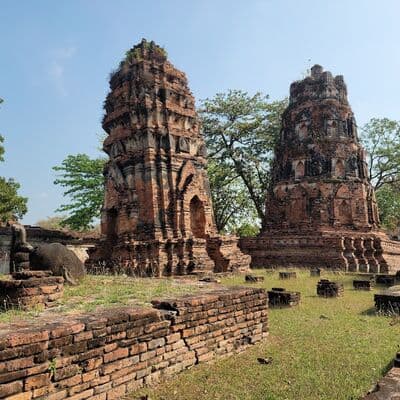
Ayutthaya Historical Park
Ayutthaya is the ruins of ancient Siam's capital, a UNESCO World Heritage site an hour from Bangkok. Once the world's largest city, destroyed by the Burmese in 1767, today it impresses with the scale of its temples and the atmosphere of a bygone era.
History of the Kingdom
Ayutthaya was founded in 1350 and served as the capital of a thriving kingdom for four centuries. At its peak, a million people lived here - more than in London or Paris at that time. 33 kings ruled from this city until the Burmese army razed it to the ground.
Destruction
In 1767, the Burmese burned the city, beheaded Buddha statues, and enslaved residents. The capital moved to Thonburi, then Bangkok. The ruins remained in the jungle until restoration began in the 20th century.
Main Temples
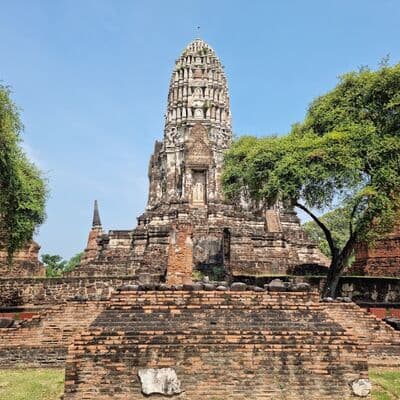
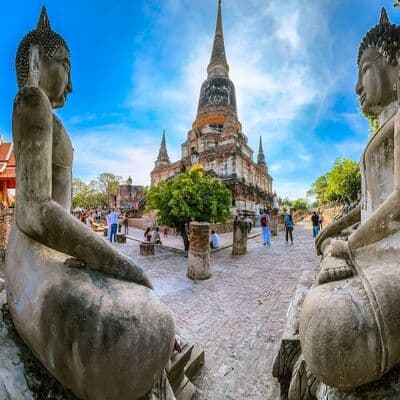
Wat Mahathat features the famous Buddha head entwined in tree roots. Wat Phra Si Sanphet has three stupas on the royal palace grounds. Wat Ratchaburana is a stupa with frescoes and treasures inside. Wat Chaiwatthanaram is a photogenic temple on the riverbank.
The Head in Roots
Ayutthaya's most famous image is the Buddha head growing into a fig tree at Wat Mahathat. How it got there remains a mystery. When photographing, crouch below the head as a sign of respect. Guards enforce this.
How to Explore
Temples are scattered across an island formed by rivers. Bicycles are the best way to explore, rentals near the station. Tuk-tuks and longtail boats on the river are alternatives. Main temples take 4-5 hours to see.
How to Get There
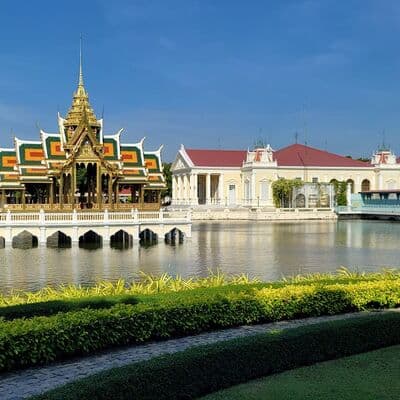
From Bangkok - train from Hua Lamphong station (1.5 hours, scenic) or minivan from Victory Monument (1 hour). Day tours from Bangkok are popular, often combined with Bang Pa-In summer palace.
Atmosphere and Features
Ayutthaya is a must-do excursion from Bangkok. The scale of ruins impresses, the history moves. Come early morning or at sunset - less heat and tourists. Hat and water essential. Sukhothai temples are older, but Ayutthaya is more accessible.