Krabi
Krabi 2026: What You Need to Know Before You Go
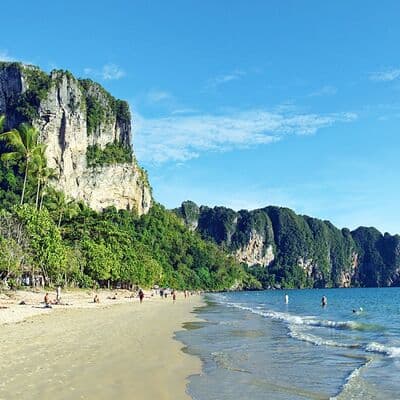
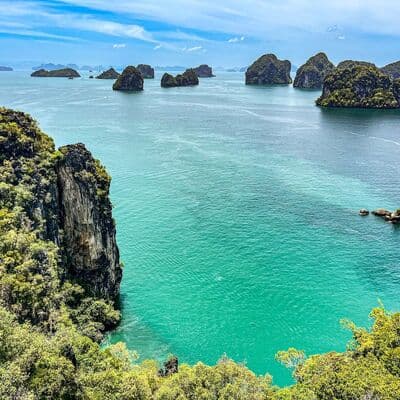
Krabi is not a single town - it is an entire province on Thailand's southwestern coast where limestone karst cliffs rise dramatically from emerald-green waters and white-sand beaches hide between towering rock formations. This is a place that strikes a rare balance between beach paradise, outdoor adventure, and authentic Thai culture - without the overwhelming crowds of Phuket or the isolation of remote island outposts.
The short version: Krabi deserves a spot on your itinerary for the legendary Railay Peninsula with its world-class rock climbing, the Phi Phi Islands and Hong Islands, the surreal Emerald Pool hidden in the jungle, the punishing 1,237 steps to the summit of Tiger Cave Temple, and southern Thai cuisine that is spicier and more complex than anything in Bangkok. Plan 5 to 7 days to do the province justice.
Krabi works for almost everyone: couples chasing sunsets, families with kids, solo backpackers on a tight budget, and adventure seekers who want to climb, kayak, hike, and snorkel all in one trip. The downsides? Peak season (December-January) doubles prices and packs the islands. Monsoon months (May-October) cancel many boat tours. And getting between areas often requires negotiating with longtail boat captains - charming the first time, less so the fifth.
Krabi Neighborhoods: Where to Stay
Ao Nang - The Tourist Hub
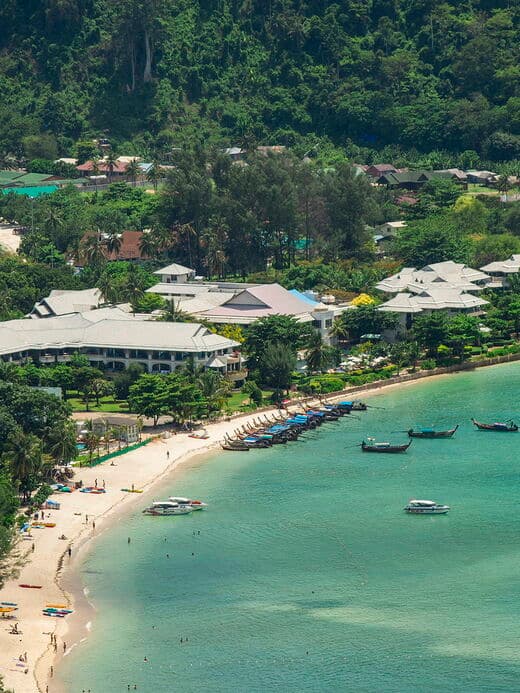
Ao Nang is the main base for most visitors. A long beachfront road is lined with restaurants, dive shops, and tour agencies. Longtail boats to Railay depart from the eastern end. Speedboats to the islands leave from Nopparat Thara pier.
Pros: Everything within walking distance - food, shopping, island transport. Huge accommodation range. The Ao Nang Night Market serves street food for $1-3 per dish. Cons: The beach itself is mediocre - coarse sand, murky water. Pushy tuk-tuk drivers. Commercial atmosphere. Prices: Hostels from $8, hotels from $40, villas from $110/night.
Railay - The Jewel With No Roads
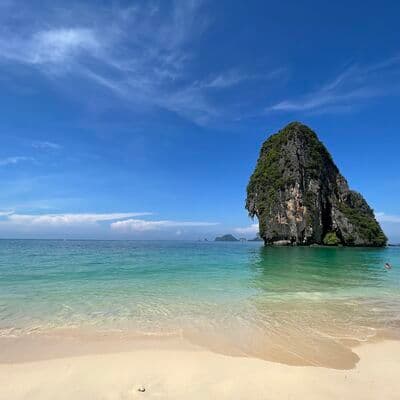
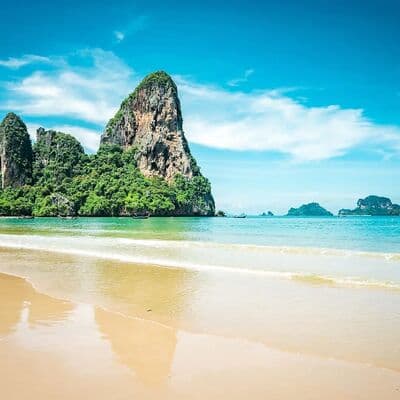
The Railay Peninsula is the place most people picture when they think of Krabi. Massive cliffs cut it off from the mainland - the only way in is by longtail (15 min from Ao Nang, 100-150 THB). Railay West has postcard-perfect white sand. East Railay has cheaper bungalows. A short path leads to Phra Nang Cave Beach, regularly ranked among Asia's best.
Pros: Some of Thailand's finest beaches. Over 700 climbing routes. Car-free serenity. Cons: Everything arrives by boat - food costs 30-50% more than Ao Nang. Limited accommodation that books up fast. Last boats back around 6pm. Prices: Bungalows from $22, resorts from $80/night.
Tonsai Beach - Climber and Backpacker Paradise
Tonsai is tucked between cliffs next to Railay but feels like a different world - fire shows every evening, reggae from bamboo bars, climbers chalking up at sunset.
Pros: Cheapest accommodation on the coast. Genuine climber community. Unbeatable atmosphere. Cons: Basic facilities - intermittent electricity, cold showers. Access by longtail or rock scramble from Railay at low tide only. Prices: Hammocks from $4, bungalows from $11/night.
Krabi Town - The Real Thailand
The provincial capital sits on the Krabi River with almost no tourist infrastructure - which is the appeal. Morning markets at 6am, a riverside walkway with views of Khao Khanab Nam twin cliffs, and a Walking Street market (Fri-Sun) with $1-2 dishes.
Pros: Rock-bottom prices. Authentic Thai life. Incredible night market food. Cons: No nearby beaches. Limited nightlife. Few English menus. Prices: Hostels from $5, hotels from $16/night.
Klong Muang and Tubkaek - Quiet Luxury
North of Ao Nang, Tubkaek Beach is one of the most beautiful and least crowded beaches in the province. Home to Krabi's finest resorts.
Pros: Gorgeous uncrowded beaches. High-quality resorts. Romantic. Cons: Isolated - need a scooter or rely on resort dining. Prices: Hotels from $80, resorts from $220/night.
Koh Lanta - The Island for Staying Awhile
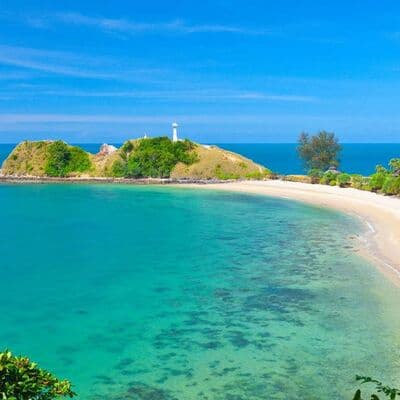
Koh Lanta is a large island 70 km south - long empty beaches, fishing villages, and a noticeably slower pace. Many travelers come for three days and stay three weeks.
Pros: Best sunsets in Thailand. Excellent snorkeling and diving. Relaxed digital nomad scene. Cons: 2-2.5 hours from the airport. You need a scooter - the island is 30 km long. Prices: Bungalows from $14, hotels from $40/night.
Best Time to Visit Krabi
High season (November-March) delivers perfect weather - clear skies, calm seas, 28-32C (82-90F), all island tours running. Prices jump 40-100%, popular spots are packed, and December-January hotels book out weeks ahead. Reserve 2-3 months in advance for peak dates.
Shoulder season (April-May, October) offers the best value. April is the hottest month (34-36C / 93-97F) but rain is minimal. October has increasingly calm seas and lush green landscapes. Prices drop 20-40% and popular beaches are blissfully empty.
Low season (June-September) brings monsoon rains - heavy afternoon downpours of 1-2 hours, but mornings are usually sunny. Many Phi Phi tours get cancelled due to rough seas. Prices plummet 60%, jungles turn impossibly green, and you might have entire beaches to yourself. Mainland activities run year-round.
Key events: Songkran water festival (April 13-15), Loy Krathong lantern festival (November), Krabi Rock and Fire climbing competition (November-December). Best diving visibility: February, up to 30 meters.
Krabi Itinerary: 3 to 7 Days
Day 1: Railay Peninsula and Phra Nang
Catch a longtail from Ao Nang to Railay West (boats leave every 15-20 min, 100 THB). Arrive by 9am before day-trippers flood in at 11am. Walk to Phra Nang Cave Beach - look for the shrine of wooden phalluses in the cave (a legitimate fertility shrine). Hike the steep viewpoint trail to the lagoon overlook (30-45 min, proper shoes required).
Afternoon: walk to Tonsai Beach at low tide. Consider a half-day beginner climbing course ($30-40, all gear included). Return to Ao Nang and hit the Ao Nang Night Market for dinner - pad thai, grilled seafood, mango sticky rice for $5-8 total.
Day 2: Four Islands Tour
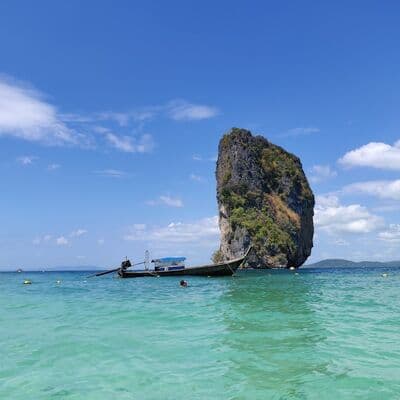
Book a Four Islands Tour departing 9am. The route hits Koh Poda (crescent beach, great snorkeling off the south rocks), Chicken Island, Tup Island with its remarkable low-tide sandbar, and a coral snorkeling stop. Longtail tours cost $12-15/person, speedboats $25-35.
Pack reef-safe sunscreen and a dry bag. Return around 3-4pm. Dinner: seafood on the second road behind Ao Nang's main strip - portions are bigger and 30-40% cheaper than beachfront. Try crab in yellow curry or grilled snapper, $6-10 with rice.
Day 3: Tiger Cave Temple, Emerald Pool, Hot Springs
Leave by 7am for Tiger Cave Temple - arrive before 8am, this is critical. The 1,237 steps are brutal in midday sun. Climb takes 45-75 minutes. At the top: a golden Buddha, a stupa, and a 360-degree panorama. Bring at least one liter of water. Keep bags closed around monkeys at the base.
Drive 45 minutes south to Emerald Pool - swim in the mineral-green water (30-32C year-round, entry 200 THB). Walk 800m further to the Blue Pool - no swimming, but the electric-blue color is surreal. End at Hot Springs Klong Thom (15 min away) - natural hot spring water cascading through jungle pools at 35-45C. After a morning of temple stairs, this feels spectacular.
Day 4: Hong Islands
The Hong Islands are among the province's most beautiful and far less crowded than Phi Phi. 'Hong' means 'room' - the main island has a hidden lagoon enclosed by limestone walls, accessible only by kayak through a narrow cave. Book a tour that includes kayaking ($25-40/person, full day with lunch and gear).
Evening: Krabi Town Walking Street night market (Fri-Sun) - crispy roti with banana, som tam made to order (specify your spice level carefully), and satay skewers for almost nothing.
Day 5: Kayaking and Dragon Crest Mountain
Morning: Ao Thalane kayaking (8am departure). Paddle through mangrove channels between limestone walls, past caves and overhanging formations. Half-day tour, 3-4 hours, $18-25. No experience needed.
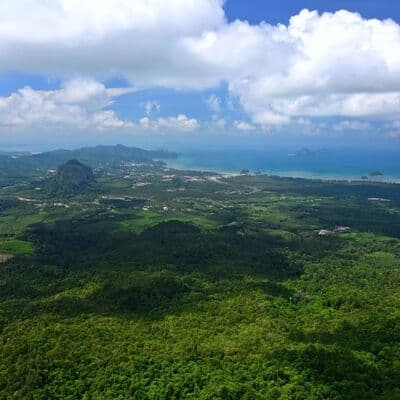
Afternoon: Dragon Crest Mountain hike. The trail is 3.7 km one-way through dense jungle, gaining 565m elevation. Allow 2-3 hours up, 1.5-2 down. The summit ridge - a narrow spine of rock with sheer drops to jungle and ocean on both sides - is one of southern Thailand's most spectacular viewpoints. Start by 2pm to finish before dark. Bring 2L water, insect repellent, sturdy shoes. Not recommended if you fear heights.
Day 6: Phi Phi Islands Full Day
The Phi Phi Islands need no introduction. Book a speedboat tour ($45-65) departing 8am. The route covers Maya Bay (timed-entry, 400 THB, one hour per group), Pileh Lagoon (swimming in impossibly turquoise enclosed water), Monkey Beach, coral garden snorkeling, and sometimes Bamboo Island.
Take seasickness medication before boarding - the 45-minute open-water crossing can be rough. Longtail tours exist but take much longer. Return 4-5pm.
Day 7: Beach Day, Shell Cemetery, Farewell Dinner
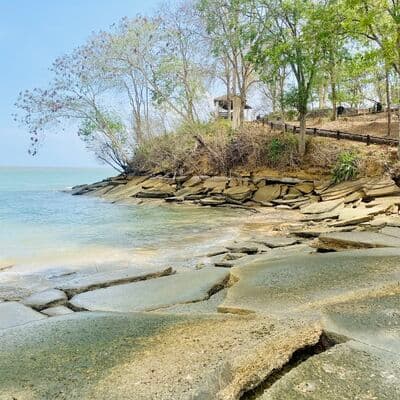
Morning: Tubkaek Beach - beautiful, uncrowded, with views of the Hong Islands. Late morning: Susan Hoi (Shell Fossil Cemetery) - 75-million-year-old fossilized shells formed into stone slabs extending into the sea (200 THB, 30-45 min). Afternoon: stroll Krabi Town's riverfront with views of Khao Khanab Nam. Farewell seafood dinner - grilled prawns, steamed fish with lime, crab fried rice, $15-25 for two.
Where to Eat in Krabi
Street Food and Markets
The Ao Nang Night Market runs every evening - pad thai, grilled chicken, papaya salad, mango sticky rice, coconut ice cream. Budget $3-5 for a full meal. Quality is good but tourist-oriented. For the real deal, go to Krabi Town Walking Street (Friday-Sunday evenings) where locals outnumber tourists ten to one, food is cheaper ($1-3 per dish), more varied, and significantly better. Look for stalls with the longest local queues.
Krabi Town's morning market near Chao Fah pier runs 5am-9am - pre-made curries, grilled meats, sticky rice in banana leaves, strong Thai coffee. Breakfast for two costs $2-3 total. You might be the only foreigner there.
Local Restaurants
In Ao Nang, skip beachfront restaurants with picture menus. Walk one or two streets inland to find where Thais eat - handwritten menus, plastic furniture, no AC. These serve the best food at $2-4 per dish. Muslim restaurants are common in Krabi and serve outstanding roti with curry, massaman, and khao mok gai (chicken biryani). Often overlooked by tourists, consistently excellent.
For seafood, Krabi Town riverfront restaurants offer roughly half the Ao Nang beachfront price. Lae Lay Grill in Ao Nang - clifftop, sunset views - is worth the splurge at $8-15 for mains. Book ahead in high season.
Cafes and Coffee
Specialty coffee has grown noticeably, fueled by southern Thailand's own growing regions. Quality lattes run 80-120 THB ($2.30-3.50). Traditional Thai street coffee (kopi or oliang) costs 25-35 THB from pushcart vendors. Several Ao Nang cafes cater to remote workers with fast WiFi and all-day seating.
Must-Try Food in Krabi
Southern Thai cuisine is a different beast from what most visitors know. It is aggressively spicy, bold with turmeric, lemongrass, and shrimp paste, and influenced by Muslim Malay heritage. Eight dishes you should not leave without trying:
Massaman Curry - Muslim-origin curry with cardamom, cinnamon, star anise, and peanuts. Krabi's version from Muslim restaurants is richer than what you find up north. Ask for 'not spicy' if sensitive - even mild has depth.
Khao Mok Gai - Thai-Muslim chicken biryani. Turmeric rice with slow-cooked chicken and sweet-sour dipping sauce. Comfort food at $1-2 from market stalls.
Roti - Thin, crispy flatbread folded with fillings. Savory versions with egg and curry sauce. Sweet with banana, Nutella, or condensed milk. Night market staple and one of the best late-night snacks in Thailand.
Poo Pad Pong Kari - Fresh crab stir-fried with egg, curry powder, and green onion. Messy, incredible. $8-12 at seafood restaurants.
Som Tam - Green papaya salad made to order. Specify spice level clearly - Thai 'medium' is most foreigners' 'extreme.' Krabi's version often includes salted crab or fermented fish sauce.
Pla Thot Khamin - Whole fish rubbed with fresh turmeric and deep-fried until crackling golden. A southern specialty served with spicy dipping sauce.
Tom Yam Talay - Spicy seafood soup loaded with prawns, squid, fish, and mussels. Order the 'nam sai' (clear broth) version for the purest flavor.
Mango Sticky Rice - Sweet glutinous rice with coconut cream and fresh mango. Available November-May. Street vendors charge $1-2. When the mango is good, this is perfection.
Allergy note: Peanuts, shellfish, and fish sauce are pervasive. Carry a translated Thai allergy card. Vegetarians: learn 'jay' (no meat, fish sauce, or egg) or 'mang-sa-wi-rat' (vegetarian).
Krabi Secrets: Tips the Guidebooks Skip
- Longtails vs speedboats: Longtails are cheaper and photogenic but slow, loud, and open to spray. Speedboats are worth the extra $10-15 for island tours - more time at destinations, less time bouncing over waves.
- Bargaining is expected for longtail charters, market goods, and tours - but not at restaurants or shops with price tags. Counter-offer at 60-70% of asking. Stay friendly - aggressive haggling backfires in Thai culture.
- Scooter rental: 200-300 THB/day ($6-9). Photograph existing damage before riding. International Driving Permit technically required - police checkpoints issue 500 THB fines. Helmets legally required and practically essential on Krabi's curvy roads.
- Dual pricing exists at national parks and temples. Foreigners pay 200-400 THB where Thais pay 20-40 THB. It is the system. Budget accordingly.
- Railay tides matter: Low tide means Tonsai is walkable from Railay; high tide means it is not. Check tide tables daily.
- Jellyfish season runs June-October. Box jellyfish are rare but present. Rash guards reduce risk significantly.
- Monkeys are thieves. At Railay, Tiger Cave Temple, and Monkey Beach - zip bags, hide food. Sunglasses on your head and water bottles in hand are prime targets. Never feed them.
- Tiger Cave Temple: Go before 8am. By 10am the stairs are in direct sun and the climb becomes dangerous. Proper shoes required - falls happen every year.
- Use Grab for airport transfers and longer rides. 30-50% cheaper than negotiating with taxi drivers. Works well in Ao Nang and Krabi Town.
- Rain does not ruin the day: Low-season downpours are dramatic but short (1-2 hours afternoon). Mornings are sunny. Carry a rain jacket and wait it out at a cafe.
- Coconut ice cream served in the shell (30-40 THB) with crushed peanuts and sweet corn. Trust the combination.
- Rock climbing courses on Railay start from $30-40 for a half day, all gear included. No experience needed. Even non-climbers find scaling limestone above the ocean unforgettable.
Getting Around and Connectivity
From the Airport
Krabi International Airport (KBV) is 20 minutes east of Ao Nang. Options ranked by value: shared shuttle to Ao Nang (150 THB, every 30-60 min), Grab car (350-500 THB door-to-door), taxi (600-800 THB fixed price). To Krabi Town: shuttle 90 THB. To Koh Lanta: minivan 350-500 THB, 2-2.5 hours including ferry.
Getting Around
Songthaew (shared pickups): Cheapest local transport. Krabi Town to Ao Nang 60-80 THB, 30-45 minutes. Wave them down from the roadside. More frequent mornings, less reliable evenings.
Longtail boats: Essential for Railay and Tonsai. Ao Nang to Railay 100-150 THB/person (boats leave when 8-10 passengers gather). Private full-day charters 2,000-3,500 THB - negotiate before boarding.
Scooters: Most practical for mainland exploration. 200-300 THB/day for a Honda Click. Drive on the left. Be cautious at intersections - right of way is theoretical in Thailand.
Grab: Works well in Ao Nang and Krabi Town for cars and motorcycle taxis. Essential for avoiding tuk-tuk price negotiations. Download before you arrive.
SIM Cards and Connectivity
Buy a tourist SIM at Krabi airport - AIS, DTAC, and TrueMove have counters. 15-day unlimited data: 299-599 THB ($8-17). eSIM providers like Airalo or Holafly can be activated before your flight. WiFi ranges from excellent in Ao Nang to barely functional on remote islands.
Essential Apps
Grab for rides and food delivery. Google Maps for navigation and restaurant reviews (better than Apple Maps here). 12go.asia for ferries, buses, and minivans. Klook for discounted tours (10-20% off shopfront prices). Agoda for hotels (often beats Booking.com in Southeast Asia). Google Translate camera mode for Thai menus and signs.
Who Is Krabi For: The Final Verdict
Krabi genuinely works for almost every type of traveler. It is ideal for couples seeking romance on stunning beaches, rock climbers wanting world-class routes above the ocean, backpackers stretching budgets, families needing calm water and easy logistics, and snorkelers chasing coral reefs. It is particularly strong as a first Southeast Asia destination - solid infrastructure, welcoming locals, enough English in tourist areas, and an unbeatable combination of beaches, nature, culture, and food.
Krabi is not the best choice for nightlife and clubbing (go to Phuket or Bangkok), shopping (Bangkok wins), or big-city cultural attractions. It rewards those who explore. Give it a minimum of three days, an optimal five to seven, and up to two weeks if you include Koh Lanta and take time to slow down.