About
The Ultimate Travel Guide to Switzerland: Everything You Need to Know
Switzerland is one of those destinations that seems almost too perfect to be real. Snow-capped peaks reflected in crystal-clear lakes, charming villages where time appears to have stopped, trains that run with legendary precision, and a standard of living that makes you wonder if you have accidentally stumbled into some kind of utopia. But here is the thing: Switzerland is absolutely real, and while it comes with a hefty price tag, it delivers experiences that will stay with you for a lifetime. I have spent considerable time exploring this small but incredibly diverse country, and I am going to share everything I have learned to help you make the most of your Swiss adventure.
1. Why Visit Switzerland
Let me be honest with you right from the start: Switzerland is expensive. Really expensive. A simple lunch can cost you 25-35 Swiss Francs (roughly the same in USD), a mid-range hotel room will set you back 200-300 CHF per night, and even a bottle of water from a kiosk might make you do a double-take. So why should you visit? Because Switzerland offers something that money cannot buy anywhere else: a combination of natural beauty, cultural richness, efficiency, and quality of life that is simply unmatched.
The Swiss Alps are not just mountains; they are a spiritual experience. When you stand at the top of Jungfraujoch, surrounded by glaciers and peaks that stretch as far as the eye can see, or when you watch the sun set behind the Matterhorn painting the sky in shades of orange and pink, you understand why this tiny country has captivated travelers for centuries. The landscapes here are so dramatic, so perfectly composed, that they almost seem artificial, like someone designed them specifically to take your breath away.
But Switzerland is not just about mountains. The country packs an incredible diversity into its small territory of about 41,000 square kilometers, roughly the size of Maryland. You have pristine lakes that range from the deep blue of Lake Geneva to the turquoise waters of Lake Brienz. You have rolling green hills dotted with happy cows wearing actual bells around their necks. You have sophisticated cities like Zurich and Geneva that serve as global financial and diplomatic centers, alongside medieval old towns that transport you back in time. You have Italian-influenced Ticino in the south, French-speaking Romandy in the west, and German-speaking regions that make up the majority of the country, each with its own distinct character and cuisine.
The infrastructure in Switzerland is nothing short of remarkable. The Swiss Federal Railways system is considered one of the best in the world, with trains that are punctual to the minute (and the Swiss actually apologize when trains are two minutes late). Mountain railways, cable cars, and funiculars take you to viewpoints that would otherwise require serious mountaineering skills. Roads are impeccably maintained, tunnels cut through mountains with Swiss precision, and even the hiking trails are marked with an attention to detail that borders on obsessive.
Safety is another major draw. Switzerland consistently ranks among the safest countries in the world. You can walk through any city at night without concern, leave your belongings unattended on a train, and trust that the food you are eating meets the highest standards. For families, solo travelers, and anyone who values peace of mind, this is a significant benefit.
The quality of everything in Switzerland is exceptional. From the chocolate and cheese that the country is famous for, to the watches, the hotels, the service, and even the public toilets, everything is maintained to a standard that most countries only dream of. The Swiss take pride in doing things right, and this shows in every aspect of their society.
Cultural richness adds another layer to the Swiss experience. With four official languages (German, French, Italian, and Romansh) and a population that includes 25% foreign residents, Switzerland is a melting pot of influences while maintaining its distinct identity. Museums, festivals, traditional customs, and regional traditions provide endless opportunities for cultural exploration.
For outdoor enthusiasts, Switzerland is paradise. Hiking trails totaling over 65,000 kilometers crisscross the country, ranging from easy lakeside walks to challenging multi-day treks. Skiing and snowboarding in winter are world-class, with resorts like Zermatt, Verbier, and St. Moritz attracting snow lovers from around the globe. Mountain biking, paragliding, climbing, and water sports on the lakes offer something for every adventure seeker.
Yes, you will spend more money in Switzerland than in almost any other European destination. But you will also receive value for that money in ways that are hard to quantify: the peace of knowing everything works, the joy of experiencing nature at its most magnificent, the pleasure of eating food made with genuine care and quality ingredients, and the memories of moments that are simply not possible anywhere else on Earth.
2. Regions of Switzerland
Zurich and the Zurich Region
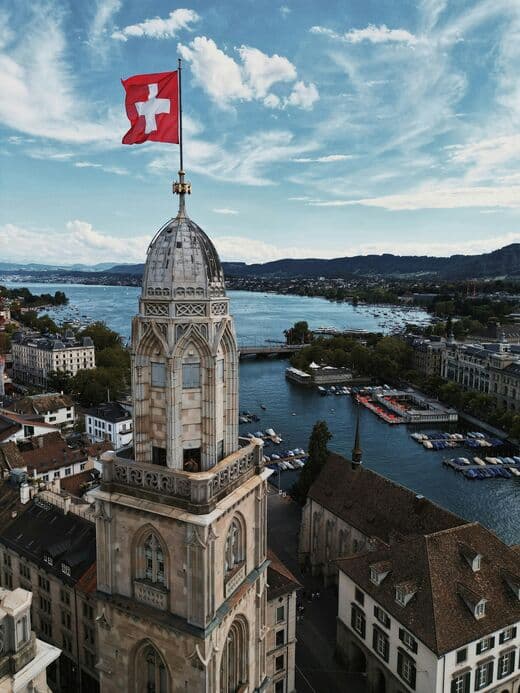
Zurich is Switzerland's largest city and its economic powerhouse, but do not let that description fool you into thinking it is all business and no pleasure. The city combines urban sophistication with natural beauty in a way that few metropolises can match. The Limmat River flows through the historic center, which features medieval guild houses, narrow cobblestone streets, and churches with distinctive steeples. The Altstadt (old town) is divided by the river into the Niederdorf on one side, known for its nightlife and restaurants, and the more upscale shopping district on the other.
Lake Zurich stretches south from the city, offering swimming spots, boat cruises, and waterfront promenades. In summer, locals flock to the Lido beach areas or the Frauenbad and Mannerbad, historic bath houses that have been converted into swimming and sunbathing spots. The city's many parks, including the Lindenhof with its hilltop views and the expansive Zurichhorn on the lake, provide green escapes from urban life.
Art and culture thrive here. The Kunsthaus Zurich houses an impressive collection spanning from medieval to contemporary art, while the Swiss National Museum tells the story of Swiss history in a castle-like building. The Cabaret Voltaire, birthplace of the Dada movement, still operates on Spiegelgasse. Zurich West, a former industrial district, has transformed into a trendy area filled with galleries, clubs, restaurants, and concept stores.
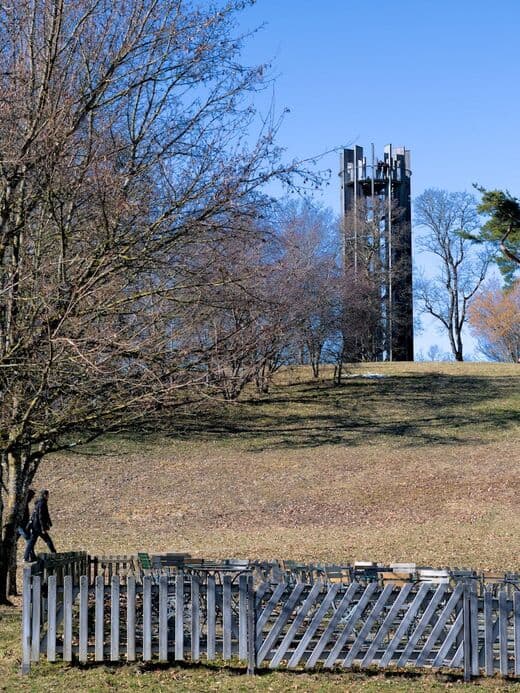
The Zurich region extends beyond the city to include charming towns like Winterthur, with its excellent museums, and Rapperswil, known as the City of Roses for its beautiful rose gardens and medieval castle. The nearby Uetliberg mountain offers panoramic views of the city, the lake, and the Alps on clear days, accessible by a short train ride from the city center.
Bern and the Bernese Mittelland
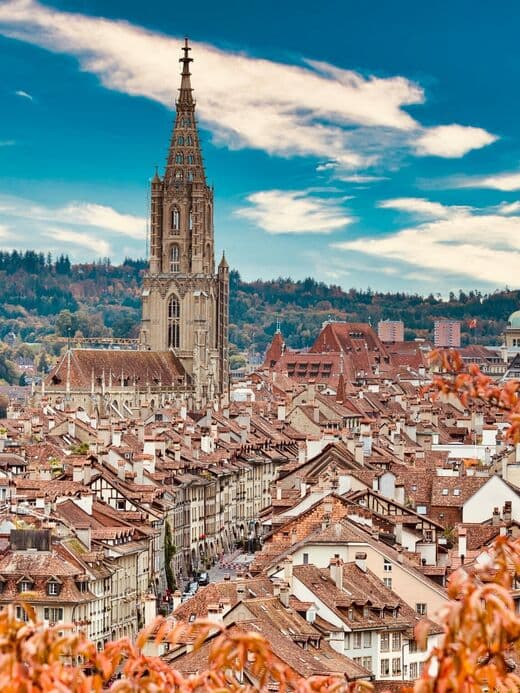
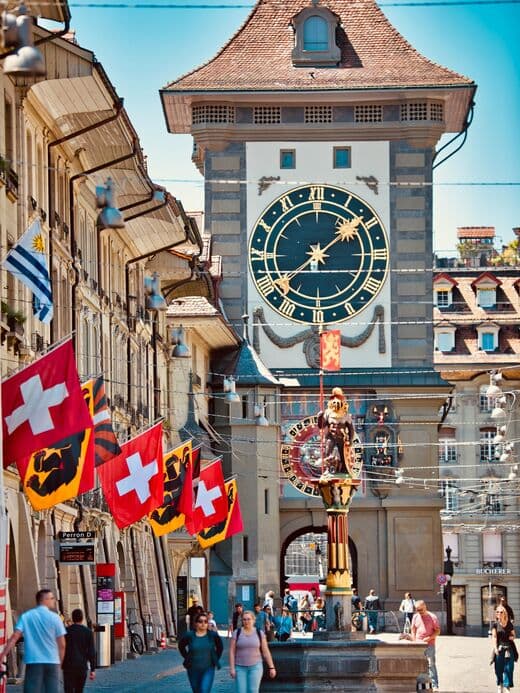
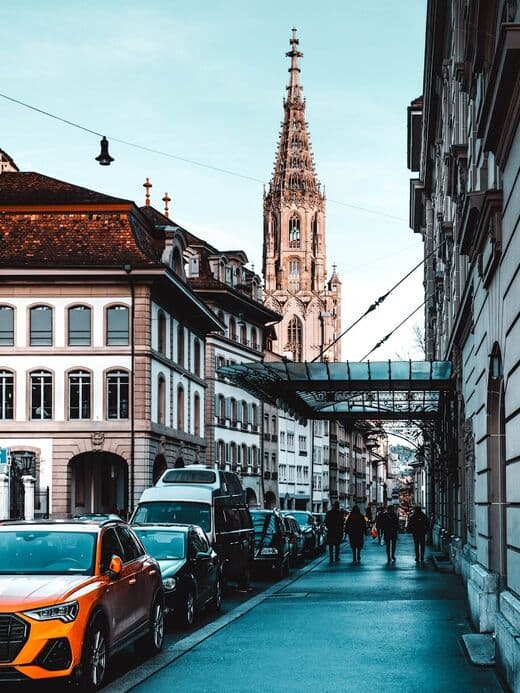
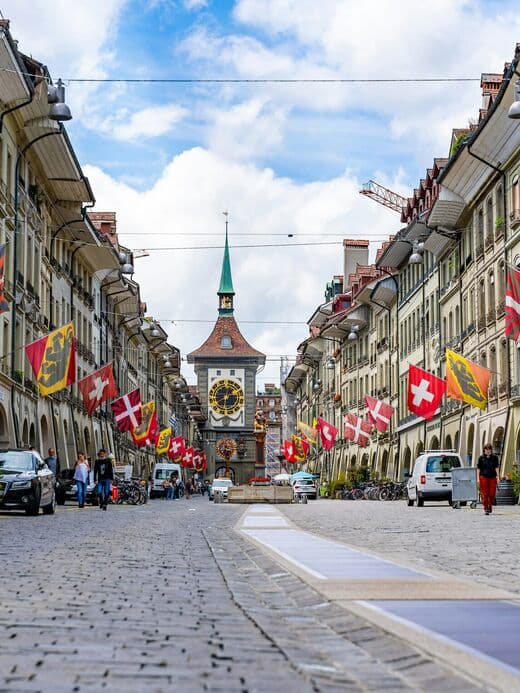
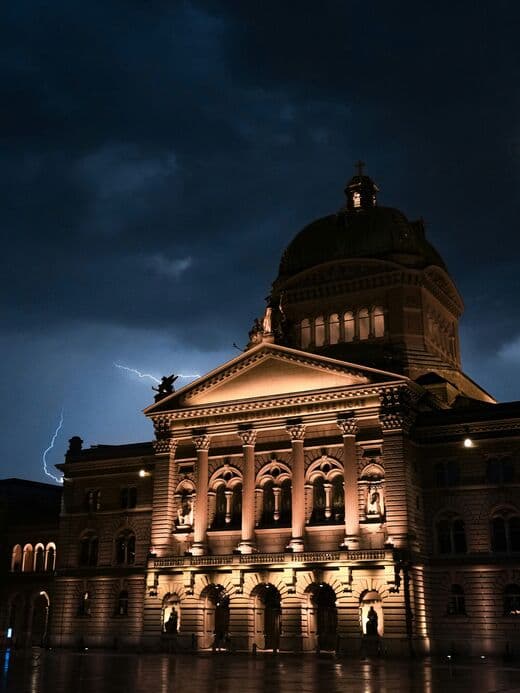
Bern, the Swiss capital, is one of Europe's most underrated cities. Its UNESCO World Heritage-listed old town sits on a peninsula formed by a loop in the Aare River, with medieval sandstone buildings, covered arcades stretching for kilometers, and the famous Zytglogge clock tower that puts on a mechanical show four minutes before every hour. Unlike the fast-paced financial centers of Zurich and Geneva, Bern has a relaxed, almost provincial atmosphere despite being the seat of government.
The arcades (Lauben) are a defining feature of Bern's old town, providing covered walkways that house shops, cafes, and restaurants. On market days, the streets come alive with stalls selling fresh produce, flowers, cheese, and regional products. The Aare River, with its distinctive emerald-green color, is clean enough for swimming, and in summer, locals float down its gentle current, a uniquely Bernese tradition that you can join if you are a confident swimmer.
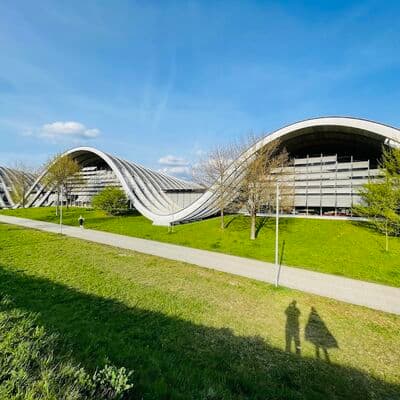
Cultural attractions include the Zentrum Paul Klee, a wave-shaped museum designed by Renzo Piano that houses the world's largest collection of works by the artist Paul Klee. The Historical Museum of Bern covers Swiss history from prehistoric times to the present, while the Bern Minster, a Gothic cathedral, offers tower climbs with rewarding views. The Einstein House, where Albert Einstein lived while developing his theory of special relativity, provides insight into the scientist's life.
The Bernese Mittelland, the agricultural region surrounding Bern, is characterized by gentle rolling hills, farm villages, and the Emmental valley, famous for the cheese with the distinctive holes. Visiting a traditional cheese dairy here offers insight into Swiss agricultural traditions and, of course, tasting opportunities.
Bernese Oberland
This is it. The region that appears on postcards, travel brochures, and screensavers around the world. The Bernese Oberland is where the Swiss Alps reach their most dramatic expression, with the famous trio of the Eiger, Monch, and Jungfrau dominating the skyline. Interlaken serves as the gateway to this alpine wonderland, strategically positioned between Lake Thun and Lake Brienz, with adventure sports companies lining its main street and the peaks visible on clear days.
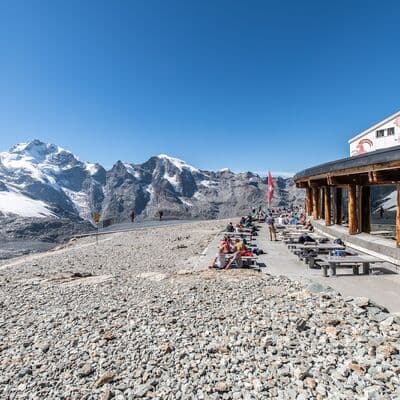
The Jungfrau region is the heart of the Bernese Oberland. The Jungfraujoch, at 3,454 meters, is billed as the Top of Europe and accessible via the highest railway station on the continent. The journey itself is half the experience, climbing through tunnels carved into the Eiger and stopping at viewpoints along the way. At the top, you find an ice palace, a research station, restaurants, and viewing platforms offering 360-degree panoramas of glaciers and peaks. Yes, it is touristy and expensive (the round-trip ticket costs around 200 CHF), but it remains a bucket-list experience.
Grindelwald is the largest village in the region, a year-round destination with easy access to hikes, skiing, and the new Eiger Express gondola that whisks you to alpine heights in minutes. The First cable car takes you to a panoramic platform and the famous First Cliff Walk, a suspended walkway offering vertiginous views. The Grindelwald First area also features the First Flyer, a zipline experience, and various hiking trails ranging from easy to challenging.
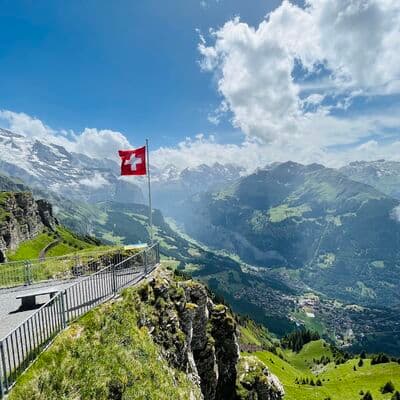
Lauterbrunnen valley is a U-shaped glacial valley with 72 waterfalls cascading down its sheer cliffs, including the famous Staubbach Falls that plunge 297 meters right next to the village. From here, mountain railways and cable cars access the car-free villages of Murren and Wengen, both of which offer spectacular hiking, quieter atmospheres, and some of the most stunning viewpoints in the Alps. Murren, in particular, feels like stepping back in time, with traditional chalets and no motorized vehicles disturbing the peace.
Lake Thun and Lake Brienz offer water-based activities including boat cruises, swimming, and visits to lakeside towns. Thun features a medieval castle and a charming old town built over a river. Brienz is known for woodcarving traditions and serves as the starting point for the Brienz Rothorn steam railway, which climbs to 2,350 meters using original steam engines from the 1890s.
Central Switzerland and Lucerne
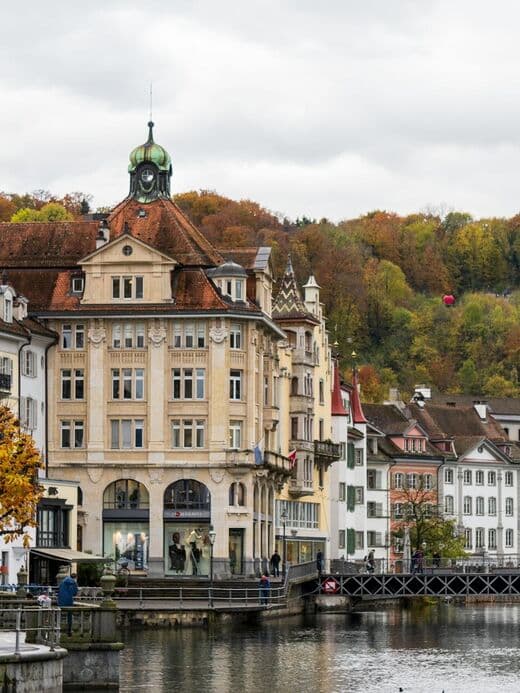
Lucerne is arguably the most picturesque city in Switzerland, and that is saying something in a country full of picture-perfect places. The Chapel Bridge, a covered wooden bridge dating from 1333, stretches across the Reuss River with its distinctive Water Tower, creating perhaps the most photographed scene in the country. The old town features painted buildings, cobblestone squares, and a well-preserved medieval character that makes wandering its streets a pleasure.
Lake Lucerne (Vierwaldstattersee) is one of Switzerland's most beautiful lakes, with a complex shape that weaves between mountains and offers constantly changing scenery. Boat cruises are practically mandatory, with paddle steamers adding nostalgic charm to the journey. The lake provides access to numerous mountains including Mount Pilatus, reachable by the world's steepest cogwheel railway, and Mount Rigi, the queen of the mountains, popular since the 19th century.
Central Switzerland is the historic heartland of the nation. The Rutli meadow on Lake Lucerne is where the Swiss Confederation was founded in 1291, and the region is steeped in the legends of William Tell. Tells Kapelle, a chapel dedicated to the folk hero, sits beside the lake, and statues and memorials appear throughout the region.
Beyond Lucerne, the region includes the fortress town of Altdorf, where William Tell supposedly shot the apple from his son's head, and the charming village of Weggis, a mild-climate resort on the lake. The Engelberg valley, home to the largest Benedictine monastery in Switzerland and the Mount Titlis cable car with its rotating gondola and glacier park, offers excellent skiing and hiking.
The Swiss Museum of Transport in Lucerne is one of the country's most popular museums, covering all forms of transportation with interactive exhibits, a planetarium, and even a chocolate adventure. The Rosengart Collection features works by Picasso and Paul Klee, while the Glacier Garden preserves glacial potholes from the Ice Age alongside a mirror maze and museum.
Geneva and the Lake Geneva Region (Romandy)
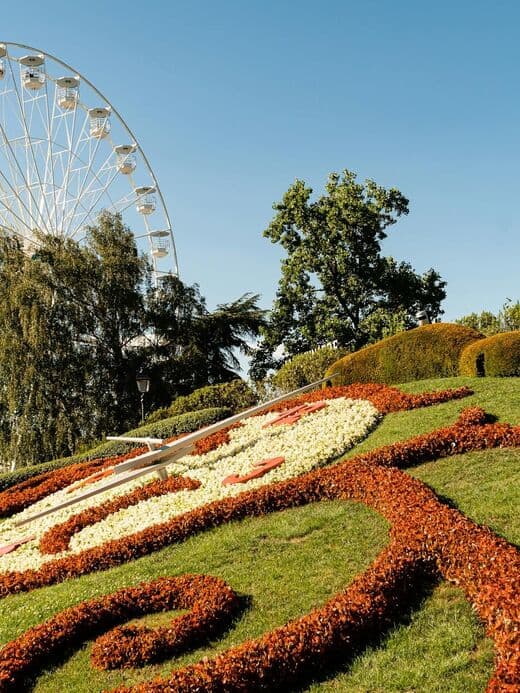
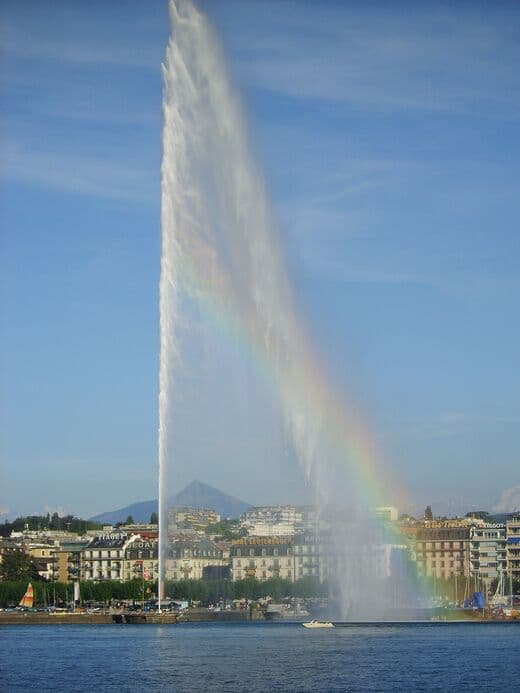
French-speaking Switzerland, known as Romandy or Suisse Romande, brings a distinctly Gallic flavor to the country. Geneva, at the southwestern tip of Lake Geneva (Lac Leman), is an international city that hosts the European headquarters of the United Nations, the Red Cross, and numerous other organizations. The famous Jet d'Eau, a water fountain shooting 140 meters into the air, has become the city's symbol, visible from much of the lakefront.
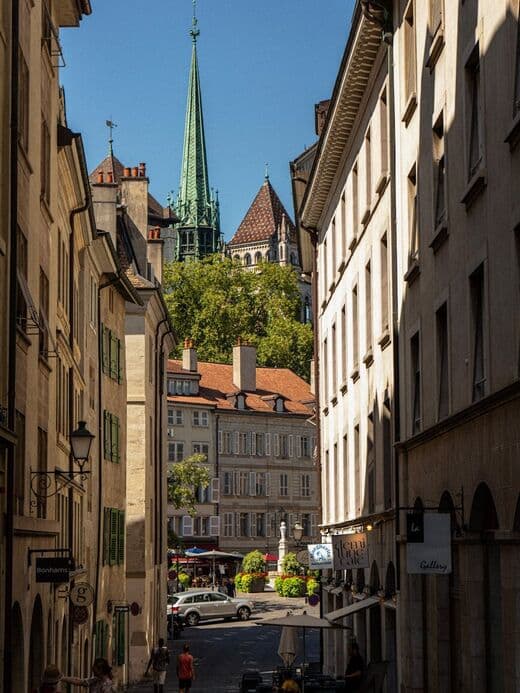
Geneva's old town climbs the hill above the lake, centered on St. Pierre Cathedral, which offers tower climbs for panoramic views. The Reformation Wall in the Parc des Bastions commemorates the Protestant Reformation, which had Geneva as one of its key centers under John Calvin. The international character of the city is evident everywhere, from the many foreign cuisines available to the multilingual population walking its streets.
Lausanne, the Olympic Capital, sits about an hour east along the lake. The IOC headquarters and Olympic Museum are here, overlooking the lake with interactive exhibits covering the history and spirit of the Olympic Games. The old town rises steeply from the waterfront, with the Gothic cathedral and the lively Place de la Palud as focal points. The Flon district, a former warehouse area, has transformed into the city's nightlife and cultural hub.
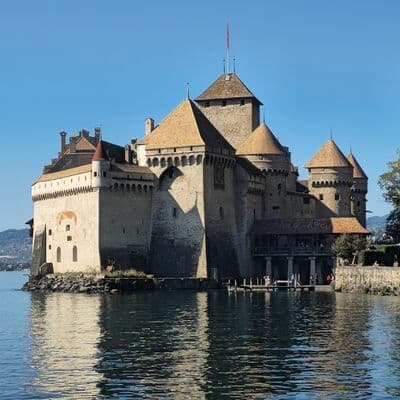
Montreux, further along the lake, is famous for its Jazz Festival held each July and its mild microclimate that allows palm trees and exotic plants to flourish. The Chillon Castle, dramatically positioned on a rocky island just offshore, is the most visited historic site in Switzerland and inspired Lord Byron's poem "The Prisoner of Chillon." The Montreux lakefront promenade, lined with flowerbeds and sculptures, is perfect for a leisurely stroll.
The Lavaux vineyards between Lausanne and Montreux are a UNESCO World Heritage Site, with terraced slopes rising from the lake that have been cultivated for wine since at least the 11th century. Walking through the vineyards, with views of the lake and Alps beyond, and stopping at local cellars for tastings, is one of the great pleasures of the region. The Chasselas grape dominates here, producing white wines that pair perfectly with the local cuisine.
Other towns worth exploring include Vevey, with its Charlie Chaplin museum (Chaplin's World) in his former home, and Nyon, a Roman town with castle views and proximity to vineyards. The Jura mountains to the north offer gentler landscapes, watchmaking heritage, and quieter tourism compared to the Alpine regions.
Valais and Zermatt
Valais, or Wallis in German, stretches along the Rhone valley in southwestern Switzerland, bordered by some of the highest peaks in the Alps. This is a region of dramatic contrasts: sun-baked vineyards on the valley floor give way to glaciers and 4,000-meter peaks above. The climate is the driest in Switzerland, with Sion, the regional capital, enjoying more sunny days than any other Swiss city.
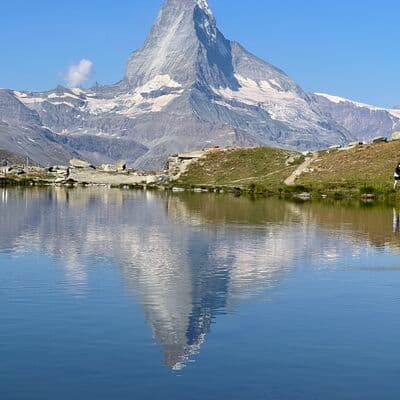
Zermatt is the crown jewel of Valais and one of the most famous mountain resorts in the world. The Matterhorn, the instantly recognizable pyramid peak that rises above the village, draws visitors from every corner of the globe. Zermatt itself is car-free, with only electric vehicles and horse-drawn carriages navigating its streets, creating a refreshingly quiet atmosphere despite the thousands of visitors. You arrive by cogwheel train from Tasch, where cars must be parked, adding to the sense of entering a special place.
The Gornergrat railway climbs from Zermatt to 3,089 meters, offering spectacular views of the Matterhorn and surrounding peaks including the Monte Rosa massif, the highest in Switzerland. At the top, a restaurant, hotel, and observatory provide opportunities to linger and absorb the scenery. The Matterhorn Glacier Paradise cable car system reaches even higher, to 3,883 meters, with an ice palace and viewing platform at Europe's highest cable car station.
Skiing in Zermatt is legendary, with runs descending from nearly 4,000 meters and the possibility of skiing into Italy via Cervinia. The season extends from November to April for most areas, with summer skiing available on the glacier. Hiking in summer offers over 400 kilometers of trails, from valley walks to challenging high-alpine routes.
Beyond Zermatt, Valais offers much more. Saas-Fee, the "Pearl of the Alps," is another car-free village surrounded by glaciers and offering a quieter alternative to Zermatt. The Great St. Bernard Pass, famous for the rescue dogs bred by the hospice monks, connects Switzerland to Italy. Crans-Montana, above the Rhone valley, is a sunny resort known for golf as well as skiing. The thermal baths at Leukerbad, the largest thermal spa resort in the Alps, provide relaxation in naturally heated waters.
The Valais wine region produces some of Switzerland's best wines, particularly from Fendant (Chasselas) and Dole (a red blend). Many small cellars offer tastings, and the vineyards near Sierre and Sion are worth exploring. The region also produces excellent fruit, with apricots from Valais having protected designation status.
Ticino
Cross the Alps through the Gotthard tunnel (or better yet, over the scenic Gotthard Pass) and you enter another world. Ticino is the Italian-speaking canton of Switzerland, where palm trees replace pines, pasta replaces potatoes, and the pace of life slows to a Mediterranean rhythm. The architecture, food, language, and attitude here are distinctly Italian, while the efficiency and cleanliness remain thoroughly Swiss.
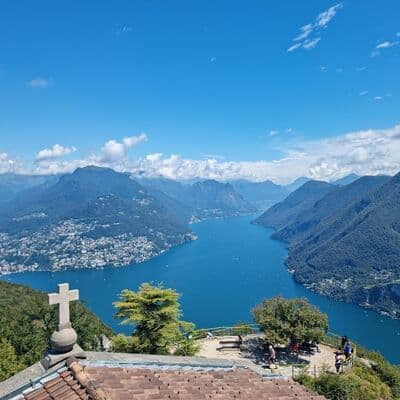
Lugano is the largest city in Ticino and the third financial center of Switzerland. Its lakefront promenade, lined with palm trees and subtropical plants, feels more like the Italian Riviera than the Alps. The Piazza della Riforma is the heart of the old town, surrounded by cafes where locals linger over espresso. Two hills, Monte Bre and Monte San Salvatore, flank the city and offer funicular access to panoramic viewpoints.
Lake Lugano has a complex shape that crosses into Italy, and boat cruises explore its various branches and lakeside villages. Morcote, often cited as the prettiest village in Switzerland, tumbles down a hillside to the lake, with arcaded houses and a church perched above. Gandria, another picturesque village, is accessible only by boat or footpath, preserving its car-free tranquility.
Locarno, on the northern tip of Lake Maggiore (which extends into Italy), is home to one of the country's most important film festivals each August. The Piazza Grande, Europe's largest open square, serves as the festival's outdoor cinema. Above the town, the Sanctuary of Madonna del Sasso offers pilgrimage history and panoramic views. The Centovalli railway from Locarno to Domodossola in Italy is one of the most scenic rail journeys in the region.
Bellinzona, the cantonal capital, features three impressive medieval castles, collectively a UNESCO World Heritage Site. The Castelgrande, Montebello, and Sasso Corbaro castles dominate the town and surrounding hills, recalling the strategic importance of this Alpine crossing point.
The valleys of Ticino (Valle Verzasca, Valle Maggia, Valle Onsernone) offer a different experience: rustic stone villages, pristine rivers ideal for swimming and cliff jumping, and hiking trails through chestnut forests. The Verzasca Dam, where the opening scene of the James Bond film GoldenEye was filmed, offers bungee jumping for the brave.
Graubunden
Graubunden is Switzerland's largest canton, a mountainous region in the east that is home to glamorous ski resorts, preserved Romansh-speaking villages, and some of the most scenic railway journeys in the world. The Romansh language, descended from Latin and spoken by about 60,000 people, gives this region a unique cultural identity within Switzerland.
St. Moritz is the most famous destination, a resort that invented winter tourism in the 1860s and has remained synonymous with glamour and luxury ever since. The frozen lake hosts cricket matches, horse racing, and polo in winter, events that embody the resort's aristocratic heritage. Skiing here accesses vast areas including the Corviglia slopes and the challenging descents from Piz Nair. In summer, hiking, mountain biking, and sailing on the Engadine lakes take over.
The Engadine valley, where St. Moritz sits, extends from Maloja Pass to the Austrian border, featuring traditional Engadine houses with their distinctive sgraffito decoration (geometric patterns scratched into plaster). Villages like Guarda and Zuoz are particularly well-preserved examples. The Swiss National Park, established in 1914 as the oldest in the Alps, protects a wilderness area accessible only on foot, home to ibex, chamois, marmots, and golden eagles.
Davos, known for hosting the World Economic Forum each January, is the highest city in Europe and offers extensive skiing across multiple areas. The nearby Klosters is a quieter alternative favored by the British royal family. Both resorts offer excellent hiking and mountain biking in summer months.
The Bernina Express is one of the great train journeys of the world, climbing from Chur over the Bernina Pass to Tirano in Italy. The railway, a UNESCO World Heritage Site, crosses the Landwasser Viaduct (an engineering marvel that curves through mountain air), passes glaciers and alpine lakes, and descends through Mediterranean vegetation, all in a few hours. The Glacier Express, connecting Zermatt and St. Moritz, is an even longer journey through some of Switzerland's most dramatic scenery, marketed as the "slowest express train in the world."
Chur, the capital of Graubunden and the oldest city in Switzerland with 5,000 years of continuous settlement, serves as the starting point for many of these rail journeys. Its old town, with cathedral and bishop's palace, rewards exploration before embarking on mountain adventures.
Basel and Northwestern Switzerland
Basel sits at the point where Switzerland meets Germany and France, with the Rhine River flowing through its heart. This position has made it a trading city for centuries and today a center of the pharmaceutical industry (Novartis and Roche are headquartered here) and the arts. Basel has the highest concentration of museums in Switzerland, many of world-class quality.
The Foundation Beyeler, designed by Renzo Piano, houses an outstanding collection of modern and contemporary art in a light-filled building surrounded by gardens. The Kunstmuseum Basel is the oldest public art collection in the world, with works from medieval to contemporary. The Vitra Design Museum, just across the border in Germany, is a pilgrimage site for design enthusiasts, featuring buildings by Gehry, Hadid, and Herzog and de Meuron in addition to its design exhibits.
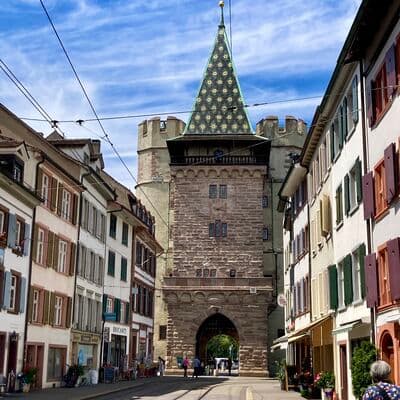
The old town (Altstadt) divides into Grossbasel (Greater Basel) on the south bank and Kleinbasel (Lesser Basel) on the north. The Munster cathedral, with its red sandstone walls and patterned roof tiles, dominates Grossbasel, while Kleinbasel has a grittier, more alternative character. The Fasnacht carnival in February/March is the biggest in Switzerland, with masked parades, lanterns, and music filling the streets for three days.
The Rhine Falls near Schaffhausen, Europe's largest waterfall by volume, is a popular day trip from Basel or Zurich. The falls are 150 meters wide and 23 meters high, with boats taking visitors close to the central rock for a spray-soaked experience. Schaffhausen itself features a well-preserved medieval old town and the Munot fortress.
The Jura mountains extend northwest from Basel, a region of gentle peaks, pastoral valleys, and watchmaking heritage. La Chaux-de-Fonds and Le Locle are UNESCO-listed for their watchmaking urbanism, with towns designed around the needs of the watch industry. The Jura offers quieter hiking and cross-country skiing than the Alpine regions, with fewer tourists and lower prices.
3. Unique Experiences in Switzerland
Mountain Railway Journeys
Switzerland has elevated train travel to an art form, and the scenic railways are experiences unto themselves, not merely transportation. The Glacier Express between Zermatt and St. Moritz takes about eight hours to cover 290 kilometers, crossing 291 bridges and passing through 91 tunnels. The panoramic cars with their large windows frame the passing scenery like a slow-motion film of the Alps. Meals are served at your seat, and the tilting wine glasses (designed to stay level on the curving, climbing track) have become a symbol of the journey.
The Bernina Express from Chur to Tirano crosses the UNESCO-listed Rhaetian Railway, reaching 2,253 meters at the Bernina Pass before descending to Mediterranean Italy. The Landwasser Viaduct, a curved stone bridge that seems to leap from a tunnel directly onto the span, is the journey's iconic image. The contrast between glaciers at the top and palm trees at the bottom makes this one of the most varied rail journeys anywhere.
The GoldenPass Line connects Lucerne to Montreux via Interlaken, passing through the heart of Switzerland's lake and mountain scenery. The newest GoldenPass Express uses gauge-changing technology to allow direct travel between the different rail gauges, eliminating former train changes.
The Jungfrau Railway to Jungfraujoch, the Gornergrat Railway above Zermatt, and the Pilatus Railway (the world's steepest cogwheel railway at 48% gradient) offer mountain ascents that would otherwise require serious climbing ability. Each provides viewpoints that make the ticket prices worthwhile.
Alpine Hiking
With over 65,000 kilometers of marked trails, Switzerland is a hiker's paradise. The trails are impeccably maintained and signposted, with yellow markers indicating walking paths and white-red-white markers showing mountain trails. Every junction displays destinations with estimated walking times, making navigation straightforward.
The Via Alpina crosses the Alps from Vaduz to Montreux in 20 stages, passing through some of the most spectacular scenery in the country. The Haute Route from Chamonix to Zermatt is a legendary trek crossing high passes with glacier views. For less committed hikers, day hikes from any mountain village offer rewarding experiences without the need for camping or hut stays.
Mountain huts operated by the Swiss Alpine Club provide accommodation for hikers and climbers in high alpine areas. These range from basic dormitories to surprisingly comfortable facilities, all offering hearty meals and the camaraderie of fellow mountain enthusiasts. Booking ahead is essential during peak season.
Winter Sports
Switzerland invented winter tourism, and the skiing here remains world-class. Zermatt offers the highest skiing in the Alps with guaranteed snow and the Matterhorn as a constant backdrop. Verbier attracts expert skiers with its challenging off-piste terrain and lively apres-ski scene. St. Moritz combines excellent skiing with an elegant, international atmosphere. Davos/Klosters provides vast terrain across multiple interconnected areas.
For beginners and families, resorts like Gstaad, Arosa, and Adelboden offer gentler slopes and a less intimidating environment. Cross-country skiing is excellent in the Engadine, with the annual Engadin Skimarathon attracting thousands of participants. Snowshoeing, tobogganing, and winter hiking provide alternatives to downhill skiing.
Lake Activities
The Swiss lakes are clean enough for swimming, and in summer, locals make full use of this resource. Public lidos (swimming areas) around Lake Zurich, public beaches on Lake Geneva, and countless small coves and access points on other lakes provide swimming opportunities. The water is cold by Mediterranean standards but refreshing on hot days.
Lake cruises range from short sightseeing trips to full-day journeys. Historic paddle steamers operate on several lakes, combining transportation with nostalgia. Stand-up paddleboarding, kayaking, and sailing are popular, with equipment rental available at most lakeside towns.
Cheese and Chocolate Experiences
Switzerland takes its cheese seriously, and visiting a traditional dairy (Sennerei or fromagerie) offers insight into production methods that have changed little in centuries. In the Emmental, you can watch the famous holey cheese being made. In the Alps, summer mountain dairies produce small-batch cheeses that are not available elsewhere. The Gruyere region offers factory tours and a medieval town experience combined.
Chocolate factories welcome visitors at several locations. Maison Cailler in Broc combines historical exhibits with production viewing and, of course, tasting. Lindt Home of Chocolate near Zurich is a newer attraction with a massive chocolate fountain and interactive exhibits. Smaller chocolatiers throughout the country offer workshops and tastings.
Wellness and Thermal Baths
Thermal springs dot the Swiss landscape, and modern spas have developed around many of them. Leukerbad in Valais has the largest thermal bath complex in the Alps, with multiple pools at different temperatures against a mountain backdrop. The Tamina Gorge thermal source near Bad Ragaz feeds a luxury spa destination. The Bogn Engiadina in Scuol combines traditional Engadine architecture with modern spa facilities.
Peter Zumthor's Therme Vals is considered one of the finest spa buildings in the world, using local stone and natural light to create a meditative atmosphere. Access is limited, and staying at the associated hotel guarantees entry to this architectural masterpiece.
Adventure Sports
Interlaken has become the adventure sports capital of Switzerland, with companies offering skydiving, paragliding, bungee jumping, canyoning, and river rafting. Tandem paragliding from alpine peaks is an accessible thrill, with no experience required to float down from mountaintops with 360-degree views.
The Verzasca Dam bungee jump, featured in the James Bond film GoldenEye, is one of the world's most famous jumps. Via ferratas (protected climbing routes with fixed cables and ladders) provide climbing experiences accessible to those without technical skills, with routes throughout the Alps.
Cultural Immersion
Traditional festivals offer insight into Swiss culture beyond the tourist attractions. The Fasnacht carnivals in Basel and Lucerne feature elaborate costumes, masked parades, and music. The Landsgemeinde in Appenzell is an open-air voting assembly dating to medieval times. The Alpabzug (cattle descent) in autumn celebrates the return of cows from mountain pastures with decorated animals and traditional costumes.
Attending a yodeling performance or alphorn demonstration connects visitors to authentic mountain culture. Learning fondue or raclette preparation, visiting a traditional cheese-making family, or staying in a working farm hotel provides cultural experiences beyond standard tourism.
4. Best Time to Visit Switzerland
Switzerland is genuinely a year-round destination, with each season offering distinct experiences. Your ideal timing depends on what you want to do, see, and how much you want to spend.
Summer (June to August)
Summer is peak season for hiking, with mountain trails accessible and cable cars operating at full capacity. The weather is generally warm (20-30 degrees Celsius in valleys, cooler at altitude), and the days are long. Wildflowers carpet alpine meadows in June and July, creating spectacular scenery. Lake swimming is possible, and outdoor festivals animate cities and villages.
The downside is crowds and prices. Popular destinations like Interlaken, Zermatt, and Lucerne fill with tourists, and accommodation prices reach their peak. Mountain railways can have queues, and spontaneous travel becomes difficult without advance booking. If you visit in summer, book accommodation and major excursions well ahead.
Autumn (September to October)
September is arguably the best month to visit Switzerland. Summer crowds thin out, but weather often remains excellent with stable, clear days. The light takes on a golden quality that makes photography particularly rewarding. Grape harvest in wine regions and the Alpabzug celebrations add cultural interest.
October brings autumn colors to lower elevations and the first snow to higher peaks. Some mountain facilities close for maintenance between summer and winter seasons, so check operating schedules. Weather becomes less predictable, but clear days still offer outstanding conditions.
Winter (December to April)
Ski season runs from December through April in most resorts, with the best snow conditions typically in January and February. March offers longer days and softer snow, while April brings spring skiing conditions and occasional warm spells. Christmas and New Year are extremely busy and expensive.
Winter is also magical in non-ski destinations. Christmas markets in Zurich, Bern, and Basel create festive atmospheres. Snow-covered landscapes have a fairy-tale quality. Many mountain railways operate year-round, providing winter access to viewpoints. Just be aware that some hiking trails and mountain facilities close for the season.
Spring (April to May)
Spring is a transition season with variable conditions. Lower elevations bloom with flowers while mountains remain snow-covered, creating beautiful contrasts. Tourist numbers are low, and prices drop from peak season levels. However, many mountain facilities close for maintenance in May before summer season, and weather can be unpredictable with rain and late snowfall possible.
Special Considerations
School holidays significantly impact crowds and prices. Swiss school breaks in February, at Easter, and throughout summer see more domestic travelers. German tourists arrive in force during their summer break (mid-June to late August). Asian tour groups are present year-round but concentrate in summer.
Swiss National Day on August 1st features celebrations nationwide, including fireworks, bonfires, and parades. While festive, it also means some closures and packed accommodations in popular areas.
For budget travelers, the shoulder seasons (September-October and April-May) offer the best value, though with some compromises on weather and facility availability.
5. How to Get to Switzerland
By Air
Switzerland has three main international airports: Zurich (ZRH), Geneva (GVA), and Basel-Mulhouse-Freiburg (BSL/MLH/EAP). Zurich is the largest and serves as the hub for Swiss International Air Lines, with direct flights to major cities worldwide including numerous US destinations (New York, Los Angeles, Chicago, Miami, San Francisco, Boston). Geneva has good connections to European cities and some intercontinental routes. Basel is smaller and primarily serves European budget carriers.
From the United States, direct flights to Zurich are available from most major hubs with Swiss, United, Delta, and American Airlines operating routes. Flight times are approximately 8-10 hours from the East Coast and 11-13 hours from the West Coast. Connecting through major European hubs (London, Frankfurt, Paris, Amsterdam) offers additional options and sometimes better fares.
Budget carriers including EasyJet, Ryanair (flying to Euro-Airport Basel), and Vueling serve Switzerland from European cities, offering savings for travelers already in Europe.
All three airports have excellent train connections to city centers and the broader Swiss rail network. Zurich Airport has a train station directly beneath the terminals with service to Zurich main station in 10-12 minutes and connections throughout the country. Geneva Airport's train station offers service to the city center in 7 minutes and direct trains to Lausanne, Bern, and beyond.
By Train
Switzerland is extremely well connected to the European rail network. High-speed TGV trains from Paris reach Geneva in about 3 hours and Basel in 3.5 hours. German ICE trains connect Frankfurt to Basel (2.5 hours) and Zurich (4 hours). Italian trains reach Milan, with connections to Lugano and beyond. Austrian trains connect Vienna and Salzburg to Zurich via scenic routes.
The Eurostar from London connects to Swiss trains via Paris or Brussels, with a change of station in Paris (Gare du Nord to Gare de Lyon). Total journey time to Geneva is about 6 hours, though overnight trains offer a comfortable alternative for those who want to save accommodation costs.
Rail passes such as the Eurail Pass (for non-Europeans) include Switzerland and can be cost-effective for those combining Switzerland with other European countries. Check whether point-to-point tickets or passes offer better value for your specific itinerary.
By Car
Driving to Switzerland from neighboring countries is straightforward, with well-maintained highways crossing all borders. From Germany, the A5 and A81 autobahns lead to Basel and Zurich. From France, the A40 reaches Geneva and the A36 connects to Basel. From Italy, the A2 through the Gotthard Tunnel reaches Ticino and the north. From Austria, the A14 connects to St. Gallen and Zurich.
Note that a vignette (road tax sticker) is required for using Swiss highways. This costs 40 CHF per year and must be purchased before using any highway. It is available at border crossings, gas stations, and post offices. Fines for driving without a valid vignette are substantial.
Rental cars can be collected at airports or city locations, though given Switzerland's excellent public transportation and high parking costs, a car is not necessary for most visits and is more of a hindrance than help in cities.
By Bus
Long-distance bus services such as FlixBus connect Switzerland to European cities at lower prices than trains, though with longer journey times. Routes from Paris, Lyon, Milan, Munich, and other cities reach Swiss destinations. Bus stations are typically located near train stations, facilitating onward travel.
Entry Requirements for US, UK, and Other English-Speaking Travelers
Switzerland is part of the Schengen Area, allowing visa-free travel for US, UK, Canadian, Australian, and New Zealand citizens for stays up to 90 days within any 180-day period. Your passport must be valid for at least three months beyond your planned departure date from the Schengen Area.
Starting in 2025, the ETIAS (European Travel Information and Authorisation System) will require travelers from visa-exempt countries, including Americans, to obtain authorization before travel. This will be an online process costing approximately 7 euros and valid for three years, similar to the US ESTA system.
For UK travelers post-Brexit, the same Schengen visa-free rules apply as for Americans. No visa is needed for tourism stays under 90 days, but the ETIAS requirement will also apply once implemented.
Note that Switzerland, while part of Schengen, is not in the EU, so different customs rules may apply. However, crossings between Switzerland and neighboring EU countries are typically formality-free with no passport checks under normal circumstances.
6. Transportation Within Switzerland
The Swiss Travel System
Switzerland has perhaps the most integrated and efficient public transportation system in the world. Trains, buses, boats, and mountain railways are coordinated into a single network with unified ticketing and timetables that mesh seamlessly. The idea that a train might be late or a connection might be missed is almost foreign here, as the system operates with legendary precision.
Swiss Travel Pass
For visitors, the Swiss Travel Pass is usually the best option. Available for 3, 4, 6, 8, or 15 consecutive days, it covers unlimited travel on the Swiss Travel System network including trains, buses, boats, and public transit in 90+ cities. It also includes free admission to over 500 museums and a 50% discount on most mountain railways and cable cars.
The current prices (as of my last update) are approximately 232 CHF for 3 days, 281 CHF for 4 days, 385 CHF for 8 days, and 429 CHF for 15 days in second class. First class costs roughly 50% more. Whether the pass offers value depends on your itinerary, so calculate your planned journeys against individual ticket prices before purchasing.
The Swiss Travel Pass Flex allows a certain number of travel days within a month, useful for trips with stationary bases. The Half Fare Card (Halbtax) gives 50% off most tickets for one month at 120 CHF, a good option for those making fewer journeys or staying longer.
Trains
The Swiss Federal Railways (SBB/CFF/FFS) operates the main network, supplemented by regional and private railways. Trains range from the high-speed, tilting ICN trains that connect major cities to slower regional trains stopping at every village. Almost all routes offer scenic views, as the network traverses valleys, crosses bridges, and tunnels through mountains.
First class offers more spacious seating, quieter cars, and is usually less crowded, but second class is comfortable by any international standard. Seat reservations are not required on domestic routes but recommended on popular tourist trains like the Glacier Express and Bernina Express, which charge a reservation fee in addition to the fare.
The SBB Mobile app is essential for travelers, providing real-time schedules, platform information, ticket purchasing, and delay notifications. English is fully supported.
Mountain Railways and Cable Cars
Reaching alpine viewpoints requires specialized mountain transportation: cogwheel railways, funiculars, cable cars, and gondolas. These are operated by various private companies but integrated into the national timetable. Swiss Travel Pass holders receive 50% discounts on most mountain excursions (some, like the Rigi and Stanserhorn, are free with the pass).
Popular mountain excursions can cost 100-200 CHF or more for round trips, so the discount is significant. Examples include Jungfraujoch (full price around 200 CHF), Schilthorn (full price around 100 CHF), and Matterhorn Glacier Paradise (full price around 120 CHF). Even with discounts, budget for substantial costs if planning multiple mountain excursions.
PostBus
The iconic yellow PostBuses reach villages and valleys that trains cannot access, maintaining connections even to remote hamlets. The three-tone horn warning of their approach on mountain curves is a classic Swiss sound. PostBuses are included in the Swiss Travel Pass and provide essential links for hikers accessing trailheads and visitors exploring smaller destinations.
Lake Cruises
Boats operate on most major lakes, serving both transportation and sightseeing purposes. They are included in the Swiss Travel Pass. Historic paddle steamers on Lake Lucerne, Lake Geneva, and Lake Zurich add nostalgic charm. Using boats as transportation rather than separate cruises maximizes the pass value while still enjoying the scenery.
Driving
While not necessary for most visits, driving allows flexibility, access to remote areas, and independence from timetables. Roads are excellently maintained, though mountain passes can be challenging with hairpin turns and steep grades. Some passes close in winter, requiring tunnels or longer routes.
Parking is expensive and scarce in cities (often 30-50 CHF per day). Many mountain villages are car-free, requiring you to park at the entrance and proceed on foot or by local transport. Speed limits are strictly enforced, with cameras everywhere, and fines are substantial.
For Alpine driving experiences, the famous passes (Furka, Grimsel, Susten, Gotthard, Great St. Bernard) offer spectacular scenery for those who enjoy mountain roads. The Glacier Express route can be driven in a fraction of the train time, though you miss the relaxation of rail travel and the panoramic windows.
Bicycles
Switzerland has an extensive network of cycling routes, and the relatively compact distances make cycling feasible for the fit. E-bikes are widely available for rent, making hills more manageable. Bikes can be rented at many train stations through the Rent a Bike system and returned at different locations for a fee.
Transporting bikes on trains requires a bike ticket and may be restricted during peak hours. Some mountain railways transport bikes, making combinations of cycling and cable cars possible for dramatic descents.
7. Cultural Code and Etiquette in Switzerland
Understanding Swiss culture helps you navigate social situations smoothly and shows respect for local customs. The Swiss are generally polite, reserved, and value order, punctuality, and privacy.
Greetings and Social Interaction
A handshake is standard when meeting someone, with direct eye contact. Three kisses on the cheeks (alternating, starting with the right) are common among friends and acquaintances, particularly in the French-speaking regions. In German-speaking areas, two kisses or just a handshake may be more common. Follow the lead of the Swiss person you are meeting.
Use formal address (Sie in German, vous in French, Lei in Italian) unless invited to use informal forms. First names are used only after being offered. Titles (Herr/Frau, Monsieur/Madame) should be used in formal situations.
Greet people when entering small shops, restaurants, or train compartments with a simple hello (Gruezi in Swiss German, Bonjour in French, Buongiorno in Italian). Say goodbye when leaving. This small courtesy is expected and appreciated.
Punctuality
The Swiss obsession with punctuality is not a stereotype; it is a deeply held cultural value. Arriving on time means being exactly on time, not five minutes early or late. For social occasions, arriving precisely at the stated time is expected. For business meetings, arriving a few minutes early is appropriate.
If you are running late for any appointment, call or message ahead to inform the other party. Being late without notice is considered disrespectful. This extends to public transportation, where missing a connection by seconds is considered your own fault, as the trains do leave on time.
Noise and Quiet Hours
The Swiss value quiet, and noise regulations are taken seriously. Sunday is traditionally a day of rest, and many activities (mowing lawns, construction, noisy work) are prohibited or socially unacceptable. Evening quiet hours typically begin around 10 PM and extend until 7 AM. In apartment buildings, rules may be even stricter.
Loud conversations in public, playing music without headphones, and generally disturbing others is frowned upon. On trains, phone calls should be brief and quiet, or taken to the space between carriages. Many Swiss people appreciate the peaceful atmosphere and expect visitors to respect it.
Tipping
Tipping in Switzerland is different from the US. Service charges are included in all prices, and workers are paid fair wages without relying on tips. However, rounding up or leaving a small additional amount (5-10% at most) for good service is appreciated but not expected or required.
At restaurants, if the bill is 47 CHF, you might leave 50. For a larger bill, rounding to the nearest appropriate amount is fine. Do not feel obligated to leave 15-20% as you would in America; this would be considered excessive and unnecessary.
Taxi drivers, hotel staff, and tour guides appreciate small tips for exceptional service, but again, this is not expected. When paying by card, tips should be handed separately in cash, as adding to card payments is less common.
Environmental Consciousness
Recycling is mandatory in Switzerland, with separate collection for paper, glass (sorted by color), metal, PET plastic, and organic waste. Trash requires special fee-paid bags, available at supermarkets. Visitors staying in accommodations should follow the recycling guidance provided.
Littering is socially unacceptable and legally punishable. The pristine cleanliness of Swiss cities and countryside is maintained by universal adherence to this norm. Carry your trash until you find an appropriate receptacle.
Water conservation and environmental awareness are part of Swiss consciousness. The tap water is excellent and safe to drink throughout the country, eliminating the need for bottled water in most situations.
Language Considerations
Switzerland has four national languages: German (spoken by about 63% of the population), French (23%), Italian (8%), and Romansh (0.5%). The German spoken is Swiss German (Schweizerdeutsch), a collection of dialects quite different from standard German, though all Swiss German speakers understand and can speak standard German.
English is widely understood, especially in tourist areas, major cities, and among younger people. You can generally navigate without speaking local languages, but learning basic phrases is appreciated. Hello (Gruezi/Bonjour/Buongiorno), please (Bitte/S'il vous plait/Per favore), thank you (Danke/Merci/Grazie), and excuse me (Entschuldigung/Excusez-moi/Mi scusi) go a long way.
In multilingual areas, the Swiss often switch between languages fluidly. Follow their lead on which language to use, or simply start in English if unsure.
Shopping and Business Hours
Swiss retail hours are more limited than in many countries. Most shops close by 6-7 PM on weekdays, with Saturday closing around 5-6 PM. Sundays, almost everything is closed except in major tourist areas and train stations (which have convenience stores and some food options).
Some cantons have late shopping one night per week (often Thursday or Friday). Supermarkets in train stations and gas station shops offer extended hours and Sunday opening for essentials.
Plan ahead for Sundays and holidays, ensuring you have food and essentials. Restaurants remain open, but grocery shopping is very limited.
8. Safety in Switzerland
Switzerland is one of the safest countries in the world for travelers. Violent crime is rare, and even petty crime rates are low compared to most European countries. However, common sense still applies, and certain risks specific to Switzerland deserve attention.
General Safety
Walking alone at night is generally safe in all Swiss cities. Public transportation is safe at all hours. Women traveling alone report few concerns. The visible police presence is low because crime is low, not because of any oversight.
That said, pickpocketing can occur in crowded tourist areas, on busy trains, and at major events. Keep valuables secure and be aware of your surroundings in these situations. Zurich's Niederdorf area and Geneva's main station are mentioned more frequently for petty theft, though still at rates far below most European cities.
Scams targeting tourists are minimal, but standard caution applies: confirm prices before committing to services, be wary of too-good-to-be-true offers, and use official channels for tickets and tours.
Mountain Safety
The mountains present the most significant safety consideration for visitors. Weather can change rapidly at altitude, with sunny mornings turning to dangerous storms within hours. Hypothermia, lightning, and visibility loss are real risks for unprepared hikers.
Always check weather forecasts before mountain excursions. The MeteoSwiss app provides detailed mountain weather. Turn back if conditions deteriorate rather than pushing on. The mountains will still be there tomorrow; you should be too.
Stay on marked trails. The excellent Swiss trail system exists for safety as well as navigation. Shortcuts across meadows may trespass on private property or lead to dangerous terrain. Crossing glaciers or climbing via ferratas without proper equipment and knowledge is dangerous.
Hiking poles, sturdy boots, warm layers, rain protection, sun protection, and sufficient water are essential even for day hikes. Mobile phone coverage is good but not universal in remote areas. Inform someone of your planned route if hiking alone.
Mountain rescue services are excellent but expensive. Travel insurance that covers helicopter evacuation and mountain rescue is strongly recommended. The Swiss Air-Rescue (Rega) is world-renowned, but their services are not free.
Winter Sports Safety
Skiing and snowboarding carry inherent risks. Stick to marked pistes that match your ability level. Off-piste skiing should only be attempted with proper equipment (avalanche beacon, probe, shovel), training, and ideally a guide. Avalanche fatalities occur every year, often involving experienced skiers who underestimate conditions.
Wear a helmet, regardless of your skill level. Collisions with other skiers, trees, and lift infrastructure cause serious injuries. Follow the FIS rules (the skier's equivalent of traffic rules) and maintain control at all times.
Check weather and avalanche conditions before heading out. The WSL Institute for Snow and Avalanche Research issues regular bulletins.
Water Safety
Lake and river swimming is popular but requires awareness. Lake temperatures are cold, even in summer, and can cause shock or cramping. Currents in rivers, including the Aare in Bern where floating is popular, can be stronger than they appear. Only swim in designated areas and follow local advice.
Many Swiss children learn to swim and float in rivers from a young age; visitors without this experience should be more cautious. Life jackets are available for Aare floating and recommended for those uncertain of their abilities.
Emergency Services
The general emergency number is 112, which works throughout Europe. Specific Swiss numbers include 117 for police, 118 for fire, 144 for ambulance, and 1414 for Rega air rescue. English-speaking operators are available.
Pharmacies (Apotheke/Pharmacie/Farmacia) can provide medical advice for minor issues. After-hours pharmacies rotate duty, with details posted at all pharmacy locations. Hospitals have emergency departments (Notfall/Urgences/Pronto Soccorso) for serious issues.
9. Health in Switzerland
Healthcare Quality
Switzerland has one of the best healthcare systems in the world, with excellent hospitals, well-trained doctors, and modern facilities. The quality of care is outstanding, but so are the prices. Medical treatment is extremely expensive, making travel insurance absolutely essential.
Doctors generally speak English, especially in larger cities and international areas. Pharmacists are highly trained and can provide advice and some medications that might require prescriptions elsewhere.
Travel Insurance
Do not visit Switzerland without comprehensive travel insurance that covers medical treatment and emergency evacuation. A simple emergency room visit can cost several hundred francs, while hospitalization or surgery can run into thousands. Helicopter rescue from mountain areas typically costs 3,500-5,000 CHF or more.
The European Health Insurance Card (EHIC) or UK Global Health Insurance Card (GHIC) provides some coverage for EU/UK citizens, but Switzerland is not in the EU, and coverage is limited. Supplementary insurance is still recommended.
American travelers should check their existing health insurance for international coverage, which is often limited or nonexistent. Travel insurance policies from companies like World Nomads, Allianz, or specialized providers offer the necessary coverage.
Altitude Considerations
Many Swiss attractions are at significant altitude. Jungfraujoch is at 3,454 meters, Zermatt village at 1,620 meters, and many cable cars reach above 3,000 meters. Altitude sickness can affect anyone, regardless of fitness level, with symptoms including headache, nausea, dizziness, and shortness of breath.
Ascend gradually when possible, stay hydrated, avoid alcohol at altitude, and descend if symptoms become severe. Those with heart or respiratory conditions should consult a doctor before high-altitude excursions.
The thin air at altitude also means stronger sun exposure. Sunscreen, sunglasses, and lip protection are essential even on cloudy days, as UV reflection from snow intensifies exposure.
Water and Food Safety
Tap water is safe to drink throughout Switzerland and is often of excellent quality, coming from mountain springs. No special precautions are needed for food or water. Restaurant hygiene standards are high.
Common Health Issues
Hay fever sufferers should be aware that pollen counts can be high in spring and early summer. Ticks carrying Lyme disease and tick-borne encephalitis are present in forested areas, particularly below 1,500 meters. Check for ticks after hiking and consider vaccination for tick-borne encephalitis if planning extensive outdoor activities.
The sun at altitude is stronger than expected. Sunburn and snow blindness are real risks, even for experienced travelers. Proper protection is essential.
10. Money and Budget in Switzerland
Currency
Switzerland uses the Swiss Franc (CHF), often simply called Franken in German. The franc is divided into 100 Rappen (centimes in French). Coins come in 5, 10, 20, and 50 Rappen, plus 1, 2, and 5 Franc denominations. Notes are 10, 20, 50, 100, 200, and 1,000 Francs.
The Swiss Franc has been roughly at parity with the US Dollar in recent years, making mental conversions easy (1 CHF is approximately 1 USD, though check current rates). Against the British Pound, expect roughly 1.1-1.2 CHF per Pound.
Euros are accepted at some tourist establishments, larger train stations, and border areas, but change is given in Francs and rates are unfavorable. For the best rates, use local currency.
Accessing Money
ATMs (Bancomats) are widely available and accept major international cards. They dispense Francs and offer competitive exchange rates. Notify your bank before traveling to avoid card blocks.
Credit and debit cards are widely accepted, including contactless payment. Visa and Mastercard are most common; American Express is less widely accepted. Some small shops, mountain huts, and rural establishments may be cash-only, so keep some Francs on hand.
Currency exchange is available at airports, train stations, banks, and exchange bureaus. Airport and station rates are typically worse than ATM withdrawals. Avoid hotel exchanges, which often have poor rates.
Budget Overview
Switzerland is expensive. There is no way around this fact. Budget travelers who are comfortable in hostels, cook their own meals, and stick to free activities might manage on 100-150 CHF per day. Mid-range travelers staying in modest hotels and eating out once daily should budget 250-400 CHF per day. Luxury travelers will easily spend 500 CHF or more daily.
Specific costs to budget for:
- Hostel dorm bed: 40-60 CHF per night
- Budget hotel double room: 120-180 CHF per night
- Mid-range hotel double room: 200-350 CHF per night
- Luxury hotel double room: 400+ CHF per night
- Restaurant lunch (basic): 20-35 CHF
- Restaurant dinner (mid-range): 40-70 CHF per person
- Coffee: 4-6 CHF
- Beer (bar): 6-9 CHF
- Supermarket sandwich: 6-10 CHF
- Public transport day pass (city): 10-15 CHF
- Major mountain excursion: 80-200 CHF
Saving Money
Several strategies can reduce costs:
The Swiss Travel Pass, while expensive upfront, can save money if you plan extensive train travel, as it includes transportation, museum admissions, and mountain discounts.
Self-catering saves significantly on food costs. Swiss supermarkets (Coop, Migros, Aldi, Lidl) offer reasonable prices for groceries. Picnic lunches at scenic spots combine savings with experience. Even budget supermarket food in Switzerland is high quality.
Free activities abound. Hiking costs nothing (aside from equipment). City walks, lake swimming, and exploring old towns are free. Many museums have free days or hours. Parks and viewpoints require only the cost of reaching them.
Off-peak travel reduces both prices and crowds. Shoulder season rates can be 20-30% lower than peak season. Midweek stays often beat weekend prices.
Student, youth, and senior discounts are available at many attractions. Carry relevant ID (ISIC card for students, passport showing age) to claim these savings.
Tipping Revisited
As mentioned in the cultural section, tipping is not expected in Switzerland as it is in the US. Wages are fair, and service is included in prices. Rounding up or leaving small change is appreciated but not required. Do not feel obligated to tip 15-20%; it would be unusual and unnecessary.
11. Suggested Itineraries
7 Days: Classic Switzerland Highlights
This week-long itinerary covers the most iconic Swiss experiences, balancing cities, mountains, and lakes while maintaining a reasonable pace.
Day 1: Arrive Zurich
Arrive at Zurich Airport and transfer to your city center hotel. Spend the afternoon exploring the Altstadt, walking along the Limmat River to see the Grossmunster, Fraumunster, and St. Peter's Church with its famous clock face. Cross the river to explore the Niederdorf quarter, with its narrow streets, shops, and restaurants. Have dinner in the old town, perhaps trying Zurcher Geschnetzeltes (sliced veal in cream sauce) at a traditional restaurant.
Day 2: Zurich to Lucerne
Morning train to Lucerne (1 hour). Check into your hotel and begin exploring. Walk across the Chapel Bridge, photographing the iconic wooden bridge and Water Tower. Explore the old town, visit the Lion Monument (carved to commemorate Swiss Guards killed in the French Revolution), and stroll along the lakefront. Afternoon: take a boat cruise on Lake Lucerne (included with Swiss Travel Pass) to experience the scenery. Evening: dinner in the old town, enjoying views of the surrounding mountains.
Day 3: Mount Pilatus or Rigi
Full day mountain excursion. Option A: Mount Pilatus via the Golden Round Trip, taking the boat to Alpnachstad, the world's steepest cogwheel railway to the summit, and the cable car down to Kriens, then bus back to Lucerne. Option B: Mount Rigi, known as the queen of the mountains, accessible by cogwheel railway from Vitznau (reached by boat) and returning via Arth-Goldau. Both offer spectacular panoramic views, restaurants at the top, and short walking trails. Return to Lucerne for dinner.
Day 4: Lucerne to Interlaken and Jungfrau Region
Morning train to Interlaken (2 hours via scenic route). Continue to Grindelwald or Lauterbrunnen, depending on accommodation. Afternoon: if weather is good, take the cable car to First or the train to Kleine Scheidegg for views of the Eiger, Monch, and Jungfrau. Alternatively, explore Lauterbrunnen valley with its waterfalls, take the cable car to Murren, or ride the train to Wengen. Evening: enjoy the mountain village atmosphere.
Day 5: Jungfraujoch - Top of Europe
Early departure for Jungfraujoch to beat crowds. The journey takes about 2 hours from Grindelwald or Lauterbrunnen, climbing via Kleine Scheidegg. At the top (3,454 meters), explore the Ice Palace, viewpoints, and Sphinx Observatory. Allow 2-3 hours at the summit. Descend via the same route, perhaps stopping at Kleine Scheidegg for lunch with mountain views. Afternoon: relax or take a short hike in the valley. Alternative on poor weather days: visit the nearby Trummelbach Falls (inside-mountain waterfalls) or explore villages.
Day 6: Interlaken to Bern to Geneva
Morning departure for Bern (1 hour). Spend 3-4 hours exploring the capital: walk through the UNESCO-listed old town, see the Zytglogge clock tower, stroll the arcaded streets, visit the Munster cathedral or Zentrum Paul Klee, and perhaps swim in the Aare if weather permits. Lunch in Bern. Afternoon train to Geneva (2 hours). Check into your hotel and take an evening walk along the lake, seeing the Jet d'Eau fountain and the old town.
Day 7: Geneva and Departure
Morning exploration of Geneva: St. Pierre Cathedral, the Reformation Wall, the United Nations area (Palais des Nations), or museums such as the Patek Philippe Museum or MAMCO. If time permits before your flight, take a boat cruise on Lake Geneva or explore the lakefront parks. Transfer to Geneva Airport for departure.
10 Days: Expanding the Classic Route
Adding three days allows for deeper exploration and additional destinations.
Days 1-5: Follow the 7-day itinerary through Day 5
Day 6: Interlaken to Zermatt
Scenic train journey to Zermatt (approximately 3 hours, changing trains at Spiez and Visp). The car-free village requires arrival by train from Tasch. Afternoon: explore the village, checking out the shops, the Matterhorn Museum, and finding the best viewpoints for the iconic peak. Evening: dinner with Matterhorn views if weather cooperates.
Day 7: Zermatt and Matterhorn Glacier Paradise
Full day in Zermatt. Morning: take the Gornergrat railway for panoramic views of the Matterhorn and Monte Rosa massif, with breakfast at the top if you depart early. Alternatively, take the cable cars to Matterhorn Glacier Paradise (3,883 meters), Europe's highest cable car station, with its ice palace and viewing platform. Afternoon: hiking in the area, with trails suited to all levels. The Five Lakes Walk is a classic, reflecting the Matterhorn in alpine tarns. Evening: enjoy Zermatt's restaurants and bars.
Day 8: Zermatt to Montreux via Bern
Morning train from Zermatt (or take the scenic route if you have a Swiss Travel Pass and time). Pass through Bern or take the route via the Simmental valley. Arrive in Montreux by early afternoon. Visit Chillon Castle, the dramatic lakeside fortress, then walk the flower-lined lakefront promenade. Evening: explore Montreux's cafes and restaurants, perhaps with live music at a jazz venue.
Day 9: Lavaux Vineyards and Lausanne
Morning: take the train to Lausanne (20 minutes) and visit the Olympic Museum, overlooking the lake with interactive exhibits on the history of the Games. Walk through the old town, climbing to the cathedral for views. Afternoon: take the train to the Lavaux vineyard region and walk among the terraced vines, stopping at village cellars for wine tasting (the Dezaley and Saint-Saphorin areas are particularly scenic). Return to Montreux or continue to Geneva.
Day 10: Geneva and Departure
If overnight in Geneva, morning exploration of remaining sights. Transfer to Geneva Airport. If overnight in Montreux, morning train to Geneva Airport (1 hour 10 minutes) with time for a final lakefront walk.
14 Days: Comprehensive Switzerland
Two weeks allows for a thorough exploration including Italian-speaking Ticino and additional mountain experiences.
Days 1-7: Follow the 10-day itinerary through Day 7
Day 8: Zermatt to Lugano
Depart Zermatt and travel via Brig and the Gotthard route to Lugano (approximately 4 hours with connections). The journey passes through the heart of the Alps, crossing into Italian-speaking Switzerland. Arriving in Lugano feels like arriving in Italy: palm trees, Mediterranean architecture, and lakeside promenades. Afternoon: explore the old town, walk the lakefront, or take the funicular up Monte San Salvatore for panoramic views. Evening: Italian dinner in the piazzas.
Day 9: Lake Lugano and Ticino
Full day exploring Ticino. Option A: boat cruise on Lake Lugano, visiting Morcote (considered Switzerland's most beautiful village) and Gandria, a car-free village accessible by boat. Option B: day trip to Locarno and the Lake Maggiore area, with the Madonna del Sasso sanctuary and the Centovalli railway option to Domodossola in Italy. Option C: hike in the valleys, exploring the Verzasca valley with its emerald waters and Roman bridge. Return to Lugano for evening.
Day 10: Lugano to St. Moritz via Bernina Express
Depart Lugano and travel to Tirano (approximately 2 hours via bus or train). Board the Bernina Express, one of the world's great train journeys, crossing the Alps via the UNESCO-listed Rhaetian Railway. The route climbs from Mediterranean vegetation to glaciers at the Bernina Pass, passing the Morteratsch Glacier and Ospizio Bernina before descending to St. Moritz. Arrive late afternoon and explore the glittering resort town, known for glamour and winter sports heritage.
Day 11: St. Moritz and the Engadine
Day exploring the Upper Engadine. Take the funicular to Muottas Muragl for views of the Engadine lakes and surrounding peaks. Walk the panoramic trail to Alp Languard if conditions permit. Alternatively, visit the nearby villages of Pontresina (mountaineering heritage), Sils Maria (where Nietzsche spent summers), or the Swiss National Park near Zernez (accessed by bus). Evening: dinner at a traditional Graubunden restaurant, trying local specialties like Pizzoccheri or Capuns.
Day 12: St. Moritz to Chur via Glacier Express route
Depart St. Moritz and follow the Glacier Express route through the dramatic Albula valley, crossing the famous Landwasser Viaduct and passing through numerous tunnels and galleries. Stop in Chur, Switzerland's oldest city, for lunch and exploration of the old town with its cathedral and bishop's palace. Continue to Zurich or your next destination by late afternoon.
Day 13: Rhine Falls and Basel
Morning train to Schaffhausen (approximately 1 hour from Zurich). Visit the Rhine Falls, Europe's largest waterfall, taking a boat close to the central rock for spray and thunder. Explore Schaffhausen's old town with its painted facades. Afternoon train to Basel (1 hour). Evening: explore Basel's old town, crossing the Rhine by ferry (an unusual pedestrian ferry pulled by the current), and perhaps visiting the Kunstmuseum or enjoying the city's cultural scene.
Day 14: Basel and Departure
Morning: continue exploring Basel, visiting the Foundation Beyeler (taking the tram to Riehen), the Vitra Design Campus just across the border in Germany, or simply strolling the atmospheric old town. Transfer to Basel Airport or connect to Zurich Airport for departure.
21 Days: The Ultimate Swiss Journey
Three weeks allows for a leisurely pace with deep exploration and off-the-beaten-path discoveries.
Days 1-14: Follow the 14-day itinerary
Day 15: Basel to Jura Mountains
Depart Basel and head into the Jura, Switzerland's "other" mountain range. Visit La Chaux-de-Fonds and Le Locle, UNESCO-listed watchmaking towns, with visits to the International Museum of Horology or factory tours (book ahead). The rolling Jura landscapes offer gentler hiking and cross-country skiing, with fewer tourists than the Alps. Overnight in the Jura region.
Day 16: Neuchatel and Yverdon-les-Bains
Morning: explore Neuchatel, a French-speaking university town on its namesake lake, with a castle, collegiate church, and pleasant old town. Afternoon: travel to Yverdon-les-Bains, home to thermal baths and the House of Elsewhere, a quirky museum of science fiction and utopianism. Or explore the Grandson Castle nearby. Evening: relax in the thermal baths.
Day 17: Geneva Deep Dive
Return to Geneva for a thorough exploration. Visit CERN, the European Organization for Nuclear Research, which offers free guided tours (book well in advance) and an interactive exhibition. Explore the International Red Cross and Red Crescent Museum for a moving look at humanitarian history. Take a boat cruise on Lake Geneva, possibly to Yvoire in France (passport required but usually no checks). Evening: explore Geneva's neighborhoods, trying different cuisines.
Day 18: Day Trip to Chamonix or Annecy
Cross into France for a day trip. Option A: Chamonix-Mont-Blanc, taking the Aiguille du Midi cable car for views of Mont Blanc and the French Alps, dramatically different from the Swiss side. Option B: Annecy, the "Venice of the Alps," with its canal-side old town, chateau, and beautiful lake. Both are about 1-1.5 hours from Geneva. Return to Geneva for evening.
Day 19: Geneva to Verbier
Depart Geneva and travel to Verbier (approximately 2.5 hours). This chic ski resort in Valais attracts an international crowd with its challenging skiing and lively atmosphere. In summer, hiking and mountain biking take over. Take the Mont Fort cable car for glacier views. Explore the village and enjoy the resort atmosphere. Evening: dinner at a mountain restaurant or in the village.
Day 20: Verbier to Zermatt for Final Mountain Day
Travel to Zermatt for a return visit or first experience (approximately 2.5 hours via Martigny and Visp). Spend the day on whichever mountain excursion you missed previously: Gornergrat, Matterhorn Glacier Paradise, or a longer hike. Alternatively, explore lesser-known viewpoints like Sunnegga or Rothorn. Final dinner with Matterhorn views.
Day 21: Zermatt to Zurich and Departure
Morning train from Zermatt to Zurich (approximately 3.5 hours). Depending on your flight time, final shopping or sightseeing in Zurich: the Bahnhofstrasse for luxury shopping, the Confiserie Sprüngli for chocolate, or a final stroll along the lake. Transfer to Zurich Airport for departure.
Itinerary Customization Tips
These itineraries are frameworks that you should adapt to your interests and pace. Art enthusiasts might spend more time in Basel and Zurich; adventure seekers might add paragliding in Interlaken or via ferrata climbing in Zermatt. Wine lovers could extend time in Lavaux; families might prioritize the Swiss Museum of Transport in Lucerne and family-friendly hikes.
Weather flexibility is important. Mountain excursions depend on visibility; have backup plans for cloudy days, such as museums, valley walks, or moving destinations. Check webcams and forecasts the night before to adjust plans.
The Swiss Travel Pass makes itinerary changes easy, as you can hop on any train without booking. Use this flexibility to follow the weather, staying longer in places you love and moving on if conditions or vibes do not suit you.
12. Connectivity
Mobile Coverage and SIM Cards
Mobile coverage in Switzerland is excellent in populated areas and surprisingly good in mountain regions, though remote valleys and indoor locations may have gaps. The main providers are Swisscom, Sunrise, and Salt, all offering good coverage.
For visitors, several options exist:
Prepaid SIM cards are available at airports, train stations, and mobile shops. Providers offer tourist-specific packages with data, calls, and sometimes public WiFi access. Expect to pay 20-30 CHF for a basic package with several gigabytes of data. You will need to show ID (passport) to activate a SIM.
eSIM options from providers like Airalo, Holafly, and others allow you to purchase data before arrival and activate upon landing, without needing a physical SIM card. This is convenient for those with eSIM-compatible phones.
International roaming depends on your home carrier. US plans vary widely; check with your provider before travel. Some carriers include Switzerland in their international plans, while others charge steep roaming fees. UK carriers have reintroduced roaming charges for Switzerland post-Brexit, so check your plan details.
WiFi Availability
WiFi is widely available but not always free. Hotels typically offer free WiFi, though quality varies. Cafes and restaurants may offer WiFi to customers. Train stations have WiFi zones, and the SBB trains have WiFi in first class (and sometimes second class, though less reliable).
The Swisscom Public WiFi network covers many public areas and offers free one-hour sessions, though registration is required. For reliable connectivity, a SIM card or eSIM is more dependable than relying on WiFi.
Power and Adapters
Switzerland uses Type J plugs, a three-pin design unique to Switzerland and Liechtenstein. European two-pin Type C plugs will fit most Swiss outlets (the Type J socket accepts both), but UK and US plugs require adapters.
Voltage is 230V, 50Hz, standard for Europe. US devices designed only for 110V will require voltage converters, though most modern electronics (phones, laptops, cameras) have universal voltage adapters built in. Check your device labels before plugging in.
Adapters are available at airports, electronics stores, and sometimes hotel reception. Purchasing before travel is cheaper and ensures you are prepared upon arrival.
Postal Services
Swiss Post (Die Post/La Poste/La Posta) is efficient and reliable. Post offices are found in all towns, with the yellow PostAuto/PostBus logos easily spotted. Hours are typically Monday to Friday, with some Saturday morning opening in larger offices.
Postcards and letters to North America take approximately 5-7 days. Stamps are available at post offices, some kiosks, and occasionally hotel reception desks.
13. Swiss Food and Cuisine
Swiss cuisine is a hearty, comfort-food tradition shaped by the country's mountain climate and agricultural heritage. While not as internationally celebrated as French or Italian cooking, Swiss food is satisfying, flavorful, and deeply connected to regional identity. The multicultural nature of Switzerland means that each linguistic region brings its own culinary traditions.
National Dishes
Fondue is perhaps Switzerland's most famous culinary export. The classic cheese fondue combines Gruyere and Emmental cheeses with white wine and Kirsch (cherry brandy), melted in a communal pot (caquelon) over a flame. Diners dip bread cubes into the cheese using long forks, with tradition dictating that anyone who loses their bread must buy the next round of drinks or perform some other forfeit. Fondue is a winter dish for the Swiss, though restaurants serve it year-round for tourists. The best fondue experiences are in mountain restaurants with views, where the atmosphere matches the food.
Variations include fondue moitie-moitie (half Gruyere, half Vacherin Fribourgeois) and regional recipes using local cheeses. Fondue etiquette suggests not drinking anything cold with the cheese (said to cause digestive issues) and taking small bites to keep the rhythm going.
Raclette is another melted cheese dish, named after the French verb "to scrape." A half-wheel of raclette cheese is heated, and the melted layer is scraped onto plates accompanied by boiled potatoes, pickled onions (silverskin), cornichons, and cured meats. Modern raclette often uses individual pans under a tabletop heater, allowing each diner to melt their own portions. Like fondue, raclette is rich and filling, best followed by a digestif walk.
Rosti are Switzerland's answer to hash browns: grated potatoes formed into a crispy cake and pan-fried in butter. Originating in the German-speaking regions, rosti now appear nationwide as a side dish or main course (topped with cheese, eggs, or bacon). The "Rostigraben" (rosti ditch) is a joking term for the cultural divide between German and French-speaking Switzerland, with rosti on one side and French fries on the other.
Regional Specialties
German-speaking regions offer hearty fare. Zurcher Geschnetzeltes (sliced veal in cream sauce with mushrooms) is a Zurich classic, typically served with rosti. Bratwurst with onion sauce and rosti is common throughout the region. Zopf is a braided bread traditionally eaten on Sundays. Leckerli are spiced honey cookies from Basel, sold in beautiful tins as souvenirs.
French-speaking regions bring more refined influences. The Lavaux region produces white wines that pair with perch fillets from Lake Geneva. Papet Vaudois (leek and potato stew with sausage) and malakoffs (fried cheese balls from near Lausanne) are local specialties. Croutes (like Welsh rarebit, bread topped with cheese and grilled) appear on many menus.
Italian-speaking Ticino offers Mediterranean flavors. Risotto and polenta replace potatoes as starches. Pizzoccheri (buckwheat pasta with cheese and vegetables) comes from the nearby Valtellina but appears in Ticino restaurants. Grotto restaurants, traditional rustic eateries often built into rock, serve simple dishes like salametti, cheeses, and polenta at granite tables.
Graubunden has its own traditions. Capuns are chard leaves stuffed with a spatzle-like mixture and baked in cream. Bundnerfleisch is air-dried beef, sliced paper-thin and often served as a starter. Pizokel (similar to spatzle) and Maluns (grated potatoes cooked with butter and flour) reflect the mountain heritage.
Cheese
Switzerland produces over 450 varieties of cheese, many protected by appellation controls. The famous names include:
Gruyere: hard cheese from the town of Gruyeres, complex and nutty, the backbone of fondue. AOP (protected origin) status ensures authenticity.
Emmentaler: the cheese with holes (technically called "eyes"), mild and slightly nutty, often exported as "Swiss cheese."
Appenzeller: washed in a secret herbal brine, giving it a distinctive pungent character. The recipe is a closely guarded secret.
Raclette: semi-hard cheese designed for melting, with regional varieties from Valais and other areas.
Sbrinz: an extra-hard cheese similar to Parmesan, used for grating or shaved into thin slivers.
Vacherin: either Vacherin Fribourgeois (used in fondue) or Vacherin Mont-d'Or (a soft, seasonal cheese eaten with a spoon from its wooden box).
Tete de Moine: a semi-hard cheese traditionally scraped into rosettes using a special tool called a girolle.
Chocolate
Swiss chocolate's reputation is well-deserved, built on centuries of innovation and quality. Swiss chocolatiers invented milk chocolate (Daniel Peter, with Henri Nestle's condensed milk), conching (Rodolphe Lindt's smoothness technique), and the triangle bar (Toblerone). Today, Swiss chocolate maintains exceptional standards, with both mass-produced and artisanal options.
Major brands like Lindt, Sprungli, Cailler, Laderach, and Teuscher produce high-quality chocolate available in shops throughout the country. Artisanal chocolatiers in cities and towns offer handmade pralines and creative flavors. Factory visits at Cailler (Broc), Lindt (Kilchberg), and smaller producers offer behind-the-scenes looks and tastings.
When buying chocolate, look for Swiss production (not just a Swiss brand) and try local specialties beyond the standard bars. Pralines, truffles, and seasonal specialties offer variety.
Dining Practicalities
Restaurant meals in Switzerland are expensive. A simple lunch might cost 20-35 CHF, while dinner at a decent restaurant runs 50-100 CHF per person with drinks. Fine dining prices can be astronomical.
Lunch menus (Tagesmenu/menu du jour/menu del giorno) offer set meals at reduced prices, typically 18-25 CHF for two or three courses. This is the most economical way to eat out.
Supermarkets (Coop, Migros) offer excellent prepared foods, salad bars, and fresh items for picnic lunches. This approach saves significant money while allowing enjoyment of scenic spots.
Water is charged in restaurants (usually 5-8 CHF for a bottle), though asking for tap water (Hahnenwasser/eau du robinet) is increasingly acceptable, especially in casual establishments.
Reservations are advisable for dinner at popular restaurants, especially on weekends. Mountain restaurants during peak seasons may also require booking.
14. Shopping in Switzerland
What to Buy
Watches are Switzerland's iconic luxury product. From entry-level Swiss brands to haute horlogerie masterpieces, the range is vast. Popular tourist purchases include Swatch (affordable, colorful), Tissot and Longines (mid-range quality), and aspirational pieces from Rolex, Omega, Patek Philippe, and others. Buying in Switzerland does not necessarily offer savings over other countries (prices are globally standardized for many brands), but the experience and selection are unmatched.
Chocolate is the most popular edible souvenir. Beyond standard bars, look for pralines, truffles, and special editions. Sprungli in Zurich and Geneva offers their famous Luxemburgerli (small macarons) and premium chocolates. Laderach produces fresh chocolate sold by weight. Many shops will pack chocolate for travel, though summer heat remains a concern for transit.
Cheese can be transported if properly packed. Hard cheeses like Gruyere and Sbrinz travel well. Many shops offer vacuum-sealing for transport. Be aware of your home country's import restrictions on dairy products.
Swiss Army Knives from Victorinox (and the less-common Wenger brand, now owned by Victorinox) are practical souvenirs available from basic models to elaborate multi-tools. The main factory store is in Brunnen, but knives are sold throughout the country. Note TSA and security regulations: pack knives in checked luggage only.
Textiles include traditional embroidery from St. Gallen (famous for high-end lace and embroidery used in couture fashion) and wool products. Traditional costumes are not typically purchased by tourists but admired at festivals.
Music boxes and other mechanical items continue a Swiss tradition of precision craftsmanship. Music boxes range from simple souvenirs to elaborate collector's pieces.
Cowbells are authentic folk items, still used on alpine farms. Smaller decorative versions make distinctive souvenirs, though they are heavy and bulky for transport.
Where to Shop
Zurich's Bahnhofstrasse is one of Europe's most exclusive shopping streets, with luxury boutiques, department stores (Globus, Jelmoli), and the famous Confiserie Sprungli. The side streets offer more eclectic options.
Geneva's Rue du Rhone concentrates watch boutiques and luxury brands. The Old Town has antique shops and art galleries.
Local markets in all cities offer fresh produce, regional products, and artisanal goods. Weekly markets (often Saturday mornings) provide atmospheric shopping and local interaction.
Outlet shopping is available at FoxTown in Mendrisio (near Lugano), one of Europe's largest outlet centers with significant discounts on Italian and international brands.
Airport shopping at Zurich and Geneva offers last-minute purchases with tax-free advantages for non-EU residents.
Tax Refunds
Non-residents can claim VAT refunds on purchases over 300 CHF made at participating stores. Obtain a Tax Free form at the time of purchase, have it stamped by customs when leaving Switzerland, and claim the refund at airport counters or by mail. The process requires keeping goods unused and available for inspection until you leave the country.
Shopping Hours
Most shops open from 9 AM to 6:30 PM Monday through Friday, with shorter Saturday hours (typically until 5 PM). Sundays see almost universal closures except in major tourist zones and train stations. Thursday evening late shopping extends hours in many cities. Plan purchases accordingly, especially if you need something specific before a Sunday or holiday.
15. Useful Apps for Traveling in Switzerland
A few well-chosen apps make Swiss travel smoother:
SBB Mobile: The Swiss Federal Railways app is essential. It provides real-time schedules for trains, buses, boats, and cable cars throughout the country. You can buy tickets, see platform information, and receive delay notifications. The app works offline for timetable viewing, though ticket purchase requires connectivity.
MeteoSwiss: The official weather service app offers detailed forecasts, radar images, and mountain weather information. Crucial for planning mountain excursions and outdoor activities.
SwitzerlandMobility: This app provides detailed maps for hiking, cycling, mountain biking, and inline skating throughout Switzerland. Trails are well-documented with difficulty ratings, elevation profiles, and points of interest. The free version offers basic functionality; premium features require subscription.
REGA: The Swiss Air-Rescue app allows emergency calls with GPS location transmission. While you hopefully will never need it, having quick access to mountain rescue could be lifesaving. Non-members can also use the app for emergencies.
Google Maps or Apple Maps: Standard navigation works well in Switzerland, though SBB Mobile is better for public transport routing. Download offline maps for areas where you might be without connectivity.
Google Translate: Useful for menus, signs, and basic communication, especially in smaller towns where English might be limited. Download German, French, and Italian for offline use.
Currency converter apps: While CHF roughly equals USD, having a quick converter helps with budget tracking and price comparisons.
16. Conclusion: Your Swiss Adventure Awaits
Switzerland is not a budget destination, and there is no point pretending otherwise. You will spend more here than in almost any other country in Europe. But when you are standing on a mountain peak with the Alps spreading endlessly before you, or riding a perfectly punctual train through valleys so beautiful they seem unreal, or savoring a piece of chocolate that melts on your tongue with flavors you did not know chocolate could have, you will understand why millions of travelers consider Switzerland worth every franc.
This is a country that does things properly. The trains run on time because the Swiss believe trains should run on time. The mountains are accessible because the Swiss built railways to places that seemed impossible to reach. The food is excellent because the Swiss will not accept anything less. This attention to quality and detail permeates every aspect of Swiss life, and as a visitor, you are the beneficiary of centuries of this cultural commitment to excellence.
What makes Switzerland special is not any single attraction but the combination of elements: natural beauty, cultural richness, efficient infrastructure, safety, and quality. You can experience dramatic mountains in other countries, but few places combine them with such excellent access and amenities. You can find charming old towns elsewhere, but rarely so well-preserved and so safe to explore. You can eat well in many destinations, but the consistent quality across price ranges is particularly Swiss.
The diversity within such a small country is remarkable. In a single day, you can breakfast by a glacier, lunch in a medieval town, and dine on the shores of a Mediterranean-feeling lake. You can hear German, French, Italian, and the ancient Romansh language in the same week. You can ski in the morning and swim in a lake in the afternoon during the shoulder seasons.
Practical tips for making the most of your visit: buy a Swiss Travel Pass if you plan to travel extensively; it simplifies logistics and provides value. Book mountain excursions for clear weather days and have backup plans for clouds. Make hotel reservations in peak season, especially in popular destinations like Zermatt and Interlaken. Pack layers, as mountain weather changes quickly. Bring good walking shoes even if you do not plan to hike, as Swiss towns have cobblestones and many attractions involve stairs.
Accept the prices and budget accordingly rather than constantly converting and lamenting the cost. Yes, that coffee is expensive. Yes, that sandwich costs what a full meal costs elsewhere. Adjust your expectations and enjoy the quality you are paying for.
Most importantly, slow down enough to appreciate what you are experiencing. Switzerland rewards those who take time to look, to breathe, to savor. Rush through and you will see the highlights but miss the magic. Linger by a lake, take the scenic train instead of the fast one, sit on a terrace and watch the light change on the mountains. This is a country made for contemplation and appreciation.
Whether you come for a week or a month, whether you stick to the classic highlights or venture into lesser-known corners, Switzerland will reward you with experiences that linger in memory long after the journey ends. The mountains stay with you, the precision impresses you, and the chocolate (definitely bring some home) reminds you of a place where quality and beauty come together in ways that few other destinations can match.
Safe travels, and enjoy your Swiss adventure.
Appendix: Quick Reference Information
Emergency Numbers
- General Emergency: 112
- Police: 117
- Fire: 118
- Ambulance: 144
- REGA Air Rescue: 1414
Useful Phrases
German (most of Switzerland):
- Hello: Gruezi
- Goodbye: Auf Wiedersehen
- Please: Bitte
- Thank you: Danke
- Yes/No: Ja/Nein
- Excuse me: Entschuldigung
- Do you speak English?: Sprechen Sie Englisch?
French (western Switzerland):
- Hello: Bonjour
- Goodbye: Au revoir
- Please: S'il vous plait
- Thank you: Merci
- Yes/No: Oui/Non
- Excuse me: Excusez-moi
- Do you speak English?: Parlez-vous anglais?
Italian (Ticino):
- Hello: Buongiorno
- Goodbye: Arrivederci
- Please: Per favore
- Thank you: Grazie
- Yes/No: Si/No
- Excuse me: Mi scusi
- Do you speak English?: Parla inglese?
Key Transportation Hubs
- Zurich HB: Main hub for eastern and central Switzerland
- Bern: Central hub, connections nationwide
- Geneva-Cornavin: Hub for western Switzerland
- Basel SBB: Northern hub, connections to Germany and France
- Lucerne: Central hub for mountain excursions
- Interlaken Ost: Gateway to Jungfrau region
Typical Daily Budget Summary
- Budget (hostel, self-catering, free activities): 100-150 CHF
- Mid-range (hotel, one meal out, attractions): 250-400 CHF
- Luxury (fine hotel, restaurants, premium experiences): 500+ CHF
Climate Overview
- Summer (Jun-Aug): 18-28C in valleys, cooler at altitude
- Autumn (Sep-Oct): 10-18C, variable conditions
- Winter (Dec-Mar): -2 to 7C in valleys, snow at altitude
- Spring (Apr-May): 8-15C, unpredictable weather
Key Websites
- Swiss Tourism: MySwitzerland.com
- Swiss Rail: sbb.ch
- Weather: meteoswiss.admin.ch
- Swiss Travel Pass: swistravelsystem.com
This guide was written to provide comprehensive, practical information for English-speaking travelers planning a trip to Switzerland. Information is accurate to the best of the author's knowledge but subject to change. Always verify current prices, schedules, and requirements before travel.
Extended Regional Guides
Deep Dive: The Jungfrau Region
The Jungfrau region deserves special attention as one of Switzerland's most visited and most spectacular areas. Understanding the geography and options helps you make the most of your time here.
The region is centered on the three famous peaks: Eiger (3,967m), Monch (4,107m), and Jungfrau (4,158m). The Eiger's notorious north face, the Nordwand, has claimed many climbers' lives and features in mountaineering history. Today, visitors can experience these peaks without technical climbing skills thanks to an extensive network of mountain railways, cable cars, and hiking trails.
Interlaken sits at the base of the region, positioned between Lake Thun and Lake Brienz. While it serves primarily as a gateway rather than a destination in itself, the town offers all necessary services, abundant accommodation options, and plenty of adventure sport companies for those seeking thrills like skydiving, paragliding, or canyoning. The main street, Hoheweg, is pleasant for strolling with views of the Jungfrau on clear days.
From Interlaken, two valleys lead into the mountains. The Lauterbrunnen valley is the more dramatic, a U-shaped glacial valley with sheer cliffs and 72 waterfalls. Lauterbrunnen village sits on the valley floor, with the Staubbach Falls plunging 297 meters beside the village. The valley inspired Tolkien's Rivendell, and walking its floor you understand why.
Above Lauterbrunnen, cable cars and a mountain railway access Murren and the Schilthorn. Murren is a traditional car-free village perched on a clifftop with direct views of the Eiger, Monch, and Jungfrau. It has retained its authentic character better than more developed resorts and offers excellent hiking. The Schilthorn cable car continues to 2,970 meters, where a revolving restaurant (Piz Gloria, featured in the James Bond film On Her Majesty's Secret Service) offers 360-degree panoramas while you eat.
The other side of the Lauterbrunnen valley leads to Wengen, another car-free village on a sunny terrace above the valley. Wengen feels slightly more developed than Murren but remains charming and serves as a stop on the railway to Kleine Scheidegg and Jungfraujoch. The Lauberhorn downhill ski race, one of the most famous on the World Cup circuit, starts above Wengen.
Grindelwald occupies a different valley, broader and more accessible, with direct road access and a larger, more developed village. It has become the main base for Jungfrau region visits, with abundant accommodation, restaurants, and the new Eiger Express gondola that dramatically reduced travel time to Jungfraujoch. The First cable car provides access to the First cliff walk and various summer activities.
Kleine Scheidegg is the junction point for the Jungfrau Railway, sitting at 2,061 meters with iconic views of the Eiger's north face. Even if not continuing to Jungfraujoch, it is worth visiting for the scenery and as a hiking hub. The trail from here down to Wengen or Grindelwald is one of the classic walks of the region.
Jungfraujoch, the Top of Europe, remains the headline attraction. The railway, completed in 1912, tunnels through the Eiger and Monch, with stops at windows carved into the north face to view the glaciers below. At the top, the complex includes viewing terraces, an ice palace carved into the glacier, restaurants, a post office, and even a small snow park. The views on clear days extend to the Black Forest in Germany and across the entire Swiss Plateau.
The key question for visitors is whether Jungfraujoch is worth the significant expense (currently around 200-240 CHF for the round trip from Interlaken, half-price with Swiss Travel Pass). The answer depends on conditions. On a clear day, absolutely yes: the experience is unlike anything else, and the engineering achievement of reaching this altitude by train adds to the wonder. On cloudy days, you might see nothing from the top, making the expense harder to justify. Check webcams and weather forecasts before committing, and consider having a backup plan.
Alternative mountain experiences in the region offer similar altitude at lower cost. The Schilthorn is cheaper and less crowded, with arguably better panoramas because you can see the Jungfrau in front of you rather than being on its shoulder. First offers lower altitude but excellent views and summer activities. The hike from Mannlichen to Kleine Scheidegg is a gentle two-hour walk with constant mountain views, accessible after riding up from Wengen or Grindelwald.
Deep Dive: Lake Geneva and the Riviera
The Lake Geneva region offers Switzerland's most Mediterranean atmosphere, with a microclimate that allows palm trees and vineyards to flourish. The lake itself, shaped like a crescent, is the largest lake in Western Europe and forms part of the border with France.
Geneva anchors the western end of the lake. As an international city hosting UN agencies, the Red Cross, and numerous multinational organizations, it has a cosmopolitan character distinct from other Swiss cities. The Jet d'Eau fountain, shooting water 140 meters into the air, has become the city's symbol. The old town, centered on St. Pierre Cathedral, rises above the modern city with cobblestone streets and antique shops. The Reformation Wall in the Parc des Bastions commemorates Protestant leaders including Calvin, who made Geneva a center of the Reformed faith.
The international character of Geneva means exceptional dining options covering global cuisines, but it also means crowds and higher prices even by Swiss standards. The UN complex (Palais des Nations) offers tours, and the Red Cross Museum provides a moving look at humanitarian history. CERN, the particle physics research facility on the French border, offers free exhibitions and guided tours that must be booked months ahead.
Moving east along the lake, the character shifts to the Lavaux wine region. UNESCO-listed vineyard terraces rise from the lakeside, cultivated since at least the 11th century. Walking through the vines, with the lake below and Alps across the water, ranks among Switzerland's most beautiful experiences. Several villages offer wine tasting, with Epesses, Cully, and Saint-Saphorin being particularly charming. The Chasselas grape dominates, producing crisp white wines that pair perfectly with lake fish.
Lausanne sprawls across several hills above the lake, with the Olympic Museum as its headline attraction. The IOC has been headquartered here since 1915, and the museum covers Olympic history through interactive exhibits with stunning lake views. The old town rises steeply to the cathedral, with the covered stairs of the Escaliers du Marche providing a picturesque route. The Flon district, once an industrial warehouse area, now houses the city's nightlife and contemporary culture.
Vevey sits where Charlie Chaplin spent his final years, and his former home is now Chaplin's World, a museum and exhibition space celebrating his life and films. The town has an old-world elegance, with the Camera surveillance monument and the giant fork in the lake adding whimsical touches. The Nestle headquarters are here (the company was founded in Vevey), though factory tours are not available.
Montreux marks the end of the Swiss Riviera proper, famous for its Jazz Festival each July, when stages appear throughout the town and lakefront, and the biggest names in music perform. The lakefront promenade, lined with flower beds and bronze statues of famous jazz musicians, is perfect for strolling year-round. The mild microclimate allows exotic plants to thrive in the gardens.
Chillon Castle, between Montreux and Villeneuve, is Switzerland's most-visited historic monument. The medieval fortress on a rocky island has dungeons, towers, and chapel frescoes, inspiring Lord Byron's poem "The Prisoner of Chillon." The setting, with the lake on one side and mountains rising on the other, is exceptionally dramatic.
Beyond Montreux, the valley climbs toward the Alps. Les Avants, above Montreux, is famous for its narcissus fields in May. Chateau-d'Oex hosts hot air ballooning and traditional chalet architecture. The Golden Pass railway climbs toward Interlaken, providing a scenic connection between the Lake Geneva region and the Bernese Oberland.
Deep Dive: Ticino and the Italian Lakes
Crossing into Ticino feels like entering another country. The language switches to Italian, palm trees replace pines, architecture takes on Mediterranean forms, and the pace of life slows perceptibly. This is Switzerland's Italian-speaking canton, a region that combines Swiss efficiency with Italian dolce vita.
The historical connection to Italy is deep. Ticino was ruled by various Italian states before joining the Swiss Confederation in 1803. The cultural ties remain strong, with many residents maintaining Italian citizenship and ties to communities across the border. But Ticino has developed its own identity, neither quite Swiss nor quite Italian, but something unique.
Lugano is the largest city and the de facto capital of Ticino (though Bellinzona is the official cantonal capital). Its lakefront promenade, lined with palm trees and subtropical plants, feels more Riviera than Alps. The Piazza della Riforma is the heart of the old town, surrounded by cafes where locals linger over espresso. Two mountains flank the city: Monte San Salvatore and Monte Bre, both accessible by funicular and offering panoramic views.
Lake Lugano has an irregular shape that extends into Italy, with several branches offering different character. The eastern branch leads to Gandria, a car-free village accessible only by boat or footpath, clinging to steep slopes above the water. Morcote, on a peninsula to the south, is often called Switzerland's most beautiful village, with arcaded houses, cypress trees, and a church perched above the lake. The Swissminiatur park nearby displays scale models of Swiss landmarks, popular with families.
Locarno sits at the northern tip of Lake Maggiore, known for its international film festival each August. The Piazza Grande, one of Europe's largest public squares, becomes an open-air cinema during the festival, with thousands watching films under the stars. The Madonna del Sasso sanctuary above the town is a pilgrimage site with impressive views. The Centovalli railway from Locarno to Domodossola in Italy crosses a hundred valleys (as the name suggests), passing through dramatic scenery.
The Ascona lakefront has an even more resort-like character than Locarno, with a car-free promenade, designer boutiques, and restaurants catering to a wealthy international clientele. The Monte Verita above Ascona has a fascinating history as a utopian community in the early 20th century, attracting artists, anarchists, and spiritual seekers.
Bellinzona, the cantonal capital, features three medieval castles that together form a UNESCO World Heritage Site. Castelgrande, Montebello, and Sasso Corbaro controlled the strategic pass routes through the Alps, and their preservation is remarkably complete. The Saturday market fills the old town with local products and regional atmosphere.
The valleys of Ticino offer a different experience from the lakeside towns. Valle Verzasca is famous for its emerald-green river, Roman bridge at Lavertezzo, and the dam where the James Bond bungee jump was filmed. Valle Maggia has traditional stone villages, pristine swimming spots, and hiking trails through chestnut forests. Valle Onsernone and Valle Centovalli are wilder and less visited.
The food in Ticino reflects Italian influence: risotto and polenta replace potatoes, pasta is prominent, and the grotto restaurants serve rustic meals at granite tables. Grottos were originally cellars for wine storage, their cool interiors expanded into dining spaces serving simple food: salametti (small salamis), cheeses, polenta with stews, and local wines. Seeking out an authentic grotto in a valley village is a quintessential Ticino experience.
Practical Information: Swiss Passes Compared
Choosing the right travel pass can save significant money, but the options can be confusing. Here is a detailed comparison:
Swiss Travel Pass: The most comprehensive option, covering unlimited travel on trains, buses, boats, and public transport in 90+ cities. Valid for consecutive days (3, 4, 6, 8, or 15 days). Includes free museum admission (500+ museums) and 50% discount on most mountain excursions. Best for: travelers covering significant distances over consecutive days, those wanting maximum flexibility.
Swiss Travel Pass Flex: Same benefits as the Swiss Travel Pass but for a set number of travel days within a month (3, 4, 6, 8, or 15 days). The days do not need to be consecutive. Best for: travelers with a base location who will make several day trips but not travel every day.
Half Fare Card: Gives 50% off most tickets for one month, costing 120 CHF. Does not include free travel, just the discount. Best for: budget travelers, longer stays where few passes make sense, those making limited journeys.
Regional Passes: Various regions offer their own passes. The Berner Oberland Regional Pass covers the Jungfrau region extensively. The Tell-Pass covers Central Switzerland. These can be more economical if staying within one region but are not needed if you have a Swiss Travel Pass.
Calculation Examples:
A typical one-week itinerary (Zurich-Lucerne-Interlaken-Zermatt-Geneva) with Jungfraujoch and Gornergrat excursions: individual tickets would cost approximately 600-700 CHF. A 6-day Swiss Travel Pass at 362 CHF (second class) plus 50% off mountain excursions (saving perhaps 150 CHF) makes the pass clearly worthwhile.
A weekend trip just to Zurich and Lucerne with one mountain excursion: point-to-point tickets might be cheaper than a pass. The Half Fare Card would probably not pay for itself on such a short trip.
A month staying primarily in one location with occasional day trips: the Half Fare Card likely offers the best value.
Seasonal Events and Festivals
Switzerland's cultural calendar features numerous events worth planning around:
February/March: Fasnacht (Carnival) celebrations, most famous in Basel (starting at 4 AM on Monday after Ash Wednesday) and Lucerne. Elaborate masks, costumes, and music fill the streets. Not for those seeking early nights.
April: Sechselauten in Zurich, where a snowman figure (Boogg) is burned to predict the summer weather. The faster the head explodes, the better the summer. Guild processions in traditional costume precede the burning.
July: Montreux Jazz Festival, one of the world's premier music events, with stages throughout the town and tickets ranging from free outdoor stages to major headliners. Paleo Festival near Nyon is one of Europe's largest open-air music festivals.
August 1: Swiss National Day, with celebrations, fireworks, bonfires, and parades throughout the country. Good atmosphere but crowded conditions in popular areas.
August: Locarno Film Festival transforms the Piazza Grande into an open-air cinema, with premieres and celebrity appearances.
September/October: Alpabzug (cattle descent) ceremonies in various alpine regions, celebrating the return of cows from summer pastures. Animals are decorated with flowers and bells, and traditional costumes abound.
November/December: Christmas markets appear in cities and towns throughout the country. Zurich's main station and Bern's old town host particularly atmospheric markets. Basel's market is considered one of the prettiest in Switzerland.
Photography Tips
Switzerland is extraordinarily photogenic, but capturing it well requires some considerations:
Timing: The golden hours (shortly after sunrise, before sunset) offer the best light on mountains. The Matterhorn glows pink at sunrise, and the Eiger turns golden at sunset. Midday light can be harsh and flat, particularly on snow.
Weather: Clear days after storms often provide the best visibility and most dramatic skies. Check forecasts and webcams before heading to viewpoints.
Altitude and UV: Protect your camera from sudden temperature changes (condensation when bringing cold equipment indoors). UV filters help manage the strong ultraviolet light at altitude.
Classic Shots: The Matterhorn from the Riffelsee (reflection shot, requires early morning calm), the Landwasser Viaduct from the official viewpoint near Filisur, the Chapel Bridge in Lucerne at dusk, the Lavaux vineyards from the walking paths. Research locations before visiting.
Beyond the Cliches: Switzerland offers more than the postcard shots. Look for details: cowbells, window boxes, trail markers, cheese wheels, railway insignia. Capture the human element: farmers at work, hikers on trails, locals in cafes.
Sustainable Travel in Switzerland
Switzerland takes environmental responsibility seriously, and travelers can contribute to sustainable tourism:
Public Transport: Using trains, buses, and boats instead of rental cars reduces environmental impact. The Swiss system makes car-free travel not just possible but often preferable.
Stay Longer in Fewer Places: Rather than rushing to see everything, spending more time in fewer locations reduces travel impact and often provides deeper experiences.
Support Local: Buying regional products, eating at locally-owned restaurants, and choosing locally-operated tours keeps tourism benefits in communities.
Respect Nature: Stay on marked trails to protect fragile alpine vegetation. Do not feed wildlife. Carry out all trash. Follow local regulations on fires, camping, and access.
Water and Waste: Use tap water (excellent throughout Switzerland) rather than buying bottled. Follow recycling rules carefully. Minimize single-use plastics.
Choose Certified Options: Look for the Swisstainable certification, which identifies tourism businesses meeting sustainability criteria.
Family Travel in Switzerland
Switzerland is exceptionally family-friendly, with safety, cleanliness, and child-focused amenities throughout:
Transportation: Children under 6 travel free on public transport. The Swiss Family Card (free with Swiss Travel Pass, or 30 CHF separately) allows children under 16 to travel free when accompanied by a parent. Trains have family zones and space for strollers.
Accommodations: Most hotels accommodate families, though Swiss rooms tend to be smaller than American equivalents. Apartments and vacation rentals offer more space and kitchen facilities for self-catering.
Activities: Many mountain excursions engage children with interactive elements: the Ice Palace at Jungfraujoch, playgrounds at mountain stations, themed trails. The Swiss Museum of Transport in Lucerne is excellent for children. Open-air museums like Ballenberg show traditional Swiss life with live demonstrations.
Dining: Restaurants generally welcome children and often offer children's menus. The self-service restaurants at Coop and Migros supermarkets provide economical family meals.
Safety: The general safety of Switzerland extends to family travel. Standard supervision applies, but the risks are lower than in many destinations.
Accessibility in Switzerland
Switzerland has made significant efforts toward accessibility, though challenges remain in a mountainous country with historic infrastructure:
Trains: Modern trains are accessible, with designated spaces for wheelchairs and accessible toilets. Older trains and mountain railways may have limitations. The SBB Call Center Handicap can arrange assistance for station boarding.
Mountain Access: Many mountain railways and cable cars are accessible, bringing alpine experiences to visitors with mobility limitations. The Jungfrau Railway, Gornergrat, and many major excursions accommodate wheelchairs. Check specific routes before traveling.
Cities: Historic old towns with cobblestones and stairs present challenges. Modern areas are generally accessible. Most major museums have accessibility features.
Information: Switzerland Tourism provides accessibility information, and the MIS (Mobility International Switzerland) organization offers detailed guidance.
Beyond the Highlights
For those seeking experiences beyond the standard tourist trail, Switzerland offers much to discover:
Appenzell: This small canton in northeastern Switzerland preserves folk traditions including annual open-air voting assemblies (Landsgemeinde), traditional costumes, and distinctive painted houses. The Alpstein range offers dramatic hiking including the famous Aescher cliff restaurant.
The Emmental: The valley that gives Emmental cheese its name, with working dairies, traditional farmhouses, and covered wooden bridges. Less visited than the alpine regions but authentically Swiss.
Val d'Herens: A French-speaking Valais valley with traditional villages, including Evolene where local dialect and customs persist. The Pyramides d'Euseigne, natural rock formations, guard the valley entrance.
Muotathal: A valley in Central Switzerland with strong traditions, accessed through a dramatic gorge. Less visited than nearby tourist centers but offering authentic rural Swiss life.
The Entlebuch: A UNESCO Biosphere Reserve in Central Switzerland, with karst landscapes, moor ecosystems, and traditional farming communities. Excellent for nature-focused visits away from crowds.
Switzerland, despite its small size, offers enough diversity and depth to reward repeated visits. Each region has its character, each season its appeal, and each experience its memories. Whether you come for the mountains, the trains, the food, the culture, or simply the pleasure of being in a place where things work properly, Switzerland delivers. The prices are high, but the quality matches them. The cliches are real, but so are the surprises. Come with open eyes and a willingness to spend, and Switzerland will give you experiences worth every franc.
End of comprehensive travel guide to Switzerland.