About
Philippines: The Complete Guide to the 7,107 Island Archipelago
Why Visit the Philippines
The Philippines defies Asian stereotypes. There are no Buddhist temples with golden spires here, but rather Spanish colonial cathedrals and centuries-old churches. Locals don't bow in greeting — they flash wide smiles and ask 'Where are you from?' with genuine curiosity. This is Southeast Asia's only predominantly English-speaking, Christian-majority nation, creating an atmosphere that's simultaneously exotic and surprisingly familiar.
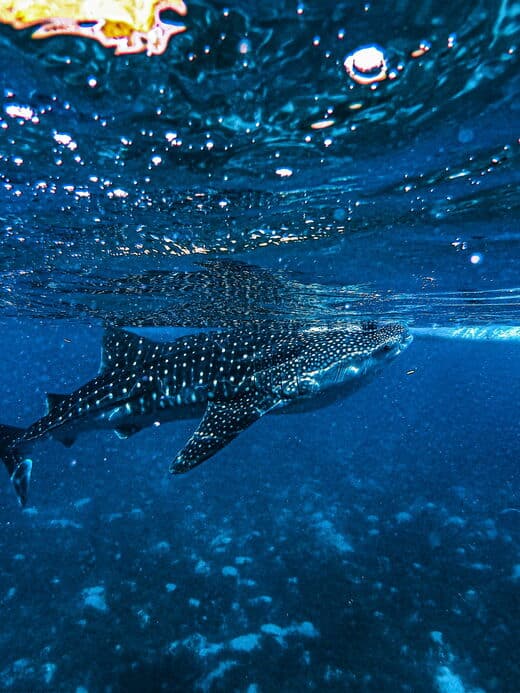
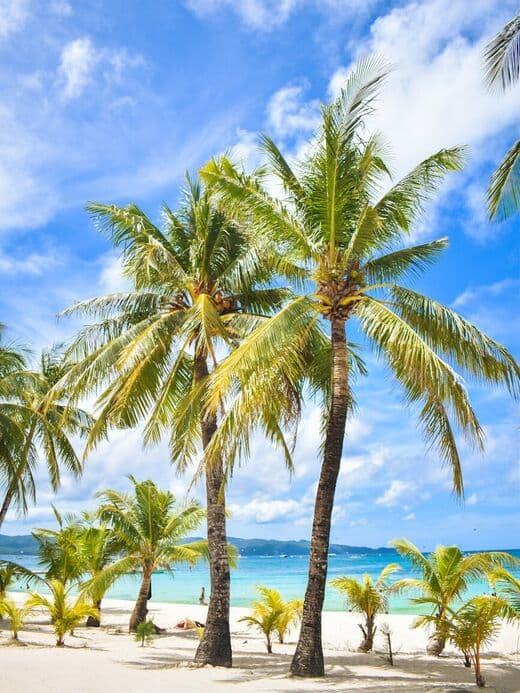
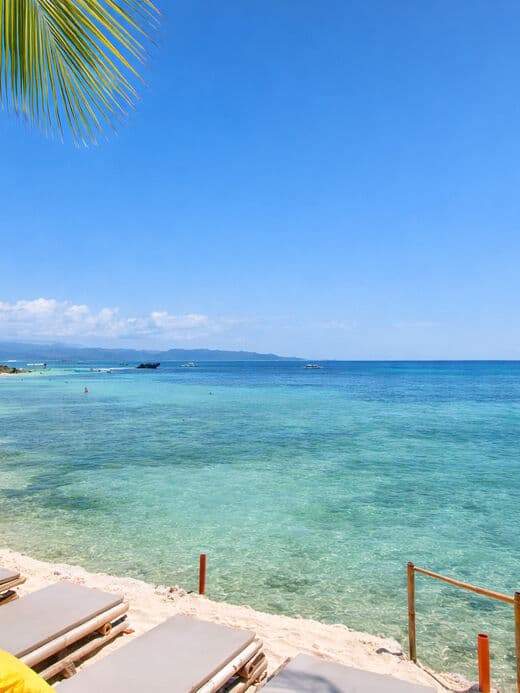
The archipelago comprises over seven thousand islands, roughly two thousand of which are inhabited. This translates to endless variety: beaches, lagoons, coves, and coral reefs in every configuration imaginable. Looking for powdery white sand and turquoise water? Head to Boracay or Panglao. Craving hidden lagoons framed by limestone cliffs? El Nido awaits. Dreaming of world-class surf? Siargao has your waves. Want to swim with whale sharks? That's Cebu. From the chaotic megacity of Manila to uninhabited islets where you'll be the only visitor, the Philippines has it all.
But the main reason to fall in love with this country is its people. Filipino hospitality is legendary — strangers invite you to family celebrations, jeepney drivers help you find your stop, and smiles are given freely and genuinely. 'Mabuhay!' is a greeting that means both 'Welcome!' and 'Long live!' at once. That's exactly how Filipinos treat guests: as gifts from fate, not walking wallets.
Yes, infrastructure isn't as polished as Thailand's, and inter-island flights require patience. But those willing to embrace small adventures are rewarded with some of the planet's most stunning landscapes, authentic cultural experiences, and prices significantly lower than neighboring tourism hotspots. The Philippines is for travelers seeking wow-factor, not comfort zones.
Regions: What to Choose
Luzon: Capital and the North
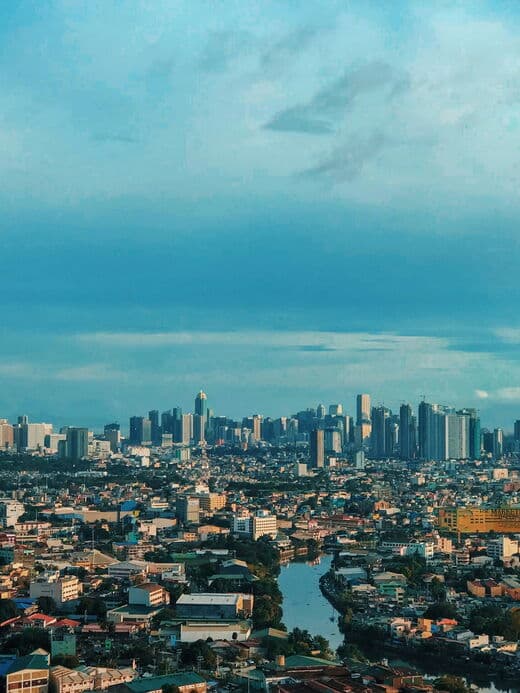
Manila is chaotic, loud, gritty, and utterly captivating. Most travelers rush through to reach the islands, and that's a mistake. Manila is the only place to truly understand the Filipino soul: the colonial past, the cultural crossroads, the stark contrasts between wealth and poverty, the interplay of religiosity and carnival spirit.
Start with Intramuros — the Spanish walled city within modern Manila. Cobblestone streets, 16th-century churches, and colonial atmosphere survive here. Fort Santiago is where national hero Jose Rizal was imprisoned, while San Agustin Church is the country's oldest stone church, UNESCO-listed. Manila Cathedral has been rebuilt six times after earthquakes, wars, and fires — the same stubborn resilience defines Filipinos.
Manila's museums are an unexpected highlight. The National Museum of Fine Arts, National Museum of Natural History, and Museum of Anthropology cluster around Rizal Park, a massive green oasis in the city center. All three offer free admission with exhibition quality rivaling European capitals. Ayala Museum in Makati and The Mind Museum in Taguig complete the picture.
Binondo is the world's oldest Chinatown, founded in 1594. Come here to eat: lumpia (spring rolls), siopao (steamed buns), hopia (sweet pastries). Quiapo Church houses the Black Nazarene statue, drawing millions of pilgrims annually. Escolta Street was Manila's art deco financial district, now being reborn as a hipster quarter.
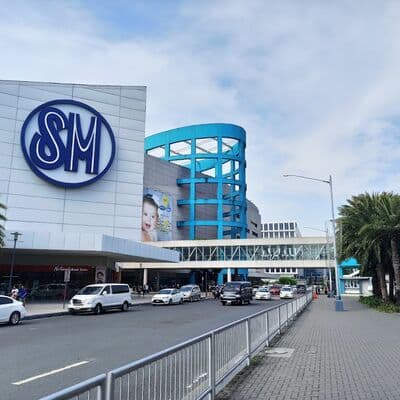
Modern Manila means Makati and Bonifacio Global City (BGC). Bonifacio High Street is a pedestrianized strip with restaurants and boutiques where young professionals gather. SM Mall of Asia is one of Asia's largest shopping malls, complete with ice rink, IMAX theater, and a waterfront Ferris wheel. For families, there's Manila Ocean Park and Star City amusement park.
Unusual Manila attractions: Chinese Cemetery features mansion-style mausoleums with air conditioning and security guards. Manila American Cemetery is the largest US military cemetery outside America, with 17,000 WWII graves. Coconut Palace was built from coconut lumber for a papal visit (the Pope refused to stay there). Destileria Limtuaco is the Philippines' oldest distillery, offering rum and lambanog tastings.
Northern Luzon is different Philippines entirely. The Banaue and Batad rice terraces, carved two millennia ago, are UNESCO-listed as the 'Eighth Wonder of the World.' Mountain city Baguio serves as the country's summer capital with cooler temperatures. Vigan is a Spanish colonial time capsule frozen in the 18th century. Surf town La Union, Mount Pinatubo, Sagada's caves and hanging coffins — all deserve separate trips.
Visayas: Heart of the Archipelago
Cebu is the Philippines' second-largest city and the main hub for exploring the central islands. Magellan landed here in 1521 and planted a cross now housed in a dedicated chapel. Next door, Basilica del Santo Nino holds a Christ Child figurine that Magellan gifted to the local queen — the oldest Christian relic in the Philippines and an object of deep veneration.
But the real draw is nature. Oslob offers the chance to swim with whale sharks. Yes, it's controversial because the sharks are fed, but the experience is unforgettable. A more ethical alternative is Moalboal's sardine run: millions of sardines forming a living tornado just meters offshore, no scuba required. Kawasan Falls features turquoise cascades in the jungle, perfect for canyoneering (cliff jumping, swimming through gorges). Temple of Leah is a Filipino Taj Mahal, built by a wealthy businessman in memory of his wife.
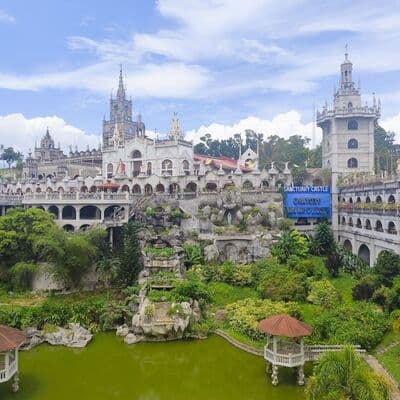
Cebu province's islands offer distinct experiences. Malapascua is the only place on Earth where you can regularly dive with thresher sharks. Bantayan is a tranquil island with deserted beaches, still untouched by mass tourism. Simala Shrine is a massive hilltop temple complex, a nationwide pilgrimage site.
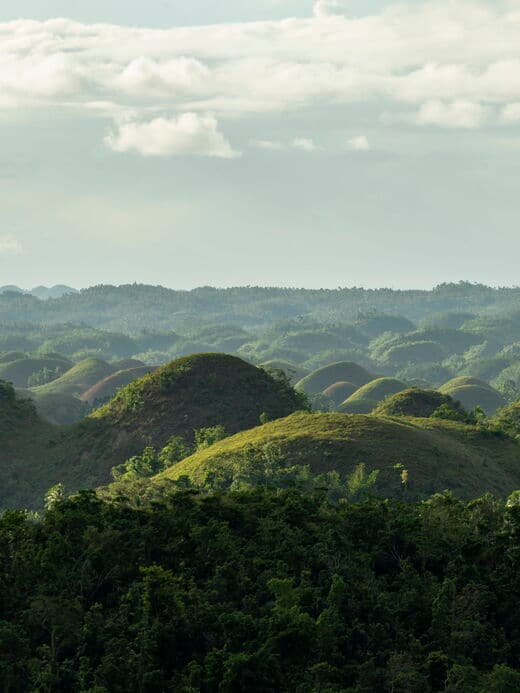
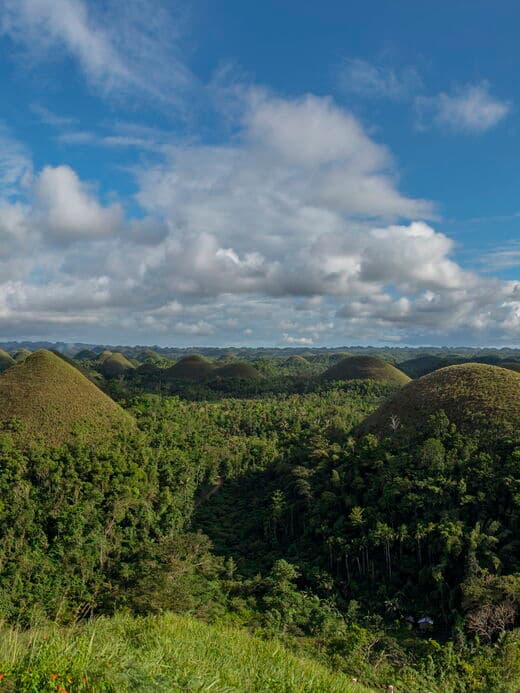
Bohol can be circled in a day but deserves several. The Chocolate Hills are 1,268 near-perfect conical mounds that turn brown in dry season (hence the name). They're a geological mystery — nobody knows exactly how they formed. Philippine Tarsier Sanctuary lets you see tarsiers, tiny primates with enormous eyes (crucial: no flash photography, no noise — they're extremely skittish). Loboc River Cruise is touristy but pleasant, floating through jungle to live music. Baclayon Church is among the country's oldest. Bilar Man-Made Forest is an avenue of mahogany trees planted in the 1960s for ecological restoration.
Panglao is an island connected to Bohol by bridges, serving as the region's main beach zone. Alona Beach is the most popular, lined with restaurants and dive centers. Dumaluan Beach is longer and quieter, ideal for families. Doljo Beach is the least developed, for those seeking solitude. Balicasag Island is a marine sanctuary with exceptional snorkeling, sea turtles, and coral walls. Hinagdanan Cave features an underground lake naturally lit through a hole in the ceiling.
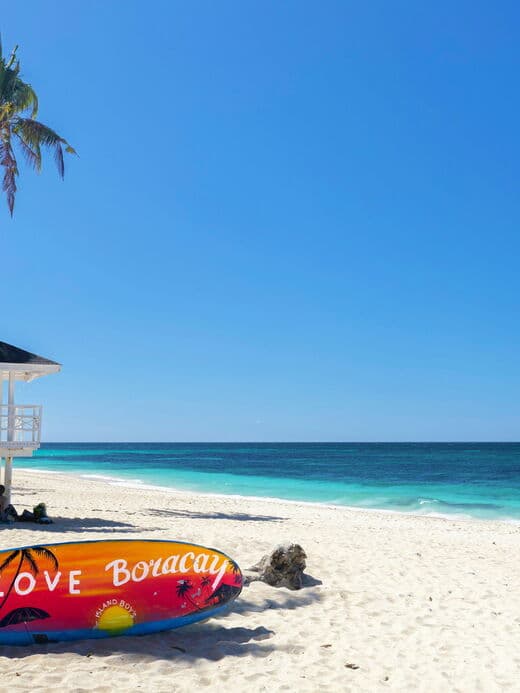
Boracay is the Philippines' most famous beach and consistently ranks among the world's best. White Beach stretches four kilometers of flour-fine sand, divided into three stations (Station 1 is quiet and upscale, Station 2 is party central, Station 3 is budget-friendly). In 2018, the island closed for six months for 'rehabilitation' — illegal structures were removed, sewage was fixed, and Boracay is cleaner than ever.
Puka Beach on the north is wilder, with shells instead of sand (collecting prohibited). Diniwid Beach is a tiny cove near Station 1 for those escaping crowds. Ariel's Point offers day trips with cliff jumping, kayaking, and unlimited barbecue. D'Mall is the island's shopping and entertainment hub. Mount Luho is Boracay's highest point with panoramic views.
Understand this: Boracay is a party island. People come for sunset cocktails, beach parties, and water sports. If you're seeking silence and meditation, look elsewhere.
Palawan: The Last Frontier
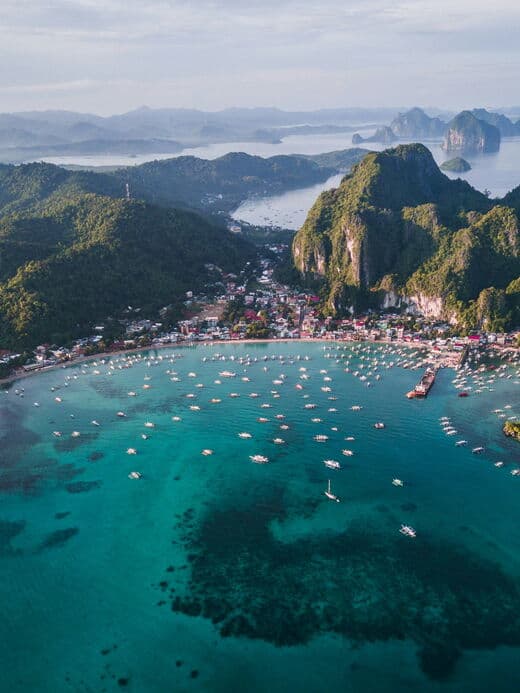
Palawan is a long, narrow island called 'the Philippines' last ecological frontier.' Infrastructure is least developed here, but pristine nature survives. Two main draws: El Nido in the north and Coron in the middle.
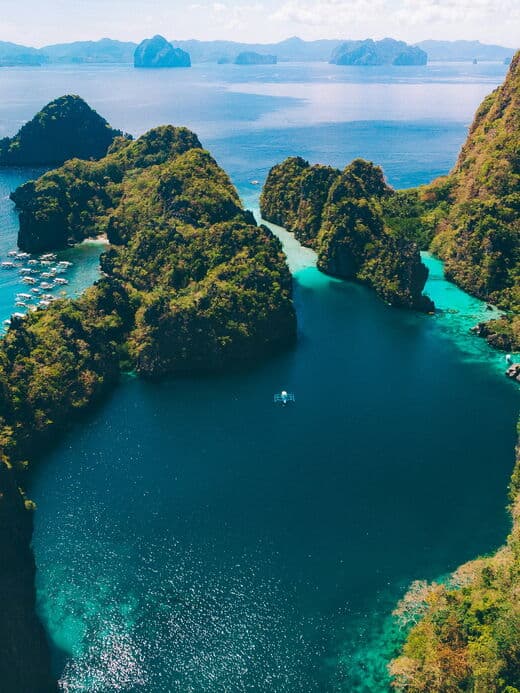
El Nido is why many come to the Philippines at all. Picture sheer limestone cliffs draped in jungle rising directly from emerald water. Between them: hidden lagoons, white beaches, and coral gardens. These are landscapes from 'The Beach' (partially filmed here, actually).
Island hopping tours are the main way to explore El Nido. Tour A covers Big Lagoon (arrive early to beat crowds), Small Lagoon (kayak-only entry through a narrow gap), Secret Lagoon (swim through a rock opening), and Shimizu Island. Tour C is considered best for snorkeling. Tour D is the most relaxed.
Nacpan Beach stretches four kilometers of golden sand 40 minutes from town. There's no infrastructure beyond a few shacks, just palm trees, swings, and edge-of-the-world vibes. Seven Commandos Beach is closer to town and usually included in boat tours. Matinloc Shrine is an abandoned temple on a rocky island with stunning views.
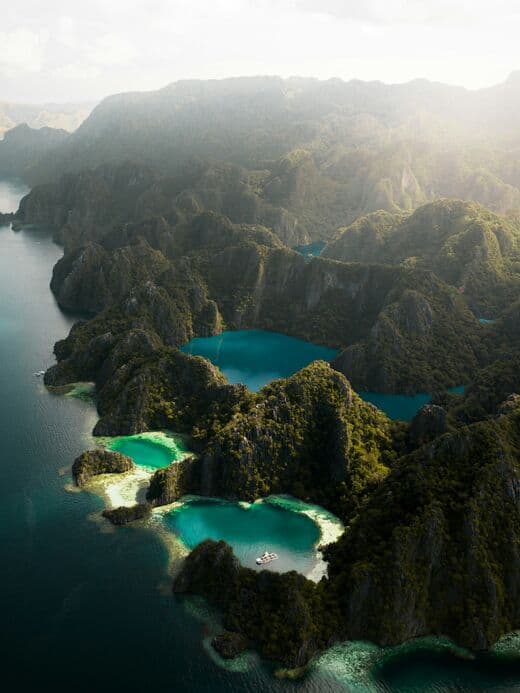
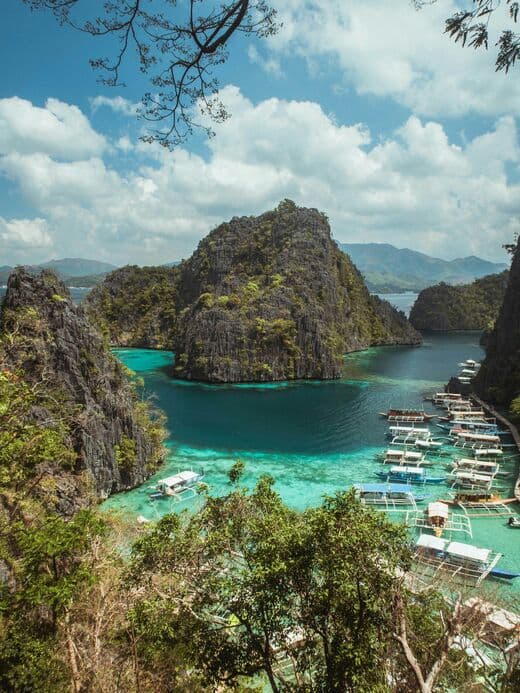
Coron is different. The main draw is diving and snorkeling on WWII Japanese shipwrecks. The Japanese fleet sank about a dozen vessels here in 1944, now transformed into artificial reefs. Kayangan Lake is called 'the cleanest lake in the Philippines,' crystal-clear water framed by cliffs. Barracuda Lake is unique for its thermoclines (sharp temperature changes underwater). Twin Lagoon features two lagoons connected by an underwater passage through rock. Siete Pecados Marine Park offers snorkeling with clownfish and turtles right at the surface.
Puerto Princesa is Palawan's capital and gateway to the Underground River, one of the New Seven Wonders of Nature. This 8-kilometer river flows through a cave filled with bizarre stalactites. Boat tours cover the first 1.5km and require advance booking (permit mandatory).
Siargao: The Surfing Island
Siargao is the surfing capital of the Philippines, but there's more. This island has a distinct vibe: tattooed bikers coexist with yoga enthusiasts, European digital nomads work from co-working spaces alongside local fishermen. Siargao is the 'new Bali' minus the temples and Chinese tour groups.
Cloud 9 is the legendary surf spot with a hollow right-hand barrel ranking among the world's top ten waves. International competitions happen each September. For beginners, gentler breaks exist: Jacking Horse, Stimpy's, Pacifico. Surf lessons cost around 500 pesos per hour with board and instructor.
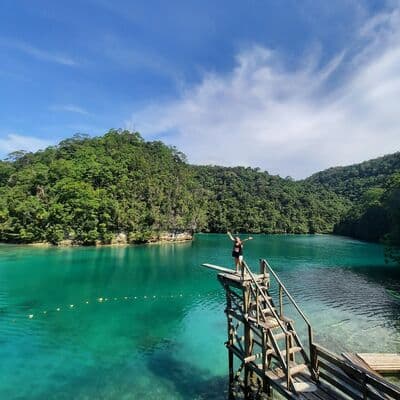
But Siargao isn't only surfing. Sugba Lagoon is a turquoise lagoon surrounded by mangrove forests, perfect for SUP paddling and cliff jumping. Magpupungko Rock Pools are natural infinity pools formed at low tide (check tide schedules). Maasin River has a rope swing over the jungle river (yes, it's safe).
Three-island hopping is the classic day trip: Naked Island (a sandbar with zero trees), Daku Island (picnic and volleyball under palms), Guyam Island (a tiny islet straight from a Bounty commercial). Cost is around 1,500 pesos per boat for a group.
Siargao is a place where people get stuck. You plan three days, then a week, then a month. The balance between solid infrastructure (cafes, yoga studios, co-working spaces) and nature vibes is perfect. Best time: March-October for surfing (waves), November-February for relaxation (calm seas).
Islands and National Parks
The Philippines comprises 7,641 islands by the latest count (the number keeps changing due to tides and erosion). Beyond the main tourist hubs described above, dozens of 'second-tier' destinations await true explorers.
Apo Reef is the world's second-largest coral reef after Australia's Great Barrier. Located in open sea between Mindoro and Palawan, it's hard to reach, but diving here is legendary: mantas, sharks, coral walls. Tubbataha is a UNESCO marine sanctuary in the middle of the Sulu Sea, open only three months yearly (March-June) for liveaboard diving expeditions.
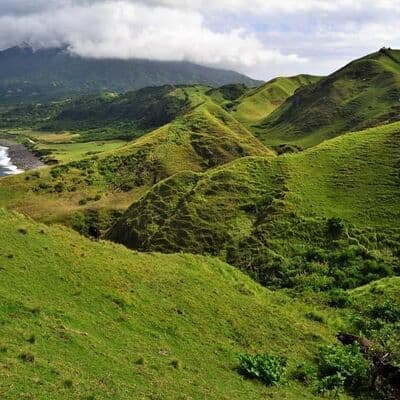
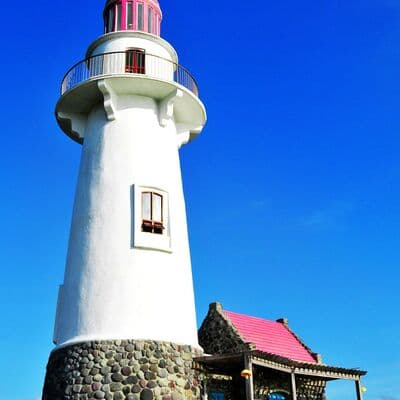
Batanes is the northernmost province, closer to Taiwan than Manila. Rolling hills resembling Ireland, stone houses of the Ivatan people, lighthouses, and zero tourists. Small planes fly from Manila, and weather frequently cancels flights — part of the adventure.
Camiguin is 'the island born of fire,' smallest in area but with the highest concentration of volcanoes. Hot springs, a sunken cemetery (a village went underwater after an eruption), waterfalls, and no crowds.
Dumaguete and Siquijor are gateways to 'mystical' Philippines. Siquijor is known as 'the island of witches and healers' — people come for traditional medicine and love potions. Sounds like a tourist trap, but locals have practiced healismo for generations. Apo Island near Dumaguete is one of the country's best snorkeling spots for sea turtles.
Mindanao is the Philippines' second-largest island but least visited by tourists due to long-running conflict in the south. Northern Mindanao (Cagayan de Oro, Bukidnon) is safe, offering white water rafting, mountains, and authentic Lumad indigenous culture. Davao is the durian and Philippine eagle city. However, western Mindanao (Zamboanga, Sulu) is officially advised against for tourism.
When to Visit
The Philippines is tropical with two distinct seasons: dry (amihan) from November to May and wet (habagat) from June to October. But due to the archipelago's extent, weather varies significantly by region.
The west coast (Palawan, Boracay, western Luzon) follows classic dry season patterns: January-May is ideal, June-October brings rain and possible typhoons. The east coast (Siargao, eastern Visayas) is reversed: November-February is wettest, while March-October is relatively dry.
High season: December-April. Best weather for most destinations, but also priciest. Christmas and New Year are peak weeks when hotels fill up and prices double or triple. Filipinos themselves travel extensively then (long school holidays), so book ahead.
Shoulder season: May and November. Excellent for savings — weather is still/already good with fewer crowds. May is the hottest month (35C+) but seas are calm.
Low season: June-October. Typhoons are possible July through November, especially in central and northern areas. However, excellent sunny spells occur between storms, and accommodation prices drop 30-50%. Siargao peaks then — best waves for surfing.
Festivals worth considering:
- Sinulog (Cebu, third Sunday of January) — massive festival honoring Santo Nino with street dancing. The city becomes a carnival, but hotels book a year ahead.
- Ati-Atihan (Kalibo, Aklan, third week of January) — 'Filipino Mardi Gras' near Boracay. Painted faces, feathered costumes, dancing in the streets.
- Easter (Semana Santa) — the country pauses for Holy Week. Many establishments close, transport is packed, but you can witness unique religious rituals (including actual crucifixions in Pampanga).
- MassKara (Bacolod, October) — 'Festival of Smiles' with masks and dancing.
Pro tip: avoid domestic travel on post-holiday days — airports and ports overflow with Filipinos heading home.
Getting There
The main international gateways are Ninoy Aquino International Airport (NAIA) in Manila and Mactan-Cebu International Airport (CEB). Manila receives flights from everywhere; Cebu handles mainly Asian routes (Singapore, Hong Kong, Korea, Japan, China).
For US/UK/Australian travelers: Multiple direct and one-stop options exist. Philippine Airlines, Cathay Pacific, Singapore Airlines, and Emirates all serve Manila. From the US West Coast, direct flights take 14-16 hours. From Europe, expect connections through Middle Eastern or Asian hubs.
Visa requirements: US, UK, Australian, Canadian, and most EU citizens get 30 days visa-free on arrival. You may be asked for a return ticket or onward flight. Extensions are possible at immigration offices for up to 36 months total stay, extending 1-2 months at a time (roughly 3,000-4,000 pesos per extension). Main office is in Intramuros, Manila, with branches in Cebu, Boracay, and Puerto Princesa.
Payment: Credit cards work in malls, mid-to-upscale hotels, and chain restaurants. Everywhere else requires cash. ATMs exist in cities but can be unreliable on islands. Withdraw generously. Typical limits are 10,000-20,000 pesos per transaction with 200-250 peso fees. Money changers offer better rates than banks or airports.
Getting Around
Inter-island travel is the main logistical adventure in the Philippines. The country has no extensive rail network, and roads only connect neighboring islands via bridges.
Domestic airlines: The primary way to cover large distances. Main carriers:
- Philippine Airlines (PAL) — national carrier, pricier but more reliable. Includes baggage.
- Cebu Pacific — main low-cost carrier with huge route network. Base fares exclude baggage, food, and seat selection. Often cheapest.
- AirAsia Philippines — another budget option, sometimes beats Cebu Pacific on price.
- SkyJet, Philippine AirAsia — for smaller routes.
Domestic flight prices: 1,500-5,000 pesos one-way when booked early. Manila-Cebu, Manila-Palawan, Manila-Siargao take 1-1.5 hours. Tip: book directly on airline websites, not aggregators — easier refunds if flights cancel.
Ferries and boats: The second mode of transport is maritime. Large roll-on/roll-off ferries (2GO Travel, Starlite Ferries) connect major islands. Manila-Cebu by ferry takes about 20 hours, but it's an adventure: cabins, deck time, sunsets over the sea. Cheaper than flying, but slower.
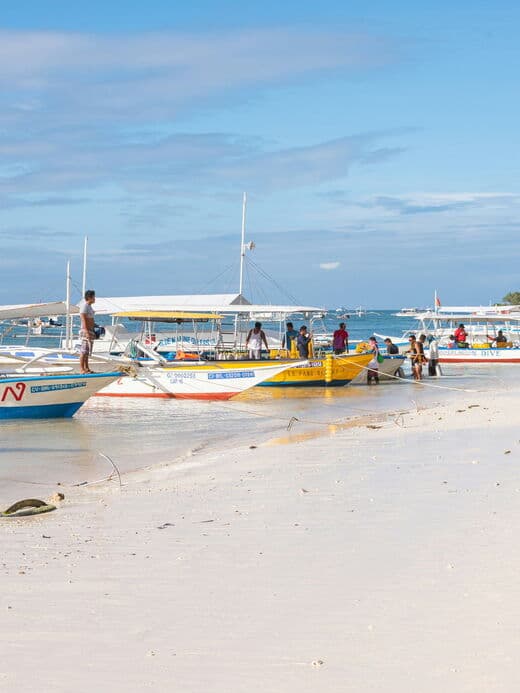
Fast craft connect closer islands: Cebu-Bohol (2 hours), Dumaguete-Siquijor (1 hour). Bangka outrigger boats handle short crossings and island hopping. On minor routes, there's no schedule — boats leave when full.
Buses: Intercity buses run on large islands (Luzon, Mindanao). Quality ranges from 'chicken bus' to comfortable coaches with AC and toilets. Victory Liner, JAC Liner, Ceres are reliable companies. Cost: roughly 1 peso per kilometer.
Local transport:
- Jeepney — Philippine icon, converted American military jeeps with colorful paint jobs. Cheap (8-15 pesos per ride), atmospheric, but requires knowing routes. Shout 'Para!' to stop.
- Tricycle — motorcycle with sidecar, Filipino tuk-tuk. Price is negotiable, usually 50-150 pesos for short trips.
- Habal-habal — motorcycle taxi. Common in provinces, especially where roads are rough. Bargain.
- Grab — Southeast Asia's Uber equivalent, works in Manila, Cebu, and major cities. Fixed prices, card payment, no scams.
Vehicle rental: Scooters (300-500 pesos/day) are the best way to explore islands like Siargao, Bohol, or Boracay. Category A license technically required, rarely checked (though insurance won't cover accidents without it). Cars can be rented in Manila and major cities (from 1,500 pesos/day), but driving in Filipino traffic tests nerves.
Cultural Code
The Philippines has a unique cultural mix: Malay foundations, 400 years of Spanish colonialism, 50 years of American influence, and contemporary globalization. The result is a society resembling neither Asian nor Latin American neighbors.
Religion: 90% of Filipinos are Christian (mostly Catholic), and this isn't nominal. Sunday mass is a family tradition, fiestas honoring saints are the year's biggest celebrations, and crucifixes and Santo Nino statues appear in every home, jeepney, and office. Respect this: don't joke about religion, don't enter churches in shorts.
Family: Filial piety is a core value. Adult children live with parents until marriage (and often after), financially support the family, and consult elders on decisions. This explains why the waitress works double shifts — she's sending money to parents in the province. This is also the source of legendary Filipino hospitality: if you're a family friend, you're treated as family.
Face-saving (hiya): Filipinos avoid direct conflict, public criticism, and situations where someone 'loses face.' If you're overcharged, don't make a scene — calmly point out the error. If service is poor, don't complain loudly — speak privately with the manager. Aggression creates a wall of incomprehension.
Filipino time: Punctuality isn't a Filipino strong suit. People may arrive an hour late and not apologize. This isn't disrespect; it's cultural norm. Build in buffer time and don't plan too tightly.
Tipping: Not mandatory but appreciated. Restaurants usually include 10% service charge; if not, leave 10-15% for good service. Housekeeping: 50-100 pesos daily. Guides and drivers: 100-500 pesos depending on tour length. Round up for tricycle and taxi drivers.
What NOT to do:
- Don't point with your finger — it's rude. Filipinos point with their lips (chin motion toward the direction).
- Don't raise your voice or show aggression — you'll lose face yourself.
- Don't refuse food when offered — at least try a bite.
- Don't criticize the country, government, or religion — even if a Filipino complains, that's not an invitation to join in.
- Don't photograph people without permission, especially in poor areas.
Useful words:
- 'Salamat' — thank you
- 'Po' — respect particle (added to phrases when addressing elders: 'Salamat po')
- 'Kuya' (brother) / 'Ate' (sister) — respectful address for people roughly your age
- 'Mabuhay!' — greeting meaning 'Welcome!'
- 'Oo' (pronounced 'oh-oh') — yes, 'Hindi' — no
Safety
The Philippines is generally safe for tourists, especially compared to its reputation. But nuances exist that are worth knowing.
Regions to avoid: Western Mindanao (Zamboanga, Sulu archipelago, Basilan) and parts of central Mindanao are zones of Islamist militant activity. Most countries' travel advisories recommend against visiting. These aren't tourist areas, so you're unlikely to end up there accidentally.
Natural disasters: Typhoons (July-November) are a real danger. Monitor forecasts (PAGASA is the local weather service), don't ignore warnings. Earthquakes occur but are rarely catastrophic. Volcanic activity — Mayon, Taal, Pinatubo periodically remind of their presence.
Crime: Petty theft is the main concern. In Manila, keep belongings secure, don't flash expensive tech, avoid slums at night. Tourist islands are calmer, but don't leave valuables unattended on beaches. Serious crimes against tourists are rare.
Scams: Classic hustles include inflated foreigner prices, 'broken meter' taxis, overpriced 'special tours.' Use Grab, negotiate prices upfront, don't trust random 'friends' wanting to show you 'secret places.'
Drugs: Under President Duterte (2016-2022), a harsh anti-drug campaign killed thousands. Drugs in the Philippines are no joke. Any possession or use means prison, and police don't go easy. Stay completely away from this topic.
Traffic: Philippine driving is chaotic. Rules exist but are creatively interpreted. If renting a scooter, wear a helmet, drive carefully, don't speed. Pedestrians don't have right of way — adjust.
Emergency numbers:
- 911 — unified emergency services
- 117 — police
- Tourist Assistance Hotline: (02) 8459-5200
- US Embassy Manila: +63 (2) 5301-2000
- UK Embassy Manila: +63 (2) 8858-2200
General rule: Use common sense as in any developing country. The Philippines isn't more dangerous than Thailand, Indonesia, or Mexico. Most travelers have wonderful experiences without a single incident.
Health and Medicine
The Philippine medical system is two-tiered. Private hospitals in Manila and Cebu operate at first-world standards (Makati Medical Center, St. Luke's, Cebu Doctors). Provincial government hospitals are another story. Travel insurance is essential.
Vaccinations: No mandatory requirements for entry (except yellow fever if arriving from an endemic region). Recommended: Hepatitis A and B, typhoid, tetanus. Malaria exists only in remote Palawan and Mindanao areas — consult a doctor about prophylaxis if planning to go there.
Dengue fever: Transmitted by mosquitoes, no tourist vaccine exists. Protection means repellents and covered clothing in evenings. Symptoms: high fever, body aches, rash. If suspected, see a doctor immediately.
Stomach issues: Asian travel classic. Don't drink tap water, be cautious with ice in cheap establishments, wash hands. Local pharmacy staples: Imodium, Diatabs, Buscopan — available over the counter.
Sun and heat: Tropical sun is aggressive. SPF 50+, hat, hydration are non-negotiable. Heat stroke is a real danger, especially during active pursuits.
Pharmacies: Mercury Drug and Watsons chains are everywhere. Many medications are sold over-the-counter and cheaper than in Western countries. Names may differ — know the active ingredient.
Insurance: Don't skimp. A minimum package with $50,000+ coverage including evacuation is essential. The Philippines is islands, and serious injuries may require helicopter evacuation to Manila. This costs tens of thousands of dollars without insurance.
Money and Budget
Currency is the Philippine peso (PHP). Exchange rate as of 2026: approximately 56-58 pesos per US dollar (check current rates before travel).
Cash vs cards: The Philippines is a cash economy. Cards work in malls, mid-to-upscale hotels, and chain restaurants. Everything else requires cash. ATMs exist in cities but can be unreliable on islands. Withdraw generously. Typical limits are 10,000-20,000 pesos per transaction with 200-250 peso fees.
Exchange: Best rates are at money changers, not banks or airports. In Manila: Ermita district. In Boracay: D'Mall. In Cebu: shopping malls. Dollars and euros accepted; other currencies less common.
Budget categories:
Backpacker (1,500-2,500 pesos/day or $25-45 USD):
- Hostel/dorm: 400-800 pesos
- Food at carinderias (local eateries): 150-300 pesos daily
- Transport (jeepney, tricycle): 100-200 pesos
- Activities: 500-1,000 pesos (island hopping, snorkeling)
Mid-range traveler (4,000-7,000 pesos/day or $70-125 USD):
- Boutique hotel/nice guesthouse: 1,500-3,000 pesos
- Restaurants and cafes: 500-1,000 pesos
- Taxi/Grab, scooter rental: 300-500 pesos
- Tours and activities: 1,500-3,000 pesos
Comfortable travel (10,000-20,000+ pesos/day or $175-350+ USD):
- Resort/4-5 star: 5,000-15,000 pesos
- Fine dining: 2,000-5,000 pesos
- Private tours, transfers: 3,000-8,000 pesos
- Diving, spa: 3,000-5,000 pesos
Expensive areas: Boracay is the most touristy destination with above-average prices. El Nido has limited infrastructure and expensive supply chains. Palawan overall costs more than the Visayas.
Budget-friendly: Bohol/Panglao offers excellent value. Cebu is a large city with competition. Siargao has moderate prices with budget options available.
Bargaining: Appropriate at markets, when renting boats, with tricycle drivers. Don't bargain in shops with price tags, restaurants, or hotels. Filipinos dislike aggressive haggling — stay polite.
Top Itineraries
7 Days: Visayas Classic
The ideal route for a first Philippines experience.
Day 1: Arrival in Cebu
Arrive at Mactan Airport. If time allows, transfer south to Moalboal (3 hours). If arriving late, overnight in Cebu City.
Day 2: Moalboal
Morning: sardine run — snorkel right off Panagsama Beach shore. Millions of fish swirling meters away from you. Afternoon: canyoneering at Kawasan Falls — cliff jumps, swimming through gorges, finishing in turquoise waterfall pools. Evening: sunset at Moalboal pier.
Day 3: Oslob and Ferry to Bohol
Early departure (4-5 AM) to Oslob for whale sharks. Swimming with these giants is unforgettable (30 minutes in water). Afterward, ferry from Lila to Tagbilaran on Bohol (2 hours). Evening: check into Panglao.
Day 4: Bohol
Countryside tour: Chocolate Hills (viewing deck), Tarsier Sanctuary (these adorable creatures are a must-see), Bilar Man-Made Forest, Loboc River Cruise with onboard lunch. Evening: Alona Beach, seafood restaurant dinner.
Day 5: Balicasag and Panglao
Morning: snorkeling tour to Balicasag Island — sea turtles, coral walls, incredible visibility. Afternoon: Hinagdanan Cave with its underground lake. Relax at Dumaluan Beach.
Day 6: Flight to Boracay
Morning flight Tagbilaran-Caticlan (or via Cebu). Transfer to Boracay (15-minute boat). Full day on White Beach — the country's most stunning. Evening: sunset cocktails, dinner on the sand.
Day 7: Boracay and Departure
Morning: Puka Beach or Ariel's Point (for adventure seekers). Afternoon: shopping at D'Mall, transfer to Caticlan Airport, departure.
10 Days: Visayas + Palawan
Expanded version adding stunning El Nido.
Days 1-5: As in the 7-day itinerary (Cebu — Bohol — Boracay).
Day 6: Flight to El Nido
Caticlan-Manila-El Nido (or direct if available). Check into town proper. Evening: explore the town, rooftop bar sunset.
Day 7: Island Hopping Tour A
Most popular tour: Big Lagoon (kayaking between cliffs), Small Lagoon (enter through narrow gap), Secret Lagoon (swim through rock), Shimizu Island (snorkeling). Beach lunch. Tip: depart at 8:30 to reach Big Lagoon before crowds.
Day 8: El Nido Beaches
Rent a scooter for Nacpan Beach — 4km of golden sand without crowds. Stop at rice fields and coconut plantations along the way. Evening: Seven Commandos Beach at sunset (tricycle to pier, then boat).
Day 9: Tour C or D
Tour C is best for snorkeling (Hidden Beach, Helicopter Island, Secret Beach). Tour D is most relaxed with fewer people. Return via Matinloc Shrine for stunning views.
Day 10: Departure
Morning: final breakfast overlooking the bay. Transfer to El Nido Airport (Lio), fly to Manila or onward.
14 Days: Full Coverage
Adding Siargao and more time at each destination.
Days 1-3: Cebu Area
Day 1: Cebu City — Magellan's Cross, Basilica del Santo Nino, Temple of Leah. Day 2: Moalboal (sardines, canyoneering). Day 3: Oslob (whale sharks), transfer to Bohol.
Days 4-5: Bohol and Panglao
As in 7-day itinerary, but with more beach time and diving at Balicasag.
Days 6-8: Siargao
Flight Tagbilaran-Cebu-Siargao. Day 6: Cloud 9 — watch surfers (or try yourself — beginner schools here). Day 7: Island hopping — Naked Island, Daku, Guyam. Day 8: Sugba Lagoon morning, Magpupungko Rock Pools afternoon (check low tide timing!).
Days 9-10: Boracay
Flight Siargao-Cebu-Caticlan. Two full days on the country's best beach. Water sports, sunsets, nightlife.
Days 11-14: El Nido
As in 10-day itinerary, adding a day for diving or lagoon kayaking.
21 Days: Deep Dive
For those wanting to see different facets of the Philippines.
Days 1-2: Manila
Don't skip the capital! Day 1: Intramuros — Fort Santiago, San Agustin Church, Casa Manila. Rizal Park at sunset. Day 2: Binondo (food tour!), National Museum, evening in BGC or Makati.
Days 3-6: Northern Luzon (optional)
For a unique experience — Batad rice terraces (trekking), Sagada (caves, hanging coffins), Vigan (colonial town). Time-consuming but unforgettable.
Days 7-10: Cebu, Bohol, Panglao
As described above, at a more relaxed pace.
Days 11-13: Siargao
Three days on the surf island. Add Maasin River rope swing.
Days 14-16: Boracay
Three beach days. Find time for Mount Luho (panoramic views), sunset paddleboarding.
Days 17-21: Palawan
Five days on the Philippines' best island. Days 17-18: El Nido (Tours A and C). Day 19: travel/fly to Coron. Day 20: shipwrecks, Kayangan Lake, Twin Lagoon. Day 21: Barracuda Lake, Siete Pecados, fly out from Busuanga.
Connectivity and Internet
Internet is one of the Philippines' weak points. Mobile internet speed has historically ranked among Asia's lowest, though improvement is coming with the third carrier DITO.
Carriers:
- Globe — largest operator, best coverage in cities and tourist zones.
- Smart — second largest, sometimes better in provinces.
- DITO — new player with good speeds but limited coverage so far.
SIM cards: Available at airport (booths at exit), in malls (official stores), or any sari-sari store (small neighborhood shops). SIM cost: 40-100 pesos. Registration requires passport (mandatory since 2022).
Plans: Data packages are cheap. Example Globe: GoSURF299 — 8GB for 30 days at 299 pesos (~$5). GoSAKTO lets you customize packages. Top up via GCash app, stores, or load machines.
Wi-Fi: Available in most hotels and cafes, but quality ranges from 'excellent' to 'why bother.' On remote islands (parts of Palawan, Siargao), internet may be very slow or absent.
Digital nomad tip: If stable internet is needed for work, choose Cebu (IT hub), BGC in Manila, or established co-working spaces on Siargao. Don't count on fast Wi-Fi in a beach bungalow.
Food to Try
Filipino cuisine is Southeast Asia's least known, which is unfair. It's not as spicy as Thai, not as refined as Vietnamese, but uniquely itself: a fusion of Spanish, Chinese, Malay, and American influences.
National dishes:
Adobo — the unofficial national dish. Chicken or pork braised in soy sauce, vinegar, garlic, and bay leaves. Sounds simple, but the acid-umami balance is perfect. Every family has their own recipe.
Lechon — whole pig roasted on a spit until the skin crackles. This is celebration food, the centerpiece of any fiesta. The best lechon comes from Cebu, where it's marinated with herbs. Portions available at restaurants.
Sinigang — sour soup made with tamarind (or other sour fruits) with pork, shrimp, or fish. Filipino comfort food, especially on rainy days.
Kare-kare — oxtail and tripe stew in peanut sauce. Served with bagoong (fermented shrimp paste). Unusual texture, rich flavor.
Sisig — chopped pig face (cheeks, ears), fried with onions, chili, and calamansi on a sizzling plate. Sounds weird, tastes divine. Topped with an egg. Best in Pampanga, the dish's birthplace.
Crispy Pata — pork leg, boiled then deep-fried to crispiness. A calorie bomb you can't stop eating.
Street food:
- Isaw — grilled chicken intestines on a stick
- Kwek-kwek — quail eggs in orange batter
- Fish balls — fish paste balls with sauce
- Balut — duck egg with embryo, for the brave
- Halo-halo — dessert of shaved ice, beans, jellies, fruits, ice cream, and leche flan. Sounds insane, tastes refreshing.
Seafood: On the islands, it's the freshest. Dampa-style: pick live shrimp, crabs, or fish at the market, take them to a neighboring restaurant where they cook it for a fee. Grilled, steamed, in coconut milk — your choice.
Regional specialties:
- Cebu: Lechon, dried mangoes (country's best), danggit (dried fish)
- Bicol: Bicol Express (pork in spicy coconut milk), laing (taro leaves in coconut)
- Ilocos: Bagnet (crispy pork belly), empanada
- Pampanga: Sisig, tocino, longganisa — the 'culinary capital' of the Philippines
Drinks:
- San Miguel Beer — national beer, light and refreshing
- Lambanog — coconut vodka, potent stuff
- Tanduay — local rum, decent for cocktails
- Calamansi juice — from local small limes, sweetened — excellent thirst quencher
Coffee: The Philippines is home to one of the world's most expensive coffees — kopi luwak (civet coffee). More accessible: Benguet coffee from the northern mountain province. Local coffee culture is developed: Bo's Coffee is a national chain with quality product.
Shopping
The Philippines isn't a shopping mecca like Hong Kong or Singapore, but interesting finds exist.
What to bring home:
Food:
- Dried mangoes from Cebu — world's best, brands 7D and Philippine Brand
- Otap — flaky, sweet, oval-shaped pastry from Cebu
- Chicharon (pork cracklings) — crispy, Bulacan's are best
- Polvoron — crumbly shortbread cookies
- Ube jam and ube-flavored everything — purple yam, a national obsession
Crafts:
- Woven abaca (banana fiber) products — bags, baskets
- Capiz shell items — lamps, frames from translucent shells
- Wood carvings from Palawan
- Handwoven textiles — t'nalak by the T'boli people, abel from Ilocos
- Pearls — South Sea pearls are excellent, but buy from reputable sellers
Clothing:
- Barong tagalog — traditional men's shirt in sheer pina (pineapple fiber) or jusi fabric
- Local brands — Bench, Penshoppe, Human — cheaper than international labels
Where to shop:
- Manila: SM Mall of Asia (massive), Greenhills (pearls and knockoffs), Salcedo/Legazpi weekend markets (farmers' and craft)
- Cebu: Ayala Center, SM Seaside, Carbon Market (chaotic but authentic)
- Boracay: D'Mall, Talipapa market
- Everywhere: SM and Robinsons chains
Tax refund: VAT refund system exists but only works at certain shops for purchases over 3,000 pesos. In practice, few bother — the process is cumbersome.
Bargaining: Appropriate at markets and small shops. Start at 50-60% of quoted price, meet in the middle. Malls have fixed prices.
Useful Apps
Transport:
- Grab — taxi, food delivery, the main transport app
- Angkas — motorcycle taxi in Manila and Cebu
- 12Go — ferry and bus booking
Finance:
- GCash — mobile wallet, accepted almost everywhere. Can top up with cash at 7-Eleven.
- Maya (PayMaya) — GCash alternative
Navigation:
- Google Maps — works, but can be inaccurate in provinces
- Waze — for drivers, current traffic info
Travel:
- Traveloka — Asian aggregator for hotels and flights
- Klook — tours and activities online
- Agoda — hotels, often best Asian prices
Weather:
- PAGASA — official Philippine weather service, critical during typhoon season
Summary
The Philippines is a country you don't fall in love with instantly. First impressions of Manila can be shocking: chaos, slums, crowds. Inter-island flights are a lottery of delays. Infrastructure sometimes resembles a construction site. But give the country a chance, and it reveals an entirely different side.
This is a country of incredible natural beauty. El Nido's lagoons, Boracay's beaches, Bohol's Chocolate Hills, Banaue's rice terraces — landscapes impossible to forget. The underwater world ranks among the planet's richest: coral reefs, shipwrecks, whale sharks, mantas.
But above all — the people. Filipino hospitality isn't a marketing slogan; it's reality. Strangers invite you for family lunch, drivers show you hidden beaches, and smiles are genuine. 'Mabuhay!' isn't just a greeting — it's a life philosophy.
For Western travelers, the Philippines offers exceptional value compared to more established Asian destinations. English is widely spoken, costs are reasonable, and the diversity is remarkable. Three weeks in the Philippines means Manila's urban culture, surfing in Siargao, diving in Cebu, kayaking in Palawan, and beach relaxation in Panglao. Each island is its own journey.
Come with an open mind and flexible schedule. Boat cancelled? Time to explore the village. Rain set in? Perfect moment to try local cuisine at a carinderia. Got lost? Locals will show the way and possibly invite you for dinner. The Philippines rewards spontaneity and punishes rigid plans.
7,641 islands await. Mabuhay!
Information current as of 2026. Verify visa requirements, prices, and transport schedules before travel. Typhoon conditions and regional safety situations may change — monitor official warnings.