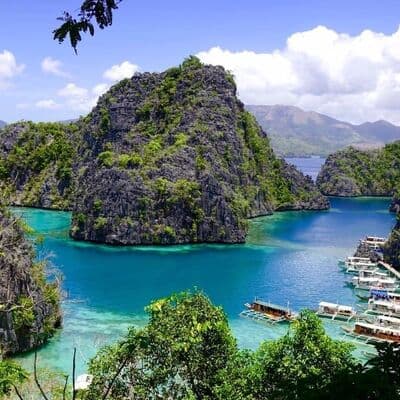
Barracuda Lake
Barracuda Lake: Where Temperature Defies Expectation
If Kayangan Lake is Coron's beauty queen, Barracuda Lake is its mysterious neighbor—equally stunning but stranger, less immediately understood, hiding secrets beneath its clear surface that visitors discover only upon immersion. Named for a giant barracuda skeleton allegedly found on its shores (though the creature itself was never verified), Barracuda Lake offers one of the most unusual swimming and diving experiences in the Philippines, where water temperature shifts dramatically within a single body, creating a thermal journey unlike anything else you've experienced.
From the surface, Barracuda Lake appears similar to its famous neighbor: crystal-clear water surrounded by dramatic limestone cliffs, accessed after a climb over rocky terrain. But slip beneath the surface, and differences emerge immediately. The water is warmer than expected—much warmer in places—and as you descend, layers of vastly different temperatures create a sensation that disorients and delights in equal measure. This is nature's temperature experiment, a lake where hot and cold exist in the same space, separated only by the invisible boundaries of water density.
The Thermocline Phenomenon
Understanding Barracuda Lake requires understanding thermoclines—and experiencing this lake provides perhaps the most dramatic demonstration of this phenomenon accessible to non-technical divers.
What Causes It
Barracuda Lake's extreme temperature stratification results from geothermal activity beneath the lake bed. Hot water rises from below, while cooler, denser seawater seeps through the porous limestone surrounding the lake. Fresh rainwater adds another layer. These different water sources, at different temperatures and densities, don't fully mix, creating distinct layers stacked vertically.
The result is a temperature profile that defies normal expectations. Surface water might be 28-30°C—warm but normal for the tropics. Descend a few meters, and temperatures can spike to 35-38°C—hot tub temperature. Continue deeper, and cooling begins again as the geothermally heated layer is passed. The exact temperatures and depth of transitions vary with season and recent weather, but the dramatic shifts remain consistent.
What It Feels Like
Swimming through Barracuda Lake's thermoclines creates sensations difficult to describe and impossible to forget. The first major boundary—from warm surface water to hot water below—hits suddenly, like swimming into a different season. Your body registers confusion; the brain expects cool water at depth, but receives the opposite.
Passing through the hot layer and into cooler water below creates another shock, though less dramatic since cooling while descending feels more natural. Some swimmers describe the hot layer as unpleasant, almost uncomfortably warm; others find it fascinating, a natural hot spring in the middle of a lake.
For snorkelers and shallow swimmers, the upper thermocline transition (to hot water) is the main experience. Divers can explore additional layers deeper down, where the temperature profile becomes more complex and the lake's full weirdness reveals itself.
The Barracuda Lake Environment
Beyond its thermal properties, Barracuda Lake offers dramatic limestone scenery and excellent underwater visibility.
Scenery Above Water
The approach to Barracuda Lake involves a climb over limestone rocks from the boat dock—shorter and less steep than Kayangan's climb, but requiring similar attention to footing. The rock has been weathered into sharp, dramatic shapes, a preview of the underwater formations to come.
The lake itself occupies a bowl surrounded by steep karst cliffs, their faces festooned with vegetation clinging to every available crevice. The enclosure creates a sense of isolation, of having discovered a hidden world. The water surface reflects the cliffs, creating mirror images disturbed only by swimming visitors and the occasional breeze.
Underwater Landscape
Beneath the surface, Barracuda Lake reveals a underwater landscape of limestone formations—shelves, boulders, walls, and drop-offs sculpted by the same geological processes that shaped the surrounding cliffs. Visibility reaches 20+ meters on good days, allowing clear views across substantial distances.
The limestone surfaces provide visual interest for snorkelers and subjects for underwater photographers. While the fish life is limited (the extreme temperature variations restrict what can survive here), the formations themselves are compelling, and the clarity makes observation easy.
Depth and Diving
Barracuda Lake descends to approximately 40 meters, with most thermal activity occurring in the upper 20 meters. The lake has become a popular freshwater diving destination, attracting divers interested in the unique thermocline experience and the unusual underwater environment.
Scuba diving here requires appropriate certification and, ideally, experience with thermocline diving, as the temperature changes can be disorienting. Local dive operators offer guided dives and can advise on conditions and proper preparation.
For snorkelers and non-divers, the upper portion of the lake provides the main thermocline experience. Surface swimming keeps you in comfortable temperatures, while ducking below the surface for brief immersion in the hot layer gives a taste of the lake's strangeness without requiring diving equipment.
Visiting Barracuda Lake
Access and Tours
Barracuda Lake is typically included in Coron island-hopping tours, often combined with Kayangan Lake and other destinations. The "Ultimate Tour" or similar configurations visit both major lakes plus additional sites, providing a full day of exploration for 1,500-2,500 PHP per person.
The lake is located on Coron Island, requiring a 20-30 minute boat journey from Coron town. Boats dock at a designated area, from which visitors climb over limestone rocks to reach the lake—a shorter but still challenging climb requiring proper footwear.
Entrance Fees
Barracuda Lake requires an entrance fee (typically 200-300 PHP), which may or may not be included in your tour price. This fee supports lake protection and management by the Tagbanua community who hold ancestral domain over Coron Island.
What to Bring
Essential items include water shoes or secure sandals for the rock climb, waterproof camera or phone case, and reef-safe sunscreen (applied before entering water). A mask and snorkel allow better underwater observation, though they're not essential for basic swimming.
If planning to dive, bring or arrange diving equipment through a local operator. The unusual conditions (particularly the temperature variations) may require adjustments to normal dive protocols—discuss this with your dive guide.
Time Considerations
Most tours allocate 30-45 minutes at Barracuda Lake—sufficient for swimming and experiencing the thermocline but not for extended exploration. If you want more time (particularly if diving), consider arranging a private tour with flexible scheduling.
Early morning and late afternoon visits typically find fewer crowds. The period from 10 AM to 2 PM sees peak congestion when multiple tour groups converge.
The Barracuda Lake Experience
For Swimmers
For visitors who simply want to swim, Barracuda Lake offers excellent conditions: calm, clear water in a stunning limestone setting. The thermocline experience adds novelty—ducking below the surface to encounter the hot layer creates a fun, unusual sensation that entertains without requiring any special skills.
Surface swimming keeps you in comfortable temperatures while allowing observation of the underwater scenery. The clarity means you can see formations and the occasional fish without submerging. For many visitors, this is sufficient—beautiful swimming enhanced by the unusual thermal properties they can explore or ignore as preference dictates.
For Snorkelers
Snorkelers can explore the thermoclines more thoroughly, descending briefly into the hot layer to experience the full temperature shift. The underwater formations become visible in greater detail with a mask, and the hot/cold transitions are more dramatic when experienced while looking around at the aquatic environment.
The lake isn't primarily a snorkeling destination in terms of marine life—the thermal conditions limit biodiversity—but the combination of clarity, formations, and temperature phenomena makes it interesting for those equipped to look below the surface.
For Divers
Divers find Barracuda Lake one of Coron's most unique sites. The full thermocline profile—multiple layers of different temperatures—reveals itself only at depth. The experience of descending through warm, hot, and cooler layers, seeing the visibility slightly change at each transition, provides a dive unlike typical ocean diving.
The underwater terrain includes interesting formations at various depths, though the lack of coral and limited fish life means the appeal is environmental and thermal rather than biological. Many divers describe it as surreal, dreamlike—the underwater environment made stranger by the unexpected temperatures.
Comparing Barracuda and Kayangan Lakes
Visitors to Coron often ask how the two famous lakes compare, and what priority to give each.
Kayangan's Strengths
Kayangan Lake offers arguably clearer water (the "cleanest lake" claim), a more famous and scenic viewpoint for photography, and a more conventionally beautiful swimming experience. The water temperature is consistent and comfortable throughout. For pure beauty and iconic photography, Kayangan usually wins.
Barracuda's Strengths
Barracuda Lake offers the unique thermocline experience unavailable anywhere else in the region. For divers especially, the thermal layers create an incomparable experience. The climb is slightly easier than Kayangan's. For visitors prioritizing unusual natural phenomena over picture-perfect beauty, Barracuda may be more memorable.
The Verdict
If you have time for both, visit both—they complement each other, and the relatively short boat journey between them makes combining them practical. If limited to one, choose Kayangan for photography and classic beauty, Barracuda for unusual experience and diving. Most Coron visitors find both worth their time.
The Legend of the Barracuda
The lake's name supposedly derives from a giant barracuda skeleton found on its shores—a creature from the sea that somehow made its way into this freshwater lake and died here. The story adds atmosphere, even if its details remain unverified.
More certainly, the lake does connect to the sea through underground channels, which is how seawater enters to create part of the thermocline effect. Whether a barracuda ever navigated these channels, survived the temperature extremes, and ended its days lakeside remains unknown. Like many good stories in places of natural wonder, the legend enhances without requiring verification.
Conservation and Respect
Barracuda Lake falls within Tagbanua ancestral waters, and visitors should respect both the environmental regulations and the cultural significance of the area. Use reef-safe sunscreen, don't disturb rock formations, respect all posted rules, and recognize that your access is a privilege granted by the traditional custodians of this remarkable place.
The lake's unusual ecology makes it potentially fragile. The thermal layers depend on conditions that could be disrupted by contamination or excessive human impact. Responsible visitation helps ensure that future visitors can experience the same thermal wonder that makes Barracuda Lake unique.
The Barracuda Lake Experience
What defines Barracuda Lake isn't beauty alone—though beauty is present—but strangeness. The thermal layers transform simple swimming into exploration, each descent a journey through temperature zones that shouldn't coexist but do. You enter tropical water, find yourself suddenly in a hot spring, emerge into coolness that feels like relief—all within a single lake, a single swim.
This is nature reminding us that the world holds surprises. Even in well-documented, frequently visited places, phenomena exist that our expectations don't predict. The hot layer in Barracuda Lake feels impossible until you swim through it, and afterwards, it feels like magic you can return to and verify.
That's what makes Barracuda Lake memorable: not postcard beauty (though it's beautiful) or Instagram perfection (though photos are compelling) but the physical experience of something that defies normal. You enter the water, your body expects one thing, the lake provides another, and you emerge changed—not profoundly, but distinctly. You've swum somewhere unlike anywhere else. That's worth the trip.