Oslob Whale Shark Watching
Oslob Whale Sharks: Wonder, Doubt, and a Difficult Choice
Oslob — a small town in southern Cebu — became world-famous thanks to whale sharks. Every day hundreds of tourists come here to swim alongside the largest fish on the planet. The experience is incredible: bus-sized creatures gliding gracefully just meters away.
But Oslob is also one of the most controversial tourist attractions in the Philippines. Environmentalists criticize the practice of feeding sharks, which alters their natural behavior. The question 'to go or not to go' has no simple answer here.
This article attempts to give the full picture: what you'll see, how it works, what problems exist, and what alternatives are available. The decision ultimately is yours.
What Happens in Oslob
History
Until 2011, Oslob was an ordinary fishing village. Local fishermen occasionally saw whale sharks swimming to their boats — likely attracted by the smell of fish. Someone started feeding them, the sharks came more often. A business was born.
Today Oslob is the world's largest whale shark watching operation. Up to 1,500 tourists visit daily. Dozens of sharks (from 5 to 30 depending on season) come for feeding every morning.
How It Works
Fishermen in boats go out early morning and throw 'uyap' into the water — tiny shrimp normally used for aquarium fish. Whale sharks, accustomed to this ritual, swim toward the sound of motors and smell of food.
Tourists are grouped into boats and taken to the sharks. You put on a mask and life jacket, jump in, and swim with the giants for 30-40 minutes. The sharks open their enormous mouths, filtering water for food. You're literally within arm's reach.
Why This Is Problematic
Behavioral Changes
Whale sharks are migratory animals. Naturally, they follow plankton across thousands of kilometers. In Oslob, they've learned that boats = food. Instead of migrating, they stay here waiting to be fed.
The natural whale shark season in these waters is about 60 days. Thanks to feeding, they stay year-round. What this means for their health, reproduction, genetic diversity — questions without answers.
Risks to Sharks
- Boat injuries. Sharks have learned to approach motorboats. Many Oslob sharks show propeller scars.
- Inadequate nutrition. Uyap isn't whale sharks' natural diet. They eat plankton, fish eggs, small fish. Effects of artificial food on their health are unknown.
- Risk outside Oslob. Sharks trained not to fear boats may approach fishing vessels elsewhere, where they could be harmed or killed.
Human Contact
Despite rules, physical contact happens constantly. Research recorded an average of 29 shark touches per hour, with 89% initiated by feeders touching sharks' mouths. Tourists also violate distance rules — in excitement or for photos.
Organizations' Position
Greenpeace, WWF, LAMAVE (Philippine marine mammal research organization) criticize Oslob practices. They point to population risks and call it 'exploitation of wild animals for tourism.'
The Other Side
Oslob supporters present their arguments:
- Economics. Tourism transformed a poor fishing village. Thousands of families depend on this income. Fishermen who once hunted sharks now protect them.
- Sharks are free. Unlike aquariums or marine parks, Oslob sharks aren't captive. They come voluntarily and can leave anytime.
- Monitoring. Marine biologists observe the sharks. Rules exist: 4-meter distance, no flash, time limits. (Whether rules are always followed is another matter.)
- Education. Many tourists become interested in ocean conservation after Oslob. There's value in people seeing these creatures in person.
If You Decide to Go
Practical Information
Operating hours: Daily 6:00 AM to 11:30 AM. Earlier arrival means fewer crowds and better conditions. By 9:00 AM it's packed.
Cost: Around 1,000-1,500 pesos for 30-minute session including boat, mask, life jacket rental.
Rules:
- Don't touch sharks (minimum 4-meter distance)
- No flash photography
- No sunscreen (wear rashguard instead)
- No diving below sharks
- No feeding — only official feeders may offer food
Getting There
Oslob is 3-4 hours south of Cebu City.
- Bus: From Cebu South Bus Terminal, Ceres buses toward Oslob/Liloan. Around 180 pesos, 3-4 hours.
- Organized tour: Most tourists go with tours including transport, sharks, and often Kawasan Falls. From 2,500 pesos per person.
- Private transport: Around 4,000-5,000 pesos per car round trip.
Tips
- Leave Cebu at 3-4 AM to arrive by 6:00 AM
- Or stay overnight in Oslob/Moalboal beforehand
- Waterproof camera essential
- Follow rules even if others don't
- Don't chase sharks — let them approach you
Ethical Alternatives
If you want to see whale sharks without feeding, options exist:
Donsol, Sorsogon
Sorsogon Province on Luzon Island is the historic whale shark watching spot in the Philippines. Sharks aren't fed here — they come naturally during season (December-May). Encounters aren't guaranteed, but the experience is more 'wild' and ethical.
Southern Leyte
Sogod Bay in Southern Leyte Province is a lesser-known spot with natural whale shark appearances. Fewer tourists, more intimate experience.
Other Countries
Whale sharks are found worldwide: Maldives, Mexico, Mozambique, Australia, Indonesia. Each has its seasons and conditions.
My Opinion
I won't tell you whether to go or not — that's your choice. But here's what I think:
Oslob is a compromise. Between conservation and economic development. Between ideal and reality. Between what's right for sharks and what tourists want.
If you go — be aware you're participating in a system that changes wild animal behavior for entertainment. It's not a zoo or dolphin show, but it's not pure wildlife observation either.
If you don't go — that's not a perfect solution either. Your boycott won't change the system, but it will deprive a local family of income.
Perhaps the best we can do is be informed, follow rules, support more ethical alternatives where possible, and honestly acknowledge the complexity of the situation.
Nearby Attractions
Most tourists combine Oslob with other southern Cebu attractions:
- Tumalog Falls — 10 minutes from Oslob, beautiful and less crowded than Kawasan
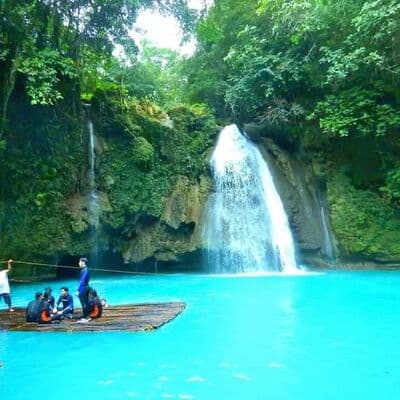
- Kawasan Falls — Famous canyoneering, an hour north
- Simala Shrine — On the way, worth a stop
- Moalboal — Sardine run and turtles, 1.5 hours north
Typical day route: Cebu → Oslob (sharks) → Tumalog → Kawasan → Moalboal → overnight or return to Cebu.