Big Lagoon
Big Lagoon: El Nido's Most Magnificent Natural Wonder
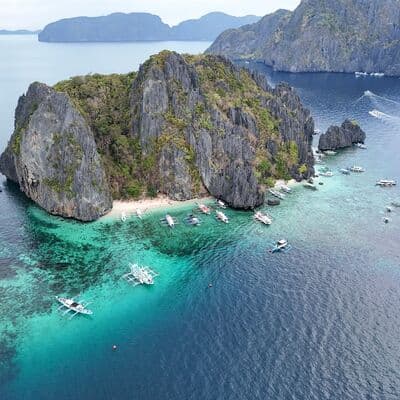
Rising from the aquamarine waters of Bacuit Bay, the limestone walls of Miniloc Island part to reveal Big Lagoon—a natural amphitheater of water and stone so visually stunning that first-time visitors often fall silent, cameras momentarily forgotten as they absorb what their eyes are showing them. This is El Nido's signature landscape, the image that appears on countless postcards and travel guides, yet no photograph truly captures the overwhelming sense of scale and beauty that awaits within.
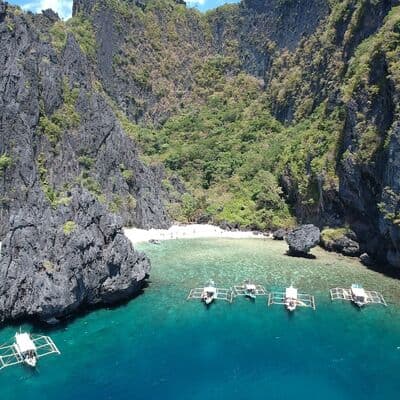
Big Lagoon represents nature's architecture at its most dramatic. Towering karst cliffs, sculpted by millions of years of wind and water, encircle waters that shift through every shade of blue and green. Dense tropical vegetation clings to every available surface, softening the stone with brilliant green. Schools of fish move through the crystalline depths while birds wheel overhead against skies that seem impossibly blue. This is Palawan at its most iconic, a destination that exceeds even the loftiest expectations.
The Geology of Wonder
Understanding Big Lagoon's formation enhances appreciation for its beauty. The lagoon exists within limestone karst formations that began as coral reefs during the Miocene epoch, roughly 10-20 million years ago. As sea levels changed and tectonic forces lifted the seabed, these ancient reefs became the raw material for the spectacular landscape visible today.
The limestone itself is composed of countless marine organisms—corals, shellfish, and microscopic creatures whose calcium carbonate skeletons accumulated over millions of years. Look closely at the rock faces, and you may spot fossils embedded in the stone, tangible connections to the ancient seas that once covered this region.
The dramatic towers and cliffs result from differential erosion. Rainfall, slightly acidified by atmospheric carbon dioxide, slowly dissolves limestone, finding weaknesses and exploiting them over geological time. Vertical fractures become widening cracks, then crevices, then the dramatic formations we see today. Underground, this same process creates cave systems—Palawan hosts some of Asia's most impressive caves, carved by the same forces that shaped Big Lagoon.
The lagoon itself formed as surrounding rock eroded at different rates, creating a protected inlet where the sea intrudes into the island's interior. The entrance channel, while wide enough for boats, narrows the connection to open water, creating the calm, protected conditions that define the lagoon experience.
Experiencing Big Lagoon
Big Lagoon is the centerpiece of El Nido's Tour A, and for most visitors, this island-hopping package provides the introduction to its wonders. Understanding what to expect helps you make the most of your visit.
The Entrance
Boats approach Big Lagoon through a channel flanked by imposing limestone cliffs. The transition from open bay to enclosed lagoon creates a sense of arrival, of entering somewhere special. As the channel opens into the lagoon proper, the full panorama reveals itself—a nearly 360-degree embrace of stone and vegetation surrounding waters of impossible clarity.
During peak hours, multiple tour boats may be present simultaneously. The entrance area serves as the gathering point, where boats anchor and visitors transfer to kayaks or begin swimming. Despite the crowds, the lagoon's size means there's space for everyone, and paddling away from the entrance quickly provides more solitary experiences.
Kayaking the Lagoon
Kayaking is the premier way to experience Big Lagoon. Tour operators typically offer kayak rentals for 200-300 PHP per person, providing access to sit-on-top two-person kayaks for 45-60 minutes of exploration. These stable craft require no prior experience and allow you to reach areas of the lagoon inaccessible by larger boats.
The lagoon's dimensions—roughly 300 meters at its longest point—provide ample territory for exploration. Paddle along the cliff bases to appreciate the scale of the limestone walls. Approach the vegetation-draped shores where roots plunge into clear water. Navigate to the quieter corners where the sounds of other visitors fade and the lagoon feels almost private.
The water depth varies significantly throughout the lagoon. Some areas are shallow enough to see the sandy bottom in detail; others plunge to depths where the color shifts to deeper emerald. The variation creates visual interest and different experiences depending on where you paddle.
Swimming in Paradise
While kayaking provides mobility, swimming offers immersion. The water temperature is perfect—warm enough for extended swimming without any chill, yet refreshing after the Philippine sun. The clarity is remarkable; looking down while floating, you can track fish movements 10 or more meters below.
Designated swimming areas typically exist near the boat anchoring zone, though specifics vary by operator and conditions. The calm, protected waters make swimming safe for most abilities, though non-swimmers should use life jackets (available from tour boats). The experience of floating in Big Lagoon's embrace, surrounded by geological time made visible in stone, ranks among Palawan's most memorable moments.
Wildlife and Ecosystem
Big Lagoon supports diverse life despite—or perhaps because of—its enclosed nature.
Underwater Life
The lagoon's waters host various fish species drawn to the protected environment. Small schools are commonly visible, their movements creating shifting patterns of silver and color. The clear water allows observation without any equipment, though a mask and snorkel (if permitted and brought from your boat) provides closer looks.
The rocky substrates support invertebrate communities including sea urchins, starfish, and various mollusks. Look for movement along the cliff bases where the rock meets water—crabs and other creatures patrol these edges. The lagoon's protected status means touching or disturbing marine life is prohibited, but observation from a respectful distance is encouraged.
Bird Life
The limestone cliffs provide nesting habitat for various bird species. Swiftlets are the most commonly observed, their acrobatic flight taking them between cliff-face nests and open air where they hunt insects. The valuable nests of certain swiftlet species (used in bird's nest soup) have been harvested in this region for centuries.
Look for white-collared kingfishers along the vegetated shores, their brilliant blue feathers flashing as they hunt. Various heron species may be visible in quieter corners, standing motionless as they wait for unwary fish. Overhead, raptors occasionally soar on thermals rising from the sun-heated cliffs.
Vegetation
The cliff faces support remarkable vertical gardens, with plants colonizing every available crevice. Ferns are particularly prominent, their fronds cascading down rock faces like green waterfalls. Small trees and shrubs somehow find purchase on ledges that seem impossibly narrow for root systems. This vegetation is critical—it stabilizes rock surfaces, provides bird habitat, and contributes to the lagoon's visual drama.
At water level, certain areas support mangrove-type vegetation, their roots creating protected zones for juvenile fish and invertebrates. These transitional habitats link marine and terrestrial ecosystems, supporting biodiversity throughout the lagoon.
Photography in Big Lagoon
Big Lagoon presents both opportunities and challenges for photographers. The rewards justify the effort of working within the constraints.
Technical Considerations
The high-contrast environment—bright sky, dark cliff faces, reflective water—challenges camera meters. Exposure compensation may be needed to retain detail in both highlights and shadows. The water's surface creates intense reflections; a polarizing filter can cut through these to reveal underwater detail, though it also darkens reflections that may be desirable compositionally.
Waterproof equipment or reliable waterproof housing is essential. Spray from paddling, potential capsizing, and the general wet environment put unprotected cameras at risk. Action cameras like GoPros handle conditions well and provide wide-angle perspectives suited to the landscape. Smartphone waterproof cases allow capture with familiar devices.
Composition Strategies
Wide-angle perspectives capture the lagoon's scale, including cliff walls that tower overhead and wrap around the frame. Use your kayak's bow as a foreground element to add depth and leading lines. Fellow paddlers provide scale, showing viewers just how massive the formations are.
The water itself offers composition opportunities. Reflections on calm water create mirror images of the cliffs—look for moments of stillness between paddle strokes or wind ripples. Alternatively, embrace the ripple patterns; they can add texture and visual interest to foreground areas.
Don't neglect details amidst the grand scenery. The textures of cliff faces, patterns of vegetation, play of light on water—these intimate shots provide variety in your collection and often convey mood more effectively than wide establishing shots.
Timing for Light
Most visitors experience Big Lagoon during standard tour hours (10 AM-2 PM), when light is overhead and harsh. This timing actually works reasonably well here, as the cliff walls provide shadow areas that create contrast with sunlit sections. The overhead sun also maximizes water clarity and color saturation.
For dramatic lighting, earlier or later visits are superior. Morning light warms the cliffs with golden tones, while late afternoon creates long shadows and rich color. Private tours can adjust timing to capture these conditions, though few tour boats reach the lagoon during true golden hour.
Practical Visitor Information
Getting There
Big Lagoon is reached almost exclusively via boat, typically as part of Tour A from El Nido town. The tour includes Big Lagoon, Small Lagoon, Secret Lagoon, and Seven Commandos Beach, running approximately 9 AM-4 PM with lunch included. Prices range from 1,200-1,500 PHP per person, representing excellent value for a full day of activities.
Private boat charters offer more flexibility, allowing you to control timing and duration at each stop. Expect to pay 5,000-8,000 PHP for a private boat for the day. For photographers or those seeking to avoid crowds, the additional cost can be worthwhile.
Entrance Fees
Big Lagoon falls within the El Nido-Taytay Managed Resource Protected Area. A Eco-Tourism Development Fee (ETDF) of 200 PHP and an Environmental Development Fee (EDF) of 200 PHP are required for visitors; these are typically included in tour prices or collected separately in El Nido town before departure. The fees support environmental protection and management of the protected area.
Best Times to Visit
The dry season (November-May) offers the most reliable weather, with December-April being peak season. Expect more visitors during these months but also the best conditions for swimming and photography. The wet season (June-October) brings afternoon showers and occasionally rough seas that may cancel tours, but also fewer crowds and lower prices.
Within any given day, early morning and late afternoon offer better lighting and smaller crowds. If your tour operator offers flexibility in itinerary ordering, request Big Lagoon as a first or last stop rather than during the midday crowd convergence.
What to Bring
Essential items include reef-safe sunscreen (apply before arrival), hat for sun protection, waterproof bag for valuables, water shoes for rocky areas, and waterproof camera or phone case. Cash for kayak rental should be in smaller denominations. Snorkeling equipment can be brought from the tour boat if you wish to look underwater, though the lagoon isn't primarily a snorkeling destination.
Conservation and Responsible Tourism
Big Lagoon's popularity brings responsibility. The same beauty that draws visitors can be damaged by careless behavior, and the protected area status reflects recognition of the ecosystem's fragility.
Environmental Guidelines
Never touch or stand on coral or rock formations—besides the ecological damage, it's also unsafe, as rocks may be sharp or unstable. Use only reef-safe sunscreen without oxybenzone or octinoxate, which damage marine ecosystems. Do not feed fish or other wildlife—this alters natural behavior and can harm animals.
Pack out all trash, including organic materials that might seem harmless. Avoid single-use plastics when possible; bring a refillable water bottle. Do not take anything from the lagoon—no shells, coral, or plant material as souvenirs. The goal is to leave no trace of your visit.
Respecting the Space
Keep noise levels appropriate to the environment. Part of Big Lagoon's magic is its natural soundscape—bird calls, water lapping against stone, wind through vegetation. Loud conversations or music diminish the experience for everyone. Similarly, give fellow visitors space when possible; don't crowd other kayaks or swimmers.
Follow all instructions from tour guides regarding off-limits areas or activities. These restrictions exist to protect sensitive habitats and ensure visitor safety. Guides can also provide information about the lagoon's ecology and history, enriching your understanding of what you're experiencing.
Big Lagoon in Context
Big Lagoon is the crown jewel of Tour A, but El Nido offers much more. Understanding how this destination fits into a broader visit helps you plan effectively.
Tour C visits different islands with Helicopter Island, Secret Beach, and Hidden Beach as highlights. Tour D explores more remote areas including Cadlao Lagoon and Pangulasian Island. Each tour reveals different aspects of El Nido's limestone seascape. A comprehensive visit of 4-5 days allows time for multiple tours plus independent exploration.
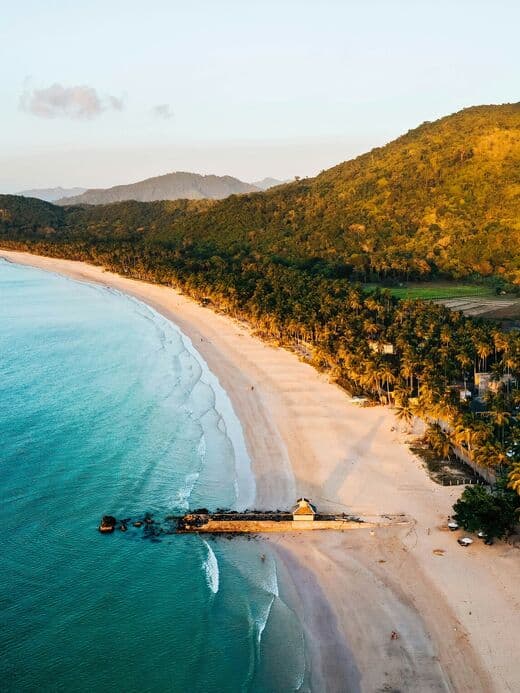
Beyond island hopping, El Nido offers Nacpan Beach (mainland beach perfect for sunset), Las Cabanas (beach bar scene with zipline), and Marimegmeg Beach (closest to town). Inland attractions include waterfalls and viewpoints accessible by motorcycle or tricycle.
The Big Lagoon Experience
Words prepare you for Big Lagoon; only presence delivers the experience. The moment the channel opens and the full panorama reveals itself—that moment rewards every flight, every connection, every hour of travel that brought you here.
This is why humans seek out places like Big Lagoon. Not for any practical purpose, but for the elevation of spirit that comes from witnessing beauty on this scale. The limestone walls don't care that you've traveled across the world to see them; they've stood for millions of years and will stand for millions more. But somehow, in that indifference, there's comfort. The world contains places like this. We can still find them, still paddle through their waters, still feel small and lucky and alive in their presence.
Take your time in Big Lagoon. The tour schedule will move you on eventually, but while you're there, be fully present. Feel the paddle in your hands. Notice the color of the water shift as you pass from shallow to deep. Listen to the silence beneath the sounds. Let the scale of geological time put your own concerns in perspective. This is what travel offers at its best—not just new places, but new ways of seeing, new contexts for understanding your own small, precious life.
Big Lagoon asks nothing of you except attention. Give it that, and it gives back far more than any photograph can capture.