Malapascua Island
Malapascua Island: The Only Place on Earth to Dive with Thresher Sharks
Malapascua is a tiny crescent-shaped island lost in the Visayan Sea at the northern tip of Cebu. It covers just 2.5 square kilometers, has a population of around three thousand, no ATMs, and no traffic lights. Yet divers from around the world flock here because Malapascua is the only place on the planet where you can virtually guarantee an encounter with thresher sharks in their natural habitat.
When I first heard about this place, it sounded like marketing hype. 'The only place in the world' — sounds like an advertising slogan. But it's true. Thresher sharks are deep-water predators that usually live at depths of 200-500 meters. They only rise to shallow water to visit so-called 'cleaning stations' where small cleaner fish remove parasites and dead skin. Malapascua is one of the few places where these stations are at depths accessible to divers.
Diving with Thresher Sharks
Kimud Shoal — The Sharks' New Home
Until recently, Monad Shoal — an underwater mountain about 30 minutes from the island — was the main spot for shark encounters. But lately, the sharks have moved to Kimud Shoal, about an hour away by boat. Local dive operators report the best sightings in 20 years — so now is the perfect time to visit.
Kimud Shoal is actually better for divers: the cleaning stations here are shallower than at Monad. You'll spend most of your dive at 18-26 meters depth — accessible to divers with Advanced Open Water certification.
How the Dive Works
Thresher sharks are crepuscular predators, so dives start very early, usually around 5:30 AM. You board the boat in darkness to arrive at the site by sunrise. That's when the sharks rise to the cleaning stations as the first light penetrates the water.
The dive follows a specific protocol. Divers line up at the edge of the underwater plateau and wait. It's crucial not to make sudden movements or approach the sharks — they're skittish and will instantly disappear into the depths if startled. Flash photography is strictly prohibited.
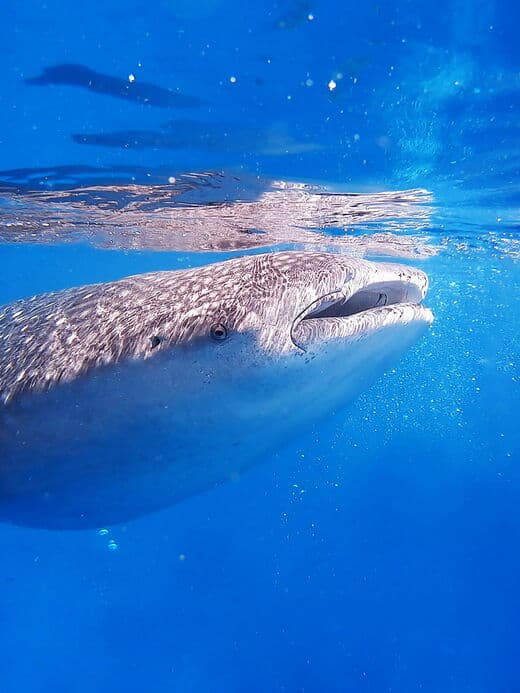
Thresher sharks are unmistakable: half of their 5-6 meter body length is an incredibly long, scythe-like tail. They use it like a whip to stun prey. When one of these sharks glides past, gracefully curving its alien tail — it's a sight you'll never forget.
Best Time to Visit
You can see sharks year-round — this isn't a seasonal migration like in South Africa. But conditions vary:
- January-April — Best visibility (up to 30 meters), dry season, comfortable weather. This is peak season; book early.
- March-May — Hottest months, water around 29°C.
- November-December — Visibility can drop to 5 meters, possible storms. But fewer tourists and lower prices.
From late December to April/May, hammerhead sharks also visit Kimud Shoal — you might see two species in one dive.
Requirements and Prices
You need Advanced Open Water certification for Kimud Shoal — depths of 18-26 meters require proper training. Nitrox (enriched air) is recommended to extend your bottom time.
A thresher shark dive costs approximately 2,500-3,500 pesos (USD 45-65) depending on the operator. This usually includes equipment, breakfast, and two dives. Reputable operators include Thresher Shark Divers, Exotic Island Dive Resort, and Devocean Divers — all with years of experience and skilled guides.
Other Dive Sites
Malapascua isn't just about sharks. The diversity of diving here is impressive:
Monad Shoal
Though the threshers have moved, Monad remains an excellent dive site. Tiger sharks and bull sharks now appear regularly — larger and more impressive, though less predictable.
Gato Island
A marine sanctuary with an underwater cave tunnel you can swim through. Home to whitetip reef sharks, sea snakes, and incredible numbers of nudibranchs.
Dona Marilyn
A sunken ferry resting at 32 meters depth. Tragic history: the vessel sank in 1988 during a typhoon, killing about 250 people. Now it's an atmospheric wreck dive covered in coral and teeming with fish.
Night Diving
Malapascua is famous for night dives. The star attraction is mandarinfish — tiny, psychedelically colored fish that emerge for mating dances only at dusk.
Island Life
Beaches
Malapascua isn't just diving. Bounty Beach on the southern side is a classic postcard image: white sand, palm trees, turquoise water. This is where all the tourist infrastructure is concentrated: hotels, restaurants, dive centers.
On the northern side are the wilder beaches of Langob and Lapus-Lapus. Pleasant for a half-day trip by bicycle or tricycle.
Accommodation
Options range from simple guesthouses at 500 pesos to comfortable dive resorts at 3,000-5,000 pesos per night. Most dive centers have their own hotels — convenient for early shark dive departures.
My advice: book ahead, especially in peak season (December-April). The island is small, good options are limited, and they fill up fast.
Atmosphere
Malapascua is rural Philippines without pretense. No ATMs (bring cash!), electricity used to cut out at night (more stable now), slow internet. Roosters crow from 4 AM, dogs roam the beach, local kids play volleyball at sunset.
For some this is a minus, for others — the main charm. After diving with sharks, it's pleasant to sit in a simple beach bar with a cold San Miguel, watch the sunset, and think about nothing.
Getting There
From Cebu City
- Bus to Maya Port. From Cebu North Bus Terminal, take a bus to Maya Port. Journey time 4-5 hours, cost around 200 pesos. Scenic but tiring — winding roads, heat, stops in every village.
- Ferry to the island. Small ferries run from Maya Port to Malapascua. Departures from 6:30 AM to 4:30 PM — don't miss the last one! Journey time 30-45 minutes, cost around 100-200 pesos.
Alternatives
- Private transfer. Hire a car with driver directly to the port — around 3,000-4,000 pesos, but no transfers and on your schedule.
- Via Bantayan. If you're on Bantayan Island, you can hire a boat directly to Malapascua — about 2-3 hours, negotiate the price.
Practical Tips
What to Bring
- Cash in pesos — no ATMs, cards rarely accepted
- Flashlight — in case of power outages
- Mosquito repellent — it's the tropics
- Dive certification — no cert, no shark dives
- Underwater camera without flash — flash is prohibited
How Many Days
Minimum 3-4 days: one day for travel, two-three for diving. If you want to relax and try different sites — a week is ideal.
Booking
Malapascua is popular, especially in season. Book diving and accommodation 2-3 months ahead, for holidays — 6 months. Spots on morning shark dives are limited.
Is It Worth Going?
If you're a diver — absolutely yes. Malapascua makes the world's top 10 dive destinations for good reason. Thresher sharks are a unique experience you can't have anywhere else.
If you don't dive — think twice. For beach holidays there are more convenient places: Bantayan nearby, or Boracay further away. Malapascua is charming in its simplicity, but infrastructure is minimal.
Although... you could combine both. Morning shark dive, afternoon beach and snorkeling, evening sunset with beer. Three days of that routine — and you'll return home a different person. At least with a story you'll want to tell again and again.