Kayangan Lake
Kayangan Lake: The Crown Jewel of Coron
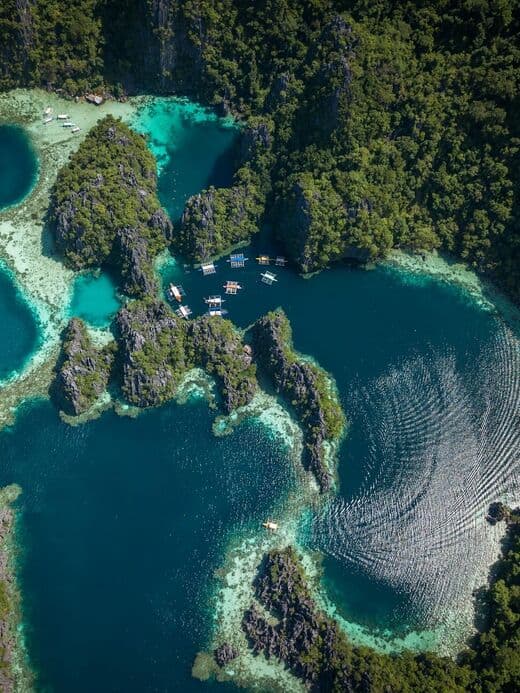
Nestled within the ancient limestone karst of Coron Island, Kayangan Lake has achieved something rare in the age of overtourism: it lives up to its reputation. Described as the cleanest lake in the Philippines—a claim supported by water quality testing and visible with your own eyes—Kayangan draws visitors from around the world to swim in its impossibly clear waters, marvel at its cathedral-like rock formations, and understand why some places transcend their photographs.
The journey to Kayangan is part of its appeal. A climb up weathered limestone steps, rewarded at the top by one of the most photographed viewpoints in the Philippines, then descent into a hidden valley where the lake awaits, surrounded by cliffs that echo with the splash of swimmers and the wonder of first-time visitors. This is Palawan's signature destination, the image that launches a thousand trips, and an experience that routinely exceeds even the highest expectations.
The Remarkable Clarity of Kayangan Lake
The first thing everyone notices about Kayangan is the water. Visibility reaches an astonishing 15-20 meters on good days, meaning you can see the bottom clearly in all but the deepest sections. Fish appear to float in air. Swimmers' bodies cast shadows on the limestone floor below. The effect is dreamlike—water so transparent it barely registers as water.
Why So Clear?
Kayangan's exceptional clarity results from several factors. The lake occupies a limestone basin with minimal organic input—no streams carrying sediment, no extensive vegetation decomposing in the water. The calcium carbonate in the surrounding rock acts as a natural filter, binding to particles and precipitating them out. The lake's relative isolation limits contamination from external sources.
The water itself is a mix of fresh and salt, with seawater seeping through the porous limestone to create a thermocline layer. Snorkelers often notice temperature changes as they descend—warm fresh water floating above cooler, denser salt water below. This stratification contributes to clarity, as it limits mixing and sediment disturbance.
Strict environmental protections maintain water quality. Sunscreen use is regulated (reef-safe only), swimming occurs only in designated areas, and boats aren't permitted on the lake. These measures, combined with natural factors, preserve the clarity that makes Kayangan famous.
What You'll See Below
Looking down into Kayangan reveals a underwater landscape of dramatic beauty. The limestone basin creates varied topography—ledges, drop-offs, caves, and crevices that add visual interest. Large boulders lie scattered on the bottom, some clearly visible even at 15-meter depth. The interplay of light through the water creates shifting patterns on these surfaces.
Marine life is present but not abundant—the lake's unusual chemistry limits what can thrive here. Small fish are common, and larger fish occasionally appear. The main attraction, though, is the lake itself rather than its inhabitants. Swimming through water this clear is the experience; anything else is bonus.
The Kayangan Lake Experience
Visiting Kayangan Lake involves more than just swimming. The full experience includes the approach, the climb, the viewpoint, and the descent—each component contributing to the overall impact.
Arriving at Coron Island
Kayangan Lake sits within Coron Island, which is distinct from Coron town (located on Busuanga Island). The boat journey from Coron town takes approximately 20-30 minutes, crossing waters that gradually reveal the dramatic limestone formations of Coron Island rising from the sea.
Tour boats dock at a pier near the lake's entrance, where an entrance fee is collected (typically 200-300 PHP, subject to change). The fee supports protection and maintenance of the lake and surrounding area. From the dock, the climb begins.
The Climb Up
Approximately 170 limestone steps lead from the dock to the viewpoint, with the lake descent on the other side. The climb is real exercise—moderate difficulty but potentially challenging in the heat for those with limited fitness. Take your time; there's no rush, and the steps are uneven in places, requiring attention to footing.
The stone has been worn smooth by countless feet over the years, and can be slippery when wet. Handrails assist in some sections. Proper footwear is essential—no flip-flops, as the climb and descent require stable footing. Water shoes or sport sandals with heel straps work well.
The Iconic Viewpoint
At the climb's summit, the famous Kayangan Lake viewpoint opens before you. This perspective—looking down at the lake framed by karst formations, the water's impossible blue-green color vivid against gray limestone—has become synonymous with Coron tourism. The vast majority of Coron promotional images come from this spot.
Everyone wants a photo here, which creates congestion during busy periods. A viewing platform attempts to organize the flow, but expect to wait your turn during peak hours. Patience pays off; a few extra minutes usually allows the crowd to cycle through, giving you time for better shots. Early morning visits (possible with private tours) experience minimal crowds.
Descending to the Lake
From the viewpoint, additional steps descend into the valley containing the lake. This section is shorter than the initial climb but steeper in places. The lake gradually comes into view through gaps in the vegetation, building anticipation for the swimming to come.
At lake level, basic facilities await: changing areas, a simple platform for entering the water, and sometimes vendors selling drinks. The swimming area is designated and marked; visitors should stay within these boundaries to protect sensitive areas of the lake.
Swimming in Kayangan
The moment of entering Kayangan Lake is what visitors remember. The water is warm at the surface (fed by tropical sun), cooler as you descend. The clarity is immediately apparent—looking down past your body to the lake floor below, everything sharp and detailed.
Swimming toward the dramatic limestone formations that rise from the water provides perspective on the lake's scale. The cliffs tower overhead, their shapes carved by millennia of water and weather. The acoustics are remarkable, with sound reflecting off rock surfaces in surprising ways.
Most visitors spend 30-45 minutes in the water, though time limits may be imposed during busy periods. Floating, swimming, and simply experiencing the water's clarity are the main activities. Snorkeling equipment isn't necessary—the clear water is visible without it—but can enhance observation of the bottom.
Photography at Kayangan Lake
Kayangan challenges photographers with its combination of dramatic scenery and high visitor numbers, but rewards effort with spectacular images.
The Viewpoint Shot
The classic Kayangan viewpoint image requires patience during busy periods. For the cleanest shot (without crowds), time your visit for early morning or late afternoon. A polarizing filter can cut reflections on the water surface, revealing more detail below. Wide-angle lenses capture the full sweep of the vista.
The viewpoint faces roughly east, meaning morning light illuminates the lake surface while afternoon light backlights the scene. Both conditions produce compelling images; morning is generally preferred for the classic shot.
At Water Level
The lake itself offers different photographic opportunities. Waterproof cameras or phone cases allow capture of the underwater clarity that defines Kayangan. Shooting half-above, half-below the surface ("split shots") demonstrates the water's transparency dramatically.
The limestone formations rising from the water provide excellent compositional elements. Reflections on calm water create mirror images of the cliffs. Human subjects swimming in the clear water give scale and interest, particularly when visibility allows capturing them clearly despite distance.
Technical Considerations
The high-contrast environment—bright sky, dark rock, reflective water—challenges camera meters. Bracketing exposures or shooting RAW allows flexibility in post-processing. The water's blue-green color tends to render accurately but may need white balance adjustment in some conditions.
Protect your camera from splash and spray during the boat journey and around the lake. Kayangan's water doesn't damage equipment, but salt spray from the boat trip can cause corrosion if not cleaned.
Practical Information for Visitors
Tour Options
Most visitors experience Kayangan Lake as part of a Coron island-hopping tour combining multiple destinations. The "Ultimate Tour" or "Super Ultimate Tour" typically includes Kayangan along with other highlights like Twin Lagoon, Barracuda Lake, and Siete Pecados Marine Park. Full-day tours cost 1,500-2,500 PHP per person depending on inclusions.
Private tours offer flexibility in timing and duration. Arriving at Kayangan before 9 AM or after 3 PM significantly reduces crowds, and private boats can accommodate these schedules. Expect to pay 5,000-8,000 PHP for a private full-day charter.
What to Bring
Essential items include water shoes or secure sport sandals (no flip-flops), reef-safe sunscreen (applied before entering water), waterproof camera or phone case, and adequate drinking water for the climb. A small towel or quick-dry towel is helpful. Modest swimwear is appropriate; this is a natural area with cultural sensitivities.
Entrance Fees
Kayangan Lake charges an entrance fee (currently 200-300 PHP, subject to change). This may or may not be included in your tour price—confirm with your operator. The fee supports protection and maintenance of the lake.
Best Times to Visit
Weather-wise, the dry season (November-May) offers most reliable conditions. Even in wet season, morning visits typically enjoy good weather before afternoon rain develops.
For crowd avoidance, early morning and late afternoon visits are optimal. The period from 10 AM to 2 PM sees peak congestion as tour boats arrive en masse. Special events or holidays exacerbate crowding significantly.
Cultural and Environmental Context
Kayangan Lake holds significance beyond its tourist appeal, and understanding this context enriches the visit.
Tagbanua Heritage
Coron Island and its lakes are ancestral waters of the Tagbanua people, an indigenous group with deep connections to this land stretching back centuries. Under Philippine law, the Tagbanua hold Certificate of Ancestral Domain Title (CADT) over Coron Island, meaning tourism operates under their authority.
The entrance fees visitors pay go partly to the Tagbanua community, supporting their stewardship of the island. This arrangement represents one of the Philippines' more successful examples of indigenous-managed tourism—the Tagbanua benefit economically while maintaining authority over how their ancestral waters are used.
As a visitor, you're a guest on Tagbanua territory. Respecting their rules (swimming boundaries, behavior guidelines, environmental protections) acknowledges their traditional authority and supports the continued success of this management model.
Conservation Efforts
Kayangan's remarkable water quality requires constant protection against the impacts of tourism. Measures include limiting visitor numbers during peak periods, requiring reef-safe sunscreen, prohibiting boats on the lake, and maintaining swimming zone restrictions. Waste management and infrastructure maintenance also require ongoing attention.
The COVID-19 pandemic provided an unintentional experiment in reduced tourism impact. During the period of minimal visitation, locals reported that the lake's clarity and overall condition improved noticeably. This observation reinforces the importance of managing visitor numbers and behavior for long-term sustainability.
Beyond Kayangan: Coron Island's Other Lakes
Coron Island hosts several lakes, each with distinct characteristics that justify exploration beyond the most famous one.
Barracuda Lake
Perhaps Kayangan's closest rival in renown, Barracuda Lake offers a completely different experience: bizarre thermocline layers where water temperature shifts dramatically with depth, creating an almost surreal swimming and diving experience. The lake takes its name from a giant barracuda skeleton reportedly found here, though the fish itself has never been confirmed.
Twin Lagoon
Not technically a lake but a connected pair of lagoons, Twin Lagoon showcases the karst landscape's complexity. Visitors swim through a rock opening (or climb over at low tide) to transition between lagoons—a unique experience that complements Kayangan's more contemplative appeal.
Other Lakes
Several smaller lakes on Coron Island are accessible only by special arrangement or as part of certain tour packages. These see far fewer visitors than Kayangan and can provide more solitary experiences for those willing to arrange access.
The Kayangan Experience
Words and images prepare you for Kayangan Lake, but they can't deliver the moment of immersion—the instant when you slip into that impossibly clear water and see the world below as clearly as the sky above. That moment is Kayangan's gift, available only to those who make the journey.
The climb prepares you, building anticipation step by step. The viewpoint confirms the photographs weren't exaggerated. The descent heightens expectation. And then you're in the water, floating in liquid crystal, the limestone cliffs echoing with the sounds of wonder that every visitor, regardless of language, seems to make.
This is why you travel. Not for the photos, though they help remember. Not for the accomplishment of reaching famous places, though that satisfies too. You travel for moments when the world exceeds your expectations, when reality surpasses imagination, when you find yourself in waters so clear they seem holy, surrounded by stone shaped by time beyond comprehension.
Kayangan Lake delivers this moment reliably, which is why visitors queue for the climb and wait for viewpoint photos and pack the swimming area during peak hours. The crowds don't diminish the lake; they testify to its power. When you finally float in those waters, looking down at the visible bottom far below, you join the countless thousands who've experienced the same wonder—and you understand why they keep coming back.