Philippine Tarsier Sanctuary: Encounter Earth's Most Captivating Tiny Primates
In the forests of Bohol lives one of nature's most extraordinary creatures—the Philippine tarsier. With eyes larger than its brain, ears that can independently rotate like satellite dishes, and the ability to turn its head nearly 360 degrees, this tiny primate seems almost otherworldly. The Philippine Tarsier Sanctuary in Corella offers visitors a rare and responsible opportunity to observe these endangered animals in their natural habitat, contributing to conservation efforts that may determine whether future generations will ever see these remarkable creatures at all.
Understanding the Philippine Tarsier
Biology and Physical Characteristics
The Philippine tarsier (Carlito syrichta) is among the world's smallest primates, with adults weighing just 80-160 grams—about the weight of a small apple. Despite their diminutive size, tarsiers possess the largest eyes relative to body size of any mammal. Each eye is approximately 16 millimeters in diameter—as large as the animal's entire brain—and is fixed in its socket, unable to move. To compensate, tarsiers evolved the remarkable ability to rotate their heads up to 180 degrees in either direction, allowing them to see almost completely behind themselves.
Other distinctive features include:
- Fingers: Elongated digits with adhesive pads for gripping branches
- Ears: Thin, bat-like ears that can move independently to locate prey by sound
- Tail: A long, naked tail (longer than the body) used for balance
- Hind legs: Remarkably powerful, allowing leaps of up to 5 meters between trees
- Fur: Soft, grey-brown coat providing excellent camouflage
Behavior and Lifestyle
Tarsiers are exclusively nocturnal, sleeping during the day in dense vegetation near tree trunks and becoming active after dark. Their diet consists entirely of live prey—primarily insects, but also small lizards, frogs, and even birds. They are the only entirely carnivorous primates.
These are solitary and territorial animals, with males and females only coming together briefly for mating. Females give birth to a single offspring after a six-month gestation period—remarkably long for such a small mammal. Baby tarsiers are relatively well-developed at birth and can climb within days.
One of the tarsier's most remarkable adaptations is its communication system. While humans can only hear their lower-frequency calls, much of tarsier communication occurs in ultrasonic frequencies above human hearing—similar to bat echolocation.
Conservation Status
The Philippine tarsier is classified as Near Threatened by the IUCN, with population numbers declining due to habitat loss, hunting, and capture for the illegal pet trade. Tarsiers are extremely sensitive to stress—captive animals frequently die from self-induced skull fractures caused by banging their heads against enclosure walls. This extreme stress response makes conservation in natural habitats essential.
The Philippine Tarsier Sanctuary
Location and Background
The Philippine Tarsier Sanctuary is located in Corella, approximately 14 kilometers from Tagbilaran City and about 10 kilometers from the Loboc River. Established with support from the Philippine Tarsier Foundation, this 167-hectare protected forest provides sanctuary for wild tarsiers while allowing carefully managed tourism to generate conservation funding.
Unlike some facilities that keep tarsiers in cages, the Corella sanctuary is a genuine forest reserve where tarsiers live wild and free. Visitors walk quiet trails to viewing areas where guides locate sleeping tarsiers. Because tarsiers are territorial and tend to return to the same sleeping spots, guides generally know where to find them—though sightings are never guaranteed.
Visiting Hours and Fees 2025
Opening hours: Daily 8:30 AM to 4:00 PM
Entrance fee: 100 PHP for adults, 50 PHP for children
Guide fee: Included in entrance (mandatory guided tours)
Best visiting time: Tarsiers are visible all day (they sleep in daylight), but morning offers cooler temperatures
The Visit Experience
Upon arrival, visitors are briefed on sanctuary rules and the importance of tarsier conservation. Small groups (typically 5-10 people) are then assigned a guide who leads them along forest trails to current tarsier locations. The trails are well-maintained but involve some walking on uneven terrain.
When approaching tarsiers, strict protocols apply:
- Maintain quiet at all times—even whispered conversations
- No flash photography (can damage their sensitive eyes)
- Keep minimum distance of 1 meter from animals
- No touching, feeding, or attempting to interact
- Follow guide instructions immediately
Typical visits last 30-45 minutes, during which visitors may observe 3-6 individual tarsiers depending on the day. Guides are knowledgeable about tarsier biology and can answer questions before and after viewing (not during, to maintain quiet).
Photography Guidelines
Camera Settings
Photographing tarsiers is challenging due to the no-flash rule and dense forest shade:
- ISO: High settings (1600-6400) necessary in forest shade
- Aperture: Wide open (f/2.8-f/4) to gather maximum light
- Shutter speed: 1/125 or faster to prevent blur
- Lens: Telephoto (100-200mm equivalent) to maintain distance while getting close-ups
- Mode: Aperture priority with auto-ISO works well
Phone Photography
Modern smartphones can capture surprisingly good tarsier photos:
- Use portrait mode for background blur
- Enable night mode or low-light enhancement if available
- Hold very steady or brace against a tree
- Take multiple shots—some will be sharper than others
- Avoid digital zoom; crop later if needed
Ethical Photography
Remember that your photos should not come at the expense of animal welfare. Never use flash, never make noise to get the animal to look at you, and never try to get closer than permitted. A slightly imperfect photo taken ethically is far better than a perfect shot that stressed an endangered animal.
Tarsier Welfare Concerns
Why This Sanctuary Matters
Unfortunately, not all tarsier tourism in Bohol meets ethical standards. Some establishments keep tarsiers in small cages, expose them to constant handling and flash photography, and allow touching and close contact—all severely stressful for these sensitive animals. These practices contribute to high mortality rates and do nothing for conservation.
The Philippine Tarsier Sanctuary in Corella differs fundamentally:
- Tarsiers are wild and free-ranging in protected forest
- No cages, handling, or artificial environments
- Strict rules minimize visitor impact
- Revenue supports habitat protection and research
- Educational focus promotes long-term conservation
Red Flags to Avoid
When visiting any tarsier facility, avoid places that:
- Keep tarsiers in cages or small enclosures
- Allow or encourage touching or holding tarsiers
- Permit flash photography
- Let visitors get within arm's reach
- Operate as primarily commercial attractions rather than conservation centers
Getting to the Sanctuary
From Tagbilaran City
Distance: 14 kilometers
Time: 25-30 minutes by car
Route: Take the road toward Corella/Sikatuna; the sanctuary is well-signposted
From Panglao Island
Distance: 25 kilometers
Time: 40-50 minutes by car
Note: Most resorts can arrange transportation or include in countryside tours
As Part of Countryside Tour
The Tarsier Sanctuary is included in virtually all Bohol countryside tours, typically combined with:
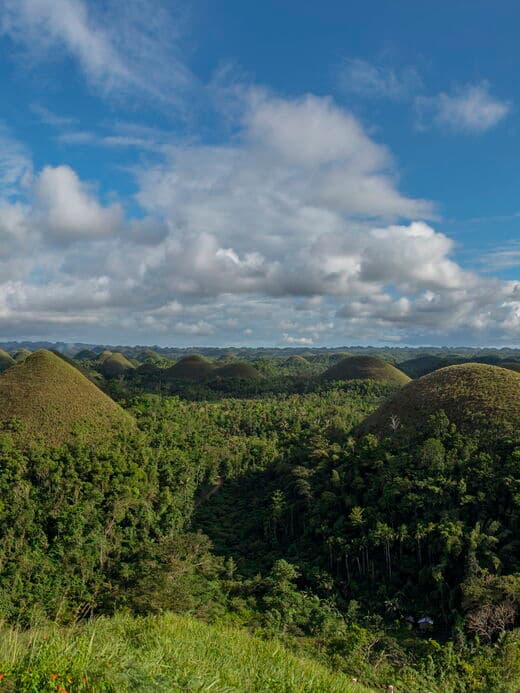
- Chocolate Hills
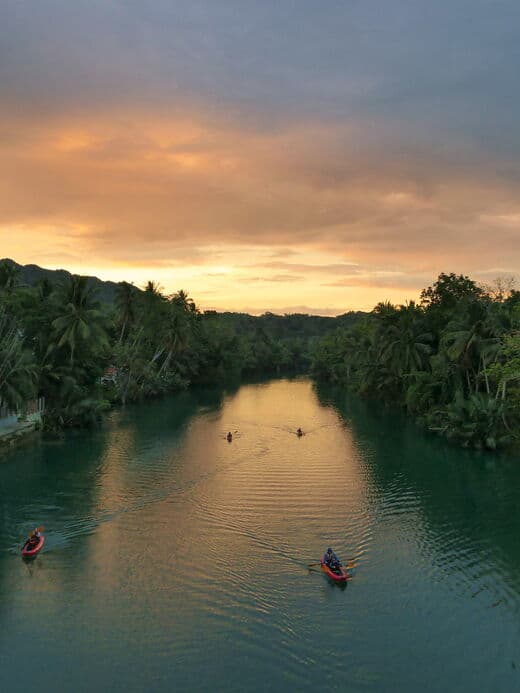
- Loboc River Cruise
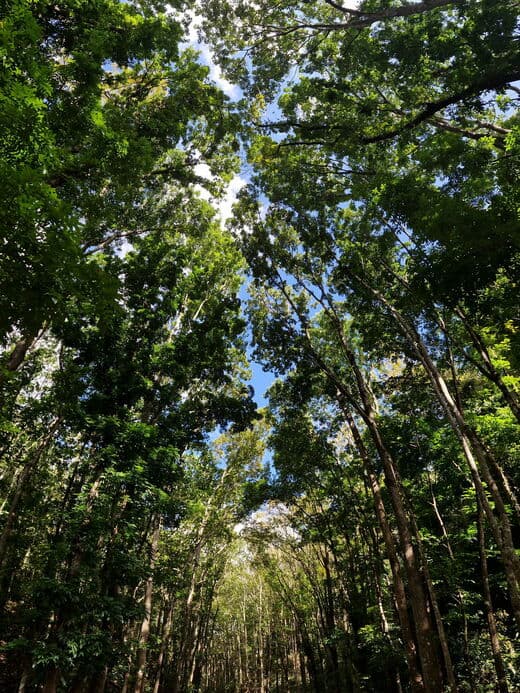
- Bilar Man-Made Forest
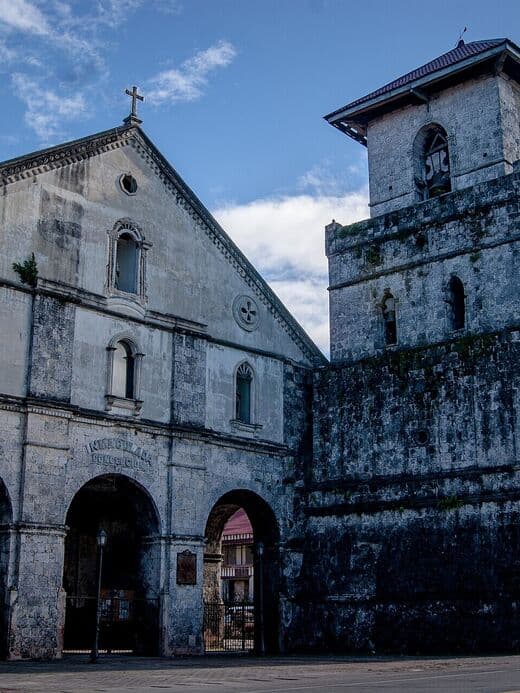
- Baclayon Church
Standard tour price: 1,500-2,500 PHP per person including transportation and all entrance fees.
Alternative: Tarsier Conservation Area (Loboc)
Another legitimate sanctuary operates near Loboc, closer to the Loboc River and Bilar Man-Made Forest. This Philippine Tarsier and Wildlife Sanctuary follows similar ethical standards:
Location: Loboc, along the road to Bilar
Entrance fee: 80 PHP
Hours: 9:00 AM to 4:00 PM
Forest area: Smaller than Corella but equally committed to welfare standards
Some countryside tours visit this sanctuary instead of or in addition to Corella, depending on the route.
What to Know Before You Go
Best Time to Visit
Time of day: Morning (9-11 AM) offers cooler temperatures and generally less crowded conditions. Tarsiers are visible throughout operating hours as they sleep during the day.
Season: Tarsiers are present year-round. Dry season (November-May) provides more comfortable visiting conditions and easier trail walking. Wet season may mean muddy paths but often fewer visitors.
What to Bring
- Camera/phone: Essential, but remember no flash
- Insect repellent: Forest mosquitoes can be persistent
- Comfortable shoes: Closed-toe recommended for forest trails
- Water: Available for purchase but bring your own to be safe
- Small bills: For entrance fee and optional donations
What to Expect
- Duration: 30-45 minutes for the guided tour
- Walking: Approximately 500 meters on forest trails
- Tarsier sightings: Usually 3-6 individuals
- Facilities: Basic (restrooms, souvenir shop, small café)
Tarsier Myths and Legends
Boholanos have long held the tarsier in special regard, and various beliefs surround these unusual creatures:
- Local folklore sometimes calls them "diwata" (nature spirits) or links them to supernatural beings
- Some believe seeing a tarsier brings good luck, while others consider them omens
- Traditional beliefs held that tarsiers possessed magical powers due to their enormous eyes
- The tarsier's ability to turn its head almost completely around contributed to supernatural associations
These cultural connections, while sometimes romanticized for tourism, reflect the genuine place tarsiers hold in Boholano heritage and underscore why conservation resonates with local communities.
Supporting Conservation
During Your Visit
- Follow all sanctuary rules strictly
- Consider making an additional donation beyond entrance fees
- Purchase souvenirs from the sanctuary shop (proceeds support conservation)
- Share your experience on social media, emphasizing ethical wildlife tourism
Beyond Your Visit
- Support organizations working on tarsier conservation
- Report any unethical tarsier operations you encounter
- Educate others about responsible wildlife tourism
- Consider adopting a tarsier through foundation programs
Essential Information Summary
Location: Corella, Bohol (14 km from Tagbilaran)
Opening hours: 8:30 AM to 4:00 PM daily
Entrance fee: 100 PHP adults, 50 PHP children
Time needed: 30-45 minutes
Best for: Wildlife enthusiasts, photographers, families
Important: No flash photography, maintain silence, keep distance
The Philippine tarsier represents both the wonder of natural evolution and the urgent challenge of conservation in the modern world. These tiny primates survived millions of years of natural change but now face unprecedented pressure from human activity. By visiting responsible sanctuaries like the one in Corella, tourists can witness one of nature's most remarkable creatures while directly supporting efforts to ensure their survival. Every ethical visit, every donation, every shared photo educating others about responsible wildlife tourism—these small actions accumulate into something powerful. The tarsier's enormous eyes have witnessed millennia of change in these forests. Whether they witness millennia more depends largely on choices we make today.