About
Morocco Travel Guide: The Complete Guide for English-Speaking Travelers
Morocco is one of those destinations that fundamentally changes how you think about travel. I have visited more than sixty countries, and Morocco remains in my top five for sheer sensory overload, cultural depth, and the kind of experiences you simply cannot replicate anywhere else on Earth. This is not a country you visit casually. Morocco demands your full attention, rewards your curiosity, and occasionally tests your patience. But that is precisely what makes it unforgettable.
This guide is written specifically for travelers from the United States, United Kingdom, Australia, and Canada. I will cover everything you need to know, from the practical logistics of getting there to the nuanced cultural codes that will make your trip smoother and more meaningful. I have made the mistakes so you do not have to, and I will share the hidden gems that most guidebooks miss entirely.
Why Visit Morocco
Let me be direct with you: Morocco is not an easy destination. It is not the kind of place where you can switch off your brain and float through a vacation. The medinas are labyrinthine and disorienting. Vendors will approach you constantly. The sensory input can be overwhelming. Some travelers find this exhausting. Others, myself included, find it absolutely intoxicating.
The reason Morocco deserves a place on your travel bucket list comes down to one simple fact: there is nowhere else like it. This is a country where you can wake up in a traditional riad with intricate zellige tilework surrounding a courtyard fountain, spend the morning getting lost in a medieval medina that has changed little in five hundred years, have lunch overlooking the snow-capped Atlas Mountains, and fall asleep that night under a canopy of stars in the Sahara Desert. The geographic and cultural diversity packed into this relatively small country is staggering.
Morocco sits at the crossroads of Africa, Europe, and the Arab world, and its culture reflects all of these influences while remaining distinctly its own. The Berber heritage runs deep, predating both Arab and European influence by millennia. This ancient foundation is layered with Islamic architecture and tradition, French colonial influence (visible in the language, the food, and the city planning), Spanish traces in the north, and an increasingly modern, cosmopolitan urban culture in cities like Casablanca and Rabat.
For Americans, Brits, Australians, and Canadians, Morocco offers something increasingly rare in our homogenized world: genuine otherness. This is not a destination that has been smoothed over for Western consumption. Yes, tourism is a major industry, and tourist infrastructure exists. But step off the main paths and you are in a world that operates by entirely different rules and rhythms.
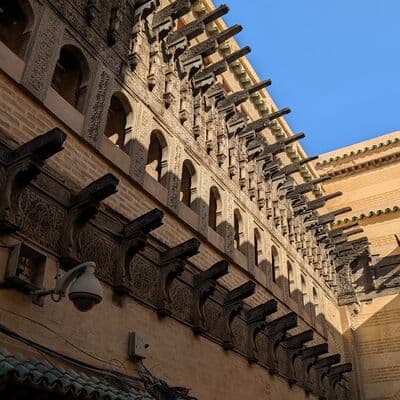
The architectural heritage alone justifies the trip. Morocco contains some of the finest examples of Islamic architecture anywhere in the world. The madrasas of Fez, with their impossibly intricate carved stucco and cedar wood, represent centuries of artistic mastery. The kasbahs and ksour of the south, built from pise (rammed earth), seem to grow organically from the landscape. The blue-washed walls of Chefchaouen create one of the most photogenic urban environments on the planet.
Then there is the food. Moroccan cuisine is among the most sophisticated and flavorful in the world, built on a foundation of spices, slow cooking, and techniques passed down through generations. The tagine, that iconic conical clay pot, produces dishes of remarkable depth and complexity. The bastilla, a savory-sweet pie of pigeon or chicken wrapped in tissue-thin pastry and dusted with cinnamon and sugar, is one of the world's great culinary achievements. And the mint tea, served with elaborate ceremony and genuine hospitality, is the social glue that holds Moroccan culture together.
The natural landscape deserves its own paragraph. Morocco contains genuine geographic diversity: Atlantic and Mediterranean coastlines with beaches ranging from wild and windswept to calm and resort-like. The Rif Mountains in the north, green and relatively lush. The High Atlas, with peaks exceeding 13,000 feet and Berber villages clinging to steep valleys. The Anti-Atlas, older and more eroded, with dramatic gorges and palm-filled oases. And finally, the Sahara itself, where the Erg Chebbi dunes near Merzouga rise hundreds of feet in waves of orange sand.
For photographers, Morocco is paradise. The light is extraordinary, particularly in the golden hours. The colors are bold and saturated: the blue of Chefchaouen, the red of Marrakech, the ochre of the kasbahs, the green of the palm oases. The visual textures are endless: carved plaster, woven carpets, beaten metal, stacked spices, weathered wooden doors. I have taken more photos per day in Morocco than almost anywhere else I have traveled.
Morocco also offers remarkable value for travelers from strong-currency countries. Your US dollars, British pounds, Australian dollars, or Canadian dollars stretch far here. Accommodations that would cost hundreds per night in Europe can be had for a fraction of that price, often with far more character. Meals, transportation, and experiences are all significantly cheaper than equivalent offerings in Western countries, though prices have risen in recent years as Morocco has become more popular.
Finally, there is the human element. Moroccans are, as a general rule, warm and hospitable people. Yes, you will encounter touts and hustlers, particularly in the major tourist areas. But beyond those surface-level interactions, you will find genuine warmth and curiosity. Moroccans are proud of their country and their culture, and most are happy to share it with respectful visitors. I have had countless meaningful conversations with Moroccans from all walks of life, and these human connections are often what I remember most vividly.
Is Morocco for everyone? Honestly, no. If you need everything to be clean, organized, and predictable, you will struggle here. If you cannot handle being approached by salespeople or having to negotiate prices, you will find it stressful. If you need constant access to familiar Western amenities, you will be disappointed. But if you approach Morocco with an open mind, a sense of adventure, and a willingness to be challenged, you will be rewarded with one of the richest travel experiences available anywhere in the world.
Regions and Destinations
Morocco packs an extraordinary amount of variety into its territory. Understanding the different regions and what each offers is essential for planning a trip that matches your interests. Let me walk you through the major destinations, with honest assessments of what makes each special and what drawbacks you might encounter.
Marrakech: The Red City
Marrakech is Morocco's most famous destination, and for good reason. This is the city that launched a thousand Instagram posts, a place where ancient and modern collide in spectacular fashion. The medina here is a UNESCO World Heritage site, a vast maze of narrow alleys, bustling souks, and hidden riads that has been operating continuously for nearly a thousand years.
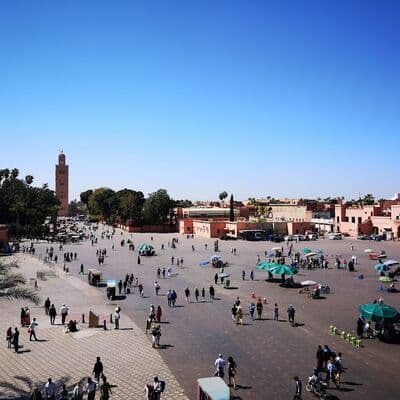
The heart of Marrakech is Jemaa el-Fna, the main square that comes alive each evening with food stalls, musicians, storytellers, snake charmers, and an energy that is unlike anywhere else on Earth. During the day, it is a more subdued affair of orange juice vendors and henna artists. But as the sun sets, the square transforms into one of the world's great public spectacles. Grab a seat at one of the rooftop cafes surrounding the square and watch the theater unfold below.
The Marrakech souks are among the most extensive in Morocco. Unlike some medinas where everything blends together, the Marrakech souks are traditionally organized by trade. You will find areas dedicated to leather goods, metalwork, carpets, spices, clothing, and more. Getting lost is inevitable and part of the experience. Every wrong turn reveals something interesting: a craftsman at work, an ornate doorway, a hidden courtyard.
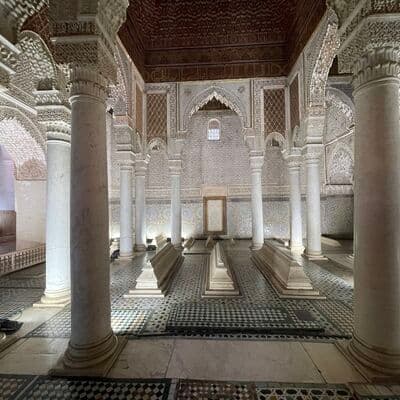
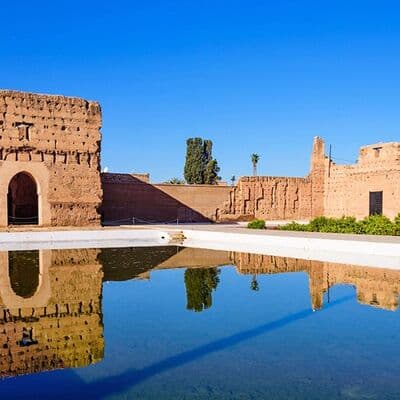
The historical monuments in Marrakech are extraordinary. Bahia Palace is a 19th-century masterpiece of Moroccan architecture, with elaborately painted wooden ceilings, gardens, and courtyards that seem to go on forever. El Badi Palace is a different experience entirely: the ruined shell of a once-magnificent structure, its empty pools and crumbling walls atmospheric and melancholy. The Saadian Tombs, rediscovered in 1917 after being sealed for centuries, contain some of the finest decorative work in the country.
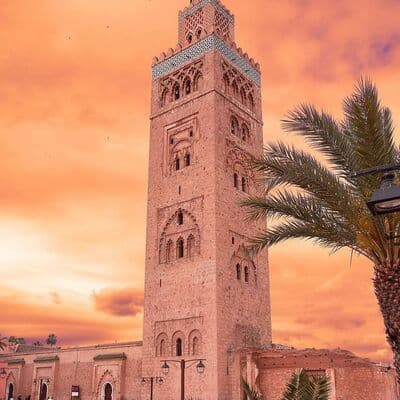
For Islamic architecture enthusiasts, Ben Youssef Madrasa is essential. This 16th-century Quranic school features stunningly intricate carved stucco, zellige tilework, and carved cedar. The Koutoubia Mosque, with its iconic minaret visible from across the city, is the spiritual heart of Marrakech (non-Muslims cannot enter, but the exterior and surrounding gardens are beautiful).
The Jardin Majorelle offers a different experience entirely. This botanical garden, created by French painter Jacques Majorelle and later restored by Yves Saint Laurent, is an oasis of calm in the chaotic city. The cobalt blue buildings, set among cacti and exotic plants from around the world, are extraordinarily photogenic. The adjacent Yves Saint Laurent Museum showcases the designer's work and his deep connection to Morocco.
Other notable Marrakech attractions include Le Jardin Secret, a beautifully restored historic garden in the medina; Dar El Bacha - Confluences, a stunning palace now housing a museum and upscale cafe; the Mellah (Jewish Quarter) with its distinct architecture and the Lazama Synagogue; the tanneries where leather is still processed using traditional methods; Dar Si Said Museum for Moroccan arts and crafts; and the Maison de la Photographie with its fascinating historical images of Morocco.
Outside the medina, the Menara Gardens and Agdal Gardens offer green space and mountain views. The Palmeraie, a vast palm grove on the outskirts of the city, contains the Musee de la Palmeraie and is popular for camel rides and quad biking.
The downsides of Marrakech are real. The hustling is more aggressive here than anywhere else in Morocco. You will be approached constantly, and some sellers can be quite pushy. The heat in summer is brutal, regularly exceeding 100F (38C). The medina can feel overwhelming, especially if you are new to this type of travel. And the tourist hordes can make popular sites feel more like theme parks than authentic cultural experiences. Despite all this, Marrakech remains essential. Just manage your expectations and be prepared for intensity.
Fez: The Medieval Medina
Fez is Morocco's spiritual and intellectual capital, home to what many consider the finest medieval medina in the world. If Marrakech is Morocco's flashy celebrity, Fez is its scholarly elder. The medina here, Fes el-Bali, is the largest car-free urban zone in the world, a UNESCO World Heritage site that has remained essentially unchanged for a thousand years.
The Fez Medina is genuinely medieval in a way that Marrakech is not. The narrow alleys, some barely shoulder-width, twist and turn without logic. Donkeys and mules are still the primary means of transporting goods. Craftspeople practice trades that have been handed down through generations. The sensory experience is overwhelming: the calls to prayer echoing from dozens of minarets, the smell of tanning leather and baking bread, the visual cacophony of goods spilling from every doorway.
The Chouara Tannery is Fez's most famous sight, a working tannery where leather is still processed using methods unchanged since medieval times. The smell is powerful (you will be offered mint to hold under your nose), but the visual spectacle of the honeycomb of dye pits, workers moving between them, and skins drying on nearby rooftops is unforgettable. Viewing is typically done from one of the surrounding leather shops, where you will face pressure to buy, but the view is worth the sales pitch.
Fez is home to extraordinary religious and educational architecture. Al-Qarawiyyin Mosque, founded in 859 CE, is often cited as the oldest continuously operating university in the world. Non-Muslims cannot enter, but you can glimpse the interior through the doors. The Bou Inania Madrasa is one of the few religious buildings in Fez open to all visitors, and its architecture is breathtaking: intricate zellige, carved stucco, and cedar wood reaching to impossible levels of detail. Al-Attarine Madrasa is smaller but equally exquisite.
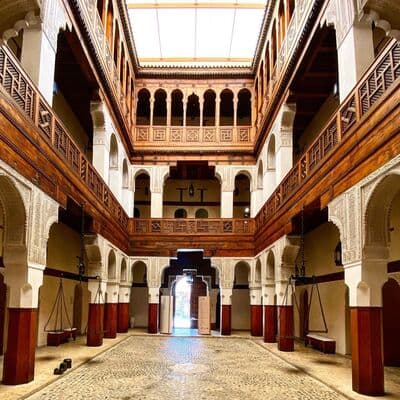
The Fondouk Nejjarine, a beautifully restored caravanserai (historic inn for traders), now houses the Nejjarine Museum of Wood Arts and Crafts. The building itself is as impressive as the collection. Nearby, Place Seffarine is the metalworkers' square, where coppersmiths hammer away at their wares much as they have for centuries.
Other Fez highlights include the Dar Batha Museum in a former palace, showcasing Moroccan arts; Jnan Sbil Gardens, a peaceful green space outside the medina walls; the Marinid Tombs on a hill overlooking the city (the tombs themselves are ruined, but the view is spectacular); Borj Nord, a fortress now housing a weapons museum with excellent views; and the ornate gates including Bab Bou Jeloud (the main entrance to the medina), Bab Ftouh, and Bab Semmarine.
Religious sites include the Mausoleum of Moulay Idriss II, the founder of Fez (non-Muslims cannot enter but can view from outside), and the Ibn Danan Synagogue in the mellah. The Royal Palace is closed to visitors, but its magnificent brass doors are worth photographing. Do not miss Dar al-Magana, a 14th-century hydraulic clock that no longer functions but remains architecturally interesting.
Fez is less tourist-oriented than Marrakech, which cuts both ways. There are fewer touts and the atmosphere is more authentically lived-in. But it also means navigation is harder, fewer people speak English, and tourist infrastructure is less developed. Getting lost in the Fez medina is guaranteed; embracing this is part of the experience. Hiring a guide, at least for your first day, is strongly recommended.
Chefchaouen: The Blue Pearl
Chefchaouen is Morocco's most photogenic destination, a small mountain town where nearly every building in the medina is painted in shades of blue. The effect is extraordinary: winding alleys that seem to glow with azure light, doors and windows picked out in deeper shades of cobalt and indigo, whitewashed details adding contrast. It is, quite simply, one of the most visually striking places I have ever visited.
The Blue Medina is the main attraction, and it rewards aimless wandering. Unlike the medinas of Fez and Marrakech, Chefchaouen's medina is compact and manageable. You can explore it thoroughly in a day without getting hopelessly lost. The central Plaza Uta el-Hammam is the social heart of the town, surrounded by cafes where you can sit and watch life unfold.
There are various theories about why Chefchaouen is blue. Some say Jewish refugees who settled here in the 1930s painted the buildings blue to symbolize heaven or the sky. Others say it keeps the buildings cool or repels mosquitoes. Whatever the reason, the town has embraced the blue identity completely, and residents continue the tradition.
Beyond the medina, Chefchaouen offers excellent hiking opportunities in the surrounding Rif Mountains. The Spanish Mosque, a short hike above town, offers the classic panoramic view of Chefchaouen against the mountain backdrop. It is particularly beautiful at sunset. The Akchour Waterfalls, about an hour from town, make for a popular day trip with swimming opportunities in natural pools.
The charming Callejon El Asri is one of the most photographed streets in the medina, a narrow alley with steps painted in multicolored stripes that has become iconic on social media.
Chefchaouen is also known as a center of cannabis cultivation. The surrounding Rif Mountains are Morocco's primary growing region, and you will likely be offered hashish. This is technically illegal, though enforcement is lax. I am not recommending anything, just noting the reality.
The downsides of Chefchaouen are few. It is relatively remote, requiring a 4-5 hour journey from Fez or a similar trip from Tangier. It has become quite touristy in recent years, with all the accompanying shops selling blue-themed souvenirs. And the blue paint, charming as it is, can feel somewhat artificial after a while, a town performing its identity for visitors. Despite this, Chefchaouen remains a highlight of any Morocco trip, offering a completely different atmosphere from the larger cities.
Rabat: The Capital City
Rabat is Morocco's capital and one of its most pleasant cities to visit, yet it is often overlooked by tourists rushing between Marrakech and Fez. This is a mistake. Rabat offers a more relaxed, less touristy experience than the imperial cities, with excellent historical sites, a beautiful coastal setting, and a sophisticated urban atmosphere.
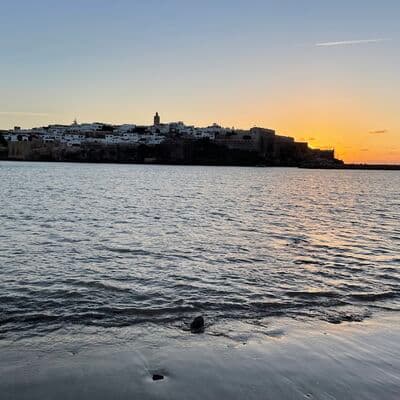
The Kasbah of the Udayas is Rabat's most picturesque quarter, a fortified medina at the mouth of the Bou Regreg river. The narrow blue-and-white streets are reminiscent of Chefchaouen but feel more authentic and less performative. Within the kasbah, the Andalusian Gardens offer a peaceful oasis with views over the river and ocean.
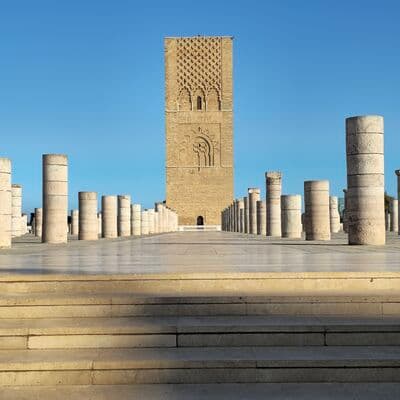
Hassan Tower is Rabat's most iconic monument, the unfinished minaret of a mosque begun in the 12th century. The tower stands 44 meters tall; the plan was for it to reach over 80 meters, which would have made it the tallest minaret in the world. The sultan died, work stopped, and the tower has stood incomplete ever since. The surrounding field of columns marks where the mosque would have been. Nearby, the Mausoleum of Mohammed V is a stunning piece of modern Moroccan architecture, housing the tombs of the late king and his sons.
The Chellah Necropolis is one of Morocco's most evocative sites, a ruined Roman city later used as a royal necropolis by medieval Moroccan sultans. The combination of Roman columns, Islamic tombs, storks nesting in crumbling towers, and lush gardens creates an atmospheric time capsule. It is one of my favorite places in Morocco.
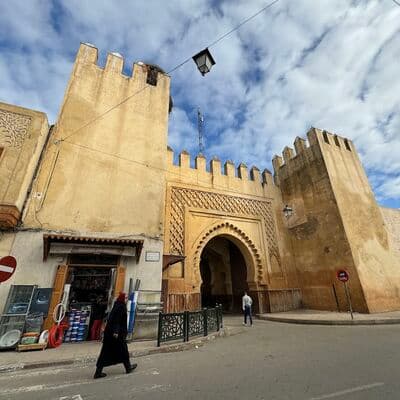
Rabat's medina is small and manageable, with far less hassle than Marrakech or Fez. Rue des Consuls is the main commercial street, lined with craft shops. The medina gates, including Bab el-Had and Bab Rouah, are impressive examples of Almohad architecture.
The Mohammed VI Museum of Modern and Contemporary Art houses an excellent collection of Moroccan art, while the Archaeological Museum contains artifacts from Morocco's pre-Islamic past. The Royal Palace is not open to visitors, but its gates are worth seeing.
For recreation, Rabat Beach is right in the city, though it can be crowded. Temara Beach and Harhoura Beach to the south are alternatives. The Bouregreg Marina on the river is a modern development with restaurants and cafes. The Jardin d'Essais Botaniques and Rabat Zoo offer family-friendly options.
Rabat is a working capital city, home to embassies, government ministries, and a large professional class. This gives it a more modern, cosmopolitan feel than other Moroccan cities. French is widely spoken, and the city feels more European than other destinations. For some travelers, this is a drawback; for others, it is a welcome respite from the intensity of the medinas.
Casablanca: The Modern Metropolis
Casablanca is Morocco's largest city, its economic capital, and often the point of entry for international travelers. It is also, frankly, the least charming of the major destinations. This is a working city, with traffic, pollution, and urban sprawl. Most travelers pass through quickly, which is probably the right call. But Casablanca does have a few attractions worth your time.
The Hassan II Mosque is the reason to visit Casablanca. This massive structure, completed in 1993, is one of the largest mosques in the world and the only one in Morocco that non-Muslims can enter (via guided tour only). The scale is staggering: the minaret reaches 210 meters, the prayer hall holds 25,000 worshippers, and another 80,000 can pray on the outdoor plaza. The craftsmanship is extraordinary, with hand-carved stone and wood, zellige tilework, and a retractable roof over the main hall. Built on a promontory over the Atlantic, the setting is dramatic. Do not miss this.
The Art Deco Downtown area contains some remarkable 1930s architecture from the French colonial period. The blend of European Art Deco with Moroccan motifs created a unique style. A walking tour of this area reveals the city's layered history.
The old medina is small and somewhat run-down compared to other Moroccan medinas, but it offers a glimpse of pre-colonial Casablanca. The Corniche is the beachfront promenade, lined with restaurants and clubs, popular with locals especially on weekends.
For film buffs, Rick's Cafe is a recreation of the bar from the classic 1942 film Casablanca (which was actually filmed entirely in Hollywood). The food and atmosphere are decent, and the film memorabilia is extensive. It is touristy but fun.
Unless you have a particular interest in modernist architecture or need to fly in or out, I would suggest limiting your time in Casablanca. A day is sufficient to see the Hassan II Mosque and get a sense of the city before moving on to more compelling destinations.
Merzouga and the Sahara Desert
Merzouga is a small village on the edge of the Sahara Desert, the gateway to the Erg Chebbi dunes. This is where most travelers come to experience Morocco's desert, and it delivers on the promise of that experience.
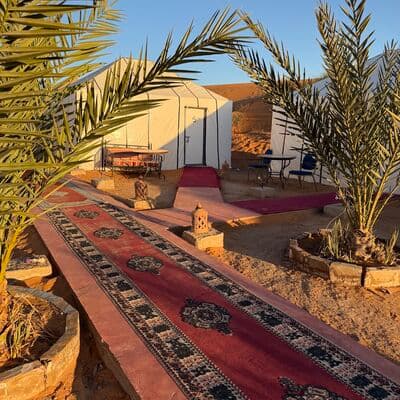
The Erg Chebbi dunes are massive, rising up to 150 meters (nearly 500 feet) in waves of orange and gold sand. They are not the largest dunes in the Sahara, but they are among the most accessible, just a short camel ride from the edge of the village. The landscape is genuinely otherworldly, especially at sunrise and sunset when the light paints the sand in impossible colors.
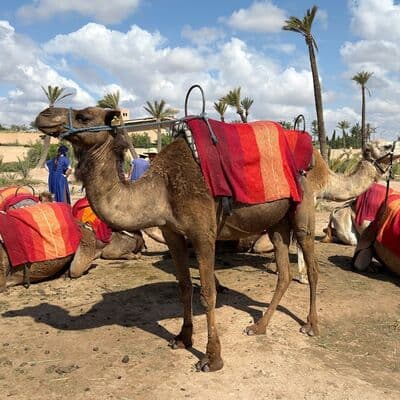
The quintessential Merzouga experience is a camel trek into the dunes to spend a night at a desert camp. Camps range from basic Berber tents to luxury glamping experiences with private bathrooms and gourmet meals. Either way, you will ride a camel into the dunes (anywhere from one to several hours depending on the camp location), watch the sunset from a dune peak, have dinner under the stars, sleep in the silence of the desert, and watch the sunrise the next morning. It is one of those travel experiences that lives up to the hype.
Stargazing in the desert is exceptional. With no light pollution and clear skies, the Milky Way is visible to the naked eye. Many camps offer telescopes or guided stargazing sessions. I have never seen stars like I saw them in the Sahara.
Getting to Merzouga requires commitment. It is approximately 8-10 hours from Marrakech by road, typically broken up with stops at attractions along the way (Ait Ben Haddou, Ouarzazate, the Dades and Todra Gorges). Most travelers book a multi-day tour from Marrakech that includes transportation, accommodation, and the desert camp experience. It is possible to reach Merzouga independently, but logistics are complicated.
The desert experience is best avoided in the peak summer months (June-August) when temperatures can exceed 50C (122F). Spring and fall are ideal, with warm days and cool nights. Winter can be surprisingly cold at night but offers pleasant daytime temperatures.
Other Notable Destinations
Beyond the major destinations described above, Morocco offers numerous other worthy stops:
Essaouira is a laid-back coastal town on the Atlantic, known for its Portuguese fortifications, creative atmosphere, and excellent windsurfing. It is a popular escape from Marrakech, about 2.5 hours away.
Tangier is the gateway to Africa from Europe, a cosmopolitan port city with a storied history of artists, writers, and spies. It is experiencing a renaissance after years of decline.
Meknes is one of the four imperial cities, often overlooked but containing impressive monuments from its time as Morocco's capital under Sultan Moulay Ismail.
Volubilis is Morocco's best-preserved Roman ruins, a UNESCO World Heritage site near Meknes with impressive mosaics and a dramatic setting.
The Atlas Mountains offer trekking opportunities ranging from day hikes to multi-day expeditions. Imlil is the gateway to Toubkal, North Africa's highest peak.
The Draa Valley and Dades Valley contain some of Morocco's most dramatic scenery: palm oases, fortified kasbahs, and carved rock formations.
Ait Ben Haddou is a UNESCO-listed ksar (fortified village) that has served as a backdrop for countless films. It is a common stop on routes between Marrakech and the desert.
Unique Features of Morocco
Morocco possesses characteristics found nowhere else on Earth. Understanding these unique features enriches any visit and helps explain why this country captures the imagination so completely.
The Imperial Cities
Morocco has not one but four imperial cities, each of which served at various times as the national capital. Marrakech, Fez, Meknes, and Rabat each developed distinct characters during their periods of prominence, and each retains remarkable architectural and cultural heritage from those eras.
Fez, founded in the 9th century, was the cultural and intellectual capital of the western Islamic world. Its medina remains the best-preserved medieval city anywhere. Marrakech, founded in the 11th century by the Almoravids, was the gateway to sub-Saharan Africa and retains a distinctly African energy. Meknes had its golden age under Moulay Ismail in the 17th century, who attempted to build a Moroccan Versailles. Rabat became capital under the French protectorate and remains the administrative center today.
Visiting all four imperial cities on a single trip is ambitious but possible. Each offers a different perspective on Moroccan history and culture, and the contrasts between them are illuminating.
The Atlas Mountains
The Atlas Mountains run diagonally across Morocco, creating a dramatic spine that divides the fertile coastal plains from the Sahara Desert. The range actually comprises three distinct chains: the High Atlas, the Middle Atlas, and the Anti-Atlas, each with its own character.
The High Atlas contains the most dramatic peaks, including Toubkal at 4,167 meters (13,671 feet), the highest point in North Africa. These mountains are genuinely impressive, with snow-capped peaks visible from Marrakech much of the year. Berber villages cling to the valleys, terraced fields climbing impossibly steep slopes. The culture in these mountain communities remains traditional, with many people still living much as their ancestors did.
Trekking in the High Atlas ranges from day hikes accessible to anyone with reasonable fitness to serious multi-day expeditions requiring proper equipment and guides. The Toubkal ascent is a challenging but non-technical climb that draws thousands of hikers annually. Less ambitious options include exploring the valleys around Imlil, visiting Berber villages, and enjoying the mountain scenery.
The Middle Atlas, north of the High Atlas, is greener and more forested. Cedar forests here are home to Barbary macaques, the only monkey native to Africa north of the Sahara. The region sees fewer tourists but offers pleasant hiking and a glimpse of rural Morocco.
The Anti-Atlas, in the south, is older, more eroded, and more dramatic in its rock formations. The landscapes here are stark and beautiful, particularly around the Ameln Valley and Tafraoute.
Atlantic and Mediterranean Coastline
Morocco possesses both Atlantic and Mediterranean coastlines, totaling over 3,000 kilometers of coast. This geographic blessing provides remarkable variety: wild, windswept Atlantic beaches popular with surfers, calm Mediterranean coves, bustling port cities, and laid-back fishing villages.
The Atlantic coast stretches from Tangier in the north to the Western Sahara in the south. Essaouira is the most popular beach destination, with consistent wind that makes it excellent for kitesurfing and windsurfing. Agadir is the major resort center, with long sandy beaches and package-tour infrastructure. Taghazout has emerged as a surf mecca, with excellent breaks and a growing backpacker scene. Legzira is famous for its dramatic red rock arches (though one collapsed in 2016).
The Mediterranean coast is shorter but contains beautiful coves and beaches around Al Hoceima and the Spanish enclaves of Ceuta and Melilla. The Rif Mountains meet the sea here, creating dramatic scenery.
Beach culture in Morocco differs from Western norms. Outside designated tourist beaches, conservative dress is expected, especially for women. Topless bathing is not acceptable. On tourist beaches like those in Agadir, norms are more relaxed but still more conservative than European beaches.
Berber Heritage
The Berbers, or Amazigh as they prefer to be called, are the indigenous people of North Africa. Their presence in Morocco predates Arab arrival by millennia, and their culture remains central to Moroccan identity today. Approximately 40% of Moroccans speak a Berber language as their first language, and Berber cultural practices influence everything from cuisine to music to architecture.
Berber culture is most visible in the rural areas: the mountain villages of the Atlas, the desert communities of the south, the Rif Mountains of the north. Here you will find traditional dress, Berber languages (Tamazight, Tashelhit, Tarifit), and customs that have survived centuries of outside influence.
In recent decades, there has been a cultural revival and official recognition of Berber identity. Tamazight was recognized as an official language alongside Arabic in 2011. The Berber New Year (Yennayer, in mid-January) is now a national holiday. Museums and cultural centers dedicated to Berber heritage have opened across the country.
For travelers, engaging with Berber culture adds depth to any Morocco experience. Staying in a Berber village homestay, trekking with Berber guides, visiting Berber markets (souks), and learning about Berber crafts (carpets, pottery, jewelry) all provide windows into this ancient culture.
Architectural Heritage
Moroccan architecture is among the most distinctive and beautiful in the world. Several elements combine to create the uniquely Moroccan aesthetic:
Zellige is the geometric tilework that covers surfaces throughout Morocco. Small pieces of glazed terracotta are hand-cut into precise shapes and assembled into intricate geometric patterns. The results are mesmerizing, with mathematical precision creating kaleidoscopic effects. The best examples are found in madrasas, palaces, and mosques, but zellige appears everywhere from fountains to doorways to private homes.
Carved stucco (known as tadelakt when polished) adorns walls and ceilings with intricate geometric and floral patterns. Master craftsmen (maalems) spend years learning the techniques, which are passed down through generations. The finest examples, like those in the Bou Inania Madrasa in Fez, achieve almost unbelievable levels of detail.
Cedar wood carving features on doors, ceilings, and screens throughout Morocco. The elaborate muqarnas (honeycomb) ceilings in palaces and madrasas are particularly impressive, with thousands of carved wooden elements assembled into three-dimensional geometric patterns.
Riads are the traditional urban houses of Morocco, built around a central courtyard. The exterior walls are plain, often crumbling, revealing nothing of the interior. But step through the door and you enter a private paradise: a courtyard with a fountain, plants, perhaps a tree, surrounded by rooms on multiple levels. Many riads have been converted to guesthouses, offering travelers the chance to experience this unique domestic architecture.
Kasbahs and ksour are the fortified structures of the south, built from pise (rammed earth) that seems to grow from the landscape. These buildings, which served as family compounds, trading posts, and defensive structures, are unique to Morocco and the surrounding region. Ait Ben Haddou is the most famous example, but countless others dot the valleys south of the Atlas.
The Souks
Moroccan souks (markets) are legendary, and for good reason. These are not sanitized shopping experiences but living commercial ecosystems that have operated for centuries. The sensory experience is overwhelming: the colors of spices and textiles, the smell of leather and cedar and spices, the sounds of haggling and hammering and calling.
Traditional souks are organized by trade. The copper workers occupy one area, the carpet sellers another, the spice merchants another. This system allowed guilds to maintain quality standards and made it easier for buyers to compare offerings. While modern commerce has eroded this organization somewhat, the principle remains visible in most medinas.
Bargaining is expected and essential. Initial prices quoted to tourists are often inflated by 100-300%. The negotiation process is part of the cultural experience, though it can be exhausting. General advice: know approximately what you should pay (research beforehand), start at roughly one-third the asking price, be prepared to walk away, and remember that a successful negotiation is one where both parties feel satisfied.
Beyond the commercial aspect, souks are social spaces where community life unfolds. Craftsmen work in tiny workshops, friends chat over mint tea, children play in the narrow alleys. Spending time simply observing, without buying pressure, reveals the human dimension that makes these markets so compelling.
When to Visit Morocco
Morocco can be visited year-round, but timing your trip appropriately makes a significant difference in your experience. The country spans multiple climate zones, from Mediterranean coast to snow-capped mountains to Sahara Desert, so conditions vary dramatically depending on where you are.
Best Times to Visit
March through May (Spring) is widely considered the ideal time to visit Morocco. Temperatures are warm but not oppressive, ranging from the mid-60s to low 80s Fahrenheit (18-28C) in most destinations. The landscape is at its greenest, with wildflowers blooming in the mountains and countryside. The Sahara is comfortably warm during the day and cool at night. This is high season for tourism, so expect crowds and higher prices at popular destinations, but the conditions justify the popularity.
September through November (Fall) is equally excellent, with similar temperatures to spring after the summer heat has broken. October is particularly good, with warm days, comfortable nights, and smaller crowds than spring. The desert is perfect during this season, with warm days and pleasantly cool nights. November can bring occasional rain but generally remains pleasant.
Seasons to Consider Carefully
June through August (Summer) brings extreme heat to much of Morocco. Marrakech and the interior regularly exceed 100F (38C), sometimes reaching 115F (46C). The Sahara is essentially off-limits, with daytime temperatures that can exceed 120F (50C). Even Fez, at higher elevation, becomes uncomfortably hot. That said, summer is the best time for coastal destinations: Essaouira, Tangier, and the northern Mediterranean coast remain pleasant thanks to ocean breezes. Summer is also ideal for high-altitude trekking in the Atlas Mountains, where temperatures are moderate. If you visit in summer, plan your itinerary around the coast and mountains, save sightseeing for morning and evening, and embrace the afternoon siesta.
December through February (Winter) is low season for tourism, with the advantages of smaller crowds and lower prices. Weather varies significantly by location. Coastal cities remain mild, with temperatures in the 50s and 60s F (12-18C). Marrakech is pleasant during the day but can be cold at night. The Atlas Mountains receive snow, with ski resorts operating at higher elevations. The Sahara is comfortable during the day but can be genuinely cold at night, with temperatures occasionally dropping near freezing. Rain is possible, particularly in the north. Winter can be a good time to visit if you are flexible about activities and prepared for variable conditions.
Ramadan Considerations
Ramadan, the Islamic holy month of fasting, significantly affects travel in Morocco. The dates shift each year (moving approximately 11 days earlier annually based on the lunar calendar). During Ramadan, Muslims fast from dawn to sunset, abstaining from food, drink, and smoking. Many restaurants and cafes close during daylight hours, or serve tourists discreetly. The pace of life slows during the day as people conserve energy. Then, after sunset (iftar), the cities come alive with celebration, special foods, and festive atmosphere.
Traveling during Ramadan requires adjustment but offers unique experiences. The iftar meals, breaking the fast at sunset, are special occasions that you may be invited to share. The evening atmosphere in the medinas is magical. However, some tourist services operate on reduced schedules, alcohol is less available, and the general pace is slower. Whether to visit during Ramadan depends on your flexibility and interest in experiencing this important aspect of Moroccan culture.
Major Holidays and Events
Beyond Ramadan, several other dates affect travel:
Eid al-Fitr (end of Ramadan) and Eid al-Adha (Feast of Sacrifice) are major holidays when many businesses close and transportation is heavily booked as Moroccans travel to visit family.
The Marrakech Popular Arts Festival (July) and Fes Festival of World Sacred Music (June) are cultural highlights worth planning around if your dates are flexible.
New Year's Eve is celebrated in major cities, and accommodations book up quickly.
For checking exact dates of Islamic holidays (which shift annually), consult an Islamic calendar for your travel year.
How to Get There
Morocco is well-connected to North America, Europe, and beyond, with multiple entry points depending on your itinerary and budget.
From the United States
Royal Air Maroc operates the only nonstop flights between the US and Morocco, connecting New York JFK to Casablanca (CMN). Flight time is approximately 7 hours. From Casablanca, connections are available to Marrakech (45 minutes), Fez (50 minutes), and other Moroccan cities.
For travelers from other US cities, one-stop connections via European hubs are typically the most practical option. Paris, Madrid, London, Lisbon, and Amsterdam all have frequent service to multiple Moroccan cities. A routing like Los Angeles-Paris-Marrakech or Chicago-London-Casablanca is common. Total travel time is typically 14-18 hours depending on layover duration.
Budget carriers like Ryanair and easyJet serve Morocco from European cities, offering potential savings if you are already in Europe or willing to position via a transatlantic flight to a European hub.
Approximate round-trip fares from major US cities to Morocco (economy class, varies significantly by season and booking time): New York $600-1000, Los Angeles $800-1200, Chicago $700-1100. Booking 2-3 months ahead typically yields the best prices.
From the United Kingdom
The UK has excellent connections to Morocco. British Airways, Royal Air Maroc, and budget carriers including Ryanair, easyJet, and Jet2 serve multiple Moroccan destinations from London and other UK airports.
Nonstop flights are available from London to Marrakech (3.5 hours), Casablanca (3 hours), Agadir (3.5 hours), Fez (3 hours), and Tangier (2.5 hours). Manchester, Birmingham, and other regional airports also have service to Morocco, primarily via Ryanair and Jet2.
The competition on UK-Morocco routes means fares can be remarkably cheap. Off-season round trips from London to Marrakech can be found for under 50 GBP on budget carriers (though baggage fees add up). Expect to pay 150-300 GBP for reasonable fares in shoulder and high season.
From Australia and Canada
Australia has no direct flights to Morocco. The most common routing is via the Middle East (Dubai, Doha, Abu Dhabi) or via Europe (London, Paris, Frankfurt). Total travel time from Sydney or Melbourne is typically 22-28 hours including layovers. Emirates, Qatar Airways, and Etihad offer convenient connections via their hubs, while European carriers provide alternatives via their European hubs.
From Canada, options mirror those from the US. Toronto has the most convenient connections, with one-stop routings via European hubs (Paris, London, Amsterdam) or via New York to connect with Royal Air Maroc's JFK-Casablanca service. From Vancouver, connections via Europe or through US hubs are standard.
Entry Points Strategy
Consider which Moroccan airport best suits your itinerary:
Casablanca Mohammed V (CMN) is the main international hub with the most flight options. Use this if you are visiting Casablanca, if you want to start in Rabat (45 minutes away), or if it offers significantly better fares.
Marrakech Menara (RAK) makes sense if Marrakech is your primary destination or starting point. Many travelers fly into Marrakech and out of a different city.
Fez Saiss (FEZ) is convenient if you are focusing on northern Morocco (Fez, Chefchaouen, Meknes, Volubilis).
Tangier Ibn Battouta (TNG) is an option if you are arriving from Spain by ferry or focusing on northern Morocco.
Agadir Al Massira (AGA) serves the beach resort crowd.
An open-jaw ticket (flying into one city and out of another) often makes logistical sense and can cost the same as a round-trip. Marrakech in, Fez out (or vice versa) is a popular combination that avoids backtracking.
Visa Requirements
Citizens of the United States, United Kingdom, Australia, and Canada do not need a visa for tourist visits to Morocco. You will receive a stamp on arrival permitting a stay of up to 90 days. Your passport must be valid for at least 6 months beyond your planned departure date.
The entry process is straightforward. Fill out an arrival card on the plane or at the airport, present it with your passport at immigration, answer a few questions about your trip, receive your stamp, and proceed. Wait times vary but are typically 15-45 minutes at major airports.
By Sea from Europe
Ferry services connect Morocco to Spain, with multiple daily crossings. The main routes are:
Algeciras to Tangier Med (1 hour by fast ferry, 2.5 hours by regular ferry)
Algeciras to Ceuta (Spanish enclave on Moroccan coast, then land border crossing to Morocco)
Tarifa to Tangier (1 hour, foot passengers only)
Ferries offer a romantic arrival and can be practical if you are traveling through Spain or want to bring a vehicle. Companies include FRS, Balearia, and Trasmediterranea. Book in advance during peak season.
Getting Around Morocco
Morocco has reasonable transportation infrastructure, though getting around requires more planning than in Western countries. Understanding your options helps you build a realistic itinerary.
Trains
Morocco's train network, operated by ONCF, is the best in Africa and genuinely pleasant. High-speed and regular trains connect the main cities along the coast and through the interior. The recently opened Al Boraq high-speed line connects Tangier to Casablanca in just over 2 hours, with stops in Kenitra and Rabat.
Key routes include:
- Tangier - Rabat - Casablanca (2 hours Tangier-Casa on high-speed, 4 hours on regular)
- Casablanca - Marrakech (2.5-3 hours)
- Casablanca - Fez (3.5-4 hours)
- Fez - Meknes (45 minutes)
First class is comfortable and affordable by Western standards. Second class is perfectly acceptable for shorter journeys. Trains run relatively on schedule, though delays do occur. Purchase tickets at stations or online via the ONCF website. For popular routes at peak times, booking a day or two ahead is advisable.
The train network does not reach several major destinations including Chefchaouen, Essaouira, or anywhere south of Marrakech (including the Sahara). For these areas, you will need buses, grands taxis, or private transport.
Buses
Buses reach everywhere in Morocco that trains do not. The two main companies are CTM and Supratours, both offering comfortable, air-conditioned coaches with assigned seats. Supratours is affiliated with the train company and often coordinates schedules.
CTM and Supratours serve routes including:
- Marrakech - Essaouira (3 hours)
- Fez - Chefchaouen (4-5 hours)
- Marrakech - Ouarzazate (4 hours)
- Various cities to Merzouga/desert region
Tickets can be purchased at bus stations, online (for CTM), or at partner hotels. Book ahead for popular routes. Prices are very reasonable: the 3-hour Marrakech-Essaouira journey costs around 80 MAD (approximately $8 USD).
Local buses (not CTM/Supratours) also exist and are significantly cheaper but less comfortable and reliable. These serve smaller towns and rural areas.
Grands Taxis
Grands taxis are shared Mercedes sedans (usually old, white Mercedes 240Ds that refuse to die) that operate on fixed routes between cities. They depart when full (six passengers, though this can be negotiated). This is how most Moroccans travel between cities without their own vehicles.
Grands taxis are faster than buses and depart more frequently, but comfort varies. You can buy multiple seats for more space. Useful for routes not well-served by buses, like Fez-Chefchaouen or short hops like Fez-Meknes.
Find grands taxis at dedicated taxi stands (not city taxi ranks). Ask locals or your hotel for directions to the appropriate stand for your destination.
Petits Taxis
Petits taxis are small city taxis for travel within urban areas. They are required to use meters (compteurs), though some drivers resist this. Insist on the meter or agree on a price before departing. Rates are very cheap by Western standards: a cross-city journey rarely exceeds 30-40 MAD ($3-4 USD).
Each city has different colored petits taxis: red in Fez, beige in Marrakech, blue in Rabat. They cannot take you outside city limits; for that you need grands taxis or other transport.
Rental Cars
Renting a car opens up Morocco significantly, allowing access to remote areas and flexibility in scheduling. International companies (Hertz, Avis, Europcar) and local agencies operate at airports and major cities. Rates are reasonable, starting around $25-40 USD per day for a basic sedan.
However, driving in Morocco comes with challenges:
Urban driving is chaotic. Moroccan drivers are aggressive, lane discipline is optional, and navigation in medina areas is effectively impossible (streets are too narrow and often pedestrian-only).
Rural roads vary from excellent (the toll autoroutes) to challenging (mountain passes) to genuinely rough (pistes/unpaved roads in the south). A standard sedan handles main routes fine, but for southern desert areas or mountain exploration, consider a 4x4.
Parking in cities is typically handled by informal guardians (gardiens) who watch your car for a few dirhams. Not tipping them invites potential issues.
Police checkpoints are common, especially on highways. Have your documents ready. Fines for minor infractions (real or alleged) sometimes seem targeted at tourists.
Despite these challenges, having a car is liberating for exploring the Atlas Mountains, the valleys of the south, coastal areas, and anywhere off the main tourist circuit. Consider renting for part of your trip rather than the entire thing: use trains and buses between major cities, then rent a car for a few days to explore a specific region.
Organized Tours
Many travelers use organized tours for at least part of their Morocco trip, particularly for the Sahara Desert. A typical 3-day/2-night tour from Marrakech to Merzouga includes transportation, accommodation, a camel trek, and a night in a desert camp. Prices start around $100-150 USD per person for basic tours and go up significantly for luxury options.
Tours handle the logistics (the Merzouga area is complicated to reach independently) and provide context through guides. The tradeoff is less flexibility and traveling in a group. Private tours are available at higher cost.
For the desert experience specifically, I recommend at least a 3-day tour rather than the 2-day options. The 2-day tours involve exhausting amounts of driving with limited time in the desert. With 3 days, you can stop at interesting points along the route (Ait Ben Haddou, the Dades Gorge) and spend more time enjoying the desert.
Domestic Flights
Royal Air Maroc operates domestic flights between major cities. This is the fastest but most expensive option. Useful if you are short on time and need to cover large distances. Casablanca-Marrakech, Casablanca-Ouarzazate, and Casablanca-Laayoune are among the routes offered.
Cultural Code
Morocco is a Muslim country with distinct cultural expectations. Understanding and respecting these norms enriches your experience and smooths your interactions. None of this requires compromising your values, but it does require awareness and adaptation.
Dress Code
Morocco is more conservative than Western countries but less restrictive than some Muslim nations. The appropriate dress code varies by context:
In cities and tourist areas, Western dress is normal. Men can wear shorts and t-shirts. Women can wear pants, skirts (to the knee or below), and modest tops. Shoulders should generally be covered. Think more conservative than you would dress at home, but you do not need to cover completely.
In rural areas and traditional neighborhoods, more conservative dress is appropriate. For women, loose-fitting clothes that cover arms and legs are respectful. Men should wear long pants rather than shorts in conservative areas.
At beaches designated for tourists (Agadir, some resort areas), swimwear is normal. At public beaches frequented by Moroccans, women often swim fully clothed. Bikinis outside tourist zones attract unwanted attention.
When visiting religious sites (from the outside, since most mosques do not admit non-Muslims), cover up regardless of location. Shoulders and knees should be covered, and women may want a scarf to cover hair.
Interaction Between Genders
Traditional Moroccan society maintains more separation between genders than Western cultures. Public displays of affection are frowned upon for both Moroccan and foreign couples. Handshakes between men and women are not universal; let the Moroccan person initiate (or not).
Solo female travelers face particular considerations. Morocco is generally safe but can be uncomfortable. Catcalling and unwanted attention are common, particularly in tourist areas. This rarely escalates beyond annoyance, but it is exhausting. Strategies include: traveling with purpose rather than wandering aimlessly, ignoring comments rather than engaging, dressing conservatively, and considering a wedding ring (real or fake). Many women travel solo in Morocco successfully, but it requires more vigilance than some other destinations.
LGBTQ travelers should be aware that homosexuality is technically illegal in Morocco. In practice, the law is rarely enforced against tourists, but discretion is essential. Avoid public displays of affection and keep relationships private. Major cities have gay scenes, but they operate discreetly.
Religious Observance
Islam shapes daily life in Morocco. The call to prayer sounds five times daily from mosques throughout the country. Non-Muslims cannot enter mosques, with the notable exception of the Hassan II Mosque in Casablanca. You can often glimpse interiors through open doors.
Friday is the Muslim holy day. Many businesses close around midday for Friday prayers. Plan accordingly.
During Ramadan (see When to Visit section), daylight fasting affects food availability and general pace of life. While tourists are not expected to fast, eating, drinking, or smoking in public during fasting hours is disrespectful.
Showing the soles of your feet or pointing feet at people is considered rude. Using your left hand for eating or passing things is also traditionally improper (the left hand is associated with bathroom hygiene).
Photography
Morocco is photogenic, and Moroccans have mixed feelings about cameras. Landscapes, architecture, and general street scenes are fine. Photographing individuals requires sensitivity.
Always ask permission before photographing people, especially in more traditional areas. Some people are happy to pose; others will decline. Respect refusals gracefully.
Some people (particularly in tourist areas) expect payment for being photographed. This includes snake charmers, water sellers in traditional dress, henna artists, and others who essentially offer photography as a service. Negotiate the price before taking photos to avoid disputes.
At markets, vendors may object to having their stalls photographed, viewing it as commercial exploitation without purchase. Ask first or simply buy something small.
Hospitality and Mint Tea
Moroccan hospitality is legendary and genuine. You may be invited into homes, offered tea, and treated with remarkable generosity by complete strangers. These invitations are typically sincere, and accepting them (when you feel comfortable) leads to memorable experiences.
Mint tea is the social lubricant of Morocco. Offering and sharing tea is an expression of hospitality and friendship. The tea is sweet (very sweet, with large quantities of sugar) and served with ceremony: poured from height into small glasses to create a slight foam. Refusing tea is mildly rude, though you can certainly decline refills.
In commercial contexts (shops, tours), tea will be offered as part of the sales process. This does not obligate you to buy, but it does create a social debt that makes walking away harder. Accept the tea, enjoy the hospitality, but feel free to decline purchases if you are not interested.
Bargaining
Haggling over prices is expected in souks, markets, and many shops. Fixed prices exist in modern stores, supermarkets, and some boutiques (usually indicated by price tags). Everywhere else, the first price quoted is the beginning of a negotiation.
General guidelines: Research approximate prices beforehand for major purchases. Start at 30-50% of the asking price for souvenirs and crafts. Be prepared to walk away; this often produces the best prices. Stay friendly and view the process as cultural exchange rather than combat. A successful negotiation leaves both parties satisfied.
Do not bargain for food at restaurants with posted prices, for services with fixed rates (train tickets, museum entry), or in situations where bargaining is clearly inappropriate. When in doubt, ask if the price is fixed.
Tipping
Tipping (pourboire in French) is expected in Morocco across many situations:
Restaurants: 10-15% for good service if service charge is not included.
Hotels: 20-50 MAD per day for housekeeping, 10-20 MAD for porters.
Guides: 100-200 MAD per day for city guides, more for multi-day tours.
Guardians: 5-10 MAD for anyone who watches your car, shows you a bathroom, or provides small services.
Petits taxis: Round up to the nearest 5 MAD.
Have small bills and coins available. The constant tipping can feel excessive to Western visitors, but labor costs are low in Morocco, and tips are genuine supplements to income.
Safety in Morocco
Morocco is generally a safe destination for travelers. Violent crime against tourists is rare. The most common issues are scams, petty theft, and harassment rather than physical danger. Taking reasonable precautions allows you to travel with confidence.
Common Scams and How to Avoid Them
The most frustrating aspect of traveling in Morocco, particularly in Marrakech and Fez, is the constant low-level hustling. While rarely dangerous, it can be exhausting. Common scenarios include:
Unwanted guides: Someone offers to help you find your destination, leads you there (or somewhere else entirely), and demands payment. Prevention: Be firm in refusing assistance, use GPS or paper maps, hire official guides if you want guidance.
Shop steering: A friendly local strikes up conversation, eventually leading you to a friend's shop where you face high-pressure sales tactics. Prevention: Be skeptical of overly friendly strangers, especially near tourist areas.
Direction misdirection: You ask for directions and are deliberately sent the wrong way to increase your dependence on local help. Prevention: Ask multiple people, use GPS, or ask shopkeepers who are less likely to be involved.
Taxi scams: Driver claims meter is broken, takes a long route, or switches bills when you pay. Prevention: Insist on the meter, have small bills, agree on price before departing if meter is genuinely broken.
Quality deception: Items sold as genuine leather, silver, or natural materials turn out to be synthetic. Prevention: Know what genuine items look like, buy from reputable shops, assume you are getting what you pay for.
The key is to remain skeptical of unsolicited assistance, keep your sense of humor, and remember that walking away is always an option.
Petty Crime
Pickpocketing and bag snatching occur, particularly in crowded medinas and on public transport. Standard urban precautions apply: carry minimal cash, use money belts or hidden pouches for valuables, keep bags close and closed, be especially vigilant in crowded situations.
Scooter-based bag snatching happens occasionally in cities. Carry bags on the side away from the street, or use a cross-body bag that cannot be easily grabbed.
Do not leave valuables in parked cars. Use hotel safes for passports, large amounts of cash, and expensive items you are not carrying.
Solo Female Travelers
Morocco presents specific challenges for women traveling alone. Sexual harassment is common, ranging from catcalling and comments to following and occasional groping. Physical danger is relatively rare, but the constant attention is wearing.
Strategies that help: Dress conservatively (this does not eliminate harassment but may reduce it). Project confidence and purpose. Ignore comments rather than engaging. Walk away from uncomfortable situations. Consider hiring a guide, at least initially, for navigation. Stay in riads or hotels with good security. Connect with other travelers, especially other women who can share experiences and advice.
Many women travel solo in Morocco and have wonderful experiences. But it requires more energy and vigilance than some destinations. Be realistic about what you are signing up for.
Drugs
Cannabis (kif) is widely cultivated in the Rif Mountains, and hashish is available throughout Morocco. Despite this prevalence, drug possession is illegal and carries potential prison sentences. Tourists are generally offered hashish rather than targeted for enforcement, but getting caught creates serious problems.
If you choose to partake (I am not recommending anything), be extremely discreet. Decline purchases from strangers, especially in tourist areas where scams involving police coordination exist.
Terrorism
Morocco has experienced terrorist incidents, including a bombing in Marrakech in 2011 that killed 17 people. The government has significantly enhanced security measures since then. Security presence is visible at tourist sites, hotels, and transportation hubs.
The current risk is considered low but not zero. Follow general awareness principles: be alert to surroundings, avoid crowds in some contexts, and register with your government's travel notification program (STEP for Americans, FCDO for Brits, etc.).
Road Safety
If you rent a car, Moroccan roads present hazards beyond what you may be accustomed to at home. Aggressive driving, vehicles in poor repair, livestock on roads, and inadequate lighting after dark all contribute to risk. Drive defensively, avoid night driving in rural areas, and be especially cautious on mountain roads.
Natural Hazards
Morocco experiences earthquakes. The September 2023 earthquake in the High Atlas was particularly devastating. While earthquakes are unpredictable, being aware of hotel emergency procedures and general earthquake safety (drop, cover, hold on) is sensible.
Heat is the more common natural concern. In summer, temperatures in interior cities can be dangerous. Hydrate constantly, avoid midday sun, and take heat warnings seriously.
Health Considerations
Morocco does not require any vaccinations for entry, and health risks are manageable with standard precautions. However, preparation prevents common issues from derailing your trip.
Before You Go
Consult a travel health clinic 4-6 weeks before departure. While no vaccines are required, several are recommended:
Hepatitis A: Transmitted through contaminated food and water. Recommended for all travelers.
Typhoid: Also food/water transmitted. Recommended especially if you will eat street food or visit rural areas.
Hepatitis B: Transmitted through bodily fluids. Recommended if you might have medical procedures, get tattoos, or have intimate contact.
Ensure routine vaccinations (measles, tetanus, etc.) are current. Rabies vaccination is worth considering if you will spend time in rural areas or around animals.
Food and Water Safety
Tap water in Morocco is chlorinated and technically safe in major cities, but most travelers stick to bottled water to avoid any risk. Bottled water is cheap and widely available. Avoid ice in drinks unless you are confident it is made from purified water.
Food hygiene varies. In general: eat at busy places where food turnover is high, eat cooked foods that are served hot, be cautious with raw salads and unpeeled fruits, and trust your nose (if something smells off, skip it).
Street food carries more risk than restaurant food, but also offers some of Morocco's best culinary experiences. Use judgment: stalls with high turnover and visible cooking are generally safer than those where food sits waiting.
Traveler's diarrhea is common. Bring anti-diarrheal medication (Imodium/loperamide) and oral rehydration salts. Most cases resolve within a few days. If symptoms persist beyond a few days, include blood or fever, or you become severely dehydrated, seek medical attention.
Healthcare in Morocco
Morocco has a two-tier health system. Public facilities are adequate for emergencies but can be crowded and under-resourced. Private clinics and hospitals in major cities offer care approaching Western standards.
Travel insurance with medical evacuation coverage is strongly recommended. Know how to contact your insurer and where the nearest quality medical facility is. Your hotel can help arrange medical care in an emergency.
Pharmacies (pharmacies) are abundant in cities and can provide many medications that would require prescriptions at home. Pharmacists often speak French and can offer advice for minor ailments. Look for the green cross sign.
Heat and Sun
The Moroccan sun is intense, especially in summer and at altitude. Wear sunscreen, a hat, and sunglasses. Stay hydrated: you need more water than you think, particularly when walking in the heat.
Heat exhaustion and heat stroke are real risks in summer. Know the symptoms (dizziness, confusion, rapid heartbeat, lack of sweating) and take them seriously. If you feel unwell, get to shade, hydrate, and cool down.
Altitude
If trekking in the High Atlas, altitude sickness is possible at higher elevations. Toubkal summit reaches over 4,000 meters. Symptoms include headache, nausea, and shortness of breath. Ascend gradually, stay hydrated, and be prepared to descend if symptoms worsen.
Money and Costs
Morocco uses the Moroccan dirham (MAD). Understanding the currency and how to manage money smooths your trip significantly.
Currency Basics
As of early 2026, approximate exchange rates are:
- 1 USD = 10-10.5 MAD
- 1 GBP = 12.5-13 MAD
- 1 EUR = 10.5-11 MAD
- 1 AUD = 6.5-7 MAD
- 1 CAD = 7-7.5 MAD
Rates fluctuate. Check current rates before your trip and periodically during.
The dirham is not freely convertible outside Morocco. You cannot buy dirhams before arriving, and leftover dirhams should be exchanged before departing (keep exchange receipts, as you may need them). This means you will arrive with other currency and exchange on arrival.
Obtaining Cash
ATMs are abundant in cities and tourist areas. Major banks include BMCE, Attijariwafa, and Banque Populaire. Most accept international cards (Visa, Mastercard, Maestro). Withdrawal fees vary; your home bank may also charge foreign transaction fees.
ATM tips: Use machines inside bank branches or in secure locations. Be aware of your surroundings. Check for skimming devices. Withdraw larger amounts less frequently to minimize fees.
Exchange bureaus exist in airports, cities, and tourist areas. Rates are competitive, though airports tend to offer slightly worse rates. Hotels offer convenience but often poor rates.
Bring some US dollars, euros, or pounds as backup. These can be exchanged easily and sometimes used directly for larger purchases.
Credit Cards
Credit cards are increasingly accepted in Morocco, particularly in hotels, upscale restaurants, and modern shops. Visa and Mastercard are most widely accepted; American Express less so.
However, Morocco remains largely a cash economy. Souks, small restaurants, petits taxis, and most everyday transactions require cash. Always have dirhams on hand.
When paying by card, you may be asked to enter your PIN rather than sign. Chip-and-PIN is standard.
Typical Costs (in MAD and USD)
Morocco offers excellent value for travelers from strong-currency countries. Here are typical costs:
Accommodation:
- Hostel dorm bed: 80-150 MAD ($8-15)
- Budget hotel double: 200-400 MAD ($20-40)
- Midrange riad double: 500-1000 MAD ($50-100)
- Luxury riad or hotel: 1500-3000+ MAD ($150-300+)
Food:
- Street food snack: 15-40 MAD ($1.50-4)
- Local restaurant meal: 40-80 MAD ($4-8)
- Midrange restaurant meal: 100-200 MAD ($10-20)
- Upscale restaurant: 300-500+ MAD ($30-50+)
- Mint tea: 10-20 MAD ($1-2)
- Bottled water: 5-10 MAD ($0.50-1)
Transport:
- Petit taxi across town: 20-40 MAD ($2-4)
- Train Casablanca-Marrakech: 100-150 MAD ($10-15)
- Bus Marrakech-Essaouira: 80-100 MAD ($8-10)
- Grand taxi Fez-Chefchaouen: 80-100 MAD per person ($8-10)
Activities:
- Museum entry: 20-70 MAD ($2-7)
- Guided medina tour: 200-400 MAD ($20-40)
- Hammam (bathhouse): 100-500 MAD depending on type ($10-50)
- Desert tour 3 days: 1000-2000 MAD ($100-200)
Budget Levels
Budget traveler (hostels, street food, public transport): $30-50 per day
Midrange traveler (nice riads, restaurant meals, some taxis/guides): $80-150 per day
Luxury traveler (top hotels, fine dining, private guides/transport): $300+ per day
Morocco can be done very cheaply or with considerable luxury. The value at every level is excellent compared to Western countries.
Bargaining Revisited
Remember that prices in souks and markets are negotiable. The prices I have listed for accommodation, transport, and restaurants are generally fixed or nearly so. But when shopping for crafts, souvenirs, or other goods, expect to negotiate. Initial asking prices can be 2-5 times the eventual sale price, particularly for tourists.
Itineraries
Morocco rewards both focused explorations and grand tours. Here are suggested itineraries for different trip lengths, designed to balance iconic highlights with authentic experiences and realistic logistics.
7 Days: Essential Morocco
One week allows you to experience Morocco's highlights without exhausting yourself. This itinerary focuses on the classics while maintaining a manageable pace.
Day 1: Arrive Marrakech
Arrive at Marrakech airport, transfer to your riad in the medina. Spend the afternoon getting oriented: locate the main landmarks, explore the immediate neighborhood. As evening approaches, head to Jemaa el-Fna to watch the square transform as night falls. Grab dinner at one of the food stalls (or escape to a rooftop restaurant if the chaos is overwhelming). End with mint tea as you process your first impressions.
Day 2: Marrakech Exploration
Full day exploring Marrakech. Morning: Visit Bahia Palace early before crowds build, then walk to El Badi Palace and the nearby Saadian Tombs. Wander through the Mellah (Jewish Quarter) and peek into the Lazama Synagogue. Afternoon: Get lost in the souks. Navigate toward Ben Youssef Madrasa, one of the finest examples of Moroccan architecture. Stop at Maison de la Photographie for historical context. Evening: Return to Jemaa el-Fna, perhaps with more confidence, for dinner and people-watching.
Day 3: Marrakech Gardens and Museums
Morning: Head to Jardin Majorelle early (it opens at 8am in high season, beat the tour buses). The cobalt blue buildings and exotic gardens are extraordinary. Visit the adjacent Yves Saint Laurent Museum if fashion interests you. Walk to nearby Dar El Bacha - Confluences for coffee in a stunning palace setting. Afternoon: Explore Le Jardin Secret in the medina, then browse the Dar Si Said Museum. Visit the tanneries if you want the full sensory experience. Late afternoon stroll through Menara Gardens with views of the Atlas Mountains. Final evening in Marrakech.
Day 4: Marrakech to Fez
Take the morning train from Marrakech to Fez (book first class, approximately 7 hours). The journey crosses the heart of Morocco with ever-changing landscapes. Arrive Fez in late afternoon, transfer to your riad in the medina. Evening orientation walk around your immediate area. First impressions of the Fez medina are often disorienting: narrow alleys, unfamiliar sounds, the sense of stepping back in time.
Day 5: Fez Medina
I strongly recommend hiring a guide for your first day in the Fez Medina. The navigation is genuinely difficult, and a good guide provides context that transforms the experience. Essential stops: Bou Inania Madrasa with its breathtaking tilework, the Chouara Tannery viewed from above (prepare for the smell), the Al-Attarine Madrasa, the Fondouk Nejjarine and its museum. Glimpse the exterior of Al-Qarawiyyin Mosque, one of the world's oldest universities. Wander the metalworkers' quarter around Place Seffarine. Pass through Bab Bou Jeloud, the ornate blue gate that is the medina's main entrance.
Day 6: Fez Continued
Morning: Explore independently the areas you found most interesting yesterday. Visit Dar Batha Museum for Moroccan arts and crafts. Walk to the Royal Palace gates (closed to visitors but impressive) and the Mellah with the Ibn Danan Synagogue. Afternoon: Take a taxi to the Marinid Tombs on the hill overlooking the medina for panoramic views, especially beautiful at sunset. Visit Borj Nord fortress nearby. Walk down through Jnan Sbil Gardens for green space and calm. Final evening exploring Fez.
Day 7: Fez and Departure
Depending on your flight time, enjoy a final morning in Fez or head directly to the airport. If departing from Casablanca, the train takes approximately 4 hours. If departing from Fez airport, you have time for last explorations.
10 Days: Adding the Blue Pearl
Ten days allows you to add Chefchaouen to the essential Marrakech-Fez framework, creating a more complete northern Morocco experience.
Days 1-3: Marrakech
Follow the 7-day itinerary for Marrakech exploration. Three full days allows thorough exploration without rushing, including time for both iconic sites and spontaneous discoveries. Consider adding a cooking class, a hammam experience, or a day trip to the nearby Atlas foothills.
Day 4: Marrakech to Fez
Train journey to Fez as described above.
Days 5-6: Fez
Two full days in Fez following the exploration described above. On day 6 afternoon, consider a half-day trip to the nearby Roman ruins of Volubilis (1 hour by grand taxi or tour) and the holy city of Moulay Idriss.
Day 7: Fez to Chefchaouen
Early morning departure to Chefchaouen. The journey takes approximately 4-5 hours by CTM bus or grand taxi. Arrive around midday, check into your accommodation, and spend the afternoon exploring the Blue Medina. The compact size allows leisurely wandering without fear of getting seriously lost. Watch sunset from a rooftop cafe overlooking the town.
Day 8: Chefchaouen Full Day
Morning: Hike up to the Spanish Mosque for panoramic views of the blue town against the Rif Mountains backdrop. Continue exploring the medina, discovering Callejon El Asri and other photogenic corners. Relax in Plaza Uta el-Hammam. Afternoon: Consider a trip to the Akchour Waterfalls (requires transportation, approximately 45 minutes each way) for hiking and swimming in natural pools. Or simply continue enjoying the town's relaxed atmosphere.
Day 9: Chefchaouen to Fez/Casablanca
Morning in Chefchaouen for final exploration. Afternoon return to Fez (or continue directly to Casablanca if departing from there). If returning to Fez with time to spare, revisit favorite spots or explore the new town (Ville Nouvelle).
Day 10: Departure
Transfer to airport and departure.
14 Days: Imperial Cities and Desert
Two weeks allows you to add the Sahara Desert experience, creating a comprehensive Morocco journey that spans the country's diversity.
Days 1-3: Marrakech
Thorough exploration of Marrakech as described above. Three days provides depth and allows recovery from jet lag.
Days 4-6: Sahara Desert Circuit
Depart Marrakech on a 3-day desert tour. These tours are the most practical way to reach the Sahara for most travelers. Typical itinerary:
Day 4: Marrakech to Dades Valley. Cross the Tizi n'Tichka pass in the High Atlas, stop at Ait Ben Haddou (UNESCO-listed ksar used in many films), continue through Ouarzazate to the Dades Valley. Overnight in a hotel or kasbah.
Day 5: Dades to Merzouga. Drive through the Todra Gorge with its towering canyon walls. Continue across increasingly desert landscape to Merzouga, arriving in time for sunset. Camel trek into the Erg Chebbi dunes to your desert camp. Watch sunset from the dunes, enjoy Berber dinner under the stars, sleep in the silence of the Sahara. Stargazing in the desert is exceptional with no light pollution.
Day 6: Sunrise in the desert (not to be missed), breakfast at camp, camel trek back to Merzouga. Begin return journey, arriving Marrakech late evening. Alternatively, some tours continue directly to Fez, which saves backtracking.
Day 7: Recovery and Transition
If returning to Marrakech, use this day for rest and any Marrakech attractions you missed. If your tour ended in Fez, begin Fez exploration.
Days 8-9: Fez
Travel to Fez if not already there. Two full days exploring the medina and surroundings as described in the 7-day itinerary.
Days 10-11: Chefchaouen
Journey to Chefchaouen and explore as described in the 10-day itinerary.
Day 12: Chefchaouen to Rabat
Depart Chefchaouen for Rabat, Morocco's capital. The journey takes approximately 4 hours. Arrive early afternoon and begin exploring. Walk through the Kasbah of the Udayas, one of Morocco's most picturesque quarters, with its blue-and-white streets and Andalusian Gardens. Watch sunset over the ocean.
Day 13: Rabat and Casablanca
Morning: Visit Hassan Tower and the adjacent Mausoleum of Mohammed V. Explore the atmospheric Chellah Necropolis with its Roman ruins and medieval tombs. Browse Rabat's manageable medina. Early afternoon: Train to Casablanca (45 minutes). Visit the extraordinary Hassan II Mosque (check tour times in advance). Walk the Corniche at sunset. Optional dinner at Rick's Cafe for movie nostalgia.
Day 14: Departure
Depending on flight time, explore Casablanca's Art Deco downtown or the old medina before departing.
21 Days: The Grand Tour
Three weeks allows a comprehensive Morocco experience, incorporating coastal destinations, mountain exploration, and a more relaxed pace throughout.
Days 1-4: Marrakech
Four days in Marrakech allows genuine depth. Beyond the main attractions covered above, add: A day trip to the Ourika Valley in the Atlas foothills. A cooking class to learn tagine and other Moroccan classics. A traditional hammam experience. The Palmeraie and Musee de la Palmeraie. Agdal Gardens for a peaceful escape. Simply wandering and getting comfortable with the medina rhythm.
Days 5-7: Sahara Desert
Three-day desert tour as described above. With more time overall, you might consider a private tour or more comfortable accommodations (luxury desert camps offer remarkable experiences).
Days 8-9: Ouarzazate and Dades Valley
Rather than rushing back to Marrakech, spend extra time in the south. Ouarzazate, the 'Hollywood of Morocco,' has fascinating kasbahs and film studios. The Dades Valley and Todra Gorge merit exploration beyond a quick drive-through. Consider a night in a kasbah hotel.
Day 10: Return to Marrakech
Scenic drive back to Marrakech via the Tizi n'Tichka pass. Afternoon at leisure.
Days 11-12: Essaouira
Travel to the Atlantic coast town of Essaouira (3 hours by bus). This laid-back town offers a complete change of pace from the inland cities. Walk the ramparts overlooking the ocean, explore the small medina, watch fishermen bring in the catch, enjoy fresh seafood, and simply relax. Two nights allows you to absorb the town's gentle rhythm.
Day 13: Essaouira to Fez
Long travel day from Essaouira to Fez. Options include bus to Marrakech then train to Fez, or overnight bus directly. Alternatively, fly from Essaouira to Casablanca then train to Fez if budget allows.
Days 14-15: Fez
Two full days exploring Fez medina and surroundings as described in earlier itineraries.
Day 16: Volubilis and Meknes
Day trip from Fez to the Roman ruins of Volubilis and the imperial city of Meknes. Both are about an hour from Fez and can be combined in a full day. Volubilis contains impressive mosaics and evocative ruins. Meknes, while less visited than other imperial cities, has significant monuments from its time as capital under Sultan Moulay Ismail.
Days 17-18: Chefchaouen
Travel to Chefchaouen (4-5 hours) and enjoy two full days in the blue city. With this more relaxed schedule, you can add hikes in the surrounding Rif Mountains, day trips to Akchour, or simply soak in the atmosphere.
Day 19: Chefchaouen to Tangier
Travel to Tangier (approximately 3 hours). This port city has a fascinating history as an international zone attracting artists, writers, and spies. Visit the medina, the Grand Socco, the American Legation Museum, and the kasbah with views over the Strait of Gibraltar. Watch the sun set over the Atlantic.
Day 20: Rabat
Travel to Rabat (2.5 hours by train). Explore the capital's highlights: Kasbah of the Udayas, Hassan Tower and Mohammed V Mausoleum, Chellah, and the medina.
Day 21: Casablanca and Departure
Train to Casablanca (45 minutes). Visit Hassan II Mosque and any other Casablanca attractions of interest before departing.
Connectivity
Staying connected in Morocco is straightforward, though the experience differs from what you may be used to at home.
Mobile Data
The best solution for most travelers is purchasing a local SIM card on arrival. Maroc Telecom, Orange, and Inwi are the main carriers. All offer tourist SIM packages with data allowances at reasonable prices (typically 50-100 MAD for several gigabytes valid for one to two weeks).
SIM cards are available at airports (most convenient but sometimes with queues) and at telecom shops throughout major cities. Bring your passport, as registration is required. Ensure your phone is unlocked before departure.
Coverage is good in cities and along main routes. Remote areas, particularly in mountains and desert, may have limited or no coverage.
For US travelers, most major carriers offer international day passes or travel packages that can work in Morocco, though these are typically more expensive than local SIMs. Check with your carrier before departure.
WiFi
WiFi is widely available in Morocco. Most hotels, riads, and guesthouses offer free WiFi, though speeds and reliability vary significantly. Budget accommodations often have weak signals; higher-end places generally have more reliable connections.
Cafes and restaurants in tourist areas frequently offer WiFi, sometimes requiring a purchase or asking staff for the password.
Public WiFi exists in some areas but is inconsistent. Using a VPN when connecting to public networks is advisable for security.
International Calls
With a local SIM, international calls are inexpensive. WhatsApp and other messaging apps work well on data connections, providing free or cheap communication with home.
Internet cafes still exist in Morocco if you need computer access, though they are less common than in years past.
Time Zone
Morocco uses Western European Time (WET/WEST), which is GMT+0 in winter and GMT+1 in summer. This makes scheduling calls with home straightforward: Morocco is 5-8 hours ahead of US time zones, same as or 1 hour ahead of the UK, and 9-11 hours behind Australia.
Note that Morocco observes daylight saving time but has occasionally changed the dates or suspended it. Verify current time zone status before your trip.
Moroccan Cuisine
Moroccan food is one of the world's great cuisines, built on centuries of tradition, abundant spices, and techniques that coax remarkable flavor from simple ingredients. Eating well in Morocco requires little effort; eating memorably well requires some knowledge of what to seek out.
Essential Dishes
Tagine is the iconic Moroccan dish, named for the conical clay pot in which it is cooked. The pot's design traps steam and returns it to the dish, creating meltingly tender meat and intensely flavored sauces without added liquid. Common variations include chicken with preserved lemons and olives, lamb with prunes and almonds, beef with vegetables, and kefta (meatballs) with tomato and egg. The tagine is the dish you will eat most often, and you will not tire of it because the variations are endless.
Couscous is the Friday dish in Morocco, traditionally prepared for the midday meal after Friday prayers. Hand-rolled semolina grains are steamed multiple times until light and fluffy, then served with a stew of vegetables, chickpeas, and meat (typically lamb or chicken). The quality difference between properly prepared couscous and the instant version is profound. Some restaurants only serve couscous on Fridays, maintaining the tradition.
Pastilla (or Bastilla) is Morocco's grandest dish, traditionally served at celebrations. Layers of tissue-thin warqa pastry enclose a filling of shredded pigeon (or chicken in tourist-friendly versions) cooked with onions, almonds, and eggs, flavored with saffron and cinnamon. The assembled pie is baked until crisp, then dusted with powdered sugar and cinnamon. The combination of savory, sweet, and crisp is transcendent.
Harira is the soup that breaks the Ramadan fast each evening. A hearty tomato-based soup with lentils, chickpeas, pasta or rice, and warming spices, it is also widely available year-round in restaurants. Paired with dates and chebakia (honey-sesame cookies), it is traditional iftar fare, but it makes an excellent meal anytime.
Mechoui is whole roasted lamb, cooked slowly in a pit oven until the meat falls from the bone. You will see it at market stalls, where sellers carve portions to order, served simply with cumin and salt. The lamb fat, rendered and unctuous, is considered a delicacy.
Tangia is Marrakech's signature dish, traditionally prepared by bachelors. Meat (usually beef or lamb) is placed in an urn-shaped clay pot with preserved lemons, olive oil, garlic, and spices, then slow-cooked in the ashes of a hammam furnace overnight. The result is extraordinarily tender meat in intensely concentrated sauce.
Street Food
Moroccan street food offers some of the best eating in the country at the lowest prices.
Grilled meats are ubiquitous. Merguez sausages, spiced lamb or beef patties, and chicken skewers emerge from charcoal grills throughout the medinas. Order by pointing, eat standing or perched on a plastic stool.
Sandwiches filled with everything from grilled kefta to fried fish to various offal (heart, liver, brain for the adventurous) are quick and cheap. Street vendors also sell bocadillos (French-influenced baguette sandwiches) with various fillings.
Snail soup is a Moroccan specialty that sounds intimidating but wins over most who try it. Tiny snails are served in a spiced broth, slurped from the shell with a toothpick. The broth is allegedly good for digestion.
Sfenj are Moroccan doughnuts, rounds of fried dough often dusted with sugar. Hot from the fryer, they are irresistible. Commonly eaten for breakfast or as a snack.
Msemen are square-shaped flatbreads, similar to a flaky pancake, eaten plain or stuffed with onions and spices. Also a common breakfast item.
Fresh juices are everywhere, with orange juice being most common (particularly in Jemaa el-Fna, where competing vendors squeeze oranges by the hundred). Avocado shakes, mixed fruit juices, and sugar cane juice are also popular.
Mint Tea
Moroccan mint tea deserves its own section. Called atay in Moroccan Arabic, it is gunpowder green tea steeped with fresh mint leaves and massive amounts of sugar. The tea is traditionally prepared by the male head of household and served with ceremony: poured from height into small glasses to create a slight foam.
Tea is offered everywhere: in shops (often as a sales tactic, but also genuine hospitality), in homes, in cafes. Refusing tea is mildly rude, though you can decline refills. The sweetness takes adjustment for Western palates, but the mint freshness is invigorating.
Tea time is social time. Conversations unfold over multiple glasses. Business is conducted. Friendships are cemented. Participating in this ritual, even as an observer, provides a window into Moroccan social life.
Bread
Bread (khobz) is sacred in Morocco. Round loaves are baked in communal neighborhood ovens, each family's dough identified by a distinctive mark. The bread accompanies every meal, used to scoop tagines and salads. Dropping bread or throwing it away is considered disrespectful.
Beyond the standard khobz, various breads and pastries exist: beghrir (spongy, crater-surfaced pancakes eaten with butter and honey), rghaif (layered flatbread), and harcha (semolina griddle bread).
Preserves and Condiments
Preserved lemons are essential to Moroccan cooking. Lemons are packed in salt and their own juice until soft and intensely flavored. They add a distinctive brightness to tagines and salads.
Harissa is the fiery chili paste used as a condiment throughout Morocco and North Africa. It adds heat to soups, sandwiches, and grilled meats.
Ras el hanout is the signature Moroccan spice blend, its name meaning 'head of the shop' (the best the spice merchant has to offer). Each blend is unique, but most contain dozens of spices including cinnamon, cardamom, cumin, coriander, turmeric, paprika, and sometimes rose petals and other exotic ingredients. It flavors tagines, couscous, and many other dishes.
Argan oil is produced only in Morocco from the nuts of the argan tree. The culinary version (made from roasted nuts, distinct from cosmetic argan oil) has a nutty, toasty flavor used to dress salads and couscous. Amlou, a spread of argan oil with almonds and honey, is delicious on bread.
Sweets
Moroccan sweets are not for the sugar-averse. Honey, almond paste, and phyllo dough combine in various confections:
Chebakia are flower-shaped fried pastries soaked in honey and sprinkled with sesame seeds, particularly associated with Ramadan.
Kaab el ghazal (gazelle horns) are crescent-shaped pastries filled with almond paste and scented with orange flower water.
Briwats are triangular phyllo pastries with sweet almond filling.
Halwa refers to various dense sweets, often including nuts and sesame.
Eating Well in Morocco
A few strategies for eating memorably:
Eat where locals eat. The crowded stall with plastic stools likely has better food than the tourist restaurant with English menus. Watch what Moroccans order and follow their lead.
Seek out home cooking. Cooking classes, riad meals, and invitations into Moroccan homes (which do happen) offer food that restaurants rarely match.
Embrace the set menu. Many restaurants offer a prix fixe that provides a well-rounded meal at good value: salads, bread, tagine or couscous, fruit or pastry, and tea.
Do not overlook breakfast. Moroccan breakfasts are delicious: fresh bread with honey and amlou, msemen with butter, eggs, fresh juice, and coffee or tea.
Try everything once. Some Moroccan specialties (snails, offal, head) sound challenging but reward the adventurous.
Shopping in Morocco
Morocco is a shopper's paradise, filled with handcrafted goods, exotic spices, and unique souvenirs. But shopping here requires skill and knowledge. The experience can be exhilarating or exhausting depending on your approach.
What to Buy
Carpets and rugs are Morocco's most famous export. Berber carpets from the Middle Atlas feature bold geometric patterns in earth tones. Kilims (flat-woven rugs) are lighter and often more colorful. Beni Ourain rugs, with their cream background and abstract brown or black patterns, have become particularly fashionable. Quality varies enormously, as do prices. Educate yourself before major purchases, and buy from reputable dealers if you want authentic handmade items.
Leather goods from the tanneries of Fez and Marrakech include bags, belts, shoes (especially the pointed babouche slippers), and poufs. Quality varies from genuine leather to synthetic substitutes. The smell of new leather should be clean, not chemical (genuine leather does smell, but artificial leather has a distinct plastic odor). Bargain hard.
Ceramics and pottery range from simple utilitarian items to elaborately decorated pieces. Fez is known for its blue-and-white pottery; Safi produces distinctive multicolored pieces. Tagine pots make practical and decorative souvenirs (though check if they are actually safe for cooking or purely decorative).
Metalwork includes lanterns, trays, teapots, and decorative items in brass, copper, and silver. The intricate pierced-metal lanterns that cast elaborate shadow patterns are particularly evocative. Quality varies from hand-hammered artisanal pieces to machine-made imports.
Textiles beyond carpets include blankets, throws, tablecloths, and clothing. The hooded djellaba robe and embroidered kaftans make distinctive souvenirs or gifts.
Spices are lightweight, relatively inexpensive, and genuinely useful. Ras el hanout, saffron (verify quality, as fake saffron abounds), cumin, and preserved lemons make excellent gifts for food-loving friends. The spice souks are visual feasts of color.
Argan oil products include both culinary and cosmetic versions. Buy from reputable sources, as diluted or fake products exist. Cooperatives run by Berber women often offer quality products with fair trade practices.
Antiques and collectibles fill certain shops: old jewelry, tribal artifacts, vintage textiles, carved wooden doors. Genuine antiques require expertise to evaluate; assume most 'antiques' are reproductions unless you know what you are doing.
Bargaining Strategies
Negotiation is expected in souks and markets. Here is how to approach it:
Research first. Have a sense of reasonable prices before you engage. Compare shops. Ask your hotel or guide for guidance on fair prices for items you are considering.
Show interest without desperation. Vendors read body language expertly. Too much enthusiasm invites high initial prices.
Start low. Begin at roughly 30-50% of the asking price, depending on how inflated it seems. You will work toward a middle ground.
Be prepared to walk away. This is the most effective bargaining tool. If you are willing to leave, you have power. If a price is genuinely too low for the seller, they will let you go. If they chase you down, you have room to negotiate.
Stay friendly. Bargaining is a social ritual, not combat. Humor, respect, and patience serve you better than aggression.
Know when prices are fixed. Modern shops with price tags, supermarkets, and some upscale boutiques have fixed prices. Do not try to bargain where it is not appropriate.
Do not bargain unless you intend to buy. Agreeing on a price creates a social obligation. Walking away after extensive negotiation is poor form.
Avoiding Scams
Not everything sold to tourists is what it claims to be:
Fake saffron (usually safflower or dyed threads) is common. Genuine saffron is expensive everywhere; if the price seems too good, it probably is.
Synthetic materials are sold as natural (leather, silk, wool). Learn to identify the real thing through touch and smell.
Machine-made items are presented as handmade. Look closely at the regularity of patterns and stitching.
Imports from China are sold as Moroccan-made. This is increasingly common. Ask questions about origin and manufacture.
Old items are not necessarily antique. Artificial aging is a sophisticated industry.
When in doubt, enjoy the shopping experience but keep expectations realistic about what you are buying.
Shipping Purchases Home
Larger items like carpets and furniture can be shipped. Reputable shops handle shipping regularly and can provide references. Get shipping quotes in writing, understand customs implications for your home country, and keep records of purchases and payments. Some items may require export permits.
For smaller purchases, pack carefully in your luggage or ship via post office (generally reliable but slow).
Useful Apps
A few apps significantly smooth Morocco travel:
Maps.me or Google Maps offline: Download maps before you go. GPS navigation is invaluable in the medinas, though streets are often too narrow for accurate real-time directions. At least you can see your general location and orient yourself.
Google Translate: Download Arabic and French for offline use. The camera translation feature can help with signs. Note that Moroccan Arabic (Darija) differs significantly from Modern Standard Arabic, so translations may be imperfect.
XE Currency: Quick currency conversions help during bargaining and purchases.
WhatsApp: Widely used in Morocco for communication. Hotels, guides, and tour operators often communicate via WhatsApp.
Uber and Careem: Available in major cities as alternatives to negotiating with taxis. Prices are transparent and payment is cashless.
ONCF or similar: The Moroccan train company app for checking schedules and booking tickets.
Conclusion
Morocco is not a destination for everyone. It can be overwhelming, frustrating, and exhausting. The constant negotiation, the aggressive touts in tourist areas, the sensory overload of the medinas, the cultural adjustments required: all of this takes energy. Some travelers find it more hassle than it is worth.
But for those who embrace what Morocco offers, it provides one of the richest travel experiences available anywhere. The beauty is real: the architecture, the landscapes, the colors and textures. The food is genuinely exceptional. The history is deep and complex. The cultural encounter, even with its frictions, is meaningful.
I have returned to Morocco multiple times, and I find new dimensions with each visit. The first trip is inevitably about managing logistics and absorbing the surface-level spectacle. Subsequent visits allow deeper engagement: conversations with artisans, explorations of lesser-known regions, a more nuanced understanding of Moroccan society.
For first-time visitors, I offer this advice: Build flexibility into your plans. Accept that some things will go wrong and others will exceed expectations. Take the overwhelming moments in stride. Stay open to chance encounters and spontaneous detours. Be respectful but not naive. And above all, engage fully with what Morocco offers rather than retreating into tourist bubbles.
Morocco will challenge you. It will also reward you with experiences you will remember for the rest of your life. The challenge is part of the reward.
Go. Get lost in a medina. Eat tagine until you cannot eat more. Watch the sun set over the Sahara. Sip mint tea with strangers who become friends. Morocco is waiting.
Frequently Asked Questions
Is Morocco safe for American and British tourists?
Yes, Morocco is generally safe for tourists from the US, UK, Australia, and Canada. Violent crime against tourists is rare. The main concerns are petty theft and scams, which are manageable with basic precautions. Solo female travelers face more harassment than in Western countries but can travel safely with appropriate awareness. The Moroccan government takes tourism security seriously, with visible police presence at tourist sites.
Do I need a visa for Morocco?
Citizens of the United States, United Kingdom, Australia, and Canada do not need a visa for tourist visits up to 90 days. You receive a stamp on arrival. Your passport must be valid for at least 6 months beyond your planned departure date. Entry is straightforward at airports and land borders.
What is the best time of year to visit Morocco?
The ideal times are spring (March-May) and fall (September-November) when temperatures are comfortable throughout the country. Summer (June-August) brings extreme heat to interior cities and the desert but is good for coastal areas and mountain trekking. Winter (December-February) is mild but can be cold in mountains and desert nights. Ramadan affects daily rhythms but offers unique cultural experiences.
How much money do I need per day in Morocco?
Budget travelers can manage on $30-50 USD per day with hostels, street food, and public transport. Midrange travelers spending $80-150 per day enjoy comfortable riads, restaurant meals, and occasional guides or tours. Luxury travelers should budget $300 or more for top hotels, fine dining, and private guides. Morocco offers excellent value at all levels.
Is English widely spoken in Morocco?
In tourist areas (Marrakech, Fez, Chefchaouen, major hotels), you will find English speakers. French is more widely spoken as the second language, a legacy of colonial history. Arabic (Moroccan Darija) is the primary language, with Berber languages spoken in mountain and rural areas. Learning basic French phrases or Arabic greetings enhances your experience.
What should I pack for Morocco?
Modest clothing covering shoulders and knees (especially for women). Comfortable walking shoes for cobblestone medinas. Layers for temperature variation. Sunscreen, hat, and sunglasses for intense sun. A small daypack for daily explorations. Adapter for European-style outlets (type C/E). Photocopies of important documents. Any prescription medications you need.
How do I handle the aggressive touts and vendors?
Stay calm, be polite but firm, and keep walking. A simple 'la shukran' (no thank you) or 'non merci' repeated without engagement usually works. Do not feel obligated to stop, explain, or justify. Making eye contact and engaging in conversation invites further interaction. It can be exhausting, but most touts are harmless and simply persistent. In extreme cases, enter a shop or cafe for respite.
Should I book tours in advance or arrange locally?
Both approaches work. Booking in advance (especially for desert tours) provides security and allows comparison shopping. Arranging locally can save money and offers flexibility. For specialized experiences (cooking classes, specific guides), advance booking is advisable. For standard tours, prices are often similar whether booked online or locally. Read reviews regardless of how you book.
Is tap water safe to drink in Morocco?
Tap water in major cities is technically safe but can cause stomach upset in travelers unaccustomed to it. Most travelers stick to bottled water, which is cheap and widely available. Avoid ice unless you are confident it was made with purified water. Use tap water for brushing teeth without concern.
What is the tipping culture in Morocco?
Tipping is expected across many situations. Restaurant tips of 10-15% are standard. Hotel housekeeping receives 20-50 MAD per day. Guides expect 100-200 MAD per day or more for multi-day tours. Small tips (5-10 MAD) go to parking attendants, bathroom attendants, and anyone providing small services. Keep small bills and coins handy.
Can I use credit cards in Morocco?
Credit cards are accepted at hotels, upscale restaurants, and modern shops, but Morocco remains primarily a cash economy. Souks, small restaurants, taxis, and most everyday transactions require cash. ATMs are widely available in cities. Carry sufficient dirhams for daily needs and reserve cards for larger purchases and emergencies.
How difficult is it to navigate the medinas?
The medinas of Fez and Marrakech are genuinely labyrinthine. Getting lost is inevitable and part of the experience. GPS helps but is imperfect in narrow alleys. Hiring a guide for your first day in a new medina is worthwhile. Gradually you develop orientation skills: remember landmarks, follow your nose (or ears), and accept that getting lost leads to discoveries. Smaller medinas like Chefchaouen are much more manageable.
What should I know about Moroccan customs and etiquette?
Remove shoes when entering homes and some traditional accommodations. Use your right hand for eating and passing things. Accept offers of mint tea graciously. Dress modestly, especially outside tourist areas. Ask permission before photographing people. Public displays of affection are frowned upon. Friday afternoons see many businesses closed for prayers. During Ramadan, avoid eating, drinking, or smoking in public during daylight hours.
Is Morocco suitable for families with children?
Morocco can be excellent for families, though it requires more planning than some destinations. Moroccans love children and welcome families warmly. Kid-friendly highlights include camel rides, beach time, the spectacle of Jemaa el-Fna, and desert camps. Challenges include heat, long distances between destinations, limited familiar food options, and the intensity of medina navigation. Choose accommodations with pools, plan for downtime, and adjust expectations for younger children.
How far in advance should I book accommodations?
During peak season (spring, fall, major holidays), book popular riads 2-4 weeks ahead, especially in Marrakech and Fez. During shoulder season, a week is usually sufficient. In low season, you can often find good accommodation on arrival, though booking ahead ensures you get your preferred choices. Desert camps for specific dates should be booked in advance year-round.