Casablanca
Casablanca 2026: What You Need to Know Before You Go
Let me save you from the number one misconception about Casablanca: it is not the romantic, old-world city from the 1942 film. That movie was shot entirely in Hollywood, and the real Casablanca is something else entirely - a sprawling, gritty, fascinating economic capital of Morocco that most tourists skip in favor of Marrakech or Fez. That, frankly, is their loss.
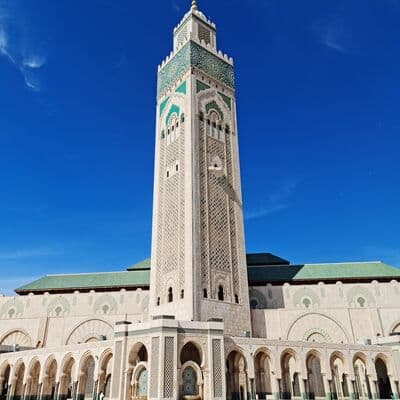
Casablanca is Morocco's largest city with roughly 4 million people, and it moves at a pace that feels more Istanbul or Beirut than the sleepy medina towns you see on Instagram. This is where Morocco does business, where the money flows, where the architecture ranges from stunning French colonial Art Deco to brutalist concrete towers to the third-largest mosque on Earth. It is messy, loud, occasionally frustrating, and deeply rewarding if you give it more than a layover.
If you asked an AI chatbot whether Casablanca is worth visiting, it would probably tell you to spend a day there and move on. I disagree. Casablanca rewards patience. The city has the best restaurant scene in Morocco, a nightlife that actually exists (unlike most Moroccan cities), genuine neighborhoods where tourists are rare, and a coastline that stretches for miles along the Atlantic. You just need to know where to look.
The honest pros: World-class mosque, the best Art Deco architecture in Africa, excellent food scene, Atlantic Ocean access, good international flight connections, less tourist hassle than Marrakech, genuine urban culture.
The honest cons: Traffic is brutal, the city is not conventionally pretty in many areas, navigation can be confusing, some neighborhoods feel neglected, the beach water is not always clean near the port, and you will not find the curated medina experience of Fez or Chefchaouen here.
Budget-wise, Casablanca is moderately priced by Western standards but pricier than other Moroccan cities. A comfortable mid-range day runs $80-120 USD (800-1,200 MAD) including accommodation, meals, and transport. Budget travelers can manage on $40-50 USD (400-500 MAD) per day with hostels and street food.
Neighborhoods: Where to Stay in Casablanca
Casablanca is a big city, and where you base yourself matters more than in most Moroccan destinations. The neighborhoods have genuinely different characters, and picking the wrong one can mean spending half your trip in taxis. Here is the breakdown.
Centre Ville (Downtown)
This is the heart of the Art Deco Downtown and the most logical base for first-time visitors. The area around Place Mohammed V and Boulevard Mohammed V is walkable, full of French colonial architecture, and close to the main train station (Casa Voyageurs). You will find cafes on every corner, the Central Market nearby, and easy access to most attractions. The downside: it gets loud and chaotic during business hours, and some streets feel rundown once you step off the main boulevards. Hotels here range from $30-50 USD (300-500 MAD) for basic options to $80-150 USD (800-1,500 MAD) for renovated boutique places.
Anfa
The upscale residential district south of downtown. Anfa is where wealthy Casablancans live, and it shows - tree-lined streets, elegant villas, good restaurants, and a quieter atmosphere. If you want comfort and do not mind being a short taxi ride from the main sights, Anfa is excellent. The Anfa Place mall area has some of the city's best dining. Hotels run $100-250 USD (1,000-2,500 MAD) per night, mostly international chains and upscale riads.
Corniche / Ain Diab
The Corniche is Casablanca's beachfront strip, stretching along the Atlantic coast west of the city center. This is where Casablancans come to see and be seen - beach clubs, seafood restaurants, nightclubs, and a long oceanfront promenade. The vibe is more Miami Beach than medina. Great for nightlife and ocean views, but you will need taxis to reach most cultural attractions. Accommodation ranges from $60-200 USD (600-2,000 MAD), with resort-style hotels dominating.
Habous (New Medina)
Built by the French in the 1930s as a 'planned medina,' Habous is a fascinating hybrid - traditional Moroccan architecture designed with European urban planning. The result is a clean, walkable quarter with covered markets, pastry shops, and the Royal Palace nearby. It is less chaotic than the Old Medina and gives you a taste of traditional Morocco without the intensity. Limited hotel options here, mostly budget ($20-40 USD / 200-400 MAD), but the area is worth visiting regardless of where you stay.
Old Medina
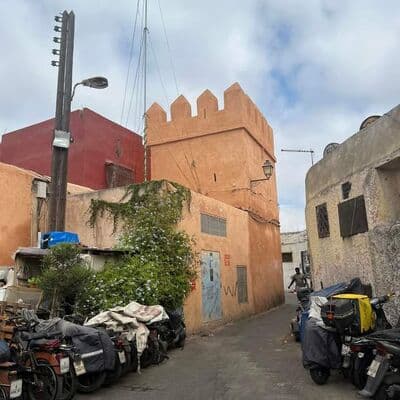
The Old Medina of Casablanca is compact and frankly not the main attraction here - it is much smaller and less ornate than Fez or Marrakech's medinas. That said, staying inside or near it gives you proximity to the port area and the Hassan II Mosque. A few guesthouses operate here in the $25-60 USD (250-600 MAD) range. It is atmospheric and central, but not the most comfortable base for longer stays.
Maarif
The commercial and shopping heart of modern Casablanca. Twin Center towers dominate the skyline, and the streets below are packed with shops, restaurants, and cafes. Maarif is where young Casablancans hang out - think brunch spots, concept stores, and late-night shawarma joints. Accommodation is mostly mid-range apartments and business hotels, $50-120 USD (500-1,200 MAD). Great for foodies and shoppers, less so for sightseeing.
Bouskoura / Periurban South
If you have a car and want green space, the Bouskoura forest area south of the city offers a completely different experience - golf courses, quiet residential compounds, and a break from the urban intensity. Not practical for sightseeing without a vehicle, but worth mentioning if you are spending a week or more and want a retreat. Villas and Airbnb-style rentals run $80-180 USD (800-1,800 MAD) per night.
My recommendation: First visit, stay in Centre Ville for walkability and access. Second visit or longer stays, try Anfa for comfort or Corniche for the beach lifestyle. Maarif if you care more about food and nightlife than monuments.
Best Time to Visit Casablanca
Casablanca sits on the Atlantic coast, which gives it a milder climate than inland Moroccan cities. You will not get the scorching 45-degree summers of Marrakech here, but you also will not get the picture-perfect dry heat that makes desert cities so photogenic. The ocean moderates everything.
Spring (March - May)
The best time, period. Temperatures hover between 18-24 degrees Celsius (64-75 Fahrenheit), the city is green from winter rains, and the outdoor cafe culture is in full swing. April is particularly pleasant. The downside: occasional rain showers through March, and hotel prices start climbing in late April as summer tourism picks up. Book accommodation 3-4 weeks ahead for April-May visits.
Summer (June - August)
Warm but not unbearable thanks to the Atlantic breeze - expect 25-30 degrees Celsius (77-86 Fahrenheit) with occasional foggy mornings. The Corniche comes alive, beach clubs are packed, and the city has a holiday energy. July and August are peak domestic tourism months, so the Corniche area gets crowded and pricier. The fog (locally called 'brouillard') can roll in and keep mornings cool and gray until noon. Book Corniche hotels 4-6 weeks ahead in summer.
Autumn (September - November)
Excellent and underrated. September still feels like summer, October is warm and dry with thinner crowds, and November starts getting cooler but remains pleasant for sightseeing. Water temperatures are actually warmest in September-October if you want to swim. This is my pick for a budget-conscious visit - hotel prices drop noticeably from mid-October.
Winter (December - February)
Casablanca's winters are mild by Northern European or North American standards - 10-17 degrees Celsius (50-63 Fahrenheit) - but it rains frequently, and the city is not set up for rain in the way that, say, London is. Puddles form everywhere, traffic worsens, and the gray skies can feel relentless. That said, winter is the cheapest time to visit, the Hassan II Mosque is crowd-free, and Moroccan comfort food (harira soup, rfissa) is at its best. Pack layers and a waterproof jacket.
Festivals and Events
Jazzablanca Festival (June/July): Major international jazz and world music festival that draws big names. Book well ahead if your visit coincides - hotels near the venue sell out. Casablanca International Film Festival (October/November): Growing in stature and a great excuse to explore the city's cinema heritage. Ramadan (shifts annually): The city transforms during Ramadan. Daytime hours are quieter with many restaurants closed until sunset, but the evenings are magical - ftour (breaking fast) meals are communal events, and the streets come alive after dark. Check dates for 2026 as the timing shifts each year.
Itinerary: How to Spend 3 to 7 Days in Casablanca
3-Day Essential Casablanca
Day 1: The Icons
Start early - be at the Hassan II Mosque by 9:00 AM for the first guided tour (entry approximately $14 USD / 140 MAD for non-Muslims, tours run on schedule - check current times at the entrance). This mosque is not optional; it is one of the most extraordinary buildings in the world, with a retractable roof over the prayer hall and a minaret visible from 30 miles away. The tour takes about an hour. Afterward, walk south along the waterfront toward the Old Medina - the walk takes about 15 minutes. Spend an hour exploring the medina's narrow streets and pick up some spices or leather goods (prices are lower than Marrakech). For lunch, head to the area around Rue Chaouia in the medina - small restaurants serve tagine and couscous for $3-5 USD (30-50 MAD). Afternoon: walk south through the Art Deco Downtown. Start on Boulevard Mohammed V and work your way toward Place Mohammed V, looking up at the facades - many buildings date from the 1920s-1930s and are genuinely stunning. Stop at Cafe de France or one of the downtown cafes for mint tea. Evening: dinner at Rick's Cafe if you want the movie connection ($30-50 USD / 300-500 MAD per person for dinner with drinks) or head to Maarif for more local options.
Day 2: Modern Casablanca and the Coast
Morning: Take a taxi to the Habous Quarter (New Medina) - arrive by 10:00 AM when shops are opening. Browse the book market, buy some Moroccan pastries from the legendary patisseries on the main square (cornes de gazelle, about $1 USD / 10 MAD for a box), and photograph the architecture. Walk to the nearby Mahkama du Pacha (courthouse with incredible Moorish interior, free entry, check if open - sometimes restricted). Late morning: taxi to the Morocco Mall or Anfa Place for a modern contrast - the Morocco Mall has an aquarium inside if you need a break from the heat. Lunch: Brasserie La Tour in the Twin Center area, or any of the Maarif neighborhood restaurants for $8-15 USD (80-150 MAD). Afternoon: Head to the Corniche. Walk the promenade, grab a fresh juice from one of the stands ($1-2 USD / 10-20 MAD), and if it is warm enough, hit a beach club (entry $5-15 USD / 50-150 MAD, often includes a sunbed). Sunset from the Corniche with the Atlantic stretching out is one of Casablanca's best free experiences. Dinner: seafood at one of the Corniche restaurants - La Sqala or Le Port de Peche for fresh fish ($15-25 USD / 150-250 MAD per person).
Day 3: Markets, Food, and Departure
Morning: Central Market (Marche Central) on Rue Chaouia - open from 7:00 AM, best before 10:00 AM. This is one of the best food markets in North Africa. Walk the fish stalls, watch the vendors negotiate, and pick up olives, preserved lemons, and argan oil as souvenirs. Some vendors will grill your purchased fish on the spot for a few extra dirhams - an unforgettable breakfast or brunch. Mid-morning: Walk to the Sacre Coeur Cathedral (now a cultural center, entry free or small donation) - a surreal Art Deco church that is no longer a church, worth 30 minutes for the architecture. If you have time before a departure, the Villa des Arts (small art museum, $2 USD / 20 MAD) is nearby. Alternatively, use the morning for final shopping in Habous or the downtown area.
5-Day Extended Itinerary
Days 1-3: Follow the 3-day plan above.
Day 4: Day Trip to El Jadida
Take the train or rent a car to El Jadida, about 100 km south (1.5 hours by car, 1 hour 45 minutes by train, approximately $5 USD / 50 MAD one way). This UNESCO-listed Portuguese fortified city is stunning - the underground cistern (Citerne Portugaise) is hauntingly beautiful and was used as a filming location for Othello. Spend the morning exploring the old town, have a seafood lunch by the port ($8-12 USD / 80-120 MAD), and return to Casablanca by evening. This is the best day trip from Casablanca, bar none.
Day 5: Deep Casablanca
This is for the curious traveler. Morning: Visit the Quartier des Habous again for anything you missed, then taxi to the Ain Sebaa industrial neighborhood on the eastern edge - not for sightseeing but for the wholesale markets where you can buy Moroccan goods at local prices. Alternatively, visit the Abderrahman Slaoui Foundation Museum downtown (excellent Moroccan art and vintage travel posters, $3 USD / 30 MAD). Lunch: Eat in the Derb Sultan neighborhood for some of the most authentic street food in the city. Afternoon: Free time - revisit the Corniche, explore the Anfa hillside neighborhood on foot, or sit in a Maarif cafe and people-watch. Consider a hammam visit in the afternoon: traditional public hammams cost $2-3 USD (20-30 MAD) while upscale spa hammams run $30-50 USD (300-500 MAD). Evening: Splurge dinner at La Table du Marche or Bleu by Marcel in Anfa, followed by drinks at a rooftop bar if you are so inclined.
7-Day Deep Dive
Days 1-5: Follow the 5-day plan above.
Day 6: Rabat Day Trip
The capital city is just one hour north by train ($6 USD / 60 MAD each way on ONCF). Rabat is cleaner, calmer, and in many ways more beautiful than Casablanca - the Kasbah des Oudaias overlooking the river is spectacular. Visit the Hassan Tower and Mohammed V Mausoleum (free), explore the Rabat medina (less aggressive than Marrakech), and have lunch in the kasbah area. Return to Casablanca by evening.
Day 7: Slow Day and Departure Prep
Use this day for whatever called to you most. Return to the Hassan II Mosque for photos in different light (morning light is best for photography, sunset for atmosphere). Do final souvenir shopping at fixed-price stores in Habous if you do not want to bargain. Have a long lunch at a restaurant you wanted to revisit. Head to the airport with time to spare - Mohammed V International Airport is 30 km south of the city center, and the train from Casa Voyageurs takes about 40 minutes ($5 USD / 50 MAD). Allow 3 hours before an international flight for check-in and security.
Where to Eat: Casablanca Restaurants and Cafes
Casablanca has the best restaurant scene in Morocco, and it is not close. While Marrakech caters to tourists and Fez leans traditional, Casablanca has a genuine dining culture driven by locals - Moroccan, French, fusion, seafood, and increasingly international options. Here is how to navigate it.
Street Food and Market Stalls ($1-3 USD / 10-30 MAD)
The Central Market is the king of street food - have your fish grilled on the spot, or grab a bowl of snails (babbouch) from one of the vendors outside the market for about $0.50 USD (5 MAD). Around the Old Medina, look for sandwich stands selling bocadillos (Moroccan baguette sandwiches with kefta, sardines, or tuna) for $1-2 USD (10-20 MAD). On the Corniche, seafood carts sell fried calamari and shrimp cornets for $1-3 USD (10-30 MAD). The Derb Sultan area south of the medina has outstanding msemen (Moroccan flatbread) stalls - freshly made with honey and butter, one of the great breakfasts anywhere for under $1 USD.
Local Restaurants ($5-12 USD / 50-120 MAD)
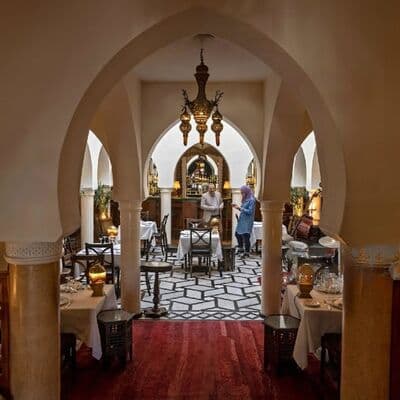
For tagine, couscous, and traditional Moroccan food, the small restaurants around Habous and the side streets off Boulevard Mohammed V are your best bet. Portions are generous and prices are honest. La Sqala, located inside a historic bastion near the Old Medina, serves excellent Moroccan food in a garden setting - lunch for two with drinks runs about $20-25 USD (200-250 MAD). For the best pastilla (pigeon or chicken pie) in Casablanca, ask locals - the recommendations change, but the Habous Quarter patisseries are consistently excellent for the sweet variety.
Mid-Range and Modern ($15-30 USD / 150-300 MAD per person)
Maarif neighborhood is ground zero for this category. Brasserie La Tour does solid French-Moroccan bistro food. Blend is popular for brunch and casual dining. Veggie Garden in the Gauthier area is one of the few vegetarian-focused spots in Morocco and genuinely good. For sushi (surprisingly popular in Casablanca), Matsuri in Anfa is reliable. The Anfa Place food court has several upscale-casual options if you want variety. Rick's Cafe sits in this price range for food, though drinks push the bill higher - the setting is worth it once for the atmosphere, even if you find the movie connection a bit forced.
Fine Dining ($40-80+ USD / 400-800+ MAD per person)
Casablanca punches well above its weight here. La Table du Marche (Anfa) does refined Moroccan-French cuisine that rivals anything in Paris at half the price. Bleu by Marcel in Anfa is the current darling of the food scene - creative Mediterranean with impeccable service. Le Rouget de l'Isle downtown is a classic French restaurant that has been operating for decades. For Japanese, Nobu at the Four Seasons Corniche is predictably expensive but excellent. Hotel restaurants at the Hyatt Regency and Sofitel are reliable for special occasions.
Cafes and Coffee
Cafe culture in Casablanca is serious business. The traditional cafes (mostly male-dominated, especially on the terraces) serve excellent mint tea and 'nous-nous' (half coffee, half milk) for $0.50-1 USD (5-10 MAD). Modern third-wave coffee shops have exploded in Maarif and Gauthier - Cafe Moka, Barometre, and others serve proper espresso drinks for $2-4 USD (20-40 MAD). For a classic experience, Cafe de France on Place Mohammed V is tourist-visible but still atmospheric. For a local experience, pick any small cafe on a side street, order a nous-nous, and sit for an hour - nobody will rush you.
What to Try: Casablanca Food Guide
Morocco's food is legendary, and Casablanca adds its own coastal twist. Here are the dishes you should not leave without trying.
1. Tagine (tajine) - The iconic Moroccan stew cooked in a conical clay pot. In Casablanca, try the fish tagine (tajine de poisson) with chermoula sauce - a coastal specialty you will not find done this well inland. Expect $3-8 USD (30-80 MAD) depending on the restaurant. Chicken with preserved lemons and olives is the most classic version.
2. Couscous - Traditionally served on Fridays after mosque, couscous in Morocco is nothing like the instant stuff from a box. Hand-rolled semolina steamed over a vegetable and meat broth for hours. Friday is the day to eat it - many restaurants offer special couscous plates for $4-8 USD (40-80 MAD). The seven-vegetable version (couscous aux sept legumes) is the gold standard.
3. Pastilla (bastilla) - A sweet and savory pie traditionally made with pigeon (now often chicken), layered with almonds, cinnamon, and sugar in crispy warqa pastry. It sounds bizarre and tastes incredible. Available at most traditional restaurants for $5-10 USD (50-100 MAD). The seafood version (pastilla aux fruits de mer) is a Casablanca specialty.
4. Harira - A thick tomato-based soup with lentils, chickpeas, and vermicelli. This is the soup served to break the Ramadan fast, but it is available year-round for about $1-2 USD (10-20 MAD) per bowl. Best in winter or on cool evenings. Often served with dates and chebakia (honey pastries).
5. Fresh Seafood - Casablanca's biggest culinary advantage over inland cities. At the Central Market, you can buy fish and have it cooked on the spot. Sea bream, sole, sardines, shrimp, and calamari are all abundant. A full seafood plate at the market runs $5-10 USD (50-100 MAD). The sardines in particular are some of the best in the world - Morocco is the world's largest sardine exporter, and the freshest ones never leave the coast.
6. Msemen - Square-shaped Moroccan flatbread, crispy on the outside and layered inside. Eaten for breakfast with honey and butter, or stuffed with kefta (ground meat) as a snack. Street vendors sell them fresh off the griddle for $0.20-0.50 USD (2-5 MAD). One of the best cheap eats anywhere.
7. Babbouch (Snails) - Small snails in a spiced broth, served in a bowl with a toothpick. Sounds intimidating, tastes like seasoned escargot. Available from street carts for $0.50-1 USD (5-10 MAD) per bowl. The Central Market area has the best vendors. The broth is the star - spiced with thyme, pepper, and various herbs.
8. Rfissa - Shredded msemen bread layered with lentils and chicken in a fenugreek sauce. This is comfort food of the highest order, traditionally served to new mothers for its nutritional value. Not always on restaurant menus - ask for it or look for it at traditional places in Habous. About $4-6 USD (40-60 MAD).
9. Cornes de Gazelle (Kaab el Ghazal) - Crescent-shaped almond paste cookies covered in sugar. The Habous Quarter patisseries make the best ones in the country - the dough should be paper-thin with a soft, fragrant almond center. Buy them by the kilo for about $8-12 USD (80-120 MAD per kg) or a small box for $1-2 USD.
10. Mint Tea (Atay) - Not a dish but arguably Morocco's most important culinary experience. Gunpowder green tea with fresh mint and a generous amount of sugar, poured from height to create a froth. It is served everywhere, and accepting a glass is a social ritual. Free at shops (when offered by a vendor), $0.50-1 USD (5-10 MAD) at cafes. If someone offers you tea, always accept - it is a gesture of hospitality, not a sales trap.
Local Secrets: Insider Tips for Casablanca
1. The mosque is not always open to non-Muslims. The Hassan II Mosque is one of the very few mosques in Morocco that allows non-Muslim visitors, but only during specific guided tour times. These tours run several times daily but not continuously. Check the schedule at the entrance or ask your hotel the night before. Showing up at random will likely mean waiting or being turned away. Dress modestly - shoulders and knees covered for both men and women.
2. Taxi meters exist, but you need to insist. Petit taxis (red, within the city) have meters, but many drivers will try to negotiate a flat fare with tourists. The meter is almost always cheaper. Say 'compteur, s'il vous plait' and point at the meter. If the driver refuses, get out and try the next one. A cross-city ride should rarely exceed $3-5 USD (30-50 MAD) on the meter. Grand taxis (white, for longer trips) are a different system - fixed prices, shared rides.
3. Friday is different. Friday is the Muslim holy day, and Casablanca slows down noticeably, especially in the morning. Many small shops and traditional restaurants close until after midday prayers. On the other hand, Friday is couscous day - seek out the best Friday couscous specials at traditional restaurants. The Hassan II Mosque during Friday prayers is a sight to witness from outside, with thousands of worshippers spilling onto the esplanade.
4. The Art Deco is on a timer. Casablanca has arguably the finest collection of Art Deco architecture outside of Miami Beach, but many buildings are deteriorating. Some of the best facades are along Boulevard Mohammed V and in the area around Rue el-Oraibi Jilali. There is no organized walking tour (yet), so download a map from CasaMemoire, the local preservation organization. Several landmark buildings have been demolished in recent years for new development. What exists now may not exist in five years.
5. Learn ten words of Darija. Moroccan Arabic (Darija) is different enough from standard Arabic that even Arabic speakers from other countries struggle with it. That said, learning a few basics - salam (hello), shukran (thank you), bslama (goodbye), bezzaf (very much), labas (how are you/I am fine) - will transform your interactions. French is widely spoken as a second language and is useful for practical matters. English is growing but still limited outside of hotels and tourist-facing businesses.
6. The Corniche has levels. The public Corniche promenade is free and pleasant for walking. The beach clubs adjacent to it charge entry ($5-15 USD / 50-150 MAD) but provide chairs, umbrellas, showers, and food service. The public beaches between the clubs are free but less maintained. For the best swimming, go to Ain Diab or further west toward Dar Bouazza - the water is cleaner and the beaches are wider. The beach clubs closest to the Hassan II Mosque end of the Corniche tend to be the most crowded.
7. Bargaining rules are different here. Unlike Marrakech, where every transaction in the medina is a negotiation, Casablanca is a working city. Restaurants, modern shops, supermarkets, and cafes have fixed prices. Bargaining is expected in the Old Medina, Habous market stalls, and with taxi drivers (though you should insist on the meter instead). A good starting offer in markets is 40-50% of the asking price, with the expectation of settling around 60-70%.
8. The train is your best friend. ONCF trains connect Casablanca to Rabat (1 hour), Marrakech (3.5 hours), Fez (4 hours), and Tangier (5 hours via the new high-speed LGV line). The trains are clean, punctual by regional standards, and cheap. First class is worth the small upgrade for longer journeys. Book at the station - online booking exists but is unreliable. Casa Voyageurs is the main station; Casa Port serves the Rabat commuter line and is closer to the Old Medina.
9. Avoid the 'guides' near the mosque. Unofficial guides will approach you near the Hassan II Mosque and the Old Medina entrance, offering to show you around. Some are genuine; many are not. The mosque has its own official guided tours - buy tickets inside. For the medina, you genuinely do not need a guide as it is small and straightforward. If you want a proper city tour, book through your hotel or a verified agency.
10. The nightlife exists and is worth exploring. Unlike most Moroccan cities, Casablanca has a real nightlife scene. The Corniche has clubs (Sky 28, Cesar's), Maarif has late-night restaurants and lounges, and the Gauthier area has wine bars. Morocco produces surprisingly good wine - try Medaillon or Chateau Roslane. A glass at a restaurant runs $3-6 USD (30-60 MAD), a bottle from $8-15 USD (80-150 MAD). Alcohol is available at licensed restaurants, hotels, bars, and Carrefour/Marjane supermarkets, but not at traditional eateries or street stalls.
11. Cash is still king. Credit cards are accepted at hotels, upscale restaurants, and large stores, but everything else - taxis, street food, markets, small restaurants, cafes - requires cash. ATMs (distributeurs) are everywhere and accept international cards. Withdraw dirhams on arrival and keep small notes (20 and 50 MAD) handy. Currency exchange at the airport is reasonable - the dirham is semi-pegged and rates do not vary dramatically.
12. The ocean is not warm. The Atlantic off Casablanca is noticeably cooler than the Mediterranean - water temperatures range from 17 degrees Celsius (63 Fahrenheit) in winter to 23 degrees Celsius (73 Fahrenheit) in late summer. Swimmable from June through October for most people, but do not expect Caribbean warmth. The current can also be strong - swim where locals swim and heed any flags or warnings at beach clubs.
Transport and Connectivity in Casablanca
Getting to Casablanca
Mohammed V International Airport (CMN) is the main gateway, located 30 km south of the city center in Nouasseur. Direct flights arrive from New York (JFK and EWR on Royal Air Maroc, roughly 7 hours), London (Heathrow, Gatwick, and Stansted on RAM, Ryanair, and British Airways, about 3.5 hours), Paris (multiple daily), and dozens of other European and African cities. The airport is modern and reasonably efficient. The train from the airport to Casa Voyageurs station takes about 40 minutes and costs approximately $5 USD (50 MAD) - trains run every hour from roughly 6:00 AM to 11:00 PM. Taxis from the airport charge a fixed rate of about $25-30 USD (250-300 MAD) to the city center; agree on the price before getting in or use the official taxi counter inside the arrivals hall. Ride-hailing apps like Careem operate from the airport but can be hit or miss.
Getting Around the City
Petit Taxis (Red): The most practical transport for visitors. Metered, cheap (most trips $1-4 USD / 10-40 MAD), and ubiquitous. Maximum three passengers. Insist on the meter. Tips are appreciated but not mandatory - round up to the nearest 5 or 10 MAD.
Tramway: Casablanca's modern tram system has two lines (T1 and T2) running through the city center and beyond. A single ticket costs about $0.60 USD (6 MAD), and the system is clean, efficient, and air-conditioned. Line T1 connects Ain Diab (near the Corniche) through downtown to Sidi Moumen. Useful for getting between the Corniche and Centre Ville without a taxi. Buy tickets from machines at stations - you must validate your ticket on board.
City Buses: Extensive network but confusing for visitors - routes are not well-marked in English, buses can be crowded, and schedules are approximate. The newer Alsa-operated buses are better than the old fleet. Fares are about $0.40 USD (4 MAD). Useful if you get comfortable with the system, but taxis and the tram are more practical for short visits.
Ride-Hailing: Careem (now owned by Uber) operates in Casablanca and is reliable in the city center and tourist areas. InDrive is also available and lets you negotiate fares. Both are useful when you cannot find a taxi or want to avoid the meter negotiation game. Prices are similar to or slightly higher than metered taxis.
Driving: Possible but not recommended for first-time visitors. Traffic is aggressive, parking is scarce downtown, and navigation is confusing. If you want a car for day trips (El Jadida, Rabat, the coast), rent one for the specific days you need it rather than keeping it in the city. International rental agencies (Hertz, Europcar, Avis) are at the airport and in the city center. An international driving permit is technically required but rarely checked.
Intercity Transport
Trains (ONCF): Morocco's train network is excellent by regional standards. From Casa Voyageurs: Rabat (1 hour, every 30 minutes, $5-8 USD / 50-80 MAD), Marrakech (3.5 hours, $10-15 USD / 100-150 MAD), Fez (4 hours, $12-20 USD / 120-200 MAD), Tangier (5 hours via LGV high-speed, $15-25 USD / 150-250 MAD). First class is about 30-50% more than second class and worth it for journeys over 2 hours. The Al Boraq high-speed train to Tangier is a genuine marvel - 320 km/h through the Moroccan countryside.
CTM and Supratours Buses: For destinations not served by rail, CTM and Supratours operate comfortable long-distance coaches. CTM station is downtown near Casa Port. Essaouira, Chefchaouen, and smaller coastal towns are best reached by bus. Book a day ahead in peak season.
SIM Cards and Connectivity
Buy a SIM card at the airport arrivals hall - Maroc Telecom, Inwi, and Orange all have counters. A tourist SIM with 20-30 GB of data costs $5-10 USD (50-100 MAD) and is activated on the spot with your passport. Maroc Telecom has the best nationwide coverage; Inwi often has the best data deals. WiFi is available at most hotels, cafes, and restaurants, but quality varies. A local SIM is strongly recommended for navigation and ride-hailing apps. eSIM services like Airalo or Holafly work in Morocco if you prefer not to swap physical cards - check coverage before purchasing.
Useful apps: Google Maps works well in Casablanca for navigation. Careem and InDrive for taxis. ONCF app for train schedules (though buying at the station is more reliable). XE Currency for real-time MAD conversion. Google Translate with the Arabic language pack downloaded offline is invaluable for signs and menus.
Who Is Casablanca For: The Honest Summary
Casablanca is for travelers who want to see Morocco beyond the tourist trail. It is for people who find cities interesting even when they are not conventionally beautiful - the kind of traveler who would rather eat at a market stall than a rooftop restaurant, or who gets excited about a crumbling Art Deco facade. It is for food lovers, architecture enthusiasts, and anyone who wants to understand modern Morocco as a living, working country rather than a museum.
It is probably not the right first stop if you want colorful medinas and mountain kasbahs - that is Marrakech and Fez territory. But if you have already seen those, or if you want something more urban, more real, and more surprising, Casablanca delivers. Give it at least three days, come hungry, bring comfortable walking shoes, and leave your expectations from the movie at home. The real Casablanca is better.