Marrakech
Marrakech 2026: What to Know Before You Go
Marrakech hits you the moment you step outside the airport. The dry heat, the smell of orange blossoms mixed with exhaust fumes, the taxi drivers calling out prices - this city does not ease you in gently. That intensity is exactly what draws millions of visitors each year, and it is also what sends some running back to their hotels by noon on day one.
Here is the honest truth: Marrakech requires patience. You will get lost in the medina. Someone will try to overcharge you. The call to prayer at 5am will wake you up. But if you arrive prepared, this city delivers experiences you cannot find anywhere else. The craftsmanship in the riads, the flavors you have never encountered, the light that photographers chase for hours - it is all real.
The city functions on two speeds: the frenetic energy of the Marrakech Souks and the calm retreat of private courtyards. Learning to move between these two worlds is the key to enjoying Marrakech. This guide will show you exactly how to do that.
Neighborhoods: Where to Stay
Your neighborhood choice determines almost everything about your trip. The city divides into distinct areas, each with its own character and trade-offs.
Medina (Old City)
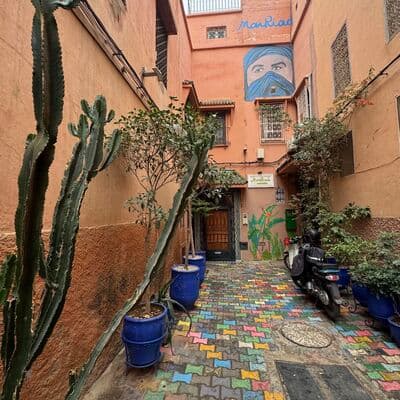
The medina is where most first-time visitors stay. This is the Marrakech of your imagination - narrow alleys, hidden riads with tiled courtyards, rooftop terraces overlooking the chaos below. Staying here puts you within walking distance of Jemaa el-Fna, the Ben Youssef Madrasa, and most major attractions.
The trade-off is navigation. Google Maps works poorly here - the alleys are too narrow and often unnamed. Most riads send someone to meet you at a nearby landmark for your first arrival. Budget riads start around $40-60 per night, mid-range options run $80-150, and luxury riads with pools go from $200-500.
Within the medina, location matters. Near Jemaa el-Fna is noisier but most convenient. The area around Ben Youssef Madrasa tends to be quieter. The Mellah - Jewish Quarter offers a more authentic atmosphere with interesting history including the Lazama Synagogue.
Gueliz (New City)
Gueliz is where modern Marrakech lives. Built during the French protectorate, it features wide boulevards, international restaurants, and Western-style hotels. This is where you find the train station and major banks.
Staying in Gueliz makes sense if you prioritize comfort over atmosphere or need reliable wifi for remote work. Hotel rooms cost about 20-30% less than comparable medina riads. You are also closer to Jardin Majorelle and the Yves Saint Laurent Museum. A taxi to Jemaa el-Fna costs $3-5.
Hivernage
Located between the medina and Gueliz, Hivernage is the upscale district with five-star hotels, pools, and nightclubs. The neighborhood feels like a resort bubble. Expect to pay $150-400 per night. It is quiet and convenient but lacks Moroccan character.
Palmeraie
About 15-20 minutes north lies Palmeraie, an oasis of palm groves containing exclusive resorts. Nightly rates start around $300. The drawback is distance - you need taxis for everything. Consider it for honeymoons or if you want desert landscape without driving to the Sahara.
My Recommendation
For first-time visitors spending 3-5 days, stay in the medina between Bahia Palace and Jemaa el-Fna. You get walkable access to major sights without the worst noise.
Best Time to Visit
Marrakech has a reputation for brutal heat, and that reputation is earned. Summer temperatures regularly hit 104-113F (40-45C). Unless you have a high tolerance for heat, avoid July and August entirely.
The ideal months are March through May and September through November. Daytime temperatures hover around 75-85F (24-30C), cool enough for comfortable exploration but warm enough for rooftop dinners. March brings almond blossoms and green landscapes. October offers similar temperatures with fewer crowds.
Winter (December through February) surprises many visitors. Daytime temperatures are pleasant at 60-70F (15-21C), but nights can drop to 40F (4C). Most riads lack central heating. The upside is minimal crowds and lower prices. January and February offer excellent value.
Ramadan requires special consideration. Many restaurants close during daylight hours, and the city operates at a slower pace. However, the iftar meals at sunset are celebratory occasions. Ramadan dates shift each year based on the lunar calendar, so check before booking.
Itinerary: 3 to 7 Days
Day 1: Medina Orientation
Do not overschedule your first day. Check into your riad, rest during the hottest hours, then venture out around 4pm when the light softens and the souks come alive.
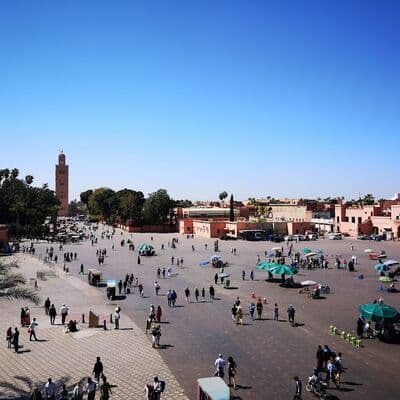
Walk to Jemaa el-Fna and just observe. Find a cafe with a rooftop terrace (Cafe de France or Cafe Glacier) and watch the square transform at sunset. Orange juice sellers set up their stalls, snake charmers begin their acts, and food smoke rises from the grills.
Dinner tonight should be simple. Eat at the food stalls in the square (locals recommend stalls 14 and 32 for grilled meats) or find a restaurant near your riad. Return before 10pm and sleep.
Day 2: The Essential Monuments
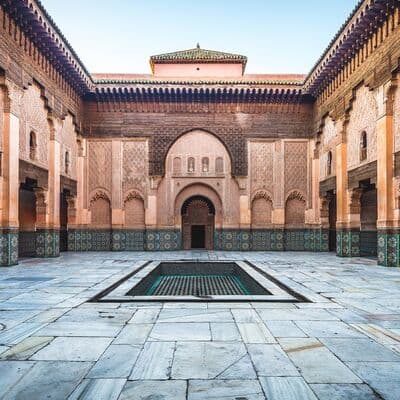
Start early, by 9am, before tour buses arrive. Begin at Ben Youssef Madrasa, the largest theological college in Morocco. The tilework and carved cedar ceilings are among the finest in the Islamic world. Entry costs around $6.
Walk through the northern medina to the Marrakech Tanneries. Unlike the famous Fes tanneries, these are smaller and less crowded. Tip $2-3 for the viewing terrace and you will get a mint sprig for the smell.
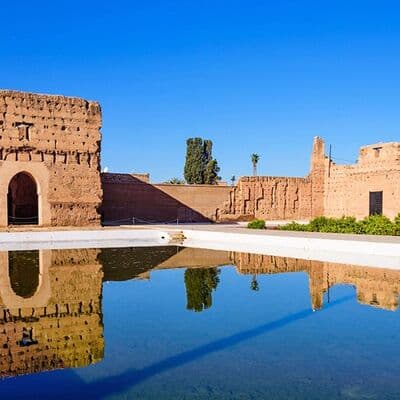
Lunch in the medina ($10-15), then head south to Bahia Palace. This 19th-century palace shows how Moroccan nobility lived. Entry is around $7. Walk ten minutes to El Badi Palace, a ruined palace from the 16th century where storks nest on the ramparts.
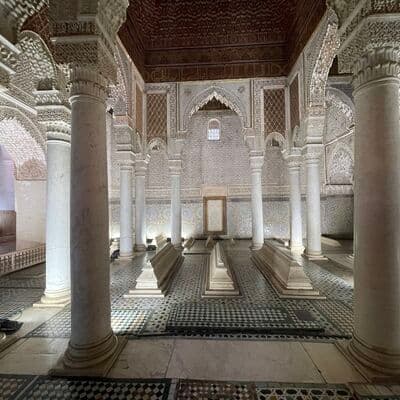
End at the Saadian Tombs, discovered in 1917 after being sealed for centuries. Go late afternoon when crowds thin.
Day 3: Gardens and Museums
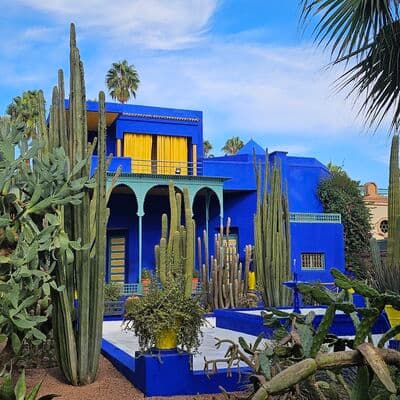
Take a taxi to Jardin Majorelle first thing - lines build quickly after 10am. Created by French painter Jacques Majorelle and restored by Yves Saint Laurent, this garden features cobalt blue buildings and bamboo groves. Entry is around $14, or $20 combined with the Yves Saint Laurent Museum.
Walk to Le Jardin Secret in the medina. This Islamic garden offers geometric water channels and a tower with medina views. Entry is about $8.
Afternoon is museum time. The Dar Si Said Museum houses Moroccan arts and crafts. Maison de la Photographie displays historical photographs and has a rooftop cafe. Dar el Bacha - Museum of Confluences is the newest major museum with rotating exhibitions. Choose one or two based on your interests.
Day 4: Souks and Shopping
Today you tackle the Marrakech Souks with intention. Souk Semmarine for textiles, Souk el-Attarine for spices, Souk Haddadine for metalwork.
Before buying anything, walk the entire circuit to compare quality. When ready to buy: never accept the first price, always be willing to walk away, and if you do not want something, do not engage.
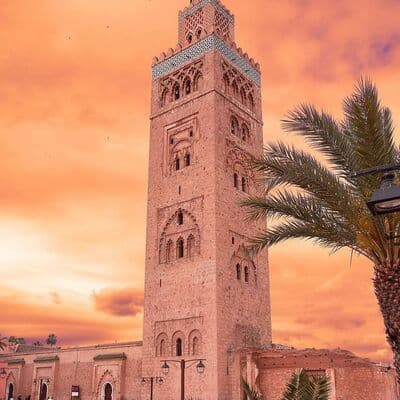
For fixed prices (useful for calibrating fair value), visit cooperatives like Ensemble Artisanal near Koutoubia Mosque. The 12th-century minaret and surrounding gardens are worth seeing from outside.
Days 5-7: Day Trips and Deeper Exploration
The most popular day trip is to the Atlas Mountains - Ourika Valley or Imlil village. Prices range from $40-80 for group tours to $150-200 for private guides. Expect 8-10 hours total.
Essaouira, the coastal town 2.5 hours west, makes an excellent day trip. Direct buses run for about $8 each way.
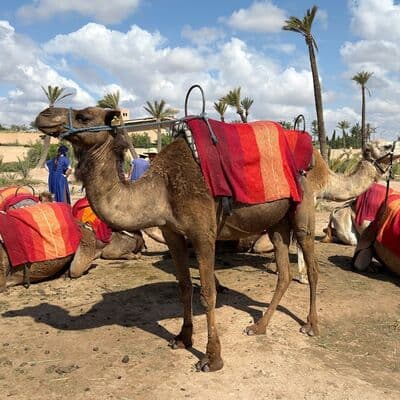
For a longer adventure, three-day Sahara trips to Merzouga are the classic Moroccan experience. Budget $200-400 per person.
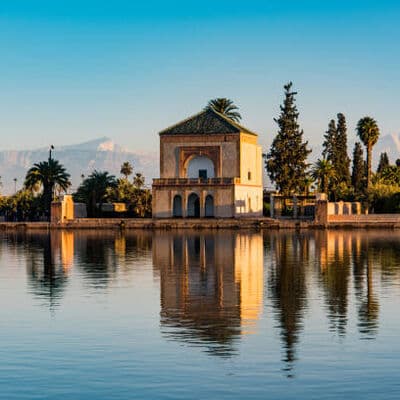
If you stay in Marrakech, visit Menara Gardens at sunset when the Atlas Mountains turn pink. Explore Agdal Gardens on Fridays or Sundays. Seek out the Musee de la Palmeraie for contemporary Moroccan art.
Where to Eat: Restaurants
Marrakech dining splits into three categories: tourist restaurants charging $30-50 per person for mediocre tajines in beautiful settings, local spots where $5 buys the best meal of your trip, and genuinely excellent restaurants that justify their prices.
High-End Dining
Nomad in the medina serves modern Moroccan cuisine with rooftop views. The lamb shoulder and herb-crusted sardines are standouts. Expect $30-40 per person. Reservations essential.
Le Jardin is set in a lush garden courtyard. Budget $25-35 per person. For a splurge, La Maison Arabe offers cooking classes by day and fine dining by night. The tasting menu runs around $70.
In Gueliz, Grand Cafe de la Poste serves French-Moroccan fusion in a colonial-era building. Prices are $35-50 per person.
Mid-Range Options
Cafe Clock near the Kasbah bridges local and tourist worlds. The camel burger is famous (and good), and Sunday music jam sessions draw crowds. Budget $12-18 per person.
Amal Center is a nonprofit training restaurant for disadvantaged women. Lunch runs about $8-10 and quality exceeds the price.
Budget Eats
The food stalls on Jemaa el-Fna offer the classic experience. Grilled meats, fried fish, snail soup - all for $3-6 per plate. Stick to stalls with visible fire and high turnover.
Chez Lamine near the tanneries serves legendary tangia for about $5. Snack stands sell msemen (flatbread) with honey for $1. The cheapest meals are at neighborhood restaurants in the mellah - $3-5 for a full meal.
Must-Try Food
Moroccan cuisine developed at the crossroads of Arab, Berber, Andalusian, and Mediterranean influences. Marrakech showcases this heritage better than any other Moroccan city.
Tajine is the iconic dish - a slow-cooked stew named for the conical clay pot. Common varieties: chicken with preserved lemon and olives, lamb with prunes and almonds, or kefta with tomato and eggs. The best versions let you taste individual spices - cumin, ginger, saffron, ras el hanout.
Couscous is traditionally served on Fridays. Steamed semolina topped with vegetables, chickpeas, and meat. Restaurant couscous often disappoints - book a cooking class for the real thing.
Tangia is Marrakech's signature dish. Meat sealed in a clay pot with preserved lemon and spices, slow-cooked in hammam ashes. Workers would drop their pots at the hammam in the morning and collect dinner after their bath.
Pastilla is the most elaborate dish - layers of pastry filled with shredded pigeon or chicken, almonds, and eggs, dusted with powdered sugar and cinnamon. The sweet-savory combination works beautifully.
Harira is the soup that breaks the Ramadan fast. Tomato-based with lentils and chickpeas. A bowl costs $1-2 and makes a perfect light lunch.
Street snacks deserve their own category. Fresh orange juice costs $0.50. Msemen and baghrir with honey fuel morning explorations. Brochettes cost $1-2. Snail soup sounds intimidating but tastes like garlic butter.
Mint tea is not optional. Called Moroccan whisky, this sweet green tea is served constantly. Refusing tea is considered rude. The pouring technique, from height to create foam, is part of the experience.
Local Secrets and Tips
Money matters: ATMs offer better exchange rates than bureaux de change. Withdraw dirhams on arrival and keep small bills - many vendors cannot break 200 MAD notes. Credit cards work at upscale places but are useless in the medina. Confirm if a price is in dirhams or euros before agreeing.
Haggling etiquette: The 30% rule is a starting point, not a formula. A genuine handwoven rug takes months to make - expecting to pay $100 insults the craftsperson. Mass-produced trinkets have massive markups. Walk away from aggressive sellers.
Guides and touts: Unofficial guides near attractions are usually more hassle than help. Book through your riad or a reputable agency. Licensed half-day walking tours cost $30-50 and are worth it.
Hammam experience: The traditional bath is essential. Tourist hammams cost $30-50 with massage. Local neighborhood hammams cost $5-10 and provide a more authentic experience. Ask your riad for the nearest one.
Photography: Always ask before photographing people. Snake charmers in Jemaa el-Fna will demand $10-20 if you photograph without permission. Architecture and food are safe subjects.
Dress code: Morocco is Muslim but relatively liberal. In tourist areas, shorts and t-shirts are fine. However, covering shoulders and knees shows respect. The rule applies to men too - shirtless tourists attract stares.
Language: French goes further than English, but Arabic phrases win hearts. Shukran (thank you), la (no), and bsahha (cheers) cover most situations. Have your destination written in Arabic for taxi drivers.
Transport and Connectivity
Getting to Marrakech
Marrakech Menara Airport (RAK) receives direct flights from major European cities, 3-4 hours from London, Paris, or Madrid. From North America, connections through Casablanca or European hubs are standard. Budget airlines offer cheap fares during shoulder seasons.
Official airport taxis use fixed rates: about $8-10 to the medina or Gueliz, paid at a booth inside the terminal. Do not negotiate with drivers outside. Most riads offer transfers for $15-25, which includes navigation to your door.
Trains connect Marrakech to Casablanca (3 hours, $12 first class), Rabat, and Tangier. Buses via CTM or Supratours reach Essaouira ($8, 2.5 hours) and Ouarzazate ($12, 4 hours).
Getting Around
Within Marrakech, walking handles most needs in the medina. The entire medina is only about one mile across. Comfortable shoes matter more than transportation.
Petit taxis (beige with rooftop lights) are cheap. Fares rarely exceed $3-5. Insist on the meter - say le compteur, s'il vous plait. Benchmarks: medina to Gueliz is $3, medina to Majorelle is $4, anywhere to the airport is $8-10. Taxis add 50% after 8pm.
Careem (owned by Uber) works in Marrakech. The app provides fixed prices and tracked routes. Prices run 20% higher than street taxis but include peace of mind.
Horse-drawn carriages cluster around Jemaa el-Fna. They look romantic but move slowly and cost more than taxis. A circuit of the ramparts runs $15-20 for an hour.
Connectivity
Morocco has excellent mobile coverage. Local SIM cards from Maroc Telecom, Orange, or Inwi cost $5-10 with several gigabytes of data. Buy at the airport - just bring your passport. eSIM options like Airalo work if your phone supports them.
Wifi in riads varies from excellent to unusable. Ask before booking if connectivity matters. Cafes on Avenue Mohammed V in Gueliz tend to have stronger connections than medina establishments.
Power outlets use European-style Type C and E plugs (two round pins). Voltage is 220V. Bring adapters from home.
Conclusion
Marrakech demands patience when you are lost, flexibility when plans change, and openness when experiences feel unfamiliar. In return, it offers sensory richness that few cities can match - the play of light through carved screens, the taste of spices you cannot name, the sound of the call to prayer at dawn.
The city has changed enormously in recent decades. Over-tourism strains the medina infrastructure. But the essential character remains: artisans still practice crafts their grandfathers taught them, families still gather for Friday couscous, and the sunset over Jemaa el-Fna still looks like nothing else on earth.
Come with realistic expectations, stay long enough to find your own rhythms, and let the city reveal itself gradually. Marrakech rewards those who meet it halfway.