About
The Ultimate Guide to Canada: Everything You Need to Know for an Unforgettable Journey
Let me be honest with you from the start: Canada completely exceeded my expectations, and I say this as someone who has traveled to over fifty countries. When I first planned my trip, I expected beautiful landscapes and polite people. What I found was so much more - a country of staggering diversity, world-class cities, and experiences that fundamentally changed how I think about travel. This guide is everything I wish someone had told me before my first visit, updated with insights from my most recent trip and packed with the kind of practical advice that actually makes a difference.
Why Visit Canada: A Country That Defies Easy Description
Canada is the second-largest country on Earth, spanning nearly 10 million square kilometers from the Atlantic to the Pacific to the Arctic Ocean. But raw statistics do not capture what makes this country special. Let me tell you why Canada deserves a spot at the top of your travel list, based on real experiences rather than tourism board talking points.
First, the natural beauty is genuinely world-class. I have seen the Swiss Alps, the New Zealand fjords, and the Norwegian coastline. The Canadian Rockies hold their own against any of these destinations. When you stand at the shore of Moraine Lake in Banff at sunrise, watching the turquoise water reflect the surrounding peaks, you understand why this image appears on the Canadian twenty-dollar bill. The color of the water comes from glacial rock flour suspended in the meltwater, creating shades of blue and green that seem almost artificial until you see them in person.
But Canada offers more than mountain scenery. The country contains over 30,000 lakes, more than all other countries combined. It has the longest coastline in the world at over 200,000 kilometers. Within its borders, you will find temperate rainforests, arctic tundra, prairies, badlands, and maritime shores. The ecological diversity rivals continents, not countries.
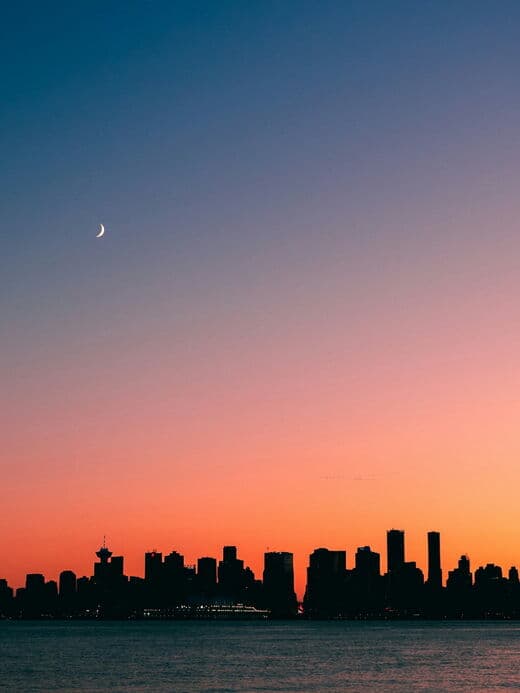
Second, the cities genuinely surprise. Toronto is one of the most multicultural cities on the planet, with over half its population born outside Canada. This creates a food scene that rivals New York or London, with authentic cuisine from virtually every culture. Montreal brings European charm to North America, with a joie de vivre that feels genuinely different from anywhere else on the continent. Vancouver somehow combines Pacific Northwest relaxation with Asian influences and urban sophistication, all against a backdrop of ocean and mountains that seems almost unfair to other cities.
Third, the infrastructure makes travel surprisingly easy. Canada consistently ranks among the safest countries in the world. The healthcare system, while primarily designed for residents, means excellent medical facilities are available if needed. The road network is well-maintained, the airports are efficient, and the service industry operates at a high standard. English is spoken everywhere outside Quebec, and even in Quebec, you can manage perfectly well with English while appreciating the French cultural influence.
Fourth, Canadians themselves make a difference. The stereotype of Canadian politeness is largely accurate, and it translates into genuinely helpful interactions. When I got lost driving to Jasper, a local spent fifteen minutes drawing me a map and recommending his favorite viewpoints. When my rental car had issues in Victoria, a stranger drove me to the rental agency. These are not isolated incidents - this warmth appears consistently across the country.
Fifth, Canada offers genuine value despite higher prices than some destinations. Unlike many countries where tourism feels extractive, Canada provides experiences that justify the costs. The national parks are impeccably maintained. The attractions deliver what they promise. The accommodations meet international standards. You are not constantly fighting against tourist traps and inflated foreigner prices.
The practical considerations also favor Canada for English-speaking visitors. Americans can enter with just a passport - no visa required for stays up to six months. British, Australian, and most European citizens need only an Electronic Travel Authorization, which costs CAD 7 and takes minutes to obtain online. The time zone alignment with the United States makes communication and adjustment easier. Direct flights connect major Canadian cities with hubs worldwide.
I should also mention what Canada does not offer, because setting accurate expectations matters. Canada is not a budget destination - expect prices comparable to or slightly higher than the United States. The distances are vast, so covering multiple regions requires significant time and planning. Winter travel in many areas requires careful preparation and appropriate gear. Some remote areas have limited services, requiring self-sufficiency.
But if you want a destination that combines natural spectacle with urban sophistication, outdoor adventure with cultural depth, and genuine warmth with international standards, Canada delivers in ways that few countries can match. This guide will help you make the most of that opportunity.
Regions of Canada: A Journey Through Diverse Landscapes and Cities
Understanding Canada's geography is essential for planning any trip. The country is typically divided into five major regions, but for tourism purposes, I will focus on the destinations most visitors prioritize, organized by province and territory. Each region offers distinct experiences, and most visitors will only have time to explore one or two regions in depth during a single trip.
British Columbia: Mountains Meet Ocean
British Columbia occupies Canada's Pacific coast and represents one of the country's most scenically diverse provinces. The combination of coastal mountains, temperate rainforests, and Pacific influences creates a unique environment found nowhere else in North America.
Vancouver serves as the region's major gateway and deserves at least three to four days of exploration. The city consistently ranks among the world's most livable, and the reasons become obvious immediately. Stanley Park is arguably the finest urban park in North America - a 400-hectare peninsula of old-growth forest surrounded by water and ringed by a scenic seawall perfect for walking, cycling, or rollerblading. Within the park, the Vancouver Aquarium offers excellent marine exhibits, though I recommend prioritizing the outdoor spaces on good weather days.
Granville Island transformed from an industrial zone to a cultural hub with a public market that rivals any food hall you have visited. The market vendors sell everything from fresh seafood to artisan cheeses to prepared foods from dozens of cuisines. Go hungry and graze through the stalls, or pick up supplies for a picnic in nearby parks. The island also hosts theaters, galleries, and craft breweries worth exploring.
For perspective on the city, the Vancouver Lookout in downtown provides 360-degree views, though many visitors prefer the panorama from Grouse Mountain, accessible by gondola from the city's North Shore. The gondola ride itself offers stunning views, and the summit provides hiking trails in summer and skiing in winter. For a more adventurous perspective, the Capilano Suspension Bridge spans a dramatic canyon in a setting that combines natural beauty with engineering marvel. The nearby Lynn Canyon Suspension Bridge offers a free alternative with similar thrills, though smaller crowds.
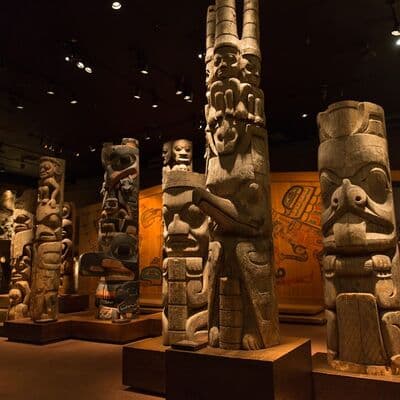
The Museum of Anthropology at the University of British Columbia houses one of the world's finest collections of Pacific Northwest Indigenous art, including monumental totem poles and intricate ceremonial objects. The building itself, designed by Arthur Erickson, is an architectural landmark. Nearby, Queen Elizabeth Park offers beautiful gardens and city views, while the VanDusen Botanical Garden provides a more extensive horticultural experience across 22 hectares.
The historic neighborhood of Gastown represents Vancouver's oldest area, now filled with restaurants, galleries, and the famous steam clock. Canada Place, with its distinctive sail-like roof, marks the cruise ship terminal and houses FlyOver Canada, a simulation ride that provides an aerial tour of the country's landscapes. The Vancouver Art Gallery occupies a neoclassical courthouse downtown and features strong Canadian and Indigenous art collections.
For outdoor enthusiasts, Kitsilano Beach offers sandy shores with mountain views, while English Bay Beach provides a more central option in the West End neighborhood. Science World, with its iconic geodesic dome, offers interactive exhibits particularly suitable for families. The Dr. Sun Yat-Sen Classical Chinese Garden brings Ming Dynasty garden design to Chinatown, offering a peaceful retreat from urban bustle. The H.R. MacMillan Space Centre rounds out the museum offerings with astronomy exhibits and planetarium shows.
Victoria, the provincial capital on Vancouver Island, offers a distinctly different atmosphere. The city feels almost more British than Britain, with formal gardens, high tea traditions, and colonial architecture. Butchart Gardens ranks among the world's great gardens, transformed from an exhausted limestone quarry into 22 hectares of themed gardens that bloom spectacularly from spring through fall. Book tickets in advance during peak season, and consider evening visits when the gardens are illuminated.
The Royal BC Museum provides excellent coverage of the province's natural and human history, including powerful exhibits on Indigenous cultures. The BC Parliament Buildings anchor the Inner Harbour and offer free tours when the legislature is not in session. Victoria Inner Harbour itself serves as the city's gathering place, lined with hotels, restaurants, and street performers.
Fisherman's Wharf offers a more casual atmosphere with floating homes, fish and chips stands, and resident seals begging for scraps. Beacon Hill Park stretches to the ocean with walking trails and the world's tallest free-standing totem pole. Craigdarroch Castle, built by a coal baron in the 1890s, showcases Victorian excess with elaborate woodwork and period furnishings.
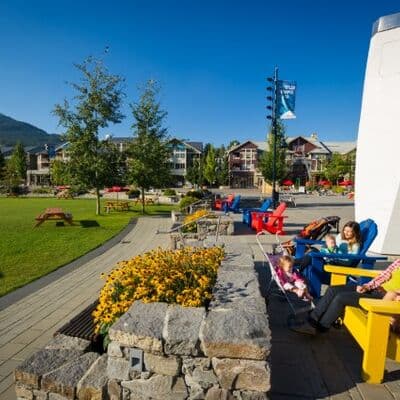
Whistler, about two hours north of Vancouver along the scenic Sea-to-Sky Highway, gained international fame hosting events during the 2010 Winter Olympics. The resort village operates year-round, with skiing and snowboarding in winter and mountain biking and hiking in summer. The Peak 2 Peak Gondola connects Whistler and Blackcomb Mountain, spanning the longest unsupported lift span in the world with glass-bottom gondola cars for those who enjoy thrills.
Whistler Village provides pedestrian-friendly access to shops, restaurants, and accommodations, all built in a cohesive alpine style. Whistler Olympic Plaza hosts events and provides a central gathering space. Lost Lake Park offers swimming and hiking in summer, while the Scandinave Spa provides Nordic-style outdoor baths perfect for recovery after active days.
Alberta: Rocky Mountain Majesty
Alberta contains some of the most spectacular mountain scenery in North America, concentrated in Banff and Jasper National Parks. These adjacent parks protect over 17,000 square kilometers of Rocky Mountain wilderness and represent the highlight of many Canada itineraries.
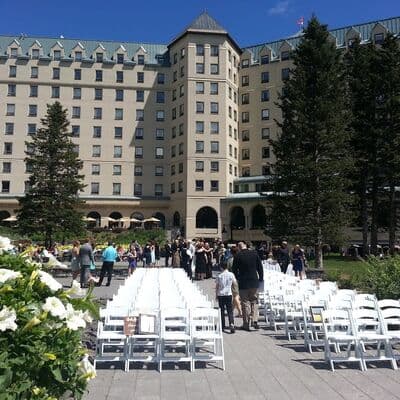
Banff National Park, established in 1885 as Canada's first national park, centers on the town of Banff, a fully developed resort community within park boundaries. Lake Louise may be the most photographed lake in Canada, and despite the crowds, it justifies its reputation. The emerald water surrounded by glaciated peaks creates a scene that seems lifted from a fantasy novel. Arrive before 7 AM in summer to experience relative solitude, or take the gondola to higher viewpoints for a different perspective.
Moraine Lake, nearby but arguably even more stunning, fills a glacially-carved valley with impossibly blue water backed by ten distinct peaks called the Valley of the Ten Peaks. Access to this lake by private vehicle is now restricted during peak season - use the shuttle system or visit very early in the morning. The short hike to the rockpile viewpoint provides the classic photograph angle.
The Banff Gondola rises to the summit of Sulphur Mountain, providing panoramic views over the Bow Valley and surrounding peaks. The summit area includes boardwalks, a restaurant, and interpretive exhibits. After your descent, the Banff Upper Hot Springs offer natural mineral pools where you can soak while gazing at mountain views.
Johnston Canyon features a series of waterfalls accessed via catwalks bolted to canyon walls. The lower falls require about 30 minutes walking, while the upper falls extend the hike to about an hour total. The catwalks can get crowded in summer, so early morning visits pay dividends. Bow Falls provides an easier access waterfall right near Banff townsite, popular for photography and featuring prominently in several Hollywood films.
Lake Minnewanka, the largest lake in Banff National Park, offers boat tours, fishing, and hiking opportunities away from the most concentrated crowds. Peyto Lake, shaped like a wolf's head when viewed from above, showcases perhaps the most vivid turquoise color of any Canadian lake - the viewing platform is accessible by a short walk from the Icefields Parkway.
Speaking of which, the Icefields Parkway connecting Banff and Jasper ranks among the world's great scenic drives. Over 230 kilometers, the road passes glaciers, waterfalls, turquoise lakes, and wildlife habitat. Allow a full day minimum for this drive, more if you want to explore side trails and viewpoints properly. Keep your camera accessible - wildlife sightings are common, including elk, deer, mountain goats, bighorn sheep, and occasionally bears.
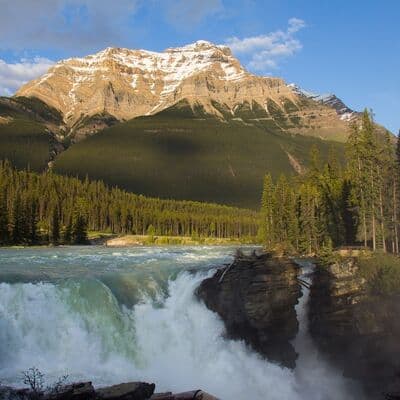
Jasper National Park continues the mountain spectacle with a slightly wilder, less developed character than Banff. The town of Jasper feels more like a mountain community than a resort, with fewer crowds and a more relaxed atmosphere. Athabasca Falls demonstrates raw water power, with the full flow of the Athabasca River forcing through a narrow canyon. The viewing platforms get close enough to feel the spray.
Maligne Lake, the largest natural lake in the Canadian Rockies, features Spirit Island, one of the most photographed spots in Canada. Boat cruises to the island are the only way to reach it, and booking in advance is essential during peak season. Maligne Canyon provides dramatic gorge scenery with waterfalls, fossils, and in winter, frozen canyon walks.
The Athabasca Glacier offers one of the few places in North America where you can walk on glacial ice accessible by road. The Columbia Icefield Skywalk extends over the Sunwapta Valley, with a glass-floored observation platform providing vertigo-inducing views. Ice explorer vehicle tours take visitors onto the glacier surface itself.
The Jasper SkyTram rises to near the summit of Whistlers Mountain, providing panoramic views over the townsite and surrounding peaks. Pyramid Lake offers a scenic spot for canoeing, kayaking, or simply enjoying the mountain reflection in calm water.
Ontario: Urban Sophistication and Natural Wonder
Toronto, Canada's largest city with over 6 million people in its metropolitan area, serves as the country's financial and cultural capital. The city's diversity is genuine - over 200 ethnic groups speaking more than 140 languages - and it translates into neighborhoods, restaurants, and cultural institutions that feel authentically global.
The CN Tower dominated the Toronto skyline since its completion in 1976 and remains an essential experience. The glass floor at 342 meters provides a test of nerve, while the EdgeWalk offers a chance to walk hands-free around the exterior of the tower secured by harness. The views extend over 100 kilometers on clear days, putting the city's scale into perspective.
The Royal Ontario Museum, known locally as the ROM, houses world-class collections spanning natural history and world cultures. The Michael Lee-Chin Crystal addition, a striking Daniel Libeskind design, divided architectural opinion but undeniably commands attention. Plan for several hours - the collections justify extended exploration. Nearby, the Art Gallery of Ontario underwent a stunning Frank Gehry expansion and houses important collections of Canadian, Indigenous, and European art.
The Distillery District preserves Victorian industrial architecture transformed into galleries, restaurants, breweries, and boutiques. The pedestrian-only lanes make wandering pleasant, and the area hosts events year-round including popular Christmas markets. St. Lawrence Market, operating since 1803, represents Toronto's culinary heritage with vendors selling everything from peameal bacon sandwiches to fresh produce to cheese from across Canada.
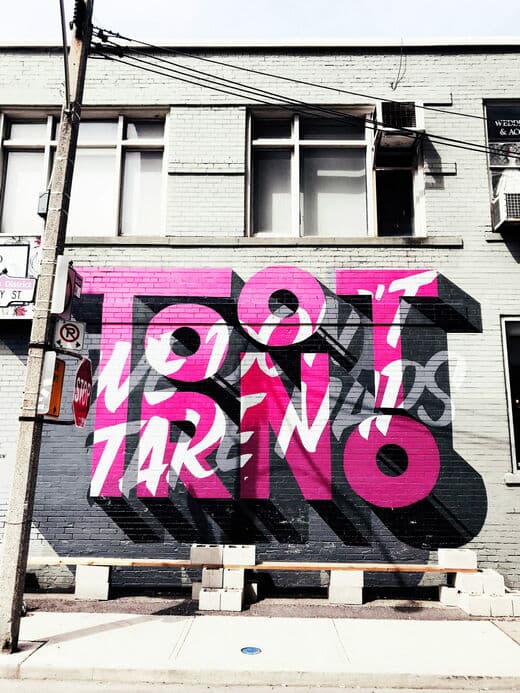
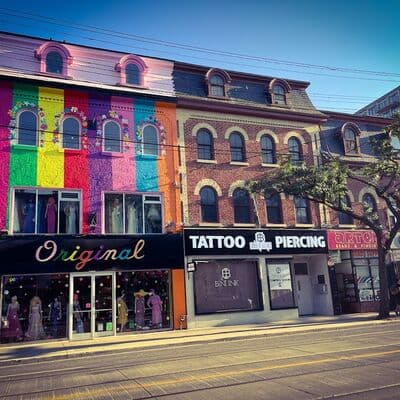
Kensington Market offers Toronto's bohemian heart - vintage shops, independent cafes, and a multicultural food scene concentrated in a compact neighborhood. The area deliberately resists chain stores and maintains its alternative character. Yorkville provides the opposite vibe - high-end shopping, galleries, and the city's most expensive real estate in a neighborhood that was counterculture in the 1960s and establishment today.
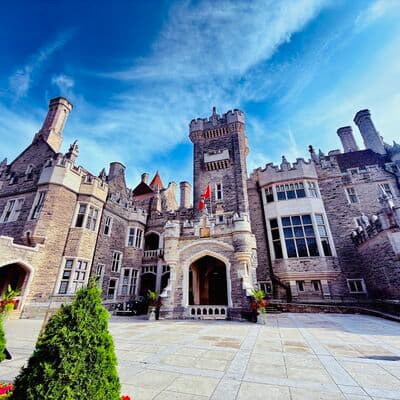
Queen Street West stretches through diverse neighborhoods from chain retail near the center to independent galleries, vintage shops, and music venues further west. Casa Loma, a castle built by a financier in the early 1900s, offers architectural spectacle and city views from its towers, even if the collection is less compelling than the building itself.
For family-friendly attractions, Ripley's Aquarium of Canada at the base of the CN Tower provides excellent marine exhibits including a moving walkway through a shark tunnel. The Toronto Zoo is one of the largest in the world, requiring a full day to explore properly. Canada's Wonderland north of the city offers roller coasters and amusement rides for thrill seekers. The Ontario Science Centre provides interactive exhibits particularly suitable for children.
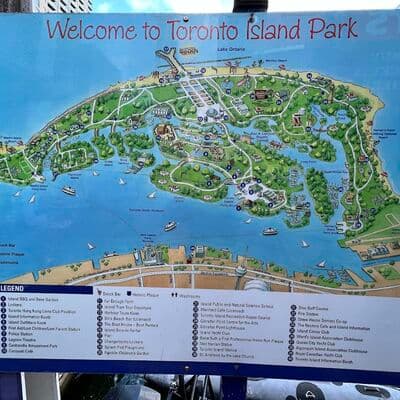
The Toronto Islands provide a car-free escape just a short ferry ride from downtown. The small community, beaches, and parkland offer a different pace from the mainland. High Park, Toronto's largest public park, contains gardens, a zoo, swimming pool, and extensive trails within the city limits.
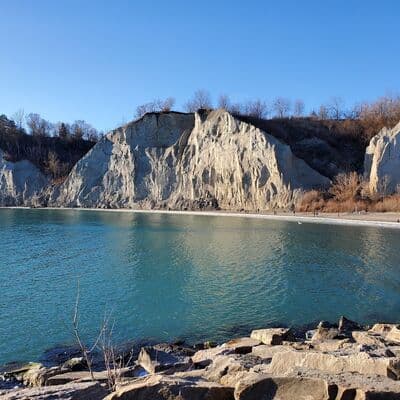
Sports enthusiasts should know that Rogers Centre hosts the Blue Jays baseball team with a retractable roof, while the Hockey Hall of Fame celebrates Canada's national winter sport with extensive memorabilia and interactive exhibits. CF Toronto Eaton Centre provides shopping mall experiences, while Nathan Phillips Square serves as a civic gathering space in front of city hall. The Bata Shoe Museum offers a surprisingly engaging exploration of footwear history. Scarborough Bluffs provides dramatic escarpment scenery along Lake Ontario on the eastern edge of the city.
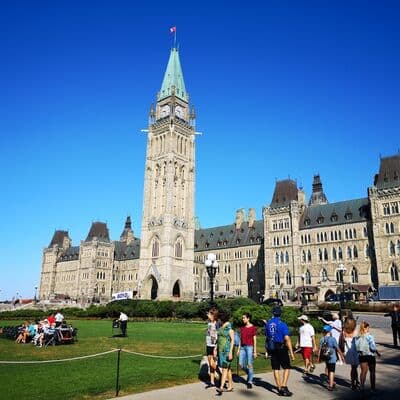
Ottawa, the national capital, offers a different experience from Toronto - more compact, more governmental, and more explicitly historic. Parliament Hill anchors the city with Gothic Revival architecture overlooking the Ottawa River. Free tours of Centre Block explain Canadian governance, and the daily Changing of the Guard ceremony in summer provides pageantry. The Peace Tower provides observation deck views over the capital region.
The Rideau Canal, a UNESCO World Heritage Site, transforms into the world's largest naturally frozen skating rink in winter, stretching 7.8 kilometers through the downtown. In summer, the canal serves boats and the pathways serve cyclists and walkers. ByWard Market, operating since 1826, provides restaurants, bars, and market stalls in a historic setting that serves as the city's social center.
The National Gallery of Canada, housed in a Moshe Safdie building, contains the country's premier art collection including strong Canadian and Indigenous sections. The Canadian Museum of History, across the river in Gatineau, Quebec, provides comprehensive coverage of Canadian history and houses the Grand Hall with its monumental totem pole collection. The Canadian War Museum covers military history from Indigenous conflicts through Afghanistan, with thoughtful exhibits that avoid glorification.
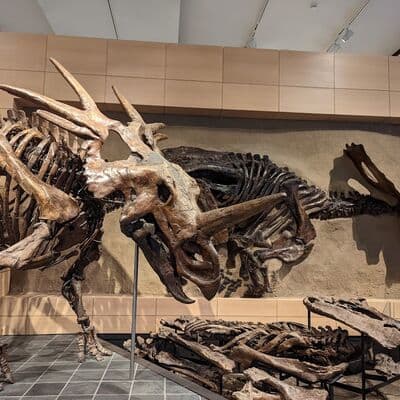
The Canadian Museum of Nature occupies a castle-like building and provides natural history exhibits including dinosaur galleries and Arctic exhibits. Rideau Hall, the official residence of Canada's Governor General, offers grounds open for walking and periodic tours of the residence. Gatineau Park, just across the river in Quebec, provides 361 square kilometers of recreational land for hiking, swimming, and skiing.
Additional Ottawa attractions include Major's Hill Park overlooking the canal and Parliament, Diefenbunker Cold War Museum in a declassified nuclear bunker outside the city, the historic Chateau Laurier hotel, Notre-Dame Cathedral Basilica, and the Mackenzie King Estate in Gatineau Park.
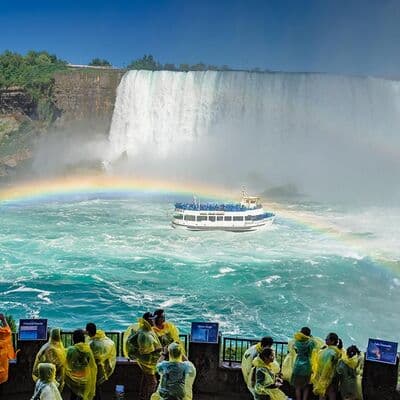
Niagara Falls remains one of the world's natural wonders, with about 750,000 gallons of water flowing over the falls every second. Horseshoe Falls, the Canadian section, provides the most dramatic view - 57 meters high and 670 meters wide in a curved cascade. Yes, the surrounding area is touristy. Yes, the attractions veer toward kitsch. But the falls themselves justify the visit, and there are ways to experience them that transcend the commercial surroundings.
Niagara City Cruises take boats into the mist at the base of the falls - you will get wet, but the perspective is unmatched. Journey Behind the Falls takes you through tunnels to observation points behind the water curtain. The Skylon Tower provides aerial perspectives, while the Whirlpool Aero Car crosses the Niagara Whirlpool on an antique cable car.
Clifton Hill represents the tourist entertainment district with wax museums, haunted houses, and arcades - love it or hate it depending on your tolerance for such things. The Niagara SkyWheel provides observation wheel views over the falls. The Niagara Parks Power Station, a restored hydroelectric plant, offers tours and nighttime immersive experiences. The Butterfly Conservatory provides a nature respite from the commercial area.
Niagara-on-the-Lake, a short drive from the falls, offers a completely different atmosphere - a charming historic town with excellent wineries, the Shaw Festival theater company, and 19th-century architecture. Many visitors prefer basing here rather than in the falls area itself.
Quebec: French Culture in North America
Montreal offers an experience unlike anywhere else in North America - a majority French-speaking city with European influences, vibrant arts scenes, and one of the continent's best food cultures. The city invented bagels that rival New York, developed poutine into high cuisine, and hosts festivals that draw millions annually.
Old Montreal provides cobblestone streets, 17th-century architecture, and the Notre-Dame Basilica, whose interior rivals European cathedrals with its elaborate woodwork and dramatic blue vaulting. The Old Port stretches along the St. Lawrence River with promenades, the Grande Roue de Montreal observation wheel, and the Montreal Science Centre.
Pointe-a-Calliere Museum occupies the actual archaeological site where Montreal was founded, with exhibits extending underground through excavated remains of the original settlement. The Montreal Museum of Fine Arts ranks among Canada's finest art institutions, spanning multiple pavilions connected by underground passages.
Mount Royal Park, designed by Frederick Law Olmsted who also designed New York's Central Park, provides the green heart of the city and the viewpoint at Kondiaronk Belvedere offers the quintessential Montreal panorama. Saint Joseph's Oratory, the largest church in Canada, crowns the mountain's opposite side with Renaissance-style architecture and grounds that draw pilgrims and tourists alike.
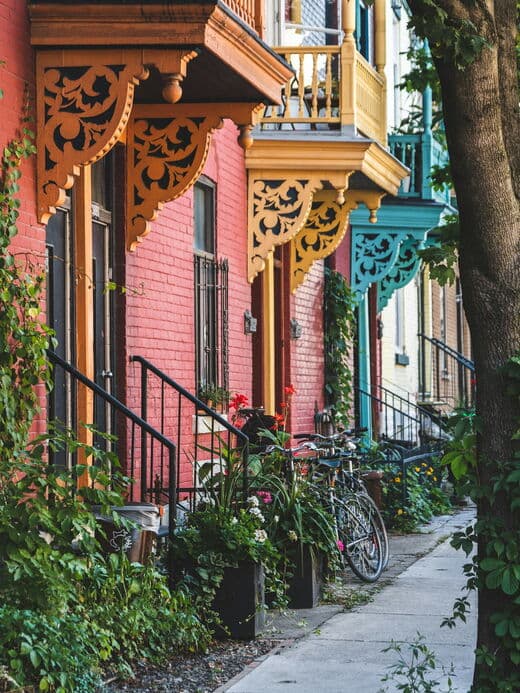
Plateau Mont-Royal represents Montreal's bohemian heart - wrought-iron staircases, independent boutiques, and some of the city's best restaurants. Mile End continues the alternative vibe with bagel shops, vintage stores, and creative studios. Jean-Talon Market provides a more local alternative to tourist markets, with Quebec produce, meats, cheeses, and prepared foods.
The Montreal Underground City, known as RESO, provides 33 kilometers of underground passages connecting metro stations, shopping centers, hotels, and universities - essential in winter but fascinating to explore year-round. Olympic Stadium, built for the 1976 Olympics, offers tower observatory views and adjacent attractions including the Biodome, which recreates four ecosystems under one roof, and the Botanical Garden, one of the world's great gardens with extensive themed sections including the magical Chinese Garden.
The Montreal Biosphere, housed in Buckminster Fuller's geodesic dome from Expo 67, focuses on environmental issues. Oasis Immersion offers immersive art experiences in a converted industrial space.
Quebec City represents the most European city in North America - 400 years of history within defensive walls, French spoken everywhere, and architecture that genuinely transports you across the Atlantic. Old Quebec, a UNESCO World Heritage Site, divides into Upper Town with its fortifications and grand institutions, and Lower Town with its narrow streets and waterfront character.
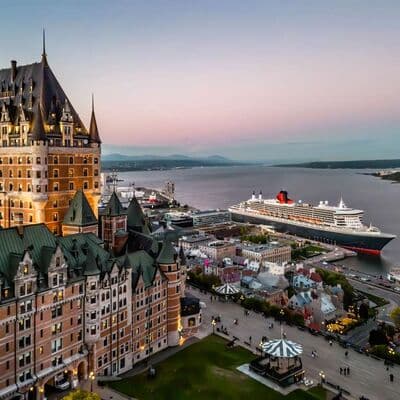
Chateau Frontenac dominates the skyline as perhaps the world's most photographed hotel, its copper roofs and turrets defining the Quebec City image. Even if not staying there, wander through the public areas. Terrasse Dufferin, the boardwalk fronting the chateau, provides promenades over the St. Lawrence River with views toward Orleans Island and the surrounding mountains.
Petit-Champlain in Lower Town claims to be the oldest commercial district in North America, now filled with boutiques and restaurants in 17th-century buildings. Place Royale marks the site where Samuel de Champlain established the settlement in 1608. La Citadelle, the star-shaped fortress overlooking the city, remains an active military garrison with museum exhibits and changing of the guard ceremonies.
Plains of Abraham, the battlefield where British forces defeated the French in 1759, now serves as Quebec City's great urban park with museums, walking paths, and event spaces. Montmorency Falls, just outside the city, drops 83 meters - actually 30 meters higher than Niagara Falls. A cable car, stairs, and suspension bridge provide various viewing angles.
Basilique Sainte-Anne-de-Beaupre, northeast of the city, draws Catholic pilgrims to its reported healing site and impressive Romanesque Revival architecture.
National Parks: Protecting Canada's Natural Heritage
Canada operates 48 national parks protecting representative ecosystems from coast to coast to coast. These parks preserve some of the most spectacular landscapes in North America and deserve central place in any Canada itinerary. The Parks Canada Discovery Pass costs CAD 72.25 for adults (2024 prices) and provides unlimited entry to all national parks and national historic sites for a year - it pays for itself within a few park visits.
Banff National Park
As Canada's oldest national park, established in 1885, Banff set the template for the national park system. The park spans 6,641 square kilometers of mountain terrain including some of the most recognizable landscapes in Canada. The town of Banff provides full services within park boundaries, making it an accessible base for exploration while maintaining wilderness character just minutes from town.
The park's lakes define its character. Lake Louise and Moraine Lake draw the crowds for good reason - the glacially-fed turquoise waters backed by dramatic peaks create scenes that seem enhanced even when seen in person. Lake Minnewanka offers a larger, less crowded alternative with boat tours and shoreline hiking. Peyto Lake, viewed from above on the Icefields Parkway, shows perhaps the most vivid color of any Canadian lake.
The park offers hiking for all abilities. Short walks like the easy lakeshore trail at Lake Louise provide scenery without major effort. Moderate hikes like Johnston Canyon offer waterfalls and canyon scenery on well-maintained trails. Challenging routes like the Plain of Six Glaciers or Sentinel Pass reward stronger hikers with high alpine terrain.
Wildlife viewing opportunities include elk (common in and around town), deer, bighorn sheep, mountain goats, and both black bears and grizzly bears. Maintain distance from all wildlife - 30 meters from most animals, 100 meters from bears and cougars. The park requires bear spray for backcountry travel and recommends it for front-country hiking.
Jasper National Park
Jasper, at 11,228 square kilometers, is the largest national park in the Canadian Rockies and offers a wilder, less developed experience than Banff. The town of Jasper feels more like a mountain community than a resort town, with fewer crowds and lower prices than its southern neighbor.
The Columbia Icefield, straddling the Banff-Jasper boundary, represents the largest icefield in the Rocky Mountains. The Athabasca Glacier provides accessible ice walking opportunities, though the glacier's retreat over recent decades starkly demonstrates climate change impacts. Ice explorer vehicles take visitors onto the glacier surface, or you can hike to the toe independently.
Maligne Lake and its famous Spirit Island provide one of Canada's most photographed scenes, accessible only by boat. Maligne Canyon offers dramatic gorge scenery, particularly impressive in winter when the canyon freezes and guided icewalk tours explore the icy depths. Athabasca Falls demonstrates raw water power where the full flow of the Athabasca River forces through a narrow canyon.
Jasper's dark sky preserve status makes it one of the world's largest accessible dark sky areas. The annual Dark Sky Festival in October celebrates this designation, but star gazing is excellent throughout the year. The Jasper Skytram provides sunset and evening viewing above the light pollution of the townsite.
Other Notable Parks
Pacific Rim National Park Reserve on Vancouver Island's west coast protects rugged Pacific coastline, temperate rainforest, and the famed West Coast Trail. The beaches at Long Beach stretch for kilometers, backed by old-growth forest. Whale watching from Tofino, just outside park boundaries, offers excellent opportunities for gray whales, orcas, and humpbacks.
Yoho National Park, adjacent to Banff, contains the Burgess Shale fossil beds - one of the world's most important fossil sites - along with Takakkaw Falls, one of Canada's highest waterfalls, and the Natural Bridge geological formation.
Kootenay National Park, also adjacent to Banff, features Radium Hot Springs, Paint Pots mineral springs, and Marble Canyon. The less crowded trails offer alternatives when Banff feels overwhelmed.
Glacier National Park in British Columbia (not to be confused with its Montana neighbor) protects part of the Columbia Mountains with rainforests, glaciers, and the historic Rogers Pass.
Waterton Lakes National Park, at the southern end of the Canadian Rockies bordering Montana's Glacier National Park, offers dramatic scenery where prairie meets mountains. The historic Prince of Wales Hotel provides an iconic viewpoint over Waterton Lake.
Gros Morne National Park in Newfoundland showcases dramatic fjords, ancient geological formations, and the Long Range Mountains. The park earned UNESCO World Heritage status for its geological significance - the Tablelands expose mantle rock normally found deep beneath Earth's surface.
Cape Breton Highlands National Park in Nova Scotia combines mountain scenery with Atlantic coastline along the Cabot Trail, one of North America's most scenic drives.
Fundy National Park in New Brunswick features the world's highest tides - up to 16 meters between high and low tide - along with waterfalls, covered bridges, and coastal hiking.
Park Practical Information
Park entry fees apply at all national parks. The Discovery Pass mentioned above provides the best value for visitors planning multiple park visits. Day passes are available for single-park visits. Fees support park maintenance, conservation programs, and visitor services.
Reservations for front-country camping now open in a rolling window - check Parks Canada's website for specific dates. Popular campgrounds book immediately upon opening. Backcountry camping requires permits and usually wilderness passes; quotas apply on popular routes.
Wildlife safety deserves serious attention. Store food properly using provided lockers or bear canisters. Maintain distances from all wildlife. Carry bear spray in the mountain parks and know how to use it. Make noise on trails to avoid surprising bears. Never approach or feed any wildlife.
Weather in the mountain parks changes rapidly regardless of season. Layer clothing, carry rain gear even on sunny mornings, and be prepared to modify plans based on conditions. Snow is possible any month of the year at higher elevations. Check avalanche conditions before winter backcountry travel.
When to Visit: Timing Your Canada Adventure
Canada spans enough territory that choosing when to visit depends entirely on what you want to do and where you want to go. Each season offers distinct advantages and challenges, and understanding these helps you plan a trip that matches your preferences.
Summer (June through August)
Summer brings the warmest temperatures and longest days, making it prime season for most visitors. In the mountain parks, snow has melted from lower trails by mid-June, though higher passes may not clear until July. Days in the Rockies are pleasantly warm - typically 15 to 25 degrees Celsius - with cool nights. This is peak season with corresponding crowds; accommodations in Banff and Jasper should be booked months in advance.
Summer in the cities brings festivals and outdoor events. Montreal's jazz and comedy festivals draw millions. Toronto comes alive with outdoor concerts and cultural events. Vancouver's mild temperatures make outdoor activities ideal. However, cities can get quite hot and humid, particularly Toronto and Montreal in July and August - air conditioning is essential.
The shoulder weeks - early June and late August/early September - often provide the best balance of good weather and reduced crowds. The period right after Labor Day (first Monday of September) sees crowds drop significantly while weather remains pleasant.
Fall (September through November)
Fall brings spectacular foliage, particularly in Ontario, Quebec, and the Atlantic provinces. The period from late September through mid-October offers peak colors, with sugar maples turning brilliant reds and oranges. Quebec's Eastern Townships and Ontario's cottage country provide classic fall scenery.
In the Rockies, fall brings larches turning gold against evergreen forests - a phenomenon that peaks in late September and draws photographers from worldwide. Wildlife is particularly active as animals prepare for winter, with elk rutting season bringing dramatic bugling displays.
Temperatures cool rapidly in fall. By November, much of the country has experienced first snowfall, and mountain pass closures begin. This is shoulder season for most destinations, with good deals on accommodations but some attractions closing for the season.
Winter (December through February)
Winter brings cold to most of Canada - significantly cold by standards of most English-speaking countries. Temperatures in the Prairies can drop below minus 40 degrees Celsius. Even relatively mild areas like Vancouver and Victoria experience cool, rainy conditions.
But winter also brings unique opportunities. Skiing in Whistler ranks among the best in North America, with reliable snow and varied terrain. The Rockies offer multiple world-class ski areas. Rideau Canal skating in Ottawa provides a uniquely Canadian experience. Niagara Falls partially frozen creates dramatic ice formations.
Winter festivals brighten the dark months. Quebec City's Carnaval, Montreal's Fete des Neiges, and Ottawa's Winterlude celebrate the season with outdoor events, ice sculptures, and hearty food.
Visitors from warmer climates should prepare seriously for Canadian winter. Quality cold-weather clothing is essential - multiple layers, proper winter boots with insulation, warm hats and gloves, and winter coats rated for the temperatures you will encounter. This is not optional - exposed skin can suffer frostbite in minutes in extreme cold.
Spring (March through May)
Spring is challenging for many Canada activities. Snow melts unevenly - cities may be pleasant while mountain trails remain buried. Mud season in the mountains makes many trails impassable from April through mid-May. The period feels transitional throughout much of the country.
However, spring brings certain advantages. The Pacific coast blooms spectacularly - Butchart Gardens and Vancouver's cherry blossoms peak in April. Whale watching season begins on both coasts. Tourist crowds remain minimal while prices stay low.
For cherry blossom viewing in Vancouver, the peak typically falls in late March through mid-April, though exact timing varies by year. The city tracks bloom progress on dedicated websites.
General Advice on Timing
For a first visit focusing on the Rockies and major cities, aim for July through mid-September. You will get the full range of experiences with manageable weather. Book accommodations three to six months in advance for peak summer dates.
For winter sports, late January through March offers the most reliable conditions. Early season (November-December) can have limited snow, while late season (April) brings spring skiing conditions.
For fall foliage, target the last two weeks of September through the first week of October, keeping in mind that peak timing varies by location and year.
For budget travel, shoulder seasons (May-June, September-October) offer better prices with still-reasonable conditions. True off-season (November, March-April) provides the lowest prices but limits activity options.
Getting There: International Arrivals to Canada
Canada welcomes visitors through numerous international gateways, with your choice of arrival city depending on your itinerary. Understanding your options helps you plan efficient routings and potentially save money.
Major International Airports
Toronto Pearson International Airport (YYZ) serves as Canada's busiest airport and primary international hub. Located 27 kilometers northwest of downtown, the airport connects to virtually every major world city with direct flights. The UP Express train reaches Union Station downtown in 25 minutes for CAD 12.35. Taxis and rideshares cost CAD 50-70 depending on traffic and destination. Many visitors connect through Toronto to onward domestic destinations.
Vancouver International Airport (YVR) serves as the primary Pacific gateway, with extensive connections to Asia, Australia, and the western United States. The airport earned consistent recognition as North America's best and global top ten. The Canada Line SkyTrain reaches downtown in 26 minutes for about CAD 10. The airport itself features notable Indigenous art installations worth exploring.
Montreal-Trudeau International Airport (YUL) provides the main gateway to Quebec and convenient access to eastern Canada. The 747 express bus reaches downtown in 45-70 minutes for about CAD 11. Taxis cost a fixed rate of CAD 44.25 to downtown hotels.
Calgary International Airport (YYC) offers the closest major airport to the Rocky Mountain parks - about 90 minutes to Banff, making it ideal for mountain-focused itineraries. Brewster Express and other shuttle services connect directly to Banff and Lake Louise.
Entry Requirements
American citizens need only a valid passport to enter Canada - no visa required for visits up to six months. The land border crossing process is straightforward for most visitors, though waits can extend during peak periods at busy crossings.
British, Australian, and most EU citizens need an Electronic Travel Authorization (eTA) before flying to Canada. The eTA costs CAD 7, is usually approved within minutes, and remains valid for five years or until your passport expires. Apply online at the Government of Canada website - beware of third-party sites charging inflated fees for the same service. Note that eTAs are only required when arriving by air - land and sea arrivals do not need them.
Citizens of some countries require full visitor visas. Check current requirements on the Government of Canada website, as the list changes periodically. Visa applications involve more documentation and longer processing times.
Customs declarations are required for everyone entering Canada. Declare all food, plant materials, and animal products. Fresh fruit, meat, and many plant products cannot be brought across the border. When in doubt, declare it - undeclared prohibited items result in significant fines, while declared items are simply confiscated.
Crossing from the United States
The world's longest undefended border offers numerous land crossing points. Major crossings include:
Detroit-Windsor and Port Huron-Sarnia provide access from Michigan. The Ambassador Bridge and Detroit-Windsor Tunnel serve the former crossing. Expect longer waits on summer weekends and holidays.
Niagara Falls crossings (Rainbow Bridge, Whirlpool Bridge, Lewiston-Queenston Bridge) connect New York state to Ontario. The Rainbow Bridge offers the most scenic crossing with views of both American and Canadian falls.
The Peace Arch crossing at Blaine, Washington connects to British Columbia. The Peace Arch itself straddles the border in landscaped parkland.
I-5 crossings at multiple points between Washington and British Columbia serve visitors heading to Vancouver. Summer weekend waits can exceed an hour at peak times.
The NEXUS program, for pre-approved travelers, provides expedited crossing at both land borders and airports. The CAD 50 membership requires in-person interviews but provides significant time savings for frequent crossers.
Flight Booking Strategies
For the best fares, flexibility helps enormously. Midweek flights typically cost less than weekend departures. Shoulder seasons offer lower prices than peak summer. Red-eye flights sometimes price significantly below daytime departures.
Consider open-jaw itineraries - arriving in one city and departing from another eliminates backtracking. Flying into Vancouver and out of Toronto (or vice versa) allows a west-to-east journey without repeating flights. Airlines and booking engines handle these routings routinely.
Canadian low-cost carriers include Flair Airlines and Lynx (formerly Swoop), offering domestic routes and some U.S. connections at lower prices. However, bag fees and seat selection charges add up - compare total costs rather than base fares. Air Canada and WestJet provide the primary full-service domestic options with international codeshare agreements.
Getting Around: Transportation Within Canada
Canada's vastness makes transportation planning essential. The distances between regions exceed what many visitors expect - Vancouver to Toronto is over 4,000 kilometers, farther than London to Istanbul. Understanding your options helps you plan realistic itineraries.
Domestic Flights
Flying is often the only practical option for multi-region itineraries. Air Canada operates the most extensive domestic network, with flights connecting all major cities and many smaller centers. WestJet provides strong competition on major routes, often with lower fares. Both airlines operate frequent service on popular routes like Toronto-Montreal (about 1 hour) and Vancouver-Calgary (about 1 hour 15 minutes).
Booking strategies that work internationally apply domestically. Tuesday/Wednesday flights typically cost less. Advance booking helps, though last-minute sales occasionally appear. Compare both full-service carriers and budget options including all fees.
Regional carriers serve smaller communities. Porter Airlines focuses on eastern Canada with convenient Toronto Island airport operations. Pacific Coastal serves British Columbia communities. Bearskin Airlines connects smaller Ontario and Manitoba cities. These carriers matter if your itinerary includes off-the-beaten-path destinations.
Rental Cars
For exploring national parks, wine regions, or scenic routes, rental cars provide essential flexibility. Major international agencies (Enterprise, Hertz, Avis, Budget) operate throughout Canada, alongside Canadian companies like Discount and Driving Force. Booking in advance, especially during summer, secures availability and better rates.
Canadian driving deserves respect. Distances are vast - allow more time than you expect. Winter driving requires appropriate tires (legally mandated in some provinces) and careful technique. Wildlife on roads poses real danger, particularly at dawn and dusk. Moose collisions cause fatalities every year - these animals weigh up to 700 kilograms and their leg height places their body mass at windshield level.
Some important rules: all provinces require daytime running lights (built into modern vehicles). Turning right on red is generally permitted except in Quebec (where it is banned in Montreal and permitted elsewhere). Speed limits are in kilometers per hour - 100 km/h on most highways equals about 62 mph. Radar detectors are illegal in many provinces.
For the mountain parks, a rental car from Calgary provides the best combination of price and convenience. Airport rentals avoid downtown traffic. Book early for summer travel - demand for vehicles regularly exceeds supply.
Trains
VIA Rail operates passenger rail service across Canada, but this is not high-speed rail by international standards. The signature transcontinental journey from Toronto to Vancouver takes four nights - it is an experience in itself rather than practical transportation. That said, it is a spectacular experience passing through landscapes unreachable by road.
More practical VIA Rail routes include the Corridor service between Quebec City, Montreal, Ottawa, Toronto, and points between. The Montreal-Toronto run takes about 5 hours - competitive with driving and more comfortable than budget flights once you account for airport procedures.
The Rocky Mountaineer offers luxury rail journeys through the Canadian Rockies, operating as daytime-only service with overnight hotel stays. The experience competes with luxury cruise pricing but provides unique mountain perspectives unavailable from roads.
Buses
The intercity bus landscape in Canada has changed significantly in recent years. Greyhound discontinued most Canadian service in 2018. Regional carriers have filled some gaps, but coverage varies by province.
In Alberta, the Mountain Express connects Calgary to Banff and Lake Louise - essential for visitors without rental cars. Red Arrow provides premium service between Calgary, Edmonton, and other Alberta cities.
In British Columbia, multiple carriers operate since Greyhound's departure. BC Connectors coordinates schedules across providers. Ebus serves various BC routes.
In Ontario, FlixBus (recently entered the market), Megabus, and Ontario Northland provide intercity connections. The Toronto-Montreal corridor has the most options.
For budget travelers, buses remain the cheapest option for many routes, though the network is less comprehensive than travelers from other countries might expect.
Urban Transit
Major Canadian cities have effective public transit systems. Toronto's TTC combines subways, streetcars, and buses with comprehensive coverage. Vancouver's TransLink includes SkyTrain (driverless metro), buses, and SeaBus ferries. Montreal's STM operates metro and bus services with art-filled stations worth visiting as attractions. Calgary and Edmonton have CTrain and LRT systems respectively, with free travel in downtown zones.
Single-ride fares typically range from CAD 3 to CAD 4. Day passes and multi-day tourist passes offer savings for intensive use. Google Maps and official transit apps provide reliable navigation.
Taxis and rideshares operate in all major cities. Uber and Lyft are available in most urban areas, though provincial regulations vary. Traditional taxi service remains widely available - apps and phone booking both work.
Cultural Code: Understanding Canadian Norms and Etiquette
Canadians have a well-deserved reputation for politeness, but understanding local norms helps you fit in and avoid awkwardness. These observations come from my own experiences and conversations with Canadian friends over many visits.
The Politeness Culture
Canadian politeness is real, but it manifests differently than visitors sometimes expect. The stereotype of constant apologizing is largely accurate - Canadians say "sorry" reflexively, even when the other person caused the inconvenience. Visitors often find themselves adopting this habit within days.
Please and thank you are expected in virtually all transactions. Service workers deserve courteous treatment regardless of their role. Cutting in lines (queues) is considered serious rudeness. Holding doors for people behind you is standard behavior.
Complaints tend to be expressed indirectly. Where an American might say "this is wrong," a Canadian might say "I wonder if there might be an issue with..." Understanding this indirect style helps in both directions - recognizing understated criticism and expressing concerns in ways that do not feel aggressive.
Tipping Expectations
Tipping culture in Canada mirrors the United States more than Europe or Australia. In restaurants, 15-20% is standard for good service, calculated on the pre-tax total. Many payment machines now suggest percentages, often starting at 18% or even higher - you are not obligated to accept these suggestions.
Bartenders receive CAD 1-2 per drink or 15-20% of the tab. Hotel housekeeping receives CAD 2-5 per night, left daily since staff rotates. Taxi drivers receive 15-20%. Bellhops and valet parking receive CAD 2-5. Tour guides receive 10-20% of tour cost. Hairstylists and spa services receive 15-20%.
Coffee shops with tip jars at counters do not create obligation - tipping for counter service is optional and less common than at sit-down establishments. However, the pandemic shifted some norms, and tip prompts now appear for more transaction types than previously.
Language Considerations
English is spoken throughout most of Canada, and visitors from English-speaking countries will communicate easily. However, Canadian English has its own characteristics worth noting.
Pronunciation differences include the famous Canadian raising - "about" sounds somewhat like "a-boot" to American ears, though Canadians will insist it does not. Certain words have British spellings (colour, centre, cheque) while others follow American conventions. The metric system applies to everything official, though some informal usage retains imperial measurements.
In Quebec, French is the dominant language and official language of the province. In Montreal, most people in tourist areas and younger demographics are bilingual, and English service is readily available. In Quebec City and smaller Quebec communities, French predominates - knowing basic phrases helps. Outside Quebec, French-speaking communities exist in New Brunswick, Ontario, and Manitoba.
A "two-four" is a case of 24 beers. A "loonie" is the one-dollar coin (featuring a loon on one side). A "toonie" is the two-dollar coin. "Double-double" at Tim Hortons means coffee with two creams and two sugars. A "washroom" is a bathroom. "Eh" at the end of sentences is real, though less universal than stereotypes suggest.
Indigenous Relations
Canada is increasingly acknowledging its Indigenous peoples and the historical harms of colonization. Visitors will encounter this in land acknowledgments before events, in museum exhibits, and in public discourse about reconciliation.
Appropriate engagement includes learning about the Indigenous nations whose territories you are visiting. Museums like the Museum of Anthropology in Vancouver and the Canadian Museum of History in Ottawa provide excellent context. Indigenous-led tours and experiences, offered in many national parks and communities, provide opportunities to learn directly from Indigenous guides.
Avoid treating Indigenous cultures as monolithic - there are over 600 recognized First Nations in Canada, each with distinct languages, traditions, and histories. Referring to specific nations rather than generic "Native" or "Indian" terms shows respect and accuracy.
Social Norms
Personal space expectations in Canada fall between American informality and European formality. Handshakes are standard for introductions in professional or formal settings. Casual social situations may involve less physical greeting. Hugging is generally reserved for friends and family rather than new acquaintances.
Small talk topics include weather (endlessly), sports (especially hockey), travel, and local events. Politics can be discussed more openly than in some countries, but Canadians tend toward less contentious positions. American politics are a frequent topic of Canadian conversation, usually with a certain bemused distance.
Punctuality matters for appointments and reservations. Arriving five minutes early is ideal for business meetings. Social events have more flexibility, but showing up more than fifteen minutes late without communication is considered rude.
Safety: Staying Secure in Canada
Canada ranks among the world's safest countries for travelers. Violent crime is rare, petty crime exists but is manageable with common sense, and the infrastructure is well-maintained. That said, understanding specific considerations helps you stay safe.
General Safety
Major Canadian cities are safe by international standards. Walking at night in most areas poses little concern. The visible homeless population in some downtown areas may surprise visitors from some countries, but they rarely pose safety threats. Standard urban precautions apply - be aware of your surroundings, keep valuables secured, and avoid obviously risky situations.
Vehicle break-ins occur in tourist areas, particularly at trailheads and scenic pullouts. Never leave valuables visible in your car - trunk storage or taking items with you is essential. This applies especially in the national parks, where organized theft rings have operated.
Scams are uncommon compared to some tourist destinations, but standard caution applies. Be wary of unsolicited approaches, particularly in tourist areas. Credit card and ATM skimming exists, though less commonly than in some countries.
Wildlife Safety
Canada's wildlife requires more safety attention than urban crime. Bears - both black bears and grizzlies - inhabit much of the country's wilderness and occasionally enter towns and campgrounds. Bear safety is not optional for anyone spending time in bear country.
Carry bear spray in the mountain parks and know how to use it - practice removing the safety and deploying it so the motions are automatic if needed. Make noise on trails to avoid surprising bears, especially on blind corners and near streams. Never approach or feed bears under any circumstances. Store food properly using provided bear lockers or hanging systems.
If you encounter a bear: stop moving, speak calmly to identify yourself as human, back away slowly while facing the bear. Do not run - you cannot outrun a bear, and running triggers chase instinct. With black bears, making yourself large and making noise can help. With grizzlies, defensive behavior is more appropriate unless the bear shows predatory behavior (stalking, approaching directly), in which case fighting back may be necessary.
Moose are actually responsible for more injuries than bears, primarily through vehicle collisions. These animals can weigh 700 kilograms and their legs put their body mass at windshield level in a collision - often fatal for vehicle occupants. Reduce speed in moose areas, especially at dawn and dusk. If a moose is on the road, wait for it to leave rather than honking or approaching.
Cougars exist in western Canada but attacks are rare. Making noise and traveling in groups helps. Elk appear docile but can charge if approached too closely, particularly during rutting season (fall) when males are aggressive.
Environment and Weather
Hypothermia remains a risk in the mountains even in summer. Weather changes rapidly - sunny mornings can become cold rain by afternoon. Always carry layers and rain gear, even for short hikes. In winter, the cold can be genuinely dangerous - frostbite can occur in minutes at extreme temperatures.
Water safety deserves attention in a country with so many lakes and rivers. Cold water, even in summer, can incapacitate swimmers quickly. Many Canadian lakes are cold enough to cause cold water shock upon immersion. Life jackets for boating are legally required and essential in practice.
Avalanches kill people every year in Canada's mountain ranges. If traveling in backcountry winter terrain, proper avalanche safety training, equipment (beacon, shovel, probe), and current conditions knowledge are essential. This is not something to approach casually.
Emergency Services
Dial 911 for emergencies throughout Canada. Response times are generally quick in urban areas but may be longer in remote locations. Cell coverage in remote areas can be limited - inform someone of your plans when heading into wilderness.
Police services are provided by the Royal Canadian Mounted Police (RCMP) in most areas, with municipal forces in major cities. Interactions with Canadian police are generally straightforward and professional. If stopped while driving, remain in your vehicle with hands visible.
Health: Medical Considerations for Visitors
Canada has excellent medical facilities and healthcare standards, but visitors need to understand how the system works for non-residents and prepare accordingly.
Healthcare Access
Canada's universal healthcare system covers Canadian residents, not visitors. You will be expected to pay for medical services at the time of treatment. Costs are comparable to U.S. healthcare - an emergency room visit can easily exceed CAD 1,000, and hospitalization can run into tens of thousands of dollars.
Travel insurance is essential. Comprehensive coverage should include emergency medical treatment, medical evacuation, and repatriation. Many policies exclude pre-existing conditions or adventure activities - read terms carefully. Some credit cards provide travel medical coverage, but verify limits and exclusions before relying on this.
For minor ailments, pharmacies (drugstores) provide over-the-counter medications and pharmacist consultations. Major chains like Shoppers Drug Mart and Rexall operate throughout the country. Walk-in clinics provide care for non-emergency conditions without appointments, though waits can be lengthy.
Specific Health Considerations
No vaccinations are required for entry to Canada for visitors from developed countries. Routine vaccinations should be current. Rabies exposure is possible from wildlife, particularly bats - any mammal bite should receive medical attention.
Tick-borne diseases, including Lyme disease, are present in some Canadian regions and expanding. Check yourself for ticks after hiking in grassy or forested areas. Remove attached ticks promptly using proper technique (fine-tipped tweezers, steady pull).
Mosquitoes can be intense during summer, particularly in northern regions and near standing water. While disease transmission is rare, the nuisance factor is significant. Bring effective repellent with DEET or picaridin.
Altitude can affect visitors unaccustomed to elevation. The Rocky Mountain parks reach significant elevations - Lake Louise sits at 1,600 meters, and many hiking trails climb substantially higher. Stay hydrated, ascend gradually, and recognize symptoms of altitude sickness (headache, nausea, shortness of breath).
Water is safe to drink from municipal systems throughout Canada. Tap water quality generally exceeds bottled water standards. In the backcountry, treat water before drinking - giardia and other pathogens are present in seemingly pristine streams and lakes.
Prescriptions and Medications
Bring adequate supplies of prescription medications in original labeled containers. Carry a copy of prescriptions with generic names. Some medications available over-the-counter elsewhere require prescriptions in Canada. Codeine products, available without prescription in some countries, require prescription in Canada.
Cannabis is legal in Canada but cannot cross international borders. If you use cannabis products legally in Canada, be aware that traces may appear on drug tests for weeks afterward - relevant for employment or legal situations in your home country.
Money and Budget: Financial Planning for Canada
Canada is not a budget destination, but understanding costs helps you plan realistically and find value where it exists. Prices have increased significantly in recent years, and current visitors should expect costs comparable to or slightly higher than major U.S. cities.
Currency and Payment
The Canadian dollar (CAD) fluctuates against other currencies - check current exchange rates when budgeting. As of late 2024, approximately 1 USD equals 1.35-1.40 CAD. The exchange rate affects your effective costs significantly.
Credit cards are accepted virtually everywhere, with Visa and Mastercard having the widest acceptance. American Express works in most places but has slightly less coverage. Discover has limited acceptance. Contactless payment is ubiquitous - tap payments work at virtually all merchants.
ATMs are widely available and dispense Canadian currency with standard international fees. Bank-owned ATMs at major Canadian banks (RBC, TD, BMO, Scotiabank, CIBC) are most reliable. Check your home bank's international ATM fee policy before traveling.
Carrying some cash is useful for smaller transactions, tips, and the occasional cash-only vendor at markets or rural locations. Coins include the one-dollar loonie and two-dollar toonie, useful for parking meters and vending machines.
Budgeting Expectations
Daily costs vary enormously depending on travel style. Here are rough estimates for different budget levels:
Budget travel: CAD 100-150 per day. This means hostels or budget hotels, grocery store meals and occasional cheap restaurants, free attractions and parks (with passes), public transit or shared shuttles. Requires careful planning but is achievable.
Mid-range travel: CAD 200-350 per day. This includes decent hotels or vacation rentals, a mix of restaurants and self-catering, major attractions with entrance fees, rental car or combination of transit and occasional taxis. This is where most visitors land.
Comfortable travel: CAD 400-600 per day. This allows for good hotels, restaurants for most meals, car rental throughout, guided tours and premium experiences. Not luxury but consistently comfortable.
Luxury travel: CAD 800+ per day. Premium hotels like Fairmont properties, fine dining, private guides and premium experiences, first-class rail. Canada offers genuine luxury experiences at these price points.
Specific Costs
Accommodations: Budget hotels start around CAD 100 outside major cities, CAD 150-200 in cities and tourist areas. Mid-range hotels run CAD 200-300. Premium properties start around CAD 400. In the Rocky Mountain parks during peak summer, even basic hotels can exceed CAD 300.
Food: Coffee runs CAD 3-5. Fast food meals cost CAD 12-18. Casual restaurant meals run CAD 20-35. Mid-range restaurant dinners cost CAD 40-70 per person before drinks. Fine dining starts around CAD 100 per person. Grocery costs are comparable to U.S. prices.
Transportation: Domestic flights cost CAD 150-400+ depending on route and timing. Car rentals run CAD 50-100 per day plus fuel and insurance. Gas costs roughly CAD 1.50-1.80 per liter (approximately CAD 6-7 per gallon). Urban transit day passes cost CAD 12-15.
Attractions: National park day passes cost CAD 10.50 per adult, or CAD 72.25 for an annual Discovery Pass. Major museums charge CAD 15-25. Popular attractions like the CN Tower cost CAD 40-50. Guided tours range from CAD 50 for walking tours to several hundred for specialized experiences.
Money-Saving Strategies
Shoulder seasons (May-June, September-October) offer lower prices with good conditions. Booking accommodation well in advance helps in high-demand areas. Vacation rentals with kitchens allow self-catering savings. City passes bundle attractions at discounted prices in Toronto, Vancouver, and Montreal. Student, senior, and CAA/AAA discounts apply at many attractions.
Free experiences exist throughout Canada. Many museums have free admission hours or days. National parks are free on specific days, including Canada Day (July 1). City neighborhoods, markets, and parks offer free exploration. Many festivals have free outdoor components.
Itineraries: Planning Your Canadian Journey
Detailed day-by-day planning helps maximize your Canadian experience. These itineraries offer starting frameworks - adjust based on your interests, pace, and specific dates.
7 Days: Canadian Rockies Highlights
This itinerary focuses on the mountain parks, the highlight for many first-time visitors. Fly into Calgary and out of Calgary (or reverse if routing works better).
Day 1: Calgary to Banff
Arrive in Calgary, pick up your rental car, and drive to Banff (approximately 1.5 hours). Use the afternoon to explore Banff townsite - walk the main street, visit the Banff Park Museum, and get oriented. Take the Banff Gondola for sunset views from Sulphur Mountain if weather cooperates. End with a relaxing soak at the Banff Upper Hot Springs overlooking the mountains. Stay in Banff.
Day 2: Lake Louise and Moraine Lake
Start very early to reach Lake Louise by sunrise - this is essential for parking access and peaceful lake time. Walk the lakeshore, take photos, consider the Plain of Six Glaciers teahouse hike if ambitious. Mid-morning, head to Moraine Lake (shuttle required during peak season) for the rockpile viewpoint and shoreline walks. Afternoon options include the Lake Agnes teahouse hike or simply enjoying the scenery. Stay in Banff or Lake Louise area.
Day 3: Johnston Canyon and Bow Valley
Morning hike through Johnston Canyon to both lower and upper falls - again, early start beats crowds. Afternoon, drive the Bow Valley Parkway with stops at viewpoints and Bow Falls. Visit Lake Minnewanka for a boat cruise or shoreline walk. Evening exploration of Banff townsite restaurants and shops. Stay in Banff.
Day 4: Icefields Parkway to Jasper
Dedicate the full day to driving the Icefields Parkway from Banff to Jasper. Stop at Peyto Lake viewpoint, the Columbia Icefield Skywalk, and numerous pullouts for photography. Consider the Ice Explorer tour onto Athabasca Glacier - book in advance. Stop at Athabasca Falls near the end of the drive. Evening arrival in Jasper. Stay in Jasper.
Day 5: Jasper Exploration
Morning drive to Maligne Lake for the boat cruise to Spirit Island - book in advance. On the way, stop at Maligne Canyon for the bridges and waterfall viewpoints. Afternoon, take the Jasper SkyTram for summit views and short hikes. Evening, explore Pyramid Lake and Jasper townsite. If skies are clear, the park's dark sky preserve offers excellent stargazing. Stay in Jasper.
Day 6: Return to Banff via Different Route
Drive south through Yoho National Park, stopping at Takakkaw Falls and the Natural Bridge. Cross into Kootenay National Park via the less-traveled Highway 93. Arrive back in Banff area mid-afternoon. Use remaining time for any missed attractions or simply relaxing in the mountain setting. Final dinner in Banff. Stay in Banff or Canmore.
Day 7: Banff to Calgary Departure
Depending on flight time, morning options include additional Lake Louise sunrise (worth repeating), any missed Banff area attractions, or leisurely departure. Stop in Canmore for final mountain town coffee. Return rental car at Calgary airport and depart.
10 Days: British Columbia and the Rockies
This itinerary combines coastal British Columbia with the mountain parks.
Days 1-2: Vancouver
Day 1: Arrive in Vancouver. Explore Gastown and Canada Place. Walk the Stanley Park seawall as daylight allows. Dinner in the city's excellent restaurant scene.
Day 2: Full Stanley Park exploration including the Vancouver Aquarium. Afternoon at Granville Island for the public market and waterfront. Evening on English Bay Beach. Consider the Vancouver Lookout or Science World depending on interests. Stay in Vancouver.
Day 3: North Shore and Sea-to-Sky
Morning at Capilano Suspension Bridge or Lynn Canyon Suspension Bridge (free alternative). Ride to Grouse Mountain for views and wildlife refuge. Afternoon drive the Sea-to-Sky Highway to Whistler. Stop at Shannon Falls and the Sea-to-Sky Gondola in Squamish. Evening arrival in Whistler. Stay in Whistler.
Day 4: Whistler
Take the Peak 2 Peak Gondola between mountains for alpine views. In summer, explore hiking trails at summit level. Walk Whistler Village and visit Whistler Olympic Plaza. Afternoon swimming or paddling at Lost Lake Park. Evening relaxation at Scandinave Spa. In winter, substitute skiing for summer activities. Stay in Whistler.
Day 5: Whistler to Kamloops
Drive east through British Columbia interior via Highway 99 and Highway 97. The route passes through diverse landscapes from coastal mountains to interior plateau. Stop in Lillooet or Cache Creek for breaks. Arrive in Kamloops, a pleasant interior city at the confluence of rivers. Stay in Kamloops.
Day 6: Kamloops to Banff
Drive the Trans-Canada Highway through the Rogers Pass in Glacier National Park (BC). Stop at the Rogers Pass Discovery Centre to understand the area's history and avalanche control. Continue to Yoho National Park - visit Takakkaw Falls if time permits. Arrive in Banff by evening. Stay in Banff.
Days 7-8: Banff National Park
Day 7: Early morning at Lake Louise and Moraine Lake. Afternoon at Johnston Canyon. Banff Gondola for sunset views. Evening soak at Banff Upper Hot Springs.
Day 8: Drive the Icefields Parkway as far as the Columbia Icefield Skywalk and Athabasca Glacier. Stop at Peyto Lake and other viewpoints. Return to Banff by evening. Visit Lake Minnewanka if time permits. Stay in Banff.
Day 9: Calgary
Morning departure from Banff to Calgary. Explore downtown Calgary, including the Calgary Tower for views, Stephen Avenue pedestrian mall, and neighborhoods like Kensington or Inglewood. Consider the Calgary Zoo or Glenbow Museum for indoor options. Experience Calgary's dining scene. Stay in Calgary.
Day 10: Calgary Departure
Final Calgary exploration based on interests and flight timing. Depart from Calgary International Airport.
14 Days: Eastern Canada Adventure
This itinerary explores Ontario and Quebec, focusing on cities and natural attractions.
Days 1-3: Toronto
Day 1: Arrive in Toronto. Visit the CN Tower for orientation views. Walk to Nathan Phillips Square and CF Toronto Eaton Centre. Evening in the Distillery District.
Day 2: Morning at St. Lawrence Market. Explore Kensington Market and Chinatown. Afternoon at Royal Ontario Museum or Art Gallery of Ontario. Evening stroll through Yorkville.
Day 3: Ferry to Toronto Islands for beaches and city skyline views. Afternoon at Casa Loma or High Park. Evening on Queen Street West. Consider Ripley's Aquarium, Hockey Hall of Fame, or Rogers Centre game depending on interests. Stay in Toronto.
Day 4: Niagara Falls
Day trip to Niagara Falls (approximately 90 minutes drive or bus). View Horseshoe Falls from Table Rock. Take Niagara City Cruises to the base of the falls. Explore Journey Behind the Falls. Afternoon in Niagara-on-the-Lake for wine tasting and historic charm. Evening views from Skylon Tower. Optional: Clifton Hill entertainment, Niagara SkyWheel, Whirlpool Aero Car, Niagara Parks Power Station, Butterfly Conservatory. Return to Toronto.
Days 5-6: Ottawa
Day 5: Drive or train to Ottawa. Afternoon at Parliament Hill - take the free tour if available. Walk through ByWard Market. Evening stroll along the Rideau Canal.
Day 6: Morning at National Gallery of Canada. Cross to Gatineau for the Canadian Museum of History. Afternoon options include Canadian War Museum, Canadian Museum of Nature, or Gatineau Park depending on interests. Visit Rideau Hall grounds and Major's Hill Park. Consider the Diefenbunker for Cold War history, Chateau Laurier for architecture, or Notre-Dame Cathedral Basilica. If time permits, visit the Mackenzie King Estate in Gatineau Park. Stay in Ottawa.
Days 7-9: Montreal
Day 7: Drive or train to Montreal. Explore Old Montreal, including Notre-Dame Basilica and Pointe-a-Calliere Museum. Evening at the Old Port with a ride on the Grande Roue de Montreal.
Day 8: Morning at Jean-Talon Market. Explore Mile End neighborhood including bagel shops and vintage stores. Afternoon at Plateau Mont-Royal. Hike or take transit to Mount Royal Park for Kondiaronk Belvedere views. Visit the Montreal Museum of Fine Arts or explore the Underground City.
Day 9: Visit Saint Joseph's Oratory. Afternoon at the Montreal Botanical Garden, Biodome, and Olympic Stadium Tower complex. Optional: Montreal Science Centre, Montreal Biosphere, Oasis Immersion. Evening in one of Montreal's many excellent restaurant neighborhoods. Stay in Montreal.
Days 10-12: Quebec City
Day 10: Drive to Quebec City. Afternoon exploring Old Quebec Upper Town - Chateau Frontenac exterior, Terrasse Dufferin, and the fortification walks. Evening in Petit-Champlain and Place Royale.
Day 11: Tour La Citadelle with changing of the guard in summer. Walk the Plains of Abraham. Afternoon exploring neighborhoods outside the walls or taking a food tour through Old Quebec.
Day 12: Day trip to Montmorency Falls - take the cable car and walk the suspension bridge. Continue to Basilique Sainte-Anne-de-Beaupre. Afternoon exploring Ile d'Orleans for countryside and farms. Return to Quebec City for final evening. Stay in Quebec City.
Days 13-14: Return to Toronto
Day 13: Drive back toward Toronto with stops as time permits - Kingston's historic waterfront, Thousand Islands region, or Prince Edward County wine region. Evening arrival in Toronto.
Day 14: Final Toronto exploration or any missed attractions. Visit Bata Shoe Museum, Ontario Science Centre, Toronto Zoo, Canada's Wonderland, or Scarborough Bluffs based on interests. Depart from Toronto.
21 Days: Cross-Canada Journey
This ambitious itinerary spans from coast to coast, requiring either open-jaw flights or commitment to covering significant distance.
Days 1-4: Vancouver and Victoria
Days 1-2: Vancouver exploration. Day 1: Stanley Park, Vancouver Aquarium, Gastown, Canada Place. Day 2: Granville Island, Museum of Anthropology, Queen Elizabeth Park or VanDusen Botanical Garden. Add Vancouver Art Gallery, Dr. Sun Yat-Sen Garden, H.R. MacMillan Space Centre, Science World as time and interests permit. Evening on Kitsilano Beach or English Bay Beach. Stay in Vancouver.
Day 3: Ferry to Vancouver Island. Visit Capilano Suspension Bridge or Lynn Canyon before ferry, or Grouse Mountain. Take the scenic ferry crossing to Victoria. Afternoon at Butchart Gardens. Evening exploring Victoria Inner Harbour. Stay in Victoria.
Day 4: Morning at Royal BC Museum. Walk to BC Parliament Buildings. Afternoon at Beacon Hill Park or Craigdarroch Castle. Visit Fisherman's Wharf for casual lunch. Afternoon ferry back to Vancouver. Evening flight or early morning Day 5 flight to Calgary. Stay in Vancouver or fly to Calgary.
Days 5-9: Canadian Rockies
Day 5: Arrive Calgary, drive to Banff. Afternoon Banff Gondola and Banff Upper Hot Springs. Bow Falls and townsite exploration.
Day 6: Early morning Lake Louise and Moraine Lake. Afternoon hiking or Lake Minnewanka.
Day 7: Johnston Canyon morning hike. Afternoon begin Icefields Parkway drive, stopping at Peyto Lake and viewpoints. Evening arrival Jasper.
Day 8: Maligne Lake boat cruise and Maligne Canyon. Afternoon Jasper SkyTram and Pyramid Lake. Stay in Jasper.
Day 9: Morning Athabasca Falls. Drive south to Columbia Icefield Skywalk and Athabasca Glacier. Continue to Calgary for evening flight to Toronto. Alternatively, drive to Calgary and fly Day 10 morning.
Days 10-13: Ontario
Day 10: Arrive Toronto. CN Tower, St. Lawrence Market, Distillery District. Stay in Toronto.
Day 11: Royal Ontario Museum or Art Gallery of Ontario. Kensington Market, Yorkville, Queen Street West. Toronto Islands ferry if time permits. Optional: Casa Loma, High Park, Ripley's Aquarium, Hockey Hall of Fame, Rogers Centre, Nathan Phillips Square, CF Toronto Eaton Centre, Bata Shoe Museum, Ontario Science Centre, Toronto Zoo, Canada's Wonderland, Scarborough Bluffs.
Day 12: Day trip to Niagara Falls. Horseshoe Falls, Niagara City Cruises, Journey Behind the Falls. Niagara-on-the-Lake and wine tasting. Skylon Tower evening views. Optional: Clifton Hill, Niagara SkyWheel, Whirlpool Aero Car, Niagara Parks Power Station, Butterfly Conservatory.
Day 13: Drive or train to Ottawa. Parliament Hill tour, ByWard Market, Rideau Canal walk. Stay in Ottawa.
Days 14-16: Ottawa and Montreal
Day 14: National Gallery of Canada, Canadian Museum of History. Optional: Canadian War Museum, Canadian Museum of Nature, Gatineau Park, Rideau Hall, Major's Hill Park, Diefenbunker, Chateau Laurier, Notre-Dame Cathedral Basilica, Mackenzie King Estate. Afternoon drive to Montreal. Evening Old Montreal exploration.
Day 15: Notre-Dame Basilica, Pointe-a-Calliere Museum, Old Port. Mount Royal Park for Kondiaronk Belvedere views. Plateau Mont-Royal neighborhood evening. Optional: Grande Roue de Montreal, Montreal Science Centre, Montreal Museum of Fine Arts.
Day 16: Jean-Talon Market and Mile End bagels. Saint Joseph's Oratory. Montreal Botanical Garden and Biodome, Olympic Stadium Tower. Explore Underground City. Optional: Montreal Biosphere, Oasis Immersion. Stay in Montreal.
Days 17-20: Quebec City and Region
Day 17: Drive to Quebec City. Old Quebec Upper Town - Chateau Frontenac, Terrasse Dufferin, fortifications. Petit-Champlain and Place Royale evening.
Day 18: La Citadelle tour and Plains of Abraham. Afternoon exploring Quebec City neighborhoods. French Canadian cuisine dinner.
Day 19: Day trip to Montmorency Falls and Basilique Sainte-Anne-de-Beaupre. Afternoon on Ile d'Orleans. Return to Quebec City.
Day 20: Drive back toward Montreal for connection or Toronto for departure. Alternatively, extend in Charlevoix region or the Laurentians. Stay near airport for final night.
Day 21: Departure
Depart from Montreal or Toronto depending on routing and flight availability.
Connectivity: Staying Connected in Canada
Staying connected in Canada is straightforward for most visitors, though wilderness areas present limitations worth planning around.
Mobile Service
Canada has three major mobile carriers: Rogers, Bell, and Telus. All three offer extensive coverage in populated areas and along major highways. Coverage in the Rockies and other wilderness areas is spotty - expect dead zones on many trails and some scenic highways.
For visitors, several options exist. American carriers often have Canadian roaming packages - check your plan before departure, as rates can be steep without a roaming package. International visitors should consider Canadian prepaid SIM cards from Chatr, Lucky Mobile, Public Mobile, or the major carriers' prepaid offerings. Prices start around CAD 35-45 for a month of data and calling.
eSIM options work for modern phones and can be activated before arrival. Services like Airalo, Holafly, and others offer Canada data packages. This avoids the need to swap physical SIM cards.
WiFi is widely available in Canadian cities - hotels, cafes, and many public spaces offer free connections. Fast food chains like Tim Hortons and McDonald's provide free WiFi. Libraries offer free WiFi and sometimes computer access. In national parks, visitor centers usually have WiFi, but campgrounds and trails typically do not.
Emergency Communication
For wilderness areas without cell coverage, satellite communication devices provide peace of mind. Garmin InReach, Zoleo, and SPOT devices allow two-way messaging and emergency SOS functionality anywhere on the planet. These are particularly recommended for backcountry hiking, remote driving, and winter travel.
Canada participates in the 911 emergency system throughout the country. In areas with cell coverage, even phones without local service plans can reach 911.
Practical Tips
Download offline maps before heading into national parks - Google Maps, Apple Maps, and apps like Gaia GPS allow offline navigation. Download any needed translation apps, though English works throughout most of Canada. Save important confirmation numbers and documents offline in case of connectivity gaps.
Power outlets in Canada use Type A and Type B plugs (the same as the United States) with 120V electricity. Visitors from the UK, Europe, Australia, and most other countries need adapters and should verify their devices accept 120V (most modern electronics do).
Food and Drink: Eating Your Way Across Canada
Canadian cuisine defies simple definition, which is actually one of its strengths. The country's multicultural population means authentic food from dozens of cultures, while regional specialties reflect local ingredients and traditions. Here is what you need to know to eat well in Canada.
Iconic Canadian Foods
Poutine is the most famous Canadian dish - french fries topped with cheese curds and gravy. The combination sounds strange and tastes incredible, with the curds providing squeaky texture and the gravy bringing everything together. Originating in Quebec, poutine now appears nationwide with countless variations. Start with a classic version before exploring creative interpretations.
Montreal-style bagels differ significantly from New York bagels - smaller, denser, and sweeter, with a wood-fired char from traditional ovens. The rivalry between St-Viateur and Fairmount bagel shops in Mile End provides an excuse to try both. Get them fresh and warm if possible - the difference from cold storage is notable.
Smoked meat, also from Montreal, is a spiced, smoked beef brisket served in towering sandwiches on rye bread with mustard. Schwartz's Deli is the most famous source, but excellent options exist throughout the city.
Butter tarts are a Canadian dessert - small pastry shells filled with butter, sugar, syrup, and egg, sometimes with raisins, pecans, or other additions. The filling should be gooey, and debates rage about raisins or no raisins. The butter tart trail in Ontario provides concentrated sampling opportunities.
Nanaimo bars, named for a British Columbia city, layer chocolate with custard-flavored filling and a crumbly base - sweet, rich, and widely available in bakeries and cafes.
Tourtiere is a French-Canadian meat pie traditional at Christmas but available year-round in Quebec. Recipes vary by family and region, with pork, beef, veal, or game filling spiced crusts.
BeaverTails are fried dough pastries stretched into the shape of a beaver's tail and topped with various sweet or savory combinations. The cinnamon sugar version is classic, and locations in Ottawa's ByWard Market and other tourist areas serve them fresh.
Atlantic Canada contributes lobster rolls, seafood chowders, and Digby scallops. Prince Edward Island produces excellent oysters and is known for its potatoes. Donairs - spiced meat, sweet sauce, and vegetables in pita - dominate Halifax late-night eating.
Regional Specialties
British Columbia excels at Pacific seafood, particularly salmon prepared in Indigenous and Asian-influenced styles. Vancouver's Granville Island market showcases the diversity - local halibut, spot prawns, and smoked salmon alongside produce from the Fraser Valley. The city's sushi rivals any North American city thanks to its Japanese population and Pacific fish supply.
The Prairies bring beef - Alberta beef specifically - with steakhouses in Calgary earning strong reputations. Saskatoon berry pie represents a unique local ingredient, with the purple berries tasting like blueberry crossed with almond.
Quebec offers traditional French-Canadian cuisine beyond poutine and tourtiere. Sugar shacks (cabanes a sucre) serve maple syrup-heavy meals in spring, including sugar-on-snow (hot maple syrup poured on snow and eaten with a stick). French influences appear in bistros and fine dining throughout Montreal and Quebec City.
Ontario's diversity means Toronto restaurants span the globe - authentic versions of virtually any cuisine exist if you look. Specific neighborhoods concentrate certain cuisines - Greektown on the Danforth, Little India on Gerrard Street, Koreatown on Bloor Street, and more.
Practical Dining Information
Restaurant tipping runs 15-20% of the pre-tax total. Many restaurants now use payment machines with suggested tip amounts - these suggestions sometimes run high, and you can input custom amounts.
Reservations are recommended for popular restaurants, especially on weekends. Apps like OpenTable, Resy, and Yelp cover many Canadian restaurants. High-end establishments may require weeks of advance booking.
Alcohol service ends at 2 AM in most provinces, with last call at 1:30-1:45 AM. Alcohol is sold in government-run stores (LCBO in Ontario, SAQ in Quebec, BCL in BC) with limited beer sales in grocery stores depending on province. Drinking age is 19 in most provinces, 18 in Alberta, Manitoba, and Quebec.
Vegetarian and vegan options exist in all major cities, though rural areas may have limited choices. Gluten-free awareness is good in urban areas. Food allergies should be communicated clearly - staff are generally well-trained in allergen protocols.
Coffee culture is well-developed, with excellent independent roasters in major cities. Tim Hortons is ubiquitous - it is acceptable and affordable, if not exciting. The "double-double" (two cream, two sugar) is the default order.
Food Markets and Food Halls
Granville Island Public Market in Vancouver offers produce, seafood, prepared foods, and artisan products in a waterfront setting. St. Lawrence Market in Toronto has operated since 1803 with vendors selling everything from peameal bacon sandwiches to specialty cheeses. Jean-Talon Market in Montreal provides a more local experience with Quebec produce and products. ByWard Market in Ottawa combines food vendors with restaurants and shops.
Food halls are increasingly popular, offering multiple vendors in single locations - useful for groups with different preferences or solo diners wanting variety.
Shopping: What to Buy and Where
Canada offers shopping experiences ranging from international luxury brands to unique local products. Understanding what is available helps you find meaningful purchases rather than generic souvenirs.
Canadian Products Worth Buying
Maple syrup from Quebec or Ontario makes an excellent gift - look for grades and producers beyond the generic options. Grade A Amber has the most classic maple flavor, while Dark is more robust. Producer names on bottles indicate artisan products rather than bulk production.
Indigenous art represents significant cultural heritage. The Museum of Anthropology in Vancouver has an excellent shop with authenticated works. Look for artists' names and tribal affiliations on pieces. Be wary of mass-produced imitations - authentic Indigenous art commands higher prices for good reason.
Outdoor gear from Canadian brands like Arc'teryx (based in Vancouver), Roots, or Canada Goose can be cheaper at source, though not dramatically so. Factory outlets offer better value than retail locations.
Canadian ice wines, produced from grapes frozen on the vine, are expensive but excellent dessert wines. The Niagara region produces most Canadian ice wine, with tasting rooms throughout wine country.
Hudson's Bay Company blankets - the iconic striped wool blankets - connect to Canadian history and provide practical warmth. The company's department stores (The Bay) carry the full range.
Canadian whisky has gained respect in recent years, with craft distilleries producing interesting bottles beyond the mass-market brands. British Columbia and Alberta have particularly active craft distillery scenes.
Shopping Districts
In Toronto, Yorkville provides luxury shopping, Queen Street West offers independent boutiques and streetwear, and Kensington Market has vintage and bohemian goods. CF Toronto Eaton Centre provides mall shopping downtown.
In Vancouver, Robson Street offers mainstream retail, while Gastown and Main Street feature independent boutiques and local designers. Granville Island specializes in crafts and artisan goods.
In Montreal, Rue Sainte-Catherine provides mainstream shopping, while the Plateau and Mile End offer independent boutiques. Saint-Laurent Boulevard hosts vintage and streetwear shops.
In Quebec City, Petit-Champlain claims to be North America's oldest commercial district, with boutiques in historic buildings. Rue Saint-Jean in the Upper Town offers additional shopping.
Tax and Duty Considerations
Canadian prices generally include only the base price - tax is added at checkout. The GST (federal goods and services tax) runs 5% everywhere, with provincial taxes varying from 0% in Alberta to 10% in some provinces. Some provinces combine into HST (harmonized sales tax) at various rates. Quebec's QST is 9.975% added to the federal 5%.
Unlike many countries, Canada does not offer tax refunds for tourists. The prices you pay include applicable taxes with no reclaim process available.
Americans can bring back up to $800 USD worth of goods duty-free after 48 hours abroad. Canadian goods qualify for duty-free treatment under USMCA (the NAFTA replacement), though some items have restrictions. Alcohol and tobacco have strict limits regardless of value.
For other countries, check your home customs regulations for duty-free limits and prohibited items before making large purchases.
Useful Apps: Digital Tools for Canadian Travel
Several apps prove particularly useful for Canadian travel:
Google Maps works well throughout Canada for navigation, transit directions, and business information. Download offline maps for national parks before arriving.
Parks Canada app provides information on national parks and historic sites, including hours, fees, and current conditions. Useful for planning park visits.
Weather apps like Weather Network (Canadian) or standard weather apps help plan outdoor activities. Mountain weather can differ significantly from nearby town forecasts.
Transit apps for specific cities - TTC for Toronto, TransLink for Vancouver, STM for Montreal - provide real-time arrival information and trip planning.
Restaurant reservation apps - OpenTable and Resy work for Canadian restaurants. Yelp provides reviews and sometimes reservations.
Currency converter apps help with on-the-fly calculations, particularly useful when comparing prices or splitting bills.
Translation apps like Google Translate help in Quebec if you do not speak French, though you can manage with English in tourist areas.
Conclusion: Making the Most of Your Canadian Journey
After extensive travel throughout Canada, I return repeatedly because the country delivers experiences that match its reputation while continuously revealing new dimensions. The Rocky Mountains genuinely stun. The cities genuinely engage. The people genuinely welcome.
For first-time visitors, I recommend focusing on one region rather than attempting to see everything. Canada's scale means that covering multiple regions in a single trip results in spending too much time in transit and not enough time actually experiencing places. Better to know Banff and Jasper deeply than to rush through Banff, Vancouver, Toronto, and Montreal superficially.
That said, return trips reward different approaches. Having explored the Rockies thoroughly on one visit, focusing on eastern Canada the next time makes sense. Having seen the major cities, exploring the Atlantic provinces or the northern territories offers entirely different experiences. Canada has enough diversity to justify many return visits.
Practical considerations matter for trip success. Book accommodations early for summer travel in the Rockies - like months in advance for popular locations. Rent cars for national park exploration but consider trains or flights between cities to avoid highway fatigue. Bring layers for mountain weather regardless of forecast. Respect wildlife distances seriously.
Budget realistically. Canada is not cheap, and pretending otherwise leads to either overspending or disappointment. A mid-range trip costs $200-350 CAD per person per day including accommodation, and the experiences justify that cost. Attempting to do Canada on a shoestring budget leads to camping in all conditions, eating all meals from grocery stores, and skipping attractions - possible but probably not ideal for most visitors.
Finally, engage with Canadians. The politeness stereotype has basis in reality, and locals genuinely enjoy sharing their favorite spots with visitors. Ask for recommendations. Start conversations. The human connections enhance travel anywhere, but Canadians make it particularly easy.
Whether you come for the mountains or the cities, the outdoors or the culture, the natural wonders or the urban sophistication, Canada delivers. I hope this guide helps you experience it at its best.
Safe travels, and enjoy your Canadian adventure.
Additional Practical Information
Electricity and Adapters
Canada uses Type A and Type B electrical outlets, the same as the United States. The voltage is 120V at 60Hz. Visitors from the UK, Europe, Australia, and most other regions need plug adapters. Most modern electronics (phones, laptops, cameras) are dual voltage (100-240V) and only need adapters, but check your devices before plugging in. Hair dryers and other heating appliances often require voltage converters rather than just adapters.
Time Zones
Canada spans six time zones from Pacific Time (UTC-8) in British Columbia to Newfoundland Time (UTC-3:30) in Newfoundland and Labrador. The Rockies operate on Mountain Time (UTC-7). Toronto, Ottawa, and Montreal use Eastern Time (UTC-5). Canada observes daylight saving time from March to November, so calculate accordingly.
Public Holidays
Major Canadian holidays when services may be limited include: New Year's Day (January 1), Good Friday (variable), Victoria Day (late May), Canada Day (July 1), Labour Day (first Monday of September), Thanksgiving (second Monday of October - different from American Thanksgiving), Remembrance Day (November 11 - some provinces only), Christmas (December 25), and Boxing Day (December 26).
Provincial holidays vary - Quebec has Saint-Jean-Baptiste Day (June 24), British Columbia has BC Day (first Monday of August), and so on. Research specific dates if traveling around these periods.
Smoking and Cannabis
Smoking is prohibited in most indoor public spaces and within specified distances of building entrances. Many outdoor patios and public spaces restrict smoking as well. Hotels designate rooms as non-smoking and charge significant fees for violations.
Cannabis is legal for adults throughout Canada, though provincial regulations vary. Purchase is limited to licensed retailers. Consumption rules mirror tobacco - no indoor public use, restrictions near buildings. Cannabis cannot cross international borders in either direction - do not attempt to bring it into or out of Canada.
Accessibility
Canada generally offers good accessibility in urban areas and major attractions. Most public buildings, transit systems, and tourist sites provide wheelchair access. The national parks have accessible trails and facilities at major sites, though backcountry terrain presents obvious limitations. Hotels are required to provide accessible rooms. Advance booking and communication about specific needs is recommended.
Environmental Responsibility
Leave No Trace principles apply throughout Canada's natural areas. Pack out all garbage. Stay on marked trails. Do not feed or approach wildlife. Respect closures for wildlife protection or habitat restoration. The spectacular landscapes require active protection from visitor impacts.
Single-use plastic regulations vary by jurisdiction, and many cities have banned plastic bags or straws. Bring reusable bags and bottles. Recycling programs exist throughout the country though systems differ by municipality.
LGBTQ+ Travel
Canada is generally welcoming to LGBTQ+ travelers. Same-sex marriage has been legal nationwide since 2005. Major cities have vibrant LGBTQ+ communities and Pride celebrations. Vancouver's Davie Village, Toronto's Church-Wellesley Village, and Montreal's Gay Village are established neighborhoods. Rural areas may be less diverse but outright hostility is rare.
Solo Travel
Canada is excellent for solo travelers. Safety concerns are minimal compared to many destinations. The culture welcomes single diners and travelers. Hostels provide social opportunities, and Canadians generally engage in friendly conversation. The main challenges are the distances involved and the cost structure, which does not always favor single travelers (hotel rooms cost the same whether one or two occupy them).
Traveling with Children
Canada accommodates families well. Child-friendly attractions exist in every major city, from the Toronto Zoo and Ontario Science Centre to Science World in Vancouver and the Montreal Biodome. National parks engage children with Junior Ranger programs and accessible trails. Restaurants typically offer children's menus. Hotels often allow children under a certain age to stay free in parents' rooms. Car rental agencies supply child seats with advance booking.
Senior Travel
Senior travelers find Canada accessible and comfortable. Senior discounts (usually 65+) apply at many attractions, transit systems, and some hotels. Pace can be adjusted to ability level - even the Rocky Mountain parks have viewpoints accessible from parking areas. Medical facilities meet international standards if needed. The main consideration is the physical demands of some attractions - Capilano Suspension Bridge and similar require mobility, while boat tours and scenic drives provide alternative experiences.
Extended Stays
Visitors from visa-exempt countries can stay up to six months without a visa. The border officer determines your allowed stay on entry. Extensions are possible by applying to Immigration, Refugees and Citizenship Canada (IRCC) before your status expires. Working or studying requires appropriate permits regardless of allowed stay duration.
For longer stays, apartment rentals through services like Airbnb, Vrbo, or local rental agencies offer better value than hotels. Many Canadian cities require short-term rental licenses, and some buildings prohibit them, so ensure listings are legitimate.
Weather Extremes
Canada experiences genuine weather extremes. Winter temperatures in the Prairie provinces can reach minus 40 degrees Celsius (which equals minus 40 Fahrenheit). Summer temperatures can exceed 35 degrees Celsius with humidity making it feel hotter. Air quality can suffer during wildfire season (typically July-September), particularly in British Columbia - check current conditions before outdoor activities.
Prepare for weather extremes with appropriate clothing, flexible plans, and awareness of warning systems. Environment Canada issues weather warnings and alerts through their website and apps.
Canadian Quirks
Milk comes in bags in Eastern Canada - yes, actual plastic bags of milk that go in special pitchers. It takes getting used to but works fine.
Tim Hortons is everywhere and represents Canadian identity despite being owned by a Brazilian company. The coffee is acceptable, the donuts are acceptable, and the Timbits (donut holes) satisfy quick sugar needs.
Hockey is not just a sport but cultural identity. Even if you do not care about sports, understanding this helps you understand Canadians. The NHL playoffs in spring bring cities to standstills.
Canadians apologize constantly, even when not at fault. Bumping into you may prompt their apology. This is cultural, not actual admission of fault.
Distance units are metric (kilometers, meters), but height and weight are often discussed in feet/inches and pounds. Cooking temperatures might be Fahrenheit or Celsius depending on context. This hybrid system confuses even Canadians.
The Trans-Canada Highway crosses the entire country but is not a freeway throughout - some sections pass through small towns with traffic lights. Plan driving times accordingly rather than assuming highway speeds.
Appendix: Quick Reference Information
Emergency Numbers
Emergency (police, fire, ambulance): 911
Poison Control: 1-800-268-9017 (Ontario) or local provincial numbers
Parks Canada emergency: check local signage in each park
Key Websites
Parks Canada: parks.canada.ca - National park information, passes, camping reservations
Government of Canada Travel: travel.gc.ca - Entry requirements, health notices, travel advisories
Immigration: ircc.canada.ca - Visa and permit information
Weather: weather.gc.ca - Forecasts and warnings
Driving Requirements
Valid driver's license from home country (English/French) or international driving permit
Minimum age 21-25 at most rental agencies (surcharges for under 25)
Right-hand traffic, left-hand drive vehicles
Seatbelts mandatory for all occupants
Mobile phone use while driving prohibited without hands-free devices
Blood alcohol limit 0.08% (lower in some provinces for certain drivers)
Quick Conversions
1 kilometer = 0.62 miles
1 liter = 0.26 gallons
Temperature: (Celsius x 1.8) + 32 = Fahrenheit
20 degrees Celsius = 68 degrees Fahrenheit
0 degrees Celsius = 32 degrees Fahrenheit
minus 20 Celsius = minus 4 Fahrenheit
Standard Business Hours
Banks: Monday-Friday 9:00-17:00 (some Saturday mornings)
Retail: Generally 10:00-18:00, malls until 21:00
Government offices: Monday-Friday 8:30-16:30
Restaurants: lunch 11:30-14:00, dinner 17:30-22:00 (varies widely)
Common Phrases
In Quebec, basic French helps:
Hello: Bonjour (bon-ZHOOR)
Thank you: Merci (mehr-SEE)
Please: S'il vous plait (seel voo PLAY)
Excuse me: Excusez-moi (ex-koo-zay MWAH)
Do you speak English?: Parlez-vous anglais? (par-lay VOO ahn-GLAY)
I don't understand: Je ne comprends pas (zhuh nuh kom-PRAHN pah)
The check please: L'addition s'il vous plait (lah-dee-SYON seel voo PLAY)
This guide reflects conditions as of late 2024. Prices, regulations, and services change over time - verify current information before travel. Most importantly, keep an open mind, embrace the vast landscapes and welcoming people, and create your own Canadian stories.