About
South Africa: The Complete Travel Guide to the Rainbow Nation
Why Visit South Africa
South Africa is a country that defies every expectation you might have about the African continent. Yes, you will find the savannas teeming with the Big Five that feature in every nature documentary. But you will also discover world-class cities, wine regions that rival France and California, beaches where penguins waddle alongside sunbathers, and one of the most dramatic coastlines anywhere on Earth. This is the place where the Indian Ocean meets the Atlantic, where European infrastructure coexists with African soul, and where every region feels like a different country entirely.
When I first arrived in South Africa, the sheer diversity overwhelmed me. In a single day, you can watch lions hunt at dawn in Kruger National Park, taste world-class Pinotage at a Stellenbosch winery by midday, and dine at a Michelin-starred restaurant in Cape Town with Table Mountain glowing in the sunset. This is a country of contrasts in the truest sense: gleaming skyscrapers and traditional Zulu villages, deserts and tropical forests, snow-capped peaks and warm ocean beaches.
For travelers from the United States, United Kingdom, Australia, and Canada, South Africa offers something increasingly rare: a genuine African adventure without sacrificing comfort. The roads are excellent, the tourist infrastructure is well-developed, hotels range from budget hostels to ultra-luxurious safari lodges, and English is spoken virtually everywhere. You can communicate easily, navigate independently, and still experience the real Africa with safaris, tribal cultures, extraordinary wildlife, and that indescribable sense of being somewhere primordial and untouched.
The history here runs deep and recent. South Africa's journey from apartheid to democracy is one of the most remarkable political transformations of the 20th century. Robben Island, where Nelson Mandela spent 18 of his 27 years in prison, the Apartheid Museum in Johannesburg, the streets of Soweto where the 1976 uprising began - these are not just tourist attractions but living memorials where history breathes. Understanding this past transforms your entire journey through South Africa. You are not just seeing beautiful landscapes; you are witnessing a nation still healing and rebuilding.
For American, British, Australian, and Canadian travelers, South Africa presents a significant advantage: no visa is required for stays up to 90 days. You can simply book a flight and go, which makes South Africa one of the most accessible exotic destinations in the world. The flight is long, yes - typically 15-20 hours from the US, 11-12 hours from the UK - but what awaits you is worth every minute in the air.
The value proposition is compelling too. With the South African Rand historically weak against major Western currencies, your dollars, pounds, and euros stretch remarkably far. Fine dining that would cost $200 per person in New York or London runs closer to $60-80 here. World-class wines sell for a fraction of what comparable bottles cost back home. Even luxury safari lodges, while not cheap, offer value that would be impossible to find in East Africa or other safari destinations.
Perhaps most importantly, South Africa simply works. The electricity mostly stays on (though load shedding has been an issue - more on that later). The water is drinkable in major cities. Credit cards work everywhere. Mobile coverage is excellent. This is not a destination where you need to rough it unless you choose to. You can have your African adventure with hot showers, fast Wi-Fi, and world-class cuisine every single night.
Regions of South Africa: Where Should You Go
The Western Cape: Cape Town and the Winelands
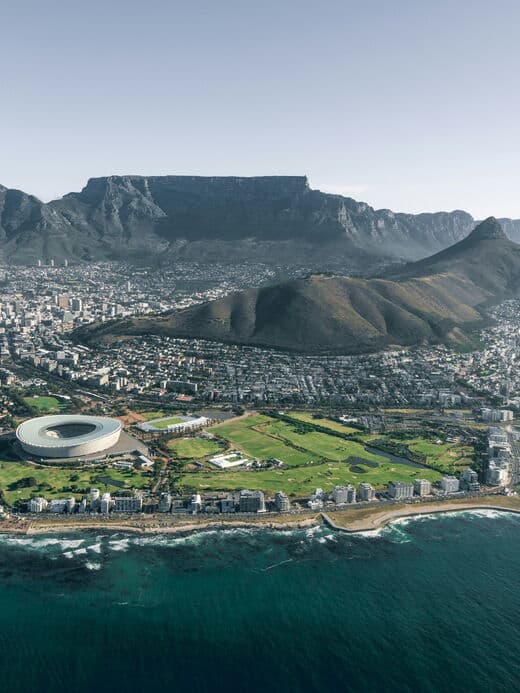
Cape Town is not just a city - it is a phenomenon. Nestled beneath the iconic flat-topped Table Mountain, flanked by two oceans, it regularly appears on lists of the world's most beautiful cities. And for once, the hype is justified. When the morning mist clears and the mountain reveals itself in the golden light, viewed from the V&A Waterfront with Table Bay sparkling below, you understand why locals call this place the Mother City.
Table Mountain dominates Cape Town in every sense. This is not some distant peak you admire from afar - it looms over the city, ever-present, changing color throughout the day, occasionally draped in its famous tablecloth of clouds. Getting to the top is essential. You can hike up via various routes (from 2 to 6 hours depending on difficulty and fitness) or take the Table Mountain Cableway, which is an attraction in itself - the rotating cable car gives you 360-degree views during the 5-minute ascent. At the summit, you find walking trails, extraordinary panoramas, and the unique fynbos vegetation that exists nowhere else on Earth. Pro tip: arrive early morning or late afternoon to avoid both the crowds and the clouds that often roll in by midday.
At the eastern foot of Table Mountain lies Kirstenbosch National Botanical Garden, consistently ranked among the world's finest. This is not just a collection of plants - it is a celebration of South Africa's extraordinary botanical heritage, including the national flower, the protea. The garden sprawls across 528 hectares, with manicured sections near the entrance giving way to wild mountain slopes above. The Tree Canopy Walkway (nicknamed the Boomslang) offers elevated views through the treetops. On summer Sunday afternoons, Kirstenbosch hosts outdoor concerts where locals spread picnic blankets, uncork bottles of local wine, and listen to live music as the sun sets behind the mountain.
The neighborhood of Bo-Kaap is Cape Town's most photogenic corner - rows of houses painted in vivid pinks, blues, yellows, and greens climbing the slopes of Signal Hill. This is the historic home of the Cape Malay community, descendants of enslaved people brought by the Dutch from Southeast Asia. The cobblestone streets, the calls to prayer from the mosques, the aroma of Cape Malay spices - this neighborhood feels like a different world from the rest of Cape Town. Come early morning for the best light and smallest crowds. And definitely sample the local cuisine - Cape Malay curries, samoosas, and koeksisters are among the city's finest foods.
Robben Island is a pilgrimage site for anyone interested in the struggle against apartheid. The ferry ride from the V&A Waterfront takes about 30 minutes across Table Bay, and the island tour includes the cell where Nelson Mandela spent 18 years. What makes this experience extraordinary is that tours are often led by former political prisoners themselves, who share their personal stories of imprisonment and survival. Book tickets well in advance, especially during peak season - they sell out quickly. The experience is emotionally heavy but absolutely essential for understanding South Africa.
The Cape Peninsula stretches south from the city, ending at Cape of Good Hope and Cape Point. Contrary to popular belief, this is not the southernmost point of Africa (that honor belongs to Cape Agulhas, 150 km to the east), but it is far more dramatic - towering cliffs where the cold Atlantic crashes against the rocks. The drive down the peninsula is spectacular, passing through Chapman's Peak Drive, one of the world's most scenic coastal roads. Nine kilometers of switchbacks carved into the cliff face, with the Atlantic sparkling below - it is worth the small toll fee. The road sometimes closes due to rock falls, so check conditions before you go.
Along the way, stop at Boulders Beach in Simon's Town, home to a colony of African penguins. Yes, penguins in Africa - it seems impossible until you see them waddling across the white sand, surfing the waves, and braying like donkeys (hence their old name, jackass penguins). A boardwalk lets you observe them without disturbing the colony, though on the adjacent beach you can actually swim alongside them. Arrive early morning before the tour buses, and you might have the penguins to yourself.
Lion's Head and Signal Hill offer alternatives to Table Mountain. Lion's Head is a popular sunrise hike - locals climb it on full moon nights, headlamps bobbing in the darkness, to watch the moonlit city from the summit. The hike takes about 1-2 hours and includes some chains and ladders near the top, but it is manageable for anyone reasonably fit. Signal Hill is easier - you can drive most of the way up and watch the sunset from the parking area, which offers spectacular views over the city and coastline.
Camps Bay is Cape Town's glamorous beach suburb - white sand, palm trees, the Twelve Apostles mountain range as a backdrop, and a strip of trendy restaurants and bars along the waterfront. The water is cold year-round (this is the Atlantic, fed by the Benguela Current from Antarctica), but the scene is warm - beautiful people, sundowners, and some of the best people-watching in the city. For actual swimming, the warmer Indian Ocean beaches on the False Bay side are more pleasant.
The V&A Waterfront is Cape Town's most visited destination - a working harbor transformed into a shopping, dining, and entertainment complex. It could easily feel like a generic tourist trap, but the setting - with Table Mountain looming above, seals barking in the harbor, and boats coming and going - saves it. Here you will find the Two Oceans Aquarium (excellent for families), the departure point for Robben Island ferries, and the stunning Zeitz MOCAA - the largest museum of contemporary African art in the world, housed in a converted grain silo that is an architectural marvel in itself. The museum's interior, carved from the cylindrical silo tubes, is as impressive as the art it contains.
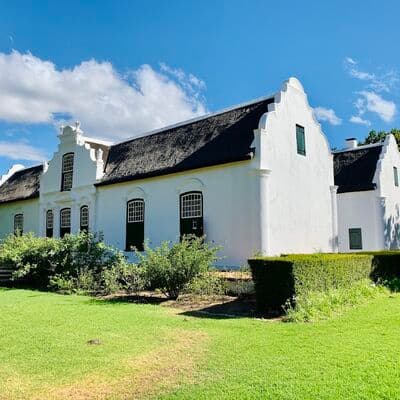
For wine lovers, Groot Constantia offers a taste of the winelands without leaving the city. This is the oldest wine estate in South Africa, founded in 1685, and its Cape Dutch architecture and historic cellars provide a glimpse into colonial history. The sweet wines produced here were once famous throughout Europe - Napoleon reportedly requested Constantia wine during his exile on St. Helena.
The Wine Regions: Stellenbosch and Franschhoek
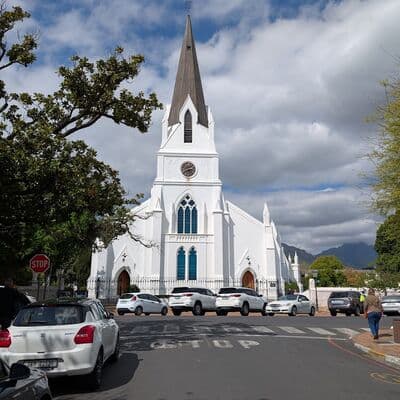
Stellenbosch is the wine capital of South Africa and the second oldest European settlement in the country after Cape Town. Founded in 1679, the town retains its historic charm with oak-lined streets, Cape Dutch architecture, and a vibrant university that keeps things young and energetic. Within a 30-minute drive of town, you will find more than 150 wineries producing some of the best wines in the Southern Hemisphere, including South Africa's signature grape, Pinotage - a local crossing of Pinot Noir and Cinsaut that produces distinctively smoky, fruity reds.
The Stellenbosch Wine Route was South Africa's first, established in 1971, and remains its most famous. You could spend weeks exploring every estate, but some standouts deserve special mention. Delaire Graff Estate sits high in the Helshoogte Pass with panoramic views over the valley - the setting is as impressive as the wines, and the restaurant and luxury lodge make this a destination in itself. Tokara Wine Estate combines minimalist modern architecture with excellent wines and olive oil production - the tasting room feels like a gallery, and the views are staggering. Spier Wine Farm offers the best value in the region, with multiple restaurants, a cheetah outreach program, and extensive grounds perfect for families. Boschendal Wine Estate, dating to 1685, is one of the oldest and most beautiful farms - their picnic hampers eaten on the lawns beneath the oaks are a quintessential Cape Winelands experience.
The town of Stellenbosch itself deserves exploration beyond the wineries. Dorp Street is the historic main thoroughfare, lined with galleries, cafes, antique shops, and some of the finest examples of Cape Dutch architecture in existence. The Stellenbosch Village Museum comprises four restored houses from different eras, showing how domestic life evolved from the early colonial period through the Victorian age. And the student population ensures excellent coffee, craft beer, and a nightlife scene that belies the town's otherwise sleepy atmosphere.
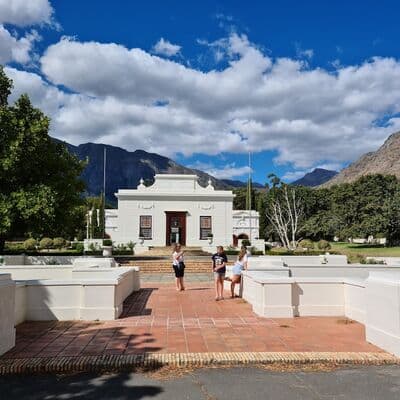
Franschhoek is the French corner of South Africa. The valley was settled in 1688 by Huguenot refugees fleeing religious persecution in France, and their descendants still produce wine here today. The French influence is everywhere - in the architecture, the place names (La Motte, Chamonix, Mont Rochelle), and above all in the food. Franschhoek has the highest concentration of top-end restaurants in South Africa, including several that rank among the best in the world. If you are a foodie, this is your place.
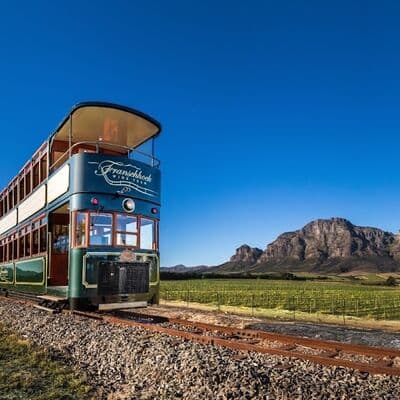
The Franschhoek Wine Tram is the most enjoyable way to explore the valley. A vintage tram and tram-bus combination loops through the vineyards, stopping at eight estates along the way. You buy a day ticket, hop on and off wherever you please, taste wine, have lunch, and never worry about driving. It is civilized, convivial, and very popular - book ahead, especially for weekends.
Among Franschhoek's many estates, Babylonstoren stands out. This is more than a winery - it is a spectacular 200-hectare farm with one of the most beautiful gardens in Africa, a farm-to-table restaurant, a spa, and luxury accommodation. The eight-acre garden is modeled on the Company's Garden in Cape Town and provides produce for the restaurant. You could spend an entire day here wandering the gardens, having a multi-course lunch, and never touching alcohol. Haute Cabriere offers tastings in a cave carved into the mountain and produces excellent MCC (South Africa's version of champagne, made using the traditional method). Mont Rochelle is Richard Branson's wine estate and hotel - the views from the tasting room stretch across the entire valley. La Motte Wine Estate is a family-owned property with a museum dedicated to the Rupert family's art collection and a restaurant that serves refined Cape Malay cuisine.
The Huguenot Memorial Museum in the center of town tells the story of the French settlers - their flight from France, their journey to the Cape, and their influence on South African wine, food, and culture.
The Garden Route: Nature's Masterpiece
The Garden Route is 300 kilometers of coastal magic between Mossel Bay and Plettenberg Bay - one of the most scenic drives in the world. Here, ancient forests tumble down to the ocean, tranquil lagoons alternate with dramatic rocky headlands, and charming small towns retain the atmosphere of old Africa. This is road trip country par excellence, and renting a car is essential to experience it properly.
The name comes from the lush vegetation - unlike much of South Africa, this region receives rainfall year-round, supporting dense indigenous forests, fynbos heathland, and the rivers and lakes that give the route its character. The landscape feels almost temperate European, yet distinctly African - a combination that exists nowhere else.
Knysna is the jewel of the Garden Route. The town sits on a spectacular lagoon guarded by two sandstone cliffs called The Heads - a narrow natural entrance to the sea. The views from The Heads are extraordinary, and the lagoon itself offers kayaking, boat trips, and some of the best oysters in the world. Knysna is the oyster capital of South Africa, and during the annual Oyster Festival in July, the town goes wild for bivalves. Even outside festival time, you should visit an oyster farm, slurp fresh oysters with a glass of local MCC, and wonder why you ever ate oysters anywhere else.
Plettenberg Bay - or just Plett, as everyone calls it - is the Garden Route's beach resort. The beaches here are stunning, the town is upscale but relaxed, and from July to November, you can watch southern right whales and dolphins from the shore. The surrounding area hosts two unique wildlife sanctuaries: Birds of Eden is the world's largest free-flight bird aviary, a massive dome spanning a forest ravine where hundreds of bird species fly freely. Next door, Monkeyland Primate Sanctuary provides a home for rescued primates from around the world - you walk through the forest among monkeys, no cages in sight. Both are ethical sanctuaries focused on rehabilitation and education rather than entertainment.
Tsitsikamma National Park is where the Garden Route turns wild. The ancient Tsitsikamma forest - one of the largest indigenous forests in South Africa - meets a coastline of thundering surf and dramatic cliffs. The highlight is Storms River Mouth, where a suspension bridge crosses the churning waters where the river meets the sea. The views are vertigo-inducing, the spray hits your face, and you understand why they call this the Wild Coast. Several hiking trails begin here, including the famous Otter Trail - a five-day coastal trek that is one of the best in the world (book a year in advance). For less committed hikers, day walks and kayaking trips explore the river gorge.
For adrenaline seekers, the Bloukrans Bridge offers the world's highest commercial bungee jump - 216 meters of freefall into the gorge below. Even if you do not jump (and most visitors do not), walking onto the bridge and watching the jumpers is exhilarating. The surrounding views are spectacular.
Wilderness National Park is a system of lakes, rivers, and wetlands that is a paradise for bird watchers and kayakers. Over 250 bird species have been recorded here, and paddling through the quiet waterways is a peaceful contrast to the dramatic coast. The village of Wilderness itself is a quiet retreat with some of the Garden Route's best sunsets.
A detour inland takes you to Cango Caves, one of the largest and most spectacular cave systems in Africa. Located near the town of Oudtshoorn, the caves feature massive chambers filled with stalactites and stalagmites formed over millions of years. Two tour options are available: the standard tour covers the main chambers, while the Adventure Tour takes you crawling and squeezing through tight passages - not for the claustrophobic. Oudtshoorn is also the ostrich capital of the world, and several farms offer tours and the chance to eat ostrich (it tastes like lean beef) and buy ostrich leather goods.
Johannesburg and Pretoria: The Economic Heartland
Johannesburg - Joburg, Jozi, the City of Gold - is South Africa's largest city and the economic engine of the entire continent. It is not a traditional tourist destination in the way Cape Town is. There is no beach, no iconic mountain, no obvious postcard view. But Joburg has something equally important: energy, history, and authenticity. This is where modern South Africa was born, where the anti-apartheid struggle was fought, where the wealth of gold and diamonds built a nation, and where contemporary African culture is being invented every day.
The Apartheid Museum should be your first stop. This is one of the most powerful museum experiences in the world. From the moment you enter (through different doors depending on the random race classification on your ticket), you are physically and emotionally immersed in the story of racial segregation and the long struggle for freedom. Allow at least three hours, bring tissues, and prepare to be profoundly moved. You cannot understand South Africa without understanding apartheid, and this museum makes that history viscerally real.
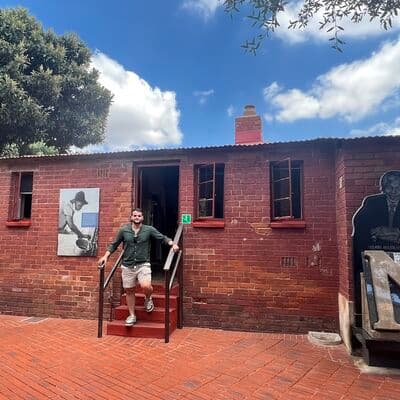
Soweto - the South Western Townships - was the center of the anti-apartheid resistance. Today, over a million people live here, and it remains a vibrant, complex community that deserves more than a quick bus tour. Hire a local guide (easily arranged through your hotel) and you will see the Mandela House Museum on Vilakazi Street, where Nelson and Winnie Mandela lived before his imprisonment. Vilakazi Street is the only street in the world where two Nobel Peace Prize winners lived - Mandela and Archbishop Desmond Tutu. You will also visit the Hector Pieterson Museum, dedicated to the schoolchildren who protested in 1976 and were met with police bullets - the photograph of dying Hector Pieterson became one of the most iconic images of the anti-apartheid struggle.
Constitution Hill is another essential stop - a former prison complex where both Mandela and Gandhi were held at different times. Today, it houses South Africa's Constitutional Court, the building deliberately constructed on this site of oppression to symbolize the transformation from repression to justice. The museum explores the prison's history, and you can visit the cells where some of South Africa's most famous political prisoners were held.
For a different side of Joburg, explore the Maboneng Precinct, a formerly industrial area that has been transformed into the city's hippest neighborhood. Art galleries, coffee shops, boutiques, and restaurants fill the converted warehouses. On Saturdays, the Neighbourgoods Market brings together food vendors, crafters, and Joburg's creative class for a morning of eating, shopping, and people-watching. This is safe to explore during the day and gives you a sense of the city's creative energy.
Outside the city, the Cradle of Humankind is a UNESCO World Heritage Site where some of the oldest hominid fossils ever discovered were found. The Maropeng Visitor Centre offers an interactive journey through human evolution, and you can descend into the Sterkfontein Caves where the fossils were discovered. This is where humanity began - a humbling perspective on our species' origins.
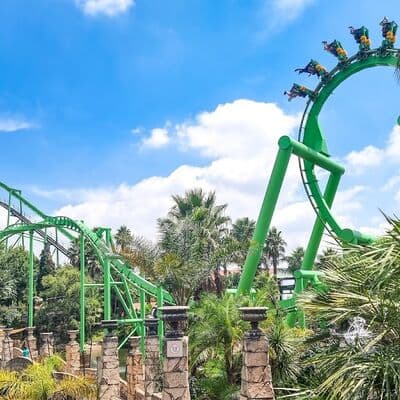
For wildlife without the long drive to Kruger, the Lion and Safari Park is about an hour from central Joburg. It is not a replacement for a proper Big Five safari, but it offers guaranteed lion sightings and the chance to interact with various animals. Gold Reef City is a theme park built on an old gold mine - you can descend into the mine itself and see how gold was extracted during the 1880s gold rush that created Johannesburg. The Johannesburg Art Gallery houses one of Africa's most significant art collections, and Walter Sisulu National Botanical Garden offers a green escape with a waterfall that hosts breeding pairs of black eagles.
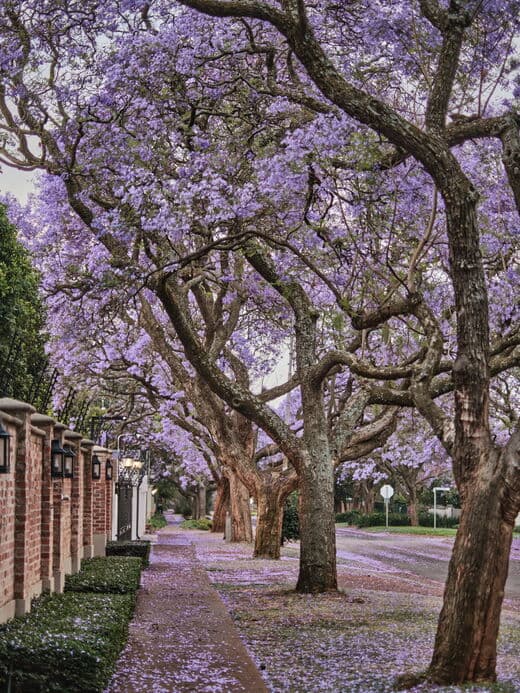
Pretoria, just 50 kilometers north, is South Africa's administrative capital - a city of government buildings, embassies, and universities. It feels slower and more conservative than Joburg, but it has its own attractions. The most famous is the jacaranda trees that line the streets - in October and November, the city turns purple as 70,000 trees bloom simultaneously, one of the most spectacular urban floral displays anywhere.
The Union Buildings are the official seat of government, where Mandela was inaugurated as president in 1994. The terraced gardens are open to the public and offer views across the city. The Voortrekker Monument commemorates the Afrikaner pioneers who trekked into the interior in the 1830s - the architecture and friezes are impressive regardless of your views on the politics. Freedom Park provides a more inclusive memorial to all who fought for South African freedom. Church Square is the historic heart of the city, surrounded by stately buildings. The Ditsong National Museum of Natural History is South Africa's largest natural history museum, and the Pretoria National Botanical Garden showcases the flora of the different regions of South Africa.
Durban and KwaZulu-Natal: Tropical Africa
Durban is South Africa's third-largest city, its busiest port, and the gateway to the province of KwaZulu-Natal. The atmosphere here is completely different from Cape Town or Johannesburg - subtropical climate, palm trees, warm ocean, and a strong Indian influence from the large Indian community (the largest outside of India). If Cape Town is Africa's Europe, Durban is Africa's India.
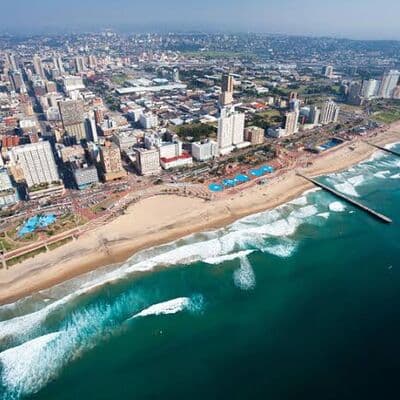
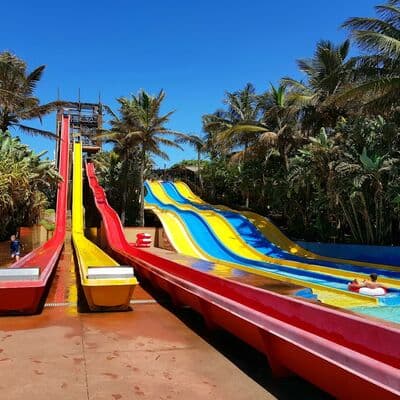
The Golden Mile is Durban's beachfront promenade - a stretch of sandy beaches, surf spots, and seaside entertainment. The water here is warm year-round (this is the Indian Ocean, not the frigid Atlantic), and locals surf, swim, and jog regardless of the season. uShaka Marine World is one of the largest aquariums in the world, featuring a shipwreck-themed design and a variety of shows and experiences - excellent for families.
The Victoria Street Market is the heart of Indian Durban. Spices, fabrics, jewelry, and incense fill the stalls, and the food section offers the chance to try bunny chow - Durban's signature dish. This is not rabbit; it is a hollowed-out loaf of bread filled with curry (traditionally lamb or bean). The origin of the name is disputed, but the dish is undeniably delicious and messy - you eat it with your hands, tearing off pieces of bread to scoop up the curry. The Durban Botanic Gardens is the oldest surviving botanical garden in Africa, with an especially fine orchid collection.
The Moses Mabhida Stadium was built for the 2010 FIFA World Cup and has become an icon of modern Durban. You can climb the arch (500 steps) or take the SkyCar for easier access to views across the city and ocean. For thrill-seekers, the Big Rush Big Swing launches you off the top of the arch - the world's tallest swing at 106 meters.
The Valley of a Thousand Hills lies between Durban and Pietermaritzburg, a landscape of rolling green hills that is the heartland of Zulu culture. Here you can visit traditional Zulu villages, watch dancing performances, learn about Zulu history and customs, and gain insight into the largest ethnic group in South Africa. This is not tourist kitsch but a genuine introduction to a living culture.
Kruger National Park: Safari Dreams
Kruger National Park is one of the largest and finest wildlife reserves in the world. Nearly 2 million hectares of African bushveld, home to 147 mammal species and 500 bird species. This is where you come for the Big Five - lion, leopard, elephant, rhinoceros, and buffalo - and with patience and a bit of luck, you can see them all.
The park offers two distinct safari experiences. Self-drive safaris give you freedom and flexibility - rent a car, book a rest camp, and spend your days cruising the roads looking for wildlife. This is more affordable and appeals to independent travelers, though you might miss animals that an experienced guide would spot. Organized game drives with professional guides and trackers offer higher success rates and access to off-road areas closed to private vehicles. The sunrise game drives catch animals at their most active, while night drives reveal a completely different cast of characters - leopards, hyenas, aardvarks, bush babies, and other nocturnal creatures you would never see during the day.
The Big Five safari is what most visitors dream of. Elephants and buffalo are almost guaranteed - you will see dozens, even hundreds of elephants on a typical Kruger trip. Lions are common, especially around Satara and Lower Sabie camps where the open grasslands support large prides. Rhinos are harder - poaching has devastated populations, and the remaining animals are well protected in areas you cannot access. Leopards are the ultimate prize - these elusive cats are present throughout the park but seeing one requires luck, patience, and often an experienced guide who knows where to look.
Walking safaris offer an entirely different experience. On foot, with armed rangers and trackers, you become part of the bush rather than an observer in a vehicle. These walks are not about spotting big cats (though it happens) - they are about understanding the ecosystem at ground level. You learn to read tracks, identify dung, recognize bird alarm calls, and see the small creatures and plants that tell the bigger story of the African bush. Walking safaris must be booked in advance through SANParks or private lodges.
Kruger has an extensive network of rest camps, from basic camping to comfortable chalets. Skukuza is the largest - practically a small town with restaurants, shops, a gas station, and a swimming pool. Satara is in prime lion country and considered one of the best for big cat sightings. Olifants perches on a cliff overlooking the Olifants River - the views are spectacular, and elephants often gather at the river below. Letaba houses an elephant museum and overlooks a riverbed frequented by herds. Berg-en-Dal in the southern section is known for rhino sightings and more varied terrain.
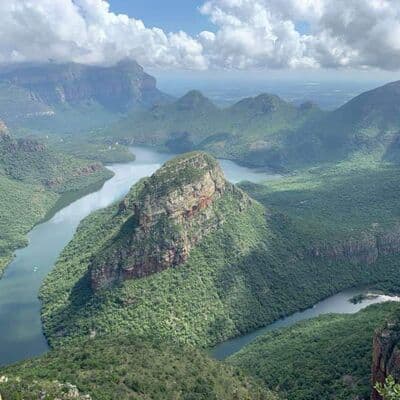
West of Kruger lies the Panorama Route, one of South Africa's most scenic drives. The Blyde River Canyon is the third largest canyon in the world and the largest green canyon (covered in vegetation rather than bare rock). The Three Rondavels are massive rock formations resembling traditional African huts. God's Window offers a viewpoint that, on clear days, stretches 100 kilometers across the lowveld. Bourke's Luck Potholes are bizarre cylindrical rock formations carved by millennia of swirling water. Most visitors combine the Panorama Route with their Kruger trip, driving it on the way in or out of the park.
National Parks and Wildlife Beyond Kruger
While Kruger is the most famous, South Africa has dozens of national parks and private reserves, each with its own character and strengths. Understanding your options can help you choose the best safari experience for your interests, time, and budget.
Hluhluwe-iMfolozi Park in KwaZulu-Natal is the oldest game reserve in Africa, established in 1895 to protect the last remaining white rhinos from extinction. That conservation effort was so successful that all the white rhinos in Africa today descend from this population. The park is smaller than Kruger but offers excellent Big Five viewing in a more intimate setting. Crucially, it is malaria-free, making it a good choice for families with young children or travelers who want to avoid anti-malarial medication.
Addo Elephant National Park in the Eastern Cape is another malaria-free option, located just an hour from Port Elizabeth. Originally established to protect the last 11 surviving Cape elephants, it now hosts over 600 - the densest elephant population on Earth. Lions, buffalo, and rhinos have been reintroduced, and the park has expanded to include a marine section where you can see southern right whales, great white sharks, and Cape gannets. Addo is easily combined with a Garden Route itinerary.
Madikwe Game Reserve on the Botswana border is a large private reserve without malaria risk. It is known for excellent wild dog sightings (African wild dogs are among the rarest predators on the continent) and has a good selection of luxury lodges. Because it is private, vehicles can go off-road, increasing your chances of close encounters with wildlife.
Pilanesberg National Park, just two hours from Johannesburg in an ancient volcanic crater, is perfect for a short safari when time is limited. It has the Big Five, excellent accommodation options, and the unique landscape of volcanic origins. It is not quite as wild as Kruger or the private reserves, but for a weekend escape from Joburg, it is unbeatable.
The Sabi Sands and other private reserves along Kruger's western border offer the most luxurious safari experiences in Africa. These reserves share unfenced boundaries with Kruger, allowing animals to move freely, but offer higher guide-to-guest ratios, off-road driving, and accommodation that ranges from very comfortable to absurdly opulent. Leopard sightings here are among the best anywhere - some lodges guarantee them. The cost is substantial but includes all meals, drinks, and twice-daily game drives.
Cape Agulhas is the southernmost point of Africa, where the Atlantic and Indian Oceans officially meet. The lighthouse marks the spot, and a plaque confirms you are standing at the tip of the continent. It is less dramatic than Cape Point but satisfies completists who want to reach the true southern extreme.
The Drakensberg Mountains on the border with Lesotho offer a completely different natural experience - soaring peaks, mountain streams, hiking trails, and San rock art in caves. This UNESCO World Heritage Site is South Africa's mountain wilderness, perfect for trekking, horse riding, and escaping the heat of the lowlands. In winter (June-August), the peaks receive snow.
The West Coast north of Cape Town transforms into a carpet of wildflowers every August and September. The semi-arid region bursts into color after winter rains, attracting photographers and nature lovers. The display lasts only a few weeks and varies yearly depending on rainfall, but when it is good, it is spectacular.
When to Visit South Africa
South Africa lies in the Southern Hemisphere, so the seasons are reversed from North America and Europe - summer runs from November to February, winter from June to August. The country is large and diverse, so the best time to visit depends on what you want to do and where you want to go.
For safaris, the dry winter months (May to September) are ideal. The grass is short, the trees have lost their leaves, and animals congregate at waterholes, making them easier to spot. Temperatures are pleasant during the day (65-75F / 18-24C) but cold at night (sometimes near freezing in the bush), so pack layers. This is also the lowest risk period for malaria in Kruger and KwaZulu-Natal, though risk exists year-round.
For Cape Town and the winelands, summer (November to March) is prime time. The weather is warm and dry, with temperatures around 77-86F (25-30C), and daylight lasts until after 8pm. This is peak season with higher prices and more crowds, but the conditions are perfect. Spring (September-October) offers a good compromise - the wildflowers are blooming, whales are arriving, and the summer rush has not yet begun. Autumn (March-May) is also pleasant, with warm weather and the wine harvest in full swing.
For Durban and KwaZulu-Natal, avoid the height of summer (December-February) when it is hot, humid, and packed with South African holidaymakers on school break. The subtropical climate means pleasant weather year-round, but autumn and spring offer the best balance of warmth without the crowds.
For the Garden Route, any season works, but summer (November-March) is best for beach activities, though the water is never truly warm. Winter brings more rain but also greener landscapes and fewer tourists.
For whale watching, the season runs from July to November, peaking in September-October. Southern right whales come to the sheltered bays of the Western and Eastern Cape to calve and nurse their young. Hermanus and Plettenberg Bay offer some of the best land-based whale watching in the world - you can see them from shore without needing a boat.
Key events to consider: Cape Town Carnival (January), National Arts Festival in Makhanda (July), Knysna Oyster Festival (July), and jacaranda season in Pretoria (October-November).
School holidays in South Africa fall in mid-December to mid-January (main summer break), April (Easter week), late June to mid-July (winter break), and late September to early October (spring break). During these periods, popular destinations fill up and prices spike. Book accommodations well in advance or plan around these dates.
Getting to South Africa
South Africa has two major international airports: O.R. Tambo International Airport in Johannesburg (JNB), the largest hub in Africa, and Cape Town International Airport (CPT), the second busiest. Most long-haul flights arrive at Johannesburg, though an increasing number of airlines offer direct service to Cape Town.
From the United States, direct flights to Johannesburg are available from New York (JFK) on Delta and South African Airways, and from Atlanta on Delta. Flight time is approximately 15-17 hours. From the West Coast, connections typically route through New York, Atlanta, or Middle Eastern hubs like Dubai or Doha. Total travel time from Los Angeles or San Francisco is usually 20-24 hours including connections.
From the United Kingdom, direct flights to both Johannesburg and Cape Town are plentiful. British Airways, Virgin Atlantic, and South African Airways operate daily service from London, with flight times around 11-12 hours. Several other European carriers also serve South Africa, making connections from elsewhere in the UK straightforward.
From Australia, there are no direct flights - connections typically route through Singapore, Doha, Dubai, or Hong Kong. Total travel time is 18-24 hours depending on the route. From Sydney, Singapore is often the fastest connection.
From Canada, flights usually connect through European or Middle Eastern hubs. Air Canada does not fly to South Africa directly, so expect connections in London, Frankfurt, Dubai, or similar cities. Total travel time from Toronto or Vancouver is typically 18-22 hours.
If your primary destination is Cape Town and the Western Cape, consider flying into Cape Town directly rather than connecting through Johannesburg. This saves time and avoids potential delays from connections. However, if you plan to visit both Kruger and Cape Town, flying into Johannesburg and out of Cape Town (or vice versa) makes logistical sense and lets you see more of the country without backtracking.
Domestic flights within South Africa are frequent and affordable. The Johannesburg-Cape Town route is one of the busiest in the world, with flights departing every 30 minutes during peak times. Budget airlines like FlySafair, Kulula, and Lift offer competitive fares, sometimes under $50 one way if booked in advance. The flight takes about 2 hours - much faster than the 14-hour drive.
Visa requirements for most Western travelers are simple. Citizens of the United States, United Kingdom, Australia, Canada, and most EU countries can enter South Africa visa-free for up to 90 days. You need a passport valid for at least 30 days after your intended departure date and at least two blank pages for entry stamps. You may be asked to show proof of onward travel and accommodation, though in practice this is rarely checked. Yellow fever vaccination is required only if arriving from a country with yellow fever risk (not applicable if flying directly from North America, Europe, or Australia).
For Americans returning home, remember that fresh produce, meat products, and certain plant materials cannot be brought into the US. The excellent wine and biltong you purchased may be confiscated if not properly declared. Check current TSA and CBP regulations before packing.
Getting Around South Africa
Renting a Car
Renting a car is the best way to explore South Africa independently. The road network is excellent - among the best in Africa and comparable to Western standards. Major highways (N routes) are well-maintained and generally safe, and even secondary roads are usually paved and in good condition.
Driving is on the left side of the road, as in the UK, Australia, and Japan. If you are American or from continental Europe, this takes some getting used to. The biggest challenge is remembering to look right first at intersections and staying in the left lane when not overtaking. Most rental cars have manual transmissions; request automatic if you prefer.
Your home country driver's license is technically valid in South Africa if it is in English and includes a photo. However, carrying an International Driving Permit (IDP) is recommended as insurance against any issues with rental companies or police. The IDP is inexpensive and easy to obtain before your trip.
Insurance is essential. South Africa has a high rate of vehicle accidents, and road conditions in rural areas can be unpredictable. The standard collision damage waiver (CDW) from rental companies typically includes a substantial excess (deductible) - sometimes R15,000-30,000 ($800-1,600). Consider purchasing additional insurance to reduce or eliminate this excess. Check if your credit card provides rental car coverage in South Africa (many do not cover Africa).
Major international rental companies (Hertz, Avis, Budget, Europcar) operate throughout South Africa and offer reliable vehicles and service. Local companies like First Car Rental and Around About Cars often offer lower prices but may have older vehicles or less convenient service. Compare options and read reviews before booking.
For Cape Town, the winelands, and the Garden Route, a standard sedan is sufficient. For Kruger, a higher-clearance vehicle (SUV or crossover) is recommended - not necessarily for four-wheel drive, but for better visibility over the bush and to handle occasional dirt roads. Within Kruger itself, normal vehicles are fine on the main roads, but some smaller loops require higher clearance. True 4x4 is only needed for remote areas off the main tourist routes.
Fuel (petrol or diesel) is significantly cheaper than in Europe, roughly comparable to US prices. Petrol stations are plentiful, even in rural areas, and all accept credit cards. An unusual feature: attendants pump your fuel and check oil, water, and tire pressure if requested. Tipping R5-10 is customary.
Safety while driving requires common sense precautions. Keep doors locked and windows up, especially at traffic lights in urban areas. Do not leave valuables visible in the car - even an empty bag can tempt a smash-and-grab. Use guarded parking lots in cities (usually free or a small fee to an attendant). Avoid driving in remote areas after dark when possible, as road conditions deteriorate and the risk of crime or accidents increases.
Toll roads operate on major routes, particularly the N1 between Johannesburg and Pretoria and sections of the N1 and N2 near Cape Town. Tolls are paid in cash or by card at toll plazas - no electronic pass required for tourists. The e-toll system around Johannesburg (SANRAL) has been controversial and poorly enforced; rental car companies may or may not pursue payment.
Public Transportation
Public transportation in South Africa is limited and generally not recommended for tourists outside of specific systems.
The Gautrain is a notable exception - a modern, efficient, and safe rapid transit system connecting Johannesburg's O.R. Tambo airport with the city center, Sandton business district, and Pretoria. It is clean, punctual, and safer than driving in Joburg. The Gautrain card also works on associated bus routes. For arriving passengers, the Gautrain is the easiest way to get from the airport to the northern suburbs.
MyCiti buses in Cape Town provide reliable service between the city center, V&A Waterfront, Table View, and the airport. The system is reasonably priced and safe during daylight hours. Routes are limited compared to what you might expect from a major city, but useful for getting to tourist areas.
Traditional public transportation - minibus taxis (private minivans that operate fixed routes), metro buses, and commuter trains - is used by the majority of South Africans but is not recommended for tourists. Safety concerns, confusing routes, and unreliable schedules make these options impractical for visitors.
Uber and Bolt (similar to Lyft) operate throughout major cities and have transformed urban transportation for tourists. They are safe, affordable, and eliminate the hassles of parking, navigation, and negotiating with taxi drivers. Both apps work with international credit cards. For getting around Cape Town, Johannesburg, Durban, or any major city without a car, rideshare apps are the way to go.
Long-distance buses (Greyhound, Intercape, Translux) connect major cities and are a budget alternative to flying or driving. Service is generally reliable and safe, though slow. The Baz Bus is a hop-on-hop-off backpacker service along the Cape Town to Johannesburg route via the Garden Route and Durban - convenient for budget travelers hitting multiple destinations.
Luxury trains are a completely different category - experiences rather than transportation. The Blue Train and Rovos Rail offer multi-day journeys in extreme comfort, with fine dining, plush cabins, and five-star service. They are expensive (several thousand dollars per person) but offer a unique way to see the country.
Domestic Flights
Flying between cities is often faster and barely more expensive than driving once you factor in fuel, tolls, and time. Johannesburg to Cape Town takes 2 hours by air versus 14 hours by car. Johannesburg to Durban is 1 hour versus 6 hours driving.
South African Airways is the national carrier, though it has faced financial difficulties. It still operates major domestic routes. FlySafair has emerged as the most popular domestic airline - a budget carrier with reliable service and reasonable baggage allowances. Kulula (part of British Airways' Comair operation) was popular before Comair's bankruptcy in 2022 and may resume operations. Lift is a newer entrant with competitive pricing.
Book domestic flights in advance for the best fares, especially on the Johannesburg-Cape Town route and during holiday periods. Prices rise significantly closer to departure dates.
Cultural Etiquette and Social Norms
South Africa is the Rainbow Nation - a term coined by Archbishop Desmond Tutu to describe the country's diversity. With 11 official languages, dozens of ethnic groups, and a complex colonial and post-colonial history, South Africa defies simple cultural generalizations. Understanding this complexity will enrich your travels.
English is the lingua franca, spoken by most South Africans in tourist areas and business contexts, though it is the first language of only about 10% of the population. Afrikaans, descended from Dutch, is widely spoken, especially in rural Western Cape and among older white South Africans. Zulu is the most common home language, particularly in KwaZulu-Natal. Xhosa (the language with the famous clicks, and Nelson Mandela's mother tongue) is dominant in the Eastern Cape. Learning a few words in local languages - sawubona (hello in Zulu), dankie (thank you in Afrikaans), molo (hello in Xhosa) - will earn you smiles and goodwill.
Tipping is an important part of the economy and expected in most service situations. In restaurants, 10-15% is standard (it is not included in the bill). For porters and baggage handlers, R10-20 per bag is appropriate. Petrol station attendants receive R5-10. Parking attendants (ubiquitous in cities, often informal) expect R5-10 when you return to your car. Safari guides and trackers deserve more substantial tips - R100-200 per person per day is typical, more for exceptional service. On wine estates, tipping is less common but appreciated for particularly attentive service.
The apartheid legacy is never far from the surface, and race remains a sensitive topic. South Africans of all backgrounds are generally willing to discuss the country's history openly, but approach these conversations with humility and a willingness to listen more than talk. Avoid racist jokes or comments of any kind - what might pass as edgy humor elsewhere will not be tolerated here. At the same time, do not pretend the issues do not exist. Acknowledging South Africa's complicated past is part of engaging honestly with the country.
Photography etiquette matters, particularly in townships and traditional communities. Always ask permission before photographing people - it is both polite and often legally required. In some contexts, people may expect a small payment (R20-50) for posing, which is fair compensation for becoming your photo subject. In museums and cultural sites, check signage about photography policies.
Braai is not just barbecue - it is a South African ritual with almost religious significance. If you are invited to a braai, consider it an honor. Bring something - meat, a salad, drinks - and do not interfere with whoever is manning the fire (traditionally a male role, though this is changing). The cooking happens slowly, often over hours, with socializing being the main event. The word braai comes from Afrikaans and means to grill or roast.
Time operates differently in South Africa. Africa time is a real phenomenon - meetings may start late, service may be slower than you expect, and there is generally less urgency than Americans or Northern Europeans might be accustomed to. Relax, adjust your expectations, and enjoy the slower pace.
Dress is generally casual. For safaris, wear neutral colors (khaki, beige, olive, gray) and closed-toe shoes - bright colors can disturb animals, and sandals leave your feet vulnerable to thorns and insects. In Cape Town's upscale restaurants, smart casual is appropriate. Johannesburg's clubs may have stricter dress codes. Beach attire stays at the beach.
LGBTQ+ travelers will find South Africa more welcoming than anywhere else in Africa. The constitution explicitly protects against discrimination based on sexual orientation, and same-sex marriage has been legal since 2006. Cape Town has a vibrant gay scene, particularly in the De Waterkant neighborhood. Other cities are less openly gay-friendly, and rural areas can be conservative, so moderate public displays of affection outside Cape Town.
Safety Considerations
The question everyone asks: Is South Africa safe? The honest answer is complicated. Crime rates are high by global standards, particularly violent crime in certain areas. But millions of tourists visit annually without incident, and with reasonable precautions, your trip can be completely trouble-free.
Most crime is concentrated in areas tourists rarely visit - informal settlements, certain township areas, and inner-city zones of Johannesburg and Durban. Tourist areas like the V&A Waterfront, Cape Town's Atlantic Seaboard, Stellenbosch, the Garden Route, and safari lodges are generally safe. The crime that does affect tourists is typically opportunistic - petty theft, pickpocketing, smash-and-grab from vehicles - rather than violent.
Practical precautions make a difference. Do not display expensive jewelry, watches, or electronics in public - leave them in the hotel safe or at home. Keep your phone in your pocket or bag, not in your hand while walking. Use a money belt or concealed pouch for cash and cards. In cities, walk in groups, especially after dark. Do not walk in deserted areas at any time.
Vehicle safety matters. Keep doors locked and windows up at all times, especially at traffic lights where smash-and-grab theft occurs. Never leave anything visible in a parked car - even empty bags can prompt window breaks. Use guarded parking wherever possible. Do not stop for people flagging you down on roadsides (a common robbery technique is to fake car trouble or an accident).
ATM safety requires attention. Use ATMs inside banks or shopping malls rather than street-side machines. Be aware of your surroundings and anyone watching you. Cover the keypad when entering your PIN. Skimming devices are not uncommon - if the card slot looks unusual, use a different machine.
Carjacking exists but overwhelmingly targets specific demographics (luxury car owners, certain neighborhoods). Tourists in rental cars are low-priority targets. Still, stay alert when entering or leaving your vehicle, especially in residential areas, and avoid driving in unfamiliar areas after dark.
Safari safety is mostly about respecting wildlife. Never exit your vehicle when animals are nearby (except at designated spots with rangers). Keep a safe distance from elephants (they can charge with surprising speed) and hippos (which are actually the most dangerous large animal in Africa). Hippopotami kill more people than lions, crocodiles, or any other African animal. In camps at night, use flashlights on paths and watch for snakes or scorpions.
If something does happen, cooperate fully and do not resist. Your life is worth more than your possessions. Report incidents to police (10111) and get a case number for insurance purposes. Tourist police operate in major areas and can be more helpful than regular stations.
Perspective matters. Most South Africans go about their daily lives without incident. Following basic precautions - the same ones you would use in any major city - will let you enjoy the country safely. Do not let fear ruin your trip, but do not be naively careless either.
Health and Medical Considerations
No vaccinations are legally required to enter South Africa unless you are arriving from a yellow fever endemic country (most direct flights from the US, UK, Australia, and Canada do not qualify). However, routine vaccinations should be up to date, and some additional protections are recommended.
Hepatitis A is advisable for all travelers, as it can be transmitted through contaminated food or water. Typhoid may be recommended if you are traveling extensively outside main tourist areas. Hepatitis B and rabies are generally only recommended for long-term travelers, healthcare workers, or those with specific exposure risks. Consult a travel medicine clinic or your physician 4-6 weeks before departure.
Malaria exists in Kruger National Park, northeastern KwaZulu-Natal (including Hluhluwe-iMfolozi), and Limpopo province, particularly during the wet summer months (November to April). Risk is lower (but not zero) during dry winter months (May to October). Malaria prevention involves three components: prophylactic medication (malarone, doxycycline, or mefloquine - discuss with your doctor), mosquito bite prevention (DEET-based repellents, long sleeves and pants at dawn and dusk, sleeping under nets where provided), and awareness of symptoms. If you develop fever within a month of returning home, tell your doctor you visited a malaria zone.
Cape Town, the Garden Route, Johannesburg, Durban (city proper), and other major tourist areas are malaria-free. If you are only visiting these regions, no malaria precautions are needed.
Sun protection is critical. South Africa is close to the Antarctic ozone hole, and UV radiation is intense even on cloudy days. Use SPF 50+ sunscreen, reapply frequently, wear a hat and sunglasses, and seek shade during midday hours. Serious sunburn can happen within 30 minutes of unprotected exposure.
Tap water is safe to drink in major cities and tourist areas. Cape Town has some of the best-tasting tap water in the world. In remote rural areas, bottled water is a safer choice.
Medical facilities in major cities are excellent. Private hospitals (Netcare, Mediclinic, Life Healthcare) provide world-class care comparable to the US, UK, or Australia. Public hospitals should be avoided if possible. Medical costs for uninsured visitors can be substantial - comprehensive travel insurance is essential. Check that your policy covers medical evacuation if needed.
Pharmacies (Dis-Chem and Clicks are major chains) are well-stocked and found in every shopping mall. Many medications that require prescriptions elsewhere are available over the counter, though controlled substances still need prescriptions.
Altitude may affect some visitors. Johannesburg sits at 1,750 meters (5,750 feet), high enough that some people experience mild altitude symptoms like shortness of breath or headaches, especially combined with jet lag. If you have heart or respiratory conditions, take the first day easy.
Insects are present but generally not a major concern outside malaria zones. Tick bites can occur on bush walks (check yourself afterward). Mosquitoes exist everywhere but are mostly just annoying in malaria-free areas. Bee and wasp stings happen. Bring antihistamines if you are allergic.
Ocean safety deserves mention. Great white sharks inhabit waters around Cape Town, particularly False Bay. Attacks on swimmers are rare but not unknown - swim at shark-protected beaches or those with shark spotters. The Box jellyfish is absent, but bluebottle jellyfish (similar to Portuguese man-of-war) can wash up on beaches - their stings are painful but not dangerous. Rip currents exist on many beaches - swim where lifeguards are present.
Money and Budget
The currency is the South African Rand (ZAR), typically trading around 18-20 to the US dollar, 23-25 to the British pound, and 12-13 to the Australian dollar (check current rates before your trip). This exchange rate makes South Africa excellent value for Western visitors.
Credit cards are widely accepted throughout South Africa - Visa and Mastercard work everywhere, American Express less so. Chip-and-PIN is standard; contactless payments work in most places. Have some cash for tips, informal parking attendants, small vendors, and rural areas.
ATMs are plentiful in urban areas, found in banks, shopping malls, and some gas stations. Withdraw inside malls or bank premises rather than from street machines. All major international networks (Cirrus, Plus) work. Fees vary by your home bank; some international banks (Charles Schwab, Wise, Revolut) offer fee-free foreign withdrawals.
Currency exchange at airports offers poor rates. Better options include withdrawing cash from ATMs or exchanging at banks and exchange bureaus in town. Avoid street money changers.
Budget categories to help plan your trip:
Budget travelers spending R1,500-2,500 per day ($80-130 USD) can stay in hostels or budget guesthouses, cook some meals or eat at local eateries, self-drive a rental car shared with others, camp in national parks, and do self-guided activities. This level requires planning and flexibility but is absolutely achievable.
Mid-range travelers at R3,500-6,000 per day ($180-320 USD) can expect 3-4 star hotels or B&Bs, restaurant meals, their own rental car, government rest camps in national parks, and a mix of guided and independent activities. This is comfortable travel without extravagance.
Comfort travelers spending R8,000-15,000 per day ($420-800 USD) enjoy boutique hotels, fine dining, premium experiences like helicopter tours or exclusive wine tastings, and possibly a night or two in a private game lodge.
Luxury travelers at R20,000+ per day ($1,050+ USD) have access to five-star hotels and lodges, all-inclusive private safari camps, first-class flights, private guides, and no expense spared.
Sample costs to calibrate your budget: A meal at a casual restaurant runs R150-250 ($8-13). Dinner at a good restaurant with wine costs R500-1,000 ($26-53). A bottle of decent wine at a store is R80-200 ($4-10). Coffee is R35-55 ($2-3). Kruger Park daily conservation fees are R460 ($24). A guided game drive in Kruger costs R600-1,500 ($32-80). Wine tasting fees range from R50-200 ($3-10). A night in a Kruger rest camp chalet is R1,500-3,000 ($80-160). Gasoline runs about R25 per liter ($3.50 per gallon).
VAT refunds: Non-residents can reclaim the 15% Value Added Tax on purchases over R250 taken out of the country. Save your receipts, fill out the form at participating stores, and claim your refund at the airport before checking bags (officials may want to see the items). The process is straightforward for significant purchases.
Sample Itineraries
7 Days: Cape Town and Winelands Classic
This itinerary is perfect for a first visit or when time is limited. Concentrating on one region lets you experience Cape Town's highlights without rushed travel between distant destinations.
Day 1: Arrive at Cape Town International Airport. Transfer to your hotel in the City Bowl or V&A Waterfront area (both excellent locations). Rest and adjust to the time zone. In late afternoon, stroll the V&A Waterfront, watching the sunset paint Table Mountain pink. Have dinner with harbor views - there are dozens of restaurants to choose from, ranging from seafood to sushi to steakhouses.
Day 2: Start early at Table Mountain. Arrive at the cable car lower station before 8am to beat the crowds and the clouds that often roll in by midday. Spend 2-3 hours at the summit exploring the trails and taking in the views. Descend and drive to Kirstenbosch for lunch at the Moyo restaurant and an afternoon wandering the gardens - do not miss the Tree Canopy Walkway. In the evening, explore the colorful streets of Bo-Kaap, then have dinner at a Cape Malay restaurant or on trendy Bree Street.
Day 3: Cape Peninsula day. Drive the scenic coastal road through Camps Bay and along Chapman's Peak Drive (toll road, occasionally closed for rock falls). Stop at Hout Bay for coffee or a boat trip to see seals. Continue to Boulders Beach to visit the penguin colony (arrive early for fewer crowds). Lunch in Simon's Town, a charming naval village. Proceed to Cape of Good Hope and Cape Point - hike or take the funicular to the old lighthouse for dramatic views. Return via the scenic False Bay coast.
Day 4: Drive to Stellenbosch (45 minutes). Morning walk through the historic town center - Dorp Street for Cape Dutch architecture, coffee at one of the many cafes, browse the Village Museum. Afternoon wine tasting at 2-3 estates. Suggested route: Delaire Graff for spectacular views, Tokara for modern architecture and excellent olive oil as well as wine, Spier for a relaxed atmosphere and good value. Stay overnight in Stellenbosch - excellent accommodation options abound.
Day 5: Dedicate the day to Franschhoek. Take the Wine Tram for the full experience - buy an all-day ticket and hop between estates without worrying about driving. Essential stops: Babylonstoren for the incredible gardens and farm-to-table lunch (book ahead), Haute Cabriere for the cellar cave and MCC sparkling wines. Visit the Huguenot Memorial Museum if time permits. Evening: splurge on dinner at one of Franschhoek's acclaimed restaurants (Le Quartier Francais, La Petite Colombe, Maison - book weeks ahead). Stay overnight in Franschhoek.
Day 6: Morning at Boschendal for their famous picnic hampers on the lawn. Return to Cape Town via the Helshoogte Pass for panoramic views. Afternoon: visit Robben Island (book well in advance - tours book out weeks ahead in peak season). The ferry departs from V&A Waterfront, and the entire experience takes about 3.5 hours including the boat rides and island tour. Dinner in Camps Bay watching the sunset over the Atlantic.
Day 7: If you have energy, do the Lion's Head sunrise hike (1-2 hours up, spectacular views) or the easier Signal Hill drive. Final shopping, perhaps visit Zeitz MOCAA if you missed it, last coffee with a view. Transfer to the airport for departure.
10 Days: Cape Town and the Garden Route
Add the spectacular coastal scenery of the Garden Route to your Cape Town experience. A rental car is essential.
Days 1-4: Follow the 7-day Cape Town itinerary through Stellenbosch and Franschhoek.
Day 5: Depart Franschhoek heading east toward the Garden Route. Stop in Hermanus if visiting July-November - this is one of the world's best land-based whale watching locations. Continue to Swellendam (charming historic town, good overnight option) or push through to Mossel Bay (gateway to the Garden Route).
Day 6: Drive to Wilderness. This small town sits between the ocean and a system of lakes and rivers - paradise for kayakers and birdwatchers. Rent a canoe and paddle the waterways. The beach is gorgeous and usually uncrowded. Spectacular sunsets. Stay overnight in Wilderness.
Day 7: Continue to Knysna. Morning boat cruise on the lagoon, stopping at an oyster farm - Knysna oysters are world-famous. Walk up to The Heads for views of the narrow lagoon entrance. Afternoon options: forest hikes, shopping at the Waterfront, or simply enjoying the beautiful setting. Stay in Knysna.
Day 8: Drive to Plettenberg Bay (Plett). En route, stop at Monkeyland and Birds of Eden - allow 2-3 hours for both. In Plett, relax on the beach, spot dolphins from shore, or go whale watching (seasonal). Adventurous types: detour to Bloukrans Bridge for the world's highest commercial bungee jump. Stay in Plett.
Day 9: Tsitsikamma National Park day. Hike to Storms River Mouth and cross the dramatic suspension bridges. Optional: guided kayak trip up the river gorge, or the Treetop Canopy Tour for zipline adventures through the forest. Drive toward Port Elizabeth in the afternoon. Stay in Jeffreys Bay (famous surf town) or Port Elizabeth.
Day 10: Fly from Port Elizabeth to Cape Town or Johannesburg for your international connection. Alternatively, if you have a day to spare, visit Addo Elephant Park (1 hour from PE) for a morning game drive before flying out.
14 Days: Complete Western Cape Plus Safari
This comprehensive itinerary combines coastal beauty with a Big Five safari experience.
Days 1-9: Follow the 10-day Cape Town and Garden Route itinerary.
Day 10: Fly from Port Elizabeth to Johannesburg. If you arrive with time to spare, visit the Apartheid Museum - a powerful and essential experience. Alternatively, book a half-day Soweto tour to see the Mandela House and Hector Pieterson Museum. Overnight in Johannesburg.
Day 11: Early departure for Kruger National Park (5-6 hours driving). Take the scenic route via the Panorama Route: God's Window for spectacular views, Bourke's Luck Potholes for geological wonders, Three Rondavels and Blyde River Canyon for dramatic landscapes. Enter Kruger through Orpen or Phalaborwa Gate. Stay at Satara (prime lion territory) or Olifants (stunning canyon views).
Day 12: Full day in Kruger. Pre-dawn start (gates open at 5:30am in summer, 6:00am in winter) when animals are most active. Return to camp for breakfast and midday rest - animals and humans alike nap during the hottest hours. Afternoon drive until sunset. Book a night drive through camp reception for a chance to see leopards, hyenas, and other nocturnal creatures.
Day 13: Another full safari day. Consider moving to a different camp - Skukuza or Letaba - for different landscapes and animal populations. Book a walking safari for a completely different perspective on the bush - you will learn to read tracks, identify dung, and understand the ecosystem at ground level. Evening: relax with a cold drink while listening to the sounds of the African night.
Day 14: Final morning game drive - perhaps you will finally spot that elusive leopard. Exit Kruger and drive to Johannesburg (or fly from Skukuza/Hoedspruit if available). International departure.
21 Days: The Complete South African Experience
Three weeks allows you to experience South Africa's full diversity without constant rushing.
Days 1-5: Cape Town and surrounds. Follow the 7-day itinerary but at a more relaxed pace. Add a day for the Zeitz MOCAA and Groot Constantia. Perhaps add Camps Bay or Clifton beach time. Hike both Table Mountain and Lion's Head.
Days 6-7: Winelands. Full days in Stellenbosch and Franschhoek without rushing. Add Paarl if interested in wine.
Days 8-12: Garden Route, but slower. Extra day in Knysna for forest hikes and oysters. Extra day in Tsitsikamma for multiple trails. Side trip to Cango Caves and Oudtshoorn.
Day 13: Drive to Addo Elephant National Park. Afternoon game drive. Stay at a lodge near the park.
Day 14: Full day in Addo - elephants are guaranteed, and the park also has lions, buffalo, and rhinos. Fly from Port Elizabeth to Durban.
Days 15-16: Durban and KwaZulu-Natal. Explore the Golden Mile and uShaka Marine World. Wander the Victoria Street Market and try bunny chow. Take a day trip to the Valley of a Thousand Hills for Zulu culture.
Days 17-18: Drive to Hluhluwe-iMfolozi Park (3 hours from Durban). Two days of safari in Africa's oldest game reserve. White rhinos are almost guaranteed, plus the rest of the Big Five. This park is malaria-free.
Days 19-20: Fly Durban to Johannesburg. Two days in Gauteng: Apartheid Museum, Soweto tour, Cradle of Humankind, Pretoria (Union Buildings, Voortrekker Monument). If visiting in October-November, the jacaranda trees are in spectacular purple bloom.
Day 21: Morning in Maboneng or final shopping. Flight home.
Alternative ending (if safari is priority): Skip Durban and instead fly from Port Elizabeth to Johannesburg after Addo. Spend 5 full days in and around Kruger, including 2-3 nights in a private reserve (Sabi Sands, Timbavati) for the ultimate Big Five experience. Private reserves allow off-road driving and walking, dramatically increasing your chances of close encounters, especially with leopards.
Connectivity and Communication
Mobile coverage in South Africa is excellent in urban areas and along major roads. The main carriers are Vodacom, MTN, Cell C, and Telkom. Coverage becomes patchier in remote rural areas and national parks, though Kruger's main rest camps have reception.
Getting a local SIM card is straightforward. They are sold at the airport, at supermarkets (Pick n Pay, Checkers, Woolworths), and at carrier stores in shopping malls. You will need to show your passport for registration (a legal requirement). A prepaid SIM with 5-10GB of data costs R200-400 ($10-20). Top-ups are available at any supermarket, gas station, or through the carrier's app.
eSIM options work for phones that support them. International providers like Airalo, Holafly, and others offer South Africa eSIMs that you can purchase and activate before leaving home, giving you connectivity as soon as you land. This is the most convenient option if your phone supports eSIM.
WiFi is widely available in hotels, restaurants, and cafes, usually free for customers. Quality varies - major hotels and chains generally have reliable connections, while budget accommodations may be slower. In safari lodges, WiFi is often limited or slow, which is arguably a feature rather than a bug - you are there to disconnect from the digital world. Airport WiFi is free but requires registration.
For communication with locals, WhatsApp is the dominant platform. South Africans use it for everything - personal messages, business inquiries, restaurant reservations, even communicating with tour operators. Having WhatsApp installed and working is more important than having good phone reception for calls.
International roaming from US, UK, and Australian carriers works but is expensive. Local SIM or eSIM is much more cost-effective for anything beyond emergency use.
Load shedding (scheduled power cuts) has been an ongoing issue in South Africa due to problems with the national utility Eskom. While this mostly affects residents, tourists may occasionally experience power cuts in hotels or restaurants. Most tourist establishments have backup generators or inverters. Check the EskomSePush app for the current load shedding schedule and which stage is active.
Food and Drink
South African cuisine reflects the country's diverse heritage - Dutch, Malay, Indian, British, and indigenous African influences combine into something unique. This is not a country with one signature dish but rather a culinary mosaic that varies by region and community.
Braai is the foundation of South African food culture. This is far more than grilling meat - it is a social institution, a weekend ritual, a national obsession. Boerewors (a coiled sausage made from beef and pork with coriander and other spices) is the star of most braais, along with lamb chops, steaks, sosaties (kebabs), and whatever else fits on the fire. Sides typically include pap (maize porridge, similar to polenta), chakalaka (spicy vegetable relish), and various salads. If you are invited to a braai by South Africans, bring your contribution (meat, drinks, or sides) and do not interfere with whoever is tending the fire - braai master is a position of honor.
Boerewors deserves special mention. These thick, coiled sausages are made fresh daily at butcher shops and supermarkets throughout the country. Eaten on their own at a braai or stuffed into a roll with tomato and onion relish (a boerewors roll), they are quintessentially South African. Quality varies - look for butchers that make their own rather than mass-produced versions.
Biltong and droewors are cured meat snacks that South Africans are passionate about. Biltong is similar to jerky but better - strips of beef (or game meat like kudu or springbok) cured with vinegar, salt, and spices, then air-dried. It comes in varying degrees of wetness, from soft and moist to dry and chewy. Droewors is the same process applied to thin sausages. Both are sold at supermarkets, butchers, and specialized biltong shops. They make excellent road trip snacks and survive the journey home if you want to bring some back (check customs regulations).
Bobotie is Cape Town's signature dish - a curried minced meat bake topped with an egg-based custard, influenced by the Cape Malay community. It is sweet, savory, and aromatic, typically served with yellow rice, chutney, and banana. Comfort food at its finest.
Cape Malay cuisine is the soul food of Cape Town, developed over centuries by the Cape Malay community in neighborhoods like Bo-Kaap. Curries here are milder and sweeter than Indian versions, often incorporating fruit (apricots, raisins). Samoosas (not samosas), bredie (slow-cooked stew), and koeksisters (braided doughnuts soaked in syrup) are local specialties. For authentic Cape Malay cooking, seek out restaurants in Bo-Kaap or look for the Cape Malay menu items at Cape Town establishments.
Bunny chow is Durban's gift to the culinary world - a hollowed-out loaf of white bread filled with curry. The origin is debated (one theory involves food served to Indian workers who were not allowed inside restaurants), but the result is undeniably delicious and messy. You eat it with your hands, tearing pieces of bread to scoop the curry. The Victoria Street Market in Durban is ground zero, but good bunny chow can be found throughout KwaZulu-Natal. Fillings range from vegetable or bean to lamb or mutton.
Potjiekos is a traditional Afrikaner stew cooked in a three-legged cast iron pot over coals. Meat and vegetables are layered in the pot and cooked slowly for hours, never stirred until ready to serve. It is often prepared at braais and is deeply satisfying comfort food.
Seafood along the coast is exceptional. Knysna oysters are world-renowned - briny, sweet, and best eaten with a glass of MCC sparkling wine at a lagoon-side oyster bar. Snoek is a local fish, often smoked and served at Cape Town fish markets. West Coast rock lobster (crayfish) is expensive but worth trying at least once. Mussels from Saldanha Bay are plump and flavorful. If you are in Cape Town, fish and chips from a harbor-side shop is a must.
Desserts include malva pudding (a spongy, syrup-soaked cake served warm with custard or ice cream), milk tart (melktert, a cinnamon-dusted custard tart), and koeksisters (those syrup-soaked braided doughnuts again - addictive). Rooibos-flavored desserts appear frequently, playing on the local tea.
Wine deserves extensive discussion. South Africa is a major wine-producing nation with a history dating to 1659. Pinotage is the signature grape - a local crossing of Pinot Noir and Cinsaut that produces fruity, smoky reds unlike anything else in the world. Opinions on Pinotage divide sharply (some love it, others find it too unusual), but you must try it. Chenin Blanc is the most planted white variety and produces excellent wines at every price point. Shiraz/Syrah rivals Australia's best. Sauvignon Blanc from cool coastal regions like Elgin and Walker Bay can be outstanding. MCC (Methode Cap Classique) is South African sparkling wine made in the traditional Champagne method - often excellent and always a fraction of the price of actual Champagne.
Beyond wine, South Africa produces Amarula - a cream liqueur made from the fruit of the marula tree (yes, the same fruit elephants get drunk on in viral videos). It is sweet and easy to drink. Rooibos tea, made from a plant that grows only in the Cederberg region, is caffeine-free and full of antioxidants. It is served everywhere and makes an excellent alternative to coffee, especially in the afternoon.
For dining out, Cape Town stands as South Africa's culinary capital. Restaurants like The Test Kitchen (before it closed), La Colombe, FYN, and The Pot Luck Club have put the city on the world gastronomic map. Franschhoek has the highest concentration of top restaurants per capita in the country. Even at mid-range levels, the food scene is vibrant - look for chef-driven establishments in the City Bowl, Woodstock, and along Bree Street. Johannesburg's dining scene is underrated - Maboneng and surrounding areas have exciting options. Durban excels in Indian food, including the best curries and street food in the country.
Shopping
South African wines are the obvious purchase. Buy at wineries for the best prices and widest selection - most offer shipping, though getting wine home yourself is usually more reliable. Alternatively, major supermarket chains (Checkers, Pick n Pay, Woolworths) have excellent wine sections at competitive prices. For Americans, the customs limit is one liter duty-free, but you can bring more if you are willing to pay duty. Check regulations before packing several cases.
Rooibos tea is a perfect lightweight gift. Supermarkets stock dozens of varieties - pure rooibos, honeybush (a related plant), and flavored versions with vanilla, citrus, and other additions. Freshly packaged from the source, it is far better than what you find abroad.
Biltong unfortunately cannot be brought into the US, UK, Australia, or most other countries due to meat import restrictions. Enjoy it while you are there, and maybe check the duty-free shop before departure for sealed, approved versions.
African art and crafts range from mass-produced tourist kitsch to museum-quality pieces. The key is knowing what you are buying. Tourist markets (Greenmarket Square in Cape Town, Rosebank in Johannesburg) are full of wood carvings, masks, and beadwork, but much of it is actually imported from elsewhere in Africa or mass-produced for tourists. For authentic South African crafts, visit specialized galleries or buy directly from community workshops. The Pan African Market in Cape Town's Long Street is worth exploring. 44 Stanley in Johannesburg showcases local designers.
Zulu beadwork is genuinely South African - colorful beaded jewelry, bags, and decorative items made by Zulu craftspeople, often carrying traditional symbolic meanings. KwaZulu-Natal is the best place to buy directly from makers.
Contemporary South African design has gained international recognition. Look for local fashion labels, jewelry designers, and home goods. The Woodstock and Maboneng neighborhoods are hotspots for this scene.
Ostrich leather goods from Oudtshoorn (wallets, belts, bags) are unusual and high-quality - the distinctive quill pattern is unmistakable.
Natural beauty products featuring African ingredients (marula oil, rooibos, baobab) are popular souvenirs. Brands like Africology and Charlotte Rhys are available throughout the country.
VAT refunds of 15% are available for purchases over R250 at participating stores. Save your receipts, have the store complete a VAT refund form, and claim your refund at the airport before checking bags. Officials may want to see the items, so do not pack them in checked luggage until after clearing the VAT desk.
Useful Apps
Uber and Bolt are essential for urban transportation if you do not have a rental car. Both work with international credit cards and provide safe, reliable rides throughout major cities.
Google Maps works well in South Africa for navigation. Maps.me is a good offline alternative for areas with poor connectivity - download the maps before you go.
Latest Sightings is essential for Kruger visitors. Other visitors report animal sightings in real-time, dramatically increasing your chances of finding lions, leopards, and other elusive creatures. Worth the subscription fee.
SANParks is the official app for South African National Parks - booking, maps, and information all in one place.
EskomSePush tracks load shedding schedules - useful to know when power cuts might affect your area.
WhatsApp is how South Africans communicate. Install it before you arrive and you will find it useful for everything from restaurant reservations to tour operator communications.
Uber Eats and Mr D deliver food in major cities when you want to stay in.
XE Currency for currency conversion - helpful for understanding prices.
Weather SA for local forecasts - important in a country where weather varies dramatically by region.
Final Thoughts
South Africa is a country that demands time to understand. On the surface, it seems like Africa made easy - good roads, English language, familiar brands, functioning credit cards. But the longer you stay, the more the complexity reveals itself: the ongoing tensions of a society emerging from apartheid, the dramatic inequality between wealth and poverty, the competing narratives of colonial legacy and African renaissance.
This complexity is not a reason to stay away - it is a reason to come. South Africa is one of the most fascinating countries on Earth precisely because it is not simple. Walking the streets of Soweto, standing in the cell where Mandela spent 18 years on Robben Island, talking with South Africans of all backgrounds about their hopes and frustrations - these experiences change you. You do not just see beautiful landscapes (though you will see many); you engage with one of the great human dramas of our time.
And those landscapes are genuinely extraordinary. Table Mountain rising through morning mist, the endless horizons of Kruger at dawn, the green valleys of Franschhoek with their rows of vines, the thundering coast of Tsitsikamma, the Zulu hills rolling to infinity - South Africa's natural beauty rivals anywhere on the planet.
Is it safe? With common sense precautions, yes. Is it affordable? For Western visitors, remarkably so. Is it worth the long flight? Without question. South Africa delivers experiences that are increasingly rare in our homogenized world - genuine wilderness, meaningful history, cultural richness, world-class wine and food, and that undefinable quality of being somewhere truly different.
The rainbow nation awaits. Pack your bags, book your flights, and prepare for a journey that will stay with you long after you return home.
Information current as of 2026. Visa requirements, prices, and schedules may change - verify before traveling.