Johannesburg
Johannesburg 2026: What You Need to Know
Johannesburg is not trying to win you over with postcard views. It is raw, complicated, and unapologetically real - and that is exactly what makes Joburg one of the most rewarding cities on the African continent. Gold mines turned into theme parks, prisons into monuments to freedom, warehouses into art districts with the best coffee south of the equator.
The short version: visit for the Apartheid Museum, historic Soweto, creative Maboneng Precinct, safari parks an hour from downtown, and one of Africa's best food scenes. Budget 3-5 days: two for the city, one for Soweto, one for the Cradle of Humankind or safari.
Who is this city for? Travelers who want to understand modern South Africa, not just photograph Table Mountain. History buffs, street art lovers, craft beer fans, anyone curious about African cuisine.
Honest downsides: safety requires awareness - you cannot stroll freely everywhere, and taxis are mandatory after dark. The city sprawls, and without a car or Uber, getting around is tough. Accept these rules, and Joburg will surprise you.
Neighborhoods: Where to Stay
Sandton - Business, Luxury, and Safety
Sandton has been called 'the richest square mile in Africa.' Skyscrapers, bank headquarters, Nelson Mandela Square with its 20-foot bronze statue, and the Gautrain connecting you to O.R. Tambo Airport in 15 minutes. For first-time visitors, it is the obvious base.
Pros: safest area, excellent restaurants, Sandton City Mall, direct airport link. Cons: sterile feel, lacks African character, priciest neighborhood. Prices: $$$ (hostels from $25, hotels from $80, luxury from $200+). Best for: business travelers, families, safety-first visitors.
Rosebank - Culture Meets Convenience
The sweet spot between Sandton's polish and the inner city's edge. Compact and - unusually for Joburg - actually walkable by day. Keyes Art Mile galleries, a Sunday market, cafes on every block, and a Gautrain station for easy connections.
Pros: walkable by day, galleries and markets, Gautrain station, strong restaurants. Cons: Uber after dark, limited budget options. Prices: $$ (hotels from $50, apartments from $40). Best for: couples, art lovers, central location seekers.
Maboneng - The Creative District
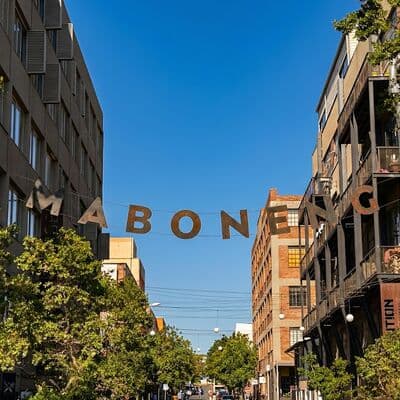
The Maboneng Precinct is Joburg's reinvention story. The name means 'place of light' in Sesotho: former industrial buildings now house galleries, coworking spaces, craft breweries, and restaurants. The Market on Main every Sunday is essential.
Pros: unique atmosphere, street art everywhere, best indie cafes, arts community. Cons: safety uneven - great by day, Uber-only by night; mid-gentrification means conditions vary block by block. Prices: $-$$ (hostels from $12, lofts from $35). Best for: creatives, photographers, younger travelers.
Melville - Bohemian Bars and Bookshops
Melville is essentially 7th Street: a kilometer of cafes, bars, secondhand bookstores, and vintage shops. Green, quiet, lined with Victorian cottages - a small town trapped inside a megacity. The sunset from Northcliff Ridge is one of Joburg's best free views.
Pros: atmospheric, great bars, safe by day, affordable. Cons: far from Gautrain, Uber needed everywhere. Prices: $-$$ (guesthouses from $30, Airbnb from $25). Best for: bohemian travelers, nightlife, longer stays.
Parkhurst - Brunch Capital of Joburg
4th Avenue: shady trees, independent shops, and cafes serving arguably the best breakfasts in Johannesburg. Nice on 4th is legendary. The neighborhood is safe, quiet, and nothing like the Joburg stereotypes.
Pros: safe, walkable, outstanding brunch, family-friendly. Cons: far from attractions, no nightlife. Prices: $$ (guesthouses from $40, Airbnb from $35). Best for: families, remote workers, extended stays.
Braamfontein - Young, Loud, and Affordable
University district reborn: graffiti walls, vinyl shops, the Neighbourgoods Market on Saturdays, and cheap bars. This is Joburg for the 20-to-30 crowd who want energy over elegance.
Pros: buzzing atmosphere, cheap eats, Neighbourgoods Market, street art. Cons: safety fluctuates after dark, noisy, some rough blocks. Prices: $ (hostels from $10, hotels from $30). Best for: backpackers, students, budget travelers.
Where NOT to Stay
Avoid Hillbrow, Berea, Yeoville, and the inner CBD - high crime, not set up for tourists. Alexandra (Alex) only with an organized tour. If Maps routes you through these areas, choose an alternative. Every local will tell you the same.
Best Time to Visit Johannesburg
Johannesburg sits at 5,740 feet (1,750m) above sea level, and the altitude changes everything. No oppressive tropical heat - the climate is closer to Mediterranean, with a clear dry/rainy season split. You might even need a jacket, which surprises most visitors.
Best months: April-May and September-October
Autumn (April-May) is ideal. Rains have stopped, air is crisp, daytime 68-77F (20-25C). Joburg is the world's largest man-made forest (10+ million trees) and in autumn they turn gold. Spring (September-October) brings the famous jacaranda bloom - tens of thousands of trees explode purple, turning avenues into natural cathedrals. Comfortable temps, thin crowds.
Perfectly fine: June-August (winter)
Dry and sunny with daytime temps of 59-68F (15-20C) and chilly nights dropping to 37-46F (3-8C). Frost is possible - bring a warm layer for evenings. The upside: this is prime safari season, when animals congregate at watering holes and the low grass makes them easy to spot. Downside: short days, with darkness arriving by 5:30pm.
Trickier months: November-March (summer)
Hot (82-90F / 28-32C) with near-daily afternoon thunderstorms - spectacular lightning but wrecked afternoon plans. Lush and green, great for photos. December-January is peak season (local school holidays), prices jump.
Events and festivals worth timing your trip around
- September-October: Jacaranda season - the city turns purple. Possibly the most photogenic Joburg gets all year
- September: Arts Alive Festival and Joburg Open (golf)
- December: Festival of Lights at Sandton City
- March: Rand Show - South Africa's biggest consumer expo
- April 27: Freedom Day - celebrations and events citywide commemorating the end of apartheid
When it is cheapest: May-August (South African winter). Flights and hotels drop 20-30%, no museum lines. Handle the cool evenings, and you save significantly.
Johannesburg Itinerary: From 3 to 7 Days
3 Days: The Essential Joburg
Day 1: History and Memory
9:00am-12:00pm - Apartheid Museum. Arrive at opening - you need 2-3 hours minimum. At the entrance, you are randomly assigned a 'white' or 'non-white' ticket and enter through separate doors. One of the most powerful museums in the world. Get the audio guide. Admission: $6.50 (ZAR 120).
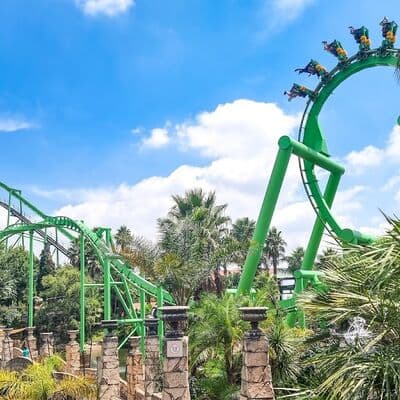
12:30-1:30pm - Lunch near Gold Reef City, right next to the museum. Grab a bite and explore the old gold mine site, or take the underground mine tour descending 660 feet (separate ticket).
2:30-5:00pm - Constitution Hill. Former prison where Gandhi and Mandela were held, now home to South Africa's Constitutional Court. The entrance doors are crafted from old prison cell wood. Admission: $5.50 (ZAR 100).
Evening - Dinner in Melville on 7th Street. Try Che Argentine Grill for steak or Lucky Bean for modern South African cuisine. A full dinner with wine will run you $16-27 (ZAR 300-500).
Day 2: Soweto - The Soul of Joburg
9:00-10:30am - Head to Soweto with a guide (strongly recommended). A bicycle tour is the best way - Lebo's Soweto Backpackers offers tours from $24 (ZAR 450). Daily life, shebeen culture, community projects no museum can replicate.
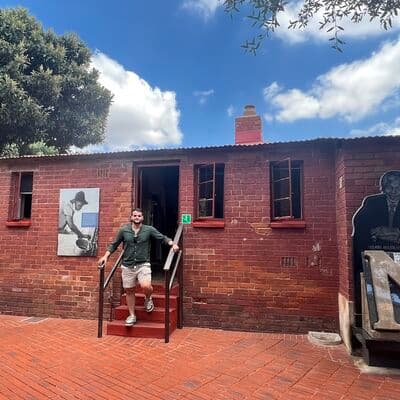
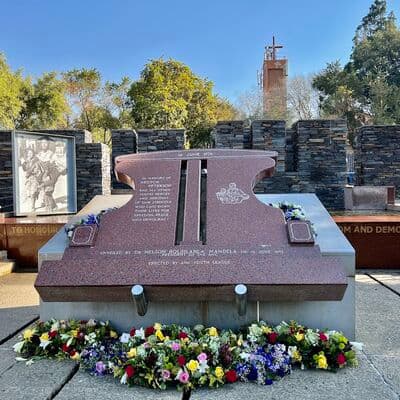
10:30am-12:00pm - Hector Pieterson Museum, memorial to the 1976 student uprising. Small but devastating. Nearby: Mandela House Museum on Vilakazi Street - the only street where two Nobel laureates (Mandela and Tutu) lived.
12:00-1:30pm - Lunch in Soweto. Try Sakhumzi on Vilakazi Street - their buffet of traditional dishes (pap, chakalaka, braai meat) costs about $12 (ZAR 220) and is the real deal.
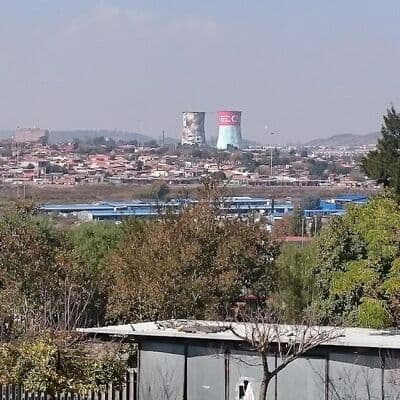
2:00-4:00pm - Orlando Towers, decommissioned cooling towers covered in murals. Bungee jump between them for $32 (ZAR 600) or just enjoy the graffiti and panoramic views.
Evening - Rosebank for dinner: the Keyes Art Mile area has excellent options, followed by rooftop cocktails.
Day 3: Art, Food, and Shopping
9:00am-12:00pm - Maboneng Precinct. Sunday means Market on Main (food, crafts, live music). Weekdays: galleries like Arts on Main and Kalashnikovv, then craft beer at Mad Giant Brewery.
12:00-1:30pm - Lunch at Urbanologi (Asian tapas inside Mad Giant) or Maboneng street food vendors.
2:00-4:00pm - Johannesburg Art Gallery in Joubert Park. Dutch masters to contemporary African art. Free admission.
4:30-6:00pm - 44 Stanley: design quarter with indie shops, ceramic studios, cafes. Best non-tacky souvenirs in Joburg.
Evening - Farewell dinner in Parkhurst: Craft restaurant or The Wolfpack.
5 Days: Breathing Room
Days 1-3: Follow the itinerary above.
Day 4: Cradle of Humankind
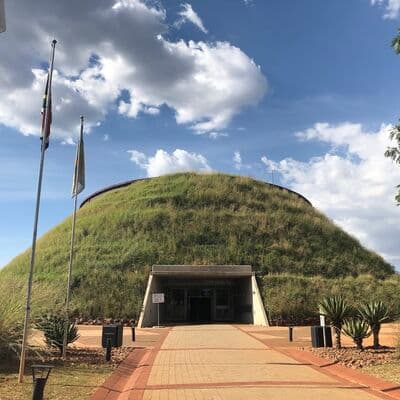
8:30am - Drive to the Cradle of Humankind, a UNESCO site 45 minutes northwest. Some of the oldest hominid fossils (3.5 million years) were found here.
9:30-11:30am - Sterkfontein Caves: underground tour, about an hour. Cool inside (57F/14C) - bring a layer.
12:00-2:00pm - Maropeng Visitor Centre: interactive evolution museum. Great for families. Combo ticket with caves: $14 (ZAR 260).
2:30pm - Lunch on site, then drive back through Muldersdrift. Stop at Carnivore Restaurant for game meats: ostrich, crocodile, kudu.
Day 5: Nature and Relaxation
9:00am-12:00pm - Walter Sisulu National Botanical Garden. Witpoortjie waterfall, protea trails, picnic lawns. Locals love this place on weekends. Admission: $4.30 (ZAR 80).
12:30-2:00pm - Lunch at Fourways Farmers Market (Thursday/Saturday) or Fourways restaurants.
2:30-5:00pm - Shopping: Rosebank Mall, Rosebank Sunday Market, or Parkhurst's 4th Avenue.
Evening - Sunset drinks on a Sandton rooftop overlooking the skyline.
7 Days: Joburg and Beyond
Days 1-5: Follow the itinerary above.
Day 6: Safari Day
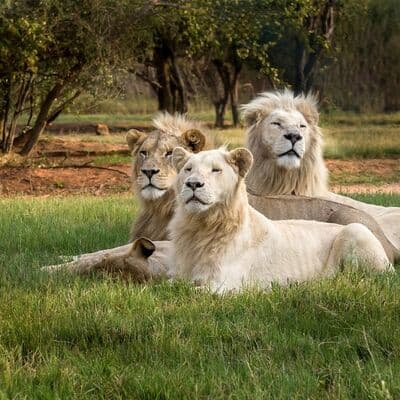
The Lion and Safari Park is just an hour out. Lions, cheetahs, giraffes, zebras, antelope - African wildlife without a multi-day expedition. Self-drive: $15 (ZAR 280). Guided open-vehicle drives cost more but give better access. For the full Big Five, drive two hours to Pilanesberg National Park - malaria-free, with elephants, rhinos, buffalo, leopards, and lions.
Day 7: Pretoria (Tshwane)
South Africa's administrative capital, 35 miles (55 km) north. Union Buildings with the Mandela statue, Voortrekker Monument, Church Square. In October, 70,000 jacaranda trees bloom purple. Gautrain to Hatfield station, then Uber. Pairs well with an evening flight - Pretoria is between Joburg and the airport.
Where to Eat: Restaurants and Markets
Markets and Street Food
Joburg is not Bangkok or Mexico City for street food - here the action is at weekend markets. The Neighbourgoods Market in Braamfontein (Saturdays, 9am-3pm) has dozens of stalls: smash burgers, Ethiopian injera, Korean bibimbap. Market on Main in Maboneng (Sundays) is more tourist-friendly but authentic. Rosebank Sunday Market rounds out the trio with dim sum, German sausages, and Creole dishes. Average spend: $4-8 (ZAR 80-150) for a full meal.
Local Joints
For the real deal, eat in Soweto. Sakhumzi on Vilakazi Street: buffet of pap, chakalaka, braai meat - $12 (ZAR 220). In Fordsburg (Joburg's Little India): best curries and bunny chow, $3-5 (ZAR 60-100). If locals are lining up, follow them in.
Mid-Range Restaurants
The quality-to-price ratio here is excellent. Full dinner with wine: $16-27 (ZAR 300-500) per person. By neighborhood:
- Parkhurst (4th Avenue): Craft for burgers and craft beer. The Wolfpack for pizza and pasta. Nice on 4th for legendary breakfasts.
- Rosebank: BGR for the best smash burgers in the city. Saint for Neapolitan pizza from an imported wood-fired oven.
- Melville (7th Street): Lucky Bean for modern South African cuisine. Service Station for cocktails and small plates in a converted gas station.
- Maboneng: Urbanologi for Asian tapas inside the Mad Giant brewery. Living Room for breakfasts and weekend brunch.
Fine Dining
For a special occasion:
- Les Creatifs (Houghton) - Chef Wandile Mabaso's 7-9 course tasting menus rooted in South African ingredients. Book two weeks ahead. $65-97 (ZAR 1,200-1,800).
- Marble (Rosebank) - Open-flame meats, panoramic city views. Book on weekends. $27-43 (ZAR 500-800).
- The Butcher Shop and Grill (Nelson Mandela Square) - Joburg institution. Dry-aged steaks, 400-label wine list. $22-38 (ZAR 400-700).
- Insights Restaurant (Houghton) - Refined African-international cuisine, live piano evenings. $32-54 (ZAR 600-1,000).
Cafes and Breakfast
Joburg's coffee culture rivals Melbourne or Portland. Independent roasters and world-class baristas are everywhere. Where to eat breakfast:
- Nice on 4th (Parkhurst) - The legend. Eggs benedict, avocado toast, bottomless coffee. Expect a wait on weekends. $6.50-10 (ZAR 120-180).
- Tasha's (multiple locations) - Stylish, Instagram-ready breakfasts for the business crowd. $5.50-11 (ZAR 100-200).
- Glenda's (Rosebank) - Retro charm, homemade baked goods, seasonal menus. $5.50-8.50 (ZAR 100-160).
- Father Coffee (Braamfontein/Rosebank) - The best specialty coffee in the city, period. Flat white: $2.40 (ZAR 45).
Must-Try Food and Drink
Braai - South African barbecue, but never call it that to a local. Braai is a way of life: boerewors (spiced sausage), thick steaks, corn on the coals, outdoors with a beer. Every weekend, half of Joburg stands around a fire. Try it at any grill restaurant or book a braai tour in Soweto. From $8 (ZAR 150).
Bunny Chow - A quarter-loaf of bread hollowed out and filled with spicy curry. Looks absurd, tastes incredible. Born in Durban's Indian community, now a national icon. Where: Fordsburg or markets. $3-4.30 (ZAR 50-80).
Biltong - Dried, cured meat that makes American beef jerky taste like cardboard. Beef is standard; game varieties (kudu, ostrich, springbok) are worth seeking out. Biltong shops on every block. 100g tasting: $2-3.25 (ZAR 40-60).
Pap en Vleis - Maize porridge (like polenta) with stewed meat and chakalaka. South Africa's foundational dish: simple, filling, satisfying. Soweto eateries: $3.25-5.50 (ZAR 60-100).
Vetkoek - Deep-fried dough balls stuffed with curried mince or cheese. South African savory beignets. Street vendors and markets: $1-2 (ZAR 20-40).
Chakalaka - Spicy vegetable relish (tomatoes, peppers, carrots, beans). Accompanies everything. Every household has their own recipe. Vegetarian-friendly.
Malva Pudding - Warm sponge cake with apricot jam and caramel sauce, served with ice cream. South African comfort food. $3.25-5 (ZAR 60-90).
Amarula - Cream liqueur from marula fruit (the one that supposedly makes elephants tipsy). On the rocks or in cocktails. Bar pour: $2.70-4.30 (ZAR 50-80).
Craft Beer - Joburg's craft scene rivals the US and Europe. Mad Giant (Maboneng), Jack Black, Devil's Peak. A pint: $3.25-5 (ZAR 60-90).
What to skip (at first): Mogodu (tripe) and Walkie Talkies (chicken heads and feet) - acquired tastes. Save for trip two.
For vegetarians: Joburg is accommodating. Most restaurants have solid veg options. Greenside is great for plant-based; Fordsburg's Indian food is naturally veggie-friendly.
Local Secrets: Insider Tips
1. Uber is your lifeline. Forget public transport (except Gautrain). Uber and Bolt cost pennies by Western standards - $4-6 (ZAR 80-120) across half the city. Always call a car in the evening. Bolt is often cheaper.
2. You still need cash. Cards work almost everywhere, but markets and township eateries are cash-only. Keep ZAR 500-1,000 in small bills. ATMs: FNB and Standard Bank are safest.
3. Keep your phone out of sight. Smartphones are the top theft target. Snap your photo and pocket it. In an Uber, do not hold it by an open window. Not paranoia - standard practice for locals too.
4. Google Maps routes through bad areas. The 'fastest route' sometimes cuts through high-crime zones. Use Waze instead - locals mark hazards in real time.
5. Tipping is expected. 10-15% at restaurants (not included in the bill). ZAR 5-10 to car guards and petrol attendants. ZAR 100-200 for tour guides. Tips are a significant part of income for many South Africans.
6. The power goes out. Load shedding (scheduled power cuts) is a fact of life. Download EskomSePush to check schedules. Good hotels have generators; budget places may go dark for 2-4 hours. Carry a power bank.
7. The altitude is real. At 5,740 feet (1,750m), expect slight breathlessness day one. Drink extra water. Alcohol hits harder at altitude - that second Pinotage will creep up fast.
8. Haggle at flea markets, not food markets. Food prices are fixed; flea markets and street vendors expect negotiation. Start at 60-70% of asking price.
9. Book restaurants ahead. Top spots fill up on weekends. Use DinePlan (local OpenTable) or WhatsApp. For Marble or Les Creatifs, reserve at least a week out.
10. Never compare it to Cape Town. Locals are tired of hearing 'but Cape Town is nicer.' They are completely different cities. Cape Town is natural beauty and beaches; Joburg is history, culture, food, and urban grit. Judge each on its own terms.
11. Sunday is market day. Market on Main, Rosebank Sunday Market, Bryanston Market. Arrive by 10am before crowds.
12. Sunset from Northcliff Ridge. Best free view in Joburg. Arrive an hour before sunset with a picnic blanket. Leave before dark.
Transport and Connectivity
Getting from the Airport to the City
Gautrain - best option. High-speed train from O.R. Tambo Airport to Sandton in 15 minutes ($10 / ZAR 185) or Rosebank in 20. Trains every 12-20 minutes, 5:30am-9:30pm. Clean, safe, free Wi-Fi. Buy a Gold Card at the station: ZAR 50 deposit plus fare.
Uber/Bolt - airport to Sandton: $13.50-22 (ZAR 250-400), 20-30 minutes without traffic. Rush hour (7-9am, 4-6pm) can double that. Uber pickup: lower level Arrivals, Zone E.
Hotel transfer - many hotels offer free or paid shuttles. Ask when booking.
Avoid: metered taxis at the airport - overpriced and inconsistent. Uber is always the smarter choice.
Getting Around the City
Uber and Bolt - primary transport. Short trip (3 mi / 5 km): $2-3.25 (ZAR 40-60). Cross-city (10 mi / 15 km): $4.30-8 (ZAR 80-150). Always verify plate and driver name.
Gautrain - great for Airport-Sandton-Rosebank-Pretoria. One line only, so useless elsewhere.
Car rental - worth it for day trips (Cradle of Humankind, Pilanesberg). From $19/day (ZAR 350). Driving is on the left! In the city, Uber beats driving.
Minibus taxis - cheap (under $1) but chaotic with no schedules. Not for visitors. Rea Vaya buses - limited BRT routes, useful for Soweto.
Internet and Connectivity
SIM cards: Vodacom, MTN, or Cell C at the airport or any mall. Tourist package (10GB): $8-11 (ZAR 150-200). Passport required for RICA registration. Vodacom has the best coverage.
eSIM: Airalo or Holafly - activate before landing. 5GB / 7 days: $8-12.
Wi-Fi: Free in most cafes, restaurants, malls, and hotels.
Essential Apps
- Uber / Bolt - ride-hailing (Bolt is often cheaper)
- EskomSePush - load shedding schedule (absolutely essential)
- Waze - navigation with real-time hazard warnings from local users
- DinePlan - restaurant reservations (the local OpenTable)
- SnapScan / Zapper - mobile payments accepted at markets and smaller vendors
Final Verdict
Johannesburg is not a city you visit for the views - it is a city you visit for the understanding. The story of South Africa, from gold rush to apartheid to freedom, is written into every neighborhood. Add one of Africa's best food scenes, a thriving arts culture, and safari an hour from your morning flat white, and you see why Joburg deserves your time.
Great for: history lovers, food enthusiasts, photographers, anyone who wants the real Africa beyond Cape Town.
Not ideal for: beach vacations, high safety anxiety, families with small children without a car.
How long: 3 days minimum (museums + Soweto), 5 ideal (+ Cradle of Humankind + neighborhoods), 7 with surroundings (+ safari + Pretoria). Beyond a week, split time with Cape Town or the Garden Route.
Information current as of 2026. Prices listed in USD with South African Rand (ZAR) equivalents. Exchange rate: 1 USD = approximately 18.5 ZAR.