Pretoria
Pretoria 2026: What to Know Before You Go
Pretoria is not Johannesburg. This is the first thing you need to understand, and it will save you from a dozen awkward conversations with locals. Yes, they are only 55 kilometers apart. Yes, they are both in Gauteng province. But Pretoria - officially known as Tshwane, though nobody actually calls it that in daily life - is a completely different animal. Where Joburg is loud, fast, and relentlessly commercial, Pretoria is slower, greener, more bureaucratic, and quietly beautiful in a way that sneaks up on you.
This is South Africa's administrative capital, home to the Union Buildings where the president works, dozens of foreign embassies, and a university culture that keeps the city feeling young despite its government-town DNA. It is also, famously, the Jacaranda City - and if you time your visit right (October, mark it down), you will see entire streets transformed into purple tunnels that look like they were designed by someone who thought reality needed a better color palette.
Here is what most travel guides will not tell you: Pretoria is genuinely underrated. International tourists fly into OR Tambo, spend a night in Sandton, and rush off to Cape Town or Kruger. They skip Pretoria entirely. That is a mistake. The city has world-class museums, some of Gauteng's best restaurants, affordable accommodation, and a calm that lets you actually enjoy South Africa without the constant edge that Joburg can sometimes carry. Safety concerns? Yes, they exist - this is still South Africa. But Pretoria's tourist areas are manageable, especially if you use common sense and Uber. The cost of living is noticeably lower than Cape Town, the weather is reliably excellent for about nine months of the year, and the people are genuinely warm once you get past the initial reserve.
One more thing: Pretoria is bilingual in a way that matters. Afrikaans is everywhere - on signs, in restaurants, in the rhythm of conversation. English works perfectly fine for tourists, but you will hear more Afrikaans here than in any other major South African city. A few phrases go a long way. Dankie (thank you) and lekker (great, nice, delicious - essentially the Swiss Army knife of Afrikaans words) will earn you smiles.
Neighborhoods: Where to Stay
Choosing your base in Pretoria matters more than you might think. The city sprawls, public transport is limited, and picking the wrong suburb means you will spend half your trip in an Uber. Here is an honest breakdown of your options.
Brooklyn and Hatfield
This is where most first-time visitors should stay, full stop. Brooklyn is Pretoria's lifestyle hub - the intersection of restaurants, cafes, boutique shops, and a walkable street grid that actually feels safe during the day. Brooklyn Mall anchors the area with practical amenities (pharmacy, grocery store, ATMs, decent food court), while the surrounding streets are lined with some of the city's best dining. Hatfield, right next door, is the student quarter thanks to the University of Pretoria campus. It is louder, cheaper, and has more of a nightlife scene. Accommodation in Brooklyn runs ZAR 800-2,500 per night (roughly USD 45-140) for guesthouses and boutique hotels. Hatfield is cheaper - ZAR 500-1,200 (USD 28-67). Both neighborhoods are well-connected by Uber, and Hatfield has a Gautrain station, which is your fastest link to Johannesburg and OR Tambo airport.
Menlyn
If shopping is your thing, or you want to be near the largest mall in the southern hemisphere (Menlyn Park Shopping Centre - it is enormous), this is your area. Menlyn is more suburban and car-dependent than Brooklyn, but it has excellent mid-range and chain hotel options. The area around Menlyn Maine, a newer open-air lifestyle precinct, is particularly pleasant for evening walks and dining. Expect to pay ZAR 900-2,000 (USD 50-110) for decent accommodation. The downside: it feels a bit generic and corporate compared to Brooklyn's character.
Lynnwood and Lynnwood Glen
A residential area that sits between Brooklyn and Menlyn, Lynnwood offers a quieter, more authentic experience. There are excellent guesthouses here, often in converted family homes with gardens and swimming pools. Lynnwood Road is a minor restaurant strip with some hidden gems. This is a solid choice if you want peace without isolation. Prices: ZAR 700-1,800 (USD 39-100). You will need Uber for most things, but it is centrally located enough that rides are short and cheap.
Waterkloof and Waterkloof Ridge
This is where Pretoria's money lives. Embassies, ambassadorial residences, and some of the most beautiful houses in the country line these leafy streets. Accommodation options are limited but tend to be upscale - think boutique guesthouses with views of the city. If you want to feel like you are staying in a wealthy residential area rather than a tourist zone, Waterkloof delivers. Budget ZAR 1,500-3,500 (USD 83-195) per night. The area is very quiet after dark, which is either peaceful or boring depending on your perspective.
Groenkloof
Adjacent to the Groenkloof Nature Reserve, this suburb is ideal if you want green space and walking trails close to the city center. It is one of Pretoria's oldest neighborhoods, with jacaranda-lined streets that are spectacular in spring. Guesthouses here often have larger grounds, and you can actually walk to the nature reserve for morning jogs or mountain biking. Prices are moderate: ZAR 800-2,000 (USD 45-110). The trade-off is that restaurants and nightlife require a short drive.
CBD (Central Business District)
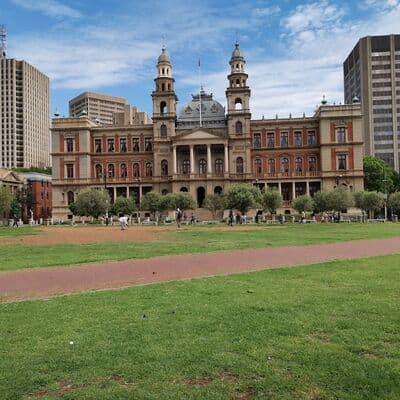
I will be honest: the Pretoria CBD is not where most tourists should stay overnight. During the day, it has genuine attractions - Church Square is historically significant, the street markets are fascinating, and many of the city's museums are here. But after business hours, the CBD empties out and safety becomes a real concern. If you want to explore the city center, do it as a daytime excursion from Brooklyn or Hatfield. A handful of new developments are trying to revitalize the area, and during working hours it feels energetic and African in a way that the suburbs do not. Just plan your visits carefully and keep your phone out of sight on the streets.
Centurion
Technically a separate area between Pretoria and Johannesburg, Centurion is worth mentioning because it has a Gautrain station and decent hotel options near the Centurion Mall. It is a sensible base if you want easy access to both cities, but it lacks any real character or charm. Think of it as a practical, affordable transit hub. Accommodation: ZAR 600-1,500 (USD 33-83).
Best Time to Visit Pretoria
Pretoria sits at roughly 1,350 meters elevation on the South African highveld, which gives it a climate that is far more pleasant than you might expect from a city at latitude 25 degrees south. This is not tropical Africa - it is genuinely comfortable for most of the year.
October: The Jacaranda Season
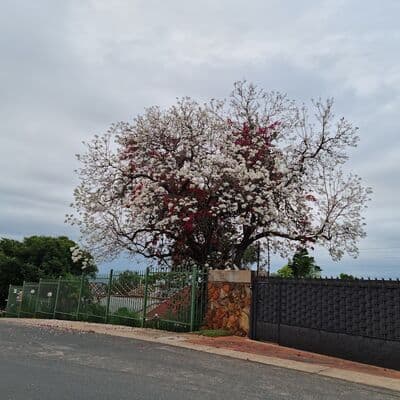
If you can only visit once, come in October. This is when Pretoria's estimated 70,000+ jacaranda trees bloom simultaneously, turning the entire city into a purple wonderland. Streets like Herbert Baker, Park, and Eastwood are completely canopied in violet-blue blossoms. The Jacaranda Trees of Pretoria are genuinely one of the most beautiful urban spectacles in the world, and I am not exaggerating. The weather in October is warm (25-30 degrees Celsius, or 77-86 Fahrenheit), rain has not started in earnest yet, and the city has a spring energy that is infectious. The Jacaranda Festival usually runs mid-October with markets, music, and street events. Book accommodation early - October in Pretoria is increasingly popular.
May to August: Dry Winter
Pretoria's winter is dry, sunny, and mild during the day (18-23 degrees Celsius, 64-73 Fahrenheit). Mornings and evenings can be cold - genuinely cold, sometimes dropping to 2-5 degrees Celsius (36-41 Fahrenheit) - which catches many visitors off guard. Pack layers. The huge advantage of winter is zero rain. Day after day of blue skies makes sightseeing effortless. This is also low season for tourism, so prices drop and attractions are less crowded. The downside: the landscape is dry and brown, trees are bare, and the city does not look its best. June and July are the coldest months, but August starts warming up and is arguably the sweet spot for winter visits.
November to February: Hot, Wet Summer
Summer in Pretoria means heat (30-35 degrees Celsius, 86-95 Fahrenheit) and dramatic afternoon thunderstorms. These are not light drizzles - they are spectacular electrical storms that roll in around 3 or 4 PM, dump rain for an hour, and then clear up. Plan outdoor activities for the morning. The city is lush and green during summer, gardens are in full bloom, and the energy is high. Christmas and New Year see the city empty out somewhat as South Africans head for the coast, which means less traffic but also some restaurants closing for holidays. January is the hottest month and can be genuinely oppressive.
March to April: Autumn
Autumn is Pretoria's other beautiful season. The heat breaks, rain tapers off, and the city's many deciduous trees turn shades of gold, orange, and red. It is not New England, but it is surprisingly pretty. March is warm but comfortable, April starts getting cool in the evenings. This is an excellent time to visit if October does not work for you - fewer tourists, pleasant weather, and a relaxed atmosphere. The landscape still has summer's green but with better temperatures for walking around.
Itinerary: 3 to 7 Days in Pretoria
3 Days: The Essential Pretoria
Day 1: History and Heritage
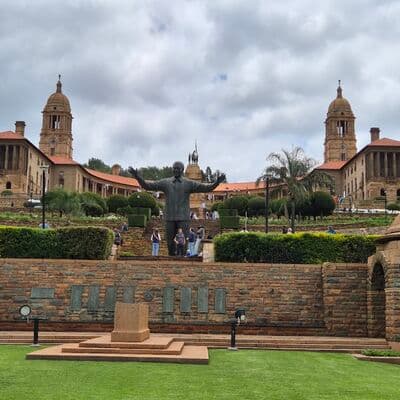
Start at the Union Buildings early morning (8:00 AM) before the tour buses arrive. The terraced gardens offer the best panoramic view of the city, and the Nelson Mandela statue is here - it is massive, nine meters tall, and makes for the defining Pretoria photograph. Spend an hour exploring the grounds, then head down to Church Square in the CBD (15 minutes by Uber, ZAR 40-60 or about USD 3). Walk the square, see the Paul Kruger statue, and admire the surrounding Victorian and Edwardian architecture. From Church Square, it is a short walk to the National Library and the old Transvaal Museum area. Have lunch at one of the restaurants in Brooklyn (Crawdaddy's does excellent grilled fish and seafood, mains ZAR 120-220 or USD 7-12). Afternoon: visit Freedom Park, South Africa's most ambitious memorial project. Budget 2-3 hours - the Wall of Names alone, listing every person who died in South African conflicts going back to precolonial times, takes time to absorb. The Pan-African gallery and the indigenous garden are also outstanding. End the day with dinner in Brooklyn - Prosopa for excellent Italian with generous portions, or Blu Saffron if you want upscale Indian cuisine (mains ZAR 140-260 or USD 8-14).
Day 2: Culture and Nature
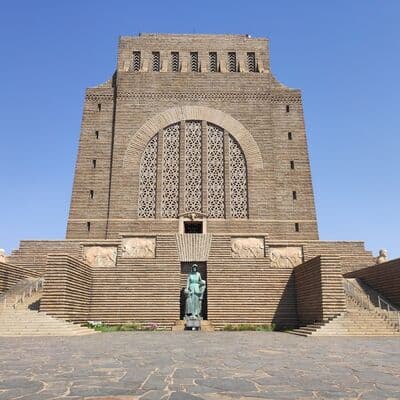
Morning at the Ditsong National Museum of Natural History (formerly the Transvaal Museum). This is genuinely one of Africa's best natural history museums - the fossil collection, including hominid specimens from the Cradle of Humankind nearby, is world-class. Entry is about ZAR 30 (USD 2) - absurdly cheap for what you get. After the museum, drive to the Pretoria National Botanical Garden (10 minutes from the CBD). Pack a picnic or grab takeaway - the gardens are perfect for a long, lazy lunch under the trees. There are over 50 hectares of indigenous plants, a waterfall walk, and birdwatching that will keep you busy for 2-3 hours. Entry is ZAR 45 for adults (USD 2.50). Late afternoon, head to the Voortrekker Monument. Whatever your feelings about Afrikaner history, this brutalist granite monument is architecturally striking and the museum inside provides important context about South African history. The views from the roof are excellent, especially in the golden hour light. Dinner: 16th by KOI in Menlyn Maine for upscale Asian fusion (plan ZAR 250-400 or USD 14-22 per person) or A'la Turka near Brooklyn for consistently excellent Turkish food at moderate prices.
Day 3: Markets, Local Life, and Day Trip
Saturday morning (if your schedule allows): Boeremark at Silverton. This is Pretoria's original farmers' market and it is a beautifully chaotic experience - fresh boerewors rolls, biltong vendors, homemade preserves, Afrikaans tannie recipes, and live music. Arrive by 8:00 AM when the stalls are fully stocked. If it is not Saturday, hit the Hazel Food Market in the morning for a more curated, hipster-friendly market experience with excellent coffee and artisanal food vendors. After the market, drive to Groenkloof Nature Reserve (entry ZAR 50, USD 3) for a morning walk or mountain bike ride - the reserve is right in the city and has zebra, wildebeest, and various antelope species. Afternoon option: drive 45 minutes to Cullinan, the small mining town where the world's largest diamond was found in 1905. The town itself is charming with Victorian architecture, antique shops, and a mine tour (ZAR 180, USD 10) that takes you to the Big Hole viewpoint. Alternatively, drive to Wonderboom Nature Reserve to see the famous 1,000-year-old wild fig tree. Evening: celebrate your last night at Cozinha, a Portuguese-Mozambican restaurant that captures Pretoria's connection to the Lusophone world beautifully, or Blue Crane Restaurant and Bar in the Waterkloof area for upscale South African cuisine with a view.
5 Days: Going Deeper
Days 1-3: Follow the 3-day itinerary above.
Day 4: Cradle of Humankind
This UNESCO World Heritage Site is about 45 minutes from Pretoria and is genuinely one of the most important paleoanthropological sites on Earth. Start at Maropeng, the excellent visitor center (entry ZAR 220, USD 12), then drive to the Sterkfontein Caves (combined ticket ZAR 295, USD 16) where Mrs. Ples and Little Foot were discovered. The underground cave tour is phenomenal - cool, atmospheric, and deeply humbling. Allow a full day for both sites plus travel time. On the way back, stop at one of the craft beer breweries that have popped up along the R563 - the area is becoming a mini beer route. Dinner back in Pretoria at Karoo Cafe for excellent South African comfort food - their lamb shank and bobotie are outstanding.
Day 5: Hartbeespoort Dam and Surrounds
Hartbeespoort Dam, about 40 minutes west of Pretoria, is where Pretorians go on weekends. The dam itself is pretty but the real draw is the surrounding infrastructure: the Hartbeespoort aerial cableway (ZAR 150, USD 8) up to the top of the Magaliesberg range gives you sweeping views. Visit the craft market at the waterfront, take a boat cruise (ZAR 100, USD 6), or explore the Elephant Sanctuary if ethical wildlife interaction interests you. The town of Hartbeespoort has several excellent restaurants along the waterfront. On the way back, detour through the Magaliesberg for some of the most beautiful mountain scenery in Gauteng. Stop at Faerie Glen Nature Reserve for a late afternoon walk through the quartzite ridges - it is a small but beautiful reserve with rock formations that look almost otherworldly in the right light.
7 Days: The Full Experience
Days 1-5: Follow the 5-day itinerary above.
Day 6: Pretoria's Hidden Gems
Morning: explore the Irene Village Market area and the Smuts House Museum - the former home of Jan Smuts is a fascinating time capsule of early 20th-century South African political life (entry ZAR 50, USD 3). The grounds are beautiful for walking. Afternoon: visit the Pretoria Art Museum in Arcadia Park for South African art spanning three centuries, then walk through the beautiful park grounds. If you are interested in military history, the South African Air Force Museum at AFB Swartkop is free, uncrowded, and has an impressive collection of aircraft. Evening: splurge on dinner at one of Waterkloof's fine dining options, or go casual at Grounded Work in Lynnwood for what might be Pretoria's best specialty coffee alongside excellent light meals and pastries.
Day 7: Township Experience and Farewell
Consider a guided township tour of Mamelodi or Atteridgeville - these experiences, when done through reputable operators, are eye-opening and provide crucial context for understanding South African society. Tours typically include a community walk, a visit to a shebeen (township bar), local food, and conversations with residents. Budget ZAR 500-800 (USD 28-45) for a half-day tour. Afternoon: revisit your favorite spot from the trip - perhaps a return to the Botanical Garden for a final peaceful walk, or one last coffee and cake at a Brooklyn cafe. Evening: farewell dinner at your pick of the city's restaurants. I would suggest somewhere with a view - The Keg and Filly in Lynnwood is a local institution for steaks, or if the weather is good, any restaurant with an outdoor terrace in the Brooklyn area to soak up Pretoria's signature evening warmth.
Where to Eat: Pretoria's Restaurant Scene
Pretoria's food scene does not get the attention of Cape Town's or even Johannesburg's, but it punches well above its weight. The city's cultural mix - Afrikaner, English, Indian, Portuguese, African - creates a dining landscape that is varied, affordable, and often surprising.
Street Food and Markets
The Boeremark in Silverton (Saturdays, 5:30 AM to 1:30 PM) is the real deal - a traditional Afrikaans farmers' market where you can eat a boerewors roll the size of your forearm for ZAR 40 (USD 2.20), sample biltong from a dozen vendors, and fill a bag with fresh-baked beskuit (rusks) and koeksisters. It is loud, crowded, and completely authentic. Hazel Food Market in Hazelwood (Saturdays) is the more polished alternative - artisanal bread, craft gin tastings, Japanese-inspired tacos, that sort of thing. Both are excellent; they just serve different moods. During the week, look for roadside braai stands in suburbs like Sunnyside and Arcadia - grilled chicken and pap for ZAR 50-70 (USD 3-4) is the working lunch of Pretoria.
Local Joints and Casual Dining
A'la Turka near Brooklyn is a Turkish restaurant that has been quietly excellent for years - generous meze platters, perfect pide, and lamb dishes that justify the 15-minute wait for a table on weekends. Expect ZAR 100-180 (USD 6-10) per person. Karoo Cafe serves Karoo-style South African food - think slow-cooked lamb, bobotie, potjiekos, and oxtail - in a cozy, rustic setting. Portions are enormous and prices are fair at ZAR 100-200 (USD 6-11). For Portuguese-Mozambican flavors, Cozinha does peri-peri chicken, prawn rissoles, and espetada that transport you straight to Maputo. Mains ZAR 120-220 (USD 7-12). These are the restaurants where Pretorians actually eat, not where tourists get directed.
Mid-Range and Special Occasion
Crawdaddy's in Brooklyn is the kind of restaurant every city needs - reliable, crowd-pleasing, and genuinely good. Their seafood is flown in from the coast, the steaks are excellent, and the vibe is lively without being overwhelming. Budget ZAR 200-350 (USD 11-19) per person with a drink. Prosopa, also in Brooklyn, does Italian food with real conviction - handmade pasta, wood-fired pizza, and a wine list that takes South African wines seriously. A dinner for two with wine runs about ZAR 600-900 (USD 33-50). Blu Saffron is Pretoria's best Indian restaurant, and the competition is fierce - their biryani and butter chicken set a very high bar. Mains ZAR 140-260 (USD 8-14). 16th by KOI in Menlyn Maine is the spot for Asian fusion in a sleek, modern setting - their sushi is comparable to Joburg's best, and the cocktail menu is creative. Expect ZAR 250-400 (USD 14-22) per person.
Fine Dining
Blue Crane Restaurant and Bar in Waterkloof is Pretoria's answer to the fine dining question. The menu leans contemporary South African with international techniques - expect dishes that use local ingredients (Karoo lamb, line fish, indigenous herbs) presented beautifully. Mains ZAR 200-380 (USD 11-21). The setting, with views over the city, is hard to beat for a special evening. For a different approach, several of the estates and lodges in the Magaliesberg area (30-40 minutes from the city) offer farm-to-table fine dining experiences that are worth the drive.
Coffee Culture
Pretoria's specialty coffee scene has exploded in recent years. Grounded Work in Lynnwood is the standout - single-origin pour-overs, beautifully made flat whites, and a food menu that goes well beyond the usual cafe fare. TriBeCa in Brooklyn and various spots along Lynnwood Road also serve excellent coffee. A specialty coffee runs ZAR 35-55 (USD 2-3), which will make visitors from London, New York, or Sydney weep with joy at the value.
What to Try: A Pretoria Food Guide
South African food is one of the world's great undiscovered cuisines, and Pretoria - with its Afrikaner roots, African influences, and immigrant communities - is an excellent place to eat your way through it. Here is what to put on your plate.
Biltong and Droewors. This is not beef jerky. Do not call it beef jerky. Biltong is air-dried, cured meat - usually beef but also game (kudu, springbok, ostrich) - that is sliced thin or thick depending on preference. The spicing is subtle: coriander, salt, pepper, vinegar. Good biltong is silky, savory, and addictive. Droewors is the dried sausage version. You will find biltong shops everywhere; try several and notice the differences. A 100g bag runs ZAR 40-80 (USD 2.20-4.40) depending on the meat. Buy some at Boeremark for the freshest selection.
Boerewors. Literally 'farmer's sausage' - a coiled beef sausage seasoned with coriander, cloves, and nutmeg, cooked over an open flame (braai). A boerewors roll (sausage in a hot dog bun with tomato-and-onion relish) is the national street food and costs ZAR 35-50 (USD 2-3). The quality varies enormously - a good boerewors from a proper butcher or market stall versus a supermarket one is like comparing a Neapolitan pizza to a frozen one.
Bobotie. South Africa's national dish, and one of the most delicious things you will eat in Pretoria. It is a Cape Malay creation: spiced minced meat (usually beef or lamb) topped with a savory egg custard and baked. The spicing - turmeric, curry, chutney, raisins - creates something that is simultaneously familiar and unlike anything you have had before. Served with yellow rice and sambals. Karoo Cafe does an excellent version.
Potjiekos. A slow-cooked stew prepared in a cast-iron, three-legged pot over coals. The word means 'small pot food' and the cooking method has been used since the Voortrekker era. Meat, vegetables, and sometimes dried fruit are layered in the pot and cooked for 3-5 hours without stirring. The result is tender, rich, and deeply comforting. Look for it at traditional Afrikaans restaurants and Sunday braai spots.
Bunny Chow. A hollowed-out half or quarter loaf of white bread filled with curry. Originally from Durban's Indian community, bunny chow has spread across South Africa and Pretoria has some decent versions. It is messy, filling, and genuinely delicious. The bread soaks up the curry sauce and becomes part of the dish. Expect to pay ZAR 60-90 (USD 3.30-5) for a quarter bunny at local Indian restaurants.
Koeksisters. These syrup-soaked twisted doughnuts are dangerously good. The Afrikaans version (twisted, crunchy, dripping with syrup) is different from the Cape Malay version (round, coated in coconut). Pretoria, being an Afrikaans heartland, does the twisted version particularly well. Buy them at Boeremark or any traditional bakery for ZAR 10-20 (USD 0.55-1.10) each.
Pap and Chakalaka. Pap is maize porridge - the staple food of South Africa. It comes in different consistencies: stiff (like polenta), soft (like porridge), or crumbly. Chakalaka is a spicy vegetable relish made with beans, tomatoes, peppers, and chili. Together, they accompany almost every braai and most traditional meals. Simple, satisfying, and deeply connected to South African culture.
Malva Pudding. A warm, sweet, spongy dessert soaked in a cream sauce. It is Dutch-Afrikaans in origin and is the standard way to end a traditional South African meal. Good malva pudding is moist, caramelized on top, and served with custard or ice cream. Bad malva pudding is dry and forgettable. Most traditional restaurants in Pretoria do it well.
Amarula. This cream liqueur, made from the marula fruit, is South Africa's answer to Bailey's - but arguably better. The marula tree grows across sub-Saharan Africa, and the fruit has been used for millennia. Amarula on ice is a classic after-dinner drink. You can also try it in cocktails, over ice cream, or in the Amarula Gold variant. A bottle from a liquor store costs about ZAR 180-220 (USD 10-12).
Local Secrets and Practical Tips
These are the things I wish someone had told me before my first visit to Pretoria. Not the guidebook stuff - the real, practical details that make the difference between a smooth trip and an unnecessarily frustrating one.
- Uber is your best friend. Do not rent a car unless you are doing significant day trips. Uber and Bolt are cheap, reliable, and widely available in Pretoria. A 15-minute ride across the city costs ZAR 50-80 (USD 3-4.40). This also solves the safety equation - you never have to worry about parking in unfamiliar areas or navigating after dark. Download both apps before you arrive.
- Carry some cash, but cards work almost everywhere. South Africa is more card-friendly than most African countries. Tap-to-pay works at most restaurants, shops, and supermarkets. But you will want cash for markets, car guards (the guys who watch your car and expect ZAR 5-10), tipping, and informal vendors. ZAR 500 in your pocket is plenty for a day. ATMs are everywhere - use the ones inside banks or shopping malls rather than street-facing ones.
- Jacaranda timing is not exact. Everyone says October for jacarandas, but peak bloom depends on the weather. Some years it starts in late September, other years early November. The trees do not all bloom at once either - different streets peak at different times. If you are planning a trip specifically for jacarandas, aim for mid-to-late October for the best odds, and follow local social media for real-time bloom updates.
- Sundays are quiet. Very quiet. Many restaurants close on Sundays or have reduced hours. Shopping malls open later (usually 9:00 AM) and close earlier (usually 5:00 PM). Plan your Sunday activities around this - it is a good day for nature reserves, the Botanical Garden, or a long brunch at one of the hotels. Avoid trying to do any serious shopping or restaurant-hopping on a Sunday.
- Afternoon thunderstorms in summer are no joke. Between November and March, expect dramatic storms almost every afternoon. They typically build from about 2:00 PM and hit between 3:00 and 5:00 PM. Lightning is intense - South Africa has one of the highest lightning strike rates in the world. Do not stand under trees or on elevated ground during storms. Plan outdoor activities for the morning and keep an eye on the sky after lunch.
- Nobody calls it Tshwane in conversation. The municipality is officially the City of Tshwane Metropolitan Municipality, and some people refer to the city as Tshwane. But in practice, almost everyone - of all races and languages - still calls it Pretoria. Using either name is fine, but Pretoria will get you understood immediately everywhere.
- Tipping is expected and important. South African service workers earn low base wages and depend on tips. The standard is 10-15% at restaurants, with 15-20% for excellent service. Tip in cash when possible - it is more likely to reach the actual server. Tip car guards ZAR 5-10 (more if they actually helped you park or were there for a long time), petrol station attendants ZAR 5-10 (full service is standard in South Africa), and Uber drivers via the app.
- Load shedding may still affect your trip. South Africa's power grid has been unreliable for years. While the situation has improved significantly since 2023, load shedding (scheduled power outages) can still occur during peak demand periods. Most hotels, restaurants, and malls have backup generators or inverters, so the impact on tourists is usually minimal. Download the EskomSePush app - it shows you the current load shedding schedule and when your area will be affected. Keep your phone charged and carry a small power bank.
- South African wines are world-class and absurdly cheap. You can drink excellent wine in Pretoria for a fraction of what you would pay abroad. A bottle of very good Stellenbosch Cabernet Sauvignon or Pinotage at a restaurant costs ZAR 200-400 (USD 11-22). At a liquor store, the same bottle might be ZAR 80-150 (USD 4.40-8.30). Ask your server for recommendations - South Africans are proud of their wine and love sharing their favorites. Try Pinotage, the country's signature grape variety.
- Water is safe to drink. Pretoria's tap water is treated and safe. It may taste slightly different from what you are used to (higher mineral content), but it will not make you sick. Restaurants automatically serve tap water, and you do not need to buy bottled water unless you prefer the taste. This is not the case everywhere in South Africa, but Gauteng's water infrastructure is reliable.
- Learn to love the braai. A braai is not a barbecue. Well, technically it is, but do not say that to a South African. The braai is a social institution - it is how South Africans gather, celebrate, commiserate, and spend weekends. If you get invited to a braai, go. Bring a bottle of wine or a six-pack of beer. Do not touch the fire (the person managing the coals takes it very seriously). Compliment the meat. Stay for hours. This is South African culture at its most authentic and welcoming.
- Pretoria is safer than its reputation, but stay smart. The city has real crime - this is not something to dismiss. But the tourist areas (Brooklyn, Hatfield, Menlyn, Waterkloof) are reasonably safe during the day, and using Uber after dark eliminates most risk. Do not walk alone at night, keep valuables out of sight, do not leave bags on chairs at restaurants, and avoid the CBD after business hours. These precautions are common sense, and following them will almost certainly give you a trouble-free visit. Pretoria's crime rate is actually lower than Johannesburg's, and the tourist footprint is small enough that visitors rarely encounter problems.
Getting Around: Transport and Connectivity
Airport to City
Most international visitors arrive at OR Tambo International Airport in Johannesburg, which is about 45 kilometers (28 miles) east of Pretoria. You have three main options for getting to the city:
Gautrain: The fastest and most reliable option. The Gautrain is a modern rapid rail system that connects OR Tambo to Hatfield Station in Pretoria in approximately 40 minutes. Trains run every 12-20 minutes from about 5:30 AM to 8:30 PM (reduced schedule on weekends). A single trip costs around ZAR 180 (USD 10). You will need to buy a Gautrain Gold Card at the station (ZAR 50 deposit plus your fare). From Hatfield Station, take an Uber to your accommodation - most places in central Pretoria are 10-15 minutes away. This is, in my opinion, the best option for most travelers. It avoids traffic entirely, is safe, and is predictable.
Uber/Bolt: Direct door-to-door service from OR Tambo to your accommodation in Pretoria. Cost is approximately ZAR 350-500 (USD 19-28) depending on traffic and time of day. The drive takes 45 minutes to 1.5 hours depending on Johannesburg's notorious traffic - rush hour (7:00-9:00 AM and 4:00-6:30 PM) can easily double the journey time. The advantage is convenience, especially if you are arriving with heavy luggage or at odd hours when the Gautrain is not running.
Airport shuttle services: Several companies run shared shuttles between OR Tambo and Pretoria hotels. They are cheaper than a private Uber (ZAR 200-300, USD 11-17) but slower because they make multiple stops. Book in advance online - do not use the random shuttle touts in the arrivals hall.
Within Pretoria
Uber and Bolt: This is how most visitors (and many locals) get around Pretoria. Both apps work well, drivers are generally reliable, and prices are very low by international standards. A typical cross-city trip costs ZAR 40-100 (USD 2.20-5.50). Always check that the license plate matches the app before getting in. Rate your drivers - it helps maintain quality. During peak hours or rain, prices surge and wait times increase, but it is rarely dramatic.
Gautrain: Within Pretoria, the Gautrain has stations at Hatfield and Pretoria Central (plus Centurion to the south). It is mainly useful for getting to Johannesburg or the airport rather than for intra-city travel. The Gautrain also operates a bus network (Gautrain Bus) that connects the stations to surrounding suburbs - check routes on their app, as some of these buses serve useful tourist corridors.
Driving: If you plan to do day trips (Cradle of Humankind, Hartbeespoort, Cullinan), renting a car makes sense. South Africa drives on the left (British system). Roads are generally good, and traffic in Pretoria is much more manageable than Johannesburg. Be aware: hijacking is a real but statistical risk, mainly at certain intersections at night. Keep doors locked, windows up in unfamiliar areas, and do not stop at red lights late at night in deserted areas (this is legally accepted practice in South Africa). Major rental companies (Europcar, Avis, Hertz) operate at OR Tambo and have offices in Pretoria. Budget ZAR 400-800 (USD 22-45) per day for a basic car.
Minibus taxis: The backbone of South African public transport - these white Toyota minivans carry millions of people daily. They are very cheap (ZAR 10-20 for most routes) but chaotic, crowded, and confusing for visitors. Routes are not published, stops are informal, and the experience requires local knowledge. Unless you specifically want to experience this (with a local guide), use Uber instead.
SIM Cards and Connectivity
Get a local SIM card immediately on arrival. You can buy one at OR Tambo airport (Vodacom, MTN, and Cell C all have kiosks in arrivals) or at any major shopping mall. A SIM card costs ZAR 5-10, and a data bundle of 5GB costs about ZAR 100-150 (USD 6-8) - enough for a week of heavy use including maps and Uber. You will need your passport for registration (RICA law). Vodacom has the best coverage overall, followed by MTN. Cell C is cheaper but coverage can be spotty outside major areas. Free WiFi is available at most hotels, restaurants, and shopping malls, but having mobile data ensures you always have Uber, Google Maps, and translation apps when you need them.
Essential apps to download: Uber and Bolt (transport), Google Maps or Waze (navigation - Waze is actually more popular among South Africans), EskomSePush (load shedding schedules), Zapper or SnapScan (South African payment apps accepted at many restaurants), and WhatsApp (the dominant messaging platform in South Africa - many restaurants and tour operators prefer WhatsApp communication over email or phone calls).
Who Pretoria Is For: A Summary
Pretoria is for the traveler who wants to understand South Africa beyond the obvious. It is not Cape Town's Instagram-ready beauty or Kruger's wildlife spectacle. It is something quieter and arguably deeper - a city where history lives in the architecture, where African and European cultures blend in fascinating ways, and where you can eat extraordinarily well for very little money. Come if you want jacaranda-lined streets, world-class museums, easy day trips to some of the most important historical sites on the continent, and a pace of life that lets you actually breathe. Skip it if you need beaches, want non-stop nightlife, or cannot handle a city that goes quiet on Sundays. Pretoria rewards the curious, the patient, and the hungry. Give it at least three days. You will almost certainly wish you had given it more.