About
Cambodia Travel Guide: Ancient Temples, Tropical Beaches, and a Nation Reborn
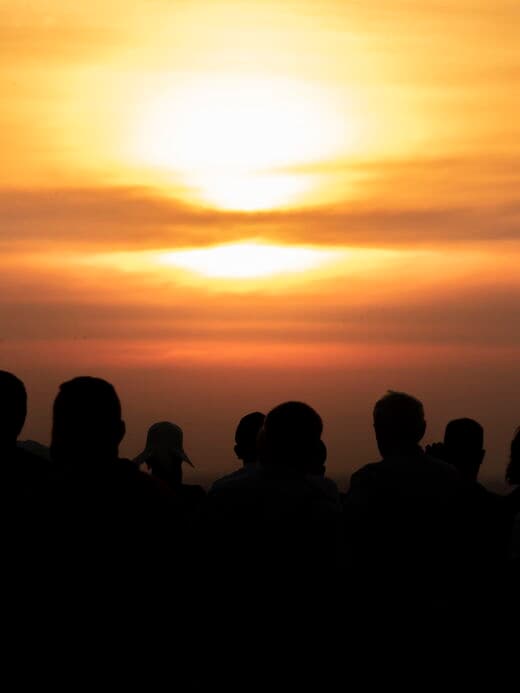
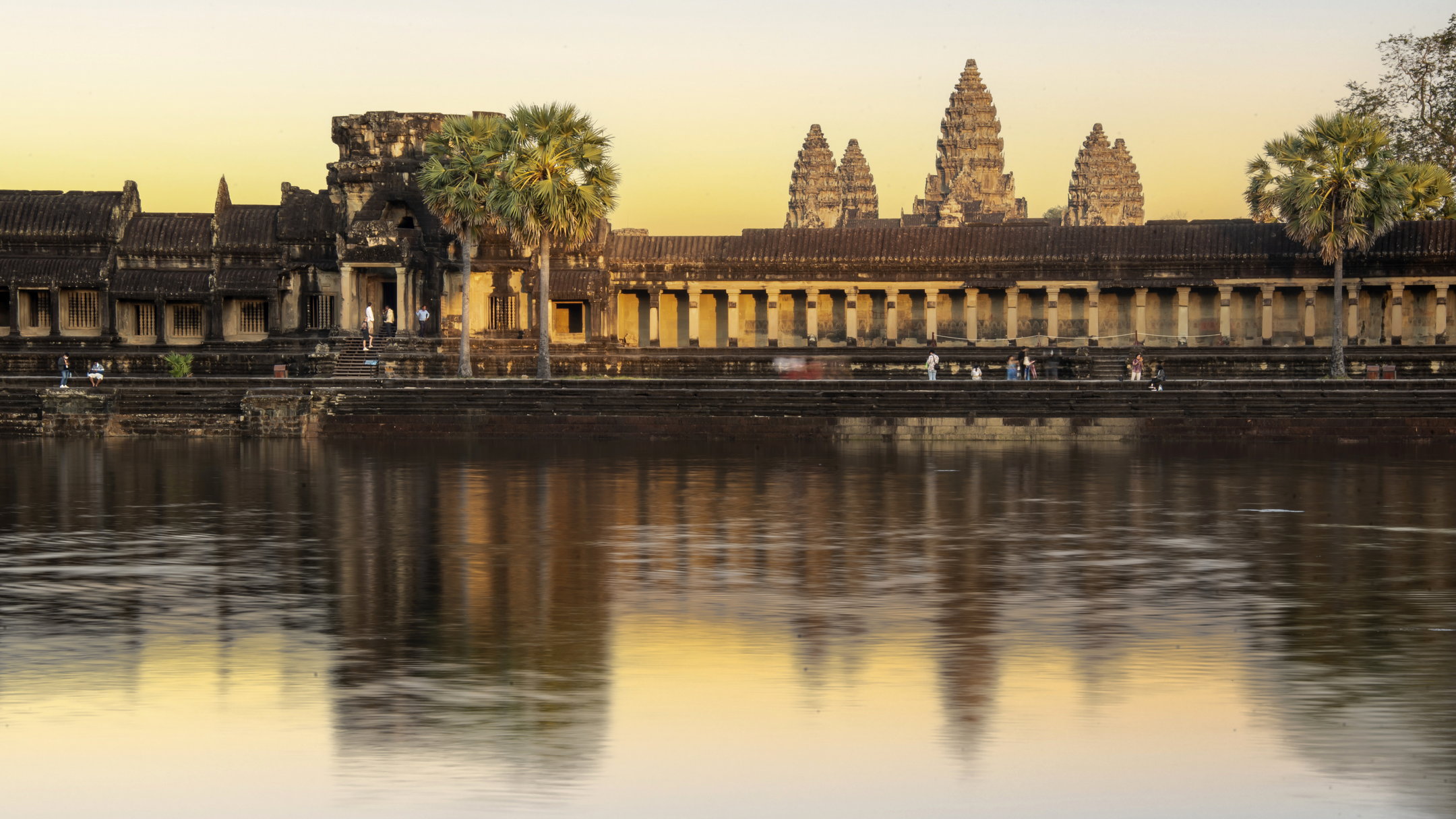
Cambodia is one of those destinations that fundamentally changes how you see the world. This is not hyperbole or travel-writer fluff - it is a simple statement of fact that millions of visitors have discovered for themselves. When you stand before the sunrise at Angkor Wat, watching the ancient towers emerge from darkness as they have for nearly a thousand years, something shifts inside you. When you learn about the Khmer Rouge period and visit the sobering memorials in Phnom Penh, you gain a profound appreciation for human resilience. And when you find yourself on a pristine beach on Koh Rong, wondering how such paradise can exist without the crowds you would find in Thailand, you realize that Cambodia offers something increasingly rare in Southeast Asia: authenticity without the tourist infrastructure overwhelming it.
I have traveled extensively throughout Cambodia over multiple trips spanning different seasons, and I want to share everything I have learned with you. This guide is not a sanitized brochure - I will tell you about the incredible highs and the occasional frustrations, the must-see attractions and the hidden gems, the cultural riches and the practical realities of navigating a developing country. Whether you are planning a quick temple run to Siem Reap or a month-long exploration of the entire country, this guide will help you make the most of your Cambodian adventure.
Why Visit Cambodia: The Case for the Kingdom of Wonder
Let me be direct with you: Cambodia is not the easiest country in Southeast Asia to travel through. The roads can be rough, the heat is oppressive, and poverty is visible in ways that may make you uncomfortable. So why should you visit? Because Cambodia offers rewards that far outweigh these challenges, and because the very rawness of the experience is part of what makes it so meaningful.
The Temples of Angkor: Humanity's Greatest Architectural Achievement
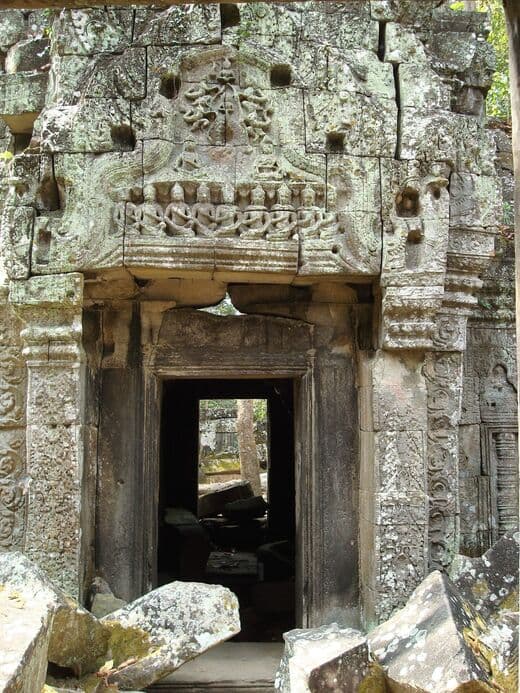
I do not make this claim lightly. The Angkor Archaeological Park contains over 1,000 temples spread across more than 400 square kilometers, representing the pinnacle of Khmer civilization from the 9th to 15th centuries. Angkor Wat alone is the largest religious monument ever constructed - larger than Vatican City, more intricate than anything the Romans built. But Angkor Wat is just the beginning. Bayon with its 216 serene stone faces, Ta Prohm with its strangler figs consuming ancient stones, Banteay Srei with carvings so delicate they seem impossible in sandstone - each temple offers a unique experience that could justify the trip on its own.
What makes Angkor truly special is not just the scale or artistry, but the atmosphere. Unlike many famous monuments that feel like museum pieces, the temples of Angkor remain living spiritual sites. Buddhist monks in saffron robes meditate in shadowy chambers. Local families come to pray and leave offerings. The sense of continuity with the past is palpable in a way I have rarely experienced anywhere else in the world.
A Window Into History Both Triumphant and Tragic
Cambodia forces you to confront the full spectrum of human experience. The Khmer Empire that built Angkor was one of the most powerful and sophisticated civilizations in human history, controlling much of mainland Southeast Asia and leaving behind artistic treasures that rival anything produced by medieval Europe. Yet this same nation experienced one of the 20th century's greatest tragedies during the Khmer Rouge period from 1975 to 1979, when an estimated 1.5 to 2 million people - roughly a quarter of the population - died from execution, starvation, and disease.
Visiting the Tuol Sleng Genocide Museum and Choeung Ek Killing Fields in Phnom Penh is not easy, but it is profoundly important. These sites are not exploitative or sensationalized - they are dignified memorials that honor the victims while educating visitors about what happened. Understanding this recent history also helps you appreciate the remarkable resilience of the Cambodian people, who have rebuilt their nation from near-total destruction in just a few decades.
Genuine Hospitality and Warmth
Cambodians have every reason to be bitter and suspicious of outsiders given their history. Instead, you will find some of the warmest, most genuinely welcoming people in all of Asia. The famous Khmer smile is not a tourist-industry performance - it reflects a Buddhist culture that emphasizes acceptance, kindness, and moving forward rather than dwelling on past suffering. Cambodians are curious about visitors and eager to share their culture, whether through conversation, food, or simply helping you find your way when you are lost.
This hospitality feels different from the more transactional friendliness you might encounter in heavily touristed parts of Thailand or Bali. In Cambodia, especially outside the main tourist centers, interactions with locals feel authentic because they usually are. The tourism industry here is still developing, which means you are more likely to be seen as a guest rather than just another source of revenue.
Incredible Value for Money
For English-speaking travelers from the US, UK, Australia, or Canada, Cambodia offers extraordinary value. Your dollars stretch remarkably far here. A comfortable hotel room that would cost $150 in the US might be $30-40 in Siem Reap. A delicious meal at a local restaurant costs $3-5. A full-day tuk-tuk tour of Angkor temples runs $15-20. Even budget-conscious travelers can live comfortably, while those with more resources can enjoy genuine luxury for a fraction of what it would cost at home.
The dual-currency system actually works in your favor as an American. The US dollar is accepted everywhere, with Cambodian riel used mainly for small change. You do not need to worry about exchange rates for most transactions - prices are quoted in dollars, you pay in dollars, and you receive dollar change. For travelers from other countries, you can easily exchange your currency for dollars at banks or use ATMs that dispense dollars directly.
Beaches and Islands Without the Crowds
Thailand's beaches are beautiful but increasingly overcrowded and overdeveloped. Vietnam's coast is pleasant but heavily developed. Cambodia offers a middle ground - gorgeous tropical beaches with significantly fewer visitors and less commercial development. Koh Rong and Koh Rong Samloem have powder-white sand and crystal-clear water that rival anywhere in Southeast Asia. The southern coast around Sihanoukville and Kampot provides diverse beach experiences from party scene to peaceful retreat. And because Cambodia is not yet on most tourists' radar for beaches, you can still find stretches of sand where you might be the only person for hundreds of meters.
Adventure and Exploration Opportunities
If you enjoy getting off the beaten path, Cambodia rewards the adventurous traveler. The northeastern provinces of Ratanakiri and Mondulkiri offer jungle trekking, waterfall swimming, and encounters with ethnic minority communities that feel utterly different from the rest of the country. The floating villages of Tonle Sap Lake provide glimpses into a unique water-based way of life. Ancient temple sites like Preah Vihear and Koh Ker see a fraction of Angkor's visitors but offer equally impressive ruins. Cambodia has not yet been fully mapped and packaged by the tourism industry, which means genuine discovery is still possible.
A Country in Transformation
Visiting Cambodia now means witnessing a nation at a pivotal moment in its development. The country is changing rapidly - roads are improving, infrastructure is expanding, and a growing middle class is emerging. In ten years, Cambodia will likely be a very different place to visit. Some of the rough edges that make travel challenging will be smoothed over, but some of the authentic character may be lost as well. There is something special about experiencing a destination before it becomes fully developed for tourism, and Cambodia currently occupies that sweet spot where travel is manageable but discovery is still possible.
Regions of Cambodia: Where to Go and What to Expect
Cambodia is a compact country - roughly the size of Oklahoma or about three-quarters the size of Great Britain - but it packs tremendous diversity into its borders. Understanding the different regions will help you plan an itinerary that matches your interests and available time. Most visitors focus on Siem Reap and perhaps Phnom Penh, but the country rewards those who venture further.
Siem Reap and the Angkor Region
Siem Reap is where most visitors spend the majority of their time in Cambodia, and for good reason. This city of about 250,000 people serves as the gateway to the Angkor Archaeological Park, but it has developed its own personality beyond just being a base for temple exploration.
The town itself is surprisingly charming. The old French quarter features colonial architecture, tree-lined boulevards, and the Siem Reap River flowing through the center. Pub Street and the surrounding area offer restaurants, bars, and nightlife ranging from backpacker dives to sophisticated cocktail lounges. The local markets provide excellent shopping for handicrafts, textiles, and souvenirs. Despite hosting millions of visitors annually, Siem Reap has managed to retain a laid-back, friendly atmosphere that feels distinctly Cambodian rather than generically touristy.
The temples themselves deserve detailed discussion. Angkor Wat is the iconic centerpiece - a massive temple-mountain representing Mount Meru, the home of the gods in Hindu cosmology. The temple faces west, unusual for Khmer architecture, which creates the famous sunrise silhouette reflected in the pools out front. Beyond the postcard image, Angkor Wat rewards close examination. The bas-reliefs depicting Hindu epics and historical events stretch for hundreds of meters and took decades to complete. The upper levels offer commanding views and intimate sanctuaries. Plan to spend at least three hours here, and consider returning at different times of day to see how the light transforms the stones.
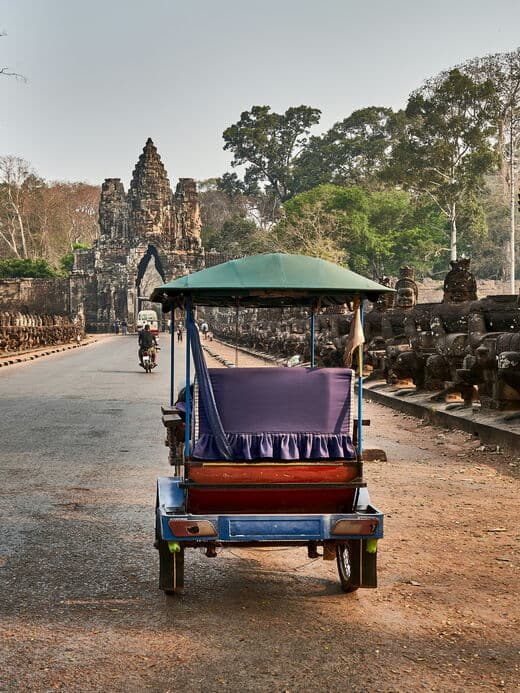
Angkor Thom, the great walled city, contains some of the most impressive and atmospheric temples. Enter through the South Gate with its avenue of gods and demons, then explore Bayon at the center. Bayon's towers are carved with over 200 massive faces, each one slightly different, smiling serenely in every direction. The effect is mysterious and powerful - you feel watched and blessed simultaneously. Within Angkor Thom, do not miss Baphuon with its elevated walkway and reclining Buddha, Phimeanakas with its legends of serpent spirits, and the Terrace of the Elephants and Terrace of the Leper King with their intricate carvings.
Ta Prohm has become famous since appearing in the Tomb Raider film, and for good reason. The temple was deliberately left in a state of picturesque decay, with massive strangler fig and silk-cotton trees growing through and over the stone structures. Walking through Ta Prohm feels like discovering a lost civilization, and the interplay of nature and architecture creates endless photographic opportunities. Visit early morning or late afternoon to avoid the worst crowds and heat.
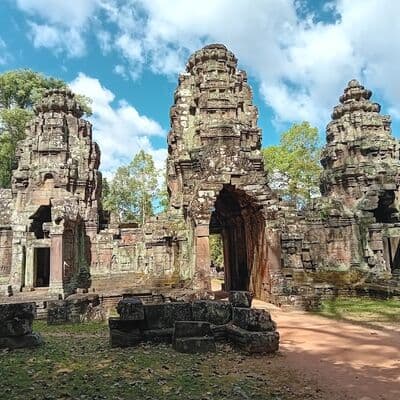
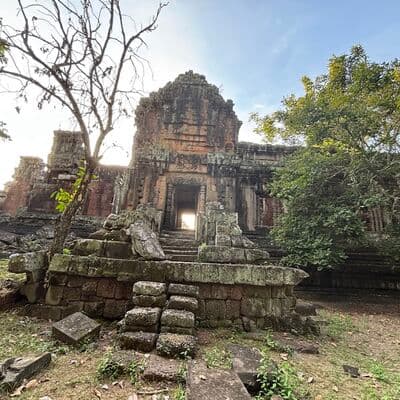
The outer temples offer different experiences. Banteay Srei, about 25 kilometers northeast of Angkor Wat, is smaller but features the finest and most detailed carvings in all of Angkor. The pink sandstone preserves intricate decorative scenes with remarkable clarity. Preah Khan is a vast temple complex that once functioned as a city unto itself, with atmospheric corridors and chambers that see fewer visitors than the main circuit. Ta Som, Neak Pean, and East Mebon along the Grand Circuit offer variety and relative solitude.
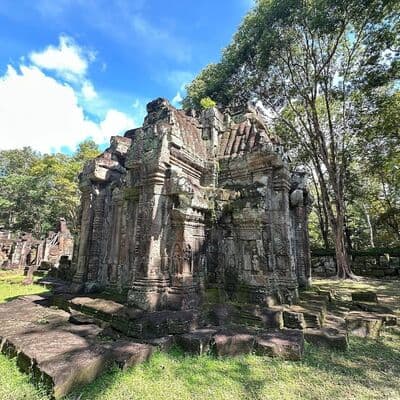
The Roluos Group temples (Bakong, Preah Ko) represent the earliest Angkorian architecture, predating the main temples by about 300 years. These smaller but historically significant sites receive few visitors and provide insight into the origins of Khmer temple design.
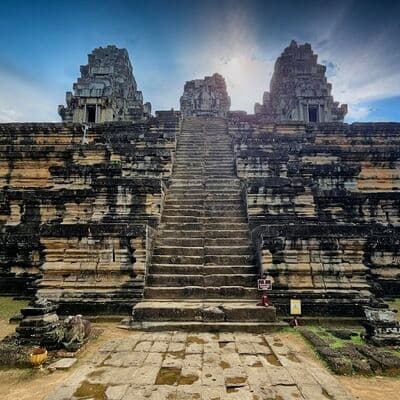
Phnom Bakheng is the traditional sunset viewing spot, offering panoramic views over the jungle canopy with Angkor Wat in the distance. However, it has become extremely crowded - authorities now limit visitors to 300 at a time, and you may need to queue for an hour or more. Pre Rup offers a less crowded alternative for sunset viewing with similarly impressive views.
Beyond the temples, Siem Reap offers floating village tours on Tonle Sap Lake, Cambodian cooking classes, traditional Apsara dance performances, and opportunities to learn about local crafts like silk weaving and stone carving. The Angkor National Museum provides excellent context for understanding what you will see at the temples. Phare, the Cambodian Circus, offers amazing performances by young Cambodian artists that combine traditional and contemporary techniques.
Phnom Penh: The Capital City
Phnom Penh is Cambodia's capital and largest city, home to about 2.5 million people. It has a reputation among some travelers as just a stopover on the way to the temples or beaches, but this sells the city short. Phnom Penh rewards those who take time to explore, offering a compelling mix of history, culture, and contemporary urban energy.
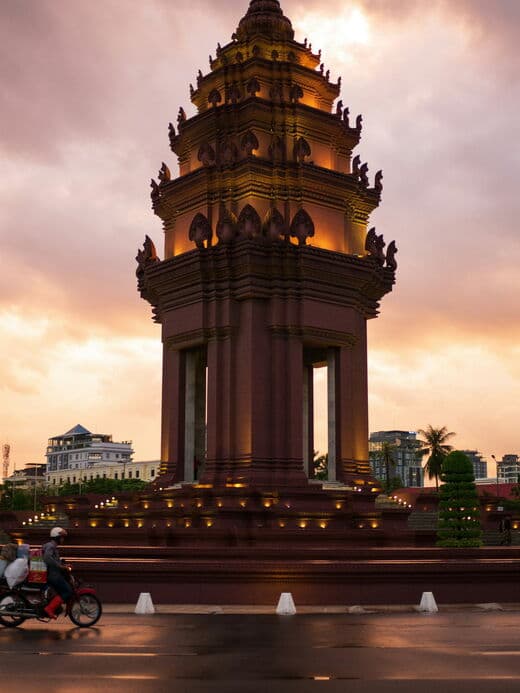
The city sits at the confluence of the Mekong, Tonle Sap, and Bassac rivers - the Chaktomuk or Four Faces - which has made it strategically and commercially important for centuries. The riverfront promenade provides a pleasant walking and cycling route with views across the water. In the evening, locals gather here to exercise, socialize, and enjoy the cooling river breeze.
The Royal Palace and Silver Pagoda complex occupies prime riverfront real estate and serves as the residence of the King. The ornate Khmer-style buildings with their distinctive tiered roofs and gilded spires represent traditional Cambodian architecture at its finest. The Silver Pagoda gets its name from the 5,000 silver tiles that cover its floor. Inside, a life-sized gold Buddha encrusted with 9,584 diamonds commands attention. The surrounding gardens and stupas provide peaceful spaces for reflection.
The National Museum houses the world's finest collection of Khmer sculpture, with pieces spanning from the pre-Angkorian period through the decline of the empire. Seeing these statues and artifacts before visiting Angkor helps you understand what originally occupied the temples' empty niches and pedestals. The terracotta building itself, designed in traditional Khmer style during the French colonial period, is architecturally significant.
The Tuol Sleng Genocide Museum and Choeung Ek Killing Fields are difficult but essential visits for understanding modern Cambodia. Tuol Sleng, also known as S-21, was a high school converted into a torture and interrogation center by the Khmer Rouge. Today it serves as a memorial to the estimated 17,000 people who were imprisoned here, of whom only a handful survived. The audio guide includes testimony from survivors and provides crucial context. Choeung Ek, about 15 kilometers south of the city center, is where prisoners from S-21 were taken for execution. The memorial stupa filled with skulls stands as a powerful reminder of what occurred here. These are not pleasant places to visit, but they honor the victims and educate visitors about one of history's great crimes.
Beyond the heavy historical sites, Phnom Penh has a vibrant contemporary scene. The Russian Market (Psar Toul Tom Poung) offers the best shopping in the city, with clothes, handicrafts, antiques, and electronics at bargain prices. The Central Market (Psar Thmei) is an Art Deco masterpiece worth visiting for the architecture alone. Street food is excellent and abundant - try the riverside area at night for barbecued meats and seafood.
The city's French colonial heritage remains visible in districts like the area around Street 240 near the Royal Palace. Elegant villas, some restored and some crumbling, line shaded streets. Boutique hotels and upscale restaurants have moved into many of these buildings, creating a distinctly Indochinese atmosphere that recalls Hanoi or Saigon.
Phnom Penh's nightlife and dining scene has exploded in recent years. The riverside area and the BKK (Boeung Keng Kang) neighborhood offer everything from street food to fine dining, dive bars to rooftop cocktail lounges. The city has attracted a significant expat community, which has brought international cuisine and contemporary dining concepts.
The Southern Coast and Islands
Cambodia's southern coast stretches from the Thai border to Vietnam, offering diverse beach experiences that have become increasingly popular as travelers discover alternatives to crowded Thai destinations.
Sihanoukville was Cambodia's original beach resort town, developed in the 1950s and named after the former king. In recent years, massive Chinese investment has transformed the city center into a construction zone of casinos and high-rises. The original beaches like Serendipity and Ochheuteal have lost much of their former appeal, though areas like Otres Beach further south retain more of the laid-back traveler vibe.
The real draw of Sihanoukville now is as a jumping-off point for the islands. Koh Rong, Cambodia's second-largest island, has developed rapidly in recent years but still offers genuine tropical paradise. Long Beach on the west coast features four kilometers of powdery white sand backed by jungle, often with few other people in sight. The main village area has more facilities and nightlife, including the famous Full Moon parties. Koh Rong Samloem, Koh Rong's smaller neighbor, caters more to those seeking peace and quiet. Saracen Bay has a handful of beach resorts and bungalow operations, while the rest of the island remains largely undeveloped. Both islands offer excellent snorkeling, diving, and the chance to experience bioluminescent plankton glowing in the water at night.
Kampot is a riverside town near the coast that has become a favorite among travelers seeking a more relaxed alternative to the beaches. The town itself features well-preserved French colonial architecture, excellent restaurants and cafes, and a distinctly bohemian atmosphere. The surrounding countryside offers pepper plantations (Kampot pepper is considered among the world's finest), cave temples, Bokor National Park with its abandoned French hill station, and the dramatic seaside cliffs of Kep. Kampot works well as a base for exploring the region, and many travelers end up staying longer than planned, drawn in by the town's charm.
Kep was Cambodia's premier beach resort during the French colonial period and through the 1960s, when wealthy Cambodians and foreigners built elaborate seaside villas. The Khmer Rouge destroyed most of these buildings, and their ghostly shells still line the hillsides. Kep has been slowly rebuilding as an upscale alternative to Sihanoukville, with boutique hotels and seafood restaurants catering to discerning visitors. The crab market at Kep beach is famous - choose your live crab and have it prepared with the local Kampot pepper for one of Cambodia's signature culinary experiences. Rabbit Island (Koh Tonsay) is a short boat ride away, offering simple bungalows and pristine beaches.
The Northeast: Ratanakiri and Mondulkiri
Cambodia's northeastern provinces offer a completely different experience from the rest of the country - remote, rugged, and home to diverse ethnic minority communities who maintain traditional ways of life. This region is not for everyone, but adventurous travelers will find rewards here that cannot be found anywhere else in Cambodia.
Ratanakiri Province borders Vietnam and Laos, and its main town of Banlung serves as a base for exploration. Yeak Laom Lake is the region's most popular attraction - a perfectly circular crater lake with emerald-green water, surrounded by jungle and sacred to the local Tampuan people. The swimming is excellent and the setting magical. Virachey National Park offers multi-day treks into pristine jungle, though you will need to arrange guides and permits. The indigenous communities in the area, including the Tampuan, Kreung, and Jarai, live in traditional longhouses and maintain animist beliefs alongside Buddhism. Several villages welcome visitors for homestay experiences, providing glimpses into ways of life that are increasingly rare.
Mondulkiri Province to the south is the country's largest but least densely populated province, characterized by rolling hills, pine forests, and waterfalls that feel more like the highlands of Vietnam than typical lowland Cambodia. Sen Monorom, the provincial capital, serves as the base for exploration. The Bunong ethnic minority predominates here, traditionally practicing slash-and-burn agriculture and maintaining close connections with the forest. The Elephant Valley Project outside Sen Monorom offers ethical elephant encounters - these are rescued working elephants allowed to live semi-wild lives, and visitors can observe them bathing and foraging without riding or other exploitative activities. The Bou Sra waterfall is impressive during the rainy season, dropping over two tiers into a jungle-fringed pool.
Getting to the northeast requires commitment - roads have improved but remain rough in places, and bus journeys are long. Flying from Phnom Penh to Ratanakiri saves time but limits flexibility. Most travelers allow at least three to four days for either province, though a week or more allows for deeper exploration.
The Northwest: Battambang and Beyond
Battambang, Cambodia's second-largest city, offers a glimpse into provincial Cambodian life without the tourist crowds of Siem Reap. The city features the country's best-preserved examples of French colonial architecture, with elegant shop-houses and villas lining the Sangker River. The pace is slow, the people friendly, and the countryside surrounding the town rewards exploration.
The bamboo train, or norry, has become Battambang's most famous attraction. These improvised rail vehicles consist of a bamboo platform powered by a small engine, originally used by locals to transport goods along abandoned railway tracks. The tourist version runs on a short track outside town and provides a genuinely unique experience, even if it is now a primarily touristic activity. The surrounding countryside includes ancient temples like Wat Banan and Wat Ek Phnom, plus the Killing Caves of Phnom Sampeau with their sobering Khmer Rouge history.
Battambang is also known for its circus. The Phare Ponleu Selpak circus school trains young Cambodians in circus arts, and performances showcase remarkable talent while supporting the organization's social mission. The skill level rivals the better-known Phare circus in Siem Reap.
From Battambang, you can travel by boat to Siem Reap along the Sangker River and Tonle Sap Lake. The journey takes seven to eight hours and provides fascinating glimpses of rural life along the waterways. During dry season when water levels are low, passengers may need to disembark and walk portions of the route, adding to the adventure.
Further northwest, the temples of Banteay Chhmar feature some of the finest bas-reliefs outside Angkor, with far fewer visitors. Preah Vihear, on the Thai border, is a spectacular mountain-top temple complex that has been the subject of territorial disputes between Cambodia and Thailand. Access is easiest from the Cambodian side, and the views from the temple over the Thai plains below are extraordinary.
Tonle Sap Lake and Floating Villages
Tonle Sap is the largest freshwater lake in Southeast Asia and one of the world's most productive freshwater fisheries. What makes it unique is its seasonal reversal of flow - during the monsoon, water from the Mekong backs up into the Tonle Sap River, causing the lake to expand from about 2,500 square kilometers to over 16,000 square kilometers. This flood pulse creates incredibly rich ecosystems that support abundant wildlife and the livelihoods of hundreds of thousands of people.
Several communities around the lake have adapted to this dramatic seasonal change by building floating villages - entire communities on boats and floating platforms that rise and fall with the water levels. Visiting these villages provides insight into a truly unique way of life. Houses, schools, shops, and even temples float on the water. Residents fish, farm aquatic plants, and live their entire lives on the lake.
The most commonly visited floating villages from Siem Reap include Chong Kneas (the closest but most touristic), Kampong Phluk (with its flooded forest and stilt houses), and Kampong Khleang (larger and less visited). Each offers a different experience, and visiting during different seasons reveals how dramatically the lake environment changes throughout the year.
What Makes Cambodia Unique: The Kingdom's Distinctive Character
Every destination has its unique characteristics, but Cambodia's distinctiveness runs particularly deep. Understanding what sets this country apart will help you appreciate your experience more fully and navigate cultural interactions more successfully.
A Living Archaeological Wonder
Many countries have ancient ruins, but few can match Cambodia's combination of scale, artistry, and spiritual continuity. The Angkor temples are not dead monuments preserved under glass - they remain active sites of worship where monks meditate, families pray, and religious ceremonies continue traditions spanning centuries. This living connection to the past creates an atmosphere that pure archaeological sites cannot match. You are not just looking at old stones; you are participating in an ongoing spiritual tradition.
The temples also demonstrate the remarkable achievements of the Khmer Empire, which at its height controlled much of mainland Southeast Asia. The engineering required to build Angkor - the irrigation systems, the quarrying and transportation of millions of stone blocks, the organization of massive labor forces - rivals the achievements of any ancient civilization. Understanding the sophistication of the Khmer Empire helps contextualize modern Cambodia and the sense of historical destiny that many Cambodians feel.
Extraordinary Resilience
The Cambodian people have endured almost unimaginable suffering within living memory. The Khmer Rouge's attempt to create an agrarian utopia resulted in the deaths of roughly 25 percent of the population through execution, starvation, and disease. The regime specifically targeted the educated, professionals, and anyone with connections to the former government or foreign countries. Doctors, teachers, engineers, artists - the people any society needs to function - were systematically eliminated.
That Cambodia has not only survived but rebuilt into a functioning, forward-looking nation within just a few decades testifies to remarkable human resilience. When you interact with older Cambodians, you are likely meeting genocide survivors who lost family members and witnessed horrors but have chosen to move forward rather than remain trapped in trauma. This resilience is not passive - it is an active choice to rebuild, to create, to hope. Understanding this context adds depth to every interaction and helps explain the warmth and openness that visitors often experience.
The Complexity of Buddhism in Practice
Cambodia is officially about 97 percent Theravada Buddhist, and Buddhism permeates daily life in ways that might surprise Western visitors. Monks in saffron robes are a common sight, collecting morning alms, riding motorcycles, or sitting in cafes checking their smartphones. Buddhism here is not a Sunday-only affair - it is woven into the fabric of everyday existence.
Yet Cambodian Buddhism also incorporates significant elements of Hinduism (which preceded Buddhism and built the early Angkor temples), animism, and ancestor worship. Spirits called neak ta inhabit trees, rocks, and places, requiring offerings and respect. Brahmin priests conduct certain royal ceremonies. Fortune telling, astrology, and magical practices coexist with Buddhist teachings. This syncretic approach may seem contradictory to those expecting pure Buddhist doctrine, but it reflects the pragmatic Cambodian approach to spirituality - different beliefs and practices serve different needs.
The Dual Currency System
Cambodia operates on a unique dual-currency system that can be confusing initially but quickly becomes second nature. The US dollar is effectively the primary currency for most transactions, while the Cambodian riel serves mainly as small change. Prices are typically quoted in dollars, you pay in dollars, and you receive change in dollars - except that any change less than one dollar often comes in riel at approximately 4,000 riel per dollar.
This system developed after the Khmer Rouge abolished money entirely, and the economy that emerged from the chaos relied heavily on dollars. Today, most ATMs dispense dollars, most businesses prefer dollars, and there is no real need to obtain riel separately - you will accumulate small amounts as change and can spend it on street food, tuk-tuk fares, and small purchases. This dollar-based economy is convenient for American travelers and manageable for others who can exchange currency or withdraw dollars from ATMs.
The Food Culture
Cambodian cuisine is often overshadowed by its famous neighbors - Thai food to the west, Vietnamese food to the east - but it has its own distinctive character that rewards exploration. The flavors are generally milder than Thai food, with less chili heat, and rely heavily on fresh herbs, fermented fish paste (prahok), and aromatics like lemongrass, galangal, and kaffir lime.
The national dish, fish amok, exemplifies Cambodian cooking - freshwater fish steamed in banana leaves with a rich coconut curry flavored with kroeung (a paste of lemongrass, turmeric, galangal, garlic, shallots, and kaffir lime). Other essential dishes include beef lok lak (stir-fried beef with pepper sauce and a fried egg), nom banh chok (rice noodles with fish-based green curry gravy, eaten for breakfast), and various soups and salads featuring prahok. Street food is abundant and excellent, from grilled meats on sticks to fresh spring rolls to tropical fruits with chili salt.
The Development Context
Cambodia remains one of Southeast Asia's poorest countries, with significant portions of the population living in poverty and limited access to healthcare, education, and infrastructure. This reality is visible to visitors in ways that may cause discomfort - children selling trinkets, amputees begging, run-down buildings and rough roads. How you navigate these encounters is a personal matter, but awareness of the context is important.
At the same time, Cambodia has made remarkable development progress since the 1990s. Economic growth has been strong, poverty rates have declined, and a middle class is emerging in the cities. The changes are visible year over year - better roads, new buildings, more businesses, improving infrastructure. Tourism has played a significant role in this development, generating income and employment throughout the country. Your visit contributes to this ongoing development in tangible ways.
The Political Situation
Cambodia is officially a constitutional monarchy with a parliamentary system, but the political reality is more complex. The Cambodian People's Party has dominated politics since 1985, and Prime Minister Hun Manet succeeded his father Hun Sen in 2023. The country faces criticism from international observers regarding press freedom, civil society restrictions, and the treatment of opposition figures. At the same time, Cambodia has maintained stability and achieved significant development during this period.
As a visitor, you are unlikely to encounter political issues directly. Cambodians generally avoid political discussion with foreigners, and tourists are not targets of state attention. However, understanding the political context helps explain some aspects of Cambodian society and the caution you might observe in certain conversations.
When to Visit Cambodia: Timing Your Trip
Cambodia has a tropical monsoon climate with two main seasons - wet and dry. Your choice of when to visit will significantly impact your experience, though each season has its advantages.
The Dry Season: November to April
The dry season is generally considered the best time to visit, and this is reflected in higher prices and larger crowds, especially December through February. Skies are typically clear, rain is rare, and temperatures are more moderate (though still hot by Western standards). This is ideal for temple exploration, beach activities, and general touring.
November and December offer perhaps the optimal conditions - the landscape is still green from the recent rains, the Tonle Sap Lake is at or near its maximum size, and the worst of the tourist crowds have not yet arrived. Christmas and New Year bring peak prices and crowds, so avoid those specific weeks if possible.
January through February is peak tourist season with the best weather - cooler temperatures (25-30 degrees Celsius or 77-86 Fahrenheit), minimal rain, and low humidity. This is when you will encounter the most visitors at Angkor and the highest prices for accommodation. Booking ahead is essential for popular hotels.
March and April see rising temperatures as the hot season approaches. April is the hottest month, with temperatures regularly exceeding 35 degrees Celsius (95 Fahrenheit) and sometimes approaching 40 (104 Fahrenheit). Temple touring becomes extremely challenging in this heat. However, this period coincides with Khmer New Year (mid-April), Cambodia's most important holiday, when the country celebrates with water festivals and family gatherings. It is a fascinating time culturally but a challenging time for physical comfort.
The Wet Season: May to October
The monsoon brings daily rainfall, typically in intense afternoon thunderstorms lasting an hour or two rather than all-day drizzle. Mornings are often clear, and the rain brings relief from the heat. For budget travelers or those who do not mind getting wet, this season offers significant advantages.
Prices drop substantially during the wet season - sometimes 30-50 percent lower than peak season rates. Crowds thin out, meaning more intimate experiences at the temples and easier access to popular sites. The landscape transforms into lush green, creating beautiful conditions for photography. The Tonle Sap Lake expands dramatically, making boat trips and floating village visits more impressive.
The downsides are real - some roads become impassable, particularly in remote areas. Outdoor activities can be interrupted by rain. Beach holidays are less reliable. But for temple touring specifically, the wet season can actually be ideal - cooler temperatures, dramatic cloud formations, and the temples surrounded by greenery rather than dusty brown.
September and October see the heaviest rainfall and occasional flooding. Unless you specifically want to experience the monsoon at its peak, these months are best avoided, particularly in lowland areas around Tonle Sap.
Special Events and Holidays
Khmer New Year (April 13-15) is the most important holiday, a time when the entire country seems to shut down as people return to their home villages. Siem Reap and Phnom Penh empty out, while provincial towns and temples fill with celebrating families. It is a culturally rich time to visit but requires careful planning - transportation is chaotic, and many businesses close.
The Water Festival (Bon Om Touk) in November celebrates the reversal of the Tonle Sap River's flow with dragon boat races, fireworks, and festivities in Phnom Penh. Millions of people converge on the capital, creating incredible energy but also crowded conditions.
Pchum Ben (Ancestors Day) in September or October is a 15-day Buddhist festival when Cambodians honor deceased relatives with offerings at pagodas. While less dramatic for visitors than Khmer New Year or the Water Festival, it provides insight into the spiritual life of the country.
Getting to Cambodia: International Arrivals
Cambodia has become increasingly accessible for international travelers, with improving air connections and straightforward visa procedures for most nationalities.
By Air
Phnom Penh International Airport (PNH) is the main gateway, with direct flights from numerous Asian cities including Bangkok, Singapore, Kuala Lumpur, Ho Chi Minh City, Hong Kong, Seoul, Tokyo, Beijing, and Shanghai. Siem Reap International Airport (REP) also handles significant international traffic, primarily from regional destinations, making it possible to fly directly to the temples without transiting through Phnom Penh.
For travelers from the United States, there are no direct flights to Cambodia. The most common routings connect through Bangkok, Seoul, Tokyo, Hong Kong, or Taipei. Bangkok is often the most convenient hub, with multiple daily flights to both Phnom Penh and Siem Reap on carriers including Thai Airways, Bangkok Airways, Cambodia Angkor Air, and budget carriers like AirAsia. Seoul is another popular option, especially given competitive fares on Korean Air and Asiana. Flight time from the US West Coast to Cambodia, including connections, is typically 18-22 hours; from the East Coast, 22-26 hours.
From the United Kingdom, similar routing options apply, with flights connecting through Bangkok, Singapore, Kuala Lumpur, or Middle Eastern hubs like Dubai or Doha on Emirates and Qatar Airways. Total journey time is typically 14-18 hours depending on the connection.
From Australia, the most direct routes connect through Singapore, Kuala Lumpur, or Bangkok. Jetstar has operated direct flights from various Australian cities to Siem Reap seasonally. Flight time from Australia's East Coast is 8-12 hours depending on routing.
Visas for English-Speaking Travelers
Cambodia offers visa on arrival for citizens of the United States, United Kingdom, Canada, Australia, and most other Western countries. The tourist visa costs $30 USD, allows a 30-day stay, and can be extended once for an additional 30 days. You will need a passport valid for at least six months beyond your arrival date and one passport photo. The process at arrival is straightforward and typically takes 15-30 minutes.
Alternatively, the e-Visa system allows you to obtain your visa online before departure. The cost is slightly higher ($36 plus a processing fee), but it can save time on arrival, particularly during busy periods. E-Visas are valid for entry through Phnom Penh, Siem Reap, and certain land borders but not all entry points - check the specific border you plan to use if arriving overland.
Business visas ($35 on arrival) allow longer stays and are extendable for multiple periods up to 12 months. Some long-term visitors opt for business visas even without actual business purposes, though this exists in a gray area of Cambodian regulations.
Overland Options
Cambodia shares land borders with Thailand, Vietnam, and Laos, all of which have multiple crossing points open to international travelers.
From Thailand, the most popular crossing is Poipet/Aranyaprathet, connecting Bangkok to Siem Reap. This route is well-established but notorious for scams and hassles at the border - research current conditions and common tactics before crossing. The Cham Yeam/Hat Lek crossing in the south provides access to Sihanoukville and the coast. A new crossing at Ban Khlong Luk/Stung Bot offers an alternative route.
From Vietnam, the most common crossing is Bavet/Moc Bai, connecting Ho Chi Minh City to Phnom Penh by bus (about six hours). Other crossings include Phnom Den/Tinh Bien near Chau Doc and various points along the Mekong for boat crossings. The scenic slow boat from Chau Doc to Phnom Penh via the Mekong was once popular but has become less reliable - check current operating status before planning around this option.
From Laos, the border at Trapaeng Kreal allows crossing from Si Phan Don (4000 Islands) to Stung Treng in Cambodia's northeast. This is a remote crossing with limited facilities, suitable for adventurous travelers on the overland trail between Laos and Cambodia.
TSA Considerations for American Travelers
When returning to the United States from Cambodia, be aware of customs and agricultural restrictions. Do not attempt to bring back fruits, vegetables, meats, or other fresh agricultural products - they will be confiscated and could result in fines. Cambodian antiques and artifacts are prohibited from export, and attempting to bring items that appear to be from Angkor or other archaeological sites (even reproductions) may create complications. Keep receipts for any art or antiquity purchases to demonstrate items are legal reproductions.
Certain herbal products and traditional medicines common in Cambodia may contain ingredients that are illegal in the US. Traditional opium pipes, whether genuine or reproductions, will attract unwelcome attention from customs officers. Use common sense about what you pack for your return journey.
Getting Around Cambodia: Transportation Options
Transportation in Cambodia has improved dramatically in recent years, but standards still differ significantly from what Western travelers may expect. Understanding your options helps you plan realistic itineraries and budget appropriately.
Domestic Flights
Cambodia Angkor Air and smaller carriers operate flights between Phnom Penh, Siem Reap, and Sihanoukville. Flight times are short (45-60 minutes) and prices reasonable ($50-100 one way). Domestic flights save significant time compared to overland travel and are worth considering if your time is limited. The Siem Reap to Phnom Penh flight is particularly useful, covering in 45 minutes a journey that takes 5-6 hours by road.
Long-Distance Buses
Air-conditioned buses connect all major destinations and represent the best value for longer journeys. Companies like Giant Ibis, Mekong Express, and Virak Buntham operate modern, comfortable vehicles with reclining seats, air conditioning, onboard toilets, and sometimes WiFi. Prices are very reasonable - Phnom Penh to Siem Reap costs around $10-15 for a journey of 5-6 hours. Phnom Penh to Sihanoukville runs $10-12 for 4-5 hours.
Giant Ibis deserves special mention as the premium operator, with the most comfortable buses, most reliable schedules, and best safety record. Their tickets cost slightly more than competitors but are worth the premium. They also offer night buses on major routes, allowing you to travel while you sleep and save on accommodation.
Book tickets in advance during peak season, especially for morning departures to Siem Reap and during Cambodian holidays. Most guesthouses and hotels can arrange tickets, or you can book directly through company websites or apps.
Mini-Vans and Shared Taxis
Smaller vehicles fill the gaps between major routes, connecting provincial towns and remote destinations. These are less comfortable than buses but more flexible, often departing when full rather than on fixed schedules. Prices are negotiable, and you may be able to hire an entire vehicle for private transfer.
Be aware that mini-vans have a poor safety record in Cambodia. Drivers are often paid by the trip rather than hourly, creating incentives for speed. Vehicles may be overloaded and poorly maintained. On major routes, the large buses are significantly safer.
Tuk-Tuks and Motos
Tuk-tuks - motorcycle-drawn carriages - are the quintessential Cambodian transport for short distances. Every town has them, and they provide an open-air, reasonably comfortable way to get around. In Siem Reap, hiring a tuk-tuk driver for temple touring is standard practice, with full-day rates of $15-25 depending on the circuit and season. Establish a price before departure and clarify exactly what is included.
Motos (motorcycle taxis) are faster and cheaper than tuk-tuks but expose you to more risk. They are fine for short urban trips but not recommended for longer journeys or for anyone uncomfortable on two wheels. Always wear a helmet if one is provided - head injuries are common in Cambodian traffic accidents.
Bicycle and Motorbike Rental
Bicycles can be rented throughout Cambodia for $1-3 per day. In Siem Reap, cycling to the temples is a popular option, though the distances are significant (12+ kilometers to the main temples, 25+ to outer sites) and the heat challenging. E-bikes have become available and offer a good compromise between human power and motor transport.
Motorbike rental is available for around $5-10 per day for a small automatic scooter. However, be extremely cautious about riding in Cambodia. Traffic rules are loosely enforced (and loosely followed), road conditions vary wildly, and medical care for accidents may be limited. Most travel insurance policies exclude motorbike accidents if you do not hold a proper license for the vehicle class. Unless you are an experienced rider comfortable with chaotic conditions, consider alternatives.
Private Car and Driver
Hiring a car with driver provides the most comfortable and flexible option for touring. Daily rates run $60-100 depending on vehicle type, distance, and negotiation. For groups of three or more, this can be comparable to bus fares while offering door-to-door convenience and the ability to stop wherever interests you. Reputable hotels and travel agents can arrange reliable drivers.
Boats
Boat transport remains important in a country crisscrossed by rivers and lakes. The most popular tourist route is the boat between Siem Reap and Battambang via the Tonle Sap Lake and Sangker River - a scenic journey of 7-8 hours that passes through floating villages and wetlands. During dry season when water levels drop, the boat must navigate narrow channels and passengers may need to walk portions of the route.
Express boats connect Phnom Penh with destinations up and down the Mekong, though road improvements have made these less competitive than in the past. Local boats shuttle visitors to islands off the coast and to floating villages on Tonle Sap.
Ride-Hailing Apps
Grab operates in Phnom Penh and Siem Reap, offering the convenience of app-based booking with transparent pricing. PassApp is a Cambodian alternative with similar functionality. These apps work well in the cities and eliminate the need for negotiation, though coverage outside urban centers is limited.
Cultural Code: Navigating Cambodian Society
Understanding Cambodian cultural norms will enhance your experience and help you interact respectfully with local people. Cambodia is generally tolerant of foreign visitors' cultural missteps, but making an effort demonstrates respect and often leads to warmer interactions.
Buddhist Etiquette
Buddhism pervades Cambodian society, and observing proper etiquette around religious sites and monks is essential. When visiting temples, dress modestly - shoulders and knees should be covered, and many sites will not admit visitors in shorts, tank tops, or revealing clothing. At Angkor, this is enforced; elsewhere, you may enter but will receive disapproving looks.
Remove shoes before entering temple buildings, and do not point your feet at Buddha images or shrines - this means sitting in the proper position (typically with legs folded to the side or underneath you) rather than with legs extended forward. Women should never touch monks or hand items directly to them - place items on a surface or a cloth that the monk can then pick up.
Photography at temples is generally permitted, but use discretion around people praying and during ceremonies. Ask permission before photographing monks. Never climb on Buddha statues or pose disrespectfully for photos - incidents of tourists sitting on Angkor ruins or taking inappropriate selfies have led to increased restrictions.
The Head, Hands, and Feet
In Cambodian culture, the head is sacred and the feet are profane. Never touch someone's head, even a child's (though Westerners might mean this affectionately). Never point your feet at people, religious objects, or shrines. When sitting on the floor, tuck your feet behind you rather than extending them forward. Stepping over someone who is sitting is very rude - walk around them instead.
Use your right hand for giving and receiving items, eating, and gesturing. The left hand is associated with unclean functions. When handing money or items to someone, using both hands or the right hand alone shows respect; using only the left hand is insulting.
Social Interactions
Cambodians greet each other with the sampeah - palms pressed together in a prayer-like gesture, accompanied by a slight bow. The height of the hands indicates the level of respect: higher for monks, elders, or those of higher status. Foreigners are not expected to initiate the sampeah, but returning the gesture when it is offered is appreciated.
Public displays of affection between couples are generally frowned upon - holding hands is acceptable, but kissing and hugging in public will attract attention and discomfort. Conversely, Cambodian men often hold hands or touch while walking together, which is a sign of friendship with no romantic implications.
Keep your voice down and avoid public displays of anger. Losing your temper, raising your voice, or becoming visibly upset causes everyone involved to lose face. Even when you have legitimate grievances, calm persistence gets better results than confrontation. The concept of face - avoiding embarrassment and maintaining dignity - is crucial in Cambodian culture.
Giving and Receiving
Gift-giving follows certain protocols. If invited to a Cambodian home, bring a small gift - fruit, sweets, or something for children. Gifts are not opened immediately in front of the giver. Avoid giving white flowers (associated with funerals) or sharp objects (suggesting cutting the relationship).
When receiving food or drinks, accept graciously even if you do not intend to consume much. Refusing outright can cause offense. You can politely decline second helpings, but initial acceptance shows appreciation for hospitality.
Photography and Consent
Always ask permission before photographing people, especially children. While many Cambodians are happy to be photographed, assumptions about consent are not appropriate. Be particularly sensitive in rural areas, around ethnic minority communities, and in situations involving poverty or suffering. The Killing Fields and Tuol Sleng permit photography in most areas, but use judgment about what is appropriate to document.
Bargaining and Tipping
Bargaining is expected in markets and for tuk-tuk fares but not in restaurants with printed prices or shops with fixed prices. Approach bargaining good-humoredly - it should be a game, not a battle. Start at roughly half the initial asking price and work toward a mutually acceptable number. Walking away often brings the price down, but do not offer prices you are not willing to pay.
Tipping is not traditionally part of Cambodian culture but has become expected in tourist contexts. At restaurants, 10-15 percent is appreciated if service has been good. Tip guides and drivers who provide good service - $5-10 per day for guides, $3-5 for drivers, more for exceptional service. At hotels, a dollar or two per day for housekeeping is appropriate at mid-range and upscale properties.
Safety in Cambodia: Staying Secure
Cambodia is generally safe for tourists, but like any developing country, it has certain risks that informed travelers can largely avoid. Violent crime against foreigners is rare, but petty theft occurs, and various scams target tourists.
Crime Concerns
Bag snatching is the most common crime affecting tourists, particularly in Phnom Penh. Motorcyclists grab bags from pedestrians or from passengers in tuk-tuks, sometimes causing injuries when victims are dragged. Keep bags secured and close to your body, carry them on the side away from traffic, and avoid displaying expensive phones or cameras conspicuously. Consider using a cross-body bag that cannot be easily snatched.
Pickpocketing occurs in crowded markets and tourist areas. Keep wallets in front pockets, be aware of your surroundings in crowds, and do not carry more cash than you need for the day. Leave passports and valuables in hotel safes rather than carrying them.
Avoid walking alone late at night in unfamiliar areas, particularly in Phnom Penh. While violent attacks on foreigners are rare, robberies do occur, and poorly lit streets can be disorienting. Use tuk-tuks or ride-hailing apps rather than walking after dark.
Scams to Watch For
The most common tourist scam involves the Poipet border crossing from Thailand. Touts at the border will attempt to sell unnecessary visas at inflated prices, insist that buses only go to places you do not want to go, or offer suspicious transportation deals. Research the crossing thoroughly before attempting it, and politely but firmly refuse unsolicited assistance.
In Phnom Penh, friendly Cambodians may strike up conversations and invite you to their home for food and drinks, only to then propose a card game where you inevitably lose money to the family. While genuine hospitality does exist, be wary of overly enthusiastic invitations from strangers.
Tuk-tuk drivers sometimes receive commissions for bringing tourists to particular shops, restaurants, or guesthouses. This is not necessarily harmful - you can decline to purchase or stay - but be aware that recommendations may be financially motivated. Drivers who insist on taking you somewhere other than your stated destination should be firmly redirected.
Traffic Safety
Traffic accidents are the greatest physical danger facing tourists in Cambodia. Traffic rules exist but are loosely enforced, road conditions vary dramatically, and medical care following accidents may be inadequate. If you choose to ride a motorcycle, wear a helmet, drive defensively, and be aware that your travel insurance may not cover motorcycle accidents if you lack a proper license.
When crossing streets on foot, do so slowly and predictably. Traffic will typically flow around pedestrians who move at a steady pace, but sudden stops or changes in direction can cause accidents. Major intersections may have lights, but do not assume vehicles will stop - look carefully before crossing.
Landmines and Unexploded Ordnance
Cambodia has one of the highest rates of landmine casualties in the world, a legacy of decades of conflict. Cleared areas around popular tourist sites are safe, but never venture into unmarked rural areas, abandoned structures, or off marked paths at remote temples. If you see the red skull-and-crossbones warning signs, take them seriously - they mark areas where mines may remain.
The most heavily mined areas are along the Thai border, in the northwest, and around Battambang. Stick to established paths and roads, and do not pick up any metal objects you find on the ground - unexploded bombs and artillery shells remain scattered across former conflict zones.
Drug Enforcement
While Cambodia may appear relaxed about drug use - restaurants in some tourist areas have been known to offer marijuana on the menu - drug laws are actually quite strict and are increasingly enforced. Possession of marijuana can result in substantial fines or imprisonment. Harder drugs carry severe penalties including long prison sentences. The party island reputation of Koh Rong has attracted increased police attention, with tourists occasionally arrested to set examples. Simply put: do not use illegal drugs in Cambodia.
Water and Food Safety
Do not drink tap water anywhere in Cambodia. Bottled water is cheap and widely available - always check that the seal is intact. Ice in tourist-oriented establishments is generally made from purified water and is safe, but in local establishments, it may not be. When in doubt, skip the ice.
Street food is generally safe if you apply common sense: choose stalls that are busy with locals (high turnover means fresh food), ensure food is cooked thoroughly in front of you, and avoid raw vegetables and fruits you cannot peel yourself. The upset stomachs that many travelers experience usually result from simply eating unfamiliar foods rather than contamination - your digestive system may need a few days to adjust to Cambodian cuisine.
Health Considerations: Staying Healthy in Cambodia
No vaccinations are legally required to enter Cambodia from the US, UK, or Australia, but several are strongly recommended. Consult a travel medicine specialist at least six weeks before departure to discuss your specific needs.
Recommended Vaccinations
Routine vaccinations should be up to date: measles-mumps-rubella (MMR), diphtheria-tetanus-pertussis, varicella (chickenpox), polio, and annual flu shot. Beyond these, hepatitis A and typhoid vaccinations are recommended for all travelers to Cambodia. Hepatitis B is recommended if you might have sexual contact with locals, require medical treatment, or get tattoos or piercings. Japanese encephalitis vaccine is worth considering if you will spend significant time in rural areas, especially during the wet season.
Rabies vaccination is recommended if you will be working with animals, doing extensive outdoor activities, or visiting remote areas where medical care is unavailable. Even with pre-exposure vaccination, you will still need post-exposure treatment if bitten, but you will have more time to reach appropriate medical care.
Malaria and Dengue Prevention
Malaria exists in Cambodia, primarily in forested and rural areas, particularly in the northeast and along border regions. It is not present in Phnom Penh, Siem Reap city, or coastal areas including Sihanoukville and the islands. If you are limiting your visit to these areas, antimalarial medication is typically not necessary. For travel to remote areas, discuss prophylaxis options with your doctor - resistance patterns vary, and not all antimalarials are effective in all regions.
Dengue fever is present throughout Cambodia, including in urban areas, and has no vaccine available for most travelers. Prevention relies on avoiding mosquito bites: use insect repellent containing DEET (20-30 percent), wear long sleeves and pants when possible, and stay in accommodations with screened windows or air conditioning. Dengue-carrying mosquitoes bite primarily during the day, unlike malaria mosquitoes which are most active at dusk and dawn.
Medical Facilities
Medical care in Cambodia is limited compared to Western standards. Phnom Penh has international-standard clinics that can handle routine problems and stabilize serious cases. Siem Reap has adequate facilities for minor issues. Outside these cities, medical care may be very basic.
For serious medical emergencies, evacuation to Bangkok (about one hour flight) is standard practice. Make sure your travel insurance includes emergency medical evacuation - this is not optional for Cambodia travel. Carry your insurance information with you at all times.
Pharmacies are widely available and carry many medications without prescription. However, counterfeit and substandard medications are a significant problem. Bring adequate supplies of any prescription medications you need, along with documentation. For common ailments like diarrhea, rehydration salts and basic medications are readily available.
Heat and Hydration
The Cambodian heat catches many travelers off guard. Temperatures regularly exceed 35 degrees Celsius (95 Fahrenheit), and the combination of heat and humidity can be debilitating. Drink water constantly - more than you think you need. Carry a water bottle and refill it frequently. Recognize signs of heat exhaustion: heavy sweating, weakness, cold or pale skin, nausea, headache. If you experience these symptoms, get to shade, drink fluids, and cool down immediately.
Schedule your days to avoid the midday heat. Start temple touring at dawn, return to your hotel during the hottest hours, and venture out again in late afternoon. This is not laziness - it is essential heat management in a tropical climate.
Money Matters: Currency, Costs, and Financial Practicalities
Cambodia's dual currency system and cash-heavy economy require some adjustment for visitors accustomed to card payments and single currencies, but once you understand the system, managing money is straightforward.
The US Dollar Economy
The US dollar is the de facto currency for most transactions in Cambodia. Prices are quoted in dollars, you pay in dollars, and you receive change in dollars for any amount over one dollar. For smaller change, you will receive Cambodian riel at approximately 4,000 riel to the dollar (the exact rate fluctuates slightly but 4,000 is the standard used for everyday transactions).
This means American travelers do not need to change currency at all - just bring dollars from home or withdraw them from ATMs. Travelers from other countries can use ATMs to withdraw US dollars directly (most machines offer both dollar and riel options) or exchange currency at banks and money changers. The dollar-based economy also makes comparing prices very easy, since you are working in familiar units.
One quirk: Cambodians are very particular about the condition of dollar bills. Torn, heavily worn, or marked bills will often be refused. New, clean bills are preferred. This applies especially to larger denominations - bring plenty of small bills ($1, $5, $10) for daily transactions and keep any large bills in pristine condition. Many ATMs dispense only $100 bills, which can be difficult to break for small purchases.
ATMs and Banking
ATMs are widely available in cities and tourist areas, and most accept international cards with Visa, Mastercard, Plus, and Cirrus networks. Most machines dispense US dollars, though some give the option of riel. Withdrawal limits vary but are typically $500-700 per transaction. Many ATMs charge fees of $4-5 per withdrawal, which is annoying but unavoidable - minimize withdrawals by taking out larger amounts less frequently.
Notify your bank before traveling to Cambodia, or you may find your card blocked as a fraud prevention measure. Also check your bank's foreign transaction fees - some charge 1-3 percent on international ATM withdrawals. Charles Schwab checking accounts reimburse ATM fees worldwide and charge no foreign transaction fees, making them popular among frequent travelers.
Credit Cards
Credit card acceptance has expanded significantly in recent years but remains limited. Upscale hotels, restaurants, and shops in tourist areas typically accept Visa and Mastercard, often with a 2-3 percent surcharge. Mid-range and budget establishments usually require cash. Markets, street food vendors, and tuk-tuks are strictly cash transactions.
Plan on using cash for most daily expenses and credit cards only for larger purchases at established businesses. Carry enough cash to cover several days of expenses, especially when traveling outside Phnom Penh and Siem Reap where ATMs may be scarce.
Typical Costs
Cambodia offers excellent value across all budget levels. Here are typical costs to help you plan:
Budget accommodation (dorm bed, basic guesthouse): $5-15 per night. Mid-range hotel with air conditioning and pool: $30-60. Upscale boutique hotel: $80-150. Luxury resort: $200 and up.
Street food meal: $1-3. Local restaurant: $3-7. Mid-range restaurant: $8-15. Upscale restaurant: $20-40. Beer at bar: $1-3. Coffee at cafe: $1.50-3.
Tuk-tuk in town: $2-5 per ride. Tuk-tuk day hire for temples: $15-25. Bus Phnom Penh to Siem Reap: $10-15. Domestic flight: $50-100.
Angkor three-day pass: $62. Museum entry: $5-15. Guided tour: $20-50 depending on duration and group size.
A comfortable daily budget for a mid-range traveler runs $50-80, covering decent accommodation, good meals, transportation, and activities. Budget travelers can manage on $25-40 by staying in hostels, eating street food, and being selective about paid attractions. Traveling in comfort without much budget concern, expect $100-150 per day.
Tipping Guidelines
Tipping is not mandatory but is appreciated and has become more expected in tourist contexts. Restaurant servers: 10-15 percent if service charge is not included. Guides: $5-10 per day for small groups, $2-3 per person for larger groups. Drivers: $3-5 per day. Spa therapists: 10-15 percent. Hotel housekeeping: $1-2 per day. Porters: $1-2 per bag.
Suggested Itineraries: Making the Most of Your Time
Cambodia rewards both quick visits and extended exploration. These itineraries provide frameworks you can adapt based on your interests, pace, and time constraints.
Seven Days: The Classic Introduction
One week allows you to experience Cambodia's two essential destinations - the temples of Angkor and the capital Phnom Penh - with enough time to appreciate each without feeling rushed.
Day 1: Arrival in Siem Reap
Arrive in Siem Reap, check into your hotel, and spend the afternoon recovering from travel while getting oriented. In the late afternoon, visit the Angkor National Museum to gain context for the temples you will see in the coming days. The museum's excellent exhibits explain Khmer history, Hindu and Buddhist iconography, and the construction and symbolism of the temples - this background greatly enriches your temple visits. In the evening, stroll Pub Street and the surrounding area to find dinner and get a feel for the town. Turn in early to prepare for an early start tomorrow.
Day 2: Angkor Small Circuit
Wake before dawn to witness sunrise at Angkor Wat. Arrive at the temple by 5:30 AM to secure a spot near the reflection pools. Watch as the towers emerge from darkness against the lightening sky - this is one of travel's genuinely transcendent experiences. After sunrise, spend two to three hours exploring Angkor Wat itself: the extensive bas-reliefs, the upper levels with their commanding views, and the quiet interior chambers.
Continue to Angkor Thom, entering through the atmospheric South Gate with its avenue of gods and demons. Explore Bayon with its 216 enigmatic stone faces, then visit Baphuon, Phimeanakas, and the Terrace of the Elephants and Terrace of the Leper King. Return to your hotel during the midday heat for lunch and rest.
In the late afternoon, visit Ta Prohm - the jungle temple made famous by Tomb Raider - in the golden light of approaching evening. The interplay of ancient stones and strangler figs creates endless photographic opportunities. End the day with sunset from Pre Rup, which offers panoramic views without the crowds of the more famous Phnom Bakheng.
Day 3: Angkor Grand Circuit and Outer Temples
Start early at Preah Khan, a vast temple complex that once functioned as a city with a population of thousands. The atmospheric corridors and chambers see fewer visitors than the main circuit temples. Continue to Neak Pean, an island temple reached by a wooden walkway over the baray (reservoir). Visit Ta Som with its famous east gate strangled by tree roots, and East Mebon with its elephant guardians.
After a midday break, drive out to Banteay Srei, about 25 kilometers northeast of the main temple area. This smaller temple features the finest and most intricate carvings in all of Angkor - the pink sandstone preserves scenes from Hindu mythology with remarkable detail. The drive takes about 45 minutes each way but is worth it.
Return to Siem Reap for dinner and perhaps a performance at Phare, the Cambodian Circus, where talented young performers blend traditional and contemporary circus arts with social mission.
Day 4: Tonle Sap and Cultural Experiences
Take a morning boat trip to one of the floating villages on Tonle Sap Lake. Kampong Phluk offers the experience of a stilt village and flooded forest - you can take a small boat through the submerged trees where local children often swim and play. The village itself provides insight into a unique way of life entirely dependent on the lake's seasonal rhythms.
Return to Siem Reap for a cooking class, where you will visit a local market to select ingredients and then learn to prepare classic Cambodian dishes like fish amok, beef lok lak, and fresh spring rolls. The afternoon class allows time for both instruction and leisurely dining on your creations.
In the evening, attend a traditional Apsara dance performance. This classical Khmer dance form nearly disappeared during the Khmer Rouge period but has been revived and is now recognized by UNESCO as intangible cultural heritage. The elaborate costumes, graceful movements, and stories from Hindu mythology connect to the bas-reliefs you have seen at the temples.
Day 5: Transfer to Phnom Penh
Take the morning bus or private car to Phnom Penh (about five to six hours). Alternatively, fly (45 minutes) to save time. Arrive in the capital and check into your hotel. Spend the late afternoon exploring the riverfront promenade, watching the sunset over the confluence of the rivers that give the city its strategic importance. Have dinner at one of the riverside restaurants, sampling Cambodian cuisine in its capital city form.
Day 6: Phnom Penh Historical and Cultural Sites
Begin at the Royal Palace and Silver Pagoda, the ceremonial heart of the kingdom. The ornate buildings, the 5,000 silver floor tiles of the Silver Pagoda, and the life-sized gold Buddha encrusted with diamonds represent traditional Khmer royal culture at its most elaborate. The surrounding gardens provide peaceful spaces for reflection.
Continue to the National Museum, which houses the world's finest collection of Khmer sculpture. Seeing these artifacts - statues of gods and kings, lintels and pediments from temple doorways, bronze and ceramic objects from daily life - provides context for the empty niches and pedestals you saw at Angkor.
In the afternoon, visit the Tuol Sleng Genocide Museum (S-21). This sobering site - a former high school converted into a Khmer Rouge torture and interrogation center - demands time and emotional energy. The audio guide provides essential context and includes testimony from survivors. Allow at least two hours.
In the evening, explore the Russian Market (Psar Toul Tom Poung) for shopping. Despite the name, this is a thoroughly Cambodian market offering clothes, handicrafts, souvenirs, and street food at excellent prices. The maze-like interior rewards exploration.
Day 7: Killing Fields and Departure
Visit Choeung Ek, the Killing Fields, in the morning. Located about 15 kilometers south of central Phnom Penh, this was where prisoners from S-21 were executed and buried in mass graves. The memorial stupa filled with skulls stands as a powerful testimony to what occurred here. The audio guide is excellent, providing both historical context and personal stories of victims and survivors. Like Tuol Sleng, this is difficult but essential for understanding modern Cambodia.
Return to the city for lunch and any final shopping or exploration before your departure flight or onward travel.
Ten Days: Adding Coastal Relaxation
With ten days, you can add beach time to the classic temple and capital itinerary, arriving at the coast refreshed rather than exhausted.
Days 1-4: Siem Reap
Follow the seven-day itinerary for Siem Reap, allowing four full days for temple exploration and cultural experiences.
Day 5: Transfer to Phnom Penh
Travel to Phnom Penh by bus, car, or flight.
Day 6: Phnom Penh
Focus on the essential Phnom Penh experiences: Royal Palace and Silver Pagoda in the morning, National Museum midday, and Tuol Sleng in the afternoon. This compressed schedule still allows you to experience the city's most important sites.
Day 7: Killing Fields and Transfer to Coast
Visit Choeung Ek in the early morning, then catch an afternoon bus to Kampot (about three hours) or Sihanoukville (four to five hours). The journey to Kampot passes through pleasant countryside and arrives in time for sunset over the river.
Days 8-9: Coastal Exploration
Option A - Kampot and Kep: Spend two days exploring this charming riverside town and its surroundings. Visit a pepper plantation to learn about Kampot's famous export, explore the abandoned hill station at Bokor National Park, take a boat trip on the river, and day-trip to Kep for fresh crab at the seafood market. The pace here is relaxed, the scenery beautiful, and the food excellent.
Option B - Islands: From Sihanoukville, take a ferry to Koh Rong or Koh Rong Samloem. Spend two days lounging on white-sand beaches, snorkeling in clear water, and experiencing the bioluminescent plankton at night. The islands offer a perfect end to a Cambodia trip, allowing you to decompress before returning home.
Day 10: Return and Departure
Return from Kampot or the islands to Sihanoukville or Phnom Penh for your departure flight.
Fourteen Days: The Comprehensive Journey
Two weeks allows for a genuinely thorough exploration of Cambodia, including less-visited destinations that reward the additional time investment.
Days 1-4: Siem Reap and Angkor
Follow the seven-day itinerary for Siem Reap, with four full days allowing for unhurried temple exploration, including the outer temples like Banteay Srei, Banteay Samre, and the Roluos Group (Bakong, Preah Ko). You will also have time for a Tonle Sap floating village tour, cooking class, and circus performance without feeling rushed.
Day 5: Siem Reap to Battambang by Boat
Take the scenic boat journey from Siem Reap to Battambang. This seven to eight hour trip crosses Tonle Sap Lake and follows the Sangker River through floating villages, wetlands, and rural scenery that you would never see from the road. Depending on water levels (higher during wet season, lower during dry), the journey varies - during low water, passengers may need to walk portions where the boat cannot pass. Arrive in Battambang by late afternoon and explore this charming provincial capital's French colonial architecture.
Day 6: Battambang Exploration
Spend the day discovering Battambang's attractions. Ride the famous bamboo train (norry) - an improvised rail vehicle on abandoned tracks that provides a unique experience. Visit the hilltop temple of Phnom Sampeau with its Killing Caves, a sobering reminder that the Khmer Rouge's atrocities reached throughout the country. Explore Wat Banan, often called the mini-Angkor Wat, and Wat Ek Phnom's ruins. In the evening, attend a performance at the Phare circus school if one is scheduled, or enjoy the town's excellent food scene.
Day 7: Battambang to Phnom Penh
Take the morning bus to Phnom Penh (about five to six hours). Arrive in the capital by early afternoon. Spend the late afternoon at the Royal Palace and Silver Pagoda, then explore the riverfront in the evening.
Day 8: Phnom Penh Historical Sites
Dedicate the day to Phnom Penh's essential historical sites. Morning at the National Museum, which deserves more time than many visitors give it. After lunch, visit Tuol Sleng Genocide Museum with its audio guide. The weight of this site deserves unhurried attention - do not combine it with too many other activities in the same day.
Day 9: Killing Fields and City Exploration
Morning visit to Choeung Ek Killing Fields. Afternoon for exploration of the city's markets, neighborhoods, and contemporary culture. The Russian Market (Psar Toul Tom Poung) offers excellent shopping. The Central Market (Psar Thmei) is an Art Deco architectural masterpiece worth visiting for the building alone. The emerging boutique and cafe scene in the BKK neighborhood shows Phnom Penh's contemporary side.
Day 10: Transfer to Kampot
Take the morning bus to Kampot (about three hours). Check into your riverside accommodation and spend the afternoon exploring this charming town. Colonial architecture, a relaxed atmosphere, and excellent cafes and restaurants make Kampot an easy place to unwind. Sunset boat trips on the river are a highlight.
Day 11: Kampot Surroundings
Visit a pepper plantation to learn about Kampot's most famous export - the pepper grown here is considered among the world's finest and has been awarded protected geographical indication status. Explore Bokor National Park with its abandoned French hill station and panoramic views over the coast. Stop at the Popokvil waterfall if water levels permit. Return via the coastal road with its dramatic cliff-side views.
Day 12: Kep Day Trip
Day trip to Kep, about 25 kilometers from Kampot. The crab market on the beach is the main attraction - select your live crab and have it prepared with the local Kampot pepper sauce. After lunch, explore the hillside area with its ghostly shells of French colonial and 1960s villas destroyed during the Khmer Rouge period. Time permitting, take a boat to Rabbit Island (Koh Tonsay) for a few hours on the beach.
Day 13: Transfer to Islands or Sihanoukville
Travel to Sihanoukville by local transport (about two hours), then take a ferry to Koh Rong or Koh Rong Samloem. Spend the afternoon and evening on the beach, swim in the warm water, and experience the bioluminescent plankton after dark. The islands offer a perfect conclusion to an intensive Cambodia itinerary.
Day 14: Island Day and Departure
Enjoy a final morning on the beach before catching the ferry back to Sihanoukville and connecting to your departure flight from Sihanoukville or Phnom Penh.
Twenty-One Days: The Deep Dive
Three weeks allows for genuine immersion in Cambodia, including the remote northeastern provinces that few tourists visit. This itinerary is for travelers who want to understand the country in depth rather than just tick off the highlights.
Days 1-5: Siem Reap and Angkor in Depth
Begin with five full days in Siem Reap, allowing for comprehensive temple exploration without the rushed feeling of shorter itineraries. Day 1: Arrive and visit Angkor National Museum for context. Day 2: Sunrise at Angkor Wat, then thorough exploration of the main temple, followed by Ta Prohm in the afternoon golden light. Day 3: Angkor Thom in depth - Bayon, Baphuon, Phimeanakas, Terrace of the Elephants, Terrace of the Leper King, and the surrounding smaller temples like Thommanon and Ta Keo. Day 4: Grand Circuit temples - Preah Khan, Neak Pean, Ta Som, East Mebon, Pre Rup, and Srah Srang. Day 5: Outer temples - Banteay Srei, Banteay Samre, Banteay Kdei, Prasat Kravan, and the Roluos Group (Bakong, Preah Ko). Include Tonle Sap floating village, cooking class, and Phare circus performance across these days.
Days 6-7: Siem Reap to Battambang
Take the boat journey to Battambang on Day 6. Spend Day 7 exploring Battambang's attractions: bamboo train, Phnom Sampeau with its Killing Caves, Wat Banan, Wat Ek Phnom, and the town's excellent restaurants and cafes.
Day 8: Battambang to Phnom Penh
Bus to Phnom Penh. Evening exploration of the riverfront and initial impressions of the capital.
Days 9-11: Phnom Penh in Depth
Three days allows for unhurried exploration of the capital. Day 9: Royal Palace, Silver Pagoda, and National Museum. Day 10: Tuol Sleng Genocide Museum (allow most of the day) and evening at the Russian Market. Day 11: Morning at Choeung Ek Killing Fields, afternoon exploring neighborhoods like BKK and the art galleries and boutiques that have emerged in recent years. Consider the Phnom Penh street food scene, which rivals any city in Southeast Asia for variety and quality.
Days 12-15: The Northeast - Mondulkiri
Day 12: Early morning bus or private transport to Sen Monorom in Mondulkiri Province (seven to eight hours from Phnom Penh). The journey is long but passes through increasingly dramatic hill country as you leave the lowlands behind. Day 13: Visit the Elephant Valley Project for ethical elephant encounters - observe these rescued working elephants bathing, foraging, and living semi-wild lives in the forested valleys. Day 14: Explore the Bunong ethnic minority villages around Sen Monorom, visit Bou Sra waterfall, and experience the highland landscape so different from the rest of Cambodia. Day 15: Return toward Phnom Penh or continue to Ratanakiri if your schedule allows (the road connection between provinces is rough but possible).
Days 16-17: Kampot and Kep
Day 16: Travel from Phnom Penh to Kampot (three hours). Afternoon and evening exploring this charming riverside town, with its colonial architecture, excellent cafes, and relaxed atmosphere. Day 17: Day trip combining pepper plantation visit, Bokor National Park, and Kep crab market. This day showcases the diverse attractions of Cambodia's southern coast.
Days 18-20: Islands
Day 18: Travel to Sihanoukville and ferry to Koh Rong or Koh Rong Samloem. Days 19-20: Beach relaxation, snorkeling, swimming, and experiencing the bioluminescent plankton at night. Three nights on the islands allows you to truly decompress after an intensive exploration of Cambodia.
Day 21: Return and Departure
Ferry back to Sihanoukville and connect to your departure flight, either from Sihanoukville directly or via Phnom Penh.
Staying Connected: Internet, Phone, and Communication
Cambodia has surprisingly good connectivity for a developing country, with affordable mobile data and increasingly reliable WiFi making it easy to stay in touch and navigate.
Mobile Data
Purchasing a local SIM card is the easiest and cheapest way to stay connected. The major providers are Cellcard, Smart, and Metfone. Cellcard generally offers the best coverage and speeds, with Smart a close second. SIM cards can be purchased at the airport upon arrival, at phone shops throughout the country, and even from vendors on the street. Bring your passport, as registration is required.
A tourist SIM package with 15-30 GB of 4G data costs about $5-10 and lasts approximately one month. Top-ups are available at convenience stores, phone shops, and even through apps once your number is active. Coverage is good in cities and along main roads, though remote areas and the northeast provinces may have spotty reception.
Make sure your phone is unlocked before arriving - locked phones cannot use foreign SIM cards. If you prefer not to swap SIMs, international roaming from major US carriers typically costs $10 per day for unlimited data, which adds up quickly on longer trips.
WiFi
WiFi is widely available in hotels, guesthouses, restaurants, and cafes throughout Cambodia. Quality varies from slow and unreliable to genuinely fast, depending on the establishment. Most accommodations include WiFi in their rates, and cafes rarely charge for access. Siem Reap and Phnom Penh have excellent connectivity; smaller towns and remote areas are more variable.
Do not rely solely on WiFi for navigation or communication - having mobile data as backup ensures you can access maps, translation apps, and messaging services when WiFi is unavailable or too slow to be useful.
Communication Apps
WhatsApp is widely used in Cambodia and is the best way to communicate with guides, drivers, and local contacts. Many businesses and tour operators conduct their communications primarily through WhatsApp. Download it before arrival if you do not already have it.
For calling home, WhatsApp, FaceTime, and Skype all work well over Cambodian internet connections. Video calls may be choppy in areas with slower connections, but audio calls typically work fine.
Mail and Package Services
The Cambodian postal service exists but is slow and unreliable for international mail. For sending postcards or letters home, use post office services in major cities and expect delivery times of two to four weeks or more. For packages, international courier services like DHL, FedEx, and UPS operate in Phnom Penh and Siem Reap with reliable but expensive service.
Receiving packages in Cambodia while traveling is complicated and generally not worth the hassle unless absolutely necessary. Have anything important shipped to your home address rather than trying to coordinate delivery while traveling.
Cambodian Cuisine: A Food Journey
Cambodian food exists in the shadow of its famous neighbors - Thai cuisine to the west, Vietnamese to the east - but it has its own distinctive character that rewards exploration. The flavors are generally milder than Thai food, with less chili heat, and rely heavily on fresh herbs, fermented fish paste, and aromatics. Understanding the cuisine enhances your experience and helps you seek out the best eating experiences.
Essential Dishes to Try
Amok - Often called the national dish, amok is a coconut-based curry steamed in banana leaves. Fish amok (trey amok) is the most traditional version, using freshwater fish and a complex spice paste called kroeung. The result is rich, aromatic, and silky, with more subtle heat than Thai curries. Chicken and tofu versions are also available. This is the one dish you absolutely must try in Cambodia.
Lok Lak - Stir-fried beef (or other meats) served with a fried egg over rice, accompanied by a pepper-lime dipping sauce. This French-influenced dish appears on virtually every Cambodian menu and is reliably delicious. The quality of the beef varies, but when done well, lok lak is deeply satisfying.
Nom Banh Chok - The traditional Cambodian breakfast, consisting of fresh rice noodles topped with a fish-based green curry gravy, raw vegetables, and fresh herbs. Vendors carry the noodles in baskets on shoulder poles, setting up impromptu breakfast spots throughout cities and towns. The combination of soft noodles, savory curry, and crunchy vegetables is addictive.
Kuy Teav - Noodle soup, typically eaten for breakfast but available throughout the day. The broth is pork-based, with various toppings including sliced meat, liver, meatballs, and fresh herbs. Each diner customizes their bowl with condiments including chili sauce, lime, fish sauce, and sugar. The Phnom Penh version is considered the benchmark.
Bai Sach Chrouk - Grilled pork and rice, another breakfast staple. Thinly sliced pork is marinated and grilled over charcoal, then served over rice with pickled vegetables and a clear chicken broth on the side. Simple, cheap, and delicious.
Prahok - Fermented fish paste, used as a flavoring agent throughout Cambodian cuisine. The smell is intense and can be off-putting to newcomers, but the flavor it adds to dishes is essential to authentic Cambodian cooking. Prahok ktis is a dip made by cooking prahok with minced pork and coconut milk, served with vegetables for dipping.
Samlor - The generic term for Cambodian soups, which form a cornerstone of the cuisine. Samlor korko is a hearty soup with vegetables and a prahok base, often considered the most traditional Cambodian dish after amok. Other varieties include sour soups, clear broths, and regional specialties.
Cambodian BBQ - Street-side grilling appears throughout the country, with vendors cooking everything from skewered meats to whole fish over charcoal braziers. The riverside areas of Phnom Penh come alive at night with BBQ stalls serving grilled meats, seafood, and vegetables with various dipping sauces.
Kampot Pepper Crab - The signature dish of the coastal region, featuring fresh crab cooked with the famous Kampot pepper. The pepper provides both heat and complex flavor that elevates the sweet crab meat. Best enjoyed at the crab market in Kep, where you select your live crab and have it prepared to order.
Street Food Culture
Street food is central to Cambodian eating culture and offers some of the best and cheapest meals available. The morning hours bring breakfast vendors selling noodle soups, rice dishes, and fresh baguettes (a French colonial legacy) with pate and pickled vegetables. Throughout the day, snack vendors offer fresh fruits, grilled meats on sticks, and various fried items. Evenings bring out the BBQ stalls, seafood vendors, and drink sellers.
Navigating street food safely requires common sense: choose stalls that are busy with locals (high turnover means fresh food), ensure food is cooked thoroughly in front of you, and be cautious with raw vegetables and ice in less touristy areas. The upset stomachs that many travelers experience usually result from simply eating unfamiliar foods rather than contamination - your digestive system may need adjustment time.
Regional Specialties
Different regions of Cambodia have their own culinary traditions. The northwest around Battambang produces excellent rice and features dishes with a Thai influence. The northeast's ethnic minority communities have distinctive cuisines incorporating jungle ingredients and preparation methods. The coast specializes in seafood, with Kep crab being the most famous example. Phnom Penh, as the capital and historical trading center, has the most diverse food scene, incorporating influences from throughout the country and beyond.
Drinks
Fresh coconut water, sugarcane juice, and fruit shakes are available everywhere and provide refreshing hydration in the tropical heat. Cambodian coffee is strong and usually served with sweetened condensed milk - specify if you want it black or without sugar. Tea follows the Chinese tradition of pale, mildly flavored brews rather than the strong black teas common in South Asia.
Beer is the alcoholic drink of choice, with Angkor, Cambodia, and Anchor being the main local brands. All are light lagers suitable for the hot climate. Draft beer from kegs on wheels appears at restaurants and street-side establishments - it is cheap but the tap lines may not always be well maintained. Imported beers and craft options are available in tourist areas at higher prices.
Rice wine and palm wine are traditional alcoholic drinks still produced in rural areas. Visitors to villages or markets may have opportunities to try these local specialties, which range from mild to powerfully potent.
Vegetarian and Special Diets
Vegetarian eating is possible but requires some effort in Cambodia. Buddhist traditions mean that vegetarian food is understood conceptually, and temples and religious festivals feature meat-free options. However, the concept of strictly vegetarian cooking - avoiding fish sauce, shrimp paste, and meat-based broths - is less common than in Western vegetarian cuisine. Learn the Khmer phrase for vegetarian (otei sach - without meat) but be aware that broths and sauces may still contain animal products unless specifically requested otherwise.
Vegan options are more challenging and generally limited to fresh fruits, vegetables, rice, and specifically vegan restaurants in major tourist areas. Siem Reap and Phnom Penh have dedicated vegetarian and vegan restaurants catering to Western preferences.
Gluten-free diets are manageable since rice rather than wheat forms the basis of Cambodian cuisine. Soy sauce (containing wheat) is used in some dishes, so communicate your restrictions clearly when ordering.
Shopping in Cambodia: What to Buy and Where
Cambodia offers excellent shopping for handicrafts, textiles, and souvenirs, with prices significantly lower than neighboring Thailand. Understanding what to look for and where to shop helps you find quality items at fair prices.
Best Buys
Silk and Textiles - Cambodian silk has a long tradition and distinctive characteristics. Krama (the checkered cotton or silk scarf worn by Cambodians) makes a practical and authentic souvenir. Silk scarves, clothing, and home textiles featuring traditional patterns are widely available. For high-quality silk, visit the artisan workshops around Siem Reap that produce handwoven fabrics using traditional techniques. The golden silk produced from native silkworms is particularly prized.
Silverwork - The tradition of Cambodian silverwork nearly disappeared during the Khmer Rouge period but has been revived. Silver jewelry, decorative objects, and ceremonial items feature distinctive Khmer designs. Be aware that not all silver sold is sterling quality - reputable shops will be transparent about metal content.
Stone and Wood Carvings - Reproductions of Angkor-era sculpture are popular souvenirs, ranging from small Buddha heads to large decorative pieces. Quality varies enormously - the best pieces are carefully carved from good quality stone, while cheap versions are mass-produced and lack detail. Wood carvings depicting scenes from Khmer mythology or everyday life make attractive gifts.
Kampot Pepper - Considered among the world's finest peppers, Kampot pepper has been awarded protected geographical indication status. The black, red, and white varieties each have distinctive characteristics. Purchase directly from farms around Kampot for the best quality and prices, or from specialty shops in Siem Reap and Phnom Penh.
Palm Sugar - Cambodia produces excellent palm sugar from the sap of sugar palm trees. The rich, complex sweetness differs from refined sugar and is used in traditional Cambodian cooking. Solid blocks or paste forms keep well and make unusual gifts.
Where to Shop
Siem Reap offers the widest selection of tourist-oriented shopping. The Old Market (Psar Chas) area has been largely taken over by tourist shops but still has interesting items among the mass-produced souvenirs. The night market features hundreds of stalls selling clothing, handicrafts, and souvenirs. Artisan workshops around town produce silk, carvings, and other crafts - visiting these combines shopping with educational experiences. Made in Cambodia Market operates on weekends with a focus on locally produced goods.
Phnom Penh's Russian Market (Psar Toul Tom Poung) is the best shopping destination in the capital, with a chaotic warren of stalls selling everything from vintage clothing to handicrafts to electronics. The Central Market (Psar Thmei) occupies a beautiful Art Deco building and specializes in gold and jewelry, though other goods are available. Street 240 and the surrounding area has boutiques selling contemporary Cambodian design and fashion.
Battambang has a more authentic market experience with fewer tourists. The main market offers local goods and handicrafts without the hard sell common in tourist areas.
Bargaining
Bargaining is expected in markets and at street vendors but not in shops with fixed prices. Approach the process as a friendly negotiation rather than a battle. Start at roughly half the asking price and work toward a mutually acceptable number. Walking away often brings the price down, but do not offer prices you are not willing to pay. In tourist markets, vendors are experienced negotiators - do not expect to pay local prices, but you can usually achieve 30-50 percent off initial asking prices.
Ethical Shopping
Several social enterprises in Cambodia produce handicrafts while providing employment, training, and support to vulnerable populations. Rajana (jewelry and home goods), Samatoa (lotus fiber textiles), and various organizations working with landmine survivors create high-quality products while making a positive social impact. Seeking out these enterprises ensures your purchases benefit Cambodian communities directly.
Avoid purchasing genuine antiques, which are illegally exported from Cambodia. The beautiful old Buddha statues and temple carvings offered in some shops may be stolen from archaeological sites or temples. Stick to clearly labeled reproductions, which can be of excellent quality without the ethical and legal problems.
Useful Apps for Cambodia Travel
Several smartphone apps make Cambodia travel easier and more enjoyable. Download these before you arrive while you have reliable WiFi.
Maps.me - Offline maps are essential in Cambodia, where mobile data may be unreliable in remote areas. Download the Cambodia map before arrival for navigation that works without internet connection.
Google Maps - For urban navigation and finding restaurants, hotels, and attractions. Download offline maps for the regions you plan to visit.
Grab - Ride-hailing app that works in Phnom Penh and Siem Reap for tuk-tuks and cars. Provides transparent pricing and eliminates negotiation.
PassApp - Cambodian alternative to Grab with similar functionality. Worth having both apps installed.
XE Currency - Currency converter helpful for quick price conversions, especially for understanding riel amounts.
Google Translate - Download the Khmer language pack for offline translation. Useful for menus, signs, and basic communication.
WhatsApp - Essential for communicating with guides, drivers, and local businesses.
Bookaway - For booking buses, boats, and other transportation between destinations.
Final Thoughts: Embracing the Cambodia Experience
Cambodia will not always be comfortable. The heat can be oppressive. The poverty visible on the streets may unsettle you. The weight of recent history hangs over the country in ways that cannot be ignored. Roads are rough, infrastructure is developing, and things do not always work the way you expect. If you want predictable, polished travel experiences, other destinations might suit you better.
But if you are open to a destination that challenges as much as it rewards, Cambodia offers experiences that will stay with you for a lifetime. Standing before Angkor Wat at sunrise, you participate in a tradition that stretches back nearly a thousand years. Walking through the Tuol Sleng museum, you confront some of history's darkest chapters while gaining appreciation for human resilience. Watching Cambodian children play and laugh despite the hardships their families endure, you witness joy that transcends material circumstances.
The warmth of the Cambodian people is not a performance for tourists - it reflects deep cultural values of hospitality, acceptance, and forward-looking optimism. When a tuk-tuk driver shares his family's story with you, when a guide explains the symbolism of temple carvings with genuine pride, when a restaurant owner goes out of her way to ensure you enjoy your meal - these interactions reveal a society that has chosen to embrace life rather than be consumed by trauma.
Cambodia is changing rapidly. Economic development is improving infrastructure and raising living standards. Tourism is expanding to new destinations and bringing new opportunities. The rough edges that make travel challenging today will gradually smooth out. In ten or twenty years, Cambodia will be a different place to visit - perhaps easier but likely less raw and authentic.
Visiting now means experiencing the country at a pivotal moment, when ancient traditions coexist with rapid modernization, when genuine discovery is still possible, and when your tourism dollars make a meaningful difference in a developing economy. It means accepting some discomfort in exchange for experiences that mass tourism has not yet homogenized.
Cambodia asks something of its visitors in return for what it offers. It asks for respect - for its culture, its history, and its people's resilience. It asks for patience - with infrastructure that does not always work, with heat that slows everything down, with a pace of life that differs from the Western rush. It asks for openness - to experiences that may challenge your assumptions, to food and customs that differ from home, to encounters with poverty and suffering alongside beauty and joy.
In exchange, Cambodia gives generously. The temples of Angkor stand among humanity's greatest achievements. The beaches and islands offer tropical paradise without overwhelming crowds. The cuisine delights with its subtle complexity. The people welcome you with warmth that feels genuine rather than transactional. The history teaches profound lessons about both the heights and depths of human nature.
Most of all, Cambodia offers perspective. Traveling through this country that has endured so much yet emerged hopeful and forward-looking puts your own problems and priorities in a different light. Seeing how much Cambodians have rebuilt in just a few decades inspires appreciation for human resilience. Experiencing a culture that prioritizes acceptance and kindness over material achievement suggests alternative values worth considering.
When you board your flight home from Cambodia, you will carry more than souvenirs and photographs. You will carry memories of sunrise at Angkor Wat and sunset over the Mekong. You will carry the taste of fish amok and the smell of tropical flowers. You will carry the smiles of people who welcomed you to their country despite everything their nation has endured. And you will carry questions about your own life - what matters, what you want, and how you relate to a world far larger and more complex than daily routines suggest.
That is the real gift Cambodia offers its visitors. Not just the temples and beaches and excellent food, though those are certainly wonderful. The real gift is the way this small Southeast Asian nation can shift your perspective, broaden your understanding, and remind you what really matters. In a world of packaged travel experiences optimized for Instagram, Cambodia remains a destination that genuinely transforms those who visit with open minds and open hearts.
Welcome to the Kingdom of Wonder. May your journey be everything you hope for, and more that you never expected.