Angkor Wat
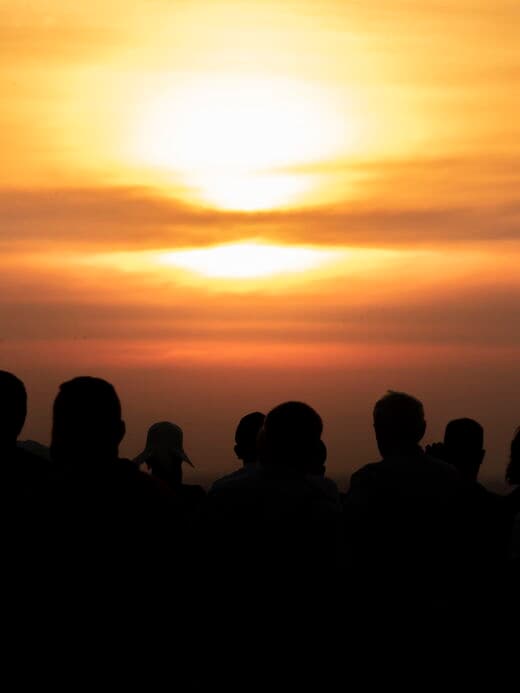
The sun rises behind five towers, silhouettes reflecting in the pond before the temple—you've seen this image millions of times, but when you stand there at five in the morning, among hundreds of people with cameras, and the sky begins to turn pink, you understand: no photograph captures the scale. Angkor Wat is the largest religious structure in the world, a temple-city lost in jungle for nine centuries that became a symbol of an entire civilization.
The Khmer Empire
From the 9th to 13th centuries, the Khmer Empire controlled territory from Vietnam to Myanmar. At its peak, the capital Angkor held up to one million inhabitants—the largest city in the medieval world. Rome at its height was smaller.
King Suryavarman II built the temple in the first half of the 12th century—37 years of construction, hundreds of thousands of workers. Originally dedicated to Vishnu, later rededicated to Buddhism.
Temple Architecture
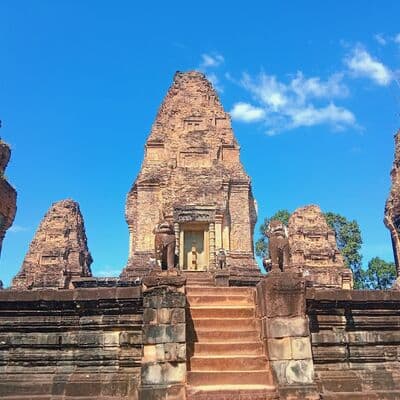
Angkor Wat is a model of the Hindu universe. The central tower (65 meters) represents Mount Meru, abode of the gods. The first level features 800 meters of bas-reliefs—the world's largest continuous stone "narrative." Scenes from the Mahabharata and Ramayana, the history of Suryavarman II himself.
How to Visit
The classic experience is arriving at 5:00-5:30 AM, claiming a spot by the northern pond, and waiting for sunrise behind the towers. Ticket for the entire complex: 1 day—$37, 3 days—$62, 7 days—$72. Transport from Siem Reap—tuk-tuk for the day $15-20.
Other Temples
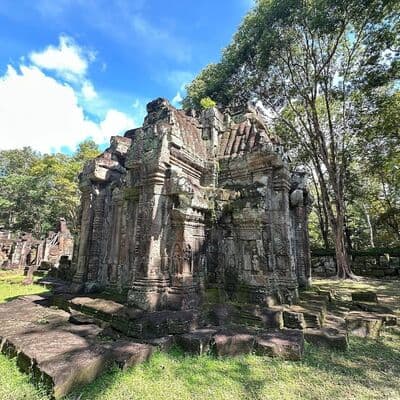
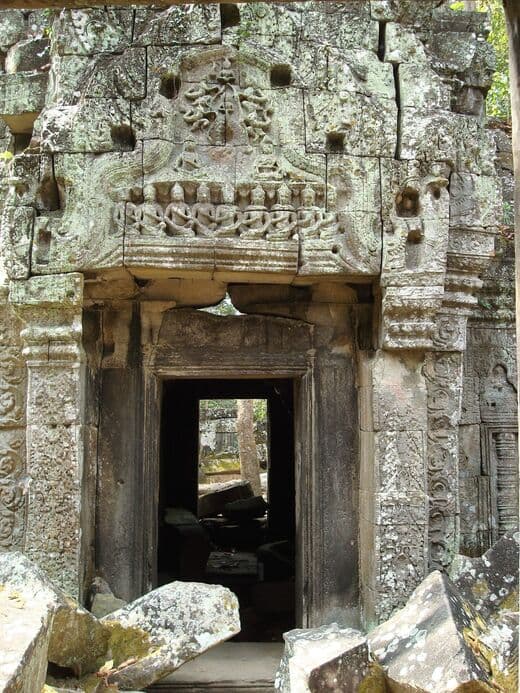
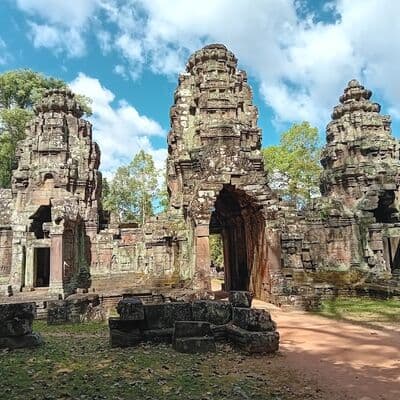
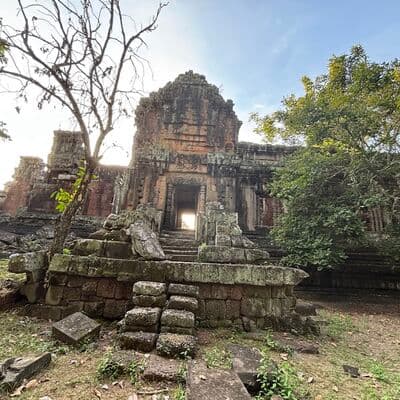
Angkor Thom—a fortified city 3 km away, capital under Jayavarman VII. Bayon—temple with 200 giant stone faces. Ta Prohm—temple left to the jungle, where giant trees grow through stones.