About
Brazil: The Ultimate Travel Guide for English-Speaking Travelers
Why Visit Brazil
Brazil is a country that shatters every preconception you might have about it. You may think you know it from carnival footage and soccer highlights, but the reality is infinitely richer and more surprising. This is the fifth-largest country on Earth, occupying nearly half of South America, and each of its regions is a separate universe with its own climate, culture, cuisine, and character. From the moment you step off the plane, you realize that Brazil is not just a destination - it is a continent disguised as a country.
Imagine this scenario: in the morning, you wake up in a colonial town with cobblestone streets dating back to the 18th century. By afternoon, you are navigating the tributaries of the Amazon in search of pink river dolphins. By evening, you are dancing samba in a neighborhood where every building is painted in vibrant colors. And this is not three separate trips - this is a single week in Brazil. The country is so diverse that you could return dozens of times and discover something fundamentally new each visit. This is precisely why seasoned travelers often name Brazil as their favorite destination, and why first-time visitors immediately start planning their return.
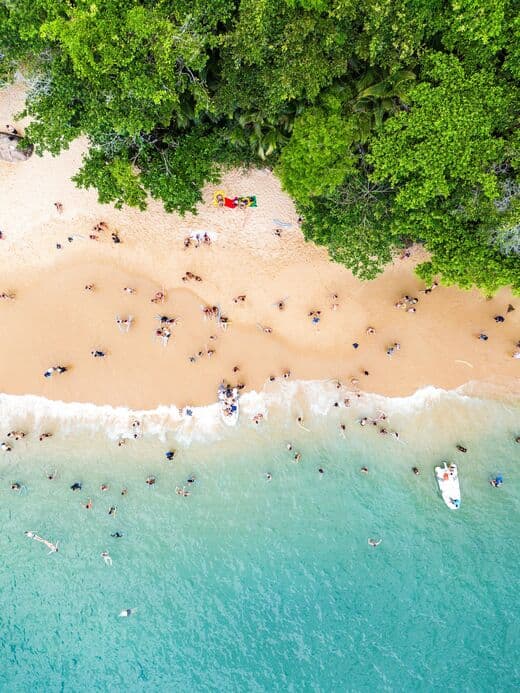
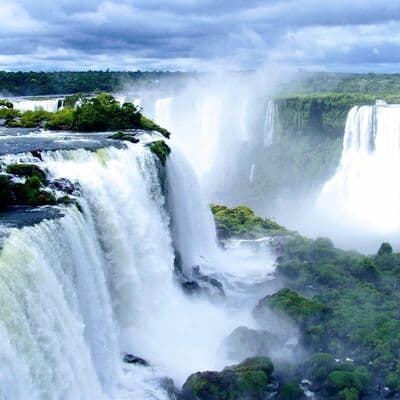
Brazil boasts 4,650 miles (7,500 kilometers) of Atlantic coastline with beaches for every taste: from hipster surf spots in Florianopolis to pristine bays in the Fernando de Noronha archipelago that regularly top global rankings of the world's most beautiful beaches. This is the Amazon - the lungs of our planet - home to 10% of all animal species on Earth and an ecosystem so vast that scientists estimate millions of species remain undiscovered. This is Iguazu Falls, a spectacle so overwhelming that it silences even the most talkative tourists and has been described by visitors as the closest thing to witnessing the raw power of creation itself.
Brazil offers megacities with some of the best restaurants on the continent, where world-renowned chefs are reinventing traditional cuisines, alongside villages where time has stood still for 300 years and traditional ways of life continue unchanged. In Sao Paulo, you can dine at restaurants that consistently make the World's 50 Best list, then travel to communities in the interior where families still cook over wood fires using recipes passed down through generations. This contrast is not a contradiction - it is the essence of what makes Brazil so endlessly fascinating.
Brazilians have a saying: "Deus e brasileiro" - God is Brazilian. It is a joke, but there is truth in it. Nature here has created a genuine paradise that seems almost implausible in its variety. Tropical rainforests cover vast swaths of the north, while the cerrado savanna dominates the central plateau with its unique ecosystem found nowhere else on Earth. The Pantanal wetlands host the highest concentration of wildlife in the Western Hemisphere, making African safaris seem sparse by comparison. Dramatic canyons carve through the southern highlands, while massive sand dunes march across the northeastern coast. The geological and climatic diversity of Brazil has no equivalent anywhere on the planet.
But the greatest treasure of this country is its people. Brazilians are open, emotional, and genuinely hospitable in a way that goes far beyond tourist-industry friendliness. They know how to find joy in life even in difficult circumstances, and this attitude is infectious. After a week in Brazil, you will understand why locals call their country "pais tropical abencoado por Deus" - a tropical country blessed by God. This is not about religion; it is about a special approach to life that you will want to take home with you. The Brazilian concept of "alegria" - pure, uncomplicated joy - permeates everyday interactions, from the vendor selling you coconut water on the beach to the hotel receptionist who genuinely wants to help you have the best experience possible.
For American, British, Australian, and Canadian travelers, Brazil offers something increasingly rare in our homogenized world: genuine difference. The language (Portuguese, not Spanish - a common misconception), the customs, the rhythms of daily life - everything here operates according to its own logic. Yet Brazil is also incredibly welcoming to English-speakers. While Portuguese is essential for deeper connections, you will find that Brazilians go out of their way to communicate, using gestures, phone translators, and sheer goodwill to bridge any language gap. The travel infrastructure is well-developed, with international hotel chains, reliable domestic airlines, and a tourism industry accustomed to visitors from around the world.
The cost equation also works in your favor. While Brazil is not the cheapest destination in South America, your dollars, pounds, or Australian dollars stretch considerably further here than in Europe or North America. A exceptional meal at a well-regarded restaurant might cost what you would pay for fast food back home. Uber rides across entire cities are pocket change. Even luxury experiences - private guides, upscale hotels, exclusive excursions - come at prices that would be impossible in comparable destinations. This means you can travel comfortably on a moderate budget or live like royalty for what you might spend on a basic trip elsewhere.
Regions of Brazil: Choosing Your Adventure
Brazil officially divides into five macro-regions, but for travelers, it is more useful to think of it through the lens of key tourist zones. Each requires a minimum of 5-7 days to truly immerse yourself in the atmosphere. Do not try to cover everything in one trip - choose 2-3 regions and explore them thoroughly. Those who try to see "all of Brazil" in two weeks end up spending most of their time in airports and experiencing nothing deeply. The country rewards depth over breadth, and you will return home far more satisfied if you have truly experienced a few places rather than rushed through many.
Rio de Janeiro and Surroundings
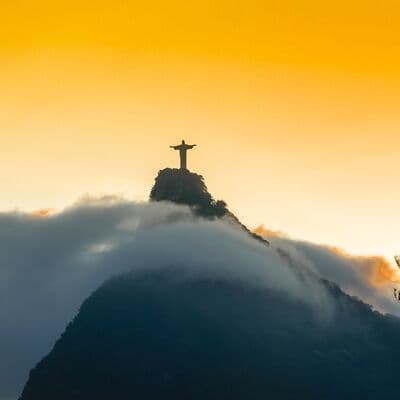
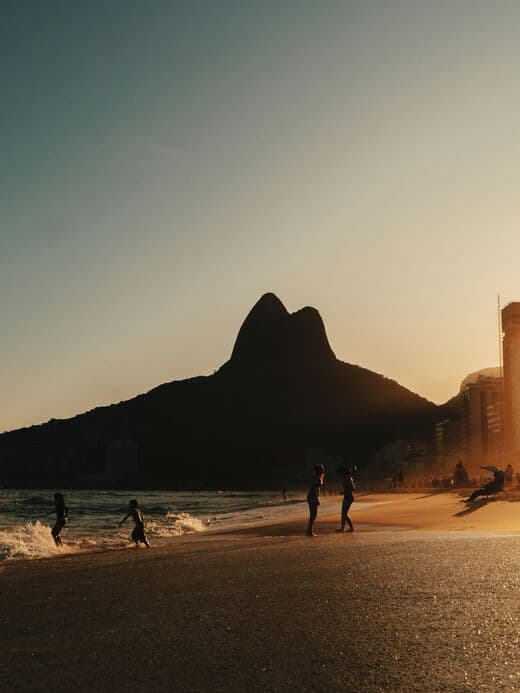
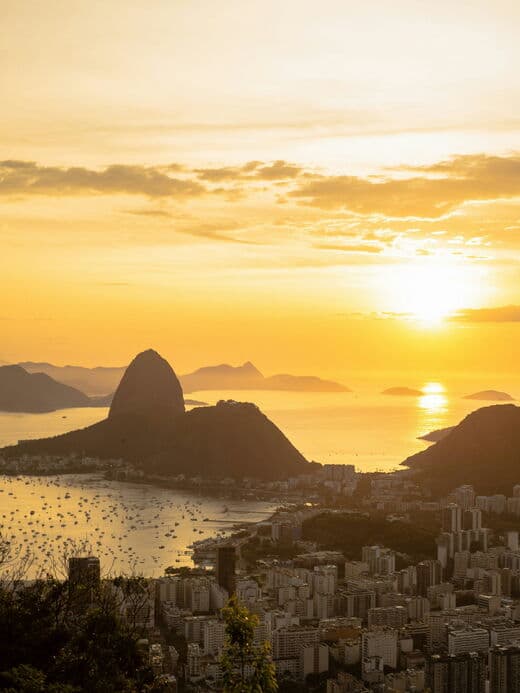
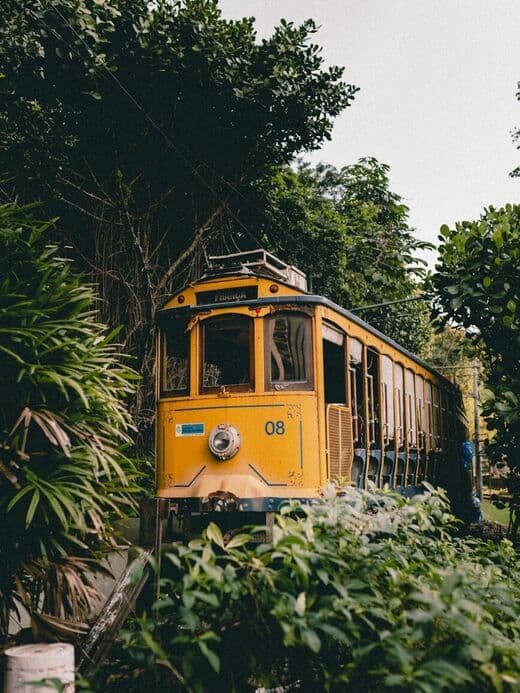
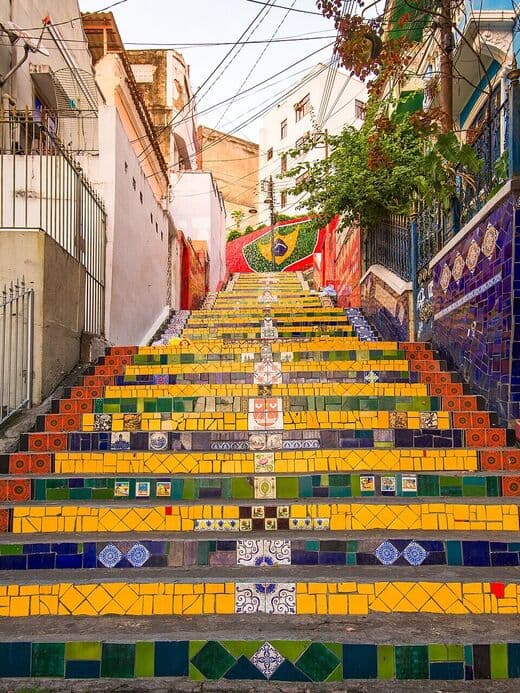
Rio de Janeiro is the calling card of Brazil, a city that needs no introduction. But behind the postcard views of the Christ the Redeemer statue and Sugarloaf Mountain lies a living, contradictory metropolis with an extraordinarily rich culture that rewards exploration. Rio is not just the beaches of Copacabana and Ipanema, though they are indeed beautiful and deserve their fame. It is the bohemian neighborhood of Santa Teresa with colonial mansions converted into galleries and bars, where artists and writers have gathered for generations. It is the Selaron Steps - 215 stairs covered in ceramic tiles from around the world, the life's work of a Chilean artist who transformed a decrepit staircase into a global monument. It is the Lapa Arches, where every Friday night the entire city seems to gather for a street samba party that continues until dawn.
Tijuca National Park is the world's largest urban forest - 3,300 hectares (over 8,000 acres) of tropical jungle in the heart of a megacity. Here you can hike for hours without encountering tourist crowds and stumble upon waterfalls that guidebooks do not mention. The forest provides a stunning counterpoint to the urban energy of the beaches and neighborhoods below, offering cool trails, exotic wildlife, and viewpoints that rival any official attraction. Pedra da Gavea - a rock formation 842 meters (2,762 feet) high with views of the entire city - offers one of the best hikes in South America, though the final section requires some scrambling and a head for heights. The reward is a 360-degree panorama that encompasses the entire bay, the city sprawling to the horizon, and on clear days, mountains fading into the distance.
The Botanical Garden of Rio is one of the oldest in the world, founded in 1808 when the Portuguese royal family fled Napoleon and established their court in Brazil. The avenue of royal palms, the bromeliad section, the orchid greenhouse - you could easily spend an entire day here, and many locals do exactly that on weekends. Next door is Parque Lage, featuring an art-deco mansion that now houses an art school and a cafe with views of Corcovado mountain rising dramatically behind. The juxtaposition of refined European garden design with exuberant tropical growth captures something essential about Rio: it is a city that has always mixed influences into something uniquely its own.
The Museum of Tomorrow in the port zone is an architectural masterpiece by Santiago Calatrava and one of the world's most innovative science museums. Its exhibits explore humanity's future relationship with the planet through interactive displays that are genuinely thought-provoking rather than merely entertaining. The Royal Portuguese Reading Room is a 19th-century library often called one of the most beautiful in the world: 350,000 volumes under gothic arches, with natural light filtering through stained glass to illuminate leather-bound spines. Photographers come from around the world specifically to capture this space, and even non-bibliophiles find themselves moved by its grandeur. The Metropolitan Cathedral in brutalist style delivers an architectural shock - a cone-shaped building 75 meters (246 feet) high that can accommodate 20,000 people. Whether you find it beautiful or bizarre, it is undeniably memorable and represents Rio's willingness to embrace the bold and unconventional.
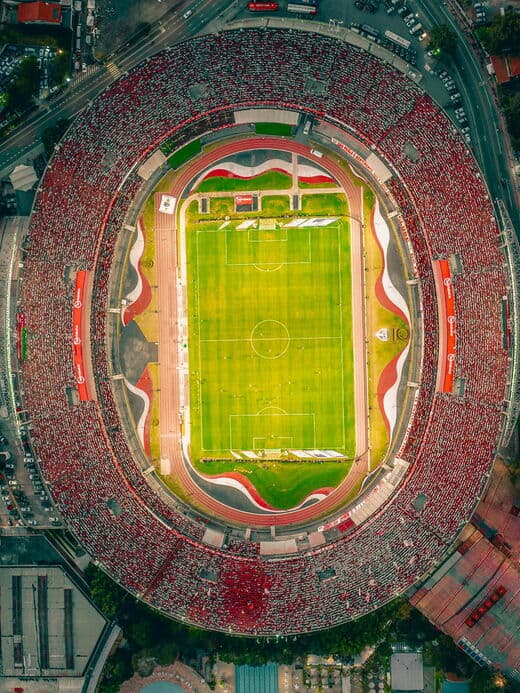
For soccer fans, the Maracana Stadium is obligatory - a temple of world football that has hosted the finals of two World Cups and countless legendary matches. Even if you are indifferent to sports, the atmosphere of a match with 70,000 passionate fans is an unforgettable experience that transcends athletics. The roar of the crowd, the coordinated chants, the sheer emotion on display - this is Brazil at its most intensely collective. Attending a match between local rivals Flamengo and Fluminense or Flamengo and Vasco is to witness passion that borders on the religious.
Beyond the city itself, Rio state offers additional treasures. The Costa Verde (Green Coast) stretches southwest toward Sao Paulo, offering a series of beautiful bays, colonial towns, and tropical islands. Paraty is the highlight, but there are dozens of smaller beaches and villages worth exploring. To the northeast, the Costa do Sol offers more developed beach resorts popular with domestic tourists, including Buzios - sometimes called the "St. Tropez of Brazil" - which offers upscale dining, boutique shopping, and a more polished beach experience than Rio itself.
Sao Paulo: The Economic Capital
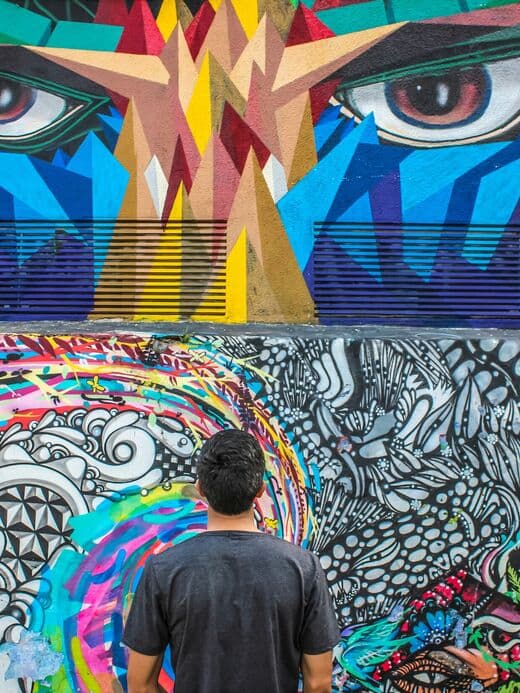
Sao Paulo is the largest city in the Southern Hemisphere, with 22 million people in its metropolitan area and an energy that never stops. Tourists often skip it, and that is a mistake. This is the gastronomic capital of Latin America, with world-class restaurants serving everything from traditional Brazilian cuisine to innovative fusion and authentic international fare brought by waves of immigrants from around the globe. This is a city with the best street art anywhere - Batman Alley in the Vila Madalena neighborhood is just the tip of an iceberg that covers entire neighborhoods in murals, graffiti, and large-scale art installations. This is a cultural center with museums that rival those in European capitals, supported by a wealthy patron class that has invested heavily in the arts.
The Sao Paulo Museum of Art (MASP) is an icon of Brazilian modernism, a building on stilts over Paulista Avenue that has become a symbol of the city. Its collection includes works by Raphael, Rembrandt, Van Gogh, and Monet - the largest collection of European art in the Southern Hemisphere. The museum's distinctive display method, with paintings suspended on glass panels rather than hung on walls, revolutionized museum design when it opened in 1968 and remains influential today. Pinacoteca is the state's oldest art museum, specializing in Brazilian art from the 19th and 20th centuries and housed in a beautifully renovated 19th-century building. Instituto Tomie Ohtake is a contemporary art platform with rotating exhibitions of world-class quality, often featuring artists before they achieve major international recognition.
Ibirapuera Park is the green lungs of the city - 158 hectares (390 acres) with lakes, bike paths, and several museums. This is where Paulistanos come to escape the urban intensity, to jog, cycle, picnic, and simply breathe. Here you will find the Afro Brasil Museum - essential for understanding African influence on Brazilian culture, with over 6,000 works spanning from the slave trade to contemporary artists. The Museum of Modern Art (MAM) and pavilions designed by Oscar Niemeyer make the park a cultural hub that rivals the museum district of any European capital. On Sundays, the park's main avenue closes to traffic, and thousands of people come out to skate, dance, and enjoy free outdoor concerts.
The Municipal Market is a gastronomic temple with stained-glass windows by Russian artist Conrado Sorgenicht. Here you must try the mortadella sandwich (with half a kilogram of mortadella piled high) and pastel de bacalhau (salt cod pastry). The market is a feast for all senses: pyramids of tropical fruit you have never seen, wheels of cheese, hanging cured meats, and the constant bustle of vendors and shoppers. The Football Museum at Pacaembu Stadium offers an interactive immersion into the history of Brazil's most popular sport, with exhibits that appeal even to those who think they have no interest in soccer.
The Sao Paulo Cathedral is a neo-gothic giant, the fourth-largest in the world, capable of holding 8,000 people. Its towers took decades to complete, and its crypt holds the remains of indigenous leader Tibiriaca and other figures from Brazilian history. The Ipiranga Museum in its rebuilt palace is the country's main historical museum, telling the story of Brazilian independence and national identity. The museum recently reopened after extensive renovations and is now more impressive than ever. Farol Santander is a 1930s skyscraper with an observation deck and exhibitions on the upper floors, offering panoramic views of the seemingly endless city. Terraco Italia is a restaurant on the 41st floor with panoramic views of the boundless metropolis - dinner here as the sun sets over the city is unforgettable. Villa-Lobos Park is a modern green space in the west of the city, popular with runners and cyclists, offering a more manicured alternative to Ibirapuera.
Sao Paulo's neighborhoods each have distinct personalities. Jardins is upscale and sophisticated, with designer boutiques and fine dining. Vila Madalena is bohemian and artsy, with bars that stay open until dawn. Liberdade is the heart of the Japanese community (the largest outside Japan), with authentic restaurants, Asian markets, and a distinctly different atmosphere. Pinheiros has emerged as the foodie destination, with chef-driven restaurants and craft cocktail bars. Centro is gritty and intense, with colonial architecture, street vendors, and a raw energy that is unmistakably Brazilian.
Salvador and the Northeast: The African Soul of Brazil
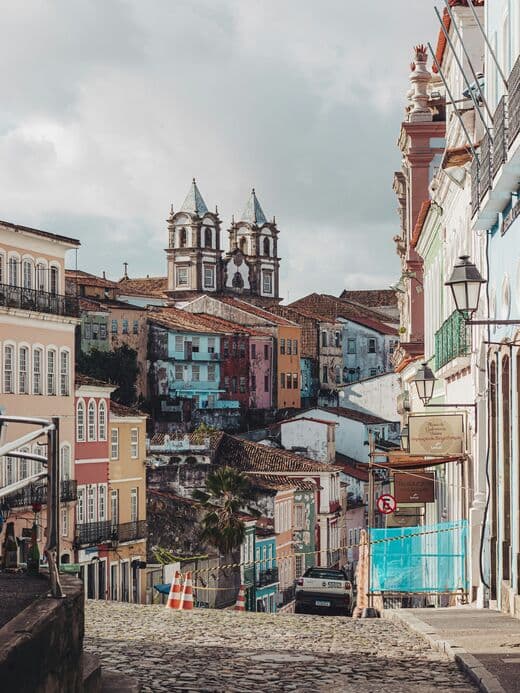
Salvador is the former capital of Brazil and the city with the strongest African influence in the country. Approximately 80% of the population descends from enslaved people brought from Africa, and this heritage is evident in everything: the music, the dance, the food, the religion. Pelourinho is the historic center, a UNESCO World Heritage Site, a labyrinth of cobblestone streets with colonial churches and houses painted in every color of the rainbow. The name translates as "pillory" - enslaved people were once punished here at whipping posts - but today it stands as a symbol of Afro-Brazilian cultural renaissance and resilience.
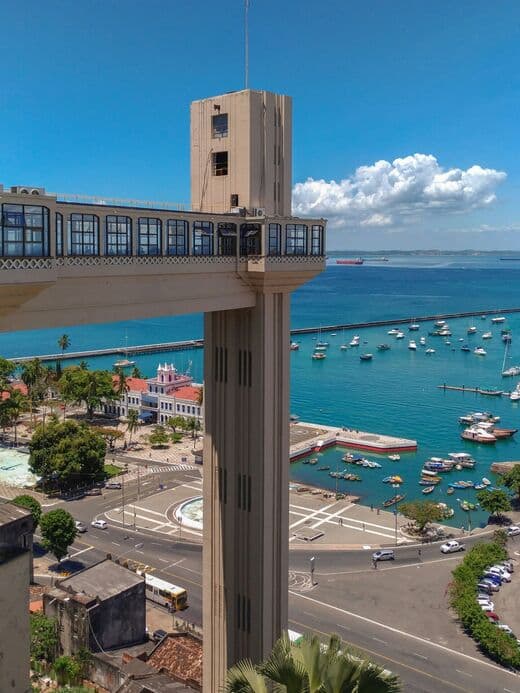
The Lacerda Elevator is an engineering marvel from 1873 that connects the upper and lower city. Seventy-two meters (236 feet) in 30 seconds, and you move between two worlds: the business district below and the historic quarter above. The contrast is striking and speaks to Salvador's geography and history. The Church of Nosso Senhor do Bonfim is the main pilgrimage site in Brazil, famous for the colorful ribbon bracelets (fitas) that people tie around their wrists while making three wishes - the ribbon is meant to fall off naturally when the wishes come true. Farol da Barra lighthouse is the best spot to watch the sunset, with a 17th-century fort and Maritime Museum nearby. Locals gather here each evening with coolers of beer and caipirinha ingredients, creating an impromptu party as the sun sinks into the ocean.
Salvador is the birthplace of capoeira, the martial art disguised as dance. Enslaved people were forbidden from fighting, so they invented a way to train under the guise of play, accompanying their movements with music that masked the martial content. Today, "rodas" - circles where masters demonstrate their art - can be seen on the streets of Pelourinho every evening. The mesmerizing combination of acrobatics, combat, music, and culture is unlike anything else in the world. Candomble, the Afro-Brazilian religion that blends African orishas with Catholic saints, also originated here. Ceremonies are sometimes open to visitors, and even attending with respect as an observer provides insight into a profound spiritual tradition that has survived centuries of persecution.
The food of Salvador is arguably Brazil's most distinctive regional cuisine. The use of dende (palm oil), coconut milk, and African techniques creates flavors found nowhere else. Acaraje - fried bean fritters stuffed with dried shrimp, vatapa paste, and hot sauce, prepared by bahianas in traditional white dresses - is essential eating. Moqueca, the rich seafood stew cooked in clay pots, showcases the distinctive flavors of Bahian cooking. Every meal in Salvador is an opportunity to taste African influence that has been refined over five centuries.
Beyond Salvador, the northeastern coast stretches north and south with some of Brazil's best beaches. The "Coconut Coast" south of Salvador offers a string of beach towns with varying levels of development. Morro de Sao Paulo, reached by boat from Salvador, is a car-free island with beautiful beaches and a relaxed vibe. Further north, the states of Alagoas, Pernambuco, and Ceara offer their own beach destinations - Porto de Galinhas, Jericoacoara, and many others - each with distinct character and often fewer international tourists than the southern regions.
The Amazon and Manaus: The Lungs of the Planet
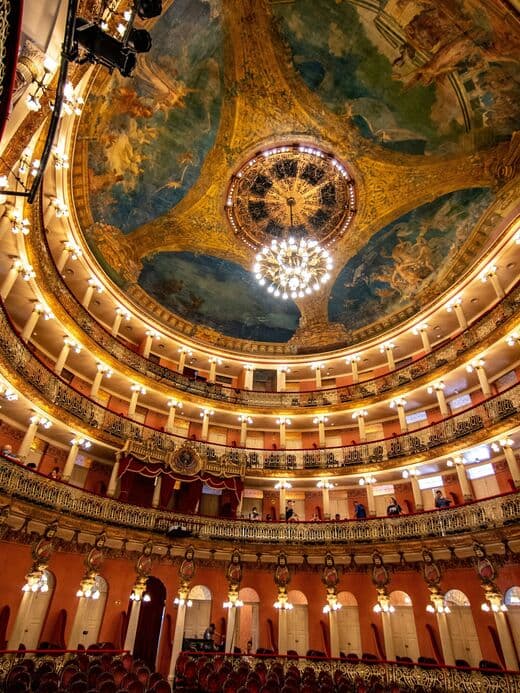
Manaus is the gateway to the Amazon, a city of over 2 million people in the middle of the jungle. You can only reach it by plane or by multi-day river journey - there are no roads connecting it to the rest of Brazil, which adds to its sense of isolation and adventure. In the late 19th century, Manaus was one of the wealthiest cities in the world thanks to the rubber boom. Rubber barons built opera houses and reportedly sent their laundry to Paris to be cleaned. The Teatro Amazonas is a symbol of this era - a pink-and-white opera house with a dome of 36,000 ceramic tiles in the colors of the Brazilian flag. Attending a performance here (the theater still hosts regular concerts and operas) is to experience the peculiar grandeur of a city that briefly considered itself a Paris of the tropics.
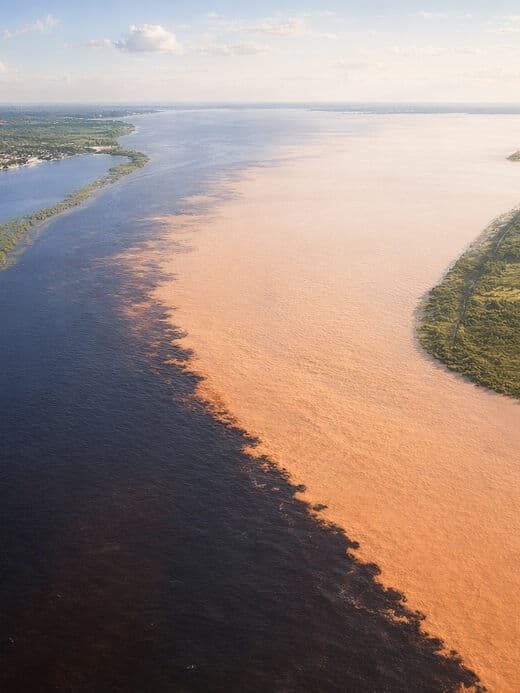
The Meeting of Waters is a natural phenomenon where the dark waters of the Rio Negro meet the sandy-colored waters of the Solimoes and flow side by side, without mixing, for about 6 kilometers (nearly 4 miles). The difference in temperature, speed, and density of the water creates a sharp boundary between the two rivers. This is a spectacle you need to see with your own eyes - photographs cannot capture the strangeness of watching two distinct rivers flow alongside each other while refusing to combine. Day trips from Manaus typically include this stop along with other highlights.
Tours into the Amazon jungle are the main reason to visit Manaus. Multi-day expeditions in canoes, nights spent in jungle lodges, piranha fishing (yes, you then cook and eat them), searching for caimans with flashlights at night, hikes through flooded forest, swimming with pink river dolphins - this is an adventure for a lifetime. The Amazon is the world's largest remaining tropical wilderness, and experiencing it firsthand is genuinely transformative. MUSA - Museum of the Amazon with its 42-meter (138-foot) tower above the forest canopy provides an understanding of the ecosystem without the need to venture deep into the jungle, making it an excellent complement or alternative to multi-day excursions.
The Mercado Adolpho Lisboa is a copy of the Parisian Les Halles, built in 1883 during the rubber boom. Here you can buy Amazonian fruits you have never seen: cupuacu (related to cacao), acai (now globally famous but tasting different when fresh), bacuri, tucuma. The market is a sensory introduction to Amazonian bounty, with fish the size of small people, medicinal plants, and indigenous crafts. Ponta Negra Beach is a river beach with dark water, popular with locals for evening strolls and weekend recreation. Unlike ocean beaches, the water is warm and the waves gentle, offering a different beach experience altogether.
Choosing the right Amazon tour requires some thought. Luxury lodges offer comfort and excellent guides but shield you somewhat from the raw jungle experience. Basic jungle lodges put you closer to nature but with fewer amenities. Boat-based expeditions allow you to cover more territory but mean less time on land. Multi-day trips (4-5 nights minimum) offer the best wildlife-viewing opportunities, as animals are more active far from the city. Whatever you choose, book with a reputable operator - the Amazon is not a place for cutting corners with safety or ecological responsibility.
Brasilia: The Capital of Modernism
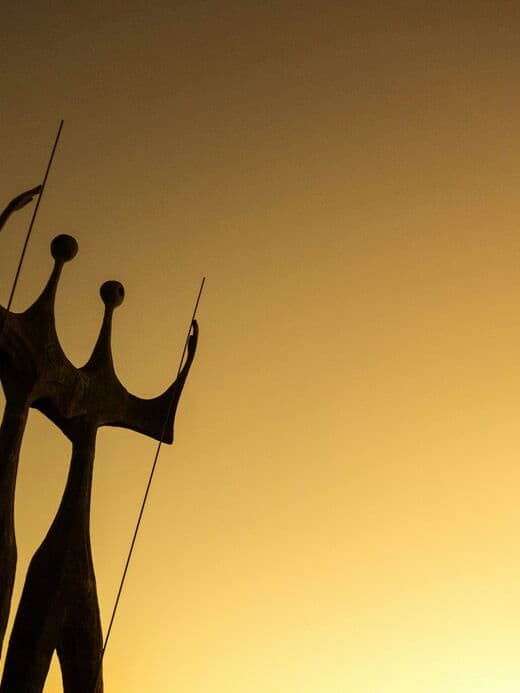
Brasilia is a city built from scratch in just three years (1957-1960) in the middle of the cerrado savanna. Architect Oscar Niemeyer and urban planner Lucio Costa created a modernist utopia: a city in the shape of an airplane with clear functional zoning. Brasilia is a UNESCO World Heritage Site and the largest architectural experiment of the 20th century. Whether you consider it a triumph of visionary planning or a cautionary tale of car-centric urban design, it is utterly unique and worth experiencing. No other capital city looks remotely like Brasilia, and walking through its monumental spaces feels like visiting a future that never quite arrived.
The National Congress of Brazil is an icon of modernist architecture - twin towers with the dome of the Senate and the "dish" of the Chamber of Deputies. The composition is instantly recognizable and has become a symbol of Brazilian democracy itself. The Cathedral of Brasilia is a hyperboloid structure of 16 concrete columns symbolizing hands reaching toward the sky. Inside, stained glass by Marianne Peretti and angel sculptures by Alfredo Ceschiatti create a space that feels genuinely transcendent. The cathedral's entrance is underground, so you emerge into the light-filled nave - a deliberate symbolic journey from darkness to illumination.
Palacio da Alvorada is the official presidential residence, a Niemeyer masterpiece with distinctive "wing" columns that have been endlessly copied but never matched. The building seems to float above its reflecting pool, a trick of proportion and placement that exemplifies Niemeyer's genius. JK Memorial is a museum dedicated to Juscelino Kubitschek, the president who made the construction of the new capital happen through sheer force of will. His body is entombed here, making it part museum, part mausoleum. Ponte JK features three asymmetric arches over Lake Paranoa - one of the world's most photogenic bridges, especially at night when it is illuminated. TV Tower, standing 224 meters (735 feet) tall, offers the best observation deck for understanding the city's airplane-shaped layout.
Brasilia rewards visitors who come with the right expectations. It is not a city for aimless wandering - the monumental scale and car-centric design make that impractical. Instead, treat it as an architecture museum spread across a vast campus. Visit the major buildings, appreciate the space and light that Niemeyer created, and understand this as Brazil's attempt to build a new kind of capital for a new kind of country. Two days is typically sufficient to see the highlights, making Brasilia an excellent stopover between other destinations.
Iguazu Falls: A Natural Wonder
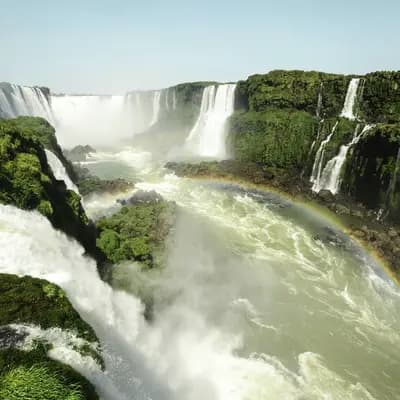
Foz do Iguacu is a city on the border of three countries (Brazil, Argentina, and Paraguay), the gateway to one of nature's greatest wonders. There are 275 individual waterfalls stretching across 2.7 kilometers (1.7 miles), with heights reaching 82 meters (269 feet) and a flow rate of 1.7 million liters per second during high water. Eleanor Roosevelt, upon seeing Iguazu, reportedly said: "Poor Niagara!" - and countless visitors since have agreed that no other waterfall compares. The scale, the sound, the mist rising like smoke from the jungle, the rainbows that appear and disappear - Iguazu overwhelms every sense simultaneously.
Devil's Throat is the main waterfall, a U-shaped abyss into which half of all the water crashes. The viewing platform on the Brazilian side provides a panoramic view of the entire falls system, allowing you to grasp the sheer scale of what you are witnessing. The Argentine side offers maximum proximity, with platforms extending directly over the abyss - you can feel the rumble through the metal grating and watch water plunge into the void below. To get the full impression, you need to visit both sides, ideally on separate days. Each country's national park offers a distinct experience, and together they provide a complete appreciation of this natural wonder.
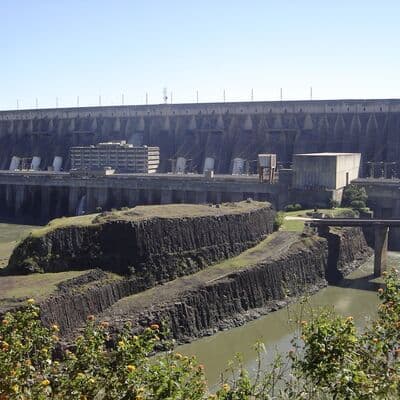
Bird Park is a private reserve next to the Brazilian entrance to the national park. It houses 1,400 birds of 150 species in huge aviaries that you can walk through, finding yourself surrounded by toucans, macaws, and hummingbirds. The experience of standing in a forest clearing while scarlet macaws fly overhead is unlike any zoo exhibit. The park also runs important conservation programs for endangered species, so your admission supports genuine ecological work. Itaipu Dam is the largest operating hydroelectric plant in the world in terms of electricity generated (China's Three Gorges Dam has greater capacity but lower output). This engineering achievement produces 90% of Paraguay's electricity and about 15% of Brazil's. Tours are available at various depths, from a panoramic overview to technical deep-dives into the machinery, and the sheer scale of the infrastructure impresses even those with no particular interest in engineering.
The tri-border region offers some unique opportunities. You can have lunch in Brazil, coffee in Argentina, and dinner in Paraguay - though practically speaking, most visitors focus on the falls themselves. Ciudad del Este in Paraguay is famous for duty-free shopping, particularly electronics and imported goods, though quality varies and bargaining is expected. The Marco das Tres Fronteiras in Brazil offers a viewpoint where you can see all three countries at once, especially beautiful at sunset.
Florianopolis: Island of Surfing and Nature
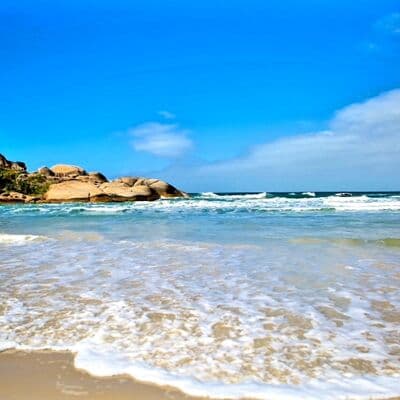
Florianopolis is the capital of Santa Catarina state, located on Santa Catarina Island and partially on the mainland. With 42 beaches ranging from wild coves to fully equipped resorts, it offers something for every beach lover. Surfers from around the world come here for the waves at Praia Mole and other east-coast breaks. Praia da Joaquina is a legendary surf spot with massive dunes where you can rent sandboards and slide down like a snowboarder - a quintessentially Brazilian beach activity.
Lagoa da Conceicao is a brackish lagoon in the center of the island, surrounded by restaurants, bars, and windsurfing schools. This is also the bohemian center of the nightlife, with a laid-back vibe that attracts an international crowd of surfers, digital nomads, and travelers looking for something more relaxed than Rio or Sao Paulo. Florianopolis is one of the cities with the best quality of life in Brazil: high levels of safety, clean beaches, developed infrastructure. It represents a different side of Brazil - prosperous, organized, and connected to the country's European immigrant heritage (particularly Azorean Portuguese and German).
The island's beaches vary dramatically. The east coast faces the open Atlantic with serious surf breaks but sometimes dangerous currents. The north coast is more sheltered, with warmer water and calmer conditions ideal for families. The south is less developed, with fishing villages and a more rustic feel. The west coast faces the mainland and offers calm water but less scenic beaches. Many visitors rent a car to explore the full circuit of the island, stopping at different beaches based on the day's conditions and mood.
Paraty: Colonial Jewel
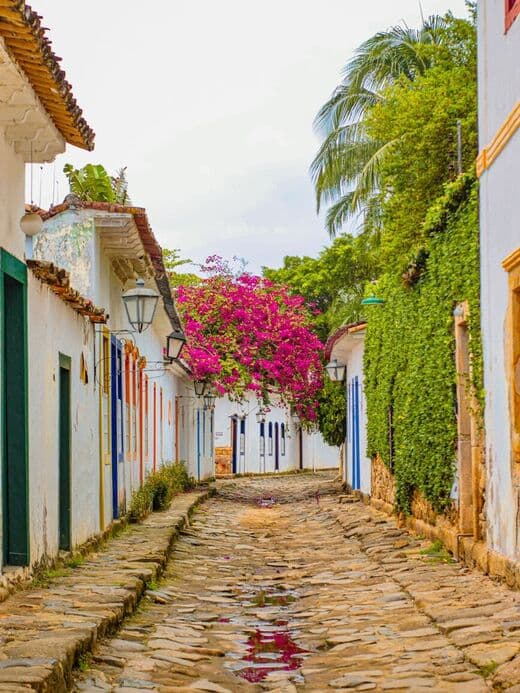
Paraty is a museum-town halfway between Rio and Sao Paulo, a UNESCO World Heritage Site that stopped in time when its economic importance faded. The historic center is a perfectly preserved colonial town from the 18th century with whitewashed buildings, colorful doors and window frames, and cobblestone streets closed to automobiles. During high tides, the sea floods the streets, and you can only walk through the center by hopping from stone to stone - a design feature that helped clean the streets before modern sanitation.
Paraty was the port from which gold was shipped to Portugal during Brazil's golden age. When the gold mines were exhausted and newer ports developed, the town fell into two centuries of obscurity - which is precisely what preserved its architecture. Today, it is the bohemian capital of Brazil: artists, writers, and musicians live and create here, giving the town a cultural energy that belies its small size. Every year FLIP - the International Literary Festival of Paraty - takes place here, gathering authors from around the world for readings, discussions, and parties in the colonial streets. Outside of FLIP, Paraty maintains a quieter charm, with boutique hotels in converted colonial mansions, excellent restaurants, and a pace of life that invites lingering.
The surrounding area offers additional attractions. Boat trips to nearby islands provide access to beautiful swimming spots and snorkeling. Inland, distilleries producing cachaca (Brazil's national spirit, made from sugarcane) offer tours and tastings. Hiking trails lead to waterfalls and viewpoints in the surrounding Atlantic Forest. Many visitors use Paraty as a base for several days, combining beach time, cultural exploration, and outdoor activities.
Fernando de Noronha: Paradise Archipelago
Fernando de Noronha is an archipelago of 21 islands located 350 kilometers (217 miles) off the coast, a UNESCO World Heritage Site and one of the world's best spots for snorkeling and diving. The number of tourists is strictly limited (approximately 700 people at any one time), and an environmental tax is charged for each day of stay. The restrictions keep the islands pristine and the experience exclusive. But it is worth every penny and every bureaucratic hurdle: crystal-clear water with visibility sometimes exceeding 50 meters, sea turtles on virtually every dive, spinner dolphins in pods of hundreds, reef sharks that patrol the underwater terrain with prehistoric indifference.
Baia dos Porcos beach regularly ranks among the top 10 most beautiful beaches in the world, with dramatic rock formations framing turquoise water. Praia do Sancho is a bay you can only reach by descending a ladder carved into the cliff face - the effort required keeps it uncrowded. This is Brazil for those willing to pay for exclusivity and seclusion, and who value natural beauty over nightlife or shopping. The diving here is world-class, with coral formations, shipwrecks, and underwater caves. Even snorkelers can encounter the archipelago's abundant marine life just steps from the beach.
Fernando de Noronha requires advance planning. Flights are limited (only from Recife and Natal), accommodation books up far in advance during high season, and the environmental tax and regulations must be navigated. But for those who make the effort, it offers some of the finest beach and diving experiences anywhere on Earth - a hidden gem that relatively few international travelers manage to reach.
Unique Natural Wonders of Brazil
Brazil is a country of natural records. It contains 60% of the Amazon rainforest, the largest tropical forest on the planet. The Amazon River flows here - the most voluminous river in the world, carrying one-fifth of all the fresh water on Earth into the ocean. The Pantanal - the largest freshwater wetland in the world - is here, where every square kilometer reveals more wildlife than many African safari parks. Brazil's natural heritage is so vast and varied that you could spend a lifetime exploring it and still discover new wonders.
The Amazon
The Amazon rainforest covers an area comparable to Western Europe. It is home to 10% of all animal species on Earth, including more than 3,000 species of fish, 1,300 species of birds, and more species of monkeys than anywhere else on the planet. Pink river dolphins, jaguars, anacondas, sloths, countless species of parrots and macaws - this is not a zoo but reality that you can experience on a multi-day tour from Manaus. Scientists estimate that millions of species in the Amazon remain undescribed, making every expedition a journey into the genuinely unknown.
The best way to explore the Amazon is through multi-day tours with stays in jungle lodges. A standard 3-4-day tour includes: jungle hikes with a naturalist guide who can identify the calls and movements you would never notice alone, piranha fishing (yes, you then cook and eat them - they taste surprisingly good), nighttime caiman hunting with flashlights (catch-and-release for photos), visits to caboclo villages (the mixed indigenous-European population that has lived here for generations), canoe trips through igapo (flooded forest), and swimming with pink dolphins. Longer expeditions go deeper into the jungle, where the chances of seeing rare animals increase significantly.
Season matters in the Amazon. From December to May is the "wet" season, when water levels rise 10-15 meters (30-50 feet), and you can paddle a canoe between the crowns of trees in the flooded forest. The forest transforms into a water world, and boat travel replaces hiking. From June to November is the "dry" season, when the water recedes, animals concentrate around shrinking water bodies, and they are easier to spot. The "dry" season also means fewer mosquitoes and more comfortable hiking conditions. Both seasons offer distinctive experiences, and neither is definitively "better" - it depends what you want to see and do.
The Pantanal
The Pantanal is a marshy lowland the size of Greece on the border with Bolivia and Paraguay. It hosts the highest concentration of wildlife in the Western Hemisphere. If in the Amazon the animals hide in dense vegetation, in the Pantanal the savanna is open, and seeing a jaguar, tapir, giant otter, or hyacinth macaw is significantly more likely. Wildlife enthusiasts often consider the Pantanal superior to the Amazon for actual animal sightings, despite the Amazon's greater fame and biodiversity.
The best time to visit is the dry season (May-October), when animals gather around remaining water bodies and are concentrated and visible. Base towns for tours are Cuiaba or Corumba. The standard format is 3-4 days at a fazenda (ranch) with daily safaris by jeep, boat, and horseback. The Pantanal is the only place in the world where you have a high probability of seeing a jaguar in the wild - specialized tours achieve sighting rates above 90% during peak season. These magnificent predators patrol the riverbanks hunting caimans and capybaras, often visible from boats just meters away.
The Pantanal also offers exceptional birding. The jabiru stork, standing nearly as tall as a person, is the symbol of the region. Hyacinth macaws, the largest parrots in the world with their spectacular blue plumage, are common here though endangered elsewhere. Hundreds of other species, from tiny hummingbirds to massive eagles, make this one of the world's premier birding destinations.
Lencois Maranhenses
Lencois Maranhenses is a national park in northeastern Brazil with a surrealistic landscape: endless white sand dunes between which thousands of lagoons form during the rainy season, filled with turquoise water. This is not a desert - rainfall here is 300 times greater than in the Sahara. Water filters through the sand and collects in low-lying areas, creating natural swimming pools where you can swim in water the color of Caribbean dreams surrounded by Saharan-style dunes. The visual effect is so unusual that many visitors assume photographs must be digitally enhanced - they are not.
The best time to visit is from May to September, when the lagoons are full of water but the rains have ended. The base town is Barreirinhas. You can get there by bus from Sao Luis (4 hours) or by private transfer. The most impressive way to see the park is from a small airplane, which reveals the seemingly infinite pattern of dunes and lagoons stretching to the horizon. But ground tours in 4x4 vehicles with visits to remote lagoons are also unforgettable, and swimming in the warm, fresh water of the lagoons is an experience unlike any beach.
Chapada Diamantina
Chapada Diamantina is a mountainous national park in Bahia state with canyons, table mountains, caves, and waterfalls. This is a paradise for trekking: from day hikes to multi-day backpacking trips with tents. Fumaca Waterfall (380 meters / 1,247 feet) is one of the highest in Brazil - the water disperses into mist before reaching the bottom, creating an ethereal effect that shifts with the light and wind. Poco Encantado is an underground lake in a cave where sunrays penetrate through an opening in the ceiling and create an unreal blue glow in the months when the angle is right - a natural light show that has become iconic.
The base town is Lencois (not to be confused with Lencois Maranhenses). The best time is the dry season (May-October), although during the rainy season the waterfalls are more powerful. This is an ideal continuation of a visit to Salvador - just 6 hours by bus. The town of Lencois itself is charming, with colonial architecture, good restaurants, and a laid-back traveler vibe. Guides can be arranged locally for hikes of varying difficulty and duration.
Bonito and South Mato Grosso
Bonito is the ecotourism capital of Brazil in Mato Grosso do Sul state. Here you can snorkel in rivers with crystal-clear water among hundreds of fish (visibility can exceed 50 meters), descend into caves with underground lakes, and visit waterfalls in pristine forest. All activities are booked through a centralized system that controls the number of visitors and environmental impact - a model of sustainable tourism that other destinations are now copying. Bonito is often combined with the Pantanal - both destinations are in the same region, making for a logical two-destination itinerary focused on nature and wildlife.
The unique clarity of Bonito's rivers comes from the limestone terrain, which naturally filters the water. Fish populations are abundant because the ecosystem is carefully protected - catch-and-release fishing is allowed, but the focus is on observation. Floating down the Rio da Prata, watching hundreds of fish swim around you while sunlight filters through the water, is one of Brazil's most peaceful and otherworldly experiences.
When to Visit Brazil
Brazil stretches from the equator to the subtropics, so there is no single "best time" to visit. Winter in the Southern Hemisphere (June-August) is summer in North America and Europe, and vice versa. Your choice of season depends on which regions you plan to visit and what you want to experience.
Rio de Janeiro and the Southeast
Brazilian summer (December-March) is hot and humid, with temperatures of 30-40C (86-104F) and frequent rain showers that are typically short and intense. This is carnival season (February-March) and New Year's celebrations on Copacabana, when 2 million people gather on the beach to welcome the year with fireworks over the ocean. Prices are at their maximum during these periods, and you need to book months in advance. If you want to experience carnival, plan accordingly and be prepared for crowds and premium pricing everywhere.
Brazilian winter (June-August) is the ideal time for visiting: dry conditions, comfortable temperatures of 20-25C (68-77F), and fewer tourists. The water is still warm enough for swimming - locals swim year-round, and visitors from colder climates will find even "winter" temperatures quite pleasant. September-November is shoulder season with good weather and moderate prices, making it excellent for those who want neither the summer intensity nor the slightly cooler winter months.
The Northeast (Salvador, Recife, Natal)
Tropical climate with temperatures of 25-32C (77-90F) year-round. The rainy season runs from March to July, but even then there are many sunny days - rain typically comes in short bursts rather than lasting all day. The best time is September to February, when conditions are most consistently sunny. Carnival in Salvador is the second largest after Rio but more authentic and participatory, with street music (axe) and electric "trio eletrico" trucks that you can follow through the streets. Salvador's carnival is known for being more accessible - you can join the party on the street rather than needing expensive grandstand tickets.
The Amazon
Hot and humid always - temperatures of 25-35C (77-95F) with humidity of 80-100%. The rainy season (December-May) brings high water, when you can navigate through flooded forests and see the jungle from a boat rather than on foot. The dry season (June-November) is better for wildlife observation, as animals concentrate around remaining water sources and are easier to spot. Both seasons have their advantages, and there is no definitively ideal time. If you have flexibility, consider what experience appeals more: the high-water jungle wonderland or the concentrated wildlife of the dry months.
The South (Florianopolis, Foz do Iguacu)
Subtropical climate with distinct seasons. Summer (December-March) is hot, 30-35C (86-95F), ideal for beaches. Winter (June-August) is cooler, 10-20C (50-68F), with possible rain. Iguazu Falls are most impressive after the rainy season (March-May), when water volume is at maximum - the difference between high and low water can be dramatic, with the falls going from spectacular to absolutely overwhelming. However, mist from the falls during high water means you will get thoroughly soaked - waterproof bags for electronics are essential.
Major Holidays and Events
Carnival occurs 40 days before Easter, usually in February or March. Four days of celebration when the entire country essentially stops. If you want to participate, book six months in advance and be prepared for crowds and prices that multiply 3-5 times normal rates. If you want to avoid the chaos, plan your trip for other dates and enjoy a quieter Brazil.
New Year's Eve (Reveillon) is massive, especially in Rio, where the Copacabana beach party is among the largest in the world. Festa Junina (June festivals) celebrate folk traditions with bonfires, dancing, and traditional food throughout the country, especially in the northeast - a wonderful time to experience Brazilian culture outside the tourist mainstream. Independence Day (September 7) features military parades and national celebrations, while Finados (November 2, Day of the Dead) sees Brazilians honoring deceased family members with cemetery visits and family gatherings.
Getting to Brazil
Brazil is a distant destination for English-speaking travelers, with minimum flight times of 9-11 hours from the US East Coast and 11-13 hours from Europe. But the journey is worth it. The main international hubs are Sao Paulo (GRU - Guarulhos) and Rio de Janeiro (GIG - Galeao).
From the United States
Direct flights to Brazil operate from multiple US cities. Major routes include:
- Miami - The closest major gateway, with frequent flights on LATAM, American, and Azul to both Sao Paulo and Rio. Flight time approximately 8 hours. This is often the most convenient option for travelers from the eastern US.
- New York (JFK/EWR) - Daily flights on LATAM, American, Delta, and United to Sao Paulo and Rio. Flight time approximately 10 hours. Overnight departures arrive in the morning, convenient for immediate connections.
- Atlanta - Delta hub with direct service to Sao Paulo and Rio. Convenient for connections from across the US.
- Dallas/Houston - American and United flights to Sao Paulo, with good connections from the West Coast and Midwest.
- Los Angeles - LATAM operates direct to Sao Paulo, approximately 12 hours. The longest US gateway but avoids East Coast connections for West Coast travelers.
Typical round-trip prices from the US range from $600-900 in low season (April-May, September-November) to $1,200-2,000 during carnival, Christmas, and New Year's. Booking 2-3 months in advance typically yields the best prices.
From the United Kingdom
Direct flights from London operate daily:
- British Airways - London Heathrow to Sao Paulo and Rio de Janeiro. Premium service with good connection options throughout the UK.
- LATAM - London Heathrow to Sao Paulo, with connections throughout Brazil.
- Virgin Atlantic - Seasonal service to Sao Paulo.
Flight time is approximately 11-12 hours. Connecting options via Lisbon (TAP Portugal) or Madrid (Iberia) sometimes offer lower prices, and TAP in particular provides excellent connectivity with its Lisbon hub.
From Australia and Canada
There are no direct flights from Australia to Brazil - connections are required through either South America (Santiago on LATAM) or the US/Middle East. Total journey time is typically 24-30 hours. The most common routing is Sydney/Melbourne to Santiago (Chile) on LATAM, then onward to Sao Paulo or Rio.
From Canada, Air Canada operates direct service from Toronto to Sao Paulo. Montreal connects via Toronto or US gateways. Vancouver routes through the US (typically Los Angeles or Miami) or via connecting hubs in Europe or the Middle East.
Visa Requirements for English-Speaking Travelers
US citizens can visit Brazil visa-free for up to 90 days for tourism. You will need: a passport valid for at least 6 months beyond your entry date, proof of return or onward travel (airlines often check this at departure), and evidence of accommodation. In practice, immigration inspection is usually quick and routine, but having documents available is wise.
UK, Canadian, and Australian citizens also enjoy visa-free entry for up to 90 days. The 90-day period can be extended once for an additional 90 days by applying at the Federal Police in Brazil, though this is somewhat bureaucratic. If you plan to stay longer than 90 days, investigate the extension process in advance.
The visa-free period is 90 days within a 180-day period. This means you cannot simply exit Brazil and immediately re-enter to reset the clock - you must wait until 180 days have passed since your first entry before another 90-day period begins.
Domestic Flights Within Brazil
Given Brazil's size, domestic flights are often unavoidable. From Rio to Manaus is 4 hours by plane; by road, it is impossible (there are no roads connecting them). To Salvador is 2 hours, to Foz do Iguacu is 2 hours. The same distances by bus would take 2-3 days where roads even exist.
Major domestic carriers:
- LATAM - The largest airline in Latin America with the most extensive network. Generally reliable with reasonable service standards.
- Gol - The main low-cost carrier. Often has the cheapest fares, but baggage is charged separately and must be factored into price comparisons.
- Azul - Mid-range option with a good regional network, including smaller cities that LATAM and Gol do not serve. Often the only option for destinations off the main routes.
Booking tip: Domestic flights are often significantly cheaper when purchased on Brazilian versions of airline websites. Using a VPN with a Brazilian IP address and paying in reais can reduce prices by 20-40% compared to international booking engines. LATAM also offers Airpasses for foreign visitors that bundle multiple flights at a discount - worthwhile if you plan 4 or more segments.
Transportation Within Brazil
Getting around Brazil is an adventure in itself. Distances are enormous, infrastructure varies dramatically by region, and understanding your options is essential for efficient travel.
Car Rental
The best way to explore southern and southeastern Brazil is by rental car. The coast from Rio to Florianopolis, the interior regions of Minas Gerais and Bahia states - all offer excellent driving conditions, beautiful scenery, and the freedom to stop wherever catches your eye. Road quality on major routes is generally good, and the sense of independence makes this one of the best ways to experience the country.
What you need to know:
- License - International Driving Permits (IDPs) are technically required, but in practice your US, UK, Canadian, or Australian license is often accepted. Having both is safest, and the IDP is easy to obtain before departure.
- Age requirements - Minimum age is usually 21, sometimes 25 for certain vehicle categories. Drivers under 25 may pay a young driver surcharge.
- Insurance - Essential. Take full coverage (CDW plus third-party liability). It is inexpensive ($10-15 USD/day) and eliminates potential headaches. Credit card coverage may apply but verify terms before relying on it.
- Road quality - Federal highways (BR) are generally good. State roads (SP, RJ, etc.) vary considerably. Dirt roads in the northeast and Amazon require 4WD and are often impassable during rainy season.
- Fuel - Approximately 6 reais per liter (roughly $1 USD). Many vehicles run on either gasoline or ethanol (alcool) - ethanol is cheaper but gives lower fuel economy. Attendants pump gas for you; tipping 1-2 reais is customary.
- Toll roads - Common in Sao Paulo, Rio de Janeiro, and Parana states. Payment by cash or card, with reasonable rates. Some rental cars have automatic toll transponders (Sem Parar) - check availability.
Recommended rental companies: Localiza (the largest Brazilian chain), Movida, and Unidas are often cheaper than international brands. Hertz, Avis, and Budget offer more guarantees but higher prices. Book in advance online - walk-up prices at airports are substantially higher.
Where NOT to rent: In large cities (traffic is challenging, parking is difficult, and crime targeting rental cars is common), in the Amazon (no roads), and in remote northeast areas unless you have off-road experience and appropriate vehicles.
Long-Distance Buses
Brazil's intercity bus network is among the best in the world. Modern buses with air conditioning, WiFi, onboard toilets, and reclining seats (fully horizontal in sleeper services) provide comfortable and economical transport between cities. For many routes, overnight buses are the ideal option - you save on accommodation, wake up at your destination, and travel in comfort comparable to a plane.
Bus categories:
- Convencional - Basic level with 2+2 seating, minimal amenities. Fine for short trips but not recommended for long journeys.
- Executivo - Mid-level with more legroom, air conditioning, WiFi. The optimal choice for most journeys, offering a good balance of comfort and price.
- Leito - Business class where seats recline almost fully horizontal, with blanket and pillow included. Essential for overnight trips of 8+ hours. Worth every extra dollar for arrival well-rested.
- Leito Cama - The highest class on premium routes, with fully flat beds. Available on major corridors like Sao Paulo-Rio and Sao Paulo-Curitiba.
Major companies: Itapemirim, 1001, Util, and Cometa maintain high standards. Book online through ClickBus or BuscaOnibus for the widest selection. Sample routes: Rio-Sao Paulo (6 hours, from $20 USD), Rio-Paraty (4 hours, from $16 USD), Salvador-Lencois (6 hours, from $18 USD).
Domestic Flights
For long distances, there is no alternative. From Sao Paulo to Manaus by bus is impossible (no roads exist); by plane, it is 4 hours. Domestic flight prices start around 200-300 reais ($40-60 USD) when booked in advance.
Booking tips:
- Use Brazilian airline websites with a VPN for local pricing - foreign pricing is often 20-40% higher.
- Watch for promotional sales from Gol and Azul - flash sales occur regularly with dramatic discounts.
- Consider LATAM's Airpass - a package of flights for tourists that can be worthwhile for 4+ segments.
- Baggage on low-cost carriers is charged separately - factor this into price comparisons. Carry-on limits are strictly enforced.
- Small regional airports sometimes have limited daily flights - build flexibility into your schedule.
Urban Transportation
Major cities have bus networks and metro systems. Metro systems operate in Sao Paulo (the largest in South America with 6 lines), Rio (3 lines connecting major areas), Brasilia, Recife, Salvador, and Fortaleza. Metros are clean, safe, air-conditioned, and efficient - but coverage is limited, so you will likely need other options as well.
Uber operates everywhere and costs far less than in English-speaking countries. A ride across all of Rio costs 30-50 reais ($6-10 USD). This is the most convenient and safest way to get around cities, especially in the evening. The 99 app (Brazilian-owned, now part of DiDi) and Cabify are alternatives that sometimes offer lower prices.
Street taxis should be avoided, especially at airports. Inflated prices, "broken" meters, and the potential for scams are common issues. Use ride-hailing apps or hotel-arranged radio taxis exclusively. If you must take a street taxi, insist the meter runs and have a rough idea of what the fare should be.
Ferries and Boats
In the Amazon, rivers are the main transportation arteries. From Manaus, you can sail to Belem (5 days downstream), Tabatinga on the Colombian border (6 days upstream), and many smaller destinations. These are not cruises - they are working cargo-passenger vessels where you hang a hammock on deck and join the flowing river life. Romantic, cheap, unforgettable - but requiring flexibility, patience, and acceptance that schedules are approximate.
On the coast, ferries connect islands with the mainland: in Florianopolis, in Salvador (across the Bay of All Saints to islands like Itaparica), and elsewhere. These are typically short crossings and are straightforward to use.
Cultural Code of Brazil
Brazil is a country of contrasts where the official language is Portuguese (not Spanish - a common and somewhat annoying misconception for Brazilians), the majority of the population descends from the mixing of Portuguese, African, and indigenous peoples, and the culture has absorbed influences from three continents. Understanding local customs will make your trip deeper and more pleasant.
Communication and Etiquette
Brazilians are incredibly open and tactile. A kiss on the cheek (one or two, depending on the region) is standard greeting even at first meetings. Men embrace and clap each other on the back. Personal space during conversation is smaller than in English-speaking countries. Do not step back - it is perceived as coldness. Similarly, eye contact is expected and maintained more consistently than may feel natural to visitors from more reserved cultures.
Brazilians love to talk and do not tolerate silence well. Small talk is an obligatory prelude to any business. Ask about family, about the city, about football - show interest. Just avoid politics (the country is deeply polarized, and conversations can turn heated quickly) and be thoughtful about favela-related questions (it is a sensitive topic that many Brazilians have complicated feelings about).
Time in Brazil is a flexible concept. "Amanha" (tomorrow) can mean "sometime, eventually." Being 15-30 minutes late is normal for informal gatherings - if you arrive exactly on time, you may find yourself alone while your hosts finish getting ready. For business meetings, punctuality is expected from foreigners but not always from Brazilians. Adjust your expectations and bring something to read.
Tipping
In restaurants, a 10% service charge (servico) is usually included in the bill - look for this line item before adding more. If it is not included, leaving 10% is standard. This represents a significant portion of server income. In bars, round up the bill. For taxi drivers (if using conventional taxis), round up the fare. Hotel porters expect 5-10 reais per bag. For housekeeping, 5-10 reais per day left on the pillow on your last day is appreciated.
Dress Code
Brazilians dress casual but neat. Shorts and flip-flops (Havaianas are a national symbol) are acceptable almost everywhere, except upscale restaurants and clubs. On beaches, minimal bikinis and sunga (men's speedos) are the norm - board shorts and full swimsuits mark you as a foreigner. In churches, cover shoulders and knees.
For evening outings in Sao Paulo and Rio, "smart casual" is expected: for men, pants and a collared shirt; for women, a dress or nice top. Sneakers are often not allowed in clubs - check dress codes before heading out. Brazilians generally take more care with appearance than casual travelers might expect, so bringing a few nicer items is worthwhile.
Religion
Brazil is the world's largest Catholic country by population, but religious practice is diverse and syncretic. Religions like Candomble and Umbanda blend African traditions with Catholicism in ways that might seem contradictory but feel natural to practitioners. Do not be surprised to see statues of saints alongside African orishas. Evangelical Protestant churches are growing rapidly, especially in lower-income areas, and their influence on culture and politics has increased dramatically in recent years.
Religious holidays are occasions for massive festivals. Festa do Nosso Senhor do Bonfim in Salvador, Cirio de Nazare in Belem - millions of participants, processions, music, food. These are not just religious observances but cultural celebrations that welcome spectators of all faiths.
Football (Soccer)
Football in Brazil is more than a sport. It is religion, identity, a reason for unity and division simultaneously. The country of five World Cup victories takes the game very seriously. If you have any interest in football, attend a match in the local championship. Flamengo vs Fluminense in Rio, Corinthians vs Palmeiras in Sao Paulo - an unforgettable experience even if you do not understand the rules. The passion, the songs, the choreographed celebrations - nothing in American or European sports quite compares.
Be careful with comments about teams - passions run high. Do not wear one team's shirt in a neighborhood that supports a rival. Better to wear a neutral yellow national team shirt - it unites everyone. If someone asks which team you support, saying you are still "learning about Brazilian football" is a safe and truthful response.
Music and Dance
Music is the soundtrack of Brazilian life, present in ways that can surprise visitors from quieter cultures. Samba is the soul of Rio, from street rodas (circles) to the samba schools preparing for carnival. Bossa nova is intellectual jazz from the beaches of Ipanema, made world-famous by "Girl from Ipanema" but encompassing a rich tradition of sophisticated composition. Forro is the rhythm of the northeast, close-embrace dancing to accordion music. Axe is the energy of Salvador, infectious hits for carnival. Sertanejo is Brazilian country, the most popular genre in the country though less known internationally. MPB (Musica Popular Brasileira) encompasses quality singer-songwriter music that defies easy categorization.
All Brazilians seem to know how to dance - or at least that is how it appears. Do not be shy about joining in - people will teach you. Those hip movements that seem impossible are a matter of practice, not genetics. Dance classes are available everywhere and provide a wonderful way to connect with Brazilian culture.
Safety in Brazil
Brazil has a reputation as a dangerous country, and it is partially deserved. Crime rates, especially for violent crime, are high by North American or European standards. But millions of tourists visit every year without problems. The key is common sense and following simple rules that locals follow without thinking.
General Principles
- Do not flash valuables - Expensive watches, jewelry, the latest iPhone should stay in your hotel. On the street, carry a simple phone or none at all. If you must bring a smartphone, consider an inexpensive backup rather than your main device.
- Decoy wallet - Carry a small amount of cash (50-100 reais) separately to give to a robber. Keep your main money in a money belt or hidden pocket. This "sacrifice wallet" means you have something to hand over without losing everything.
- Do not resist - If you are robbed, give everything up silently. Your life is worth more than any possession. Criminals in Brazil sometimes use weapons, and confrontation escalates risk dramatically.
- Uber instead of taxis - Especially in the evening and at night. The app tracks the route, the driver is identified, and the company has accountability. This simple step eliminates many potential problems.
- Avoid dark streets - Even in good neighborhoods. At night, walk in well-lit, populated areas. If somewhere feels empty or sketchy, trust your instincts and find another route.
- ATM awareness - Use ATMs inside banks or shopping malls, never on the street. Cover your PIN entry. Be aware of who is around you when leaving with cash. Morning transactions are generally safer than evening ones.
Areas Requiring Caution
In Rio: The city center and port area empty out in the evening and become risky after dark. Favelas should only be visited with guides in designated tourist areas (Rocinha and Vidigal have established tourism). Copacabana beach at night attracts pickpockets and muggers. Beaches early morning and late evening see occasional robberies.
In Sao Paulo: Centro (Se, Republica) has pickpockets and petty theft. Cracolandia (a concentrated area of drug use) should be avoided entirely. The northern zone is generally not recommended unless you know exactly where you are going.
In Salvador: The lower city after sunset requires caution. Deserted beaches are risky. Areas outside the tourist zones need local guidance.
Common Scams
- "Help" with ATMs - Someone offers to assist, watches your PIN, then finds a way to steal your card. Always decline help and shield your PIN entry.
- Fake police - People in uniform demand to see documents, "find" a violation, and extort a bribe. Real police do not ask for money on the spot. If uncertain, ask to go to a police station.
- Friendly encounters in bars - Overly friendly approaches can lead to huge bills or worse. Be cautious about new "friends" who seem too enthusiastic too quickly.
- Airport taxi drivers - Inflated prices, long routes. Use only official taxi ranks or Uber from the airport.
- Distraction theft - Someone spills something on you or creates a commotion while an accomplice steals your bag. Stay aware of your belongings in crowded areas.
Emergency Numbers
Police: 190. Ambulance: 192. Fire: 193. Tourist police exist in major cities and speak English. In Rio, DEAT is located at Avenida Afranio de Melo Franco 159, Leblon. Having your hotel's address and phone number written down is helpful in emergencies, as is a basic translation app for communication.
Health and Medical Care
Brazil is a tropical country with corresponding health considerations. But with basic precautions, travel here is safe and straightforward from a health perspective.
Vaccinations
No vaccinations are required for entry from the US, UK, Canada, or Australia (requirements differ if arriving from countries with yellow fever). However, the following are recommended:
- Yellow Fever - Required for visiting the Amazon, Pantanal, and Mato Grosso regions. Get vaccinated at least 10 days before travel. The vaccine is effective for life under current guidelines.
- Hepatitis A and B - Standard recommendations for travelers to developing countries. If you are not already vaccinated, this is a good opportunity.
- Typhoid - If you plan to eat street food or travel outside tourist areas where food safety is less certain.
- Tetanus and diphtheria - Standard booster every 10 years; ensure you are current.
- Routine vaccinations - Measles, mumps, rubella, and others should be up to date.
Consult a travel medicine clinic 4-6 weeks before departure for personalized advice based on your itinerary and medical history.
Mosquito-Borne Diseases
Dengue, Zika, and Chikungunya are viral diseases transmitted by mosquitoes. They are particularly relevant during the rainy season and in northern regions. Prevention:
- Repellents with DEET (20-30%) applied to exposed skin. Products with picaridin or oil of lemon eucalyptus are alternatives.
- Light-colored clothing with long sleeves in the evening when mosquitoes are most active.
- Air conditioning or mosquito nets at night. Most urban hotels have AC, but jungle lodges may rely on nets.
- Avoid standing water - breeding grounds for mosquitoes. Do not leave containers that collect water near your accommodation.
Malaria risk exists only in deep Amazon areas. If you are planning multi-day jungle tours in remote areas, consult a doctor about prophylactic medication. For standard tourist routes, including 3-4 day jungle lodge stays near Manaus, malaria prophylaxis is generally not necessary.
Food and Water
Tap water in major cities is technically safe but tastes strongly of chlorine. Drink bottled water - it is cheap and available everywhere. Ice in restaurants is usually made from purified water, but in questionable establishments, it is better to skip it.
Street food in Brazil is a gastronomic treasure. Pastel (fried pastries), acai (berry puree), tapioca - all safe to eat at places with high turnover. Avoid seafood far from the coast and meat from questionable sources. In general, if a stall is busy with locals, it is safe and likely delicious.
Medical Care
The public system (SUS) is free for everyone, including tourists, and will treat emergency cases. However, quality varies dramatically, waits can be long, and English is rare. Private clinics match European standards but are expensive.
Travel insurance is essential. Ensure coverage includes emergency evacuation (especially important if visiting the Amazon, where helicopter evacuation may be necessary) and does not exclude adventure activities you might do (surfing, hiking, diving). Standard travel insurance policies often exclude "hazardous activities," so read the fine print.
Pharmacies (farmacias) are on every corner and well-stocked. Many medications that require prescriptions in English-speaking countries are available over the counter. Antibiotics, antihistamines, painkillers - all accessible. Pharmacists often provide basic medical advice and can recommend treatments for common ailments.
Money and Budget
The currency of Brazil is the Brazilian real (BRL, R$). Exchange rates fluctuate, but typically 1 USD equals 5-6 reais. Brazil is not the cheapest country in South America, but your dollars stretch considerably further here than in Europe or North America.
Payment Methods
Cards are accepted almost everywhere in cities - Visa and Mastercard work without problems. American Express is less common. In small towns and at markets, cash is often necessary.
ATMs (caixa eletronico) are found in every bank, shopping center, and large store. Choose ATMs inside buildings; avoid street machines. Withdrawal limits are usually 1,000-1,500 reais per transaction. Fees typically run 15-25 reais plus your bank's international ATM fee (if any). Using cards that reimburse ATM fees is worthwhile.
Currency exchange at casas de cambio (exchange offices) or banks offers worse rates than ATMs but may be necessary for cash. Do not exchange at airports - the rates are terrible. If you need cash upon arrival, withdraw from an airport ATM instead.
Budget Categories
Budget ($50-80 USD/day):
- Hostel dorm: 50-100 reais ($10-20 USD)
- Food: Street food and simple restaurants: 50-80 reais
- Transport: Buses, metro: 20-30 reais
- Activities: Free beaches, parks, budget excursions
Mid-range ($100-180 USD/day):
- Hotel 3-star or nice Airbnb: 200-500 reais ($40-100 USD)
- Food: Mid-range restaurants: 100-200 reais
- Transport: Uber, occasional car rental
- Activities: Excursions, museums, entertainment
Comfortable ($200+ USD/day):
- Hotel 4-5 star: 500-1,500 reais ($100-300 USD)
- Food: Fine dining: 200-500 reais per person
- Transport: Car rental, domestic flights
- Activities: Private guides, exclusive tours
Where Expensive and Where Cheap
Expensive: Fernando de Noronha (environmental tax plus limited supply creates premium pricing), Rio during carnival (everything multiplies), Buzios and other luxury beach resorts, fine dining in Sao Paulo's top restaurants.
Affordable: The northeast (except tourist hubs), interior regions, small towns, street food everywhere. The difference in prices between tourist hotspots and everyday Brazilian life is dramatic.
Itineraries for Brazil
Brazil is enormous, and covering everything in one trip is impossible. Here are optimized itineraries for different timeframes, designed to maximize your experience while being realistic about travel logistics.
7 Days: Classic Rio and Surroundings
The ideal first visit for those wanting to understand the spirit of Brazil.
Day 1: Arrival in Rio
Land at Galeao Airport, transfer to hotel in Copacabana or Ipanema (both neighborhoods have excellent options at all price points). Evening stroll along the waterfront, first caipirinha at sunset. Orient yourself to the neighborhood and shake off jet lag with an early night.
Day 2: Icons of Rio
Morning visit to Christ the Redeemer on Corcovado mountain. Depart early, before 8 AM, to avoid crowds and clouds - the view deteriorates as the day heats up. Book your tram tickets in advance online. Afternoon visit to Sugarloaf Mountain via two-stage cable car, timed for sunset views over the city. Dinner in Botafogo or Urca.
Day 3: Historic Center
Selaron Steps for photos (go early for fewer crowds), Lapa Arches, Metropolitan Cathedral, Royal Portuguese Reading Room, and the Museum of Tomorrow. If you visit on a Friday evening, the Lapa neighborhood hosts a legendary street samba party with live music, dancing, and a carnival atmosphere.
Day 4: Nature and Bohemia
Morning at Botanical Garden and Parque Lage - grab breakfast at the mansion cafe with its Corcovado views. Afternoon in the Santa Teresa neighborhood, with its galleries, cafes with views, and artistic atmosphere. Evening exploring the bar streets of the area.
Day 5: Beach Day
Ipanema in the morning (claim a spot early), lunch at a beachfront kiosk, Copacabana in the afternoon. Optional: for the adventurous, hike Pedra da Gavea, one of Rio's most challenging and rewarding trails (requires some scrambling and comfort with heights - consider a guide).
Day 6: Day trip to Paraty
Early departure (4 hours by bus or rental car). Explore the historic center with its cobblestone streets and colonial churches. Join a boat tour to nearby islands with swimming stops. Overnight in a pousada in the historic center.
Day 7: Return
Morning stroll through Paraty. Return to Rio, transfer to airport for departure or continue your journey.
10 Days: Rio + Iguazu Falls
Extended program adding one of nature's greatest wonders.
Days 1-5: Rio and Paraty
Follow the 7-day itinerary through day 5, ending in Rio rather than departing for Paraty.
Day 6: Flight to Foz do Iguacu
Morning flight from Rio (approximately 2 hours). Afternoon visit to Bird Park with its walk-through aviaries of toucans and macaws. Check into hotel - options range from hostels to luxury resorts within the national park itself.
Day 7: Brazilian Side of the Falls
Full day in the national park. Panoramic trails along the canyon rim, views of Devil's Throat from the Brazilian perspective, and optional boat tour beneath the falls (you will get completely soaked - it is part of the experience). Bring waterproof bags for electronics and a change of clothes.
Day 8: Argentine Side
Border crossing is straightforward (buses run regularly, or taxis handle the process). The Argentine park offers more trails and closer proximity to the falls, with platforms extending over the void at Devil's Throat. Return to Brazil in the evening. Two days gives you time to appreciate both perspectives.
Day 9: Itaipu Dam
Morning tour of the hydroelectric plant - an engineering marvel worth experiencing. Afternoon free for shopping in Ciudad del Este (Paraguay) for duty-free electronics enthusiasts, or simply relaxing at your hotel.
Day 10: Departure
Flight to Rio or Sao Paulo for international connection home.
14 Days: Southeast + Northeast
For those wanting to experience the contrast between the cosmopolitan south and the African-influenced northeast.
Days 1-4: Rio de Janeiro
Classic program: Christ the Redeemer, Sugarloaf Mountain, Selaron Steps, Lapa, Tijuca Park, beaches, and the cultural sights of the historic center.
Days 5-6: Paraty
Historic center, boat tours to islands, cachaca distillery visits to taste Brazil's national spirit.
Days 7-8: Sao Paulo
Bus or flight from Rio. MASP, Pinacoteca, Ibirapuera Park, Batman Alley, Municipal Market. Gastronomic evenings in Jardins or Vila Madalena exploring Brazil's most diverse restaurant scene.
Days 9-11: Salvador
Flight from Sao Paulo. Pelourinho, Lacerda Elevator, Bonfim Church, Barra Lighthouse. Experience capoeira performances, possibly attend a candomble ceremony, and immerse yourself in axe music scene. Beaches to the north of the city (Itapua, Flamengo) offer a more local experience.
Days 12-13: Chapada Diamantina (optional)
Bus to Lencois (6 hours). Day hike to waterfalls and viewpoints. Overnight in the charming colonial town. Alternative: stay in Salvador and explore Morro de Sao Paulo, a car-free island reached by boat.
Day 14: Departure
Flight from Salvador home via Sao Paulo.
21 Days: The Grand Tour
Maximum immersion in Brazil's diversity for those with the time to do it right.
Days 1-5: Rio de Janeiro and Paraty
Full program in Rio with overnight in Paraty. Take your time, as rushing defeats the purpose.
Days 6-8: Iguazu Falls
Flight from Rio. Brazilian side, Argentine side, Itaipu Dam, and time to simply sit and absorb the immensity of the falls.
Days 9-10: Florianopolis
Flight from Iguazu. Beaches of Santa Catarina Island, Lagoa da Conceicao, Praia da Joaquina. Try surfing, sandboarding, or simply beach-hopping around the island.
Days 11-12: Sao Paulo
Flight from Florianopolis. Museums, gastronomy, street art, nightlife. Allow yourself to be absorbed by the energy of the megacity.
Days 13-15: Salvador
Flight from Sao Paulo. Afro-Brazilian culture, Pelourinho, beaches, capoeira, and the distinctive food of Bahia.
Days 16-18: Manaus and the Amazon
Flight from Salvador. 3-day jungle tour: Meeting of Waters, jungle lodge experiences, piranha fishing, night expeditions for wildlife. This requires pre-booking with a reputable operator.
Days 19-20: Brasilia
Flight from Manaus. Niemeyer architecture: National Congress, Cathedral, Alvorada Palace, JK Bridge. Two days provides ample time to see the highlights and appreciate this unique city.
Day 21: Departure
Flight from Brasilia home via Sao Paulo.
Specialized Itineraries
Beach and Nature (14 days):
Rio (3 days) → Paraty (2 days) → Florianopolis (3 days) → Fernando de Noronha (4 days) → Departure from Recife (1 day). Focus on Brazil's stunning coastline and marine life.
Wildlife Focus (14 days):
Manaus and Amazon (5 days) → Pantanal from Cuiaba (4 days) → Bonito (3 days) → Departure from Campo Grande (1 day). The best of Brazilian wildlife watching.
Culture and History (14 days):
Salvador (4 days) → Recife and Olinda (3 days) → Sao Paulo (3 days) → Paraty (2 days) → Rio (2 days). Focus on Brazil's cultural heritage and historical sites.
Connectivity and Communication
Staying connected in Brazil is straightforward, with a few considerations for international travelers.
SIM Cards
Major carriers are Vivo (best coverage nationwide), Claro, TIM, and Oi. Prepaid SIM cards (pre-pago) are sold in carrier stores and some supermarkets. You will need your passport for registration - this is a legal requirement.
Cost: SIM card 10-20 reais, data package of 5-10 GB for a month 30-50 reais. Recharging (recarga) is available at any newsstand or online. Vivo and TIM offer tourist packages at airports - more expensive but with less bureaucracy and immediate activation.
eSIM
If your phone supports eSIM, this is the most convenient option. Airalo, Holafly, and Ubigi offer Brazilian plans that you can purchase and activate before departure. Land with working internet immediately. Prices are comparable to local SIMs, and the convenience is significant.
WiFi
Free WiFi is available at most hotels, cafes, restaurants, and shopping malls. Quality varies considerably. Hostel WiFi is often weak and congested. For video calls and remote work, having mobile data is essential. Many cafes have good WiFi and welcome laptop workers, though spending something is expected.
International Roaming
Check with your carrier before departure. Many US carriers now include Brazil in their international plans, though data may be throttled. UK and Australian plans vary widely. In most cases, purchasing local connectivity is more reliable and economical than roaming.
What to Eat in Brazil
Brazilian cuisine reflects the country's history: Portuguese, African, and indigenous traditions mixed with influences from Italian, Japanese, and Arab immigrant cuisines. Every region has its specialties, and food is central to the Brazilian experience.
National Dishes
Feijoada is the unofficial national dish. A hearty stew of black beans with various pork parts (ears, tails, smoked meats) served with rice, collard greens, farofa (toasted manioc flour), and orange slices. Traditionally eaten Saturday for lunch - prepare for a siesta afterward. The dish has roots in slavery, when enslaved people created it from the scraps given to them, transforming humble ingredients into something delicious.
Churrasco is Brazilian barbecue. At churrascarias (especially rodizio-style restaurants), waiters circulate with skewers of different meats: picanha (top sirloin cap - the prime cut), filet mignon, ribs, chicken hearts, sausages. You pay a fixed price and eat as much as you want. The buffet includes salads, sushi (yes, sushi - it is standard), and hot sides. This is an experience as much as a meal.
Moqueca is a fish stew from Salvador. Fish, shrimp, coconut milk, dende palm oil, tomatoes, peppers, and cilantro are cooked in a clay pot. Served with rice and pirao (manioc porridge). There is a Bahian version (with dende) and a capixaba version from Espirito Santo state (without dende). Both are exceptional.
Acaraje is Salvador street food. Bean fritters deep-fried in palm oil, split open and stuffed with vatapa (shrimp paste), caruru (okra), and hot sauce. Prepared by baianas - women in traditional white dresses - at stalls throughout the city. This is essential eating in Salvador, and the experience of watching them prepare it is part of the pleasure.
Pao de Queijo - cheese bread made from tapioca flour. Crispy outside, chewy inside, addictively delicious. Sold everywhere, eaten for breakfast, as snacks, any time. Minas Gerais is the homeland, and there they are the best - warm from the oven with strong Brazilian coffee.
Street Food
Pastel - crispy deep-fried pastries with various fillings: meat, cheese, heart of palm, bacalhau (salt cod). Eaten at markets and street fairs, traditionally with caldo de cana (fresh sugarcane juice).
Coxinha - croquettes shaped like chicken drumsticks, filled with shredded chicken and catupiry cream cheese, deep-fried until golden. The national bar snack.
Tapioca - crepes made from tapioca starch with sweet fillings (coconut, banana, Nutella) or savory (cheese, ham, chicken). Popular for breakfast and as street food throughout the northeast.
Acai - pureed Amazon berries served in bowls with granola, bananas, and honey. The superfood that Brazilians have been eating for decades before it became globally trendy. Fresh acai tastes different and better than what you find elsewhere.
Regional Specialties
Rio de Janeiro: Globo biscuits on the beach (the distinctive local snack), sandwiches at Bar do Mineiro in Santa Teresa, feijoada at traditional restaurants like Casa da Feijoada. Fresh coconut water (agua de coco) from vendors on every corner.
Sao Paulo: Pizza (the city has more pizzerias than any city outside Italy), Japanese food in Liberdade (the largest Japanese community outside Japan), Italian in Bixiga neighborhood, Arab food in Bom Retiro. The diversity is staggering, and Sao Paulo is one of the world's great food cities.
Salvador: Everything with dende palm oil - moqueca, vatapa, caruru, bobo de camarao (shrimp and manioc puree). Acaraje is mandatory. The African influence creates a cuisine found nowhere else.
Manaus: Amazon fish - tambaqui (a huge river fish often grilled), pirarucu (one of the largest freshwater fish in the world), tucunare. Tucupi is a sauce made from wild manioc that must be cooked for hours to remove toxins. Exotic fruits you have never tasted await at the market.
Drinks
Caipirinha is the national cocktail. Cachaca (sugarcane spirit), lime, sugar, ice. Simple, but balance matters. Variations include caipiroska (with vodka) and caipissake (with sake). Learn to make it yourself, as the skill will be appreciated at home.
Cachaca - enjoyed neat, especially quality artisanal brands. The Paraty region is famous for production, and distillery visits with tastings are available. Aged cachaca in wooden barrels develops complex flavors comparable to fine rum or whiskey.
Guarana Antarctica - Brazilian soda made from Amazon guarana berries. Sweet with a caffeine kick. An acquired taste for some but beloved by Brazilians.
Mate - in the south (Rio Grande do Sul, Santa Catarina, Parana), people drink chimarrao, a hot mate tea from a gourd through a metal straw. This is a ritual often shared in groups, and being offered chimarrao is a sign of hospitality.
Coffee - Brazil is the world's largest producer, though domestic consumption favors strong, sweet cafezinho shots rather than espresso-bar culture. Specialty coffee shops in Sao Paulo and Rio offer high-quality single-origin Brazilian beans for those accustomed to third-wave coffee culture.
Beer - Brazilians drink more beer per capita than almost anywhere, though mainstream brands (Brahma, Skol, Antarctica) are light lagers best served ice-cold. A craft beer scene has developed in recent years, with local microbreweries offering more interesting options.
What to Buy in Brazil
Brazilian souvenirs are not generic trinkets but items with character and history that remind you of your journey.
Food and Drink
Cachaca - artisanal brands from Paraty or Minas Gerais. Look for aged versions (envelhecida) in wooden barrels. Quality cachaca rivals fine spirits from anywhere in the world.
Coffee - quality Brazilian single-origin beans. Brands like Cafe do Centro or specialty roasters from Sao Paulo make excellent gifts for coffee lovers.
Brigadeiro - Brazilian chocolate truffles made from condensed milk. Available pre-made or you can buy ingredients to make at home.
Doce de Leite - caramelized condensed milk, thick and spreadable. Available in jars or as candies. Similar to dulce de leche but with Brazilian character.
Spices - pimenta malagueta (hot pepper), colorau (annatto, used to color rice), ready-made farofa mix.
Clothing and Accessories
Havaianas - iconic Brazilian flip-flops. In Brazil, they cost from 20 reais; in the US or Europe, from $25-40. Buy multiple colors. The quality is good enough that they last for years.
Bikinis and Swimwear - Brazilian-cut swimwear is distinctive and well-made. Brands include Agua de Coco, Salinas, and Osklen. If the Brazilian cut is not for you, many brands offer more coverage options as well.
National Team Jerseys - the yellow shirt with green collar is iconic. Official Nike versions or market replicas are both available at very different price points.
Handicrafts and Art
Artesanato - handmade crafts that vary by region. Lace (renda) from Fortaleza, ceramics from Vale do Jequitinhonha, wooden crafts from the Amazon. Quality varies; take time to find authentic pieces.
Musical Instruments - berimbau (used in capoeira), pandeiro (frame drum for samba), agogo (double bell). Even if you cannot play them, they make distinctive decorative items.
Paintings and Prints - works by local artists, especially naive art from the northeast. These are often affordable and unique.
Gemstones and Jewelry
Brazil is the world's largest exporter of semi-precious stones: amethyst, aquamarine, topaz, tourmaline, citrine. Buy at certified stores (Amsterdam Sauer and H. Stern are chains with quality guarantees) or at markets if you know what you are looking for. Be cautious with street vendors.
Where to Shop
Fairs (feiras): Feira Hippie in Ipanema (Sunday), Feira da Benedita in Sao Paulo (Sunday), Mercado Modelo in Salvador. These offer the best mix of authenticity, variety, and reasonable prices.
Shopping malls: Shopping Leblon and Shopping Rio Sul in Rio, Shopping Iguatemi in Sao Paulo - for branded clothing and electronics with air-conditioned comfort.
Tax Free: Unfortunately, Brazil does not have a VAT refund system for tourists. What you see is what you pay.
Useful Apps
Several apps will make your travels significantly easier:
- Uber - Works everywhere and is the safest, most reliable way to get around cities.
- 99 - Brazilian ride-hailing app (now owned by DiDi), sometimes cheaper than Uber.
- Google Maps - For navigation. Download offline maps before you arrive or leave WiFi zones.
- iFood - Food delivery, the Brazilian equivalent of DoorDash or Deliveroo.
- Rappi - Delivery of everything: food, groceries, pharmacy items.
- Booking.com / Airbnb - For accommodation. Booking is more popular for hotels, Airbnb for apartments and unique stays.
- WhatsApp - EVERYONE in Brazil uses WhatsApp. For communicating with hotels, guides, restaurants, new friends - it is indispensable. Download it if you do not have it.
- Google Translate - With camera translation for menus and signs. Download the Portuguese offline package before departure.
- XE Currency - Currency converter with current exchange rates.
Conclusion: Your Brazilian Adventure Awaits
Brazil is a country that exceeds expectations at every turn. You might come for the beaches and discover an impossibly rich culture. You might come for nature and fall in love with the people. You might come for carnival and realize that the true celebration of life here happens every day, not just during the festival.
This is a country of contrasts: megacities and untouched jungle, luxury and poverty, tradition and modernity, chaos and profound joy. But these contrasts are precisely what make Brazil so alive and authentic. It is impossible to remain indifferent here. The country demands engagement and rewards it generously.
Yes, there are challenges: crime statistics that require awareness, bureaucracy that tests patience, a language barrier for those who speak only English. But millions of tourists navigate these challenges every year and return home with memories that last a lifetime. With basic precautions and an open mind, Brazil is safe, welcoming, and endlessly rewarding.
Plan your trip in advance, but leave room for spontaneity. The best moments in Brazil are often unplanned: a random party at a bar, a conversation with a local, a sunset from an unexpected viewpoint. Brazilians have a concept called "jeitinho brasileiro" - the special Brazilian way of solving problems and finding joy in any situation. Try to adopt this philosophy, and your journey will become unforgettable.
The physical distance from English-speaking countries is real, but it also means you are genuinely somewhere different. Not a theme-park version of elsewhere, not a resort buffered from local reality, but a vast, complex, beautiful country that operates according to its own rhythms. That distance creates the possibility of genuine discovery - of another culture, another way of being in the world, and perhaps of parts of yourself that everyday life keeps hidden.
For American travelers: Brazil represents everything that a trip abroad should be. It is far enough to feel like genuine exploration, developed enough to be comfortable, different enough to be eye-opening, and beautiful enough to take your breath away. The 8-10 hour flight from the East Coast delivers you to a world that will reshape how you think about Latin America, about nature, about cities, about joy itself.
For British travelers: Brazil offers colonial history intertwined with Portuguese heritage that you might recognize while finding utterly transformed. The music, the food, the exuberance - these have no equivalent in Europe, and experiencing them recalibrates your sense of what human culture can be. The climate during your winter months is a bonus, but the culture is the real draw.
For Australian and Canadian travelers: The distance is significant, but Brazil rewards those who make the journey. Here is a country with natural wonders that match your own, with cities that pulse with energy, with a warmth of welcome that will stay with you long after you return.
Bem-vindo ao Brasil - welcome to Brazil. Your adventure awaits.
Information current as of 2026. Visa requirements and entry rules may change - verify before travel at the Brazilian embassy or consulate in your country.