About
Greece: The Complete Travel Guide
Why Visit Greece
Greece is a country where every stone breathes history and every sunset over the sea looks like a painting created just for you. This is the birthplace of Western civilization, the place where democracy, philosophy, theater, and the Olympic Games were born. But it would be a mistake to think that Greece is only about ancient ruins and museums. Modern Greece is a vibrant, pulsating country with stunning gastronomy, incredible beaches, and that special atmosphere of relaxation that Greeks call 'siga-siga' (slowly, unhurried).
Picture this: you are sitting in a taverna by the Aegean Sea, a plate of freshly grilled octopus before you, a glass of local Assyrtiko wine in hand, and the sun slowly dipping below the horizon, painting the whitewashed houses in shades of pink and gold. These are the moments that define Greek travel - not rushing through attractions, but immersing yourself in a special rhythm of life where time flows differently, food is a ritual, and hospitality is a national character trait.
The geographical diversity of Greece is astonishing: there are the arid rocky islands of the Cyclades with their famous blue-and-white houses, the green mountains of Northern Greece, the palm-fringed beaches of Crete, and the mysterious rocks of Meteora with their suspended monasteries. Greece's coastline is one of the longest in the world: over 16,000 kilometers, including about 6,000 islands, of which approximately 230 are inhabited. This means you can visit dozens of times and discover something new each time.
For travelers from the United States, United Kingdom, Australia, and other English-speaking countries, Greece offers a perfect blend of the exotic and the familiar. English is widely spoken in tourist areas, the country is safe and well-organized, and the infrastructure caters well to international visitors. Whether you are seeking ancient history, beach relaxation, culinary adventures, or spiritual experiences, Greece delivers on all fronts with that uniquely Mediterranean warmth.
Regions of Greece: What to Choose
Attica and Athens
The capital region is the gateway to the country for most travelers. Athens is a city that many underestimate, viewing it merely as a transit point on the way to the islands. This is a significant mistake. Athens deserves at least three to four days, and even that barely scratches the surface of what the city has to offer.
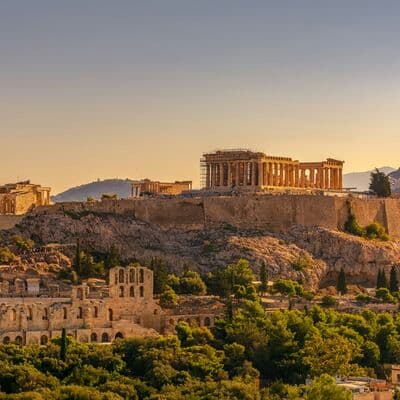
The Acropolis is undoubtedly the main attraction, but it is just the tip of the iceberg. Below the sacred rock spreads an entire world: the Ancient Agora where Socrates conducted his philosophical conversations, the Roman Agora with the Tower of the Winds, Hadrian's Library, and the magnificent Temple of Olympian Zeus. Be sure to climb Areopagus Hill at sunset - the view of the Acropolis and the city from here is fantastic, and there are significantly fewer people than on the Acropolis itself.
The historic neighborhoods of Athens are a separate pleasure. Plaka is the most touristy but also the most atmospheric quarter with narrow streets, neoclassical mansions, and endless tavernas. Anafiotika is a piece of Cycladic architecture right under the Acropolis, built by settlers from Anafi island in the 19th century. Psiri is a former working-class district transformed into a nightlife hub with bars, clubs, and street art. Exarchia is the anarchist and student quarter, where the cheapest tavernas and the most vibrant street culture thrive.
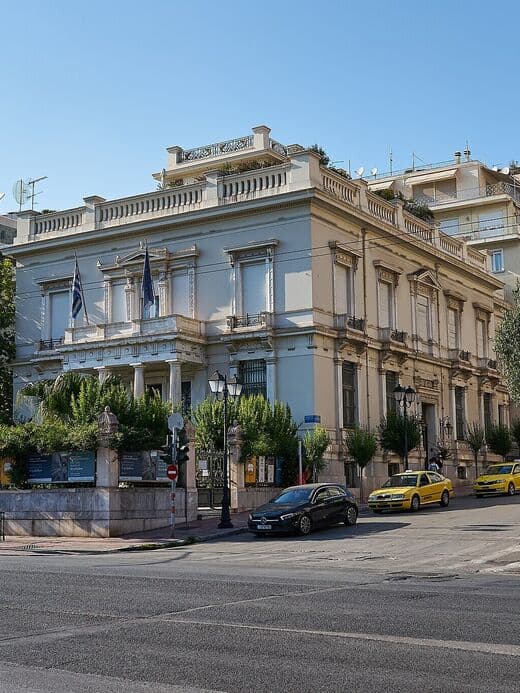
The museum program of Athens is impressive: the Acropolis Museum is one of the best archaeological museums in the world with masterpieces of ancient Greek sculpture. The National Archaeological Museum houses the gold mask of Agamemnon and the Antikythera mechanism. The Benaki Museum guides you through the entire history of Greek culture from the Neolithic to the present. The Museum of Cycladic Art displays enigmatic marble figurines that inspired Modigliani and Brancusi.
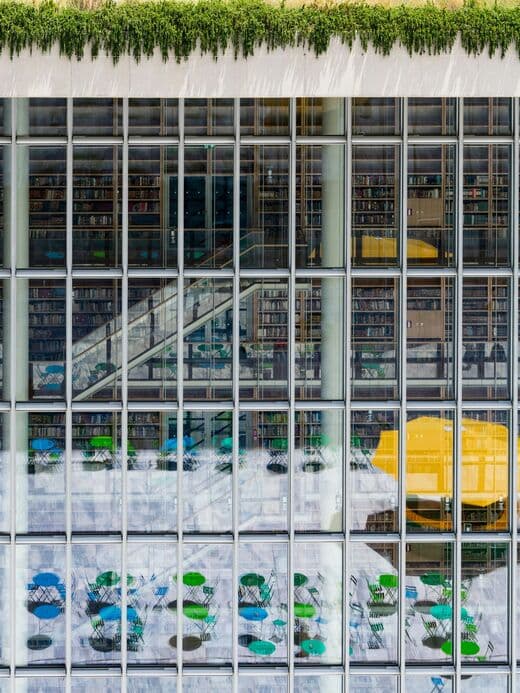
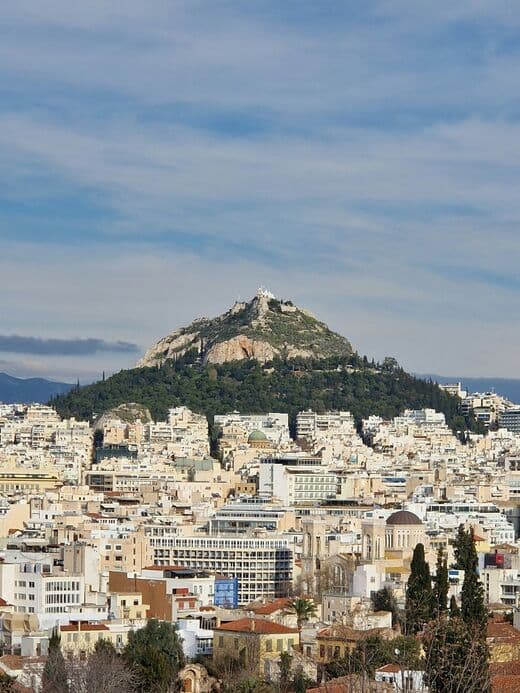
Modern Athens is not just about antiquity. The Stavros Niarchos Foundation Cultural Center is an architectural masterpiece by Renzo Piano featuring an opera house, library, and park. The National Gallery after renovation showcases Greek art from El Greco to contemporary artists. Mount Lycabettus is the best point for a city panorama, especially at sunset.
In the Athens area, set aside a day for a trip to the Temple of Poseidon at Cape Sounion - 70 kilometers from the center, but the sunset there is considered one of the best in Greece. According to legend, this is where King Aegeus threw himself into the sea upon seeing the black sails of Theseus's ship.
Peloponnese
The Peloponnese peninsula is Greece in miniature: it has everything - ancient ruins, Byzantine churches, Venetian fortresses, mountains, beaches, and traditional villages. Yet there are significantly fewer tourists here than on the islands, and authenticity has been preserved to a greater degree.
Ancient Mycenae and Tiryns are the cradle of Mycenaean civilization, the very one that besieged Troy. The Lion Gate of Mycenae and the Treasury of Atreus make a powerful impression. Epidaurus has an ancient theater with incredible acoustics: a whisper from the stage can be heard in the last rows. In summer, the ancient drama festival takes place here. Olympia is the birthplace of the Olympic Games, where the Olympic flame is still lit to this day. Sparta will disappoint ruin enthusiasts - almost nothing remains of the ancient city, but the surrounding Taygetos mountains are impressive.
Nafplio is one of the most beautiful towns in Greece, the first capital of the independent state. The Venetian fortress of Palamidi rises above the town at 216 meters - the climb up 999 steps is worth it. Monemvasia is the 'Greek Gibraltar', a rock-island with a Byzantine ghost town. Mystras is the Byzantine Pompeii, an abandoned city with stunning frescoes.
The Mani Peninsula is a wild, harsh land with tower-fortresses, caves, and black pebble beaches. This is the southernmost point of continental Europe (Cape Tenaro) and the place where, according to legend, the entrance to Hades was located. People here still speak a special dialect and are proud that they were never conquered by the Turks.
Central Greece and Thessaly
Delphi - the navel of the earth, as the ancient Greeks called this place. The sanctuary of Apollo, where the Pythia delivered prophecies, still makes a mystical impression today. The Temple of Apollo, the ancient theater, and the stadium are located on a steep slope of Mount Parnassus with views of the olive valley and the Corinthian Gulf. The Delphi Archaeological Museum houses the bronze Charioteer - one of the few surviving originals of Greek bronze sculpture. The enigmatic Tholos of Athena Pronaia - a round columned temple - has become the symbol of Delphi.
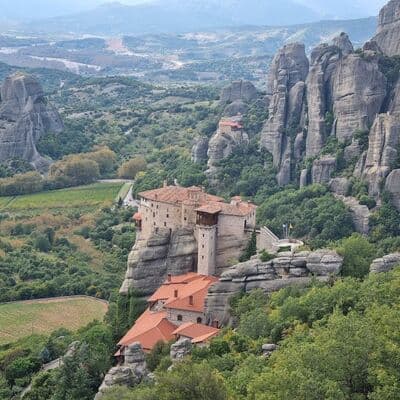
Meteora is a place that makes you question the laws of physics. Six functioning monasteries from the 14th-16th centuries stand on tops of sheer cliffs up to 600 meters high. Before stairs were built in the 20th century, monks were raised in nets on ropes. Great Meteoron Monastery is the largest and oldest. Varlaam Monastery is famous for its frescoes. Roussanou Monastery is a nunnery located on the most scenic rock. Holy Trinity Monastery is known from the James Bond film. Come at sunset to the viewpoints - the sight is unforgettable.
Northern Greece
Thessaloniki is the country's second city and cultural capital of Greece. There are fewer ancient ruins here but more Byzantine heritage and modern life. The White Tower is the city's symbol, a former prison and place of execution, now a museum. The Rotunda is a Roman mausoleum that became a church, then a mosque, and a church again. The Byzantine churches of Thessaloniki are UNESCO World Heritage sites.
Thessaloniki is the gastronomic capital of Greece. The influence of Asia Minor, Constantinople, and the Balkans created a unique cuisine. Bougatsa (cream or cheese pie), koulouri (sesame bread rings), mussels at a waterfront taverna - here you eat better and cheaper than in Athens. Nightlife thrives in the Ladadika district, and coffee culture is more developed here than anywhere else in Greece.
Halkidiki consists of three fingers stretching into the Aegean Sea. Kassandra is the most touristy, with hotels and clubs. Sithonia is calmer, with pine forests and turquoise bays. Mount Athos is a monastic republic where women are forbidden and men need special permission (diamonitirion). But even if you cannot access Athos itself, a cruise along the coast allows you to see the monasteries from the water.
Ionian Islands
Corfu (Kerkyra) is the greenest and most 'Italian' of the Greek islands. Venetian rule left behind fortresses, mansions, and the tradition of drinking ginger beer. Corfu Old Town is a labyrinth of narrow streets with hanging laundry, cafes, and churches, included in the UNESCO World Heritage list. Achilleion Palace, built by Empress Sisi, is an example of 19th-century romantic architecture. The northeastern coast is prestigious and expensive, the western coast is wilder with impressive sunsets.
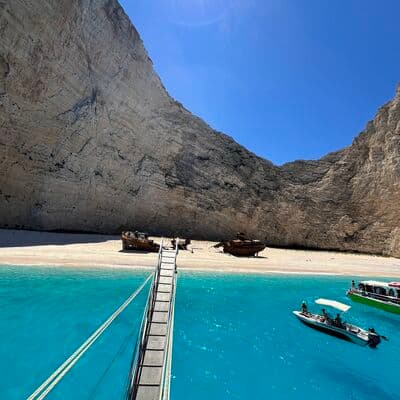
Zakynthos (Zante) is an island that became famous thanks to one photograph. Navagio Beach with its half-sunken smuggler ship and sheer white cliffs is one of the most photographed in the world. It can only be reached by sea, and the best view opens from the viewpoint at the top of the cliff. The Blue Caves in the north of the island are sea grottos with incredible water color. Laganas Bay is a nesting site for loggerhead sea turtles; beaches are closed at night to protect the nests. Porto Limnionas is a rocky cove for snorkeling.
Kefalonia is the island of 'Captain Corelli's Mandolin', the largest of the Ionian Islands. The Melissani Cave with its underground lake, where a ray of sunlight creates magical illumination. Myrtos Beach regularly features on lists of Europe's best. Lefkada is connected to the mainland by a bridge, making it convenient for road trips. Porto Katsiki is a beach comparable in beauty to Navagio. Ithaca is the homeland of Odysseus, a small island for seclusion.
The Cyclades
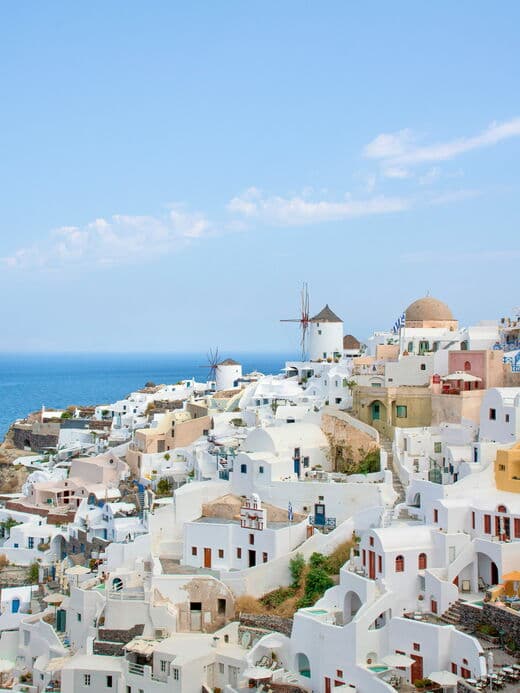
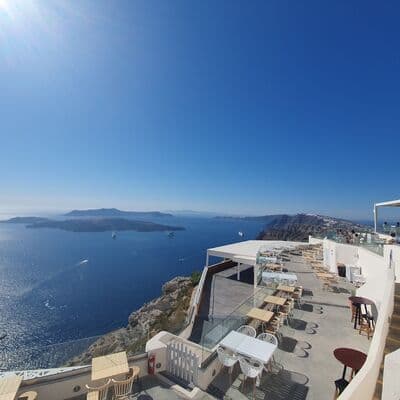
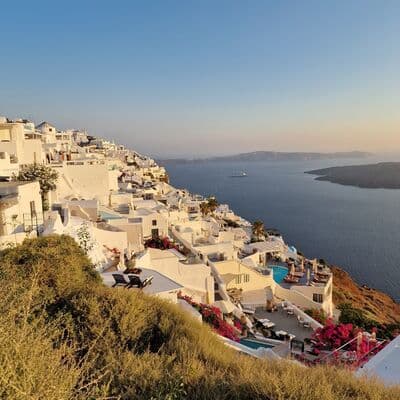
Santorini (Thira) is an island that needs no introduction. The caldera of a submerged volcano, whitewashed villages on the edge of the cliff, famous sunsets - all this creates an atmosphere that cannot be replicated anywhere. Oia Village is the most photogenic place on the island, where crowds of tourists gather for sunset. Arrive an hour early to secure a spot. Fira is the island's capital, less postcard-perfect but more lively. Imerovigli is the highest point on the caldera, offering views of Skaros Rock with its Venetian fortress ruins.
The Santorini Caldera is what people come to the island for. A cruise to Nea Kameni volcano allows you to climb the active crater and swim in the Palea Kameni hot springs. Akrotiri is the 'Greek Pompeii', a Minoan city buried under ash 3,600 years ago and remarkably preserved. Ancient Thera consists of ruins of a Hellenistic city on the mountaintop.
Santorini's beaches are unusual: volcanic origins created Red Beach with terracotta cliffs, Kamari and Perissa with black sand, and Vlychada with lunar landscapes. Wine is a special pride of the island: the indigenous Assyrtiko grape grows on volcanic soils and produces mineral dry wines. Santo Wines Winery and Koutsoyannopoulos Wine Museum are must-stops for connoisseurs. Akrotiri Lighthouse is a place for sunsets without crowds.
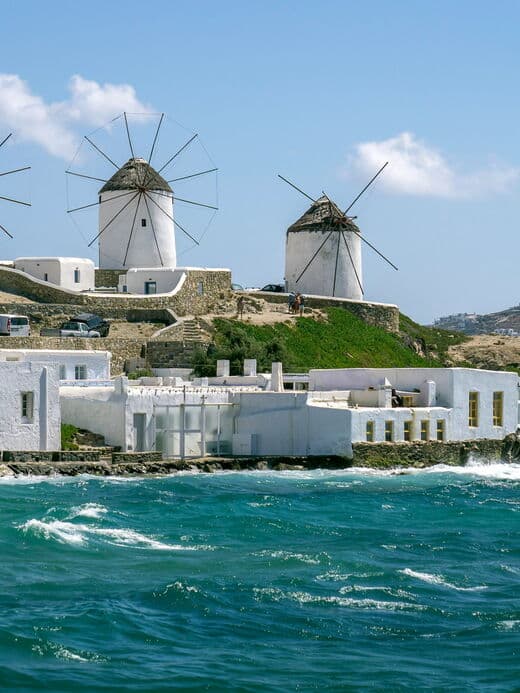
Mykonos is the island of parties, glamour, and LGBTQ+ tourism, but also a place with rich history and authentic corners. Mykonos Town (Chora) is a labyrinth of whitewashed streets designed to confuse pirates. Little Venice is a row of houses hanging over the sea, with cocktail bars. Kato Mili Windmills are the island's symbol. Panagia Paraportiani Church is five churches merged into one whitewashed sculpture.
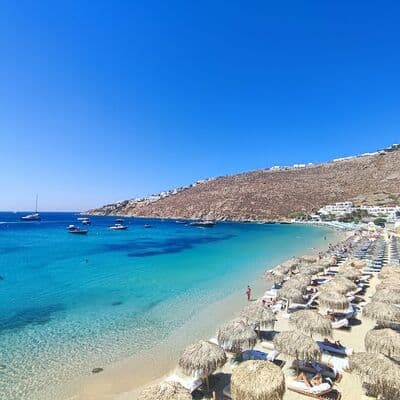
Mykonos beaches suit every taste: Paradise and Super Paradise are legendary party beaches. Psarou is for the rich and famous. Ornos is family-friendly and calm. Elia is the longest, with a nudist section. Platys Gialos is the departure point for water taxis. Paraga is youthful but less hyped.
A day trip to Delos is essential. The sacred island where, according to legend, Apollo and Artemis were born, was the religious center of the ancient world. Now it is an archaeological preserve: the Terrace of Lions, temple ruins, mosaics in houses - the scale is impressive. Ano Mera Village in the center of the island contrasts with coastal glamour, featuring Panagia Tourliani Monastery. Armenistis Lighthouse offers sunsets away from the crowds. The Aegean Maritime Museum is for those interested in seafaring history.
Paros is the golden mean of the Cyclades: less party-focused than Mykonos, more lively than Santorini. Naoussa is a fishing village that became a trendy resort while preserving its charm. Kolymbithres Beach has granite boulders creating natural pools. Parikia is the island's capital with the Byzantine church of Ekatontapiliani (Hundred Doors).
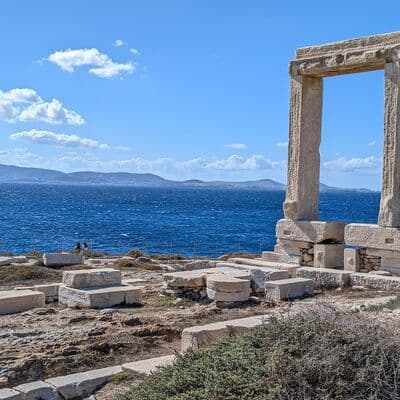
Naxos is the largest and greenest of the Cyclades, with mountains, valleys, and traditional villages. The Portara - giant marble gates of an unfinished Temple of Apollo - is the island's symbol. Plaka Beach offers several kilometers of golden sand. Mount Zeus (1,004 meters) is the highest point in the Cyclades; you can hike to the summit.
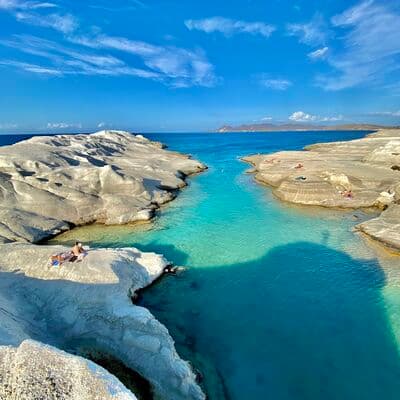
Milos is a volcanic island with otherworldly landscapes and Greece's best beaches. Sarakiniko features white lunar rocks carved by wind and sea. Kleftiko Caves are sea grottoes where pirates once hid, accessible only by boat. This is where the Venus de Milo was discovered, now housed in the Louvre.
Crete
Crete is the largest Greek island and a world within a world. You could spend a month here and not see everything. Minoan civilization, Venetian fortresses, Ottoman mosques, mountain villages, gorges, pink sand beaches - Crete is multifaceted and inexhaustible.
Heraklion is the capital and main gateway to the island. The Palace of Knossos is the legendary labyrinth of the Minotaur, the center of Minoan civilization. Arthur Evans's reconstruction is controversial, but it makes an impression. The Heraklion Archaeological Museum is second in importance in Greece only to the Athens museum, with treasures of Minoan culture. Phaistos Palace in the south is less promoted but more authentic: without reconstructions, with stunning valley views.
Chania is the most beautiful city in Crete with its Venetian harbor, lighthouse, and Turkish baths. The old town labyrinth is the best place for an evening stroll. Rethymno is another Venetian city with the huge Fortezza fortress. Agios Nikolaos is a resort on the east coast with Lake Voulismeni surrounded by cafes.
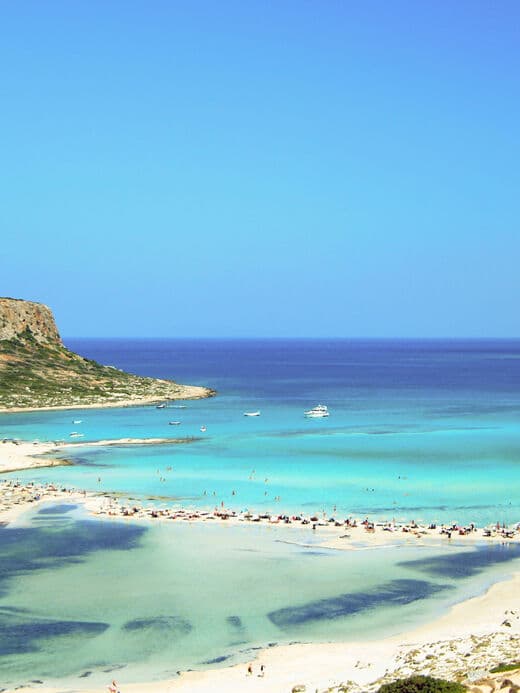
Crete's beaches are a source of special pride. Elafonisi has pink sand and a shallow lagoon, paradise for families with children. Balos is a turquoise lagoon reached by boat or via a dirt road and steep descent, but it is worth it. Preveli Palm Beach features a river with palm trees flowing into the sea. Vai Palm Beach on the east has Europe's largest palm grove. Matala has caves in the cliffs where hippies lived in the 1960s, including a young Joni Mitchell.
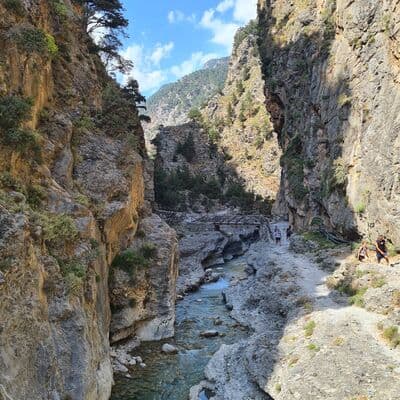
Samaria Gorge is a 16-kilometer trekking route through Europe's longest gorge. The hike takes 4-7 hours with an elevation drop of 1,250 meters; at the end lies Agia Roumeli village, from where you leave by ferry. Open from May to October; start early in the morning. Spinalonga Island is a former Venetian fortress and leper colony until 1957, now a museum. Reach it by boat from Elounda or Plaka.
Crete's monasteries are spiritual centers of resistance: Arkadi became a symbol of the struggle for independence after the tragic events of 1866. Preveli Monastery helped evacuate Allied soldiers during World War II.
Dodecanese
Rhodes is the largest of the Dodecanese islands, combining beach holidays, history, and nightlife. Rhodes Old Town is the largest preserved medieval city in Europe, surrounded by four-kilometer walls. The Palace of the Grand Master was the residence of the Knights Hospitaller, restored by the Italians in the 1930s. The Street of the Knights is the only fully preserved medieval street in the world.
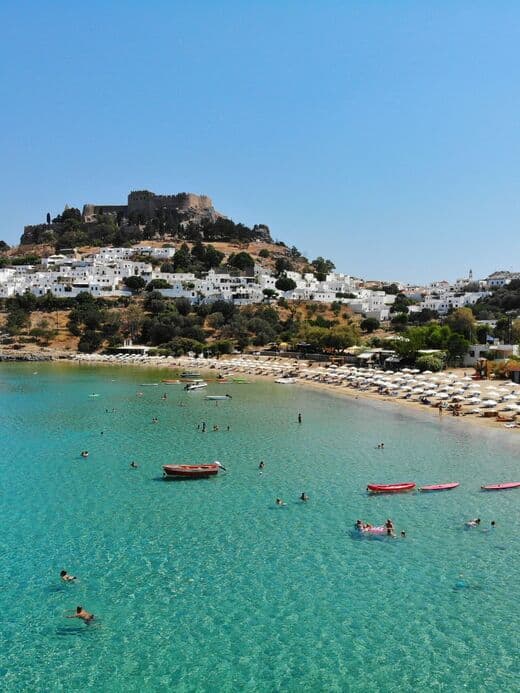
Lindos is a whitewashed village with the Acropolis on a rock offering views of two bays. The climb is steep; you can go by donkey, but walking is better. Anthony Quinn Bay is named after the actor who filmed 'The Guns of Navarone' here. Prasonisi in the south is where two seas meet (Aegean and Mediterranean), a windsurfing paradise.
Greek Islands: How to Choose Yours
With over 200 inhabited islands, the choice can be overwhelming. Here is a quick guide by type of vacation:
For first-timers: Santorini + Mykonos (classic but expensive) or Crete (variety in one place). For history and culture: Crete (Minoans), Rhodes (Knights), Delos (antiquity). For beaches: Milos, Naxos, Zakynthos, Crete. For parties: Mykonos, Ios, Rhodes (town). For quiet relaxation: Paros, Sifnos, Folegandros. For hiking: Crete (Samaria), Andros, Tinos. For families with children: Corfu, Zakynthos, Naxos. For honeymoons: Santorini, Folegandros, Hydra.
Underrated islands: Sifnos - the gastronomic capital with the best pottery. Tinos - an Orthodox pilgrimage center with 40+ villages. Serifos - rugged beauty and no crowds. Karpathos - traditional costumes and isolation. Ikaria - the island of longevity with panigiri (village festivals). Samos - birthplace of Pythagoras, sweet Muscat wine. Lesbos - olives, ouzo, and literary heritage.
When to Visit Greece
Greece is a year-round destination, but each season has its own characteristics. Understanding climate patterns will help you plan the perfect trip.
April-May: Ideal time for mainland Greece and archaeology. Temperature 20-25 degrees Celsius (68-77F), everything is blooming, few tourists, moderate prices. Easter (usually April) is a special time: processions, fireworks, roast lamb. Downside - the sea is still cold (18-20C/64-68F), islands can be windy.
June: Start of beach season. Sea warms to 22-24C (72-75F). Crowds not yet at peak. Islands come alive. Best month for weather/prices/crowds ratio. Late June brings the Athens Festival at the Odeon of Herodes Atticus.
July-August: Peak season. Hot (30-40C/86-104F), crowded, expensive. But sea is perfect (25-27C/77-81F), everything is open, ferries run frequently. Meltemi - the northern wind - brings coolness to the Cyclades but can cancel ferries. If visiting in this period, book everything in advance, especially ferries and accommodation on popular islands.
September-October: Shoulder season - the best time for islands. Sea is warm (24-26C/75-79F in September), fewer tourists, prices drop. In October, rain may start in the north, but the south (Crete, Rhodes) is good until end of month. Grape season means wine tastings.
November-March: Off-season. Athens and Thessaloniki are good for cultural tourism without crowds. Ski resorts on Parnassus and in the Peloponnese operate. Islands go quiet: many hotels and restaurants closed, ferries run infrequently. But catching Santorini in February means seeing the island without tourists, which is priceless.
Holidays and events: March 25 - Independence Day (parades, closed attractions). Easter - the main holiday (floating dates, check the Orthodox calendar). August 15 - Assumption of the Virgin Mary (everything closed, islands packed with Greeks). October 28 - Ohi Day (parades). Christmas and New Year - Athens is decorated, festive atmosphere.
What to avoid: Santorini in August (crowds make photography impossible). Athens in August (heat above 40C/104F). Ferries on national holidays (packed with Greeks). Small islands in winter (everything closed).
How to Get to Greece
Greece has a well-developed transportation network with two main hubs - Athens and Thessaloniki - plus dozens of island airports.
Main airports: Athens (ATH) - the largest hub, flights from around the world. Thessaloniki (SKG) - second largest, convenient for northern Greece. Heraklion (HER) - main gateway to Crete. Rhodes (RHO), Corfu (CFU), Santorini (JTR), Mykonos (JMK) - seasonal flights from Europe.
From the USA: Direct flights from New York (JFK), Philadelphia, Atlanta, and Chicago to Athens on Delta, American Airlines, and Emirates. Flight time approximately 10-11 hours. Many connections through European hubs (London, Paris, Frankfurt, Amsterdam).
From the UK: Direct flights from London (Heathrow, Gatwick, Stansted, Luton), Manchester, Edinburgh, and other cities. Flight time approximately 3.5-4 hours. Budget airlines (easyJet, Ryanair, Wizz Air) offer seasonal direct flights to Greek islands. British Airways and Aegean operate year-round to Athens and Thessaloniki.
From Australia: No direct flights. Most connections through Dubai (Emirates), Singapore (Singapore Airlines), or Doha (Qatar Airways). Total journey time approximately 20-24 hours.
Budget airlines from Europe: Ryanair, easyJet, Volotea, Sky Express fly from most European cities. Seasonal direct flights to islands from the UK, Germany, Scandinavia. Charter flights in peak season are often the cheapest option.
Athens Airport to center: Metro (Line 3, blue) - 40 minutes, 9 euros, runs every 30 minutes. Bus X95 - to Syntagma Square, 24/7, 6 euros, 60 minutes. Taxi - 40-55 euros (fixed rate), 40 minutes without traffic. Uber works, prices comparable.
Transportation Within Greece
Greece is a country for road trips and ferry adventures. Public transportation exists but is limited.
Car rental: The best way to explore mainland Greece and large islands (Crete, Rhodes, Corfu). International companies (Hertz, Avis, Europcar) and local ones (AutoUnion, Wheel). Book in advance during season. Prices from 25-35 euros per day for a basic car. Important: Greek drivers are aggressive, mountain roads are narrow and winding. Automatic transmission costs extra; manual is more common. On small islands - scooters and ATVs.
License: US, UK, Australian, and Canadian licenses are accepted, but an International Driving Permit (IDP) is recommended. Some rental companies require an IDP, especially in case of accidents.
Roads: Highways (Ethniki Odos) are tolled and good quality. Athens to Thessaloniki is about 40 euros in tolls. Provincial roads vary from excellent to rough dirt tracks. In Crete, the southern coast consists of serpentines requiring attention. Fuel is expensive - 1.8-2.0 euros per liter.
Ferries: The main way to travel between islands. Companies: Blue Star Ferries (large, comfortable, slow), Seajets and Hellenic Seaways (fast, more expensive, can cause seasickness), Minoan Lines (Crete-Piraeus, overnight). Book at ferries.gr or directly on company websites. In season, book at least a week ahead, especially cabins. Prices: Piraeus-Santorini approximately 40-70 euros (regular) or 70-100 euros (high-speed). Fast ferries are canceled in strong meltemi winds.
Ports: Piraeus - Athens' main port, from where everything departs. Getting there: metro (Line 1, green), taxi (15-25 euros from center). Rafina - closer to the airport, convenient for the Cyclades. Lavrio - small port for Kea and southeastern islands.
Domestic flights: Aegean Airlines and Olympic Air (same owner) fly between Athens, Thessaloniki, and islands. Sky Express is a budget carrier to islands. Prices from 30-50 euros, but rise in season. Athens-Santorini takes 45 minutes (versus 8 hours by ferry). Athens-Crete (Heraklion or Chania) - 50 minutes, many flights daily.
Buses: KTEL is the state bus network. Athens-Delphi 3 hours, 16 euros. Athens-Meteora (Kalambaka) 5 hours, 30 euros. Buses are comfortable with air conditioning, but schedules are limited. On islands, buses connect ports with main villages, but infrequently.
Trains: The railway network is limited. Athens-Thessaloniki: high-speed train 4 hours, about 50 euros. Athens-Kalambaka (Meteora): scenic route through mountains. Peloponnese: lines partially closed. Not the most convenient transport, but the Athens-Thessaloniki train is a good alternative to flying.
Taxis and apps: Taxis are yellow with meters. Uber works in Athens and Thessaloniki. BEAT is the local app. Taxi drivers traditionally dislike using meters - insist on it or agree on a price beforehand. On islands, taxis are scarce; call by phone.
Cultural Code of Greece
Greeks are an emotional, hospitable, and proud people with deep ties to their history. Understanding cultural nuances will make your trip more pleasant.
Time: Greeks live by their own schedule. Lunch at 2-3 PM, dinner after 9 PM, shops closed 2-5 PM (siesta). Being 15-30 minutes late is normal in social situations. But tourist places keep to schedule.
Communication: Loud conversations and active gesticulation are not aggression but a communication style. Greeks easily strike up conversations with strangers. Basic phrases in Greek (kalimera - good morning, efharisto - thank you, parakalo - please) bring genuine joy.
Filotimo: An untranslatable concept combining honor, pride, dignity, and hospitality. A Greek with filotimo will not let you get lost - they will escort you personally. Will not let you overpay at a taverna. Will tell you their family history over a third glass of raki.
Hospitality: Refusing treats is impolite. Hosts will insist - accept at least a little. In tavernas, complimentary dessert or raki often arrives. In villages, you may be invited into homes.
Religion: Orthodoxy is an important part of identity. Churches are not museums - behave respectfully. Cover shoulders and knees in churches and monasteries. Women need skirts or coverups (often provided at entrance). Monasteries have strict rules: silence, no photography in some areas.
Politics: Topics to avoid: the 2010s crisis, relations with Turkey and North Macedonia (especially name disputes). Greeks readily criticize their own government but dislike when foreigners do. Comparisons with Turkey are taken painfully.
Tipping: Not obligatory but appreciated. In restaurants - 5-10% or round up the bill. In cafes - small change. Taxi drivers - round up. Porters - 1-2 euros. In all-inclusive hotels - 1-2 euros per day for housekeeping. Tips are left in cash, even when paying by card.
Dress: Greeks dress informally but neatly. On the beach - beachwear, in town - covered shoulders and knees. Evening in restaurants at tourist spots - casual, in Athens - slightly more elegant. Clubs have dress codes.
Taboos: Showing an open palm with spread fingers (moutza) is an insult. Discussing money directly is impolite. Saying Greek food is like Turkish - risky. Criticizing a Greek's family - offensive.
Photos: In museums and archaeological sites, usually allowed without flash. In churches and monasteries - often not, or permission required. Ask before photographing people.
Safety in Greece
Greece is one of the safest countries in Europe. Violent crime is extremely rare; the main risks are petty theft and scams.
General situation: Walking at night in central Athens, Thessaloniki, and tourist islands is safe. Solo female travel is fine. Greeks are friendly and helpful.
Areas of attention in Athens: Omonia and surrounding streets - better to avoid at night. Exarchia - anarchist neighborhood, generally safe but with graffiti and occasional demonstrations. Victoria - migrant district, fine during day, more careful at night. Plaka, Monastiraki, Psiri, Kolonaki - completely safe.
Pickpockets: Standard problem at tourist spots. Athens metro, Monastiraki Square, flea markets, ferries - keep bags in front of you. Do not leave phones on cafe tables. Do not leave valuables unattended on beaches.
Scams: In tourist restaurants, check the menu with prices before ordering. A 'different menu' with high tourist prices is rare but exists. Taxi drivers without meters - insist on using one or agree on a price beforehand. 'Museum closed today' and offers of alternative tours - classic con.
Natural risks: The sun is the main enemy. Sunstroke is common, especially when visiting archaeological sites without shade. Hat, water, sunscreen - essential. Sea urchins - on rocky beaches, enter water in special shoes. Jellyfish - August-September sometimes. Forest fires - common in summer, follow the news. Earthquakes - Greece is seismically active, but serious ones are rare.
Water: Tap water in most places is drinkable, but on some islands it is desalinated and unpleasant. Bottled water costs very little.
Emergency numbers: 112 - single European number. 100 - police. 166 - ambulance. 199 - fire. 108 - coast guard. Tourist police - 171 (English-speaking, help with conflicts with locals).
Police: Police are divided into regular and tourist. Tourist police are your friend for any problems with tavernas, taxis, hotels. Regular police sometimes do not speak English.
Documents: Carry a copy of your passport; keep the original in a safe. If passport is lost - embassy/consulate.
Health and Medical Care
Greece's medical system is mixed: state hospitals (free for EU citizens but overloaded) and private clinics (quality but expensive).
Insurance: Travel insurance is highly recommended. Ensure it covers: emergency hospitalization, repatriation, COVID-19. Recommended additions: adventure activities (if planning trekking, snorkeling), lost baggage, trip cancellation.
Pharmacies: Marked with a green cross. Pharmacists are highly qualified; much is sold without prescription. They can give advice and save you a doctor's visit. Hours: usually 8:30 AM-2 PM and 5:30-8:30 PM, but duty pharmacies (efimerefousa) work around the clock - addresses posted on doors of closed pharmacies.
Vaccinations: No specific requirements. Standard vaccinations (diphtheria-tetanus, measles, hepatitis) should be current.
Sun and heat: The main medical problem for tourists. Heatstroke is a real risk in July-August. Symptoms: headache, nausea, weakness, cessation of sweating. Actions: shade, water, wet cloth on head, call help if worsening. Prevention: hat, SPF50+ sunscreen, liters of water, avoid sun 12-4 PM.
Marine risks: Sea urchins - remove spines with tweezers, then vinegar. Jellyfish - do not rub, rinse with seawater, vinegar. Scorpionfish - rare but painful, needs medical help.
Stomach: Greek food is safe but fatty. Olive oil in large quantities can cause upset for the unaccustomed. Drink water, do not overdo fried food in the first days.
Money and Budget
Greece is a eurozone country. After the 2010s crisis, the economy has recovered, but prices have risen. Budget depends on season, region, and travel style.
Currency: Euro. ATMs are everywhere, but on small islands there may be queues and limits. Withdrawal fees depend on your bank. Greek ATMs sometimes offer 'conversion' - decline, the rate is unfavorable.
Cards: Visa and Mastercard accepted almost everywhere, even in tavernas. But at markets, small shops, for taxis, on ferries (except ticket offices) - cash. Recommended to have 100-200 euros in cash.
Budget level (60-100 USD/day per person): Hostel or budget Airbnb (25-50 USD). Breakfast: coffee and koulouri from a cart (4 USD). Lunch: gyros or souvlaki (6-8 USD). Dinner: taverna, meze for two with wine (30-40 USD). Public transport. Free beaches. One museum per day.
Mid-range (150-220 USD/day): 3-star hotel or good Airbnb (70-120 USD). Cafe breakfast (12 USD). Lunch at taverna (18-25 USD). Restaurant dinner (50-70 USD). Car rental (35-60 USD). Museums, tours.
High-end (350+ USD/day): Boutique hotel or villa (180-350 USD). Fine dining restaurants. Private tours. Yacht or catamaran. Santorini and Mykonos in season easily consume 600+ USD per day.
Specific prices (2025-2026):
- Espresso: 2-4 euros
- Frappe: 3-4 euros
- Bottle of water: 0.50 euros
- Beer at bar: 4-6 euros
- Glass of wine: 4-8 euros
- Gyros: 4-6 euros
- Moussaka at taverna: 10-14 euros
- Grilled seafood: 15-25 euros
- Taxi airport to Athens center: 40-55 euros
- Athens metro: 1.20 euros (single)
- Acropolis ticket: 20 euros (combined 30 euros)
- Ferry Piraeus-Santorini (regular): 40-60 euros
- Beach sunbeds: 8-15 euros (pair)
Where it is more expensive: Santorini (twice the average), Mykonos (even more), Hydra (no cars, everything imported). Where it is cheaper: Mainland Greece, northern islands (Thasos, Samothrace), large islands outside tourist zones.
Saving money: Cook yourself (rent accommodation with kitchen). Buy at markets and supermarkets. Have lunch at tavernas where locals eat (menu in Greek is a good sign). Free museums every first Sunday of the month (winter). Students and seniors get discounts.
Top Itineraries in Greece
7 Days: Classic First Visit
Day 1: Arrival in Athens
Flight arrival, check into hotel in Plaka or Monastiraki area. Acclimatization, walk through Plaka. Dinner at a taverna with Acropolis views. Evening walk around Monastiraki Square.
Day 2: Athens - Acropolis and Museums
Early rise (by 8 AM) to the Acropolis before crowds and heat. Parthenon, Erechtheion, Temple of Athena Nike. Descend via Areopagus Hill. Acropolis Museum (2-3 hours). Lunch in Plaka. After siesta - Ancient Agora and Roman Agora. Evening - Psiri district, bars and street food.
Day 3: Athens - Beyond the Acropolis
Morning - National Archaeological Museum. Lunch - Central Market (Varvakios Agora). Afternoon - Temple of Olympian Zeus, Panathenaic Stadium, National Garden. Sunset - Mount Lycabettus (funicular or hike up). Dinner in Kolonaki.
Day 4: Athens - Santorini
Early morning - fast ferry or flight to Santorini (45 minutes). Check into Fira or Imerovigli. Afternoon - walk through Fira, along the caldera edge. Evening - bus or taxi to Oia for the famous sunset. Dinner in Oia with caldera views.
Day 5: Santorini
Morning - Akrotiri (Minoan excavations). Lunch - Vlychada beach with lunar cliffs. Afternoon - Red Beach and Akrotiri Lighthouse. Evening - wine tasting at Santo Wines or wine museum. Dinner in Pyrgos - an authentic village without crowds.
Day 6: Santorini - Cruise
Sea excursion: Nea Kameni volcano (climb the crater), hot springs, Thirasia. Lunch on board or on Thirasia. Return, relaxation at Perissa or Kamari. Evening - hike the Fira to Oia trail along the caldera (10 km, 3-4 hours) or farewell dinner with views.
Day 7: Return
Morning ferry or flight to Athens. If time allows - Syntagma Square, changing of the guard at Parliament (every hour, Sundays at 11 AM in ceremonial dress). Transfer to airport.
10 Days: Cyclades Islands
Days 1-3: Athens
As above, but add: Temple of Poseidon at Cape Sounion (half day), Benaki Museum, Anafiotika neighborhood.
Day 4: Athens - Mykonos
Morning ferry or flight to Mykonos. Check into Chora or nearby. Afternoon - walk through Chora: Little Venice, windmills, Paraportiani Church. Sunset in Little Venice with a cocktail. Dinner in the maze of alleys.
Day 5: Mykonos - Delos and Beaches
Early ferry to Delos (30 minutes). 3-4 hours at the excavations: Terrace of Lions, House of Dionysus, theater. Return for lunch. Afternoon - beaches: Ornos for families or Paraga for younger crowds. Evening - Ano Mera, quiet village with monastery.
Day 6: Mykonos - Paros
Morning - Paradise Beach or Super Paradise (for partying) or Elia (calmer). Seaside lunch. Evening ferry to Paros (40 minutes). Check into Naoussa or Parikia.
Day 7: Paros
Morning - Parikia: Ekatontapiliani church (Hundred Doors), Venetian castle. Rent car or ATV. Kolymbithres Beach - unique granite rocks. Lunch in Naoussa - fishing harbor with restaurants. Afternoon - villages Lefkes and Marpissa. Sunset - Santa Maria beach in the northeast.
Day 8: Paros - Naxos
Morning ferry to Naxos (45 minutes). Portara - first stop, marble gates of Apollo's Temple. Naxos Town - Venetian castle, maze of alleys. Lunch with local products (Naxos cheese, potatoes, meat are famous). Afternoon - Plaka Beach, 4 km of sand. Evening - dinner in Chora.
Day 9: Naxos
Rent a car. Mountain villages: Halki (Kitron liqueur factory), Filoti, Apiranthos (marble streets). Optional - climb Mount Zeus (1,004 m, 3-4 hours round trip). Temple of Demeter at Sangri. Return via Potamia and Melanes (Kouros statues). Farewell dinner in Chora.
Day 10: Naxos - Athens - Departure
Ferry to Piraeus or flight. If time allows - final Athens walk. Departure.
14 Days: Mainland and Islands
Days 1-2: Athens
As above: Acropolis, museums, neighborhoods.
Day 3: Delphi
Early morning - bus or rental car to Delphi (2.5-3 hours). Temple of Apollo, theater, stadium. Lunch in Delphi village. Archaeological Museum. Tholos of Athena Pronaia. Night in Delphi or Arachova (ski resort with atmosphere).
Day 4: Delphi - Meteora
Drive to Kalambaka (3 hours). En route - Thermopylae (memorial to the 300 Spartans). Check in. Evening - first look at Meteora, sunset viewpoints.
Day 5: Meteora
Early morning - Great Meteoron and Varlaam before crowds. Lunch in Kalambaka. After siesta - Roussanou and Holy Trinity. Sunset - viewpoints. Each monastery has its own closing days - check the schedule.
Day 6: Meteora - Thessaloniki
Drive to Thessaloniki (2.5 hours). Check into center. White Tower, waterfront. Ladadika district for lunch. Byzantine churches (Hagia Sophia, Agios Dimitrios). Rotunda. Evening - Ladadika bars and restaurants.
Day 7: Thessaloniki
Morning - Ano Poli (upper town), fortress walls, city views. Modiano Market. Museum of Byzantine Culture. Afternoon - free time, coffee culture, shopping. Evening - dinner with meze and local wine.
Day 8: Thessaloniki - Athens - Santorini
Morning flight or train to Athens. Connection to ferry or flight to Santorini. Evening - check in, sunset in Oia.
Days 9-10: Santorini
As in 7-day itinerary.
Day 11: Santorini - Crete
Ferry to Crete (Heraklion, 2 hours). Check into Heraklion or Rethymno. Evening - walk, dinner.
Day 12: Crete - Knossos and Heraklion
Morning - Palace of Knossos (arrive by 8 AM). Heraklion Archaeological Museum. Lunch in Heraklion. Afternoon - drive to Chania (2 hours) or Rethymno.
Day 13: Crete - Chania and Beaches
Chania Venetian Harbor, old town. Rent a car. Day trip to Elafonisi or Balos (choose one, both are far). Evening - dinner in Chania.
Day 14: Crete - Athens - Departure
Morning - free time or Rethymno Fortezza. Flight to Athens and home.
21 Days: Full Immersion
Days 1-3: Athens
Extended program: all museums, all neighborhoods, Cape Sounion.
Days 4-6: Peloponnese
Rent a car. Day 4: Corinth Canal, Mycenae, Nafplio. Day 5: Epidaurus, Mystras, night in Monemvasia. Day 6: Monemvasia, return via Sparta and Tripoli to Athens.
Days 7-8: Delphi and Meteora
As above.
Days 9-10: Thessaloniki and Surroundings
Day 9: Thessaloniki. Day 10: day trip to Halkidiki (Sithonia) or Mount Olympus.
Days 11-13: Santorini
Three days allow unhurried exploration, including Ancient Thera and hiking trails.
Days 14-15: Mykonos
Including Delos and beaches.
Days 16-17: Naxos or Paros
Two days on one island for a relaxed pace.
Days 18-20: Crete
Day 18: Knossos, Heraklion. Day 19: drive to Chania, Samaria Gorge or beaches. Day 20: Chania, Spinalonga.
Day 21: Return
Flight from Heraklion or Chania to Athens and home.
Connectivity and Internet
Staying connected in Greece is easy: coverage is good, eSIM and tourist SIM cards are available.
Mobile operators: Cosmote (best coverage, including islands), Vodafone, Wind. Tourist SIMs sold at airports, operator stores, kiosks. Prices: about 10-20 euros for a SIM with 5-10 GB for a month.
eSIM: Airalo, Holafly, Ubigi - convenient to activate before the trip. Prices comparable to physical SIMs. Works in most modern smartphones.
Wi-Fi: Free Wi-Fi in hotels, cafes, restaurants is standard. Speed usually sufficient for messengers and social media, not always for video calls. On beaches and in villages - do not count on it.
Roaming: For EU citizens - roaming at home rates (Roam Like Home). For US/UK visitors - check with your carrier; local SIM or eSIM is often cheaper.
Coverage: Excellent in cities and on tourist islands. On small islands and in mountains - may be weak or absent. Ferries - usually have 4G most of the way.
What to Try in Greece
Greek cuisine is one of the foundations of the Mediterranean diet, recognized by UNESCO as intangible cultural heritage. Olive oil, vegetables, fish, lamb, goat cheese - the basis of everything.
Classics:
- Moussaka - layered casserole of eggplants, ground meat, and bechamel. Every cook prepares it differently.
- Souvlaki - skewers of pork, chicken, or lamb. Served on sticks or in pita with vegetables and tzatziki.
- Gyros - the Greek answer to shawarma, but with pork or chicken and French fries inside the pita.
- Tzatziki - yogurt with cucumber, garlic, and olive oil. Perfect with pita.
- Horiatiki salata - Greek salad with feta as a block, not crumbled. No lettuce leaves - just cucumbers, tomatoes, onions, peppers, olives.
- Dolmades - vine leaves stuffed with rice, sometimes with meat.
Meze (sharing plates):
- Taramosalata - fish roe paste.
- Melitzanosalata - roasted eggplant paste.
- Tiropitakia - small cheese pies.
- Spanakopita - spinach and feta pie.
- Calamari - fried squid in batter.
- Saganaki - fried cheese (usually kefalograviera).
- Gigantes - giant white beans in tomato sauce.
Seafood:
Greece is a maritime country, and fresh fish is an essential part of the experience. Grilled octopus is iconic - try it everywhere. Barbounia (red mullet), lavraki (sea bass), tsipoura (sea bream) - fresh-caught, grilled, with lemon. Prices are usually by weight; ask before ordering. Calamari can be tender and local or rubbery and frozen - ask. Garides saganaki - shrimp in tomato sauce with feta.
Meat:
- Kleftiko - slow-cooked lamb in parchment.
- Stifado - beef or rabbit stew with small onions.
- Kokoretsi - lamb offal on a spit (Easter classic).
- Bifteki - Greek burgers with herbs.
- Paidakia - grilled lamb chops.
Regional specialties:
- Crete: Dakos (rusk with tomatoes and mizithra), apaki (smoked pork), kalitsounia (sweet cheese pies), raki (grape spirit, served free).
- Santorini: Fava (yellow split pea puree), white eggplants, capers, Santorini tomatoes are more flavorful than usual, Assyrtiko wine.
- Thessaloniki: Bougatsa (cream or cheese pie), koulouri, midopilafo (mussels with rice).
- Corfu: Sofrito (beef in garlic sauce), bourdeto (fish in spicy sauce), ginger beer.
- Lesbos: Sardines, ouzo (anise spirit - Lesbos is its birthplace).
Sweets:
- Baklava - phyllo pastry with nuts and honey.
- Galaktoboureko - custard pie.
- Loukoumades - honey doughnuts, the Greek answer to donuts.
- Rizogalo - rice pudding with cinnamon.
- Yaourtí me méli - yogurt with honey and nuts, the ideal breakfast.
Drinks:
- Greek coffee - brewed in a briki (small pot), served with grounds. Say 'sketo' (no sugar), 'metrio' (medium), 'glyko' (sweet).
- Frappe - cold instant coffee with ice and milk, the national drink.
- Freddo espresso/cappuccino - more modern version of iced coffee.
- Ouzo - anise spirit, diluted with water (turns cloudy). Drunk slowly, with meze.
- Raki/Tsipouro - grape spirit, stronger than ouzo, without anise. In Crete, raki is served free after meals.
- Wine - Greece produces excellent wines. Assyrtiko (Santorini), Agiorgitiko (Nemea), retsina (resinated wine, an acquired taste).
Where to eat: Taverna - family restaurant with traditional cuisine. Psarotaverna - fish specialty. Ouzeri - bar with ouzo and meze. Mezedopoleio - meze restaurant. Psistaria - grill house. Rule: where locals eat - it is tasty and cheap. Menu only in Greek is a good sign.
Shopping in Greece
Greece is not a top shopping destination, but there are things worth bringing home.
What to bring:
- Olive oil - Greek extra virgin is among the world's best. Buy in metal cans (will not spill in luggage). Kalamata, Crete, Peloponnese are best regions.
- Olives - Kalamata (purple), Thassos (dried), Halkidiki (green). In vacuum packaging.
- Honey - thyme (best), pine, flower. Greece is one of the largest producers in the EU.
- Feta - real feta only comes from Greece. In vacuum or brine.
- Wine - Assyrtiko (Santorini), Nemea (Peloponnese), retsina (acquired taste).
- Ouzo and raki - national drinks, beautiful bottles.
- Mastic - resin of the mastic tree, grows only on Chios. Liqueur, gum, sweets.
- Herbs - oregano, mountain tea, saffron (from Kozani, cheaper than Iranian).
- Natural cosmetics - Apivita, Korres, Fresh Line are Greek brands with global reputation. Olive soap is a basic souvenir.
- Ceramics - Sifnos is famous for potters. On islands - blue-and-white themes.
- Leather sandals - in Athens on Pandrossou Street, made to order in an hour.
- Icons - handmade in Meteora and Athos monasteries (men only).
- Komboloi - worry beads, rolled in hands for relaxation.
Where to shop:
- Athens: Monastiraki - flea market, antiques, souvenirs. Plaka - tourist shops, more expensive. Central Market - food products. Ermou - main shopping street, mass market.
- Islands: Local products are often better quality and cheaper than in Athens. Especially: wine in Santorini, oil in Crete, honey everywhere.
Tax Free: For non-EU citizens on purchases over 50 euros at one store. Look for Tax Free or Global Blue signs. Refund at airport - keep receipts, goods in sealed condition.
Opening hours: Shops in tourist zones work late. Outside tourism - closed for siesta (2-5 PM). Sunday - much is closed (except in season on islands). Supermarkets (Sklavenitis, AB, Lidl) work longer; product prices are lower there.
Useful Apps
- Google Maps - works excellently, including public transport and navigation.
- KTEL - bus schedules (not always current, verify at stations).
- Ferryhopper - ferry booking, price and schedule comparison.
- BEAT - Greek Uber, works in Athens and Thessaloniki.
- Spotawheel - car rental.
- e-food - food delivery (Greek equivalent of DoorDash/Deliveroo).
- Athens Culture Net - events in Athens.
Practical Tips for First-Time Visitors
Language: Greek is the official language, but English is widely spoken in tourist areas, hotels, restaurants, and shops. In rural areas and among older generations, English proficiency may be limited. Learning a few Greek words goes a long way - Greeks genuinely appreciate the effort. The Greek alphabet can be intimidating at first, but many signs include Latin transliterations. Key phrases: Kalimera (good morning), Kalispera (good evening), Efharisto (thank you), Parakalo (please/you are welcome), Yassas (hello/goodbye - formal), Yassou (hello/goodbye - informal).
Electricity: Greece uses European standard 230V/50Hz with Type C and F plugs (two round pins). Travelers from the US, UK, and Australia will need adapters. Most hotels provide them, but bringing your own is advisable.
Water: Tap water is safe to drink in most of mainland Greece and larger islands. However, on some smaller islands with limited freshwater, water may be desalinated and taste unpleasant - bottled water is cheap and widely available. In restaurants, you will typically be served bottled water unless you specifically ask for tap water.
Smoking: Despite EU regulations, smoking remains common in Greece. Laws prohibit smoking indoors, but enforcement varies. Many tavernas and cafes have outdoor seating areas where smoking is permitted. If smoke bothers you, choose your seating accordingly.
Accessibility: Greece is improving accessibility, but ancient sites and historic towns with cobblestone streets can be challenging for wheelchair users. The Athens metro is fully accessible, and newer hotels comply with accessibility standards. Contact accommodations in advance to confirm specific needs.
LGBTQ+ Travel: Greece is generally LGBTQ+-friendly, particularly in Athens, Thessaloniki, and on islands like Mykonos, which has been a gay-friendly destination for decades. Same-sex civil unions are legal. While rural areas may be more conservative, violent incidents are extremely rare. Mykonos remains one of Europe's premier LGBTQ+ destinations with dedicated beaches, bars, and clubs.
Traveling with Children: Greeks adore children, and families will find a warm welcome everywhere. Many tavernas have children's menus or will prepare simple dishes for young ones. Beaches with shallow, calm waters (Naxos, Paros, Corfu) are ideal for families. Be aware that archaeological sites offer little shade and require walking on uneven terrain - bring hats, water, and comfortable shoes for little ones.
Solo Travel: Greece is excellent for solo travelers. It is safe, locals are friendly, and it is easy to meet fellow travelers at hostels, tours, and beaches. Solo dining in tavernas is completely normal - you might even be invited to join a Greek family's table.
Photography: Greece is incredibly photogenic, but be respectful. In churches and monasteries, flash photography is usually prohibited, and some places ban photography entirely. Always ask before photographing people, especially in traditional communities. Drones require permits and are prohibited in many areas, including near airports, military installations, and archaeological sites.
Bargaining: Not common in Greece except at flea markets and some souvenir shops. In established stores and restaurants, prices are fixed. At markets, you might get a small discount for buying multiple items or paying cash.
Sustainability and Responsible Tourism
Greece faces environmental challenges from overtourism, particularly on popular islands during peak season. Responsible travelers can make a difference:
Visit in shoulder season: September-October and April-May offer pleasant weather with fewer crowds, lower prices, and less strain on local resources. Your experience will be better, and your impact smaller.
Support local businesses: Choose family-run tavernas over chain restaurants, stay at locally-owned guesthouses, hire local guides. Your money goes directly to the community.
Respect water resources: Many Greek islands have limited freshwater. Take shorter showers, reuse towels, and avoid wasting water.
Minimize plastic: Bring a reusable water bottle and shopping bag. While Greece is improving recycling infrastructure, plastic waste remains a problem, especially on islands where disposal is challenging.
Protect archaeological sites: Never touch, sit on, or climb ancient structures. Do not collect 'souvenirs' from sites - it is illegal and harmful.
Respect marine life: Do not touch or feed sea creatures. Use reef-safe sunscreen. If boating, maintain distance from dolphins and sea turtles. In turtle nesting areas (Zakynthos, Kefalonia), follow beach rules during nesting season.
Consider carbon offset: Greece is accessible by train from much of Europe. If flying, consider carbon offset programs.
Final Thoughts
Greece is a country you fall in love with at first sight and keep returning to again and again. It is remarkably diverse: from cosmopolitan Athens to remote islands where time has stopped, from the snow-capped peaks of Olympus to the palm-fringed beaches of Crete, from lively tavernas with live music to the silent monasteries of Meteora.
When planning your trip, remember the main thing: Greece does not tolerate rushing. This is the country of 'siga-siga', where lunch lasts three hours, coffee is drunk until sunset, and conversations with strangers turn into friendships. Do not try to see everything in one trip - it is impossible and unnecessary. Better to immerse yourself deeply in one region than to rush through a dozen islands.
The magic of Greece lies not just in its postcard-perfect scenery or world-famous monuments, but in the small moments: the taste of fresh tomatoes drizzled with olive oil, the sound of church bells echoing across a whitewashed village, the warmth of a taverna owner insisting you try their grandmother's recipe, the feeling of swimming in crystal-clear waters that the ancients believed were touched by gods. These are experiences that stay with you long after the tan has faded.
For travelers from English-speaking countries, Greece offers the perfect combination of adventure and accessibility. The infrastructure is excellent, English is widely spoken, and the Greeks are genuinely welcoming to visitors. Whether you come for two weeks or two months, whether you seek ancient history or modern hedonism, solitary contemplation or lively socializing, Greece has something for you.
Greece is more than a vacation. It is an experience that changes your attitude to life. When you have sat on a terrace overlooking the Santorini caldera, tasted octopus that the fisherman caught that morning, listened to the bells of Meteora monasteries at dawn - you will understand why the ancient Greeks considered their land blessed by the gods. And most likely, you will start planning your next trip before this one ends. As the Greeks say, 'Kalo taxidi' - have a good journey.
Information current as of 2026. Check visa requirements and prices before your trip.