Athens
Athens 2026: What to Know Before You Go
Athens is not just another European capital with pretty squares and overpriced coffee. This is a city where you can touch stones placed 2,500 years ago, eat food barely changed since antiquity, and experience a pace of life that refuses to bend to modern efficiency. That last part can be frustrating or liberating, depending on your mindset.
The city has transformed significantly over the past decade. Street art has turned neglected neighborhoods into open-air galleries. And yet, Athens remains gloriously unpolished in the best way. You will encounter friendly stray dogs (vaccinated, often with ear tags), graffiti on ancient walls, and shops that close for no apparent reason mid-day.
Here is what matters for 2026: the Acropolis now has timed entry slots during peak season, so book online. The airport metro runs until midnight most nights. Contactless payments work almost everywhere, but carry cash for small tavernas and kiosks. English is widely spoken in tourist areas. The heat in July and August is genuinely brutal. And Greeks eat dinner late, around 9-10pm, so do not show up at 6pm expecting a lively atmosphere.
Neighborhoods: Where to Stay and What to Expect
Plaka: The Tourist Heart
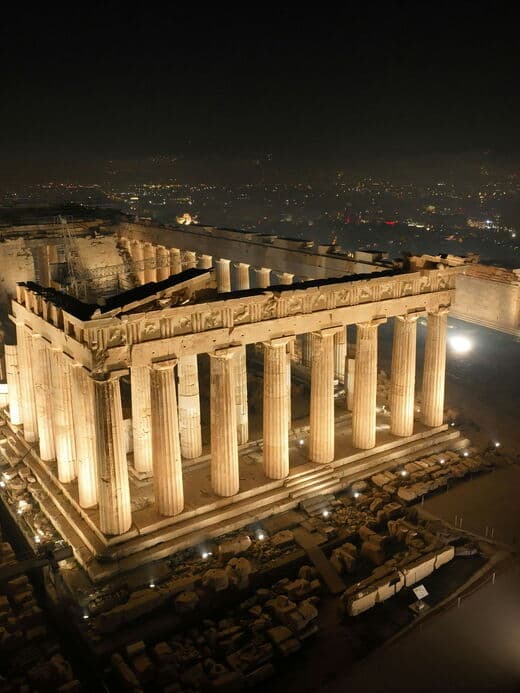
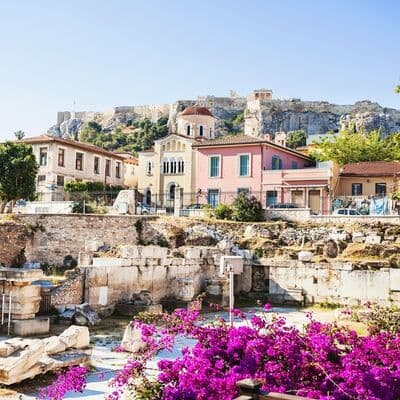
The Plaka neighborhood wraps around the northern slopes of the Acropolis. Yes, it is touristy. But it is touristy for good reasons. The neoclassical buildings with bougainvillea-draped balconies are genuinely beautiful. The pedestrian streets make exploring pleasant. Waking up to views of the Parthenon never gets old.
Expect to pay 120-180 EUR per night for a decent hotel with Acropolis views. The Anafiotika area within Plaka feels like a Cycladic island village, with whitewashed houses and cats lounging on every step. The downside? Restaurant quality is hit-or-miss, with many places relying on foot traffic rather than repeat customers.
Monastiraki: Where History Meets Chaos
Centered around Monastiraki Square, this neighborhood is Athens at its most energetic. The flea market sells everything from genuine antiques to obvious tourist junk. The metro station sits atop ancient ruins visible through glass floors.
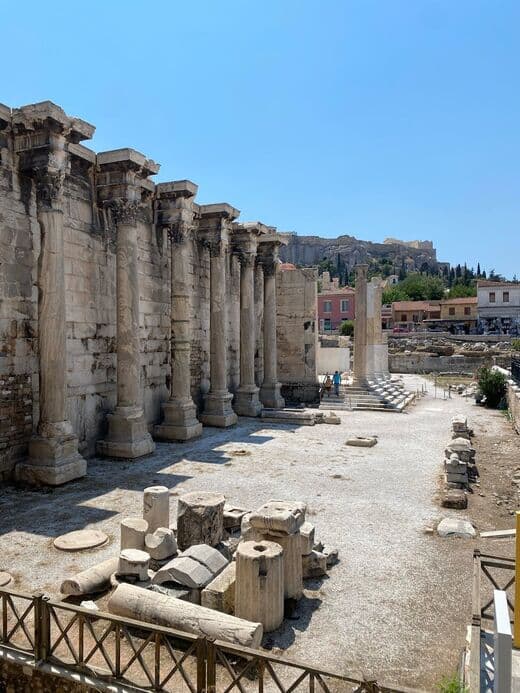
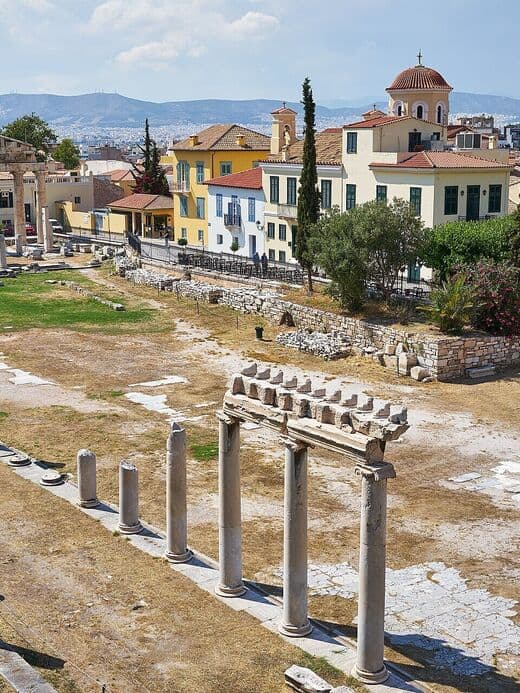
Staying here means noise, especially weekends when bars keep streets alive until dawn. But it also means being steps from the Ancient Agora, the Roman Agora, and Hadrian's Library. Hotels run 90-150 EUR per night.
Psiri: The Nightlife Hub
The Psiri neighborhood was industrial decay two decades ago. Now it is the beating heart of Athenian nightlife, packed with bars, live music venues, and restaurants catering to Greeks rather than tourists.
This is where you stay if your ideal evening involves bar-hopping until 3am. Accommodation is limited to boutique hotels and Airbnbs, typically 80-130 EUR per night. It gets loud at night.
Kolonaki: Upscale and Polished
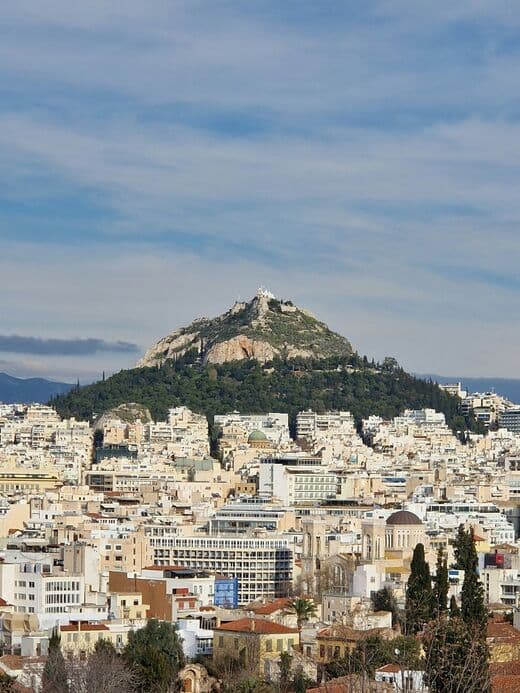
At the foot of Mount Lycabettus, Kolonaki is where wealthy Athenians live. Designer boutiques, high-end restaurants, and perfectly maintained buildings line the streets. If you want quiet evenings and excellent coffee, this is your neighborhood.
Hotels command premium prices, 180-280 EUR per night. The downside is distance from main archaeological sites, about a 20-minute walk to the Acropolis.
Koukaki: The Local Favorite
South of the Acropolis, Koukaki has become the neighborhood of choice for travelers who have done their research. It combines proximity to major sites with a genuinely residential feel. Local bakeries, neighborhood tavernas, and tree-lined streets make you feel less like a tourist.
The Acropolis Museum is a 10-minute walk. Philopappos Hill offers sunset views without crowds. Accommodation ranges 80-140 EUR per night.
Exarchia: Alternative and Authentic
The Exarchia neighborhood is Athens for people who think Athens is too mainstream. The student and anarchist quarter retains a rebellious spirit with political murals and independent bookshops. The National Archaeological Museum sits at its edge.
Staying here means excellent cheap eats and authentic Greek bars. Most accommodation is Airbnb, running 50-90 EUR per night.
Where NOT to Stay
Avoid the area immediately around Omonia Square, especially north and west of the metro station. It still has significant drug activity and feels unsafe after dark. The airport area offers cheap hotels but adds 40 minutes to every journey.
Best Time to Visit Athens
Spring: March to May
This is peak Athens. Temperatures hover between 15-25 degrees Celsius. The hills burst with wildflowers. Ancient sites are pleasant to explore without heat exhaustion. Easter celebrations offer incredible insight into Greek Orthodox traditions with midnight services, fireworks, and lamb roasting everywhere.
The downside: hotel prices climb 20-30% compared to winter, and popular sites get crowded.
Fall: September to November
September and October rival spring for ideal conditions. Summer crowds thin while the sea remains warm for swimming. November brings occasional rain but significantly lower prices. This is also harvest season, meaning fresh olives and new wine at markets like the Central Market.
Summer: June to August
Let me be direct: Athens in July and August is genuinely uncomfortable. Temperatures regularly exceed 35 degrees, sometimes hitting 40. The Acropolis marble radiates heat. Air conditioning is essential.
That said, if summer is your only option, embrace it. Start sightseeing at 8am, retreat to air-conditioned museums by noon, and re-emerge after 6pm. The Odeon of Herodes Atticus hosts evening concerts under the stars.
Winter: December to February
Budget travelers should note that winter Athens offers 30-50% off accommodations, no lines at museums, and a city that feels authentically Greek. Temperatures stay mild, 8-15 degrees, with occasional rainy days. The National Gallery, Benaki Museum, and Byzantine and Christian Museum offer excellent indoor activities.
Athens Itinerary: 3, 5, and 7 Days
3 Days: The Essential Athens
Day 1: Ancient Athens
Start early at the Acropolis, arriving when gates open at 8am. Budget 2-3 hours for the Parthenon, Erechtheion, and Temple of Athena Nike. The morning light on marble is worth sacrificing sleep.
Descend to the Acropolis Museum for context on everything you just saw. The glass floor revealing excavations and top-floor Parthenon gallery justify the 15 EUR entry. Lunch in Koukaki, 12-18 EUR for a full meal.
Afternoon: walk the Ancient Agora, where Socrates actually taught. End the day climbing Areopagus Hill for sunset views, arriving 30 minutes early for a good spot.
Day 2: Markets and Museums
Morning at the National Archaeological Museum, worth 3-4 hours. The Mycenaean gold, Antikythera mechanism, and bronze sculptures justify the 12 EUR entry.
Walk through Exarchia for lunch. Afternoon: explore Monastiraki Square and the flea market. Visit the Roman Agora and Hadrian's Library. Evening: wander through Plaka, then dinner in Psiri.
Day 3: Hills and Gardens
Take the funicular or hike up Mount Lycabettus for panoramic views. Descend through Kolonaki for excellent coffee. Visit the Benaki Museum for Greek culture from prehistory to modern times.
Afternoon: stroll through the National Garden. End at Syntagma Square to watch the changing of the guard. Final evening: rooftop dinner with Acropolis views.
5 Days: Adding Depth
Follow the 3-day itinerary, then add:
Day 4: Specialized Museums
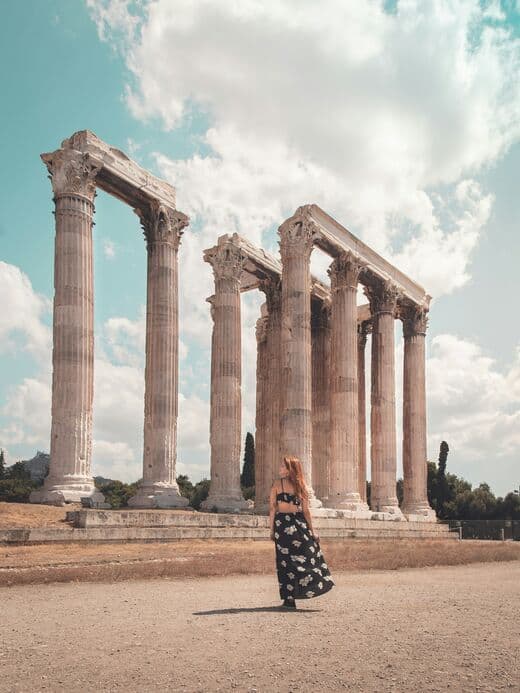
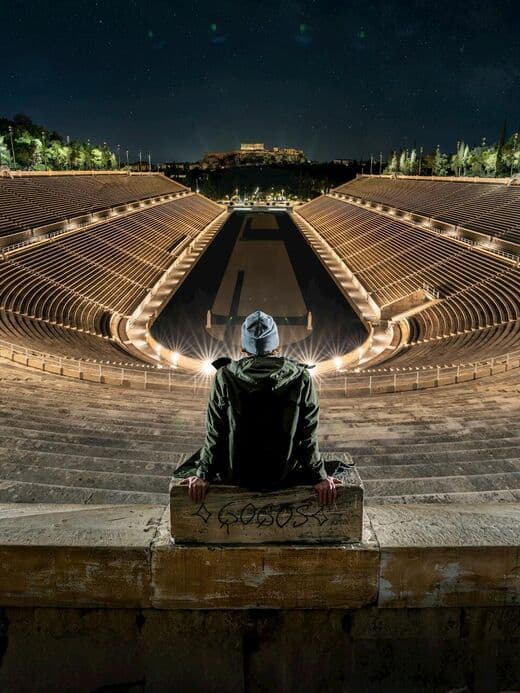
Morning at the Museum of Cycladic Art, home to those distinctive minimalist figurines that influenced Picasso. Visit the Temple of Olympian Zeus and the Panathenaic Stadium, where the first modern Olympics took place in 1896. Afternoon: explore Anafiotika properly, getting lost in its island-village streets.
Day 5: Day Trip to Cape Sounion
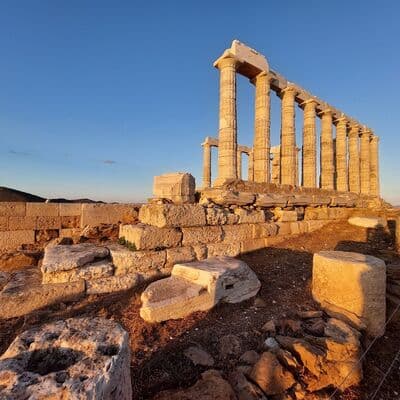
The Temple of Poseidon at Sounion deserves a half-day trip. Buses leave from Athens (2 hours, around 7 EUR each way), or hire a taxi for 100-120 EUR round trip. The temple perches dramatically on cliffs above the Aegean, and sunset here is legendary. Leave Athens by 2pm to arrive with time before evening light.
7 Days: The Complete Experience
Follow the 5-day itinerary, then add:
Day 6: War, Politics, and Modern Greece
Morning at the War Museum, covering Greek military history through World War II and the Civil War. Visit the Byzantine and Christian Museum for the thousand years between ancient and modern Greece.
Afternoon: the Stavros Niarchos Foundation Cultural Center represents contemporary Athens. The Renzo Piano-designed complex houses the National Library and Greek National Opera.
Day 7: Beach Day or Island Escape
Take the tram to Glyfada beaches, about 40 minutes from Syntagma. Or catch a ferry from Piraeus to Aegina (40 minutes, around 15 EUR) or Hydra (90 minutes, around 30 EUR) for an island taste without overnight travel.
Where to Eat in Athens
Street Food and Quick Eats
Souvlaki stands are everywhere, and quality is consistent. Expect 3-4 EUR for a pita wrap stuffed with meat, tomatoes, onions, and tzatziki. Kostas in Syntagma Square has served the same recipe since 1950. Thanasis in Monastiraki is the late-night go-to after bars close.
Koulouri, the circular sesame bread, makes a perfect 1 EUR breakfast. Tyropita and spanakopita from bakeries run 2-3 EUR and sustain you through museum mornings.
Traditional Tavernas
The best tavernas are rarely in tourist zones. In Koukaki, Mavros Gatos serves Greeks celebrating namedays. Expect 15-25 EUR per person for multiple dishes, wine included. In Exarchia, Rozalia offers enormous portions at student prices, 10-15 EUR for a feast. The key indicator: Greek families eating there.
Mid-Range and Fine Dining
For elevated Greek cuisine, try Seychelles in Metaxourgeio, 25-40 EUR per person. Rooftop restaurants with Acropolis views charge premiums but make memorable splurges, 50-70 EUR per person at places like Strofi.
Athens has developed a serious fine dining scene. Spondi offers French-Mediterranean tasting menus from 150 EUR. These require reservations weeks ahead.
Coffee Culture
Greeks invented the frappe, and it remains the default summer caffeine delivery. A coffee at any cafe buys unlimited sitting time. Da Capo in Kolonaki is the classic people-watching perch, 5-6 EUR. For specialty coffee, look for Taf or Mokka in Psiri.
What to Try: Greek Food Essentials
Souvlaki and Gyros: Not the same thing. Souvlaki is grilled meat on skewers, gyros is carved from a rotating spit. Both come wrapped in pita. Try both.
Moussaka: The Greek lasagna, layers of eggplant, potato, ground meat, and bechamel. Heavy and perfect for cool evenings.
Greek Salad: Tomatoes, cucumbers, onions, olives, feta, olive oil. No lettuce. Quality of ingredients matters enormously.
Tzatziki: Yogurt, cucumber, garlic, olive oil. Far thicker and more garlicky than supermarket versions abroad.
Grilled Octopus: Tender tentacles charred over coals, dressed with olive oil and lemon. At good tavernas, transcendent.
Loukoumades: Fried dough balls drizzled with honey, cinnamon, and walnuts. Best eaten hot from specialized shops.
Frappe and Freddo: The cold coffee drinks essential for summer. A frappe is shaken instant coffee, freddo uses espresso. Order metrio for medium sweetness.
Tsipouro and Ouzo: Anise-flavored spirits served with small plates. Ouzo is sweeter; tsipouro is preferred by locals. Both turn cloudy with ice.
Greek Wine: Assyrtiko whites from Santorini and Xinomavro reds from the north rival anything from France or Italy.
Local Secrets: 12 Insider Tips
1. The Combined Ticket: For 30 EUR, covers the Acropolis, Ancient Agora, Roman Agora, Hadrian's Library, Temple of Olympian Zeus, and more. Valid for 5 days. Saves money and lets you skip ticket lines at secondary sites.
2. Free Museum Days: First Sunday of the month from November through March means free entry to all state museums and sites.
3. Philopappos Hill for Sunset: Everyone goes to Areopagus. Philopappos offers equally spectacular views with a fraction of the crowds.
4. The Best-Preserved Temple: The Temple of Hephaestus in the Agora is the best-preserved ancient Greek temple anywhere, yet receives far fewer visitors than the Acropolis.
5. Neighborhood Markets: Weekly laiki agora (farmers markets) in residential neighborhoods offer produce at half supermarket prices.
6. The Acropolis North Slope: A free path along the north side connects the Agora to Anafiotika. Ancient caves and carved shrines line the route, almost unknown to tourists.
7. Late-Night Bakeries: Greek bakeries often stay open until midnight, producing fresh bread. The smell leads to irresistible tyropita purchases.
8. Working-Class Tavernas: Neighborhoods like Kallithea have tavernas where locals eat enormous meals for 8-10 EUR.
9. Skip Plaka Restaurants: Walk 10 minutes to Koukaki or Pagrati for better meals at half the price.
10. Metro Archaeology: Syntagma and Acropolis stations have glass-encased displays of artifacts found during construction.
11. Beach Escapes: You can swim in the Aegean within 40 minutes. Tram lines run to beaches at Glyfada and Voula (4-8 EUR entry).
12. The Airport Bus: The X95 runs 24 hours for 5.50 EUR versus 10 EUR for metro. Takes about an hour but runs when metro does not.
Transport and Connectivity
Getting from the Airport
Metro Line 3: Direct to Syntagma in 40 minutes. Costs 10 EUR one-way, 18 EUR return within a week. Trains run every 30 minutes from 6:30am to 11:30pm.
X95 Express Bus: 24-hour service to Syntagma. Costs 5.50 EUR, takes 60-90 minutes. Good for late-night arrivals.
Taxi: Fixed fare of 38 EUR to city center (54 EUR midnight to 5am). Takes 30-50 minutes.
Getting Around
The Athens metro is clean and efficient. Single tickets cost 1.20 EUR, valid for 90 minutes. A 5-day tourist ticket costs 8 EUR and includes one airport journey. The tram runs along the coast to Voula for beach access.
Yellow taxis start at 1.29 EUR with about 0.74 EUR per kilometer. Uber operates as a licensed taxi service. Beat is the popular local ride-hailing app with cashless payment.
Ferries and Connectivity
Piraeus port is 20 minutes from center by metro. Book ferries through Ferryhopper. A fast ferry to Mykonos takes 2.5 hours and costs 50-80 EUR.
For mobile data, purchase a prepaid SIM from Cosmote, Vodafone, or Wind for 15-20 EUR with 10GB. EU residents benefit from roaming regulations.
Useful Apps: Google Maps for navigation, Beat for rides, Ferryhopper for ferries, Google Translate for Greek menus.
Conclusion: Is Athens Right for You?
Athens suits travelers who value substance over polish. This is not a city of pristine facades and efficient service, but one of layered history, passionate people, and unexpected discoveries. If you need everything to run smoothly, you will find Athens frustrating. If you can embrace improvisation, you will fall in love.
Three days covers essential ancient sites and gives you a neighborhood taste. Five days allows day trips and deeper exploration. Seven days or more lets you slow to Athenian pace, spending long afternoons in cafes.
Come for the ruins but stay for the rooftops. The Parthenon at sunrise, dinner overlooking the Agora at sunset, midnight souvlaki after too much tsipouro, these moments make Athens unforgettable.