About
Ecuador: The Complete Travel Guide for English-Speaking Travelers
Ecuador is a country that somehow manages to contain an entire planet within its borders. Picture this: you wake up and have breakfast in the colonial heart of Quito at 9,350 feet above sea level, descend into the Amazonian rainforest by lunchtime, and find yourself on a Pacific beach by dinner. All of this happens in a country roughly the size of Colorado. Ecuador is not just compact; it is concentrated. This nation boasts more biodiversity per square mile than anywhere else on Earth. Here you will find the Galapagos Islands, a living laboratory of evolution that inspired Darwin himself. You will encounter snow-capped volcanoes that pierce the clouds, and indigenous Amazonian tribes who maintain traditions their ancestors practiced thousands of years ago.
But Ecuador is far more than just nature. This is a country with an extraordinarily rich history: the Inca Empire left its mark here long before the Spanish arrived, and the colonial legacy transformed cities like Quito and Cuenca into open-air museums. The historic center of Quito was among the very first places inscribed on the UNESCO World Heritage list, and for good reason. Here you will find churches adorned with so much gold it seems surreal, plazas where commerce continues much as it did centuries ago, and winding streets you could wander for hours without exhausting their charms.
Ecuador uses the US dollar as its official currency, which is an enormous convenience for American travelers and anyone who prefers not to deal with currency exchange. Prices here rank among the most affordable in South America: a full meal at a local restaurant costs three to five dollars, and you can live quite comfortably on thirty to fifty dollars a day without severe penny-pinching. Yet the tourism infrastructure is surprisingly well-developed, from world-class hostels to ecological lodges in the heart of the jungle.
What makes Ecuador particularly attractive for travelers in 2026? First, the country has been actively rebuilding its tourism infrastructure following the pandemic years. The famous Nariz del Diablo train, an engineering marvel from the early twentieth century that carries passengers along a zigzagging route through the Andes, has resumed regular service. Second, Ecuador remains one of the few countries in the region that welcomes visitors from almost anywhere in the world without requiring a visa. Americans, Canadians, Brits, Australians, and EU citizens can all enter for up to ninety days with just a passport. Third, you can still find authentic experiences here that have not been spoiled by mass tourism, especially if you venture beyond the classic tourist routes.
This country truly has something for everyone. Nature lovers will find paradise here: from whale watching off the coast to volcano trekking and immersion in primeval jungle. History and culture enthusiasts will discover endless colonial cities, Inca archaeological sites, and living traditions of indigenous peoples. Adventure seekers can try rafting, canyoning, paragliding, and volcano climbing. Food tourists will delight in everything from coastal ceviche to guinea pig in the highlands and exotic Amazonian fruits. And all of this comes at reasonable prices, in a comfortable climate (there are no dramatic seasonal shifts on the equator), and among friendly locals who genuinely welcome visitors.
For Americans specifically, Ecuador offers several unique advantages. The dollar means you will never need to calculate exchange rates or worry about fluctuating currency values. Flight times are reasonable: Miami to Quito takes just over four hours, making long weekend trips entirely feasible for those on the East Coast. The three-hour time difference from Eastern Standard Time means you will not suffer severe jet lag. TSA PreCheck and Global Entry work at Ecuadorian airports for your return, making the journey home smoother. And because Ecuador has become a popular retirement destination for Americans, you will find English spoken more widely than in many other South American countries, particularly in Cuenca and tourist areas.
British travelers will appreciate that Ecuador sits in a time zone just five hours behind London during winter (six during British Summer Time), making communication with home relatively convenient. Direct flights do not exist from the UK, but connections through Madrid with Iberia or through US hubs with American and United are straightforward. The historic architecture will feel familiar to anyone who has explored Spanish colonial heritage, yet distinctly different from anything in Europe. Australians face a longer journey, typically routing through Los Angeles or Dallas, but Ecuador makes an excellent addition to a broader South American itinerary and offers experiences that simply do not exist closer to home.
Canadian travelers will find Ecuador remarkably accessible. Air Canada and various US carriers offer competitive routing through Houston, Miami, or Atlanta. The climate offers a welcome escape from Canadian winters, and the country is small enough to explore thoroughly in two to three weeks while still allowing for spontaneity. Many Canadians have discovered Ecuador as a winter escape destination, creating small expatriate communities that make the transition even easier.
Regions of Ecuador: Which One to Choose
Ecuador traditionally divides into four completely distinct regions: the Costa (Pacific coast), the Sierra (Andean highlands), the Oriente (Amazon jungle), and the Galapagos Islands. Each represents a separate world with its own climate, culture, cuisine, and rhythm of life. Understanding these differences is critical for planning your trip because Ecuador may be small in area but is enormous in diversity.
Quito and Surroundings
Quito serves as Ecuador's capital and the mandatory entry point for most travelers. The city occupies a narrow valley at 9,350 feet elevation, stretching nearly twenty-five miles from north to south but only a few miles wide. This creates unique urban geography: wealthy northern districts, the historic center in the middle, and working-class southern neighborhoods. For tourists, the main attraction is the historic center, one of the largest and best-preserved in Latin America.
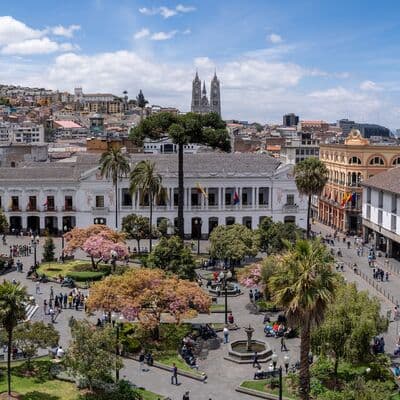
Quito's historic center contains more than forty churches and chapels, dozens of monasteries, palaces, and plazas built between the sixteenth and eighteenth centuries. Plaza Grande (Independence Square) forms the heart of the city, surrounded by the main landmarks: the presidential palace, the cathedral, the archbishop's palace. From here you can walk to the Church of La Compania de Jesus, a baroque masterpiece whose interior is covered with seven tons of gold leaf. This is not an exaggeration: when you step inside, your eyes literally ache from the brilliance. Nearby stands the Basilica del Voto Nacional, a Gothic cathedral whose roof you can climb via steep staircases and narrow passages for stunning views of the city.
Modern Quito tells a completely different story. The La Mariscal and La Floresta neighborhoods overflow with hipster cafes, craft beer bars, contemporary art galleries, and restaurants serving innovative cuisine. This is also where you will find the city's main nightlife. The Gonzalez Suarez and Cumbaya areas function almost as suburbs, where the local middle class and expatriates live among shopping centers, international restaurants, and a more relaxed atmosphere.
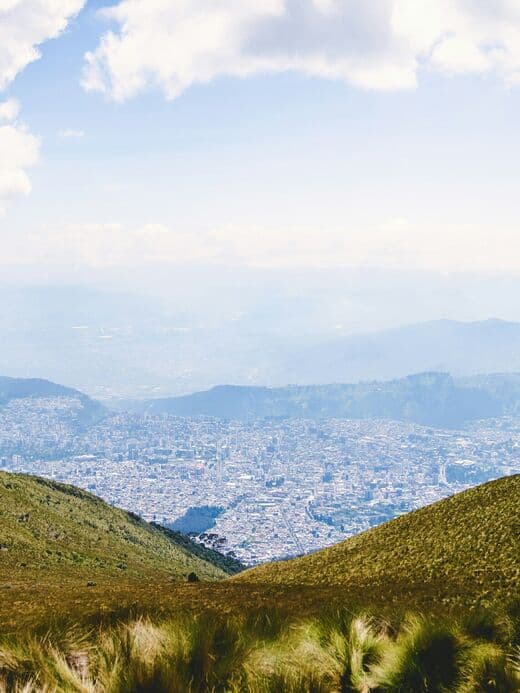
The TeleferiQo is a cable car that lifts you from the city's edge to 13,450 feet in just minutes. This ranks among the highest aerial lifts in the world, and the views from the top station are incredible: all of Quito spreads below like a model city, and on clear days you can see several volcanoes simultaneously including Cotopaxi, Cayambe, and Antisana. At the top you can simply walk the trails or continue climbing to the summit of Rucu Pichincha at 15,407 feet, which constitutes a full day's trek.
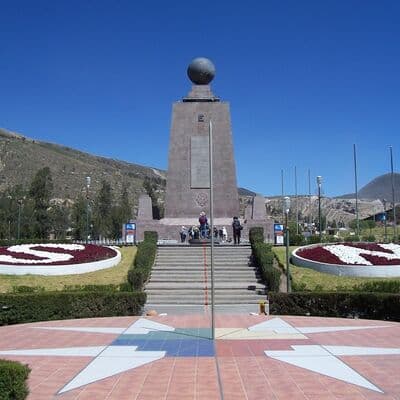
About thirty minutes from Quito lies Mitad del Mundo, the Middle of the World, a tourist complex on the equator. The main monument was built in 1936 at the location that an eighteenth-century French expedition determined as the equatorial crossing point. Later measurements revealed that the actual equator runs about 240 meters to the north, where the Intinan Museum now stands. Here you can see the classic equatorial experiments: water supposedly swirling in different directions on either side of the line, balancing eggs on nails, and similar demonstrations. The scientific validity of these experiments is questionable, but entertainment is guaranteed.
The surroundings of Quito offer abundant day trip options. Otavalo is an indigenous town to the north, famous for one of the largest markets in South America, where you can buy textiles, jewelry, Panama hats, and virtually anything else imaginable. The Saturday market is the main event, but vendors operate throughout the week. Papallacta features thermal hot springs in the mountains, an ideal place for recovery after a long flight or strenuous trek. Mindo harbors a cloud forest populated by hundreds of bird and butterfly species, with waterfalls and zip lines for the adventurous.
Quito's altitude demands respect. At nearly 9,500 feet, you will likely feel some effects upon arrival: shortness of breath, headaches, fatigue, or difficulty sleeping. The key is to take it easy for the first day or two, stay hydrated, avoid alcohol, and let your body adjust. Most people acclimate within forty-eight hours. If you are flying in from sea level, consider spending your first day doing low-key activities before tackling any strenuous sightseeing.
Safety in Quito requires common-sense precautions. The historic center is generally safe during daylight hours thanks to a strong police presence, but exercise caution after dark and avoid isolated areas. The tourist-friendly La Mariscal district, while popular with visitors, also attracts pickpockets and petty criminals, particularly at night. Use Uber or registered taxis rather than hailing cabs on the street. Keep valuables secure and avoid displaying expensive electronics or jewelry. The northern neighborhoods and Cumbaya are generally safer, though standard urban awareness applies everywhere.
Cuenca and the Southern Andes
Cuenca is Ecuador's third-largest city but arguably its most charming. If Quito is a colonial capital with a megacity overlay, Cuenca represents pure colonial perfection, nearly untouched by time. The city sits on the banks of the Tomebamba River in a valley at 8,400 feet elevation, surrounded by green mountains. The climate here is milder than Quito, and locals call it eternal spring.
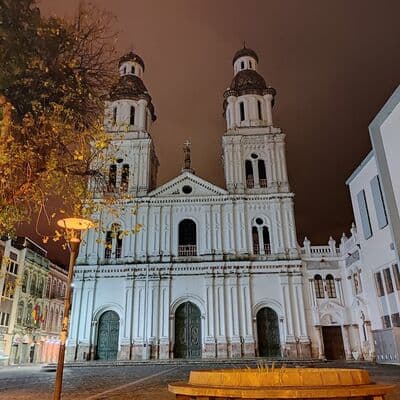
The historic center of Cuenca features cobblestone streets, flower-draped balconies, white walls with red-tiled roofs, and churches on every corner. The main attraction is the New Cathedral (Catedral de la Inmaculada Concepcion), whose construction began in 1885 and continued for nearly ninety years. The cathedral is visible from everywhere thanks to its blue domes covered with glazed tiles imported from Czechoslovakia. Nearby stands the sixteenth-century Old Cathedral, which now functions as a museum of religious art.
Cuenca has earned fame as a city of artisans. Here they produce the famous Panama hats, which are actually Ecuadorian despite the misleading name. The hats got their name because they were sold to workers building the Panama Canal. In workshops throughout the city you can observe the entire weaving process and purchase hats directly from the craftspeople. They also produce ceramics, leather goods, and metalwork here. Cuenca's markets rank among the best in the country for shopping: less tourist frenzy than Otavalo and more authentic selection.
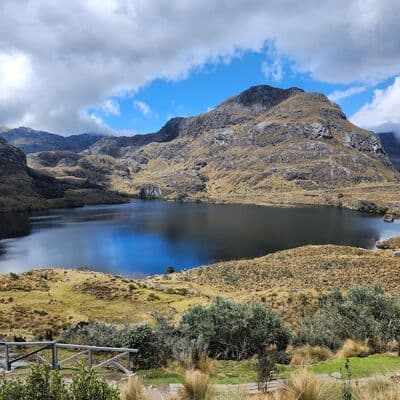
About an hour's drive from Cuenca lies Cajas National Park, a unique high-altitude landscape containing more than 230 glacier-formed lakes. The park sits at elevations ranging from 10,170 to 14,600 feet, and the scenery feels almost Martian: yellow-brown grasses, black rocks, mirror-like lakes, low clouds clinging to peaks. This makes an excellent destination for day hiking, though it requires acclimatization since the altitude will challenge anyone not already adjusted.
Cuenca has attracted many expatriates, particularly retirees from the United States and Canada. This has created an interesting cultural environment: international restaurants are easy to find, English-language services abound, and products familiar to Western consumers are readily available. For travelers this is convenient, though some feel the city has lost some authenticity as a result. The expat community has also driven up real estate prices, though costs remain modest by North American standards.
The journey between Quito and Cuenca offers two main options. Flying takes about fifty minutes and costs sixty to one hundred dollars each way. The bus journey requires eight to ten hours and costs twelve to fifteen dollars but passes through spectacular scenery including the Avenue of the Volcanoes and the town of Alausi, where you can catch the famous Nariz del Diablo train. Many travelers fly one direction and bus the other to experience both.
Banos: The Adventure Capital
Banos de Agua Santa (literally Bath of Holy Water) is a small town on the eastern slopes of the Andes, wedged between mountains and jungle. This is officially recognized as Ecuador's adventure capital, and rightfully so. Here you can go rafting, canyoning, bungee jumping, paragliding, horseback riding, and mountain biking, and that barely scratches the surface. The town is compact with everything within walking distance, and the atmosphere is relaxed and youthful.
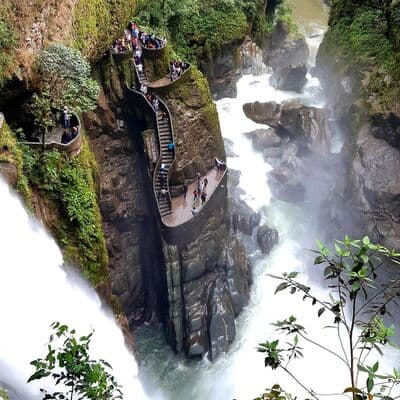
The main natural attraction is the Ruta de las Cascadas (Waterfall Route), a road stretching about twelve miles along which more than a dozen waterfalls of various sizes cascade down the mountainsides. The most impressive is Pailon del Diablo (The Devil's Cauldron), which requires descending steep trails and staircases to reach. The waterfall crashes into a narrow gorge, and you can approach almost close enough to touch it. Be prepared to get soaked. You can ride the route by bicycle (rentals are everywhere) or take a chiva, an open-sided bus that stops at each waterfall.
The Casa del Arbol swing, often called the Swing at the End of the World, has become an iconic photo destination. These are giant swings suspended from a tree on the edge of a cliff, with views of the Tungurahua volcano. On clear days the sensation of swinging over the abyss is extraordinary. The location went viral on Instagram, so expect crowds, especially on weekends. The best time to visit is early morning on a weekday.
The thermal springs that gave the town its name still operate. Several complexes range from simple municipal pools to spa hotels. The water is genuinely thermal, heated by volcanic activity. Speaking of volcanoes: Tungurahua, looming over the town, is an active volcano that regularly smokes and occasionally erupts. The last major eruption occurred in 2016. This sounds frightening, but the warning system is well-established, and local residents have long adapted to living in the volcano's shadow.
Banos serves as an excellent base for trips into the Amazon. The jungle lies just a few hours away, and many tour operators offer two to three day tours with overnight stays in lodges. This is more convenient and cheaper than traveling directly into the deep Amazon from Quito. The adventure industry in Banos is well-established and generally safe, though you should verify that operators have proper certifications and insurance before booking activities like rafting or canyoning.
Budget travelers will find Banos particularly appealing. Hostel beds start around eight dollars, meals at local restaurants cost two to five dollars, and even organized adventure activities are reasonably priced by international standards. A day of rafting costs around thirty to fifty dollars, and bike rentals run five to ten dollars for the day. The town has a backpacker-friendly vibe with plenty of budget accommodation and eating options.
The Galapagos Islands
The Galapagos Islands are what many people come to Ecuador specifically to see. This archipelago of thirteen major islands and numerous smaller ones, located six hundred miles off the mainland coast, became the symbol of evolution thanks to Charles Darwin, who visited in 1835. It was here, observing differences between finches on different islands, that he began formulating his theory of natural selection.
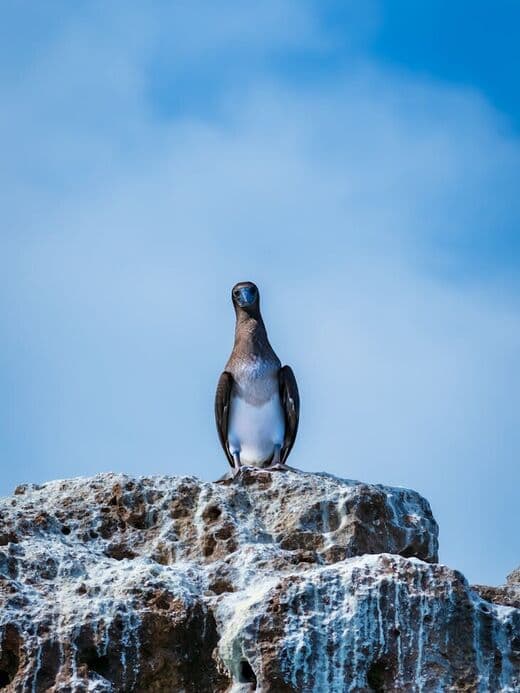
The Galapagos are unique not only historically but biologically. The animals here do not fear humans because they simply never had natural predators and never developed that instinct. You can approach a sea lion within arm's reach, snorkel with penguins and sea turtles, observe the mating dances of blue-footed boobies, or watch giant tortoises that live more than a hundred years.
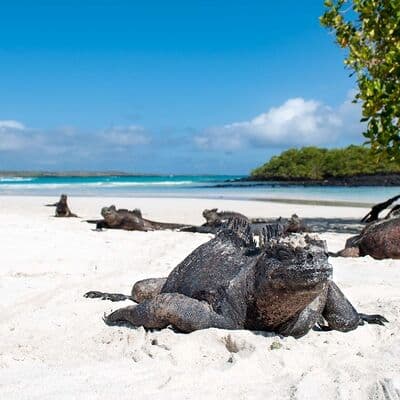
On Santa Cruz Island you will find the Charles Darwin Research Station, where you can learn about species conservation programs and see giant tortoises in the breeding center. Tortuga Bay on the same island is one of the archipelago's best beaches, where marine iguanas bask on white sand and reef sharks (harmless to humans) swim in the waters. The El Chato Tortoise Reserve is where giant tortoises live in their natural habitat rather than enclosures.
Two main approaches exist for exploring the Galapagos: cruises and land-based stays. Cruises cost more, starting from three thousand to four thousand dollars for a week, but allow you to visit remote islands inaccessible to day trips. Land-based stays are cheaper: you can base yourself on one of the three inhabited islands (Santa Cruz, San Cristobal, or Isabela) and take day excursions. This costs roughly one hundred fifty to two hundred fifty dollars per day including accommodation, meals, and tours. Still not cheap, but significantly more accessible than cruises.
Important limitations apply: the national park entry fee costs one hundred dollars (plus twenty dollars for a transit control card), many sites can only be visited with a licensed guide, and some islands are completely closed to tourists. These restrictions protect the fragile ecosystem, and visitors must accept them. Booking ahead is essential during peak seasons (June through September and December through January), when both accommodation and tours fill quickly.
For American travelers, the Galapagos involve some specific logistics. You must fly through either Quito or Guayaquil, both of which have good connections from major US cities. Miami offers the most direct routing, with multiple daily flights to both cities. From Houston, Atlanta, and New York JFK, connections are also straightforward. Plan to arrive in mainland Ecuador the day before your Galapagos flight to avoid any risk of missed connections. The return journey works similarly, though same-day connections back to the US are possible with careful scheduling.
British and Australian travelers should plan for longer transit times. Most will route through US hubs or Madrid. Given the investment of time and money to reach the Galapagos, most international visitors spend at least five to seven days on the islands, often combining with a week or more on the mainland. This makes the journey worthwhile and allows time to truly appreciate what makes this archipelago so extraordinary.
Cotopaxi and the Avenue of the Volcanoes
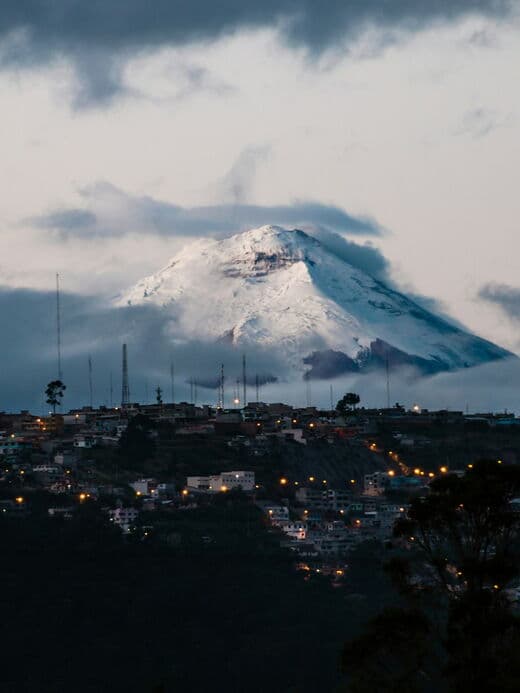
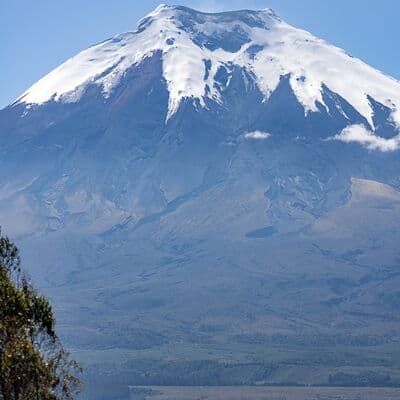
Cotopaxi is one of the highest active volcanoes in the world at 19,347 feet and serves as the principal symbol of Ecuador's Andes. Its perfectly symmetrical cone, covered in eternal snow, is visible from Quito on clear days. The volcano sits at the center of the national park that bears its name, offering diverse activities from simple walks across the paramo (high-altitude grasslands) to summiting the peak.
Cotopaxi volcano represents a serious mountaineering undertaking. The technical difficulty is not extreme (steep snow slopes but no rock climbing), yet the altitude makes the ascent challenging. Groups typically depart around midnight to reach the summit by sunrise before the snow starts to soften. The climb requires good physical conditioning and acclimatization, and must be accompanied by a guide. Less-prepared tourists can ascend to the refugio (shelter) at 15,750 feet and explore the surrounding area, which itself provides an impressive experience.
South of Cotopaxi lies Laguna Quilotoa, a crater lake of incredible turquoise-green color. The lake fills the caldera of an ancient volcano at an elevation of 12,841 feet. The descent to the water along a steep trail takes about thirty minutes, the climb back takes an hour or more. You can rent a kayak and paddle across the lake or simply sit on the crater rim and meditate on this otherworldly beauty.
The region between Quito and Riobamba is called the Avenue of the Volcanoes, a name coined by German naturalist Alexander von Humboldt in the nineteenth century. Here, along a narrow inter-mountain corridor, dozens of volcanoes line up: Chimborazo (20,549 feet, Ecuador's highest point and, technically, the point on Earth's surface farthest from the planet's center due to the equatorial bulge), Cayambe, Antisana, El Altar, and others. This is paradise for mountaineers and trekkers, but even casual travelers will gain tremendous impressions from traveling through this region.
For those interested in climbing, Ecuador offers some of the most accessible high-altitude mountaineering in the world. Unlike peaks in the Himalayas or even Denali, Cotopaxi and Chimborazo can be climbed in just two days from Quito, without weeks of acclimatization or expedition-style logistics. Numerous guiding companies operate out of Quito, offering packages that include transportation, equipment, and certified guides. Prices range from two hundred to four hundred dollars for a two-day Cotopaxi climb, with Chimborazo commanding somewhat higher prices. However, these are serious mountains requiring fitness and some prior experience with altitude. The summit success rate on Cotopaxi runs about sixty percent, with weather and altitude sickness being the main factors that turn climbers back.
The Ecuadorian Amazon
The Ecuadorian Amazon (the Oriente) occupies nearly half the country's territory but contains only about five percent of its population. This is one of the most biodiverse zones on the planet: a single hectare of forest here contains more tree species than all of North America combined. Here you will find jaguars, giant otters, pink river dolphins, anacondas, thousands of bird species, monkeys, and insects.
Yasuni National Park represents the crown jewel of Ecuador's Amazon, inscribed on UNESCO's list of biosphere reserves. Scientists have recognized it as one of the richest places on Earth in terms of species density. The park remains home to some of the last uncontacted tribes on the planet, the Tagaeri and Taromenane, who have no interaction with the outside world. Tourist access to the park is limited but possible through licensed operators with lodges in the buffer zone.
Tena and the Kichwa communities offer a more accessible introduction to the Amazon. Tena is a small city at the confluence of two rivers, from which jungle trips are easily organized. Local Kichwa communities offer cultural tours where you can learn about traditional plant uses, try chicha (a fermented beverage made from yuca), participate in shamanic ceremonies, or simply walk through the forest with a local guide who will show you animals and explain life in the jungle.
A typical Amazon tour lasts three to five days and includes overnight stays in ecological lodges, daytime and nighttime jungle walks, birdwatching and wildlife observation, visits to indigenous communities, piranha fishing, and swimming in lagoons. Prices start from eighty to one hundred dollars per day for basic tours and can reach five hundred dollars or more for premium lodges offering five-star hotel comfort in the middle of the jungle.
The Amazon experience varies dramatically depending on where you go and how much you spend. Budget options typically involve lodges closer to towns with shorter jungle walks and less chance of seeing rare wildlife. Premium options put you deeper in the wilderness, often requiring small plane or boat access, with better chances of spotting elusive species like tapirs, jaguars, or giant river otters. Multi-day tours starting from Coca (officially Puerto Francisco de Orellana) generally reach more remote and pristine areas than those departing from Tena or Puyo.
Health considerations in the Amazon require attention. Antimalarial medication is recommended though not strictly required for most tourist areas. Yellow fever vaccination is essential. Bring plenty of insect repellent with DEET, long sleeves and pants, and consider permethrin treatment for clothing. The humidity is intense, so quick-dry fabrics work best. Most lodges provide rubber boots for jungle walks since trails are often muddy or flooded.
The Pacific Coast
The Costa, Ecuador's Pacific coast, remains the least-visited region by international tourists, and for several reasons. First, it is hot and humid most of the year. Second, infrastructure is less developed than in the highlands. Third, in 2025 and 2026 some coastal areas (particularly the Esmeraldas province to the north and areas around Guayaquil) have experienced security issues related to drug cartel activity.
Nevertheless, the coast deserves attention. Montanita is the legendary surfer and backpacker village where eternal party vibes reign. Puerto Lopez serves as the departure point for whale watching (season runs June through October) and visits to Isla de la Plata, sometimes called the poor person's Galapagos due to similar fauna. Salinas is a resort town with high-rises and beaches, popular with Ecuadorian vacationers.
Guayaquil, Ecuador's largest city and main port, is not the most touristic destination but can be useful as a transit hub. Flights to the Galapagos from here are often cheaper than from Quito, and the Malecon 2000 waterfront promenade and Seminario Park with iguanas freely wandering among tourists deserve a few hours of exploration.
Coastal Ecuador offers excellent surf conditions at various spots. Montanita draws the biggest crowds but beginners might prefer the mellower breaks at Canoa or Mompiche. The water is warm enough for boardshorts most of the year, though bring a light wetsuit for the cooler months (June through November). Surf camps and schools abound, with week-long packages starting around two hundred fifty to four hundred dollars including accommodation, lessons, and board rental.
Security along parts of the coast requires caution. The Esmeraldas province near the Colombian border is best avoided entirely. The stretch between Guayaquil and the Peruvian border has also seen increased criminal activity. However, the main tourist areas of Montanita, Puerto Lopez, and Salinas remain generally safe with normal precautions. Do not travel between cities at night, do not display valuables, and stay in established tourist zones.
Natural Wonders of Ecuador
Ecuador ranks among the seventeen megadiverse countries in the world. Despite its small size (109,484 square miles, smaller than Nevada), the country encompasses dozens of climate zones and ecosystems. More than 1,600 bird species are registered here (more than in the United States and Canada combined), roughly 350 mammal species, 400 amphibian species, and countless plants. The reason for such richness lies in Ecuador's unique geographic position: the equator, the Andes, the Amazon, and the Pacific Ocean all meet in this tiny territory.
Volcanoes and Highlands
The Andes divide Ecuador into two parallel mountain chains, the Western and Eastern Cordilleras, between which lies a narrow valley containing the country's main cities. Along these ridges stand the volcanoes: about thirty potentially active and dozens extinct. Climbing volcanoes represents one of Ecuador's premier adventures.
Cotopaxi (19,347 feet) is the most popular for climbing, though far from the highest. Its appeal lies in the perfect conical shape and relative technical simplicity. Chimborazo (20,549 feet) is the country's highest peak and requires more serious preparation. Cayambe (19,000 feet) is the only volcano in the world through which the equator passes and on whose summit snow lies. Antisana, El Altar, and Sangay are less visited but no less impressive peaks for those seeking adventure away from crowds.
The paramo is a unique high-altitude ecosystem found only in the tropical Andes. These are wet grasslands at elevations of 10,000 to 14,750 feet, covered with specific plants like frailejones (giant rosettes resembling aliens from another world) and polylepis (dwarf trees covered in moss). The paramo looks extraterrestrial, especially in fog, and serves as the crucial water source for cities below.
Acclimatization is essential before attempting any high-altitude activities. Most experts recommend spending at least two to three days at Quito's elevation (9,350 feet) before ascending higher. If you plan to climb Cotopaxi or another major peak, consider scheduling an acclimatization hike to a lesser elevation first, such as a walk around Laguna Quilotoa or in Cajas National Park. Diamox (acetazolamide) can help prevent altitude sickness and is available by prescription in the US or over the counter in Ecuador. Stay hydrated, avoid alcohol for the first few days, and do not hesitate to descend if you experience severe symptoms.
Cloud Forests
On the western slopes of the Andes, where humid Pacific air rises and condenses, cloud forests form one of the planet's richest ecosystems. Trees here are draped with mosses, lianas, orchids, and bromeliads. Mist swirls between the trunks, creating a mystical atmosphere.
Mindo is the most accessible cloud forest, just two hours from Quito. More than 500 bird species are registered here, including dozens of hummingbird species that you can observe at feeders in numerous lodges. Spectacled bears, ocelots, and countless butterfly and orchid species also inhabit these forests. Activities include birdwatching, zip lines, waterfall hikes, river tubing, and visits to chocolate factories (cacao grows on the lower slopes).
Intag and Choco are less touristic cloud forest regions north of Quito. Here you can find wilder nature and support local communities developing ecotourism as an alternative to mineral extraction. These areas offer a more off-the-beaten-path experience for those willing to venture beyond the established tourist circuits.
Birdwatchers will find Ecuador an absolute paradise. The country's bird list exceeds that of any other country of similar size, and many lodges cater specifically to birders with expert guides, feeding stations, and early morning excursions. The Tandayapa Valley near Mindo is particularly famous for mixed flocks and rare species. Further afield, the eastern slope cloud forests around Cosanga and Guango offer excellent chances to see cock-of-the-rock and other spectacular species.
Amazonian Rainforests
The Ecuadorian Amazon represents the lungs of the planet in miniature. Although Ecuador's portion comprises less than two percent of the entire Amazon basin, it ranks among the most biodiverse. Yasuni National Park has been recognized by scientists as one of the richest places on Earth in terms of species per unit area.
A typical day in an Amazon lodge includes early rising (the best time for wildlife observation), a walk along jungle trails with a naturalist guide, canoeing through flooded forests, watching parrots at mineral licks (clay exposures where birds gather to eat clay that neutralizes toxins in their diet), and nighttime excursions with flashlights searching for caimans, tarantulas, and night monkeys.
The Amazon offers one of Ecuador's most transformative travel experiences. Something about being surrounded by primary rainforest, far from roads and internet, listening to the symphony of insects and birds, shifts your perspective on the natural world. Whether you choose a basic three-day tour or a week at a luxury lodge, the jungle will leave an impression.
Galapagos Ecosystems
The Galapagos are not simply islands with unusual animals. They are a living laboratory of evolution where you can witness with your own eyes how geographic isolation leads to the emergence of new species. Each island has its unique life forms: the giant tortoises on Santa Cruz differ from those on Isabela, the blue-footed boobies of North Seymour have their particular behavioral patterns.
The underwater world of the Galapagos is no less impressive. The cold Humboldt Current mixes with warm equatorial waters, creating unique conditions. Here you can swim with sea lions, marine iguanas (the only lizards in the world that feed in the sea), giant sea turtles, reef sharks, and manta rays. For divers, the Galapagos rank among the best places in the world: Darwin and Wolf islands are famous for encounters with whale sharks and schools of hammerhead sharks.
Snorkeling in the Galapagos requires no certification and offers extraordinary experiences. Most day tours include snorkeling stops where you will share the water with sea lions, marine iguanas, sea turtles, and countless fish. The water temperature varies by season: warmer from January through May (around 72 to 77 degrees Fahrenheit), cooler from June through December (around 64 to 72 degrees). A thin wetsuit or rash guard helps during the cooler months. Underwater cameras are highly recommended since you will want to document the incredible marine life.
When to Visit Ecuador
Ecuador sits on the equator, which means there are no pronounced seasonal temperature variations. However, differences in elevation and the influence of ocean currents create several microclimates, and the best time to visit depends on which regions you plan to explore.
Highlands (Sierra)
In the Andean cities of Quito, Cuenca, and Banos, the climate remains relatively stable year-round. Daytime temperatures typically range from 59 to 72 degrees Fahrenheit, dropping to 46 to 50 degrees at night. The dry season (less rain) runs from June through September and from December through February, but even during the wet season, precipitation usually falls in the afternoon as brief intense showers while mornings remain clear. For volcano climbing, the best time is December through February when weather is most stable.
Coast (Costa)
The Pacific coast has two distinct seasons. The wet season (December through May) brings hot weather (82 to 90 degrees Fahrenheit), rain, and warmer ocean water. The dry season (June through November) is cooler (73 to 81 degrees), with morning fog but less rain. Beach vacation is better during the wet season despite the rain. Whale watching runs June through October.
Amazon (Oriente)
The jungle is hot (77 to 90 degrees Fahrenheit) and humid year-round. Rain falls constantly, but the slightly less rainy period runs from September through December. However, rain in the jungle is part of the experience and rarely ruins impressions. If you want to see more wildlife, choose the period when water levels are lower (October through January): animals concentrate around remaining water sources.
Galapagos Islands
The Galapagos have two seasons. The warm wet season (December through May) brings air temperatures of 77 to 86 degrees Fahrenheit, water temperatures of 73 to 79 degrees, brief rain showers, and vibrant natural colors. The cool dry season (June through November) sees air temperatures of 68 to 77 degrees, water temperatures of 64 to 72 degrees, fog, but calmer seas. For snorkeling and diving, the warm season is better (warmer water). For bird watching, the cool season works better (nesting season for many species). However, the Galapagos are magnificent year-round, and each month offers something unique.
Holidays and Festivals
Carnival (February or March) occurs the week before Lent, when the entire country goes wild. The main tradition involves water fights, and tourists are not exempt. Fun, but be prepared to get soaked.
Semana Santa (Holy Week, March or April) brings religious processions throughout the country, particularly impressive in Quito and Cuenca. Many businesses close.
Inti Raymi (June 21 through 24) is the indigenous festival of the sun, celebrated in Andean communities with dancing, music, and rituals. Particularly vibrant in Otavalo and Cotacachi.
Finados (November 2) is the Day of the Dead. Families visit cemeteries to share food with deceased relatives. They prepare the special purple drink colada morada and bread figures called guaguas de pan.
Fiestas de Quito (first week of December) celebrates the founding of Quito with concerts, parades, street food, and bullfights.
What to Avoid
Christmas through New Year and Semana Santa represent peak domestic tourism periods. Prices soar, hotels overflow, and Galapagos spots become impossible to find. Book months in advance or avoid these dates entirely. July through August is peak season for foreign tourists, especially on the Galapagos, with corresponding crowds and prices.
For Americans seeking the best combination of weather, prices, and crowd avoidance, consider visiting during April through May (end of wet season, good weather, fewer tourists) or September through November (dry season in the highlands, whale watching season on the coast, shoulder season prices). These windows offer excellent conditions without the peak-season chaos.
How to Get to Ecuador
International Flights
Ecuador has two international airports: Mariscal Sucre in Quito (UIO) and Jose Joaquin de Olmedo in Guayaquil (GYE). Quito is the main hub for most tourists, but Guayaquil may be more convenient if you plan to fly directly to the Galapagos (shorter flight) or start on the coast.
Direct flights to Ecuador operate from:
- United States: Miami, New York JFK, Houston, Atlanta, Fort Lauderdale via American Airlines, LATAM, Avianca, Spirit, and JetBlue
- Europe: Madrid (Iberia, Air Europa), Amsterdam (KLM). From most European cities, connections through these hubs are straightforward.
- Latin America: Bogota, Lima, Panama City, Mexico City, San Jose, Santiago via LATAM, Avianca, and Copa
- Canada: Connections typically route through US hubs, with Toronto to Miami or Houston being common routing
From the United States, flight time to Quito ranges from four to six hours depending on departure city. Miami offers the shortest and most frequent connections, with multiple daily flights on American Airlines and LATAM. From New York JFK, direct flights take about five and a half hours. Houston serves as another convenient gateway with United and Avianca service. Los Angeles connections typically route through Houston or Miami, adding transit time.
British travelers have no direct flights to Ecuador. The most common routing goes through Madrid on Iberia, with total journey time around fourteen to sixteen hours. Alternatively, connecting through US hubs (Miami, Atlanta, or Houston) works well if you have appropriate US transit authorization. Amsterdam on KLM to Quito is another option.
Australian travelers face the longest journey, typically routing through Los Angeles or Dallas/Fort Worth. Total travel time usually exceeds twenty-four hours. Many Australians combine Ecuador with a broader South American itinerary to justify the long haul.
Flight prices vary significantly by season. From the US, expect to pay four hundred to eight hundred dollars round-trip during shoulder season, rising to eight hundred to twelve hundred during peak periods. From Europe, prices typically range from seven hundred to fifteen hundred euros. Booking two to three months in advance generally yields the best fares.
Quito Airport
The new Mariscal Sucre Airport opened in 2013 and is located twenty-three miles east of the city center in the Tababela valley. Transfer to the city takes forty-five to ninety minutes depending on traffic.
Transportation options include:
- Official taxi (Taxi Aeropuerto): fixed price of twenty-five to thirty dollars to the city center, pay at the booth in the arrivals hall, safe and reliable
- Aeroservicios bus: eight dollars, runs every thirty minutes, goes to a terminal in the city center
- Uber or Cabify: these work at the airport with prices comparable to taxis, but you need internet access to request a ride
The airport is modern and well-equipped with ATMs, currency exchange, cafes, and tourist information. If your flight arrives late at night, consider staying at one of the airport-area hotels rather than making the long transfer into the city. Several options exist within a few minutes of the terminal, and you can make the city transfer the next morning when you are rested.
Land Borders
Ecuador borders Colombia to the north and Peru to the south and east. The main border crossings are:
With Colombia:
- Tulcan to Ipiales: the most popular crossing, with buses running from Quito to Bogota and Cali. The crossing itself is safe, but the route through Esmeraldas province is not recommended. Choose the route through Tulcan instead.
With Peru:
- Huaquillas to Aguas Verdes: on the coast, with buses to Lima and northern Peru. In 2025 and 2026 this crossing is not recommended due to security issues in the region.
- Macara to La Tina: less popular but calmer mountain crossing.
- La Balsa to Namballe: another mountain crossing used for the Vilcabamba to Chachapoyas route.
Bus companies like Cruz del Sur, Ormeno, and Cifa offer international routes. The Quito to Lima journey takes about twenty-four hours and costs sixty to one hundred dollars.
For travelers entering or exiting overland, ensure your passport is stamped both on exit from one country and entry to the other. Border officials may ask to see proof of onward travel or sufficient funds. The crossings are generally straightforward during daylight hours but should be avoided at night.
Transportation Within Ecuador
Domestic Flights
For the Galapagos, flying is the only option. Flights operate from Quito and Guayaquil to Baltra (GPS) and San Cristobal (SCY). The main carriers are LATAM and Avianca. Prices for foreigners are significantly higher than for residents: three hundred fifty to five hundred dollars round-trip (residents pay around one hundred fifty to two hundred). Book in advance, especially during high season.
Domestic mainland flights (Quito to Guayaquil, Quito to Cuenca) exist, but given the small distances, buses are often more economical and not much longer when you factor in airport time. However, flying makes sense if you are short on time or want to avoid a long bus journey.
Buses
Bus service in Ecuador is excellent. The route network covers virtually the entire country, buses run frequently, and prices are low. Examples:
- Quito to Cuenca: eight to ten hours, twelve to fifteen dollars
- Quito to Banos: three and a half hours, four to five dollars
- Quito to Otavalo: two hours, two to three dollars
- Guayaquil to Montanita: three hours, six to eight dollars
Most cities have central bus stations (Terminal Terrestre) from which intercity routes depart. Tickets can be purchased on-site, and advance booking is usually unnecessary except during holidays. Online platforms like AndesTransit and EcuadorBus allow you to check schedules and sometimes purchase tickets online.
Bus quality varies. Ejecutivo is the basic class with standard seats. Semi-cama and Cama have reclining seats for overnight journeys. On popular routes (Quito to Guayaquil, Quito to Cuenca) you can find quite comfortable buses with air conditioning, toilets, and even Wi-Fi.
Night buses deserve some caution. While they save on accommodation costs, highway robbery has occurred on some routes, particularly on the coast. The highland routes between major cities are generally safer. If you do take a night bus, keep valuables in a small bag with you rather than in luggage stored below, and remain alert at stops.
Car Rental
Renting a car is a good option for exploring the Andes, especially if you want flexibility and independence from schedules. Roads in the mountains are generally good quality, though often winding and steep. Main highways are paved, but some attractions require gravel roads.
Practical aspects:
- International companies (Hertz, Avis, Budget) and local ones (Localiza) are present at airports and major cities
- Prices range from thirty to forty dollars per day for a compact car, sixty to eighty dollars for an SUV
- You need an International Driving Permit (not always checked but formally required) and a credit card for the deposit
- Gasoline costs about two dollars fifty cents per gallon, very cheap by international standards
- Insurance: always take full coverage (CDW), roads are unpredictable
Important: traffic in Quito and Guayaquil is chaotic, and parking is problematic. In these cities, taxis and Uber work better. A car is useful for trips between cities and in rural areas.
Driving in Ecuador follows right-hand traffic as in the US. Speed limits are generally sixty kilometers per hour (about thirty-seven miles per hour) in towns and ninety to one hundred kilometers per hour (fifty-five to sixty-two miles per hour) on highways. Police checkpoints are common and generally uneventful for tourists with proper documentation. Carry your passport, driver's license, and rental agreement at all times.
Taxis and Ridesharing
Taxis are available everywhere and inexpensive. In Quito, legal taxis are yellow and should use meters (taximetro). The minimum fare is about one dollar fifty, and a ride across the center costs three to five dollars. In other cities meters are rare, so negotiate the price in advance.
Uber and Cabify work in Quito, Guayaquil, and Cuenca. They are often more convenient and safer than street taxis: fixed prices, card payment, route tracking. Prices are comparable to or slightly lower than taxis.
In smaller towns without Uber, ask your hotel or restaurant to call a taxi they trust. Agree on the price before getting in, and have small bills ready since drivers often cannot make change for large denominations.
Trains
Ecuador's railway system has had difficult times. The state company Tren Ecuador went bankrupt during the pandemic, and most routes were closed. Good news: the famous Nariz del Diablo (Devil's Nose) route from Alausi resumed operations in late 2025. This seven-mile section features a zigzag descent down a steep slope, an engineering marvel of the early twentieth century. The journey takes about two and a half hours round-trip and costs thirty to forty dollars. This is a tourist attraction rather than transportation, but the experience is worth the time.
Cultural Code of Ecuador
Etiquette and Behavior
Ecuadorians are friendly and informal people, but some cultural nuances are worth knowing.
Greetings: for a first meeting, use a handshake. Among acquaintances and between women, a kiss on the cheek (one, on the right) is standard. Say buenos dias before noon, buenas tardes afterward, buenas noches in the evening. Just hola also works but is perceived as informal.
Time: Ecuadorians are not punctual in social situations. If you are invited for eight in the evening, arriving before eight thirty or nine is considered strange. However, official meetings and transportation schedules are observed more strictly. This concept of flexible time (sometimes called hora ecuatoriana) may frustrate punctuality-oriented visitors but is simply part of the culture.
Personal space: smaller than Europeans and Americans are accustomed to. People stand closer and touch more often during conversation. Do not perceive this as intrusion, it is normal.
Photography: always ask permission before photographing people, especially in indigenous communities. Some may request a small payment (one to two dollars), which is normal practice.
Tipping
In restaurants: a ten percent service charge (propina) is usually included in the bill. If you are satisfied with the service, you can leave an additional five to ten percent in cash.
In hotels: one to two dollars for bag delivery, two to five dollars per night for housekeeping depending on the hotel level.
For guides and drivers: on tours, five to ten dollars per day for the guide and two to five dollars for the driver is typically expected. On the Galapagos, amounts are higher: fifteen to twenty dollars per day for the guide on a cruise.
Taxis: tips are not obligatory but you can round up the fare.
What Not to Do
Do not point at people or sacred objects with your finger. Use your whole hand or a head nod.
Do not wear shorts and revealing clothing in churches. This is perceived as disrespectful.
Do not discuss politics, especially relations with Peru and Colombia, unless you are prepared to listen at length and emotionally.
Do not bargain aggressively. This is not Morocco. Light bargaining is appropriate in markets, but in stores and restaurants, prices are fixed.
Do not refuse offered food or drinks when you are a guest. This is considered offensive. Try at least a little.
Do not take offense at questions about your personal life. Ecuadorians are curious and may ask about your marital status, children, or salary. These questions are meant as friendly interest, not intrusion.
Spanish Language
Spanish is Ecuador's official language and the only one spoken everywhere. English is understood in tourist zones, international hotels, and among youth in major cities, but outside these contexts you should rely on yourself.
Ecuadorian Spanish is relatively clear and understandable compared to Caribbean or Argentine variants. Characteristic features include use of usted even in informal situations, diminutive suffixes (-ito, -ita) in every other word, and the habit of adding no mas to soften requests (pase no mas means please come in).
Useful phrases:
- Cuanto cuesta? = How much does it cost?
- Donde esta...? = Where is...?
- La cuenta, por favor = The check, please
- No entiendo = I do not understand
- Habla ingles? = Do you speak English?
- Esta bien / Chevere = Good / Cool
- Gracias = Thank you
- Por favor = Please
- Buenos dias / Buenas tardes / Buenas noches = Good morning / Good afternoon / Good evening
Kichwa, the language of Andean indigenous peoples, is still alive and spoken by about two million Ecuadorians. You will hear it in markets, rural communities, and place names. A few Kichwa words: alli puncha (good day), yupaychani (thank you), achachay (cold!).
For English speakers with no Spanish, downloading Google Translate with the Spanish offline package is essential. The app can translate text from photos, which helps with menus and signs. Many younger Ecuadorians have basic English, especially in tourist areas, but venturing off the beaten path requires at least some Spanish. Even a few phrases go a long way in building rapport with locals.
Safety in Ecuador
General Picture
Let us be honest: Ecuador in 2025 and 2026 is experiencing a challenging period regarding security. Conflicts between drug cartels transporting cocaine from neighboring Colombia and Peru have led to increased violence in certain regions. The government has declared states of emergency multiple times in recent years.
However, and this is important, tourist zones remain largely removed from these problems. More than 1.4 million foreign tourists visited Ecuador in 2025, and the overwhelming majority encountered no incidents. Violence concentrates in specific areas (coastal cities, poor neighborhoods of Guayaquil) that tourists do not typically visit.
High-Risk Areas
US and other embassies recommend avoiding:
- Guayaquil south of Avenida Portete de Tarqui
- The city of Esmeraldas and everything north to the Colombian border
- The cities of Huaquillas and Arenillas (El Oro province)
- The cities of Quevedo, Quinsaloma, Pueblo Viejo (Los Rios province)
- Duran Canton (Guayas province)
These places are not tourist destinations, so for most travelers these restrictions create no problems.
Safe Tourist Zones
The Galapagos Islands have practically zero crime and strict entry controls.
Quito: the historic center is safe during daylight (constant police presence), and neighborhoods like Gonzalez Suarez, La Floresta, and Cumbaya are generally safe. Avoid southern districts and solo nighttime walks.
Cuenca is one of the country's safest cities, popular among expatriates.
Banos is a small tourist town with practically no serious crime.
The Amazon is safe within organized tours.
Typical Threats and How to Avoid Them
Pickpocketing and muggings are the main problems for tourists. Advice:
- Do not flash expensive phones, cameras, or jewelry
- Use inside pockets or a bag worn in front
- At night use Uber or taxis, do not walk
- Withdraw money from ATMs inside banks, not on the street
- Do not carry all cash and documents with you. Leave them in the hotel safe.
Common scams:
- Mustard trick: someone accidentally spills something on you, another helps clean it and meanwhile steals your wallet
- Fake police: they ask to see documents and money, then disappear with them. Real police do not stop tourists on the street without reason
- Taxi price inflation: always negotiate the price in advance or demand the meter
- Counterfeit bills: check your change, especially large bills
Express kidnappings, while rare, have occurred. If confronted by armed criminals, do not resist. Hand over valuables and report to the tourist police afterward. The US Embassy recommends using ATMs during daylight hours only and avoiding taxi hails on the street in favor of app-based services.
Emergency Contacts
- Unified emergency number: 911
- Tourist Police (Quito): +593 2 254-3983
- US Embassy in Ecuador: +593 2 398-5000
- British Embassy: +593 2 297-2200
- Canadian Embassy: +593 2 245-5499
- Australian Consulate: +593 2 256-1786
Health and Medicine
Before Your Trip
No mandatory vaccinations are required for entry to Ecuador (except yellow fever if you are arriving from an endemic region). However, it is recommended to have current vaccinations for:
- Hepatitis A and B
- Typhoid fever (if you plan to eat lots of street food or visit rural areas)
- Yellow fever (mandatory if going to the Amazon, recommended for other regions)
- Tetanus/diphtheria (if you have not updated recently)
Malaria exists in the Amazon but risk for tourists staying in lodges is low. Antimalarial medications (Malarone, doxycycline) can be taken prophylactically after consulting with a doctor. Repellents with DEET are essential regardless since dengue and chikungunya are transmitted by mosquitoes and occur in lowland regions.
Americans should consult the CDC travel health page for Ecuador (wwwnc.cdc.gov/travel) for the most current recommendations. Your primary care physician or a travel medicine clinic can provide specific advice based on your itinerary and medical history.
Insurance
Travel medical insurance is strongly recommended. Government hospitals in Ecuador have basic facilities, and good private clinics are expensive. Insurance should cover:
- Medical expenses of at least fifty thousand dollars
- Medical evacuation (especially important for the Amazon and Galapagos)
- High-altitude illness and mountain rescue operations (if you plan climbs)
Popular options for American travelers include World Nomads, IMG Global, and Allianz Travel Insurance. Verify that your policy covers activities you plan to do, as some exclude adventure sports like mountaineering or rafting. If you have existing US health insurance, check whether it provides any international coverage.
Altitude Sickness
Quito sits at 9,350 feet, Cuenca at 8,400 feet, and many attractions are even higher. If you are flying in from sea level, the first few days may include symptoms of altitude sickness:
- Headache
- Shortness of breath with minimal exertion
- Fatigue, sleep problems
- Mild nausea
Recommendations:
- First one to two days, no intense physical activity
- Drink lots of water
- Limit alcohol and coffee
- Mate de coca (coca leaf tea) is a traditional remedy, legal in Ecuador
- If symptoms are severe, descend lower and/or consult a doctor
For those planning high-altitude activities, Diamox (acetazolamide) can help prevent and treat altitude sickness. It requires a prescription in the US but is available over the counter in Ecuadorian pharmacies. Start taking it one to two days before ascending to high altitude.
Food and Water
Tap water in major cities is technically safe, but taste and quality vary. Most travelers prefer bottled water, which is cheap and available everywhere.
Street food is generally safe if you follow basic rules: choose places with high turnover (food does not sit around), watch for food being prepared in front of you and served hot. The biggest risk comes from salads and cut fruits that may have been washed with unboiled water.
If you have a sensitive stomach, stick to cooked foods, hot beverages, and fruits you peel yourself for the first few days while your system adjusts. Pharmacies sell Pepto-Bismol equivalents and antibiotics for travelers' diarrhea without prescription.
Medical Facilities
Quito and Guayaquil have good private clinics with English-speaking staff:
- Hospital Metropolitano (Quito): one of the best in the country
- Hospital Vozandes (Quito): private clinic with good reputation
- Clinica Kennedy (Guayaquil): leading coastal clinic
Pharmacies (farmacias) are on every corner, many open twenty-four hours a day, seven days a week. Most medications are sold without prescription, including antibiotics. However, quality of medications may vary, so bring necessary medications from home if possible.
Money and Budget
Currency
Ecuador has used the US dollar as its official currency since 2000. This is an enormous convenience: no exchange, no exchange rate calculations. Simply bring dollars or withdraw them from ATMs.
Important nuance: Ecuador mints its own coins identical in size and weight to US coins but different in appearance. They are only valid in Ecuador, so exchange them for US coins before departure.
Small bills (one, five, ten dollars) are very useful. Many vendors cannot make change for fifty or one hundred dollar bills, especially in the morning. Banks and supermarkets are the best places to break large bills.
ATMs and Cards
ATMs (cajeros automaticos) exist in all cities. Most accept international Visa and Mastercard. The fee for withdrawal is usually two to four dollars plus any fee your bank charges. Maximum withdrawal amounts are typically three hundred to five hundred dollars per transaction.
Credit and debit cards are accepted at major stores, restaurants, and hotels. However, many places add five to ten percent to the price for card payment (this is semi-legal but common). Small shops, markets, and buses accept only cash.
On the Galapagos, cash is particularly important. ATMs are few, lines are long, and limits are low. Bring sufficient cash with you.
Americans should notify their banks before traveling to avoid having cards blocked for suspicious activity. Consider bringing cards from multiple banks as backup. Charles Schwab debit cards reimburse ATM fees worldwide and are popular among frequent travelers.
Budget by Category
Ecuador is one of the most affordable countries in South America. Approximate prices (mainland, not Galapagos):
Accommodation:
- Hostel (bed in dormitory): eight to fifteen dollars
- Budget hotel (double room): twenty to forty dollars
- Mid-range hotel (three stars): forty to eighty dollars
- Good hotel (four to five stars): one hundred to two hundred dollars
- Airbnb (apartment): thirty to sixty dollars
Food:
- Almuerzo (set lunch at local cafe): two fifty to four dollars
- Dinner at simple restaurant: five to ten dollars
- Mid-range restaurant: fifteen to twenty-five dollars
- Fine dining restaurant: forty to eighty dollars
- Street food (empanada, bolon): fifty cents to two dollars
- Beer at a bar: two to four dollars
- Coffee: one to three dollars
Transportation:
- City bus: twenty-five to thirty-five cents
- Taxi across town: two to five dollars
- Intercity bus (sixty miles): two to three dollars
- Car rental: thirty to sixty dollars per day
Tours and Activities:
- Museum entrance: three to eight dollars
- Day tour: thirty to eighty dollars
- Amazon tour (three days): two hundred to four hundred dollars
- Cotopaxi climb (two days): two hundred to three hundred fifty dollars
Daily Budgets
Backpacker (budget): twenty-five to forty dollars per day Hostels, street food and almuerzo, public transportation, minimal tours
Mid-range traveler: sixty to one hundred dollars per day Budget hotels, restaurants, taxis, several tours
Comfortable traveler: one hundred fifty to two hundred fifty dollars per day Good hotels, restaurants, private transportation, guided tours
Galapagos is a different story. Minimum budget: one hundred fifty to two hundred dollars per day (land-based with self-organized excursions). Average: three hundred to four hundred dollars per day (organized tours, good hotels). Cruises: from four hundred to six hundred dollars per day and up.
For context, a two-week Ecuador trip covering Quito, the Amazon, Banos, Cuenca, and the Galapagos might cost three thousand to five thousand dollars per person including international flights, depending on your comfort level and how long you spend on the islands.
Itineraries for Ecuador
7 Days: Classic Andes
This itinerary covers the main highlights of highland Ecuador and suits those with limited time.
Day 1: Arrival in Quito
Arrive at Mariscal Sucre Airport. Transfer to a hotel in the historic center or La Mariscal neighborhood. If you arrive early, take a light walk around Plaza Grande and dinner at a local restaurant. Do not overexert yourself. Let your body adjust to the altitude.
Day 2: Quito Historic Center
Full day in the historic center. Start the morning at La Compania Church (opens at 9:30 AM, arrive at opening). Then visit the cathedral, Basilica del Voto Nacional (climb to the roof), and San Francisco Monastery. Lunch at Plaza Grande. After lunch, visit the Casa del Alabado Museum (pre-Columbian art) or the Museum of the City of Quito. Evening: La Ronda street with artisan workshops and bars.
Day 3: Middle of the World and TeleferiQo
Morning: trip to Mitad del Mundo and the Intinan Museum. After lunch: TeleferiQo cable car, ascent to 13,450 feet, walk the trails with views of the city and volcanoes. Dinner in the Cumbaya or Gonzalez Suarez neighborhood.
Day 4: Quito to Banos
Early bus to Banos (three and a half hours). Check in, lunch. After lunch: Casa del Arbol swing. Take a taxi or join a tour. Evening: stroll through town, thermal pools.
Day 5: Banos Waterfall Route
Rent a bicycle or take a chiva tour along Ruta de las Cascadas. Main goal: Pailon del Diablo. Along the way: Agoyan and Machay waterfalls, bungee jumping and zip lines for those interested. Return to Banos by evening, dinner.
Day 6: Banos to Cotopaxi to Quito
Early departure. En route, stop at Cotopaxi National Park. Hike to the refugio on Cotopaxi Volcano (15,750 feet) if weather permits. Walk around Limpiopungo Lagoon. Return to Quito by evening. You can book an organized tour or hire a car with driver.
Day 7: Quito and Departure
If time remains: shopping at Otavalo market (two hours from the city) or final walks around Quito. Transfer to airport.
10 Days: Andes Plus Amazon
An extended itinerary with jungle immersion.
Days 1-3: As in the seven-day itinerary (Quito)
Day 4: Quito to Tena
Early bus or transfer to Tena, gateway to the Ecuadorian Amazon (five to six hours). Check into a jungle lodge. First nighttime walk through the forest with a guide.
Day 5: Amazon Immersion
Full day in the jungle. Morning excursion along trails in the national park or buffer zone. Lunch at the lodge. Afternoon visit to a Kichwa community: traditional crafts, plant uses, possibly an ayahuasca ceremony (optional). Night walk searching for caimans.
Day 6: Amazon to Banos
Morning birdwatching. After lunch: transfer to Banos (three to four hours). Free evening.
Days 7-8: Banos as in seven-day itinerary
Day 9: Banos to Laguna Quilotoa to Quito
Early departure to Laguna Quilotoa (three hours). Descend to the lake, kayak on the turquoise waters. Lunch in the village on the crater rim. Continue to Quito with stops as desired (Latacunga market, rose farms). Arrive by evening.
Day 10: Quito and Departure
Morning shopping or final museum visits. Transfer to airport.
14 Days: Complete Ecuador (Without Galapagos)
All the best of mainland Ecuador.
Days 1-3: Quito
Historic center, museums, TeleferiQo, Middle of the World.
Day 4: Otavalo
Day trip to the famous Otavalo market (Saturday is the main day, but the market operates all week). Peguche waterfall, Lake Cuicocha.
Days 5-6: Amazon
Two-day tour to the Amazon from Quito. Yasuni or lodges near Tena or Coca.
Days 7-8: Banos
Waterfall Route, swing, rafting or canyoning as desired.
Day 9: Riobamba and Nariz del Diablo
Transfer from Banos to Alausi (two hours). Train ride on Nariz del Diablo. Overnight in Riobamba or continue to Cuenca.
Days 10-11: Cuenca
Historic center, New Cathedral, museums, hat workshops. Day trip to Cajas National Park.
Day 12: Vilcabamba
Transfer to the valley of longevity (four to five hours). Walks, spa, relaxation. They say locals live past one hundred thanks to the climate.
Day 13: Return
Flight or long bus from Loja to Guayaquil or Quito.
Day 14: Departure
Depending on departure city: final walks or shopping.
21 Days: Complete Ecuador with Galapagos
The ideal itinerary for those who want to see everything.
Days 1-4: Quito and Surroundings
Historic center, TeleferiQo, Middle of the World, Otavalo market, Mindo (cloud forest).
Days 5-7: Amazon
Three-day tour to the Amazon: Yasuni or Tena area. Jungle immersion, Kichwa communities.
Days 8-9: Banos
Waterfalls, Pailon del Diablo, adventures.
Day 10: Cotopaxi and Quilotoa
Cotopaxi Volcano, Laguna Quilotoa.
Days 11-12: Cuenca
Day 13: Flight to Galapagos
From Guayaquil or Quito to Santa Cruz Island (Baltra). Transfer to Puerto Ayora. Check in, first impressions.
Day 14: Santa Cruz
Charles Darwin Research Station, tortoise breeding centers. Tortuga Bay: white beach, marine iguanas, snorkeling.
Day 15: Island Excursion
Day tour to North Seymour (blue-footed boobies, frigatebirds) or Bartolome (iconic landscape).
Day 16: El Chato and Lava Tunnels
El Chato Giant Tortoise Reserve: tortoises in the wild. Lava tunnels. Possibly horseback riding.
Day 17: Transfer to Isabela
Boat to Isabela Island (two to two and a half hours). Check into Puerto Villamil. Afternoon snorkeling with sea lions and penguins at Las Tintoreras.
Day 18: Isabela
Hike to Sierra Negra volcano (one of the largest craters in the world). Or: Wall of Tears, flamingos in lagoons.
Day 19: Isabela to Santa Cruz
Morning snorkeling. Boat back to Santa Cruz. Free time for shopping or rest.
Day 20: Galapagos Departure to Quito or Guayaquil
Early boat to Baltra, flight to mainland. If evening departure home: direct connection. If not: overnight.
Day 21: Departure from Ecuador
Last purchases, farewell souvenir. Home!
Connectivity and Internet
Mobile Service
Three main carriers operate in Ecuador: Claro (largest, best coverage), Movistar, and CNT. SIM cards are sold at carrier offices and electronics stores. You need your passport to purchase. A basic package with data costs five to ten dollars.
Coverage is good in cities and along main roads. In mountains and jungle it varies. On the Galapagos, service exists in populated areas but is weak beyond them.
eSIM
A convenient alternative is an eSIM from Airalo, Holafly, or other providers. You can purchase and activate before arrival. Approximate prices: eight to fifteen dollars for one to three gigabytes for a week. It works immediately after landing, no need to find a carrier office.
Americans with newer iPhones (XS and later) or recent Android phones can use eSIM. This avoids the hassle of finding a store and provides connectivity from the moment you land. Holafly offers unlimited data plans specifically for Ecuador starting around fifteen dollars for seven days.
Wi-Fi
Free Wi-Fi is available at virtually all hotels, hostels, and cafes. Speed is usually sufficient for messaging apps and social media, though video calls may lag. In very remote places (Amazon lodges, some Galapagos islands) internet may not exist at all or only during certain hours.
Useful Apps
WhatsApp is the primary communication method in Ecuador. Tour operators, hotels, taxis, restaurants all communicate through WhatsApp. Make sure you have it installed.
Uber and Cabify work for taxis in major cities.
Maps.me and Google Maps work for offline navigation. Download maps in advance.
Rappi and PedidosYa provide food delivery in major cities.
Google Translate with downloaded Spanish language works for offline translation.
iOverlander helps travelers driving their own vehicles find campsites, gas stations, and points of interest.
What to Try: Ecuadorian Food
Traditional Dishes
Ecuadorian cuisine is as diverse as the country itself. Each region has its specialties, united by a love of potatoes, corn, bananas, and fresh seafood.
Ceviche is the national dish of the coast: raw fish or seafood cured in lime juice with onion, tomatoes, and cilantro. The Ecuadorian version differs from Peruvian: more tomato juice and often served with popcorn (yes, really) and fried plantains (patacones).
Encebollado is a fish soup that Ecuadorians consider the best hangover cure. Tuna, yuca, red onion, cilantro, lemon juice: hearty and delicious.
Locro de papa is a thick potato soup with cheese and avocado. Comfort food of the Andean cities, particularly popular in Quito.
Seco de pollo or seco de chivo is stewed chicken or goat in a sauce of beer, tomatoes, peppers, and naranjilla (a local citrus). Served with rice and pickled onions.
Llapingachos are potato patties with cheese, fried until crispy. Typical sierra food, often served as a side dish.
Hornado is a whole pig roasted in a wood-fired oven. Sold at markets, cut into portions. The crispy skin is the main delicacy.
Cuy is guinea pig. Yes, this sounds shocking to many foreigners, but in the Andes it has been a traditional celebration dish since pre-Inca times. Served whole, fried or roasted. The taste resembles rabbit. Trying it is your choice, but it is a culturally significant dish.
Bolon de verde is a ball of mashed green plantains with cheese or chicharron (pork cracklings). Typical coastal breakfast.
Tigrillo is another green plantain breakfast: mashed, mixed with egg and cheese. Originally from El Oro province.
Empanadas are pastries with meat, cheese, or potato. Sold everywhere, cost almost nothing, save you from hunger between main meals.
Street Food
Street food in Ecuador is a world unto itself. On every corner you can find:
- Salchipapas: french fries with sausages, mayonnaise, ketchup, and mustard. Fast food Ecuadorian style.
- Choclo con queso: boiled corn with a chunk of fresh cheese. The simplest combination but works perfectly.
- Empanadas de viento: airy cheese pastries deep-fried and sprinkled with sugar. Yes, sweet with cheese, and yes, delicious.
- Humitas: sweet corn tamales wrapped in corn husks.
- Quimbolitos: sweet corn flour cakes with raisins wrapped in achira leaves.
Drinks
Jugos are fresh-squeezed juices. Ecuador grows dozens of tropical fruits, many of which you have never encountered: tomate de arbol (tamarillo), naranjilla, guanabana, maracuya, taxo. Every town has juguerias, juice cafes where they make juices in front of you.
Colada morada is a thick purple drink made from black corn, berries, and spices. Traditionally prepared for the Day of the Dead (November 2), but available year-round in some places.
Canelazo is a hot alcoholic drink made from aguardiente (cane spirit), sugar, cinnamon, and naranjilla. Warms you on cold Andean evenings.
Chicha is a traditional fermented beverage, usually made from corn or yuca. In the Amazon, yuca chicha is prepared by women who chew the yuca and spit into a communal vat to start fermentation. This sounds unhygienic but represents a thousand-year tradition and important cultural experience.
Beer: Pilsener and Club are the two main brands, light lagers. In major cities, craft breweries have emerged: Bandido Brewing, Andes Brewing, and others.
Coffee: Ecuador grows excellent coffee but traditionally exported it all. Now the situation is changing, and in Quito and Cuenca you can find cafes with excellent local specialty coffee.
Where to Eat
Mercados are city markets. The best place for cheap and authentic food. The second floor usually has rows of prepared food vendors where almuerzo (set lunch) costs two to three dollars and includes soup, main course, juice, and dessert.
Huecas are local hole-in-the-wall joints, often unnamed, where one cook prepares one or two dishes. Identified by lines of locals waiting, which is the best quality indicator.
Comedores are simple cafeterias with a few tables and a daily menu on a board.
Restaurantes are restaurants of various levels, from family-run to fine dining. Quito has developed an excellent restaurant scene with several establishments on Latin America's best lists.
For food-focused travelers, Quito offers some remarkable dining experiences. Nuema has earned recognition as one of South America's best restaurants, serving innovative takes on Ecuadorian ingredients. Casa Julian offers traditional dishes in a historic setting. And the mercados remain the best place to experience authentic local cooking at rock-bottom prices.
What to Buy in Ecuador
Traditional Souvenirs
Panama hats represent an irony: these hats are Ecuadorian, not Panamanian. The name stuck because they were sold to workers building the Panama Canal. The best hats (superfino and montecristi) are woven from toquilla straw over months and cost hundreds of dollars. A quality tourist hat can be purchased for thirty to sixty dollars. Best places: Cuenca, Montecristi.
Otavalo textiles include fabrics, ponchos, scarves, and handmade bags. Indigenous patterns, bright colors. Quality varies: look for tight weaving and avoid synthetics.
Chocolate: Ecuador produces some of the world's best cacao (the Arriba Nacional variety). Local chocolatiers like Pacari, Republica del Cacao, and Kallari make world-class chocolate. Quito airport has stores with good selection.
Coffee: beans from Loja, Intag, and the Galapagos regions. Look for specialty grade and choose roast level (espresso or filter) according to your preference.
Ceramics: traditional from Cuenca and Cotacachi, contemporary art pieces from Quito. From simple mugs to museum-quality work.
Jewelry: silver and semi-precious stones. Popular items include pieces with lapis lazuli, rhodonite, and tiger's eye.
Tagua products: vegetable ivory, the nut of the tagua palm. Carved into figurines, buttons, and jewelry. An ecological alternative to real ivory.
Food Products
Spices: aji (peppers), annatto (natural dye), lemon verbena.
Honey: including exotic honey from stingless bees in the Amazon.
Aguardiente: cane spirit, the base for canelazo.
Sal Prieta: a mixture of salt, peanuts, and spices from Manabi.
Tax Free
Foreigners can reclaim IVA (twelve percent VAT) on purchases over fifty dollars at stores displaying the Tax Free sticker. The refund is processed at the airport with receipts and passport. In practice the system does not work perfectly and refund amounts are small, so do not build financial plans around this.
Useful Apps
Apps that are actually useful in Ecuador:
- WhatsApp: for everything including bookings, questions, calling taxis. The country's main messenger.
- Uber or Cabify: taxis in Quito, Guayaquil, Cuenca.
- PedidosYa or Rappi: food delivery. Rappi also delivers groceries and products.
- Google Maps or Maps.me: navigation. Download offline maps.
- Google Translate: with offline Spanish package.
- XE Currency: currency converter (though with dollars this is less relevant).
- iNaturalist: for identifying plants and animals. Particularly useful in the Amazon and Galapagos.
- Airalo or Holafly: if you need an eSIM.
- Booking.com or Hostelworld: for accommodation, though WhatsApp direct booking often yields better prices.
- AllTrails: for hiking trail information and GPS tracking.
Conclusion
Ecuador is a country that constantly surprises. You arrive for the Galapagos and fall in love with Quito. You plan volcano trekking and get stuck in Banos for a week because it is just that good. You intend to merely glimpse the Amazon and leave with a transformed worldview after a night in the jungle or a ceremony with a shaman.
Ecuador is not perfect. Yes, there are security issues, but they are manageable with reasonable caution. Yes, infrastructure sometimes falters, but that is part of the adventure. Yes, the Galapagos are expensive, but no alternatives to that experience exist. The country compensates for all its downsides with incredible diversity, the friendliness of its people, and that special atmosphere that is difficult to put into words.
The best time to go to Ecuador is right now. Not because it will change or become spoiled (though mass tourism is slowly arriving here too), but because every postponed day is a day you could have spent watching the dance of blue-footed boobies, tasting fresh ceviche on the Pacific shore, or gazing at stars from a hammock in the middle of the Amazon jungle.
Ecuador is a country of possibilities. You can spend a fortune on a luxury Galapagos cruise, and it will be worth every cent. Or you can traverse the entire country hitchhiking, sleeping in hostels for eight dollars, eating at markets, and have an equally rich experience. The country welcomes everyone and gives each person what they came for.
Plan, but leave room for spontaneity. Book key items (Galapagos flights, first nights in cities), but do not schedule every day. The best moments happen when a local invites you to a family celebration, when you decide to stay an extra day in a village that is not in the guidebooks, when you miss your bus and discover a waterfall you never knew existed.
For American travelers, Ecuador offers one of the easiest South American introductions: dollarized economy, reasonable flight times, manageable scale, and experiences that rival anywhere on the continent. For British and Australian visitors, the investment of travel time pays off with a concentration of natural and cultural wonders difficult to match elsewhere.
Buen viaje! Ecuador awaits.
Information current as of 2026. Before travel, check visa requirements and safety recommendations on embassy websites. Americans should consult travel.state.gov, Brits should check gov.uk/foreign-travel-advice, Australians should visit smartraveller.gov.au, and Canadians should see travel.gc.ca.