About
Belgium Travel Guide: Your Complete Journey Through the Heart of Europe
Belgium sits at the crossroads of Western Europe like a beautifully wrapped gift waiting to be opened. This compact kingdom packs more historic squares, world-class art, craft beer, and chocolate per square mile than perhaps any other country on Earth. Yet somehow, Belgium remains underrated - overshadowed by its flashier neighbors France, Germany, and the Netherlands. That is exactly what makes it such a rewarding destination for travelers who know where to look.
I have spent countless weeks wandering through Belgium's cobblestone streets, sampling its legendary beers in centuries-old cafes, and discovering hidden corners that most tourists never find. This guide represents everything I wish someone had told me before my first visit - the practical details, the insider tips, and the honest assessments that will help you make the most of your Belgian adventure.
Why Visit Belgium: The Case for This Underrated Kingdom
Let me be direct with you: Belgium deserves far more attention than it typically receives from American and British travelers. While millions flock to Paris, Amsterdam, and the German capitals, Belgium quietly offers an experience that rivals - and in many ways surpasses - its neighbors. Here is why this small country should be on your radar.
A Culinary Paradise That Punches Above Its Weight
Belgium has more Michelin-starred restaurants per capita than France. Read that again. The country that invented French fries (yes, they are actually Belgian), perfected chocolate-making, and created an entire universe of complex beers takes its food incredibly seriously. You will eat extraordinarily well here, whether you are splurging at a two-star establishment in Brussels or grabbing frites from a street vendor in Bruges. The quality floor is simply higher than in most European countries.
Belgian chocolate is not just marketing hype. The country's chocolatiers have refined their craft over centuries, and the difference between mass-produced chocolate and what you will find in shops across Brussels or Bruges is genuinely revelatory. Expect to spend 25-40 EUR (roughly 27-44 USD) for a box of premium pralines that would cost three times as much exported - if you could even find the same quality abroad.
Medieval Cities Frozen in Time
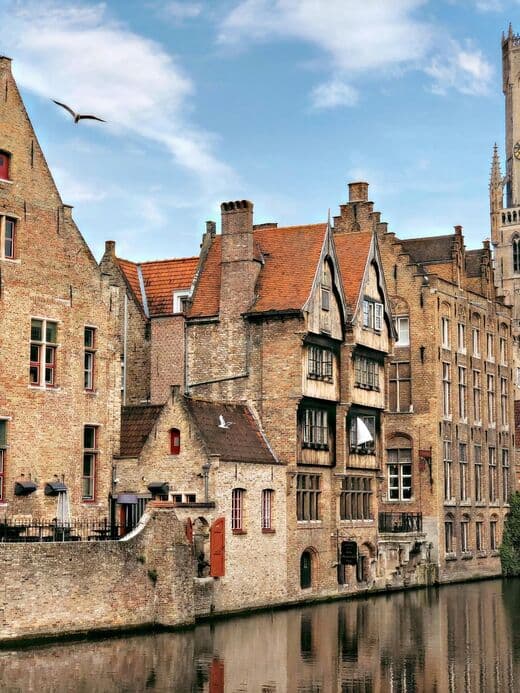
Walking through Bruges feels like stepping into a perfectly preserved medieval painting. Unlike many European cities that were rebuilt after World War II, Bruges escaped major destruction and maintains its authentic 13th-century character. The same applies to Ghent, which somehow combines medieval grandeur with a vibrant student population and contemporary edge that Bruges lacks.
These are not sanitized theme-park versions of history. People live and work in these medieval buildings. Boats ply the same canals that merchants used 500 years ago. The weight of history is palpable in a way that manufactured tourist attractions simply cannot replicate.
World-Class Art Without the Crowds
Belgium gave the world Rubens, Van Eyck, Magritte, and countless other artistic masters. The Magritte Museum in Brussels houses the world's largest collection of the surrealist's works. The Cathedral of Our Lady in Antwerp contains four genuine Rubens masterpieces that you can admire without the crushing crowds of the Louvre or Uffizi.
This is a consistent theme throughout Belgium: world-class cultural experiences with significantly fewer tourists than comparable attractions in neighboring countries. You will actually be able to see the art, take your time, and appreciate the details without being jostled by tour groups.
The Beer Culture Is Unmatched
Belgium has over 1,500 distinct beer varieties. That is not a typo. The country takes brewing so seriously that UNESCO has recognized Belgian beer culture as Intangible Cultural Heritage. Trappist monasteries produce some of the most sought-after beers on Earth using methods unchanged for centuries. Each beer has its own specific glass, designed to enhance that particular brew's characteristics.
For American craft beer enthusiasts, Belgium is essentially a pilgrimage site. Many of the styles that have taken over American taprooms - saisons, witbiers, dubbels, tripels, quadrupels - originated here. Tasting them in their homeland, poured correctly into the proper glass, is an education in what beer can be.
Strategic Location for European Exploration
Belgium sits at the heart of Western Europe, making it an ideal base for broader exploration. High-speed trains connect Brussels to Paris (1 hour 22 minutes), London (2 hours via Eurostar), Amsterdam (1 hour 50 minutes), and Cologne (1 hour 50 minutes). You could theoretically have breakfast in Brussels, lunch in Paris, and dinner in Amsterdam if you were particularly ambitious (though I would not recommend it - each city deserves more time).
This central location also makes Belgium perfect for travelers who want to experience multiple countries without the hassle of multiple flights. A two-week trip could easily incorporate Belgium, the Netherlands, Luxembourg, and parts of France or Germany using nothing but trains.
Surprisingly Affordable Compared to Neighbors
Belgium is not cheap - this is Western Europe, after all - but it offers better value than Paris, London, or Amsterdam. A quality dinner that would cost 80-100 EUR in Paris might run 50-70 EUR in Brussels for comparable quality. Hotel prices, while rising, remain more reasonable than in major tourism hotspots. The beer, despite its quality, costs about the same as in neighboring countries.
Budget travelers can absolutely visit Belgium on 80-100 EUR per day including accommodation, while mid-range travelers should budget 150-200 EUR daily for comfortable hotels, good restaurants, and museum admissions. Luxury travelers will find plenty of ways to spend more, but they will also find exceptional value compared to London or Paris.
Compact Size Means Easy Exploration
Belgium measures roughly 300 kilometers from east to west. You can drive from one end to the other in under three hours, and efficient trains make car rental unnecessary for most visitors. This compact size means you can see an enormous amount without wasting time on long transits. Day trips to virtually any destination are feasible from a single base.
The Honest Assessment: What Belgium Is Not
I believe in setting realistic expectations. Belgium does not offer dramatic natural scenery - no mountains, limited coastline, and landscapes that tend toward flat and agricultural. The weather is reliably unreliable, with rain possible any day of the year and genuinely gray winters. The country can feel small after an extended visit, and some travelers find the pace too quiet compared to larger European capitals.
Brussels, in particular, divides opinions. It is a working capital city - home to the European Union and NATO headquarters - rather than a pure tourist destination. Some find it gritty and unglamorous compared to Bruges or Ghent. I happen to love its unpretentious character, but you should know that it is not universally beloved.
None of these drawbacks should dissuade you from visiting. They simply mean that Belgium rewards travelers who appreciate subtlety, history, gastronomy, and culture over Instagram-ready landscapes and manufactured tourist experiences.
Regions and Cities: A Complete Geographic Guide
Belgium divides into three distinct regions, each with its own character, language, and cultural identity. Understanding this division is essential for appreciating the country and navigating potential sensitivities. The Flemish Region in the north speaks Dutch (Flemish), the Walloon Region in the south speaks French, and the small German-speaking Community exists along the eastern border. Brussels, though geographically within Flanders, operates as a bilingual French-Dutch capital region.
This linguistic divide is not merely academic - it shapes politics, culture, and daily life. Tensions between the communities have historically been significant, though as a tourist you will rarely encounter problems. Simply be aware that speaking French in Flemish areas (or vice versa) can occasionally generate mild friction, though English serves as a neutral alternative that works everywhere.
Brussels: The Cosmopolitan Capital
Brussels defies easy categorization. It is simultaneously a major European capital, a working city of bureaucrats and diplomats, a showcase of Art Nouveau architecture, and a gritty urban environment that lacks the polish of Paris or Amsterdam. Some travelers love it; others find it disappointing. I fall firmly in the former camp, but I understand why it does not appeal to everyone.
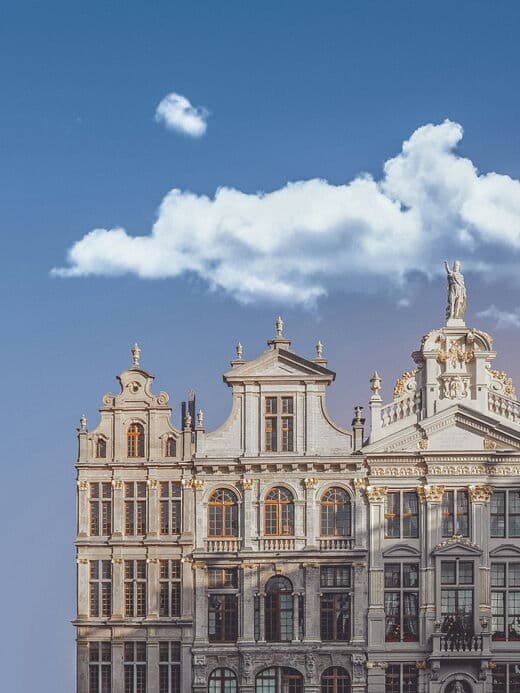
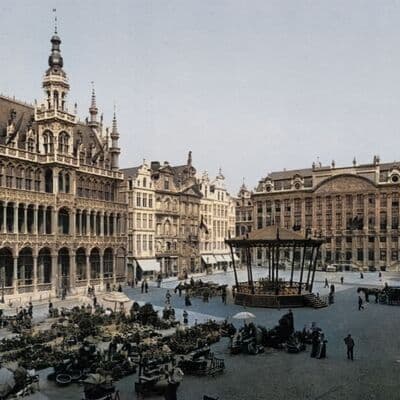
The Grand Place is genuinely one of Europe's most spectacular squares. Victor Hugo called it the most beautiful square in the world, and while that may be hyperbole, the Gothic Town Hall and ornate guild houses create an almost theatrical setting. Visit at night when the illuminated facades glow golden against the dark sky. The square hosts a famous flower carpet every two years (even-numbered years in August) that covers the entire space with intricate floral designs.
Beyond the Grand Place, Brussels reveals its charms gradually. The Atomium - a massive steel structure representing an iron crystal magnified 165 billion times - has become an unlikely icon since its construction for the 1958 World's Fair. It looks utterly bizarre and utterly Belgian. Adjacent Mini-Europe offers miniature reproductions of major European landmarks, surprisingly enjoyable even for adults.
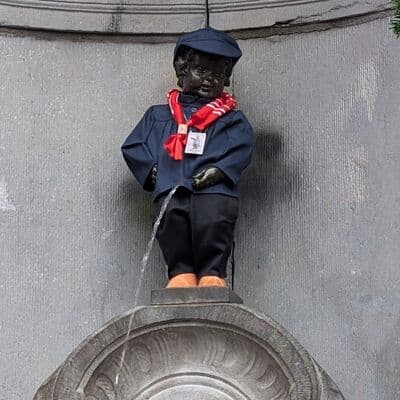
The Manneken Pis deserves mention primarily because every visitor asks about it. This tiny bronze statue of a urinating boy has become inexplicably famous. Prepare yourself for disappointment: it is genuinely small (about 61 centimeters tall) and typically surrounded by crowds taking photos. The statue owns over 1,000 costumes, regularly changed for various occasions, which is perhaps more interesting than the statue itself.
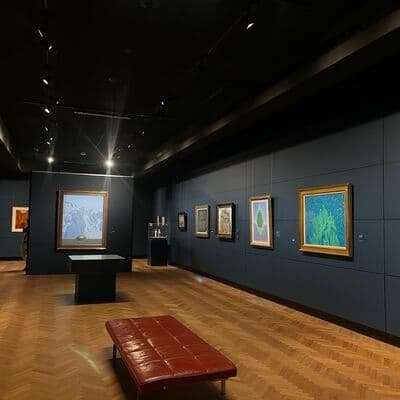
Art lovers should prioritize the Magritte Museum, housing over 200 works by the surrealist master in a beautifully renovated neoclassical building. The Royal Museums of Fine Arts complex nearby contains significant Flemish primitives and old masters. The Cathedral of St. Michael and St. Gudula is a Gothic masterpiece that rivals more famous French cathedrals.
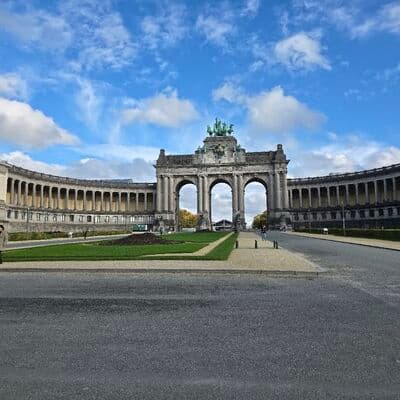
Cinquantenaire Park offers green space and three museums (including an excellent automobile museum) in the European Quarter. The triumphal arch at its center provides panoramic city views. This area becomes particularly pleasant on sunny weekends when locals gather for picnics.
The Royal Palace of Brussels opens to visitors during summer months (late July through early September). The palace itself is more impressive for its collection of art and its symbolic importance than its architecture, but the summer opening is worth planning around if your dates align.
Brussels also excels in neighborhoods that reward wandering: the Marolles flea market district, the Art Nouveau treasures of Saint-Gilles and Ixelles, the African shops and restaurants of Matongue, and the European Quarter where Eurocrats hurry between glass towers. The city reveals itself slowly, rewarding those who look beyond the obvious attractions.
Bruges: Medieval Perfection
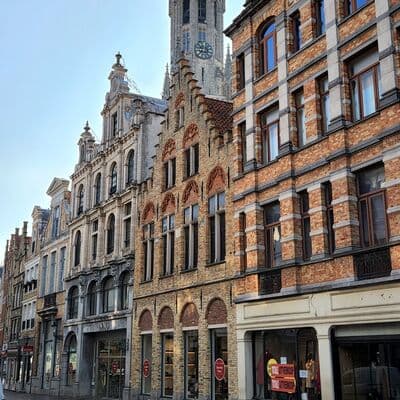
Bruges is what most people picture when they imagine Belgium. And for good reason: the medieval center is extraordinarily well-preserved, canals wind between Gothic buildings, and the overall effect resembles a living museum. It is also unabashedly touristy, particularly during summer months and cruise ship season. This creates a paradox - Bruges is both genuinely beautiful and genuinely overrun with visitors.
My recommendation: stay overnight. Day-trippers from Brussels and cruise passengers flood the city from roughly 10 AM to 5 PM. Early morning and evening, Bruges belongs to residents and overnight guests. Walking the empty canals at dusk, when the crowds have departed and the medieval buildings glow in golden light, is one of Belgium's most magical experiences.
The Markt Square forms the heart of Bruges, dominated by the medieval Belfry of Bruges. Climbing the 366 steps to the top rewards you with panoramic views across the city's red-tiled rooftops. The 47-bell carillon still plays, and hearing it echo across the square feels authentically medieval.
Canal boat tours through the Bruges Canals are touristy but worthwhile, offering perspectives on the architecture that you simply cannot get from street level. Tours run about 30 minutes and cost around 12-14 EUR per person. The best time is early morning or late afternoon when light plays most dramatically on the water.
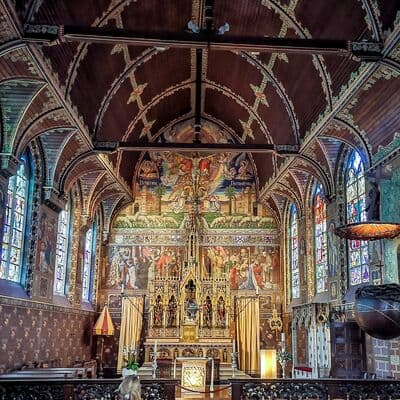
The Basilica of the Holy Blood houses what believers consider a relic containing the blood of Christ, brought back from the Crusades. Regardless of your religious perspective, the upper chapel's intimate atmosphere and historical significance make it worth a visit. Friday veneration services allow visitors to see the relic up close.
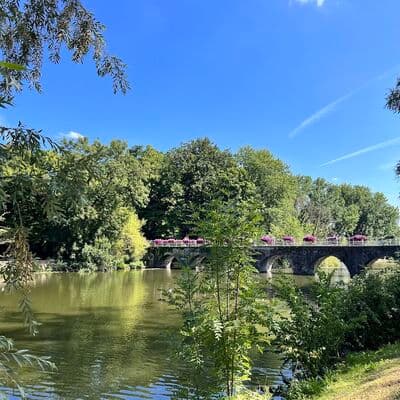
Minnewater, the so-called Lake of Love, offers a peaceful respite from the crowded center. The romantic name derives from a medieval legend about a young woman who died of grief waiting for her lover. Today it provides pleasant walking paths and photogenic views of swans gliding across calm water.
Beyond the famous sites, Bruges rewards aimless wandering. The Begijnhof, a medieval complex originally housing religious women, is one of the most peaceful spots in Belgium. Chocolate shops line virtually every street - The Chocolate Line and Dumon rank among the best. Beer enthusiasts should seek out De Halve Maan, the only remaining brewery within the city center, offering tours and tastings of their Brugse Zot beers.
A word of honest assessment: Bruges can feel like a theme park during peak hours. The chocolate shops, waffle stands, and lace vendors cater heavily to tourists. Prices run 20-30% higher than in other Belgian cities. None of this diminishes the genuine beauty, but you should arrive with realistic expectations.
Ghent: The Best of Both Worlds
Ghent may be my favorite Belgian city, offering medieval architecture comparable to Bruges without the overwhelming tourism. A major university ensures a young, vibrant population. Excellent restaurants, genuinely local bars, and cutting-edge cultural venues balance the historical attractions. If you only have time for one Flemish city beyond Brussels, Ghent offers the most rewarding experience.
The St. Bavo's Cathedral houses one of art history's most significant works: the Ghent Altarpiece by Jan van Eyck. This 15th-century polyptych survived fires, wars, Nazi looting, and theft to remain largely intact in its original location. A separate admission fee and timed entry system manage crowds while allowing close examination of the extraordinary detail. The cathedral itself is also magnificent, with Gothic architecture spanning several centuries.
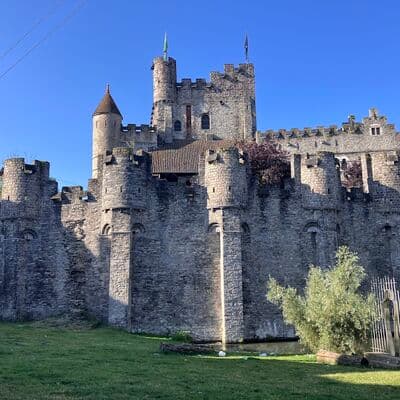
Gravensteen, the Castle of the Counts, rises dramatically from the city center. Unlike many European castles that exist primarily as ruins, Gravensteen remains substantially intact, offering a genuine sense of medieval military architecture. The museum inside displays weapons and instruments of torture - morbid but historically interesting. Climbing to the rooftop provides excellent city views.
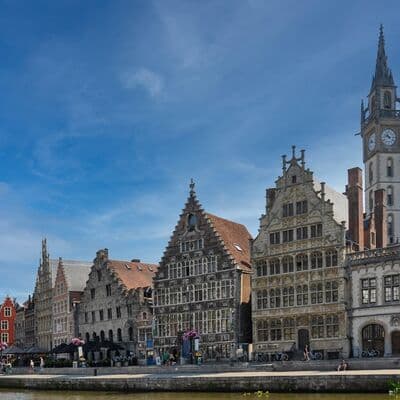
The Graslei and Korenlei waterfront areas showcase guild houses from Ghent's prosperous medieval trading period. These parallel quays along the Leie river create one of Belgium's most photographed scenes. Evening light turns the stone facades golden, and outdoor terraces fill with locals enjoying Belgian beers.
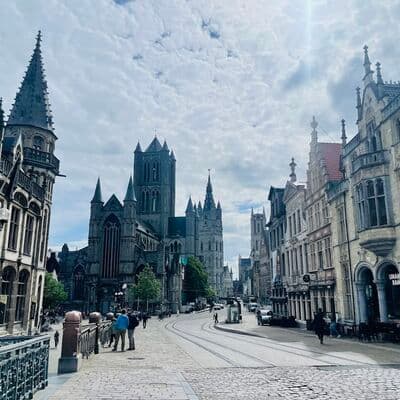
St. Michael's Bridge offers what many consider the best single viewpoint in Ghent. From here you can see the three towers - St. Bavo's Cathedral, the Belfry, and St. Nicholas' Church - aligned dramatically. Photographers should arrive at sunset for optimal light.
Ghent's university population creates a nightlife and culinary scene that rivals Brussels. The Patershol neighborhood contains excellent restaurants in medieval settings. Vegetarians appreciate that Ghent was Europe's first city to designate an official weekly vegetarian day. The student bars around Sint-Pietersplein offer cheap beer and authentic local atmosphere.
Antwerp: Fashion, Diamonds, and Rubens
Antwerp is Belgium's second city, the country's fashion capital, its diamond center, and the hometown of Baroque master Peter Paul Rubens. The atmosphere feels distinctly different from Bruges or Ghent - more urban, more contemporary, more concerned with style and commerce than medieval preservation.
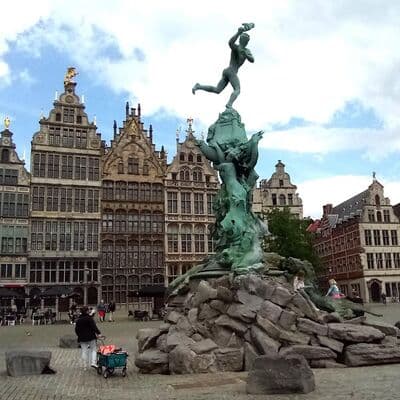
The Grote Markt anchors the old town, surrounded by guild houses and dominated by the Renaissance Town Hall. The Brabo Fountain at the center depicts the legendary founding of Antwerp - a Roman soldier throwing the severed hand of a giant into the Scheldt River. (The city's name allegedly derives from "hand werpen" - throwing the hand.)
The Cathedral of Our Lady took 169 years to build and remains the largest Gothic church in the Low Countries. Four paintings by Rubens hang inside, including "The Descent from the Cross" that art historians consider among his masterpieces. You can examine these works in relative peace compared to major museums in Paris or Rome.
Antwerp's Diamond District handles roughly 84% of the world's rough diamonds and 50% of cut diamonds. The area concentrates around Central Station, with diamond shops, cutting workshops, and trading houses occupying several blocks. While much of the trade happens behind closed doors, several shops welcome visitors and offer educational tours.
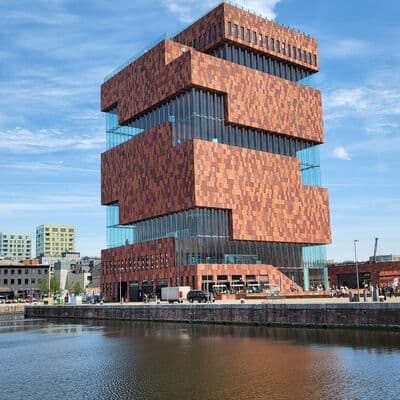
The MAS Museum (Museum aan de Stroom) occupies a striking contemporary building in the old port area. Its collections explore Antwerp's history as a trading city, with exhibits spanning from ancient times to the present. The rooftop terrace offers panoramic views and is accessible free of charge.
Fashion enthusiasts should explore the area around Nationalestraat, where the Antwerp Six designers (who revolutionized fashion in the 1980s) established the city's reputation. The MoMu Fashion Museum documents this history. Shopping ranges from cutting-edge Belgian designers to vintage clothing in the trendy Zuid district.
Antwerp Central Station deserves mention as one of the world's most beautiful railway stations. The late 19th-century building combines Renaissance and neo-Baroque elements with a spectacular iron and glass train hall. It is worth visiting even if you are not catching a train.
Leuven: University Town Excellence
Leuven hosts one of Europe's oldest and most prestigious universities, founded in 1425. The student population of roughly 50,000 creates a youthful energy in a compact medieval setting. Beer enthusiasts know Leuven as the headquarters of AB InBev (Stella Artois), though the city's beer culture extends far beyond mass-market lagers.
The Oude Markt claims to be the longest bar in Europe - an exaggeration, but the square genuinely contains a remarkable concentration of drinking establishments. Summer evenings see terraces packed with students and locals enjoying Belgium's beer selection at reasonable prices.
The Leuven Town Hall is a Gothic masterpiece, its facade covered with 236 statues representing biblical figures, saints, and local notables. Built between 1439 and 1469, it serves as one of the finest examples of Brabantine Gothic architecture anywhere. Guided tours of the interior are available.
The University Library Tower has a tragic history - twice burned by German forces during the World Wars, it was twice rebuilt. Today it houses valuable manuscripts and offers tower climbs with views across the city. The carillon regularly plays concerts that echo across the campus.
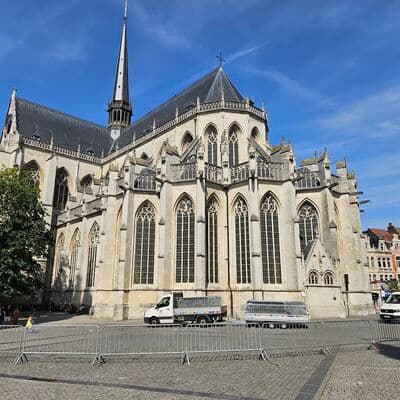
St. Peter's Church on the Grote Markt contains Dieric Bouts' triptych "The Last Supper," another of Flemish art's treasures that you can examine without crowds. The church itself blends Gothic architecture with later additions, creating an interesting architectural timeline.
Leuven makes an excellent day trip from Brussels (just 25 minutes by train) but also rewards overnight stays. The evening atmosphere when students fill the Oude Markt is distinctly different from the daytime tourist experience. Food options are excellent and priced for student budgets rather than tourists.
Beyond the Major Cities
Belgium rewards exploration beyond its primary destinations. The Walloon Region offers dramatically different scenery and culture: the forested Ardennes hills, medieval Dinant with its riverside citadel, the spa town that gave its name to all spas. The WWI battlefields around Ypres and Passchendaele offer somber but important historical experiences. The Belgian coast, while not Mediterranean, provides seaside resort towns like Ostend and Knokke-Heist.
For American and British travelers with limited time, I recommend focusing on the Flemish cities - Brussels, Bruges, Ghent, and Antwerp - which concentrate Belgium's most famous attractions within easy reach of each other. A week or more allows expansion into Wallonia, the coast, or cross-border trips to Luxembourg, the Netherlands, and France.
Belgian Beer Culture: A Unique Experience
Belgian beer deserves its own section because it represents far more than simply drinking - it is a cultural experience, a living tradition, and one of the primary reasons many visitors come to Belgium. Understanding the basics will dramatically enhance your appreciation and help you navigate the overwhelming variety on offer.
Understanding the Variety
Belgium produces over 1,500 distinct beers across dozens of styles. This can feel overwhelming, but grasping a few key categories will help you make sense of menus and beer lists.
Trappist beers represent the pinnacle of Belgian brewing tradition. Only eleven monasteries worldwide (six in Belgium) hold the Authentic Trappist Product designation. These beers must be brewed within monastery walls under monastic supervision, with proceeds supporting the monastery and charitable works. Belgian Trappists include Chimay, Orval, Rochefort, Westmalle, Westvleteren, and Achel (though Achel recently lost its designation). Westvleteren 12, often called the world's best beer, is notoriously difficult to obtain.
Abbey beers use similar styles but are produced commercially, often under license from monasteries that no longer brew. Leffe and Affligem are common examples. Quality varies widely, from mass-market products to excellent craft offerings.
Lambics are spontaneously fermented beers unique to the Brussels region. Wild yeast and bacteria create tart, complex flavors unlike any other beer style. Gueuze blends young and old lambics, developing champagne-like carbonation. Kriek and other fruit lambics incorporate cherries or other fruits. Cantillon in Brussels and 3 Fonteinen in Beersel are must-visit producers for serious beer enthusiasts.
Witbier (white beer) originated in Belgium and features wheat, coriander, and orange peel. Hoegaarden is the best-known example, though small producers often surpass it. These light, refreshing beers work well for newcomers to Belgian brewing.
Saisons were historically brewed by farmers for seasonal workers. They tend toward dry, spicy, and highly carbonated. American craft brewers have embraced the style, but Belgian originals from breweries like Brasserie Dupont remain benchmarks.
Dubbels, tripels, and quadrupels (or Belgian strong ales) offer rich, complex flavors with higher alcohol content. Dubbels tend toward dark, malty sweetness; tripels are golden and deceptively drinkable despite 8-10% ABV; quadrupels maximize richness and alcohol. These styles represent Belgian brewing at its most impressive and require respectful consumption.
Where to Drink
Brussels offers the most comprehensive beer experience. Cantillon Brewery provides tours and tastings of their authentic lambics in a wonderfully atmospheric setting - wooden barrels, dusty bottles, and no concessions to modernization. Reservations are essential. Delirium Cafe near the Grand Place stocks over 2,000 beers, though the tourist crowds can detract from the experience. Moeder Lambic Fontainas and its sister location in Saint-Gilles specialize in craft and traditional Belgian beers in more local atmospheres.
In Bruges, De Halve Maan Brewery offers tours, tastings, and a restaurant serving their Brugse Zot and Straffe Hendrik beers. The brewery recently constructed an underground pipeline to carry beer from the historic center to a new bottling facility - pure Belgian engineering whimsy. Cafe Rose Red focuses on Belgian beers with knowledgeable staff who can guide your selections.
Ghent's Gruut Brewery uses herbs instead of hops, reviving medieval brewing traditions. De Dulle Griet requires you to surrender a shoe as deposit for their massive Kwak glass - a local tradition that is equal parts practical and amusing. Het Waterhuis aan de Bierkant on the Graslei offers over 150 beers with canal views.
Antwerp's Kulminator maintains one of the world's finest selections of vintage and rare beers, cellared on-site for years to develop complex flavors. The atmosphere is wonderfully unpretentious - this is a serious beer destination, not a tourist attraction. De Koninck brewery offers tours of Antwerp's historic local brewing tradition.
Leuven's Oude Markt provides the highest concentration of bars in Belgium. While many serve standard lager to students, gems like Domus Brewery and De Fansen offer more interesting selections.
Beer Etiquette and Practices
Belgian beer culture comes with traditions worth respecting. Every beer has its own specific glass, designed to enhance that particular brew's characteristics. Ordering a beer and receiving it in the wrong glass is a faux pas that reputable establishments avoid. Do not ask for a different glass because you prefer its shape.
Pouring technique matters. Belgian beers, particularly bottle-conditioned varieties, contain sediment that should either remain in the bottle or be poured into the glass, depending on the style. Watch how bartenders pour and follow their lead if drinking from bottles.
Temperature also matters. Belgian beers are generally served warmer than American beers but cooler than British cask ales. Strong ales in particular should not be ice-cold, which masks their complex flavors.
Respect the alcohol content. Many Belgian beers exceed 8% ABV, with some reaching 12% or higher. These are sipping beers, not session beers. Pace yourself accordingly. The tradition of drinking multiple varieties in an evening requires wisdom about portion sizes and breaks.
Buying Beer to Bring Home
Belgium produces many beers unavailable outside the country or available at significantly higher prices abroad. Stocking up makes sense if your luggage allows. Dedicated beer shops like Beer Mania in Brussels offer excellent selections and can help with packaging for travel. Supermarkets stock good everyday beers at lower prices.
American travelers should note TSA regulations: beer must go in checked luggage, and you will want to pack bottles carefully to prevent breakage. Bubble wrap and placing bottles in shoes or surrounded by clothing helps. Specialty beer shipping services exist but add significant cost.
British travelers have more flexibility with Eurostar train travel, which permits liquids in carry-on luggage. The duty-free allowance for beer is generous when crossing within the EU, though post-Brexit rules apply for UK returns.
Beer Festivals and Events
The Belgian Beer Weekend in Brussels (typically September) takes over the Grand Place with dozens of breweries offering tastings. Zythos Beer Festival in Leuven (April) is considered one of Europe's best, with over 100 Belgian breweries participating. The Christmas beer season (November through January) sees special strong, spiced beers released by numerous breweries.
Smaller festivals occur throughout the year in various cities. The Cantillon Zwanze Day (late September) releases their annual experimental beer to participating bars worldwide, with the Brussels brewery hosting the main celebration.
Beyond Beer: Other Drinks
While beer dominates, Belgium produces other notable beverages. Jenever (gin's ancestor) comes in varieties ranging from young and sharp to aged and mellow. The Filliers distillery in Bachte-Maria-Leerne offers tours and tastings. Belgian wines have improved dramatically with climate change, particularly white varieties from the Hageland and Haspengouw regions.
For non-drinkers, Belgium offers excellent coffee culture (though not quite at Italian standards) and produces distinctive soft drinks including Looza fruit juices and Spa mineral water from the eponymous town.
When to Visit Belgium
Belgium lacks an obvious peak season in the way Mediterranean destinations do. Weather remains relatively consistent year-round: mild, often overcast, with rain possible any day. This consistency means that timing your visit depends more on your interests and crowd tolerance than on seeking perfect weather.
Spring (March through May)
Spring brings gradually warming temperatures (10-18 degrees Celsius, roughly 50-64 Fahrenheit) and the famous flower displays. The Brussels Flower Carpet occurs every even-numbered year in August, but spring sees Belgium's parks and gardens come alive. The Floralia Brussels flower show at Groot-Bijgaarden Castle displays hundreds of thousands of tulips and other bulbs in a stunning setting.
Easter brings crowds to Bruges and Brussels but also traditional celebrations worth experiencing. The Procession of the Holy Blood in Bruges (Ascension Day, typically May) is a UNESCO-recognized event dating to medieval times.
Rain remains frequent in spring, and temperatures can feel cool, particularly in March. Pack layers and rain gear regardless of forecasts.
Summer (June through August)
Summer offers the warmest, driest weather (18-25 degrees Celsius, roughly 64-77 Fahrenheit), longest days, and peak tourist crowds. Bruges in particular becomes extremely crowded, with day-trippers and cruise ship passengers filling the medieval center. Brussels and Antwerp handle the crowds better due to their larger size.
Major festivals occur throughout summer. The Brussels Summer Festival (August) brings music and cultural events to venues across the city. Ghent Festivities (Gentse Feesten, late July) transform the city center into a massive street party for ten days. Tomorrowland, the world's most famous electronic music festival, occurs near Boom in late July.
Accommodations book up months in advance during peak season, particularly in Bruges. Expect to pay premium prices. The Belgian coast sees domestic tourism, making beach towns crowded on sunny weekends.
Autumn (September through November)
Autumn may be the best time to visit for travelers seeking good weather with manageable crowds. September often brings pleasant temperatures (13-20 degrees Celsius, roughly 55-68 Fahrenheit) and clearer skies than summer. The Belgian Beer Weekend in Brussels and various food festivals occur in early autumn.
October sees temperatures drop and rainfall increase. The Ardennes forests display autumn colors, making it an excellent time for scenic drives in Wallonia. Crowds thin significantly after October.
November brings gray, damp weather that can feel oppressive to those accustomed to sunny climates. Indoor attractions - museums, restaurants, chocolate shops - become more appealing. Prices drop to shoulder-season levels.
Winter (December through February)
Winter in Belgium is cold, gray, and often damp, with temperatures hovering around 0-7 degrees Celsius (32-45 Fahrenheit). Snowfall occurs but rarely accumulates significantly in the cities. Days are short, with darkness arriving by 4:30 PM in December.
Christmas markets transform the experience. Brussels Christmas Market spreads across the Grand Place and surrounding streets, creating a magical atmosphere despite the cold. Bruges, Ghent, and other cities host their own markets with ice skating, mulled wine, and festive decorations. These markets typically run from late November through early January.
New Year's Eve celebrations center on Brussels, with fireworks and crowds gathering at the Grand Place. Reservations for restaurants and hotels are essential.
Winter offers the lowest prices and smallest crowds outside the Christmas period. Museums are uncrowded, restaurant reservations are easy to obtain, and you will feel like you have the cities to yourself. The trade-off is limited daylight and weather that requires proper winter clothing.
Special Considerations
School holidays (particularly July-August and the two-week Easter break) see increased domestic tourism and crowded attractions. Belgian public holidays can also affect opening hours and create travel congestion. The Tuesday before Ash Wednesday brings Carnival celebrations, particularly significant in Binche where the UNESCO-recognized event draws large crowds.
How to Get to Belgium
Belgium's central European location and excellent infrastructure make it highly accessible from the United States, United Kingdom, and other English-speaking countries. Multiple arrival options exist, each with distinct advantages.
By Air to Brussels
Brussels Airport (BRU, also called Zaventem) is Belgium's primary international gateway, handling direct flights from major American cities including New York (JFK and Newark), Washington Dulles, Chicago O'Hare, and Atlanta. Flight times from the US East Coast average 7-8 hours eastbound, 8-9 hours returning. Major carriers include United, American, Delta, and Brussels Airlines.
British travelers enjoy frequent service from London, Manchester, Edinburgh, and other UK airports. Flight time is roughly one hour, though Eurostar train service often proves more convenient (see below).
Brussels Airport connects to the city center via train (17 minutes to Brussels Central, 4.50 EUR) with service every 10-15 minutes. Taxis take 20-40 minutes depending on traffic and cost approximately 45-50 EUR. Uber operates but must be arranged through licensed taxi companies, making regular taxis more straightforward.
Brussels South Charleroi Airport (CRL), an hour south of Brussels, handles budget carriers including Ryanair. Despite aggressive marketing as "Brussels South," this airport is not convenient to the city. Bus connections take 45-60 minutes and cost around 17 EUR each way. Consider it only if budget savings are substantial and you understand the time cost.
By Train
Eurostar high-speed trains connect London St. Pancras to Brussels Midi/Zuid in approximately 2 hours, with multiple departures daily. This is often more convenient than flying when you factor in airport security, early arrival requirements, and city-center-to-city-center travel. Fares vary dramatically based on booking timing - early booking can yield fares as low as 39 GBP, while last-minute tickets exceed 200 GBP.
Thalys and other high-speed services connect Brussels to Paris (1 hour 22 minutes), Amsterdam (1 hour 50 minutes), Cologne (1 hour 50 minutes), and Frankfurt (2 hours 45 minutes). These connections make Belgium easily incorporated into multi-country European itineraries.
Brussels has three main train stations: Brussels Midi/Zuid (international arrivals), Brussels Central (central location), and Brussels Nord/North (northern business district). Most international trains stop at all three, so choose based on your hotel location.
By Car
Belgium's highway network connects to France, the Netherlands, Germany, and Luxembourg with no border controls (Schengen Zone). Driving from Paris takes approximately 3 hours, from Amsterdam approximately 2.5 hours, from Cologne approximately 2 hours.
Car rental makes sense primarily for exploring rural areas, particularly the Ardennes or Belgian coast. Within cities, parking is expensive and traffic congested - trains and walking are far more practical. If you do rent, be aware that Brussels has implemented a low-emission zone requiring registration of your vehicle.
British drivers must carry a valid passport and driving license. The UK no longer issues International Driving Permits for EU use, but UK licenses are accepted. Drive on the right side of the road. Speed cameras are ubiquitous and fines are enforced.
Entry Requirements
American citizens may visit Belgium and the broader Schengen Zone for up to 90 days within any 180-day period without a visa. Your passport must be valid for at least three months beyond your planned departure date and have at least one blank page. No ESTA is required for Belgium - that system applies only to US-bound travel.
British citizens may visit Belgium for up to 90 days within any 180-day period without a visa (post-Brexit rules). Passports must be valid for at least six months and issued within the previous ten years. Note that the day count applies across the entire Schengen Zone, not per country.
The EU is implementing ETIAS (European Travel Information and Authorization System), expected to become operational in 2025. This will require American and British travelers to obtain an online authorization (similar to ESTA) before travel, costing approximately 7 EUR and valid for three years. Check current requirements before travel as implementation dates have shifted.
Canadian, Australian, and New Zealand citizens follow the same 90-day visa-free rules as American travelers.
Customs and Allowances
EU duty-free allowances are generous for travelers from other EU countries but more limited for those arriving from outside the EU. American travelers may bring personal effects plus limited quantities of alcohol (1 liter of spirits or 4 liters of wine) and tobacco (200 cigarettes) duty-free. Amounts exceeding these limits require declaration and payment of duty.
British travelers post-Brexit face the same non-EU limits. The days of unlimited cross-Channel alcohol shopping are over for UK residents.
Getting Around Belgium
Belgium's compact size and excellent rail network make internal travel remarkably easy. Most visitors never need a car, and indeed cars can be a hindrance in congested city centers with limited parking.
Trains
Belgian National Railways (NMBS/SNCB) operates comprehensive service connecting virtually every destination tourists want to visit. Brussels to Bruges takes approximately one hour; Brussels to Ghent takes 35 minutes; Brussels to Antwerp takes 45 minutes; Brussels to Leuven takes 25 minutes.
Standard one-way fares are reasonable: Brussels to Bruges costs approximately 15 EUR in second class. First class offers larger seats and guaranteed reservations but rarely feels necessary on short journeys.
Several passes offer savings for frequent travel. The Rail Pass provides 10 single journeys anywhere in Belgium for approximately 92 EUR - excellent value if you plan multiple trips. Weekend returns offer 50% discounts on round trips taken entirely on weekends. Youth (under 26) and senior (65+) discounts are available.
Trains run frequently on main routes - Brussels to Ghent and Antwerp see multiple departures per hour. Less popular routes may have hourly or less frequent service. Check schedules at belgiantrain.be. The NMBS mobile app provides real-time information and mobile ticketing.
Train stations in Belgium tend to be centrally located, making them ideal arrival points. Brussels Central, Bruges, Ghent Sint-Pieters, and Antwerp Central all sit within walking distance of main attractions or connect to local transport.
Buses and Trams
De Lijn operates buses and trams in Flanders; TEC covers Wallonia; STIB/MIVB handles Brussels. Each system has its own ticketing, though national "MOBIB" cards can be loaded with credit for all three.
Within Brussels, the metro, trams, and buses cover the city comprehensively. Single tickets cost 2.40 EUR; a 10-ride card costs 16.80 EUR. Day passes (7.80 EUR) make sense if you plan more than three trips.
Bruges and Ghent are small enough that most visitors walk everywhere. Antwerp's tram network helps cover its larger extent, with the same De Lijn ticketing used throughout Flanders.
Cycling
Belgium is extremely bike-friendly, with dedicated cycling infrastructure throughout the Flemish region in particular. City bike-sharing systems operate in Brussels (Villo), Antwerp (Velo), and other cities. Rental shops in Bruges and Ghent offer traditional bikes for exploring at a relaxed pace.
Cycling between cities is possible on dedicated paths. The route from Bruges to Ghent follows canals through picturesque countryside, approximately 50 kilometers that experienced cyclists can cover in 2-3 hours.
Folding bikes travel free on trains; regular bikes require a bike ticket (5 EUR) and are prohibited during peak commuter hours on certain routes.
Taxis and Ride-Sharing
Taxis in Belgium are regulated with metered fares. Expect to pay approximately 10-15 EUR for short city trips, 45-50 EUR from Brussels Airport to the city center. Taxis can be hailed on the street, found at stands near major sites, or ordered by phone.
Uber operates in Brussels and some other Belgian cities but functions as a taxi dispatch service rather than traditional Uber rideshare. Prices are comparable to regular taxis. The Uber app can be convenient for ordering without language barriers.
Bolt and other ride-sharing apps also operate in major cities, sometimes at lower prices than Uber or traditional taxis.
Car Rental
International rental companies (Hertz, Avis, Europcar, etc.) operate at Brussels Airport and city center locations. Rates typically start around 40-60 EUR daily for economy cars, plus fuel and insurance. Automatic transmissions cost more and should be specifically requested, as manual transmission is standard in Europe.
As mentioned, car rental primarily makes sense for exploring rural areas. City driving involves congestion, expensive parking (2-3 EUR per hour in city centers, more in private lots), and low-emission zones requiring registration. Most travelers find trains far more practical.
If you do drive, Belgian highways are toll-free but notorious for congestion, particularly around Brussels and Antwerp. The E40 between Brussels and Ghent, the E19 to Antwerp, and the Brussels ring road experience heavy traffic during rush hours.
Day Trip Logistics
The train network makes day trips extraordinarily convenient. From a Brussels base, you can easily reach Bruges, Ghent, Antwerp, Leuven, or the Waterloo battlefield and return the same day. From Bruges, Ghent and Brussels are easy day trips. From Antwerp, Brussels and Ghent are within reach.
A typical day trip pattern: depart around 9 AM, arrive by 10 AM, explore until late afternoon, return by 6-7 PM. The last trains run late enough (typically until 11 PM on major routes) that evening dinners in day-trip destinations are possible.
Cultural Code: Navigating Belgian Society
Belgium's cultural norms blend influences from its Germanic north and Romance south, filtered through centuries of trade, diplomacy, and compromise. Understanding these norms will help you navigate social situations and avoid unintentional offense.
The Language Question
Belgium's linguistic division is the elephant in the room. The country functions in Dutch (spoken by roughly 60% of the population in Flanders), French (spoken by roughly 40% in Wallonia and Brussels), and German (a small minority in the east). Brussels is officially bilingual Dutch-French but functionally French-dominant.
As an English-speaking tourist, you largely sidestep this complexity. English proficiency is high throughout Belgium - higher in Flanders than Wallonia, but serviceable everywhere tourists typically go. Speaking English establishes you as a neutral party not participating in the language debate.
That said, a few phrases in the local language are appreciated. In Flanders: "Dank u wel" (thank you), "Goedemorgen" (good morning), "Alstublieft" (please). In Wallonia: "Merci," "Bonjour," "S'il vous plait."
Do not assume that Flemish people speak French or vice versa. While many do, making assumptions can cause offense. When in doubt, start in English and ask which language the person prefers.
Social Etiquette
Belgians tend toward reserve compared to Americans but warmth compared to stereotypical northern Europeans. First interactions may feel formal, but relationships warm considerably with time. Loud, effusive behavior in public is considered inappropriate.
Greetings typically involve handshakes in formal settings, cheek-kisses among friends (one kiss in Flanders, three in Wallonia, varying in Brussels). As a visitor, follow the local person's lead. A handshake is always acceptable.
Punctuality matters. Arriving 5-10 minutes late to social engagements is acceptable; showing up late to business meetings or reservations is not. Trains run on time, and Belgians expect you to as well.
Privacy is valued. Belgians are not unfriendly, but they tend to keep some distance with strangers. Personal questions early in acquaintance may be perceived as intrusive. Conversations about family, work, and travel are safe; politics and the language divide are better avoided until you know someone well.
Dining Customs
Belgians take meals seriously. Dinner is typically the main meal, often starting around 7-8 PM and lasting well into the evening. Rushing through a meal is considered poor form. Service in restaurants is deliberately paced - this is not rudeness but respect for the dining experience.
Tipping is not obligatory as service is included in prices, but rounding up or leaving 5-10% for good service is appreciated. Leaving nothing is perfectly acceptable, as waitstaff earn proper wages rather than depending on tips.
Summoning waiters by snapping fingers, waving, or shouting is considered extremely rude. Make eye contact and wait, or say "S'il vous plait" (French) or "Alstublieft" (Dutch) when they are nearby.
The bill will not arrive until you request it. Bringing the check without being asked would imply you want the guest to leave. Asking for the bill ("L'addition, s'il vous plait" or "De rekening, alstublieft") is expected.
Business Culture
For travelers mixing business with pleasure: Belgian business culture emphasizes preparation, punctuality, and professionalism. Meetings start on time with a clear agenda. Belgians appreciate data, documentation, and logical arguments over emotional appeals.
Consensus-building is valued, reflecting the country's political need for constant compromise between regions. Expect decisions to take time as all stakeholders are consulted. Pushing for immediate answers may backfire.
Business attire is conservative. Dark suits for men, professional dress for women. Casual dress in formal business settings can create negative impressions.
Visiting Religious Sites
Belgium's many churches and cathedrals are active places of worship. Visitors are generally welcome, but appropriate behavior is expected. Cover bare shoulders and knees, speak quietly, and refrain from photography during services. Small donations to enter or to photograph are often requested and should be honored.
Churches often close midday (typically 12-2 PM), so plan visits accordingly. Major cathedrals like St. Bavo's Cathedral in Ghent and the Cathedral of Our Lady in Antwerp charge admission to certain areas (like the Ghent Altarpiece viewing room) while keeping the main church free.
Attitudes Toward Americans and British
Belgians generally view English-speaking tourists positively. Americans liberated Belgium twice in the 20th century, and this history is not forgotten. The British connection through World War I is particularly strong in Flanders Fields, where Commonwealth war cemeteries receive Belgian care.
Current political differences do not generally affect personal interactions. You may encounter opinions about American or British politics if conversations turn that way, but Belgians are too polite to bring up such topics unprompted with strangers.
The stereotype of Americans as loud and culturally insensitive does exist. Confound it by speaking at moderate volume, attempting local language phrases, and showing genuine interest in Belgian culture rather than comparing everything to home.
Safety in Belgium
Belgium is a safe country for travelers, with crime rates comparable to other Western European nations. Common-sense precautions that apply anywhere in Europe will serve you well here.
General Safety
Violent crime against tourists is rare. The primary concern is pickpocketing, particularly in Brussels around tourist areas (Grand Place, Manneken Pis, Central Station), on public transport, and at major events. Keep valuables in inside pockets or money belts, maintain awareness in crowds, and be wary of distraction techniques (someone spilling something on you, asking for directions while an accomplice works your pockets).
Petty theft from cars is common if valuables are visible. Never leave bags, electronics, or other tempting items in parked vehicles, even briefly.
Brussels has some neighborhoods with higher crime rates, but these are generally not tourist areas. The Midi station neighborhood has a rougher reputation, particularly at night. Molenbeek, while much-discussed in media, is not dangerous for visitors but offers little tourist interest anyway. Common sense about avoiding empty streets late at night applies as anywhere.
Bruges, Ghent, Antwerp, and Leuven feel extremely safe at virtually all hours. These are not cities where you need to worry about walking home after dinner or evening drinks.
Terrorism Concerns
Belgium, particularly Brussels as home to EU and NATO institutions, has faced terrorism concerns. The 2016 attacks at Brussels Airport and Maelbeek metro station shocked the country. Security has increased significantly since then, with visible police presence and security screening at major sites.
Current threat levels are monitored by Belgian authorities, and the US State Department and UK Foreign Office maintain travel advisories. At time of writing, these advisories recommend normal precautions. Check current guidance before travel. In practical terms, millions visit Belgium safely each year, and the increased security measures have proven effective.
Scams to Avoid
Tourist scams in Belgium are less aggressive than in Paris or Rome but do exist. Petition signers in Brussels often work as distraction teams for pickpockets. The "found ring" scam (someone offers you a ring they "found" and then demands payment) occasionally appears. Shell games and other street gambling are illegal and rigged - never participate.
Restaurant scams are rare but not unknown. Check prices on menus before ordering, particularly at tourist-heavy locations near major attractions. Some establishments have been known to add unexpected charges for bread baskets, table settings, or "service fees" not displayed on menus.
ATM skimming occurs occasionally. Use ATMs inside banks rather than standalone machines. Cover your PIN entry. Check for loose card readers before inserting your card.
Emergency Services
The European emergency number 112 works throughout Belgium and connects to police, fire, and medical services. Operators speak multiple languages including English.
For non-emergency police matters, local police stations can be found throughout cities. In Brussels, the main central station is on Rue du Marche au Charbon near the Grand Place.
Pharmacies (Apotheek in Dutch, Pharmacie in French) can handle minor medical issues and are found throughout all cities. A rotation system ensures at least one pharmacy in each area stays open nights and weekends - the address is posted in pharmacy windows.
Women Travelers
Belgium is generally safe for women traveling alone. The same precautions that apply anywhere - avoiding empty streets late at night, being cautious about accepting drinks from strangers, trusting your instincts - apply here. Street harassment is less common than in some Mediterranean countries but not entirely absent, particularly in Brussels.
Public transport is safe at all hours, though late-night trains may have fewer passengers. Taxis and Uber provide safe alternatives for late-night travel.
LGBTQ+ Travelers
Belgium is one of the world's most LGBTQ-friendly countries. It was the second country globally to legalize same-sex marriage (2003) and has strong anti-discrimination protections. Brussels and Antwerp have visible LGBTQ scenes with dedicated bars, clubs, and annual Pride events.
Public displays of affection between same-sex couples are socially accepted in urban areas. Rural areas and smaller towns may be more conservative but generally without hostility. Travelers should feel comfortable being themselves throughout Belgium.
Health and Medical Care
Belgium has excellent healthcare infrastructure, and visitors can expect high-quality medical care if needed. However, understanding the system before you need it will save stress during any health situation.
Healthcare System
Belgian healthcare operates through a mix of public and private providers, with universal coverage for residents. As a visitor, you will typically pay for services upfront and seek reimbursement from your travel insurance.
Hospitals (ziekenhuis in Dutch, hopital in French) provide emergency care 24/7. Major facilities in Brussels include UZ Brussels, Saint-Luc, and Erasme. In Antwerp, UZ Antwerp; in Ghent, UZ Gent. English-speaking staff are available at major hospitals.
For non-emergency issues, general practitioners (huisarts/medecin generaliste) can see you by appointment. Many tourist areas have clinics accustomed to foreign patients. Your hotel concierge can help locate appropriate medical care.
Insurance
American travelers should carry travel insurance that covers medical expenses abroad. US domestic health insurance, including Medicare, typically does not cover international care. Even a minor medical issue can cost hundreds of dollars; hospitalization can cost thousands. Insurance provides peace of mind and financial protection.
British travelers with UK Global Health Insurance Cards (GHIC) - the post-Brexit replacement for EHIC - can access state healthcare in Belgium at reduced cost or free. However, GHIC does not cover all expenses, private medical care, or medical repatriation. Supplementary travel insurance remains recommended.
Canadian, Australian, and New Zealand citizens should also carry travel insurance, as their domestic coverage typically excludes overseas expenses.
Prescriptions and Pharmacies
If you take prescription medications, bring enough supply for your entire trip plus extra in case of travel delays. Carry medications in original containers with pharmacy labels. Bring a copy of your prescription or doctor's letter, particularly for controlled substances.
Belgian pharmacies can fill prescriptions but may require a local doctor's prescription for certain medications. Some medications available over-the-counter in the US or UK require prescriptions in Belgium, and vice versa. Pharmacists can advise on minor ailments and recommend appropriate treatments.
Vaccinations
No special vaccinations are required for Belgium. Routine vaccinations (measles, diphtheria-tetanus, etc.) should be up to date. Seasonal flu vaccines are recommended for older travelers or those with health conditions.
Water and Food Safety
Tap water throughout Belgium is safe to drink and of good quality. Restaurants serve tap water on request (ask for "eau du robinet" or "kraanwater"), though they may prefer to sell bottled water.
Food safety standards are high. Street food, restaurant meals, and grocery items all meet European Union safety requirements. The usual caution about leaving perishable foods unrefrigerated applies, but you need not worry about food poisoning beyond normal levels anywhere in the country.
Common Health Issues
The most common health issue for visitors is the common cold, exacerbated by Belgium's damp climate. Bring appropriate cold remedies, as specific brand-name products from home may not be available.
Cobblestone streets throughout medieval centers can be challenging for those with mobility issues or unsuitable footwear. Wear comfortable, supportive shoes with good grip. The same cobblestones become slippery when wet.
Beer enthusiasts should pace themselves. Belgian beers often exceed 8% ABV, and a evening of "trying varieties" can lead to significant overconsumption. Drink water between beers and eat substantial meals.
Money and Budget
Belgium uses the euro (EUR), making currency straightforward for visitors from other Eurozone countries and relatively simple for everyone else. Understanding pricing and budgeting will help you plan an appropriate trip.
Currency and Exchange
The euro divides into 100 cents. Notes come in 5, 10, 20, 50, 100, 200, and 500 EUR denominations (though 500 EUR notes are being phased out and rarely seen). Coins come in 1, 2, 5, 10, 20, and 50 cent denominations plus 1 and 2 EUR.
At time of writing, 1 EUR equals approximately 1.08-1.12 USD. Exchange rates fluctuate, so check current rates before your trip. For rough mental math, consider euros and dollars approximately equal.
British travelers face exchange from pounds sterling. Current rates hover around 1.15-1.20 EUR per GBP. The post-Brexit travel reality means paying attention to exchange rates and carrying euros rather than expecting pound acceptance.
Exchange currency at banks or ATMs rather than airport exchange bureaus, which offer poor rates. ATMs (Bancontact/Mister Cash network) are widespread and offer competitive exchange rates through your bank's conversion. Inform your bank of travel dates to prevent fraud blocks.
Payment Methods
Credit and debit cards are widely accepted, with some Belgian quirks. Visa and Mastercard work almost everywhere. American Express has more limited acceptance. Discover is rarely accepted.
PIN codes are required for all card transactions - signature-only cards cause problems. Contactless payment is common. Apple Pay and Google Pay work where contactless is accepted.
Cash remains useful for small purchases, market vendors, some smaller restaurants, and establishments that prefer it. Carrying 50-100 EUR in cash is prudent for situations where cards are not accepted or technology fails.
Tipping
Service charges are included in Belgian prices by law. Tipping beyond this is not obligatory but appreciated for good service. Common practice: round up taxi fares, leave 5-10% at restaurants for exceptional service, small change for bar service. Not tipping is perfectly acceptable and carries no stigma.
Hotel porters: 1-2 EUR per bag. Housekeeping: 2-5 EUR per day if you wish. Tour guides: 5-10 EUR for good tours.
Budget Breakdown
Budget travelers (hostels, picnic meals, free attractions): 60-80 EUR per day. Possible but requires discipline and willingness to skip paid attractions and restaurant meals.
Mid-range travelers (3-star hotels, restaurant meals, museum admissions): 150-200 EUR per day. This is the sweet spot for most visitors - comfortable without excessive spending.
Luxury travelers (4-5 star hotels, fine dining, premium experiences): 300+ EUR per day, with no upper limit depending on taste and choices.
Accommodation represents the largest expense variable. Brussels hotels range from 60 EUR (basic) to 400+ EUR (luxury). Bruges is expensive year-round; book early for best rates. Ghent and Antwerp offer better value than Bruges. Leuven has reasonable prices outside graduation periods.
Food costs vary dramatically. Supermarket picnic: 10-15 EUR. Casual lunch: 15-20 EUR. Nice dinner: 40-60 EUR. Michelin-starred dining: 100-300+ EUR.
Museum admissions typically run 10-15 EUR. Train tickets average 15-25 EUR for intercity travel. Beer costs 3-6 EUR depending on establishment and variety.
Money-Saving Tips
The Rail Pass (10 journeys for 92 EUR) saves money on train travel if you take five or more trips. Weekend returns offer 50% discounts on round trips.
Brussels Card provides free public transport and museum admissions for 24, 48, or 72 hours. Worth calculating whether your plans justify the cost (currently 32-52 EUR depending on duration).
Lunch menus (dagschotel/plat du jour) offer significant savings over dinner prices at the same restaurants. Many quality establishments serve lunch specials for 12-18 EUR.
Supermarkets (Delhaize, Carrefour, Colruyt) offer prepared foods, excellent cheese, and picnic supplies at fraction of restaurant prices. Belgian supermarkets also stock good beer selections at retail prices.
Sample Itineraries
Planning your time in Belgium depends on your interests, pace preferences, and what else you might be combining with the visit. These itineraries offer tested frameworks that you can customize.
Seven Days: The Classic Introduction
Day 1: Brussels Arrival and Orientation
Arrive at Brussels Airport and transfer to your hotel. If you arrive early enough, spend the afternoon exploring the Grand Place area. Walk through the surrounding pedestrian streets, passing the famous Manneken Pis (do not expect too much). Have dinner at a traditional Belgian restaurant - try waterzooi (creamy chicken or fish stew) or stoofvlees (beef stewed in beer). End with a Belgian beer at a traditional cafe near the Grand Place.
Day 2: Brussels Deep Dive
Begin at the Magritte Museum when it opens to avoid crowds. The surrealist's work rewards extended contemplation. Continue to the Royal Museums of Fine Arts for Flemish masters. After lunch in the Sablon district (known for antiques and chocolate shops), walk through Cinquantenaire Park to see the triumphal arch and browse the AutoWorld museum if cars interest you. Evening visit to the Cathedral of St. Michael and St. Gudula, then dinner in the Saint-Gilles neighborhood for excellent food away from tourist prices.
Day 3: Brussels to Bruges
Morning train to Bruges (approximately one hour). Check into your hotel, then begin exploring the Markt Square. Climb the 366 steps of the Belfry for panoramic views. Afternoon canal boat tour through the Bruges Canals - yes, it is touristy, but the perspectives justify it. Visit the Basilica of the Holy Blood before it closes. Evening walk to Minnewater as crowds thin. Dinner at a restaurant away from the Markt Square for better value.
Day 4: Bruges Continued
Morning visit to the Groeningemuseum for Flemish primitives, including works by Van Eyck and Memling. Explore the Begijnhof, one of Belgium's most peaceful spots. Visit De Halve Maan Brewery for a tour and tasting of their Brugse Zot beers. Afternoon chocolate shop exploration - The Chocolate Line and Dumon are excellent starting points. Walk the quieter eastern canals as day-trippers depart. Evening dinner in Bruges followed by a nighttime walk through the illuminated medieval streets.
Day 5: Ghent Day Trip
Early train to Ghent (approximately 25 minutes from Bruges). Start at St. Bavo's Cathedral for the Ghent Altarpiece - book timed entry online to ensure access. Climb the Belfry for city views. Explore Gravensteen castle, surprisingly intact and atmospheric. Lunch in the Patershol neighborhood. Afternoon wandering along the Graslei and Korenlei waterfront. Return to St. Michael's Bridge at sunset for the classic three-towers view. Evening train back to Bruges or continue to Brussels for remaining nights.
Day 6: Antwerp
Train to Antwerp (from Brussels: 45 minutes; from Bruges: 1 hour 15 minutes). Admire Antwerp Central Station before exiting - it truly is one of the world's most beautiful stations. Walk through the Diamond District to the Grote Markt. Visit the Cathedral of Our Lady for the Rubens masterpieces. Afternoon at the MAS Museum - the building itself is worth seeing, and the rooftop views are free. Fashion enthusiasts should explore the boutiques around Nationalestraat. Evening in Antwerp or train back to your base.
Day 7: Flexible Day and Departure
If departing late, morning visit to any attractions you missed. The Atomium and Mini-Europe make a good combination if you have not seen them. Alternatively, the Royal Palace (summer only) or more time in your favorite neighborhood. Final Belgian meal, perhaps at a classic establishment like Chez Leon for mussels or a final beer at Delirium Cafe. Transfer to airport for departure.
Ten Days: Adding Depth
Days 1-2: Brussels
Follow Days 1-2 from the seven-day itinerary, but add a half-day trip to the Atomium and Mini-Europe complex. The extra time allows deeper exploration of neighborhoods like the Marolles (flea market on weekends), Saint-Gilles (Art Nouveau architecture), or the European Quarter (for those interested in EU institutions).
Day 3: Leuven
Day trip to Leuven (25 minutes by train). Start at the extraordinary Leuven Town Hall, arguably Belgium's finest Gothic secular building. Visit St. Peter's Church and climb the University Library Tower. Lunch near the Oude Markt, experiencing Leuven's student atmosphere. If interested in beer, tour the Stella Artois brewery or seek out specialty bars like Domus. Return to Brussels for evening.
Days 4-5: Bruges
Follow Days 3-4 from the seven-day itinerary. The extra time allows visiting the Memling Museum in the medieval St. John's Hospital, exploring the Kantcentrum (Lace Centre), or taking a half-day bike ride to Damme, a charming village 7 kilometers away.
Day 6: Ghent (Full Day)
Rather than a day trip, spend a full day and evening in Ghent. The additional time allows the STAM city museum, the Design Museum, or contemporary art at S.M.A.K. Evening in Ghent reveals its student-driven nightlife - the bars along the Graslei fill with locals as tourists depart. Stay overnight in Ghent or return to Bruges.
Days 7-8: Antwerp
Two days in Antwerp allow proper exploration. Day one: Grote Markt, Cathedral of Our Lady, and the old town. Day two: MAS Museum, Diamond District, and fashion shopping. Art lovers add the Rubenshuis (Rubens' former home and studio), the Museum Plantin-Moretus (UNESCO World Heritage printing workshop), or the Royal Museum of Fine Arts. Evening at Kulminator for vintage Belgian beers or exploring Antwerp's restaurant scene.
Day 9: Waterloo and Wallonia
Day trip to Waterloo battlefield, about 20 kilometers south of Brussels. The 2015 memorial renovation dramatically improved the visitor experience, with underground exhibitions and panoramic views from the Lion's Mound. History enthusiasts can spend half a day; others may find 2-3 hours sufficient. Combine with the town of Waterloo itself or continue into French-speaking Wallonia for a change of pace.
Day 10: Departure
Final morning in Belgium. If your flight permits, last-minute purchases (chocolate, beer, lace) in Brussels or a leisurely final breakfast. Transfer to airport.
Fourteen Days: The Complete Belgium
Days 1-3: Brussels
Three full days in the capital allow comprehensive exploration. Day 1: Grand Place area, Manneken Pis, initial orientation. Day 2: Museums - Magritte Museum, Royal Museums of Fine Arts, possibly the Musical Instruments Museum or Belgian Comic Strip Center. Day 3: Atomium, Mini-Europe, and neighborhood exploration (Ixelles, Marolles, European Quarter). Include a beer experience at Cantillon Brewery and a serious Belgian dinner.
Day 4: Leuven
Full day in Leuven as described in the ten-day itinerary. The Town Hall, Library Tower, St. Peter's Church, and evening in the Oude Markt beer bars.
Days 5-7: Bruges
Three days allow thorough Bruges exploration without rushing. Day 5: Markt Square, Belfry, canal tour through the canals. Day 6: Museums (Groeninge, Memling in St. John's Hospital), Basilica of the Holy Blood, chocolate shops. Day 7: Bike to Damme, Minnewater, Begijnhof, De Halve Maan Brewery tour. Three nights allow experiencing Bruges after day-trippers depart.
Days 8-9: Ghent
Two days in Ghent. Day 8: St. Bavo's Cathedral and the Ghent Altarpiece, Gravensteen castle, Graslei/Korenlei waterfront. Day 9: STAM city museum, Design Museum or S.M.A.K., St. Michael's Bridge at sunset, evening in student bars.
Days 10-11: Antwerp
Two days in Antwerp. Day 10: Grote Markt, Cathedral of Our Lady, Rubenshuis. Day 11: MAS Museum, Diamond District, fashion shopping, Museum Plantin-Moretus. Evening at quality beer bars like Kulminator.
Day 12: Ypres and Flanders Fields
Day trip to Ypres (Ieper) for World War I history. The In Flanders Fields Museum provides excellent context. Visit Tyne Cot Cemetery (largest Commonwealth war cemetery in the world), walk the preserved trenches at Sanctuary Wood, and attend the Last Post ceremony at the Menin Gate (8 PM daily since 1928). Somber but important, particularly for British and Commonwealth visitors whose ancestors fought here.
Day 13: Belgian Coast or Ardennes
Choose based on interest. The coast (Ostend, Bruges, De Haan) offers beaches, seafood, and seaside architecture - best in summer. The Ardennes offer forests, castles, and the dramatically sited town of Dinant - good in autumn for foliage. Either provides contrast to the urban experiences of preceding days.
Day 14: Departure
Return to Brussels for departure. Final shopping, last Belgian meal, transfer to airport or train station.
Twenty-One Days: Belgium and Beyond
Three weeks allow combining Belgium with neighboring countries while still thoroughly experiencing Belgian highlights.
Days 1-4: Brussels and Surroundings
Comprehensive Brussels exploration as in the fourteen-day itinerary, plus Leuven day trip. Add the Waterloo battlefield and possibly a day in Mechelen (beautiful medieval town between Brussels and Antwerp, featuring the impressive St. Rumbold's Cathedral).
Days 5-7: Bruges
Three full days in Bruges as previously described. Markt Square, Belfry, canals, Basilica, Minnewater, museums, brewery tour, bike to Damme.
Days 8-9: Ghent
Two days in Ghent. St. Bavo's Cathedral with the Altarpiece, Gravensteen, Graslei/Korenlei, St. Michael's Bridge, museums, student nightlife.
Days 10-12: Antwerp
Three days in Antwerp allow thorough exploration. Grote Markt, Cathedral, MAS Museum, Diamond District, Rubenshuis, Museum Plantin-Moretus, fashion exploration, Kulminator and other beer destinations.
Day 13: Ypres
Flanders Fields and World War I history as described in the fourteen-day itinerary. In Flanders Fields Museum, Tyne Cot Cemetery, Last Post at Menin Gate.
Days 14-15: Belgian Coast and Ostend
Two days exploring the Belgian coast. Ostend offers beaches, the excellent Mu.ZEE modern art museum, and excellent seafood. De Haan provides charming Belle Epoque architecture. The coast tram connects towns along the entire 67-kilometer coastline.
Days 16-17: Wallonia and the Ardennes
Head south into French-speaking Belgium. Dinant's citadel rises dramatically above the Meuse River - birthplace of Adolphe Sax, inventor of the saxophone. The caves at Han-sur-Lesse are Belgium's most impressive. Durbuy claims to be the world's smallest city. The Ardennes forests provide hiking and scenic driving. Overnight in Namur, the Walloon capital.
Days 18-19: Luxembourg (International Extension)
Cross into Luxembourg, just two hours from Brussels by train. Luxembourg City's old town is a UNESCO World Heritage site with dramatic gorge views. The country's small size allows seeing highlights in two days: the Bock Casemates, Notre-Dame Cathedral, the Chemin de la Corniche, and perhaps a day trip to the castle at Vianden.
Day 20: Return to Brussels
Train back to Brussels. Final afternoon and evening in the capital - revisit favorite spots, last-minute shopping, farewell Belgian dinner.
Day 21: Departure
Transfer to Brussels Airport or Eurostar station for departure.
Alternative International Extensions:
Instead of Luxembourg, the three weeks could incorporate Amsterdam (1 hour 50 minutes by train from Brussels), Paris (1 hour 22 minutes by Thalys), or Cologne and the Rhine Valley (1 hour 50 minutes to Cologne). Belgium's central location makes multi-country trips highly practical.
Connectivity: Staying Connected in Belgium
Staying connected while traveling in Belgium is straightforward, though a few specifics will help you navigate options effectively.
Mobile Phones
American travelers should check with their carriers about international plans before departure. T-Mobile includes many European countries in its international roaming. AT&T and Verizon offer day passes (typically 10-12 USD per day) for using your domestic plan abroad. These can add up quickly on longer trips.
An alternative is purchasing a European SIM card on arrival. Proximus, Orange, and Base offer prepaid SIMs available at airport shops, train stations, and mobile phone stores. Prices start around 15-20 EUR for several gigabytes of data. Your phone must be unlocked to use a foreign SIM.
British travelers benefit from simpler arrangements. Many UK carriers include EU roaming in standard plans, though post-Brexit some have reintroduced roaming charges. Check your specific plan before travel. If roaming charges apply, a Belgian prepaid SIM remains an economical option.
eSIM services like Airalo, Holafly, and others offer data-only plans that you can purchase before arrival and activate immediately on landing. These work well for travelers primarily needing data rather than voice calls.
WiFi
WiFi is widely available throughout Belgium. Hotels universally offer WiFi, usually free. Restaurants, cafes, and bars frequently provide WiFi, sometimes requiring a purchase or password request. McDonalds, Starbucks, and similar chains offer free WiFi that can be useful in a pinch.
Public WiFi exists in some squares and transit hubs but tends toward unreliable. Do not depend on it for essential connectivity. Security concerns apply to any public WiFi - use a VPN for sensitive transactions.
Train WiFi exists on some NMBS trains but is inconsistent. Do not count on it for video calls or large downloads during transit.
Charging
Belgium uses standard European plugs (Type C and E, 230V). American travelers need a plug adapter (not a voltage converter for most modern electronics - check your device specifications). British travelers need adapters for their three-prong plugs.
USB charging ports are increasingly common in trains, airports, and modern cafes, but carrying a portable battery remains wise for long days of exploration.
Useful Websites and Apps
Download before departure: NMBS/SNCB app (train schedules and tickets), Google Maps or Maps.me (offline maps), Google Translate (download Belgian French and Dutch for offline use), your airline's app, your hotel's app if applicable.
Tourism websites worth checking: visitbelgium.com (national tourism), visit.brussels, visitbruges.be, visit.gent, visitantwerpen.be. These provide current event information, opening hours, and practical details.
Belgian Food: A Culinary Journey
Belgium's food culture deserves serious attention. This small country punches far above its weight gastronomically, with more Michelin stars per capita than France and deeply rooted culinary traditions that extend from street food to haute cuisine.
The Classics
Moules-frites (mussels with fries) is perhaps Belgium's most iconic dish. Mussels arrive by the potful, prepared in various styles: mariniere (white wine, onions, parsley), a la creme (cream sauce), provencale (tomatoes, garlic), or countless other variations. The accompanying fries should be crispy, hot, and served with mayonnaise (not ketchup, though it is available). This is the dish to eat in Brussels, preferably at a traditional establishment rather than a tourist trap. Chez Leon near the Grand Place is a venerable option; locals often prefer smaller places in the Sainte-Catherine neighborhood.
Waterzooi is a creamy stew originating in Ghent, traditionally made with fish but now equally common with chicken. The rich, warming dish features vegetables in a cream and egg-thickened broth - perfect for Belgium's often chilly weather. Ghent restaurants serve the most authentic versions.
Stoofvlees (carbonnade flamande) stews beef in Belgian beer, producing a rich, sweet-savory dish that epitomizes Belgian cooking. Every cook has their own recipe, often incorporating specific local beers. The dish is humble in origin but sublime when well-executed.
Vol-au-vent features puff pastry shells filled with creamy chicken, mushrooms, and sometimes sweetbreads in a rich sauce. It appears on traditional restaurant menus throughout the country and represents Belgian comfort food at its finest.
Grey shrimp (garnalen/crevettes grises) come from the North Sea and feature in various preparations - piled on bread, mixed into croquettes, or served as appetizers. Their sweet, delicate flavor differs from larger shrimp species.
Street Food
Frites (fries) are serious business in Belgium. The country claims to have invented them (the name "French fries" supposedly comes from American soldiers in WWI misidentifying the language spoken by Belgian soldiers). Belgian frites are double-fried for exterior crispness and interior fluffiness, served in paper cones with a choice of sauces. Mayonnaise is traditional, but specialized fritkots (fry stands) offer dozens of options. Maison Antoine in Brussels consistently ranks among the best.
Waffles come in two main varieties. Liege waffles are denser and sweeter, with pearl sugar that caramelizes during cooking. Brussels waffles are lighter and crispier, typically served with toppings like whipped cream, fruit, or chocolate. Both are best eaten fresh and warm from a quality waffle stand, not pre-made tourist traps. Avoid places piling excessive toppings - they are hiding inferior waffles.
Balletjes (meatballs) in tomato sauce or liege sauce appear at fritkots and casual restaurants. These are comfort food, not haute cuisine, but satisfying after a day of walking.
Chocolate
Belgian chocolate deserves its global reputation. The praline (filled chocolate) was invented in Brussels in 1912, and the tradition has only refined since. The difference between mass-market chocolate and quality Belgian chocolatiers is dramatic - invest in the good stuff.
Major chocolatiers like Godiva, Leonidas, and Neuhaus are widely available and produce good products. However, smaller artisanal producers often surpass them. Pierre Marcolini offers exceptionally refined creations. Laurent Gerbaud creates unusual flavor combinations. Frederic Blondeel in Brussels appeals to chocolate connoisseurs. In Bruges, The Chocolate Line and Dumon represent the best of traditional and innovative approaches.
Budget 25-40 EUR for a good box of pralines. This is not a souvenir to economize on - the quality justifies the price. Properly made pralines are best consumed within two weeks, so plan your purchases accordingly or indulge on-site.
Cheese
Belgian cheese tends to be overshadowed by French neighbors, but several varieties deserve attention. Chimay cheese is produced by the same Trappist monastery that brews the famous beer. Passendale is a semi-soft cow's milk cheese with a mild, buttery flavor. Herve is a pungent washed-rind cheese from the Walloon region - an acquired taste but revered by enthusiasts. Local cheese shops offer tastings and can guide selections.
Regional Specialties
Different Belgian regions have their own specialties. Liege is known for coffee and syrup. Dinant produces couques (hard, sweet biscuits). The Ardennes offer smoked ham and game dishes. The coast specializes in fresh seafood. Antwerp has its "hands" - hand-shaped cookies commemorating the city's founding legend.
Dining Practicalities
Lunch typically runs from noon to 2 PM, dinner from 7 to 10 PM. Arriving outside these hours may find restaurants closed or serving limited menus. Belgian dining tends toward the formal end of the spectrum compared to American casual dining - reservations are recommended for nicer establishments, particularly on weekends.
Vegetarians will find options, but Belgium is fundamentally a meat-and-fish culture. Ghent, with its vegetarian-day tradition and student population, offers the best vegetarian selection. Vegan options exist but require more planning - dedicated vegan restaurants have emerged in major cities.
Lunch specials (dagschotel/plat du jour) offer excellent value, often providing full meals for 12-18 EUR at restaurants that charge twice that for dinner. Take advantage if your schedule allows.
Food Markets
Markets provide both shopping and eating opportunities. The Place du Jeu de Balle flea market in Brussels includes food vendors. The Marolles neighborhood hosts morning markets with fresh produce. Antwerp's Exotic Market features international foods reflecting the city's diverse population. Saturday markets in smaller towns throughout Flanders offer local produce, cheeses, and prepared foods.
Shopping in Belgium
Belgium offers shopping opportunities ranging from world-class luxury to quirky local souvenirs. Understanding what Belgium does well will help you bring home meaningful purchases rather than generic tourist items.
Chocolate
As discussed in the food section, chocolate is Belgium's premier edible export. Quality chocolatiers exist throughout the country, with concentrations around Brussels' Grand Sablon and Bruges' main tourist areas. Plan to spend 25-40 EUR for a quality box that makes a meaningful gift. Consider also chocolate bars, spreads, and drinking chocolate as more packable alternatives to pralines.
Beer
Belgian beer makes an excellent souvenir, though packing requires care. Specialty beer shops offer better selection than supermarkets and can advise on packaging. Consider the weight - beer is heavy, and airlines charge for excess baggage. Focus on special bottles unavailable outside Belgium rather than beers you can find at home.
Trappist beers, particularly limited releases, make treasured gifts for beer enthusiasts. Westvleteren, the "world's best beer," can only be purchased at the monastery (complex process involving phone reservations) or at the nearby In de Vrede cafe at significant markup. Other Trappists are more accessible.
Lace
Belgian lace, particularly from Bruges, has centuries of tradition. Handmade bobbin lace is genuinely beautiful but expensive (hundreds of euros for quality pieces) - machine-made versions cost less but lack the artistry. The Kantcentrum (Lace Centre) in Bruges offers demonstrations and sells authentic handmade pieces. Much of what tourist shops sell is machine-made or imported; if you want the real thing, buy from reputable specialists.
Diamonds
Antwerp's Diamond District is the world's diamond trading center. Purchasing diamonds directly can offer savings compared to retail in other countries, but this requires knowledge to avoid overpaying or buying inferior stones. If you are considering a significant purchase, research extensively, work with reputable certified dealers, and understand that apparent "discounts" may simply be marked up from artificially high starting prices. This is not a casual souvenir purchase.
Fashion
Antwerp's fashion reputation makes it a destination for clothing shoppers. The "Antwerp Six" designers (Ann Demeulemeester, Dries Van Noten, Dirk Bikkembergs, Walter Van Beirendonck, Dirk Van Saene, Marina Yee) put Belgian fashion on the global map in the 1980s. Their boutiques and successors cluster around Nationalestraat. Expect high prices but genuine design innovation. The ModeMuseum (MoMu) provides context for Belgian fashion history.
Comics
Belgium is the homeland of bande dessinee (European comics) - Tintin, the Smurfs, Lucky Luke, and countless others originated here. The Belgian Comic Strip Center in Brussels provides excellent background. Comic shops throughout the country sell everything from classic albums to contemporary graphic novels. Original art and limited editions can be valuable; standard albums make accessible souvenirs.
Antiques
Brussels' Sablon district concentrates antique dealers selling furniture, art, and decorative objects, often at prices below Paris or London equivalents. The Place du Jeu de Balle flea market in the Marolles offers more eclectic finds at lower price points. Shipping large items requires planning but is manageable through professional services.
Practical Considerations
VAT (value-added tax) is included in Belgian prices at 21% for most goods. Non-EU residents can claim VAT refunds on purchases above a certain threshold (currently 50 EUR) at participating shops. Look for "Tax Free Shopping" signs, request the necessary paperwork, and process your refund at the airport before departure. The process takes time but returns meaningful money on large purchases.
Standard shopping hours run 10 AM to 6 PM Monday through Saturday, with many shops closed Sundays. Tourist areas maintain longer hours. The Nieuwstraat/Rue Neuve in Brussels offers mainstream chain shopping; the Sablon and Rue Dansaert feature more distinctive boutiques.
Useful Apps for Belgium
A handful of apps will significantly enhance your Belgian travel experience. Download these before departure to ensure they are available when needed.
NMBS/SNCB - The official Belgian railways app provides schedules, platform information, delays, and mobile ticketing. Essential for train travel. The interface works in English.
Google Maps - Works well throughout Belgium with accurate transit directions. Download offline maps for areas you will visit to reduce data usage and ensure functionality without signal.
Google Translate - Download Dutch and French language packs for offline use. Camera translation can decode menus and signs. While English proficiency is high, translation helps with specifics.
Untappd - For beer enthusiasts, this app tracks beers you have tried, identifies what is on tap at nearby venues, and helps discover Belgian brews. Social features connect you with other beer lovers.
TripAdvisor - User reviews help navigate restaurant options, particularly distinguishing tourist traps from quality establishments. Useful but not infallible - cross-reference with other sources.
Booking.com or Hostelworld - Hotel booking apps with last-minute availability. Useful if plans change or you decide to stay somewhere longer than expected.
Uber - Functions in Belgium through licensed taxi partners. Interface is familiar for American users and eliminates language barriers in ordering rides.
Currency converter - Any basic currency app helps with quick EUR to USD or GBP conversions. XE Currency is reliable.
Weather apps - Belgian weather changes rapidly. Checking forecasts helps plan indoor versus outdoor activities. Yr.no (Norwegian Meteorological Institute) provides accurate European forecasts.
Conclusion: Making the Most of Belgium
Belgium rewards travelers who approach it with curiosity and patience. This is not a country of dramatic landscapes or obvious attractions - it reveals its treasures gradually, through excellent meals, perfect beers, quiet canals, and artistic masterpieces viewed without crowds.
For first-time visitors, I recommend focusing on the Flemish cities: Brussels, Bruges, Ghent, and Antwerp. A week allows you to experience each meaningfully while still leaving time for deeper exploration. Longer trips can incorporate Leuven, the Belgian coast, Wallonia and the Ardennes, or extend into neighboring countries that Belgium's central location makes so accessible.
Do not try to see everything. Belgium rewards depth over breadth. Spending an extra morning in a cafe watching Bruges wake up is more valuable than rushing to tick off another cathedral. Lingering over a beer at a traditional brown cafe teaches you more about Belgian culture than any museum.
Embrace the weather. Belgium is not a beach destination - it is a place of cozy interiors, warm food, and resilient people who have learned to find pleasure regardless of what the sky is doing. Pack layers, carry a compact umbrella, and let rain drive you into chocolate shops and beer cafes where the real Belgium reveals itself.
Budget for quality. Belgium's pleasures - chocolate, beer, restaurants - cost money, but the quality justifies the expense. One excellent praline from a master chocolatier teaches you more than a box of mediocre tourist chocolates. One genuine Trappist beer properly poured into its correct glass is worth a dozen anonymous lagers.
Learn a few phrases. Belgians appreciate the effort even when they immediately switch to fluent English. "Dank u wel" in Flanders, "Merci" in Wallonia - small gestures of respect that smooth interactions.
Finally, let Belgium surprise you. The country defies easy categorization. It is neither quite French nor quite Dutch, neither purely medieval nor purely modern, neither entirely serious nor entirely playful. It exists in the spaces between categories, rewarding travelers who appreciate nuance over simplicity.
Belgium may not be the first country on your European bucket list. But for those who give it proper attention, it becomes one of the most memorable - a place you will want to return to, exploring different corners, trying new beers, discovering neighborhoods and restaurants and experiences that no guidebook captures. The best trips to Belgium are never the last ones.
I hope this guide helps you begin your own Belgian journey. The cobblestones and canals await. The beer is poured. The chocolate is wrapped. All that remains is for you to arrive and discover this remarkable small country for yourself.
Safe travels, and tot ziens - until we see each other again.