Antwerp
Antwerp 2026: What You Need to Know Before You Go
Antwerp is Belgium's second city, yet most tourists unfairly skip it on their way to Bruges or Brussels. That's a mistake: this is where the true heart of Flemish culture beats - from Rubens' baroque masterpieces to the avant-garde fashion of the 'Antwerp Six,' from medieval guild houses to the ultra-modern MAS museum with its panoramic rooftop. This is the diamond capital where 80% of the world's rough diamonds pass through a single neighborhood, and the birthplace of Belgian fries, prepared here since the 17th century.
In brief: Antwerp is worth visiting for the magnificent Cathedral of Our Lady with its Rubens paintings, the atmospheric Grote Markt with 16th-century guild houses, the MAS Museum with its free panoramic rooftop, the legendary Diamond District, and one of the world's most beautiful train stations. Plan for 2-3 days in the city, or 4-5 days if you want to explore the surrounding region.
Who is this city for? Antwerp is perfect for art lovers (Rubens, Van Dyck, contemporary galleries), fashionistas (Belgium's fashion capital), foodies (from street fries to Michelin-starred restaurants), and travelers who want to see 'real' Belgium without the tourist crowds of Bruges.
Honest downsides: Weather is unpredictable year-round, many museums are closed on Mondays, English isn't universally spoken outside the center, and prices in the historic district can be steep.
Antwerp Neighborhoods: Where to Stay
Historic Center (Oude Stad) - Classic Choice for First-Timers
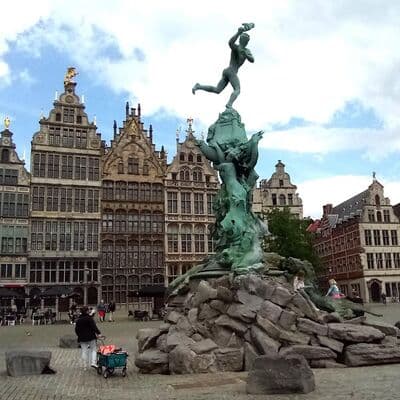
The heart of Antwerp with Grote Markt, the Cathedral of Our Lady, and narrow cobblestone streets. All major attractions are within walking distance, and the atmosphere of a medieval Flemish city is perfectly preserved. You'll find 16th-century guild houses, cozy cafes in historic buildings, and the sound of cathedral bells in the morning.
Pros: everything is nearby, maximum atmosphere, best restaurants
Cons: tourist prices, noisy on weekends, parking is a nightmare
Prices: $$$ (hotels from EUR 120/USD 130, hostels from EUR 30/USD 33)
Nearby: Grote Markt, Cathedral, Het Steen, Town Hall, Vlaeykensgang
Het Zuid (South Quarter) - Art and Nightlife
The bohemian district around the Royal Museum of Fine Arts. This is where artists, designers, and young professionals live. During the day - galleries, antique shops, and trendy coffee spots. In the evening - the city's best bars and clubs. Architecture is a mix of art deco and contemporary lofts.
Pros: cultural life, excellent bars, fashionable crowd
Cons: noisy at night on weekends, farther from the train station
Prices: $$ (hotels from EUR 80/USD 87, apartments from EUR 70/USD 76)
Nearby: KMSKA, FoMu, Zeno X Gallery, Marnixplaats square
Sint-Andries - Fashion and Vintage
Once the poorest neighborhood in the city, now the epicenter of Belgian fashion. This is where graduates of the Royal Academy opened their first boutiques: Dries Van Noten, Ann Demeulemeester, Walter Van Beirendonck. Nationalestraat is the main fashion artery. The vibe is relaxed, almost village-like, despite its central location.
Pros: unique shops, peaceful, authentic
Cons: few hotels, you need to know where to go
Prices: $$ (apartments from EUR 60/USD 65, B&Bs from EUR 70/USD 76)
Nearby: MoMu, MUHKA, designer stores, St. Andrew's Church
't Eilandje - Contemporary Architecture by the Water
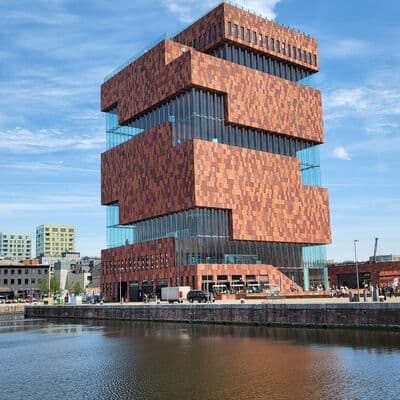
A former port district that has undergone complete transformation. The main star is the MAS Museum with its red tower and free panoramic terrace. Nearby stands the Port House by Zaha Hadid, resembling a giant diamond. Waterfront promenades, modern restaurants, yachts - it feels like a completely different city.
Pros: modern, waterfront views, close to MAS
Cons: far from historic center (20-minute walk), limited nightlife
Prices: $$ (hotels from EUR 90/USD 98)
Nearby: MAS, Red Star Line Museum, Havenhuis, Felix Pakhuis
Theater Quarter (Theaterbuurt) - 19th-Century Elegance
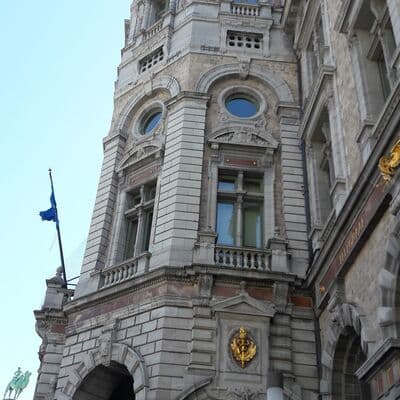
A prestigious area between Grote Markt and Central Station. Elegant 19th-century townhouses, theaters, the opera house, upscale restaurants. The main street - Meir - is the city's pedestrian shopping artery. Perfect for those who appreciate classic European sophistication.
Pros: prestigious, convenient, beautiful architecture
Cons: expensive, lots of shopping but less character
Prices: $$$ (hotels from EUR 130/USD 142)
Nearby: Opera, Bourla Theatre, Meir street, Stadsfeestzaal
Diamond District (Diamantkwartier) - Near the Station
One square kilometer through which 80% of the world's rough diamonds pass. Orthodox Jews in traditional dress, jewelry shop windows, armed security guards - a unique atmosphere. Practical location: step out of Europe's most beautiful train station and you're already in the city.
Pros: near the station, convenient for trips around Belgium
Cons: not the most atmospheric for strolling
Prices: $$ (hotels from EUR 70/USD 76, many chain options)
Nearby: Central Station, Zoo, City Park
Borgerhout - Multicultural and Budget-Friendly
A district east of the center with a large Moroccan and Turkish community. This is where you'll find the most authentic shawarma and kebab in the city, ethnic grocery stores, and street markets. Not glossy, but alive. For experienced travelers who aren't afraid of 'non-postcard' neighborhoods.
Pros: affordable, authentic food, local atmosphere
Cons: far from tourist spots, requires an open mind
Prices: $ (apartments from EUR 40/USD 44)
Nearby: Spoor Noord park, markets, ethnic restaurants
Best Time to Visit Antwerp
Optimal Months: May-June and September
Late spring and early fall are the golden times for Antwerp. Temperatures range from 15-22C (59-72F), there's less rain (though still bring an umbrella), and long days for walking. Cafe terraces are open, but crowds haven't arrived yet or have already left. In May, parks are in bloom; in September, you get gentle post-summer warmth.
July-August: High Season
Warm (20-25C/68-77F), but more tourists and higher accommodation prices. Plus side - summer festivals and outdoor events are in full swing. Minus - Belgians themselves go on vacation, so some local establishments may be closed.
November-December: Christmas Magic
The Christmas market on Grote Markt is one of Belgium's best. Mulled wine, waffles, lights, an ice rink. Cold (0-8C/32-46F), it gets dark early, but the atmosphere makes up for it. Book accommodation in advance - the city is popular in December.
January-March: Low Season
Lowest prices, but gray, rainy, and windy. Ideal for museums: KMSKA, MAS, Rubens House without the crowds. Some restaurants close for 'winter rest.' A good choice for budget travel if you're ready for the weather.
Key Events
- Zomer van Antwerpen (July-August) - summer festival with free concerts
- Antwerp Fashion Month (June) - shows, open events
- Christmas Market (late November to late December) - the main winter event
- Laundry Day (September) - the city's largest music festival
- Bollekesfeest (August) - festival celebrating De Koninck, the city's signature beer
Antwerp Itinerary: From 3 to 7 Days
Antwerp in 3 Days: The Essentials
Day 1: Historic Center
9:00-10:30 - Start at the Cathedral of Our Lady. This 14th-century Gothic masterpiece houses three Rubens paintings, including the famous 'Descent from the Cross.' Arrive at opening time while it's still quiet. Admission EUR 12 (USD 13), audio guide included.
10:30-12:00 - Stroll around Grote Markt. Admire the 16th-century guild houses and the Brabo Fountain (the legend of the giant's severed hand - that's where the city's name comes from). Pop into Vlaeykensgang - a hidden 16th-century alley that's easy to miss (entrance at Oude Koornmarkt 16).
12:00-13:30 - Lunch at Frituur No. 1 - Antwerp's oldest fry shop. Get your fries with andalouse or stoofvleessaus sauce. Or try De Bomma for traditional Flemish cuisine (stoofvlees - EUR 17).
14:00-16:00 - Rubens House (Rubenshuis). The artist lived and worked here for 25 years. Original workshop, Italian-style garden, collection of works. Ticket EUR 14 (USD 15).
16:30-18:00 - Walk along the Scheldt waterfront. From Het Steen castle - the oldest building in the city - along the river with views of the port. Sunset over the water.
19:00 - Dinner in Het Zuid. Recommendations: Fiskebar (seafood, EUR 35-50 per person) or Bar Peche (creative cuisine, cocktails).
Day 2: Museums and Modern Antwerp
9:30-12:30 - MAS Museum. Take the escalators through all floors - each level reveals a new view of the city. Exhibitions about Antwerp's connection to the world through trade. The rooftop with 360-degree panorama is free! Full museum entry EUR 12 (USD 13).
12:30-13:30 - Lunch in the port area. DOK 36 (coffee and all-day breakfast) or Felix Pakhuis (in a historic warehouse, bistro menu).
14:00-16:30 - KMSKA (Royal Museum of Fine Arts). Reopened after an 11-year renovation. Rubens, Van Dyck, James Ensor, Rene Magritte - the entire history of Belgian art. Ticket EUR 20 (USD 22).
17:00-18:30 - Sint-Andries quarter. Walk down Nationalestraat - browse designer boutiques (Dries Van Noten, Ann Demeulemeester). MoMu (Fashion Museum) if that interests you.
19:30 - Dinner in the historic center. The Jane (former chapel, high-end cuisine, book a month ahead) or the more accessible Balls & Glory (Flemish meatballs).
Day 3: Diamonds, the Station, and Hidden Antwerp
9:00-10:30 - Central Station (Antwerpen-Centraal). Often called a 'railway cathedral.' Enter as if visiting a museum - marble, gilding, a grand dome. Free.
10:30-12:00 - Diamond District. Walk along Hoveniersstraat and Pelikaanstraat. DIVA - the diamond museum: interactive exhibits, watch diamond cutters at work. Ticket EUR 12 (USD 13).
12:00-13:30 - Lunch near the station. Frites Atelier - artisanal fries from a Michelin-trained chef. Or Umamido - excellent ramen.
14:00-16:00 - Hidden Antwerp. De Ruien - underground tunnels beneath the city, former canals bricked over in the 16th century. Tour by boat or on foot. Book online (EUR 15-18).
16:30-18:00 - Spoor Noord park. A former railway station, now a green space with city views. Locals come for picnics and barbecues. Cross the futuristic Parkbrug bridge into Eilandje.
19:00 - Farewell dinner. Luddites - a wine bar inside a bookshop. Or 't Zilte - three Michelin stars with port views (menu from EUR 195/USD 213).
Antwerp in 5 Days: At a Leisurely Pace
Add to the three-day itinerary:
Day 4: Art and Alternative Scene
Morning: MUHKA (contemporary art museum) - provocative exhibitions, Belgian avant-garde. FoMu (photography museum) - one of Europe's best collections.
Afternoon: Zurenborg neighborhood - an art nouveau quarter beyond the center. Cogels-Osylei street - the 'street of architectural styles,' each house unique. Berchem metro station is a monument in itself.
Evening: Concert at De Roma (historic cinema, now a concert venue) or an evening in the bars on Kloosterstraat.
Day 5: Day Trips
Option A: Ghent (30 minutes by train). Medieval canals, Castle of the Counts, Van Eyck's 'Adoration of the Lamb' altarpiece. Easy to cover in a day.
Option B: Mechelen (15 minutes by train). Less touristy, beautiful cathedral, Het Anker brewery. Compact, peaceful.
Option C: Lier (20 minutes). Small town with a Gothic church, the Zimmer astronomical clock. Almost no tourists.
Antwerp in 7 Days: With Surroundings
Add to the five-day itinerary:
Day 6: Bruges - classic Belgian town (1 hour by train). Canals, lace, chocolate. Crowded, but worth seeing at least once.
Day 7: Relaxed day in Antwerp. Morning - Saturday farmers market (Theaterplein). Afternoon - revisit favorite spots. Evening - Belgian beer at 't Elfde Gebod (interior with religious statues) or Kulminator (700+ beer varieties).
Where to Eat in Antwerp: Restaurants and Cafes
Street Food and Markets
Frites (Belgian Fries) - a national treasure. Frituur No. 1 - the city's oldest fry shop, fries with homemade sauces. Frites Atelier - premium version from a Michelin-trained chef, triple-fried potatoes. Max - local chain, beloved by everyone.
Saturday Farmers Market (Theaterplein, 8:00-13:00) - shrimp croquettes from Bubba, cheeses, sausages, oysters with a glass of white wine. This is where locals have breakfast.
WOLF - food hall with 27 vendors and 5 bars. From sushi to burgers. Convenient when your group can't agree on a cuisine.
Local Haunts
De Bomma - grandma's cooking: stoofvlees (beef stewed in beer), waterzooi (creamy chicken soup), vol-au-vent. Huge portions, homey atmosphere. EUR 15-20 for a main course.
Balls & Glory - Flemish meatballs with mashed potatoes and sauces. Simple concept, perfect execution. Quick, filling, affordable (EUR 12-15).
Het Elfde Gebod - 'The Eleventh Commandment.' A pub with hundreds of religious statues. Food is simple, but the atmosphere is unforgettable.
Mid-Range Restaurants
Fiskebar - Scandinavian style, the city's best seafood. Oysters, ceviche, grilled fish. Trendy interior, open kitchen. EUR 40-60 per person with wine.
Bar Peche - creative cuisine in a cozy space. Seasonal menu, excellent desserts. Book for weekends.
Umamido - authentic Japanese ramen. Lunch queues are a good sign. EUR 15-18 per bowl.
Zaowang - best Asian in the city, according to locals. This is where Antwerp residents dine, not tourists.
Top-End Restaurants
The Jane - a former chapel, now one of Belgium's finest restaurants. Chef Nick Bril, two Michelin stars. Stained glass, altar, incredible presentation. Menu from EUR 165 (USD 180). Book 2-3 months ahead.
't Zilte - three Michelin stars, panoramic view from the 9th floor of MAS. Chef Viki Geunes is a legend of Belgian cuisine. Lunch is more accessible (menu from EUR 95/USD 104).
Cafes and Breakfast
DOK 36 - coffee shop in the port area. Specialty coffee, avocado toast, bowls. Hipster vibe, big windows overlooking the water.
Brood en Spelen - 'Bread and Games.' Bakery with the city's best croissants. Sandwiches on fresh bread, coffee, sunny terrace.
Normo - specialty coffee, minimalist interior. For coffee snobs.
Caffenation - local roaster with several locations. Espresso at a high level.
What to Try: Antwerp Food
Belgian Fries (Frieten/Frites) - not 'French fries,' they're Belgian! Thick cut, double-fried, crispy exterior. Served in a paper cone with sauce of choice. Classic is mayonnaise. Try: andalouse (mayo with tomato and pepper), stoofvleessaus (meat sauce), samurai (spicy mayo). Price: EUR 3-5.
Stoofvlees/Carbonnade Flamande - Flemish stew of beef braised in Belgian beer with caramelized onions. Served with fries. Comfort food at its finest. Price: EUR 15-20.
Shrimp Croquettes (Garnaalkroketten) - crispy croquettes filled with gray North Sea shrimp. Try them at the market from Bubba, or in any restaurant. Price: EUR 12-15 per portion.
Mussels (Mosselen) - season: September-April (months with an 'r'). Served in huge pots with fries. Classic is moules-frites in white wine, cream, and celery. Price: EUR 20-25.
Waterzooi - creamy stew-soup, traditionally made with fish (Ghent style) or chicken (rest of Flanders). Gentle, warming. Price: EUR 18-22.
Antwerp Hands (Antwerpse Handjes) - chocolate or baked 'hands,' the city's symbol. Legend: a Roman soldier cut off a giant's hand and threw it into the Scheldt. Sweet version available at any chocolatier. Price: EUR 3-8 per box.
Waffles (Wafels) - two types: Brussels waffle (rectangular, light, crispy, with powdered sugar) and Liege waffle (rounded, dense, with caramelized sugar inside). Liege is sweeter and more filling. Price: EUR 3-6.
De Koninck (Bolleke) - Antwerp's signature beer. Amber ale, served in a spherical glass (bolleke). The brewery has been operating since 1833; tours with tasting available. Price: EUR 3-4 at a bar.
Elixir d'Anvers - herbal liqueur, Antwerp's answer to Jagermeister. Made since 1863. Drunk as a digestif or added to coffee. Price: EUR 5-8 per serving.
What NOT to try: waffles at tourist spots near Grote Markt - overpriced for mediocre quality. Chocolate at souvenir shops - look for Chocolatier Del Rey or Pierre Marcolini instead.
Antwerp Secrets: Local Tips
Free MAS Panorama. You don't need to buy a museum ticket - the escalators to the rooftop are free. Go an hour before sunset for the best photos.
Vlaeykensgang - the hidden alley. Most tourists walk right past it. Entrance through a small door at Oude Koornmarkt 16. Inside - the 16th century, a jazz club, galleries.
Fries - not at midday. The best frituurs are packed at lunch. Come after 3 PM or after 8 PM - fresh batch, no queue.
Antwerp City Card - do the math. EUR 27 for 24 hours: free transport and museums. Worth it if you plan 2+ museums. If you're just walking around, you don't need it.
Sunday is a different city. Shops are closed, but the antique market at Lijnwaadmarkt (8:00-13:00) and flea market on Kloosterstraat are open. Locals have late breakfast at cafes.
Biking - be careful. Velo Antwerpen is the rental system, first 30 minutes free. But: locals ride aggressively, tram tracks are slippery. For beginners, walking is better.
Rain will happen. Not a question of 'if' but 'when.' Umbrella or rain jacket is mandatory. On the plus side, cobblestones glisten beautifully after rain.
Diamonds - don't buy on the street. 80% of shops in the Diamond District are for professionals. Tourists get marked-up prices. If you're serious about buying, look for certified dealers and compare prices.
Kulminator - beer lover's paradise. Over 700 varieties, some bottles 20+ years old. The owner will help pick a beer based on your taste. Arrive early - seating is limited.
Flemish isn't Dutch. Technically the same language, but locals speak with a strong accent. English is understood in the center; beyond that, it's harder. 'Dank u' (thank you) and 'Alstublieft' (please) will help.
Saturday market is the one. Theaterplein, 8:00-13:00. Arrive around 9:00 - full selection, but not yet crowded. Oyster breakfast with white wine is a local tradition.
Transport and Connectivity in Antwerp
From the Airport to the Center
Brussels Airport (BRU) - the main hub. To Antwerp:
- Train: 35-45 minutes, every 15-20 minutes, EUR 15-20. Station is directly in the airport.
- Flibco bus: 45 minutes, from EUR 5 if booked in advance.
Antwerp Airport (ANR) - small, low-cost carriers:
- Bus 51/52: 15 minutes to center, EUR 3.
- Taxi: EUR 15-20.
Charleroi Airport (CRL) - budget option, but far:
- Bus + train: 2+ hours, EUR 25-30. Only if you get a very cheap flight.
Getting Around the City
On foot - the best way. The historic center is compact, all major sites within a 2 km radius.
Trams and buses (De Lijn):
- Single ticket: EUR 2.50 (from machine), EUR 3 (from driver)
- Day pass: EUR 7.50
- De Lijn app is most convenient
- Trams run frequently, network covers the whole city
Velo Antwerpen - bike rental:
- Day pass: EUR 5
- First 30 minutes of each trip free
- 300+ stations citywide
- App shows available bikes
Taxi:
- Bolt, Uber - both work, cheaper than official taxis
- Official taxi: from EUR 3.50 base + EUR 2.30/km
- From center to Eilandje: about EUR 10
Trains Around Belgium
SNCB/NMBS is the national railway. From Antwerp:
- Brussels: 40 minutes, from EUR 10
- Ghent: 50 minutes, from EUR 12
- Bruges: 1 hour 20 minutes, from EUR 17
- Amsterdam: 1 hour (Thalys/Eurostar), from EUR 30
Pro tip: Weekend Ticket - travel anywhere in Belgium for EUR 7 (weekends only).
Internet and Communication
SIM Card:
- Proximus, Orange, Base - at any supermarket
- Prepaid SIM: from EUR 10 with 5 GB
- eSIM: Airalo, Holafly - buy in advance, activate on arrival
Wi-Fi:
- Free in most cafes and restaurants
- 'Antwerpen-free-wifi' network in the center (limited speed)
- Hotels usually include it
Useful Apps:
- De Lijn - public transport, tickets, routes
- SNCB/NMBS - Belgian trains
- Bolt/Uber - taxi
- Velo Antwerpen - bike rental
- Visit Antwerpen - official city guide
Who Antwerp Is For: Conclusions
Antwerp is a city for those who want to see the real Belgium without the postcard sweetness of Bruges. Here, Rubens coexists with avant-garde fashion, medieval alleys blend with contemporary port architecture, and street fries can rival a Michelin dinner.
Perfect for: art and architecture enthusiasts, fashionistas and shoppers, foodies and beer lovers, those who value authenticity over tourist attractions.
Not the best choice for: beach vacation seekers, those coming to Belgium only for canals and waffles (Bruges does that better), families with young children (limited kid-specific entertainment).
How much time: minimum 2 days, optimal 3-4 days, with surroundings - a week.
Information current as of 2026. Prices and schedules may change - check official websites.