About
Cyprus: The Complete Travel Guide for English-Speaking Visitors
Cyprus sits at the crossroads of three continents, a sun-drenched island where ancient mythology meets Mediterranean charm, where Byzantine churches stand beside Roman mosaics, and where you can ski in the morning and swim in the afternoon. This is not hyperbole - it is the remarkable reality of an island that packs more history, culture, and natural beauty into its compact 9,251 square kilometers than many countries ten times its size. As someone who has spent considerable time exploring every corner of this island, from the tourist-packed beaches of Ayia Napa to the remote monasteries of the Troodos Mountains, I can tell you that Cyprus rewards curious travelers with experiences that go far beyond the typical Mediterranean beach holiday.
Why Visit Cyprus
Let me be direct with you: Cyprus is not just another Mediterranean island. Yes, it has the beaches, the sunshine, and the seafood you would expect. But what makes Cyprus genuinely special is its layered complexity - a place where you can touch history spanning nine millennia while sipping excellent local wine, where Greek and Turkish cultures coexist in ways both harmonious and tense, and where the landscape shifts from coastal resort to mountain wilderness within a thirty-minute drive.
The historical depth of Cyprus is staggering. This island has been continuously inhabited since at least 10,000 BCE, and the archaeological evidence of this occupation is not locked away in museums but spread across the landscape. Walking through the Paphos Archaeological Park, you are not viewing reconstructions but actual Roman villas with their original floor mosaics intact, preserved by the dry climate and the layers of time. The Tombs of the Kings date back to the 4th century BCE, carved directly into the rock by ancient craftsmen whose work still impresses today. These are not isolated sites but part of a continuous archaeological landscape that makes Cyprus a living museum.
The mythology associated with Cyprus adds another layer of fascination. This is, according to ancient Greek belief, the birthplace of Aphrodite, goddess of love and beauty. The specific spot, Petra tou Romiou, remains one of the most photographed locations on the island, though the reality of swimming there is complicated by strong currents and sharp rocks. But the Aphrodite connection extends beyond this single beach - there are temples, sanctuaries, and sacred groves scattered across the island that speak to her ancient worship. Whether you believe in the mythology or not, standing at these sites connects you to thousands of years of human belief and ritual.
The natural environment of Cyprus deserves serious attention. The Troodos Mountains rise to nearly 2,000 meters at Mount Olympus, creating a completely different ecosystem from the coastal regions. These mountains are home to endemic species found nowhere else on Earth, including the Cyprus cedar and the Cyprus mouflon, a wild sheep that has become the national animal. The mountains also preserve ten Byzantine churches designated as UNESCO World Heritage Sites, their interiors covered with frescoes that represent some of the finest examples of Byzantine art anywhere in the world. The Painted Churches of Troodos alone justify a trip to Cyprus for anyone interested in religious art or medieval history.
The beaches of Cyprus range from developed resort strips to hidden coves accessible only by boat or rough trail. The famous party beaches of Nissi Beach in Ayia Napa represent one extreme, while the wild coastline around Cape Greco shows the other face of Cypriot coastal beauty. Between these extremes lies every possible beach experience: family-friendly shallow waters, dramatic cliff-backed swimming spots, and quiet stretches of sand where you might be the only visitor.
For British visitors especially, Cyprus offers a familiar yet foreign experience. The legacy of British colonial rule (1878-1960) remains visible in ways both obvious and subtle. Traffic drives on the left side of the road, electrical outlets use British three-pin plugs, and English is widely spoken as an unofficial second language. Road signs are bilingual, menus often include English descriptions, and you will rarely struggle to communicate. Yet despite these familiar elements, Cyprus maintains a distinctly Mediterranean character - the pace of life is slower, the food reflects Greek traditions, and the Orthodox Church plays a central role in daily life that will seem exotic to secular Western visitors.
The divided nature of Cyprus adds a dimension that you will not find in other Mediterranean destinations. Since 1974, the island has been split between the Republic of Cyprus (internationally recognized and EU member) and the Turkish Republic of Northern Cyprus (recognized only by Turkey). The Green Line runs through the heart of Nicosia, making it the last divided capital in Europe. You can cross this line freely with your passport and experience both sides of Cyprus in a single day - walking from Greek Orthodox churches to Ottoman mosques, from euro-denominated shops to those using Turkish lira. This is not war tourism but an opportunity to understand a complex political situation firsthand, to see how ordinary people live in extraordinary circumstances.
The food and wine culture of Cyprus provides daily pleasures throughout your visit. Cypriot cuisine represents the best of Mediterranean cooking, with influences from Greece, Turkey, Lebanon, and beyond. The meze tradition - endless small plates of different dishes - turns every meal into a celebration. Local wines, particularly those from indigenous grape varieties like Xynisteri and Maratheftiko, have improved dramatically in recent decades and now win international awards. The Commandaria dessert wine may be the oldest named wine still in production, with documentation stretching back to the Crusades.
Practical considerations favor Cyprus as well. The island enjoys over 300 sunny days per year, making it a reliable destination for beach holidays from April through November and a pleasant winter escape when temperatures rarely drop below 10 degrees Celsius on the coast. The compact size means nothing is more than a few hours drive away, allowing you to combine beach time with mountain exploration without spending all day in a car. Infrastructure is generally good, with well-maintained roads, modern airports at Larnaca and Paphos, and a range of accommodation from five-star resorts to family-run guesthouses. Cyprus is not the cheapest Mediterranean destination, but it offers good value compared to the French Riviera or Italian Amalfi Coast.
Safety is another strong point. Cyprus has one of the lowest crime rates in Europe, and violent crime against tourists is extremely rare. The main risks are sunburn, overindulgence in food and drink, and renting a car without fully understanding left-side driving. Political tensions with the Turkish-occupied north occasionally make headlines but almost never affect tourist safety. Natural disasters are also rare - Cyprus has seismic activity but major earthquakes are infrequent, and the island lies south of typical Mediterranean storm tracks.
Perhaps most importantly, Cyprus rewards the curious traveler who looks beyond the obvious. Yes, the resort beaches are pleasant and the archaeological sites impressive. But Cyprus truly reveals itself to those who wander into mountain villages where traditional life continues, who seek out the lesser-known Byzantine churches, who talk with locals about the complexities of their island home, and who take the time to understand how history, geography, and culture have shaped this remarkable place. This is an island that can be enjoyed superficially as a beach destination or explored deeply as a window into Mediterranean civilization - the choice is yours.
Regions of Cyprus: Where to Go and What to Expect
Cyprus divides naturally into distinct regions, each offering different experiences and atmospheres. Understanding these regions helps you plan a trip that matches your interests, whether you seek beaches, culture, nightlife, or mountain tranquility. Let me guide you through each major area with the specific details you need to make informed choices.
Nicosia - The Divided Capital
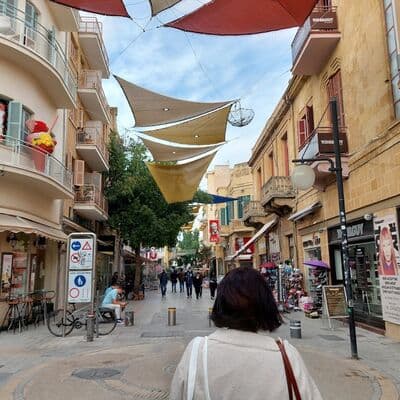
Nicosia stands apart from other Cypriot destinations because it is the only major city without a beach, yet it may be the most fascinating place on the island. This is the last divided capital in Europe, split since 1974 between the Republic of Cyprus and Turkish-controlled northern zone. The division is not abstract but physically present - you can walk down Ledra Street, the main shopping thoroughfare, show your passport at a checkpoint, and suddenly find yourself in a different country with different currency, different language on signs, and different calling to prayer from minarets rather than bells from churches.
The old city of Nicosia is contained within massive Venetian walls built in the 16th century to defend against Ottoman invasion - walls that ultimately failed but still define the city center. Within these walls, the south side bustles with shops, cafes, and restored historic buildings. The Cyprus Museum holds the most important archaeological collection on the island, including finds spanning from Neolithic times through the Roman period. The terracotta figures, the bronze statues, and the jewelry give you context for the ruins you will see elsewhere on the island.
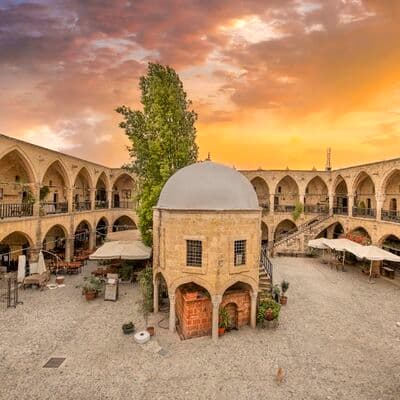
Crossing to the north side through the Ledra Street checkpoint (bring your passport) transports you to a different world. The Buyuk Han is a beautifully restored Ottoman caravanserai now housing craft shops and cafes - one of the finest examples of Ottoman architecture in the eastern Mediterranean. The Selimiye Mosque, originally built as a Gothic cathedral before the Ottoman conquest, perfectly illustrates the island's layered history. Its soaring Gothic arches and pointed windows now frame Islamic interior decoration, creating a unique architectural hybrid.
Nicosia is the business and administrative capital, which means it has a working-city atmosphere quite different from the resort towns. This is where you find the best museums, the most sophisticated restaurants, and the most authentic urban Cypriot life. Summers are brutally hot - temperatures regularly exceed 40 degrees Celsius in July and August - making this a better spring, autumn, or winter destination. Allow at least one full day for Nicosia, preferably two if you want to properly explore both sides and visit the museums.
Practical notes for Nicosia: parking in the old city is difficult, so use one of the car parks outside the walls. The crossing to the north is straightforward but closes at night (check current hours as they change seasonally). You can use euros in the south and need Turkish lira in the north, though some north-side merchants accept euros at poor exchange rates. The best shopping is on the south side along Ledra Street and in the restored Laiki Geitonia neighborhood.
Limassol - The Cosmopolitan Hub
Limassol is the second-largest city and the main commercial port, but it has successfully developed a dual identity as both a working city and a resort destination. The long waterfront promenade, Molos Promenade, stretches for several kilometers and provides an excellent introduction to the city - palm trees, sculptures, cafes, and views across the bay. Unlike the purpose-built resorts elsewhere, Limassol has genuine urban character with a vibrant Old Town district of narrow streets, traditional tavernas, and local shops.
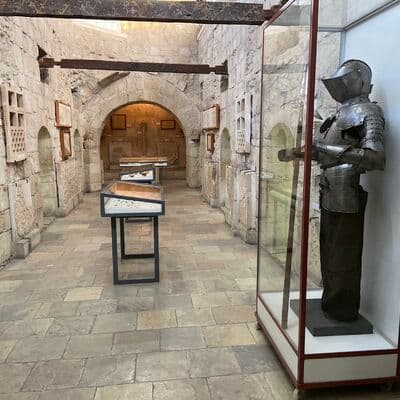
The Limassol Castle, though modest in size, sits at the heart of the old city and houses the Cyprus Medieval Museum. According to tradition, Richard the Lionheart married Berengaria of Navarre here during the Third Crusade - one of many Crusader connections that make Limassol significant for medieval history enthusiasts. The castle collections cover the Byzantine and medieval periods with icons, armor, pottery, and everyday objects.
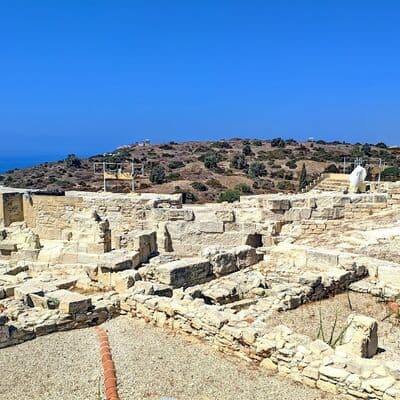
Beyond the city, the Limassol district contains some of Cyprus's most important archaeological sites. Kourion is the most spectacular - a Greco-Roman city perched on cliffs above the sea, with a restored theater still used for performances, extensive floor mosaics in the House of Eustolios, and an early Christian basilica. The setting is magnificent, overlooking dramatic coastline, and the site is large enough to absorb crowds without feeling overcrowded. Visit early morning or late afternoon for the best light and smaller crowds.
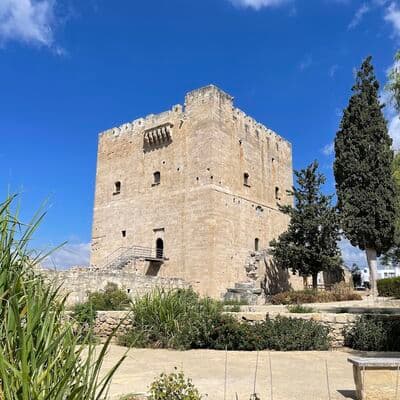
Kolossi Castle stands about 10 kilometers west of Limassol, a superbly preserved Crusader stronghold that served as headquarters for the Knights of St. John and later the Knights Templar. The three-story keep rises impressively from flat farmland, and you can climb to the roof for panoramic views. This is where Commandaria wine was first produced under Crusader supervision, and the surrounding area remains wine country to this day.
The Amathus Archaeological Site lies east of Limassol, one of the ancient city-kingdoms of Cyprus. Though less dramatic than Kourion, Amathus has its own appeal - an agora, temple ruins, and tombs spread across a hillside above the sea. The site is smaller and less visited, making it pleasant for those who want to explore ruins without crowds.
Limassol is the wine capital of Cyprus, with the bulk of production coming from surrounding villages and the Troodos foothills. The annual Wine Festival in early September provides an excellent excuse to visit, but wine tourism is possible year-round at dozens of wineries offering tastings and tours. The villages of Omodos, Lofou, and Koilani in the hills above Limassol preserve traditional architecture and provide pleasant half-day excursions.
For nightlife, Limassol offers the most diverse options outside Ayia Napa - not the massive clubs of the resort strip but a variety of bars, wine bars, and late-night venues concentrated in the old town and along the tourist strip east of the old port. The city attracts a more sophisticated crowd than Ayia Napa, including significant Russian and British expat communities.
Paphos - UNESCO Heritage and Mythology
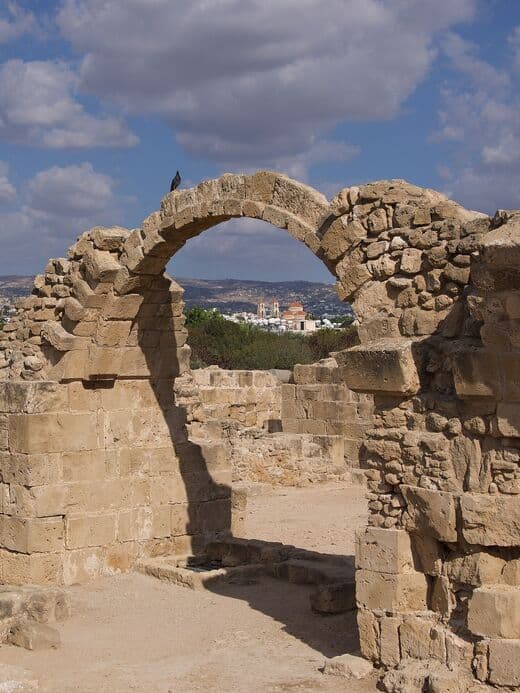
Paphos holds UNESCO World Heritage status for its exceptional archaeological remains, and this designation barely captures the richness of what you will find here. The Paphos Archaeological Park (also known as Kato Paphos Archaeological Park) contains the finest collection of Roman floor mosaics anywhere in the eastern Mediterranean - elaborate, colorful depictions of mythological scenes that rival anything in Pompeii or Ostia. The House of Dionysus, House of Theseus, House of Aion, and House of Orpheus preserve mosaic floors that tell stories from Greek mythology with remarkable artistic skill.
These mosaics survived because Roman Paphos was gradually abandoned rather than destroyed, allowing the sand and soil to cover and protect the floors. When excavations began in the 20th century, the colors remained vivid after nearly two millennia. Modern shelters now protect the most important mosaics while allowing visitors to view them from raised walkways. Plan at least two hours for the Archaeological Park, more if you are seriously interested in Roman art.
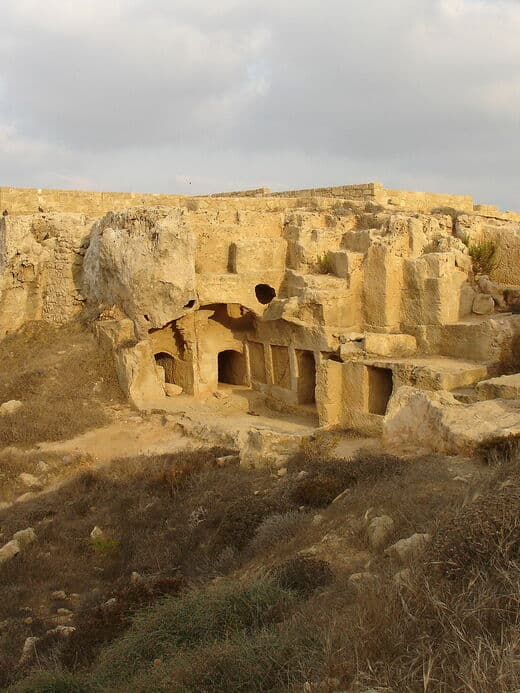
The Tombs of the Kings predates the Roman period, a necropolis carved from solid rock beginning in the 4th century BCE. Despite the name, these were tombs of aristocrats rather than actual royalty, but the scale impresses nonetheless. Underground chambers, carved columns, and connecting passageways create an almost cinematic atmosphere. Early morning or late afternoon light filtering into the tomb entrances produces memorable photographs.
Paphos Castle guards the entrance to the old harbor, a Byzantine fort rebuilt by the Lusignans and later the Ottomans. The castle is small but photogenic, and the view from the roof takes in the harbor, the Archaeological Park, and the surrounding coastline. The harbor area itself is pleasant for an evening stroll, with fish restaurants lining the quay and boats bobbing at anchor.
About 25 kilometers southeast of Paphos lies Petra tou Romiou, better known as Aphrodite's Rock - the legendary birthplace of the goddess of love. Large sea stacks rise from the surf against a backdrop of white cliffs, creating one of the most iconic landscapes in Cyprus. Swimming here is possible but challenging due to strong currents and rocky footing. The best views come from the clifftop parking area, where most visitors simply photograph the scene. Legend says that swimming around the rock three times brings eternal youth or good fortune in love, but the reality of cold water and unpredictable currents makes this inadvisable for most swimmers.
Paphos divides into two distinct areas: Kato Paphos (lower Paphos) along the coast where you will find the archaeological sites, tourist hotels, and harbor, and Ktima (upper Paphos) about a kilometer inland, which is the working town with markets, local shops, and municipal buildings. Ktima offers a more authentic Cypriot experience than the tourist strip and is worth exploring for its covered market, traditional kafeneia (coffee houses), and better-value restaurants.
The Paphos district extends into the Akamas Peninsula to the north, one of the last wild areas of Cyprus where development has been restricted to protect endangered species and unique ecosystems. The Avakas Gorge provides excellent hiking through a dramatic limestone canyon. The Baths of Aphrodite, a natural grotto pool associated with the goddess, marks the western terminus of a trail that can be hiked to Fontana Amorosa and back along the coast.
Ayia Napa and Protaras - Beach Resort Paradise
Ayia Napa has an international reputation as a party destination, and that reputation is deserved during summer months when European youth descend for beach days and club nights. But reducing Ayia Napa to its nightlife misses much of what makes this corner of Cyprus special. The beaches here are genuinely among the best in the Mediterranean - soft white sand, crystal-clear water, and facilities ranging from full-service to unspoiled.
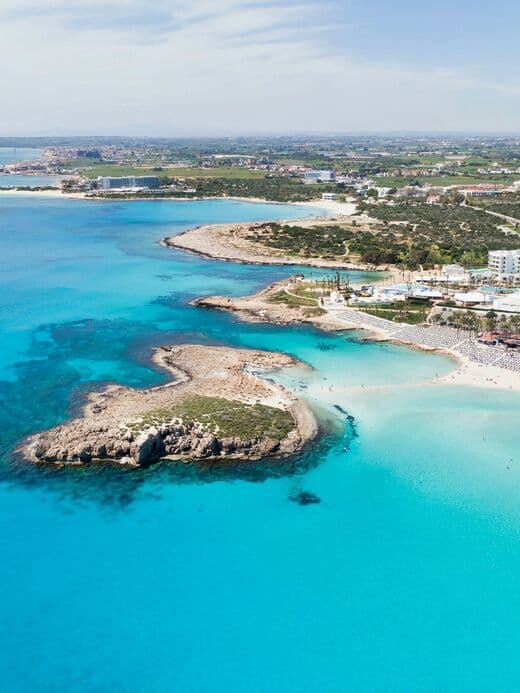
Nissi Beach is the most famous, a crescent of white sand curving around a lagoon with a small island connected by a sand bar at low tide. This is the iconic Ayia Napa scene - parasols, beach bars, and crowds of sunbathers during summer. Outside peak season (July-August), Nissi remains beautiful but far more relaxed. Families will find the shallow water perfect for children, while couples might prefer to visit in shoulder season when the party atmosphere diminishes.
Cape Greco provides the dramatic alternative to the developed beaches. This national forest park occupies a rocky peninsula east of Ayia Napa, with hiking trails through pine and juniper forest leading to cliff viewpoints, hidden coves, and the famous sea caves. You can hike, cycle, or drive through the park, stopping at viewpoints that reveal the startling blue of the deep water and the weathered limestone formations along the coast. The Sea Caves near Cape Greco are popular for swimming and snorkeling, accessible by rough path from parking areas above.
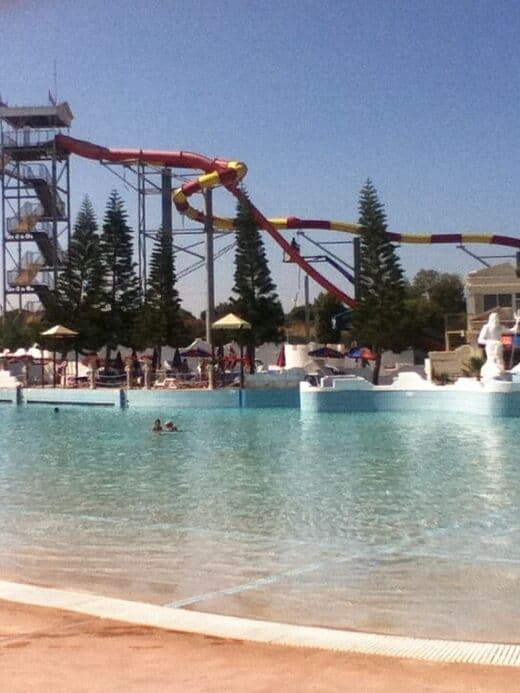
WaterWorld Themed Waterpark offers a Greek mythology theme for families and those seeking relief from beach routine. The park includes a wave pool, numerous water slides, a lazy river, and various themed attractions. Quality is high by European waterpark standards, and a full day here provides good value for families with children.
The Thalassa Municipal Museum in Ayia Napa presents an excellent marine-focused collection, including a full-scale replica of an ancient Greek merchant ship. The museum provides context for the maritime history of Cyprus and makes a good rainy-day option or afternoon break from beach activities.
Beyond the beaches, central Ayia Napa preserves a 16th-century monastery within the town square, surrounded by restaurants and bars in a somewhat incongruous juxtaposition. The monastery cloister provides a peaceful escape from the party atmosphere and is worth a brief visit.
Protaras, about 7 kilometers north of Ayia Napa, offers a slightly more family-oriented alternative with its own excellent beaches and a less intense nightlife scene. Fig Tree Bay consistently ranks among the best beaches in Europe for its combination of sand quality, water clarity, and facilities. The family-friendly atmosphere makes Protaras the better choice for those with children or those seeking beach relaxation without the party element.
Practical notes: Ayia Napa has excellent bus connections to Larnaca airport. Car rental is useful but not essential if you plan to stay on the beaches. Accommodation ranges from massive resort hotels to small apartments. Summer booking should be done well in advance, especially for July and August. The nightlife district clusters around the central square, and late-night noise is inevitable at nearby accommodation - choose your hotel location accordingly.
Larnaca - Gateway City
Larnaca serves as the main entry point to Cyprus through its international airport, but many visitors pass through without exploring this understated city. That is a mistake, because Larnaca offers genuine historical interest, a pleasant seafront promenade, and easier access to some distinctive sites that most tourists miss.
The Church of Saint Lazarus ranks among the most important Byzantine churches in Cyprus. According to tradition, Lazarus - the man raised from the dead by Jesus Christ - fled persecution in Judea and became the first bishop of Kition (ancient Larnaca), where he lived for thirty more years before his second and final death. The church, built in the 9th century, contains his tomb in the crypt and preserves a remarkable iconostasis. For Christian visitors especially, this is a significant pilgrimage site.
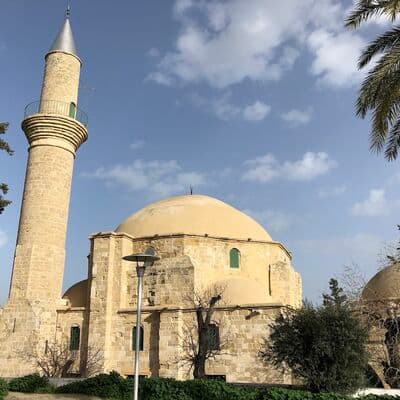
The Larnaca Salt Lake provides one of Cyprus's most distinctive landscapes, particularly from November through March when thousands of flamingos arrive to winter. The shallow lake, which dries to a white salt crust in summer, transforms into a pink-tinged wetland during flamingo season. A walking and cycling path circles the lake, passing the Hala Sultan Tekke, an Ottoman mosque and one of the holiest sites in Islam outside of Mecca and Medina.
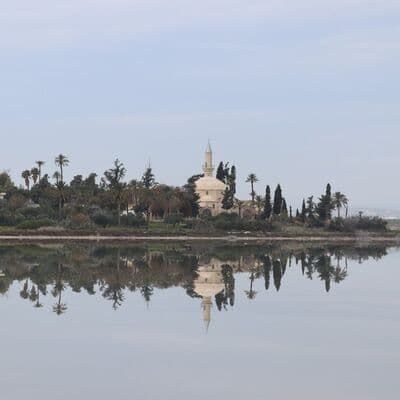
The Hala Sultan Tekke honors Umm Haram, aunt of the Prophet Muhammad, who died here in 649 CE during the first Arab raids on Cyprus. The mosque, surrounded by gardens and palm trees at the edge of the salt lake, presents one of the most photogenic scenes on the island - the white minaret reflected in the water with flamingos feeding in the foreground during winter months. Non-Muslims may visit the mosque during opening hours with appropriate dress (coverings provided at entrance).
Larnaca's seafront promenade, Finikoudes, stretches along the town beach with cafes, restaurants, and a pleasant atmosphere for evening strolls. The beach itself is adequate but not comparable to Ayia Napa or Paphos - more useful for a quick swim than as a destination in itself. The medieval fort at the south end of the promenade houses a small museum and provides views along the coast.
The town's proximity to the airport makes it a practical choice for first or last nights of a Cyprus trip. The old Turkish quarter, Skala, preserves narrow streets and traditional architecture and is worth exploring on foot. Larnaca also serves as a convenient base for day trips to Nicosia (about 50 kilometers) or Ayia Napa (about 40 kilometers).
Troodos Mountains - The Other Cyprus
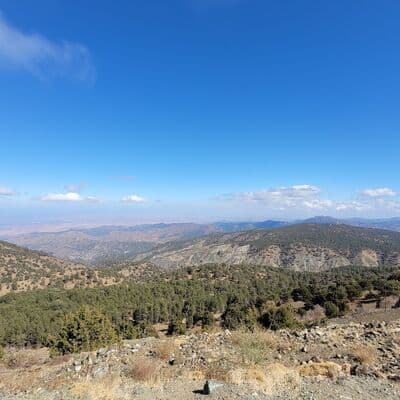
The Troodos Mountains occupy the center of Cyprus, rising to 1,952 meters at Mount Olympus - high enough for winter skiing and cool enough in summer to provide relief from coastal heat. For visitors who think of Cyprus only as a beach destination, the Troodos comes as a revelation: pine forests, rushing streams, stone villages, and some of the finest Byzantine art anywhere in the world.
The Painted Churches of Troodos are UNESCO World Heritage Sites, ten Byzantine churches scattered across the mountains whose interior frescoes represent an unbroken artistic tradition spanning the 11th through 16th centuries. From the outside, these churches appear modest - small stone buildings with steep wooden roofs added to protect against mountain snows. Inside, they blaze with color - walls and ceilings covered with biblical scenes, saints, and decorative patterns painted by artists working in isolation from the mainstream Byzantine world.
The church at Panagia tou Araka in Lagoudera contains frescoes from 1192 that art historians consider among the finest examples of middle Byzantine painting. The church of Agios Nikolaos tis Stegis near Kakopetria preserves multiple layers of painting spanning several centuries. The church of Panagia Podithou shows the transition to post-Byzantine Italian influence. Visiting these churches requires some effort - they are spread across the mountains and several require calling ahead for access - but for anyone interested in Byzantine art, this effort is amply rewarded.
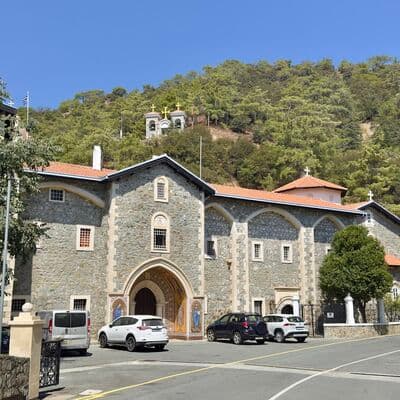
Kykkos Monastery is the largest and wealthiest monastery in Cyprus, spectacularly situated on a mountain ridge at about 1,300 meters elevation. Founded in the 11th century and rebuilt several times after fires, the current buildings date largely from the 19th century but preserve the traditional layout and atmosphere of Cypriot monasteries. The museum contains excellent ecclesiastical art, and the monastery's icon of the Virgin Mary is considered one of three painted by Luke the Evangelist. Kykkos is also significant as the place where Archbishop Makarios III, first president of Cyprus, began his monastic life.
The Troodos villages offer a different pace from the coastal resorts. Kakopetria, Platres, and Pedoulas are the main tourist centers, with hotels, restaurants, and walking trails. Omodos, Lofou, Vouni, and dozens of smaller villages preserve traditional stone architecture and local crafts. Many villages are known for specific products - Lofou for olive oil, Omodos for wine, Fikardou (now largely abandoned) for architectural preservation. Driving through the mountains and stopping at villages provides insights into Cypriot rural life that you will not find on the coast.
Mount Olympus (not to be confused with the taller Greek mountain of the same name) is the highest point in Cyprus. In winter (typically January-March), the small ski resort on its slopes offers limited but genuine downhill skiing. In summer, the summit area provides cool refuge from coastal heat and starting points for hiking trails. The Artemis Trail encircles the summit with easy walking through forest, while more challenging trails descend into valleys and connect with villages.
The Troodos also preserves Cyprus's most important water resources - the mountains capture rainfall and snowmelt that feeds reservoirs supplying much of the island. Hiking trails follow streams through pine and cedar forest, passing waterfalls that flow strongly in spring but dwindle by late summer. The Millomeris waterfall near Platres is the most accessible, while the Caledonia waterfall requires a pleasant forest walk.
Practical notes for the Troodos: a rental car is essential as public transportation is minimal. Roads are well-maintained but narrow and winding - allow plenty of time and drive carefully. Summer temperatures are 10-15 degrees cooler than the coast, making the mountains excellent for escaping heat. Winter brings snow above 1,500 meters, and chains may be required. Accommodation is available in the main villages but limited compared to coastal resorts - book ahead in summer and during ski season.
Unique Natural Areas of Cyprus
Cyprus contains remarkable natural diversity for its size, from coastal wetlands to alpine peaks, from dense forest to semi-desert scrubland. The island's isolation in the eastern Mediterranean has produced endemic species found nowhere else on Earth, while its position on migration routes brings spectacular seasonal wildlife. Understanding these natural areas enhances any visit and provides alternatives to beach-focused tourism.
The Akamas Peninsula
The Akamas Peninsula, jutting into the sea northwest of Paphos, represents the largest undeveloped area remaining in Cyprus. Legal protections and inaccessibility have preserved a landscape of dramatic coastline, endemic plant species, and wild character that has disappeared from most of the Mediterranean. Access is limited to rough tracks navigable only by 4x4 vehicles, walking trails, and boat trips from Latchi harbor.
The Avakas Gorge cuts through the peninsula's limestone, a narrow slot canyon where walls rise 30 meters on either side. The trail through the gorge involves some scrambling over boulders and potentially wet feet depending on water levels, but the experience of walking between towering rock faces justifies the minor difficulty. Endemic plants cling to the canyon walls, and the light filtering into the gorge creates constantly changing atmospheres.
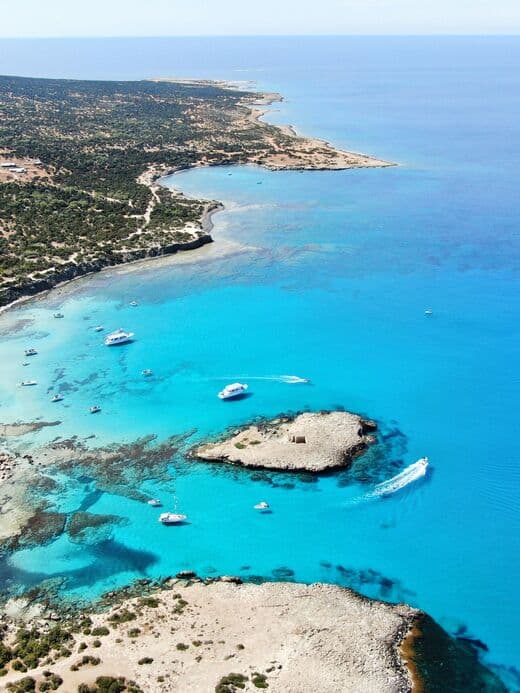
The Baths of Aphrodite - a natural grotto pool fed by spring water - marks one access point to Akamas trails. The site itself is small and often crowded, but it serves as the starting point for the Aphrodite Trail and Adonis Trail, both of which explore the peninsula's interior through dense maquis vegetation and scattered pines. The coastline of Akamas contains some of Cyprus's most pristine beaches, accessible only by rough track or boat - Blue Lagoon near the peninsula's tip draws day-trippers from Paphos, but other coves remain almost deserted.
Loggerhead and green sea turtles nest on Akamas beaches, primarily at Lara Bay. The area is protected during nesting season (June-September), with restricted access to protect eggs and hatchlings. Turtle watching excursions operate from Paphos and Latchi, offering opportunities to observe these endangered animals with minimal disturbance.
Cape Greco National Forest Park
Between Ayia Napa and Protaras, Cape Greco occupies a rocky peninsula of exceptional scenic beauty. Unlike the developed beaches to either side, Cape Greco preserves natural coastline - sea caves, rock arches, cliff viewpoints, and crystal-clear water that draws snorkelers and divers. Walking and cycling trails crisscross the park, and a network of viewpoints accessible by car reveals the dramatic meeting of white limestone with impossibly blue sea.
The sea caves at Cape Greco have been carved by wave action over millennia, creating chambers and arches that glow with reflected light from the turquoise water. You can swim into some caves, snorkel around others, or simply photograph them from cliff viewpoints above. The area is popular for cliff jumping - a practice that has caused injuries and deaths, so exercise appropriate caution if tempted.
The Agioi Anargyroi church sits on a cliff within the park, a small white chapel that appears in countless photographs. Below the church, a sea cave contains a small beach accessible by rough stairs. The juxtaposition of whitewashed chapel, azure sea, and weathered rock creates one of Cyprus's most iconic images.
Cape Greco's plant communities include endemic species adapted to the salt-sprayed, wind-swept environment. Spring wildflowers carpet the area from February through April, while the coastal scrub remains green year-round. Birdwatching is productive during migration seasons, when exhausted birds make landfall after Mediterranean crossings.
Troodos National Forest Park
The Troodos Mountains contain the largest area of natural forest remaining in Cyprus, protected within the national forest park. These are not the low scrubby forests typical of Mediterranean lowlands but genuine mountain forest, with endemic Cyprus cedars and black pines rising to considerable heights. The forest provides habitat for the Cyprus mouflon, a wild sheep that had been reduced to a few hundred individuals before conservation efforts stabilized the population.
Four nature trails radiate from the Mount Olympus area, each revealing different aspects of the mountain environment. The Artemis Trail circles the summit through forest and provides the easiest walking. The Atalante Trail descends to lower elevations through pine forest. The Persephone and Kaledonia trails visit waterfalls and stream valleys. All are well-marked and suitable for moderately fit walkers, though the mountain altitude requires appropriate clothing even in summer.
The Cyprus cedar - Cedrus brevifolia - is endemic to a single valley in the western Troodos, the Cedar Valley. A rough road and walking trail provide access to groves of these distinctive short-needled cedars, close relatives of the famous Lebanese cedar but adapted to this specific environment. The population numbers only about 90,000 trees but is slowly expanding under protection.
Springs and streams flow through the Troodos during wet months, feeding waterfalls that provide focal points for hiking trails. The Millomeris waterfall near Platres is the tallest in Cyprus at about 15 meters, though it dwindles considerably during dry summer months. The Caledonia waterfall requires a forest walk of about 3 kilometers but rewards with a more intimate woodland experience. These are not Niagara or Victoria Falls - they are modest waterfalls in a dry Mediterranean climate - but they provide refreshing destinations during forest walks.
Larnaca Salt Lake Complex
The Larnaca Salt Lake is actually a network of four interconnected lakes covering about 2.2 square kilometers, making it the largest inland body of water in Cyprus. During summer, the lakes dry to salt flats that shimmer white in the intense heat. During winter, they fill with water and attract thousands of greater flamingos that winter here from October through March.
The flamingo spectacle is genuinely impressive - at peak numbers, more than 10,000 birds may be present, turning sections of the lake pink. A walking and cycling path circles the main lake, with viewpoints and observation points positioned for wildlife watching. Early morning offers the best light and bird activity, though flamingos are present throughout the day during winter months.
The salt lake complex also hosts significant numbers of other waterfowl during winter, including ducks, herons, and wading birds. The surrounding wetland vegetation supports resident and migrant species year-round. For birdwatchers, this is one of the most productive sites in Cyprus, easily accessible from Larnaca town or airport.
The salt itself has economic importance historically, harvested for centuries when the lake dried each summer. Salt mounds and processing facilities are visible around the lake edges, though commercial harvesting has declined. The white salt crust covering the dry summer lake bed creates an otherworldly landscape that photographs well against the palm trees and mosque of Hala Sultan Tekke.
Endemic Species and Conservation
Cyprus's isolation as an island has produced numerous endemic species - plants and animals found nowhere else on Earth. The Cyprus mouflon, a wild sheep with curved horns, appears on the Cyprus coat of arms and has become a symbol of conservation success after near-extinction in the 20th century. Populations now number in the thousands, primarily in the Paphos Forest and Troodos Mountains, though sightings require patience and early-morning searches.
Plant endemism is even more pronounced. Cyprus hosts about 140 endemic plant species, many of them adapted to specific habitats like the serpentine rocks of the Troodos or the coastal cliffs of Akamas. Spring wildflower displays, particularly from February through April, reveal this botanical diversity. Orchid enthusiasts find Cyprus particularly rewarding, with about 30 species including several endemics.
Sea turtles nest on Cyprus beaches, primarily green turtles and loggerhead turtles. Lara Bay on the Akamas Peninsula is the most important nesting site, protected during the summer breeding season. Turtle hatchlings emerge at night from July through September, and organized watching excursions allow visitors to observe this remarkable event without disturbing the turtles.
Conservation challenges in Cyprus include development pressure on coastal areas, water scarcity exacerbated by climate change, and forest fires that periodically devastate mountain vegetation. Protected areas cover a significant portion of the island, and EU membership has strengthened environmental regulations, but tensions between development and conservation remain ongoing.
When to Visit Cyprus
Cyprus enjoys a Mediterranean climate with hot, dry summers and mild, wet winters. The long tourist season extends from April through November, but the best time to visit depends on your priorities - beach weather peaks in summer when temperatures and crowds also peak, while spring and autumn offer more comfortable conditions for sightseeing.
Spring: March through May
Spring is arguably the best time to visit Cyprus if your interests extend beyond beach lounging. Temperatures rise from around 18C in March to 27C in May, comfortable for walking and sightseeing. Wildflowers blanket the countryside, including orchids in the Akamas and mountain meadows in the Troodos. The landscape is green rather than the brown it becomes by late summer. Tourist numbers are moderate, and accommodation prices have not yet reached summer peaks.
Easter is a major event in Orthodox Cyprus, with elaborate celebrations including processions, special services, and traditional foods. If your visit coincides with Orthodox Easter (which differs from Western Easter dates), you will experience Cyprus at its most culturally authentic. Villages empty their churches for midnight services, fireworks explode at the Resurrection announcement, and families gather for feasts. Book accommodation well in advance for the Easter period.
Swimming becomes possible from late April, though the sea remains cool (around 19-20C) until May. Beach facilities begin operating in April but may have limited hours until the main season begins.
Summer: June through August
Summer delivers the classic Cyprus beach holiday - hot sun, warm sea, and long days. Coastal temperatures reach 30-35C, with occasional heatwaves pushing above 40C. The sea reaches 25-28C, perfect for extended swimming. Days are long, with sunset not until 8pm or later. This is peak season, with correspondingly high prices, crowded beaches, and fully booked accommodation at popular resorts.
The intensity of summer sun demands respect. Midday hours are best spent in shade or air conditioning - serious sunburn can happen within 30 minutes of unprotected exposure. Beaches are busiest from 11am to 4pm; consider morning or late afternoon visits for more pleasant conditions. Inland areas, particularly Nicosia, become extremely hot, making the Troodos Mountains a welcome escape.
Nightlife peaks during summer, particularly in Ayia Napa where clubs operate until dawn and the party atmosphere pervades everything. If you seek this atmosphere, July and August deliver. If you prefer quieter conditions, avoid Ayia Napa during these months or choose Protaras or other resort areas instead.
Autumn: September through November
Autumn extends the beach season while reducing crowds and temperatures. September remains firmly summer, with temperatures around 30C and warm sea (26-27C). October sees temperatures drop to a more comfortable 25-27C, still warm enough for beach days. November brings increasing chance of rain and cooling temperatures, but pleasant weather remains possible.
The sea retains summer warmth into October, creating excellent conditions for swimming after the peak season crowds have departed. This is an ideal time for combining beach time with archaeological visits and mountain exploration. The grape harvest brings wine festivals in September, and the olive harvest begins in October, offering agricultural experiences unavailable in summer.
Autumn is excellent for hiking as temperatures drop from summer extremes. The Troodos trails become more pleasant, and coastal walking reveals the sea without heatstroke risk. Birdwatchers find autumn productive as southward migration brings species through Cyprus.
Winter: December through February
Winter in Cyprus is mild by northern European standards - coastal temperatures rarely drop below 10C, and frost is unknown at sea level. Rain falls intermittently, with December and January the wettest months. Sunny intervals are common even during the wettest periods, and overall rainfall totals are low by European standards.
The Troodos Mountains receive snow from January through March, and the small ski resort on Mount Olympus operates during this period. Conditions are modest by Alpine standards - a few lifts and short runs - but the novelty of skiing on a Mediterranean island draws visitors. Some mountain roads may require chains or be closed during heavy snowfall.
Winter is the best time for cultural and historical tourism. Archaeological sites are virtually empty, museums uncrowded, and temperatures perfect for walking. Nicosia becomes pleasant rather than oppressive. The flamingos arrive at Larnaca Salt Lake, and the landscapes turn green with winter rains. Hotels offer significant discounts, and flights are cheaper than summer.
Swimming is possible for hardy souls even in winter - the sea drops to about 17C, bracing but manageable for brief dips. Some beach facilities close or reduce hours during winter months, and the party atmosphere of summer resorts disappears entirely.
How to Get to Cyprus
Cyprus is well-connected to Europe and the Middle East by air, with two international airports serving the Republic of Cyprus. There is no ferry service from mainland Europe (though excursions run to and from nearby countries), making air travel the only practical option for most visitors.
International Airports
Larnaca International Airport (LCA) is the larger and busier of the two airports, handling the majority of international traffic. The airport lies about 4 kilometers southwest of Larnaca town, with good connections to all parts of the island. Airlines operating regular scheduled services include British Airways, easyJet, Ryanair, Wizz Air, Cyprus Airways, and numerous charter carriers during summer season.
Paphos International Airport (PFO) serves the western end of the island, about 15 kilometers from Paphos town. This airport handles fewer flights than Larnaca but may be more convenient if your destination is Paphos or the western coast. Charter flights and some budget carriers serve Paphos, particularly during summer season.
Both airports have the usual facilities - car rental counters, exchange bureaus, ATMs, cafes, and taxi ranks. Immigration and customs are straightforward for British, EU, American, Canadian, and Australian passport holders, all of whom can enter Cyprus visa-free for tourist stays of up to 90 days.
From the United Kingdom
Cyprus is one of the easiest long-haul destinations from the UK, with flight time of about 4.5 hours and multiple daily departures from London and regional airports. British Airways flies from London Heathrow to Larnaca year-round. EasyJet serves both Larnaca and Paphos from London Gatwick, Bristol, Manchester, and other UK airports. Ryanair and Wizz Air offer budget options from various UK airports, though schedules vary seasonally.
Competition keeps prices reasonable, with return flights available for under 100 GBP if you book early and travel in shoulder season. Summer peak season sees higher prices and greater demand - book several months ahead for July and August travel. Package holidays combining flights and hotels often provide good value, particularly for resort stays.
From North America
No direct flights currently operate between North America and Cyprus, making connections necessary. The most common routing is through major European hubs - London, Frankfurt, Munich, Athens, or Rome all offer good connections to Cyprus. Flight time from New York to Larnaca is typically 12-14 hours including connection time, longer from the West Coast.
Athens makes a logical stopover, allowing you to combine Greek capital sightseeing with a Cyprus beach holiday. Emirates and other Gulf carriers connect through Dubai or other Middle Eastern hubs, offering another option if you prefer eastward routing. Booking through a travel agent experienced with Cyprus often produces better itineraries than airline websites.
From Australia and New Zealand
The distance from Australasia to Cyprus necessitates lengthy travel with at least one stop. Emirates, Qatar Airways, and Etihad all connect through their Gulf hubs with reasonable total journey times of 18-22 hours from Australian east coast cities. Singapore Airlines routing through Singapore provides an alternative with the option of a Singapore stopover.
European connections via London, Frankfurt, or Athens are also possible but typically involve longer total journey times. Given the distances involved, consider building in a stopover somewhere to break the journey - Dubai, Singapore, London, or Athens all make sensible choices.
Ferry Services
Despite its island geography, Cyprus currently has no regular passenger ferry service to mainland Europe. Historical services to Greece have discontinued, and political complications prevent ferry links with nearby Turkey or Syria. Some cruise ships call at Limassol, and occasional excursion boats run to Lebanon or Egypt, but these are not regular transportation options.
Within Cyprus, no ferry services operate, as the island is compact enough for land travel to reach all destinations.
Northern Cyprus Considerations
The northern part of Cyprus, occupied by Turkey since 1974 and recognized only by Turkey, has its own airport at Ercan (ECN). This airport is served only by Turkish airlines operating via Turkey (direct flights are not permitted under international law). If you fly into Ercan, you technically enter Northern Cyprus rather than the Republic of Cyprus, which may affect your ability to subsequently enter Greece or create other complications.
For most visitors, the recommended approach is to fly into Larnaca or Paphos and cross to Northern Cyprus via land checkpoints if desired. This allows you to explore both sides of the island while maintaining a clear legal status. The crossing at Ledra Street in Nicosia is the most convenient for pedestrians, while several vehicular crossings exist for those with rental cars.
Getting Around Cyprus
Transportation within Cyprus ranges from excellent (if you rent a car) to adequate (public buses) to problematic (taxis and ride-sharing). The island is compact enough that nowhere is more than a few hours drive from anywhere else, but the dispersed nature of attractions makes independent transportation valuable for thorough exploration.
Rental Cars
Renting a car is the best way to explore Cyprus beyond your resort area. Major international companies (Hertz, Avis, Europcar) and local agencies offer competitive rates, typically ranging from 25-50 EUR per day depending on vehicle type and season. Book in advance during summer for best prices and availability. Both airports have car rental counters, and most companies also have offices in resort towns.
Driving is on the left side of the road, a legacy of British colonial rule. This is familiar for UK, Australian, and Japanese visitors but requires adjustment for Americans, Canadians, and continental Europeans. Most rental cars are manual transmission; automatic vehicles are available but cost more and should be reserved in advance. Roads are generally well-maintained, with dual carriageways connecting major towns and paved roads reaching almost everywhere except the most remote mountain villages.
Navigation is straightforward using GPS or smartphone maps. Speed limits are typically 100 km/h on motorways, 80 km/h on main roads, and 50 km/h in urban areas. Enforcement is sporadic but real - speed cameras exist, and police occasionally set up checkpoints. Fuel costs are comparable to Western European prices. Parking in cities can be challenging; use designated car parks rather than risking tickets or towing.
Important rental considerations: decline the pressure to purchase excess insurance from the rental desk if your credit card provides coverage (many do for rental cars - check before traveling). Inspect the vehicle thoroughly before accepting and photograph any existing damage. Check whether your rental allows crossing into Northern Cyprus - most companies prohibit this, and insurance is not valid in the north regardless.
Public Buses
Intercity buses connect the main towns with reasonable frequency, operated primarily by Intercity Buses (www.intercity-buses.com). Routes link Nicosia, Larnaca, Limassol, Paphos, and Ayia Napa, with journey times of 1-2 hours depending on distance. Fares are economical - about 4-7 EUR for intercity journeys - and buses are modern and air-conditioned.
Urban buses operate within each main town, useful for getting around without a car. Paphos Transport and Limassol-based EMEL provide local services. The Ayia Napa area is well-served by buses connecting resorts, beaches, and the town center. Frequency is adequate during daytime but drops significantly in evenings.
The limitations of public buses become apparent when you try to reach sites away from main roads. The painted churches of Troodos, the Akamas Peninsula, and many archaeological sites are difficult or impossible to reach by bus. Within resort areas, buses suffice for beach-to-town connections, but serious exploration of the island requires a rental car.
Taxis
Taxis are readily available but expensive compared to public buses. Urban taxis have meters, but drivers may try to negotiate flat fares for longer journeys - agree on the price before starting. Intercity taxis (shared taxis following fixed routes) offer a middle ground between buses and private taxis, with the Trade Cooperative providing services between major towns.
Airport taxis charge fixed rates to various destinations, posted at the taxi ranks. From Larnaca airport, expect to pay roughly 40-60 EUR to Larnaca town, 60-80 EUR to Limassol, and 120-150 EUR to Paphos. These rates are for the vehicle, not per person. Ordering a taxi from your hotel reception typically brings a legitimate driver, while hailing on the street carries more risk of negotiation games.
Uber does not operate in Cyprus. Various local taxi apps exist but are not widely adopted. For reliability, ask your hotel to arrange taxis or use the airport taxi desks.
Domestic Flights
Cyprus is too small for domestic flights to make sense. Nothing is more than about 3 hours drive from anywhere else, and the time required for airport procedures would exceed driving time for any journey.
Crossing to Northern Cyprus
Seven crossing points allow travel between the Republic of Cyprus and the Turkish-occupied north, including one pedestrian crossing at Ledra Street in central Nicosia. You will need your passport to cross; your ID is recorded by both sides. Crossing is free and relatively quick, though occasional queues occur during busy periods.
Rental cars from the Republic cannot be taken into the north (insurance is void, and most rental agreements prohibit it). If you want to drive in the north, you can either rent a separate vehicle on that side or take a taxi. Many visitors simply walk across at Ledra Street, explore on foot or by local taxi, and return the same day.
When crossing to the north, note that the euro is not the official currency (though widely accepted at poor rates), internet services may be unreliable, and your mobile phone may roam onto Turkish networks at higher rates. These are minor inconveniences for a day trip but worth knowing in advance.
Cypriot Cultural Code: Understanding Local Customs
Cyprus occupies a unique cultural position - Mediterranean in character, historically shaped by Greece and Britain, influenced by its Middle Eastern neighbors, and now increasingly cosmopolitan. Understanding local customs helps you engage more meaningfully with the island and avoid unintentional offense.
Religion and Religious Sites
The majority of Greek Cypriots belong to the Greek Orthodox Church, which plays a significant role in daily life and national identity. Churches are everywhere, from grand cathedrals to tiny roadside chapels, and religious festivals punctuate the calendar. When visiting churches, dress modestly - covered shoulders and knees are expected. Some churches provide wraps for visitors who arrive in beach attire.
In Northern Cyprus, Islam is the predominant religion. The Hala Sultan Tekke near Larnaca and the Selimiye Mosque in Nicosia are among the most important Islamic sites on the island. Non-Muslims may visit most mosques during appropriate hours with modest dress - head coverings for women are provided at larger mosques. Remove your shoes before entering any mosque.
Religious holidays affect business hours and travel patterns. Orthodox Easter is the most significant, when most businesses close and many Cypriots travel to their home villages. The entire Easter period, from Good Friday through Easter Monday, sees disruption to normal services. Ramadan (in Northern Cyprus) may affect restaurant availability during daylight hours.
Social Customs
Cypriots are generally warm and hospitable, particularly in rural areas where traditions remain strong. Greetings typically involve handshakes; close friends and family members may embrace and kiss on both cheeks. Using a few Greek words - kalimera (good morning), efharisto (thank you), parakalo (please/you're welcome) - is appreciated even though English is widely understood.
Hospitality culture means you may be offered coffee or refreshments when visiting someone's home or even some shops. It is polite to accept, even if only symbolically. Cyprus coffee (similar to Turkish coffee) is traditionally served in small cups with water alongside - sip it slowly and let the grounds settle rather than drinking to the bottom of the cup.
Punctuality is more relaxed than in northern Europe or North America. "Cyprus time" allows for approximately thirty-minute flexibility around scheduled appointments. This applies less to business meetings and tours than to social engagements. Restaurants expect dinner guests from 8pm onwards; arriving at 6pm for dinner will mark you as a tourist.
Personal space and touch norms differ from Anglo-Saxon cultures. Conversations happen at closer distances, and friendly touch during discussion is common. This is not threatening or inappropriate - simply a different cultural baseline. Direct eye contact during conversation shows engagement and respect.
The Division Issue
The division of Cyprus remains a sensitive topic that affects daily life, politics, and national identity. The island has been divided since 1974 following a Greek-sponsored coup and subsequent Turkish military intervention. The Republic of Cyprus (the southern part) is internationally recognized and an EU member. The Turkish Republic of Northern Cyprus is recognized only by Turkey.
Most Cypriots have strong opinions about this situation, and these opinions vary significantly. Some favor reunification, some prefer permanent division, and many have complicated views shaped by personal or family history. As a visitor, you may encounter passionate discussions - listening respectfully is more appropriate than expressing strong opinions either way.
Practical sensitivity: in the Republic, refer to the north as "the occupied territories" or simply "the north" rather than by its self-declared name. Do not assume that people are unaffected by the division - many Greek Cypriots have ancestral homes in the north that they cannot recover, and many Turkish Cypriots have similar situations in reverse. The topic is not taboo, but approach it with the respect due to a genuine tragedy rather than mere political curiosity.
Tipping and Service
Tipping in Cyprus follows European rather than American norms - expected but at lower rates than in the US. Restaurant bills rarely include service charges, so 10% is appropriate for good service, more for exceptional attention. Round up taxi fares to the nearest euro. Hotel porters appreciate 1-2 EUR per bag. Tour guides merit tips proportional to the tour length and quality.
Unlike some countries, service staff in Cyprus do not depend entirely on tips for their income. Tips are appreciated but not obligatory, and failing to tip does not carry the same stigma as in the United States. Conversely, American-scale tipping (20%+) is generous and will be noticed.
Photography Etiquette
Cyprus is highly photogenic and generally photo-friendly. Photographs of churches, archaeological sites, and landscapes are welcomed. Some museums prohibit photography or charge for the privilege - check signage at entrances. Flash photography is typically forbidden in churches to protect icons and frescoes.
Photographing military installations, including anything near the Green Line or UN positions, is prohibited and taken seriously. Security forces may confiscate your camera or phone if you photograph restricted areas. When in doubt, ask before photographing anything that looks official.
Street photography of people follows common courtesy - ask permission if you want to photograph someone up close, particularly older residents who may be less accustomed to tourist cameras. Most people are happy to be photographed if asked politely.
Safety in Cyprus
Cyprus is one of the safest destinations in Europe, with low crime rates, minimal natural disaster risk, and stable political conditions. Most visitors experience no safety issues beyond sunburn and hangovers. Understanding the few real risks helps you travel with appropriate but not excessive caution.
Crime and Personal Security
Violent crime against tourists is extremely rare in Cyprus. The most common issues are petty theft (pickpocketing, bag snatching) and car break-ins, concentrated in tourist areas and beaches. Apply the same precautions you would use in any tourist destination: keep valuables secure, do not leave bags unattended on beaches, and lock your rental car with nothing visible inside.
Scams targeting tourists are less common than in some Mediterranean destinations but do occur. These typically involve overcharging at restaurants or taxi meters being "broken" - check prices before ordering and insist on metered fares. Time-share touts operate in some resort areas, offering free gifts to attend presentations; these are best avoided entirely.
Nightlife areas, particularly Ayia Napa during peak season, see occasional alcohol-fueled incidents. Use normal common sense - stay with groups, avoid confrontations, and recognize when situations are escalating. The party atmosphere does not change fundamental safety rules about excessive intoxication.
Swimming and Beach Safety
The sea is the biggest genuine risk for visitors to Cyprus. Drowning accounts for more tourist deaths than any other cause. Specific risks include:
Strong currents around certain headlands and beaches, including the famous Petra tou Romiou (Aphrodite's Rock). Do not swim where warning signs exist. If caught in a current, do not fight it - swim parallel to shore until out of its grip.
Sea urchins inhabit rocky areas and cause painful puncture wounds. Water shoes are recommended when entering from rocky shores. If you step on urchin spines, remove what you can with tweezers; embedded spines may require medical attention.
Jellyfish occasionally appear in Cypriot waters, particularly in late summer. Stings are painful but rarely dangerous unless you have allergies. Vinegar or commercially available treatments help; do not use fresh water, which can worsen stings.
Lifeguards patrol major beaches during summer season, typically 10am-6pm. Pay attention to flag systems: green means safe, yellow urges caution, red prohibits swimming. Beaches without lifeguards require greater personal responsibility.
Sun and Heat
Mediterranean sun is intense, especially from May through September. Sunburn can occur within 30 minutes of unprotected exposure at midday. Heat stroke is a real risk during summer for those who underestimate the conditions. Protective measures include:
High-factor sunscreen (SPF 30+), applied frequently, especially after swimming. Cover up during peak sun hours (11am-3pm). Wear hats and quality sunglasses. Stay hydrated - carry water and drink frequently, even if not thirsty. Recognize heat exhaustion symptoms (dizziness, nausea, excessive sweating) and get into shade and hydrate if they appear.
Air conditioning is ubiquitous in Cyprus hotels and restaurants but beware the contrast between cold interiors and hot exteriors. Give your body time to adjust when moving between environments.
Driving Safety
Road traffic accidents cause more injuries to tourists than any other hazard. Left-side driving catches out visitors from right-driving countries, particularly at junctions and roundabouts. Mountain roads are narrow and winding with significant drop-offs. Cypriot driving style is more aggressive than northern European norms, with tailgating and last-minute lane changes common.
Drive defensively, allow extra time for mountain routes, and avoid driving at night on unfamiliar roads. Motorcycle and scooter rentals carry higher accident risk - unless you are an experienced rider, consider other transportation options.
The Buffer Zone and Military Areas
The UN-controlled buffer zone (Green Line) separating the Republic from Northern Cyprus is safe to cross at designated points but not to enter elsewhere. Do not attempt to cross outside official checkpoints or explore areas marked as military zones. Photography of military installations is prohibited.
The political situation is stable, and the division poses no danger to tourists who respect basic rules. The UN force (UNFICYP) has maintained peace since 1964, and incidents are extremely rare.
Emergency Services
The emergency number in Cyprus is 112 (or 199 for fire, 199 for ambulance). English is understood by emergency operators. Medical facilities in major towns are adequate for most situations, with more serious cases evacuated to Nicosia. EU citizens should carry European Health Insurance Cards for public hospital treatment. Travel insurance is strongly recommended for all visitors, as private medical care and evacuation can be expensive.
Health and Medical Information
Cyprus presents minimal health risks for visitors from developed countries. No vaccinations are required, tap water is safe to drink, and medical facilities are modern. A few specific considerations help you stay healthy during your visit.
Before You Travel
No special vaccinations are required or recommended for Cyprus beyond routine immunizations (tetanus, diphtheria, etc.) that most travelers already have. There are no tropical diseases, no malaria, and no significant endemic health threats. Check that your routine vaccinations are current before any international travel.
Bring adequate supplies of any prescription medications you take regularly, along with documentation (the prescription or a letter from your doctor) that may be required at customs. Most common medications are available in Cyprus pharmacies, but specific brands or formulations may differ.
EU citizens should carry a European Health Insurance Card (EHIC) or UK Global Health Insurance Card (GHIC) for access to state healthcare at reduced or no cost. This does not replace travel insurance, which remains essential for medical evacuation, trip cancellation, and other coverage.
Common Health Issues
Sunburn and heat-related illness are by far the most common health problems for visitors. These are entirely preventable with appropriate precautions (see Safety section). Dehydration in summer heat is common - drink more water than you think you need.
Traveler's diarrhea occasionally affects visitors, typically from dietary changes rather than contaminated food or water. Cypriot restaurants maintain good hygiene standards. Treatment is symptomatic - rest, hydration, and over-the-counter medication from pharmacies.
Allergies may be triggered by unfamiliar pollens, particularly during spring flowering. Bring antihistamines if you have known allergies. Dust can be problematic in summer when vegetation dries and wind stirs particles.
Insect bites from mosquitoes are common but do not carry disease risk in Cyprus. Repellent containing DEET provides good protection. Rooms with screens or air conditioning minimize nighttime exposure.
Medical Facilities
Public hospitals exist in all major towns - Nicosia General Hospital, Limassol General Hospital, Paphos General Hospital, and Larnaca General Hospital are the main facilities. Emergency care is provided regardless of insurance status or nationality. English is widely understood in medical settings.
Private clinics and hospitals offer faster service and more comfortable conditions than the public system. If you have travel insurance with direct billing arrangements, private care may be preferable. Major hotels can arrange doctor visits for non-emergency situations.
Pharmacies (identified by green cross signs) are widespread and well-stocked. Pharmacists can advise on minor ailments and sell many medications without prescription that would require one elsewhere. Opening hours vary, but larger towns have rotating duty pharmacies for after-hours needs.
Dental and Optical Care
Dental emergencies can be addressed by private dentists found in all major towns. Quality is generally good and prices reasonable compared to UK or US rates. Optical services including glasses and contact lens replacement are available in cities within 24-48 hours.
Money and Budget
Cyprus uses the euro, making it straightforward for visitors from the eurozone and familiar for those accustomed to European travel. Costs are moderate by Western European standards - higher than Eastern Europe or Turkey but lower than France or Italy. Understanding local prices helps you budget appropriately.
Currency and Exchange
The Republic of Cyprus adopted the euro in 2008. Notes and coins are interchangeable with other eurozone countries. ATMs are widespread and accept major debit and credit cards - this is the most convenient and often cheapest way to obtain euros. Exchange bureaus in tourist areas offer reasonable rates; airport exchange tends to be less favorable.
Northern Cyprus uses the Turkish lira, though euros are widely accepted (at unfavorable rates). If spending significant time in the north, withdraw Turkish lira from ATMs there or exchange at the crossing point.
Credit and debit cards are accepted at most hotels, restaurants, and shops in tourist areas. Small establishments, tavernas in villages, and some attractions may be cash-only. Visa and Mastercard have the widest acceptance; American Express is less common.
Budget Breakdown
Budget travelers can manage on 50-80 EUR per day with careful planning - staying in hostels or budget hotels, eating at local tavernas and supermarkets, using public buses, and limiting paid attractions. This is tight but possible outside peak season.
Mid-range travel runs 100-180 EUR per day - comfortable three-star hotels, rental car, restaurant meals including wine, and admission fees at attractions. This level provides a comfortable experience without luxury.
Upscale travel can exceed 250-400 EUR per day easily - resort hotels, fine dining, private tours, spa treatments. Cyprus has plenty of five-star options for those with substantial budgets.
Typical Prices (2024 reference)
Accommodation: Budget hotel or hostel 40-60 EUR/night; mid-range hotel 80-150 EUR/night; luxury resort 200-500+ EUR/night.
Food and drink: Coffee 2-4 EUR; beer 3-5 EUR; glass of wine 4-8 EUR; meze dinner for two 30-50 EUR; fast food meal 7-10 EUR; upscale restaurant dinner 40-80 EUR per person.
Transportation: Bus fare 1.50-7 EUR depending on distance; petrol 1.30-1.50 EUR/liter; car rental from 25-50 EUR/day; airport taxi 50-150 EUR depending on destination.
Activities: Major archaeological sites 4-8.50 EUR; museums 2-5 EUR; boat excursion 30-60 EUR; water park 30-40 EUR; winery tour with tasting 10-25 EUR.
Tipping Guidelines
Restaurants: 10% for good service, more for exceptional (service charge is not usually included)
Taxis: Round up to nearest euro or add 1-2 EUR
Hotel porters: 1-2 EUR per bag
Hotel housekeeping: 2-3 EUR per day
Tour guides: 5-10 EUR for half-day tours, more for full-day
Money-Saving Tips
Eat at local tavernas rather than tourist-oriented restaurants - better food at lower prices. The meze tradition provides excellent value compared to ordering individual dishes. Lunch at bakeries or kebab shops costs a fraction of restaurant prices.
Self-catering accommodation allows shopping at supermarkets. Local fruits and vegetables are excellent and inexpensive. Cypriot wine from supermarkets costs 5-10 EUR for good quality bottles versus 15-25 EUR in restaurants.
Public buses between cities cost a fraction of taxi fares. Combine car rental with friends to split costs. Book accommodation through direct contact rather than booking sites for potential discounts, especially off-season.
Many archaeological sites offer free admission on certain days (typically the first Sunday of the month). Beaches are free to access, even at resort hotels where the public has right of way to the waterline.
Suggested Itineraries
Cyprus rewards both quick visits and extended exploration. These itineraries provide frameworks that you can adapt to your interests, pace, and season of travel. The compact size of the island makes ambitious day-trip combinations possible, though rushing defeats the purpose of Mediterranean travel.
One Week: Cyprus Highlights
Seven days allows you to sample the main regions and get a genuine feel for the island without rushing.
Days 1-2: Paphos
Arrive at Paphos airport and base yourself in or near the town. Day one focuses on the Paphos Archaeological Park, where the Roman mosaics alone justify hours of exploration. Visit the Tombs of the Kings in late afternoon when the light angles into the rock-cut chambers. Evening at the harbor, where Paphos Castle provides a backdrop for seafood dinners.
Day two drives south to Petra tou Romiou (Aphrodite's Rock) for photographs and possibly a swim if conditions permit. Continue to Kourion, exploring the Greco-Roman city perched above the sea. The theater, mosaics, and basilica warrant at least two hours. If time permits, stop at Kolossi Castle on the return journey.
Days 3-4: Troodos Mountains
Leave the coast for the mountains, driving into the Troodos via scenic mountain roads. Base yourself in Platres or another mountain village. Visit Kykkos Monastery, the most important religious site in Cyprus, and some of the Painted Churches of Troodos - the churches at Kalopanagiotis and Galata are relatively accessible.
Day four continues church exploration (Panagia tou Araka at Lagoudera if you have artistic interests) or hikes on Mount Olympus. The Artemis Trail provides easy walking with mountain views. Drive through traditional villages like Omodos for wine tasting and cobblestone atmosphere.
Day 5: Nicosia
Drive to Nicosia for a full day in the divided capital. Morning in the south: Cyprus Museum for archaeological context, then explore the old town within the Venetian walls. Lunch at a restaurant in Laiki Geitonia or near Ledra Street.
Afternoon: cross to the north via the Ledra Street checkpoint. Explore Buyuk Han and Selimiye Mosque, experiencing the different atmosphere of Turkish Cypriot Nicosia. Return south before sunset for dinner and overnight.
Days 6-7: Ayia Napa and Larnaca
Head to the eastern coast, basing yourself in Ayia Napa or Protaras for beach time. Spend a day between Nissi Beach and Cape Greco - morning at the national park hiking to Sea Caves, afternoon on the famous white sand.
Final day: stop in Larnaca en route to the airport. Visit the Church of Saint Lazarus and stroll the Finikoudes promenade. If it is flamingo season (November-March), detour to Larnaca Salt Lake and Hala Sultan Tekke. Depart from Larnaca airport.
Ten Days: Deeper Exploration
Ten days allows a more relaxed pace and time for the Akamas Peninsula.
Days 1-3: Paphos and Akamas
Follow the first two days above but add a third day for the Akamas Peninsula. Either join a 4x4 safari tour from Paphos or rent an appropriate vehicle to explore Lara Bay (turtle nesting beaches), the Baths of Aphrodite, and Avakas Gorge. Boat trips to the Blue Lagoon offer an alternative perspective.
Days 4-5: Troodos Mountains
As in the one-week itinerary, but with more time to explore painted churches and mountain villages. Stay overnight in the mountains to experience the cool evenings and starry skies away from coastal light pollution.
Day 6: Limassol
Add a day in Limassol, exploring the Old Town and Limassol Castle. Walk the Molos Promenade at sunset. This is a good day to visit Amathus Archaeological Site east of the city if you have time.
Day 7: Nicosia
Full day in the capital as described above.
Days 8-10: Eastern Coast
Three days in the Ayia Napa/Protaras area allows thorough beach exploration, a visit to WaterWorld or Thalassa Museum, and time for water sports or boat excursions. The pace can finally relax after all the sightseeing.
Two Weeks: Comprehensive Cyprus
Two weeks permits a thorough exploration including time for beach relaxation and spontaneous discoveries.
Days 1-4: Paphos Region
Four days allows unhurried exploration of the Paphos district: archaeological sites, Akamas Peninsula, and surrounding villages. Include a wine route visit to Omodos, Arsos, or other wine villages.
Days 5-7: Troodos Mountains
Three full days in the mountains provides time to visit multiple painted churches, hike different trails, and absorb the mountain village atmosphere. Consider staying in different villages to experience more of the region.
Days 8-9: Nicosia and Surroundings
Two days in Nicosia allows deeper exploration - perhaps the Byzantine Museum or Leventis Gallery on day two, or a day trip to ancient Tamassos and the monastery of Agios Iraklidios.
Days 10-11: Limassol
Two days in Cyprus's second city, with time for Kourion, Kolossi, and the old town. Consider a cooking class or wine tasting experience.
Days 12-14: Eastern Beaches
End your trip with three days of beach relaxation in Ayia Napa, Protaras, or the quieter beaches of the Larnaca district. Visit Larnaca's sights on the final day before departure.
Three Weeks: The Complete Cyprus Experience
Three weeks allows the luxury of slow travel, repeat visits to favorite spots, and exploration of places most tourists miss.
Follow the two-week itinerary but add extra days throughout. Spend more time in the Akamas Peninsula, including overnight stays in Polis or Latchi. Add days in the Troodos for longer hikes or to visit more remote painted churches. Include the Karpas Peninsula in Northern Cyprus if interested in wilder landscapes. Allow beach days without any agenda. Visit archaeological sites twice - once for orientation, once for deeper appreciation. Take day trips to smaller towns like Pissouri, Pano Lefkara (famous for lace-making), or Vouni. The extra time transforms your experience from tourism to genuine immersion.
Connectivity: Phones, Internet, and Staying in Touch
Cyprus offers modern telecommunications infrastructure making it easy to stay connected during your visit. Understanding your options helps you avoid surprise charges while maintaining contact with home.
Mobile Phones
Cyprus is part of the EU, which means European mobile plans typically include Cyprus without roaming charges. UK visitors post-Brexit face varying situations depending on their carrier - some have maintained EU roaming, others charge extra. Check with your provider before traveling.
American, Canadian, and Australian visitors will face international roaming charges that can accumulate quickly. Options include:
Purchasing a local SIM card - available from carriers like Cyta, MTN, and PrimeTel at shops throughout the island. Prepaid SIMs with data packages are inexpensive (15-25 EUR for a package with several GB of data). Your phone must be unlocked to accept a foreign SIM.
International roaming plans from your home carrier - check prices before departure. Many carriers offer daily or weekly packages that limit costs.
eSIM services like Airalo or Holafly provide data-only connectivity without physical SIM swapping if your phone supports eSIM.
Note that Northern Cyprus uses Turkish mobile networks, which are not EU networks. Crossing to the north may trigger Turkish roaming rates or require network switching.
WiFi Availability
WiFi is ubiquitous in Cyprus hotels, cafes, and restaurants. Quality varies - resort hotels typically have good coverage throughout, while smaller establishments may have slower or less reliable connections. Most accommodations provide free WiFi, though some luxury resorts charge for premium high-speed connections.
Public WiFi exists in some town centers and public spaces but is not as widespread as in some countries. Coffee shops and restaurants almost always offer WiFi to customers.
Internet Speed and Reliability
Cyprus internet infrastructure is modern with good speeds in urban areas. Remote mountain locations may have slower connections. Overall, you should have no difficulty with video calls, streaming, or normal internet usage from most accommodations.
Postal Services
Cyprus Post operates traditional postal services with reasonable reliability. Postcards to Europe typically arrive within 1-2 weeks, to North America or Australia within 2-3 weeks. Stamps are available at post offices and some shops. Post offices in tourist areas keep regular business hours; village offices may have limited schedules.
Food and Drink in Cyprus
Cypriot cuisine represents the best traditions of Mediterranean cooking, influenced by Greece, Turkey, Lebanon, and Britain while maintaining its own distinctive character. Meals here are social occasions to be savored, not rushed. Understanding the local food culture enhances your experience significantly.
The Meze Tradition
Meze is the quintessential Cypriot dining experience - not a single dish but a parade of 15-30 small plates served progressively throughout a meal. A proper meze begins with cold dishes (hummus, tahini, tzatziki, tabbouleh, olives, pickles), moves through grilled meats (souvlaki, sheftalia, loukaniko sausages), and concludes with larger plates of lamb, chicken, or fish. The whole progression can take two hours or more, accompanied by wine or beer and concluded with coffee and perhaps fruit or sweets.
Meze represents excellent value - typically 15-25 EUR per person for more food than anyone can finish. The experience is meant to be shared; going alone means missing the communal nature of the meal. Tourist restaurants in resort areas offer shortened "tourist meze" versions, but seek out places where Cypriots eat for the full experience.
Fish meze follows the same principle with seafood - grilled octopus, fried calamari, small fried fish, fish in various preparations, shrimp, and more. Coastal restaurants, particularly around the harbors of Paphos, Limassol, and Latchi, specialize in fish meze.
Essential Cypriot Dishes
Halloumi - The most famous Cypriot cheese, made from sheep and goat milk with a high melting point that allows grilling. Authentic Cypriot halloumi (look for the PDO designation) differs noticeably from mass-produced versions. Eat it grilled with a squeeze of lemon, fried, or fresh from the maker if you find a village producer.
Souvlaki - Skewered grilled pork or chicken, served on or off the stick with pita bread, salad, and tzatziki. Every taverna serves souvlaki, and quality is remarkably consistent - it is hard to find bad souvlaki in Cyprus.
Sheftalia - Grilled parcels of seasoned minced pork wrapped in caul fat, a distinctively Cypriot preparation that combines crispy exterior with juicy interior. An essential part of any meat meze.
Kleftiko - Slow-roasted lamb cooked in a sealed clay oven until falling-off-the-bone tender. The name means "stolen" and refers to the cooking method developed by bandits who buried meat to cook slowly while hiding. Finding proper kleftiko requires seeking out traditional tavernas, particularly in mountain villages.
Moussaka - Layered eggplant, potato, and spiced meat topped with bechamel sauce. Cypriot versions tend to be lighter than Greek moussaka, with more vegetables and less bechamel.
Stifado - A hearty stew of beef or rabbit with onions, cooked with wine, vinegar, and aromatic spices. Winter comfort food at its finest.
Kolokasi - Taro root prepared in various ways, most traditionally braised with pork or chicken in tomato sauce. This starchy vegetable is a Cypriot specialty not found in most Greek cuisine.
Koupepia (dolmades) - Vine leaves stuffed with rice and minced meat, simmered in lemon juice. Served as part of meze or as a main dish.
Pastitsio - Baked pasta with meat sauce and bechamel, similar to Greek versions but often seasoned with cinnamon and mint.
Breakfast and Lighter Meals
Traditional Cypriot breakfast consists of coffee, perhaps bread with jam or honey, and maybe eggs - lighter than the full English breakfast that resort hotels often provide for British tourists. Village bakeries sell fresh bread, cheese pies (tyropita), and spinach pies (spanakopita) that make excellent light breakfasts or picnic fare.
For quick lunches, souvlaki shops (souvlatzidika) offer filled pita wraps for a few euros - perhaps the best value meal in Cyprus. Bakeries sell sandwiches, savory pastries, and the iconic Cypriot koupes (fried torpedo-shaped snacks filled with spiced meat).
Seafood
Despite its island geography, Cyprus is not primarily a seafood destination. Much fish is imported, and local catches are limited by the eastern Mediterranean's relative lack of fish stocks. That said, good seafood is available, particularly in harbor towns. Look for locally caught fish (ask what is fresh that day), grilled octopus, calamari, and shrimp. Fish is typically priced by weight - check before ordering to avoid surprise bills.
Sweet Treats
Loukoumades - Deep-fried dough balls drizzled with honey and sprinkled with cinnamon. Served warm, they are irresistible despite being essentially balls of fried dough.
Lokum (Turkish delight) - Rose water or other flavored jellied sweets dusted with powdered sugar. Quality varies enormously; seek out traditional makers.
Baklava - Layered phyllo pastry with nuts and honey syrup. Both Greek and Turkish influences appear in local preparations.
Soujouko - Strings of nuts dipped repeatedly in grape must until coated in a chewy purple-brown coating. Looks strange but tastes of concentrated grape sweetness.
Fruit - Cyprus produces excellent citrus, grapes, figs, pomegranates, and other Mediterranean fruits. Watermelon and melon are summer staples. Fresh fruit provides a lighter dessert option after heavy meze meals.
Wine
Cypriot wine has undergone a revolution in recent decades. Once known only for cheap wine and the ancient sweet Commandaria, Cyprus now produces credible wines across multiple styles from both international and indigenous grape varieties.
Commandaria remains the signature wine - a sweet amber dessert wine with history stretching back at least to the Crusades. Made from sun-dried grapes in villages north of Limassol, Commandaria ages for years in barrels and develops complex flavors of dried fruit, caramel, and spice. The best examples rival Portuguese Madeira or Spanish sherry. Look for named village productions (Kalo Chorio, Zoopigi) rather than generic labels.
Xynisteri is the leading indigenous white grape, producing fresh, citrusy wines suitable for warm-weather drinking. Quality ranges from simple to surprisingly complex depending on the producer.
Maratheftiko is the most promising indigenous red, capable of producing serious wines with dark fruit flavors and good structure. Previously rare, it is now cultivated by many quality-focused wineries.
International varieties including Cabernet Sauvignon, Shiraz, and Chardonnay also thrive in Cyprus conditions and often represent the best wine values.
Wine tourism is developing rapidly, with many wineries offering tastings and tours. The Limassol and Paphos wine routes pass through scenic villages and include both large commercial operations and small family wineries. September wine festivals in Limassol and Paphos celebrate the harvest with generous tastings.
Beer and Spirits
Keo and Carlsberg (brewed locally under license) are the standard Cypriot beers - inoffensive lagers suited to hot weather. Craft beer is emerging, with several microbreweries now producing more interesting options available in specialty bars and some restaurants.
Zivania is the traditional Cypriot spirit, a clear grape-based distillate similar to Italian grappa or Cretan raki. Potency ranges from 40% to 60% alcohol, and quality varies from industrial to artisanal. Served cold, typically as a digestif after meals. Accept zivania when offered as a gesture of hospitality but be aware of its strength.
Ouzo is also common, the anise-flavored spirit familiar from Greece. Served with ice and water, which turns it cloudy, alongside meze dishes.
Coffee Culture
Cyprus coffee (do not call it Turkish coffee in the south, or Greek coffee in the north - both are politically fraught terms) is brewed in a small pot (briki), served in tiny cups with the grounds settling at the bottom. Order "sketo" for unsweetened, "metrio" for medium sweet, or "gliko" for sweet. Do not drink the muddy grounds at the bottom.
Frappe is the iced coffee beloved throughout Cyprus - instant coffee shaken with water, sugar, and ice until frothy. It may sound unimpressive but is perfectly suited to hot weather. Order it "me gala" (with milk) or "horis gala" (without).
Modern espresso-based coffee is available everywhere, and international chains are present in cities. But taking Cyprus coffee slowly at a traditional kafeneio (coffee house), watching village life pass by, represents a more authentic experience.
Where to Eat
Tavernas are traditional restaurants serving local food - the best choice for authentic cuisine and meze. Village tavernas often offer the best value and most genuine food. Tourist-area tavernas vary in quality; seek out places with Cypriot customers.
Restaurants range from casual to fine dining. Resort areas have international options (Italian, Asian, British pub food), while cities like Limassol and Nicosia have sophisticated dining scenes with creative contemporary cuisine.
Fish tavernas specialize in seafood and are typically found in harbor areas. Prices are higher than meat-focused tavernas, reflecting the cost of fish.
Souvlatzidika are fast-food outlets specializing in souvlaki and gyros - cheap, quick, and reliably tasty.
Bakeries sell bread, pastries, pies, and sometimes sandwiches. Essential for picnic supplies and quick breakfasts.
Shopping in Cyprus
Cyprus offers shopping ranging from international brands in modern malls to traditional crafts in village workshops. Knowing what to look for and where to find it helps you bring home meaningful souvenirs rather than generic tourist trinkets.
Traditional Products and Crafts
Lefkara lace (Lefkaritika) is the most famous Cypriot craft, intricate white embroidery on linen that has been produced in the village of Pano Lefkara for centuries. According to tradition, Leonardo da Vinci visited Lefkara and purchased lace for Milan Cathedral. Genuine Lefkara lace requires many hours of hand work and commands corresponding prices; cheap imitations abound. Visit Lefkara village itself (about 40 kilometers from Larnaca) to see craftswomen at work and purchase directly. Tablecloths, napkins, and decorative items are most common.
Pottery has been produced in Cyprus for millennia, and contemporary potters continue both traditional and modern styles. The village of Kornos near Larnaca specializes in utilitarian terracotta. Foini in the Troodos Mountains produces distinctive red clay pottery. More artistic ceramics are available from workshops throughout the island.
Basket weaving using cane, straw, or palm leaves produces traditional items in various sizes. Quality examples come from villages rather than tourist shops.
Silverwork including filigree jewelry continues in some workshops, though much of what is sold is mass-produced elsewhere. For genuine Cypriot silverwork, seek out specific craftspeople rather than generic jewelry shops.
Food Products
Halloumi cheese is the obvious food souvenir - vacuum-packed for travel and widely available. Look for the PDO (Protected Designation of Origin) label for authentic Cypriot halloumi made from sheep and goat milk. Airport shops stock halloumi for last-minute purchases.
Commandaria wine travels well and provides a unique taste of Cyprus. Village-named bottles from recognized producers (KEO, ETKO, SODAP, or smaller estates) offer the best quality.
Other wines from quality producers make excellent gifts if you can transport them safely. Many wineries sell direct and can assist with shipping.
Olive oil from Cypriot groves is excellent, particularly from the Troodos foothills and Akamas area. Look for cold-pressed extra virgin oil in glass bottles from named producers.
Carob products including syrup (pekmez), chocolate-like sweets, and carob flour reflect traditional Cypriot use of this native tree. Health food shops and specialty stores stock carob products.
Lokum (Turkish delight), dried fruits, and traditional sweets travel well and provide edible memories of your trip.
Spices and herbs including Cypriot oregano, thyme, and specialty blends are available at markets and specialty shops.
Where to Shop
Village workshops offer the most authentic craft products and the opportunity to see items being made. Lefkara for lace, Foini for pottery, wine villages for direct purchases from wineries - these visits combine shopping with cultural experience.
Old town markets in Nicosia, Limassol, and Paphos have traditional shops alongside tourist-oriented ones. The covered market in Paphos upper town (Ktima) sells local produce, cheeses, and other food items.
Shopping malls exist in all major cities - Kings Avenue Mall in Paphos, My Mall in Limassol, Mall of Cyprus in Nicosia. These offer international brands, air-conditioned comfort, and predictable quality at full prices.
Tourist shops in resort areas sell mass-produced souvenirs of variable quality. Some stock genuine Cypriot products; many sell generic Mediterranean trinkets made elsewhere. Quality requires selection.
Airport shops provide last-minute options for halloumi, wine, and typical souvenirs at slightly elevated prices. Useful if you run out of time but not the best selection or value.
Bargaining
Bargaining is not a strong tradition in Cyprus outside of markets and small independent shops. Fixed prices at malls and most established shops are non-negotiable. At markets or when making larger purchases from artisans, polite negotiation is acceptable but aggressive bargaining is not culturally appropriate.
VAT Refunds
Non-EU residents can claim VAT refunds on purchases over certain thresholds. The standard VAT rate is 19%. Look for Tax Free Shopping signs, request the appropriate forms at purchase, and process refunds at the airport before departure.
Useful Apps and Resources
A handful of apps and websites enhance travel in Cyprus, from navigation to translation to practical information.
Essential Apps
Google Maps works well throughout Cyprus, including public transit directions in major towns. Download offline maps for areas with spotty connectivity. Note that Google Maps may not show roads in Northern Cyprus accurately.
Maps.me offers offline mapping useful for hiking trails and remote areas not well covered by Google.
Google Translate handles Greek-to-English translation adequately for basic communication. The camera feature can translate signs and menus in real time.
XE Currency or similar currency converter apps help with quick price conversions, especially useful when crossing to Northern Cyprus and dealing with Turkish lira.
Cyprus Buses (Intercity-Buses.com mobile site) provides bus schedules and route information.
Tripadvisor remains useful for restaurant reviews and attraction ratings, with extensive Cyprus coverage.
Useful Websites
Visit Cyprus (visitcyprus.com) - The official tourism portal with comprehensive information on attractions, events, and practical matters.
Cyprus Mail (cyprus-mail.com) - English-language newspaper covering local news and events.
Time Out Cyprus (timeoutcyprus.com) - Event listings and restaurant recommendations.
Cyprus Wine Routes (wineofcyprus.com) - Information on wine regions, producers, and visiting wineries.
Final Thoughts: Making the Most of Cyprus
After all the practical information, what really matters is how you approach your time in Cyprus. This island has been receiving travelers for millennia - Phoenicians, Greeks, Romans, Crusaders, Venetians, Ottomans, British, and now international tourists. What you find here depends largely on what you seek.
If you come only for beaches and sun, Cyprus delivers admirably. The coastline offers excellent swimming from May through October, the resorts cater to every comfort, and the climate is reliably warm. You can have a perfectly pleasant holiday never leaving your hotel complex and the nearby beach, and many visitors do exactly that.
But Cyprus offers so much more to those willing to explore. Drive into the mountains and discover a completely different world - cool forests, ancient monasteries, traditional villages where old men still gather at coffee houses to debate politics and play backgammon. Walk through the archaeological parks and touch history spanning 9,000 years. Cross the Green Line and experience one of the world's last divided cities, where the Cold War never quite ended. Sit at a village taverna as the sun sets and work your way through a meze feast with local wine, understanding why Mediterranean peoples consider meals sacred rituals rather than fuel stops.
The division of Cyprus gives the island a poignancy that other Mediterranean destinations lack. The abandoned houses visible from the Green Line, the villages that changed populations in 1974, the families still separated by history - these are not tourist attractions but living realities. Engaging with this complexity respectfully adds depth to your visit. Most Cypriots appreciate visitors who take interest in their island's complicated story, and conversations about the past and hopes for the future can be among the most memorable experiences of your trip.
Timing matters more than many visitors realize. Summer beach holidays in July and August deliver heat, crowds, and party atmosphere - perfect if that is what you want, exhausting if it is not. Spring brings wildflowers and pleasant temperatures ideal for archaeological exploration and hiking. Autumn extends the swimming season with smaller crowds and harvest celebrations. Winter offers empty archaeological sites, mountain snow, and flamingos on the salt lakes. Each season has its advocates; choose based on your priorities.
Budget can flex considerably in Cyprus. The island accommodates travelers at every price point, from backpacker hostels to five-star resorts. The key is understanding where to allocate your spending. Save money on accommodation if you plan to spend most days exploring - you only need a bed and shower. Splurge on meals where quality matters - a great meze dinner becomes a trip highlight, while a bad resort buffet is just fuel. Rent a car if you want to explore; skip it if you are content with beaches and buses.
Slow down. This is perhaps the most valuable advice for any Mediterranean destination. Cypriot culture does not rush. Meals last for hours, conversations meander, shops close in the afternoon heat. Fighting this rhythm leads to frustration; accepting it leads to relaxation. You will not see everything in Cyprus in one trip. Better to experience a few places deeply than tick off a checklist superficially.
Finally, talk to people. Cypriots are generally friendly and interested in visitors, particularly those who show interest in local life rather than just passing through on their way to the beach. A little effort with Greek phrases (or Turkish in the north) is appreciated even when English is available. Ask for recommendations - the best taverna in town, the beach that locals prefer, the Byzantine church that tourists miss. These interactions often lead to the most memorable experiences, the hidden gems that no guidebook can capture.
Cyprus rewards the traveler who brings curiosity and openness. This small island at the crossroads of civilizations has absorbed influences from every direction while maintaining its distinctive character. Whether you come for a week or a month, for beaches or archaeology, for relaxation or adventure, Cyprus offers genuine experiences to those willing to look beyond the obvious. Go with an open mind, adjust your pace to local rhythms, and you will discover why this island has attracted travelers for thousands of years.
Welcome to Cyprus. May your visit be everything you hope for, and may you find a few surprises along the way that exceed your expectations.