About
Sri Lanka: The Complete Travel Guide to the Island of Tea, Elephants, and Ancient Wonders
Sri Lanka is an island that somehow manages to pack more diversity into its teardrop shape than many countries ten times its size. Picture this: you wake up in misty mountains surrounded by emerald tea plantations at a pleasant 65F, spend your afternoon exploring a 1,500-year-old temple carved into rock deep in the jungle, and by evening you are lounging on a tropical beach watching the sun sink into the Indian Ocean. All in one day. Because distances here are laughably short by American or Australian standards. Mountains to sea in three to four hours by car.
I fell for Sri Lanka on my first visit, even though I originally flew here just to escape the winter cold. I thought it would be simple beach vacation stuff - sun, curry, maybe a token elephant photo for Instagram. What I got instead was a country that has pulled me back five times now, and every visit reveals something new. Buddhist temples where monks offer you tea and conversation. Train rides on century-old railways clinging to cliff edges. Breakfasts overlooking the ocean for three dollars. People who smile not because they are working for tips, but because genuine hospitality runs through their cultural DNA.
This guide is everything I have learned across five trips and several months spent on the island. There is no fluff here, no travel brochure language about Sri Lanka being the pearl of the Indian Ocean. Instead, you will find specifics: where to go, when to go, how much money to bring, which scams to watch for, and why a random tuk-tuk ride can be more memorable than any organized tour.
Why Visit Sri Lanka
Let me be honest with you: Sri Lanka is not the Maldives. If you are looking for pristine white sand, impossibly turquoise water, and overwater bungalows for your Instagram feed, this is not your destination. The beaches here are beautiful, but the waves are often strong, the water is not always calm, and the sand is more golden than powder white. But if you want something more than lying under a palm tree scrolling through your phone, Sri Lanka will meet your expectations and then blow past them.
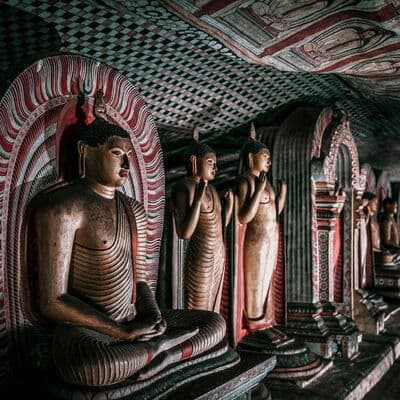
First and foremost: the concentration of attractions per square mile is staggering. Eight UNESCO World Heritage Sites on an island roughly the size of West Virginia or Tasmania. That is serious. Sigiriya is an ancient fortress built atop a 660-foot rock by a king who murdered his father in the 5th century. Dambulla Cave Temple houses thousands of Buddha statues carved into rock over two millennia ago. The Temple of the Sacred Tooth Relic in Kandy guards what Buddhists consider their most precious artifact. And that is just scratching the surface.
Second: the wildlife. Sri Lanka is one of only 36 global biodiversity hotspots. Yala National Park has the highest density of leopards anywhere on Earth. At Udawalawe, you will see wild elephants guaranteed - not like African safaris where you might get lucky. During the gathering season at Minneriya, up to 300 elephants congregate around a single reservoir - one of the most spectacular wildlife events on the planet. Blue whales and sperm whales cruise past Mirissa from December through April. This is not tourist marketing; the success rate for whale sightings during season is around 90 percent.
Third: the value. Sri Lanka is one of the most affordable countries for travel in all of Asia. After the economic crisis of 2022, the rupee lost half its value against the dollar, and the country became remarkably cheap for visitors with hard currency. A solid guesthouse runs $20-25 per night. Lunch at a local restaurant costs $3-4. A tuk-tuk across the entire city is a dollar or two. A first-class train ticket across half the country is $5-7. And the quality is better than neighboring India, with safety standards comparable to Thailand.
Fourth: the people. Sri Lankans are among the most genuinely friendly people I have encountered anywhere. Not the performative friendliness you get from tourism workers angling for tips - though those exist too, of course. I mean real hospitality. Strangers will invite you into their homes for tea. They will give you a free lift if they see you walking in the heat. They will tell you where to find the best rice and curry in the area. They will help you figure out a confusing bus route. This is Buddhist hospitality culture, and it is the real deal.
Fifth: the food. If you love bold, aromatic, spicy flavors, Sri Lankan cuisine will win your heart. Rice and curry is not just rice with some sauce on top - it is an entire universe: five to seven different curries on one plate, ranging from mild to volcanic, different every day. Seafood is caught fresh daily and sold cheap. Tropical fruits - mango, papaya, rambutan, mangosteen - cost pennies at every corner stand. Ceylon tea is, naturally, the best in the world, and you can visit the plantations where it grows.
For American travelers specifically: Sri Lanka offers a compelling combination of the exotic and the accessible. English is widely spoken, left-hand traffic aside the infrastructure is manageable, and the country has a well-developed tourism sector without feeling like a tourist trap. It is far enough from home to feel like a genuine adventure but organized enough that you will not spend half your trip figuring out basic logistics.
For British, Australian, and Canadian visitors: there is a comfortable familiarity here thanks to the colonial past. English signage, cricket on television, tea time that actually means something, and driving on the left side of the road (comforting for Brits and Aussies, terrifying for Americans). The Commonwealth connection means you will find cultural touchpoints that make the exotic feel a bit more navigable.
Sixth: the compact size that punches above its weight. Sri Lanka is roughly the size of West Virginia or Tasmania, yet it contains eight UNESCO World Heritage Sites, over 20 national parks, hundreds of miles of coastline, mountains reaching over 8,000 feet, ancient cities with 2,000-year histories, and a diversity of landscapes that rivals countries many times larger. You can traverse the entire island in a day if you wanted to - though you would miss the point entirely. The compactness means no wasted time on long domestic flights or multi-day overland transits. Every destination is reachable within a few hours.
Seventh: the layered history. This island has been coveted for millennia. The Portuguese arrived in 1505, followed by the Dutch in 1658, then the British in 1796. Before them, ancient Sinhalese kingdoms built the monumental cities of Anuradhapura and Polonnaruwa. Indian traders and Tamil kings left their mark in the north. Arab merchants established trading posts on the coast. This layered history creates a cultural richness you feel everywhere: in the architecture, the food, the religious mix, the languages spoken. Sri Lanka is not a monoculture - it is a palimpsest of civilizations.
What Sri Lanka is not: a party destination (nightlife is limited outside Colombo), a luxury resort experience (though high-end options exist), or a simple beach holiday. If your ideal vacation is an all-inclusive resort where you never leave the property, look elsewhere. But if you want a destination where every day brings something different, where the natural beauty competes with the cultural depth, where your dollar stretches far without sacrificing quality - Sri Lanka delivers.
Regions of Sri Lanka: Which One to Choose
Sri Lanka divides into several completely distinct regions, each with its own character, climate, and specialty. Understanding this geography is the key to planning your ideal trip. Let me break down each region in detail so you know exactly what to expect.
The Cultural Triangle: Sigiriya, Dambulla, Anuradhapura, Polonnaruwa
Sigiriya and its surroundings form the heart of ancient Sri Lankan civilization. This is where the major historical attractions cluster, most of them UNESCO-listed. The landscape is flat plains punctuated by dramatic rock outcrops, dense jungle, rice paddies, and hundreds of ancient ruins scattered across the countryside.
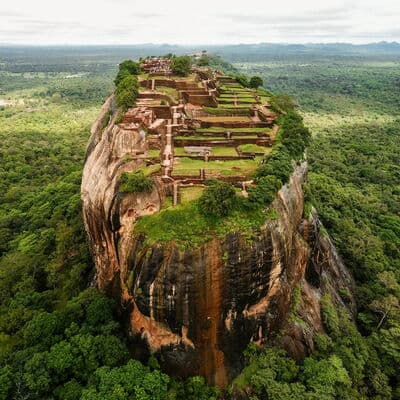
Sigiriya (Lion Rock) is the undisputed must-see. This 660-foot granite monolith was transformed into a palace and fortress by King Kassapa I in the 5th century AD. The history reads like a Hollywood script: Kassapa killed his father, seized the throne, and retreated to this impregnable rock to escape his vengeful brother. The climb to the summit takes about an hour up ancient staircases carved directly into the rock face. Midway up, you will encounter the famous Sigiriya frescoes - paintings of heavenly maidens that are among the few surviving examples of ancient Sri Lankan art. At the top: palace ruins, reflecting pools, landscaped gardens, and panoramic views stretching for miles in every direction. The entrance fee is $30 for foreigners - expensive by local standards, but this is the kind of sight people fly halfway around the world to see.
Pidurangala Rock is the budget traveler's alternative to Sigiriya and the choice for those wanting to avoid crowds. Located just a 20-minute drive from Sigiriya, it offers arguably the best view: looking across at Lion Rock itself. The climb is more physically demanding - you will need to scramble over boulders near the top - but the entrance is only about $1.50. Perfect for sunrise: arrive around 5:30 AM, climb in the dark with a headlamp, and watch the sun come up with Sigiriya silhouetted against the orange sky. No crowds because tourists are still sleeping.
Dambulla Cave Temple is the largest and best-preserved cave temple in Sri Lanka. Five caves containing 153 Buddha statues and 2,100 square meters of painted ceilings. This is an active place of worship - people pray here, ceremonies happen here. Entry is about $15 for foreigners. Come early morning before the tour buses arrive. Near the caves is a newer temple with a giant golden Buddha statue that tourists often confuse with the ancient caves. Do not make that mistake: you want the caves at the top of the rock, not the modern temple by the road.
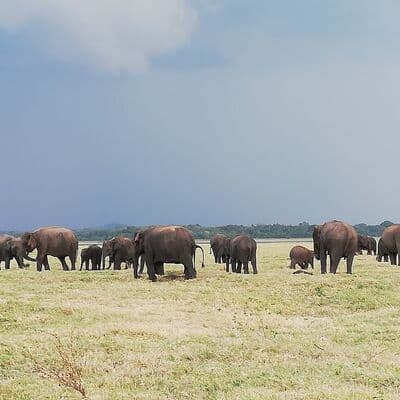
Minneriya National Park is the best spot on the island for elephant watching. From August through October, the park hosts The Gathering - the largest congregation of Asian elephants in the world. As water levels in the reservoir drop and fresh grass emerges, up to 300 elephants converge from the surrounding forests. Safari costs around $40-50 per person including park entry and jeep. Even outside the gathering season, you are guaranteed to see dozens of elephants on any visit.
Anuradhapura and Polonnaruwa are the ancient capitals, massive archaeological sites with ruins spread over square miles. Anuradhapura was the capital for over a thousand years and contains some of Buddhism's most sacred sites, including a descendant of the original Bodhi tree under which Buddha achieved enlightenment. Polonnaruwa is more compact and arguably more photogenic, with remarkably well-preserved stone sculptures. Both require a full day to explore properly and are essential for history enthusiasts.
The Hill Country: Kandy, Nuwara Eliya, Ella
The mountains of Sri Lanka are all about tea plantations, misty mornings, waterfalls, and blessed relief from coastal heat. Temperatures here range from 60-77F year-round, a dramatic change from the 86-95F you will experience on the plains.
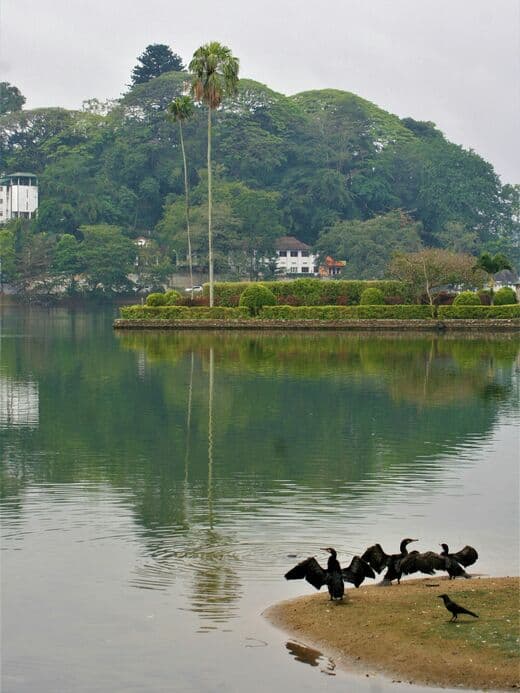
Kandy is the cultural capital of Sri Lanka and the gateway to the hill country. The city sits in a valley surrounded by mountains, wrapped around the scenic Kandy Lake. The main attraction is the Temple of the Sacred Tooth Relic (Sri Dalada Maligawa), which houses what Buddhists consider the most sacred relic in their faith: a tooth of the Buddha himself. Every evening at 6:30 PM, a puja ceremony takes place with drums, dancers, and the ritual opening of the reliquary. It is one of the most atmospheric religious experiences I have witnessed anywhere.
Royal Botanical Gardens at Peradeniya is one of the finest botanical gardens in Asia. Spanning 150 acres, it features an orchid collection, giant bamboo groves, an avenue of royal palms, and immaculate landscaping throughout. Perfect for a leisurely half-day stroll. Entry is about $3 for foreigners.
Kandy Central Market is essential for anyone seeking authentic local experience. This is where locals shop, not tourists. Mountains of spices, tropical fruits, vegetables, fresh fish - the sensory overload is real. Prices are rock bottom, the atmosphere is genuine. Come in the morning when the market is at its liveliest.
Ella is a tiny hill town that has become legendary among backpackers and hiking enthusiasts. Sitting at around 3,300 feet elevation, Ella is surrounded by tea plantations, waterfalls, and peaks. The vibe here is completely different from the rest of Sri Lanka: plenty of cafes serving Western food, yoga studios, hipster guesthouses. But the real draw is the scenery and the hiking opportunities.
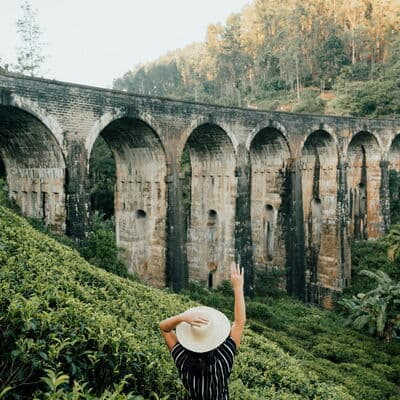
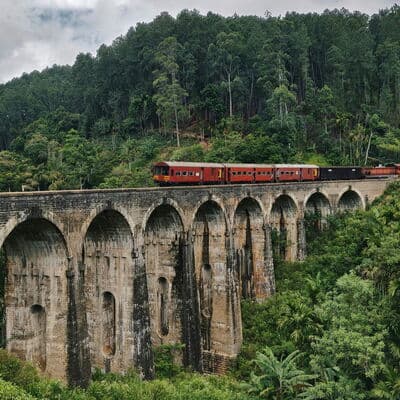
Nine Arch Bridge is an engineering marvel from the colonial era and the most photographed landmark in Ella. Built in 1921 without a single steel beam - just stone, brick, and cement - it is a testament to what human ingenuity could achieve with basic materials. When the blue train crosses against a backdrop of green mountains, you have got postcard perfection. Trains pass approximately every 90 minutes; check the schedule online. Arrive by 6 AM if you want photos without crowds of other tourists doing the same thing.
Little Adam's Peak offers an easy and scenic trek of about one and a half to two hours round trip. The trail winds through tea plantations to a summit with panoramic views over the Ella valley. The climb is not difficult - anyone in reasonable shape can manage it. Perfect for sunrise or sunset.
Ravana Falls is an 82-foot waterfall right beside the road between Ella and the coast. Named after the demon king from the Hindu epic Ramayana - legend says this is where Ravana hid the kidnapped Sita. You can climb up to the falls and swim in the natural pool. Free entry.
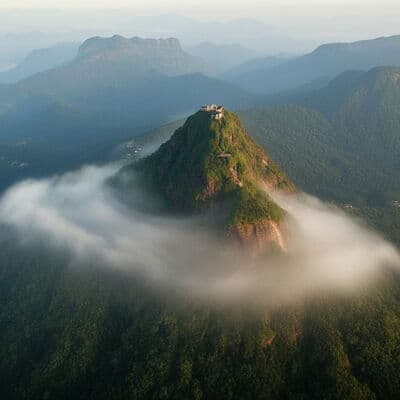
Adam's Peak (Sri Pada) is a sacred mountain standing 7,359 feet tall with a footprint-shaped impression at the summit that different faiths interpret differently: Buddhists say it belongs to Buddha, Hindus attribute it to Shiva, Muslims and Christians claim it as Adam's footprint. This is a pilgrimage destination for multiple religions. The climb is done at night: you start around 2 AM to reach the summit for sunrise. Five thousand steps over three to four hours - this is serious physical exertion. Pilgrimage season runs December through May; outside this period the trail is closed or dangerous due to weather conditions.
Nuwara Eliya, often called Little England, sits at 6,200 feet and was developed by British colonials as an escape from the lowland heat. Tudor-style buildings, a golf course, a horse racing track, and temperatures that can drop near freezing at night. The surrounding area is prime tea country - this is where you can visit famous tea estates like Mackwoods or Pedro and learn about Ceylon tea production while sampling premium grades.
The South Coast: Galle, Mirissa, Unawatuna, Hikkaduwa
Galle and the south coast offer beaches, surfing, colonial architecture, and a relaxed tropical vibe. High season here runs November through April when the sea is calm and sunshine is guaranteed.
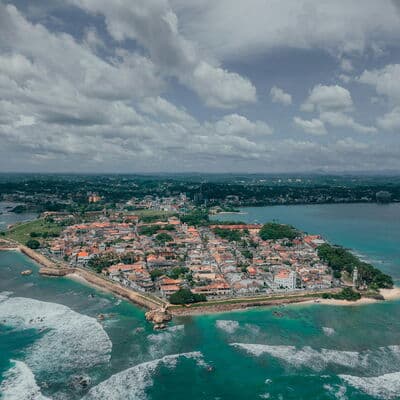
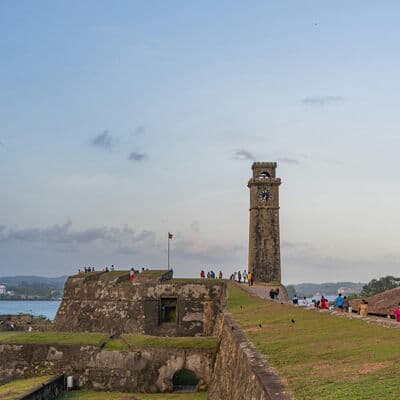
Galle Fort is a 17th-century Dutch fortification inscribed on the UNESCO World Heritage list. This is not a museum but a living neighborhood: narrow streets, colonial mansions converted to boutique hotels, cafes, galleries, and shops. The fort sits on a promontory with ocean on three sides. Sunsets from the ramparts are among the best on the island. You could easily spend half a day wandering the streets and poking into small shops. In the evenings, locals play cricket on the main green - feel free to join if you know your way around a bat.
Unawatuna Beach is one of the most popular beaches on the island, just 15 minutes from Galle. A small bay with relatively calm water - unusual for Sri Lanka where waves tend to be strong. Plenty of restaurants right on the sand, dive schools, and a lively atmosphere. The downside: it gets crowded and feels somewhat commercialized. But for beach time with infrastructure, it is a solid choice.
Hikkaduwa Beach and Coral Sanctuary is the place for snorkeling and sea turtle encounters. The coral here suffered damage from the 2004 tsunami but is gradually recovering. Sea turtles swim right up to the shore; you can spot them simply by wading in with a mask. The town of Hikkaduwa is more laid-back than Unawatuna with good budget accommodation options.
Mirissa is the whale watching capital of Sri Lanka. From December through April, blue whales, sperm whales, and dolphins cruise along the southern coast. Excursions depart early morning around 6 AM and run for four to five hours. Cost is $30-50 per person depending on the operator and boat type. Your chances of seeing whales during season are approximately 90 percent. The blue whale is the largest animal to ever exist on Earth, and seeing one in the wild stays with you forever.
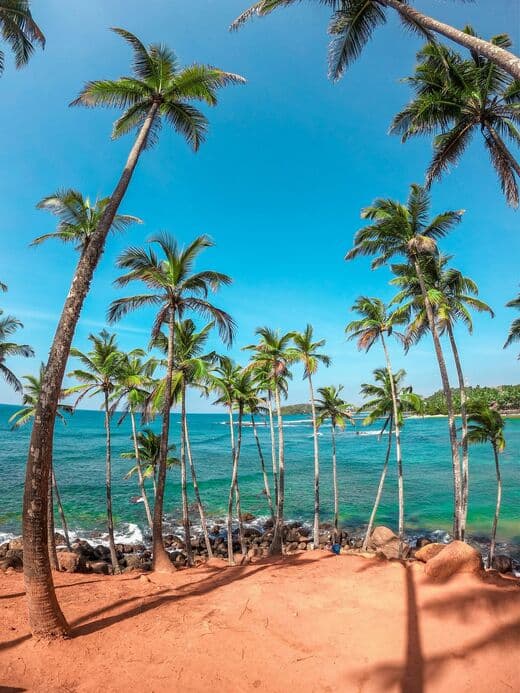
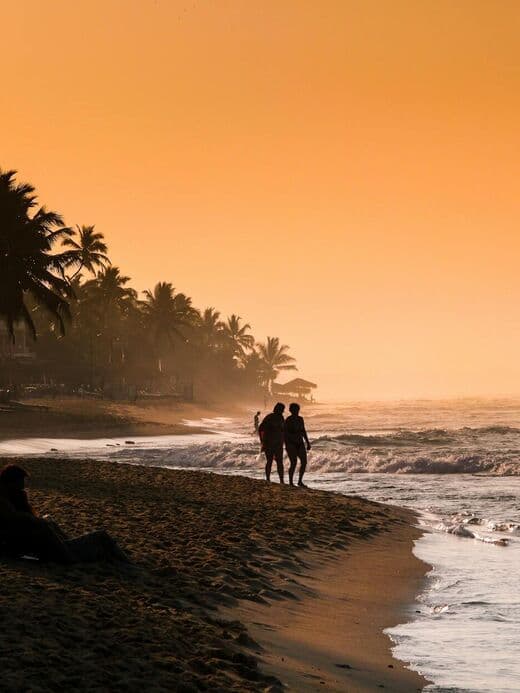
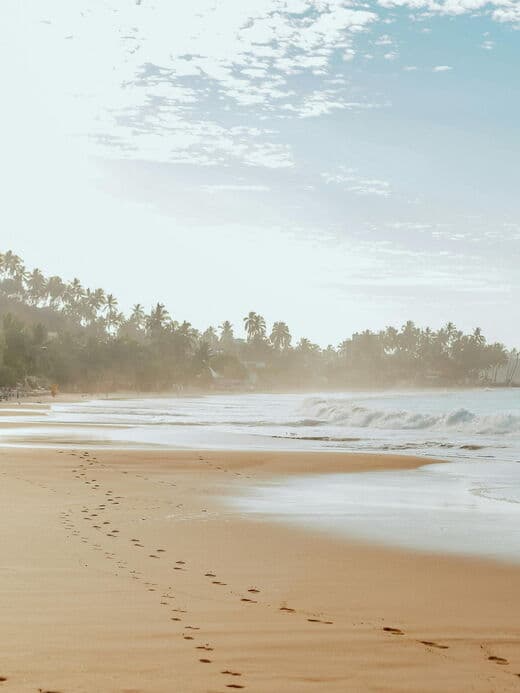
Mirissa Beach is a beautiful crescent of sand backed by palm trees with small waves suitable for swimming and beginner surfing. In the evening, fish restaurants open along the beach - fresh tuna, prawns, lobster at reasonable prices.
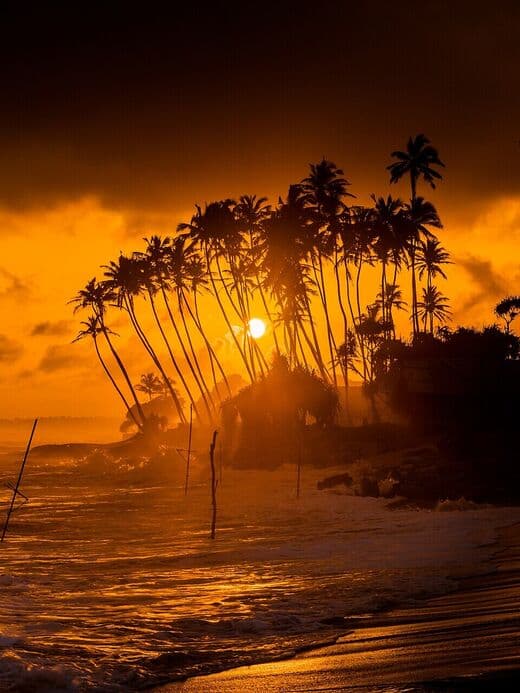
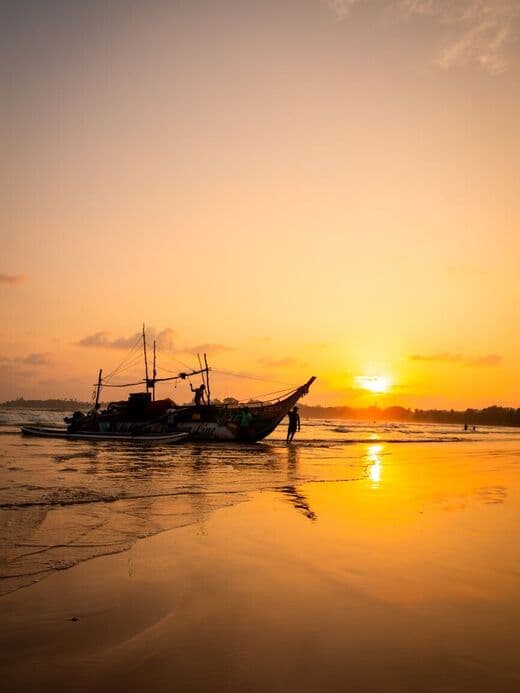
Weligama Beach is the surf capital of Sri Lanka. A long bay with gentle waves perfect for learning. Dozens of surf schools, board rentals for next to nothing, and a chilled-out atmosphere. This is also where you will find the famous stilt fishermen - one of the iconic images of Sri Lanka. Though these days it is more of a tourist attraction than actual fishing practice.
Koggala Beach stretches long and uncrowded south of Galle. Fewer tourists, more space, more peace. Nearby is Koggala Lake with boat safaris and an ancient temple on an island. Good choice if you want beach time without the crowds.
National Parks of the South
Yala National Park is the most visited park in Sri Lanka and the world's best destination for leopard watching. Yala boasts the highest density of leopards on the planet - approximately one leopard per square mile. Your chances of spotting one of these spotted cats on a safari run around 30-40 percent, which is remarkably high by global standards. Beyond leopards, expect elephants, crocodiles, water buffalo, deer, and hundreds of bird species. Safaris launch from the town of Tissamaharama. Cost runs around $50-70 per person for a half-day expedition. Best times are early morning (departing at 5:30 AM) or late afternoon when leopards are most active.
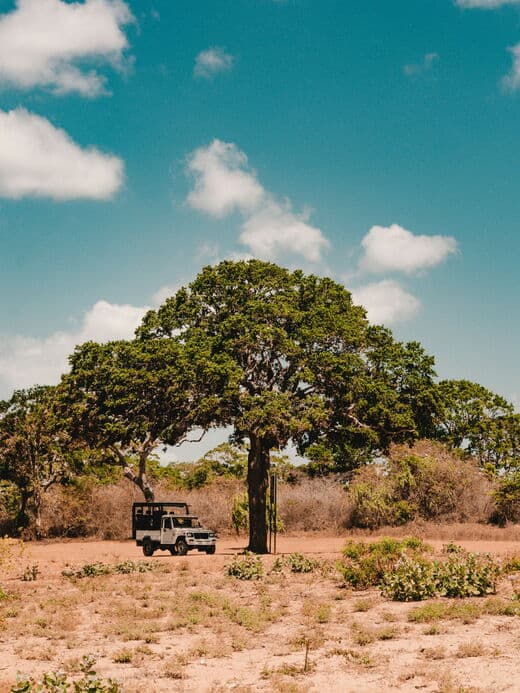
Udawalawe National Park is your best bet if you want guaranteed elephant sightings in the wild. Unlike Yala where leopards require patience and luck, elephants at Udawalawe are everywhere. Expect to see 50-100 elephants during a single safari - herds, solitary bulls, families with calves. The landscape is more open savanna which makes spotting easier. The park sees fewer visitors than Yala, meaning fewer jeeps competing for views. Nearby is the Elephant Transit Home, a rehabilitation center for orphaned elephant calves, where staff prepare young elephants for release back into the wild. Feeding times at 9 AM, noon, and 3 PM let you watch dozens of baby elephants running toward their milk bottles.
Colombo and the West Coast
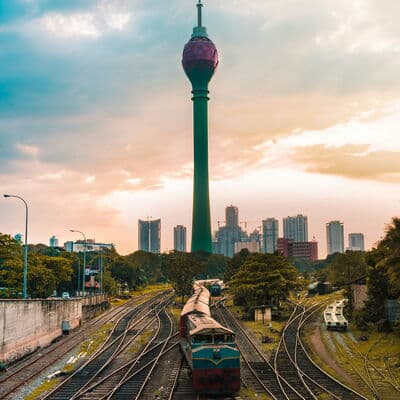
Colombo is the capital and largest city in Sri Lanka. Most tourists rush through on their way to beaches or mountains, and they are missing out. The city deserves at least one full day. The colonial Fort district with British architecture, the chaotic Hindu temples of Pettah market, Buddhist stupas at Kelaniya, modern skyscrapers and shopping malls - Colombo is where old and new Sri Lanka collide. Street food on every corner, excellent restaurants, nightlife options.
The west coast (Negombo, Bentota, Kalutara) is the more developed tourist zone with large resort hotels, many operating on all-inclusive packages. Beaches are decent but the sea is often rough. Negombo is convenient as a first night stay - just 10 minutes from the airport - before heading to more interesting destinations.
The East Coast: The Road Less Traveled
The east coast (Trincomalee, Arugam Bay, Batticaloa) is Sri Lanka's alternative season destination. When the west and south are being pounded by monsoon rains from May through September, the east enjoys dry, sunny weather. Arugam Bay in particular has developed into a world-class surf destination, drawing serious wave riders from June through September. Trincomalee offers colonial history, Hindu temples, and some of the island's best beaches. This region sees fewer tourists and retains more authentic character - but infrastructure is less developed than the south.
The North: Jaffna and Beyond
The north was closed to tourism for decades during the civil war that ended in 2009. Today it is open and safe, though tourism infrastructure remains limited. Jaffna is the Tamil cultural capital with a completely different feel from the Sinhalese south - Hindu temples instead of Buddhist stupas, spicier cuisine, different architecture. For travelers interested in getting off the beaten path and seeing a side of Sri Lanka that most tourists miss, the north offers genuine discovery. But expect basic accommodation and limited English outside main towns.
Choosing Your Region: Quick Decision Guide
With limited time, you need to make choices. Here is a quick guide based on interests:
If you want ancient history and culture: Focus on the Cultural Triangle. Spend at least three days exploring Sigiriya, Dambulla, and either Anuradhapura or Polonnaruwa. This region rewards slow exploration - rushing through is missing the point.
If you want beaches and relaxation: Head straight to the south coast (November-April) or east coast (May-September). Unawatuna for convenience and nightlife, Mirissa for a slightly more local feel, Tangalle for quieter beaches, Arugam Bay for surfing culture.
If you want wildlife: Build your trip around the national parks. Yala for leopards, Udawalawe for guaranteed elephants, Minneriya for The Gathering (August-October), Mirissa for whales (December-April). These can be combined with beach time on the south coast.
If you want hiking and scenery: The hill country is your priority. Ella is the backpacker hub with numerous trails. Nuwara Eliya offers more challenging hikes and cooler temperatures. Adam's Peak (December-May) is the ultimate pilgrimage trek.
If you want authenticity and fewer tourists: Consider the east coast during its season, or venture north to Jaffna. The Cultural Triangle villages around Sigiriya are also less touristy than Ella or Galle, despite the famous sites nearby.
If this is your first trip and you have 10-14 days: Do the classic circuit - Cultural Triangle, Kandy, train to Ella, south coast. This hits all the highlights and gives you a taste of everything Sri Lanka offers. You can decide what to explore deeper on your return trip - because you will return.
Wildlife in Sri Lanka: Safaris, Whales, and Elephants
Sri Lanka ranks among the world's finest wildlife destinations. On an island smaller than most American states, you can encounter leopards, elephants, whales, dolphins, crocodiles, and hundreds of bird species. And unlike African safaris requiring multi-day expeditions into remote areas, Sri Lanka's national parks sit just a few hours from major tourist hubs.
Elephants: Where and When to See Them
The Asian elephant is Sri Lanka's national symbol. The island is home to approximately 7,000 wild elephants, making it one of the largest populations in Asia. Unlike Africa where elephants roam vast territories and sightings require luck, Sri Lankan elephants live in concentrated areas and encounters are virtually guaranteed.
Minneriya is the undisputed champion for elephant observation. From August through October, the park hosts The Gathering - the largest congregation of Asian elephants anywhere on Earth. As water levels in the ancient reservoir drop, fresh grass emerges on the exposed bed, and elephants from across the region converge for the feast. Up to 300 elephants in a single location - families with calves, young males sparring, matriarchs leading their herds to water. It is one of the most spectacular wildlife events on the planet, yet relatively unknown compared to African migrations. Even outside gathering season, Minneriya supports dozens of resident elephants.
Udawalawe is the alternative if you are traveling in the south. Elephants live here year-round regardless of season. The landscape is more open savanna than dense forest, making animals easier to spot. On a single safari you will see 50-100 elephants, essentially guaranteed. Near the park is the Elephant Transit Home, a rehabilitation center for orphaned calves. Staff hand-raise baby elephants until they are ready for release into the wild. Feeding sessions at 9 AM, noon, and 3 PM let you watch dozens of elephant calves charging toward their bottles - impossibly cute.
A critical note: avoid tourist elephant orphanages that offer elephant rides and bathing experiences. These often involve captive elephants removed from the wild and subjected to cruel training practices. The Elephant Transit Home at Udawalawe is the ethical alternative - animals are prepared for wild release, not tourist entertainment.
Leopards: Hunting the Spotted Ghost
Yala National Park is the best place in the world - not just Sri Lanka, the world - to see leopards. The park boasts the highest leopard density anywhere on Earth: approximately one animal per square mile. The Sri Lankan leopard is an endemic subspecies, larger than its African relatives.
Your odds of spotting a leopard on any given safari run around 30-40 percent. That is extraordinarily high: in Africa you might spend a week on safari without a single sighting. Yala's leopards are relatively relaxed around vehicles - they have grown accustomed to jeeps and do not hide as carefully as their counterparts elsewhere. Best safari times are early morning (departing at 5:30 AM) or late afternoon (departing at 3 PM) when leopards are most active during the cooler hours.
Fair warning: Yala is popular, and during high season the park fills with jeeps. If you want a more intimate experience, visit on a weekday or request the less-visited Block 5 instead of crowded Block 1. Some drivers chase leopards aggressively, creating traffic jams of vehicles. Ask your driver to be patient and respectful of the animals.
Whales and Dolphins: Ocean Safari at Mirissa
Mirissa is Sri Lanka's whale watching headquarters. From December through April, the southern coast becomes a crossroads for migrating marine mammals. Blue whales, sperm whales, Bryde's whales, occasionally orcas, and multiple dolphin species all pass within a few miles of shore.
The blue whale is the largest animal that has ever existed on Earth. Up to 100 feet long, weighing up to 200 tons - bigger than any dinosaur. Seeing one surface in the wild, watching that massive body arch through the water, is an experience that stays with you. And unlike some whale watching destinations where sightings are hit or miss, Mirissa delivers: success rates during season run around 90 percent. These whales pass here every day.
Excursions depart early, around 6:00-6:30 AM. Boats head out for three to four hours, traveling 6-12 miles from shore. Cost ranges from $30-50 per person depending on the operator and boat quality. Choose reputable operators: some boats approach whales too closely, stressing the animals. Good operators maintain appropriate distance and cut engines when whales are nearby.
Seasickness warning: the ocean here can get rough. If you are prone to motion sickness, take medication before departure, sit near the stern, and keep your eyes on the horizon. But even if you get queasy, the experience is worth it.
Birds: Paradise for Birdwatchers
Sri Lanka is one of Asia's premier birding destinations. The island hosts over 430 species, of which 33 are endemic - found nowhere else on Earth. Sinharaja Rainforest, a UNESCO World Heritage site, is the best location for tracking down endemic species. Here you can find the Sri Lanka junglefowl, Sri Lanka blue magpie, Ceylon frogmouth, and dozens of other species unique to the island.
You do not need a specialized tour to see birds: they are everywhere. Rice paddies around Sigiriya teem with kingfishers, herons, and storks. The mountains of Ella host highland species and endemics. The coast attracts seabirds and shorebirds. Pack binoculars and a bird identification app, and you will be amazed how many species you spot.
Other Wildlife Encounters
Beyond the big draws, Sri Lanka offers numerous other wildlife experiences. Bundala National Park on the south coast is a wetland hosting thousands of migratory flamingos from September through March. Wilpattu National Park in the northwest offers leopard sightings with fewer crowds than Yala. Sinharaja Rainforest is home to purple-faced langurs, giant squirrels, and numerous reptile species. Diving and snorkeling off the south and east coasts reveals sea turtles, reef sharks, manta rays, and coral ecosystems. For a compact island, the biodiversity is remarkable.
Safari Logistics and Tips
Most safaris are arranged through your hotel or guesthouse, which connects you with a jeep and driver. Prices typically include park entrance fees, jeep hire, and driver. For half-day safaris (3-4 hours), expect to pay $40-70 per person depending on the park and season. Full-day safaris with lunch run $80-120. Private jeeps for just your group cost more but offer flexibility.
What to bring: binoculars (essential for spotting distant animals), camera with zoom lens, sunscreen, hat, light jacket for early mornings, water bottle, and snacks. Wear neutral colors - avoid bright whites or reds that might disturb animals.
Best times: early morning safaris (departing 5:30-6:00 AM) offer the best wildlife activity and cooler temperatures. Animals are most active during dawn and dusk. Late afternoon safaris (departing 3:00-3:30 PM) catch the evening activity period. Midday safaris are less productive as animals shelter from the heat.
Ethical considerations: choose operators who maintain respectful distance from animals and do not chase or crowd wildlife. Some jeep drivers, eager to please tourists, get too close to animals or create traffic jams around sightings. Good operators prioritize animal welfare over tourist convenience. Ask your hotel for recommendations from guests who prioritize ethical wildlife viewing.
Crocodiles and Reptiles
Mugger crocodiles inhabit rivers and lagoons throughout Sri Lanka. The best place to see them is the Madu River near Galle, where boat safaris navigate through mangrove channels. Saltwater crocodiles are rarer but present in coastal areas. Both species are dangerous - maintain distance and never swim in rivers or lagoons where crocodiles are present.
Sri Lanka is home to nearly 100 reptile species, including several endemic snakes. The Indian python, Sri Lankan krait, and Russell's viper are among the notable species. While snakes generally avoid humans, watch your step when hiking through jungle or walking at night. Monitor lizards, some reaching impressive sizes, are commonly spotted near water bodies.
Marine Life Beyond Whales
The waters around Sri Lanka support rich marine ecosystems. Diving sites off Hikkaduwa, Unawatuna, Trincomalee, and Pigeon Island offer encounters with reef sharks, manta rays, sea turtles, and diverse coral formations. The shipwreck diving around the coast includes British colonial-era vessels, adding historical interest to underwater exploration. Visibility is best from November through April on the west and south coasts, May through September on the east coast.
When to Visit Sri Lanka
Sri Lanka is one of the few countries you can visit year-round with guaranteed good weather somewhere on the island. The secret lies in two monsoon seasons that bring rain to different regions at different times. When the southwest is drowning, the northeast is dry, and vice versa. With smart planning, you will always find sunshine.
Southwest Monsoon (May through September)
The southwest monsoon brings heavy rain to the western and southern coasts, as well as the hill country. This is NOT the time for beaches at Galle, Mirissa, or Hikkaduwa - the sea is rough, waves are dangerous, and rain falls regularly. The mountains also receive significant rainfall, though Ella and Kandy remain visitable.
This is the ideal time for the east coast (Trincomalee, Arugam Bay, Batticaloa). Dry, sunny, and warm. Arugam Bay from June through August becomes a mecca for surfers from around the world. The Cultural Triangle (Sigiriya, Dambulla) is also manageable - rain occurs but usually as short afternoon bursts.
Northeast Monsoon (October through January)
The northeast monsoon flips the script. Rain falls on the north and east while the southwest and mountains enjoy dry season. This is the best time for:
- South coast beaches (Galle, Mirissa, Unawatuna, Hikkaduwa)
- Whale watching in Mirissa (season begins December)
- Hill country (Kandy, Ella) - cool and dry
- National parks (Yala, Udawalawe, Minneriya)
Shoulder Season (February through April)
The sweet spot. Between monsoons, weather is stable almost everywhere on the island. February through April is high season: prices rise, popular spots fill up. But the weather justifies the crowds - sunshine, warm seas, minimal rain anywhere you go.
Festivals and Holidays
Sri Lanka celebrates an extraordinary number of holidays - Buddhist, Hindu, Muslim, and Christian festivals all receive recognition in this multi-faith society.
Esala Perahera in Kandy (July-August) is the biggest festival in Sri Lanka. Ten nights of torchlit processions featuring decorated elephants, traditional dancers, drummers, and fire performers. The climax: the sacred tooth relic paraded through the streets on the back of an elephant. This is one of the most spectacular religious festivals in Asia. Book accommodation in Kandy months in advance if you want to witness it.
Sinhala and Tamil New Year (April 13-14) marks the traditional new year when the entire country shuts down for celebrations. Families gather, special foods are prepared, temples are visited. Many businesses close, transport is packed. Beautiful to experience but requires advance planning.
Vesak Poya (May) celebrates the birth, enlightenment, and death of Buddha. Streets are decorated with illuminated lanterns (pandols), temples offer free food to visitors. Alcohol sales are prohibited during this period.
Poya Days (Monthly) are full moon holidays observed throughout the year. Alcohol sales are banned on every full moon day. If your trip coincides with poya, stock up beforehand.
Month-by-Month Weather Summary
January-February: Peak dry season in the south and west. Perfect beach weather, ideal for whale watching in Mirissa. Hill country is pleasant. Book accommodation well in advance as this is high season.
March-April: Transition period. Generally good weather throughout the island before the southwest monsoon arrives. Easter and Sinhala New Year (April 13-14) bring crowds and higher prices. Adam's Peak pilgrimage season continues through May.
May-June: Southwest monsoon begins. West and south coasts receive heavy rain. Head to the east coast for dry weather. Arugam Bay surf season kicks into gear. Cultural Triangle remains accessible with occasional afternoon showers.
July-August: Peak monsoon on the southwest. Best time for the east coast. Esala Perahera festival in Kandy (late July to early August) - book Kandy accommodation months ahead. Minneriya elephant gathering begins.
September-October: Monsoon winds down. Shoulder season with unpredictable weather but fewer tourists. Minneriya gathering peaks in September. Good wildlife viewing as water sources concentrate animals.
November-December: Northeast monsoon brings rain to the north and east. South and west coasts enter dry season. Whale watching season begins in Mirissa (December). Christmas and New Year bring peak tourist numbers and prices.
How to Get to Sri Lanka
The only practical way to reach Sri Lanka is by air. The island has no bridges or regular ferry connections to mainland India, despite decades of discussion about a ferry service.
Airports
Bandaranaike International Airport (CMB) is the main gateway, located about 20 miles north of Colombo. This handles 99 percent of international arrivals. The airport is small but modern, having undergone renovation in the 2010s. Getting to Colombo: taxi costs $25-30, airport bus runs under a dollar, or take a train from nearby Negombo station.
Mattala Rajapaksa International Airport (HRI) is a second international airport in the south, built with Chinese financing. It sees minimal traffic due to low demand and is sometimes called the world's emptiest international airport. Occasional charter flights land here. Convenient if you are heading straight to southern beaches, but flight options are extremely limited.
Flights from the United States
No direct flights connect the US and Sri Lanka. Expect at least one connection, typically through the Middle East or Asia. Most convenient routing options:
- Via Middle East: Emirates through Dubai, Qatar Airways through Doha, Etihad through Abu Dhabi. These offer the most comfortable connections with premium lounges and modern aircraft. Total travel time from East Coast around 18-22 hours.
- Via Asia: Singapore Airlines through Singapore, Cathay Pacific through Hong Kong. Slightly longer but competitive options, especially from the West Coast.
- Via India: Multiple carriers fly through Delhi, Mumbai, or Chennai. Often cheaper but connections can be lengthy and Indian airports are not known for efficiency.
Expect to pay $800-1,200 round trip from major US cities in economy. Prices spike during December-January peak season and can drop significantly in shoulder seasons. Booking two to three months ahead typically offers the best rates.
Flights from the UK
British travelers have better options, including seasonal direct flights:
- SriLankan Airlines operates direct flights from London Heathrow. Flight time approximately 10.5 hours.
- Via Middle East: Emirates, Qatar Airways, and Etihad offer multiple daily connections with brief stopovers.
- Via India: Budget carriers like Air India offer cheaper connections through Mumbai or Delhi.
Expect 400-700 GBP round trip depending on season and how far ahead you book.
Flights from Australia
Australian travelers typically route through Southeast Asia:
- SriLankan Airlines flies direct from Melbourne (around 11 hours).
- Via Singapore: Singapore Airlines offers excellent connections. Singapore to Colombo is only 4 hours.
- Via Kuala Lumpur: Malaysia Airlines and AirAsia provide budget-friendly options.
Prices from Australia typically run AUD 900-1,400 round trip.
Visa Requirements
Citizens of the United States, United Kingdom, Canada, Australia, and most Western countries can obtain an Electronic Travel Authorization (ETA) before departure. As of late 2024, the visa process has been simplified:
- Cost: $50 USD for the ETA (recently reduced from higher fees)
- Duration: 30 days, extendable to 90 days within Sri Lanka
- Process: Apply online at the official ETA website (eta.gov.lk), receive approval via email within 24-48 hours
- Requirements: Valid passport with at least 6 months validity, return ticket, proof of accommodation (rarely checked but good to have)
Important: Sri Lanka periodically experiments with visa policies. The country has at various times offered visa-free entry to boost tourism, then reinstated fees. Check current requirements before booking. The official source is eta.gov.lk - avoid third-party websites that charge extra fees for the same service.
TSA considerations for American travelers: Sri Lanka is not on any restricted lists. You can bring reasonable amounts of prescription medication in original containers. Electronics including laptops require separate screening as always. Declare currency over $15,000 at Sri Lankan customs.
Flights from Canada
Canadian travelers typically route through the Middle East or Europe:
- Via Middle East: Emirates through Dubai from Toronto offers the most convenient routing. Qatar Airways and Etihad provide alternatives.
- Via Europe: British Airways through London Heathrow works well from eastern Canadian cities.
- Via Asia: Cathay Pacific through Hong Kong from Vancouver offers competitive routing for west coast travelers.
Expect CAD 1,200-1,800 round trip depending on routing and season.
Arrival Procedures
Immigration at Bandaranaike Airport is straightforward. Have your ETA confirmation (printed or on phone), passport, return ticket, and accommodation details ready. Lines move reasonably quickly. After immigration, collect luggage and proceed through customs - nothing to declare unless you are carrying more than two bottles of alcohol, 200 cigarettes, or the currency amounts mentioned above.
SIM card counters are located just after customs - buy one immediately (see Connectivity section). Currency exchange booths are also available; change a small amount for initial taxi or bus fare.
Exiting the airport, you will encounter a gauntlet of taxi touts. For the best price, use the official taxi counter inside the airport (rates are posted) or book through your hotel in advance. The government-run Airport Bus Service to Colombo costs under a dollar but runs infrequently. For most travelers, the prepaid taxi is worth the $25-30 to Colombo or $50-60 to more distant destinations.
Departure Procedures
Arrive at the airport at least three hours before international departures. Security screening happens before check-in at Bandaranaike. The airport has decent duty-free shopping for last-minute tea and souvenir purchases. Lounges are available for premium travelers or Priority Pass holders. The food options inside are limited but adequate.
Getting Around Sri Lanka
Transportation is one of the most memorable aspects of traveling in Sri Lanka. From legendary train journeys through tea country to wild tuk-tuk rides weaving between buses, every journey here is an adventure.
Trains: Slow, Scenic, Unforgettable
Sri Lanka's railways are a legacy of British colonial rule. The trains are old, slow, and frequently late. But that is precisely what makes them one of the island's greatest attractions. The Kandy to Ella route regularly appears on lists of the world's most scenic rail journeys.
Colombo to Kandy (3 hours): The first stage of the highland journey. First-class air-conditioned seats cost about $5, second class is $2-3. Views are pretty but not as dramatic as the sections deeper into the mountains.
Kandy to Ella (6-7 hours): The legendary route. The train climbs through the mountains, passing tea plantations, tunnels, and viaducts with stunning valley views. Passengers hang out of open doorways (yes, this is allowed and everyone does it), snapping photos over drops of hundreds of feet. First class sells out quickly - book 30 days in advance. Second and third class are unreserved - arrive early to claim a window seat.
Colombo to Galle (2-3 hours): The coastal route. The train runs alongside the ocean, at points just feet from the waves. Particularly beautiful at sunset.
Pro tip: do not try to ride Kandy to Ella in a day and see anything else. The train itself consumes the entire day, plus unpredictable delays are common. Treat the journey as the destination - pack snacks, charge your phone for photos, and enjoy the ride.
Buses: Fast, Cheap, Terrifying
Buses are the main transport for locals. They go virtually everywhere, run frequently, and cost almost nothing. An intercity bus across half the country is $3-5. The catch: Sri Lankan bus drivers are certifiably insane. They speed, overtake on blind corners, and honk continuously. If you have a weak stomach or back problems, consider alternatives.
Two types of buses operate: government buses (red, marked CTB) are cheaper but older; private buses (various colors) cost slightly more, sometimes have air conditioning, but often feature even more aggressive drivers.
For short trips (Galle to Mirissa, Kandy to Sigiriya), buses work fine. For longer journeys, trains or private vehicles are more comfortable.
Taxis and Ride-Sharing
Traditional taxis exist - you negotiate a price before getting in. Uber operates in Colombo and larger cities. The local equivalent, PickMe, works more broadly across the island including for tuk-tuks.
For longer journeys, hiring a car with driver for the day costs $50-70 and is remarkably convenient. The driver picks you up from your hotel, takes you wherever you want, waits while you explore, and returns you at the end of the day. Many drivers speak English and function as informal guides. This is the most comfortable way to cover ground if budget allows.
Tuk-Tuks: The Symbol of Sri Lanka
The tuk-tuk (also called a three-wheeler) - a motorized three-wheel vehicle - has become synonymous with Sri Lanka. They are everywhere: buzzing through city streets, puttering along rural roads, waiting outside every hotel. A typical city ride costs $1-2. By meter (when functioning): roughly 20 cents for the first kilometer plus 13 cents per additional kilometer.
Advice: always agree on a price before getting in, or insist on the meter. Tourists get quoted inflated prices regularly. Ask at your hotel for approximate fares to intended destinations and negotiate accordingly.
Rental Cars and Motorcycles
Renting a car in Sri Lanka is not for the faint-hearted. Left-hand traffic (opposite of the US), chaotic driving culture, narrow roads, unpredictable buses, and occasional cows in the roadway. If you do not have experience driving in developing Asian countries, hire a driver instead.
If you still want to drive yourself: you need an International Driving Permit plus your home license. Rental runs from $30-40 per day for a small car. Fuel is cheap. GPS is essential as road signs are often in Sinhala only.
Motorcycles and scooters are popular among backpackers. Rental is $5-10 per day. But risks are higher: roads are dangerous and medical care in case of accident is a separate concern entirely.
Domestic Flights
Cinnamon Air and other small operators run domestic flights and seaplane services connecting Colombo with destinations including Sigiriya, Trincomalee, and Jaffna. These are expensive ($150-300 one way) but save significant time if your schedule is tight. Seaplane transfers to resort properties offer a scenic arrival but at premium prices.
Organized Tours vs Independent Travel
Sri Lanka works well for independent travelers. The main tourist circuit is well-established, public transport reaches most destinations, and English is widely spoken. Independent travel offers flexibility and lower costs.
That said, organized tours have their place. If you have limited time, a pre-arranged itinerary with private driver eliminates planning stress. If you want to maximize wildlife sightings, a knowledgeable guide significantly improves your chances. If you are uncomfortable with chaotic Asian transport, a private vehicle provides comfort and safety.
A middle ground: hire a driver-guide for the duration of your trip. Unlike a group tour, this gives you flexibility to change plans while providing local expertise and hassle-free logistics. Expect to pay $50-80 per day for the driver plus fuel, accommodation, and meals. Many travelers find this the ideal balance of independence and convenience.
Getting Between Regions: Time Estimates
Distances in Sri Lanka are short but travel times can surprise you. The roads, while improving, are often narrow and congested. Here are realistic driving times to help with planning:
- Colombo to Sigiriya: 4-5 hours
- Sigiriya to Kandy: 2.5-3 hours
- Kandy to Ella (by car): 3.5-4 hours
- Kandy to Ella (by train): 6-7 hours
- Ella to Yala/Tissamaharama: 2.5-3 hours
- Yala to Mirissa: 2-2.5 hours
- Mirissa to Galle: 45 minutes - 1 hour
- Galle to Colombo: 2-3 hours (longer with traffic)
- Colombo to Negombo: 30-45 minutes
Add buffer time for every journey. Traffic jams, road conditions, and the unpredictable nature of Asian driving mean your actual travel time may exceed estimates.
Cultural Code: Etiquette in Sri Lanka
Sri Lanka is a deeply religious society. Roughly 70 percent of the population is Buddhist, with the remainder split among Hindus, Muslims, and Christians. Religion permeates daily life, and respect for local traditions is not just polite - it is essential.
Temple Etiquette
Buddhist temples are active places of worship, not museums. Rules are strict and enforced:
- Dress code: Shoulders and knees must be covered. No shorts, tank tops, short skirts. Carry a sarong or light pants for temple visits.
- Shoes: Remove them at the entrance. Always. The ground can be hot in the sun - socks help.
- Buddha tattoos: If you have a tattoo depicting Buddha, cover it completely. People with visible Buddha tattoos have been denied entry to the country and deported. This is not exaggeration.
- Photos: Never turn your back to a Buddha statue for a selfie. Generally avoid selfies in sacred spaces altogether.
- Behavior: Quiet and respectful. No public displays of affection. Do not point at statues or images.
Daily Etiquette
Greetings: Handshakes are acceptable with men but do not initiate one with women - wait to see if she extends her hand. The traditional greeting is palms pressed together at chest level with a slight bow, saying ayubowan (may you live long).
The left hand: Considered unclean. Do not pass money, food, or business cards with your left hand. Do not eat with your left hand.
The head: Sacred. Never touch anyone's head, including children, no matter how cute you find them.
Feet: The lowest, unclean part of the body. Do not point your feet at people or religious images. Do not step over someone sitting on the ground.
Public affection: Kissing and hugging in public are frowned upon. Holding hands is acceptable but keep it modest.
Tipping
Tipping is expected but not as mandatory as in the United States. Guidelines:
- Restaurants: 10 percent of the bill if service charge is not included (check your receipt)
- Hotels: A dollar or two for porters, $3-5 per day for housekeeping
- Drivers and guides: $5-10 per day, more for exceptional service
- Tuk-tuks: Round up to the nearest convenient amount
Alcohol and Poya Days
Alcohol is sold in licensed shops (wine stores) and some supermarkets. But on poya days - full moon days that are public holidays - alcohol sales are banned across the entire country. Poya occurs every month, so check the lunar calendar against your travel dates. If a poya day falls during your stay, stock up beforehand.
Language and Communication
Sri Lanka has two official languages: Sinhala (spoken by the majority Sinhalese population) and Tamil (spoken primarily in the north and east). English functions as a link language and is widely understood in tourist areas, major cities, and among educated Sri Lankans. You can navigate the entire tourist circuit without any local language skills.
That said, learning a few basic phrases generates goodwill. Ayubowan means hello or welcome. Bohoma sthuthi means thank you very much. Kohomada means how are you. Even clumsy attempts at local language are appreciated and often met with delighted responses.
In remote areas, English proficiency drops. Having a translation app helps, though cellular coverage usually exists even in rural areas. For complex communications, your hotel or guesthouse staff can often help translate.
Photography Etiquette
Sri Lankans are generally happy to be photographed, but always ask permission first. This is both polite and often leads to better photos - people relax and smile naturally when they have consented. Never photograph military installations, airports, or government buildings without explicit permission.
At religious sites, photography rules vary. Some temples prohibit photography entirely; others allow it except in specific areas. Ask before shooting. Never photograph monks without permission. As mentioned earlier, never turn your back to a Buddha statue for a selfie - this is considered extremely disrespectful.
For wildlife photography, a good zoom lens is essential. 200mm is the minimum for useful safari photos; 400mm or longer is better. Bring extra batteries and memory cards - you will shoot more than you expect.
Safety in Sri Lanka
Sri Lanka is a relatively safe country for tourists. Violent crime against foreigners is rare. But petty hassles occur, and awareness helps avoid them.
Common Scams
The closed attraction: A tuk-tuk driver tells you your intended temple or site is closed today, but he knows another great place. Do not believe it. Insist on going to your original destination or find another driver.
The gem festival: You are invited to a special gem exhibition or factory where you can buy sapphires at huge discounts. Classic scam - the gems are either fake or massively overpriced. Only buy precious stones from certified dealers with documentation.
The friend from your hotel: A stranger somehow knows where you are staying (spotted the hotel name on your luggage tag, perhaps) and claims to be friends with the manager. The pitch leads to an overpriced tour or shop.
Inflated prices: Not so much a scam as standard practice. Tourists get quoted prices two to three times the local rate. Bargain everywhere except shops with fixed prices clearly marked.
Road Safety
The most genuine danger in Sri Lanka is the roads. Traffic fatality rates are among the highest in Asia. Buses barrel along like they have death wishes, overtaking on blind curves is normal, and many vehicles drive without lights at night. If you rent any vehicle, exercise extreme caution. If you are a passenger, buckle up and hope for the best.
Natural Hazards
Ocean: Currents along Sri Lanka's coast are powerful and deceptive. Tourists drown every year after underestimating the waves. Only swim at supervised beaches and heed warning flags. Red flag means no swimming, period.
Wildlife: Snakes live in the jungle, including venomous species. In national parks, elephants can be aggressive. Never approach wild animals, especially elephants outside designated parks.
Mosquitoes: Dengue fever is present, especially during monsoon seasons. Use repellent religiously.
Political Situation
Sri Lanka's civil war ended in 2009, and the country is stable. The 2022 economic crisis led to protests that toppled the government, but the situation has since stabilized. Check current travel advisories before departure, but as of this writing, Sri Lanka poses no unusual political risks for tourists.
Solo Female Travel
Sri Lanka is generally safe for solo female travelers, though some caution is warranted. Harassment does occur - unwanted attention, staring, and occasional verbal comments. This is less common in tourist-heavy areas and more likely in local neighborhoods or when traveling alone on public transport.
Strategies that help: dress modestly (cover shoulders and knees, especially outside beach areas), avoid walking alone at night in isolated areas, sit near other women on buses and trains, trust your instincts if a situation feels uncomfortable. Many solo female travelers complete trips without incident, but awareness helps prevent problems.
Accommodation choices matter. Reputable guesthouses and hotels with good reviews from female travelers tend to be safer choices than the absolute cheapest options. Booking platforms with verified reviews help identify safe properties.
LGBTQ+ Travelers
Homosexuality remains technically illegal in Sri Lanka, though the law is rarely enforced against tourists. LGBTQ+ travelers should exercise discretion. Public displays of affection between same-sex couples are not advisable. That said, many LGBTQ+ travelers visit without incident by being mindful of local norms. Colombo has a small but existing gay scene; outside the capital, visibility is essentially zero.
Traveling with Children
Sri Lanka is a good family destination. Sri Lankans adore children and will shower your kids with attention. The main challenges are the long drives (bring entertainment), spicy food (request mild options), and tropical sun and heat (hydration and sun protection are essential).
Wildlife safaris captivate children of all ages. The train journey through tea country is memorable for kids. Beaches offer familiar entertainment. Ancient sites like Sigiriya can engage older children with the adventure of climbing the rock. For very young children, the pace of travel may need to be slower with more downtime built in.
Health and Medical Care
Medical facilities in Sri Lanka are decent, particularly private hospitals in major cities. But healthcare for foreigners is not free - travel insurance is essential.
Vaccinations
No vaccinations are legally required to enter Sri Lanka unless you are arriving from a yellow fever endemic area. Recommended vaccines include Hepatitis A and Typhoid. Malaria has been essentially eradicated from the island - prophylaxis is not necessary. Routine vaccinations (MMR, tetanus, etc.) should be current.
Food and Water
Do not drink tap water. Stick to bottled or boiled water. Ice in tourist-oriented establishments is typically made from purified water, but in questionable local spots, skip it. Street food is generally safe if it is cooked fresh in front of you and served hot. Travelers' diarrhea happens less frequently here than in India, but it is still worth being cautious.
Pharmacies
Pharmacies operate in every town, and basic medications are readily available. If you take specialized prescriptions, bring enough supply from home with original packaging and documentation.
Healthcare Costs
Consultation at a private hospital costs $20-50. Emergency treatment is expensive without insurance. A basic travel insurance policy covering $100,000 in medical expenses typically costs $30-50 for a two-week trip - well worth the investment.
Heat and Sun
The tropical sun is intense, even on cloudy days. Sunburn can happen quickly, especially for travelers from northern climates. Use strong sunscreen (SPF 30+), reapply frequently, wear a hat, and seek shade during midday hours. Sunglasses with UV protection are essential.
Heat exhaustion is a real risk, particularly when climbing sites like Sigiriya or hiking in the hill country. Drink water constantly - more than you think you need. Recognize the signs of heat exhaustion: dizziness, nausea, headache, excessive sweating followed by cessation of sweating. If symptoms appear, get to shade, drink water, and rest. Severe cases require medical attention.
Common Health Issues
Travelers' diarrhea affects some visitors, though Sri Lanka's hygiene standards are better than many Asian destinations. Stick to bottled water, eat hot cooked food, wash hands frequently, and carry oral rehydration salts just in case. Most cases resolve within a few days with rest and hydration.
Dengue fever is transmitted by mosquitoes that bite during daytime, particularly during and after monsoon rains. There is no vaccine or specific treatment - prevention through repellent and long clothing is the only defense. Symptoms include high fever, severe headache, joint pain, and rash. Seek medical attention if you suspect dengue.
Rabies exists in Sri Lanka. Avoid contact with stray dogs and monkeys. If bitten or scratched by any animal, clean the wound thoroughly with soap and water and seek immediate medical attention for post-exposure prophylaxis.
Money and Budget
Currency
The Sri Lankan Rupee (LKR) is the local currency. As of early 2025, the exchange rate hovers around 300-320 rupees per US dollar. After the 2022 economic crisis when the rupee lost half its value, Sri Lanka became remarkably affordable for visitors with hard currency.
Exchanging Money
Exchange dollars or euros at banks or licensed money changers. Airport rates are slightly worse but acceptable for small amounts to cover initial expenses. City rates are better. Major currencies exchange easily; smaller currencies may pose problems.
Credit Cards
Visa and Mastercard are accepted at hotels, upscale restaurants, and supermarkets. Small shops, markets, and tuk-tuks are cash only. ATMs are widespread, typically charging $3-5 per withdrawal. Withdrawal limits range from $130-330 per transaction depending on the machine.
Budget Categories
Backpacker ($30-40/day): Hostels and basic guesthouses ($8-15), street food and local restaurants ($5-8 for meals), public transport ($3-5), one or two attractions.
Mid-range ($60-100/day): Comfortable guesthouses and boutique hotels ($30-50), tourist restaurants ($15-20 for meals), mix of taxis and tours ($20-30).
Comfort ($150+/day): Quality hotels ($80-150), fine dining ($30-50 for meals), private drivers and guides.
For context: Americans will find Sri Lanka remarkably cheap compared to domestic travel. A two-week trip including flights, comfortable accommodation, and activities can realistically cost $2,500-3,500 per person - less than many Caribbean or European vacations.
Sample Costs (Approximate USD)
Accommodation:
- Hostel dorm bed: $8-15
- Budget guesthouse (private room): $15-25
- Mid-range guesthouse/small hotel: $30-50
- Boutique hotel: $50-100
- Luxury hotel: $150-400+
Food:
- Rice and curry at local restaurant: $2-4
- Kottu at street stall: $2-3
- Western meal at tourist restaurant: $8-15
- Fine dining in Colombo: $30-50
- Fresh king coconut: $0.10-0.15
- Bottle of Lion Lager: $2-3
Transport:
- Tuk-tuk short ride: $1-2
- Bus Colombo-Kandy: $2-3
- Train first class Colombo-Kandy: $5
- Train first class Kandy-Ella: $7
- Private driver per day: $50-70 plus fuel
Activities:
- Sigiriya entrance: $30
- Dambulla Cave Temple: $15
- Temple of the Tooth: $10
- Half-day safari (Yala/Udawalawe): $50-70
- Whale watching: $30-50
- Surf lesson (2 hours): $25-40
- Diving (two dives): $60-80
Saving Money
Sri Lanka is already cheap, but you can stretch your budget further:
- Eat at local restaurants instead of tourist-oriented places - same food, half the price
- Use public transport instead of taxis for short distances
- Book train tickets in second class (unreserved) - the experience is more local anyway
- Visit attractions early morning to avoid both crowds and needing to eat expensive tourist lunches nearby
- Bargain for everything in markets and with tuk-tuk drivers
- Stay in guesthouses rather than hotels - often better atmosphere and local knowledge
- Book accommodation directly rather than through booking platforms - sometimes cheaper
Sample Itineraries
Sri Lanka is compact enough that even a week allows you to see the highlights. Here are tested itineraries for different trip lengths.
7 Days: Sri Lanka Essentials
This route covers the must-sees: the Cultural Triangle, mountains, and south coast.
Day 1: Arrival to Sigiriya
Land at Colombo airport, transfer to Sigiriya (4 hours by car). Check in, recover from jet lag. Evening walk around the village.
Day 2: Sigiriya and Dambulla
Early morning: climb Pidurangala Rock for sunrise views of Lion Rock. Breakfast back at hotel. Later morning: climb Sigiriya (Lion Rock) itself. Afternoon: Dambulla Cave Temple. If energy permits, evening safari at Minneriya National Park for elephants.
Day 3: To Kandy
Drive to Kandy (3 hours). Optional stop at a spice garden en route. Afternoon: Peradeniya Botanical Gardens. Evening: puja ceremony at Temple of the Sacred Tooth Relic (begins 6:30 PM).
Day 4: Kandy to Ella by Train
Morning walk around Kandy Lake, visit Central Market. Board the legendary train to Ella (6-7 hours through tea country). Arrive evening.
Day 5: Ella
Sunrise hike to Nine Arch Bridge or Little Adam's Peak. Afternoon: tea plantation visit, Ravana Falls. Evening: relax at one of Ella's cafes.
Day 6: Ella to South Coast
Drive south (4-5 hours). En route, safari at Yala National Park (leopards) or Udawalawe (elephants). Evening on the beach at Mirissa or Unawatuna.
Day 7: Galle and Departure
Morning: explore Galle Fort. Beach time. Transfer to airport (4 hours from Galle - leave extra buffer for traffic).
10 Days: Extended Route
More time for beaches and wildlife.
Days 1-5: As above
Follow the 7-day itinerary through Day 5 in Ella.
Day 6: Ella to Udawalawe
Drive to Udawalawe area (3 hours). Afternoon or evening elephant safari.
Day 7: Udawalawe to Mirissa
Morning safari if you missed elephants the day before. Drive to Mirissa (2 hours). Beach sunset.
Day 8: Mirissa Whale Watching
Early morning: whale watching excursion (departs around 6 AM). Afternoon: relax on Mirissa Beach, try surfing at Weligama.
Day 9: Galle and Surrounds
Drive to Galle (1 hour). Full day: Galle Fort, Unawatuna Beach, Hikkaduwa for snorkeling with sea turtles.
Day 10: Departure
Morning beach time or fort exploration. Transfer to airport (4 hours).
14 Days: Complete Immersion
Two weeks allows you to experience Sri Lanka without rushing and adds less-visited destinations.
Days 1-2: Negombo
Arrive, recover from travel. Explore Negombo - fish market, canal boat rides, beach. Acclimatize to the time zone.
Days 3-4: Cultural Triangle
Sigiriya, Pidurangala, Dambulla, Minneriya. Two full days to explore the ancient sites properly.
Days 5-6: Kandy
Temple of the Sacred Tooth Relic, Botanical Gardens, lake walks, market browsing. Evening cultural dance performance.
Day 7: Train to Ella
Full day on the train through tea country.
Days 8-9: Ella
Nine Arch Bridge, Little Adam's Peak, Ravana Falls. Optional: night hike to Adam's Peak (Sri Pada) if visiting during pilgrimage season.
Day 10: Yala Safari
Drive to Yala, morning and/or evening leopard safari.
Days 11-12: South Coast Beaches
Mirissa for whale watching and beach time. Weligama for surfing. Koggala for peace and quiet.
Day 13: Galle
Galle Fort, Unawatuna, Hikkaduwa.
Day 14: Colombo and Departure
Drive to Colombo (3 hours). If time permits, explore Fort district and Pettah market. Airport.
21 Days: Deep Exploration
Three weeks allows you to add the east coast, the north, or dive deeper into areas that interest you most.
Days 1-14: As above
Follow the two-week itinerary at a relaxed pace.
Days 15-17: East Coast (if visiting May-September)
Trincomalee for Koneswaram Temple and beautiful beaches. Pasikuda for the best beach on the east coast. Arugam Bay for world-class surfing.
Or Days 15-17: The North
Jaffna, the Tamil capital, offers a completely different cultural experience - Hindu temples, spicier cuisine, distinct architecture. Anuradhapura for 2,000-year-old Buddhist ruins and the sacred Bodhi tree.
Days 18-19: Nuwara Eliya
Little England - colonial hill station with tea factories, waterfalls, and cool temperatures. Visit Mackwoods or Pedro tea estates.
Days 20-21: Colombo
Full exploration of the capital. Fort district, Pettah market, Kelaniya Temple, Colombo street art. Shopping, restaurants. Departure.
Alternative Itineraries
Surf Trip (10 days, May-October): Fly into Colombo, head straight to Arugam Bay on the east coast (8 hours or domestic flight). Spend 5-7 days surfing the world-class breaks. Add Trincomalee for different waves and Pigeon Island snorkeling. Optional: Cultural Triangle on the way back before departure.
Wildlife Focus (10 days): Colombo to Minneriya (elephant gathering, August-October). Then Sigiriya/Dambulla for culture. Down to Yala for leopards. West to Udawalawe for more elephants. Mirissa for whales (December-April). This route maximizes animal encounters.
History and Heritage (14 days): Colombo museums, then Anuradhapura (2 days exploring the ancient capital). Mihintale (cradle of Buddhism). Polonnaruwa (medieval capital). Sigiriya and Dambulla. Kandy for sacred sites. Galle Fort for colonial history. This route prioritizes depth over breadth for history enthusiasts.
Relaxation and Wellness (14 days): Skip the tourist circuit. Fly to Negombo, head to a hill country Ayurvedic retreat (Siddhalepa, Barberyn, or similar) for 5-7 days of treatments, yoga, and detox. Then to the south coast for beach time and gentle exploration. This trip is about slowing down rather than ticking boxes.
Itinerary Planning Tips
Do not over-plan. The temptation is to cram everything in, but exhausted travelers miss the magic. Build in rest days. Leave room for spontaneity - some of your best experiences will be unplanned.
Consider your travel style. If you need comfort and predictability, arrange private transport and pre-book all accommodation. If you prefer flexibility, book only the first few nights and figure out the rest as you go - especially easy during shoulder season when rooms are available.
Account for jet lag. If flying from North America, you will be severely jet-lagged for the first few days. Start with a low-key destination (Negombo beach, perhaps) rather than jumping straight into the intense Cultural Triangle sightseeing.
End your trip at the coast. Finishing with beach time lets you decompress before the long flight home. And spending your last night near the airport (Negombo) eliminates stressful early morning transfers.
Connectivity: Internet and Phone
Mobile internet in Sri Lanka is cheap and works surprisingly well even in remote areas. You will not struggle to stay connected.
SIM Cards
Buy a local SIM card immediately upon landing at the airport - counters are located just after customs. The process takes 15 minutes and costs $5-10 for 10-20 GB of data. Major carriers are Dialog (largest network, best coverage), Mobitel, and Airtel. You will need your passport for registration.
Data packages are remarkably cheap: $3-5 gets you 10+ GB for a month. Top up at any shop displaying reload signs or through the carrier app.
eSIM
If your phone supports eSIM, you can purchase a virtual card online before departure through services like Airalo or Holafly. Convenient but typically more expensive than physical SIM cards.
WiFi
WiFi is available at most hotels and guesthouses, usually free. Speed varies from excellent to unusable. Tourist-oriented cafes and restaurants typically offer decent WiFi.
Staying Connected with Home
Sri Lanka is 10.5 hours ahead of US Eastern Time, 5.5 hours ahead of UK time, and 4.5 hours behind Australian Eastern Time. This makes real-time communication challenging. Plan video calls for early morning (your time) when it is late evening back home, or vice versa.
WhatsApp is the dominant messaging platform in Sri Lanka. Having it installed makes communication with drivers, guides, and hotels much easier. Facebook Messenger is also widely used. Local phone calls can be made with your Sri Lankan SIM, but international calls eat through credit quickly - stick to internet-based calling.
Sri Lankan Cuisine: What to Eat
Food is one of the great pleasures of Sri Lanka. If you love bold, aromatic, spicy flavors, you have arrived in paradise. If you do not handle spice well, you can still eat well - just communicate not spicy clearly.
Essential Dishes
Rice and curry is the foundation of Sri Lankan cuisine. This is not simple rice with sauce - it is an elaborate composition: a mound of rice in the center surrounded by five to seven small portions of different curries. Each curry has its own character: coconut-based, tomato-based, lentil dal, vegetables, fish, meat. You mix everything on your plate and eat with your hand (or a spoon if you have not mastered the technique). In a local restaurant, rice and curry costs $2-3; in a tourist place, $5-7.
Kottu (kottu roti) is the national street food. Chopped roti flatbread stir-fried with vegetables, egg, chicken, or seafood. Prepared on a huge flat griddle, with the cook rhythmically chopping the ingredients with metal blades, creating a distinctive clanging sound. In the evenings, the sound of kottu being made echoes through every Sri Lankan town. Filling, tasty, $2-4.
Hoppers (appa) are crispy bowl-shaped crepes made from fermented rice flour, cooked in a special curved pan. Varieties include plain hoppers (empty), egg hoppers (with an egg cracked into the center), and string hoppers (thin rice noodle nests). Traditional breakfast food, served with curry and coconut sambol.
Dhal (parippu) is a lentil curry that forms the base of vegetarian eating. Creamy, aromatic, usually mild in spice. Available everywhere, costs almost nothing.
Sambol refers to various spicy condiments and relishes. The most famous is pol sambol - grated coconut with chili, onion, lime, and spices. Adds fire to any meal.
Seafood
Fish and seafood are fresh and cheap, especially along the coast. Tuna, mahi-mahi, prawns, squid, lobster - all excellent. Beach restaurants let you choose your fish from a display, and they grill it to order. A generous plate of fresh tuna with sides runs $8-12.
Drinks
Ceylon tea needs no introduction. Served with milk and sugar (milk tea) or black. In the hill country, visit tea factories to learn about production and sample different grades.
King Coconut is a variety unique to Sri Lanka, with orange-colored husks. Sweet, refreshing water, perfect in the heat. Sold on every corner for 30-50 rupees (10-15 cents).
Arrack is local spirit distilled from coconut palm sap. Strong (33-40 percent), with a distinctive flavor. Try it if you enjoy exploring local alcohols, but pace yourself.
Lion Lager is the ubiquitous local beer. Decent, refreshing, served everywhere.
Street Food
Street food is safe and delicious. Look for: roti (flatbreads with various fillings), vadai (savory lentil fritters), samosas, grilled corn. Tropical fruit - mango, papaya, pineapple, rambutan, mangosteen - is fresh and cheap.
For Vegetarians
Sri Lanka is excellent for vegetarians. Buddhist culture respects life, and vegetarian options are available everywhere. Rice and curry easily comes without meat. Dal, vegetable curries, jackfruit curry (with a meaty texture) - the variety is impressive.
For Those Who Struggle with Spice
If you cannot handle heat, communicate clearly: not spicy please. Most restaurants can accommodate. Western food is widely available in tourist areas. Hotel breakfast buffets typically include non-spicy options. That said, try the local food at least once - start with mild dishes and work your way up.
Regional Specialties
Different regions have their own culinary traditions worth seeking out:
North (Jaffna): Tamil cuisine here is distinctly different - spicier with different spice combinations. Jaffna crab curry is legendary. Pittu (steamed rice flour cylinders) and crab are a classic combination. The seafood in general is exceptional along the northern coast.
Hill Country: Cooler temperatures mean heartier food. String hoppers are particularly popular for breakfast. The tea estates offer the chance to taste freshly processed tea at the source. Wild strawberries grow in the Nuwara Eliya area.
Coast: Seafood dominates. Fresh prawns, lobster, and fish are abundant and cheap. Beach restaurants grill fish to order. Lamprais (rice and curry wrapped in banana leaf and baked) is a coastal specialty with Dutch colonial origins.
Cooking Classes
Learning to make Sri Lankan food is one of the best souvenirs you can take home. Cooking classes are offered throughout the country, from professional culinary schools in Colombo to informal home-cooking experiences in villages. Classes typically include market visits to source ingredients, instruction in preparing multiple dishes, and eating your creations. Budget $25-50 for a half-day experience. Popular locations for classes include Galle, Kandy, and Ella.
Dining Etiquette
Sri Lankans traditionally eat with their right hand. If you want to try this, use only the fingertips to mix rice and curry, forming small balls to bring to your mouth. The left hand stays clean to handle serving spoons and water glasses. Most tourists use spoons and forks, which is perfectly acceptable. Knives are rarely provided as food is generally soft enough to break apart.
Lunch is the main meal in Sri Lanka, typically eaten between noon and 2 PM. This is when rice and curry is at its freshest and most varied. Dinner tends to be lighter, though tourist-oriented restaurants serve full meals at all hours.
Shopping: What to Bring Home
Sri Lanka has rich craft traditions, and you can find quality souvenirs worth bringing home - not mass-produced tourist junk.
Tea
Ceylon tea is the obvious choice. Buy at tea shops, supermarkets, or directly at estate factories (Mackwoods, Mlesna, Dilmah are premium brands). Types include black, green, white (most expensive), and flavored varieties. Factory prices are not much lower than shop prices, but quality is guaranteed. A package of excellent tea costs $3-10.
Spices
True Ceylon cinnamon (milder and more aromatic than common cassia), cardamom, cloves, pepper, turmeric - all grown locally. Buy at markets or spice gardens. Garden prices are inflated but they explain how to use everything. Market prices are better if you know what you want.
Gemstones
Sri Lanka is called the Island of Gems - sapphires, rubies, topazes have been mined here for centuries. But gem buying is a minefield for tourists. Fakes and inflated prices are rampant. If you want to buy something serious, only purchase from certified dealers with documentation. Any real sapphire for $50 on the street is 100 percent fake.
Textiles
Batik is traditional fabric dyeing technique. Scarves, tablecloths, clothing with vibrant patterns. Quality varies widely - check whether the fabric bleeds color before buying.
Masks
Wooden masks are traditional craft from the south (Ambalangoda region). Used in ritual dances and as decorations. Colorful, detailed, ranging from small souvenirs to large collector pieces.
Ayurvedic Products
Herbal oils, soaps, cosmetics. Quality brands include Spa Ceylon and Siddhalepa. Available in branded stores and at the airport.
Coconut Products
Coconut oil (for cooking and cosmetics), coconut milk products, items made from shells (bowls, decorations). Sustainable and authentic.
Handicrafts and Art
Beyond the standard souvenir categories, Sri Lanka produces quality handicrafts worth seeking out. Lacquerware from the Matale region features intricate geometric patterns. Brassware including oil lamps and decorative items represents traditional craftsmanship. Handloom textiles from Kurunegala and other weaving centers offer unique fabrics. For contemporary art, Colombo galleries showcase local artists whose work is gaining international recognition.
Shopping Tips
Bargaining is expected in markets and small shops but not in larger stores with fixed prices. A reasonable approach is to offer 50-60 percent of the asking price and negotiate from there. The goal is a fair price, not the lowest possible - remember that sellers need to earn a living.
Government-run Laksala stores in major cities offer fixed-price handicrafts with quality guarantees. Prices are not the cheapest, but you avoid bargaining stress and know the products are genuine.
For high-value purchases like gems or antiques, get proper documentation. Reputable dealers provide certificates of authenticity. Be wary of anyone offering extraordinary deals or pressuring you to buy immediately. If a deal seems too good to be true, it is.
Customs considerations for returning home: check your country's duty-free allowances. Most allow reasonable amounts of personal purchases. Tea and spices are generally not problematic. Gemstones above certain values may require documentation. Do not attempt to export genuine antiques (items over 50 years old) without proper permits - penalties are severe and items will be confiscated.
Useful Apps
- PickMe - Local ride-hailing app for taxis and tuk-tuks. Works better than Uber outside Colombo.
- Google Maps - Navigation works well, including public transport options.
- Maps.me - Offline maps for areas with poor signal.
- XE Currency - Currency converter for quick price checks.
- 12Go - Book trains and buses in advance.
- Google Translate - For occasional Sinhala or Tamil when English fails.
- Weather Underground - Detailed weather forecasting, useful during monsoon season.
- Booking.com / Agoda - Accommodation booking with good coverage of Sri Lankan properties.
- TripAdvisor - Restaurant and activity reviews, particularly useful in tourist areas.
- WhatsApp - Essential for communicating with hotels, drivers, and locals.
Offline Preparation
Download offline Google Maps for Sri Lanka before departure. The country map is not large and fits easily on your phone. This saves data and ensures navigation works even in areas with poor signal. Similarly, download any translation dictionaries or travel guides you might need.
Accommodation: Where to Stay
Sri Lanka offers accommodation across all budget levels, from $8 dorm beds to $500+ luxury resorts. Understanding your options helps you choose wisely.
Guesthouses
The backbone of Sri Lankan tourism accommodation. Guesthouses are small, family-run establishments offering basic but clean rooms with private bathrooms. Many include breakfast. Expect to pay $15-40 for a double room. The advantages: personal attention, local knowledge (hosts are often excellent sources of tips), and authentic atmosphere. The disadvantages: variable quality, limited amenities, and sometimes basic facilities.
Boutique Hotels
Sri Lanka has excellent boutique hotels - small properties with individual character, often in converted colonial buildings or purpose-built with distinctive design. These typically run $50-150 per night and offer a middle ground between guesthouse authenticity and hotel comfort. Areas like Galle Fort, Ella, and Kandy have particularly good boutique options.
Resorts
Large resort properties cluster along the west and south coasts. These offer pools, spas, restaurants, and all-inclusive packages. If you want beach relaxation without much exploration, resorts deliver. But you miss the real Sri Lanka by staying cocooned in a resort compound.
Homestays
Staying with local families through Airbnb or other platforms offers cultural immersion no hotel can match. Homestays vary widely in quality and comfort, but good ones provide insight into Sri Lankan daily life. Read reviews carefully and manage expectations about facilities.
Booking Strategy
During high season (December-March), book popular destinations (Ella, Galle Fort, Sigiriya) at least a few weeks ahead. During shoulder season and low season, you can often show up and find rooms, especially if you are flexible. Booking platforms show many options, but contacting properties directly sometimes yields better rates.
Final Thoughts
Sri Lanka is a country that knows how to surprise you. You arrive for beaches and fall in love with temples. You plan a cultural itinerary and end up spending a week in a surf town. You think you have seen everything and discover an entire region you never knew existed.
There is no conveyor-belt tourism feeling here, the sense you get in overdeveloped destinations that every experience has been manufactured for your consumption. Yes, during high season Sigiriya gets crowded and you will queue at the Nine Arch Bridge. But step off the beaten path - it only takes a few kilometers - and you find yourself alone among tea plantations, alone on a deserted beach, alone in a village where locals have rarely seen a foreign face.
My best advice: do not try to see everything in one trip. Better to choose one or two regions and experience them deeply. Talk to locals, eat at restaurants where workers take their lunch, ride a packed local bus, get lost in a market. These moments, not the postcard views, make travel memorable.
And yes, you will return. Sri Lanka has that pull. I know people who came for a week to escape winter and ended up relocating to the island. I am not saying that will happen to you. But do not be surprised if, a year after your first trip, you find yourself browsing flight prices again.
For American, British, Australian, and Canadian travelers, Sri Lanka offers something increasingly rare: a destination that feels genuinely different from home but remains accessible enough that you will not spend half your vacation figuring out logistics. English is everywhere, the tourism infrastructure functions, and the locals are happy to see you. It punches well above its weight - more diversity in a country the size of West Virginia than many nations ten times larger.
The practical stuff matters, but memories come from moments. A monk sharing tea at sunset. A train ride clinging to a mountainside as mist rolls through tea plantations. A leopard stepping onto the road and pausing to consider your jeep. A fisherman teaching you which curry goes on rice first. A beach to yourself as the sun drops into the Indian Ocean.
Sri Lanka delivers those moments. Go experience them for yourself.
Safe travels.
Information current as of 2026. Visa requirements, prices, and transport schedules may change - verify with official sources before your trip.