Sigiriya
Sigiriya 2026: What to Know Before You Go
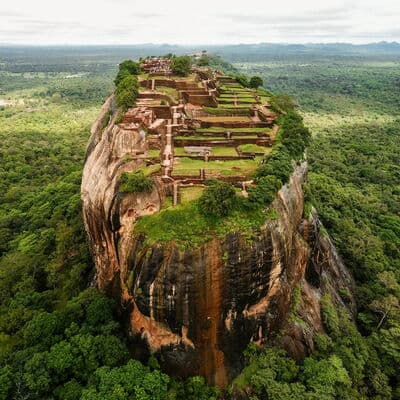
Sigiriya is not just an ancient fortress perched atop a 660-foot rock. It is a place where history, nature, and adventure converge into one of the most extraordinary experiences in all of South Asia. Lion Rock rises above an endless canopy of jungle like a colossal monolith, and the climb to its summit is a genuine pilgrimage that stays with you long after you leave.
In brief: Sigiriya is a UNESCO World Heritage Site in the heart of Sri Lanka. Come here for the climb up Lion Rock with its ancient frescoes and 5th-century palace ruins, a safari in Minneriya National Park with wild elephants, the Dambulla Cave Temple, and the atmosphere of real rural Sri Lanka. Two to three days is the sweet spot for this area.
Sigiriya makes an ideal base for exploring Sri Lanka's Cultural Triangle. From here, Dambulla is 20 minutes away, Polonnaruwa is 1.5 hours, and Anuradhapura is 2.5 hours. The area is quiet, green, and nothing like the beach-heavy south coast. This is where you see the real Sri Lanka: rice paddies stretching to the horizon, water buffalo wandering across roads, genuinely friendly locals, and sunsets that stop you in your tracks.
Pros: incredible historical atmosphere, wildlife literally at your doorstep, low prices, friendly locals. Cons: heat and humidity, limited restaurant choices, you need transport to get around, pushy unofficial guides at the rock entrance.
Neighborhoods: Where to Stay
Sigiriya is not a city in any conventional sense. It is a small village clustered around an ancient fortress. There are no neighborhoods with bars and shopping malls. But accommodation options are more varied than you might expect. The key is knowing what matters to you: proximity to the rock, peace and quiet, budget, or luxury.
Sigiriya Village: Walking Distance to the Rock
The main cluster of guesthouses and small hotels lines the road leading to the rock entrance. From here, it is a 10-to-15-minute walk to the ticket office. Evenings are quiet; entertainment options consist of dinner at your guesthouse and stargazing. Most hosts can arrange a tuk-tuk or jeep safari for you.
Pros: closest to the main attraction, you can arrive at opening before everyone else, homey atmosphere
Cons: limited dining options outside your hotel, nothing to do in the evening
Prices: $ (guesthouses from $15-20, small hotels from $30-50)
Sigiriya-Dambulla Road: The Hotel Strip
Dozens of hotels of every level are scattered along the highway between Sigiriya and Dambulla, from budget places to boutique luxury. This is the main accommodation corridor of the area. Many hotels sit among rice paddies with direct views of Sigiriya Rock, giving you postcard-worthy scenery right from your balcony. The rock is 5 to 15 minutes away by tuk-tuk.
Pros: best selection of hotels, beautiful views, convenient for trips to both Sigiriya and Dambulla
Cons: you need transport, highway can be noisy
Prices: $-$$$ (from $25 for a guesthouse up to $200+ for boutique hotels with a pool)
Dambulla: Actual Town Infrastructure
The nearest real town is Dambulla, about 12 miles from Sigiriya. Here you will find ATMs, pharmacies, supermarkets, a bus station, and considerably more restaurants. If infrastructure matters to you and you plan to explore beyond Sigiriya, this is a logical base. The Dambulla Cave Temple alone is worth the trip.
Pros: city amenities, bus connections, the famous cave temple, more food options
Cons: 30-40 minutes to Sigiriya by tuk-tuk, less atmospheric
Prices: $ (guesthouses from $10-15, hotels from $25-40)
Habarana: For Safari and Nature Lovers
A small town about 15 miles north of Sigiriya, closer to Minneriya and Kaudulla National Parks. If your main goal is safaris and elephants, with Sigiriya as a side trip, Habarana is a better base. It also has a train station, which is a rarity in this part of the country.
Pros: closer to national parks, train station, peaceful
Cons: farther from Sigiriya and Dambulla, fewer accommodation choices
Prices: $-$$ (from $20 for a guesthouse up to $100+ for eco-lodges)
Jungle Eco-Lodges
Several eco-lodges are tucked into the greenery around Sigiriya, designed for travelers who want to wake up to birdsong and spot a monitor lizard on the path to breakfast. It is a different kind of experience: bungalows among the trees, natural pools, candlelit dinners. Ideal for couples and nature enthusiasts.
Pros: unique experience, immersion in nature, silence, breakfast and dinner often included
Cons: expensive, you need transport for any excursion, Wi-Fi may be nonexistent
Prices: $$-$$$ ($80-300 per bungalow, often with meals)
Pidurangala and Surrounding Villages
For those seeking authenticity. Small family-run guesthouses in villages around Sigiriya offer a window into real rural Sri Lankan life. Hosts cook homemade meals, show you their gardens, and teach you how to make curry. Prices are rock-bottom, but comfort is basic.
Pros: the real Sri Lanka, home-cooked food, incredibly cheap, genuine cultural exchange
Cons: basic comfort, language barrier, you need a tuk-tuk for everything
Prices: $ (from $8-12 per night with breakfast)
Best Time to Visit Sigiriya
Sigiriya sits in the dry zone of central Sri Lanka, and the climate here is different from the coast. It is hot year-round, but there are nuances that can seriously affect your experience.
Best Months: January Through April
This is the dry season with minimal rainfall. January and February are ideal: temperatures around 82-90F (28-32C), low humidity, clear skies for photography. March and April get hotter (up to 95F / 35C) but remain dry. Climbing the rock is most comfortable during these months: the steps are not slippery, and the views are wide open.
Good Period: June Through September
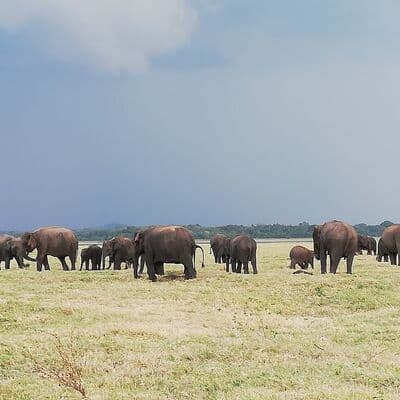
The southwest monsoon bypasses Sigiriya (it drenches the west and south coasts). Here, you get moderate rainfall, usually short afternoon downpours that clear quickly. The major bonus: this is the season of 'The Gathering' at Minneriya National Park. From July through September, hundreds of wild elephants congregate around the reservoir. It is one of the greatest wildlife spectacles in Asia.
Challenging Months: October Through December
The northeast monsoon brings heavy rain. October and November are the wettest months. Climbing the rock is still possible, but the steps get slippery and visibility can be poor. The upside: tourist numbers are at their lowest and accommodation prices drop by 30-40%.
Festivals and Events
- January (full moon): Duruthu Poya, a religious holiday when temples are decorated and locals wear white
- April 13-14: Sinhalese and Tamil New Year. Everything shuts down for 2-3 days, but the festive atmosphere is worth experiencing
- July-August: Esala Perahera in Kandy (2.5 hours from Sigiriya), a grand procession with decorated elephants. Well worth combining with a Sigiriya trip
- July-September: 'The Gathering' at Minneriya, with up to 300 elephants in one place
- November (full moon): Il Poya, with pilgrimages to Dambulla Temple and beautiful ceremonies
When it is cheapest: May and October-November are the shoulder seasons, with the lowest accommodation prices. You only need to book well in advance for Christmas-New Year and the April New Year holiday.
Itinerary: 2 to 5 Days in Sigiriya
Sigiriya is a compact area, but there is a surprising amount to see and do. You can squeeze the highlights into one packed day, or you can spend a week without getting bored. Here are the optimal itineraries.
Sigiriya in 2 Days: The Essentials
Day 1: Lion Rock and Surroundings
6:30-7:00 AM -- Start early. The Sigiriya ticket office opens at 7:00 AM. Tickets cost $30 (about 9,900 LKR) for foreigners. Yes, it is steep, but it is worth every penny. Arrive at opening: the morning is cooler, the crowds are smaller, and the light is perfect for photos.
7:00-10:30 AM -- The climb. You first pass through the Water Gardens; stop for 10 minutes, they are genuinely beautiful. Then comes the staircase ascent: roughly 1,200 steps, taking 45-60 minutes at a comfortable pace. Along the way, you will see the famous 'Cloud Maiden' frescoes and the Mirror Wall. At the top: the ruins of the royal palace and a full 360-degree panorama of jungle and mountains. Spend at least 30-40 minutes up there. Bring a minimum of 1.5 liters (50 oz) of water per person.
10:30-11:00 AM -- The descent. Your legs will be protesting, especially your knees. Take it slow.
11:00 AM-12:00 PM -- The Sigiriya Museum at the base of the rock (included in your ticket). Air-conditioned, with scale models of the palace and detailed history. A pleasant recovery stop.
12:00-1:30 PM -- Lunch. The restaurants right at the rock are touristy and overpriced. A better move: hop in a tuk-tuk for 5 minutes to the local eateries on the main road. A full rice and curry plate for $1.50-2.50.
3:00-5:30 PM -- Pidurangala Rock. This is the best-kept secret in the Sigiriya area, though the secret is increasingly out. It is about 1.2 miles from Lion Rock. Entry is roughly $1.50. The climb is easier than Sigiriya (30-40 minutes), and the view FROM the top looking BACK at Sigiriya is arguably the best view in all of Sri Lanka. Go for sunset: the rock glows golden against the jungle. Bring a flashlight or headlamp for the descent in the dark.
Evening -- Dinner at your hotel or in the village. Try a home-cooked Sri Lankan curry. Guesthouse hosts cook astonishingly good food.
Day 2: Dambulla and Nature
7:00-8:00 AM -- Breakfast. The classic Sri Lankan breakfast is hoppers (bowl-shaped rice-flour pancakes) with an egg cracked inside and coconut sambol on the side. Ask your hosts for this; it is the national staple.
8:30-10:30 AM -- Dambulla Cave Temple (20 minutes by tuk-tuk). Five caves containing hundreds of Buddha statues and stunning ceiling paintings. The temple is over 2,000 years old. Entry is about $8. Remove your shoes before entering, and wear clothing that covers your shoulders and knees.
10:30-11:30 AM -- Dambulla Vegetable Market, the largest wholesale market in the country. Even if you are not buying, it is worth a walk through: mountains of tropical fruit, spices, and vegetables. Grab a king coconut for about $0.20 to cool down after the temple.
2:00-6:00 PM -- Jeep safari in Minneriya National Park. A half-day safari costs $35-50 per person (jeep and guide included). The park is famous for wild elephant herds of 150-300 during the dry season (July-September). Outside of season, you will still see elephants, plus leopards, deer, crocodiles, and hundreds of bird species. Best time to enter the park is 2:00-3:00 PM, as animals become most active toward evening.
Evening -- Return, dinner. If you still have energy, try some stargazing: there is virtually zero light pollution here, and the Milky Way is visible to the naked eye.
Sigiriya in 3 Days: No Rushing
Days 1 and 2 as above. Add a third day for deeper exploration.
Day 3: Polonnaruwa or a Village Experience
Option A: Polonnaruwa (1.5 hours by tuk-tuk or taxi)
7:00 AM-2:00 PM -- The ancient city of Polonnaruwa, the medieval second capital of Sri Lanka. A sprawling archaeological complex with palaces, temples, and colossal Buddha statues carved from rock. Rent a bicycle at the entrance (about $1.50); the site is huge and walking it would be exhausting. Do not miss Gal Vihara: four monumental Buddha figures hewn from a single granite cliff face. Entry is about $12.
Option B: Village Experience
8:00 AM-12:00 PM -- A village tour: riding an ox cart, canoeing on a lake, a Sri Lankan curry cooking class, and lunch with a local family. Most hotels and guesthouses can arrange this, costing $15-25 per person. This is one of the best experiences in Sri Lanka: genuine, not staged.
2:00-4:00 PM -- Skip elephant riding; it is unethical and harmful to the animals. Instead, simply watch for wild elephants gathering at watering holes around sunset. The Elephant Transit Home in Udawalawe (far from here) is the ethical alternative if you want a closer encounter.
Sigiriya in 5 Days: The Full Cultural Triangle
Days 1-3 as above. Add two more days for day trips.
Day 4: Anuradhapura
7:00 AM-4:00 PM -- Anuradhapura (2.5 hours by taxi), the first capital of Sri Lanka and a sacred city. The Sri Maha Bodhi tree is the oldest historically documented tree in the world, over 2,300 years old. Ruwanwelisaya Dagoba is a gleaming white stupa standing 180 feet tall. Rent a bicycle or hire a tuk-tuk for the half-day; the city is enormous. Entry is about $12. Dress modestly: white clothing is appreciated at the temples.
Day 5: Kandy or Rest
Option A: Kandy (2.5-3 hours) -- The Temple of the Sacred Tooth Relic, the Royal Botanical Gardens of Peradeniya, and the evening ceremony at the temple. The drive through the mountains is scenic in itself.
Option B: Rest Day -- Pool time at your hotel, an Ayurvedic massage (from $20 per hour), a repeat hike up Pidurangala for sunrise at 5:30 AM (pure magic), browsing local markets, or a cooking session with your guesthouse host.
Where to Eat: Restaurants and Cafes
Let me be honest upfront: Sigiriya is not a culinary destination. It is a village, and the restaurant selection is limited. But Sri Lankan food is genuinely delicious, and home-cooked meals at guesthouses are often better than anything you will find in a restaurant. Here is where to look.
Street Food and Markets
Street food in the Western sense barely exists in Sigiriya. What you will find are small roadside stalls (called 'kade') selling hot kottu roti (chopped flatbread stir-fried with vegetables and spices) for $0.60-1.20 and vadai (crispy lentil fritters) for about $0.10-0.15 each. The Dambulla wholesale market is the best spot for fresh fruit: mangoes, papaya, rambutan, and mangosteen at absurdly low prices. Stock up.
Local Eateries
Look for small restaurants with a 'Rice and Curry' sign on the main road between Sigiriya and Dambulla. A full lunch: a mound of rice surrounded by 4-5 curries (vegetable, dhal, chicken, coconut sambol, papadum) for $1.50-2.50. Portions are enormous. Locals eat with their right hand, and that is completely normal here. Ask for a spoon if you prefer; nobody will be offended. The best places are the ones where tuk-tuk drivers and local workers are eating. If locals are lined up, follow them in.
Mid-Range Restaurants
A handful of restaurants along the road to Sigiriya offer tourist-friendly menus: pasta, burgers, and of course expanded Sri Lankan curry platters. Average check: $4.50-9.00. The restaurant at Hotel Sigiriya is one of the oldest in the area, with views of the rock. Gimanhala Hotel is a solid option for dinner. Do not expect anything fancy, but the food is reliable and filling.
Fine Dining
The best restaurants in the area are attached to boutique hotels. The water restaurant at Vil Uyana ($$$$) offers dinner surrounded by a lake, with Sri Lankan haute cuisine. Aliya Resort and Spa has a panoramic restaurant with a rock view. Book a day ahead, especially in high season. Dinner for two: $40-80. These places are the exception in the area, but they deliver genuinely memorable meals if you want to splurge for a night.
Cafes and Breakfast
Coffee culture does not exist in Sigiriya. This is tea country. Ceylon tea is drunk everywhere: strong black tea with milk and sugar, served in a small glass for about $0.10-0.15. Decent coffee is only available in higher-end hotels. Breakfast at a guesthouse (usually included in the room rate) typically features hoppers, string hoppers, kiribath (rice cakes with coconut milk), a fruit plate, toast, and scrambled eggs. It will fuel you well past noon.
Home Cooking: The Real Secret
The best food in the Sigiriya area is homemade. Most guesthouses offer dinner for $3-6: the host prepares a full Sri Lankan spread of 6-8 dishes specifically for you. It is fresh, delicious, and authentic. Give a couple of hours' notice. Some hosts also run cooking classes; ask about it, because learning to make a proper Sri Lankan curry from scratch is one of those travel experiences you will remember and repeat in your own kitchen for years.
Must-Try Food in Sri Lanka's Sigiriya Region
Sri Lankan cuisine is one of the most underrated in the world. Fiery, aromatic, layered with dozens of spices in every dish. Here is what you absolutely must try.
Rice and Curry -- The national dish. A mountain of white rice in the center of the plate, surrounded by 4-8 small bowls of different curries: dhal (lentil), chicken, fish, vegetable, coconut sambol, papadum. The combination changes every day. Average price: $1.50-3.00. Pro tip: add the curries to your rice gradually and mix them. Every bite should taste different.
Hoppers (Appa) -- Bowl-shaped pancakes made from rice flour and coconut milk, crispy at the edges and soft in the center. An egg hopper has an egg cracked into the middle. String hoppers are thin rice vermicelli pressed into flat circles. This is the classic Sri Lankan breakfast. Price: about $0.15-0.30 each.
Kottu Roti -- Sri Lankan fast food. Chopped flatbread stir-fried on a flat griddle with vegetables, egg, and meat (or without). You will hear it being made before you see it: the rhythmic clanging of two metal cleavers chopping the roti on the hot plate is the unmistakable soundtrack of Sri Lankan street food. Spicy, filling, cheap ($1.20-2.50). An evening dish.
Dhal Curry -- A thick lentil soup-curry with coconut milk, turmeric, and spices. It accompanies virtually every meal. Simple but incredibly flavorful. For vegetarians, it is the foundation of every plate.
Coconut Sambol (Pol Sambol) -- Freshly grated coconut mixed with chili, onion, lime, and Maldive fish (dried tuna flakes). A fiery condiment that goes with everything. Go easy on the quantity at first; it packs serious heat. Made fresh for every meal.
Wood Apple -- An exotic fruit with a hard shell. Inside is a tangy-sweet pulp that resembles date paste. It is made into a refreshing juice. Look for it at the fruit stalls in Dambulla. Price: about $0.15-0.30 each. Not the prettiest fruit, but the flavor is unique and worth seeking out.
King Coconut (Thambili) -- A bright orange coconut with delicate, naturally sweet water inside. Sold on virtually every corner for about $0.15-0.25. The best natural electrolyte drink after climbing the rock. After drinking the water, ask the vendor to crack it open so you can scoop out the soft flesh inside.
Fish Curry -- In central Sri Lanka, fish is surprisingly fresh even far from the ocean. Tuna or mackerel in a rich sauce of spices and coconut milk. Average price: $1.80-3.60. If you see 'ambulthiyal' on the menu (a sour fish curry made with goraka), order it without hesitation. It is a uniquely Sri Lankan preparation.
Ceylon Tea -- Not just a drink but a national religion. Strong black tea with milk and sugar. Sri Lankans drink 5-6 cups a day. Available in every shop, from every tuk-tuk driver. Cost: about $0.10-0.15. Tip: buy loose-leaf tea at a factory shop or at the Dambulla market. It costs a third of what you will pay at the airport.
What to skip: The 'tourist buffet' at restaurants near the rock. Overpriced (about $6+), food sits out too long, and portions are small. Go to a local eatery instead and get a better meal for a fraction of the price.
For vegetarians: Sri Lanka is paradise. Dhal, vegetable curries, jackfruit curry (the texture genuinely resembles pulled meat), and endless coconut-based dishes. At any restaurant, just say 'vegetable only' and they will understand immediately.
Allergies: Coconut and coconut milk are in literally EVERYTHING. Peanuts are used less frequently but do appear. Gluten is present in roti and bread, but rice dishes and hoppers are naturally gluten-free.
Local Secrets and Tips
1. Pidurangala is better than Sigiriya. This is not a controversial opinion among travelers who have done both. The view FROM Pidurangala looking AT Sigiriya is more spectacular than the view from Sigiriya itself. The climb is shorter, there are 10 times fewer people, and the entry fee is about $1.50 instead of $30. If your budget is tight, do only Pidurangala. If you have the money, do both, but save Pidurangala for sunset.
2. Climb the rock at opening or do not bother. By 10:00 AM, the steps turn into a queue, the summit is packed, and the heat makes the climb miserable. Be at the gate at 7:00 AM. Bonus: the morning light is ideal for photography.
3. Most guides at the entrance are scammers. Dozens of people near the ticket office will offer 'official guide' services. The majority are unlicensed. If you want a guide, book one through your hotel or through the official site. If you do not, a firm 'No, thank you' and keep walking is the only approach that works. Do not engage in conversation.
4. Wasps on the rock are a real danger. At certain points on the ascent, wasp colonies nest on the rock face. Guides know the spots. The rules: do not make noise, do not wave your arms, do not open a bright umbrella. If wasps start circling, freeze and back away slowly. Stinging incidents happen every season, and the park occasionally closes specific sections when the wasps are particularly active.
5. Bargain for everything. Tuk-tuk from Dambulla to Sigiriya: they will ask for $6-9, the real price is $3-4.50. Safari: they will quote $60-80, you can get it for $35-50. Souvenirs: cut the first price by half or two-thirds. Bargain with a smile. It is expected and part of the culture.
6. Monkeys WILL steal from you. The macaques around the rock are brazen. They snatch food, water bottles, sunglasses, and phones right out of your hands. Do not carry anything openly during the climb. Keep your backpack zipped at all times. Do not take food out at any point. This is not a joke; it happens daily.
7. Hire a tuk-tuk for a half-day, not per trip. Negotiate with a driver for 4-5 hours at $9-12. He will wait for you at each stop. This is cheaper and more convenient than flagging down a new tuk-tuk every time. Many drivers also serve as excellent unofficial guides who know every local spot.
8. Sunsets at the lake are free. Several reservoirs lie near Sigiriya (Sigiriya Tank, Minneriya Tank). In the evening, the lake shores offer breathtaking sunsets, often with silhouettes of water buffalo and flocks of egrets. This is free and no less beautiful than any paid attraction in the area.
9. Bring cash. There are no ATMs in Sigiriya village; the nearest ones are in Dambulla. Only expensive hotels accept cards. Stock up on rupees in Dambulla, Kandy, or at the airport before you arrive.
10. Do not over-schedule. Sigiriya is a place to slow down. One rock climb plus a safari plus the cave temple equals a perfect two days. You do not need to race through a checklist. Sit with a cup of tea, talk to your guesthouse host, watch the rice paddies. That is the magic of this place.
11. Wild elephants on the road are real. Wild elephants sometimes wander onto the highway between Habarana and Sigiriya, especially in the evening. If you see an elephant, stop the vehicle, turn off the headlights, do not honk, and wait. They pass within 5-10 minutes. Do not attempt to drive around them. Your tuk-tuk driver will know exactly what to do.
Transport and Connectivity
Getting to Sigiriya
From Colombo (5-6 hours): Take a bus from Bastian Mawatha station to Dambulla ($1.50-2.00), then a local bus or tuk-tuk to Sigiriya ($1-1.50). Buses run every 30 minutes. Alternative: a private taxi ($80-100) or a hotel transfer. If you are coming straight from Bandaranaike Airport, a pre-booked transfer is the easiest option and runs about $90-120.
From Kandy (2.5-3 hours): Bus to Dambulla ($0.75-1.20, departing every 20-30 minutes), then a tuk-tuk. Or a private taxi ($40-50). The road is scenic, winding through mountains and tea country.
From Ella (4-5 hours): Bus to Nuwara Eliya or Matale, then transfer to Dambulla. This connection is complicated and slow; a private transfer ($70-90) is a much better use of your time.
By train: The nearest railway station is Habarana, about 15 miles away. Trains run from Colombo (4-5 hours, $1-5 depending on class). From Habarana, take a tuk-tuk to Sigiriya ($3-4.50). The train ride itself is pleasant but slow; do not expect punctuality.
Getting Around the Area
Tuk-tuk: The primary mode of transport. Always negotiate the fare before getting in. Approximate prices: Dambulla to Sigiriya: $3-4.50. Sigiriya to Pidurangala: $1-1.50. Half-day (4-5 hours): $9-12. Full day: $15-21. These prices are for 2026 and may vary slightly, but they give you a solid baseline for negotiation.
Scooter rental: From $6-9 per day. You need an international driving permit (motorcycle category). Roads are decent, but left-hand traffic and unpredictable local driving habits mean you should be experienced. Not recommended for beginners.
Bicycle rental: From $1.50-3.00 per day. A great option for the short ride from Sigiriya to Pidurangala and back. For longer distances, the heat makes it impractical unless you are an avid cyclist.
Local buses: Buses run along the Dambulla-Habarana highway and beyond. Cheap ($0.15-0.60) but slow, overcrowded, and without air conditioning. Fine for getting between towns; within the local area, a tuk-tuk is more practical.
Ride-hailing (Uber/PickMe): Uber does not operate in Sigiriya. The local app PickMe technically works in Dambulla, but drivers are scarce. Arranging transport through your hotel is more reliable.
Internet and Phone
SIM card: Buy one at Colombo airport. Dialog or Mobitel are the main carriers. A tourist package with 20-30 GB for a month costs about $4.50-7.50. Dialog has good 4G coverage in the Sigiriya area. You will need your passport to purchase.
eSIM: Works in Sri Lanka. Airalo, Holafly, and Nomad offer plans from $5-10 for 5-10 GB. The most convenient option if you do not want to swap your physical SIM.
Wi-Fi: Available in most hotels and guesthouses, but speeds are modest (5-15 Mbps). Fine for messaging and navigation; hit or miss for video calls and streaming.
Useful apps:
- PickMe -- the local ride-hailing app (works mainly in larger cities)
- Google Maps -- works well in the area; download offline maps before you arrive
- Maps.me -- excellent offline maps that include hiking trails and local paths
- XE Currency -- currency converter (the Sri Lankan rupee fluctuates)
- Google Translate -- supports Sinhala, useful for menus and signs
Who Is Sigiriya For: Final Verdict
Sigiriya is for travelers who want to see Sri Lanka beyond the beaches. An ancient fortress on a rock, wild elephants in the jungle, cave temples, sunsets over rice paddies -- all within a 20-mile radius. There is no nightlife and no trendy restaurants, but there is real history and raw nature.
Ideal for: history and archaeology buffs, photographers (the views are world-class), families with kids aged 6 and up (the rock climb is a genuine adventure), couples (romantic eco-lodges), and budget travelers (one of the cheapest areas in Sri Lanka for what you get).
Not the best choice for: beach seekers (the coast is 4-5 hours away), party-goers (the village sleeps by 9 PM), anyone with serious knee problems (1,200 steps is no joke), or people who cannot tolerate heat (86-95F / 30-35C year-round).
How many days: minimum 2 (rock + safari), ideal 3 (add Dambulla or Polonnaruwa), maximum 5 (the entire Cultural Triangle using Sigiriya as your base).
Information current as of 2026. Prices given in US dollars. Exchange rate: 1 USD = approximately 320-330 LKR. Prices may vary by season.