Galle Fort
A fortress city on a cape where Dutch colonial architecture has merged with Lankan life. Galle Fort is the best-preserved European fortification in Asia, a UNESCO World Heritage site, and a place where you can spend a day wandering streets between old houses, boutiques, and cafés. Here, the past isn't preserved under glass—it lives.
History
The Portuguese
The Portuguese built the first fortifications in 1588. A small fort protected the port where cinnamon—the island's chief treasure—was loaded.
The Dutch
In 1640, the Dutch captured the fort and rebuilt it extensively: 14 bastions, walls up to 3 meters thick, 36 hectares enclosed. The city within the walls was planned along Dutch lines: straight streets, churches, administrative buildings. The fort became the Dutch East India Company's headquarters on the island.
The British and After
In 1796, the fort passed to the British but retained its Dutch character. After independence (1948), the fort remained a residential neighborhood. The 2004 tsunami passed it by—the walls protected it.
What to See
Walls and Bastions
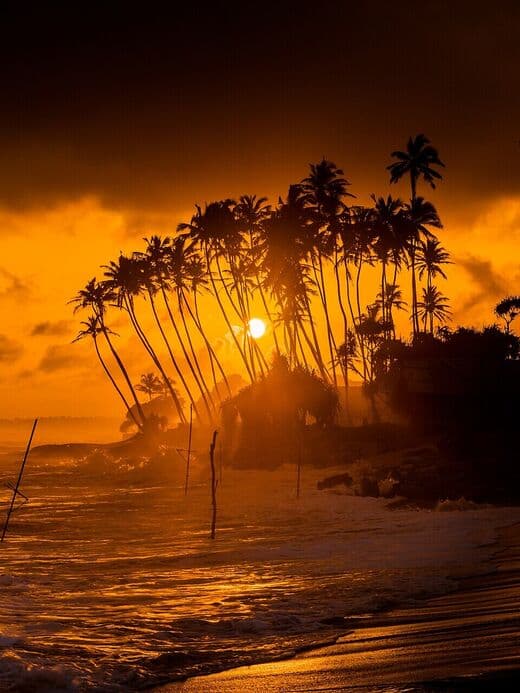
Walking the walls is essential. The 3 km perimeter offers views of the ocean, lighthouse, and town. Sunset from Flag Rock bastion is a ritual drawing crowds. The lighthouse (still operational) is photogenic anytime.
Streets
Inside—a grid of Dutch streets with 17th-19th century houses. Groote Kerk church (1755), the Dutch Reformed temple. Meera Mosque—brilliant white, against the wall. Buddhist temples—everywhere. Colonial mansions with verandas converted into boutique hotels.
Museums
The National Maritime Museum covers seafaring history. The Dutch Museum displays colonial life. The Historical Mansion shows 18th-century interiors.
Shops and Cafés
The fort is trendy: designer boutiques, jewelry shops (sapphires, rubies), antique stores. Cafés and restaurants range from local rice joints to European terraces. Everything's pricier than outside the walls, but the atmosphere is worth it.
Practical Information
Admission
Free—the fort is open 24 hours. Individual museums charge small fees.
Time Needed
For a quick look—2-3 hours. For a thoughtful stroll with café stops—a full day. For overnight inside the fort—a special experience (boutique hotels).
When to Visit
Morning—less heat and fewer tourists. Evening—sunset, walks along the walls, restaurants. Midday—hot, but shops are open.
Getting There
Galle is 120 km south of Colombo. The coastal train (2.5-3 hours) is a scenic route. Bus or taxi is faster but less atmospheric.
What's Nearby
Unawatuna—5 km, beach and relaxation. Hikkaduwa—20 km north, surfing. Mirissa—40 km east, whales. The south coast is a chain of beaches and attractions.
Atmosphere
Galle Fort is a rare example of colonial heritage that hasn't become a museum. People live here, schools operate, laundry dries on lines between 17th-century houses. Tourist infrastructure exists but doesn't dominate. This is a place where layers of history—Portuguese, Dutch, British, Lankan—have accumulated without destroying any of them.