Colombo
Colombo 2026: What to Know Before You Go
Colombo is the city most travelers fly straight through without ever realizing that behind its chaotic facade lies one of the most underrated capitals in Asia. Colonial mansions sit next to Buddhist temples, street vendors fry shrimp vadai steps away from award-winning chefs, and the sunsets over the Indian Ocean along Galle Face Green are worth more than any admission ticket you will ever pay.
In brief: Colombo is worth visiting for the colonial architecture of Fort and Pettah, the eclectic Gangaramaya Temple, street food at Galle Face Green, market shopping in Pettah, the dining scene at Dutch Hospital, and the leafy charm of Colombo 7. Plan 2-3 days for the city itself, plus day trips to Negombo, Galle Fort, or the Cultural Triangle.
Colombo is ideal for anyone who loves Asian megacities without the tourist veneer. It is not Bangkok and it is not Singapore - everything here is more honest, slower, and cheaper. On the downside: traffic can be absolutely brutal, the heat and humidity will drain you, and tourist infrastructure outside the center is virtually nonexistent. But that is exactly what makes Colombo real - the city lives its own life and does not pretend to be a resort. Think of it as a rougher, more affordable version of what Kuala Lumpur was fifteen years ago.
Neighborhoods: Where to Stay in Colombo
Colombo is divided into numbered districts - from Colombo 1 (Fort) all the way to Colombo 15. For visitors, the first seven are the ones that matter. Each district has its own personality, price range, and vibe, so choosing the right base can make or break your trip.
Fort (Colombo 1) - Historic Center and Business District
The former colonial hub where the Dutch, Portuguese, and British all left their mark on the architecture. Today it is a business district with upscale hotels, the beautifully restored Dutch Hospital restaurant complex, and views of the ocean. The Colombo Lighthouse and the old Clock Tower stand as reminders of the city's layered past. This is where you will find the main Fort Railway Station - your gateway to the rest of Sri Lanka.
Pros: walking distance to major landmarks, excellent restaurants at Dutch Hospital, close to Fort Railway Station for day trips
Cons: noisy with office traffic during the day, empties out at night, very few budget options
Prices: $$$ (hotels from $80-150/night, almost no hostels)
Pettah (Colombo 11) - Chaos, Markets, and the Real Sri Lanka
The most chaotic and colorful district in the city. The sprawling Pettah Market is a labyrinth of streets selling everything from spices and fabrics to electronics and gold. This is also home to the Jami Ul-Alfar Mosque - a striking red-and-white structure from 1909 that is one of the most photogenic mosques in all of Asia. Tuk-tuks honk, vendors shout, the smell of cardamom mixes with exhaust fumes - it is full immersion. If you have spent time in Indian bazaars, you will feel right at home. If you have not, prepare yourself.
Pros: authentic atmosphere you cannot fake, lowest prices for everything, right next to Fort
Cons: very noisy, not the cleanest, definitely not for everyone
Prices: $ (guesthouses from $10-20/night)
Galle Face / Kollupitiya (Colombo 3) - Best Choice for First-Timers
The sweet spot of Colombo. Galle Face Green is a half-kilometer strip of grass along the ocean where the entire city gathers every evening: families fly kites, street vendors fry isso vadai (lentil fritters with whole shrimp), and the sunset paints the sky in absurd colors. Nearby you will find the legendary Galle Face Hotel (open since 1864, one of the oldest hotels east of Suez), the modern One Galle Face Mall, and dozens of restaurants. This area has the highest concentration of accommodation at every price point.
Pros: ocean within walking distance, best sunset street food scene in the city, solid infrastructure, wide range of accommodation
Cons: above-average prices, the promenade gets very crowded in the evenings
Prices: $$ (hostels from $15, hotels from $50-100/night)
Slave Island (Colombo 2) - Trendy and Up-and-Coming
The name is a relic of the Dutch colonial era, but the neighborhood is undergoing a massive transformation. Park Street has become the center of Colombo's nightlife: trendy bars, restaurants, and cafes line the pedestrian stretch. Nearby is Beira Lake with its walking paths and the Lotus Tower - Sri Lanka's tallest structure at 356 meters (1,168 feet), a useful landmark visible from almost anywhere in the city. The area is gentrifying fast but still has character in the side streets.
Pros: nightlife, trendy spots, central location between Fort and Colombo 7
Cons: some side streets are still rough around the edges, noisy on weekend nights
Prices: $$ (guesthouses from $20, boutique hotels from $60/night)
Colombo 7 (Cinnamon Gardens) - Elegance and Calm
The greenest and most upscale district. Former cinnamon plantations have transformed into wide avenues lined with mansions, embassies, and galleries. This is where you will find the National Museum, Viharamahadevi Park (the city's main green space), and the famous Geoffrey Bawa Gallery - the studio of the architect who defined tropical modernism. The neighborhood is quiet, leafy, and home to excellent cafes and restaurants. Think of it as Colombo's Georgetown or Kensington - affluent, established, and walkable.
Pros: quiet, green, museums, stunning architecture, very safe
Cons: far from the ocean, few budget options, can feel a bit sleepy in the evenings
Prices: $$$ (hotels from $80-200/night)
Bambalapitiya and Wellawatte (Colombo 4-6) - Local Color
Southern coastal neighborhoods where Colombo's middle class lives. Fewer tourists here but more real life: tiny cafes serving rice and curry for $1-2, Tamil Hindu temples with colorful gopurams, and a fish market at dawn that would satisfy any Anthony Bourdain fan. Wellawatte is known as 'Little India' - a large Tamil community with excellent South Indian restaurants. The railway line runs right along the coast here, with trains passing meters from people's homes - a surreal sight.
Pros: low prices, authentic atmosphere, great food, Mount Lavinia beach is a short train ride away
Cons: farther from the main sights, less developed tourist infrastructure
Prices: $ (guesthouses from $10-15, hotels from $30-50/night)
Thimbirigasyaya - The Hipster Quarter
An increasingly popular district wedged between Colombo 5 and 7. This is where the specialty coffee shops, health-conscious restaurants, art galleries, and coworking spaces are popping up. It is Colombo for those who want the modern scene without tourist markups. The area is especially good for longer stays - plenty of serviced apartments available on monthly rates at $500-800, which is a fraction of what you would pay in Bangkok or Bali for equivalent quality.
Pros: great cafes, quiet streets, excellent value for money
Cons: no ocean views, few traditional sights
Prices: $$ (apartments from $25-40/night, monthly rates available)
Best Time to Visit Colombo
Colombo sits on Sri Lanka's western coast, and its climate is shaped by two monsoons. Understanding the seasons is the key to a comfortable trip - and potentially saving a lot of money.
Peak season: January through March
The dry season on the west coast. Temperatures hover around 82-90 F (28-32 C), humidity is manageable, and rain is rare and short-lived. This is the ideal window for walking the city, catching sunsets at Galle Face, and taking day trips south. February is the driest month. Independence Day (February 4) brings colorful parades and ceremonies to the city - worth seeing if you time it right. The downside: this is high season, so expect peak prices on hotels and crowds at popular spots.
Good but hot: April
Sinhala and Tamil New Year (April 13-14) is the biggest holiday in Sri Lanka. The city transforms: street fairs, traditional games, special festival dishes everywhere. It gets hot - up to 93 F (34 C) - but the atmosphere is electric and the cultural experience is unmatched. Book accommodation well in advance; locals travel heavily during this period too, and popular spots fill up fast.
Wet season: May through September
The southwest monsoon brings heavy rain. May and June are the wettest months. Showers typically hit in the afternoon and last 1-2 hours, though some days see extended downpours. The upside: hotel prices drop 30-40%, tourists are scarce, and the city turns lush and green. The downside: humidity pushes past 90%, and some days you simply cannot walk around comfortably. Vesak Festival (May-June) is a Buddhist celebration with spectacular light installations across the entire city - worth planning around if you are here during monsoon season. A lightweight rain jacket and waterproof shoes are essential.
Transition period: October through December
The northeast monsoon affects Colombo less than the east coast. Rains taper off by November, though sudden downpours still happen. December is quite comfortable. Christmas and New Year mark the start of high season - prices climb but the city is decorated and festive. Sri Lanka celebrates Christmas as a national holiday regardless of religion, so the entire city gets into the spirit.
When it is cheapest
The lowest prices run June through August. Hotels offer discounts of 40-50% off peak rates. If rain does not bother you, this is an excellent time for a budget trip. A hotel room that costs $100 in January might go for $50-60 in July. The highest prices: December through February and April (around New Year celebrations).
Colombo Itinerary: 3 to 7 Days
Colombo in 3 days: the essentials
Day 1: Fort, Pettah, and Colonial Heritage
8:30-10:00 - Start at Fort. Walk through the streets of the former colonial center: the Colombo Lighthouse, the Clock Tower, neoclassical buildings from the British era. Visit the Dutch Hospital complex - a beautifully restored 17th-century Dutch building that now houses restaurants and shops. Grab a coffee here before the heat sets in.
10:00-12:30 - Pettah. Dive into the chaos of Sri Lanka's largest market. Make sure you find the Jami Ul-Alfar Mosque - a red-and-white marvel built in 1909, one of the most unusual mosques in the world. You can enter (remove shoes; women should cover their heads). Nearby is the old Town Hall with wax figures (small donation for entry). Allow yourself to get lost in the market streets - that is where the best finds are.
12:30-14:00 - Lunch in Pettah. Look for small local joints serving rice and curry - a full plate for 400-600 LKR (about $1.50). Try kottu roti at one of the street-side cafes. You will hear it before you see it - the rhythmic chopping sound of metal blades on a hot plate is the signature soundtrack of Sri Lankan street food.
14:30-16:30 - Gangaramaya Temple - Colombo's main Buddhist temple and one of the most eclectic religious sites you will ever visit. It is an unexpected mix of Thai, Indian, and Chinese architectural styles, packed with an enormous collection of gifts from around the world. Nearby, do not miss Beira Lake and the Seema Malakaya meditation center floating on the water, designed by legendary architect Geoffrey Bawa.
17:00-19:30 - Galle Face Green at sunset. This is a non-negotiable ritual. Buy isso vadai from the vendors (200-300 LKR / about $0.75-1.00), grab some kottu roti (500-800 LKR / $1.50-2.50), and watch as local families fly kites while the sun drops into the Indian Ocean. One of the best free evenings in Asia, period.
Day 2: Colombo 7, Museums, and Bawa Architecture
9:00-11:00 - National Museum of Colombo. An 1877 building housing collections from ancient artifacts to the royal regalia of the Kandyan Kingdom. Entry: 1,000 LKR ($3.30). Do not skip the mask hall and the throne room of the last Kandyan king - they are genuinely impressive.
11:00-12:30 - Viharamahadevi Park. The city's main park, named after an ancient Sinhalese queen. A massive seated Buddha statue, flowering trees, fruit vendors along the paths. A good place to rest in the shade and people-watch before the afternoon heat peaks.
12:30-14:00 - Lunch at Barefoot Cafe. A beloved institution set in the garden of the famous Barefoot shop (handwoven textiles and crafts). The lunch menu runs 2,000-3,500 LKR ($6.50-11.50). The courtyard seating is lovely - expect to share the space with expats, designers, and the occasional diplomat.
14:30-16:00 - Gallery Cafe (the former studio of architect Geoffrey Bawa). One of the most beautiful interior spaces in Colombo - a colonial bungalow transformed into a cafe and gallery. Order a coffee and soak in the tropical modernist interiors. If architecture interests you, book a guided tour of Bawa's buildings around the city through the Bawa Trust.
16:30-18:00 - Independence Square area: the Independence Memorial Hall and Arcade Independence Square (a restored colonial building turned into a shopping and dining complex). Good spot for evening shopping, a cold drink, and dinner.
18:30-20:30 - Dinner at Ministry of Crab (Dutch Hospital). Lagoon crab is the crown jewel of Sri Lankan cuisine: garlic, pepper, chili-baked - pick your style. Reservations are essential, especially for dinner. Expect to spend $25-50 per person depending on the size of the crab. It is co-owned by cricket legend Kumar Sangakkara, so do not be surprised if the conversation at the next table is about bowling averages.
Day 3: Mount Lavinia, Temples, and Local Life
8:00-9:30 - Wellawatte fish market at dawn. Fishermen return with the night's catch: tuna, prawns, squid, lobster - all glistening fresh. It is photogenic and atmospheric, though the smell is intense. Not for the squeamish, but absolutely authentic.
10:00-12:00 - Train to Mount Lavinia (15-20 minutes from Fort Station, just 30-50 LKR / about $0.10-0.15). One of the most scenic short railway rides you can take: the tracks run right along the ocean. Mount Lavinia Beach is the best urban beach near Colombo, though swimming can be dangerous due to currents - check conditions locally before wading in.
12:00-14:00 - Lunch at Mount Lavinia Hotel - a colonial-era hotel from 1805 with a terrace overlooking the ocean. For something more budget-friendly, try the grilled seafood at the beach shacks (fresh grill plates from 800 LKR / $2.50).
14:30-16:00 - Back to the center. Visit Kelaniya Raja Maha Vihara - one of the most important Buddhist temples in Sri Lanka (tradition holds that the Buddha himself visited this site). The murals inside are stunning. It is about 20 minutes by tuk-tuk from the city center.
16:30-18:00 - Lotus Tower. Sri Lanka's tallest structure at 356 meters (1,168 feet) with an observation deck. Panoramic views of the entire city and ocean. Entry around 3,000 LKR ($10). Time your visit for about an hour before sunset for the best light.
18:30-20:00 - Farewell dinner on Park Street (Slave Island). Trendy restaurants and bars - this is Colombo's nightlife district. Try a craft cocktail at one of the rooftop bars for a proper send-off.
Colombo in 5 days: at a relaxed pace
Follow the 3-day itinerary above, then add:
Day 4: Day Trip to Negombo
8:00 - Bus or train to Negombo (1-1.5 hours). A fishing town north of Colombo, closer to the airport. The Negombo Fish Market is one of the largest in the country and most active in the early morning - arrive before 9 AM for the full experience. Take a boat ride along the Dutch Canal (from 2,000 LKR / $6.50 per hour). Visit St. Mary's Church, reflecting the Catholic heritage of the western coast. Negombo Beach is calmer and cleaner than Colombo's urban beaches - good for a few hours of relaxation. Lunch at one of the beach fish restaurants. Return by evening.
Day 5: Wetlands, Cooking, and Food Tour
8:30-11:00 - Muthurajawela Wetlands. Thirty minutes from the center, with boat tours through mangrove channels. Crocodiles, monitor lizards, dozens of bird species. Tour cost: 2,000-4,000 LKR ($6.50-13). An under-the-radar experience that most tourists miss entirely.
11:30-13:00 - Sri Lankan cooking class. Several schools in Colombo offer hands-on lessons ($30-50 per person). Learn to make rice and curry, sambols, and hoppers from scratch. You will never look at coconut milk the same way again.
14:00-16:00 - Shopping: Odel (department store with Sri Lankan brands), Paradise Road (design and home decor), Barefoot (handwoven textiles). For spices and Ceylon tea - Pettah Market or specialty shops on Galle Road. Budget $20-50 for souvenirs.
17:00-20:00 - Food evening. Start at Nuga Gama at the Cinnamon Grand hotel - a restaurant built around a 210-year-old banyan tree with a buffet of 30 local dishes. Or head to Upali's - a traditional Sri Lankan restaurant with outstanding value for the quality.
Colombo in 7 days: with excursions
Follow the 5-day itinerary above, then add:
Day 6: Day Trip to Galle
The Southern Expressway gets you to Galle in 1.5-2 hours (bus from 700 LKR / about $2.30). Spend the full day at Galle Fort - a 17th-century Dutch fortress and UNESCO World Heritage Site. Cobblestone streets, art galleries, boutique cafes, and views of the Indian Ocean from the ramparts. Lunch at Fort Bazaar or one of the dozens of restaurants inside the walls. On the way back, consider a stop in Hikkaduwa for snorkeling or simply a beachside dinner. This is arguably the best day trip from Colombo.
Day 7: Kandy or a Relaxation Day
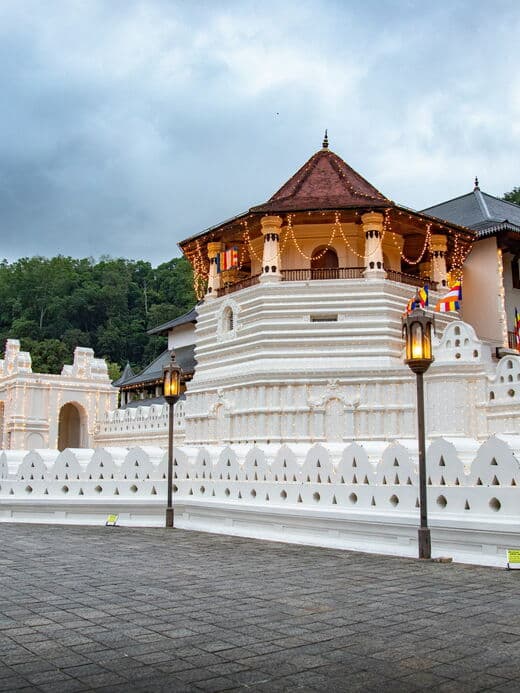
Option A: Train to Kandy (3-3.5 hours, widely considered one of the most beautiful railway journeys in the world - rolling green hills, tea plantations, and misty valleys). Visit the Temple of the Sacred Tooth Relic - Sri Lanka's holiest Buddhist shrine. Then explore the Peradeniya Royal Botanical Garden - 150 acres of tropical plants that will leave any nature lover speechless. Return on the evening train. Book second class for comfort or third class for the full local experience (hanging out of open doors is technically not allowed but universally practiced).
Option B: A relaxed final day in Colombo. Book an Ayurvedic spa treatment ($30-50), revisit your favorite spots, pick up last-minute souvenirs, and enjoy one final sunset at Galle Face Green. Sometimes the best travel day is the unplanned one.
Where to Eat in Colombo: Restaurants and Cafes
Street food and markets
Colombo is a street food paradise, and the undisputed main stage is Galle Face Green after 5 PM. Dozens of vendors line up along the ocean: isso vadai (crispy lentil fritters with whole shrimp, 200-300 LKR / $0.75-1.00), kottu roti (chopped flatbread stir-fried with vegetables and meat, 500-800 LKR / $1.50-2.50), fried crab sticks, sliced mango with chili and salt. Everything is prepared right in front of you. The golden rule: look for the line of locals - that is where the food is freshest and best. If a stall has no queue, keep walking.
Pettah is another hotspot. In the narrow alleys between market stalls, you will find hole-in-the-wall joints serving rice and curry (full plate for 400-600 LKR / $1.50), samosas (50-100 LKR / $0.15-0.30), and stuffed roti. The Hulftsdorp area (adjacent to Pettah) is a secret street food zone that the food tour operators know about - ask around or book a guided walking tour for about $25-35 per person.
Local joints
Pilawoos on Galle Road is legendary for kottu roti. Locals argue it is the best in the city, and they have a point. Open late, average bill 800-1,500 LKR ($2.50-5.00). New Banana Leaf serves rice and curry on an actual banana leaf with vegetables or seafood (from 600 LKR / $2.00). Hotel de Pilawoos (not a hotel - in Sri Lanka, 'hotel' often means restaurant) is another cult favorite for kottu. These places have zero pretension: plastic chairs, fluorescent lights, and some of the best food in the country.
For the most authentic experience, look for small cafes with a 'Rice and Curry' sign and no English menu. Point at the dishes in the glass display, choose 3-4 curries to go with your rice. Lunch will run you 500-800 LKR ($1.50-2.50). This is how millions of Sri Lankans eat every single day, and the food is consistently excellent.
Mid-range restaurants
Upali's by Nawaloka is a standout - traditional Sri Lankan cuisine in a contemporary setting. Homestyle rice and curry, house-made ginger beer, dried fish curry that will haunt your dreams. Average check: 2,000-3,500 LKR ($6.50-11.50). The Lagoon at Cinnamon Grand specializes in seafood prepared over 150 different ways - lagoon crab, tiger prawns, whole grilled fish. Average check: 4,000-7,000 LKR ($13-23). Nuga Gama (also at Cinnamon Grand) is a buffet of 30 dishes served around a 210-year-old banyan tree - it calls itself the first carbon-neutral restaurant in the city, and the food matches the ambition.
Top-end dining
Ministry of Crab at Dutch Hospital is the restaurant everyone talks about. Co-owned by cricket legend Kumar Sangakkara, it serves lagoon crab in garlic, pepper, and chili-baked styles. Reserve ahead, especially for dinner. Expect $25-50 per person depending on what you order. The Gallery Cafe offers refined cuisine in Geoffrey Bawa's former studio - a perfect marriage of food, architecture, and atmosphere. Average check: $10-20. Both restaurants would hold their own in London or New York at twice the price.
Cafes and breakfast spots
Colombo's coffee culture is booming. Kumbuk is the pioneer of third-wave coffee in the city: tropical interiors, avocado toast, and an excellent flat white that would satisfy any Melbourne or Portland coffee snob. Barefoot Cafe is the iconic garden cafe attached to the textile shop - expats and designers have their morning meetings here. The Commons Coffee House is a coworking-cafe hybrid with reliable Wi-Fi for digital nomads. For a traditional Sri Lankan breakfast, hunt down hoppers (crispy fermented rice flour bowls) and string hoppers (steamed rice noodle nests) - they are served at local joints starting from 7 AM, typically with coconut sambol and a fiery lunu miris chutney. Budget about 300-500 LKR ($1-1.50) for a proper local breakfast.
Must-Try Food in Colombo
Sri Lankan cuisine is a flavor explosion: coconut, spices, chili, curry leaves, and the deep umami of Maldive fish (dried tuna). Here are 10 dishes your trip is not complete without.
Kottu roti - Sri Lanka's signature street food. Chopped roti (flatbread) stir-fried on a flat griddle with vegetables, egg, and your choice of chicken, beef, or seafood. The cook uses two metal blades, chopping in a rhythmic beat you can hear from blocks away - it is dinner and a percussion show in one. Best at Pilawoos. Price: 500-1,000 LKR ($1.50-3.30). The vegetable version is just as satisfying.
Hoppers (appa) - thin, crispy bowl-shaped pancakes made from fermented rice flour and coconut milk. Served at breakfast with an egg cracked in the center (egg hopper), alongside curry and sambol. String hoppers are a variation: delicate steamed rice noodle nests served with coconut sambol and curry. Price: 100-200 LKR ($0.30-0.65) each. Deceptively simple, profoundly delicious.
Rice and curry - the national dish, and one you will eat multiple times. A mound of rice in the center, surrounded by 4-8 different curries: chicken, fish, dhal, vegetables, and sambols. Each curry has its own flavor profile - mix and match as you like. Price: 400-1,500 LKR ($1.50-5.00) depending on the venue. The best versions are at family-run spots where the recipes have not changed in decades.
Isso vadai - crispy lentil fritters with a whole shrimp pressed on top. The signature snack of Galle Face Green. Served with a spicy onion sambol that makes them dangerously addictive. Price: 150-300 LKR ($0.50-1.00). Eat them hot off the oil or do not bother.
Coconut sambol (pol sambol) - freshly grated coconut mixed with red chili flakes, onion, lime juice, and Maldive fish. It appears alongside virtually everything, but paired with hoppers it reaches another level. Available everywhere, and somehow every household's version tastes slightly different.
Lamprais - a Dutch-Sri Lankan fusion dish: rice, meat curries, sambol, and a fried egg, all wrapped in a banana leaf and baked. It was originally the Sunday meal of the Burgher community (descendants of Dutch colonists) and remains a comfort food classic. Look for it at specialty shops. Price: 500-800 LKR ($1.50-2.50).
Curd and treacle - a rustic dessert of thick buffalo curd drizzled with kithul palm treacle (dark, toffee-like syrup). Simple, rich, and impossible to stop eating. The best curd comes from the southern coast, but Colombo versions are still excellent. Price: 300-500 LKR ($1.00-1.65).
Ceylon tea - Sri Lanka (formerly Ceylon) produces some of the finest tea on Earth. Drink it everywhere, but for the full experience, visit T-Lounge by Dilmah or the Dilmah Tea Centre. A cup runs 300-600 LKR ($1.00-2.00). If you only buy one souvenir in Sri Lanka, make it a box of single-estate Ceylon tea.
Devilled dishes - a stir-fry of chicken, fish, or prawns with chilies, onions, and aggressive spicing. Not a curry, but hotter than most. Excellent with plain rice and a cold Lion beer. Order 'devilled prawns' at any mid-range restaurant for a taste of Sri Lankan heat.
Wood apple juice - a drink made from an exotic fruit that looks like a brown stone ball on the outside and deeply strange on the inside. The flavor is tangy, sweet, and unlike anything you have tried. Sold at markets and street-side juice stalls. Price: 150-300 LKR ($0.50-1.00). Even if you do not love it, you will be glad you tried it.
What to avoid: tourist restaurants on Galle Road with inflated prices and watered-down flavors. If the menu offers pizza, burgers, AND curry side by side, odds are none of them will be good. Seek out places that specialize in one thing and do it well.
For vegetarians: Sri Lanka is one of the most vegetarian-friendly destinations in Asia. Rice and curry is always available in a vegetable-only version, and temple food is entirely plant-based. Just ask for 'vegetable rice and curry' and you will get 5-6 different vegetable curries plus dhal. Buddhist culture means vegetarianism is widely understood and respected, unlike some other parts of the region.
Local Secrets and Practical Tips
1. Tuk-tuks: negotiate or use PickMe. Most tuk-tuks in Colombo either do not have meters or the driver will conveniently 'forget' to turn them on. Download the PickMe app (Sri Lanka's equivalent of Uber/Lyft) - fixed prices and typically 2-3 times cheaper than what a street driver will quote a foreigner. Cross-town ride: 300-500 LKR ($1-1.65) via app versus 1,000-1,500 LKR ($3.30-5.00) at the 'tourist rate.' This single tip will save you $20-30 over a few days.
2. Do not plan more than 2-3 stops per day. Colombo's traffic can turn a 3-mile ride into an hour-long ordeal. Rush hours (7:30-9:30 AM and 4:30-7:00 PM) are especially brutal. Combine walking with tuk-tuks and avoid crossing the city during peak times. Cluster your activities by neighborhood to minimize transit.
3. Bargain at markets, not in shops. In Pettah and street markets, bargaining is expected. The opening price for a tourist is typically 2-3 times the real price - do not feel bad about countering at half. In established shops like Odel, Barefoot, and Paradise Road, prices are fixed and bargaining is considered rude.
4. Shoes come off everywhere. At temples - mandatory. But also at many shops, homes, and even some restaurants. Wear footwear that slips on and off easily. And bring socks - temple stone floors can be scorching in the afternoon sun. Burnt soles are a rite of passage no one asks for.
5. Poya Days are dry days. On full moon days (monthly), alcohol is not sold anywhere: not in shops, not in restaurants, not in hotels (with rare exceptions at some international chains). Check the Poya calendar and stock up the day before. On the upside, temples are especially atmospheric on Poya nights - locals come for the evening puja ceremony and the experience is unforgettable.
6. Street food is safe, with caveats. Choose stalls with high turnover (if there is a crowd, the food is not sitting around). Avoid pre-cut fruit that has been sitting in the heat. Drink bottled water (60-100 LKR / $0.20-0.30 at any shop). Ice in restaurants is generally safe; from street vendors, skip it. That said, Colombo's street food hygiene standards are genuinely better than many comparable Asian cities.
7. Dress modestly for temples. Covered shoulders and knees are required at Buddhist and Hindu temples. White clothing is appreciated at Buddhist temples during puja days. For mosques: women should cover their heads. Many temples lend sarongs for free or a small donation - but having your own lightweight cover-up avoids the hassle.
8. Ceylon tea is the best souvenir. Buy at specialty shops, not at the airport (where markups run 200-300%). Top brands: Dilmah, Mlesna, Basilur. Loose-leaf tea from Pettah Market or the tea shops on Galle Road offers the best value. A quality 200g box that costs $3-5 at a shop will set you back $12-15 at the departure terminal.
9. Colombo is safe, but stay sharp. The city is one of the safest capitals in Asia. Violent crime targeting tourists is extremely rare. However, petty scams exist: inflated tuk-tuk prices, self-appointed 'guides' at temples asking for donations, fake tour operators. Simple rule: if someone approaches you unsolicited with an offer, politely decline and walk away.
10. 'Hotel' does not always mean hotel. In Sri Lanka, 'hotel' often refers to a restaurant or cafe. If you see a sign reading 'Hotel' next to a smoking kitchen and plastic chairs - that is a restaurant. For accommodation, look for 'guesthouse,' 'inn,' or book through Booking.com or Agoda, both of which work well in Sri Lanka.
11. Sunsets are the free show. Galle Face Green every evening is free entertainment. But if you want something more private, head up to the rooftop bar Cloud Red at CinnCity or ON14 on the 14th floor of the Hilton. A cocktail runs about $5-8 (1,500-2,500 LKR), but the panoramic ocean view is priceless - especially on a clear evening.
Getting Around and Connectivity
From the airport to the city center
Bandaranaike International Airport (CMB) is located 22 miles (35 km) north of Colombo, closer to the town of Negombo.
- Colombo Express Bus (blue) - best value for money. The stop is right outside the arrivals terminal. Cost: 500 LKR ($1.65). Travel time: 60-90 minutes to Fort Railway Station. Runs every 30 minutes from 5:30 AM to 8:30 PM. Comfortable seats, air conditioning. This is what most budget and mid-range travelers use.
- Taxi - fixed price from the Airport Taxi counter: 4,000-6,000 LKR ($13-20) to central Colombo, 2,000-3,000 LKR ($6.50-10) to Negombo. Night surcharge of 50%. PickMe works from the airport and is usually 20-30% cheaper than the official counter. Turn on your data as soon as you land and request a ride.
- Train - Katunayake South station is 1.2 miles (2 km) from the airport (free shuttle or tuk-tuk for 300 LKR / $1). Train to Colombo Fort: 150-300 LKR ($0.50-1.00), 1-1.5 hours. Cheapest option, but the schedule is limited. Check SLR (Sri Lanka Railways) timetable before relying on this.
Pro tip: if your flight arrives late at night, consider staying overnight in Negombo (15 minutes from the airport, plenty of hotels at every price point). You will reach Colombo far more comfortably in the morning, and Negombo itself is worth a half-day visit.
Getting around the city
Tuk-tuks - the primary way to get around. Use the PickMe app for fixed-price rides (300-800 LKR / $1-2.50 across the city). For street tuk-tuks, negotiate the price before getting in or insist on the meter. After midnight, expect a surcharge. Tuk-tuks are everywhere and can weave through Colombo's traffic far more efficiently than cars.
Buses - extremely cheap (20-50 LKR / $0.07-0.15) but confusing for visitors. Routes are not always clearly marked, and buses are packed during rush hour. Red buses (government) are slower; white buses (private) are faster but the driving can be hair-raising. One useful route to know: bus 100 runs along Galle Road from Fort to Mount Lavinia - a handy north-south spine through the city.
Trains - ideal for suburban trips. The coastal line (Colombo Fort to Mount Lavinia to Hikkaduwa to Galle) is both scenic and cheap. Second class is perfectly comfortable. Buy your ticket at Fort Station - the queue usually takes 5-10 minutes. For longer journeys, consider booking in advance through 12Go Asia to guarantee a seat.
Ride-hailing apps - PickMe is the dominant platform in Colombo as of 2026. Uber still operates but has fewer drivers. Both accept cash and card payment. PickMe also offers a tuk-tuk category (cheapest) and car category (more comfortable, slightly more expensive).
Internet and connectivity
SIM card: buy one immediately at the airport. Counters for Dialog, Mobitel, and Airtel are right in the arrivals hall and set up is done in minutes. Tourist package: 1,500-2,500 LKR ($5-8) for 10-30 GB over 30 days plus calls. Dialog has the most reliable coverage across the country. Bring your passport - it is required for activation.
eSIM: works on modern phones and can be purchased online before your trip through providers like Airalo or Holafly. More convenient but more expensive than a physical SIM. Good if you do not want to deal with the airport counters upon arrival.
Wi-Fi: available at all hotels and most cafes in the center. Speed is generally acceptable (10-30 Mbps). In Pettah and outlying neighborhoods, expect slower and spottier connections. Do not rely on Wi-Fi alone for navigation - a local SIM with data is much more practical.
Essential apps:
- PickMe - taxis and tuk-tuks (the local Uber/Lyft equivalent, essential for fair pricing)
- Google Maps - navigation works well in Colombo, including public transit directions
- Uber - works but has fewer drivers than PickMe
- 12Go Asia - book train and bus tickets in advance, very useful for intercity travel
- Booking.com - works for hotel reservations (unlike some countries in the region)
- XE Currency - quick currency conversions between USD and LKR at current rates
Final Verdict: Is Colombo Worth It?
Colombo is a city that rewards those willing to dig beneath the surface. It is not a glossy resort and it is not an open-air museum - it is a living, breathing Asian metropolis with real character. In 2-3 days you can see the highlights; in 5-7 days you might genuinely fall for its chaotic charm.
Great for: food-obsessed travelers, fans of Asian cities with grit, photographers, budget travelers, and anyone heading deeper into Sri Lanka who wants a vibrant starting point.
Not ideal for: beach vacation seekers (head south to Mirissa or east to Trincomalee), families with small children (heat, traffic, limited kid infrastructure), or anyone who cannot handle the noise and chaos of an unpolished Asian city.
How many days: minimum 2, ideal 3-4, maximum 5-7 (with day trips). Colombo is the perfect base for the first and last days of any Sri Lanka itinerary.
Information current as of 2026. Prices listed in both USD and Sri Lankan Rupees (LKR). Exchange rate: 1 USD = approximately 300 LKR.