About
Jordan: The Complete Travel Guide 2026
Jordan is a country that somehow manages to combine the impossible. You can float in the Dead Sea in the morning, wander through an ancient city carved into rock cliffs in the afternoon, and stargaze in a desert where Hollywood filmed Mars by evening. All of this within a single day, because Jordan is compact enough to cross in just a few hours by car.
But it is not just about the sights. Jordan is a feeling. It is that moment when a Bedouin in Wadi Rum invites you for tea, and you spend two hours by the fire despite sharing no common language. It is when an Amman taxi driver takes you slightly out of the way just to show you his favorite view of the city. It is when, after the crowds at the Treasury in Petra, you climb up to the Monastery and find yourself virtually alone.
I wrote this guide so you can get the most out of Jordan. There are no dry Wikipedia facts here, just practical advice that will help you save money, time, and stress. Let us get started.
Why Visit Jordan
Let us be honest: Jordan is not the most obvious destination. It is more expensive than Egypt, less hyped than Turkey, and many people still confuse it with Iraq or Syria. But that is exactly what makes it special. There are no crowds at every corner, no feeling of being on a conveyor belt, and the locals are still genuinely happy to see tourists, not because they see you as a walking wallet, but because hospitality is hardwired into their cultural DNA.
The first reason to visit is Petra. Yes, it is a cliche, but it is a cliche that works. The ancient city carved into rock by the Nabataeans over two thousand years ago genuinely impresses even the most cynical travelers who have seen it all. Photographs do not capture the scale: when you walk for an hour through the narrow Siq canyon, and then the Treasury suddenly appears before you, it is a physical sensation that cannot be faked. And that is just the entrance: Petra itself sprawls across dozens of square kilometers, and you need at least two days to explore it properly.
The second reason is Wadi Rum. This is not just a desert; it is a Martian landscape on Earth. Red rock formations, sand in every shade of ochre, silence that does not exist in cities. They actually filmed The Martian, Dune, and Star Wars here, and when you arrive, you understand why. A night in a Bedouin camp under the stars is one of those experiences you remember for a lifetime.
The third reason is the Dead Sea. Technically, it also exists in Israel, but the Jordanian side is less developed and more authentic. Swimming is impossible because you simply float on the water like a cork. It sounds silly until you try it. Plus there are mud masks, spa treatments, and the feeling that you are on another planet.
The fourth reason is the people. Jordanians are among the friendliest people in the Middle East. They do not try to sell you something at every opportunity, they do not bargain until you lose your mind, and they genuinely want you to like their country. This is not a marketing brochure. This is my personal experience and the experience of everyone I know who has visited.
The fifth reason is the country's compact size. In one week in Jordan, you can see all the highlights. In two weeks, you can go deeper. This is not a country where you need to choose between Petra or Wadi Rum. You can do both, plus Amman, plus the Dead Sea, and a couple more places on top.
For American travelers, Jordan offers something increasingly rare: an authentic Middle Eastern experience that is safe, accessible, and welcoming. Unlike some other destinations in the region, Jordan has remained remarkably stable. The country is a constitutional monarchy with a Western-educated king, a relatively liberal social atmosphere, and a tourism industry that has been welcoming visitors for decades. English is widely spoken in tourist areas, signs are in English, and you will rarely feel lost or unable to communicate.
For British travelers, there is the added draw of history. Jordan was once part of the British Mandate, and names like T.E. Lawrence and the Desert Campaign resonate here. You can visit the very fort where Lawrence of Arabia stayed, sleep under the same stars he described in his writings, and walk through landscapes that feel unchanged since the early twentieth century.
For Australian and Canadian travelers, Jordan represents excellent value for a bucket-list destination. The flight is long, yes, but once you arrive, your dollar goes further than in Western Europe, and the experiences you get are genuinely once-in-a-lifetime. How many places can you say you floated in the lowest point on Earth, walked through an ancient city carved into cliffs, and slept in a desert used as a stand-in for Mars, all in the same trip?
Regions of Jordan: Which One to Choose
Amman and Surroundings
Amman is the capital, the main hub, and a place that most tourists use as a transit point. That is a mistake. Yes, it is not the most beautiful city in the world, but it has its own charm if you know where to look.
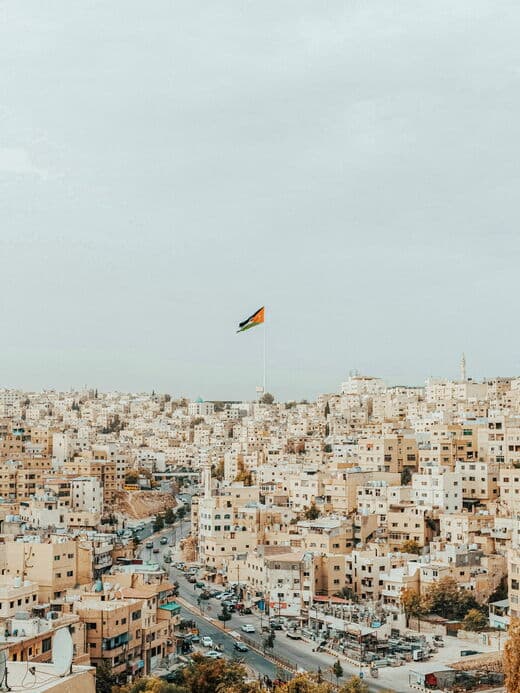
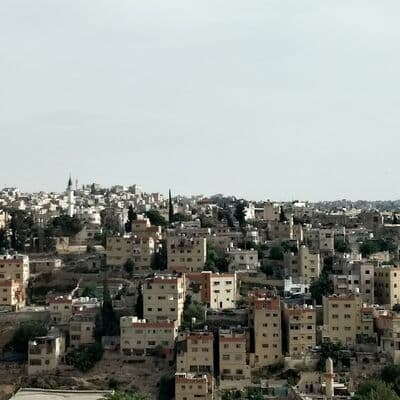
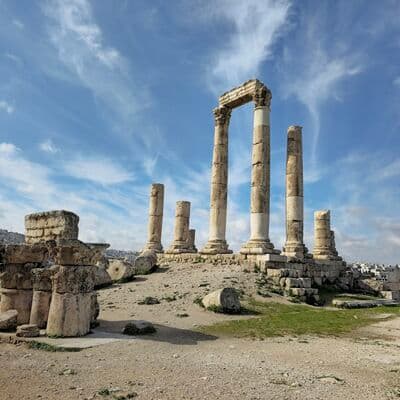
The old center of Amman consists of hills, narrow streets, and the feeling of the real Middle East. The Amman Citadel (Jabal al-Qala'a) is an ancient fortress on a hill overlooking the entire city. Here you will find the ruins of the Temple of Hercules, the Umayyad Palace, and a Byzantine church. But the main attraction is the panorama: all of Amman spread before you, mosques, minarets, white houses climbing up the hills. Come at sunset for the best experience.
The Roman Theatre is one of the main attractions of the city. Built in the second century AD, it seated 6,000 spectators and is still used for concerts today. The acoustics are perfect, and you can test this by whispering something from the stage. Nearby are small museums of folklore and popular traditions worth a quick visit.
Rainbow Street is the main tourist street, but not in a bad way. There are cafes, restaurants, galleries, and a lively atmosphere in the evenings. It is a good place to feel modern Amman. Nearby is Darat al-Funun, a contemporary art center in a beautiful historic building with gardens that offers free admission and a peaceful escape from the city bustle.
The Jordan Museum is a modern museum with an excellent exhibition on the history of the region. The main stars are fragments of the Dead Sea Scrolls and the Ain Ghazal statues, which are 9,000 years old and among the oldest human statues ever discovered. If you have three hours, spend them here. The museum is well-organized, air-conditioned, and provides excellent context for everything else you will see in Jordan.
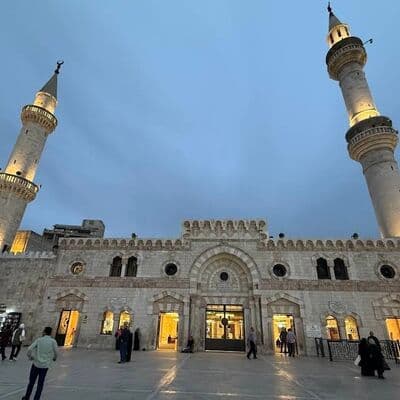
The mosques of Amman deserve special attention. King Abdullah I Mosque has a blue dome visible from everywhere and is one of the few mosques that admits non-Muslims. Dress code rules apply: long sleeves and covered legs for everyone, head covering for women. They provide abayas and scarves at the entrance if needed. The Grand Husseini Mosque in the center is the oldest in the city, with Ottoman architecture and the atmosphere of old Amman. Non-Muslims cannot enter during prayer times, but you can admire it from outside.
Duke's Diwan is a historic house in the center that operates as a cultural center and free museum. Local people gather here for tea and conversation, and you can join them. It is run by an eccentric intellectual who has devoted his life to preserving Ammans heritage, and a visit here offers genuine insight into local culture that you will not get at larger attractions.
The Royal Automobile Museum is worth a visit if you are interested in technology. It houses a collection of personal cars and motorcycles of Jordanian kings, including rare specimens from classic Mercedes to military vehicles used in various conflicts.
The Cave of the Seven Sleepers is a religious site connected to the legend of seven young men who slept in a cave for three hundred years. It is revered by both Christians and Muslims. Located on the outskirts of Amman, it is interesting from a local culture perspective and offers a glimpse into the religious syncretism that characterizes Jordan.
In the surroundings of Amman, there are several important places worth day trips. Madaba, the city of mosaics, is 30 kilometers from the capital and is famous for its Byzantine map of the Holy Land in St. George's Church. This sixth-century floor mosaic is the oldest surviving original cartographic depiction of the Holy Land, particularly Jerusalem. Mount Nebo is, according to tradition, the place where Moses saw the Promised Land. On a clear day, you can see the Dead Sea, Jericho, and even Jerusalem from here. The panorama is stunning, and the site has genuine biblical significance for Jewish, Christian, and Muslim visitors alike.
Jerash is one of the best-preserved Roman cities outside Italy. Colonnades, temples, forums, amphitheaters, and the hippodrome are all intact. If you love antiquity, it is essential. The site is large enough to spend half a day exploring, and unlike similar sites in Italy or Greece, it is rarely crowded. Daily reenactments of gladiator fights and Roman legion drills are tourist attractions but genuinely impressive, especially for families with children.
The Salt area, northwest of Amman, offers a glimpse into Ottoman-era Jordan with its historic buildings, traditional markets, and friendly locals who rarely see tourists. It was recently added to the UNESCO World Heritage list and makes for an interesting half-day trip.
Petra and Wadi Musa
Wadi Musa is the town adjacent to Petra. This is where all the hotels, restaurants, and tourist infrastructure are located. Petra itself is an archaeological park where you need to purchase a ticket for entry.
Petra is the main reason people come to Jordan. The ancient city of the Nabataeans, carved into pink sandstone cliffs more than 2,000 years ago, once sat at the intersection of caravan routes from Arabia to the Mediterranean. The Nabataeans controlled the trade in spices, frankincense, and silk. They were skilled engineers: the water supply system they built in the desert worked for centuries and still inspires modern hydraulic engineers.
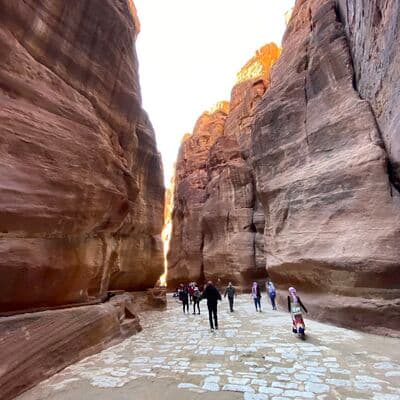
The Siq is a narrow gorge about 1.2 kilometers long that leads to the main entrance of Petra. The walls reach heights of up to 80 meters, and in places they come so close together that the sky becomes just a thin strip above you. Walking through the Siq is an adventure in itself. On the walls, you can see remains of the Nabataean water conduit system and niches that once held statues. The anticipation builds with every step, and when you finally round that last corner...
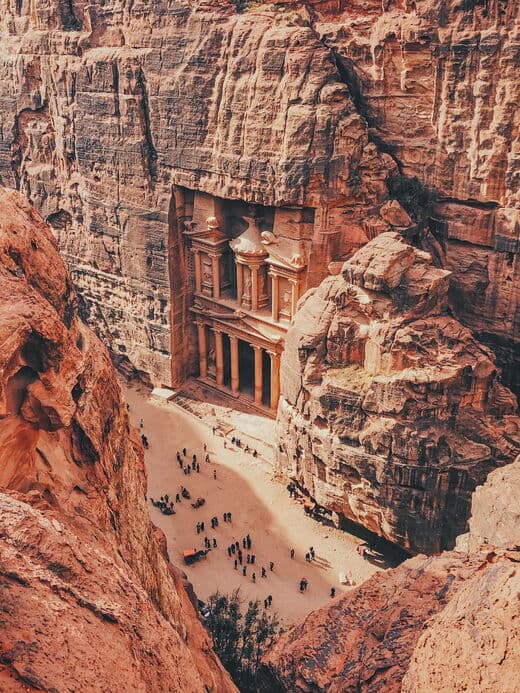
The Treasury (Al-Khazneh) is the most recognizable symbol of Petra. The facade is 40 meters high, carved directly into the rock, and appears suddenly after a turn in the Siq. It is actually a tomb of a Nabataean king, although the Bedouins believed that Egyptian pharaohs treasures were hidden here (hence the name). If you look closely at the facade, you can see bullet holes where Bedouins shot at the urn on top, hoping gold would spill out. Come early in the morning or late in the evening to avoid the crowds and get the best photographs. The Treasury faces east, so morning light is ideal for photography.
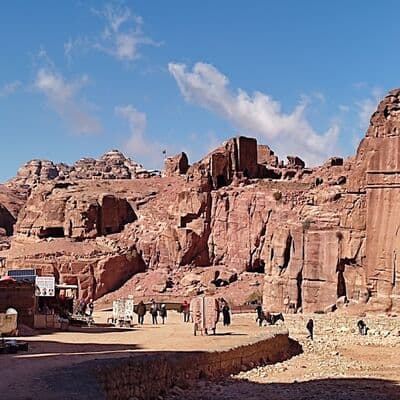
The Street of Facades begins immediately after the Treasury and is the main street of the ancient city with rows of tombs carved into the rock. This is just the beginning: Petra is enormous. The scale becomes apparent as you walk deeper into the site and realize that what you saw at the entrance represents perhaps ten percent of what is here.
The Royal Tombs are a complex of monumental burial chambers on the eastern slope. The Urn Tomb, the Silk Tomb, the Corinthian Tomb, and the Palace Tomb each have their own architecture and history. You can go inside most of them. The Urn Tomb was later converted into a Byzantine church, and you can still see Greek inscriptions on the walls. The views from the Royal Tombs terrace over the ancient city center are spectacular.
The High Place of Sacrifice requires a climb up steps carved into the rock to reach the summit where the Nabataeans performed religious rituals. From here, you get a panorama of all of Petra. The climb is challenging but the views are worth it. Along the way, you pass the Lion Fountain and the Garden Tomb. The alternative descent via Wadi Farasa takes you past some of the most beautiful and least-visited monuments in Petra, including the colorful Soldier Tomb.
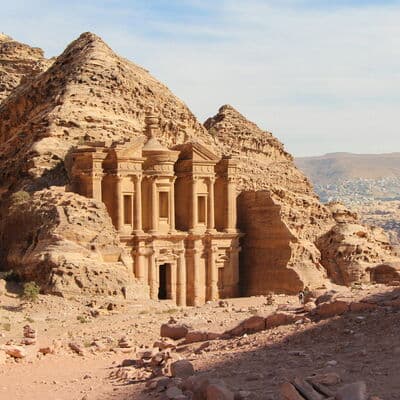
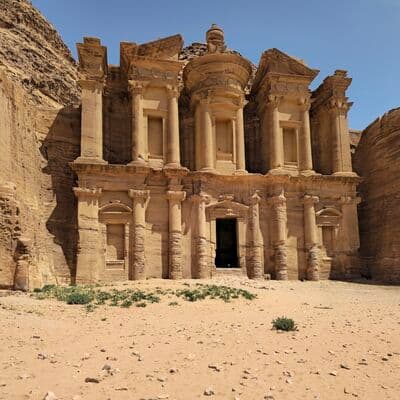
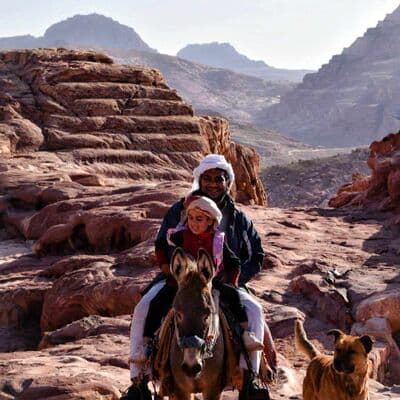
The Monastery (Ad-Deir) is the second most important monument in Petra after the Treasury. The facade is even larger at 50 meters wide. But here is the thing: getting there requires climbing 800 steps, and most tourists do not make it. This means it is quieter, more peaceful, and you can sit in the cafe opposite, looking at the ancient facade without a crowd of selfie sticks. The hike takes 45 minutes to an hour, and donkeys or mules are available if you cannot manage the stairs. The effort is worth it: many visitors say the Monastery moved them more than the Treasury.
Petra by Night is a special program on Mondays, Wednesdays, and Thursdays. The Siq and the plaza in front of the Treasury are illuminated by hundreds of candles, and Bedouin music plays. It is atmospheric, though tickets are purchased separately from the daytime entrance. The experience lasts about two hours and includes a walk through the candlelit Siq, tea, and traditional music. Some find it magical; others find it touristy. Manage your expectations, but if you are in Petra on one of those nights, it is worth experiencing at least once.
Practical advice: you need a minimum of two full days for Petra. On the first day, take the main route to the Monastery. On the second day, explore alternative trails, distant areas, and climb to the High Place. The three-day ticket costs only slightly more than the one-day ticket and gives you the opportunity not to rush. Seriously, do not try to see Petra in one day. You will exhaust yourself and miss most of what makes it special. If you only have one day, accept that you will need to return someday.
The Jordan Trail passes through Petra, and serious hikers can approach the site from the back via a stunning route that avoids the Siq entirely. The hike from Little Petra takes about five hours and enters Petra at the Monastery, giving you a completely different perspective on the site.
Wadi Rum
Wadi Rum is not just a desert; it is a landscape that takes your breath away. Red rock formations, sand dunes, canyons, and sandstone arches create a landscape that seems extraterrestrial. It is no wonder that Mars scenes for The Martian and Arrakis for Dune were filmed here. When you see the photos in those movies and then stand in the same locations, the recognition is immediate and thrilling.
Wadi Rum is a protected area, and you need to visit it with a Bedouin guide. Usually, these are jeep tours through the desert with stops at the main attractions: rock bridges (including the famous Burdah Arch), ancient Nabataean inscriptions, and narrow canyons. You can add a camel ride or trekking to the basic tour. Sunrise and sunset tours are particularly popular, and the colors in the desert at these times are genuinely spectacular.
The main experience of Wadi Rum is spending the night in the desert. Bedouin camps offer everything from simple tents to luxury bubble domes with glass ceilings for stargazing. Dinner by the fire, Bedouin music, and a sky without light pollution create impressions that are worth the trip alone. The lack of artificial light means the stars here are extraordinary, and on moonless nights, the Milky Way is clearly visible.
Practical advice: book your camp in advance, especially during high season (March-May, September-November). Choose camps further from the center, as they are quieter and have better views. In summer, be prepared for extreme heat, while in winter, be ready for cold nights (down to 0 degrees Celsius or 32 Fahrenheit). Most camps provide blankets and heaters in winter, but bring warm layers just in case.
The Bedouins who run the camps are descendants of the tribes who have lived in this desert for thousands of years. Many are genuinely warm and hospitable, and sharing a meal with them offers cultural insights you will not get anywhere else in Jordan. However, be aware that tourism has changed some aspects of their traditional lifestyle, and not all camps offer authentic experiences. Research carefully and read recent reviews.
The Dead Sea and Jordan Valley
The Dead Sea is the lowest point on Earth, 430 meters (1,412 feet) below sea level. The salt concentration here is so high (about 34%) that drowning is physically impossible. You simply lie on the water like a buoy. It is a strange sensation that you need to experience at least once. The buoyancy is so extreme that you cannot swim normally, and any attempt to do so looks comically awkward.
The Jordanian side of the Dead Sea is less developed than the Israeli side, but this is more of a plus. There are several resort hotels with private beaches and spa centers. Treatments with Dead Sea mud are a separate experience: the mud is said to help with skin problems and arthritis, and people have been coming here for therapeutic purposes for thousands of years. Cleopatra reportedly had Dead Sea cosmetics shipped to Egypt.
Important to know: the Dead Sea level is dropping by about a meter per year due to water being drawn from the Jordan River for agriculture and other uses. The shoreline is receding, and some hotels are now quite far from the water. Check when booking how close the beach actually is. This environmental disaster is ongoing, and visiting now means seeing the Dead Sea before it potentially disappears in the coming decades.
Nearby are the Ma'in Hot Springs, thermal waterfalls flowing into pools with temperatures up to 60 degrees Celsius (140 Fahrenheit). The spa resort here is excellent and can be combined with a visit to the Dead Sea. The contrast between the hot mineral springs and the super-salty Dead Sea makes for an interesting day of natural spa treatments.
Public beaches on the Dead Sea exist and are much cheaper than hotel day passes, but facilities are basic. Amman Beach is the main public option, with changing rooms and showers. Hotel day passes typically cost 30-50 JOD ($42-70 USD) but include pools, food, and better facilities.
Aqaba and the Red Sea
Aqaba is Jordan's only outlet to the sea. It is a resort town with beaches, diving, and snorkeling. The coral reefs here are among the best in the northern Red Sea, though they cannot match the Egyptian reefs at Sharm el-Sheikh or Hurghada in scale. What Aqaba offers is easier access, less crowding, and excellent diving infrastructure.
Aqaba is a good option for ending a trip: after deserts and ruins, you can spend a few days relaxing by the sea. The town is also convenient as a base for visiting Wadi Rum (one hour drive) and Petra (two hours). Many travelers fly into Aqaba and work their way north to Amman, or vice versa.
Aqaba has a free economic zone, which means duty-free shopping. Prices on electronics, alcohol, and perfumes are lower than in the rest of Jordan. If you want to buy anything in these categories, wait until Aqaba.
The diving in Aqaba centers around the Japanese Garden and the tank, an actual military tank sunk to create an artificial reef. Night diving is popular, and the variety of marine life is impressive given the relatively small area. Water temperatures remain warm year-round, making Aqaba a viable diving destination even in winter.
For non-divers, glass-bottom boat tours offer a glimpse of the underwater world, and several beaches have excellent snorkeling directly from shore. The beach resorts range from budget-friendly to luxury, and the town itself has a relaxed, vacation atmosphere quite different from the rest of Jordan.
The North: Jerash, Ajloun, Umm Qais
Northern Jordan consists of green hills, olive groves, and ancient ruins. The contrast with the desert south is striking. This region receives more rainfall than anywhere else in Jordan, and the landscape is genuinely Mediterranean.
Jerash is one of the best-preserved Roman cities outside Italy. Colonnades, temples, the forum, amphitheaters, and the hippodrome are all in place. You can spend half a day wandering the ancient streets. Daily reenactments of gladiator battles and Roman legions are tourist attractions but impressive nonetheless, especially for families with children. The site is best visited in spring or fall when temperatures are comfortable for walking.
Ajloun is a medieval Arab fortress from the 12th century, built to defend against the Crusaders. From here, you can see all the way to the Jordan Valley and the Golan Heights. Nearby is the Ajloun Forest Reserve with hiking trails through the forest. The reserve offers ecotourism cabins and some of the best hiking in Jordan.
Umm Qais (ancient Gadara) is another Roman city in the north, but the atmosphere here is different. Situated on a hill with views of the Sea of Galilee (Lake Tiberias), the Golan Heights, and Syria, this is a place where three countries meet. The ruins are less extensive than Jerash but the setting is more dramatic, and there is an excellent restaurant with panoramic views.
This northern region is often overlooked by tourists rushing to Petra and Wadi Rum, but it offers a different side of Jordan that is worth experiencing. The people here are farmers and artisans, the food is excellent, and the pace of life is slower.
The Desert Castles
To the east of Amman, scattered across the desert, are the so-called desert castles. These are hunting palaces and caravanserais from the Umayyad era (8th century). They are not castles in the European sense, but rather residences for the recreation of caliphs.
Qasr Amra is a UNESCO World Heritage site with unique frescoes. The walls show hunting scenes, nude women, astronomical symbols. This is surprising for Islamic art and important evidence of the secular culture of early Islam. The building was a bathhouse and pleasure palace, and the artwork depicts the kind of hedonistic lifestyle that later Islamic rulers would have found scandalous. The site is small but the frescoes are extraordinary.
Qasr al-Azraq is a fortress made of black basalt where Lawrence of Arabia stayed during the Arab Revolt. His room is marked and you can stand in the same space described in Seven Pillars of Wisdom. Nearby is the Azraq Oasis with a waterbird reserve. The oasis has shrunk dramatically due to over-extraction of water for Amman, but it still supports some wildlife.
Qasr Kharana is the most castle-like of the desert castles, a square fortress that looks like something from a movie set. Its original purpose remains debated, but it may have been a meeting place for desert tribes.
Visiting the desert castles can be organized as a day trip from Amman. Hiring a taxi for the day is the most practical option, as public transport to these sites is essentially nonexistent. Expect to pay 50-70 JOD ($70-100 USD) for a full day with a private driver.
Unique Experiences in Jordan
Jordan offers a wide range of unique experiences beyond the standard tourist sites. The landscape diversity allows for everything from canyoning to floating, from hiking to diving, all within a small country.
Dana Biosphere Reserve
Dana is the largest nature reserve in Jordan, stretching from the heights of the Jordanian Plateau to the lowlands of Wadi Araba. Here you find four climatic zones, from Mediterranean to desert. More than 700 plant species grow here, and the wildlife includes mountain goats, wolves, and caracals.
The main attraction of Dana is the hiking. Trails range from easy strolls to multi-day treks. The village of Dana on the edge of the canyon is the starting point, with guesthouses and eco-lodges available. This is one of the most authentic corners of Jordan, without tourist crowds. The Royal Society for the Conservation of Nature runs the reserve and has established excellent infrastructure while maintaining the wilderness feel.
The Dana to Petra trek is one of the most spectacular multi-day hikes in the Middle East. It takes 2-3 days, passes through dramatic canyon scenery, and enters Petra from the back. This is not for casual hikers but for experienced trekkers, it is unforgettable.
Mujib Biosphere Reserve
Mujib is a canyon descending into the Dead Sea. It is called Jordan's Grand Canyon, though the scale is more modest. The main activity is canyoning: you walk through water between rock walls, sometimes swimming, sometimes climbing. There are several routes of varying difficulty, from family-friendly to serious adventures requiring rappelling.
Important: Mujib is closed in winter (October to March) due to flash flood risk. In summer, the water refreshes you in the heat. Book tours in advance, as they fill up quickly in peak season. The Siq Trail is the easiest route and suitable for most reasonably fit people. The Malaqi Trail involves swimming and rappelling and requires a guide.
The Jordan Trail
The Jordan Trail is a 650-kilometer hiking path that runs the length of the country from Umm Qais in the north to Aqaba in the south. You can hike the entire trail in about 40 days, or choose sections for shorter treks. The trail passes through diverse landscapes: forest, desert, canyons, villages, and ancient sites including Petra.
Popular sections include the Dana to Petra segment, the Wadi Rum traverse, and the northern forest trails near Ajloun. The Jordan Trail Association provides maps, GPS tracks, and information about camping spots and accommodations along the route. This is becoming one of the premier long-distance trails in the Middle East.
Diving and Snorkeling in Aqaba
The Red Sea at Aqaba offers excellent diving and snorkeling opportunities. The water is warm year-round, visibility is good, and the coral reefs support diverse marine life. Popular dive sites include the Japanese Garden, Cedar Pride (a shipwreck), and the Tank (a deliberately sunk military vehicle). Dive centers offer courses from beginner to advanced, and PADI certification is available.
For snorkelers, several beaches offer direct access to reefs. The coral is shallow enough to see with just a mask, and colorful fish are abundant. The South Beach area is particularly good for snorkeling from shore.
Cooking Classes
Learning to cook Jordanian food is a wonderful way to connect with local culture. Several operators in Amman, Petra, and other locations offer cooking classes where you learn to make traditional dishes like mansaf, maqluba, and mezze. Beit Sitti in Amman is particularly well-regarded, with classes taught by local grandmothers in a traditional setting.
Stargazing
Jordan has some of the darkest skies accessible to tourists. Wadi Rum is famous for stargazing, with no light pollution and clear desert air. Some camps offer astronomy sessions with telescopes. The Milky Way is visible to the naked eye on moonless nights, and meteor showers are spectacular here. Dana is another excellent stargazing location.
Hot Air Ballooning
Balloon flights over Wadi Rum offer an unforgettable perspective on the desert landscape. The experience is best at sunrise when the light is golden and the air is calm. Flights are weather-dependent and should be booked in advance.
When to Visit Jordan
Jordan is a country you can visit year-round, but seasons are distinct, and your choice of timing affects the experience.
Spring (March to May)
This is the best time to visit. Temperatures are comfortable (20-25 degrees Celsius or 68-77 Fahrenheit in most regions), the desert is not yet unbearably hot, and the mountains are green after winter rains. In Petra and Wadi Rum, conditions are ideal for walking. The only downside is that this is high season, meaning more tourists and higher prices.
April is peak season. If you want to avoid crowds, choose mid-March or late May. The wildflowers in northern Jordan during March and April are spectacular, turning the hills into carpets of color.
Fall (September to November)
The second-best season. The heat subsides, but it is still warm. In Aqaba, you can still swim comfortably. There are fewer tourists than in spring. October and November are excellent choices for those who want comfort without crowds.
Summer (June to August)
Hot. Very hot. In Wadi Rum and Aqaba, temperatures exceed 40 degrees Celsius (104 Fahrenheit). Petra becomes an endurance test. The Dead Sea is like an oven.
But there are advantages: minimal tourists, low prices, and hotels are happy to see any guest. If you are used to heat and plan early morning outings (before 8 AM) and siestas in the middle of the day, you can manage. Amman at 800 meters elevation feels better than the lowlands. Just be prepared to structure your days around the heat, doing outdoor activities in early morning and late afternoon while resting during midday.
Winter (December to February)
Surprisingly for many, Jordan is cold in winter. In Amman, temperatures hover around 5-10 degrees Celsius (41-50 Fahrenheit), with rain and occasionally snow. In Petra, it is about 10-15 during the day but drops to near freezing at night. In Wadi Rum, night temperatures can go below zero.
However, in Aqaba and at the Dead Sea, winter is the best time: warm but not hot (about 20 degrees Celsius or 68 Fahrenheit), and you can swim. If your plan is the coast plus quick excursions to Petra and Wadi Rum, winter works well. Just bring warm layers for the evening in the desert and for Petra.
Ramadan
Traveling during Ramadan has its own characteristics. Most restaurants are closed until sunset, and the rhythm of life changes. Tourist places operate, but the atmosphere is different. On the other hand, this is a unique cultural experience: iftar (evening breaking of the fast) is a beautiful tradition to which tourists are sometimes invited.
Ramadan dates shift each year according to the lunar calendar. In 2026, it runs approximately from February 17 to March 18. If you travel during Ramadan, be respectful by not eating, drinking, or smoking in public during daylight hours. After sunset, the streets come alive with festive meals and a party atmosphere that can be quite enjoyable.
Holidays and Festivals
The Jordan Festival of Culture (July-August) features music, theater, and art in Amman and Jerash. The Jerash Festival includes performances in the Roman amphitheater against the backdrop of ancient ruins, which is quite spectacular.
Jordan Independence Day (May 25) is a holiday with military parades and fireworks.
The Aqaba Traditional Arts Festival in March features local music, crafts, and food. The Silk Road Festival celebrates Jordan's historical role in trade routes.
How to Get to Jordan
By Air
The main international airport is Queen Alia International Airport (AMM), about 30 kilometers south of Amman. Most major airlines fly here. From the United States, Royal Jordanian offers direct flights from New York (JFK), Chicago (ORD), and Detroit (DTW). The flight from New York takes approximately 11 hours. Other options include connecting through European hubs like London, Paris, Frankfurt, or Amsterdam, or through Middle Eastern hubs like Dubai, Doha, or Istanbul.
From the United Kingdom, Royal Jordanian flies direct from London Heathrow, with a flight time of about 5 hours. British Airways and EasyJet also serve Amman, and budget carriers like Ryanair have expanded their Jordan routes significantly in recent years.
From Australia and Canada, there are no direct flights. Connections through Dubai (Emirates), Doha (Qatar Airways), or Abu Dhabi (Etihad) are most common. From Australia, total travel time is typically 20-24 hours depending on the connection.
Queen Alia Airport is modern and efficient. Immigration lines can be long at peak times, but processing is generally quick. The Jordan Pass (more on this later) includes a visa, so if you have one, you can skip the visa-on-arrival line.
Amman Civil Airport (Marka, ADJ) is a smaller airport that handles some budget carriers and charter flights. It is closer to downtown Amman but less commonly used by international travelers.
King Hussein International Airport (Aqaba, AQJ) is convenient if you are heading directly to the Red Sea or Wadi Rum. Charter flights from Europe serve this airport, and there are some regional connections. Flying into Aqaba and out of Amman (or vice versa) is a popular option to avoid backtracking.
By Land
From Israel: Three border crossings exist. The King Hussein Bridge (also called Allenby Bridge) is near Jericho and is the main crossing for travelers coming from Jerusalem. Note that this crossing does not issue visas, so you need a visa in advance or a Jordan Pass. The Sheikh Hussein Bridge in the north near Beit She'an issues visas on arrival. The Wadi Araba/Yitzhak Rabin crossing in the south near Eilat is convenient for travelers coming from the Israeli Red Sea coast and also issues visas.
Border crossing formalities can be time-consuming, particularly at the King Hussein Bridge which requires a bus transfer across the actual border. Allow at least 2-3 hours for the crossing process. Taxis or buses connect the borders to nearby cities.
From Egypt: A ferry runs from Nuweiba to Aqaba. The crossing takes 3-4 hours, with several departures daily. This is convenient if you are combining Jordan with the Sinai Peninsula. Fast ferries take about an hour but cost more. Visas for Jordan can be obtained on the ferry or upon arrival in Aqaba.
From Saudi Arabia: Border crossings exist in the southeast, but this route is rarely used by tourists. If you are driving from the Gulf, this is an option.
From Iraq and Syria: Border crossings exist but are not recommended for tourists due to security concerns in those countries.
Visa Information for English-Speaking Travelers
US Citizens: Visa required. Available on arrival at the airport or land borders (except King Hussein Bridge) for 40 JOD. The Jordan Pass includes the visa fee and is a better deal for most travelers.
UK Citizens: Same as US citizens. Visa on arrival or Jordan Pass.
Canadian Citizens: Same as US and UK citizens.
Australian Citizens: Same as above. Visa on arrival or Jordan Pass.
The standard tourist visa is valid for 30 days. Extensions are possible at police stations within Jordan for a small fee.
Transportation Within Jordan
Renting a Car
Renting a car is the best way to get around Jordan. The country is compact, roads are good, signs are in English, and traffic drives on the right (same as the US, opposite to UK and Australia). From Amman, Petra is 3 hours, Aqaba is 4 hours, and the Dead Sea is 1 hour.
International driving permits are recognized, but your home country license is usually accepted. Rental prices start at 25-30 JOD ($35-42 USD) per day for a basic car. Book in advance, especially during high season. All the major international rental companies are present at Queen Alia Airport, along with local companies that may offer better rates.
Driving characteristics: Local drivers can be aggressive, especially in Amman. Outside the cities, roads are calm. Gas stations are everywhere, and fuel is subsidized and relatively cheap. Parking in cities is paid but inexpensive. Speed cameras are common on highways.
Important: To enter Wadi Rum, you need a 4x4 or a jeep tour from local Bedouins. A regular car will not make it through the sand. You can leave your rental at the visitor center and arrange a Bedouin tour from there.
The Kings Highway from Amman to Petra is one of the most scenic drives in the Middle East, passing through Madaba, Mount Nebo, the crusader castle at Kerak, and dramatic canyon scenery. Allow a full day to drive this route with stops. The Desert Highway is faster but less interesting.
JETT Buses
JETT is the official intercity bus operator. Comfortable buses with air conditioning, fixed schedules, and reliability. Main routes:
Amman to Petra (Wadi Musa): Departure around 6:30-7:00 AM from Abdali or 7th Circle stations. Arrival around 10:00 AM. Ticket costs about 10 JOD one way. Return bus around 5:00 PM. There are only one or two buses per day, so book in advance, especially in high season.
Amman to Aqaba: Several departures daily, about 4 hours travel time.
Amman to Dead Sea: Services to resort hotels.
Booking: On the website jett.com.jo or by phone +962 6 5664141. In high season, book in advance as buses do fill up.
Minibuses and Local Buses
Minibuses (service taxis) are the main transport for locals. Cheap but without schedules: they depart when full. The South Bus Station in Amman (Mujama Al-Janub) serves Petra, Aqaba, and destinations south. The North Station (Tabarbour) serves the north, including Jerash and Irbid.
For tourists, minibuses are an adventure. Ask the driver about the direction, bargain for the price (or insist on a meter in taxis). Rides cost a fraction of private transport but require patience and flexibility.
Taxis and Ridesharing
In Amman, Uber and Careem work. Careem is more popular and finds cars more reliably. Fixed prices and card payment mean no arguments with drivers. Outside Amman, these services essentially do not work.
Regular taxis are yellow in Amman. Insist on the meter or agree on a price in advance. Typical scams: "the meter is broken," "that's the price per person." Do not fall for these. If a driver refuses to use the meter, find another taxi.
For longer trips, you can hire a taxi for the day. Negotiate a fixed price for the entire trip, typically 50-80 JOD depending on the distance and destinations. This is often more convenient than renting a car if you do not want to drive.
Domestic Flights
Royal Jordanian flies between Amman and Aqaba. About 45 minutes instead of 4 hours by car. This makes sense if time is limited and budget allows. Fares are typically 50-100 JOD each way depending on booking time.
Cultural Code: How to Behave in Jordan
General Rules
Jordan is a Muslim country, but one of the most liberal in the region. In Amman, you will see women in hijabs and women in jeans on the same street. Nevertheless, respect for local traditions is important.
Clothing: Covered shoulders and knees are the basic rule, especially outside tourist zones and in religious places. On the beaches of Aqaba and at Dead Sea hotels, Western style is normal. In Amman, women in shorts or mini skirts will attract attention and unwanted comments. Men should also avoid shorts in conservative areas.
Photography: Always ask permission before photographing people, especially women. Military facilities, police, and royal palaces cannot be photographed. In tourist sites, photography is generally fine, but be aware of people who do not want to be in your photos.
The left hand is considered unclean in Arab culture. Do not pass food or money with your left hand.
Public displays of affection: Holding hands is okay; kissing is not. LGBTQ+ relationships are criminalized on paper, though prosecutions are rare. Discretion is recommended for same-sex couples.
Hospitality
Jordanian hospitality is legendary. You will be invited for tea, to homes, to dinner, often by complete strangers. This is genuine. Refusing immediately is impolite. The custom is to initially decline, then accept. If someone insists three times, accept graciously.
If invited to a home, remove your shoes at the entrance. A small gift for the hosts (sweets, fruit) will be appreciated but is not required. Accept any food or drink offered, even if just a small taste. Refusing hospitality is considered rude.
When entering a Jordanian home, you may be served coffee or tea as a welcome. Accepting at least one cup is polite. The coffee is often flavored with cardamom and served very strong in small cups.
Tipping
Tipping is expected but not as formalized as in the United States:
- Restaurants: 10% if service charge is not included (check the bill). In high-end restaurants, 15% is appropriate for excellent service.
- Taxis: Round up to the nearest JOD.
- Hotels: 1-2 JOD for the porter, 2-3 JOD for housekeeping for the entire stay.
- Guides: 5-10 JOD per day for group tours, more for private guides (15-20 JOD is appropriate for excellent full-day service).
- Drivers: 5 JOD per day.
Bargaining
In markets and tourist places, bargaining is appropriate and expected. In shops with fixed prices, it is not. Start at 50% of the initial price and settle somewhere in the middle. Smile; this is a game, not a conflict. Walk away if the price is too high, and the seller may call you back with a better offer.
In Petra, bargaining is aggressive. Vendors start very high, expecting you to negotiate hard. Do not feel guilty about offering what seems like a very low price. The final price should be about 30-50% of the initial ask for most items.
Religious Sites
In mosques: Remove your shoes. Women must cover their head, arms, and legs. Some mosques (like King Abdullah I Mosque) are open to non-Muslims, but not during prayer times. Many mosques provide abayas and scarves for visitors.
Christian sites (Madaba, Mount Nebo): Usual rules apply: modest clothing, quiet behavior.
During the call to prayer (five times daily), be respectful. Do not enter mosques during prayer. Lower your voice if you are near a mosque during prayer time.
Safety in Jordan
General Situation
Jordan is one of the safest countries in the Middle East. Despite instability in the region (Syria, Iraq, the Gaza conflict), Jordan's tourist zones remain safe. The government does everything possible to protect the tourism industry, which is a major source of revenue and employment.
In 2025-2026, Jordan is showing tourism growth. More than 7 million visitors in 2025, with Petra receiving up to 4,000 people per day during peak periods. Incidents involving tourists are rare. The country has modern security infrastructure, tourist police in major sites, and a general culture of welcoming visitors.
That said, stay informed about current events. Border areas with Syria and Iraq should be avoided. Protests occasionally occur in Amman, typically related to regional politics. Stay away from large gatherings and demonstrations.
Common Scams
Taxi: Drivers claim the meter is broken or that the price is per person. Solution: Agree on a price in advance or insist on the meter. Use Careem or Uber in Amman.
Fake Wadi Rum tours: People at bus stations or hotels offer cheap tours that take you to a different desert, not the real Wadi Rum protected area. Solution: Book directly with verified operators or through your hotel in Wadi Musa. The real Wadi Rum requires passing through the official visitor center.
Romance scams: In Petra and Wadi Rum, there are known cases of Bedouin romance. Young men engage female tourists in relationships to obtain money, gifts, or visas. Be cautious with sudden declarations of love. This is not to say all Jordanian men are scammers. Most are genuinely friendly. But be aware that this pattern exists.
Closed or different route: Drivers or helpers claim that your destination is closed, but they know an alternative (their friend's shop). Ignore this and verify information independently. Tourist sites have regular hours and are rarely closed unexpectedly.
Horse and donkey rides in Petra: The price for the ride down is sometimes quoted, but the return trip costs extra. Clarify the total price before getting on. Also, animal welfare is a concern, and many organizations recommend walking instead.
Crime
Violent crime against tourists is extremely rare. Pickpocketing happens in crowds, so take standard precautions. Do not leave valuables visible in your car. Use hotel safes for passports and extra cash.
Solo female travelers generally report feeling safe in Jordan, though unwanted attention from men can occur. Dressing modestly reduces this. Trust your instincts, and if a situation feels uncomfortable, leave.
Emergency Numbers
- Police: 911
- Ambulance: 911
- Tourist Police: Present in Petra, Jerash, Amman. They wear distinctive uniforms and can help with directions, recommendations, and any issues with local vendors.
Health and Medicine
Vaccinations and Preparation
There are no required vaccinations for entering Jordan (unless you are coming from a country with yellow fever). Recommended: Hepatitis A and B, typhoid, and tetanus should be up to date. For long trips or work with animals, rabies vaccination is suggested.
Consult your doctor or a travel clinic 4-6 weeks before departure for the most current recommendations.
Travel Insurance
Essential. Healthcare in Jordan is high-quality but expensive for foreigners. Check that your insurance covers:
- Emergency evacuation (helicopter from Wadi Rum in case of injury)
- Adventure activities (if you plan canyoning, climbing, or diving)
- High limits for serious cases. Medical evacuation to your home country can cost tens of thousands of dollars.
For US travelers, note that Medicare does not cover healthcare outside the United States. Make sure you have travel medical insurance.
Water and Food
Tap water is technically safe but it is better to drink bottled water, which is cheap and available everywhere. Food in restaurants and street stalls is usually safe. Standard precautions: Avoid unpeeled fruits and salads in questionable places. Watch for freshness of meat and fish, especially outside major cities.
Sun and Heat
The main health threat in Jordan is dehydration and sunburn. Drink at least 3 liters of water per day in hot weather. Wear a hat and sunglasses, and use SPF 50+ sunscreen. In Petra, Wadi Rum, and at the Dead Sea, the sun is merciless. Heat exhaustion is a real risk if you are not careful.
Symptoms of heat exhaustion include excessive sweating, rapid pulse, nausea, and headache. If you experience these, get to shade, drink water, and cool down. Heat stroke is a medical emergency.
Dead Sea Precautions
Dead Sea water is poisonous if swallowed, due to the high concentration of salt and minerals. Do not dunk your face or splash. If water gets in your eyes, rinse immediately with fresh water. Many beaches have shower facilities near the water's edge for this purpose. Do not enter with open wounds; it will be very painful.
Do not spend more than 15-20 minutes in the water at a time. The high mineral content can irritate skin with prolonged exposure. Always shower with fresh water after floating.
The high salt content means you float very high in the water. Do not try to swim normally; you cannot. Just lie back and float. Getting upright can be tricky due to the buoyancy. Go slowly and do not panic.
Pharmacies
Pharmacies in Jordan are well-stocked, and pharmacists often speak English and can provide advice. Many medications that require a prescription in Western countries are sold freely here. Antibiotics, painkillers, and antihistamines are available without prescription. However, bring any prescription medications you need from home, as specific brands may not be available.
Money and Budget
Currency
The Jordanian Dinar (JOD, JD) is one of the strongest currencies in the world: 1 JOD equals approximately 1.41 USD (the rate is pegged). The Dinar is divided into 1000 fils, but in practice, piasters are used (1 JOD = 100 piasters).
Coins: 1, 5, 10 piasters (rare), 1/4, 1/2, 1 JOD. Banknotes: 1, 5, 10, 20, 50 JOD.
The fixed exchange rate to the USD makes Jordan relatively expensive compared to its neighbors. Budget travelers may find Jordan more costly than Egypt or Turkey.
Where to Exchange Money
The best rates are at exchange offices in Amman (city center, Rainbow Street). Banks give worse rates. At the airport, rates are poor. Exchange only the minimum for a taxi upon arrival and find a proper exchange office later.
US Dollars are accepted almost everywhere, especially in tourist places. But change will be given in Dinars, and the exchange rate will not favor you. It is better to use local currency for transactions.
Bank Cards
Visa and MasterCard are accepted in hotels, larger restaurants, and shops. Small shops, markets, and many restaurants accept only cash. ATMs are everywhere. Fees are typically 3-5 JOD ($4-7) per withdrawal, plus whatever your home bank charges for international transactions.
American Express is less widely accepted. Tell your bank you are traveling before you go to avoid cards being blocked for suspicious overseas activity.
Contactless payments and digital wallets are becoming more common in Amman but are not yet universal.
The Jordan Pass
This is a must-have for most tourists. The Jordan Pass includes:
- Entry visa (saving 40 JOD / $56 USD)
- Entrance to Petra (1, 2, or 3 days)
- Entrance to 40+ attractions (Jerash, Wadi Rum visitors center, and many more)
2026 Prices:
- Jordan Wanderer (1 day in Petra): 70 JOD ($99 USD)
- Jordan Explorer (2 days): 75 JOD ($106 USD)
- Jordan Expert (3 days): 80 JOD ($113 USD)
For comparison: Visa separately is 40 JOD plus 1 day in Petra is 50 JOD, totaling 90 JOD. The Jordan Pass saves at least 20 JOD, more if you visit other included sites like Jerash (10 JOD) or the desert castles.
Requirement: Minimum 3 nights in Jordan. Purchase at jordanpass.jo before arrival. The pass is digital and can be shown on your phone, though having a printed copy is advisable.
Budget Estimates
Budget travel (hostels, street food, public transport):
- Accommodation: 10-20 JOD/night ($14-28 USD)
- Food: 10-15 JOD/day ($14-21 USD)
- Transport: 5-10 JOD/day ($7-14 USD) using buses
- Total: 30-45 JOD/day ($42-63 USD)
Mid-range budget (3-star hotels, restaurants, some taxis):
- Accommodation: 40-70 JOD/night ($56-99 USD)
- Food: 20-30 JOD/day ($28-42 USD)
- Transport: 15-25 JOD/day ($21-35 USD)
- Total: 75-125 JOD/day ($106-176 USD)
Comfortable travel (4-5 star hotels, restaurants, car rental):
- Accommodation: 100-200+ JOD/night ($141-282+ USD)
- Food: 40-60 JOD/day ($56-85 USD)
- Transport (rental): 30-50 JOD/day ($42-70 USD)
- Total: 170-300+ JOD/day ($240-423+ USD)
These estimates do not include major attractions, which are covered by the Jordan Pass, or activities like Wadi Rum jeep tours (typically 50-80 JOD per person for a full day including overnight) or diving in Aqaba (40-60 JOD for two dives).
Itineraries for Jordan
7 Days: Classic Jordan
This itinerary covers the main highlights and is suitable for a first visit to the country.
Day 1: Arrival in Amman
Arrive at Queen Alia Airport. Transfer to a hotel in central Amman (Jabal Amman or Rainbow Street area). If you arrive early, take a walk around the center: Rainbow Street, coffee at a local cafe. In the evening, dinner at a restaurant with a city view. Try mansaf (the national dish) if you are feeling adventurous, or start with more familiar mezze dishes.
Day 2: Amman
Morning: The Citadel with its Temple of Hercules ruins, Umayyad Palace, and city panorama. Jordan Museum for Dead Sea Scrolls and Ain Ghazal statues.
Afternoon: Roman Theatre, walk through the old center, Husseini Mosque. Evening: Darat al-Funun if open, dinner on Rainbow Street.
Day 3: Jerash and Ajloun
Morning departure to Jerash (1 hour from Amman). Spend 3-4 hours exploring the Roman city: colonnades, forum, temples, amphitheaters. Lunch in Jerash. Afternoon: Ajloun Castle (40 minutes). Return to Amman or transfer to the Dead Sea for overnight.
Day 4: Dead Sea to Petra
Morning: Float in the Dead Sea, mud treatments. By noon, depart for Petra (3 hours via the Kings Highway). En route: Madaba (mosaic map), Mount Nebo. Arrive in Wadi Musa by evening. If it is Monday, Wednesday, or Thursday, attend Petra by Night.
Day 5: Petra Main Trail
Early entry (6:00 AM) for photos without crowds. The Siq to the Treasury to Street of Facades to Royal Tombs. Lunch in Petra (there is a restaurant in the site). After lunch: climb to the Monastery (800 steps). Return by sunset.
Day 6: Petra to Wadi Rum
Morning: If you have energy, a few more hours in Petra exploring alternative routes or High Place of Sacrifice. By noon, depart for Wadi Rum (1.5 hours). Jeep tour through the desert (3-4 hours): rock bridges, canyons, inscriptions. Overnight in a Bedouin camp under the stars.
Day 7: Wadi Rum to Departure
Sunrise in the desert. Breakfast at camp. Transfer to Amman airport (4 hours) or Aqaba airport (1 hour), depending on your flight. Alternative: Spend the day in Aqaba at the beach if your flight is in the evening.
10 Days: Going Deeper
An extended version with more time at each place and additional locations.
Days 1-2: Amman
As in the 7-day itinerary, but with more time for details. Add: King Abdullah I Mosque, Royal Automobile Museum, Cave of the Seven Sleepers. Take a cooking class, visit the downtown souks, try a hammam (Turkish bath).
Day 3: Jerash, Ajloun, Umm Qais
Full day in the north. Jerash in the morning, Ajloun for lunch and the castle, Umm Qais by evening (views of three countries). Overnight in the north or return to Amman.
Day 4: Desert Castles
Day trip east of Amman: Qasr Amra (frescoes), Qasr al-Azraq (Lawrence's fortress), Qasr Kharana. Return to Amman or transfer to the Dead Sea. Hire a taxi for the day as public transport is impractical for this loop.
Day 5: Dead Sea and Mujib Canyon
Morning: Canyoning in Mujib (if open, book in advance). This is a wet hike through a spectacular canyon, great fun and refreshing. Day: Relax at the Dead Sea, spa, mud treatments. Overnight at a resort hotel.
Day 6: Kings Highway to Petra
Depart in the morning. Stops: Madaba, Mount Nebo, Kerak Castle (Crusader fortress). Kerak is impressive and often overlooked. Arrive in Petra by evening.
Days 7-8: Petra
Two full days in Petra. Day 1: Main route to the Monastery. Day 2: Alternative trails, distant areas, High Place of Sacrifice. Petra by Night if you hit the right day. Use the second day to revisit your favorite spots and explore areas you missed.
Day 9: Wadi Rum
Transfer to Wadi Rum. Full jeep tour, sunset from the dunes, night in the desert. Add a camel ride or short hike if time permits.
Day 10: Wadi Rum to Departure
Sunrise, breakfast, transfer. If your flight from Amman is late, stop in Aqaba for a few hours of beach time.
14 Days: Complete Immersion
This itinerary allows you to take your time and add less obvious places.
Days 1-3: Amman and surroundings
Full immersion in the capital. All museums, mosques, and historic neighborhoods. Day trips to Jerash, Ajloun, and the desert castles. Take time for Duke's Diwan for atmosphere, explore the downtown markets, attend a concert or cultural event if available.
Days 4-5: The North
Day in Umm Qais and surroundings. Overnight in an eco-lodge at Ajloun Forest Reserve. Hiking in the forest. This region is overlooked by most tourists but offers beautiful landscapes and genuine hospitality.
Days 6-7: Dead Sea
Two days of relaxation. Mujib, Ma'in Hot Springs, spa treatments. No rushing. Float, mud, repeat. This is your vacation within the vacation.
Day 8: Kings Highway
Full day on the Kings Highway: Madaba, Mount Nebo, Kerak, Shobak castles. Overnight in Dana or Petra.
Day 9: Dana Biosphere Reserve
Trekking in Dana, trails from 2 to 6 hours. Overnight in an eco-lodge with views over the canyon. If skipping Dana, add two extra days in Petra instead.
Days 10-12: Petra
Three days for complete exploration. Main routes, alternative trails, distant areas, Petra by Night. Enough time for everything. Hike to the High Place via Wadi Farasa on one day. Explore the less-visited tombs on the Monastery side. Take your time photographing the Treasury at different times of day.
Day 13: Wadi Rum
Jeep tour, sunset, night in the desert. If time allows, add a second day for trekking or rock climbing. The desert rewards those who stay longer.
Day 14: Aqaba to Departure
Morning in Wadi Rum. Transfer to Aqaba (1 hour). A few hours at the beach or snorkeling. Evening flight from Aqaba or Amman.
21 Days: All of Jordan with Full Immersion
An itinerary for those who want to see everything and are in no hurry.
Days 1-4: Amman
Four days in the capital. All attractions of Amman: Citadel, Roman Theatre, Jordan Museum, Rainbow Street, Darat al-Funun. Mosques: Abdullah I, Husseini. Royal Automobile Museum, Cave of the Seven Sleepers, Duke's Diwan. Time for culinary tours, local markets, and coffee houses. Take a day trip to Salt.
Days 5-6: Jerash and surroundings
Full day in Jerash without hurrying. Ajloun castle and reserve. Overnight in an eco-lodge.
Day 7: Umm Qais
Day at the far north. Gadara ruins, views over the Golan Heights and Sea of Galilee. Lunch with a view.
Day 8: Desert Castles
Trip east. Qasr Amra, Qasr al-Azraq with the oasis, Qasr Kharana. Return to Amman or overnight in Azraq.
Days 9-11: Dead Sea
Three days of relaxation and exploration. Canyoning in Mujib. Ma'in Hot Springs. Spa treatments. Just floating in the water and relaxing.
Day 12: Madaba and Mount Nebo
Day exploring Christian heritage. Mosaics of Madaba, panorama from Mount Nebo. Overnight in Madaba or transfer to the Kings Highway.
Day 13: Kerak and Shobak
Crusader fortresses. Kerak has impressive underground passages and walls. Shobak is smaller but atmospheric. Arrive in Dana by evening.
Days 14-15: Dana Biosphere Reserve
Two days of trekking. Trails of varying difficulty, from easy walks to serious hikes. Dana village on the canyon edge. Eco-lodge with views. This is one of the most beautiful and least touristy areas of Jordan.
Days 16-19: Petra
Four days in Petra and Wadi Musa. Day 1: Siq to Treasury to Street of Facades and the city center. Day 2: Royal Tombs to Monastery. Day 3: High Place of Sacrifice, alternative trails, distant areas. Day 4: Revisit favorite spots, Petra by Night, rest. Consider the back trail from Little Petra for a different perspective.
Days 20-21: Wadi Rum and Departure
A day and a half in the desert. Jeep tour, camel ride, trekking. Two nights in different camps for variety. Sunrise on the last day in the desert. Transfer to Aqaba or Amman for your flight.
Connectivity and Internet
SIM Cards
Three main operators: Zain, Orange, and Umniah. Zain has the best coverage, Orange offers a good balance of price and quality, and Umniah is the cheapest.
Tourist SIM cards are sold at the airport (in the arrivals hall, before exiting) and in operator stores. A passport is required. Packages with data start from about 5 JOD for several gigabytes. 4G works in cities and main tourist areas. In Wadi Rum and remote areas, coverage can be weak or nonexistent.
At Queen Alia Airport, there are kiosks for all three operators immediately after you clear customs. Getting a SIM here is usually faster than finding a store later.
eSIM
A modern option for phones that support it. Airalo, Holafly, Nomad, and other providers offer eSIMs for Jordan. You can activate before arrival, which is convenient if you do not want to search for a shop upon landing. Prices are comparable to physical SIMs, and setup is straightforward through apps.
Wi-Fi
In hotels and cafes, Wi-Fi is usually free. Speed varies: in Amman, it is good; in remote places, it is hit or miss. In Bedouin camps in Wadi Rum, Wi-Fi is rare (and that is part of the experience of disconnecting from the world). Do not expect to be online in the desert.
Roaming
International roaming from US, UK, Australian, and Canadian carriers works but is expensive. Check rates with your provider before traveling. Most travelers find a local SIM or eSIM more economical. T-Mobile has some international roaming benefits, and Google Fi works in Jordan with reasonable data rates.
What to Try: Jordanian Cuisine
National Dishes
Mansaf is the national dish of Jordan. Lamb cooked in fermented dried yogurt (jameed), served on rice with flatbread. Traditionally eaten with hands. The taste is specific, and not everyone appreciates it on the first try, but you should taste it at least once. It is served at celebrations and is a source of national pride.
Maqluba is a turned over dish: rice with meat, eggplant, and spices cooked in a pot, then flipped onto a plate. A homestyle classic that you will find in restaurants throughout the country. The name literally means upside down.
Musakhan is chicken with onions, sumac, and olive oil on taboon bread. Palestinian in origin but beloved in Jordan. The combination of tangy sumac and sweet caramelized onions is addictive.
Falafel and hummus are regional classics. In Amman, there are dozens of places with excellent falafel at ridiculously low prices. Hashems restaurant in downtown Amman is legendary, serving falafel since the 1950s.
Shawarma is here too, and it is very good. Look for places with a line of locals, which indicates quality. Chicken and lamb are both common.
Knafeh is a dessert with cheese, syrup, and pistachios. Hot, sweet, and stretchy. The version from Nablus is considered the best, but Jordan does it excellently too. You will find it throughout the country, often served for breakfast.
Zarb is Bedouin barbecue: meat and vegetables cooked in sand in a heated pit. Traditional dinner in Wadi Rum camps. The cooking method makes the meat incredibly tender, and the experience of unearthing dinner from the sand is theatrical and memorable.
Mezze is not a single dish but a style of eating: multiple small dishes served together. Hummus, baba ganoush, tabbouleh, fattoush, labneh, pickles, and more. Order mezze for the table and share. This is how Jordanians eat.
Beverages
Coffee (qahwa) is Arabic coffee with cardamom. Served in tiny cups, sweet or without sugar. Refusing is impolite; accepting a cup is a sign of respect. The coffee is brewed strong and flavored with spices that give it a distinctive taste.
Tea with sage (chai bil maramiyya) is a popular drink, especially among Bedouins. Aromatic and soothing. You will be offered tea constantly, and accepting is part of the social ritual.
Jallab is a drink made from grape molasses, rose water, raisins, and pine nuts. Refreshing in hot weather and often served during Ramadan.
Ayran is a salty yogurt drink. Goes well with fatty food and helps cool you down in the heat.
Alcohol is sold freely, as Jordan is relatively liberal. Local beers include Petra and Carakale (a craft brewery). Wines come from the Madaba region. There are many bars in Amman, concentrated in the Jabal Amman and Weibdeh neighborhoods.
Where to Eat
Amman: Rainbow Street has a concentration of restaurants for every taste. Hashem is a cult falafel spot, operating since the 1950s (cash only, self-service, always crowded). Sufra offers traditional cuisine in a beautiful house with a garden. Fakhr El-Din serves high-end Arab cuisine and is excellent for a special meal. Shams El Balad is great for breakfast and modern takes on traditional food.
Petra/Wadi Musa: My Mom's Recipe serves home-cooked food popular with tourists. Cave Bar is a bar in a cave from the Nabataean era, atmospheric for drinks. Al-Wadi Restaurant has views of the mountains and good mansaf.
Aqaba: Fish restaurants along the corniche serve fresh catches. Ali Baba has been around for decades and is reliable.
Street Food
Safe and delicious. Falafel, shawarma, and fresh juices are on every corner in Amman. Prices: Falafel sandwich 0.5-1 JOD ($0.70-1.40), shawarma 1-2 JOD ($1.40-2.80), juice 1 JOD ($1.40). Cheaper than restaurants, and often tastier. Look for busy spots, which indicates fresh ingredients.
What to Bring Back from Jordan
Traditional Souvenirs
Sand art in bottles may seem kitschy, but this is an art form. Colored sand is layered into patterns, creating camels, deserts, and inscriptions. Made by hand, and the skill involved is impressive. Watch artisans work in Petra and Wadi Rum.
Ceramics include painted plates, bowls, and tiles. Patterns range from traditional to modern. The center of production is Madaba, where you can watch craftsmen at work.
Mosaics are small panels, copies of Byzantine mosaics. Made in Madaba, where you can watch the work of masters and even take a class to make your own.
Bedouin jewelry features silver and traditional patterns. Authenticity varies, so buy in verified places. The silver content may not be what vendors claim.
Carpets and textiles include Bedouin rugs and embroidery. Prices depend on quality and size. Genuine handmade pieces are expensive; machine-made copies are cheap.
Dead Sea Cosmetics
Mud, salts, creams, and masks make up a developed industry. Brands include Ahava (Israeli, but sold everywhere), Jordan River, and Dead Sea Treasures. Buy in official stores or Dead Sea hotels, as there are many fakes in markets. The minerals genuinely have beneficial properties for skin.
Food Products
Olive oil: Jordan produces excellent oil, especially in the northern regions. Convenient to transport in metal cans. Look for cold-pressed, first-pressing oil for the best quality.
Za'atar is a spice mix with thyme, sumac, and sesame seeds. Eaten with olive oil and bread. Easy to transport, keeps for months. This is the quintessential Middle Eastern spice blend.
Honey: Local honey includes special varieties. Packaging can be bulky, but quality is excellent.
Sweets: Baklava, knafeh (in boxes), and halva. Sweet shops are everywhere.
Coffee with cardamom: Ground or whole beans. The distinctive aroma brings Jordan back to your kitchen.
Where to Shop
Amman: The souk in the center requires bargaining. Shops on Rainbow Street have fixed prices but are more expensive. Carrefour and Safeway carry food products at reasonable prices.
Madaba: Mosaic and ceramic workshops. You can watch the craftspeople work.
Petra: Souvenir shops in Wadi Musa. Prices are higher than in Amman, but the selection of Petra-specific items is better.
Tax Free
Jordan has a Tax Free system for purchases over 50 JOD at participating stores. Keep receipts and complete forms upon departure at the airport. The refund is about 16% of the amount. Processing can take time at the airport, so arrive early if you have significant purchases to declare.
Useful Apps
Careem is the main taxi service in Amman. Better coverage than Uber in Jordan.
Uber works only in Amman but is familiar and convenient for those who use it at home.
Google Maps handles navigation, public transport, and place finding. Works well throughout Jordan.
Maps.me provides offline maps. Useful in places without coverage like Wadi Rum and remote areas.
Talabat is a food delivery service in Amman with a wide selection of restaurants.
Booking.com and Airbnb are both available for accommodation. Both work in Jordan, though Airbnb options are more limited outside Amman.
Jordan Trail App is useful if you plan trekking, with information about routes on the famous Jordan Trail.
Google Translate translates Arabic, including photo translation for menus and signs.
XE Currency is a currency converter. The Dinar is stable, but useful for quick calculations.
Conclusion
Jordan is a country that exceeds expectations. You come for Petra, and you leave with memories of a night in the desert, the taste of Bedouin tea, and the smiles of people who helped you without any ulterior motive. This is not a tourist brochure. This is real experience.
Yes, Jordan is not the cheapest country in the region. Yes, the transport infrastructure could be better. Yes, in summer it is impossibly hot. But these downsides pale compared to what the country offers in return.
Petra is one of those places you need to see with your own eyes. No photograph captures the scale and feeling when you stand before the Treasury after walking through the Siq. Wadi Rum offers Martian landscapes and a night sky that takes your breath away. The Dead Sea is a strange and wonderful experience. Amman is a city with character that does not reveal itself immediately but stays with you long after you leave.
And then there are the people. Jordanians are genuinely happy to have guests. This is not performative hospitality for tips; it is part of a culture thousands of years old. When a Bedouin invites you for tea, he really wants to talk, not sell you a tour.
For American travelers, Jordan offers something increasingly rare in 2026: a destination that feels exotic and adventurous but is genuinely safe, easy to navigate, and welcoming to tourists. English is widely spoken, Western credit cards work, and the culture is open and curious about visitors. You can have an authentic Middle Eastern experience without language barriers or safety concerns.
For British travelers, the historical connections add another layer of interest. Lawrence of Arabia walked these deserts. The Crusaders built fortresses that still stand. The Roman Empire left cities that rival anything in Europe. Jordan is a place where history is not behind glass in a museum but spread across the landscape for you to explore.
For Australian and Canadian travelers, the journey is longer, but Jordan rewards the effort. This is a destination that delivers genuine wonder, the kind that is increasingly hard to find in an era of overtourism and Instagram saturation. Petra and Wadi Rum are busy but not ruined. The Dead Sea is threatened but still accessible. The hospitality is real, not performed.
If you are thinking about the trip, go. Jordan is worth it. Get the Jordan Pass, allocate at least a week, do not over-plan, and let the country reveal itself to you. You will not regret it.
Safe travels.
Information current as of 2026. Prices, schedules, and visa requirements may change. Check before traveling. The Dinar exchange rate to USD is stable, but confirm when exchanging.