Amman
Amman 2026: What You Need to Know Before You Go
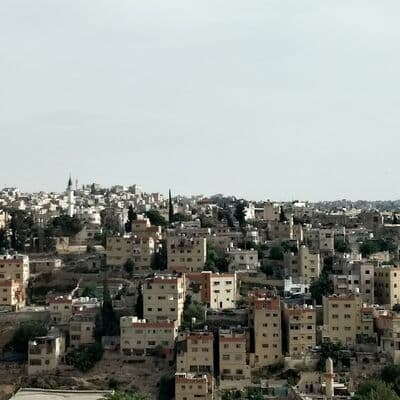
Amman is not the kind of city that hits you with postcard beauty the moment you step off the plane. It creeps up on you. The first impression is usually a sprawl of beige and white buildings cascading over hills, traffic that seems to operate on pure intuition, and a dry heat that makes you reconsider your outfit choices. Give it two days, and you will not want to leave.
This is a city built on 19 hills (originally 7, but it kept growing), where a Roman amphitheater sits casually in the middle of downtown, where you can eat one of the best meals of your life for $3, and where strangers will invite you for tea before you have finished asking for directions. Amman is the Middle East without the flash of Dubai or the chaos of Cairo. It is real, affordable, and deeply hospitable.
The population hovers around 4.5 million, making it one of the largest cities in the Levant. It is also one of the safest capital cities in the region - violent crime against tourists is essentially unheard of. The biggest risk you face is eating too much mansaf and needing a nap. Jordan as a whole has remained remarkably stable, and Amman reflects that: modern, cosmopolitan in pockets, traditional in others, and genuinely welcoming to outsiders.
A few things that surprise first-time visitors: alcohol is widely available (this is not Saudi Arabia), the coffee culture is serious, English is spoken well in most tourist areas, and the city is far more hilly than you expect. Comfortable shoes are not optional - they are survival gear. The elevation sits around 750-900 meters (2,500-3,000 feet), which keeps summers more bearable than you would think, but winters can be genuinely cold, with occasional snow.
Amman Neighborhoods: Where to Stay and What to Expect
Amman is a city of neighborhoods, each with a distinct personality. Where you base yourself will shape your entire experience, so choose carefully. Here is the honest breakdown.
Downtown (Al-Balad)
The beating heart of old Amman. This is where the Roman Theatre sits, where the souks sprawl, and where the famous Hashem Restaurant has been serving falafel since 1952. Staying downtown puts you in the thick of it: call to prayer at dawn, street vendors, honking taxis, and more character per square meter than anywhere else in the city. Budget hotels cluster here, and you can walk to most major historical sites. The downside? It is loud, chaotic, and the hills connecting downtown to Jabal Amman will test your cardio. Best for: budget travelers, culture seekers, and anyone who wants to feel the city's pulse.
Jabal Amman and Rainbow Street
Rainbow Street is Amman's most famous address for visitors, and for good reason. This walkable stretch along the First Circle area is lined with cafes, galleries, boutique shops, and restaurants with terrace views over downtown. Darat al-Funun, one of the best contemporary art spaces in the Arab world, is a short walk away. Accommodation here ranges from charming guesthouses to upscale boutique hotels. It is the sweet spot between local character and tourist convenience. The neighborhood is hilly (everything in Amman is), but the payoff is sunset views that will make your Instagram followers jealous. Best for: first-time visitors, couples, solo travelers who want walkability.
Weibdeh (Jabal al-Weibdeh)
If Jabal Amman is the popular kid, Weibdeh is the artsy cousin. This neighborhood has become Amman's creative hub: independent bookshops, hole-in-the-wall cafes, street art, and a growing number of co-working spaces. The Jordan Museum sits on its edge. Weibdeh feels more residential and less touristy than Rainbow Street, with a genuine neighborhood atmosphere. You will find some of the best third-wave coffee in the city here, along with international restaurants that cater to the local expat community. Prices are moderate - cheaper than Abdoun, pricier than downtown. Best for: long-stay travelers, digital nomads, art lovers, and anyone who has already done the Rainbow Street circuit.
Shmeisani
The business district. Shmeisani is where you will find international hotel chains (Marriott, InterContinental), embassies, and corporate offices. It is clean, well-connected, and utterly soulless from a tourism perspective. That said, it has practical advantages: reliable taxi access, ATMs everywhere, and some excellent restaurants. If you are in Amman for work or prefer chain hotel reliability over character, this is your spot. Prices for hotels run $80-200/night for international brands. Best for: business travelers, families wanting predictability.
Abdoun
The wealthy suburb. Abdoun is where Amman's elite live, shop, and dine. Think designer boutiques, high-end restaurants, and villas with security gates. The Abdoun Bridge is an architectural landmark, and the neighborhood has some of the best fine dining in the city. It feels like a different country from downtown - polished, quiet, and expensive. Unless you have a specific reason to stay here (visiting friends, attending an event at one of the embassies), it is better visited for a meal than used as a base. Hotel options are limited but upscale. Best for: luxury travelers, foodies exploring high-end dining.
Al-Abdali
Amman's attempt at a modern commercial district. The Abdali Boulevard is a pedestrian-friendly development with shops, restaurants, and the Rotana hotel. It feels very "new Middle East" - clean lines, international brands, outdoor seating. Some locals love it; others find it generic. It is well-connected to both downtown and West Amman, making it a reasonable base if you want modern amenities without full suburban isolation. Hotels here are mid-range to upscale, typically $60-150/night. Best for: travelers who want modern convenience with some walkability.
Sweifieh
The shopping district. Sweifieh is home to malls (Galleria, Taj Mall), Western chain restaurants, and a very car-dependent lifestyle. It is useful for practical needs - buying a SIM card at a proper phone shop, stocking up at a large supermarket, or catching a movie. As a tourist base, it offers little charm but solid mid-range hotel options. The area is well-connected to the airport highway. Best for: families, mall enthusiasts, or those who want to be near the airport road for early departures.
Best Time to Visit Amman
Amman has a Mediterranean climate with a desert twist, which means the difference between seasons is dramatic. Timing your visit matters more here than in many Middle Eastern cities.
Spring (March to May) is the gold standard. Temperatures hover between 15-25C (59-77F), the hills around the city turn briefly green, and wildflowers appear in unexpected places. April is arguably the perfect month: warm enough for outdoor exploration, cool enough that you will not melt walking up the Citadel hill. This is also the busiest tourist season, so book accommodation early, especially around Easter when Christian pilgrims visit nearby sites.
Autumn (September to November) is equally excellent. October mirrors April in temperature, and the summer crowds have thinned. The light in autumn is particularly beautiful - golden hour over the Amman Citadel in October is something special. Prices drop slightly from peak season, and you will have more breathing room at major sites.
Summer (June to August) brings serious heat. Daytime temperatures regularly hit 35-38C (95-100F), and the city bakes under an unrelenting sun. The upside? Amman is dry heat, which is more tolerable than humid coastal cities. Evenings cool down to a pleasant 20-22C (68-72F), and the rooftop restaurant and cafe scene comes alive after sunset. Hotel prices drop, and you will have many sites largely to yourself. If you can handle the midday heat (plan indoor activities from 12-4 PM), summer is viable. Drink at least 3 liters of water daily - this is not a suggestion.
Winter (December to February) catches people off guard. Amman sits at altitude, and winter temperatures drop to 3-8C (37-46F), with nights near freezing. Rain is common, and the city gets occasional snow - sometimes enough to shut things down for a day or two. Many buildings lack central heating (space heaters are the norm), so pack warm layers. On the plus side, winter is the cheapest time to visit, and on clear days between storms, the air is crisp and the views are spectacular.
Key festivals and events: The Jerash Festival of Culture and Arts (July-August) is worth planning around if you enjoy music and theater. Ramadan (dates shift each year - check current Islamic calendar) transforms the city: restaurants close during daylight hours but the after-sunset iftar meals are a special experience. Eid al-Fitr (end of Ramadan) is festive but everything shuts down for 3-4 days. National holidays like Independence Day (May 25) bring celebrations and closures.
Amman Itinerary: How to Spend 3 to 7 Days
Amman itself needs 2-3 full days. Beyond that, you are using it as a base for day trips - and it is an excellent base. Here is a flexible plan.
Day 1: Downtown and Ancient Amman
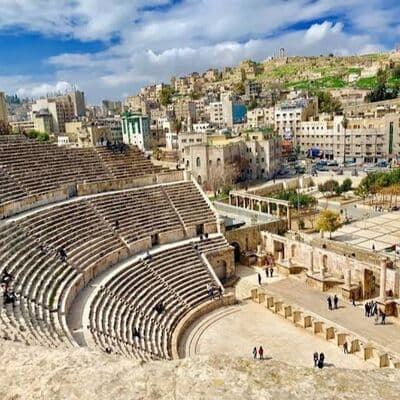
Morning (8:30 AM): Start at the Roman Theatre. Arrive early before tour buses. This 6,000-seat, 2nd-century amphitheater is cut into the hillside and still hosts events. Climb to the top row for panoramic views of downtown. Allow 45 minutes. The small folklore museum inside is worth a quick look.
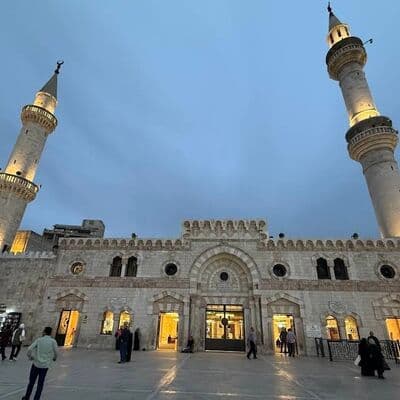
Mid-morning (10:00 AM): Walk through downtown's souk area. This is not a sanitized tourist market - it is where Ammanis actually shop. You will find spice stalls, fabric shops, household goods, and produce vendors. Practice your bargaining (start at 40-50% of the asking price for non-food items). Work your way toward the Grand Husseini Mosque, built in 1924 on the site of an older Ottoman mosque. Non-Muslims can visit outside prayer times - dress modestly and remove shoes.
Late morning (11:30 AM): Breakfast at Hashem Restaurant. Yes, breakfast at 11:30 - you will understand Amman's schedule soon enough. This legendary spot serves falafel, hummus, foul (stewed fava beans), and fresh bread. No menu, no fuss. A full spread for two costs about 3-4 JOD ($4-6). Tip: it is always packed; sharing tables with strangers is normal and part of the experience.
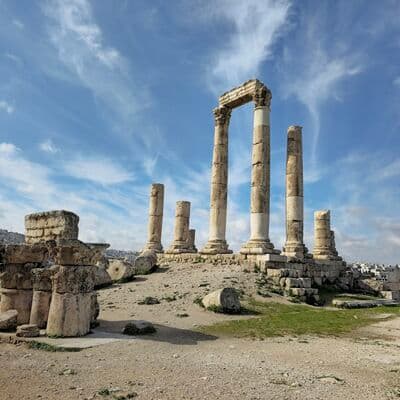
Afternoon (1:00 PM): Climb to the Amman Citadel (Jabal al-Qala'a). This is a serious uphill walk from downtown - take a taxi (1.5 JOD / $2) if the heat is intense. The Citadel complex spans multiple eras: the Temple of Hercules (Roman), the Umayyad Palace (Islamic), and a Byzantine church. The panoramic views of the city are the best you will find. Budget 1.5-2 hours. Entry is 3 JOD ($4.25), or free with a Jordan Pass.
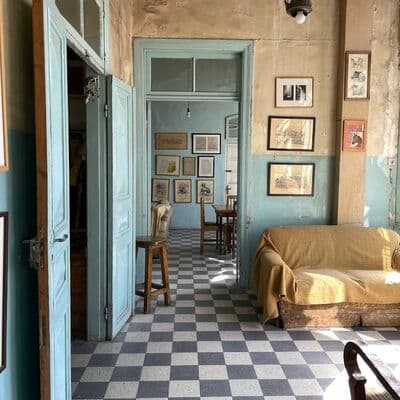
Late afternoon (4:00 PM): Walk (downhill this time) to Rainbow Street. Browse the shops, stop at a cafe for Arabic coffee or fresh juice. Visit Duke's Diwan, a beautifully restored 1920s townhouse that now serves as a cultural center and museum - free entry, and the volunteers are happy to share the building's history.
Evening (7:00 PM): Dinner on or near Rainbow Street. Sufra Restaurant is an excellent choice for your first taste of traditional Jordanian cuisine in a refined setting. Expect to pay 15-25 JOD ($21-35) per person for a full meal with drinks.
Day 2: Museums, Art, and West Amman
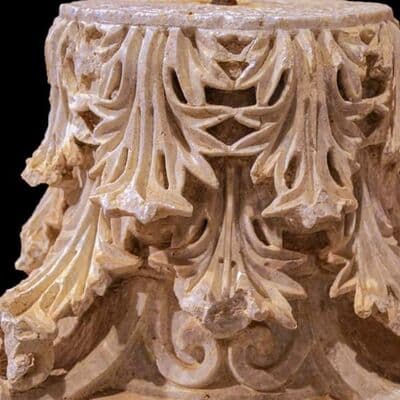
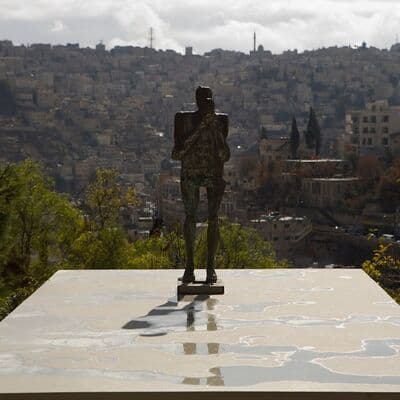
Morning (9:00 AM): The Jordan Museum. This is Jordan's national museum and it is genuinely excellent - not a dusty afterthought. Highlights include the Ain Ghazal statues (9,000 years old, among the oldest large human figures ever found) and sections of the Dead Sea Scrolls. Allow 2 hours. Entry is 5 JOD ($7), or free with Jordan Pass.
Late morning (11:30 AM): Walk through Weibdeh neighborhood. Stop at one of the independent cafes - Rumi Cafe is a local favorite with good coffee and a literary atmosphere. Browse the street art and small galleries that dot the area.
Afternoon (1:00 PM): Visit Darat al-Funun. This contemporary art center occupies several restored buildings from the 1920s, with gardens, archaeological remains, and rotating exhibitions by Arab artists. It is free, peaceful, and offers beautiful views. The on-site cafe is a hidden gem. Allow 1-1.5 hours.
Mid-afternoon (3:00 PM): Head to the King Abdullah I Mosque. This striking blue-domed mosque was completed in 1989 and is one of the few mosques in Amman that actively welcomes non-Muslim visitors. Women will be provided with an abaya at the entrance. Entry is 2 JOD ($2.80). The interior is spacious and the blue dome is impressive from inside.
Late afternoon (4:30 PM): If you have energy and interest in quirky museums, the Royal Automobile Museum houses King Hussein's personal collection of over 70 classic cars and motorcycles, including a 1916 Cadillac. It is about 15 minutes by taxi from central Amman. Entry is 3 JOD ($4.25).
Evening (7:30 PM): Dinner at Fakhreldin, widely considered one of Amman's finest restaurants. Set in a beautiful 1950s villa with garden seating, it serves elevated Lebanese-Jordanian cuisine. Expect 25-40 JOD ($35-56) per person. Reserve ahead, especially on weekends (Thursday-Friday in Jordan).
Day 3: Off the Beaten Path
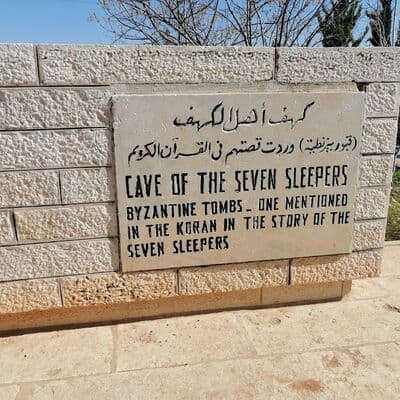
Morning (9:00 AM): Visit the Cave of the Seven Sleepers (Ahl al-Kahf). Located in the eastern outskirts of Amman, this site is significant in both Islamic and Christian tradition as the cave where seven young men slept for hundreds of years to escape religious persecution. The small mosque and archaeological site above the cave are worth exploring. Take a taxi (about 5-6 JOD / $7-8 from central Amman). Allow 1-1.5 hours including travel.
Late morning (11:00 AM): Explore the eastern and less-touristed parts of downtown. Visit the gold souk (Souk al-Sagha) for window shopping, and the vegetable market for a sensory overload of colors and smells. This is the Amman that most tourists miss.
Afternoon (1:00 PM): Lunch at Al-Quds Falafel downtown - another legendary spot that has been serving perfectly crispy falafel for decades. A full meal costs under 2 JOD ($2.80). Then spend the afternoon revisiting any site you rushed through, or simply cafe-hopping. The art of sitting in a cafe, smoking shisha (if you are so inclined), and watching the city go by is an essential Amman experience.
Evening: For your last Amman evening, head to Shams al-Balad for a sunset dinner. This restaurant in Jabal Amman focuses on local, seasonal ingredients and has a gorgeous terrace. The menu changes frequently but always features traditional Jordanian dishes with a contemporary twist. Budget 12-20 JOD ($17-28) per person.
Days 4-7: Day Trips from Amman
Day 4 - Jerash and Ajloun (full day): Jerash is one of the best-preserved Roman cities in the world, just 50 km (30 miles) north of Amman. JETT buses run from Abdali station (about 2 JOD each way). Combine it with Ajloun Castle, a 12th-century fortress with panoramic views. Budget the full day; you need 3-4 hours for Jerash alone.
Day 5 - Dead Sea (half or full day): The Dead Sea is about 1 hour from Amman, dropping from 900m elevation to -430m (the lowest point on Earth). Public access beaches like Amman Beach charge 20-25 JOD ($28-35) for day access including facilities. Resort day passes (Kempinski, Hilton) run 40-60 JOD ($56-85). Bring flip-flops - the salt crystals will cut bare feet. Do not shave anything within 24 hours of going in. Trust this advice.
Day 6 - Madaba and Mount Nebo (half day): Madaba (30 minutes south) has the famous 6th-century mosaic map of the Holy Land in St. George's Church. Mount Nebo, where Moses is said to have seen the Promised Land, offers views across the Jordan Valley to Israel/Palestine on clear days. Both can be done in a morning, leaving the afternoon free.
Day 7 - Desert Castles or Bethany Beyond the Jordan (half day each): The Umayyad desert castles (Qasr Amra, Qasr Kharaneh, Qasr al-Azraq) are fascinating but require a car or organized tour. Bethany Beyond the Jordan (Al-Maghtas), the baptism site of Jesus, is a UNESCO World Heritage Site about 50 minutes from Amman.
Where to Eat: Restaurants, Street Food, and Cafes
Amman is a city that takes food seriously. Not in a pretentious, Instagram-plating way, but in a "my grandmother's recipe is better than your grandmother's recipe" way. The food scene spans from $2 street meals to $50 fine dining, and honestly, some of the best things you will eat cost almost nothing.
Street Food and Budget Eats
Hashem Restaurant (downtown) is the undisputed king of budget eating in Amman. Open 24 hours, no menu, no pretense. You sit down and plates of falafel, hummus, foul, and bread appear. The total bill rarely exceeds 2 JOD ($2.80) per person. It has been operating since 1952 and has fed everyone from backpackers to King Abdullah II. The alley seating is the experience - do not look for a fancy interior.
Al-Quds Falafel (downtown, near the Husseini Mosque) is Hashem's main rival in the eternal falafel debate. Their falafel is slightly crispier, the portions arguably more generous. A sandwich costs about 0.35 JOD ($0.50). Try both and pick your side - this is a serious local controversy.
Shawarma Row on King Faisal Street has multiple vendors competing for your attention. The chicken shawarma sandwiches are excellent and cost 0.50-1 JOD ($0.70-1.40). Look for the places with the fastest turnover - fresh meat rotating on the spit means quality.
Habibah Sweets (downtown, near the mosque) is famous for its knafeh - the warm cheese pastry soaked in sweet syrup that is the king of Arab desserts. A generous plate costs 1 JOD ($1.40). Go in the morning when the first batch comes out hot. The line is part of the ritual.
Mid-Range and Traditional
Sufra (Rainbow Street area) is housed in a beautiful old Amman house with outdoor seating under a massive tree. The menu covers the full range of Jordanian cuisine: mansaf, musakhan, maqlubeh. It is touristy but justifiably so - the food is excellent, the portions generous, and the setting lovely. Budget 12-20 JOD ($17-28) per person with drinks.
Beit Sitti (Jabal Weibdeh) is a cooking class disguised as a restaurant. You book a session in a traditional Amman house, and local women teach you to make Jordanian dishes from scratch. You eat what you cook. It costs about 35 JOD ($49) per person and is genuinely one of the best experiences in the city. Book at least a few days ahead - it fills up.
Tawaheen al-Hawa (near the Royal Cultural Center) serves some of the best mansaf in Amman in a restaurant with traditional decor and reasonable prices. If you want to try the national dish done properly, this is a reliable choice. About 8-15 JOD ($11-21) per person.
Fine Dining
Fakhreldin (Jabal Amman) is consistently ranked among the best restaurants in the Middle East. Set in a 1950s villa with impeccable garden dining, it serves Lebanese-Jordanian cuisine with precision and elegance. The mezze spread alone is worth the visit. Expect 30-45 JOD ($42-63) per person with wine. Reservations essential, especially Thursday-Friday evenings.
Shams al-Balad (Jabal Amman) focuses on locally sourced, seasonal Jordanian cuisine. The terrace views are spectacular, the cocktail menu is creative, and the food walks the line between traditional and modern without losing its soul. Budget 15-25 JOD ($21-35) per person. A great sunset dinner spot.
Romero Restaurant (Jabal Amman) brings Italian fine dining to Amman, with a terrace overlooking the city. It is a popular date-night spot for locals and consistently delivers. Expect 20-35 JOD ($28-49) per person.
Cafes and Coffee Culture
Books@Cafe (Rainbow Street) was one of the first "cool" cafes in Amman and remains a staple. Good coffee, a book exchange, and a balcony overlooking downtown. It serves alcohol and light food, and has a slightly bohemian vibe. Popular with locals and tourists alike.
Rumi Cafe (Weibdeh) is where Amman's literary and intellectual crowd gathers. Named after the poet, it has a quiet, contemplative atmosphere with good coffee and light meals. The outdoor seating on warm evenings is ideal for people-watching.
Al-Badawi Cafe (downtown) is a traditional Arab coffeehouse where older men play cards and backgammon, smoke shisha, and debate politics over tiny cups of cardamom-laced Arabic coffee. It is not a tourist spot - it is the real thing. Just sit down, order coffee or tea (about 0.50 JOD / $0.70), and absorb the atmosphere. Women are welcome but will be the exception.
Specialty coffee has exploded in Amman. DoubleShot, Roo Coffee, and Bloom Specialty Coffee all serve excellent single-origin pour-overs for 2-4 JOD ($2.80-5.60). The third-wave coffee scene here is genuinely good - surprising to many first-time visitors.
Must-Try Jordanian Food
Jordanian cuisine does not get the global recognition of Lebanese or Turkish food, but it absolutely should. Here is what you need to eat, with no exceptions.
Mansaf is the national dish, and you will encounter it everywhere. It is lamb cooked in a fermented dried yogurt sauce (jameed) and served over a bed of rice, often on a massive communal platter. Traditionally eaten with the right hand (yes, you scoop it with your fingers), though restaurants provide utensils for tourists. The flavor is tangy, rich, and unlike anything in Western cooking. Some visitors love it instantly; others need a second try. Either way, it is a must. The jameed is the key - it is an acquired taste, intensely sour and savory. Do not skip it because the description sounds unusual.
Falafel in Jordan is different from Egyptian or Lebanese versions. The Jordanian style uses a blend of chickpeas and fava beans, producing a slightly darker, earthier falafel. Stuffed into fresh taboon bread with pickles, tahini, and vegetables, it is the ultimate $1 meal. You will eat an unreasonable quantity of these during your visit.
Knafeh (kunafeh/kanafeh - the spelling varies) is the dessert you did not know you needed. Shredded phyllo dough layered over soft white cheese, baked until crispy and golden, then doused in sweet syrup and topped with crushed pistachios. Eaten warm, it is transcendent - the sweet-salty combination with the stretchy cheese is addictive. Habibah Sweets in downtown is the classic spot, but you will find excellent knafeh throughout the city. The Nablusi style (from Palestine) is the most common in Jordan.
Maqlubeh (literally "upside down") is a one-pot dish of rice, vegetables (usually eggplant and cauliflower), and chicken or lamb, cooked in a large pot and then flipped upside down onto a serving platter. The drama of the flip is part of the experience. When done right, the rice is golden and crispy on top with tender meat and vegetables layered throughout. It is home cooking elevated to art, and you will find it at traditional restaurants and home-style eateries.
Foul Mudammas is the Jordanian breakfast staple: stewed fava beans with olive oil, lemon, garlic, and cumin, served with warm bread for dipping. It is humble, hearty, and delicious. Often accompanied by hard-boiled eggs, fresh vegetables, and pickles. At places like Hashem, a full foul breakfast costs practically nothing and will keep you fueled for hours of sightseeing.
Musakhan is a Palestinian dish that Jordan has enthusiastically adopted: roasted chicken over taboon bread slathered with olive oil, sumac, and caramelized onions. The sumac gives it a distinctive sour-fruity flavor that is utterly unique. When the bread soaks up the chicken juices and olive oil, it becomes something extraordinary. You will find it at traditional restaurants like Sufra.
Arabic Coffee (Qahwa) is not espresso and it is not Turkish coffee. Jordanian Arabic coffee is made with lightly roasted beans, cardamom, and sometimes saffron. It is served in tiny cups, pale in color, and has a subtle, aromatic flavor completely unlike what most Westerners think of as "coffee." It is served as a welcome gesture everywhere - accepting a cup is a sign of friendship. Refusing it entirely is mildly rude; taking at least one cup, then gently shaking the cup side to side when you have had enough, is the polite protocol.
For vegetarians: Jordanian cuisine is surprisingly vegetarian-friendly. Falafel, hummus, foul, fattoush (salad with crispy bread), moutabel (smoky eggplant dip), tabbouleh, and makdous (stuffed baby eggplants) are all naturally meat-free and delicious. You will not struggle to eat well as a vegetarian in Amman. Vegans have a slightly harder time - dairy and eggs appear frequently - but the mezze-heavy dining culture means you can always build a satisfying meal from plant-based starters.
Local Secrets and Practical Tips
These are the things nobody puts in the glossy travel brochures but everyone wishes they had known on day one.
The Jordan Pass is non-negotiable. If you plan to visit Petra (and you should - it is one of the best things you will ever do), buy the Jordan Pass (jordanpass.jo) before you arrive. It costs 70-80 JOD ($99-113) depending on how many days of Petra access you want, and it includes your visa fee (normally 40 JOD) plus entry to over 40 attractions, including the Amman Citadel, Roman Theatre, Jerash, and more. If you are visiting even a few sites, it pays for itself immediately. Buy it at least 3 days before arrival so it is linked to your passport number on entry.
Friday is the weekend. Jordan's weekend is Friday-Saturday. Many shops and businesses close on Friday, especially in the morning. Government offices and banks are closed. Some restaurants in downtown shut entirely. Plan your Friday around sites that stay open (Citadel, Roman Theatre, museums) and avoid banking or bureaucratic errands. Saturday is a half-day for many businesses. Sunday is a normal working day.
Taxi meters exist - insist on them. Yellow taxis in Amman have meters, and by law they must use them. The minimum fare is 0.35 JOD ($0.50), and a typical cross-city ride runs 2-5 JOD ($2.80-7.00). Some drivers will "forget" to turn on the meter and then quote an inflated price. Politely say "meter, please" or "al-addad, min fadlak" before starting. If they refuse, get out and find another taxi. That said, many drivers are honest and friendly - do not assume the worst. After midnight, expect to pay roughly double the meter price, or negotiate a flat rate before getting in.
Bargaining rules: Bargaining is expected in souks and markets but NOT in restaurants, supermarkets, or modern shops. A good rule: if there is a price tag, pay the price. If there is not, negotiate. Start at 40-50% of the asking price and work toward 60-70% for a fair deal. Always be friendly - aggressive bargaining is considered rude. Walk away if the price is too high; the shopkeeper will often call you back with a lower offer. Never bargain and then not buy - that is bad form.
Water safety: Tap water in Amman is technically safe but tastes heavily of chlorine and minerals. Most locals and all hotels use filtered or bottled water. A 1.5L bottle costs about 0.25 JOD ($0.35) from any corner shop. Stay hydrated - the dry climate dehydrates you faster than you realize, especially in summer. If your lips are cracking, you are already behind on water intake.
Dress code: Amman is relatively liberal by regional standards, especially in West Amman (Jabal Amman, Weibdeh, Abdoun). However, for mosque visits and downtown areas, both men and women should cover shoulders and knees. Women do not need to cover their hair except inside mosques (headscarves are provided at mosque entrances). In upscale areas like Abdoun or Rainbow Street, you will see Jordanians in Western clothing. Use the "local women around you" benchmark - if they are wearing jeans and t-shirts, you are fine too.
Hospitality is real, not a scam. When a Jordanian shopkeeper offers you tea or coffee, it is genuine hospitality - not necessarily a sales tactic. You can accept, chat, and leave without buying anything. When someone invites you to their home for a meal, they mean it. If you accept, bring a small gift (sweets are always appropriate). This culture of generosity is one of the best things about Jordan, and it would be a shame to miss it because you assumed everyone had an angle.
Car rental is feasible but intense. Renting a car opens up the country beautifully (desert castles, Dead Sea, Wadi Rum, Aqaba), but driving in Amman itself is chaotic. Roundabouts follow survival-of-the-fittest rules, lane markings are decorative suggestions, and GPS navigation can be unreliable in older neighborhoods. If you rent, pick up the car when you leave Amman and drop it off before re-entering. Within the city, taxis and ride-hailing are far less stressful. Rental prices start at about 25-35 JOD ($35-49) per day for a compact car.
Useful apps: Careem (ride-hailing, the regional Uber - more reliable than Uber in Jordan), Talabat (food delivery), Google Maps (works well in Amman), and WhatsApp (the default communication tool in Jordan - many hotels and tour operators prefer it over email).
Pace yourself. Amman's hills are relentless, and the midday heat in summer is punishing. Adopt the local rhythm: morning activity, long lunch, rest during the hottest hours, then evening exploration. Many restaurants do not fill up until 9-10 PM. Adjusting to this schedule is not laziness - it is intelligence.
Transportation and Communication
Getting from the Airport to the City
Queen Alia International Airport (AMM) is located about 35 km (22 miles) south of downtown Amman. You have several options to get into the city:
Airport Express Bus (Sariyah): The cheapest option at 3.30 JOD ($4.65) per person. Buses run every 30-60 minutes from 6:00 AM to midnight (roughly), stopping at Tabarbour station in North Amman and the 7th Circle area. From either stop, you will need a taxi to your hotel. The ride takes about 45-60 minutes depending on traffic. Clean, air-conditioned, and reliable.
Airport taxi (fixed price): Government-set fixed rates for airport taxis are displayed at the taxi counter. Downtown Amman costs about 22-25 JOD ($31-35); West Amman about 18-22 JOD ($25-31). These are non-negotiable, which is actually a relief - no haggling at 1 AM after a long flight. Pay at the counter, get a receipt, and the driver takes you directly. Journey time is 30-45 minutes depending on traffic.
Careem/Uber: Both operate from the airport. Careem is generally more reliable in Jordan. Fares are usually slightly cheaper than official airport taxis - around 15-20 JOD ($21-28) depending on the time and destination. Order from the arrivals hall; drivers pick up at the designated ride-hailing area. You will need mobile data or airport Wi-Fi to book. This is a good option if you already have the app installed and a payment method set up.
Hotel transfer: Most mid-range and upscale hotels offer airport transfers for 25-35 JOD ($35-49). Worth considering if you arrive at an odd hour or want zero hassle. Arrange in advance via email or WhatsApp.
Getting Around Amman
Yellow taxis are the backbone of Amman transportation. They are cheap, plentiful, and generally safe. Flagging one is easy in most neighborhoods. Always insist on the meter. Most drivers speak basic English. Keep small bills - drivers often claim not to have change for a 10 JOD note.
Careem is the ride-hailing app of choice. It is more reliable than Uber in Amman and lets you pay by card or cash. The app shows estimated fares upfront, which eliminates the meter debate. Surge pricing applies during peak hours and bad weather. A typical cross-city ride runs 2-4 JOD ($2.80-5.60).
The Amman Bus Rapid Transit (BRT) launched relatively recently and connects major corridors of the city. It is clean, air-conditioned, and cheap (0.65 JOD / $0.92 per ride). Coverage is still limited compared to taxis, but if your hotel and destinations are on a BRT line, it is an excellent option. Routes connect Sweileh, the University of Jordan, downtown, and eastern Amman.
Local minibuses (service): These white minivans run fixed routes for about 0.35-0.50 JOD ($0.50-0.70). They are cheap but confusing for tourists - no route maps, no announcements, and you need to know where to flag them down and yell when you want to get off. Unless you enjoy improvisation and speak some Arabic, stick to taxis or Careem for simplicity.
Walking is viable in specific areas (downtown, Rainbow Street to Weibdeh, within Jabal Amman) but not as a city-wide strategy. The hills are severe, sidewalks are inconsistent, and the distances between neighborhoods are large. A walk from downtown to the Citadel is 15 minutes but feels like 30 because it is uphill the entire way. Wear solid walking shoes and carry water.
Getting Out of Amman
JETT Bus (jett.com.jo) is the main intercity bus company. They run comfortable, air-conditioned coaches to the Dead Sea, Aqaba (5 hours, about 11 JOD / $15.50), Petra via Wadi Musa (3.5 hours, about 11 JOD / $15.50), and even the King Hussein / Allenby Bridge crossing to Palestine/Israel. Book online or at their offices (main office at 7th Circle, another at Abdali). Buses run on set schedules, usually with morning departures. Arrive 15-20 minutes early.
Rental cars are available from international agencies (Hertz, Avis, Budget) and local companies at the airport and throughout the city. International driving permits are technically required but rarely checked. Roads between cities are generally good, well-signed in Arabic and English, and easy to navigate with Google Maps. Fuel costs about 0.90-1.00 JOD ($1.27-1.41) per liter. The Desert Highway (Amman to Aqaba) and King's Highway (scenic route to Petra via Madaba and Karak) are both excellent drives.
SIM Cards and Connectivity
Local SIM cards are easy to get and inexpensive. The three main providers are Zain, Orange, and Umniah. Zain has the best overall coverage; Orange has good data deals. You can buy a SIM at the airport arrivals hall or at any phone shop in the city. Bring your passport - it is required for registration. A tourist SIM with 10-15 GB of data costs about 5-10 JOD ($7-14) and lasts 30 days. This is much cheaper than roaming and essential for using Careem, Google Maps, and WhatsApp.
eSIM is an option if your phone supports it. Airalo, Holafly, and similar services offer Jordan data plans starting around $8-15 for 5-10 GB. Convenient because you can set it up before you land, but typically more expensive per GB than a local SIM. Good for short visits where you do not want to deal with the SIM card process.
Wi-Fi is available at most hotels, cafes, and restaurants. Quality varies - upscale hotels have reliable connections; budget guesthouses may have intermittent coverage. Do not rely solely on Wi-Fi for navigation or ride-hailing; a data connection is practically essential for getting around Amman comfortably.
Power outlets: Jordan uses Type B, C, D, F, G, and J outlets - essentially a mix of everything. Most modern hotels have European-style (Type C/F) outlets. Bring a universal adapter to be safe. Voltage is 230V, 50Hz.
Summary: Who Amman Is For
Amman is for travelers who want the real Middle East without extreme difficulty or risk. It is for people who value food over flash, history over hype, and human connection over Instagram backdrops. It is for anyone who has been to the usual European and Southeast Asian destinations and wants something genuinely different - a city that challenges your assumptions gently, feeds you magnificently, and leaves you with stories about the strangers who became friends over a cup of cardamom coffee.
It is not for people who need pristine infrastructure, efficient public transit, or flat terrain. It is not a beach destination, a nightlife capital, or a luxury shopping hub. What it is, unequivocally, is one of the most underrated cities in the world - a place that rewards curiosity, patience, and an empty stomach. Come with open expectations and comfortable shoes, and Amman will exceed both.