About
Georgia: The Complete Travel Guide to the Heart of the Caucasus
There is a country nestled between the towering peaks of the Greater Caucasus Mountains and the warm shores of the Black Sea where eight-thousand-year-old winemaking traditions blend seamlessly with vibrant urban nightlife, where ancient monasteries perch on cliff edges overlooking valleys that seem to stretch into eternity, and where the concept of hospitality has been elevated to something approaching a sacred art form. That country is Georgia, and if you have not yet discovered it, you are about to understand why those who have visited often describe it as one of the most underrated travel destinations on Earth.
This guide is written for English-speaking travelers from the United States, United Kingdom, Canada, Australia, and beyond who are considering Georgia for their next adventure. Whether you are a solo backpacker looking to stretch your budget in a country where a hearty meal costs five dollars, a couple seeking romantic vineyard getaways and candlelit dinners in medieval towns, a family wanting to introduce your children to a culture that genuinely adores young visitors, or an adventurer ready to tackle some of the most dramatic mountain scenery outside of the Himalayas, Georgia has something extraordinary waiting for you.
Why Visit Georgia: Ten Compelling Reasons to Book Your Flight
Let me be direct with you: there are dozens of countries competing for your vacation time and travel budget, and you deserve to know exactly why Georgia should rise to the top of your list. Having spent extensive time exploring this country from the subtropical beaches of its western coast to the glacier-draped peaks of its northern frontier, I can offer you reasons that go beyond the typical travel brochure platitudes.
One of the Most Affordable European Destinations
Georgia offers what might be the best value proposition in European travel today. A comfortable mid-range hotel room in Tbilisi runs between forty and eighty dollars per night, while budget guesthouses and hostels start at ten to fifteen dollars. A massive feast at a traditional restaurant, complete with multiple dishes, bread, salads, and local wine, rarely exceeds twenty dollars for two people. A liter of excellent Georgian wine at a shop costs three to five dollars. Public transportation fares are measured in cents rather than dollars. For travelers coming from the United States, United Kingdom, or Australia, where restaurant meals routinely cost thirty to fifty dollars per person, Georgia feels almost impossibly affordable without any compromise on quality or experience.
Visa-Free Entry for Most English-Speaking Countries
Citizens of the United States, United Kingdom, Canada, Australia, New Zealand, and most European Union countries can enter Georgia without a visa and stay for up to one full year. That is not a typo: three hundred sixty-five days with just your passport, no visa application, no fees, no interviews. This remarkably generous policy has made Georgia popular among digital nomads and long-term travelers, but it also means your trip planning involves zero bureaucratic headaches. You will not need an ESTA or any equivalent; simply show up with a valid passport that has at least six months remaining validity.
Safety That Rivals the Safest Countries in Europe
Georgia consistently ranks as one of the safest countries for tourists in the entire European region. Violent crime against visitors is extraordinarily rare. Petty theft and pickpocketing, while not nonexistent, occur at rates far below what you would experience in Paris, Rome, or Barcelona. Police are generally helpful and increasingly speak English. The country has made enormous strides in eliminating corruption, and tourists almost never encounter requests for bribes or similar issues. Women travelers regularly report feeling safer walking alone at night in Tbilisi than in many Western cities. This safety extends to the countryside, where the primary risks involve mountain driving conditions rather than human threats.
Ancient Winemaking Traditions Unlike Anywhere Else
Georgia is not merely old wine country; it is arguably the birthplace of wine itself. Archaeological evidence demonstrates that Georgians have been making wine for approximately eight thousand years, predating European winemaking traditions by millennia. The traditional Georgian method involves fermenting and aging wine in large clay vessels called qvevri, which are buried underground. This technique is recognized by UNESCO as intangible cultural heritage and produces wines with flavors unlike anything you have tasted from France, Italy, or California. The amber wines made from white grapes using extended skin contact have become internationally celebrated, but visiting the source in Kakheti wine region offers an experience that no import can replicate.
Dramatic Landscapes Within Short Distances
Georgia is roughly the size of South Carolina or Ireland, yet it contains an almost absurd variety of landscapes. Within a single day of driving, you can move from subtropical Black Sea beaches to alpine meadows to semi-desert badlands to snow-capped five-thousand-meter peaks. Svaneti in the northwest contains some of the highest continuously inhabited villages in Europe, dominated by medieval defensive towers. Kazbegi in the north offers views of Mount Kazbek, a dormant volcano that rises to over five thousand meters. Batumi on the Black Sea coast provides beach resort culture with a unique post-Soviet architectural twist. This geographic diversity means that even a short trip can include radically different environments and experiences.
A Food Culture That Deserves Global Recognition
Georgian cuisine remains one of the world's great undiscovered culinary traditions. Khachapuri, the cheese-filled bread that comes in regional variations including the famous boat-shaped Adjarian version topped with butter and a raw egg, has achieved some international recognition, but it represents just the beginning. Khinkali, the soup dumplings that require a specific eating technique to avoid burning yourself or losing precious broth, are addictive once mastered. Slow-cooked stews, walnut-based sauces, fresh herbs picked that morning, grilled meats marinated in pomegranate juice, clay-pot bean dishes that sustain you through mountain hikes: Georgian food is diverse, flavorful, and deeply satisfying in ways that reveal new depths with each meal.
Genuine Hospitality That Transforms Your Experience
Georgians have a saying that a guest is a gift from God, and they appear to mean it. Hospitality in Georgia is not a tourism industry product; it is a deeply ingrained cultural value that manifests in countless ways. Strangers invite you to share their table at restaurants. Families in rural areas offer you homemade wine and food and seem almost offended if you try to pay. Neighbors of your guesthouse stop by to ensure you are being treated well. This warmth is difficult to convey in writing but becomes apparent within hours of arrival. Many travelers report that Georgian hospitality fundamentally changed their expectations of how humans can treat one another.
Living History Around Every Corner
Georgia accepted Christianity in 337 AD, making it one of the oldest Christian nations in the world. The country is scattered with churches, monasteries, and fortifications dating back fifteen hundred years or more. Mtskheta, the ancient capital, contains UNESCO World Heritage churches within walking distance of each other. Cave monasteries carved into cliffsides, defensive towers built to withstand Mongol invasions, fortresses that watched empires rise and fall: Georgia offers history that you can touch, climb, and explore without velvet ropes or timed entry tickets. For travelers interested in historical depth, Georgia provides an unusually accessible connection to the ancient world.
Adventure Activities for Every Skill Level
Whether you seek gentle wine country walks or technical mountaineering challenges, Georgia delivers. The country offers trekking routes from half-day strolls to multi-week expeditions. Paragliding launches from multiple locations with spectacular views. Whitewater rafting runs rivers ranging from family-friendly to expert-only. Winter brings skiing and snowboarding at resorts that cost a fraction of Alpine prices. Mountain biking trails wind through forests and across alpine meadows. Horse trekking allows you to explore like the locals have for centuries. Canyoning, caving, rock climbing: the list continues. Georgia's adventure tourism infrastructure has developed rapidly while maintaining a sense of wildness that more developed destinations have lost.
A Gateway to the Caucasus Region
Georgia can serve as your introduction to an entire region that remains largely unexplored by Western tourists. From Tbilisi, you can easily arrange trips into Armenia or even cross overland into Turkey. Each neighboring country offers its own distinct character, history, and landscapes. Regional travel allows you to construct journeys of a month or more without retracing your steps. Georgia's position as the most tourist-friendly and accessible Caucasus nation makes it an ideal starting point for deeper regional exploration.
Regions and Destinations: Where to Go and What to See
Georgia divides naturally into several distinct regions, each offering different landscapes, cultural nuances, and travel experiences. Understanding these regions will help you plan an itinerary that matches your interests and available time. Let me walk you through each major destination, covering the key attractions and explaining what makes each area worth your attention.
Tbilisi: The Capital Where Past and Present Collide
Tbilisi is not merely Georgia's capital; it is the country's beating heart, a city of approximately 1.5 million people where fifth-century churches share streets with brutalist Soviet apartment blocks and cutting-edge contemporary architecture. The city spreads along both banks of the Mtkvari River, climbing hillsides topped by ancient fortresses and modern amusement parks. Most visitors base themselves here for at least a few days, and the city rewards extended exploration.
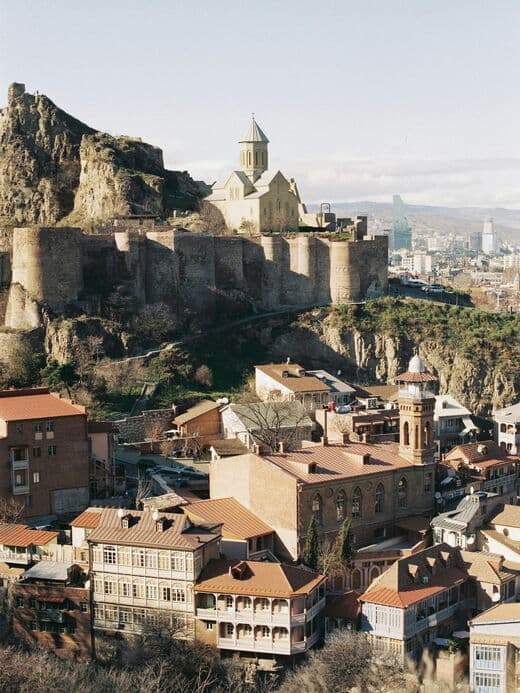
The Old Town, known locally as Kala, represents the historic core of the city. Narrow cobblestone streets wind between traditional houses with their distinctive wooden balconies, many of which lean at angles that suggest either imminent collapse or remarkable engineering, depending on your perspective. This area suffered neglect during the Soviet period and some buildings genuinely are unstable, but extensive restoration over the past two decades has revitalized many structures while preserving their character. Walking these streets at night, with warm light spilling from wine bars and restaurants, creates an atmosphere unlike anywhere else.
Above the Old Town rises Narikala Fortress, originally built in the fourth century and expanded over subsequent centuries by various occupiers. The fortress walls have been partially restored and offer some of the best panoramic views of the city. You can reach the fortress by cable car from Rike Park or by climbing the steep paths from the Old Town below. Either approach has merits: the cable car provides dramatic views during the ascent, while walking allows you to explore the neighborhoods at your own pace.
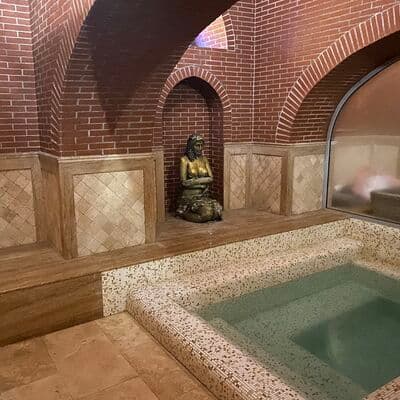
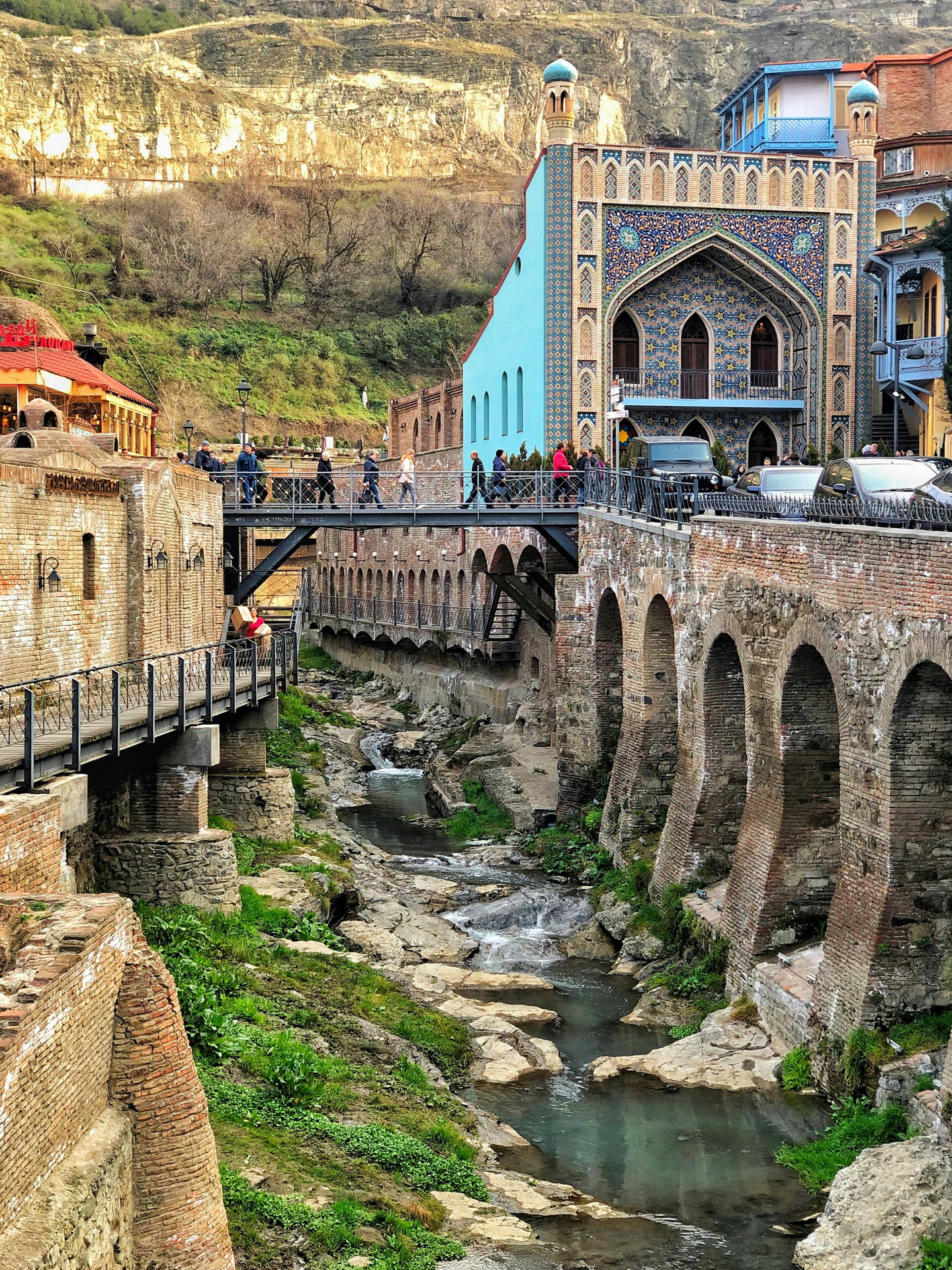
No visit to Tbilisi is complete without experiencing Abanotubani, the historic bathhouse district powered by natural sulfur springs. These baths have operated for centuries, and the distinctive domed brick buildings have become symbols of the city. Several bathhouses offer private rooms that you can rent by the hour, providing hot mineral pools, steam rooms, and optional massage services. The experience is relaxing, culturally significant, and affordable: private rooms start around twenty dollars per hour for groups of up to four people. The smell of sulfur takes some adjustment, but most visitors quickly adapt.
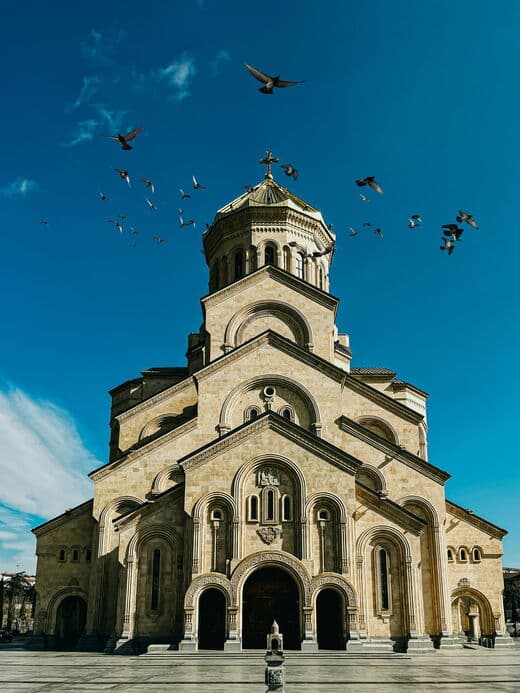
The Holy Trinity Cathedral, known as Sameba, represents modern Georgia's religious ambitions. Completed in 2004, it is the largest Orthodox church in the Caucasus region, its golden dome visible from much of the city. The cathedral's size and grandeur have made it controversial among those who preferred smaller-scale traditional architecture, but the interior is undeniably impressive. Visitors are welcome outside of services, though appropriate dress (covered shoulders and legs, head coverings for women) is required.
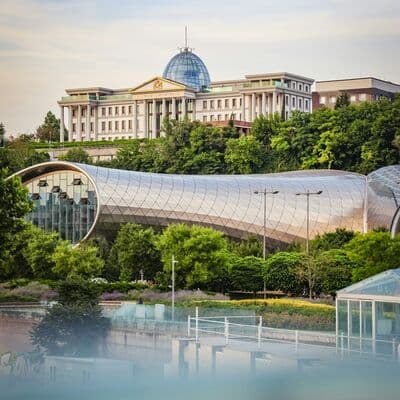
Connecting the Old Town to the modern city center, the Bridge of Peace demonstrates Tbilisi's embrace of contemporary architecture. This pedestrian bridge, completed in 2010, features a flowing glass and steel canopy that lights up spectacularly at night. The bridge itself has become a popular gathering spot and photography location, offering views of both the historic and modern sides of the river. Love it or hate it aesthetically, the bridge has become an undeniable city landmark.
Rustaveli Avenue serves as the main artery of modern Tbilisi, a broad boulevard lined with theaters, museums, government buildings, and upscale shops. Named after the medieval poet Shota Rustaveli, the avenue provides a good introduction to Georgian history through architecture: you will see neoclassical buildings from the Russian Imperial period, Soviet structures of varying quality, and recent developments. The Georgian National Museum and the Opera House both front this avenue.
For families or those seeking entertainment, Mtatsminda Park sits atop the mountain of the same name, accessible by funicular railway from the city center. The park contains an amusement park with rides, restaurants with panoramic views, and extensive walking paths. The funicular ride itself offers excellent views and has operated in some form since 1905, though the current cars are modern. On clear days, you can see the Caucasus Mountains in the distance.
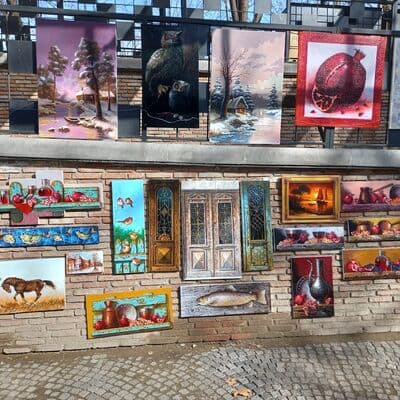
Bargain hunters and curiosity seekers should not miss the Dry Bridge Flea Market, which operates daily but is most extensive on weekends. Vendors spread their wares along a former riverbed, offering Soviet memorabilia, antique jewelry, old cameras, traditional crafts, military items, artwork, musical instruments, and countless oddities. Prices are negotiable, quality varies wildly, and the people-watching alone justifies a visit. This is where you will find the vintage Georgian wine horn drinking vessels, old Orthodox icons of questionable authenticity, and accordion-wielding buskers.
Hidden within the Old Town, Leghvtakhevi Waterfall offers an unexpected natural attraction. A short walk through a dramatic canyon carved into the hillside leads to a small waterfall that remains relatively unknown to many tourists. The canyon walls feature colorful mineral deposits and brick remnants from old structures. The area is best visited during daylight hours when natural light illuminates the canyon.
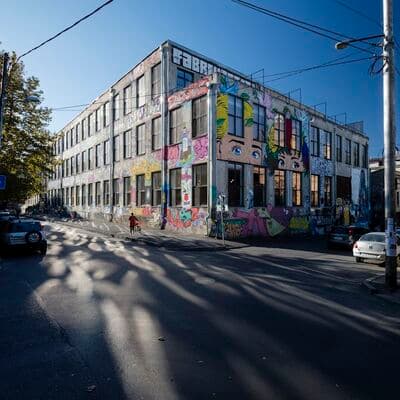
Finally, Fabrika represents the contemporary face of Tbilisi, a Soviet-era sewing factory converted into a hostel, coworking space, and cultural hub. The complex contains bars, cafes, design shops, and event spaces arranged around a courtyard that serves as one of the city's primary gathering spots for young locals and international visitors. Even if you are not staying at the hostel, Fabrika is worth a visit to experience Tbilisi's creative energy.
Batumi: Black Sea Glamour With a Quirky Edge
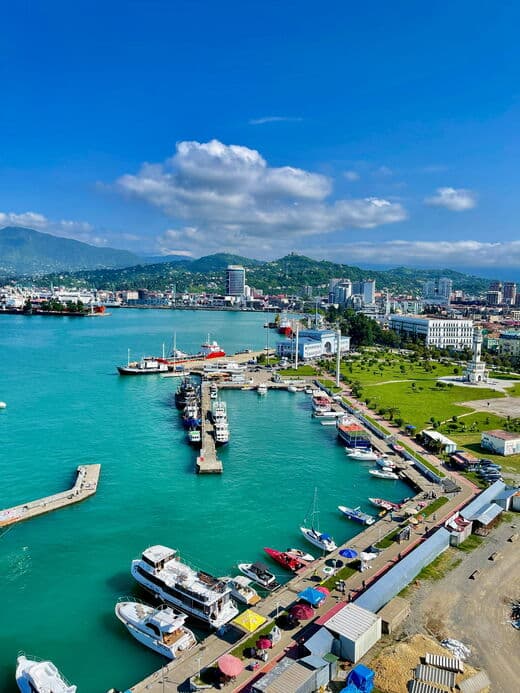
Batumi sits on Georgia's Black Sea coast near the Turkish border, serving as the country's primary beach resort and its second-largest city. The city has undergone remarkable transformation since the 2000s, with massive investment creating a skyline of hotels, casinos, and architectural statements that range from impressive to bewildering. Batumi attracts a mix of beach-seeking tourists, gambling enthusiasts (casinos are legal and plentiful), and architecture fans curious about its unusual buildings.
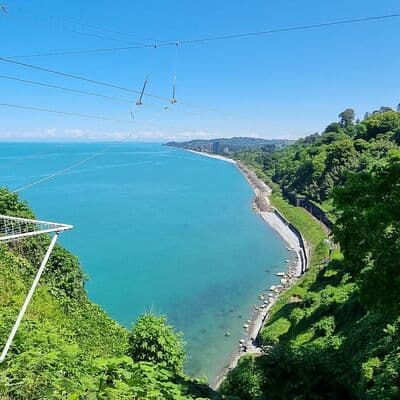
The Batumi Boulevard stretches for approximately seven kilometers along the waterfront, providing a pleasant walking and cycling path lined with palms, sculptures, cafes, and amusement options. The boulevard dates back to the late 1800s but has been extensively modernized. In summer months, the beach adjacent to the boulevard fills with sunbathers, though the pebble surface requires appropriate footwear. Evening brings a lively atmosphere as locals and tourists promenade in the cooling air.
The Batumi Botanical Garden, located about nine kilometers north of the city center, ranks among the finest botanical collections in the former Soviet Union. Established in 1912, the garden covers over one hundred hectares and features plants from around the world organized by geographic zone. The subtropical climate allows species that would not survive elsewhere in Georgia. Walking the entire garden requires several hours but rewards visitors with diverse landscapes and sea views. Public marshrutkas (minibuses) run regularly from the city center.
Among Batumi's many striking buildings, the Alphabetic Tower stands as the most photographed. This 130-meter structure incorporates the thirty-three letters of the Georgian alphabet into a helix that spirals around an observation deck and restaurant. Whether you find it inspiring or excessive likely depends on your architectural tastes, but the tower has become synonymous with modern Batumi. Evening illumination makes it particularly striking against the night sky.
Batumi Piazza offers an entirely different aesthetic: a Venetian-inspired square surrounded by buildings decorated with colorful mosaics and featuring a clock tower. The piazza was built in 2009 as part of Batumi's transformation and hosts cafes and restaurants at slightly elevated prices reflecting its tourist-focused nature. Live music often accompanies summer evenings. The square demonstrates Batumi's willingness to embrace pastiche and themed environments alongside its more serious architectural experiments.
Kutaisi: Gateway to Natural Wonders
Kutaisi, Georgia's third-largest city and ancient capital, serves primarily as a base for exploring western Georgia's remarkable natural and historical sites. The city itself has a pleasant, lived-in character distinct from Tbilisi's energy or Batumi's resort atmosphere. Many budget airlines fly into Kutaisi's airport, making it a potential entry point for cost-conscious travelers.
Gelati Monastery, located about eleven kilometers from the city center, represents one of Georgia's most significant historical and architectural achievements. Founded by King David the Builder in 1106, the monastery served as a major cultural and educational center during Georgia's medieval golden age. The main church contains remarkable frescoes, and the complex includes several other churches, a bell tower, and an academy building. UNESCO has designated the site as World Heritage, and it remains an active monastery. Modest dress is required.
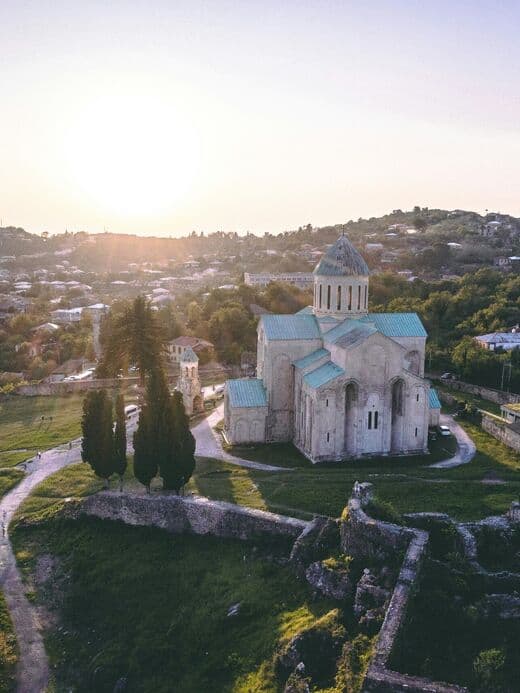
Near Gelati, Bagrati Cathedral crowns a hill overlooking Kutaisi. Originally built in the eleventh century, the cathedral was partially destroyed by Ottoman forces in 1692 and remained in ruins until a controversial reconstruction completed in 2012. The restoration proved so extensive that UNESCO removed the cathedral from its World Heritage list, but the building remains architecturally impressive and offers excellent city views.
Martvili Canyon, roughly an hour northwest of Kutaisi, offers one of Georgia's most accessible natural adventures. The canyon features emerald-green waters flowing between limestone walls reaching up to forty meters in height. Boat tours navigate the lower canyon, while walking trails explore the upper section with its waterfalls and swimming holes. Summer months bring crowds, so early morning visits are advisable. The site has been developed for tourism but retains genuine natural beauty.
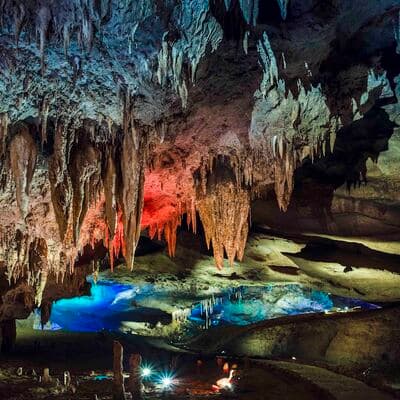
Prometheus Cave, also known as Kumistavi Cave, lies about twenty kilometers from Kutaisi and ranks among the largest caves in Europe. Guided tours follow a 1.6-kilometer route through chambers filled with stalactites, stalagmites, underground pools, and petrified waterfalls. Colorful lighting throughout the cave creates a somewhat theme-park atmosphere that some visitors find enhances the experience while others consider it gaudy. The cave maintains a constant temperature of around fourteen degrees Celsius, so bring a light jacket even in summer. An optional boat ride through a subterranean river extends the tour.
Mtskheta: The Spiritual Heart of Georgia
Mtskheta, located just twenty kilometers north of Tbilisi, served as Georgia's capital from the third century BC until the sixth century AD and remains the spiritual center of the Georgian Orthodox Church. The entire town is a UNESCO World Heritage site, and its compact size allows thorough exploration on foot. Many visitors treat Mtskheta as a half-day trip from Tbilisi, though staying overnight allows you to experience the town after the tour buses depart.
Svetitskhoveli Cathedral stands at the center of Mtskheta, an eleventh-century masterpiece that remains the second-largest church building in Georgia. According to tradition, the cathedral stands on the burial site of Christ's robe, brought to Georgia by a Jewish man from Mtskheta who had traveled to Jerusalem for the crucifixion. The cathedral has witnessed royal coronations, foreign invasions, and centuries of worship. Its stone walls bear inscriptions from various periods, and the interior contains royal tombs and religious artwork. Restoration work has sometimes proved controversial, but the building's significance is beyond dispute.
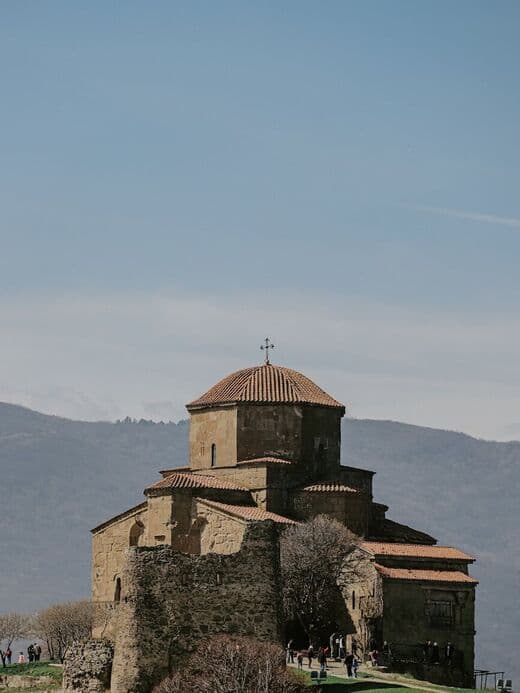
Overlooking Mtskheta from a hilltop at the confluence of two rivers, Jvari Monastery dates to the sixth century and represents one of the earliest examples of Georgian church architecture. The small cruciform church sits where Saint Nino, who converted Georgia to Christianity, is said to have erected a wooden cross. The drive or hike to Jvari rewards visitors with the iconic view of the monastery against mountain backdrops that has appeared in countless photographs and paintings. The interior is modest compared to larger Georgian churches, but the setting is unforgettable.
Samtavro Monastery, located within Mtskheta proper, complements the better-known sites with its own historical significance. The monastery complex includes a church where Georgia's first Christian monarchs are buried and a small chapel that may be the oldest church building in the country. An active nunnery maintains the site, which feels more intimate and less touristed than Svetitskhoveli.
Kazbegi: Drama in the High Caucasus
Kazbegi, officially renamed Stepantsminda but still commonly called by its Soviet-era name, sits at approximately 1,740 meters elevation beneath the towering presence of Mount Kazbek. The town serves as the primary base for exploring Georgia's most dramatic mountain scenery and is accessible via the Georgian Military Highway, one of the world's great driving routes. The journey from Tbilisi takes approximately three hours and passes through increasingly spectacular landscapes.
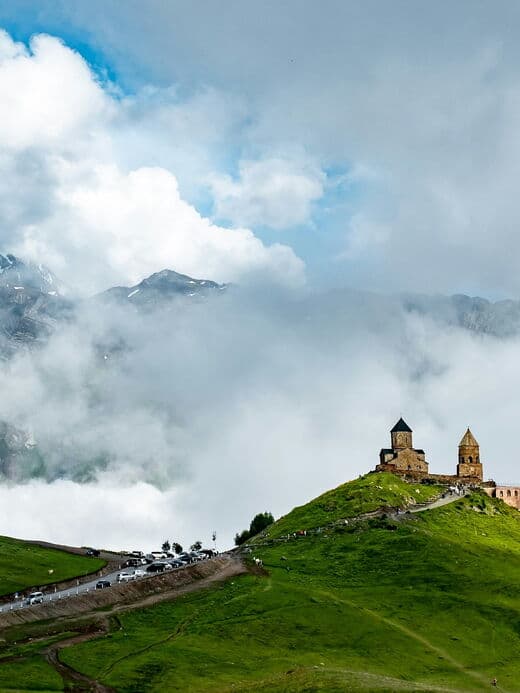
Gergeti Trinity Church has become perhaps the most photographed site in Georgia, and for good reason. This fourteenth-century church perches at 2,170 meters elevation on a ridge directly beneath Mount Kazbek's 5,054-meter summit. The silhouette of the church against the glacier-draped mountain has appeared on book covers, promotional materials, and countless Instagram feeds. You can hike to the church in approximately ninety minutes from town or hire a four-wheel-drive vehicle to cover most of the distance. The views from the church terrace on a clear day genuinely deserve the overused word "breathtaking."
Mount Kazbek itself attracts serious mountaineers attempting to summit Georgia's third-highest peak. The standard climbing route requires technical skills and proper equipment but is considered achievable for experienced climbers. For most visitors, the mountain serves as a spectacular backdrop rather than an objective, but various hiking routes offer closer approaches to the glaciers without requiring mountaineering expertise.
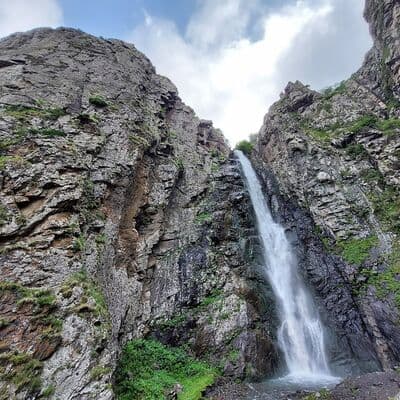
Gveleti Waterfalls, located about eight kilometers from Kazbegi town along the road toward the Russian border, provide an accessible hiking destination. The trail to the waterfall takes approximately thirty minutes each way and passes through scenic gorge terrain. Two waterfalls reward the effort, with the larger one particularly impressive during spring snowmelt or after rains. The trail can be muddy and involves some scrambling over rocks.
Along the Georgian Military Highway between Tbilisi and Kazbegi, the Russia-Georgia Friendship Monument occupies a dramatic viewpoint overlooking a deep reservoir. This Soviet-era structure features a curved wall decorated with colorful mosaics celebrating the friendship between Russian and Georgian peoples. The irony given subsequent political tensions is not lost on visitors, but the artwork remains striking and the views spectacular. Most tours and travelers stop here regardless of their opinion on Soviet aesthetics or Russian-Georgian relations.
Kakheti: Wine Country Perfected
Kakheti, Georgia's easternmost region, produces approximately seventy percent of the country's wine and offers landscapes of rolling vineyards backed by the snow-capped peaks of the Greater Caucasus. A visit to Kakheti is essential for anyone interested in wine, but the region also rewards travelers with charming towns, excellent food, and a slower pace of life than the capital.
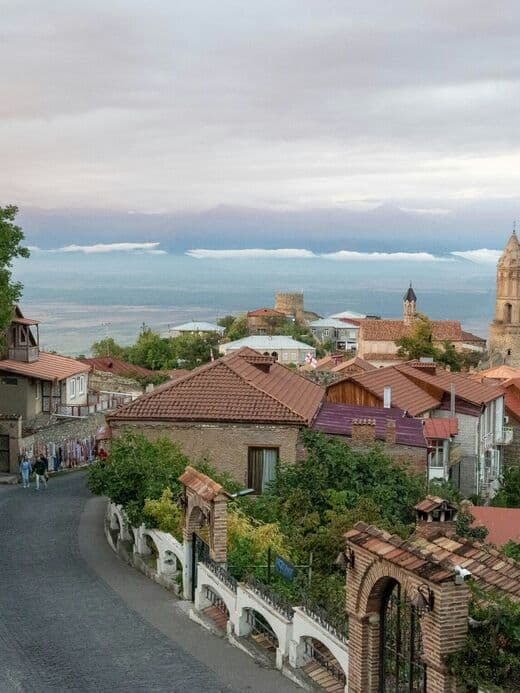
Sighnaghi serves as Kakheti's most tourist-friendly town, a hilltop settlement of cobblestone streets, restored houses, and an eighteenth-century defensive wall that you can walk for impressive views. The town has been developed specifically for tourism, which means reliable restaurants, comfortable hotels, and English-speaking services, but it has avoided becoming entirely artificial. The views across the Alazani Valley to the distant mountains are spectacular, particularly at sunset.
Near Sighnaghi, Bodbe Monastery holds the grave of Saint Nino, who converted Georgia to Christianity in the fourth century. The monastery complex includes churches, gardens, and a healing spring that requires a steep hike down and back up. The site remains active as a convent, and visitors can observe the religious life continuing alongside tourism. The grounds offer beautiful views and a peaceful atmosphere.
Wine tasting in Kakheti ranges from formal experiences at large wineries to informal sessions in family cellars where the winemaker himself pours from clay qvevri buried in the floor. Numerous wineries welcome visitors for tours and tastings, often including food pairings and demonstrations of traditional winemaking techniques. The amber wines made by extended skin contact have gained international attention, but you will also find excellent examples of more conventional styles. Many visitors hire drivers or join tours to sample multiple wineries safely.
Borjomi: Mineral Water and Medieval Cave Cities
Borjomi, a small town in south-central Georgia, is famous throughout the former Soviet world for its mineral water, which has been bottled commercially since the 1890s. The town sits in a forested gorge and serves as a gateway to both natural springs and some of Georgia's most impressive historical sites.
Borjomi Central Park follows a narrow valley upstream from the town center, offering pleasant walking paths, amusement rides, swimming pools, and the source spring where you can fill bottles with fresh mineral water at no charge. The water has a distinctive mineral taste that takes some adjustment. A cable car rises from the park to a hilltop offering panoramic views. The park is popular with Georgian families and provides a relaxed atmosphere distinct from the country's more dramatic attractions.
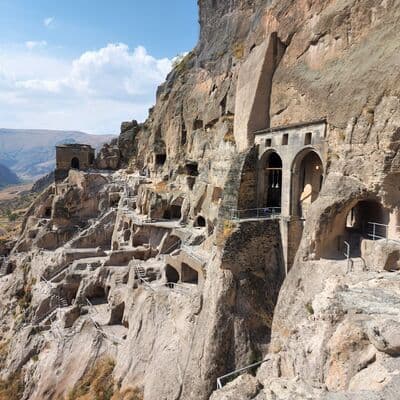
Two hours from Borjomi, Vardzia represents one of Georgia's most remarkable historical sites: a cave monastery complex carved into a cliff face, originally containing over six thousand rooms spread across thirteen levels. Built in the twelfth century under Queen Tamar, the complex served as a monastery, fortress, and city. Earthquakes have destroyed much of the original structure, but several hundred caves remain accessible, including a main church with original frescoes. Walking through the interconnected chambers, climbing rock-carved staircases, and emerging onto terraces overlooking the valley creates an experience unlike standard historical tourism.
Svaneti: Towers and Tradition in Europe's Highest Village
Svaneti, in Georgia's mountainous northwest, has long held a special place in the country's imagination. Geographic isolation preserved traditions and language variations found nowhere else in Georgia, while the famous defensive towers that dot the landscape speak to centuries of resistance against invaders. Improved roads have made Svaneti more accessible in recent years, but the region retains genuine remoteness.
Mestia, the regional capital at 1,500 meters elevation, serves as the base for exploring Svaneti. The town contains examples of the distinctive Svan towers, a museum with remarkable medieval religious artifacts, and the infrastructure necessary for tourists including hotels, restaurants, and guide services. A new airport receives flights from Tbilisi when weather permits, though road travel remains more reliable. The town itself rewards exploration, and the surrounding valleys offer numerous hiking options.
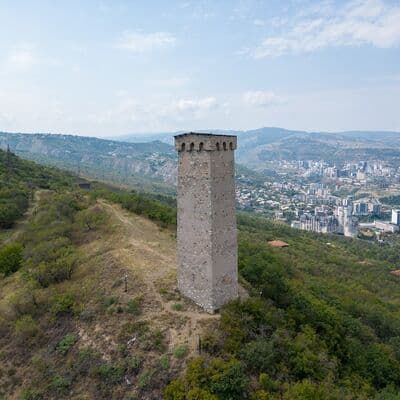
The Svan Towers that define Svaneti's visual character date primarily from the ninth through thirteenth centuries. These stone towers, typically standing twenty to twenty-five meters tall, served both defensive and residential purposes. Families could retreat to their towers during attacks, and the structures also stored valuables and provisions. Many towers remain in family hands, and some have been opened to visitors for small fees. The largest concentration appears in the village of Ushguli, which claims status as the highest continuously inhabited settlement in Europe.
For trekkers, the Chalaadi Glacier offers one of the most accessible glacier approaches in the Caucasus. The hike from Mestia takes approximately three hours each way, crossing rivers on suspension bridges and climbing through forests before reaching the ice. The glacier has retreated significantly in recent decades, a visible reminder of climate change, but remains impressive. This hike works as a day trip from Mestia and requires no technical skills, though proper footwear and weather preparation are essential.
Unique Features: Understanding Georgian Wine Culture
Georgia's claim to eight thousand years of continuous winemaking is not marketing hyperbole but archaeological fact. The oldest known wine production facilities have been found in Georgia, and the country's traditional methods have continued essentially unchanged for millennia. Understanding Georgian wine culture enhances your visit immeasurably, whether you consider yourself a wine enthusiast or barely know the difference between red and white.
The Qvevri: Wine's Ancient Vessel
The qvevri is a large clay vessel, egg-shaped and ranging from tens to thousands of liters in capacity, used for fermenting and aging wine. These vessels are buried underground up to their necks, allowing the surrounding earth to regulate temperature naturally. Grapes go into the qvevri with skins, seeds, and sometimes stems, and the wine ferments through contact with the clay walls. After fermentation, the vessel is sealed with a stone or wooden lid and beeswax, and the wine ages for months or years.
UNESCO recognized qvevri winemaking as intangible cultural heritage in 2013, and the technique has gained international attention among natural wine enthusiasts. The interaction between wine and clay produces characteristics impossible to achieve in stainless steel or oak. Wines often show notes of dried fruit, tea, and subtle earthiness. The extended skin contact during fermentation concentrates tannins even in white wines, producing the amber color that has become Georgia's signature style.
Visiting a traditional winery where qvevri are still used provides insight that no wine shop tasting can match. Many family operations welcome visitors, opening their cellars (called marani) to show the buried vessels and explain techniques passed down through generations. The winemaker might use a long bamboo paddle to retrieve samples from the qvevri's depth, offering tastes directly from vessels that have been producing wine longer than your country has existed.
Georgian Grape Varieties You Should Know
Georgia cultivates over five hundred indigenous grape varieties, though approximately forty see regular commercial use. Several deserve particular attention:
Rkatsiteli is the most planted white variety, producing wines ranging from crisp and citrusy (in modern style) to deep amber with dried fruit and tea notes (in qvevri method). The grape's versatility makes it a good introduction to Georgian white wines.
Kisi produces intensely aromatic wines with tropical and stone fruit notes. Extended skin contact enhances these aromatics while adding structure. Kisi has become particularly popular among natural wine producers.
Mtsvane contributes freshness and acidity, often blended with Rkatsiteli but increasingly bottled as a single variety. The name means "green" in Georgian, referring to the grape's color.
Saperavi is Georgia's flagship red grape, producing deeply colored wines with notes of dark fruit, earth, and spice. The variety is notable for having red flesh as well as red skin, intensifying color extraction. Age-worthy examples from Kakheti can rival fine wines from anywhere in the world.
Aleksandrouli and Mujuretuli are the grapes behind Khvanchkara, a naturally semi-sweet red wine that became Stalin's favorite and remains popular today. The sweetness results from interrupting fermentation rather than adding sugar.
Wine Regions Beyond Kakheti
While Kakheti dominates Georgian wine production, other regions deserve attention:
Kartli, the region surrounding Tbilisi, produces lighter wines including the base for Georgian brandy. The region's history includes some of the country's oldest winemaking sites.
Imereti, in central-western Georgia, uses slightly different qvevri techniques, often fermenting white wines with less skin contact than eastern methods. The resulting wines tend toward lighter amber colors and fresher flavors.
Racha-Lechkhumi, the mountainous northwest, produces the celebrated Khvanchkara and Tvishi semi-sweet wines. The region's cooler climate and specific soil conditions create characteristics impossible to replicate elsewhere.
The Georgian Supra: More Than Just a Meal
The supra is Georgia's traditional feast, an institution that combines eating, drinking, toasting, and social bonding into an experience that defies simple description. A proper supra includes a tamada (toastmaster) who leads a sequence of toasts addressing themes from gratitude to ancestors to absent friends to the health of guests. Each toast requires drinking wine, traditionally draining a horn, and the succession of toasts means consumption adds up quickly.
The supra represents Georgian hospitality at its most concentrated. Declining food is impossible; more dishes appear as previous ones empty. Refusing wine invokes gentle but persistent pressure. The emotional intensity of toasts can move participants to tears, particularly those addressing departed loved ones or expressing gratitude for friendship. Visitors invited to supras often describe them as among the most meaningful experiences of their travels.
For casual visitors, experiencing a full traditional supra requires either an invitation to a local home or attendance at a special event. Some restaurants offer modified supra experiences for tourists, which provide a taste of the format without the overwhelming duration and consumption of authentic versions. Even these abbreviated experiences convey something of the institution's warmth and significance.
Wine Tasting Etiquette
Visiting Georgian wineries requires some awareness of local customs. When tasting qvevri wines, expect to be offered food alongside the wine; refusing creates awkwardness. Georgian tastings often proceed through multiple wines with increasing generosity of pours. Spitting wine, standard practice in professional tastings elsewhere, is uncommon and can seem disrespectful in traditional settings. Pacing yourself is wise but difficult.
Tasting fees vary widely. Large commercial wineries may charge set prices for structured tastings. Family cellars often offer complimentary tastings with the expectation that visitors will purchase bottles or leave tips. Prices for bottles at the source typically run five to twenty dollars for excellent wines, representing remarkable value by international standards.
If invited to drink from a horn (kantsi), tradition requires draining it completely before setting it down, as horns cannot stand upright. This tradition originated practically but has become ceremonial. Most tastings use glasses rather than horns, but special occasions may include horn drinking. The capacity of traditional horns varies from manageable to alarming.
Chacha: Georgia's Grape Spirit
Chacha is pomace brandy made from the grape material remaining after pressing for wine. Quality ranges from rough homemade versions that could strip paint to smooth, aged examples that rival fine grappa. The spirit typically contains forty to sixty-five percent alcohol, though homemade versions sometimes exceed this range.
Georgians often serve chacha as a welcome drink, a digestive, or a cure for everything from colds to heartbreak. The spirit appears at supras and family gatherings. Refusing chacha can be difficult, but locals will generally accept excuses involving health, driving, or religious prohibition.
Commercial chacha has improved dramatically in recent years, with some producers aging the spirit in oak barrels or producing single-variety bottlings. These refined versions make excellent souvenirs for spirits enthusiasts and demonstrate that chacha can be more than just firewater.
When to Visit: Seasons and Timing
Georgia's geography creates varied climatic conditions across its regions, meaning the best time to visit depends partly on your planned activities. Understanding seasonal patterns will help you plan a trip that matches your priorities.
Spring (April to June)
Spring brings moderate temperatures, blooming landscapes, and manageable tourist numbers. Tbilisi temperatures typically range from fifty to seventy-five degrees Fahrenheit (ten to twenty-four Celsius). Mountain regions remain cold into May, with some high passes staying closed until June. The wine regions look particularly beautiful as vineyards leaf out. Spring rainfall is possible but rarely persistent. This period works well for visitors wanting to combine lowland exploration with early mountain hiking.
Summer (July to September)
Summer is peak tourist season, bringing hot temperatures to lowland areas (regularly exceeding ninety degrees Fahrenheit in Tbilisi) but opening the high mountains for trekking and adventure activities. Svaneti and Kazbegi are most accessible during this period, with all hiking routes open and mountain weather at its most stable. Beach towns like Batumi fill with domestic and regional tourists. Wine harvest typically begins in September, offering special experiences in Kakheti for visitors who time their trips appropriately. Accommodations fill up, particularly in popular destinations, and advance booking becomes advisable.
Autumn (October to November)
Autumn provides perhaps the ideal conditions for many visitors: comfortable temperatures, harvest season in full swing, fall colors in the mountains, and diminishing crowds. October is prime time for wine tourism, with many wineries welcoming visitors to participate in grape picking and processing. Mountain weather becomes less predictable, and snow can close high passes by November. The combination of wine harvest, pleasant weather, and reduced tourism pressure makes autumn highly recommended for general touring.
Winter (December to March)
Winter brings cold temperatures and snow to much of the country, transforming Georgia into a ski destination. Ski resorts at Gudauri and Bakuriani offer slopes at prices far below European Alps equivalents. Tbilisi remains accessible year-round, and winter festivals add cultural interest. Mountain villages become difficult or impossible to reach, and some guesthouses close for the season. Winter works for visitors focused on skiing, urban exploration, or wine tourism, but limits outdoor adventure options.
Georgian Holidays and Events
Several holidays affect travel planning. Orthodox Christmas (January 7) and Easter (date varies, typically April) bring closures and family gatherings. May 26 Independence Day sees parades and celebrations. August 28 Mariamoba (Assumption) triggers pilgrimages and religious observances. The Tbilisi International Film Festival in December and Batumi Summer Festival in July attract cultural tourists. Wine festivals in October coincide with harvest season in Kakheti.
How to Get There: Flights and Overland Options
Georgia has become increasingly accessible to international travelers, with expanding flight connections and established overland routes from neighboring countries.
Flying to Georgia
Tbilisi International Airport serves as the primary gateway, with direct flights from major European hubs including London, Paris, Frankfurt, Amsterdam, Vienna, and Warsaw. No direct flights connect the United States to Georgia; American travelers typically route through European hub cities or Istanbul. Turkish Airlines, LOT Polish, and Lufthansa provide efficient connections. Budget carriers including Wizz Air serve Kutaisi airport from various European cities, offering cost savings for flexible travelers.
Flight times from London average approximately four hours; from New York via connection, expect twelve to sixteen hours depending on routing. Seasonal variations in schedules exist, with summer bringing additional routes and frequencies.
Batumi airport primarily serves regional and Russian destinations, though some international connections operate seasonally. The new Mestia airport in Svaneti accepts small aircraft from Tbilisi when weather permits but is not a practical entry point for international travelers.
Visa Requirements for English-Speaking Countries
Citizens of the United States, United Kingdom, Canada, Australia, New Zealand, and European Union countries may enter Georgia without a visa and stay for up to one year. No advance paperwork is required; simply present your passport at immigration. The passport must have at least six months remaining validity beyond your planned departure date. Entry stamps are placed on arrival, and no exit procedures require special preparation.
For American citizens: Georgia does not require ESTA or any equivalent system. The one-year stay allowance provides exceptional flexibility for travelers considering extended visits, though those working remotely should investigate tax implications.
Overland Entry Points
Georgia shares land borders with Turkey, Armenia, Azerbaijan, and Russia, though the Russian borders present complications related to disputed territories.
The Turkey border at Sarpi (near Batumi) is busy but straightforward, with regular bus connections between Istanbul and Tbilisi. The crossing takes one to three hours depending on queues. An alternative crossing at Vale operates with less traffic.
The Armenia border at Bavra or Sadakhlo sees regular bus traffic between Yerevan and Tbilisi. The crossing is generally efficient, taking under an hour in normal conditions. Combined Georgia-Armenia itineraries are popular and practical.
The Azerbaijan border at Red Bridge allows crossings with appropriate visas (Azerbaijan requires e-visas for most nationalities). Bus connections link Tbilisi and Baku, though the journey takes eight to twelve hours.
The Russia border at Kazbegi (Upper Lars) opens periodically for foreign tourists but can close without notice due to weather or political circumstances. Travelers should not rely on this crossing without current information. The occupied territories of South Ossetia and Abkhazia have borders with Russia that Georgia does not recognize; crossing from Russia into these territories is illegal under Georgian law and can result in entry bans.
Getting Around: Transportation Within Georgia
Georgia offers various transportation options ranging from modern highways to vintage minibuses, each with distinct characteristics that suit different travel styles and destinations.
Marshrutkas: The Backbone of Georgian Transport
Marshrutkas are the minivans that connect virtually every town and village in Georgia. These vehicles depart when full rather than on fixed schedules, which means unpredictable waits but also frequent service on popular routes. Fares are cheap, typically a few dollars even for multi-hour journeys. Comfort varies from acceptable to cramped, and air conditioning is not guaranteed. Luggage goes in back compartments or on your lap.
For travelers embracing authentic local experience, marshrutkas cannot be beaten. You will share space with farmers, students, babushkas carrying mysterious packages, and occasionally livestock. Conversations happen despite language barriers. The chaos has logic once you understand it. However, travelers prioritizing comfort or schedule reliability may find marshrutkas frustrating.
Tbilisi's main stations for marshrutka departures are Didube (northwest destinations including Kazbegi), Okriba (west and Kutaisi), and Station Square (south and Kakheti). Destinations and approximate departure times are posted in Georgian, but drivers and fellow passengers will point you to the right vehicle.
Trains
Georgian Railways operates intercity trains connecting Tbilisi to Batumi, Kutaisi, Zugdidi (for Svaneti access), and other cities. Trains are slower than buses but more comfortable, with assigned seating, dining cars on longer routes, and scenic views. The overnight train to Batumi with sleeping compartments offers a classic experience. First-class fares remain remarkably affordable by Western standards.
Booking can be done online at the Georgian Railways website or at station ticket windows. The website has English functionality, though it occasionally behaves erratically. Popular routes on weekends and holidays sell out, so advance purchase is advisable.
The Tbilisi metro operates two lines useful for moving around the capital. Single rides cost fifty tetri (approximately twenty cents). The metro runs from 6 AM to midnight and is safe and efficient if not especially scenic.
Taxis and Ride-Sharing
Taxis are plentiful in cities, with Bolt and Yandex apps providing convenient hailing and upfront pricing. These apps avoid negotiation hassles and provide accountability. Fares within Tbilisi rarely exceed five dollars for typical trips. Traditional hailed taxis still operate and can work out cheaper for short hops, though agreeing prices beforehand prevents disputes.
For intercity travel, shared taxis offer a middle ground between bus discomfort and car rental expense. Drivers wait at transport hubs for enough passengers (typically four) before departing. Per-person fares run higher than buses but provide faster, more comfortable journeys. Hiring an entire taxi for yourself costs more but offers flexibility and privacy.
Car Rental
Renting a car provides maximum flexibility for exploring Georgia, particularly for reaching sites off main bus routes. International companies operate at Tbilisi airport alongside local agencies. Daily rates start around thirty to forty dollars for basic vehicles, with SUVs advisable for mountain roads. An international driving permit is technically required but not always checked; bringing one eliminates potential complications.
Georgian driving conditions deserve honest assessment. Main highways are generally good, though construction zones appear without warning. Mountain roads range from excellently paved to barely passable, sometimes alternating on the same route. Local driving style is aggressive by American or British standards; overtaking on blind curves, creative lane usage, and variable speed compliance are common. Night driving outside cities presents hazards from unlit vehicles, livestock, and pedestrians.
For travelers comfortable with adventurous driving, a rental car unlocks Georgia's hidden corners. Those preferring relaxed driving should consider hiring local drivers for mountain excursions while using rentals only for valley routes.
Tours and Guides
Organized tours range from budget group options to private luxury experiences. Day tours from Tbilisi to Mtskheta, Kazbegi, or Kakheti wine country run between thirty and eighty dollars per person depending on inclusions and group size. Multi-day tours covering broader itineraries offer convenience but limit spontaneity. Private guides can be hired through hotels or online platforms for personalized experiences.
For independent travelers, hiring a driver rather than a full guide often provides the best balance: you get transportation without driving stress, local knowledge for navigation, and flexibility to stop when something catches your interest. English-speaking drivers can be found through hotels, online groups, and recommendation. Daily rates run fifty to one hundred dollars depending on distance and vehicle type.
Cultural Code: Understanding Georgian Ways
Georgia's culture contains both familiar elements and surprising distinctions. Understanding local norms enhances your experience and shows respect for your hosts.
Hospitality and Guest Culture
Georgian hospitality is genuine and can overwhelm unprepared visitors. Invitations to homes mean abundant food, constant wine, and genuine interest in your life and origins. Hosts may seem insulted if you refuse food or drink, though polite explanations about dietary restrictions or alcohol limitations are ultimately accepted. Attempting to pay for hospitality in private homes causes discomfort; bringing gifts (wine, chocolate, flowers) provides appropriate acknowledgment.
In restaurants, attempting to split bills confuses staff accustomed to one person paying for the table. Georgians typically compete to pay rather than divide, and allowing a Georgian to host demonstrates trust and friendship. Reciprocating hospitality when possible, even through small gestures, maintains relationship balance.
Religion and Sacred Spaces
Georgia's Orthodox Christianity permeates daily life in ways that may surprise visitors from more secular societies. Churches are active worship spaces, not museums, and visitors should behave accordingly. Dress codes are enforced: women should cover their heads and wear skirts or dresses below the knee; men should wear long pants. Many churches provide wrap skirts for underprepared visitors, but carrying a scarf avoids awkwardness.
Photography inside churches varies from permitted to forbidden depending on the specific site. When in doubt, ask or observe what others do. During services, remain quiet and avoid walking in front of worshippers. Lighting candles is appropriate if done respectfully; purchasing candles at the door supports church maintenance.
Religious holidays are taken seriously. Easter remains the year's most important celebration, with midnight services, special foods, and family gatherings. The Georgian Orthodox Church follows the Julian calendar, so Christmas falls on January 7 rather than December 25.
Social Customs and Interactions
Georgians tend toward directness that can seem brusque to Americans accustomed to elaborate verbal cushioning. Questions about your marital status, children, income, and age are conversation-starters rather than invasions. Answering honestly or deflecting humorously both work; taking offense confuses your questioner.
Physical contact during conversation is normal: hand-holding between friends of any gender, arm-linking while walking, and emphatic touching to make points. Personal space standards differ from Anglo-American norms. These behaviors indicate warmth rather than boundary violations.
Toasting is taken seriously, and improvised toasts during meals are common. Being prepared with a few words about your homeland, your family, or your gratitude for Georgian hospitality makes you a better guest. Eloquence is admired, but sincerity matters more.
Gender Roles and LGBTQ+ Considerations
Georgian society remains traditional regarding gender roles, though urban centers have grown more progressive. Women travelers generally encounter respect and hospitality, though occasional unwanted attention occurs. Standard caution applies as in most countries.
LGBTQ+ travelers should be aware that Georgia's legal protections exist but social acceptance lags, particularly outside Tbilisi. Same-sex couples should exercise discretion in public spaces beyond the capital's gay-friendly venues. Pride events have attracted violent counter-protests in recent years. The situation is evolving, with younger urban Georgians generally more accepting than older or rural populations, but awareness of context is advisable.
Tipping Practices
Tipping is appreciated but not obligatory in Georgia. In restaurants, rounding up the bill or leaving five to ten percent satisfies local expectations. Service charges are sometimes included; checking the bill avoids double-tipping. Taxi drivers do not expect tips but appreciate rounding up. Hotel staff, tour guides, and spa attendants appreciate tips in line with their service quality. American-scale tipping (fifteen to twenty percent) exceeds local norms but will not cause offense.
Safety: What You Actually Need to Know
Georgia is genuinely safe for tourists, with crime rates below many popular European destinations. Understanding the actual risks rather than imagined ones helps you travel confidently.
Violent Crime
Violent crime against tourists is extremely rare. Muggings, assaults, and similar incidents occur at rates that make headlines precisely because of their rarity. Reasonable precautions (avoiding isolated areas late at night, not flashing wealth, staying aware of surroundings) apply as anywhere, but Georgia requires no special vigilance beyond common sense.
Petty Theft
Pickpocketing and bag-snatching occur at lower rates than in major Western European cities. Tourist-heavy areas warrant standard caution: front pockets for valuables, bags zipped and attended, awareness in crowded situations. Leaving belongings unattended at cafe tables is common among locals, suggesting ambient theft levels are genuinely low. Hotel room theft is uncommon but using safes for valuables remains sensible.
Scams
Tourist-targeted scams exist but are less elaborate than in some destinations. Taxi overcharging is the most common issue; using apps with upfront pricing prevents problems. Currency confusion (receiving change in worthless old currency or being shortchanged) is possible but uncommon if you familiarize yourself with Georgian lari. Romance scams targeting Western men through online dating have been reported; standard skepticism applies.
Road Safety
Traffic accidents represent the most significant safety risk for visitors. Georgian driving standards have improved but remain challenging. Pedestrians should never assume drivers will stop; crosswalks provide limited protection. As a passenger, wearing seatbelts is wise even when locals do not. If driving yourself, defensive techniques and accepting that overtaking maneuvers will alarm you help manage stress.
Natural Hazards
Mountain activities carry inherent risks that proper preparation minimizes. Weather changes rapidly at altitude; carrying layers and rain protection prevents hypothermia even in summer. Trails are not always marked to Western standards; offline maps and GPS are advisable for independent hiking. River crossings can become dangerous after rain. Hiring local guides for unfamiliar terrain is money well spent.
Stray dogs are common throughout Georgia and occasionally form territorial packs. Most are harmless if not provoked, but maintaining distance from aggressive-seeming animals is sensible. Rabies exists in the country, and any bite should receive immediate medical attention.
Conflict Zones
The regions of South Ossetia and Abkhazia remain under Russian military occupation and outside Georgian government control. Travel to these areas is illegal under Georgian law, and crossing from Georgia is impossible at controlled boundary lines. Attempting to enter from Russia is technically possible but legally problematic and can result in entry bans to Georgia proper. These areas are not accessible for normal tourism and should be avoided.
Political Stability
Georgia has experienced political protests in recent years, particularly in Tbilisi. These gatherings have occasionally turned violent but typically involve specific locations announced in advance. Avoiding protest areas during demonstrations is prudent. The political situation does not affect general tourist safety or daily life in most of the country.
Health: Medical Considerations for Travelers
Georgia presents no unusual health risks for travelers, and medical care in cities meets acceptable standards. Basic preparation ensures minor issues stay minor.
Vaccinations
No vaccinations are required for entry to Georgia. Standard recommendations for travel include being current on routine vaccinations (measles-mumps-rubella, diphtheria-tetanus-pertussis, varicella, polio, flu). Hepatitis A vaccination is recommended for all travelers. Hepatitis B is advisable for longer stays or those with risk factors. Rabies pre-exposure vaccination may be considered for travelers spending significant time in rural areas or working with animals.
Water and Food Safety
Tap water in Tbilisi and major cities is generally safe to drink, though some travelers prefer bottled water for taste reasons or stomach adjustment. In rural areas, bottled water is advisable. Food safety standards in restaurants are generally acceptable, and stomach issues occur no more frequently than in other European countries. Street food is popular and generally safe if served hot.
Medical Care
Tbilisi has several hospitals and clinics providing Western-standard care, including English-speaking staff. The MediClub and Evex hospitals are frequently recommended for tourists. Outside major cities, medical facilities are more limited, and serious issues may require evacuation to Tbilisi. Travel insurance with medical evacuation coverage is strongly advisable.
Pharmacies are plentiful and stock common medications, often without prescription requirements that would apply in the US or UK. Bringing adequate supplies of prescription medications with original containers and doctor's letters prevents complications.
Altitude Considerations
Mountain regions reach elevations where altitude sickness is possible. Kazbegi sits at 1,740 meters, and hiking trails go considerably higher. Symptoms including headache, nausea, and fatigue indicate the need to descend. Gradual acclimatization, adequate hydration, and limiting alcohol help prevent issues. Those with cardiovascular or respiratory conditions should consult physicians before high-altitude activities.
Money: Currency, Costs, and Financial Practicalities
Georgia uses the Georgian lari (GEL), with exchange rates typically around 2.5-2.7 lari to one US dollar (rates fluctuate, so check current values). Understanding the financial landscape helps you budget accurately and avoid unnecessary fees.
Currency and Exchange
Currency exchange offices are abundant in cities and typically offer fair rates without commission. Banks also exchange currency during business hours. Avoid exchanging at airports where rates are poor. US dollars and euros are equally accepted for exchange; British pounds and other currencies may find fewer options. Bringing some cash in dollars or euros provides backup but should not be your primary funding source.
ATMs and Cards
ATMs are widespread in cities and towns, accepting international cards from Visa, Mastercard, and major networks. Withdrawal limits typically range from 500 to 1,500 lari per transaction. Some ATMs charge fees of two to five lari; others are fee-free. Your home bank may charge additional fees, so checking policies before travel is advisable.
Card acceptance has expanded dramatically in recent years. Hotels, restaurants, supermarkets, and tourist attractions in cities generally accept cards. Small shops, rural areas, marshrutkas, and market vendors remain cash-dependent. Carrying sufficient lari for daily expenses while keeping larger amounts on cards provides appropriate flexibility.
Budgeting: What Things Cost
Georgia offers excellent value across all budget levels. Here are representative costs to help your planning:
Accommodation: Hostel dorms start at ten to fifteen dollars. Budget guesthouses run fifteen to thirty dollars for private rooms. Mid-range hotels cost forty to eighty dollars. Boutique and luxury options run one hundred to three hundred dollars, providing quality that would cost far more in Western Europe.
Food: Street food and bakery items cost one to three dollars. Casual restaurants serve full meals for five to ten dollars. Mid-range dining with wine runs fifteen to thirty dollars per person. Fine dining rarely exceeds fifty dollars per person even with premium wine.
Transportation: Tbilisi metro rides cost twenty cents. Marshrutkas run two to ten dollars depending on distance. Train tickets range from five to twenty-five dollars for intercity routes. Taxis within Tbilisi rarely exceed five dollars.
Activities: Museum entry fees typically run two to ten dollars. Wine tastings range from free to twenty dollars. Day tours cost thirty to one hundred dollars depending on inclusions. Paragliding and adventure activities run fifty to one hundred fifty dollars.
Daily budgets: Backpackers can manage on thirty to fifty dollars daily with shared accommodations, street food, and public transport. Comfortable mid-range travel runs seventy-five to one hundred twenty-five dollars daily. Luxury travelers spending two hundred to four hundred dollars daily access the country's finest offerings.
Tipping Culture
As noted in the cultural section, tipping expectations are modest. Rounding up bills or adding five to ten percent in restaurants is appreciated but not obligatory. Service staff salaries do not depend on tips as heavily as in the United States. Generous tipping is welcome but does not change service quality the way American travelers might expect.
Itineraries: Making the Most of Your Time
Georgia's compact size allows efficient travel, but attempting too much creates rushed experiences. These itineraries balance ambition with realism, offering frameworks you can customize to your interests.
Seven Days: Essential Georgia
One week provides enough time to experience Georgia's highlights without exhausting yourself. This itinerary covers the must-see destinations while allowing moments for spontaneous exploration.
Days 1-2: Tbilisi
Arrive and acclimate to Georgian rhythms. On your first full day, explore Old Town on foot, wandering through narrow streets past traditional balconied houses. Visit the sulfur baths for an authentic Georgian wellness experience. Climb or cable car to Narikala Fortress for panoramic city views. End the day in a traditional restaurant trying khachapuri and khinkali for the first of many times.
Day two expands your Tbilisi exploration: the Dry Bridge Flea Market for Soviet curiosities and local interaction, the Bridge of Peace and modern architecture along the river, the Holy Trinity Cathedral for religious grandeur. Evening in Fabrika or another contemporary venue provides contrast with historical sights.
Day 3: Mtskheta and Jvari
Day trip to Georgia's spiritual heartland. Start at Jvari Monastery for morning light on the iconic hilltop church. Descend to Mtskheta for Svetitskhoveli Cathedral and Samtavro Monastery. This half-day trip allows afternoon return to Tbilisi or optional stops at nearby wineries.
Day 4: Kazbegi
Early departure for the Georgian Military Highway, stopping at Friendship Monument for views and Soviet-era mosaics. Arrive in Kazbegi and hike or drive to Gergeti Trinity Church for the quintessential Georgian photograph. If time and energy permit, extend to Gveleti Waterfalls. Overnight in Kazbegi allows evening mountain atmosphere.
Day 5: Kakheti Wine Region
Return from Kazbegi via Tbilisi (or hire a driver to go directly) to Kakheti wine country. Visit traditional wineries for qvevri wine tasting and Georgian hospitality. Explore charming Sighnaghi with its defensive walls and valley views. Visit Bodbe Monastery and Saint Nino's grave. Overnight in Sighnaghi provides small-town tranquility.
Days 6-7: Tbilisi Departure
Return to Tbilisi with time for missed attractions, shopping for souvenirs (wine, churchkhela candy, ceramics), or simply absorbing cafe culture before departure. Depending on flight timing, Mtatsminda Park and funicular offer final city views.
Ten Days: Adding Depth
Three additional days allow either deeper exploration of included destinations or adding new regions. Two recommended approaches:
Option A: Add Western Georgia
Include two nights in Kutaisi region. Visit Gelati Monastery for UNESCO World Heritage significance, Martvili Canyon for boat rides through emerald waters, and Prometheus Cave for underground spectacle. This western detour works well between Tbilisi and eventual departure from Kutaisi airport, or as a loop returning to the capital.
Option B: Extend Mountain Time
Add two nights in Kazbegi for proper hiking exploration. Day hikes toward Mount Kazbek glaciers, valley walks, and evenings watching sunset on the peaks reward slower pacing. This option suits adventure-focused travelers willing to trade breadth for depth.
Fourteen Days: Comprehensive Journey
Two weeks allows a thorough Georgia experience without rushing. This itinerary includes most major regions while maintaining sustainable travel pace.
Days 1-3: Tbilisi
Three days provides time for thorough city exploration beyond highlights. Add day trips to nearby attractions, explore neighborhoods beyond Old Town, attend cultural performances, and develop favorite restaurants and cafes.
Day 4: Mtskheta
Full day for Mtskheta allows unhurried exploration of all major sites plus lesser-known corners. Optional overnight provides evening atmosphere after day-trippers depart.
Days 5-6: Kazbegi
Two nights in Kazbegi permits the essential Gergeti hike plus additional trails. Watch weather forecasts and be flexible about which day to target clear mountain views.
Days 7-8: Kakheti
Two nights in wine country allows thorough wine exploration without drinking and driving concerns. Split between large commercial wineries and family cellars for varied experiences. Evening in Sighnaghi includes sunset views from town walls.
Days 9-10: Kutaisi Region
Two nights in Kutaisi area covers major monasteries, Martvili Canyon, and Prometheus Cave. Gelati and Bagrati warrant unhurried visits.
Days 11-12: Batumi
Two nights in Batumi provides beach time, boulevard strolling, botanical garden exploration, and architectural oddity appreciation. The Alphabetic Tower and Piazza represent the city's distinctive character.
Days 13-14: Return to Tbilisi
Travel day from Batumi (train recommended for scenery) plus final Tbilisi time. Shop, revisit favorites, try restaurants you missed, and prepare for departure.
Twenty-One Days: The Complete Experience
Three weeks allows everything above plus the crown jewel of Georgian travel: Svaneti. This remote mountain region requires commitment but rewards with unmatched experiences.
Days 1-4: Tbilisi
Extended capital time allows day trips, cultural immersion, and relaxed pace.
Day 5: Mtskheta
Thorough exploration of ancient spiritual capital.
Days 6-7: Kazbegi
Mountain highlights including Gergeti and Kazbek approach hikes.
Days 8-10: Kakheti
Three nights allows comprehensive wine region exploration including smaller villages beyond Sighnaghi.
Days 11-12: Kutaisi Region
Western Georgia attractions centered on Kutaisi.
Days 13-16: Svaneti
Four nights in Svaneti allows proper exploration: Mestia town and museum, tower visits, the Chalaadi Glacier hike, and the stunning drive or multi-day trek to Ushguli village. This region cannot be rushed.
Days 17-18: Batumi
Black Sea coast relaxation and botanical garden.
Days 19-20: Borjomi Region
Add Borjomi mineral springs and the remarkable Vardzia cave monastery, both manageable from Kutaisi or as a route back to Tbilisi.
Day 21: Tbilisi Departure
Final shopping, favorite meal, departure.
Connectivity: Staying Connected While Traveling
Staying connected in Georgia presents few challenges, with reliable infrastructure and affordable options for both mobile and wifi needs.
Mobile Networks and SIM Cards
Georgian mobile networks provide good coverage in populated areas and along major routes. The three main operators are Magti, Silknet (formerly Geocell), and Beeline. All offer prepaid SIM cards that tourists can purchase with passport identification. Prices are remarkably low: tourist packages with several gigabytes of data and call allowances cost five to ten dollars and last one to two weeks.
SIM cards are available at operator shops throughout cities and at airports. Setup is quick, typically taking ten minutes including registration. Coverage in mountain regions varies; Svaneti and remote Kazbegi areas may have spotty service. Downloading offline maps before mountain excursions prevents navigation issues.
WiFi Availability
WiFi is widespread and generally reliable. Hotels and guesthouses almost universally offer free wifi, though speeds vary from excellent in modern hotels to functional in rural guesthouses. Restaurants and cafes in cities typically provide free wifi with purchase. Tbilisi has excellent coverage, with reliable connections even in parks and public spaces.
Digital nomads have made Georgia a popular base, drawn by the one-year visa-free stay and affordable living costs. Coworking spaces in Tbilisi offer dedicated work environments with strong connections. Fabrika and similar venues combine work facilities with social atmosphere.
Useful Apps
Several apps enhance Georgia travel. Bolt and Yandex provide reliable taxi services. Google Maps works well for navigation and public transport routing. Maps.me offers reliable offline maps for areas without connectivity. Google Translate helps with Georgian, which uses a unique script. Currency converter apps assist with lari calculations.
Food: A Deep Dive into Georgian Cuisine
Georgian cuisine deserves far more international recognition than it currently receives. Complex, flavorful, and deeply tied to regional traditions, the food will become a highlight of your trip. Understanding what to order and how to eat it enhances the experience.
Essential Dishes You Must Try
Khachapuri encompasses a family of cheese-filled breads varying by region. The most famous is Adjarian khachapuri, a boat-shaped bread filled with molten cheese, topped with butter and a raw egg that you stir into the hot cheese before tearing off pieces of bread to scoop it. Imeruli khachapuri is a round flatbread stuffed with cheese. Megruli adds cheese on top as well as inside. Each region claims its version is best, and trying several allows you to form your own opinion. The dish is rich, satisfying, and meant for sharing despite temptations to order one each.
Khinkali are soup dumplings that require technique to eat properly. These twisted-top parcels contain meat (traditionally spiced beef and pork) swimming in broth. The eating method: hold by the top knot, take a small bite from the side, suck out the broth, then eat the rest of the dumpling. The top knot is traditionally discarded (providing a count of how many you have eaten). Burning your mouth or losing broth down your chin indicates insufficient technique; practice makes perfect. Regional variations include cheese-filled or mushroom versions for vegetarians.
Pkhali represents Georgia's vegetable tradition at its finest: finely chopped vegetables (spinach, beetroot, eggplant) mixed with walnut paste, garlic, and herbs, formed into balls and typically topped with pomegranate seeds. Each vegetable creates distinct flavor profiles, and orders typically arrive with several varieties. The dish demonstrates that Georgian cuisine is not all meat and cheese.
Badrijani nigvzit involves sliced eggplant rolled around walnut paste similar to pkhali, creating one of the most popular cold starters. The combination of smoky eggplant and creamy spiced walnut filling is addictive.
Mtsvadi is Georgian shashlik: skewered pork, beef, or lamb grilled over wood coals. The meat is often marinated in wine, pomegranate juice, or simply salt, with quality depending on the meat itself and the grill master's skill. Accompaniments typically include raw onions, fresh herbs, and tkemali (sour plum sauce).
Chashushuli is a slow-cooked meat stew, typically veal or beef, in a rich tomato-based sauce with onions and spices. The dish exemplifies Georgian comfort food: warming, flavorful, meant for cold days or soul restoration.
Lobio is Georgian bean stew, cooked in clay pots with herbs and spices until thick and satisfying. Regional variations exist, but the basics involve kidney beans, onions, coriander, and vinegar. Often served with mchadi (cornbread), lobio represents peasant food elevated to art.
Ostri is a spicy beef stew that demonstrates Georgian cuisine's heat when desired. The dish includes tomatoes, hot peppers, and generous spicing that distinguishes it from milder stews.
Satsivi is chicken or turkey in creamy walnut sauce, traditionally served cold during winter holidays. The sauce involves ground walnuts, garlic, fenugreek, and other spices creating a rich, complex flavor. Finding satsivi outside winter months requires seeking traditional restaurants that maintain year-round menus.
Breads and Sides
Shotis puri is the traditional Georgian bread baked in a tone (clay oven): canoe-shaped with crispy exterior and soft interior. Bakeries throughout cities produce fresh bread throughout the day, and eating it warm from the oven represents simple perfection.
Mchadi is cornbread served alongside bean dishes and stews. The dense, slightly sweet bread soaks up sauces and provides starch balance.
Churchkhela is the Georgian candy that looks like candles: walnuts or hazelnuts strung on thread and coated repeatedly in thickened grape juice. The resulting "Georgian Snickers" provides portable, energy-dense snacking and makes excellent souvenirs. Quality varies widely; market sampling before purchasing helps identify good versions.
Vegetarian Options
Despite meat's prominence, Georgian cuisine accommodates vegetarians better than most Caucasian or Eastern European traditions. Pkhali, badrijani, lobio, and cheese dishes provide substantial options. Many restaurants offer vegetarian variations of traditional dishes. The challenge is variety: while initial meals delight, limited options may fatigue vegetarians on longer trips. Vegan travelers face more difficulty, as cheese and dairy permeate the cuisine. Communicating dietary restrictions clearly and accepting that options may be limited helps manage expectations.
Restaurant Culture
Georgian meals are communal affairs with shared dishes rather than individual portions. Tables fill with numerous plates that everyone samples. This style works wonderfully for groups but can challenge solo travelers who want variety without overwhelming quantity. Some restaurants accommodate smaller portions for singles; asking is worthwhile.
Meal timing follows southern European patterns rather than American schedules. Lunch is substantial, typically between 1 and 3 PM. Dinner begins late by American standards, with 8 or 9 PM reservations normal and restaurants remaining lively until midnight or beyond. Breakfast options have expanded with tourism but remain limited compared to other meals.
Service pace is leisurely by American standards. Rushing through meals contradicts Georgian dining culture, and waitstaff will not pressure you to free up tables. Flagging down service for the check may require persistence; the assumption is that you are enjoying yourself and will ask when ready.
Street Food and Quick Bites
Georgian street food centers on bakeries offering fresh bread, khachapuri variations, and savory pastries called kubdari (meat-filled) or lobiani (bean-filled). These provide filling, affordable meals for travelers in motion. Fresh fruit markets offer seasonal produce at low prices. Churchkhela vendors appear at markets and tourist sites. Western fast food chains exist in cities but seem beside the point given local options.
Shopping: What to Buy and Where
Georgia offers distinctive souvenirs beyond generic tourist trinkets. Knowing what to seek and where to find quality helps you return home with meaningful items.
Wine and Spirits
Georgian wine makes the most meaningful and appreciated souvenir for wine enthusiasts back home. Quality has improved dramatically, with amber wines in particular gaining international recognition. Purchasing directly from wineries ensures authenticity and often provides better prices than retail. Wine shops in Tbilisi and other cities stock broad selections with knowledgeable staff. Packing wine in checked luggage requires protective wrapping; wine shipping services exist but add significant cost.
Chacha, the grape brandy, makes a distinctive spirits souvenir. Quality commercial chacha aged in oak offers refinement that homemade versions lack. Smaller bottles fit carry-on liquids allowances when purchased at airport duty-free.
Traditional Crafts
Georgian enamelwork (minankari) involves intricate colored designs on metal, typically jewelry or decorative items. Traditional techniques create distinctive pieces unavailable elsewhere. Quality varies from tourist junk to museum-worthy art; purchase from established galleries or workshops rather than street vendors.
Carpets and rugs from various Georgian regions display distinctive patterns. Genuine handwoven pieces command substantial prices but represent authentic cultural artifacts. Machine-made versions cost less but lack uniqueness.
Drinking horns (kantsi) range from tourist kitsch to proper ceremonial items. Quality horns are polished, food-safe lined, and balanced for actual drinking. The Dry Bridge Market offers wide selection at negotiable prices.
Ceramics include traditional serving dishes, wine pitchers, and decorative items. The rustic earthenware style suits Georgian aesthetic without appearing too refined. Pottery villages offer workshop visits and direct purchasing.
Food Items
Churchkhela makes excellent portable, non-perishable souvenirs. Vacuum-sealed packages preserve freshness for weeks. Quality varies, so tasting before bulk purchase is advisable.
Adjika (spicy pepper paste), tkemali (sour plum sauce), and other condiments allow recreating Georgian flavors at home. Jarred versions survive travel well. Airport security restrictions apply to liquids, so check sizes for carry-on.
Saffron from the Kakheti region, though not Georgian by origin, is affordable and authentic. Spice mixtures for specific dishes help home cooking attempts.
Where to Shop
The Dry Bridge Flea Market in Tbilisi remains the essential shopping destination for antiques, Soviet memorabilia, artwork, and eclectic finds. Bargaining is expected; starting at half the asking price and settling around sixty to seventy percent is typical.
Rustaveli Avenue and surrounding streets offer gallery shops, bookstores with English titles, and upscale boutiques. Prices are fixed but quality is reliable.
Wine shops throughout the country stock regional selections. Staff at dedicated wine shops (rather than general supermarkets) provide helpful guidance for confused tourists facing walls of unfamiliar labels.
Regional markets in Sighnaghi, Mestia, and other towns offer local products at reasonable prices. Supporting rural economies through direct purchasing benefits communities beyond tourism dollars spent in capitals.
Useful Apps for Georgia Travel
Several smartphone applications enhance Georgia travel, most available free and functional offline.
Bolt and Yandex Taxi provide reliable ride-hailing with upfront pricing. Both work throughout Georgia and eliminate negotiation and language barriers. Download both, as availability varies by location.
Google Maps works well for navigation and public transport routing. Download offline maps for areas you will visit to ensure functionality without connectivity.
Maps.me offers excellent offline maps with hiking trails and points of interest that Google sometimes misses. Essential for mountain trekking and rural exploration.
Google Translate includes Georgian with camera translation for signs and menus. Offline language packs allow functionality without internet.
XE Currency or similar converter apps help with lari calculations, especially useful when prices are quoted in multiple currencies.
Georgian Railways official app allows train schedule checking and ticket booking, though the website sometimes functions more reliably.
Conclusion: Why Georgia Will Exceed Your Expectations
After absorbing the practical details of visa policies, transportation options, and restaurant etiquette, you might wonder whether Georgia truly delivers experiences that justify the effort of reaching this relatively unknown destination. Let me offer final thoughts based on extensive time in this remarkable country.
Georgia exceeds expectations because it combines the exotic appeal of distant lands with the accessibility of European destinations. You will encounter a script you cannot read, a language you cannot understand, and customs that initially confuse, yet you will rarely feel lost or unwelcome. The infrastructure supports independent travel while the culture rewards those who engage beyond tourist checkboxes.
The value proposition is genuine and sustainable. Unlike destinations where budget travel requires uncomfortable compromises, Georgia offers quality at every price point. The forty-dollar hotel room is not a sacrifice; it is legitimately excellent. The five-dollar meal is not sustenance; it is a feast. This affordability extends your budget or enhances your experience, allowing splurges on wine, guides, or adventure activities that might be impossible elsewhere.
The safety is real rather than comparative. You will not spend mental energy on constant vigilance or restricted evening hours. Women travelers, solo travelers, and families report consistent positive experiences. The freedom to explore without fear changes travel fundamentally.
The hospitality is transformative for travelers from cultures where stranger interaction is unusual. Being invited to share food and wine by people you have just met, experiencing genuine interest in your life and opinions, sensing that your presence is welcomed rather than tolerated: these interactions create memories that outlast photographs.
The landscapes genuinely justify the overused word "breathtaking." Standing beneath Mount Kazbek at sunrise, watching light creep down the glacier while mist fills the valley below, understanding that you have reached a place few from your homeland have witnessed: these moments explain why some travelers build lives around seeking them.
The history provides context without requiring academic preparation. You can appreciate thousand-year-old frescoes, Soviet monuments, and contemporary art galleries on the same day, each informing understanding of the others. Georgia's layers reveal themselves to curious visitors without demanding expertise.
The wine culture offers depth for enthusiasts while remaining accessible to casual drinkers. You need not understand malolactic fermentation or tannin structure to appreciate qvevri wines; you simply need willingness to try something different and trust your own palate.
The food satisfies on multiple levels: physical hunger, culinary curiosity, cultural understanding. Each meal teaches something about Georgian life, whether the communal sharing, the seasonal ingredients, or the pride with which home cooks and restaurant chefs present their work.
Georgia is not perfect, and honest assessment acknowledges frustrations. Mountain roads can terrify. Service standards vary. Language barriers exist. Political tensions create uncertainty. Development threatens some traditional character. These realities should inform expectations without discouraging travel.
The country rewards those who arrive with appropriate expectations: not seeking polished luxury or Western conveniences, but seeking authentic experience, genuine connection, and landscapes that remind you why you travel. If those priorities match yours, Georgia will deliver beyond what you imagine.
Book your flight. Learn to pronounce "gagimarjos" (cheers) and "madloba" (thank you). Pack layers for mountain weather and appetite for endless meals. Come ready to drink wine, climb fortresses, absorb hospitality, and discover why travelers who visit Georgia speak of it with unusual affection.
The country is waiting, and it wants to show you everything.
Additional Resources and Practical Information
Before your journey, consider these additional details that may assist your planning and enhance your experience in Georgia.
Emergency Contacts
The unified emergency number in Georgia is 112, connecting to police, ambulance, and fire services. Operators increasingly speak English, particularly in Tbilisi. The tourist police can be reached at 112 with specific tourist-related concerns. Embassy contacts for your home country should be saved before travel.
Time Zone
Georgia operates on Georgia Standard Time (GET), which is UTC+4. The country does not observe daylight saving time. This means Georgia is four hours ahead of London during British winter, three hours ahead during British Summer Time, and nine hours ahead of US Eastern Time (eight hours during US daylight saving).
Electrical Standards
Georgia uses European-style Type C and Type F plugs with 220V current at 50Hz. American and British travelers need adapters; devices without voltage switching capability need converters. Most modern electronics (phones, laptops, cameras) accept 100-240V and need only adapters.
Language Basics
Georgian uses a unique alphabet that appears impenetrable but follows logical patterns. Learning a few words demonstrates respect and facilitates basic interactions:
- Gamarjoba (gah-mar-JO-ba): Hello
- Madloba (mad-LO-ba): Thank you
- Diak (dee-AKH): Yes
- Ara (AH-ra): No
- Gagimarjos (gah-gee-mar-JOS): Cheers
- Bodishi (bo-dee-SHEE): Sorry/excuse me
- Ra ghirs? (ra GHEERS): How much?
English is increasingly common among young urban Georgians but remains limited in rural areas. Russian serves as a common second language among older generations. Translation apps bridge most communication gaps.
Packing Suggestions
Georgia's varied terrain and weather require thoughtful packing:
- Layering clothing for temperature variations between valleys and mountains
- Comfortable walking shoes for cobblestones and hiking trails
- Rain jacket for unpredictable mountain weather
- Scarf or headwrap for church visits (women)
- Light long pants for modesty and sun protection
- Sunscreen and sunglasses for high-altitude UV exposure
- Small daypack for excursions
- Universal power adapter
- Basic first aid supplies
- Copies of important documents
Photography Tips
Georgia offers endless photographic opportunities with specific considerations:
Churches and monasteries vary in photography policies. Always ask before using cameras inside religious buildings. Flash photography is often prohibited regardless of general policy.
Mountain weather creates dramatic lighting but also rapid changes. Morning light on peaks typically offers best conditions. Afternoon clouds and haze are common in valleys.
Locals generally welcome photography but asking permission before close portraits shows respect. Rural areas may be more sensitive than urban environments.
Drone regulations require registration and restrict flying near government buildings, churches, and border areas. Enforcement is inconsistent but rules exist.
Responsible Tourism
Georgia's tourism industry is young and growing. Visitor behavior now shapes the industry's development:
Support local businesses rather than international chains when possible. Family guesthouses, local guides, and regional restaurants keep tourism revenue in communities.
Respect religious sites as active worship spaces. Behavior that would be inappropriate in churches at home applies equally in Georgia.
Mountain environments are fragile. Pack out all trash, stay on marked trails where they exist, and avoid disturbing wildlife.
Cultural heritage faces pressures from tourism and development. Purchasing authentic crafts from makers rather than mass-produced souvenirs supports traditional skills.
Water usage in regions like Svaneti can strain limited resources during peak season. Conserve where possible without compromising health.
Beyond This Guide
Georgia rewards extended exploration beyond any guide's coverage. The country contains countless villages, trails, churches, and experiences awaiting discovery by adventurous travelers. Use this guide as foundation, but remain open to serendipity. The best Georgian experiences often arrive unplanned: an invitation to a family meal, a trail leading somewhere unexpected, a conversation with a stranger who becomes a friend.
Return visits reward differently than first trips. Relationships deepen, language skills improve, hidden places reveal themselves. Many travelers who visit Georgia once return repeatedly, each trip uncovering new layers.
Georgia is changing rapidly. Development brings improved infrastructure but threatens traditional character. The country you visit today may differ from what exists in five or ten years. This urgency is not artificial marketing but genuine observation: experiencing Georgia now, before further transformation, offers something that later visitors may not find.
Whatever brings you to Georgia, whether wine, mountains, history, food, or simple curiosity, the country will offer more than you expected and leave you planning your return. Safe travels, and gagimarjos.