Normandy
Normandy 2026: What You Need to Know Before You Go
Normandy is one of those rare places where every field, cliff, and village street carries weight. This is not a region you breeze through for Instagram shots and move on. It is a place where you stand on a beach and realize that thousands of young men from Kansas, Yorkshire, and Manitoba charged into machine-gun fire right where you are standing. It is also a place where you eat the best camembert of your life, drink cider pressed from apples grown in orchards that have been there for centuries, and watch the tide come in so fast around Mont-Saint-Michel that it genuinely startles you.
The quick answer if you are in a hurry: Normandy offers world-class WWII history sites, dramatic coastal scenery from Etretat to the D-Day beaches, medieval towns like Rouen and Bayeux, some of France's finest cheese and cider, and Mont-Saint-Michel. You need a minimum of three days, ideally five to seven, and a rental car makes everything dramatically easier.
Who is this guide for? Whether you are an American retracing a grandfather's footsteps on Omaha Beach, a British couple looking for a long weekend across the Channel, or a family wanting a mix of history and nature, this guide gives you real, practical information: actual restaurant names, specific bus costs, and honest warnings about what does not work.
The good: Less touristy than Provence or the Riviera. Reasonable prices by French standards. Extraordinary food. Profound history presented with dignity. Genuinely beautiful coastline.
The not-so-good: Unpredictable weather even in summer. You really need a car. English is spoken at major tourist sites but rarely in villages. Everything closes on Sundays and often Mondays. The water is cold, the sky often gray. That is part of the charm, but be prepared.
Normandy's Towns: Where to Stay
Choosing a base matters more here than in most regions because distances between sites are significant and public transport is limited.
Bayeux
The most popular D-Day base, and for good reason. Bayeux was barely damaged in 1944, so you get a genuinely medieval center with a stunning cathedral. It is 15-20 minutes from Omaha Beach, Arromanches, and the Normandy American Cemetery. Hotels EUR 80-150 (USD 85-160). Good restaurants, walkable center, the famous Bayeux Tapestry. Downside: small, nothing to do after 9 PM. Best for history travelers, couples, families.
Caen
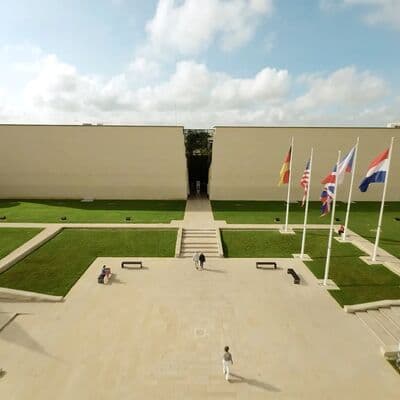
The regional capital. Heavily bombed in 1944 and rebuilt, so it lacks postcard charm but has real urban energy: university students, good restaurants, nightlife, and excellent Paris trains (2 hours). The Caen Memorial is here, one of the best WWII museums in the world. Hotels EUR 70-130. Works as a base if you want city amenities and do not mind 30-45 minutes to the beaches.
Honfleur
The prettiest harbor in Normandy. The Vieux Bassin has been painted by Monet, Boudin, and every art student who has visited France. Wonderful for an evening of moules-frites at a harbourside restaurant. But expensive (EUR 120-200/night), crowded in summer, and over an hour from D-Day sites. Best for romantic getaways and Cote Fleurie focus.
Rouen
The medieval capital and one of France's most underrated cities. Jaw-dropping Gothic cathedral, half-timbered old town, and the square where Joan of Arc burned in 1431. Easiest to reach from Paris (1h15 by train). Hotels EUR 75-140. Downside: eastern Normandy, about 2 hours from Mont-Saint-Michel or D-Day beaches. Best as a first or last stop.
Deauville and Trouville
The Norman Riviera. Deauville is upscale: elegant boardwalk, designer boutiques, the American Film Festival in September. Trouville across the river is down-to-earth: real fishing boats, fantastic fish market. Hotels EUR 80-250. Wide sandy beaches. Best for combining culture with seaside relaxation.
Granville
Charming port town on the western coast, gateway to Mont-Saint-Michel (45 minutes) and departure point for the Chausey Islands. Much less touristy, EUR 60-100 for hotels. Far from D-Day beaches (90+ minutes). Best for budget travelers prioritizing Mont-Saint-Michel.
Pontorson and Mont-Saint-Michel Area
Pontorson has affordable accommodation (EUR 50-80) near Mont-Saint-Michel. Hotels on the mount itself are EUR 150-350 and book months ahead. Staying nearby lets you see it at night when crowds vanish and the abbey glows. Nothing else to do in the area. Best as a one-night stop.
Best Time to Visit Normandy
Best: May to mid-June and September. Mild weather (15-22C / 59-72F), green countryside, no peak crowds. D-Day ceremonies around June 6 are deeply moving but bring large crowds; book months ahead. September is arguably the best single month: warm, harvest season, tourists gone home.
Good: July and August. Warmest weather (20-26C / 68-79F), but it can still rain any day. Mont-Saint-Michel gets 10,000+ daily visitors, parking fills by 10 AM, prices spike 30-50%. Go early to major sites and book everything in advance.
Shoulder: March-April and October-November. Cold and rainy but beautiful blossoms in spring, stunning autumn colors. Many sites nearly to yourself. Some museums close in November. Hotel prices drop 20-40%.
Winter: December-February. Atmospheric but challenging. Reduced hours, frequent rain, 3-8C (37-46F). You can have Mont-Saint-Michel almost alone on a January weekday. Christmas markets in Rouen and Caen. Lowest hotel prices.
Key events: D-Day commemorations (June 5-6), Deauville American Film Festival (September), Granville Carnival (February), Camembert Fair in Vimoutiers (mid-October), Route du Cidre open-door weekends in autumn.
Normandy Itinerary: 3 to 7 Days
3 Days: The Essentials
Day 1: Rouen, then Bayeux
Morning (9:00-12:00): Arrive at Rouen from Paris (train from Saint-Lazare, 7:30 departure, arrive 8:45). Walk the old town: Notre-Dame Cathedral, the Gros-Horloge astronomical clock, Place du Vieux-Marche where Joan of Arc was executed. Allow 2-3 hours.
Afternoon (12:30-17:00): Pick up a rental car near Rouen station. Drive to Bayeux (1h45 via A13). Check in, then visit the Bayeux Tapestry museum (1.5 hours, last entry 17:30). Surprisingly engaging even if medieval history is not your thing.
Evening: Dinner at La Rapiere in Bayeux old town, a beautiful 15th-century house. Mains EUR 18-28.
Day 2: D-Day Beaches
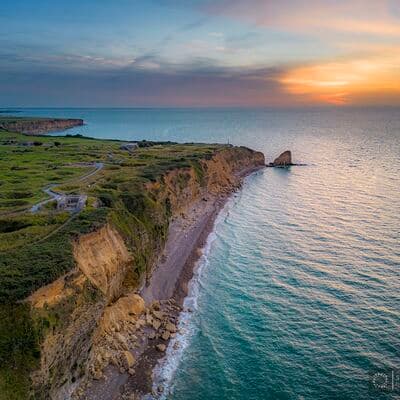
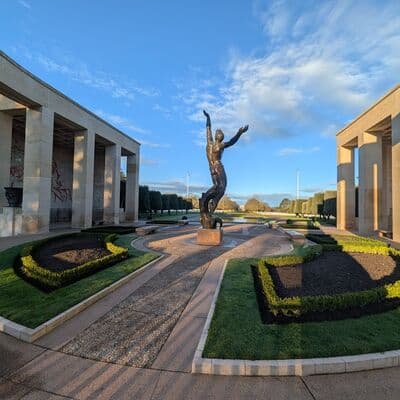
Morning (8:30-12:30): Start at Pointe du Hoc, where US Rangers scaled 30-meter cliffs under fire. The bomb craters remain (free entry, 1 hour). Then the Normandy American Cemetery above Omaha Beach. The visitor center is excellent and free. Walk among 9,387 white crosses. Allow 1.5-2 hours minimum. This is not something you rush.
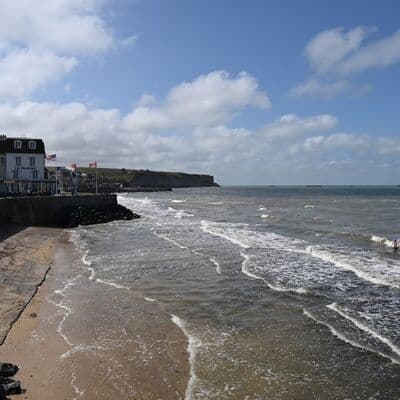
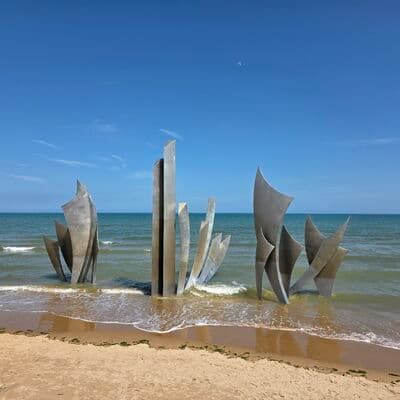
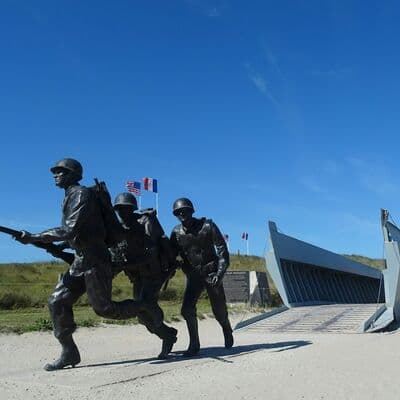
Afternoon (13:00-17:00): Walk on Omaha Beach itself and look up at those cliffs. Continue to Arromanches to see remains of the Mulberry artificial harbor (D-Day Museum EUR 9). If time allows, visit Utah Beach museum (EUR 8), 40 minutes west.
Evening: Galette complete (ham, cheese, egg) with a bowl of cider at Le Pommier in Bayeux, about EUR 12. Exactly what you want after a heavy day.
Day 3: Mont-Saint-Michel
Morning (8:00-12:00): Drive from Bayeux (1h20). Arrive early. Park at the mainland lot (EUR 14.90/day), take the free shuttle or walk 2.5 km. Explore the abbey (EUR 11, audio guide EUR 3). Best in morning light.
Afternoon (12:00-15:00): Skip La Mere Poulard's EUR 35 omelet (overrated). Try Creperie La Sirene instead. Walk the ramparts for bay views.
Afternoon/Evening: Return toward Paris. Train from Caen to Paris takes about 2 hours.
5 Days: Add the Coast and Countryside
Days 1-3: Same as above.
Day 4: Etretat and Honfleur
Morning (8:30-12:00): Drive to the Etretat Cliffs (1h45 from Bayeux). White chalk cliffs with natural arches, one of the most photographed landscapes in France. Walk the clifftop path to the Falaise d'Aval. Go early: parking fills by 11 AM in summer. Allow 2 hours.
Afternoon (13:00-17:00): Drive to Honfleur (45 min). Wander the Vieux Bassin, visit the wooden Sainte-Catherine church (built by shipwrights, no nails), browse galleries. Boudin Museum EUR 8.
Evening: Dinner at Le Breard in Honfleur, tasting menu around EUR 45. Stay the night.
Day 5: Pays d'Auge Cider Country
Morning (9:30-12:30): Drive the Route du Cidre through rolling countryside. Stop at 2-3 farms for free tastings (buy a bottle or two). Artisanal cider EUR 4-7, calvados EUR 20-40.
Afternoon (13:00-16:00): Visit the Camembert Museum. Stop at a fromagerie in Livarot to taste Camembert, Livarot, and Pont-l'Eveque. Farmhouse Camembert EUR 5-8, nothing like supermarket versions.
Evening: Sunset walk on Deauville's boardwalk (the planches). A fitting end.
7 Days: The Complete Normandy
Days 1-5: Same as above.
Day 6: Rouen Full Day
Morning (9:00-12:30): Museum of Fine Arts (free, one of France's best outside Paris), the Aitre Saint-Maclou (medieval plague cemetery, beautifully macabre), antique shops on Rue Eau de Robec.
Afternoon (13:00-17:00): Try duck a la rouennaise at a traditional bouchon. Visit the Historial Jeanne d'Arc (EUR 11). Climb the Gros-Horloge tower for panoramic views.
Evening: Rouen has the best nightlife in Normandy. Rue de la Soif ('Thirst Street') is packed with bars.
Day 7: Granville and Chausey Islands
Morning: Ferry from Granville to Iles Chausey (EUR 25 round trip, 1 hour). A tiny granite archipelago, almost unknown to tourists. No cars, pristine beaches, possibly complete solitude.
Afternoon: Walk the island (2 hours), lunch at Hotel du Fort et des Iles, return ferry.
Evening: Granville's upper town and the Christian Dior Museum (the designer grew up here).
Where to Eat in Normandy
Normandy is a food region, not a food-scene region. No trendy fusion or molecular gastronomy. Instead: extraordinary raw ingredients prepared simply. Cream, butter, cheese, apples, seafood, pork. Rich, hearty, unapologetically caloric.
Street Food and Markets
The Trouville fish market (Marche aux Poissons) is the best food experience under EUR 10: cooked shrimp (EUR 5-7), oysters opened on the spot (EUR 8-12), smoked mackerel (EUR 3-4), eaten on benches overlooking the harbor. The Bayeux Saturday market on Place Saint-Patrice is excellent for cheese and cider. Caen's Sunday market on the Orne is also worth a visit.
Creperies
Galettes (savory buckwheat crepes) are the default quick meal. A galette complete (ham, cheese, egg) costs EUR 8-12, paired with cider in a ceramic bowl (EUR 3-5). Good options: La Reine Mathilde in Bayeux, Creperie Gallo in Rouen. Quality indicator: if the menu has pizza and burgers too, walk away.
Mid-Range and Top-End
For EUR 25-45, you eat remarkably well. La Rapiere in Bayeux, Le Breard in Honfleur, L'Assiette in Caen, Les Nympheas in Rouen. Lunch 'menus' (set menus) are EUR 18-22 for two courses, much cheaper than dinner. For special occasions: A Contre Sens in Caen (Michelin star, tasting menu EUR 75), Sa.Qua.Na in Honfleur (one star, menus from EUR 85). Book 2-3 weeks ahead.
Practical Notes
Hours: Lunch 12:00-14:00, dinner 19:00-21:30. Arriving late means no service. Closed days: Sunday evening and Monday are common. Always check. Reservations: Essential for dinner above creperie level. Use TheFork app for booking with 20-30% discounts. Tipping: Service included by law. Leaving EUR 1-2 is kind but not expected. Water: 'Une carafe d'eau' gets you free tap water. Bottled water at EUR 4-6 is a tourist trap.
Must-Try Food in Normandy
The Cheeses
Camembert de Normandie AOP: The real thing, made from raw milk ('au lait cru' on the label), costs EUR 5-8 from a fromagerie or farm and is a revelation compared to supermarket versions. Livarot: Nicknamed 'The Colonel' for its five reed strips. Washed-rind, stronger than Camembert, absolutely delicious. EUR 6-9. Pont-l'Eveque: The mildest of the three. Square, creamy, subtle. EUR 5-7. Good for those who find the others too intense.
Seafood
Moules a la normande: Mussels in cider, cream, and shallots (not the Belgian white wine version). EUR 12-16 per pot. Best along the coast. Oysters: Normandy's, especially from Saint-Vaast-la-Hougue, are excellent and cheaper than Breton ones. A dozen at market EUR 8-14. No. 3 is a good all-rounder. Eat with lemon or shallot vinaigrette, never cocktail sauce.
The Apple Trinity
Cidre: Brut (dry, 5%) or doux (sweet, 2.5%). Farm bottles EUR 4-7. The Pays d'Auge AOP is best. This is not sweet commercial cider; it is complex and genuinely interesting. Calvados: Apple brandy aged in oak. Young is fiery, old (10-20 years) is extraordinary. EUR 4-8 per shot. The 'trou normand' tradition: a shot between courses to make room for more food. Pommeau: Apple juice blended with calvados, served chilled. Sweet, 17% alcohol. EUR 10-15 per bottle. Great gift to bring home.
Other Essentials
Tarte aux pommes normande: Apple tart with custard filling, EUR 4-6 per slice. Ubiquitous and almost always good. Tourist trap: La Mere Poulard's EUR 35 omelet at Mont-Saint-Michel is just whipped eggs. Any Bayeux creperie feeds you better for a quarter of the price. Vegetarians: Normandy is not easy. Cheese and egg galettes, vegetable gratins, and cheese plates are your best bets. Vegan options are very limited outside Caen and Rouen.
Normandy Secrets: Local Tips
1. Tides are serious business. Up to 15 meters of tidal range around Mont-Saint-Michel. Beaches 500 meters wide at low tide disappear entirely at high tide. People have drowned in the bay. Check maree.info before any coastal walk.
2. You need a car. D-Day beaches span 80 km. Etretat has no train station. Cider farms have no bus service. Roads are good, traffic is light outside cities, parking is often free.
3. 'Bonjour' is mandatory. Greet everyone with 'Bonjour, Madame/Monsieur' when entering any shop or restaurant. Not doing so is genuinely rude in France and will affect your service. A butchered 'Bonjour' beats launching straight into English.
4. Follow the 'Degustation' signs. Handwritten signs point to farms offering free tastings of cider, calvados, and cheese. Buy a bottle or two afterward. Farm cider EUR 5 and a Camembert for EUR 7 is the best souvenir you can bring home.
5. Buy cheese properly. Tell the fromagerie vendor when you plan to eat it: 'pour ce soir' (tonight) or 'pour demain' (tomorrow). They will pick one at perfect ripeness. A properly ripened Camembert bulges slightly when pressed.
6. Closed means closed. Sunday afternoon and Monday are dead in most towns. Supermarkets close by 12:30-13:00 on Sundays. Boulangeries are often the only thing open Sunday afternoon (and closed Monday).
7. D-Day is better with a guide. Guided tours (EUR 80-120/person full day, private EUR 400-600) provide context that transforms the experience. Overlord Tours and Band of Brothers Tours are both excellent. Book a week ahead in summer.
8. Visit Etretat early or late. Before 9 AM or after 5 PM. Late afternoon light on the cliffs is spectacular, and you might have viewpoints to yourself.
9. A picnic is the best lunch. Baguette (EUR 1-1.50), cheese, charcuterie, a bottle of cider, fruit. Eat on a clifftop or D-Day beach. Cheaper, faster, and often more enjoyable than a sit-down lunch.
10. Bring a raincoat, not an umbrella. Light rain and drizzle, not downpours. A waterproof jacket with hood beats an umbrella on windy clifftops. Dress in layers. Four seasons in one day is normal here.
11. Mont-Saint-Michel is best in the evening. Day-trippers leave by 17:00-18:00. The village streets that were impassable at noon become quiet. The mount lit against the dark bay at night is one of the most atmospheric sights in Europe.
Getting Around Normandy
Getting There from Paris
By train: From Paris Saint-Lazare to Rouen (1h15, EUR 15-35), Caen (2h, EUR 20-45), Bayeux (2h30, EUR 25-55). Book on SNCF Connect as early as possible. A ticket 3 months ahead can be EUR 15; the same journey next day is EUR 55. Trains roughly every hour to Rouen, every 2 hours to Caen.
By car: A13 motorway, Paris to Caen in 2.5 hours. Tolls EUR 15-20 each way. Rental cars from Paris airports start EUR 35-50/day. Fuel about EUR 1.70-1.90/liter (roughly USD 7-8/gallon).
By BlaBlaCar: France's ride-sharing platform. Paris to Caen EUR 12-18. App works in English.
Within Normandy
Car (strongly recommended): Best way to explore. Good roads, easy driving, usually free parking outside major towns. Speed limits: 130 km/h autoroutes, 80 km/h national roads, 50 km/h towns. Speed cameras everywhere. Roundabouts common: yield to traffic in the circle.
Trains: Rouen-Caen-Bayeux main line, roughly every 2 hours. Useful for city-hopping but does not reach coast or countryside.
Nomad buses: Regional network with remarkable fares: EUR 1-2 per journey regardless of distance. But infrequent (2-4 buses/day) and stops early. Schedules at nomad.normandie.fr.
Cycling: Increasingly bike-friendly with voies vertes (greenways) including the Velomaritime coastal route. Rolling terrain, so e-bikes recommended (EUR 30-45/day rental). Works for specific areas, not all of Normandy.
Internet and Apps
Data: French prepaid SIM (Orange Holidays, EUR 20-40 for 10-30 GB, at tobacco shops) or eSIM before arrival (Airalo, Holafly, from USD 5-15). Coverage good in towns, spotty in deep countryside.
Essential apps: SNCF Connect (trains), BlaBlaCar (ride-sharing), Waze (navigation with speed camera alerts), Maree.info (tide times, critical for coastal visits), TheFork (restaurant reservations with discounts), Google Translate (camera function for menus and signs).
Who Normandy Is For: Final Thoughts
Normandy gives back exactly what you put into it. Rush through in two days and you will see some beaches and a monastery. Give it five to seven days with a car and an open schedule, and it becomes one of the most memorable trips you have ever taken.
Ideal for: History enthusiasts (especially WWII, and particularly moving for American, British, Canadian, and Australian visitors whose nations fought here), food lovers, photographers, families with older children, couples seeking a romantic but not cliched destination, and anyone who appreciates landscapes more dramatic than manicured.
Not ideal for: Beach vacationers wanting sun and warm water, nightlife seekers (outside Rouen, very little), travelers who refuse to rent a car (you will miss 70% of the region), or those who need constant sunshine.
How long to stay: Minimum 3 days for the greatest hits. 5-7 days to do it properly with coast, countryside, and food experiences. 10-14 days to go deep: the Cotentin Peninsula, Suisse Normande hills, Channel Islands day trips from Granville, and the slow exploration where you stop at every farm sign and eat at every market.
Normandy does not try to impress you. It does not have to. The cliffs, the history, the cheese, and the cider speak for themselves. Go, and give it the time it deserves.