Cairo: A City That Defies All Expectations
Cairo isn't just Egypt's capital - it's the largest metropolis in Africa and the Middle East, a city of twenty million people where ancient history and modern chaos collide in ways that can overwhelm and enchant in equal measure. Here, 4,500-year-old pyramids share the skyline with concrete apartment blocks, muezzins call to prayer above honking highways, and the alleyways of Islamic Cairo feel frozen in medieval times.
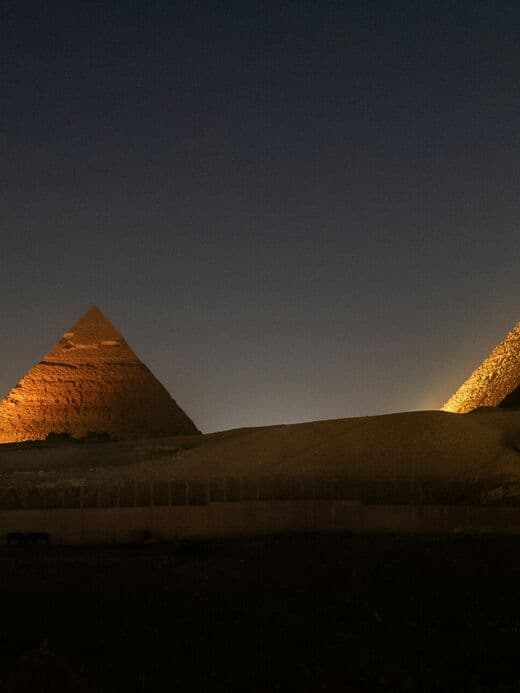
They call Cairo "the city of a thousand minarets," and that's no exaggeration - there are actually more than a thousand. But it might be more accurate to call it the city of a thousand contrasts. In a single day, you can have breakfast at a hipster café in Zamalek, lunch on a fifty-cent bowl of koshari in a Downtown alley, and dinner overlooking the illuminated pyramids at the Marriott Mena House.
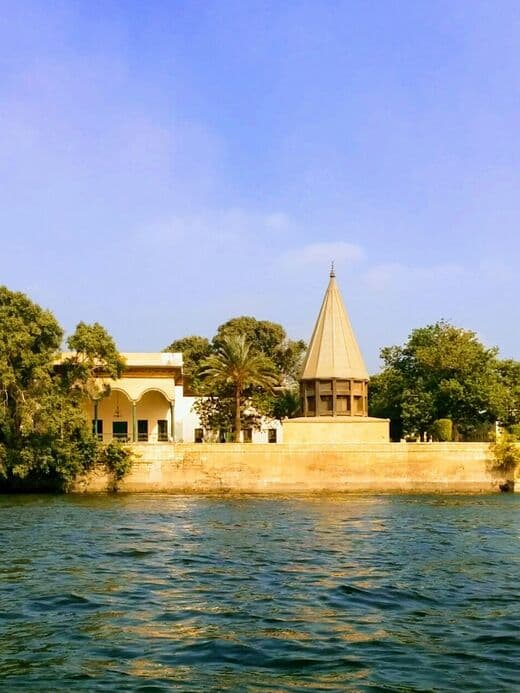
The Nile divides the city into two parts. The west bank holds Giza and its pyramids; the east bank contains the historic center, Islamic Cairo, and Coptic Cairo. Between them lie the islands of Zamalek and Gezira - green oases in a concrete sea. Cairo is massive, chaotic, and unlike any other city on Earth. It can exhaust you in half a day and make you fall in love forever.
What's New in 2026
The biggest news of the year: the Grand Egyptian Museum (GEM) has finally fully opened. After twenty years of construction and endless delays, the museum welcomed its first visitors on November 4, 2026. It's the world's largest archaeological museum, and it's worth coming to Cairo for this alone.
Tickets cost 1,450 Egyptian pounds (about $37) for adults and 635 EGP ($13) for students and children ages 6-25. Children under 6 enter free. The museum is open daily from 9:00 AM to 6:00 PM, and until 9:00 PM on Wednesdays and Saturdays. For the first time in history, all 5,000 objects from Tutankhamun's tomb are displayed under one roof - they were previously scattered across different museums and storage facilities.
Another significant change: transport prices have increased. Metro fares now range from 8-20 EGP depending on distance (previously 5-10 EGP). Air-conditioned buses cost 17 EGP, regular buses 9 EGP. Still pocket change for tourists, though.
The Egyptian pound continues to weaken. By late 2026, the exchange rate hovers around 47 EGP per dollar. This means Egypt has become even more affordable for visitors with dollars or euros, even as costs have risen for locals.
Cairo Neighborhoods: Where to Stay
Zamalek - For Those Who Value Comfort
Zamalek is an island in the Nile - a green, quiet oasis in the midst of chaos. Here you'll find tree-lined streets, elegant 19th-century colonial architecture, contemporary art galleries, and cafés serving flat whites as good as any in Berlin or Melbourne. Zamalek is Cairo for those who want to experience the city without diving in headfirst.
The neighborhood is completely safe for tourists, including solo female travelers. In the evening, Zamalek transforms into a nightlife hub: rooftop bars with Nile views, live music, stylish restaurants. From here, it's convenient to reach both the pyramids (30-40 minutes by taxi) and Islamic Cairo (15-20 minutes).
Where to stay: Sofitel Cairo Nile El Gezirah (from $157), Cairo Marriott Hotel (from $127) - both with stunning river views. Budget option: Airbnb apartments from $40-60 per night.
Downtown - For Budget Travelers
Cairo's downtown was designed by French architects in the 19th century as "Paris on the Nile." Today, little remains of that Parisian elegance - façades have crumbled, streets are clogged with cars, and sidewalks have become impromptu markets. But this is where the city's true heart beats.
Tahrir Square is the central point of the district and all of Cairo. From here, you can walk to the Egyptian Museum (the old one, not to be confused with the new GEM), to the Nile Corniche, to Coptic Cairo. Hostels start at $10-15 per night, simple hotels at $30-50. Food at local joints runs $2-5 per person.
Downsides: noisy, dusty, persistent hawkers. But if you want authentic Cairo without the polish - this is your place.
Giza - For Those Here for the Pyramids
Giza is technically a separate city that has merged with Cairo. This is where you'll find the pyramids, the Sphinx, and the new Grand Egyptian Museum. If you're short on time and the ancient wonders are your main focus, staying here makes sense.
The main draw is the views. Many hotels offer rooms overlooking the pyramids, and it's genuinely impressive: having breakfast while gazing at a 4,500-year-old wonder of the world. The Marriott Mena House is a legendary hotel right at the foot of the pyramids, from $200 per night. Budget options with pyramid views exist too - Horus Guest House from $20-30.
Downsides: 45-90 minutes to central Cairo in traffic. The area around the pyramids is tourist-oriented - touts, inflated prices, pushy service.
Garden City - The Middle Ground
A quiet neighborhood on the Nile's east bank, next to Downtown but without the chaos. The name says it all - lots of greenery, embassies, upscale residences. The Egyptian Museum and Tahrir Square are a 10-minute walk away. Hotels from $80-150 per night.
Maadi and Heliopolis - For Longer Stays
If you're in Cairo for an extended period or want to live like local expats, consider these neighborhoods. Maadi is a leafy suburb to the south; Heliopolis is to the east, closer to the airport. Both are safe with good infrastructure but far from tourist sites (30-45 minutes by taxi). Many long-term rental apartments are available here.
Must-See Attractions
Pyramids of Giza and the Sphinx
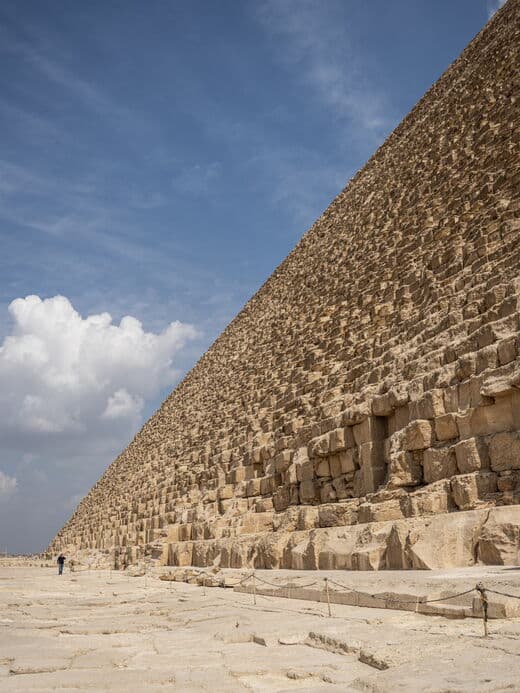
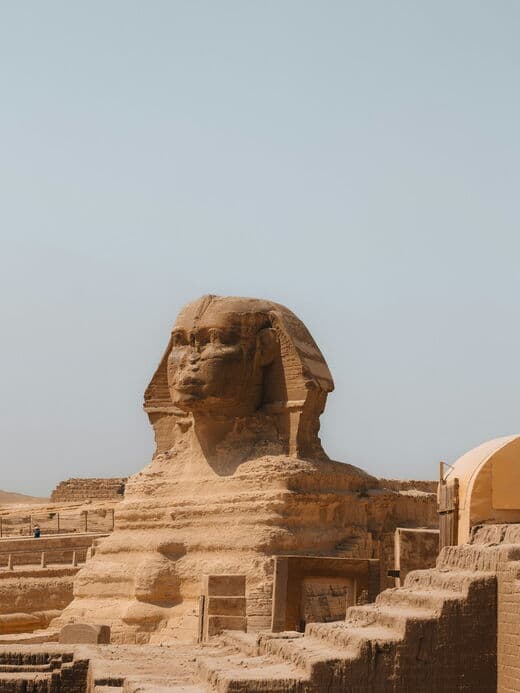
The only surviving Wonder of the Ancient World. The Great Pyramid of Khufu stands 146 meters tall, built from 2.3 million stone blocks, and has endured for 4,500 years. Nearby are the pyramids of Khafre and Menkaure, the Sphinx, ancient temples, and tombs.
Tickets (2026): Plateau entry - 540 EGP (~$11). Entry inside the Great Pyramid - additional 440 EGP (~$9). Entry to Khafre's Pyramid - 100 EGP. Evening sound and light show - about $20.
Hours: Daily 7:00 AM to 5:00 PM. Pyramid interiors open 8:00 AM to 12:00 PM and 1:00 PM to 4:00 PM.
Getting there: Metro to Giza station, then taxi (55-80 EGP) or bus #355/357 from Tahrir Square (45 EGP). Taxi from central Cairo costs $25-30, taking 25-40 minutes depending on traffic.
Tips:
- Arrive at opening time (7:00 AM) for fewer crowds and cooler temperatures
- Buy tickets ONLY at official booths near the entrances. No "helpers" with tickets!
- Allow at least 4-5 hours for your visit
- Winter (October-April) is more comfortable than summer when it hits 113°F (45°C)
- Avoid Fridays and Saturdays - many local school groups
- Bring cash - tips are expected everywhere
- Don't make eye contact with touts or respond to them - any response is seen as an invitation to negotiate
Grand Egyptian Museum (GEM)
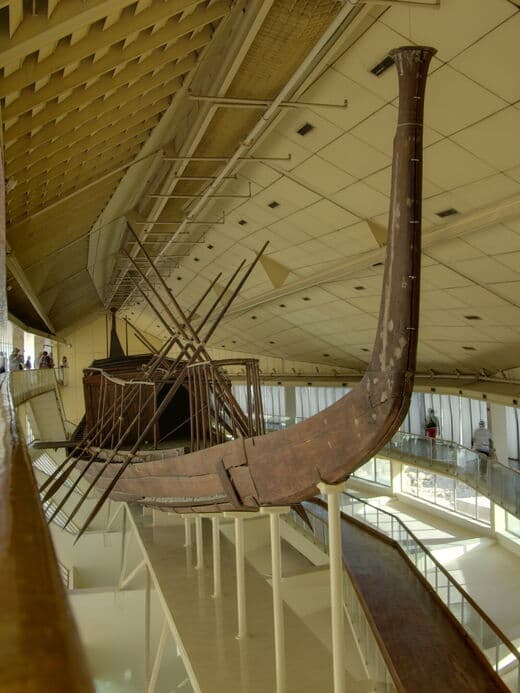
The new museum at the foot of the pyramids is the biggest event of 2026. Over 100,000 artifacts, including the complete collection of Tutankhamun's treasures. A separate building houses the Khufu Solar Boat Museum - the world's oldest wooden vessel (42 meters long), discovered near the Great Pyramid.
Tickets: 1,270 EGP (~$37) adult, 635 EGP (~$13) students and children 6-25, free under 6. Guided tours in English: from 1,950 EGP.
Hours: 9:00 AM-6:00 PM daily, until 9:00 PM Wednesday and Saturday.
Tip: Allow at least 4-5 hours, ideally a full day. Can be combined with the pyramids - they're literally steps away.
Egyptian Museum at Tahrir
The old museum in the city center hasn't closed after GEM opened - it continues to operate, though some exhibits have moved. Entry is 200 EGP (~$4). The 1902 building is an architectural monument in itself. You can see what didn't make it to the new museum - the collection remains enormous.
Coptic Cairo
The oldest part of the city - Christianity arrived here in the 1st century AD. Main attractions:
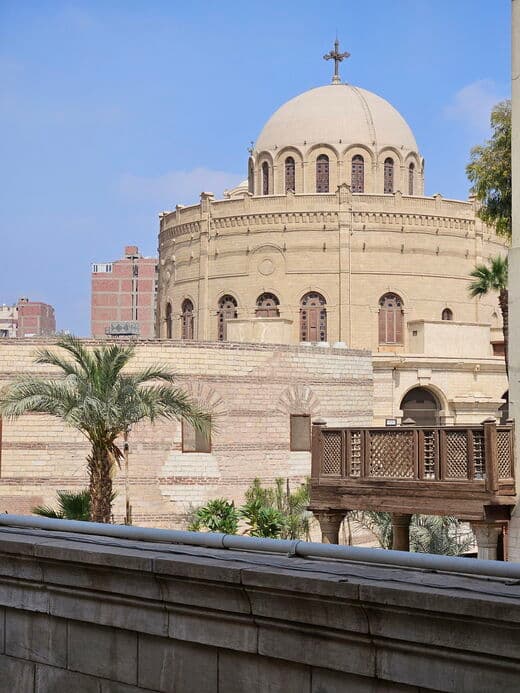
- The Hanging Church (Al-Mu'allaqah) - Built in the 7th century on the ruins of a Roman fortress. Called "hanging" because it sits on columns above ancient gates. One of the oldest churches in the world.
- Church of St. Sergius (Abu Serga) - According to tradition, this is where the Holy Family sheltered during their flight to Egypt. The crypt is 10 meters below ground level.
- Ben Ezra Synagogue - The oldest in Egypt. The Cairo Geniza - 300,000 medieval Jewish manuscripts - was discovered here.
- Coptic Museum - One of the world's richest collections of early Christian art. Entry 280 EGP (~$6).
- Mosque of Amr ibn al-As - Africa's first mosque, built in 641-642 AD.
Getting there: Metro to Mar Girgis station - exit right at the Coptic quarter. Entry is free (except the museum).
Islamic Cairo
A medieval city founded in 969 AD. UNESCO has designated it a World Heritage Site. It has one of the highest concentrations of historic Islamic architecture in the world.
Key sites:
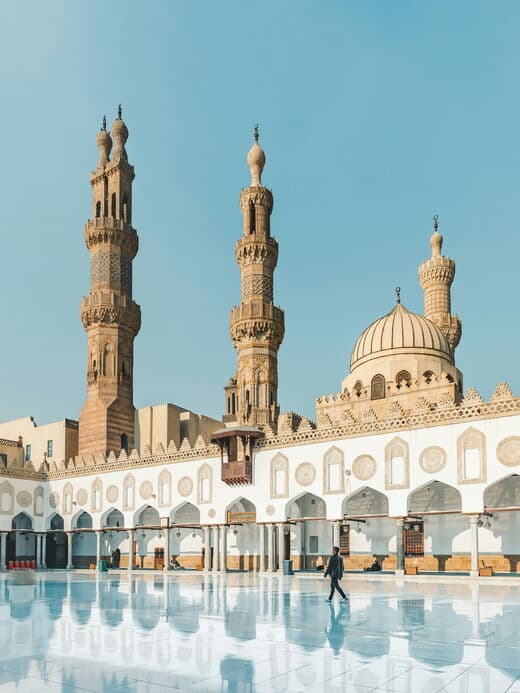
- Al-Azhar Mosque - Founded in 970 AD, one of the world's oldest universities (older than Oxford and the Sorbonne). Free entry, but modest clothing required. Women are given skirts at the entrance.
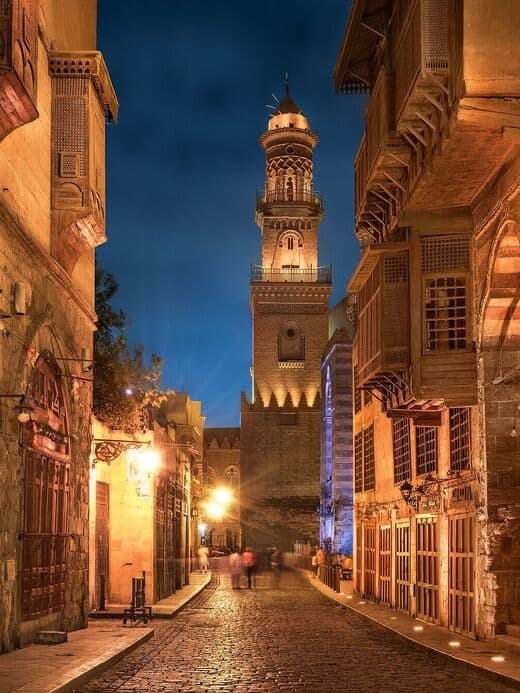
- Al-Muizz Street - The main artery of Islamic Cairo. A kilometer of mosques, madrasas, fountains, and caravanserais from the 10th-19th centuries.
- Khan el-Khalili - The famous bazaar operating since 1382. A labyrinth of thousands of shops selling souvenirs, spices, gold, and textiles.
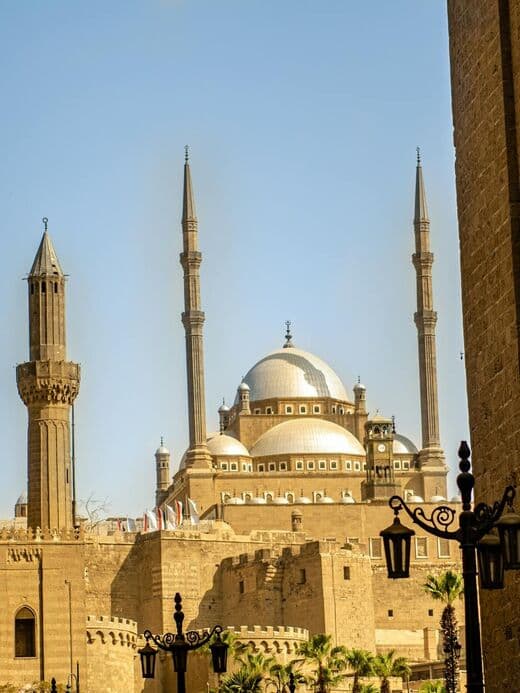
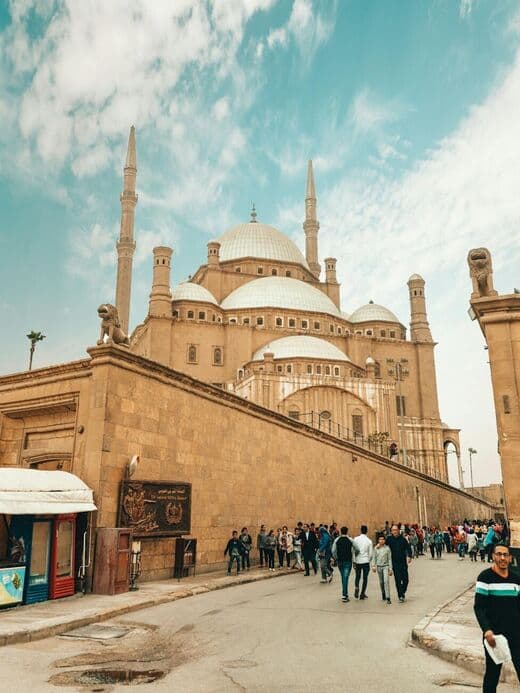
- Saladin Citadel - A 12th-century fortress on a hill with panoramic views of all Cairo. Home to the Mohammed Ali Mosque with its alabaster walls. Entry ~$12.
Khan el-Khalili Bazaar: How to Bargain Without Getting Ripped Off
Khan el-Khalili is both an attraction and a tourist trap. It's beautiful and atmospheric, but 60% of the goods are Chinese imports, and prices for foreigners are inflated 5-10 times.
Survival rules:
- The seller's opening price is the ceiling. Confidently divide by 3-5 and start bargaining from there
- If you're not ready to buy, don't start negotiating. It's seen as a commitment
- "Special price just for you" is a red flag - that's the standard tourist markup
- Be willing to walk away. The seller will almost always call you back with a lower price
- "Free" guides offering to show you around the bazaar earn commission from shops and will lead you to the most expensive stores
- Papyrus "handmade in Egypt" is 90% machine-printed
- Count your change - it's easy to get shortchanged in the commotion
What's worth buying: Spices (especially saffron and hibiscus), perfume oils, copper and brass items, Egyptian cotton. Gold and silver - only at verified shops with certificates.
Best time to visit: After 5:00 PM when the lanterns light up and the heat subsides. Friday mornings many shops are closed until 3:00 PM.
Getting Around Cairo
Metro
The fastest way to cross the city. Three lines, 84 stations. Operates 5:00 AM to 1:00 AM (until 2:00 AM during Ramadan). Trains every 5-10 minutes.
Fares (2026):
- Up to 9 stations - 8 EGP
- Up to 16 stations - 10 EGP
- Up to 23 stations - 15 EGP
- More than 23 stations - 20 EGP
Useful stations:
- Sadat - Tahrir Square, Egyptian Museum
- Mar Girgis - Coptic Cairo
- Ataba - Islamic Cairo, Khan el-Khalili
- Opera - Zamalek island, Cairo Opera House
- Giza - Transfer to transport for the pyramids
Important: The metro has women-only cars (usually the first and second from the front). They're clearly marked. Men are not allowed; women can ride in any car.
Taxis and Uber
Uber and Careem (the local equivalent) work excellently and are affordable. A ride across central Cairo costs $3-7. No haggling, card payment, air conditioning. Ideal for tourists.
Regular taxis are white cars with checkered markings. Theoretically metered, in practice negotiated. Always agree on the price BEFORE getting in. Typical rates: starting fare 10-15 EGP, per kilometer 5-8 EGP. Downtown to the pyramids costs 150-250 EGP.
Full-day taxi hire (with driver) costs $30-50. Convenient for visiting multiple sites.
Buses
Cheap but chaotic. Regular buses cost 9 EGP, air-conditioned 17 EGP. Routes are hard to figure out, signs in Arabic. Not recommended for tourists, except routes #355 and #357 from Tahrir to the pyramids.
From the Airport to the City
Cairo International Airport (CAI) is 20 km northeast of the center.
- Uber/Careem: $10-15 to central Cairo, $20-25 to Giza
- Official taxi: Fixed rates 250-400 EGP depending on destination
- Metro: Terminal 3 station on Line 3. To Ataba (center) takes 40-50 minutes, 15 EGP
- Bus: Available but not recommended with luggage
Food in Cairo
Street Food
Koshari - Egypt's national dish. A mix of rice, pasta, lentils, chickpeas, fried onions, and tomato sauce. Filling, tasty, vegetarian, and incredibly cheap - from 25 EGP (~$0.57) per portion. Best place: Koshary Abou Tarek downtown - a clean, air-conditioned restaurant operating since the 1950s.
Ful - Mashed fava beans with oil, lemon, and spices. Traditional Egyptian breakfast. A portion with bread costs 10-20 EGP.
Ta'ameya - Egyptian falafel made from fava beans (not chickpeas like in Lebanon). Crispy outside, tender inside. 5-15 EGP each.
Shawarma - Everywhere, from 30 EGP.
Hawawshi - Baked pita stuffed with spiced minced meat. Egyptian fast food, 30-50 EGP.
Street food chains: GAD, El Shabrawy, Felfela - quality food, affordable, similar menus.
Restaurants
Lunch at a simple café runs 100-200 EGP ($2-4) per person. Mid-range restaurant 300-500 EGP ($6-17). Upscale places in Zamalek from 800 EGP ($15+).
Try molokhia - a green soup made from jute leaves with chicken or rabbit. And definitely try fresh juices: mango, guava, sugarcane. A glass costs 20-30 EGP.
Alcohol
Egypt is a Muslim country, but alcohol is legal (except during Ramadan in public places). Local beers Stella and Sakara cost 40-80 EGP at shops, 100-200 EGP at bars. Wine from 200 EGP per bottle. No problems in tourist areas and hotels; conservative neighborhoods like Fatih don't sell alcohol.
Money and Costs
Currency: Egyptian pound (EGP, LE, £E). Late 2026 rate: ~30 EGP per $1, ~32 EGP per 1 euro.
Where to exchange: Banks and official exchange offices offer the best rates. Avoid street money changers and tourist-area exchanges - rates are 10-15% worse. ATMs are everywhere; typical fee is 50-100 EGP per withdrawal.
Cards: Visa and Mastercard accepted at hotels, restaurants, and large shops. Small stores, street food, taxis - cash only. Recommended to carry small bills (10-50 EGP) for tips and small purchases.
Tipping (baksheesh): Part of the culture. At restaurants, 10-15% (if not included in the bill). Porters 20-50 EGP. Taxi drivers - round up. At the pyramids, everyone asks for tips for everything - this is normal, but you don't have to give to everyone.
Sample Prices (2026):
- 1.5L bottled water - 15-25 EGP
- Coffee at a café - 50-100 EGP
- Koshari - 25-80 EGP
- Lunch at a café - 100-200 EGP
- Restaurant dinner - 300-600 EGP
- Metro - 8-20 EGP
- Taxi across center - 80-150 EGP
- Uber to pyramids - 150-250 EGP
- Hostel - 200-400 EGP/night
- 3-star hotel - 800-1500 EGP/night
- 5-star hotel - 4000-10000 EGP/night
Daily budget: $30-50 for budget travelers (hostel, street food, public transport). $70-120 for mid-range (3-star hotel, restaurants, taxis). $200+ for comfort (5-star, private tours).
Safety
Cairo is safer than it looks. Violent crimes against tourists are extremely rare. The main risks are scams and petty theft in crowds.
Common scams:
- "The museum/pyramids are closed today" - A lie. They're trying to take you to a shop or sell an "alternative" tour
- Free "guides" at attractions who then demand payment or lead you to shops
- Free photo with a camel/horse that turns into a $20-50 demand
- Offers to drive you to the pyramids cheaply - you'll end up at a papyrus or perfume shop
How to avoid:
- Don't engage with strangers offering help
- Ignore them - this is the most effective tactic
- Use Uber instead of street taxis
- Buy tickets only at official booths
For women: Harassment is a real problem. Verbal comments on the street happen frequently. Clothing helps: covered shoulders, skirts/pants below the knee. Use women's metro cars. Generally, Zamalek, Maadi, and Garden City are safer than Downtown and bazaar areas.
When to Go
Best season: October-April. Daytime temperatures of 68-82°F (20-28°C), comfortable for sightseeing.
Summer (May-September): 95-113°F (35-45°C), unbearable heat. Walking at the pyramids at noon is an endurance test. If you visit in summer, start at dawn and seek air-conditioned shelter from 11:00 AM to 4:00 PM.
Ramadan: A special month. Days are slower (locals are fasting), many cafés close until sunset. But after sunset - festive atmosphere, people fill the streets, restaurants open late. Ramadan dates shift each year.
Friday: The day off. Many shops closed until noon, but traffic is lighter.
Practical Tips
- Visas: For most nationalities - on arrival, $25 (pay in dollars). In Sharm el-Sheikh, visas are free but valid only for the Sinai
- Pen in carry-on: You'll get a migration card on the plane; pens at the airport are scarce
- SIM card: Vodafone, Orange, Etisalat. Buy at official stores with passport. 10-20 GB data costs about 200-400 EGP
- Water: Bottled only. You can brush teeth with tap water but don't drink it
- Electricity: 220V, European plugs (Type C)
- Traffic: From 3:30 PM to 6:30 PM the city is gridlocked. Plan routes or use the metro
- Language: Arabic. English is spoken in tourist areas
Day Trips from Cairo
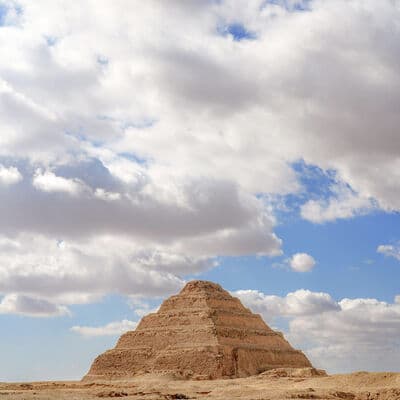
- Saqqara and Dahshur - Ancient necropolises with pyramids older than Giza. The Step Pyramid of Djoser, the Red and Bent Pyramids. Half-day, $40-80 with guide
- Alexandria - Mediterranean city 200 km away. Catacombs, library, Qaitbay Fort. Full day, from $50
- Fayoum Oasis - Lake Qarun, waterfalls, Whale Valley. Full day, from $60
- Memphis - Ancient capital of Egypt. Colossal statue of Ramesses II. Usually combined with Saqqara
How Many Days to Spend
2-3 days: Minimum. Pyramids + GEM, Coptic Cairo, Khan el-Khalili bazaar.
4-5 days: Optimal. Add Islamic Cairo, the Citadel, old Egyptian Museum, evening sound and light show at the pyramids.
One week: Plenty for everything with time to spare. Can add Saqqara/Dahshur or Alexandria.
Cairo is a city that's hard to love at first sight. It's dirty, loud, chaotic, sometimes aggressive. But beneath that exterior lies incredible depth - millennia of history, genuine Egyptian hospitality, beauty that takes effort to see. Give it a chance, and it will surprise you.