Grand Egyptian Museum (GEM)
The Grand Egyptian Museum (GEM) is the world's largest archaeological museum, under construction for more than 20 years and finally opening its doors in 2024. Located at the foot of the Giza Pyramids, it's designed to become the main home for pharaonic treasures — including the complete Tutankhamun collection.
Project History
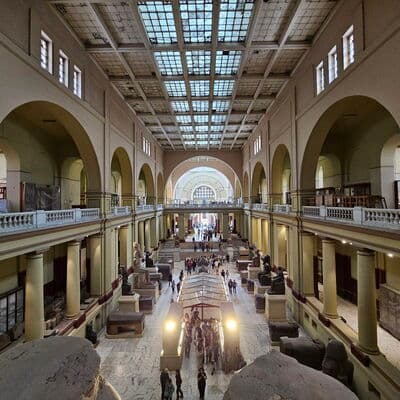
The idea for a new museum emerged in the 1990s. The old Egyptian Museum on Tahrir Square is overcrowded: 120,000 exhibits in a building designed for a third that number. Artifacts were stored in basements, many never displayed.
The international competition was won by Irish firm Heneghan Peng Architects. Their design is a giant triangle fitted into the landscape between Cairo and the pyramids. Construction began in 2012.
The budget exceeded one billion dollars. Funding came from Japanese loans, the Egyptian budget, and international grants. Opening was postponed several times — from 2015 to 2020, then to 2023, until the museum finally welcomed its first visitors.
Architecture
The museum is built on 50 hectares — 10 times larger than the old museum. The main building offers 45,000 square meters of exhibition space, not counting restoration workshops, storage, and educational centers.
The facade is a translucent wall of alabaster and glass that glows from within after sunset. The main atrium rises 28 meters high, with views of the pyramids through panoramic windows.
In the atrium stands a 12-meter statue of Ramesses II — the same one that once stood in the square by Cairo's railway station. It was moved here in 2006 and waited almost 20 years for the museum to open.
Tutankhamun Collection
The museum's main star is the complete collection from Tutankhamun's tomb. All 5,400 objects found by Howard Carter in 1922 are displayed together for the first time.
The old museum showed only a small portion: the golden mask, sarcophagi, throne, a few pieces of jewelry. The rest — chariots, weapons, clothing, furniture, food for the afterlife — was kept in storage.
Now you can see everything. Two floors of exhibition tell the young pharaoh's story: his life, death, burial, and posthumous fame. This is the largest exhibition dedicated to one person from antiquity.
Other Exhibits
The museum will hold more than 100,000 artifacts — from predynastic times to the Greco-Roman period. Many have never been publicly displayed.
Of special interest is the royal mummies collection. Twenty-two mummies of pharaohs and queens, including Ramesses II and Hatshepsut, were transferred from the National Museum of Egyptian Civilization. They're displayed in special climate-controlled cases.
Also presented: Khufu's solar boats, statues from Karnak, treasures from the Valley of the Kings, finds from Saqqara. The collection's scale is unprecedented.
Location and Connection to Giza
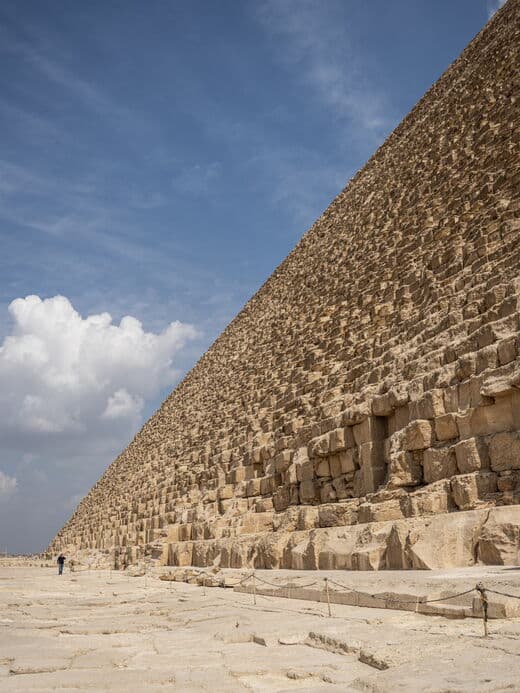
The museum stands 2 km from the Giza Pyramids — visible from its windows. This isn't accidental: the idea is for visitors to perceive the museum and pyramids as a single complex.
A pedestrian zone connecting the museum to the pyramid plateau is planned. A cable car was also discussed but hasn't been implemented.
Logistically the museum is more convenient than the old one: closer to Giza and the airport, with parking for 4,000 cars. For tourists this means less time in Cairo traffic.
Practical Information
The museum operates from 9:00 AM to 5:00 PM, with last entry an hour before closing. Fridays have reduced hours.
Tickets are best purchased online in advance — entrance queues are significant. There are different categories: general admission, admission with Tutankhamun, combined with pyramids.
A full tour requires a whole day. If time is short, focus on Tutankhamun and the main galleries.
Atmosphere and Character
GEM is a 21st-century museum. Spacious galleries, modern lighting, information panels, climate control. After the cramped old museum, it's like a breath of fresh air.
But the main thing is the opportunity to see Egypt's treasures as they deserve. Not in dusty cases without labels, but in a thoughtfully designed exhibition with context and story.
The view of the pyramids from the museum windows is a powerful symbol. The builders of Giza look at their legacy across millennia. And we look at them — understanding that great civilizations don't disappear. They live on in what they leave behind.