Dahshur Pyramids
Dahshur is where the true pyramid was born. It was here that Pharaoh Sneferu, through trial and error, created the form his son Khufu perfected at Giza. Sneferu's two pyramids — the Bent and Red — are a living textbook in the evolution of Egyptian architecture.
Pharaoh Sneferu's Laboratory
Sneferu ruled at the start of the 4th Dynasty, around 2600 BCE. He was obsessed with building the perfect pyramid — and during his reign erected three or four gigantic structures. No pharaoh before or after built so much.
Two of his pyramids survive at Dahshur. The first — the Bent Pyramid — shows how Egyptians learned from mistakes. The second — the Red Pyramid — demonstrates what they achieved. Together they tell the story of an engineering breakthrough.
The Bent Pyramid
Sneferu's southern pyramid got its name from its characteristic bend. At about 47 meters height, the angle of the faces changes sharply from 54 to 43 degrees — hence the "bent" profile.
Why did this happen? There are several theories. Perhaps builders discovered cracks in the structure and hastily reduced the angle to lower the load. Perhaps the pharaoh died and they needed to finish quickly. Or maybe it was planned this way from the start — though that's unlikely.
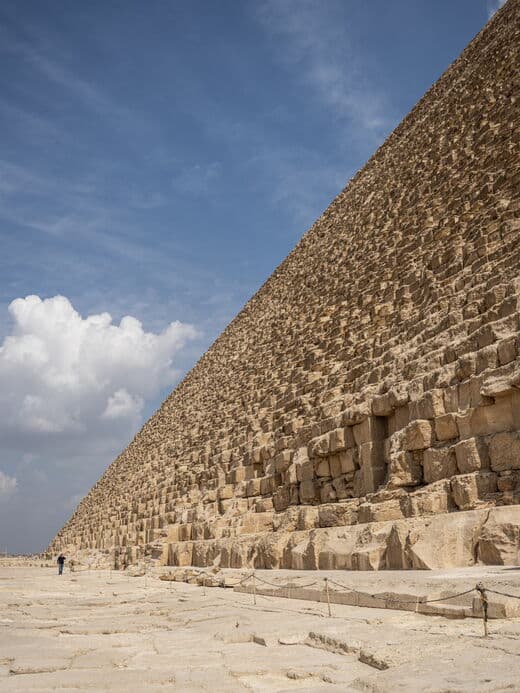
The Bent Pyramid is the best-preserved of all Egyptian pyramids. Most of the white limestone casing is still in place. This lets you imagine how the Giza pyramids looked in ancient times — gleaming white mountains, not bare stone steps.
Inside the pyramid are two chambers connected by corridors. Visiting is possible but requires physical fitness: the passages are low and narrow.
The Red Pyramid
Sneferu's northern pyramid is history's first "true" pyramid with smooth faces from base to apex. It got its name from the reddish hue of the limestone blocks exposed after the white casing was lost.
This is Egypt's third-largest pyramid after Khufu's and Khafre's. Height is 104 meters, base length 220 meters. The angle is just 43 degrees — the same as the upper part of the Bent Pyramid. Sneferu clearly learned his lesson.
The Red Pyramid's main advantage for tourists — you can descend inside free (entry included in the site ticket). The descent is 63 meters down an inclined corridor, then three chambers with high corbeled ceilings. Be prepared for a distinctive ammonia smell — the result of centuries of bat presence.
Other Dahshur Pyramids
Besides Sneferu's pyramids, Dahshur has several Middle Kingdom pyramids. Most are mud-brick ruins, but they're also interesting.
The Black Pyramid of Amenemhat III is the most visible. It's badly damaged, but the core of dark brick creates a dramatic silhouette against the desert.
The White Pyramid of Amenemhat II is more hill than pyramid. But archaeologists found rich princess burials here with magnificent jewelry now in the Egyptian Museum.
Dahshur vs Giza and Saqqara
What's Dahshur's advantage over Giza? There are almost no tourists. You can walk around the pyramids in silence, take photos without crowds, feel the scale without the bustle.
Compared to Saqqara, Dahshur is less diverse — just pyramids here, no tombs and temples. But that's exactly why it's ideal for those wanting to understand pyramid-building evolution.
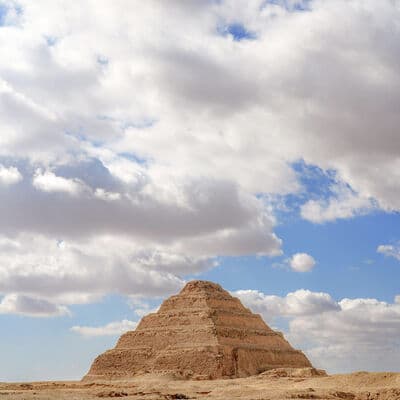
Optimal route for one day: morning at Saqqara with Djoser's Step Pyramid, afternoon at Dahshur with Sneferu's pyramids. Better to leave Giza for a separate day.
Getting There
Dahshur is 40 km south of Cairo, 10 km south of Saqqara. There's no public transport — only taxi or organized tours.
From Cairo, it's most convenient to hire a car for the whole day visiting Saqqara and Dahshur (sometimes Memphis is added). This costs $50-80 depending on bargaining.
Practical Information
The site is open from 8:00 AM to 4:00 PM. The ticket is purchased at the entrance and includes visiting both Sneferu pyramids and descending into the Red Pyramid.
Arrive in the morning: by noon it gets very hot, and there's no shade. Bring water, a hat, and comfortable shoes — sand is everywhere.
To descend into the Red Pyramid you'll need a flashlight (phone works) and readiness for stale air. Those with claustrophobia should skip it.
Atmosphere and Character
Dahshur is Egypt without the tourist industry. No pushy vendors, no camels for photos, no crowds with selfie sticks. Just pyramids, desert, and wind.
The Bent Pyramid is especially impressive. Its bend — ancient builders' error frozen in stone — makes it more human than Giza's perfect forms. Behind that bend you see people: engineers who miscalculated, workers who corrected, a pharaoh who still wanted bigger and higher.
Visiting Dahshur is a chance to see the pyramids through a researcher's eyes, not a tourist's. To understand unhurriedly how they were built and why. This is invaluable context for everything else you'll see in Egypt.