Pyramids of Giza
The Pyramids of Giza are the only one of the Seven Wonders of the Ancient World to survive to our day. Three colossal tombs of Fourth Dynasty pharaohs have stood on the Giza Plateau for 4,500 years, and we still don't know exactly how they were built. When you see them for the first time—not in photographs, but in person—you understand: no pictures convey the scale and power of these structures.
The Three Great Pyramids
Pyramid of Khufu (Cheops)
The Great Pyramid is the largest stone structure in human history. Height—138 meters (originally 146), base side—230 meters. Construction used approximately 2.3 million blocks weighing from 2 to 70 tons each.
The pyramid was built around 2560 BC for Pharaoh Khufu (Greeks called him Cheops). Construction took, by various estimates, 10 to 30 years. Exactly how Egyptians raised multi-ton blocks to such heights remains a subject of scholarly debate.
You can enter the pyramid: a narrow corridor leads to the burial chamber with an empty granite sarcophagus. The climb is uncomfortable—low ceilings, hot, stuffy—but worth the experience.
Pyramid of Khafre (Chephren)
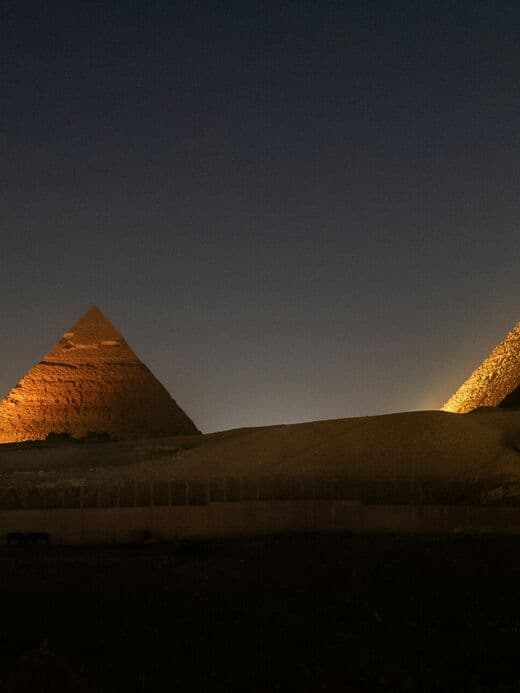
The second-largest pyramid appears taller than the first—it stands on higher ground. Its summit retains casing of white limestone—once all three pyramids gleamed in the sun, covered in polished stone.
Near Khafre's pyramid stands the famous Sphinx—a giant statue of a lion with a human head. According to one theory, the Sphinx's face is a portrait of Khafre himself.
Pyramid of Menkaure (Mycerinus)
The smallest of the three—"only" 62 meters high. But even it impresses with its scale. The lower part was cased in pink granite from Aswan—remnants are still visible.
The Great Sphinx
The Sphinx is the largest monolithic sculpture of antiquity: 73 meters long, 20 meters high. It was carved from a single rock outcrop that stood in the path of Khafre's pyramid builders. Instead of removing it, Egyptians transformed the rock into art.
Over thousands of years, the Sphinx lost its nose (according to one version, shot off by Napoleon's soldiers; according to another, by Mamluks as early as the 14th century) and beard (fragments are in the British Museum). But even without them, it makes an indelible impression.
What Else to See on the Plateau
Mortuary Temples
Each pyramid had a mortuary temple connected by a covered causeway to a valley temple (by the river). The best preserved is at Khafre's pyramid—massive granite blocks, strict geometry, no decoration.
Queens' Pyramids
Near the great pyramids are several smaller ones built for pharaohs' wives and daughters. Much more modest, but they help you understand Egyptian tomb construction.
Solar Boat
In 1954, a dismantled wooden boat was found at the foot of the Great Pyramid—the pharaoh's "solar boat." It's been assembled and displayed in a special museum beside the pyramid. The 43-meter boat is excellently preserved thanks to the dry climate.
Practical Tips
When to Come
The pyramids are open 8:00 AM to 5:00 PM (6:00 PM in summer). Best time—early morning, right after opening. By 10:00 AM tour buses arrive and crowds gather.
Ideal months—October through April, when it's not so hot. Summer temperatures reach 40°C, making time on the plateau difficult.
Tickets
Plateau entry—about 200 Egyptian pounds. Separate fees for entering pyramids (Khufu's is most expensive, daily visitor numbers limited). Book tickets online in advance.
Getting There
From central Cairo—by taxi or Uber (30-40 minutes). Take the metro to Giza station, then taxi. Organized tours include transfers.
What to Bring
Water (lots of water), hat, sunscreen, comfortable shoes. Inside the pyramids it's hot and dusty—dress accordingly.
Persistent Vendors
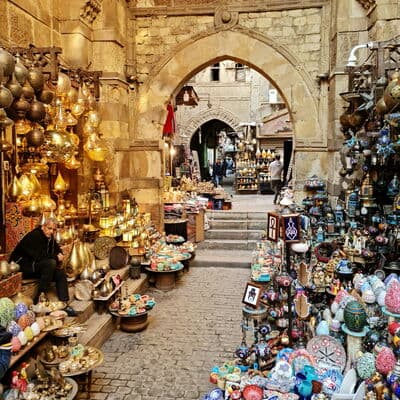
Be prepared for insistent offers to ride camels, buy souvenirs, take photos. A firm "no, thank you" usually works. Don't accept "free" services—they'll ask for money later.
What to See Nearby
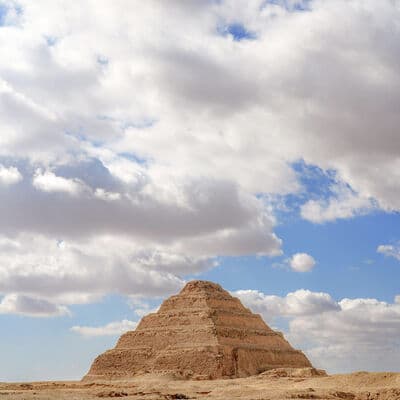
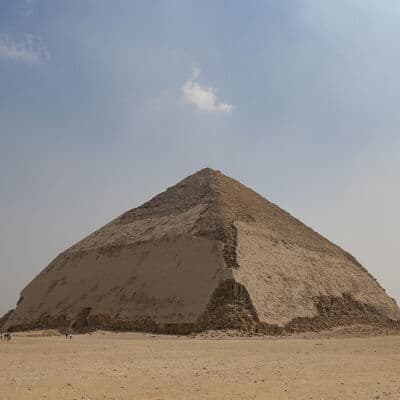
Thirty minutes away is the Saqqara necropolis with Djoser's Step Pyramid, Egypt's oldest. Further still—the Dahshur pyramids, including the unique Bent Pyramid. A full-day combined tour covers all three complexes.
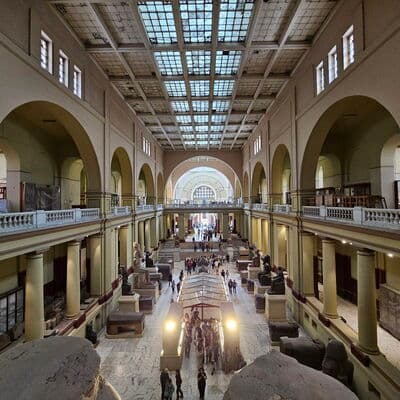
In Cairo itself, definitely visit the Egyptian Museum on Tahrir Square—home to treasures from Tutankhamun's tomb and thousands of other artifacts. Or the new Grand Egyptian Museum near the pyramids.
Atmosphere and Character
The Pyramids of Giza are a place where you feel connection to antiquity. Four and a half thousand years ago, thousands of builders worked here, priests performed rituals, pharaohs prepared for eternal life. And the pyramids still stand—outlasting empires, religions, civilizations.
Especially powerful at sunset, when the sun sets behind the pyramids and sand turns pink. Or at sunrise, when the plateau is nearly empty and you can stand in silence at the Great Pyramid's base, grasping the scale of what Bronze Age people created.
This is a place to see at least once in your life. Photographs don't convey the scale, stories don't convey the feeling. Only standing beside these stone mountains do you understand what humanity is capable of.