Khan el-Khalili
Khan el-Khalili isn't just a bazaar — it's an entire world. A labyrinth of narrow lanes, thousands of shops, smells of spices and leather, cries of merchants, clinking copper vessels — here Cairo is as it was centuries ago. The bazaar has existed since the 14th century and remains the heart of the old city.
Bazaar History
Khan el-Khalili was founded in 1382 by Emir Djaharks el-Khalili as a caravanserai — a place where merchants could stay, store goods, and conduct trade. Gradually shops, workshops, and coffee houses grew around it, and the caravanserai became Cairo's largest market.
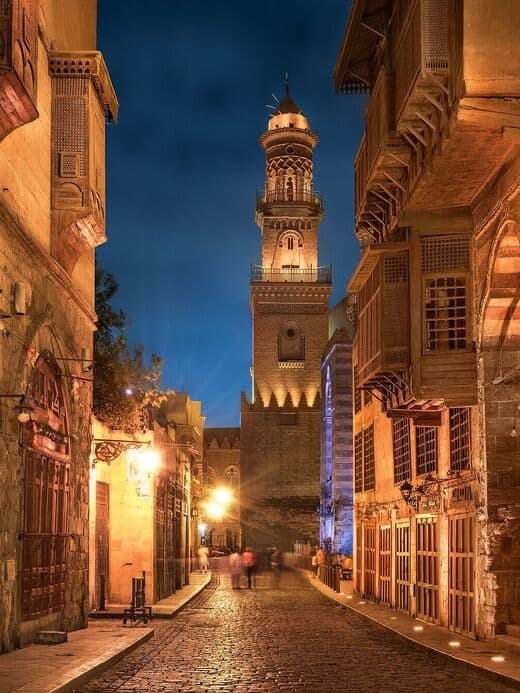
During the Mamluk and Ottoman eras, the bazaar flourished: silks and spices from the East, gold from Sudan, leather from Morocco were traded here. Many buildings survive from those times — carved wooden shutters, patterned lattices, vaulted galleries.
What to Buy
Gold and Silver
The bazaar's main street is the Gold Row (Sikkat al-Badistan). Hundreds of jewelry shops sell gold and silver by weight. Items in traditional Egyptian style: cartouches with hieroglyphics, scarabs, the Eye of Horus.
Spices and Perfumery
Egyptian spices, essential oils, traditional perfumery — all in abundance. You can buy lotus-scented oil, saffron, henna, black cumin. Merchants happily explain each spice's properties.
Copper and Brass Items
Trays, lamps, coffee pots, decorative plates with engraving. Workshops operate right in the bazaar — you can watch the crafting process and order engraving.
Textiles and Carpets
Cotton is Egypt's pride. Fabrics, clothing, and bedding are sold at the bazaar. Carpets are mostly machine-made, though some are handmade.
Antiques and Souvenirs
Papyrus with ancient Egyptian images (beware: many fakes made from banana leaves), replica statuettes, hookahs, Arabian-style lamps.
How to Bargain
Bargaining is an essential part of purchasing. The starting price is usually inflated 3-5 times. The algorithm:
1. Ask the price, act surprised, and name yours — roughly a third of the initial offer.
2. Bargain friendly but firm. The seller will offer tea, compliments, stories — it's part of the ritual.
3. If you can't agree — start to leave. This often works.
4. The real price is usually 40-60% of the original.
Don't bargain if you don't intend to buy. And don't compare prices out loud — this is considered rude.
Cafes and Food
El Fishawy Coffee House
A legendary coffee house operating since 1773. Nobel Prize-winning author Naguib Mahfouz drank coffee here. Old Cairo atmosphere: mirrors, brass tables, hookahs, Arabic music. Coffee and tea are inexpensive, but the atmosphere is priceless.
Street Food
Ful (bean paste), taamiya (Egyptian falafel), koshari (a mix of rice, pasta, and lentils) — all can be sampled at small eateries around the bazaar.
What to See Nearby
The bazaar is in Islamic Cairo — the city's historic center. Nearby are Al-Azhar Mosque (one of the oldest in the world), Al-Hussein Mosque, and the medieval Bab Zuweila gate. It's a separate world worth exploring on foot.
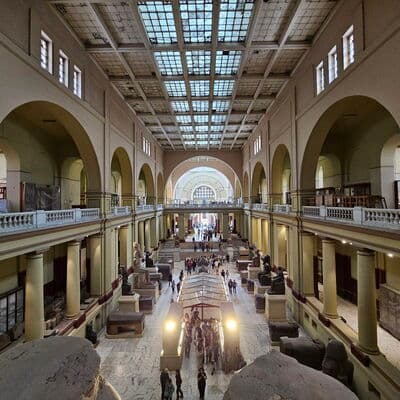
From here you can walk to the Egyptian Museum (30-40 minutes through the center) or take a taxi to the pyramids.
Practical Tips
When to Visit
The bazaar operates from 10:00 AM to 10:00 PM (some shops until midnight). The best time is late evening when the heat subsides and the bazaar comes alive. Many shops are closed Friday afternoon (prayer time).
Safety
The bazaar is safe, but watch your pockets — crowds and narrow lanes create conditions for theft. Don't flash large amounts of cash.
Navigation
Getting lost is easy — and that's part of the fun. GPS works poorly in narrow lanes. Navigate by mosques and gates, or just go where your eyes lead you.
Atmosphere and Character
Khan el-Khalili is immersion in another world. A world where time is measured not in minutes but in cups of tea. Where trade is an art, not just exchanging money for goods. Where the air mingles with the scents of incense, coffee, and leather.
You can spend an entire day here, moving from shop to shop, bargaining for a copper tray, sipping hibiscus tea in a century-old coffee house. And leave feeling you've seen the real Cairo — not tourist attractions, but a living city with a thousand-year history.