Temple of Abydos
Abydos is one of ancient Egypt's most sacred places, a city of the dead where, according to legend, the god Osiris was buried. The Temple of Seti I here isn't merely a religious structure but a true encyclopedia of Egyptian art with the best-preserved reliefs in the country.
Sacred City of Osiris
For ancient Egyptians, Abydos was what Mecca is to Muslims or Jerusalem to Christians. Legend held that here Isis found the head of dismembered Osiris and buried it. Every Egyptian dreamed of making a pilgrimage here at least once in their lifetime.
Those who couldn't come while alive bequeathed having their mummies brought after death. The wealthiest erected cenotaphs in Abydos — symbolic tombs so their souls could participate in the mysteries of Osiris.
The city was sacred for more than 3,000 years. The first temples appeared here in predynastic times. Pharaohs of all eras considered it their duty to build or decorate something in Abydos.
Temple of Seti I
Seti I ruled at the start of the 19th Dynasty, immediately after the troubled period of Akhenaten. He set out to restore the glory of traditional religion — and the temple at Abydos became a manifesto of this revival.
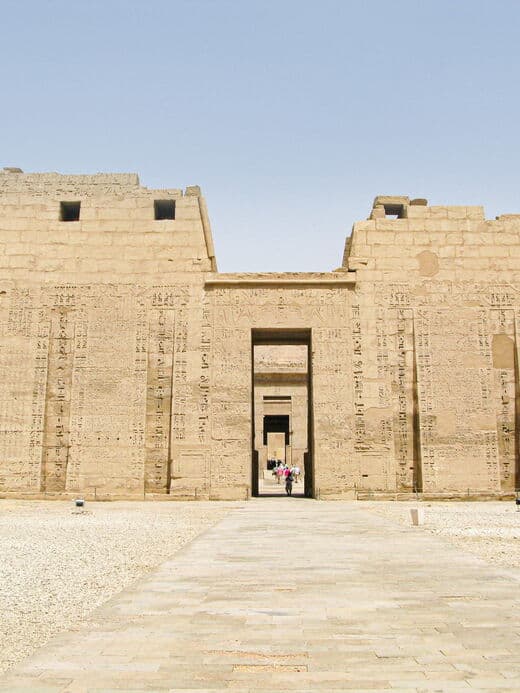
The temple is unique for its L-shaped layout. Instead of one sanctuary there are seven — dedicated to Osiris, Isis, Horus, Amun-Ra, Ra-Horakhty, Ptah, and Seti I himself. Yes, the pharaoh included himself in the company of Egypt's chief gods.
Behind the temple lies the Osireion — a mysterious structure partially flooded by groundwater. It may be a symbolic tomb of Osiris or a place for secret mysteries. The Osireion's architecture is so archaic that some researchers believed it older than the temple itself, though this isn't confirmed.
Reliefs: The Peak of Egyptian Art
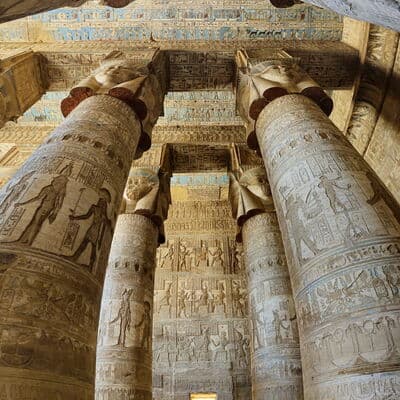
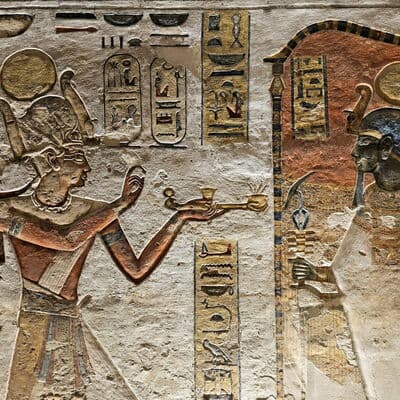
The temple's main treasure is its reliefs. Seti I's craftsmen achieved a perfection never surpassed. Figures of gods and pharaoh are rendered with incredible detail: every feather, every fold of clothing, every hieroglyph is visible.
What makes Abydos reliefs special is their preserved color. Unlike most Egyptian temples, here you can see the original pigments: blue, green, yellow, red. Three thousand years — and the colors haven't faded.
The most famous scenes are in the Osiris sanctuary. Here the god's mysteries are depicted: his death, resurrection, judgment of souls. The reliefs are so detailed that Egyptologists use them to reconstruct ancient rituals.
Abydos King List
In one of the temple corridors is carved a list of 76 cartouches — names of pharaohs from Menes to Seti I. This is the "official" version of Egyptian history, compiled by 19th Dynasty priests.
The list is valuable but incomplete. "Inconvenient" rulers were deliberately excluded: Hyksos pharaohs, Queen Hatshepsut, the heretic Akhenaten. History, as always, was written by the victors.
For 19th-century Egyptologists, the Abydos list became the key to ancient Egyptian chronology. From here we know the sequence of dynasties — though modern research has significantly refined the dating.
Temple of Ramesses II
Next to Seti I's temple, his son Ramesses II built his own. It's smaller and less well-preserved but still worth attention. The reliefs here are cruder — Ramesses built much and fast, quality suffered.
Comparing the two temples is interesting: the refined art of Seti I versus the mass production of Ramesses II. The father strove for perfection, the son for quantity. Both approaches are impressive in their way.
Getting There
Abydos is 160 km north of Luxor. Most tourists come on a day trip from Luxor, often combined with a visit to Dendera Temple.
The journey takes about 2.5 hours each way. You can hire a car with driver or join a group tour. Independent visits are possible but public transport is inconvenient.
Practical Information
The temple is open from 7:00 AM to 5:00 PM. Arrive in the morning — it gets very hot by midday, and there's little shade. Bring a flashlight: some chambers are dark, and relief lighting is minimal.
Abydos isn't heavily visited, so you can examine the reliefs in peace without crowds. Allow at least 2 hours — less isn't worthwhile.
Atmosphere and Character
Abydos is for those who want to see Egypt beyond the tourist trails. There are no crowds like at Giza or the Valley of the Kings. You can be alone with three-thousand-year-old reliefs and feel a connection to antiquity.
The quality of art here is astonishing. After Abydos, reliefs in other temples seem like rough sketches. It's like seeing an original after reproductions — the difference is obvious.
The Temple of Seti I isn't just a monument to the pharaoh. It's a monument to the craftsmen who created it. Their names weren't preserved, but their work has survived millennia. And everyone who sees these reliefs pays them tribute.