Valley of the Kings
The Valley of the Kings is where the pharaohs of the New Kingdom found eternal rest. More than 60 tombs are carved into the rocks of this desert valley on the Nile's west bank. Here lie Tutankhamun, Ramesses the Great, Seti I — the greatest rulers of ancient Egypt. For thousands of years the tombs were hidden from the world until archaeologists rediscovered them.
Why Pharaohs Were Buried Here
Pyramids, for all their grandeur, had one flaw — they attracted robbers. By the start of the New Kingdom (around 1550 BCE), all known pyramids had been plundered. Pharaohs decided to bury themselves secretly, in hidden tombs in the desert.
The Valley of the Kings wasn't chosen by accident. The pyramidal mountain El-Qurn above the valley resembled a natural pyramid. The location was remote, easily guarded, and the dry climate perfectly preserved mummies and burial goods.
For about 500 years pharaohs built their tombs here. But eventually these burials were also robbed — all except one.
Tutankhamun's Tomb
In 1922, British archaeologist Howard Carter discovered the untouched tomb of the young pharaoh Tutankhamun. It was the sensation of the century: thousands of gold objects, statues, chariots, furniture — everything prepared for the king's afterlife. The treasures are now kept in the Egyptian Museum and the new Grand Egyptian Museum.
The tomb itself (KV62) is small and modest compared to others — Tutankhamun died young, and the burial chamber was prepared in haste. But today it's the most visited tomb in the valley. Inside you'll find the sarcophagus with the pharaoh's mummy and the famous wall paintings.
Main Tombs
KV9 — Tomb of Ramesses VI
One of the most beautiful. The ceiling is decorated with astronomical images — stars, constellations, the sky goddess Nut. Walls are covered with texts from the Book of the Dead and other funerary books.
KV17 — Tomb of Seti I
The longest and most luxurious in the valley (137 meters). The paintings retain vivid colors, the reliefs show the finest craftsmanship. The tomb was long closed for restoration — check availability.
KV11 — Tomb of Ramesses III
Known for unique everyday scenes: musicians, boats, weapons, harpists. Unusual subject matter for funerary art.
KV2 — Tomb of Ramesses IV
One of the most accessible — wide corridors, well-preserved paintings. An excellent choice for your first tomb experience.
How the Tombs Are Structured
A typical tomb is a long corridor descending into the rock. Walls are covered with texts and images from funerary books — "guidebooks" to the afterlife. At the end is the burial chamber with the sarcophagus.
The paintings depict the soul's journey through the underworld: encounters with gods, trials, the judgment of Osiris. For Egyptians these weren't decorations but magical formulas ensuring resurrection.
Practical Tips
Tickets
The basic ticket allows entry to three tombs of your choice (from those open). Tutankhamun's tomb and some others require an additional fee. The list of open tombs changes — check on site.
When to Visit
The valley is open from 6:00 AM to 5:00 PM. Arrive at opening — later cruise ship buses arrive and it gets crowded. Plus it's cooler in the morning.
What to Bring
Water, a hat, comfortable shoes. It's stuffy inside the tombs. Photography inside is prohibited (with rare exceptions).
Getting There
The valley is on the Nile's west bank, opposite Luxor. You can reach it by taxi, organized tour, or bicycle (if it's not too hot). Cross the Nile by ferry or bridge.
What to See Nearby
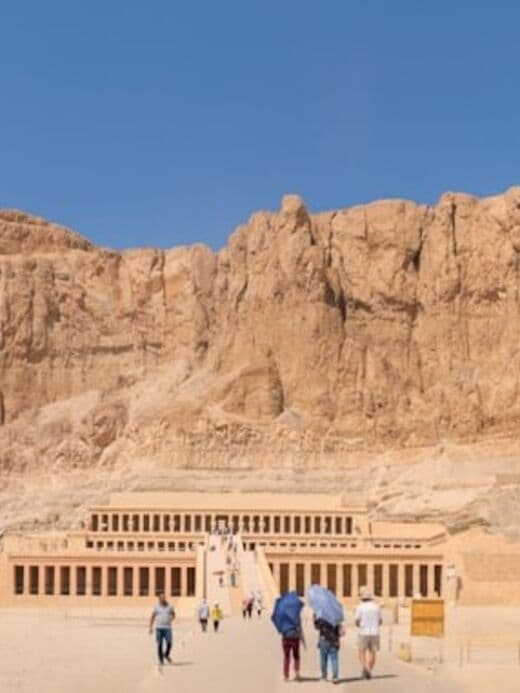
The west bank of Luxor is an entire necropolis. Near the Valley of the Kings is the Valley of the Queens (tombs of pharaohs' wives and children), the Temple of Hatshepsut (the queen's magnificent mortuary temple), and the Colossi of Memnon (giant statues at the necropolis entrance).
On the east bank are Karnak Temple and Luxor Temple.
Atmosphere and Character
The Valley of the Kings is a place of power. A desert valley, sun-scorched rocks, silence — and beneath your feet sleep pharaohs who ruled the world three thousand years ago. Descending into a tomb through a narrow corridor, you feel time compress: the same walls, same colors, same smell of dust — as thousands of years ago.
This is where you understand the Egyptians' obsession with eternity. They built not for the living but for the dead. All wealth, all art, all technology — to transport the soul to the afterlife. And these tombs are monuments to that belief.