Warsaw
Warsaw 2026: Everything You Need to Know Before You Go
Warsaw is a city that rose from the ashes. Completely destroyed during World War II, the Polish capital was painstakingly rebuilt and today combines reconstructed history with bold modernity. Here, a Stalinist skyscraper stands next to hipster bars, and medieval streets of the Old Town transition into the concrete jungle of the business district.
In brief: Warsaw is worth visiting for the reconstructed Old Town (UNESCO), the Royal Castle, the green Lazienki Park with free Chopin concerts, the colorful Praga district with street art, and authentic milk bars serving pierogi for $3. Plan for 3-4 days in the city, 5-7 days with day trips.
Who is this city for? Warsaw is ideal for 20th-century history buffs, budget travelers, food enthusiasts, and those who want to see Europe without the crowds and inflated prices. This is not a picture-perfect Instagram city - it is a living, authentic metropolis with its own character.
Honest about the downsides: The architecture in the center can be chaotic, the Soviet legacy is not everyone's cup of tea, and winters are gray and cold. But this imperfection is exactly what makes Warsaw real.
Warsaw Neighborhoods: Where to Stay
Old Town (Stare Miasto) - For First-Time Visitors
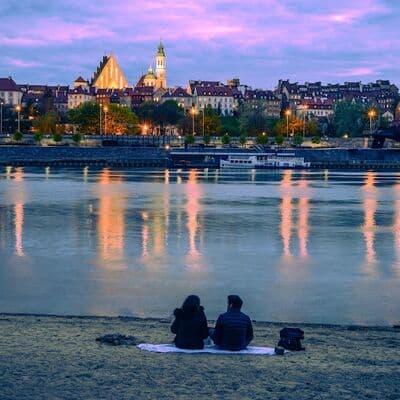
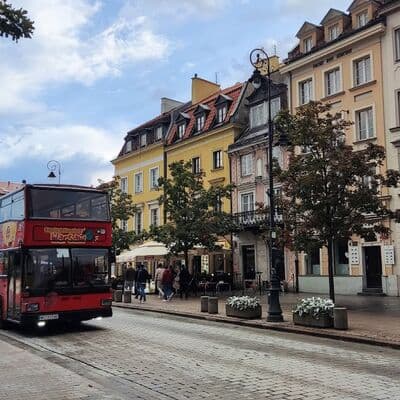
The heart of Warsaw and a UNESCO World Heritage Site. The Old Town was completely destroyed in 1944 and rebuilt using pre-war photographs, paintings, and blueprints. The Market Square with its colorful townhouses, the Royal Castle, Gothic churches - all within walking distance.
Pros: Atmosphere, attractions at your doorstep, beautiful photos
Cons: Tourist prices in restaurants, little local life in the evening
Prices: $$$ (hotels from $90-130, apartments from $65)
Nearby: Royal Castle, Market Square, Barbican, St. John's Cathedral
City Center (Srodmiescie) - The Hub of Everything
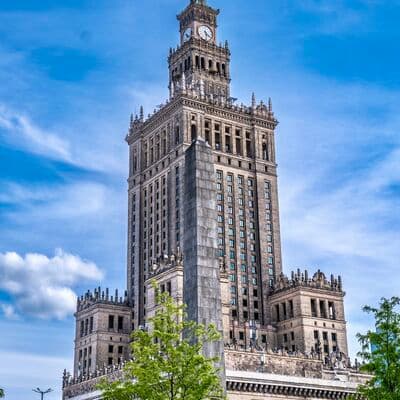
The business and commercial center of Warsaw. This is where you will find the Palace of Culture and Science - a Stalinist skyscraper that locals long hated but now ironically love. Surrounding it are shopping malls, offices, and the main train station.
Pros: Transportation hub, shopping, close to everything
Cons: Noisy, little greenery, not the prettiest architecture
Prices: $$ (hotels from $55-90, hostels from $17)
Nearby: Palace of Culture, Central Station, Zlote Tarasy shopping center
Powisle - Trendy and Youthful
A former working-class district by the Vistula River that has transformed into Warsaw's hippest neighborhood. The Bulwary Wisane riverbank comes alive in summer: beach bars, street food, concerts. The Warsaw University Library with its rooftop garden is a must-visit.
Pros: Nightlife, restaurants, proximity to the river, youthful energy
Cons: Noisy on weekends, pricier than it used to be
Prices: $$-$$$ (hotels from $75-110)
Nearby: Vistula riverbank, Museum of Modern Art, Copernicus Science Center
Praga (Praga-Polnoc) - Alternative Warsaw
The right-bank district that was barely damaged during the war - here you will find authentic pre-war buildings. Once considered dangerous, it is now the epicenter of street art, galleries, and craft bars. The Neon Museum at Soho Factory, graffiti on every corner, the vibe of 2000s Berlin.
Pros: Authenticity, street art, craft bars, low prices
Cons: Further from center, some streets are run-down
Prices: $ (hostels from $11, hotels from $45)
Nearby: Neon Museum, Soho Factory, Zabkowska Street with its bars
Mokotow - For Families and Relaxation
A green residential district south of the center. Parks, cafes, apartment buildings. Popular with expats and families with children. Pole Mokotowskie is a huge park for jogging and picnics.
Pros: Quiet, green, family atmosphere, close to airport
Cons: Far from attractions, little nightlife
Prices: $$ (apartments from $45-65)
Nearby: Pole Mokotowskie park, Galeria Mokotow shopping center
Zoliborz - Old Warsaw Charm
A quiet, intellectual district with pre-war architecture and tree-lined streets. Writers, scientists, and artists once lived here. The Citadel - a former tsarist fortress - is now a park. For those who want to feel how Varsovians lived before the war.
Pros: Quiet, architecture, parks, local character
Cons: Little tourist infrastructure, further from center
Prices: $$ (apartments from $50-70)
Nearby: Citadel, Kepa Potocka park
Wola - The New Business Warsaw
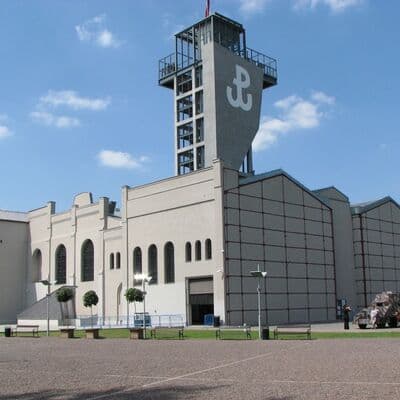
A former industrial district transforming into a new business center. Skyscrapers, modern hotels, Norblin Factory - a restored industrial complex with restaurants and a cinema. The Warsaw Rising Museum is the main attraction here.
Pros: Modern infrastructure, Warsaw Rising Museum, business hotels
Cons: Little historic charm, construction sites
Prices: $$-$$$ (business hotels from $65-100)
Nearby: Warsaw Rising Museum, Norblin Factory, Jewish Cemetery
Best Time to Visit Warsaw
Ideal Months: May-June and September
Late spring and early fall are the golden times for Warsaw. Temperatures of 65-77F (18-25C), parks in bloom or golden colors, fewer tourists than summer, lower prices. In May, lilacs bloom in Lazienki Park; September offers an Indian summer without the crowds.
Summer (July-August): Hot and Lively
Temperatures of 77-86F (25-30C), sometimes higher. The Vistula riverbank becomes a beach, with summer bars and open-air cinemas. Free Chopin concerts in Lazienki every Sunday. Downside - school holidays mean more tourists and higher accommodation prices.
Fall (October-November): Cheaper but Grayer
October is still pleasant (50-59F / 10-15C), golden autumn in the parks. November gets gray, rainy, and dark early. But it is low season: prices drop 30-40%, no lines at all.
Winter (December-February): Christmas Fairy Tale or Gray Gloom
December brings Christmas markets in the Old Town, mulled wine, gingerbread. Beautiful but cold (23-41F / -5 to +5C). January-February are the cheapest months, but the weather is depressing: gray skies, short days. Only for museum lovers and introverts.
Spring (March-April): The City Awakens
March is still cold and muddy after winter. April is better: 50-64F (10-18C), first greenery, Easter traditions. Prices start rising toward May.
Major Events
- May: Night of Museums (free admission), Chopin concerts begin
- June: Open'er Festival (rock/pop in Gdynia, 3 hours from Warsaw)
- August: August 1 - Anniversary of the Warsaw Uprising, sirens at 5pm
- December: Christmas markets from December 1
When to Book
High season (May-September, December holidays): 2-3 months ahead. Low season (November, January-March): 1-2 weeks is sufficient.
Warsaw Itinerary: From 3 to 7 Days
Warsaw in 3 Days: The Essentials
Day 1: Old Town and the Royal Route
9:00-12:00 - Start at the Old Town. The Market Square (Rynek Starego Miasta) comes alive around 10am. Walk around its perimeter, pop into St. John's Cathedral (free), reach the Barbican - medieval fortifications. Do not miss the bell at Kanonia Square: legend says walking around it three times brings good luck.
12:00-13:30 - Lunch at a milk bar. Head to Bar Mleczny Familijny (ul. Nowy Swiat 39) or Pod Barbakanem (ul. Mostowa 27/29). Pierogi with meat plus borscht equals 25-35 PLN ($6-8). This is not a restaurant but a cafeteria - grab a tray, point at what you want, pay at the register.
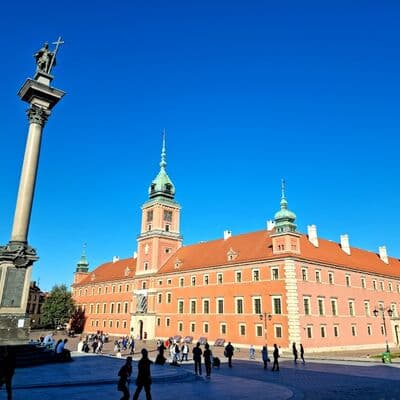
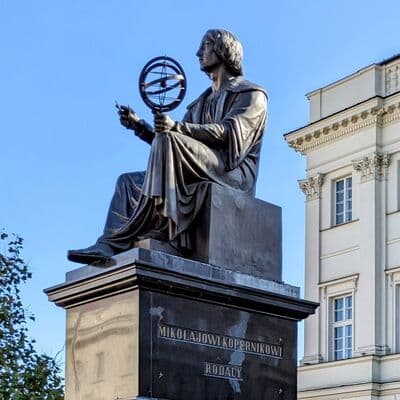
14:00-16:00 - Royal Castle. Inside you will find state rooms, paintings by Rembrandt and Canaletto. Ticket 40 PLN ($10), free on Wednesdays. Allow 1.5-2 hours. Afterward, stroll down Krakowskie Przedmiescie: palaces, churches, the Copernicus Monument.
17:00-19:00 - Walk to the Palace of Culture and Science. The observation deck on the 30th floor costs 25 PLN ($6). Best views at sunset. Stalin gifted this building to Poland, and locals joke that the best view is from inside - because then you cannot see the building itself.
19:30-22:00 - Dinner on Nowy Swiat street or in the Poznanska/Wilcza area - that is where locals eat. Try modern Polish cuisine at Warszawa Wschodnia or classics at Stary Dom.
Day 2: Jewish History and Modernity
9:00-13:00 - Warsaw Rising Museum (ul. Grzybowska 79). This is not about the Jewish history but about the 1944 Uprising. Interactive, emotional, heavy. Plan at least 3 hours. Ticket 30 PLN ($7.50), free on Sundays (expect lines!).
13:30-14:30 - Lunch at Hala Koszyki (ul. Koszykowa 63) - a food hall in a restored 1909 market building. Dozens of stalls: from pierogi to ramen, from 25 to 60 PLN ($6-15).
15:00-18:00 - POLIN Museum of the History of Polish Jews (ul. Anielewicza 6). One thousand years of Jewish history in Poland. Stunning exhibition, multimedia, personal stories. Plan at least 2.5 hours. Ticket 35 PLN ($9), free on Thursdays.
18:30-19:30 - Walk through the former ghetto. The Monument to the Ghetto Heroes, Umschlagplatz - the place from which Jews were deported to Treblinka. Heavy but important.
20:00-22:00 - Evening in Powisle. The Vistula riverbank in summer, craft bars on ul. Foksal in winter.
Day 3: Parks and the Right Bank
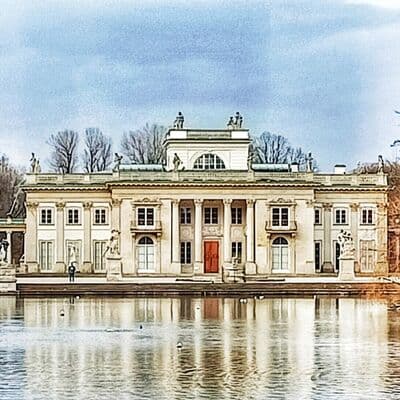
9:00-12:30 - Lazienki Park. The most beautiful park in Warsaw: the Palace on the Water, amphitheater, Chopin Monument. On Sundays at 12:00 and 4:00pm (May-September) there are free Chopin concerts. Arrive by 9am while it is still empty. Squirrels will eat from your hand.
12:30-13:30 - Lunch near the park or in the ul. Mysliwiecka area.
14:00-18:00 - Cross to the right bank to the Praga district. Start at Soho Factory (ul. Minska 25): Neon Museum, galleries, cafes in an industrial setting. Then stroll down ul. Zabkowska: graffiti, bars, atmosphere. Check out the courtyard at ul. Brzeska 4 - pre-war inscriptions are still preserved on the walls.
18:30-22:00 - Dinner and bars in Praga. Try W Oparach Absurdu or Sklad Butelek - this is where locals drink.
Warsaw in 5 Days: Without Rushing
First 3 days as above, plus:
Day 4: Wilanow and Southern Warsaw
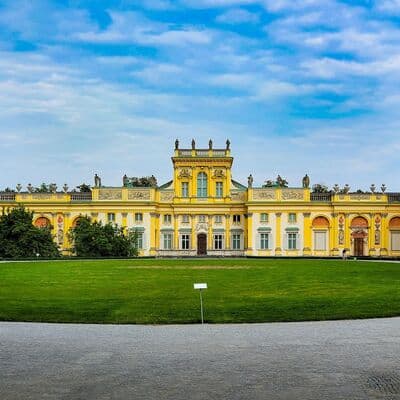
10:00-14:00 - Wilanow Palace. The baroque residence of King Jan III Sobieski, 10 km from the center. Bus 116 or 180 from the center takes about 40 minutes. Palace and gardens: 3-4 hours. Ticket 35 PLN ($9), gardens only 5 PLN ($1.25).
14:30-15:30 - Lunch in Wilanow. The cafe at the palace or restaurants on ul. Wiertnicza.
16:00-19:00 - Return through Mokotow. Stop by Pole Mokotowskie - a park with history (former airfield). Evening dinner on ul. Pulawska.
Day 5: Shopping and Museums of Your Choice
10:00-13:00 - Museum based on your interests: Copernicus Science Center (interactive, great for kids), National Museum (art), or Norblin Factory (food, cinema, shopping).
13:30-17:00 - Shopping. Zlote Tarasy and Galeria Mokotow are large malls. Hala Mirowska is a traditional market: vegetables, meat, Polish products. Hala Koszyki for souvenirs and food.
17:30-20:00 - Final stroll through your favorite spots. Sunset from the Vistula riverbank.
Warsaw in 7 Days: With Day Trips
First 5 days as above, plus:
Day 6: Day Trip to Krakow or Gdansk
Train to Krakow takes 2.5 hours (from $15). To Gdansk 2.5-3 hours (from $20). Depart at 7-8am, return on the evening train. Book tickets at intercity.pl or in the PKP app.
Day 7: Zelazowa Wola and Lowicz
Chopin's birthplace is 50 km from Warsaw. House museum, concerts on Sundays. Bus from Dworzec Zachodni. On the way, stop in Lowicz - a small town with a colorful market and folk costumes.
Where to Eat in Warsaw: Restaurants and Cafes
Milk Bars (Bar Mleczny) - Polish Fast Food
A relic of socialism that Poles have preserved and learned to love again. Self-service cafeterias with home-cooked food at ridiculously low prices. Pierogi, zur (sour soup), cutlets, kompot - all like grandma used to make, $6-11 for a full lunch.
Best ones:
- Bar Mleczny Familijny (Nowy Swiat 39) - downtown, tourists know it, but still good
- Bar Pod Barbakanem (Mostowa 27/29) - near the Old Town
- Bar Bambino (Krucza 21) - iconic place, operating since 1959
- Bar Prasowy (Marszalkowska 10/16) - near the Palace of Culture
How to order: Menu is in Polish, point at what you want, say the quantity. Pay at the register, pick up from the window. Do not be shy - this is how Poles do it.
Modern Polish Cuisine - For a Special Evening
A new generation of chefs is reimagining grandma's recipes. The same pierogi but with foie gras; the same borscht but in fine dining format.
Recommendations:
- Nolita (Wilcza 46) - consistently excellent modern Polish, $35-60 for two
- Stary Dom (Pulawska 104/106) - classics with a contemporary twist
- Warszawa Wschodnia (Minska 25) - in Praga, locavore cuisine
- Rozbrat 20 (Rozbrat 20) - Michelin-level, tasting menu from $85
Food Halls - Everything in One Place
Hala Koszyki (Koszykowa 63) - a must-visit. A restored 1909 market with dozens of vendors: pierogi, sushi, burgers, wine. Average check $10-20. Open until 11pm.
Food Town (Norblin Factory, Zelazna 51/53) - a new food hall in an industrial complex. Bigger than Koszyki but further from the center. Cinema and museums nearby.
Nocny Market - summer night market on old railway platforms. Weekends only, June-September. Street food, beer, music.
Where to Have Breakfast
- Charlotte (several locations) - French style, croissants, eggs, $10-15
- Relax na Wilczej (Wilcza 12) - locals have been coming here for years, homey atmosphere
- Aioli (several locations) - breakfast all day, Polish-European menu
- Czuly Barbarzynca (Dobra 31) - bookstore cafe, hipster vibe
Coffee
Warsaw is the coffee capital of Eastern Europe. Specialty coffee everywhere, local roasters, serious baristas.
- Relax (several locations) - pioneers of specialty coffee in Poland
- Karma (Plac Zbawiciela 3/5) - iconic spot, lines on weekends
- Forum (Krzywickiego 34) - hidden in a residential building, for insiders
- Filtry (Niemcewicza 3) - Mokotow district, local favorite
What to Try: Warsaw Food Guide
Pierogi - Polish dumplings with various fillings. Classics include ruskie (potato and cheese), z miesem (meat), z kapusta i grzybami (sauerkraut and mushrooms). At milk bars starting from $4 per portion. Best ones at Zapiecek (chain) or Pierogarnia Mandu (creative twists).
Zurek - sour soup made with fermented rye, white sausage, and egg. Served in a bread bowl or regular bowl. Warming in winter, surprising in flavor. $4-6.
Barszcz (Borscht) - clear, rich beetroot broth. At Christmas served with uszka (tiny dumplings). Year-round as an appetizer, $2.50-4.
Bigos - hunter's stew of sauerkraut, meat, sausages, and mushrooms. Cooked for hours, tastes better on the second day. The national dish, $6-10.
Kotlet schabowy - breaded pork cutlet, the Polish answer to Wiener schnitzel. With potatoes and cabbage salad, this is a classic lunch. $7-11.
Golabki - cabbage rolls stuffed with meat and rice in tomato sauce. Grandma food in the best sense. $5-9.
Zapiekanka - Polish street food: a baguette topped with mushrooms, cheese, and ketchup. Sold through windows, especially at Plac Zbawiciela. $2.50-4 each.
Paczki - Polish doughnuts filled with jam or rose hip. Especially popular on Fat Thursday (before Lent) when Poles consume millions of them. Available year-round at bakeries, $1.25-2.
Sernik - cheesecake, but Polish style: denser, more cottage cheese-like, often served cold. At every bakery, $3-4.50 per slice.
Drinks:
- Piwo (Beer) - Zywiec, Tyskie, Lech are mainstream; Pracownia, Pinta, AleBrowar are craft. $2-4 at a bar
- Wodka - Zubrowka (with bison grass), Wyborowa, Belvedere. Drink cold, in one shot, chase with a pickle
- Miod pitny - mead, sweet and deceptively strong. Try poltorak (the strongest kind)
Tourist traps: Restaurants directly on the Old Town Market Square charge 2-3x normal prices with mediocre quality. Walk two blocks away and prices drop by half.
Warsaw Secrets: Tips from Locals
- Free museum days: Royal Castle on Wednesday, POLIN on Thursday, Warsaw Rising Museum on Sunday. Arrive at opening; lines grow toward noon.
- Warsaw Pass is not always worth it: 119 PLN ($30) per day with transport and museums. Only pays off if you visit 3+ paid museums daily. For a relaxed pace, buy tickets separately.
- Transit card for transport: Warszawska Karta Miejska at ZTM kiosks or ticket machines. 24 hours = 15 PLN ($4), 72 hours = 36 PLN ($9). Covers metro, trams, buses.
- Free Chopin concerts: Every Sunday May-September, 12pm and 4pm at the monument in Lazienki. Arrive 30 minutes early to claim a spot on the grass.
- Metro closes at 11:30pm: After that, night buses with an N prefix. They run infrequently (30-60 min) but cover the whole city. Uber and Bolt work 24/7.
- Sunday shopping ban: Since 2018, stores are closed on Sundays. Open: Zabka (mini-markets), gas stations, restaurants, museums. Stock up on Saturday.
- Tap water: Safe to drink. Bring a bottle and refill for free. At restaurants, ask for woda z kranu - it is free.
- Exchange offices (kantor) beat banks: Better rates, no commission. Find a kantor away from the station and Old Town. Or withdraw cash from ATMs (choose without conversion).
- Plac Zbawiciela after 10pm: The main party square. In summer, everyone sits on the steps with beer. In winter, in the bars around it.
- Vistula riverbank in summer: Beaches, bars, concerts - all free. The boulevards from Poniatowski Bridge to Copernicus Science Center. Best sunsets in the city.
- Praga on Saturdays: Bazar Rozycki flea market (Brzeska/Targowa) - vintage, antiques, Soviet artifacts. Arrive before 11am.
- Tipping: 10% is sufficient, 15% is generous. At bars, round up the bill. Service is not included but also not mandatory.
Getting Around Warsaw: Transportation and Connectivity
From the Airport to the City Center
Chopin Airport (WAW) - the main airport, 10 km from the center:
- SKM/KM train: 20 minutes to Centrum, 4.40 PLN ($1.10). Station is under the terminal, trains every 15-20 minutes
- Bus 175: 30-40 minutes to Centrum, 4.40 PLN ($1.10). Runs every 15 minutes
- Taxi: 40-50 PLN ($10-12.50), 20-30 minutes. Uber/Bolt $9-11
Modlin Airport (WMI) - budget airlines, 40 km from the center:
- ModlinBus: 50 minutes to center, 35 PLN ($9). Book online
- Train + bus: Bus to Modlin station, then train to Centrum. 25 PLN ($6.25), 1.5 hours
- Taxi: 150-200 PLN ($37-50) - not recommended
City Transportation
Metro: 2 lines, M1 (north-south) and M2 (east-west). Clean, fast, safe. Operates 5am-11:30pm.
Trams: Cover the entire center. Slower than the metro but more atmospheric. Same tickets.
Buses: For outskirts and nights (N-series). Same tickets.
Tickets:
- Single 20 min: 3.40 PLN ($0.85)
- Single 75 min: 4.40 PLN ($1.10)
- 24 hours: 15 PLN ($3.75)
- 72 hours: 36 PLN ($9)
Buy at machines at stops or in the Jakdojade app. Validate when boarding!
Veturilo (bikes): Registration is 10 PLN for the season. First 20 minutes free. Stations throughout the city, great for short trips.
Taxis and Ridesharing
Uber and Bolt are the main options. Prices are lower than official taxis. From the center to Praga: $4-6, to the airport: $9-11. Card payment in the app.
Free Now and iTaxi are apps for official taxis. Slightly more expensive, but better cars.
Internet and Communication
SIM card: Orange, Play, T-Mobile, Plus. Starter packs from $4-7.50 with 5-10 GB. Sold at Zabka convenience stores, gas stations, and carrier shops. Passport required for registration.
eSIM: Airalo, Holafly - activate online. More convenient for short trips. From $5-10 for a week.
Wi-Fi: Free at cafes, restaurants, shopping centers. Metro has it but it is unstable. Hotels almost always include it.
Useful apps:
- Jakdojade - public transit navigation, schedules, ticket purchases
- Bolt / Uber - taxis and scooters
- Google Maps - works great, including transit
- Pyszne.pl - food delivery
- Veturilo - city bikes
Money Matters: Budget Tips for Warsaw
Warsaw is one of the best-value capitals in the European Union. Your dollars will stretch further here than in Western Europe, though prices have been rising steadily. Here is what to expect in 2026:
Daily budget breakdown:
- Budget ($40-60/day): Hostel dorm, milk bars for meals, free attractions, public transport
- Mid-range ($80-120/day): 3-star hotel, mix of milk bars and restaurants, paid museums, occasional taxi
- Comfortable ($150-200/day): 4-star hotel, nice restaurants, all attractions, Uber everywhere
Money-saving strategies:
- Eat lunch at milk bars - full meal for $6-8
- Visit museums on free days (check schedules above)
- Buy multi-day transit passes
- Book accommodation in Praga or Wola for better rates
- Drink local beer instead of imports - half the price
- Use Zabka convenience stores for snacks and water
Cash vs cards: Cards are accepted almost everywhere, including small cafes and markets. However, carry some cash (100-200 PLN) for smaller vendors, flea markets, and the occasional place that is cash-only. ATMs (bankomaty) are everywhere - use those affiliated with major banks and always decline the conversion option to get the best rate.
Safety and Practical Information
Warsaw is one of the safest major cities in Europe. Violent crime against tourists is extremely rare. That said, use common sense:
- Pickpockets: Present in crowded areas (Old Town, train stations, public transport during rush hour). Keep valuables secure, especially in summer crowds
- Scams: Rare, but watch for overcharging taxis without meters - always use apps or agree on price beforehand
- Praga at night: Despite its edgy reputation, Praga is now safe for tourists. The gentrified areas around Zabkowska Street are fine after dark. Just avoid poorly lit side streets late at night, as you would anywhere
- Emergency number: 112 (EU-wide), English-speaking operators available
Health: No special vaccinations needed. Pharmacies (apteka) are everywhere and many basic medications are available over the counter. For serious issues, hospitals have emergency rooms (SOR). EU citizens can use their EHIC card; Americans should have travel insurance.
Language: Polish is notoriously difficult, but younger Varsovians speak excellent English. In tourist areas, menus and signs are often bilingual. Learning a few Polish words goes a long way: dzien dobry (hello), dziekuje (thank you), prosze (please).
Who Warsaw Is For: Final Verdict
Warsaw is not a postcard city but one for immersion. Here, 20th-century history comes alive in museums and on the streets, budget food tastes better than expensive meals, and the contrast between the reconstructed Old Town and Soviet brutalism creates a unique atmosphere found nowhere else in Europe.
Perfect for: History buffs (especially WWII), budget travelers, food tourists, those seeking real Europe without tourist crowds, architecture enthusiasts interested in post-war reconstruction.
Not the best choice for: Beach vacations, Renaissance architecture masterpieces, or non-stop entertainment - for that there is Barcelona or Prague.
How many days: Minimum 3 days, optimal 4-5, with day trips 7 days.
Best paired with: Krakow (historic charm, Auschwitz), Gdansk (Baltic coast, Hanseatic history), or a Baltic loop through Vilnius and Riga.
Information current as of 2026.