Venice
Venice - The City on Water, Pearl of the Adriatic
Venice is a dream city built on 118 islands in the Venetian Lagoon of the Adriatic Sea. There are no cars or roads here - only canals, bridges, and narrow alleyways called calli. This unique city, built on wooden piles driven into the muddy lagoon floor, was for centuries one of the most powerful maritime republics of the Mediterranean. Today, Venice is a UNESCO World Heritage Site, attracting over 20 million tourists annually from around the world.
History of Venice: From Refugees to Maritime Empire
Venice's history began in the 5th century when inhabitants of mainland Italy fled to the lagoon islands to escape barbarian invasions - the Huns and Lombards. The first settlers established themselves on the islands of Torcello and Malamocco, later moving to the Rialto islands that would become the heart of Venice.
In 697 AD, the first Doge was elected - the ruler of the Venetian Republic. This form of government lasted over a thousand years until 1797, when Napoleon ended the independence of La Serenissima (The Most Serene Republic). In 828, Venetian merchants stole the relics of Saint Mark from Alexandria, and he became the city's patron saint. The winged lion - symbol of the Evangelist Mark - still adorns Venice's flag and coat of arms.
Venice's golden age spanned the 13th to 15th centuries. After the Fourth Crusade (1204), the city controlled a significant portion of the Byzantine Empire, including Constantinople. Venetian trade routes stretched from England to China, and the republic's fleet dominated the Mediterranean. Venice became the wealthiest city in Europe, a center of trade in spices, silk, and precious goods.
St. Mark's Square - The Heart of Venice
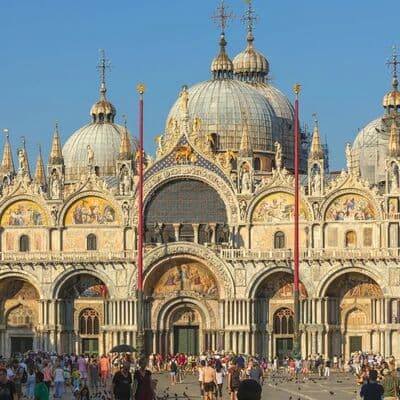
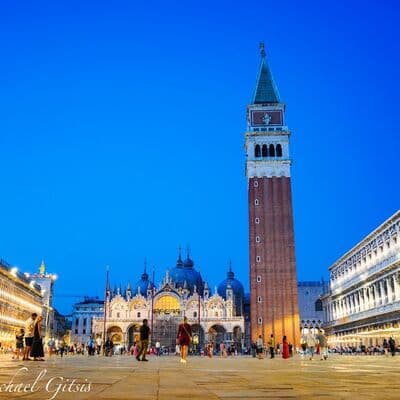
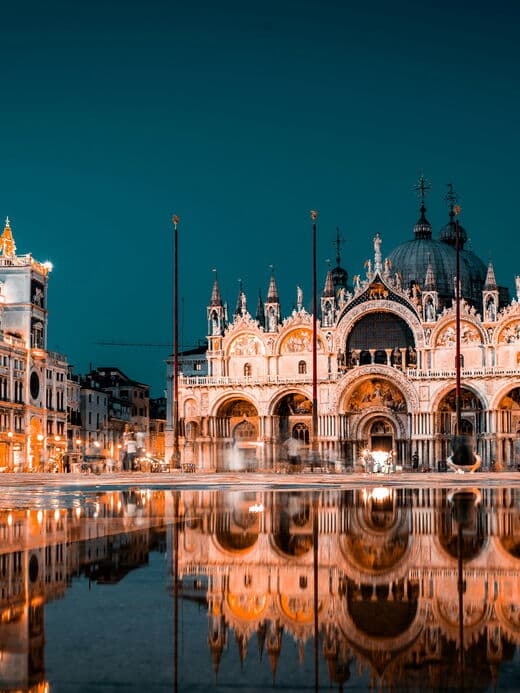
Piazza San Marco is the only square in Venice honored with the title 'piazza' (all others are called 'campo'). Napoleon called it 'the most elegant drawing room in Europe.' The square is surrounded by magnificent buildings: St. Mark's Basilica, the Doge's Palace, the Campanile bell tower, and the Old and New Procuracies.
St. Mark's Basilica (Basilica di San Marco) is a masterpiece of Byzantine architecture, built between 829 and 1094 to house the saint's relics. Its five domes covered in lead plates and a facade adorned with mosaics and Gothic spires create an unmistakable silhouette. Inside, more than 8,000 square meters of golden mosaics from the 12th-13th centuries depict biblical scenes. The Pala d'Oro deserves special attention - a golden altarpiece decorated with 1,927 precious stones and 250 enamel plaques.
The Campanile bell tower, standing 98.6 meters tall, is Venice's highest building. The original tower collapsed in 1902 but was faithfully reconstructed by 1912. From its observation deck, breathtaking views extend across Venice and the lagoon, with the Alps visible on clear days.
The Doge's Palace - Seat of Power
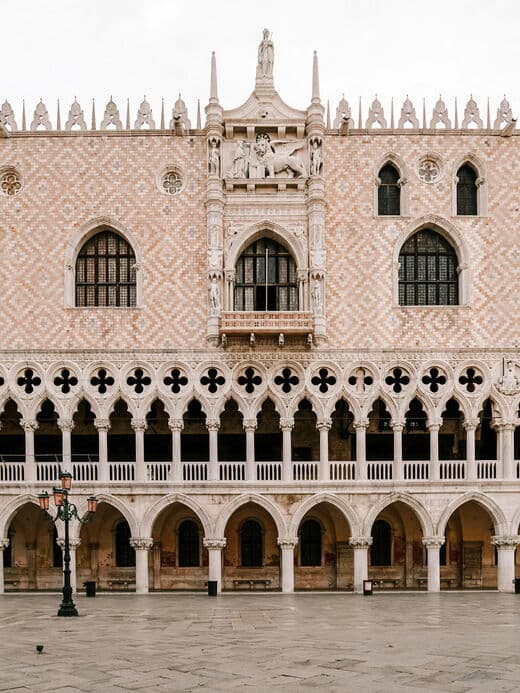
Palazzo Ducale is one of Venice's main symbols and a masterpiece of Gothic architecture. For nearly a thousand years, it housed the Doge's residence, the republic's government, courts, and prisons. Construction of the current building began in the 14th century and continued for over a century.
The palace facade exemplifies Venetian Gothic: the lower level features elegant arcades, while upper floors are decorated with pink and white marble in geometric patterns. Inside, lavish halls were painted by Venice's greatest artists: Tintoretto, Veronese, and Titian. The Hall of the Great Council contains one of the world's largest paintings - Tintoretto's 'Paradise,' covering more than 500 square meters.
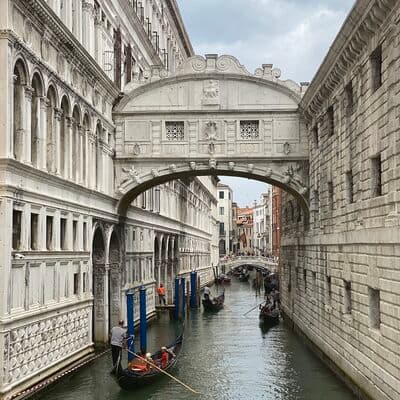
From the Doge's Palace, the famous Bridge of Sighs leads to the New Prisons. The bridge's name comes from the sighs of condemned prisoners who glimpsed freedom one last time through its barred windows. Legend has it that Giacomo Casanova made his famous escape from these prisons in 1756.
The Grand Canal - Venice's Main Street
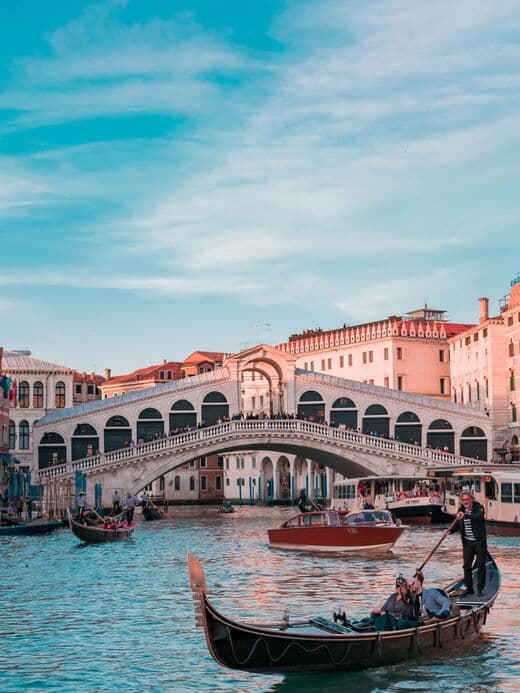
The Canal Grande is a 4-kilometer waterway that winds through the city in an S-shape, dividing it in two. The canal's width varies from 30 to 70 meters, with a depth of about 5 meters. Along the Grand Canal stand more than 170 palaces, most built between the 12th and 18th centuries, representing every style of Venetian architecture from Byzantine to Baroque.
A journey along the Grand Canal by vaporetto (water bus) is essential for any visitor. Among the most impressive palaces: Ca' d'Oro (Golden House) with its lacy Gothic facade, the massive Ca' Pesaro (now a museum of modern art), the elegant Ca' Rezzonico (museum of the 18th century), and the magnificent Palazzo Grassi (contemporary art exhibition center).
Four bridges span the Grand Canal. The most famous and oldest is the Rialto Bridge (Ponte di Rialto), built in 1591 to a design by Antonio da Ponte. This stone bridge with its arcade of shops replaced wooden bridges that had repeatedly collapsed. Until 1854, it was the only bridge crossing the Grand Canal.
Venetian Islands: Murano, Burano, Torcello
The Venetian Lagoon contains over a hundred islands, three of which are particularly popular with tourists. They can be reached by vaporetto - public water transport.
Murano is the island of glassmakers, located 1.5 kilometers from Venice. In 1291, all glass workshops were relocated here due to fire risks. Local masters developed unique techniques: vetro a reticello (lattice glass), lattimo (milk glass), and avventurina (golden glass). The Glass Museum displays works from the 15th-20th centuries, and visitors can watch master glassblowers at work.
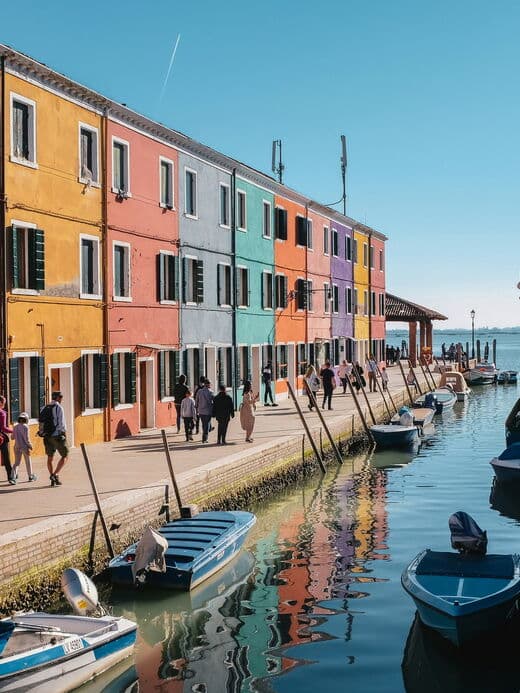
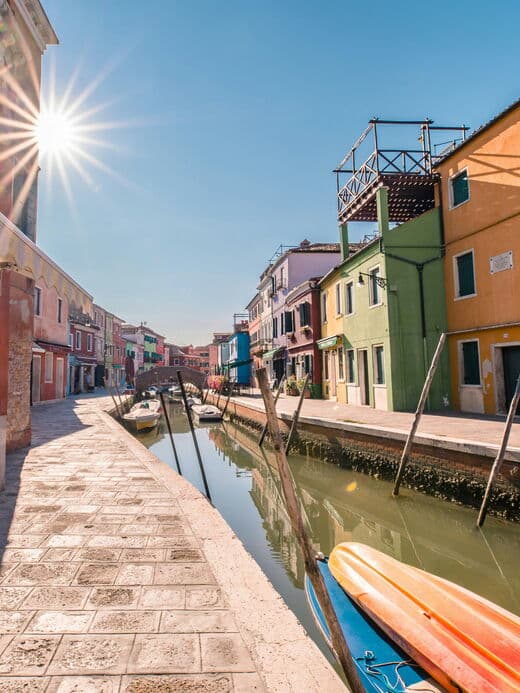
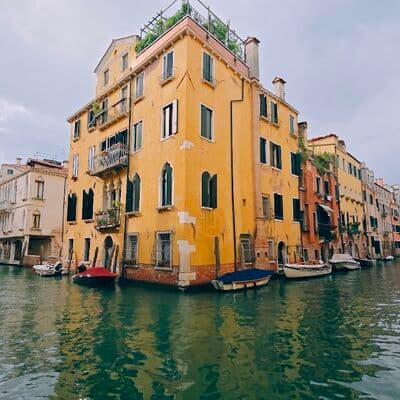
Burano is a fishing island famous for its colorful houses and lace-making. Legend says houses were painted bright colors so fishermen could recognize their homes from afar when returning in fog. The lace-making tradition dates to the 16th century when Burano lace adorned European nobility. The Lace Museum displays rare examples of this delicate art.
Torcello is the cradle of Venetian civilization. The first refugees from the mainland arrived here in the 5th century. At its peak (10th-11th centuries), the island had up to 20,000 inhabitants. Today, only a few dozen residents remain, but unique monuments survive: the Cathedral of Santa Maria Assunta (7th century) with stunning Byzantine mosaics and the Church of Santa Fosca (11th century).
Churches and Scuole of Venice
Venice has more than 130 churches, many of which are true art museums. The Basilica di Santa Maria Gloriosa dei Frari is the city's largest Gothic church, housing masterpieces by Titian: 'Assumption of the Virgin' above the main altar and 'Madonna of the Pesaro Family.' It also contains Titian's tomb and Canova's memorial monument.
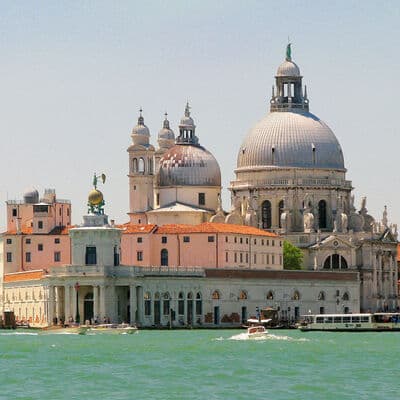
The Church of Santa Maria della Salute is a magnificent Baroque temple at the entrance to the Grand Canal. Built in gratitude for deliverance from the 1630 plague, it became one of Venice's symbols. Every November 21st, Venetians celebrate the Festa della Salute, connecting the banks with a pontoon bridge.
Scuole were confraternities that united citizens by profession or nationality. The Scuola Grande di San Rocco is a masterpiece showcasing Tintoretto's work - he spent over 20 years decorating it, creating 56 enormous canvases. The Scuola di San Giorgio degli Schiavoni houses a cycle of paintings by Vittore Carpaccio depicting the lives of saints.
Museums and Collections
The Gallerie dell'Accademia is Venice's main art museum, located in a former church and monastery. The collection spans Venetian painting from the 14th to 18th centuries: works by Bellini, Giorgione, Titian, Tintoretto, Veronese, Canaletto, and Guardi. Masterpieces include Giorgione's 'The Tempest' and Leonardo da Vinci's 'Vitruvian Man' (rarely displayed).
The Peggy Guggenheim Collection is one of Europe's finest modern art museums. Located in the unfinished Palazzo Venier dei Leoni on the Grand Canal, the museum presents masterworks of Cubism, Surrealism, and Abstract Expressionism: pieces by Picasso, Dalí, Kandinsky, Pollock, and Magritte.
Ca' Pesaro houses the International Gallery of Modern Art and the Museum of Oriental Art. This magnificent Baroque palace by Longhena displays works by Klimt, Chagall, Matisse, and Kandinsky, along with a rich collection of Japanese Edo-period art.
Venice Carnival and Regattas
The Venice Carnival is one of the oldest and most famous in the world. The tradition dates to 1094, reaching its height in the 18th century when the carnival lasted up to six months. After being banned during Austrian rule, the festival was revived in 1979. Every February, the city is immersed in an atmosphere of masks, costumes, and mystery. The most popular masks are the bauta, colombina, and medico della peste (plague doctor).
The Regata Storica (Historical Regatta) has been held on the first Sunday of September since 1489. A colorful procession of historical boats with rowers in 16th-century costumes opens the gondolier competitions on the Grand Canal. The spectacle attracts hundreds of thousands of spectators to the banks and bridges.
The Festa del Redentore (Feast of the Redeemer) is celebrated on the third Saturday of July to commemorate deliverance from the 1576 plague. A pontoon bridge connects the Zattere waterfront to the Church of the Redentore on Giudecca Island. The celebration culminates in a spectacular fireworks display over the lagoon.
Gondolas - Symbol of Venice
The gondola is a traditional Venetian boat dating back to the 11th century. Today, about 400 gondoliers work in Venice, with the profession often passed down through families. Each gondola is handcrafted from 8 types of wood: larch, lime, elm, oak, fir, mahogany, cherry, and walnut. The boat measures 10.85 meters long and 1.42 meters wide. Its distinctive asymmetric hull compensates for the weight of the gondolier standing on one side.
The bow ornament (ferro) has symbolic meaning: the six forward-facing teeth represent Venice's six districts (sestieri), the backward tooth represents Giudecca Island, and the S-curve represents the Grand Canal. By law since 1562, all gondolas must be black - a tradition maintained to this day.
A gondola ride is romantic but not cheap: 80 euros for 30 minutes during the day and 100 euros in the evening (2024 rates). A more affordable alternative is the traghetto, a gondola ferry across the Grand Canal for 2 euros.
Venetian Cuisine
Venetian cuisine reflects the city's maritime past and trading connections with the East. The foundation is fresh seafood from the lagoon and Adriatic. Traditional dishes include:
- Sarde in saor - sardines in a sweet-and-sour marinade with onions, raisins, and pine nuts. The dish originated as a way to preserve fish for long voyages
- Baccalà mantecato - whipped dried cod with olive oil, served on polenta or crostini
- Risi e bisi - a thick rice and fresh pea soup, traditional dish for St. Mark's Day (April 25)
- Fegato alla veneziana - calf's liver with onions, a Venetian classic
- Spaghetti al nero di seppia - spaghetti with cuttlefish ink, a characteristic coastal dish
- Moleche - soft-shell crabs, deep-fried (seasonal: spring and autumn)
Cicchetti are Venetian appetizers, similar to Spanish tapas. They're served in bacari - traditional wine bars. Typical cicchetti include polpette (meatballs), crostini with various toppings, boiled eggs, and marinated vegetables. Cicchetti are traditionally accompanied by an 'ombra' - a glass of local wine.
Notable desserts include fritole (fried doughnuts with raisins, served during carnival), zaletti (cornmeal cookies with raisins), and tiramisu - though this dessert's origin is disputed between Veneto and Friuli.
Wines of Veneto
The Veneto region is one of Italy's largest wine-producing regions. The most famous wines include:
- Prosecco - sparkling wine made from Glera grapes, produced in the Conegliano-Valdobbiadene hills (DOCG). Fresh, light, and perfect as an aperitif
- Soave - white wine from Garganega grapes, produced near Verona. Elegant, with notes of citrus and almond
- Valpolicella - red wine from Verona province. Basic versions are light and fruity; Ripasso is fuller-bodied
- Amarone della Valpolicella - powerful red wine made from dried grapes (appassimento), with alcohol levels up to 16-17%. Deep, velvety, with notes of dried fruit and chocolate
The traditional Venetian cocktail is the Spritz: prosecco, an aperitif (Aperol, Campari, or Select), and soda water. In Venice, the bitter Select is often used, giving the drink a more intense flavor.
Practical Information
Getting there: The nearest airport is Marco Polo (VCE), 8 km from the historic center. To reach Venice, take ACTV bus #5 to Piazzale Roma (8 euros, 20 minutes), the Alilaguna water bus to various points (15 euros, 60-90 minutes), or a private water taxi (approximately 120 euros). From Treviso Airport (used by budget airlines), ATVO buses run to Piazzale Roma (12 euros, 70 minutes).
Transportation: Cars must be left in parking lots at Piazzale Roma or Tronchetto Island. Getting around the city is by foot or vaporetto. A single vaporetto ticket costs 9.50 euros (valid for 75 minutes), so travel passes are more economical: 25 euros for 24 hours, 35 euros for 48 hours, 45 euros for 72 hours, 65 euros for a week. Children under 6 travel free.
When to visit: The best times are spring (April-June) and autumn (September-October), when there are fewer tourists and comfortable weather. Summer is hot and crowded. Winter is cold with possible acqua alta flooding, but carnival in February creates a special atmosphere. Avoid cruise ship days - they unload thousands of tourists simultaneously.
Acqua alta: During autumn and winter (October-March), flooding can occur when water submerges low-lying parts of the city, including St. Mark's Square. Forecasts are available on the Centro Maree website. Above 110 cm, elevated walkways are installed. Rubber boots or waterproof covers are recommended.
Tips for Visitors
Tourist tax: In 2024, a daily fee of 5 euros was introduced for day visitors on certain dates (weekends and holidays from April to July). For hotel guests, the tax is included in accommodation costs (1-5 euros per night depending on category).
Museum tickets: Advance booking is recommended, especially for the Doge's Palace. The San Marco Plus museum pass (30 euros) includes the Doge's Palace, St. Mark's Square museums, and Chorus churches. The Venice Pass includes transport and museums (from 50 euros). Entry to St. Mark's Basilica is free, but viewing the Pala d'Oro and treasury requires a ticket (5 euros).
Recommendations: Wear comfortable shoes - Venice has many bridges with steps. Avoid tourist restaurants near main attractions - seek out places deeper in the neighborhoods. Getting lost in the maze of streets is part of the Venetian experience, but bring a paper map in case your phone dies.
Day Trips from Venice
Verona - the city of Romeo and Juliet, 1.5 hours by train. The Roman Arena amphitheater, Juliet's House, Romanesque churches, and Piazza delle Erbe. Can be combined with wine tasting in Valpolicella.
Padua - an ancient university city, 30 minutes by train. The Scrovegni Chapel with Giotto's frescoes (booking required), the Basilica of Saint Anthony, and the world's oldest botanical garden.
Vicenza - the city of Palladio, 1 hour by train. The Olympic Theatre, numerous villas by the architect, including the famous Villa Rotonda.
The Dolomites - picturesque mountains 2-3 hours away. Lake Misurina, Tre Cime di Lavaredo, and the ski resort of Cortina d'Ampezzo.
Beaches: The Lido di Venezia is a beach island with sandy shores, 15 minutes by vaporetto. It hosts the Venice Film Festival. Chioggia is a picturesque fishing town at the southern end of the lagoon, known as 'Little Venice.'
Related Destinations
Continue your Italian journey by visiting other great cities: Rome - the eternal city with the Colosseum and Vatican, Florence - the cradle of the Renaissance with Michelangelo's masterpieces, and Milan - the capital of fashion and design. To the south awaits vibrant Naples with Pompeii and Vesuvius, while romantic Verona charms with its Shakespearean atmosphere.