Rome
Rome: The Eternal City Where Millennia of History Come Alive
Rome is not just the capital of Italy - it is a living open-air museum where every stone holds memories spanning millennia. The Eternal City, as it has been called since ancient times, stretches across seven hills along the banks of the Tiber and has remained one of the most influential cities in the world for nearly three thousand years. Here, ancient ruins stand alongside baroque palaces, medieval churches neighbor fashion boutiques, and ancient traditions seamlessly interweave with modern Italian life. Rome, with a population of approximately 2.8 million, is a city impossible to fully know in one trip and one that beckons visitors to return again and again.
History of Rome: From Legend to Empire and Beyond
According to legend, Rome was founded on April 21, 753 BC by twin brothers Romulus and Remus, who were nursed by a she-wolf. Historical evidence confirms that settlements existed on the Palatine Hill around this time. From a small village, Rome grew into a powerful republic, then an empire that at its height stretched from Britain to Mesopotamia, from the Rhine to the Sahara.
The Roman Empire left the world not only magnificent architectural monuments but also the foundations of law, engineering, urban planning, and governance. After the fall of the Western Roman Empire in 476 AD, the city experienced a period of decline but was reborn as the center of the Christian world and the residence of the Pope. During the Renaissance and Baroque periods, Rome once again became the cultural capital of Europe, attracting the greatest artists and architects of the time.
Rome as Capital of Unified Italy
In 1871, Rome became the capital of the unified Kingdom of Italy, ending the temporal power of the papacy. The 20th century brought both the dark pages of Mussolini's fascist regime and the post-war economic miracle and cultural flourishing of the Fellini era and La Dolce Vita. Today, Rome is a modern European capital carefully preserving its unique heritage.
The Colosseum: Symbol of Roman Imperial Greatness
The Colosseum (Anfiteatro Flavio) is without doubt the most recognizable symbol of Rome and one of the most impressive monuments of antiquity. Built between 72-80 AD under Emperors Vespasian and Titus, this gigantic amphitheater could hold up to 50,000 spectators who came to watch gladiatorial combat, wild animal hunts, and other spectacles.
Architecture and Engineering
The Colosseum impresses not only with its size (188 meters long, 156 meters wide, 48 meters high) but also with engineering solutions ahead of their time. A complex system of underground corridors (the hypogeum) allowed wild animals and scenery to be raised into the arena. The velarium - an enormous awning - protected spectators from the sun. A sophisticated system of entrances and exits allowed the arena to be filled and emptied in minutes.
Visiting the Colosseum
Today, the Colosseum ranks among the world's most visited attractions. Booking tickets online in advance is recommended to avoid hours-long queues. The combined ticket also includes admission to the Roman Forum and Palatine Hill. Evening tours offer a chance to see the arena in special lighting with fewer tourists.
The Roman Forum and Palatine Hill: Heart of the Ancient World
The Roman Forum (Foro Romano) was the political, religious, and commercial center of Ancient Rome. Public assemblies, trials, triumphal processions, and religious ceremonies took place here. Today, these picturesque ruins allow visitors to imagine the grandeur of ancient civilization.
Main Forum Monuments
Surviving structures include the Temple of Saturn with its eight columns, the Arch of Titus erected to commemorate victory over Judea, the Curia - the Roman Senate building, and the Temple of Vesta where the sacred fire was kept. The Via Sacra (Sacred Road) - Ancient Rome's main street - runs through the entire Forum.
Palatine Hill
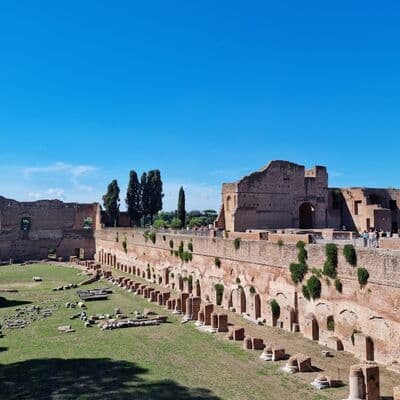
Palatine Hill rises above the Forum and is considered the place where, according to legend, Rome was founded. Here stood the imperial palaces - Domus Augustana, Domus Flavia, and the Farnese Gardens. The hill offers magnificent views of the Forum and Colosseum. Excavations continue to this day, revealing new chapters of history.
Vatican City: A State Within a State
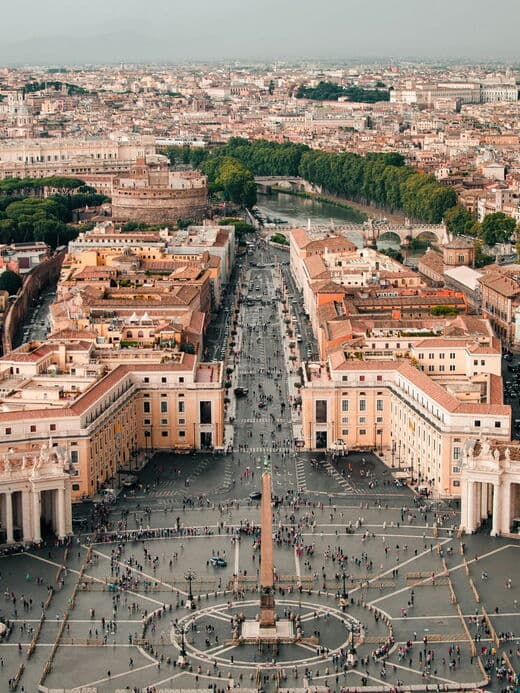
Vatican City - the world's smallest country (0.44 km²) - lies in the very heart of Rome. It is the spiritual center of the Catholic world and the residence of the Pope. Despite its tiny size, the Vatican possesses one of the richest art collections on the planet.
St. Peter's Basilica
St. Peter's Basilica (Basilica di San Pietro) is the largest Christian church in the world and a masterpiece of Renaissance and Baroque architecture. Bramante, Michelangelo, Raphael, and Bernini all contributed to its creation. Michelangelo's dome, 136 meters high, became a model for cathedrals worldwide. Inside are Michelangelo's youthful "Pietà," Bernini's bronze baldachin, papal tombs, and countless works of art.
St. Peter's Square
Bernini's colonnade framing the square is a masterpiece of Baroque architecture. The 284 columns and 88 pilasters create a sense of embrace, symbolizing the Church's acceptance of the faithful. At the center stands an ancient Egyptian obelisk brought by Caligula. Papal audiences and solemn masses are held here.
Vatican Museums and the Sistine Chapel
The Vatican Museums comprise a labyrinth of 54 galleries containing artworks collected by popes over centuries. The visit culminates in the Sistine Chapel with Michelangelo's ceiling frescoes (1508-1512), including the famous "Creation of Adam," and the "Last Judgment" on the altar wall. Queues can take several hours - book tickets in advance or choose early morning slots.
The Pantheon: Temple of All Gods
The Pantheon is the best-preserved building from Ancient Rome and one of the most influential structures in architectural history. Built under Emperor Hadrian around 125 AD, it originally served as a temple to all gods and has been a Christian church since the 7th century.
Architectural Wonder
The Pantheon's dome, 43.3 meters in diameter, remained the world's largest for over 1,300 years. At its center is the oculus - a 9-meter opening that is the building's sole light source. When it rains, water drains through special holes in the floor. The perfect proportions of the interior - a sphere of the dome would fit exactly within the cylinder of the walls - create a sense of perfect harmony.
Final Resting Place of the Great
The Pantheon houses the tombs of the painter Raphael, composer Arcangelo Corelli, and two Italian kings - Victor Emmanuel II and Umberto I. Entry to the Pantheon is free, making it one of Rome's most accessible attractions.
Trevi Fountain: Magic of Water and Stone
The Trevi Fountain (Fontana di Trevi) is Rome's largest and most famous fountain, which became a symbol of the city thanks to Fellini's film "La Dolce Vita." Built between 1732-1762 to designs by Nicola Salvi, it occupies almost the entire Piazza di Trevi.
Composition and Symbolism
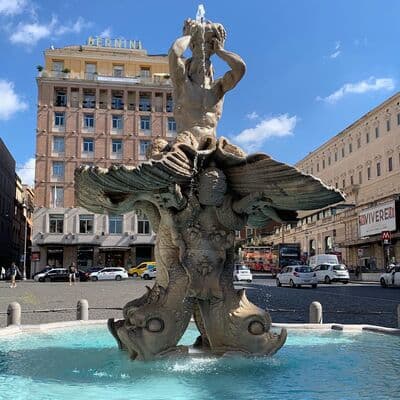
The central figure is the sea god Neptune on a chariot drawn by sea horses led by tritons. The sculptural composition symbolizes the taming of the sea. The fountain is the terminal point of the ancient Aqua Virgo aqueduct, built as early as 19 BC.
The Coin-Throwing Tradition
According to tradition, you should stand with your back to the fountain and throw a coin with your right hand over your left shoulder. One coin guarantees a return to Rome, two coins bring love, three bring marriage. Around 3,000 euros are thrown into the fountain daily, with proceeds going to charity. The best time to visit is early morning or late evening when there are fewer tourists.
The Spanish Steps and Piazza di Spagna
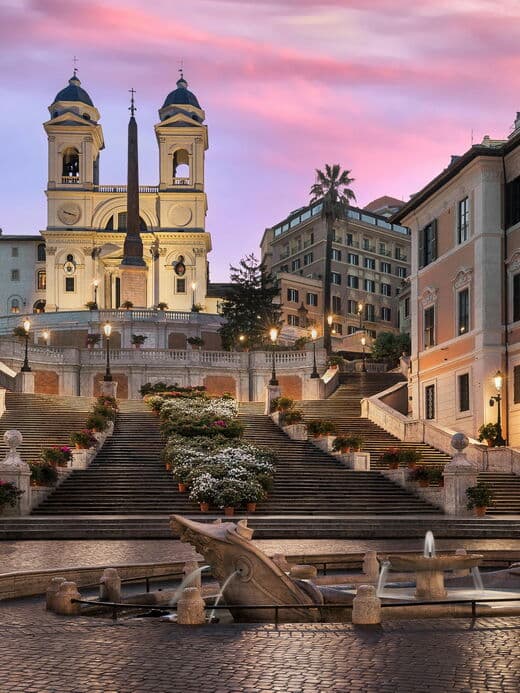
The Spanish Steps (Scalinata di Trinità dei Monti) is one of the world's most famous staircases and a popular meeting place in central Rome. Its 135 steps connect Piazza di Spagna with the Trinità dei Monti church atop Pincian Hill.
History and Architecture
The steps were built between 1723-1725 with French funding to connect the Spanish Embassy (hence the name) with the French church above. Its Baroque curves and terraces create a dramatic theatrical composition. In spring, the steps are decorated with azalea flowers.
Surroundings
At the foot of the steps is the Fontana della Barcaccia ("Boat Fountain") by Pietro Bernini, father of the famous Gian Lorenzo. The streets around the square - Via Condotti, Via Borgognona, Via Frattina - form the "fashion triangle" with boutiques of leading Italian and international brands. The Keats-Shelley House museum is right by the steps.
Trastevere: Soul of Working-Class Rome
Trastevere ("across the Tiber") is one of Rome's most atmospheric neighborhoods, preserving the spirit of authentic working-class city life. Narrow cobblestone streets, ivy-covered houses, laundry drying between windows, small squares with fountains - here you can feel the genuine Roman character.
Neighborhood Attractions
The Basilica of Santa Maria in Trastevere is one of Rome's oldest churches with magnificent medieval mosaics. Villa Farnesina houses Raphael's frescoes. The Botanical Garden on the slopes of Janiculum Hill is an oasis of tranquility. The top of the Janiculum offers the best panorama of Rome.
Nightlife
In the evening, Trastevere transforms into the center of Roman movida. Piazza di Santa Maria in Trastevere becomes a meeting place for young people, street musicians, and artists. Numerous trattorias, wine bars, and pizzerias offer authentic Roman cuisine in a relaxed atmosphere.
Roman Cuisine: From Carbonara to Supplì
Roman cuisine is the quintessence of Italian cucina povera (peasant cooking), which transformed simple ingredients into culinary masterpieces. Dishes that have conquered the world were born here.
Classic Pastas
The four great Roman pastas: Carbonara - spaghetti with guanciale (cured pork cheek), egg, pecorino romano, and black pepper. No garlic, onion, or cream! Amatriciana - pasta with guanciale, tomatoes, and pecorino. Cacio e pepe - the simplest dish of pasta, pecorino, and pepper that requires masterful execution. Gricia - "white amatriciana" without tomatoes.
Other Specialties
Saltimbocca alla romana - veal with prosciutto and sage. Carciofi alla giudia - Jewish-style artichokes fried until crispy. Carciofi alla romana - artichokes braised with mint and garlic. Supplì - rice balls with mozzarella, Rome's answer to Sicilian arancini. Pizza in Rome is thin, crispy, often rectangular (pizza al taglio).
Where to Eat
Avoid restaurants immediately adjacent to major attractions. The best trattorias are in Trastevere, Testaccio, and the Jewish Ghetto area. Look for places where locals eat. Roman lunch begins no earlier than 1:00 PM, dinner after 8:00 PM.
Other Rome Attractions
Piazza Navona
Piazza Navona is one of the world's most beautiful Baroque squares, built on the site of Domitian's Stadium. Three fountains, including Bernini's Fountain of the Four Rivers, Borromini's Sant'Agnese church, street artists, and cafes create an incomparable atmosphere.
Villa Borghese
The largest park in central Rome is the perfect place to escape city bustle. Also here is the Galleria Borghese with masterpieces by Bernini, Caravaggio, Raphael, and Titian. Gallery tickets must be booked in advance.
Castel Sant'Angelo and Bridge
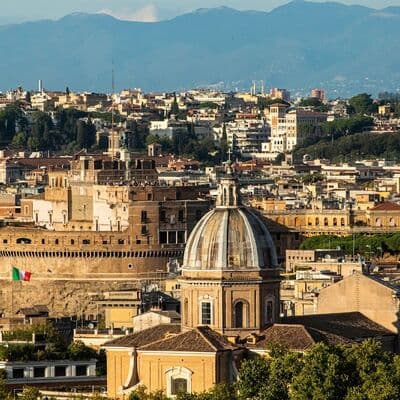
Castel Sant'Angelo - former mausoleum of Emperor Hadrian, medieval fortress, and papal residence. The bridge, adorned with Bernini's angels, is one of Rome's most romantic.
Catacombs
Underground Christian cemeteries from the 2nd-5th centuries - the Catacombs of San Callisto, San Sebastiano, and Priscilla - allow visitors to immerse themselves in early Christian atmosphere.
Practical Information
How to Get There
The main airport is Fiumicino (Leonardo da Vinci), 30 km from the center. The Leonardo Express reaches Termini station in 32 minutes. The second airport, Ciampino, serves low-cost carriers. High-speed trains connect Rome with Milan (3 hours), Florence (1.5 hours), and Naples (1 hour 10 minutes).
City Transport
The metro (2 lines plus 1 under construction) is convenient for main routes, but many attractions are beyond its reach. Buses and trams supplement the network. The historic center is best explored on foot. The Roma Pass provides free transport and museum discounts.
When to Visit
The best time is spring (April-May) and fall (September-October) with comfortable weather and fewer tourists. Summer is hot (up to 35°C and higher), and many Romans leave in August. Winter is mild but rainy. Christmas and Easter are special times but very crowded.
Where to Stay
The historic center (Centro Storico) offers walking distance to all attractions but is expensive. Trastevere is atmospheric and slightly cheaper. The Termini district is convenient for transport with many budget options. Monti is a trendy neighborhood with boutiques and bars.
Rome for Different Travelers
For History Lovers
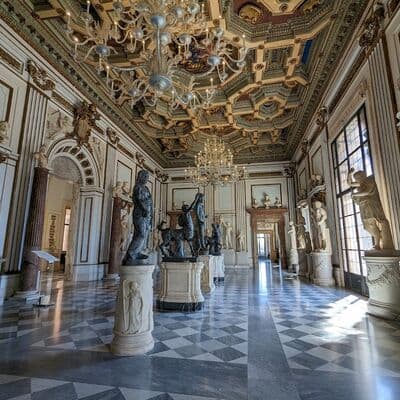
The Colosseum, Forum, Palatine, Pantheon, catacombs, National Roman Museum with four locations, Capitoline Museums - the world's oldest public museums.
For Art Enthusiasts
Vatican Museums, Galleria Borghese, churches with Caravaggio works (San Luigi dei Francesi, Santa Maria del Popolo), Raphael's frescoes at Villa Farnesina.
For Foodies
Food tours of Trastevere and Testaccio, Campo de' Fiori market, cooking classes, wine tastings from the Lazio region.
For Romantics
Sunset from Janiculum or Aventine Hill, dinner in Trastevere, a walk along the Tiber, the evening Colosseum.
Tips for Travelers
- Book tickets for the Colosseum, Vatican Museums, and Galleria Borghese in advance - queues can take hours
- Covered clothing is required for visiting churches and the Vatican (shoulders and knees)
- Beware of pickpockets in the metro and tourist areas
- Water from Rome's drinking fountains (nasoni) is safe and delicious
- Coffee at the bar standing is much cheaper than sitting at an outdoor table
- Lunch (pranzo) is usually cheaper than dinner (cena) at the same restaurants
- Coperto (cover charge) is normal; additional tipping is not required
- Museums are closed on Mondays; the Vatican is closed on Sundays (except the last Sunday of the month - free entry)
- The first Sunday of the month means free entry to state museums
- The best gelato is at gelaterias where you don't see mountains of whipped product in the display
Rome is a city that can never be exhausted. Each visit reveals new facets of the Eternal City: hidden churches with Caravaggio masterpieces, cozy squares away from tourist routes, family trattorias with great-grandmother's recipes. Here, the past is not preserved in museums but lives everyday life - in the cobblestones of ancient roads still walked upon, in aqueducts still feeding fountains, in traditions passed from generation to generation. Rome teaches us to slow down, enjoy the moment, appreciate beauty in every detail - and this, perhaps, is the most important lesson of the Eternal City.