Milan
Milan: Capital of Fashion, Design and Northern Italian Chic
Milan is not just Italy's second-largest city - it is the country's economic heart, the world capital of fashion and design, a city where modernity harmoniously combines with the richest historical heritage. Located in the fertile Lombardy Plain at the foot of the Alps, Milan with a population of about 1.4 million (and more than 3 million in the metropolitan area) is the business and cultural center of northern Italy. Here you will find the headquarters of major Italian companies, the legendary La Scala opera house, one of the world's greatest Gothic cathedrals, and Leonardo da Vinci's famous "Last Supper."
History of Milan: From Celtic Settlement to World City
Milan's history spans more than two and a half thousand years. The city was founded by Celts around 600 BC under the name Mediolanum, meaning "middle of the plain." In 222 BC it was conquered by the Romans and quickly became one of the most important cities of the empire. In the late 3rd century, Milan even served as the capital of the Western Roman Empire, and it was here that Emperor Constantine issued the famous Edict of Milan in 313, legalizing Christianity.
The Middle Ages brought Milan the status of a powerful city-state, ruled first by the Visconti family and then the Sforza. It was during the Sforza era that Leonardo da Vinci worked at the court of Ludovico il Moro, leaving the city an invaluable legacy. After periods of Spanish and Austrian rule, Milan became the center of the Risorgimento - the movement for Italian unification. In the 20th century, the city underwent rapid industrialization and became the engine of Italy's post-war economic miracle.
Milan Today
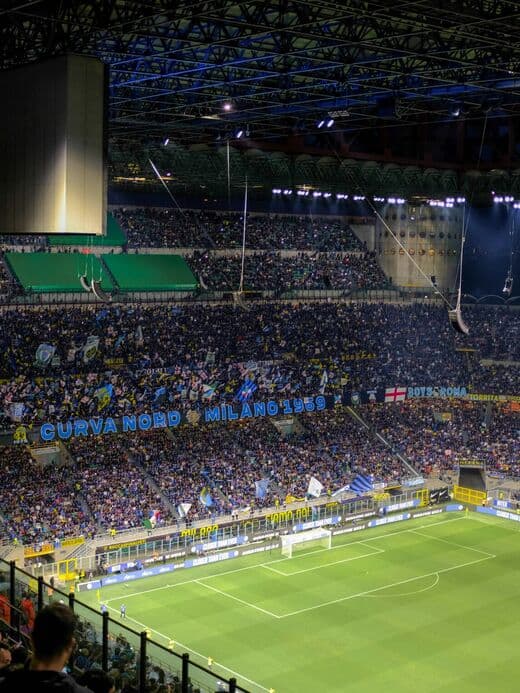
Modern Milan is a city of contrasts: ancient churches stand alongside the skyscrapers of the Porta Nuova district, quiet courtyards hide behind the facades of business quarters, and traditional trattorias coexist with Michelin-starred restaurants. Milan hosts major international events - from fashion weeks to the Salone del Mobile furniture fair, from Formula 1 in Monza to Champions League finals at the legendary San Siro.
Milan Cathedral: A Gothic Marvel in White Marble
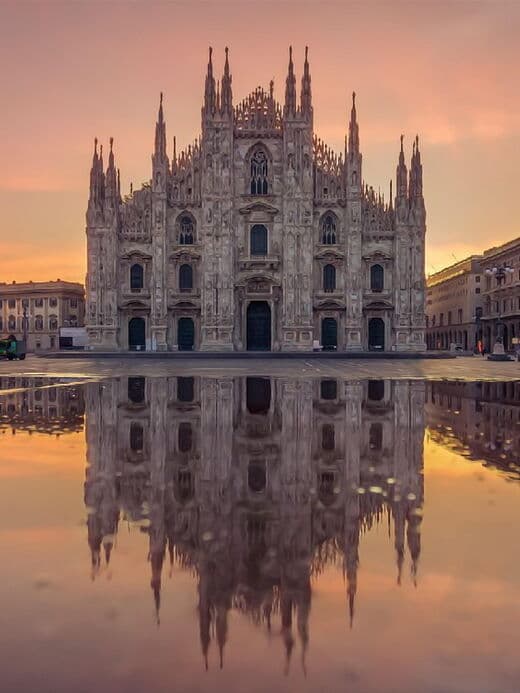
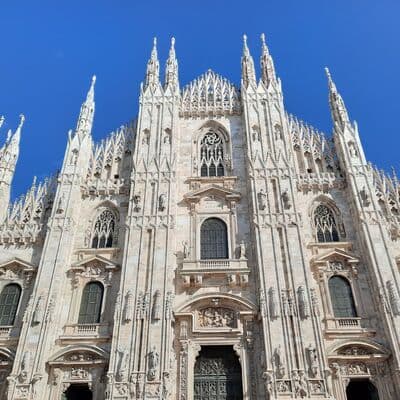
The Duomo di Milano is the city's main symbol and one of the largest Gothic cathedrals in the world. Construction of this grand temple began in 1386 and continued for almost six centuries, officially completing only in 1965. The cathedral is built from Candoglia pink marble, which over time has acquired its characteristic white color, giving the building its unique appearance.
Architecture and Decorations
The cathedral's dimensions are staggering: 157 meters long, 92 meters wide, with a central nave 45 meters high. The facade is adorned with more than 3,400 statues, 135 spires, and 700 figures. On the highest spire (108 meters) stands a gilded statue of the Madonna - the Madonnina, which has become Milan's symbol. By tradition, no building in the city should be taller than her.
The Cathedral Roof
A unique opportunity at Milan Cathedral is walking on its roof. By stairs or elevator, you can ascend to the terraces among the spires and statues, offering breathtaking views of the city and, on clear days, the Alps. This is an unforgettable experience that allows you to examine the Gothic decorative details up close and understand the scale of the structure.
Leonardo da Vinci's "Last Supper"
The fresco "The Last Supper" (L'Ultima Cena) in the refectory of the Church of Santa Maria delle Grazie is one of the greatest works of art in human history. Leonardo worked on it from 1495 to 1498 at the commission of Duke Ludovico Sforza. The fresco's size is impressive: 4.6 by 8.8 meters.
A Masterpiece and Its Fate
Leonardo experimented with technique, using tempera on dry plaster instead of traditional fresco on wet plaster. This allowed for incredible detail but led to rapid deterioration of the paint layer. The fresco has survived floods, wars, barbaric restorations, and even a 1943 bombing that destroyed part of the refectory, miraculously sparing the wall with the painting.
Visiting
Today, access to "The Last Supper" is strictly limited to preserve the masterpiece: groups of 25 people are admitted for 15 minutes. Tickets must be booked several months in advance - this is one of the most sought-after museum attractions in the world. The church and refectory are included on the UNESCO World Heritage List.
Galleria Vittorio Emanuele II: Milan's Drawing Room
Galleria Vittorio Emanuele II is one of the world's oldest shopping arcades and a 19th-century architectural masterpiece. Built between 1865-1877 to designs by Giuseppe Mengoni, the gallery connects Piazza del Duomo with Piazza della Scala and is named after the first king of unified Italy.
The Architecture of the Arcade
The gallery is a cruciform arcade covered by a magnificent glass dome 47 meters high. The floor is decorated with mosaics featuring the coats of arms of the four capitals of the Italian Kingdom: Turin, Florence, Rome, and Milan itself. Particularly popular is the mosaic of a bull - the symbol of Turin: according to legend, you must spin three times on your heel on the bull's private parts to ensure good luck.
Luxury Shopping
Today the gallery houses boutiques of the most prestigious brands - Prada, Louis Vuitton, Gucci, Versace, as well as historic establishments: the Bocca bookshop (since 1578), Café Camparino, where the Campari aperitif was invented, and the legendary Savini restaurant. The gallery is called "Milan's drawing room" - people meet, stroll, and observe city life here.
La Scala Theatre: Temple of Opera
Teatro alla Scala is the world's most famous opera house, a holy of holies for opera and ballet lovers. The theatre was built between 1776-1778 to designs by Giuseppe Piermarini on the site of the Church of Santa Maria della Scala. Here premieres of operas by Verdi, Puccini, Bellini, and Donizetti took place; Toscanini conducted and Maria Callas sang here.
The Hall and Acoustics
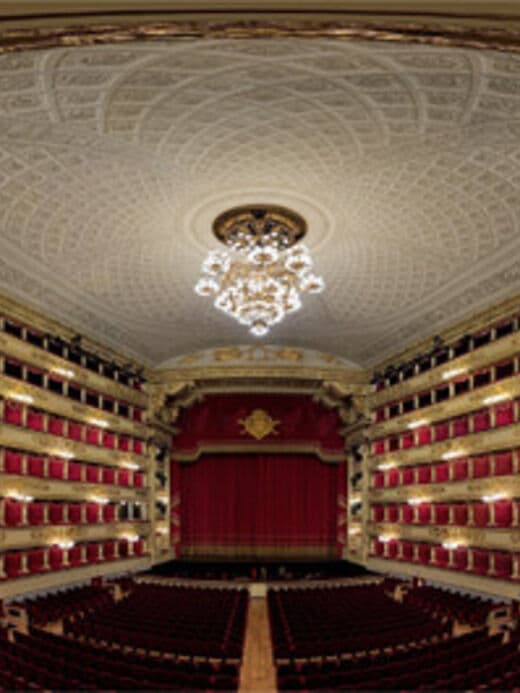
The auditorium holds about 2,000 people and is famous for its impeccable acoustics. The interior is done in red and gold tones, with six tiers of boxes creating the characteristic horseshoe shape. The luxurious chandelier with 383 lights is one of the theatre's symbols.
Museum and Visits
The La Scala Museum tells the history of the theatre and displays a collection of costumes, sets, and portraits of great singers and composers. From the museum, you can peek into the auditorium (if there's no rehearsal). The season opens on December 7, the feast day of Saint Ambrose - Milan's patron - and the premiere that evening is the main society event of the year.
The Fashion District: The Quadrilateral of Luxury
The Quadrilatero della Moda is the famous fashion district, bounded by Via Montenapoleone, Via della Spiga, Via Manzoni, and Corso Venezia. This is the world capital of luxury shopping, where flagship boutiques of all the great fashion houses are concentrated.
Via Montenapoleone
Montenapoleone is the district's most prestigious street and one of the world's most expensive shopping streets. Here you'll find boutiques of Armani, Bulgari, Cartier, Dolce & Gabbana, Fendi, Valentino, and dozens of other brands. The street's architecture consists of historic 18th-19th century palazzi transformed into temples of fashion.
Via della Spiga
The pedestrian Via della Spiga is more intimate and cozy. Here you'll find boutiques of Bottega Veneta, Sergio Rossi, Moschino, as well as concept stores and contemporary art galleries. A stroll through the district is an immersion in the world of Italian style even for those not planning to shop.
Sforza Castle: Residence of Milan's Dukes
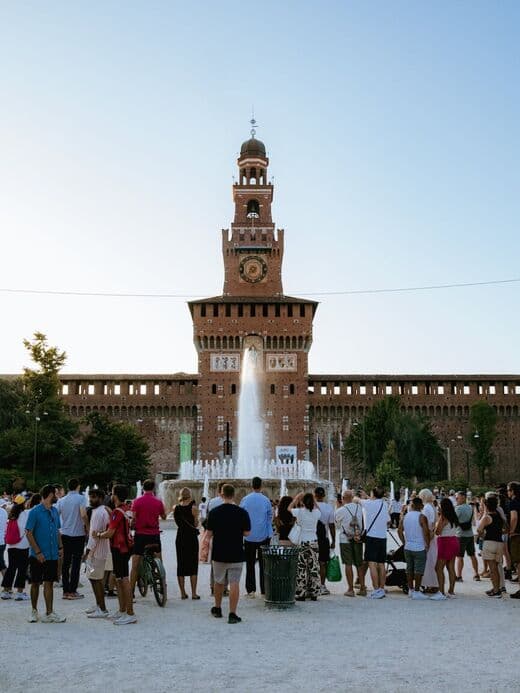
Castello Sforzesco is one of Europe's largest castles and a symbol of the power of Milan's rulers. The fortress was built in the 15th century by Francesco Sforza on the site of an earlier Visconti castle. Under Ludovico il Moro, the castle became a brilliant Renaissance court where Leonardo da Vinci and Bramante worked.
The Castle Museums
Today the castle houses a complex of museums with rich collections: the Museum of Ancient Art with Michelangelo's unfinished "Rondanini Pietà," the Pinacoteca with works by Mantegna, Bellini, Correggio, and collections of Egyptian antiquities, musical instruments, furniture, and decorative arts.
Sempione Park
Behind the castle stretches Sempione Park - central Milan's main green oasis. The park was laid out in the English style in the late 19th century and includes the Arch of Peace (Arco della Pace), built after Roman triumphal arches, the Branca Tower with panoramic views, and the Civic Aquarium.
Brera: Milan's Bohemian Quarter
Brera is a historic quarter that has preserved the atmosphere of artistic bohemia. Narrow cobblestone streets, antique shops, art galleries, cozy cafés and restaurants create the district's unique character.
Pinacoteca di Brera
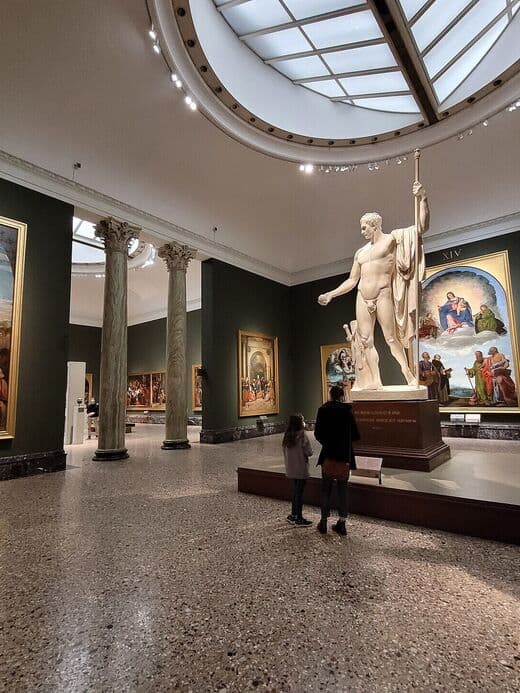
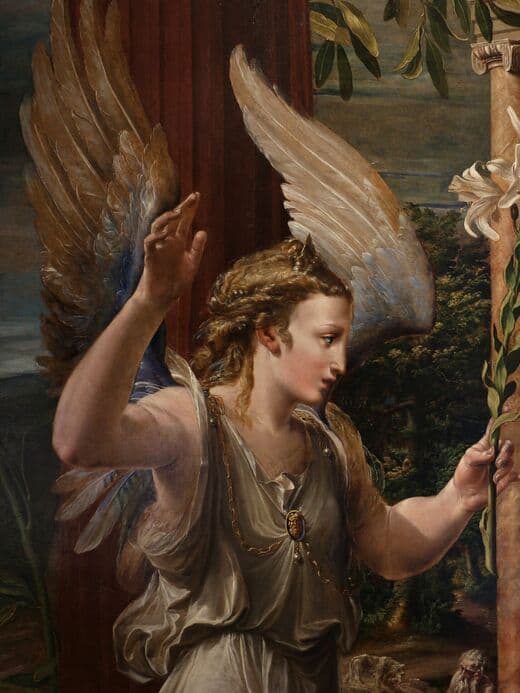
The Pinacoteca di Brera is one of Italy's most important art galleries. The collection includes masterpieces of the Italian Renaissance: Mantegna's "Dead Christ," Raphael's "Marriage of the Virgin," works by Caravaggio, Tintoretto, and Veronese. The museum is housed in a Baroque palazzo that also contains the Academy of Fine Arts.
Botanical Garden
The Orto Botanico di Brera is a hidden gem of the quarter, one of Italy's oldest botanical gardens (founded in 1774). Small but charming, the garden is an ideal place to rest from the city bustle.
Navigli: Milan's Canals
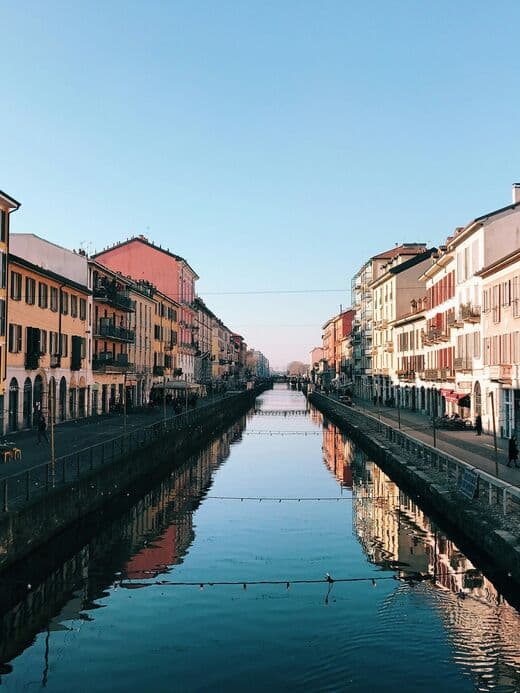
Navigli is the district of historic canals, once the city's most important trade arteries. The canal system, built starting in the 12th century, connected Milan with the lakes and rivers of northern Italy. The marble for building the Duomo was transported along these canals.
Naviglio Grande
The Grand Canal is the most picturesque of those remaining. Along its banks stretch colorful houses with balconies, former artisan workshops have become art studios, bars and restaurants. On Sundays, an antique market operates here.
Aperitivo in Navigli
The district is famous for its nightlife and aperitivo culture - the typically Milanese tradition of evening cocktails with snacks. From 6 PM to 9 PM, bars offer drinks with a rich buffet spread. Navigli is the ideal place to immerse yourself in this tradition.
Milanese Cuisine: Traditions of the North
Milanese cuisine differs from southern Italian: there's more butter and cream instead of olive oil, more rice instead of pasta, and beef and pork are widely used. The region's climate and history shaped hearty, warming dishes.
Risotto alla Milanese
The city's calling card is risotto with saffron, which gives the dish its characteristic golden color. Legend has it that the recipe originated in the 16th century when an assistant to a master working on the Duomo's stained glass windows added saffron (used for paints) to rice at a wedding feast. Perfect risotto should be creamy but with firm rice grains.
Cotoletta alla Milanese
A breaded veal cutlet fried in butter is the subject of eternal dispute between Milan and Vienna over who invented it first. The Milanese version is usually prepared on the bone and should be golden and crispy outside, juicy inside.
Ossobuco
Braised veal shank with vegetables and white wine, traditionally served with risotto or gremolata (a mixture of lemon zest, garlic, and parsley). Ossobuco literally means "bone with a hole" - the bone marrow is the main treat for connoisseurs.
Panettone
A Christmas cake with candied fruit and raisins - a symbol of Milanese Christmas that has conquered the world. Real panettone requires a long dough fermentation and features its characteristic domed shape and airy texture.
Modern Milan: 21st Century Architecture
Milan is experiencing an architectural renaissance. Over the past two decades, the city's appearance has radically changed thanks to ambitious modern architecture projects.
Porta Nuova and the Vertical Forest
The Porta Nuova district is the largest urban renewal project in Europe. Its calling card is Bosco Verticale (Vertical Forest), two residential skyscrapers designed by Stefano Boeri, with balconies planted with more than 900 trees and 20,000 plants. The buildings have become a symbol of sustainable architecture.
CityLife
The CityLife complex on the site of the former trade fair includes three skyscrapers by star architects: Zaha Hadid's curved tower, Arata Isozaki's straight tower, and Daniel Libeskind's twisted tower. The district includes a shopping center and park.
Practical Information
How to Get There
Milan is served by three airports: Malpensa (the main international, 50 km from the center), Linate (the closest, for European flights), and Bergamo-Orio al Serio (low-cost carriers). High-speed trains connect Milan with Rome (3 hours), Florence (1 hour 40 minutes), Venice (2 hours 15 minutes), and Turin (50 minutes).
Transportation
Milan's metro is one of Italy's most efficient: 4 lines cover the main directions. Trams, including historic orange cars from the 1920s, are an atmospheric way to travel. BikeMi bike-sharing is well developed in the center.
When to Go
The best time is spring (April-June) and autumn (September-October). In summer, the city empties in August - many establishments close for holidays. Winter is foggy and damp, but December is beautiful with Christmas decorations. Fashion weeks (February and September) mean crowded hotels and high prices.
Where to Stay
The center (Duomo, Brera) is convenient but expensive. Navigli is bohemian and lively in the evenings. Porta Nuova is modern and stylish. The Central Station area is budget-friendly and convenient for transportation. The Tortona zone is trendy, close to fashion weeks.
Milan for Different Travelers
For Art Lovers
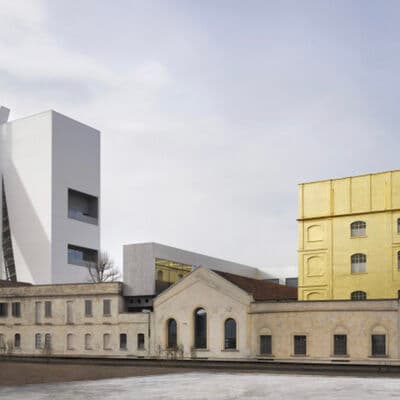
"The Last Supper," Pinacoteca di Brera, Pinacoteca Ambrosiana (with Leonardo's drawings), Sforza Castle museums, Museo del Novecento (20th-century art), Fondazione Prada.
For Shopaholics
The fashion district, Galleria Vittorio Emanuele II, outlets (Serravalle, FoxTown), vintage shops in Navigli and Ticinese, markets (Porta Portese, Mercato Comunale).
For Football Fans
San Siro Stadium (officially Giuseppe Meazza) - home arena of AC Milan and Inter, a temple of Italian football. Stadium museum and arena tours are available on non-match days.
For Foodies
Traditional trattorias in the Brera and Navigli districts, Michelin-starred restaurants, Mercato Metropolitano market, cooking schools, Lombard wine tastings.
Tips for Travelers
- Book "The Last Supper" 2-3 months in advance - it's one of the most sought-after tickets in the world
- Choose a clear day for visiting the Duomo roof - the Alpine views are worth waiting for
- Aperitivo is not just a drink but a Milanese ritual from 6 PM to 9 PM
- In August, many restaurants and shops are closed - plan ahead
- Museums are free on the first Sunday of the month
- La Scala tickets sell out quickly - check the website two months before your visit
- Avoid restaurants immediately by the Duomo - quality is inversely proportional to proximity to the cathedral
- The metro runs until midnight (until 12:30 AM on weekends)
- Modest dress is required in churches - covered shoulders and knees
- Milan is a working city - the best bars and restaurants are full Thursday through Saturday
Milan is a city that doesn't reveal itself immediately. Behind its apparent business-like efficiency and reserve lies a passionate love of beauty, centuries-old traditions, and unique elegance. Here Leonardo created his masterpieces, Verdi staged operas, Armani invented a new style. Milan is not a museum display but a living, working, constantly changing city that offers everyone something of their own: from haute couture to simple risotto, from an aria at La Scala to a football match at San Siro, from Leonardo's fresco to Boeri's skyscraper. This is a city to be lived, not just visited.