Loire Valley
Loire Valley 2026: What You Need to Know
The Loire Valley is not a single destination with a neat downtown and a subway system. It is a constellation of small towns, castles, and vineyards scattered along the longest river in France. Around every bend there is a fairytale chateau, on every hillside a vineyard, and in every village a bakery turning out croissants that will ruin you for anything back home. This is the region where French kings escaped the noise of Paris, and where that unhurried royal lifestyle still lingers in the air.
The short version: The Loire Valley contains over 300 chateaux, some of the best wines in France, and a food scene serious enough that Tours earned UNESCO International City of Gastronomy status. The must-sees are Chateau de Chambord, Chateau de Chenonceau, and Chateau de Villandry. Plan for 4 to 5 days with a car, or a minimum of 3 days if you are short on time.
The Loire Valley is ideal if you love history, wine, castles, and slow travel through the French countryside. This is not about rushing. It is about a glass of Vouvray on a terrace overlooking the river, morning mist rising around a castle, and dinner at a village bistro where the chef knows every farmer by name.
Pros: incredible concentration of chateaux, excellent wine at reasonable prices, mild climate, safety, superb cuisine, absence of crowds (if you know where to go). Cons: difficult without a car, chateaux spread over a large area, many close in winter, almost no nightlife.
Where to Stay: Best Towns as Your Base
The Loire Valley is a chain of charming towns along the river, not a single city. Choosing the right base is critical because it determines how much time you spend driving between chateaux. Here are the main options, with honest assessments of each.
Amboise: The Ideal First-Timer Base
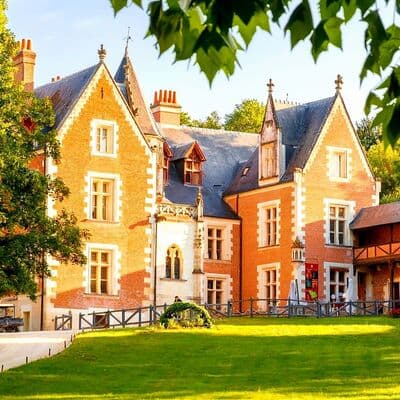
A small town of about 14,000 people that punches way above its weight. Two royal castles sit right within the town limits: the Royal Chateau d'Amboise and Clos Luce, Leonardo da Vinci's final residence. From here, Chenonceau is a 20-minute drive and Chambord is 45 minutes away.
Pros: compact and walkable, great restaurants along the riverbank, Sunday morning market, romantic atmosphere. Cons: crowded in summer, parking in the center is tricky, quiet after dark. Prices: B&Bs from 70 EUR ($76), hotels from 100 EUR ($109).
Tours: The Regional Capital, Best Without a Car
The main city of the Loire Valley with 140,000 people. Direct TGV from Paris in 1 hour 15 minutes. If you do not have a car, this is your pick: trains run to Chenonceau (30 min), Blois (40 min), and Amboise (20 min). A lively university city with restaurants, bars, and the covered market Les Halles, which alone justifies a visit.
Pros: transportation hub, restaurants for every budget, covered market, university energy, TGV to Paris. Cons: no castle in the city center (nearest is in Amboise), more urban feel, distant castles are hard to reach by public transit. Prices: hostels from 25 EUR ($27), hotels from 80 EUR ($87).
Blois: Charm Without the Crowds
A hilltop town overlooking the Loire with its own Royal Chateau right in the center. Blois is less touristy than Amboise but just as beautiful. From here, Chambord is only 20 minutes away and Cheverny is 15 minutes. Direct TGV from Paris takes 1 hour 30 minutes.
Pros: castle in the center, fewer tourists, beautiful views of the Loire, convenient for the eastern chateaux cluster. Cons: town is built on a steep hill (lots of stairs and climbing), fewer restaurants than Tours. Prices: B&Bs from 65 EUR ($71), hotels from 85 EUR ($93).
Chinon: For Wine Lovers
A medieval town on the western edge of the Loire Valley. Stone and half-timbered houses, the ruins of Joan of Arc's fortress on the hill above, and endless wine cellars carved into the rock faces. From here it is 20 minutes to Azay-le-Rideau and 25 minutes to Villandry. The catch: Chambord is a solid 1.5 to 2 hours away.
Pros: best red wines of the Loire (Chinon AOC), medieval atmosphere, very few tourists, wine tastings in troglodyte caves. Cons: far from the eastern chateaux, limited restaurant selection, car is essential. Prices: B&Bs from 55 EUR ($60), hotels from 70 EUR ($76).
Saumur: The Castle and the Bubbles
An elegant town between Tours and Angers, known for its storybook castle above the Loire and Cremant de Loire, a sparkling wine made by the champagne method at a third of the price. The Saturday morning market is one of the best in the region.
Pros: gorgeous castle, Cremant de Loire tastings, troglodyte villages nearby, excellent market, peaceful atmosphere. Cons: far from the main chateaux (Chambord is 1.5 hours), small town. Prices: B&Bs from 50 EUR ($55), hotels from 65 EUR ($71).
Orleans: Gateway to the Loire Valley
The city of Joan of Arc on the eastern edge of the Loire Valley. Gothic cathedral, half-timbered houses, TGV from Paris in 1 hour 10 minutes. Convenient as a starting point, but far from the core chateaux (Chambord 50 min, Chenonceau 1.5 hours). Hostels from 25 EUR ($27), hotels from 75 EUR ($82).
How to Choose
First visit, no car: Tours. First visit, with a car: Amboise. Wine lovers: Chinon or Saumur. Eastern chateaux (Chambord, Cheverny): Blois. Romantic getaway: Amboise or a small village B&B. Budget travelers: Tours (best hostel options and cheap eats).
Best Time to Visit the Loire Valley
The Loire Valley sits in central France with a mild oceanic climate. It does not get the scorching heat of Provence or the bitter cold of Alsace. Think of it as the Goldilocks zone of French travel.
Peak Perfection: May-June and September-October
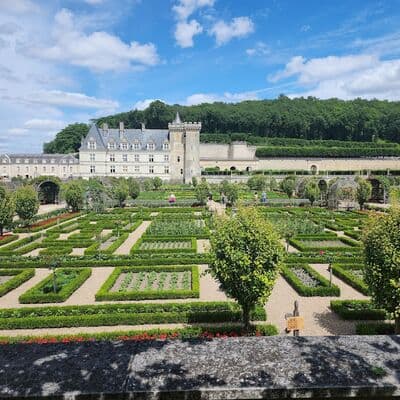
May-June: Temperatures hover between 64 and 77 degrees Fahrenheit (18 to 25 Celsius), days are long, and the castle gardens are in full bloom. Villandry's famous gardens are at their absolute peak. Tourists have not yet descended in force, and the vineyards are covered in bright young green. This is the ideal window.
September-October: Warm (61 to 72F / 16 to 22C), grape harvest season (vendanges). Vineyards turn gold, wineries open for tastings. Fewer tourists than summer, lower accommodation prices.
High Season: July-August
Hot (82 to 95F / 28 to 35C), crowded, peak prices. Upsides: daylight until 10 PM, Son et Lumiere light shows at Blois and Chambord, festivals. Book accommodation 2 to 3 months ahead and arrive at chateaux at opening (9:00 AM), before tour buses.
Low Season: November-March
Many chateaux are closed or on reduced schedules. The weather is damp and cool (41 to 50 Fahrenheit / 5 to 10 Celsius). However, Chambord, Chenonceau, and Blois are open year-round. Winter brings magical morning mists over the Loire and Christmas markets in December. Accommodation is 30 to 50 percent cheaper, and you will have entire rooms of a castle to yourself.
Key Events
- April-May: International Garden Festival at Chaumont-sur-Loire (world-class garden design)
- June-September: Son et Lumiere evening light shows at Blois, Chambord, Chenonceau, and Azay-le-Rideau
- July: Jazz en Touraine festival in Tours
- September: Journees du Patrimoine, European Heritage Days, with free entry to chateaux and normally closed sites (third weekend of September)
- October: Foire aux Vins, wine fairs across the region
- December: Christmas decorations at Chenonceau and Chambord
Itinerary: 3 to 7 Days in the Loire Valley
3-Day Itinerary: The Greatest Hits
Day 1: Amboise and Chenonceau
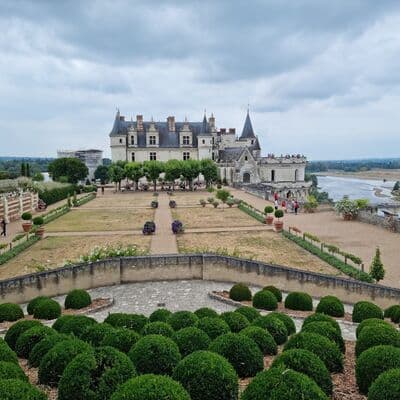
9:00-11:30 AM -- Royal Chateau d'Amboise. Arrive at opening for an empty castle. Climb the terrace for Loire views and find Leonardo da Vinci's tomb in the Chapel of Saint-Hubert. Allow 1.5 to 2 hours.
11:30 AM-1:00 PM -- Chateau du Clos Luce, a 500-meter walk away. Leonardo's final home with working models of his inventions in the park. Kids love it. Allow 1.5 hours.
1:00-2:00 PM -- Lunch in Amboise on the riverbank. Try rillettes de Tours on crusty bread. A lunch with wine runs 18 to 28 EUR ($20 to $30).
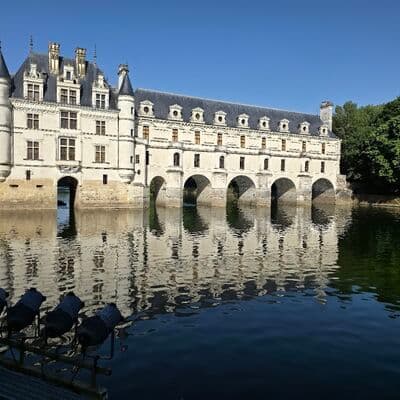
3:00-5:30 PM -- Chateau de Chenonceau (20 min by car). The most photographed castle in the Loire, built on arches over the River Cher. Known as the 'Chateau of the Ladies' for the women who built and saved it across centuries. Arriving after 3:00 PM means thinner crowds.
Evening -- Dinner in Amboise. In summer, return to Chenonceau for the evening illumination reflected in the water.
Day 2: Chambord and Blois
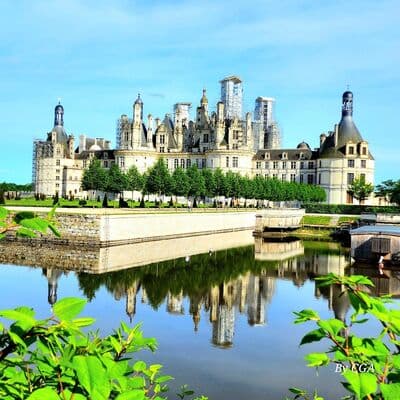
9:00 AM-12:00 PM -- Chateau de Chambord (45 min from Amboise). The largest Loire castle: 440 rooms, 365 fireplaces, and a double helix staircase possibly designed by Leonardo. The rooftop terrace is a city of towers and chimneys. The park covers 5,440 hectares, the size of inner Paris. Allow 2.5 hours minimum.
12:00-1:30 PM -- Picnic in Chambord's park with a baguette, cheese, and a bottle of local Cheverny wine. Or use the on-site cafe.
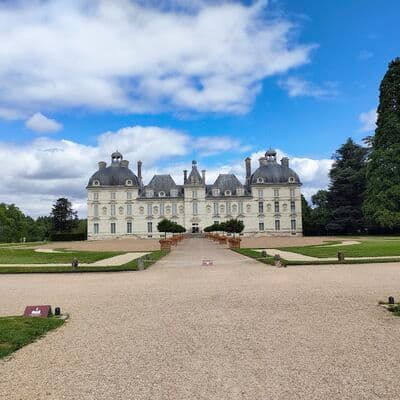
2:00-3:30 PM -- Chateau de Cheverny (20 min from Chambord). This castle inspired Marlinspike Hall in the Tintin comics. The 17th-century interiors are almost untouched. In summer at 5:00 PM, watch the feeding of the hunting hounds (La Soupe des Chiens).
4:30-6:00 PM -- Royal Chateau de Blois (30 min from Cheverny). Four wings representing Gothic, Renaissance, Classical, and Mannerist architecture in one courtyard. The spiral staircase of Francis I is the highlight.
Evening -- Son et Lumiere light show on the castle facade in summer. Dinner in the old town.
Day 3: Villandry and Azay-le-Rideau
9:30 AM-12:00 PM -- Chateau de Villandry (40 min from Blois). The gardens steal the show: six levels across 6 hectares including a decorative vegetable garden, gardens of love, and a water garden. Morning light is best for photos. Allow 2 to 2.5 hours.
12:30-1:30 PM -- Lunch in the village of Villandry, right outside the castle walls.
2:30-4:30 PM -- Chateau d'Azay-le-Rideau (15 min from Villandry). Balzac called it 'a faceted diamond set in the Indre River.' The castle on its island reflects in the water like a mirror. The surrounding English-style park is perfect for a stroll.
Evening -- If based in Chinon (25 min from Azay), end with a wine tasting of Chinon AOC reds in a cave cellar.
5-Day Itinerary: Taking Your Time
Add these to the 3-day route:
Day 4: Wine and Villages
9:00 AM-12:00 PM -- Vouvray wine route, 15 minutes from Tours. Visit 2 to 3 wineries and taste in troglodyte caves where wine ages at a constant 54F (12C). Tastings are free if you buy a bottle (8 to 15 EUR / $9 to $16). Domaine Huet is the standout biodynamic estate.
12:30-2:00 PM -- Lunch at Les Halles market in Tours: 38 stalls with goat cheeses, rillettes, foie gras, and river fish. Saturday morning is the best time.
2:30-5:00 PM -- Village exploration. Montresor (population 300) has a castle on a cliff above the Indrois Valley and is one of the most beautiful villages in France.
Day 5: Tours and Surroundings
9:00 AM-12:00 PM -- Tours: old town (Vieux Tours), Place Plumereau with 15th-century half-timbered houses, Cathedral of Saint-Gatien.
12:00-2:00 PM -- Lunch on Place Plumereau or at Les Arpents in Amboise (seasonal bistro).
2:30-5:00 PM -- Chateau de Chaumont-sur-Loire and its International Garden Festival (April-November): 30 themed gardens by international designers, plus contemporary art in the stables.
7-Day Itinerary: The Full Experience
Add these to the 5-day route:
Day 6: Saumur and the Troglodytes
9:00-11:00 AM -- Chateau de Saumur, a white castle above the Loire that looks like it belongs in a storybook. Alternatively, visit the Abbey of Fontevraud, the largest monastic complex in Europe, where Richard the Lionheart and Eleanor of Aquitaine are buried.
11:30 AM-1:00 PM -- Troglodyte villages near Saumur. Homes carved into limestone cliffs, and people still live in them. Visit Troglo des Pommes Tapees, a cave museum demonstrating the ancient method of drying apples by tapping them flat.
1:00-2:30 PM -- Lunch in Saumur. If you land on a Saturday, the market is one of the best in the Loire.
2:30-5:00 PM -- Tasting Cremant de Loire, a sparkling wine made by the champagne method but at a quarter of the champagne price. Bouvet-Ladubay and Langlois-Chateau both have cellars in the caves beneath Saumur. Expect to pay 7 to 12 EUR ($8 to $13) per bottle at the cellar door.
Day 7: Cycling the Loire
Full day -- Loire a Velo cycling network: 560 miles (900 km) of marked paths. Pick a 20- to 30-mile stretch. Best segments: Amboise to Chenonceau (12 miles, flat), Blois to Chambord (11 miles, through forest). Bike rental from 15 EUR ($16) per day, e-bikes from 30 EUR ($33). Detours de Loire offers one-way rentals across multiple towns.
Where to Eat: Restaurants and Markets
Tours holds UNESCO International City of Gastronomy status, and that distinction is earned. The cuisine of the Loire Valley is built on fresh farm produce, river fish, goat cheeses, and wine in virtually every sauce. There is none of the pretension of Paris here. The food is honest, seasonal, and affordable.
Markets and Street Food
Les Halles covered market in Tours is the gastronomic epicenter: 38 stalls with goat cheeses, rillettes, foie gras, and Loire river fish. Open daily except Monday; Saturday morning is best. Market-stall lunch under 10 EUR ($11). The Saturday market in Saumur and the Sunday market in Amboise are also worth visiting.
Fouees are puffy bread pockets from a wood-fired oven, filled with rillettes, goat cheese, or mushrooms. Find them in village restaurants near Saumur and in troglodyte villages. A serving of 5 to 6 runs 12 to 16 EUR ($13 to $17).
Bistros and Everyday Eating
Look for the sign 'fait maison' (homemade): it is a legal guarantee in France that dishes are prepared on-site, not reheated from packets. The best bistros are the ones where the menu is written in chalk on a blackboard and changes daily. The lunch set menu (menu du jour or formule) is the best deal in French dining: two courses for 14 to 18 EUR ($15 to $20), three courses for 18 to 24 EUR ($20 to $26), often including a glass of wine. Compare that to a basic lunch in London or New York.
In Chinon, Au Local cooks exclusively with local products, and Le Nemrod specializes in game and forest ingredients: wild mushrooms, boar, and hare. In Blois, the small restaurants around the castle serve excellent local river fish (pike, zander, and catfish) in white Vouvray wine sauces.
Mid-Range Restaurants
Les Arpents in Amboise is a modern bistro with a short seasonal menu, impeccable ingredients, and a welcoming atmosphere. Average check: 35 to 50 EUR ($38 to $55). In Rochecorbon (a suburb of Tours), several restaurants are built inside troglodyte caves. You literally eat inside a cliff. It sounds gimmicky, but the food is genuinely good.
Michelin-Starred Dining
Le Georges in Tours holds one Michelin star, with chef Thomas Parnaud at the helm. The wine list runs over 3,000 Loire Valley selections. Tasting menu from 85 EUR ($93). Book at least 2 weeks ahead.
Chateau de Pray near Amboise houses a Michelin-starred restaurant in a 15th-century castle. Chef Arnaud Philippon creates modern cuisine from local products. Lunch on the terrace overlooking the valley is an experience that justifies the price tag.
Auberge du XIIeme Siecle in Sache (the village where Balzac wrote his novels) holds another Michelin star in a 12th-century building. If you are going to splurge once, this is a strong contender.
Coffee and Breakfast
Hotel breakfast is usually included. If not, walk to the nearest boulangerie for a croissant (1 to 1.50 EUR / $1.60) and pain au chocolat. Standing at the bar with an espresso costs 1.50 EUR; sitting at a table costs 2.50 EUR. This is normal and not a scam.
Must-Try Food and Drinks
The Loire Valley is called 'The Garden of France' (Le Jardin de la France), and the cuisine lives up to the name: fresh, seasonal, unfussy, but full of character.
Rillettes de Tours -- Pork slow-cooked in its own fat for 4 to 6 hours, shredded into a rough paste. Protected Geographical Indication since 2013. Spread on crusty bread with cornichons. Coarser than Le Mans style, with visible shreds. A jar at the market: 5 to 8 EUR ($5 to $9).
Tarte Tatin -- The upside-down apple tart, created by accident in 1880 by the Tatin sisters. Caramelized apples under crisp puff pastry, served warm with creme fraiche. Best versions come from village restaurants that bake their own.
Goat Cheeses -- Sainte-Maure-de-Touraine is a soft cylinder with a straw through the center (branded for authenticity). AOC since 1990. Young, it is creamy; aged, it develops a tangy bite. Market price: 3 to 5 EUR ($3 to $5). Also try Selles-sur-Cher, a small disk with a black-gray ash rind and nutty finish.
Fouees -- Puffy bread pockets from a wood-fired oven, filled with rillettes, goat cheese, white beans, or mushrooms. The Loire's answer to tacos. A serving of 5 to 6 with fillings: 12 to 16 EUR ($13 to $17).
Nougat de Tours -- A sponge cake with candied fruits, almonds, and almond paste. Not the Montelimar kind. From 4 EUR ($4) in Tours patisseries.
Loire Valley Wines -- Vouvray: white Chenin Blanc (dry to sweet). Chinon: red Cabernet Franc (lighter than you expect). Sancerre and Pouilly-Fume: crisp Sauvignon Blanc whites. Cremant de Loire: champagne-method sparkling at a fraction of the price. Winery bottles: 8 to 20 EUR ($9 to $22). Restaurant: 25 to 45 EUR ($27 to $49).
Tourist traps: any restaurant with food photos near castle entrances. Within 300 feet of Chambord's ticket office, expect overpriced mediocrity. Drive 5 minutes to the nearest village instead.
For vegetarians: goat cheeses, fouees with vegetable fillings, mushroom omelets, ratatouille. Vegans have it harder, but Tours has several vegan-friendly cafes.
Local Secrets and Tips
1. Do not try to see every castle. There are over 300 of them. Even in a week, visiting more than 10 will lead to what the French call 'chateau fatigue' -- and it is real. Choose 5 to 7 that genuinely interest you and savor them. Better to spend 3 hours in one castle than to sprint through five in a day.
2. Buy combination tickets. The Pass Chateaux offers combined entry to multiple castles at a 20 to 30 percent discount. Some chateaux sell paired tickets: Chambord plus Cheverny, Amboise plus Clos Luce. Check castle websites before buying individual tickets at the door.
3. Morning and late afternoon are golden hours. Between 9:00 and 10:30 AM, and again after 4:00 PM, the chateaux are half-empty. Tour buses arrive around 10:30 to 11:00 AM and leave by 3:00 to 4:00 PM. Plan your visits around these windows and you will feel like you have the place to yourself.
4. Rent a bike for at least one day. Loire a Velo has 560 miles of flat, marked paths. The Amboise to Chenonceau route (12 miles) is ideal for beginners. E-bikes from 30 EUR ($33) per day.
5. Buy wine at the wineries. Prices are 30 to 50 percent lower than shops. Tastings are free if you buy a bottle. Small family domaines are far more interesting than big operations.
6. Get a car. Rental from 30 to 40 EUR ($33 to $44) per day. Roads are excellent, parking at most chateaux is free (except Chambord, 6 EUR). A GPS is essential.
7. Picnic like a local. Baguette, rillettes, goat cheese, fruit, and a bottle of wine from the morning market. Find a bench overlooking a castle or the Loire. Cheaper, tastier, and more romantic than any restaurant.
8. Do not ignore the small chateaux. Talcy, Beauregard, and La Bussiere have no crowds and personal guided tours.
9. Learn ten words of French. 'Bonjour' when entering any shop is not optional. Outside Tours and Amboise, English is rare, but a smile and an attempt at French open every door. Google Translate's camera handles menus.
10. Sunday is quiet day. Most shops closed, restaurants serve lunch only (12:00 to 2:00 PM). Plan shopping for Saturday.
11. Avoid Chambord on summer weekends. Long lines, full parking lots. Arrive at 9:00 AM or after 4:00 PM.
Transport and Connectivity
Getting There
By train from Paris: TGV to Tours in 1 hour 15 minutes (from 19 EUR / $21 early booking; standard 35 to 55 EUR / $38 to $60). TGV to Blois: 1 hour 30 minutes. Trains from Paris Montparnasse (Tours) or Paris Austerlitz (Blois, Amboise). Book on SNCF Connect 1 to 3 months ahead for best fares.
By car from Paris: A10 motorway to Tours: 2.5 hours (143 miles / 230 km), toll around 20 EUR ($22). To Blois: 2 hours. Credit cards accepted at toll booths.
By air: Fly into Paris CDG or Orly, then TGV. Tours Val de Loire Airport has limited Ryanair service from European cities.
Getting Around the Region
Car (recommended): Rentals from 30 to 40 EUR ($33 to $44) per day at Tours and Blois stations. Parking at chateaux is free except Chambord (6 EUR / $7). Fuel: about 1.80 EUR/liter ($7.65/gallon). Manual transmission is standard; automatic costs more.
Regional trains (TER): Connect Orleans, Blois, Amboise, Tours, Chinon, and Saumur every 30 to 60 minutes. Tours to Amboise: 6 EUR ($7), 20 minutes. The catch: trains link towns, but chateaux are outside towns. Blois to Chambord still needs a 30-minute Remi bus.
Remi buses: Blois to Chambord and Cheverny: several daily in summer, 2 EUR ($2.20). From Tours to Chenonceau, Villandry, Azay-le-Rideau: also 2 EUR but only 2 to 3 departures per day. Miss the last bus and you are stuck.
Organized tours: Minibus tours from Tours and Amboise cover 3 to 4 chateaux for 60 to 90 EUR ($65 to $98) with a guide (entrance not included). Operators: Touraine Evasion, Loire Valley Tours, Acco Dispo.
Internet and Communication
SIM cards and eSIMs: Pick up a French SIM card at any Orange, SFR, or Bouygues shop (from 10 EUR / $11 for 10 GB over 2 weeks). For eSIM users, Airalo and Holafly offer plans from 8 to 12 EUR ($9 to $13) for 5 to 10 GB. If you have a European SIM, EU roaming is free.
Wi-Fi: Available in all hotels and most B&Bs. Chateaux generally do not have Wi-Fi. Cafes with Wi-Fi are common in Tours, Amboise, and Blois. In smaller villages, cell signal can be weak.
Useful apps:
- SNCF Connect -- train tickets and schedules for all French railways
- BlaBlaCar -- ridesharing between towns (cheaper than the train)
- Geovelo -- cycling navigator with all Loire a Velo routes mapped
- Waze or Google Maps -- for driving; both handle French toll roads well
- Google Translate -- the camera mode translates menus and signs in real time, which is invaluable outside major towns
Final Verdict
The Loire Valley is for people who appreciate beauty, history, wine, and good food without the crowds of Paris or the frenzy of the Riviera. Time slows down here: wine in a 500-year-old cave, gardens designed for queens, produce picked that morning at the farm around the corner.
Ideal for: couples, families with kids, history lovers, foodies, wine enthusiasts, cyclists. Not ideal for: beach seekers, nightlife, budget backpackers without a car. How many days: minimum 3, sweet spot 5, full experience 7 to 10.
Information current as of 2026. Prices and schedules may change. Check official chateau websites and SNCF Connect before your trip.