Kazan
Kazan 2026: What to Know Before You Go
Kazan is the kind of city that makes you rethink everything you assumed about Russia. Forget the grey Soviet stereotypes - this is a place where a thousand-year-old fortress sits next to futuristic architecture, where mosque minarets and Orthodox church domes share the same skyline, and where you can eat some of the best food in the entire country for prices that would make Muscovites weep with jealousy.
The capital of Tatarstan, Kazan sits about 800 km east of Moscow on the Volga River. It is officially over a thousand years old and proudly bills itself as the 'Third Capital of Russia' - a title that locals take very seriously. The city hosted the 2013 Summer Universiade, the 2018 FIFA World Cup, and the 2024 BRICS summit, so infrastructure is genuinely excellent by Russian standards. Sidewalks are smooth, signage is bilingual (Russian and Tatar, with English in tourist zones), and the historic center is impeccably maintained.
Here is the essential context: Kazan is where Russian and Tatar cultures have coexisted - sometimes peacefully, sometimes not - for centuries. Today that fusion is the city's greatest asset. You will hear two languages on the street, see two alphabets on signs, and taste a cuisine that blends Central Asian, Turkish, and Russian traditions into something entirely unique. The population is roughly split between ethnic Tatars and ethnic Russians, and both communities have shaped the city you see today.
A few things that surprised me: Kazan is extremely clean by Russian city standards. The locals are noticeably friendlier and more open to foreigners than in Moscow. The city is compact enough that you can walk between most major sights. And the food - I cannot stress this enough - the food is extraordinary and absurdly cheap. Budget 2,000-3,000 RUB ($22-33 USD) per day for three solid meals and you will eat like royalty.
Kazan Neighborhoods: Where to Stay
Kazan has seven administrative districts, but as a visitor you only need to think about three or four of them. The city is not enormous - about 1.3 million people - and the tourist core is concentrated enough that location matters less than in Moscow or St. Petersburg.
Vakhitovsky District: The Tourist Center
This is where you want to be, full stop. Vakhitovsky contains the Kazan Kremlin, Bauman Street, Old Tatar Settlement, and most of the restaurants and cafes worth visiting. Think of it as Kazan's equivalent of central Prague or old town Krakow - walkable, dense with history, and full of life at all hours.
Hotels here range from 3,500-8,000 RUB ($38-88 USD) per night for decent mid-range options to 15,000+ RUB ($165+ USD) for upscale properties. The sweet spot is around 5,000-6,000 RUB ($55-66 USD) - at that price you get a clean, modern room within walking distance of everything. Look at hotels along or near Bauman Street. The pedestrian zone means no traffic noise, but weekends can get lively with street musicians until late.
Pro tip: The area immediately around the Kremlin is the most expensive and not necessarily the most convenient. Hotels two to three blocks south of Bauman Street often offer better value and are still a five-minute walk from everything.
Old Tatar Settlement (Staro-Tatarskaya Sloboda)
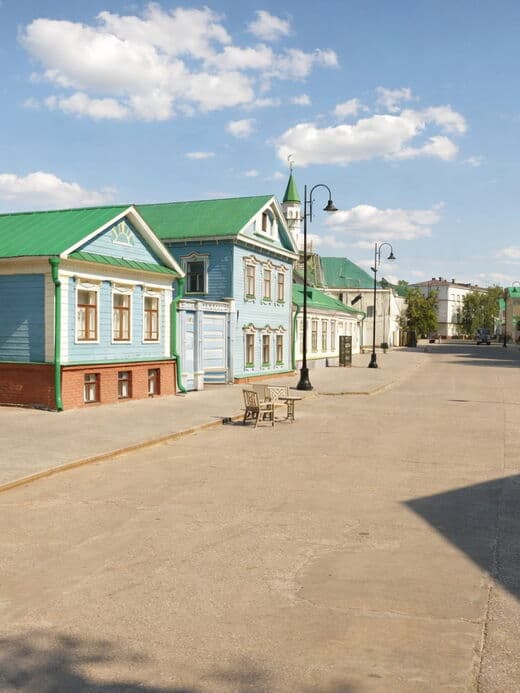
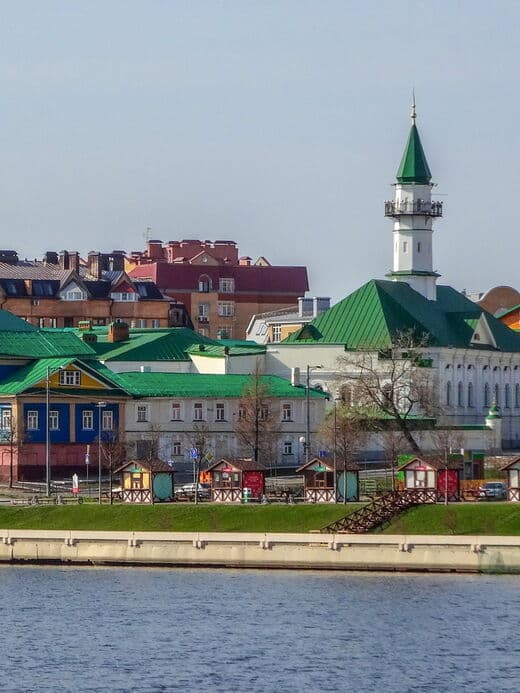
If Vakhitovsky center is like the Upper East Side, the Old Tatar Settlement is more like Williamsburg - gentrified but with genuine character. This historic neighborhood south of Kaban Lake has colorful restored wooden houses, hip cafes, and a quieter, more local atmosphere. It is the heart of Tatar culture in the city, home to the Marjani Mosque (the oldest in Kazan, dating to 1766) and some of the best traditional restaurants.
Accommodation here is mostly apartments and small guesthouses, typically 2,500-5,000 RUB ($27-55 USD) per night. The trade-off: fewer hotel amenities, but more atmosphere and better prices. You are still only a 15-minute walk from the Kremlin.
Around Kazan Family Center
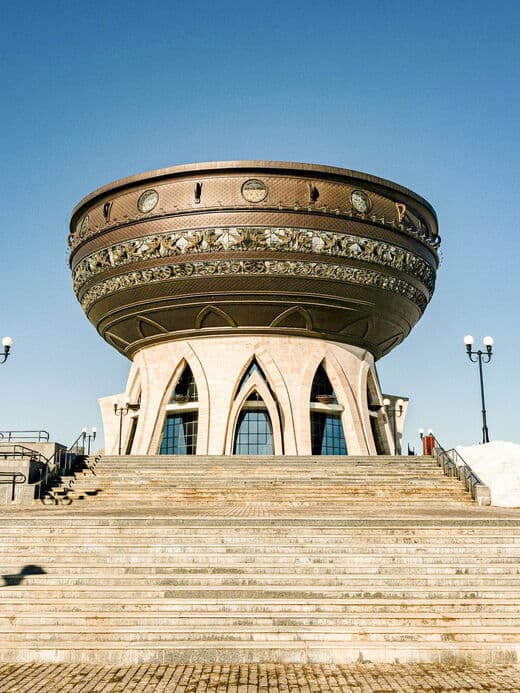
The area near the Kazan Family Center (locals call it 'the Cauldron' - you will understand why when you see it) is modern Kazan. This is where the city shows off its 21st-century ambitions with bold architecture and riverfront development. Hotels here tend to be newer chains, priced at 4,000-7,000 RUB ($44-77 USD). It is a bit removed from the historic center - about a 20-minute walk or quick taxi - but the views of the Kazanka River are worth it, especially at sunset.
Near the Train Station
Budget travelers often end up near Kazan-1 station, and honestly, it is fine. The area is not glamorous, but it is safe, well-connected, and cheap. Hostels start at 800-1,200 RUB ($9-13 USD) per bed, basic hotels at 2,000-3,500 RUB ($22-38 USD). You are a 10-minute walk from Bauman Street and the metro runs right through. Just do not expect charm - this is functional territory.
Where NOT to Stay
Avoid the industrial outskirts (Aviastroitelny and Kirovsky districts) unless you have a specific reason. Soviet-era housing blocks, limited dining, and long commutes to anything interesting. Also skip the area around the airport - there is an Aeroexpress train, so there is zero reason to stay out there.
Booking note for foreigners: Booking.com and Airbnb do not work in Russia. Use Ostrovok.ru (has an English interface) or Yandex Travel (yandex.ru/travel - Russian interface, but Google Translate handles it). Many hotels also accept walk-ins, but during Sabantuy festival in June and New Year holidays, book well in advance.
Best Time to Visit Kazan
Kazan has a continental climate, which is a polite way of saying the temperature swings are dramatic. Summers are warm and occasionally hot; winters are genuinely brutal. Your timing will significantly shape your experience.
Peak Season: June to August
This is when Kazan is at its absolute best. Temperatures hover around 22-28C (72-82F), daylight stretches past 9 PM, and the city comes alive with outdoor events. June is the golden month - warm but not oppressively hot, and Sabantuy (the Tatar summer festival, usually mid-to-late June) transforms the city with horse racing, wrestling, music, and enormous quantities of food. If you can only visit once, aim for June.
July and August are warmer (sometimes 30C+/86F+) and can be humid. The city feels slightly emptier as locals escape to dachas. Still an excellent time, just bring sunscreen and expect occasional afternoon thunderstorms.
Downside: Hotel prices jump 30-50% during peak events. Book at least a month ahead for Sabantuy week.
Shoulder Season: May and September
May is underrated. The trees leaf out, outdoor cafes open, and prices are still low season. Early May has public holidays (May 1st and Victory Day on May 9th), which means festive atmospheres but also domestic tourists. September is gorgeous - warm days around 15-20C (59-68F), golden foliage, and thin crowds. The city feels intimate and unhurried.
Winter: November to March
Let me be direct: Kazan winter is not for the faint-hearted. January averages around -12C (10F), and it can plunge to -25C (-13F) or colder. However - and this is important - the city does winter well. The Kremlin lit up against fresh snow is magical. Bauman Street gets ice sculptures and holiday markets. Indoor attractions (museums, theaters, restaurants) are cozy and crowd-free. Just bring serious winter gear: thermal layers, a proper down coat, insulated boots, and a hat that covers your ears.
Budget hack: Winter hotel prices drop to 50-60% of summer rates. A 5,000 RUB room in July might be 2,500-3,000 RUB in February.
Avoid: Late October and Early November
This is the grey, muddy transition period. Rain, slush, short days, and none of the charm of proper winter. If you can schedule around it, do.
Kazan Itinerary: 3 to 7 Days
Day 1: The Kremlin and Bauman Street
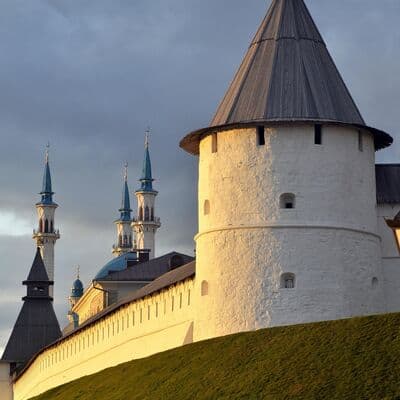
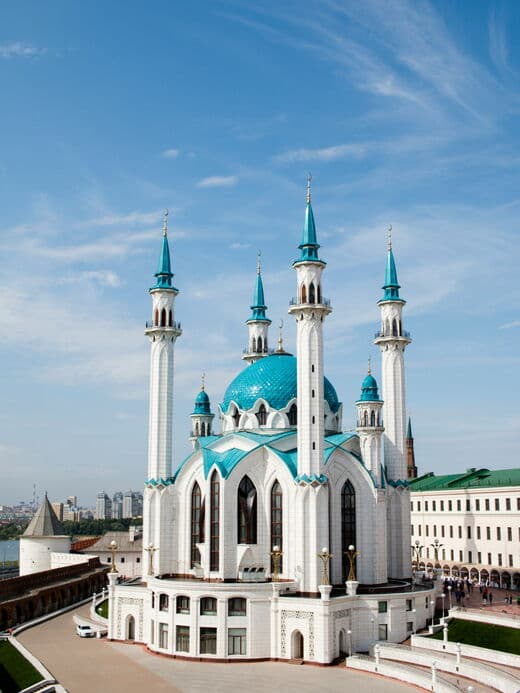
Start at the Kazan Kremlin - arrive early (9 AM) before the tour groups. The white-walled fortress is a UNESCO World Heritage Site and the visual symbol of the city. Inside, the Qol Sharif Mosque demands your attention first. Completed in 2005, it is a reconstruction of the mosque destroyed by Ivan the Terrible in 1552, and it is breathtaking - one of the largest mosques in Europe, with blue-and-white tile work that photographs beautifully in any light. Non-Muslims can enter outside of prayer times (remove shoes, women should cover their heads - scarves are available at the entrance for free).
Spend two to three hours exploring the Kremlin grounds. The Annunciation Cathedral, the leaning Soyembika Tower, and the panoramic views over the Kazanka River are all worth your time. The Hermitage-Kazan center inside the fortress has rotating exhibitions from St. Petersburg's Hermitage collection (300 RUB / $3.30 USD entry).
After the Kremlin, walk down Bauman Street, Kazan's main pedestrian artery. It is about 1.5 km of shops, cafes, street performers, and historic buildings. Stop for lunch at one of the Tatar restaurants along the way (see the food section below). Do not rush - Bauman Street is best enjoyed at a stroll.
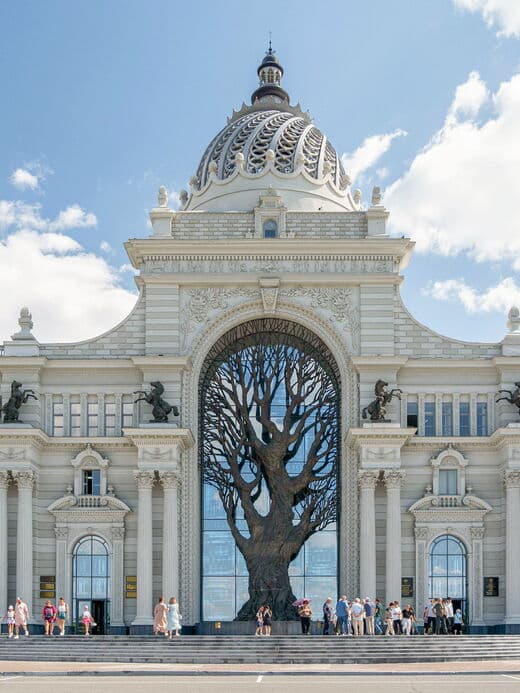
Evening: walk to the Palace of Farmers for sunset. This baroque monstrosity (and I mean that affectionately) houses the Ministry of Agriculture but looks like it belongs in a fantasy film. The enormous bronze tree in its central arch is one of the most photographed things in Kazan. At night, when it is lit up, it is genuinely spectacular.
Day 2: Old Tatar Settlement and Kaban Lake
Dedicate your second day to the Tatar soul of the city. Start in the Old Tatar Settlement, the historic neighborhood where Tatars were forced to live after the Russian conquest in 1552. Today it is beautifully restored - colorful wooden houses, cobblestone lanes, small museums, and craft shops. Visit the Marjani Mosque, then wander without a fixed plan. This is where the city feels most authentic.
Mid-morning, find the Chak-Chak Museum. Despite the slightly touristy concept (it is a museum dedicated to a honey pastry), it is genuinely charming. You get a guided experience in a recreated Tatar home, learn about traditions, and taste fresh chak-chak with tea. Tours run about 45 minutes. Book ahead if visiting in summer - it is small and popular. Entry is around 500 RUB ($5.50 USD) including tasting.
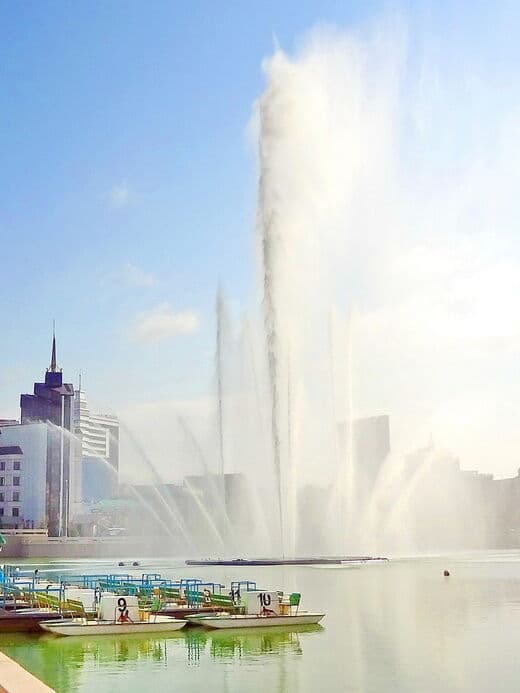
Afternoon: stroll around Kaban Lake. The embankment has been beautifully renovated with walking paths, benches, and public art. Legend says Tatar khan's treasure was dumped in the lake before Ivan the Terrible's siege - it has never been found. On warm days, you can rent a paddleboard or kayak (500-800 RUB / $5.50-8.80 USD per hour) or just sit at a lakeside cafe and watch the city go by.
Evening: dinner in the Old Tatar Settlement. Dom Chaya (House of Tea) is the classic choice for traditional Tatar cuisine in a historic setting.
Day 3: Modern Kazan and Hidden Gems
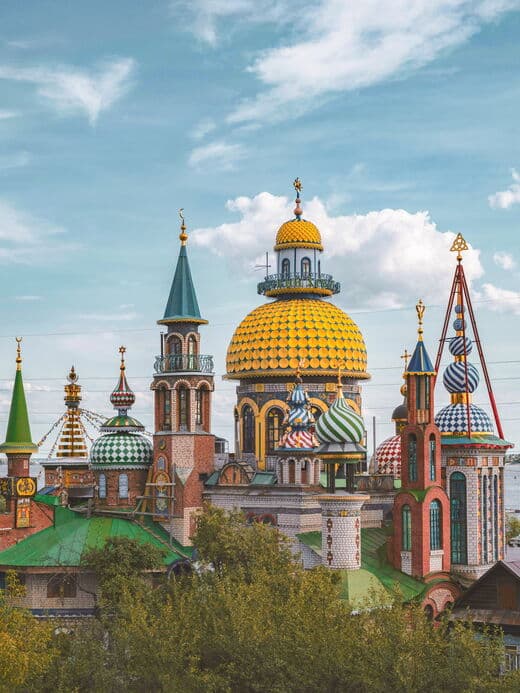
Take a taxi or bus to the Temple of All Religions on the outskirts of the city. This is one of the strangest and most beautiful buildings in Russia - an ongoing art project started in 1992 by local artist Ildar Khanov, incorporating elements from 16 world religions into one fantastical structure. Minarets, Orthodox domes, Star of David, Buddhist motifs, Gothic spires - all in riot of color. It is not a functioning place of worship but a cultural monument. Allow 1-1.5 hours including the taxi ride (about 400-600 RUB / $4.40-6.60 USD from center by Yandex Go).
Return to the center and visit the Kazan Family Center, the building locals call 'the Cauldron.' It is actually a wedding palace (yes, people get married here), shaped like a massive Tatar cooking pot. You can go up to the observation deck for panoramic views of the city and the confluence of the Kazanka and Volga rivers. Entry to the observation deck is around 200 RUB ($2.20 USD). Best at sunset.
Spend the afternoon exploring whatever caught your eye on previous days. The Kremlin embankment is lovely for a second visit. The National Museum of Tatarstan on Kremlin Street has excellent exhibits on regional history (250 RUB / $2.75 USD). Or just return to Bauman Street and try a new restaurant.
Days 4-5: Day Trips
Sviyazhsk (60 km, about 1.5 hours by bus): This island-town at the confluence of the Volga and Sviyaga rivers is a UNESCO World Heritage Site and one of the most remarkable places in the entire Volga region. Founded by Ivan the Terrible in 1551 as a staging ground for the conquest of Kazan, it is now a sleepy village with spectacular 16th-century monasteries and frescoes. Buses depart from the Kazan central bus station; return tickets cost around 400 RUB ($4.40 USD). In summer, river boats also make the trip - slower but infinitely more scenic (about 2 hours, 700-1,000 RUB / $7.70-11 USD). A full day is needed.
Bolgar (180 km, about 3 hours by bus): The ancient capital of Volga Bulgaria, another UNESCO site. Ruins of a medieval Islamic civilization dating to the 10th-14th centuries, including the oldest surviving mosque in Russia. This is where the Volga Bulgars officially adopted Islam in 922 AD. The museum complex is well-maintained with a modern museum building. Feasible as a long day trip or, better, an overnight. Buses run several times daily from Kazan (600-800 RUB / $6.60-8.80 USD one way).
Days 6-7: Deep Kazan
By now you know the city. Use these days for deeper exploration: the emerging street art scene in the Zilantov district, the Kazan Federal University campus (where Lenin studied - his preserved dormitory room is a small museum), the central market for local produce and spices, or simply lingering longer at favorite spots. If you are here in the performing arts season (September to May), try to catch a show at the Tatar Academic Theatre - even if you do not understand Tatar, the productions are visually stunning and tickets are laughably cheap (300-800 RUB / $3.30-8.80 USD for good seats).
Where to Eat in Kazan: Restaurants and Cafes
Kazan is arguably the best food city in Russia after Moscow, and it beats Moscow on value by a mile. Tatar cuisine is the star, but you will also find excellent Russian food, Central Asian options, and a growing cafe culture.
Traditional Tatar Cuisine
Dom Chaya (House of Tea) - The most famous Tatar restaurant in the city, located in the Old Tatar Settlement in a beautiful historic building. The menu is encyclopedic: every traditional dish you could want, served in a cozy, slightly formal atmosphere. Try the elesh (chicken pie), the house-made chak-chak, and the full Tatar tea service. Main courses 350-700 RUB ($3.85-7.70 USD). Can get crowded at lunch - arrive by 12:00 or after 14:00.
Tatarskaya Usadba (Tatar Estate) - Another excellent traditional option, slightly more upscale and tourist-oriented but with consistently good food. The echpochmak here is among the best in the city. Great for a first introduction to Tatar cuisine if you want English menus and patient staff. Main courses 400-900 RUB ($4.40-9.90 USD).
Tubatay - A more modern take on Tatar food, popular with younger locals. The interior is stylish, the portions are generous, and they do creative variations on traditional dishes alongside the classics. Try the kystyby with different fillings and the Tatar-style lamb. Main courses 350-800 RUB ($3.85-8.80 USD). Multiple locations around the city.
Russian and International
Priyut Kholostyaka (Bachelor's Refuge) - Do not let the name put you off. This is one of the most popular restaurants in Kazan, serving hearty Russian and European food in a warm, slightly bohemian setting. Excellent soups, grilled meats, and a surprisingly good wine list. Main courses 500-1,200 RUB ($5.50-13.20 USD). Reservations recommended on weekends.
Top Hop - Kazan's best craft beer bar, with a rotating selection of local and Russian craft brews alongside solid pub food. A pint runs 300-500 RUB ($3.30-5.50 USD). The burgers are honestly some of the best in the city. Good for an evening when you want something familiar and low-key.
Coffee and Cafes
Neft (Oil) Coffee - The name is a tongue-in-cheek reference to Tatarstan's petroleum industry. Excellent specialty coffee, good pastries, and a hipster-chic atmosphere that would not look out of place in Berlin or Melbourne. Espresso drinks 200-400 RUB ($2.20-4.40 USD). Several locations; the one near Bauman Street is most convenient.
Skazka - A beloved local chain of cafeteria-style restaurants where you point at what you want and they load up your tray. Not glamorous, but the food is fresh, homemade, and staggeringly cheap - a full meal (soup, main course, salad, drink, and dessert) for 400-600 RUB ($4.40-6.60 USD). Perfect for budget-conscious travelers. Look for the green signs around the city center.
Street Food and Markets
The central market (Tsentralny Rynok) on Moskovskaya Street is worth a visit even if you are not cooking. Stalls sell fresh pastries, dried fruits, local honey, horse-meat sausage (kazylik), and Tatar sweets. Grab an echpochmak straight from the oven for 80-120 RUB ($0.88-1.30 USD). The market is busiest and best on weekend mornings.
Kiosks along Bauman Street sell fried pies (belyashi), samsa, and other fast snacks for 60-150 RUB ($0.66-1.65 USD). Quality varies, but anything with a line of locals waiting is a safe bet.
What to Try: Kazan Food Guide
Tatar cuisine is the main reason to eat your way through Kazan. It is hearty, meat-and-pastry-heavy, and distinctly different from standard Russian food. Here is your essential tasting list:
Echpochmak - The king of Tatar pastries. A triangular pie filled with diced lamb (or beef), potato, and onion, with a small hole in the top where broth is poured before the final baking. When fresh from the oven, there is nothing better. You will find these absolutely everywhere, from fine restaurants to street kiosks. The version at Dom Chaya is refined; the ones at the central market are rustic and excellent in a different way. Budget 80-200 RUB ($0.88-2.20 USD) depending on where you buy.
Chak-chak - Tatarstan's national dessert and the thing most visitors fall in love with. Small pieces of fried dough coated in hot honey, pressed into a mound and left to set. It ranges from crunchy to chewy depending on freshness. The Chak-Chak Museum serves the freshest version in the city. Supermarkets sell boxed versions that make excellent souvenirs - they keep for weeks. A box of good chak-chak costs 250-500 RUB ($2.75-5.50 USD).
Gubadiya - A multi-layered pie that is Tatar celebratory food at its finest. Layers of rice, dried fruit, eggs, and sweet cottage cheese (kort) in a pastry shell. It is rich and substantial - more of a main dish than a snack. Not every restaurant has it (it is traditionally made for weddings and holidays), but the good Tatar places usually offer it. Around 300-500 RUB ($3.30-5.50 USD) for a generous portion.
Kazylik - Horse meat sausage. I know that sounds challenging for some Western palates, but this is a Tatar staple and genuinely delicious - dark, lean, lightly smoked, often served thinly sliced as an appetizer. The flavor is subtle and slightly sweet. Try it at least once; the market stalls let you sample before buying. A stick of good kazylik costs 500-1,000 RUB ($5.50-11 USD) depending on size and quality.
Elesh - A round pie filled with chicken and potato in a rich broth-infused pastry. Think of it as echpochmak's gentler cousin. The version at Dom Chaya is stuffed with an almost obscene amount of tender chicken. Usually 200-350 RUB ($2.20-3.85 USD).
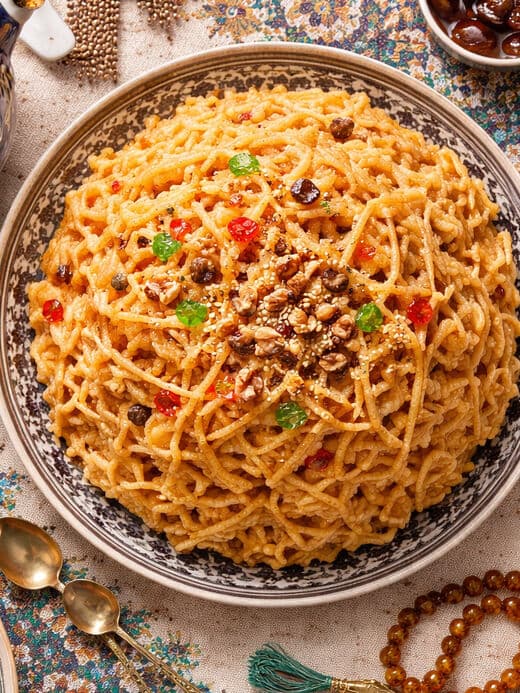
Talkysh kaleve - The most delicate Tatar sweet: thin threads of pulled sugar and butter layered into a small cone shape. It literally melts on your tongue. Extremely fragile and best eaten same-day. A few specialty shops on Bauman Street sell it; look for small clear boxes with pyramid-shaped sweets inside. Around 150-300 RUB ($1.65-3.30 USD) for a box. Hard to transport without crushing, so eat it in Kazan.
Kystyby - A thin flatbread folded over a filling of mashed potato or millet porridge. Simple, satisfying, and cheap - usually 80-150 RUB ($0.88-1.65 USD). Tubatay does creative variations with different fillings that are worth trying. This is excellent hangover food, for the record.
Tatar tea traditions - Tatars take tea seriously. Traditional Tatar tea is strong black tea with milk, sometimes with herbs. A proper tea service includes the tea alongside chak-chak, talkysh kaleve, and dried fruits. Dom Chaya is the best place to experience this. Even if you are not a tea person, the ritual and the sweets make it worthwhile.
Kazan Secrets: Local Tips
After spending serious time in Kazan, here are the things I wish someone had told me before my first visit:
The Kremlin embankment at night beats the daytime. Most tourists do the Kremlin during the day and are back in their hotels by evening. The embankment walkway below the fortress is beautifully lit after dark, with views of the illuminated Kremlin walls, the Palace of Farmers, and the Kazan Family Center all reflected in the Kazanka River. In summer, locals are out strolling until midnight. Bring a jacket - river breeze cools things down significantly.
Skip the tourist restaurants on upper Bauman Street. The restaurants at the Kremlin end of Bauman Street charge 30-50% more than identical quality food two blocks south. Walk just a few minutes off the pedestrian zone and prices drop sharply while quality stays the same or improves. The best food in Kazan is almost never on the main tourist drag.
Friday lunch is a scene. After Friday prayers, the restaurants near the Qol Sharif Mosque and in the Old Tatar Settlement fill up with families having elaborate Tatar feasts. It is a wonderful time to eat out - the atmosphere is festive, kitchens are at full power turning out their best dishes, and you will see multi-generational Tatar families in their finest. Just book or arrive early (12:30-13:00) before the post-prayer rush.
2GIS is better than Google Maps here. Google Maps works but has patchy coverage of smaller businesses, incorrect opening hours, and missing transit routes. Download the 2GIS app (free, works offline) and install the Kazan map pack. It has every business, accurate hours, indoor maps of shopping centers, and public transit routes. The interface has an English option. This is genuinely the single most useful travel app for any Russian city.
The back streets of the Old Tatar Settlement are the real treasure. Most tourists walk the main restored streets and move on. Venture into the residential lanes behind the museums and cafes - you will find unrenovated wooden houses with original carved window frames (nalichniki), quiet courtyards, stray cats, and the occasional elderly Tatar grandmother who will try to feed you. It is the real, lived-in version of the neighborhood the tourist route hints at.
Sunday mornings at Kaban Lake. Kaban Lake's embankment is popular all week, but Sunday mornings around 8-9 AM are special. Joggers, elderly couples doing tai chi, fishermen setting up for the day, and almost zero tourists. If your hotel has early breakfast, take advantage and enjoy the lake in its quietest, most beautiful state.
Learn five Tatar words and watch doors open. Locals are used to tourists speaking Russian (or trying to). But dropping even a few words of Tatar - 'rekhmet' (thank you), 'salam' (hello), 'isenmesez' (formal hello), 'zinnhar' (please) - will get you genuine delight and often extra generosity. Tatar people are proud of their language and culture, and any acknowledgment of it goes a very long way.
The souvenir situation. Skip the mass-produced magnets on Bauman Street. The best Kazan souvenirs are edible: boxed chak-chak, talkysh kaleve, dried kazylik, Tatar tea blends. For non-food items, look for tubeteika (traditional Tatar skullcap) and handmade leather goods in the Old Tatar Settlement craft shops. A quality tubeteika costs 500-1,500 RUB ($5.50-16.50 USD) and is a genuinely unique souvenir.
Transport and Connectivity
Getting to Kazan
By air: Kazan International Airport (KZN) receives flights from Moscow (1.5 hours), St. Petersburg (2.5 hours), and dozens of other Russian cities. From the airport, the Aeroexpress train takes 25 minutes to the city center and costs 300 RUB ($3.30 USD) - this is by far the best option. Trains run roughly every 30-60 minutes from early morning to late evening. A taxi from the airport costs 600-1,000 RUB ($6.60-11 USD) via Yandex Go and takes 30-45 minutes depending on traffic.
By train from Moscow: The overnight sleeper train is a classic Russian experience. Departure from Kazan Station in Moscow (yes, the Moscow station is named after Kazan), arriving 12-14 hours later. Platskart (open berth) costs 1,500-2,500 RUB ($16.50-27.50 USD); kupe (4-person compartment) costs 3,000-5,000 RUB ($33-55 USD). The newer high-speed daytime train covers the route in about 6.5 hours for 2,500-4,500 RUB ($27.50-49.50 USD). Book at rzd.ru (Russian Railways) - the English interface is functional.
Getting Around Kazan
Walking: Kazan's tourist core is eminently walkable. From the Kremlin to the Old Tatar Settlement is about 2 km. From Bauman Street to the Kazan Family Center is about 2.5 km. If the weather is decent, you can cover most major sights on foot without difficulty.
Metro: Kazan has a metro system, but be honest - it is one line with 11 stations and it mostly serves residential areas that you will never visit. The one useful stop is Kremlyovskaya, which is right by the Kremlin. Rides cost 36 RUB ($0.40 USD). The stations are clean and the trains are reliable, but unless you are commuting from a distant hotel, you probably will not use it much.
Buses and trams: Extensive and cheap (36 RUB / $0.40 USD per ride), but route information is mostly in Russian. If you install 2GIS, it will show you real-time bus positions and route planning with exact arrival times. Payment is cash to the driver or bank card on the validator at the door.
Taxis: Use Yandex Go exclusively. It is safe, cheap, and eliminates the language barrier - just enter your destination in the app. Within the city center, most rides cost 150-300 RUB ($1.65-3.30 USD). From center to the Temple of All Religions or other outlying sights, expect 400-600 RUB ($4.40-6.60 USD). Never take unofficial taxis - drivers at tourist spots will quote 5-10x the Yandex price.
Important for foreigners: Yandex Go requires a Russian phone number to register. If you have an eSIM with a Russian number, you are set. Otherwise, ask your hotel reception to call you a taxi - every hotel in Kazan is used to doing this. Some travelers create an account before arriving using a temporary Russian number service, but this is hit-or-miss.
Internet and Communication
SIM cards: Getting a Russian SIM card as a foreigner became significantly harder in 2025. The process now requires registration through Gosuslugi (the government services portal). The practical solution is to buy an eSIM before you arrive - services like Airalo, Holafly, or Yandex Roaming offer data-only eSIMs that work throughout Russia. Data-only plans start at about $10-15 USD for 5-10 GB. For voice calls, use WhatsApp or Telegram over data.
WiFi: Free WiFi is widespread. Most cafes, restaurants, and all hotels offer it. The Kremlin grounds have free municipal WiFi (connect to 'Kazan_Free_WiFi'). Bauman Street also has public WiFi coverage, though it can be slow during peak hours.
Useful apps: Download these before arriving: Yandex Go (taxis), 2GIS (maps, business directory), Yandex Translate (camera translation for signs and menus - works better than Google Translate for Russian), and Yandex Maps (backup navigation). All are free.
ATMs and money: Visa and Mastercard do not work in Russia. If you have a UnionPay card, it works at most ATMs and many shops. Otherwise, bring cash (USD or EUR) and exchange at any bank - rates are fair and the process is straightforward. Exchange up to $10,000 without declaration. Avoid exchange booths at the airport; bank branches in the city center offer better rates. Keep small bills (100-500 RUB) for buses, kiosks, and small purchases.
Who Is Kazan For: Summary
Kazan works for almost everyone, which is rare for a Russian city. History enthusiasts get a thousand years of layered civilizations and two UNESCO sites within day-trip distance. Food lovers get a unique regional cuisine that you literally cannot find at this quality anywhere else on earth. Architecture fans get everything from 16th-century fortresses to daring contemporary buildings. Budget travelers get one of the best value-for-money destinations in Europe. Couples get romantic embankment walks and candlelit Tatar dinners. Families get a clean, safe, walkable city with engaging museums and wide pedestrian streets.
Three days is the minimum to do Kazan justice. Five days lets you breathe and add a day trip. A week lets you truly settle in, find your favorite cafe, and discover the city beyond the guidebook. Kazan is not a place to rush through - it rewards the traveler who slows down, eats another echpochmak, and watches the light change over the Kremlin walls.